Spandidos Publications Logo
  • About
    • About Spandidos
    • Aims and Scopes
    • Abstracting and Indexing
    • Editorial Policies
    • Reprints and Permissions
    • Job Opportunities
    • Terms and Conditions
    • Contact
  • Journals
    • All Journals
    • Oncology Letters
      • Oncology Letters
      • Information for Authors
      • Editorial Policies
      • Editorial Board
      • Aims and Scope
      • Abstracting and Indexing
      • Bibliographic Information
      • Archive
    • International Journal of Oncology
      • International Journal of Oncology
      • Information for Authors
      • Editorial Policies
      • Editorial Board
      • Aims and Scope
      • Abstracting and Indexing
      • Bibliographic Information
      • Archive
    • Molecular and Clinical Oncology
      • Molecular and Clinical Oncology
      • Information for Authors
      • Editorial Policies
      • Editorial Board
      • Aims and Scope
      • Abstracting and Indexing
      • Bibliographic Information
      • Archive
    • Experimental and Therapeutic Medicine
      • Experimental and Therapeutic Medicine
      • Information for Authors
      • Editorial Policies
      • Editorial Board
      • Aims and Scope
      • Abstracting and Indexing
      • Bibliographic Information
      • Archive
    • International Journal of Molecular Medicine
      • International Journal of Molecular Medicine
      • Information for Authors
      • Editorial Policies
      • Editorial Board
      • Aims and Scope
      • Abstracting and Indexing
      • Bibliographic Information
      • Archive
    • Biomedical Reports
      • Biomedical Reports
      • Information for Authors
      • Editorial Policies
      • Editorial Board
      • Aims and Scope
      • Abstracting and Indexing
      • Bibliographic Information
      • Archive
    • Oncology Reports
      • Oncology Reports
      • Information for Authors
      • Editorial Policies
      • Editorial Board
      • Aims and Scope
      • Abstracting and Indexing
      • Bibliographic Information
      • Archive
    • Molecular Medicine Reports
      • Molecular Medicine Reports
      • Information for Authors
      • Editorial Policies
      • Editorial Board
      • Aims and Scope
      • Abstracting and Indexing
      • Bibliographic Information
      • Archive
    • World Academy of Sciences Journal
      • World Academy of Sciences Journal
      • Information for Authors
      • Editorial Policies
      • Editorial Board
      • Aims and Scope
      • Abstracting and Indexing
      • Bibliographic Information
      • Archive
    • International Journal of Functional Nutrition
      • International Journal of Functional Nutrition
      • Information for Authors
      • Editorial Policies
      • Editorial Board
      • Aims and Scope
      • Abstracting and Indexing
      • Bibliographic Information
      • Archive
    • International Journal of Epigenetics
      • International Journal of Epigenetics
      • Information for Authors
      • Editorial Policies
      • Editorial Board
      • Aims and Scope
      • Abstracting and Indexing
      • Bibliographic Information
      • Archive
    • Medicine International
      • Medicine International
      • Information for Authors
      • Editorial Policies
      • Editorial Board
      • Aims and Scope
      • Abstracting and Indexing
      • Bibliographic Information
      • Archive
  • Articles
  • Information
    • Information for Authors
    • Information for Reviewers
    • Information for Librarians
    • Information for Advertisers
    • Conferences
  • Language Editing
Spandidos Publications Logo
  • About
    • About Spandidos
    • Aims and Scopes
    • Abstracting and Indexing
    • Editorial Policies
    • Reprints and Permissions
    • Job Opportunities
    • Terms and Conditions
    • Contact
  • Journals
    • All Journals
    • Biomedical Reports
      • Information for Authors
      • Editorial Policies
      • Editorial Board
      • Aims and Scope
      • Abstracting and Indexing
      • Bibliographic Information
      • Archive
    • Experimental and Therapeutic Medicine
      • Information for Authors
      • Editorial Policies
      • Editorial Board
      • Aims and Scope
      • Abstracting and Indexing
      • Bibliographic Information
      • Archive
    • International Journal of Epigenetics
      • Information for Authors
      • Editorial Policies
      • Editorial Board
      • Aims and Scope
      • Abstracting and Indexing
      • Bibliographic Information
      • Archive
    • International Journal of Functional Nutrition
      • Information for Authors
      • Editorial Policies
      • Editorial Board
      • Aims and Scope
      • Abstracting and Indexing
      • Bibliographic Information
      • Archive
    • International Journal of Molecular Medicine
      • Information for Authors
      • Editorial Policies
      • Editorial Board
      • Aims and Scope
      • Abstracting and Indexing
      • Bibliographic Information
      • Archive
    • International Journal of Oncology
      • Information for Authors
      • Editorial Policies
      • Editorial Board
      • Aims and Scope
      • Abstracting and Indexing
      • Bibliographic Information
      • Archive
    • Medicine International
      • Information for Authors
      • Editorial Policies
      • Editorial Board
      • Aims and Scope
      • Abstracting and Indexing
      • Bibliographic Information
      • Archive
    • Molecular and Clinical Oncology
      • Information for Authors
      • Editorial Policies
      • Editorial Board
      • Aims and Scope
      • Abstracting and Indexing
      • Bibliographic Information
      • Archive
    • Molecular Medicine Reports
      • Information for Authors
      • Editorial Policies
      • Editorial Board
      • Aims and Scope
      • Abstracting and Indexing
      • Bibliographic Information
      • Archive
    • Oncology Letters
      • Information for Authors
      • Editorial Policies
      • Editorial Board
      • Aims and Scope
      • Abstracting and Indexing
      • Bibliographic Information
      • Archive
    • Oncology Reports
      • Information for Authors
      • Editorial Policies
      • Editorial Board
      • Aims and Scope
      • Abstracting and Indexing
      • Bibliographic Information
      • Archive
    • World Academy of Sciences Journal
      • Information for Authors
      • Editorial Policies
      • Editorial Board
      • Aims and Scope
      • Abstracting and Indexing
      • Bibliographic Information
      • Archive
  • Articles
  • Information
    • For Authors
    • For Reviewers
    • For Librarians
    • For Advertisers
    • Conferences
  • Language Editing
Login Register Submit
  • This site uses cookies
  • You can change your cookie settings at any time by following the instructions in our Cookie Policy. To find out more, you may read our Privacy Policy.

    I agree
Search articles by DOI, keyword, author or affiliation
Search
Advanced Search
presentation
Molecular Medicine Reports
Join Editorial Board Propose a Special Issue
Print ISSN: 1791-2997 Online ISSN: 1791-3004
Journal Cover
August-2015 Volume 12 Issue 2

Full Size Image

Sign up for eToc alerts
Recommend to Library

Journals

International Journal of Molecular Medicine

International Journal of Molecular Medicine

International Journal of Molecular Medicine is an international journal devoted to molecular mechanisms of human disease.

International Journal of Oncology

International Journal of Oncology

International Journal of Oncology is an international journal devoted to oncology research and cancer treatment.

Molecular Medicine Reports

Molecular Medicine Reports

Covers molecular medicine topics such as pharmacology, pathology, genetics, neuroscience, infectious diseases, molecular cardiology, and molecular surgery.

Oncology Reports

Oncology Reports

Oncology Reports is an international journal devoted to fundamental and applied research in Oncology.

Experimental and Therapeutic Medicine

Experimental and Therapeutic Medicine

Experimental and Therapeutic Medicine is an international journal devoted to laboratory and clinical medicine.

Oncology Letters

Oncology Letters

Oncology Letters is an international journal devoted to Experimental and Clinical Oncology.

Biomedical Reports

Biomedical Reports

Explores a wide range of biological and medical fields, including pharmacology, genetics, microbiology, neuroscience, and molecular cardiology.

Molecular and Clinical Oncology

Molecular and Clinical Oncology

International journal addressing all aspects of oncology research, from tumorigenesis and oncogenes to chemotherapy and metastasis.

World Academy of Sciences Journal

World Academy of Sciences Journal

Multidisciplinary open-access journal spanning biochemistry, genetics, neuroscience, environmental health, and synthetic biology.

International Journal of Functional Nutrition

International Journal of Functional Nutrition

Open-access journal combining biochemistry, pharmacology, immunology, and genetics to advance health through functional nutrition.

International Journal of Epigenetics

International Journal of Epigenetics

Publishes open-access research on using epigenetics to advance understanding and treatment of human disease.

Medicine International

Medicine International

An International Open Access Journal Devoted to General Medicine.

Journal Cover
August-2015 Volume 12 Issue 2

Full Size Image

Sign up for eToc alerts
Recommend to Library

  • Article
  • Citations
    • Cite This Article
    • Download Citation
    • Create Citation Alert
    • Remove Citation Alert
    • Cited By
  • Similar Articles
    • Related Articles (in Spandidos Publications)
    • Similar Articles (Google Scholar)
    • Similar Articles (PubMed)
  • Download PDF
  • Download XML
  • View XML
Article Open Access

PARP-1 promotes autophagy via the AMPK/mTOR pathway in CNE-2 human nasopharyngeal carcinoma cells following ionizing radiation, while inhibition of autophagy contributes to the radiation sensitization of CNE-2 cells

  • Authors:
    • Ze‑Tan Chen
    • Wei Zhao
    • Song Qu
    • Ling Li
    • Xiao-Di Lu
    • Fang Su
    • Zhong-Guo Liang
    • Si-Yan Guo
    • Xiao-Dong Zhu
  • View Affiliations / Copyright

    Affiliations: Department of Radiation Oncology, Affiliated Cancer Hospital of Guangxi Medical University, Cancer Institute of Guangxi Zhuang Autonomous Region, Nanning, Guangxi 530021, P.R. China
    Copyright: © Chen et al. This is an open access article distributed under the terms of Creative Commons Attribution License [CC BY_NC 3.0].
  • Pages: 1868-1876
    |
    Published online on: April 9, 2015
       https://doi.org/10.3892/mmr.2015.3604
  • Expand metrics +
Metrics: Total Views: 0 (Spandidos Publications: | PMC Statistics: )
Metrics: Total PDF Downloads: 0 (Spandidos Publications: | PMC Statistics: )
Cited By (CrossRef): 0 citations Loading Articles...

This article is mentioned in:


Abstract

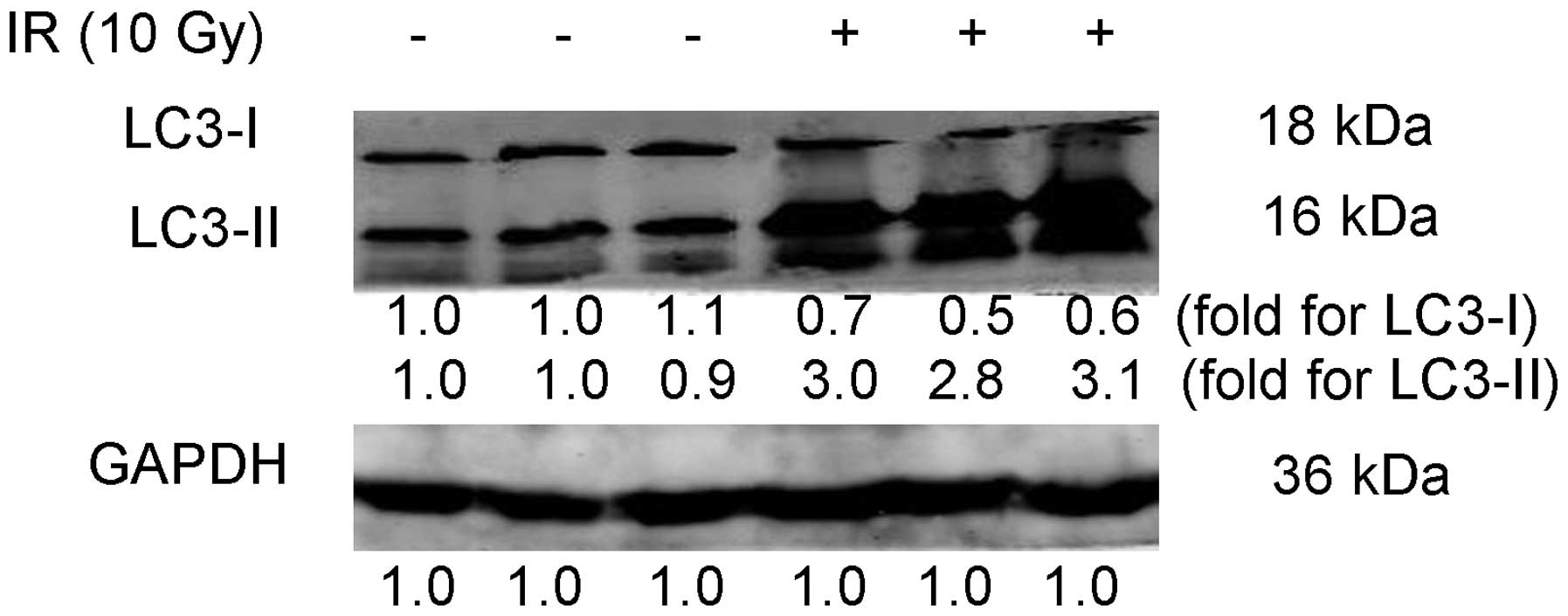
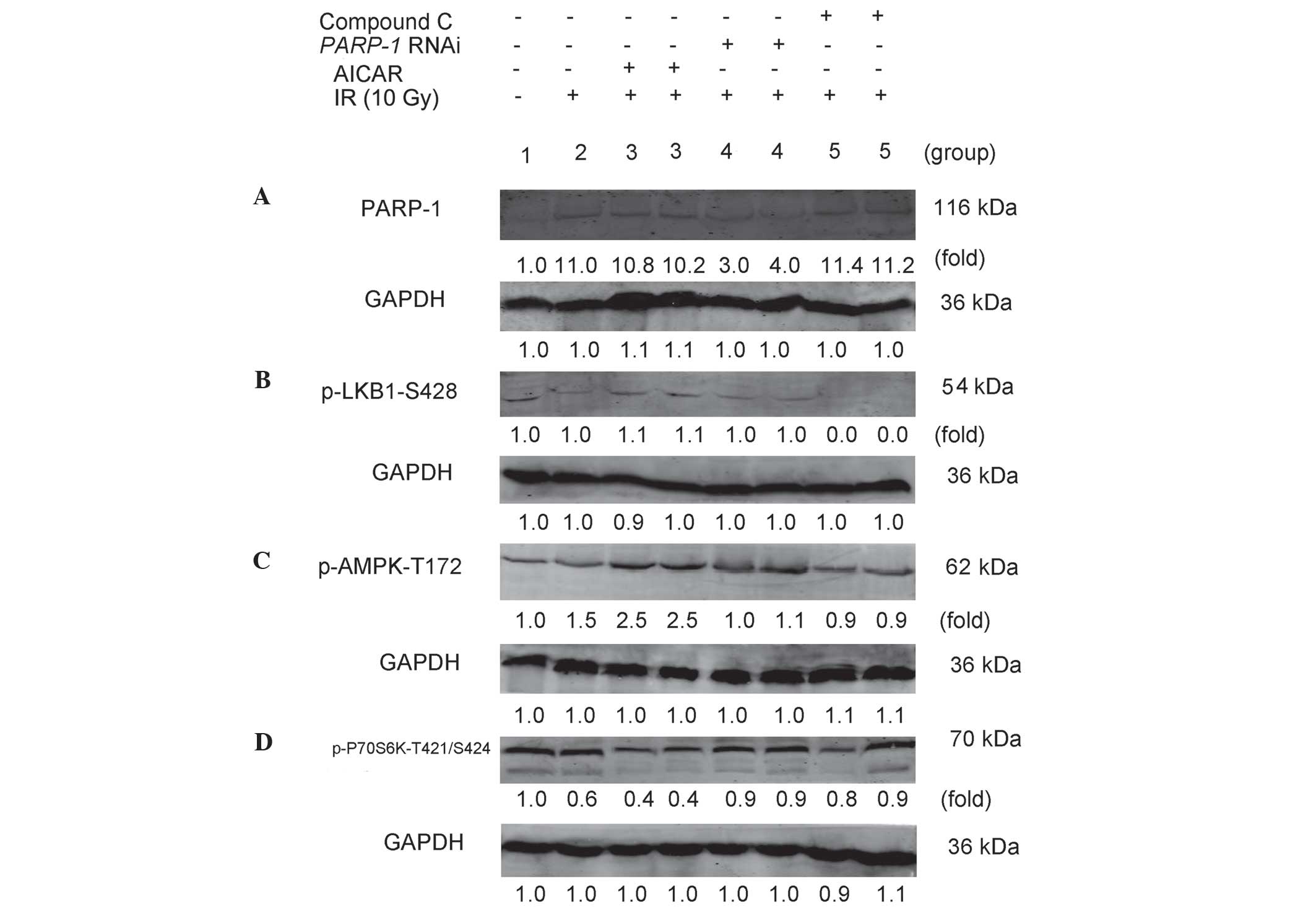
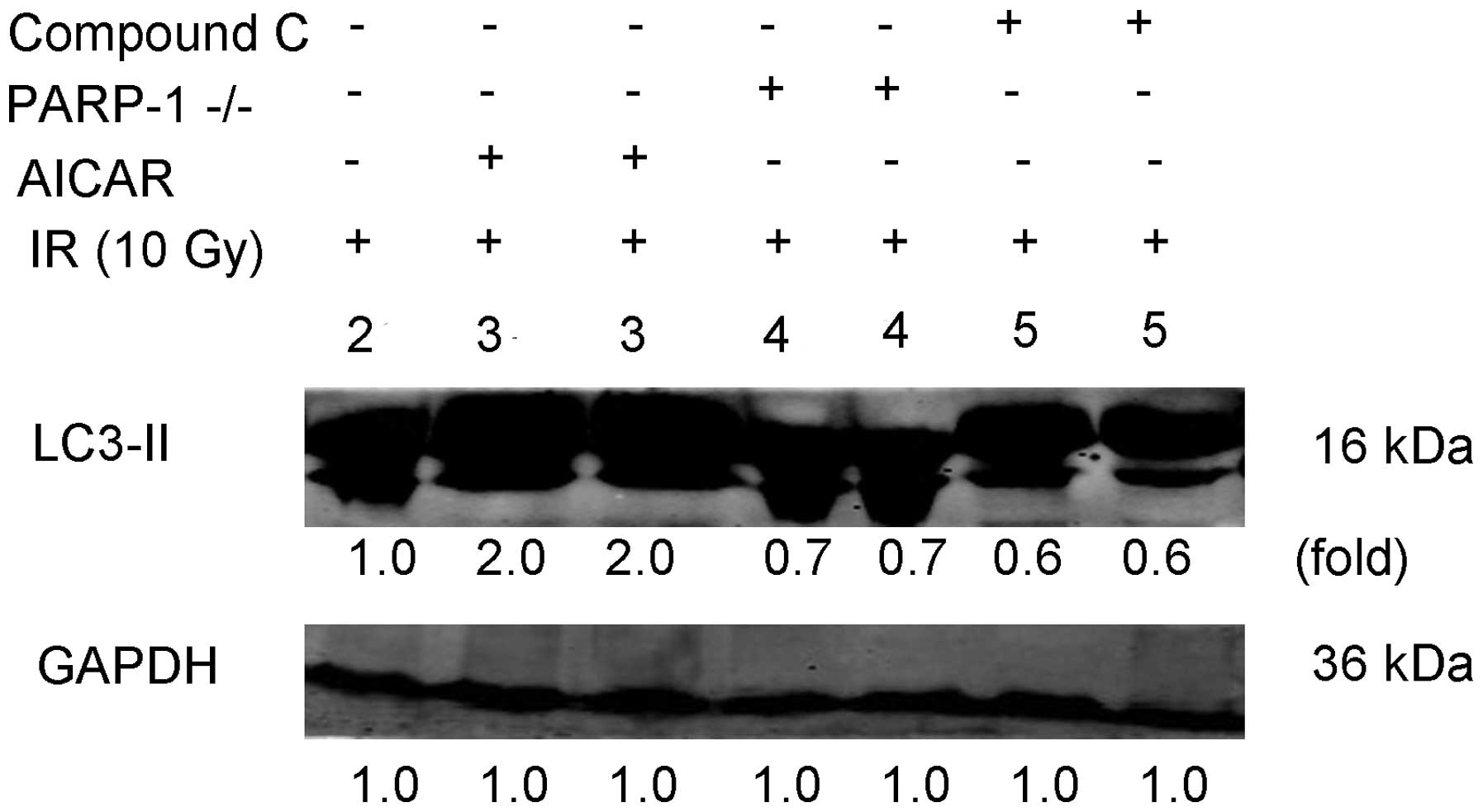
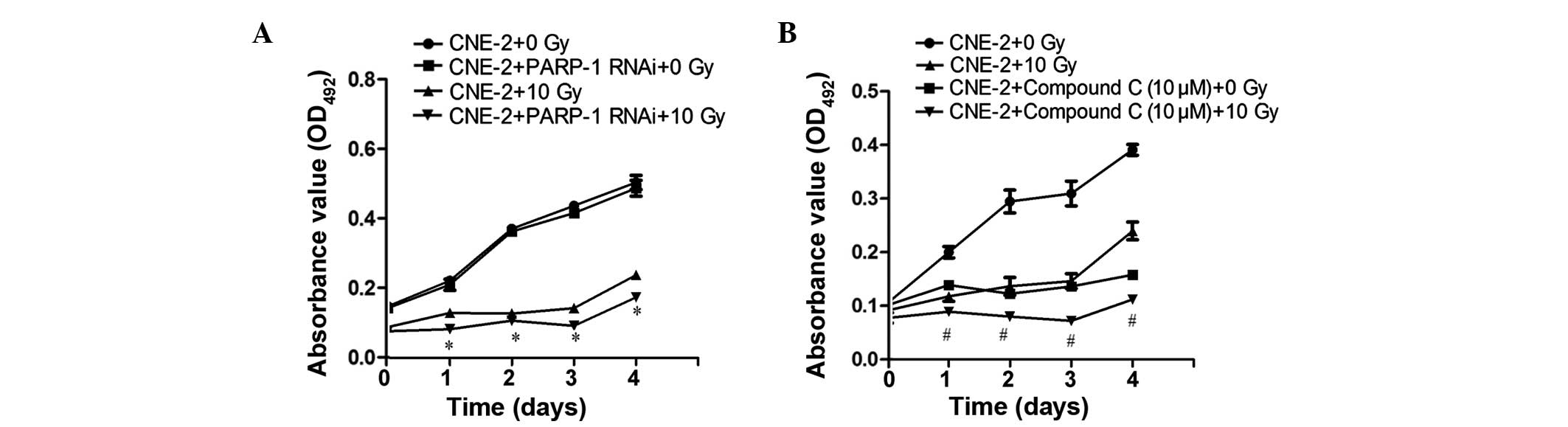
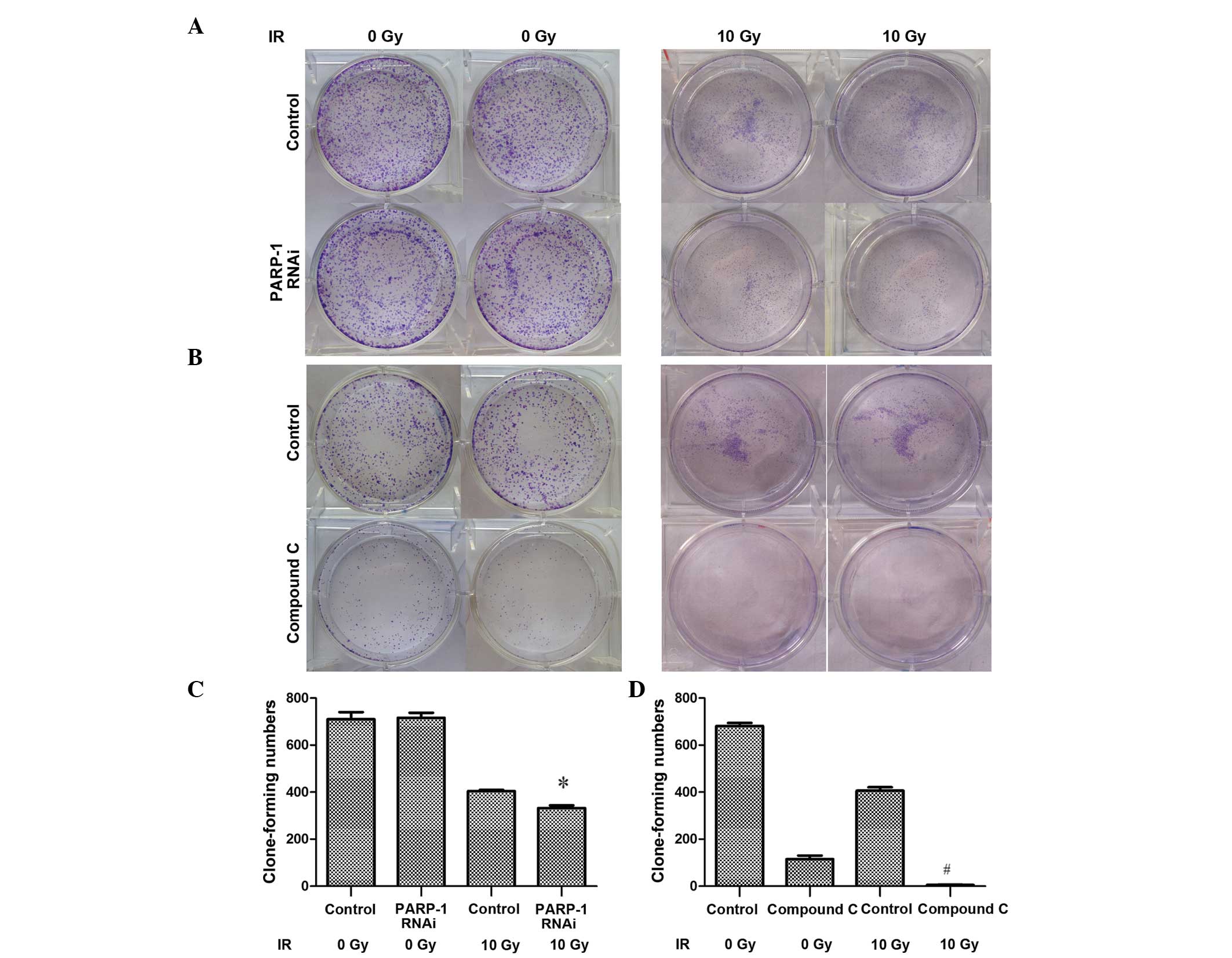
It was previously reported that poly‑(adenosine diphosphate‑ribose) polymerase‑1 (PARP‑1) regulated ionizing radiation (IR)‑induced autophagy in CNE‑2 human nasopharyngeal carcinoma cells. The present study aimed to investigate whether PARP‑1‑mediated IR‑induced autophagy occurred via activation of the liver kinase B1 (LKB1)/adenosine monophosphate‑activated protein kinase (AMPK)/mammalian target of rapamycin (mTOR) signaling pathway in CNE‑2 cells. In addition, the effect of PARP‑1 and AMPK inhibition on the radiation sensitization of CNE‑2 cells was investigated. CNE‑2 cells were treated with 10 Gy IR in the presence or absence of the AMPK activator 5‑amino‑1‑β‑D‑ribofuranosyl‑1H‑imid‑azole‑4‑carboxamide (AICAR). In addition, IR‑treated CNE‑2 cells were transfected with lentivirus‑delivered small‑hairpin RNA or treated with the AMPK inhibitor Compound C. Western blot analysis was used to assess the protein expression of PARP‑1, phosphorylated (p)‑AMPK, microtubule‑associated protein 1 light chain 3 (LC3)‑Ⅱ and p‑P70S6K. Cell viability and clone formation assays were performed to determine the effect of PARP‑1 silencing and AMPK inhibition on the radiation sensitization of CNE‑2 cells. The results showed that IR promoted PARP‑1, p‑AMPK and LC3‑Ⅱ protein expression as well as decreased p‑P70S6K expression compared with that of the untreated cells. In addition, AICAR increased the expression of p‑AMPK and LC3‑Ⅱ as well as decreased p‑P70S6K expression compared with that of the IR‑only group; however, AICAR did not increase PARP‑1 expression. Furthermore, PARP‑1 gene silencing decreased the expression of PARP‑1, p‑AMPK and LC3‑Ⅱ as well as increased p‑P70S6K expression. Compound C decreased p‑AMPK and LC3‑Ⅱ expression as well as increased p‑P70S6K expression; however, Compound C did not increase PARP‑1 expression. Western blot analysis detected limited expression of p‑LKB1 in all treatment groups. Cell viability and clone formation assays revealed that PARP‑1 or AMPK inhibition reduced the proliferation of CNE‑2 cells following IR. In conclusion, the present study demonstrated that PARP‑1 promoted autophagy via the AMPK/mTOR pathway; in addition, PARP‑1 or AMPK inhibition contributed to the radiation sensitization of CNE‑2 cells following IR. However, it remains to be elucidated whether PARP‑1 is an upstream mediator of the LKB1 pathway in CNE‑2 cells following IR.
View Figures

Figure 1

Figure 2

Figure 3

Figure 4

Figure 5

Figure 6

View References

1 

Yoshizaki T, Ito M, Murono S, Wakisaka N, Kondo S and Endo K: Current understanding and management of nasopharyngeal carcinoma. Auris Nasus Larynx. 39:137–144. 2012. View Article : Google Scholar

2 

Daker M, Bhuvanendran S, Ahmad M, Takada K and Khoo AS: Deregulation of lipid metabolism pathway genes in nasopharyngeal carcinoma cells. Mol Med Rep. 3:731–741. 2013.

3 

Qiu S, Lin S, Tham IW, Pan J, Lu J and Lu JJ: Intensity-modulated radiation therapy in the salvage of locally recurrent nasopharyngeal carcinoma. Int J Radiat Oncol Biol Phys. 83:676–683. 2012. View Article : Google Scholar

4 

Feng XP, Yi H, Li MY, et al: Identification of biomarkers for predicting nasopharyngeal carcinoma response to radiotherapy by proteomics. Cancer Res. 70:3450–3462. 2010. View Article : Google Scholar : PubMed/NCBI

5 

Guo Y, Zhu XD, Qu S, et al: Identification of genes involved in radioresistance of nasopharyngeal carcinoma by integrating gene ontology and protein-protein interaction networks. Int J Oncol. 40:85–92. 2012.

6 

Li G, Qiu Y, Su Z, et al: Genome-wide analyses of radioresistance-associated miRNA expression profile in nasopharyngeal carcinoma using next generation deep sequencing. PLoS One. 8:e844862013. View Article : Google Scholar : PubMed/NCBI

7 

Levine B and Klionsky DJ: Development by self-digestion: molecular mechanisms and biological functions of autophagy. Dev Cell. 6:463–477. 2004. View Article : Google Scholar : PubMed/NCBI

8 

Levine B and Yuan J: Autophagy in cell death: an innocent convict? J Clin Invest. 115:2679–2688. 2005. View Article : Google Scholar : PubMed/NCBI

9 

Giménez-Xavier P, Francisco R, Santidrián AF, Gil J and Ambrosio S: Effects of dopamine on LC3-II activation as a marker of autophagy in a neuroblastoma cell model. Neurotoxicology. 30:658–665. 2009. View Article : Google Scholar : PubMed/NCBI

10 

Holt SV, Wyspianska B, Randall KJ, James D, Foster JR and Wilkinson RW: The development of an immunohistochemical method to detect the autophagy-associated protein LC3-II in human tumor xenografts. Toxicol Pathol. 39:516–523. 2011. View Article : Google Scholar : PubMed/NCBI

11 

Paglin S, Hollister T, Delohery T, et al: A novel response of cancer cells to radiation involves autophagy and formation of acidic vesicles. Cancer Res. 61:439–444. 2001.PubMed/NCBI

12 

Yao KC, Komata T, Kondo Y, Kanzawa T, Kondo S and Germano IM: Molecular response of human glioblastoma multiforme cells to ionizing radiation: cell cycle arrest, modulation of the expression of cyclin-dependent kinase inhibitors and autophagy. J Neurosurg. 98:378–384. 2003. View Article : Google Scholar : PubMed/NCBI

13 

Ito H, Daido S, Kanzawa T, Kondo S and Kondo Y: Radiation-induced autophagy is associated with LC3 and its inhibition sensitizes malignant glioma cells. Int J Oncol. 26:1401–1410. 2005.PubMed/NCBI

14 

Dalby KN, Tekedereli I, Lopez-Berestein G and Ozpolat B: Targeting the prodeath and prosurvival functions of autophagy as novel therapeutic strategies in cancer. Autophagy. 6:322–329. 2010. View Article : Google Scholar : PubMed/NCBI

15 

Apel A, Herr I, Schwarz H, Rodemann HP and Mayer A: Blocked autophagy sensitizes resistant carcinoma cells to radiation therapy. Cancer Res. 68:1485–1494. 2008. View Article : Google Scholar : PubMed/NCBI

16 

Marx J: Autophagy: is it cancer’s friend or foe? Science. 312:1160–1161. 2006. View Article : Google Scholar : PubMed/NCBI

17 

Wu WK, Coffelt SB, Cho CH, et al: The autophagic paradox in cancer therapy. Oncogene. 31:939–953. 2012. View Article : Google Scholar

18 

Weaver AN and Yang ES: Beyond DNA repair: additional functions of PARP-1 in cancer. Front Oncol. 3:2902013. View Article : Google Scholar : PubMed/NCBI

19 

Houtgraaf JH, Versmissen J and van der Giessen WJ: A concise review of DNA damage checkpoints and repair in mammalian cells. Cardiovasc Revasc Med. 7:165–172. 2006. View Article : Google Scholar : PubMed/NCBI

20 

Cho EA, Kim EJ, Kwak SJ and Juhnn YS: cAMP signaling inhibits radiation-induced ATM phosphorylation leading to the augmentation of apoptosis in human lung cancer cells. Mol Cancer. 13:362014. View Article : Google Scholar : PubMed/NCBI

21 

Veuger SJ, Curtin NJ, Richardson CJ, Smith GC and Durkacz BW: Radiosensitization and DNA repair inhibition by the combined use of novel inhibitors of DNA-dependent protein kinase and poly (ADP-ribose) polymerase-1. Cancer Res. 63:6008–6015. 2003.PubMed/NCBI

22 

Zhou ZR, Zhu XD, Zhao W, et al: Poly (ADP-ribose) polymerase-1 regulates the mechanism of irradiation-induced CNE-2 human nasopharyngeal carcinoma cell autophagy and inhibition of autophagy contributes to the radiation sensitization of CNE-2 cells. Oncol Rep. 29:2498–2506. 2013.PubMed/NCBI

23 

Shackelford DB and Shaw RJ: The LKB1-AMPK pathway: metabolism and growth control in tumour suppression. Nat Rev Cancer. 9:563–575. 2009. View Article : Google Scholar : PubMed/NCBI

24 

Green AS, Chapuis N, Lacombe C, Mayeux P, Bouscary D and Tamburini J: LKB1/AMPK/mTOR signaling pathway in hematological malignancies: from metabolism to cancer cell biology. Cell Cycle. 10:2115–2120. 2011. View Article : Google Scholar : PubMed/NCBI

25 

Huang Q, Wu YT, Tan HL, Ong CN and Shen HM: A novel function of poly (ADP-ribose) polymerase-1 in modulation of autophagy and necrosis under oxidative stress. Cell Death Differ. 16:264–277. 2009. View Article : Google Scholar

26 

Miura K, Sakata K, Someya M, et al: The combination of olaparib and camptothecin for effective radiosensitization. Radiat Oncol. 7:622012. View Article : Google Scholar : PubMed/NCBI

27 

Powell C, Mikropoulos C, Kaye SB, et al: Pre-clinical and clinical evaluation of PARP inhibitors as tumour-specific radiosensitisers. Cancer Treat Rev. 36:566–575. 2010. View Article : Google Scholar : PubMed/NCBI

28 

Damia G and D’Incalci M: Targeting DNA repair as a promising approach in cancer therapy. Eur J Cancer. 43:1791–1801. 2007. View Article : Google Scholar : PubMed/NCBI

29 

Woon EC and Threadgill MD: Poly (ADP-ribose) polymerase inhibition-where now? Curr Med Chem. 12:2373–2392. 2005. View Article : Google Scholar

30 

Gu SY, Tang WP, Zeng Y, et al: An epithelial cell line established from poorly differentiated nasopharyngeal carcinoma. Ai Zheng. 2:70–72. 1983.In Chinese.

31 

Lu XD: The relation between PARP-1 and autophagy in CNE-2 cells related to the radiation sensitization. Guangxi Yi Ke Da Xue Xue Bao. 2014.In Chinese.

32 

Vallejo D, Crespo I, San-Miguel B, et al: Autophagic response in the Rabbit Hemorrhagic Disease, an animal model of virally-induced fulminant hepatic failure. Vet Res. 45:152014. View Article : Google Scholar : PubMed/NCBI

33 

Zhuang W, Qin Z and Liang Z: The role of autophagy in sensitizing malignant glioma cells to radiation therapy. Acta Biochim Biophys Sin (Shanghai). 41:341–351. 2009. View Article : Google Scholar

34 

Galluzzi L, Vicencio JM, Kepp O, Tasdemir E, Maiuri MC and Kroemer G: To die or not to die: that is the autophagic question. Curr Mol Med. 8:78–91. 2008. View Article : Google Scholar : PubMed/NCBI

35 

Song L, Liu H, Ma L, Zhang X, Jiang Z and Jiang C: Inhibition of autophagy by 3-MA enhances endoplasmic reticulum stress-induced apoptosis in human nasopharyngeal carcinoma cells. Oncol Lett. 6:1031–1038. 2013.PubMed/NCBI

36 

Hu YL, Jahangiri A, Delay M and Aghi MK: Tumor cell autophagy as an adaptive response mediating resistance to treatments such as antiangiogenic therapy. Cancer Res. 72:4294–4299. 2012. View Article : Google Scholar : PubMed/NCBI

37 

Bae H and Guan JL: Suppression of autophagy by FIP200 deletion impairs DNA damage repair and increases cell death upon treatments with anticancer agents. Mol Cancer Res. 9:1232–1241. 2011. View Article : Google Scholar : PubMed/NCBI

38 

Shim HJ, Lee EM, Nguyen LD, Shim J and Song YH: High-dose irradiation induces cell cycle arrest, apoptosis and developmental defects during drosophila oogenesis. PLoS One. 9:e890092014. View Article : Google Scholar

39 

Yu SW, Wang H, Poitras MF, et al: Mediation of poly (ADP-ribose) polymerase-1-dependent cell death by apoptosis-inducing factor. Science. 297:259–263. 2002. View Article : Google Scholar : PubMed/NCBI

40 

Yu SW, Andrabi SA, Wang H, et al: Apoptosis-inducing factor mediates poly (ADP-ribose) (PAR) polymer-induced cell death. Proc Natl Acad Sci USA. 103:18314–18319. 2006. View Article : Google Scholar

41 

Ethier C, Tardif M, Arul L and Poirier GG: PARP-1 modulation of mTOR signaling in response to a DNA alkylating agent. PLoS One. 7:e479782012. View Article : Google Scholar : PubMed/NCBI

42 

Karuman P, Gozani O, Odze RD, et al: The Peutz-Jegher gene product LKB1 is a mediator of p53-dependent cell death. Mol Cell. 7:1307–1319. 2001. View Article : Google Scholar : PubMed/NCBI

43 

Memmott RM and Dennis PA: LKB1 and mammalian target of rapamycin as predictive factors for the anticancer efficacy of metformin. J Clin Oncol. 27:e2262009. View Article : Google Scholar : PubMed/NCBI

44 

Lee JH, Koh H, Kim M, et al: Energy-dependent regulation of cell structure by AMP-activated protein kinase. Nature. 447:1017–1020. 2007. View Article : Google Scholar : PubMed/NCBI

45 

Nilufar E, Yadollah S, Benroz N, et al: Effect of metformin on the proliferation, migration and MMP-2 and-9 expression of human umbilical vein endothelial cells. Mol Med Rep. 5:1068–1074. 2012.

Related Articles

  • Abstract
  • View
  • Download
  • Twitter
Copy and paste a formatted citation
Spandidos Publications style
Chen ZT, Zhao W, Qu S, Li L, Lu X, Su F, Liang Z, Guo S and Zhu X: PARP-1 promotes autophagy via the AMPK/mTOR pathway in CNE-2 human nasopharyngeal carcinoma cells following ionizing radiation, while inhibition of autophagy contributes to the radiation sensitization of CNE-2 cells. Mol Med Rep 12: 1868-1876, 2015.
APA
Chen, Z., Zhao, W., Qu, S., Li, L., Lu, X., Su, F. ... Zhu, X. (2015). PARP-1 promotes autophagy via the AMPK/mTOR pathway in CNE-2 human nasopharyngeal carcinoma cells following ionizing radiation, while inhibition of autophagy contributes to the radiation sensitization of CNE-2 cells. Molecular Medicine Reports, 12, 1868-1876. https://doi.org/10.3892/mmr.2015.3604
MLA
Chen, Z., Zhao, W., Qu, S., Li, L., Lu, X., Su, F., Liang, Z., Guo, S., Zhu, X."PARP-1 promotes autophagy via the AMPK/mTOR pathway in CNE-2 human nasopharyngeal carcinoma cells following ionizing radiation, while inhibition of autophagy contributes to the radiation sensitization of CNE-2 cells". Molecular Medicine Reports 12.2 (2015): 1868-1876.
Chicago
Chen, Z., Zhao, W., Qu, S., Li, L., Lu, X., Su, F., Liang, Z., Guo, S., Zhu, X."PARP-1 promotes autophagy via the AMPK/mTOR pathway in CNE-2 human nasopharyngeal carcinoma cells following ionizing radiation, while inhibition of autophagy contributes to the radiation sensitization of CNE-2 cells". Molecular Medicine Reports 12, no. 2 (2015): 1868-1876. https://doi.org/10.3892/mmr.2015.3604
Copy and paste a formatted citation
x
Spandidos Publications style
Chen ZT, Zhao W, Qu S, Li L, Lu X, Su F, Liang Z, Guo S and Zhu X: PARP-1 promotes autophagy via the AMPK/mTOR pathway in CNE-2 human nasopharyngeal carcinoma cells following ionizing radiation, while inhibition of autophagy contributes to the radiation sensitization of CNE-2 cells. Mol Med Rep 12: 1868-1876, 2015.
APA
Chen, Z., Zhao, W., Qu, S., Li, L., Lu, X., Su, F. ... Zhu, X. (2015). PARP-1 promotes autophagy via the AMPK/mTOR pathway in CNE-2 human nasopharyngeal carcinoma cells following ionizing radiation, while inhibition of autophagy contributes to the radiation sensitization of CNE-2 cells. Molecular Medicine Reports, 12, 1868-1876. https://doi.org/10.3892/mmr.2015.3604
MLA
Chen, Z., Zhao, W., Qu, S., Li, L., Lu, X., Su, F., Liang, Z., Guo, S., Zhu, X."PARP-1 promotes autophagy via the AMPK/mTOR pathway in CNE-2 human nasopharyngeal carcinoma cells following ionizing radiation, while inhibition of autophagy contributes to the radiation sensitization of CNE-2 cells". Molecular Medicine Reports 12.2 (2015): 1868-1876.
Chicago
Chen, Z., Zhao, W., Qu, S., Li, L., Lu, X., Su, F., Liang, Z., Guo, S., Zhu, X."PARP-1 promotes autophagy via the AMPK/mTOR pathway in CNE-2 human nasopharyngeal carcinoma cells following ionizing radiation, while inhibition of autophagy contributes to the radiation sensitization of CNE-2 cells". Molecular Medicine Reports 12, no. 2 (2015): 1868-1876. https://doi.org/10.3892/mmr.2015.3604
Follow us
  • Twitter
  • LinkedIn
  • Facebook
About
  • Spandidos Publications
  • Careers
  • Cookie Policy
  • Privacy Policy
How can we help?
  • Help
  • Live Chat
  • Contact
  • Email to our Support Team