Spandidos Publications Logo
  • About
    • About Spandidos
    • Aims and Scopes
    • Abstracting and Indexing
    • Editorial Policies
    • Reprints and Permissions
    • Job Opportunities
    • Terms and Conditions
    • Contact
  • Journals
    • All Journals
    • Oncology Letters
      • Oncology Letters
      • Information for Authors
      • Editorial Policies
      • Editorial Board
      • Aims and Scope
      • Abstracting and Indexing
      • Bibliographic Information
      • Archive
    • International Journal of Oncology
      • International Journal of Oncology
      • Information for Authors
      • Editorial Policies
      • Editorial Board
      • Aims and Scope
      • Abstracting and Indexing
      • Bibliographic Information
      • Archive
    • Molecular and Clinical Oncology
      • Molecular and Clinical Oncology
      • Information for Authors
      • Editorial Policies
      • Editorial Board
      • Aims and Scope
      • Abstracting and Indexing
      • Bibliographic Information
      • Archive
    • Experimental and Therapeutic Medicine
      • Experimental and Therapeutic Medicine
      • Information for Authors
      • Editorial Policies
      • Editorial Board
      • Aims and Scope
      • Abstracting and Indexing
      • Bibliographic Information
      • Archive
    • International Journal of Molecular Medicine
      • International Journal of Molecular Medicine
      • Information for Authors
      • Editorial Policies
      • Editorial Board
      • Aims and Scope
      • Abstracting and Indexing
      • Bibliographic Information
      • Archive
    • Biomedical Reports
      • Biomedical Reports
      • Information for Authors
      • Editorial Policies
      • Editorial Board
      • Aims and Scope
      • Abstracting and Indexing
      • Bibliographic Information
      • Archive
    • Oncology Reports
      • Oncology Reports
      • Information for Authors
      • Editorial Policies
      • Editorial Board
      • Aims and Scope
      • Abstracting and Indexing
      • Bibliographic Information
      • Archive
    • Molecular Medicine Reports
      • Molecular Medicine Reports
      • Information for Authors
      • Editorial Policies
      • Editorial Board
      • Aims and Scope
      • Abstracting and Indexing
      • Bibliographic Information
      • Archive
    • World Academy of Sciences Journal
      • World Academy of Sciences Journal
      • Information for Authors
      • Editorial Policies
      • Editorial Board
      • Aims and Scope
      • Abstracting and Indexing
      • Bibliographic Information
      • Archive
    • International Journal of Functional Nutrition
      • International Journal of Functional Nutrition
      • Information for Authors
      • Editorial Policies
      • Editorial Board
      • Aims and Scope
      • Abstracting and Indexing
      • Bibliographic Information
      • Archive
    • International Journal of Epigenetics
      • International Journal of Epigenetics
      • Information for Authors
      • Editorial Policies
      • Editorial Board
      • Aims and Scope
      • Abstracting and Indexing
      • Bibliographic Information
      • Archive
    • Medicine International
      • Medicine International
      • Information for Authors
      • Editorial Policies
      • Editorial Board
      • Aims and Scope
      • Abstracting and Indexing
      • Bibliographic Information
      • Archive
  • Articles
  • Information
    • Information for Authors
    • Information for Reviewers
    • Information for Librarians
    • Information for Advertisers
    • Conferences
  • Language Editing
Spandidos Publications Logo
  • About
    • About Spandidos
    • Aims and Scopes
    • Abstracting and Indexing
    • Editorial Policies
    • Reprints and Permissions
    • Job Opportunities
    • Terms and Conditions
    • Contact
  • Journals
    • All Journals
    • Biomedical Reports
      • Information for Authors
      • Editorial Policies
      • Editorial Board
      • Aims and Scope
      • Abstracting and Indexing
      • Bibliographic Information
      • Archive
    • Experimental and Therapeutic Medicine
      • Information for Authors
      • Editorial Policies
      • Editorial Board
      • Aims and Scope
      • Abstracting and Indexing
      • Bibliographic Information
      • Archive
    • International Journal of Epigenetics
      • Information for Authors
      • Editorial Policies
      • Editorial Board
      • Aims and Scope
      • Abstracting and Indexing
      • Bibliographic Information
      • Archive
    • International Journal of Functional Nutrition
      • Information for Authors
      • Editorial Policies
      • Editorial Board
      • Aims and Scope
      • Abstracting and Indexing
      • Bibliographic Information
      • Archive
    • International Journal of Molecular Medicine
      • Information for Authors
      • Editorial Policies
      • Editorial Board
      • Aims and Scope
      • Abstracting and Indexing
      • Bibliographic Information
      • Archive
    • International Journal of Oncology
      • Information for Authors
      • Editorial Policies
      • Editorial Board
      • Aims and Scope
      • Abstracting and Indexing
      • Bibliographic Information
      • Archive
    • Medicine International
      • Information for Authors
      • Editorial Policies
      • Editorial Board
      • Aims and Scope
      • Abstracting and Indexing
      • Bibliographic Information
      • Archive
    • Molecular and Clinical Oncology
      • Information for Authors
      • Editorial Policies
      • Editorial Board
      • Aims and Scope
      • Abstracting and Indexing
      • Bibliographic Information
      • Archive
    • Molecular Medicine Reports
      • Information for Authors
      • Editorial Policies
      • Editorial Board
      • Aims and Scope
      • Abstracting and Indexing
      • Bibliographic Information
      • Archive
    • Oncology Letters
      • Information for Authors
      • Editorial Policies
      • Editorial Board
      • Aims and Scope
      • Abstracting and Indexing
      • Bibliographic Information
      • Archive
    • Oncology Reports
      • Information for Authors
      • Editorial Policies
      • Editorial Board
      • Aims and Scope
      • Abstracting and Indexing
      • Bibliographic Information
      • Archive
    • World Academy of Sciences Journal
      • Information for Authors
      • Editorial Policies
      • Editorial Board
      • Aims and Scope
      • Abstracting and Indexing
      • Bibliographic Information
      • Archive
  • Articles
  • Information
    • For Authors
    • For Reviewers
    • For Librarians
    • For Advertisers
    • Conferences
  • Language Editing
Login Register Submit
  • This site uses cookies
  • You can change your cookie settings at any time by following the instructions in our Cookie Policy. To find out more, you may read our Privacy Policy.

    I agree
Search articles by DOI, keyword, author or affiliation
Search
Advanced Search
presentation
Molecular Medicine Reports
Join Editorial Board Propose a Special Issue
Print ISSN: 1791-2997 Online ISSN: 1791-3004
Journal Cover
September-2015 Volume 12 Issue 3

Full Size Image

Sign up for eToc alerts
Recommend to Library

Journals

International Journal of Molecular Medicine

International Journal of Molecular Medicine

International Journal of Molecular Medicine is an international journal devoted to molecular mechanisms of human disease.

International Journal of Oncology

International Journal of Oncology

International Journal of Oncology is an international journal devoted to oncology research and cancer treatment.

Molecular Medicine Reports

Molecular Medicine Reports

Covers molecular medicine topics such as pharmacology, pathology, genetics, neuroscience, infectious diseases, molecular cardiology, and molecular surgery.

Oncology Reports

Oncology Reports

Oncology Reports is an international journal devoted to fundamental and applied research in Oncology.

Experimental and Therapeutic Medicine

Experimental and Therapeutic Medicine

Experimental and Therapeutic Medicine is an international journal devoted to laboratory and clinical medicine.

Oncology Letters

Oncology Letters

Oncology Letters is an international journal devoted to Experimental and Clinical Oncology.

Biomedical Reports

Biomedical Reports

Explores a wide range of biological and medical fields, including pharmacology, genetics, microbiology, neuroscience, and molecular cardiology.

Molecular and Clinical Oncology

Molecular and Clinical Oncology

International journal addressing all aspects of oncology research, from tumorigenesis and oncogenes to chemotherapy and metastasis.

World Academy of Sciences Journal

World Academy of Sciences Journal

Multidisciplinary open-access journal spanning biochemistry, genetics, neuroscience, environmental health, and synthetic biology.

International Journal of Functional Nutrition

International Journal of Functional Nutrition

Open-access journal combining biochemistry, pharmacology, immunology, and genetics to advance health through functional nutrition.

International Journal of Epigenetics

International Journal of Epigenetics

Publishes open-access research on using epigenetics to advance understanding and treatment of human disease.

Medicine International

Medicine International

An International Open Access Journal Devoted to General Medicine.

Journal Cover
September-2015 Volume 12 Issue 3

Full Size Image

Sign up for eToc alerts
Recommend to Library

  • Article
  • Citations
    • Cite This Article
    • Download Citation
    • Create Citation Alert
    • Remove Citation Alert
    • Cited By
  • Similar Articles
    • Related Articles (in Spandidos Publications)
    • Similar Articles (Google Scholar)
    • Similar Articles (PubMed)
  • Download PDF
  • Download XML
  • View XML
Article

MicroRNA-205 regulates ubiquitin specific peptidase 7 protein expression in hepatocellular carcinoma cells

  • Authors:
    • Liang Zhu
    • Rong Liu
    • Wei Zhang
    • Sheng Qian
    • Jian‑Hua Wang
  • View Affiliations / Copyright

    Affiliations: Department of Interventional Radiology, Zhongshan Hospital, Fudan University, Shanghai 200032, P.R. China
  • Pages: 4652-4656
    |
    Published online on: June 25, 2015
       https://doi.org/10.3892/mmr.2015.3998
  • Expand metrics +
Metrics: Total Views: 0 (Spandidos Publications: | PMC Statistics: )
Metrics: Total PDF Downloads: 0 (Spandidos Publications: | PMC Statistics: )
Cited By (CrossRef): 0 citations Loading Articles...

This article is mentioned in:


Abstract

Ubiquitin specific peptidase 7 (UPS7) has a critical role in the development and progression of cancer, at least in part, through its regulation of p53 protein stability. However, its molecular determinants remain to be elucidated. In the present study, it was identified that microRNA‑205 (miR‑205) may negatively regulate UPS7 protein levels through targeting its 3'‑untranslated region in hepatocellular carcinoma (HCC) cells. As a result, miR‑205 mimics inhibited USP7 protein levels while antisense miR‑205 enhanced USP7 protein levels, thereby modulating the p53 signaling pathway and cell proliferation levels. In conclusion, the data presents a novel molecule for the dysregulated expression of USP7 in HCC, which may assist in elucidating mechanisms underlying the tumorigenesis of HCC.

Introduction

Hepatocellular carcinoma (HCC) has become the third most fatal type of neoplasm worldwide (1). An improved understanding of its molecular mechanisms may assist in identifying novel targets for therapeutics.

Ubiquitin specific peptidase 7 (UPS7), also known as the herpes simplex virus associated ubiquitin-specific protease, was initially isolated as a binding partner of the herpes simplex virus protein Vmw110/infected cell polypeptide 0 (2). Subsequent studies demonstrated that USP7 has critical roles in tumor development and progression (3). Downregulation of its expression usually contributes to oncogenic transformation and is crucial for tumor cell proliferation (4,5). At the molecular level, USP7 has been identified as a key regulator of the p53 signaling pathway, through stabilizing p53 protein and preventing its degradation (6). In this regard, USP7 may act as a tumor suppressor and a deficiency in USP7 may result in cell proliferation and an increase in genomic instability leading to mutagenesis (2,7). However, the molecular determinants of USP7 expression in human cancer remain to be elucidated.

MicroRNAs (miRNAs) are a class of small non-coding RNA molecules, which repress gene expression through translational repression or degradation (8,9). In human cancer, increasing lines of evidence have indicated that miRNAs have important roles in tumor cell proliferation, metastasis and angiogenesis, through regulation of multiple signaling pathways, including the p53, Wnt/β-Catenin and nuclear factor (NF)-κB signaling pathways (10–12). Therefore, the aim of the present study was to investigate whether USP7 expression could be controlled by miRNAs in HCC.

Materials and methods

Human tissue samples

HCC tissues and adjacent non-tumor normal tissues were collected from patients undergoing routine therapeutic surgery at the Department of Interventional Radiology, Zhongshan Hospital (Shanghai, China), between May 2009 and July 2011. All samples were obtained with informed consent and approved by the Zhongshan Hospital Institutional Review Board.

Cell culture

HepG2 cells derived from HCC were obtained from the Cell Bank of Type Culture Collection of the Chinese Academy of Sciences (Shanghai, China). Cells were grown in Dulbecco's modified Eagle's medium (DMEM, Gibco-BRL, Shanghai, China) supplemented with 10% fetal bovine serum (Gibco-BRL) and maintained at 37°C in a humidified atmosphere with 5% CO2.

Reverse transcription-quantitative polymerase chain reaction (RT-qPCR)

Total RNA from tissues and cells was extracted using the miRNA isolation kit (Ambion, Austin, TX, USA) according to the manufacturer's instructions. cDNA synthesis was performed for each RNA sample using a Reverse Transcription system (Promega Corporation, Madison, WI, USA), and oligo dT from the system was used to prime cDNA synthesis. Expression levels of mature miRNAs were assayed using a Taqman MicroRNA assay (Applied Biosystems, Foster City, CA, USA). RT-qPCR was performed using an Applied Biosystems 7300 Real-time PCR system and a TaqMan Universal PCR master mix (Applied Biosystems). PCR conditions included an initial hold period at 95°C for 5 min, followed by a two-step PCR program consisting of 95°C for 5 sec and 60°C fo 30 sec for 40 cycles. The primer sequences were as follows: p21 forward, 5′-TGTCCGTCAGAACCCATGC-3′, reverse, 5′-CCAGCCCATGATGGTTCTGAT-3′; Bax forward, 5′-CCCGAGAGGTCTTTTTCCGAG-3′, reverse, 5′-CCAGCCCATGATGGTTCTGAT-3′; and GADD45 forward, 5′-GAGAGCAGAAGACCGAAAGGA-3′ and reverse, 5′-CACAACACCACGTTATCGGG-3′. All the primers were obtained from Bioyare Company (Shanghai, China). Data were collected and quantitatively analyzed accoring to the 2−ΔΔCt method. Expression of the miRNAs was normalized to that of the U6 spliceosomal RNA.

Western blot analysis

Cells were harvested and lysed with ice-cold lysis buffer (50 mM Tris-HCl, pH 6.8; 100 mM 2-mercaptoethanol, 2% w/v SDS and 10% glycerol). Following centrifugation at 10,000 × g for 15 min at 4°C, proteins in the supernatants were quantified and separated using 10% SDS-PAGE. Western blot analysis was performed using the following rabbit antibodies: Anti-USP7 (1:1,000; cat. no. 3277) and p53 (1:1,000; cat. no. 9282) (polyclonal), and p21 (1:2,000; cat. no. 2947), Bax (1:1,000; cat. no. 5023) p27 (1:2,000; cat. no. 3688) and growth arrest and DNA damage 45 (GADD45; 1:1,000; cat. no. 4632) (monoclonal) (Cell Signaling Technology, Inc., Danvers, MA, USA). The secondary antibodies (1:5000, goat anti-rabbit IgG-HRP; sc-2004) were purchased from Santa Cruz Biotechnology, Inc. (Santa Cruz, CA, USA). Protein levels were normal-ized to total GAPDH, using a rabbit anti-GAPDH antibody (1:5,000; cat. no. H-83) (Santa Cruz Biotechnology, Inc.). The blots were visualized using chemiluminescence reagents (Amersham Pharmacia, Little Chalfont, UK).

Transfection and luciferase reporter assay

miR-205 mimics and antisense oligonucleotides were purchased from Ambion (Invitrogen Life Technologies, Carlsbad, CA, USA). The human USP7 3′UTR was cloned into the pMir-Report miRNA expression reporter vector system (Ambion), yielding pMir-Report-USP7. Mutations were introduced in potential miR-205 binding sites using the QuikChange site-directed mutagenesis kit (Stratagene, Santa Clara, CA, USA). Transfection was performed with Lipofectamine 2000 (Invitrogen Life Technologies) according to the manufacturer's instructions. The Renilla luciferase control reporter vector pRL-TK (Promega Corporation) carrying the Renilla luciferase gene was used to normalize the transfection efficiency. Luciferase values were measured using the Dual-Luciferase reporter assay system (Promega Corporation).

Bromodeoxyuridine (BrdU) assays

A cell proliferation enzyme-linked immunosorbent assay (BrdU kit; Beyotime Institute of Biotechnology, Haimen, China) was used to analyze the incorporation of BrdU during DNA synthesis following the manufacturer's instructions. Absorbance was measured at 450 nm in the Spectra Max 190 ELISA reader (Molecular Devices, Sunnyvale, CA, USA). All experiments were performed in triplicate.

Statistical analysis

The data shown are presented as the mean ± standard error of the mean of three independent experiments. Statistical analyses were conducted using GraphPad version 5.0 (GraphPad Software, Inc., La Jolla, CA, USA). Significance was analyzed using Student's t-test. P<0.05, P<0.01 and P<0.001 were considered to indicate a statistically significant difference.

Results

miR-205 reduces USP7 protein expression in HepG2 cells

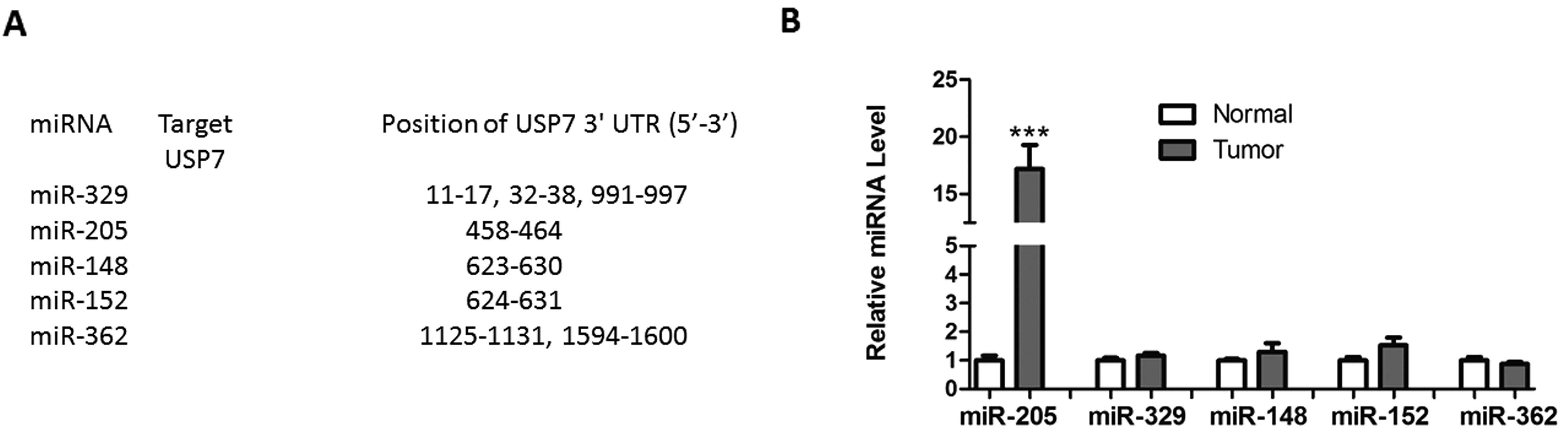
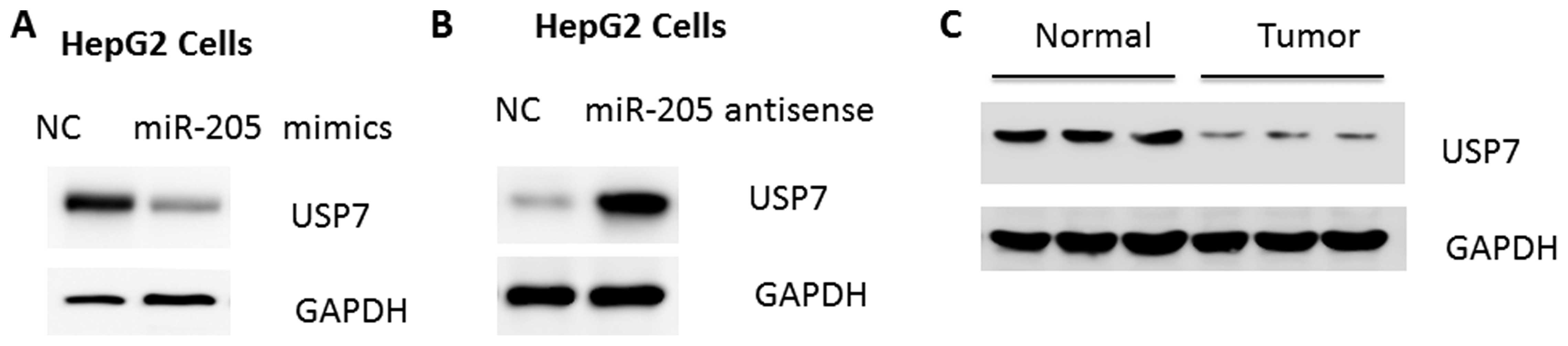
Using the TargetScan algorithm based on seed recognition, several miRNAs were identified, which may potentially interact with the USP7 transcript (Fig. 1A). However, only miR-205 was significantly upregulated in HCC tissues, compared with normal tissues (Fig. 1B). To assess whether miR-205 regulates USP7, miR-205 mimic or antisense were introduced into HepG2 human hepatoma cells. As a result, expression of miR-205 and anti-miR-205 reduced and increased the quantity of USP7 protein, respectively (Fig. 2A and B). Concurrent with the upregulation of miR-205, a marked reduction of USP7 protein levels was observed in HCC tissues (Fig. 2C), further suggesting that USP7 may be a target of miR-205 in HCC development.

Figure 1

miR-205 is upregulated in human HCC tissues. (A) Computer prediction of miRNA binding sites in the 3′UTRs of the human USP7 gene. (B) Expression of miRNAs was determined by reverse transcription-quantitative polymerase chain reaction in human HCC tissues (tumor, n=32) and adjacent noncancerous tissues (normal, n=28). ***P<0.001, compared with normal. HCC, hepatocellular carcinoma; miRNAs, microRNAs; UTR, untranslated region; USP7, ubiquitin specific peptidase 7.

Figure 2

miR-205 regulates USP7 expression in HepG2 cells. Western blot analysis of USP7 expression in HepG2 cells transfected with (A) miR-205 mimics and (B) antisense. (C) Representative USP protein levels were determined by western blot analysis in HCC tissues (tumor) and adjacent noncancerous tissues (normal). HCC, hepatocellular carcinoma; miR, microRNA; USP7, ubiquitin specific peptidase 7.

miR-205 interacts with the 3′UTR of USP7

To understand how miR-205 regulates USP7 expression, the luciferase reporter plasmids containing the 3′UTR of USP7 were co-transfected with miR-205 mimics or antisense oligonucleotides. As shown in Fig. 3A, miR-205 mimics led to a reduction and antisense led to an increase in luciferase activity. Furthermore, mutagen-esis of the seed sequence eliminated the effects of miR-205 mimics or antisense oligonucleotides on USP7 activity (Fig. 3B). When co-expressed with a plasmid encoding green fluorescent protein-tagged human USP7 lacking the 3′UTR, neither miR-205 nor anti-miR-205 had an effect on USP7 activity (Fig. 3C). These results suggest that miR-205 binds to the 3′UTR of USP7 and reduces its protein contents.

Figure 3

miR-205 targets the 3′UTR region of human USP7 gene. Luciferase reporter assays in HepG2 cells. Cells were transfected with 400 ng of (A) WT 3′-UTR-reporter or (B) mut constructs together with miR-205 mimics, antisense or NC. **P<0.01. (C) Luciferase assays in HepG2 cells transfected with 400 ng of the GFP-hUSP7 plasmid that lacks the USP7 3′UTR and then transfected with the indicated miRNAs. HCC, hepatocellular carcinoma; miRNAs, microRNAs; UTR, untranslated region; USP7, ubiquitin specific peptidase 7; GFP, green fluorescent protein; WT, wild-type; Mut, mutant.

miR-205 regulates the p53 signaling pathway in HepG2 cells

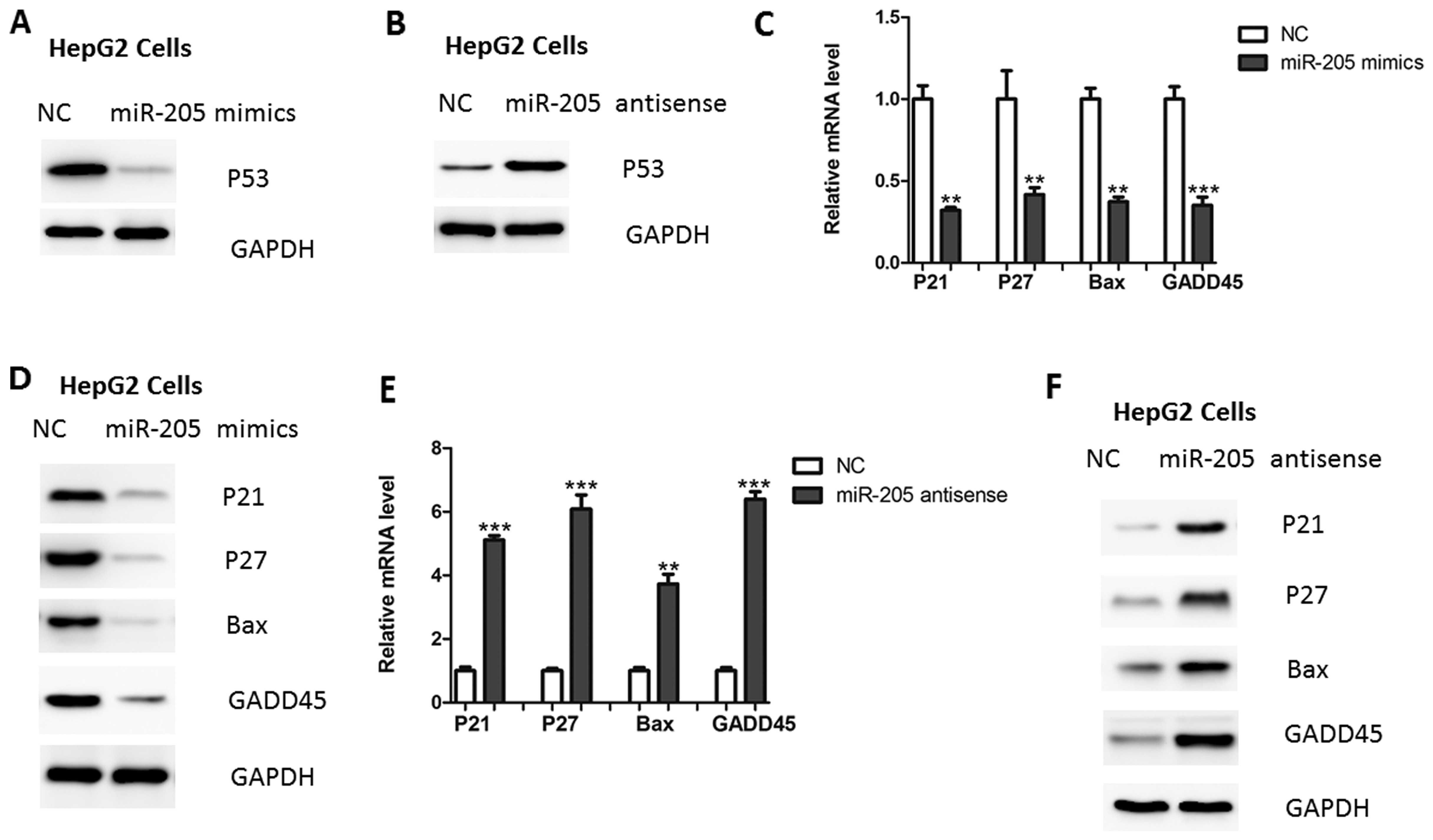
Due to the protective role of USP7 in p53 protein stability (6), it was determined whether miR-205 may affect the p53 stability. As shown in Fig. 4A, overexpression of miR-205 led to reduced p53 protein expression in HepG2 cells. Consistently, inhibition of miR-205 led to an increased expression of p53 (Fig. 4B). In addition, the downstream targets of p53 signaling, including p21, p27 and GADD45, were also regulated by miR-205 over-expression or inhibition (Fig. 4C–F).

Figure 4

miR-205 regulates the p53 signaling pathway in HepG2 cells. Western blot analysis of p53 expression in HepG2 cells transfected with (A) miR-205 mimics or (B) antisense. (C) mRNA and (D) protein levels of p21, p27, Bax and GADD45 expression in HepG2 cells transfected with miR-205 mimics or NC. (E) mRNA and (F) protein levels of p21, p27, Bax and GADD45 expression in HepG2 cells transfected with miR-205 antisense or NC. NC, negative control; miRNAs, microRNAs; GADD45, growth arrest and DNA damage 45.

miR-205 positively promotes cell proliferation

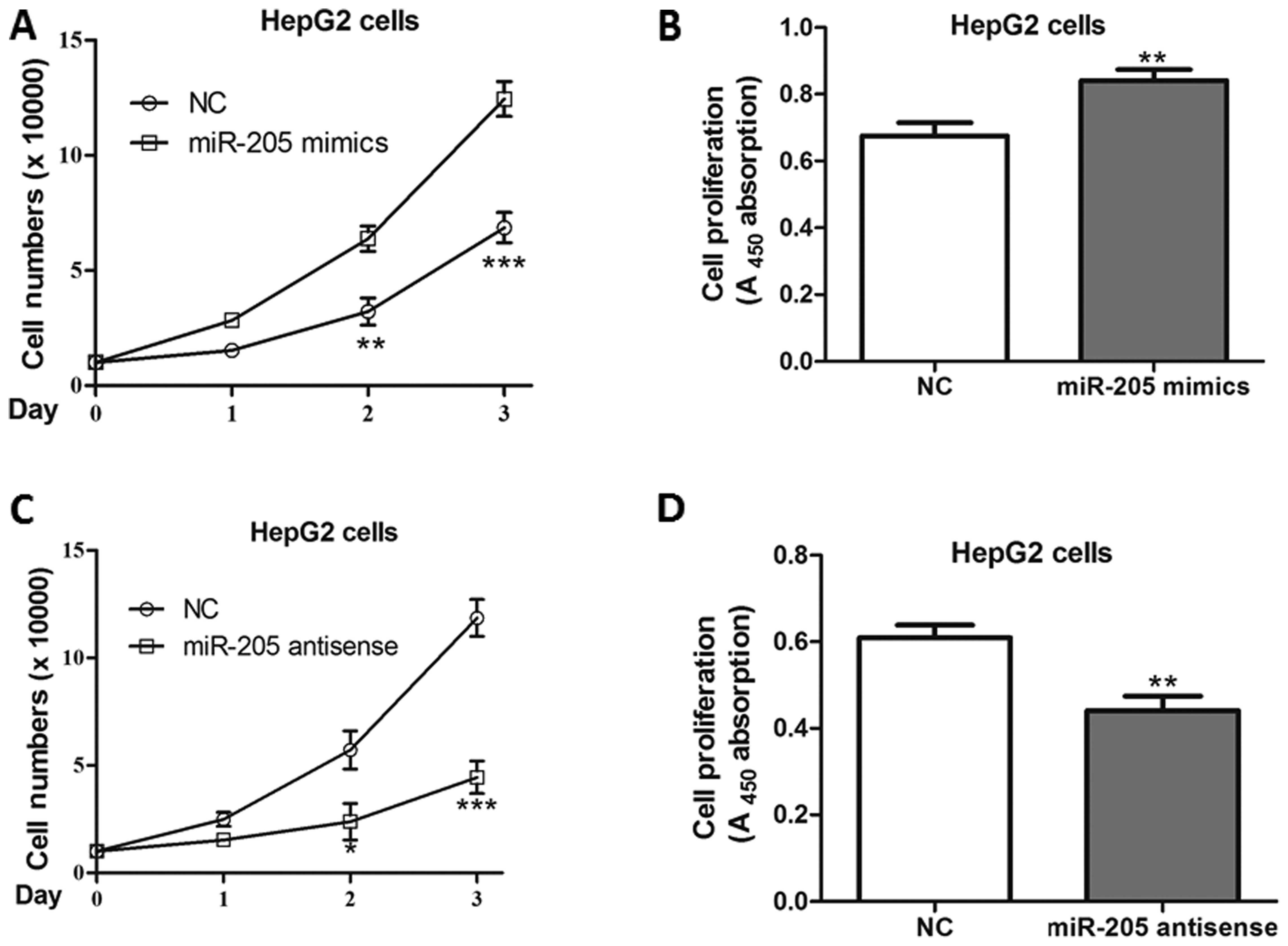
As the critical roles of the USP7-p53 regulatory axis is involved in cell proliferation, the effects of miR-205 on HepG2 cell growth were assessed. As a result, miR-205 mimics significantly increased cell numbers and promoted proliferation in cells post-transfection (Fig. 5A and B). Consistently, its antisense inhibited the growth of HepG2, compared with negative control-transfected cells (Fig. 5C and D).

Figure 5

miR-205 controls HCC cell proliferation. (A) Growth curve and (B) cell proliferation was determined in HepG2 cells following miR-205 mimic trans-fection compared with NC. (C) Growth curve and (D) cell proliferation was determined in HepG2 cells following miR-205 antisense transfection compared with NC. *P<0.05, **P<0.01 and ***P<0.001 compared with NC. NC, negative control; miRNAs, microRNAs; HCC, hepatocellular carcinoma.

Discussion

In the present study, it was demonstrated that miR-205 is upregulated in HCC tissues. In addition, miR-205 is able to inhibit cell proliferation in HepG2 cells, through regulation of USP7 protein levels. Therefore, for the first time, to the best of our knowledge, the present study identified that miR-205 may be an onco-microRNA involved in the progression of HCC. However, further studies are required to investigate its role in vivo.

It has been demonstrated that several miRNAs were dysregulated in HCC tissues or cell lines (13,14). For instance, an in-depth analysis of miRNomes in human HCC and normal liver has been performed, which identified that miR-199a/b-3p, the third most highly expressed miRNA in the liver, was consistently decreased in HCC (15). In addition, miR-199a/b-3p may target tumor-promoting p21 protein (Cdc42/Rac)-activated kinase 4 (PAK4) to suppress HCC growth through inhibiting the PAK4/Raf/mitogen-activated protein kinase kinase/extracellular signal-regulated kinase pathway in vitro and in vivo (15). Therefore, identification of more dysregulated miRNAs may aid in improving understanding of the important deregulated miRNAs in HCC.

The roles of miR-205 have been elucidated in other types of human cancer. miR-205 promotes tumor proliferation and invasion through targeting estrogen-related receptor-γ in endometrial carcinoma (16). In addition, miR-205 targets phosphatase and tensin homolog and PH domain and leucine rich repeat protein phosphatase 2 to augment protein kinase B signaling and drive malignant phenotypes in non-small cell lung cancer (17). However, miR-205 is frequently down-regulated in prostate cancer and acts as a tumor suppressor by inhibiting tumor growth (18). Although the reason for the inconsistency remains to be elucidated at present, the effects of miR-205 may be cell- or tissue-specific.

Previous studies have demonstrated that USP7 is regulated by several signals, such as interleukin-6-mediated signal transducer and activator of transcription 3 activation (19,20). However, whether its expression is controlled by miRNAs remains to be examined. Therefore, the present data on the functional interaction of miR-205 and USP7/p53 signaling in HCC may assist in elucidating mechanisms underlying tumorigenesis in HCC.

References

1 

Villanueva A, Hernandez-Gea V and Llovet JM: Medical therapies for hepatocellular carcinoma: a critical view of the evidence. Nat Rev Gastroenterol Hepatol. 10:34–42. 2013. View Article : Google Scholar

2 

Qing P, Han L, Bin L, Yan L and Ping WX: USP7 regulates the stability and function of HLTF through deubiquitination. J Cell Biochem. 112:3856–3862. 2011. View Article : Google Scholar : PubMed/NCBI

3 

Nicholson B and Suresh Kumar KG: The multifaceted roles of USP7: new therapeutic opportunities. Cell Biochem Biophys. 60:61–68. 2011. View Article : Google Scholar : PubMed/NCBI

4 

Lee JT and Gu W: The multiple levels of regulation by p53 ubiquitination. Cell Death Differ. 17:86–92. 2010. View Article : Google Scholar

5 

Colland F: The therapeutic potential of deubiquitinating enzyme inhibitors. Biochem Soc Trans. 38:137–143. 2010. View Article : Google Scholar : PubMed/NCBI

6 

Lee MH and Lozano G: Regulation of the p53-MDM2 pathway by 14-3-3 sigma and other proteins. Semin Cancer Biol. 16:225–234. 2006. View Article : Google Scholar : PubMed/NCBI

7 

Meulmeester E, Maurice MM, Boutell C, et al: Loss of HAUSP-mediated deubiquitination contributes to DNA damage-induced destabilization of Hdmx and Hdm2. Mol Cell. 18:565–576. 2005. View Article : Google Scholar : PubMed/NCBI

8 

Sun K and Lai EC: Adult-specific functions of animal microRNAs. Nat Rev Genet. 14:535–548. 2013. View Article : Google Scholar : PubMed/NCBI

9 

Ameres SL and Zamore PD: Diversifying microRNA sequence and function. Nat Rev Mol Cell Biol. 14:475–488. 2013. View Article : Google Scholar : PubMed/NCBI

10 

Liu Y, Xing R, Zhang X, et al: miR-375 targets the p53 gene to regulate cellular response to ionizing radiation and etoposide in gastric cancer cells. DNA Repair. 12:741–750. 2013. View Article : Google Scholar : PubMed/NCBI

11 

Nagano H, Tomimaru Y, Eguchi H, et al: MicroRNA-29a induces resistance to gemcitabine through the Wnt/beta-catenin signaling pathway in pancreatic cancer cells. Int J Oncol. 43:1066–1072. 2013.PubMed/NCBI

12 

Zhang S, Shan C, Kong G, Du Y, Ye L and Zhang X: MicroRNA-520e suppresses growth of hepatoma cells by targeting the NF-kappaB-inducing kinase (NIK). Oncogene. 31:3607–3620. 2012. View Article : Google Scholar

13 

Giordano S and Columbano A: MicroRNAs: new tools for diagnosis, prognosis and therapy in hepatocellular carcinoma? Hepatology. 57:840–847. 2013. View Article : Google Scholar

14 

Wong CM, Kai AK, Tsang FH and Ng IO: Regulation of hepatocar-cinogenesis by microRNAs. Front Biosci (Elite edi). 5:49–60. 2013.

15 

Hou J, Lin L, Zhou W, et al: Identification of miRNomes in human liver and hepatocellular carcinoma reveals miR-199a/b-3p as therapeutic target for hepatocellular carcinoma. Cancer Cell. 19:232–243. 2011. View Article : Google Scholar : PubMed/NCBI

16 

Su N, Qiu H, Chen Y, Yang T, Yan Q and Wan X: miR-205 promotes tumor proliferation and invasion through targeting ESRRG in endometrial carcinoma. Oncology Reports. 29:2297–2302. 2013.PubMed/NCBI

17 

Cai J, Fang L, Huang Y, et al: miR-205 targets PTEN and PHLPP2 to augment AKT signaling and drive malignant phenotypes in non-small cell lung cancer. Cancer Res. 73:5402–5415. 2013. View Article : Google Scholar : PubMed/NCBI

18 

Wang N, Li Q, Feng NH, et al: miR-205 is frequently down-regulated in prostate cancer and acts as a tumor suppressor by inhibiting tumor growth. Asian J Androl. 15:735–741. 2013. View Article : Google Scholar : PubMed/NCBI

19 

Yang Z, Huo S, Shan Y, et al: STAT3 repressed USP7 expression is crucial for colon cancer development. FEBS Lett. 586:3013–3017. 2012. View Article : Google Scholar : PubMed/NCBI

20 

van Loosdregt J, Fleskens V, Fu J, et al: Stabilization of the transcription factor Foxp3 by the deubiquitinase USP7 increases Treg-cell-suppressive capacity. Immunity. 39:259–271. 2013. View Article : Google Scholar : PubMed/NCBI

Related Articles

  • Abstract
  • View
  • Download
  • Twitter
Copy and paste a formatted citation
Spandidos Publications style
Zhu L, Liu R, Zhang W, Qian S and Wang JH: MicroRNA-205 regulates ubiquitin specific peptidase 7 protein expression in hepatocellular carcinoma cells. Mol Med Rep 12: 4652-4656, 2015.
APA
Zhu, L., Liu, R., Zhang, W., Qian, S., & Wang, J. (2015). MicroRNA-205 regulates ubiquitin specific peptidase 7 protein expression in hepatocellular carcinoma cells. Molecular Medicine Reports, 12, 4652-4656. https://doi.org/10.3892/mmr.2015.3998
MLA
Zhu, L., Liu, R., Zhang, W., Qian, S., Wang, J."MicroRNA-205 regulates ubiquitin specific peptidase 7 protein expression in hepatocellular carcinoma cells". Molecular Medicine Reports 12.3 (2015): 4652-4656.
Chicago
Zhu, L., Liu, R., Zhang, W., Qian, S., Wang, J."MicroRNA-205 regulates ubiquitin specific peptidase 7 protein expression in hepatocellular carcinoma cells". Molecular Medicine Reports 12, no. 3 (2015): 4652-4656. https://doi.org/10.3892/mmr.2015.3998
Copy and paste a formatted citation
x
Spandidos Publications style
Zhu L, Liu R, Zhang W, Qian S and Wang JH: MicroRNA-205 regulates ubiquitin specific peptidase 7 protein expression in hepatocellular carcinoma cells. Mol Med Rep 12: 4652-4656, 2015.
APA
Zhu, L., Liu, R., Zhang, W., Qian, S., & Wang, J. (2015). MicroRNA-205 regulates ubiquitin specific peptidase 7 protein expression in hepatocellular carcinoma cells. Molecular Medicine Reports, 12, 4652-4656. https://doi.org/10.3892/mmr.2015.3998
MLA
Zhu, L., Liu, R., Zhang, W., Qian, S., Wang, J."MicroRNA-205 regulates ubiquitin specific peptidase 7 protein expression in hepatocellular carcinoma cells". Molecular Medicine Reports 12.3 (2015): 4652-4656.
Chicago
Zhu, L., Liu, R., Zhang, W., Qian, S., Wang, J."MicroRNA-205 regulates ubiquitin specific peptidase 7 protein expression in hepatocellular carcinoma cells". Molecular Medicine Reports 12, no. 3 (2015): 4652-4656. https://doi.org/10.3892/mmr.2015.3998
Follow us
  • Twitter
  • LinkedIn
  • Facebook
About
  • Spandidos Publications
  • Careers
  • Cookie Policy
  • Privacy Policy
How can we help?
  • Help
  • Live Chat
  • Contact
  • Email to our Support Team