Introduction
Idiopathic pulmonary fibrosis (IPF) is a refractory
and lethal form of progressive fibrotic lung disorder that is
characterized by fibroblast proliferation, extracellular matrix
deposition and progressive lung scarring. IPF exhibits the
histopathologic pattern of usual interstitial pneumonia and the
incidence of IPF worldwide has gradually increased annually
(1). Mesenchymal stem cell (MSC)
therapy has previously been reported as a promising method for lung
tissue regeneration and protection (2). Zhang et al revealed that MSCs
are important in lung repair and promote collagen fiber deposition
following induction of secondary damage in alveolar type (AT) II
cells using rAAV-SPA-TK, which involves hypoxia-inducible factor-1α
and stromal cell-derived factor 1 signaling (3). Moodley et al reported that
human umbilical cord MSCs reduce fibrosis of bleomycin
(BLM)-induced lung injury (4), and
Gupta et al reported that intrapulmonary delivery of bone
marrow-derived MSCs (BMSCs) improves survival and attenuates
endotoxin-induced acute lung injury in mice (5).
However, reports on the effect of transplanted
adipose-derived stem cells (ADSCs) in mice with IPF were rare. When
compared with BMSCs, ADSCs are more abundant, widely available and
possess similar properties to BMSCs, such as multiple
differentiation potential, high proliferation and immunoregulatory
ability (6,7). Therefore, investigating the effect of
ADSCs in mice with IPF was required.
In the present study, it was hypothesized that
transplanted ADSCs could promote the repair of lung injury and
relieve IPF. To test the hypothesis, ADSCs were delivered
systemically into IPF mice via the tail vein to assess the
effects.
Materials and methods
Animals
Sixty C57BL/6 mice (weight, 12–16 g) were procured
from the Center of Experimental Animals, Shanghai Medical College,
Fudan University (Shanghai, China). Mice were given free access to
water and a standard rodent diet (no. 2920; Harlan Laboratories,
Indianapolis, IN, USA).
To induce fibrotic changes, the animals were
intratracheally injected with BLM (Blenoxane; Mead Johnson,
Princeton, NJ, USA) at a dose of 2.5 U/kg mouse body weight, as
previously described (8). All of
the animal studies were reviewed and approved by the Ethics
Committee of Tongji University School of Medicine (Shanghai,
China).
Isolation and expansion of mouse
ADSCs
ADSCs were harvested from the inguinal groove of the
mice. The adipose tissue samples were isolated and incubated in
alpha-minimal essential medium (MEM) containing 10% fetal bovine
serum (FBS; GE Healthcare Life Sciences, Logan, UT, USA) and 0.1%
collagenase type IV solution at 37°C for 45–60 min. The digested
tissues were filtered through 45-mm nylon filter mesh (BD
Biosciences, Franklin Lakes, NJ, USA) and centrifuged at 157 × g
for 5 min. Following removal of the supernatant, pellets was
resuspended in alpha-MEM supplemented with 10% FBS, and the cells
were plated in 10-cm tissue culture dishes and cultured at 37°C in
a 5% CO2 incubator. The culture medium was changed every
two days, and the cells were passaged after reaching 80–90%
confluence (9).
Experimental design
The mice were randomly divided into four groups: i)
A, normal control; ii) B, IPF; iii) C, IPF + phosphate-buffered
saline (PBS); and iv) D, IPF + ADSC transplantation. ADSCs
(1×10⁶ cells/ml) were systemically administered to the
mice in ~250 μl PBS via the tail vein, as described
previously (3). The control group
received the same volume of PBS only. The mice were sacrificed on
day 7, and the lung tissues were sampled for morphometric analysis
and immunohistochemical staining.
TUNEL assay for apoptosis detection
Paraffin-embedded samples (thickness, 4 μm)
was rehydrated and then incubated with Proteinase K solution (Life
Technologies, Carlsbad, CA, USA) for 30 min at room temperature.
The samples were incubated with TUNEL reaction solution (BD
Pharmingen, San Diego, CA, USA) at 37°C for 60 min after two washes
with PBS. As previously described (10), the transforming solution was added
and the samples were incubated at 37°C for 30 min. Staining was
developed with 3,3′-diaminobenzidine tetrahydrochloride for 15 min.
The samples were subsequently counterstained with hematoxylin for
15 min, dehydrated in graded alcohol and covered with resin.
Positive staining was indicated by a nuclei that was pale
brown.
Morphometric analysis and
immunohistochemical staining
Cryosections (thickness, 5 μm) were stained
with hematoxylin and eosin for morphometry or collagen fiber
detection. Additional cryosections were used for the immunostaining
of the matrix metalloproteinase (MMP)-2 antibody (cat. no.
ab124292; Abcam, Cambridge, UK) and the MMP-9 antibody (cat. no.
ab38898; Abcam) as previously described (11).
Hydroxyproline (Hyp) detection
The Hyp level in the lungs of mice was used to
quantify the lung collagen content, as described previously
(10). At the time of sacrifice,
the mouse lungs were removed and any extra pulmonary airways and
blood vessels were excised and discarded. The lung parenchyma was
homogenized in 1.0 ml PBS and 1.0 ml 12N HCl was added. The samples
were subsequently hydrolyzed at 110°C for 24 h and 5 μl of
each sample was mixed with 5 μl citrate/acetate buffer (5%
citric acid, 1.2% glacial acetic acid, 7.25% sodium acetate and
3.4% sodium hydroxide). Chloramine-T solution (100 μl; 1.4%
chloramine-T, 10% N-propanol and 80% citrate/acetate buffer) was
added and the mixture was incubated for 20 min at room temperature.
Ehrlich's solution (1 ml) was added and the samples were incubated
at 65°C for 18 min. The absorbance was measured at 550 nm on a
spectrophotometer (Lambda 20 UV VIS; Perkin Elmer, Norwalk, CT,
USA).
Measurement of bronchoalveolar lavage
fluid (BALF)
An enzyme-linked immunosorbent assay kit (Abcam) was
used to detect the levels of BALF cytokines [interleukin-1 (IL-1),
platelet-derived growth factor (PDGF), and tumor necrosis factor
(TNF)-α] in accordance with the manufacturer's instructions.
Western blotting
Tissues were harvested on ice in a
radioimmunoprecipitation assay buffer (50 mmol/l Tris-HCl, pH 7.4,
0.25% Na-deoxycholate, 1 mmol/l EDTA, 1 mmol/l phenylmethylsulfonyl
fluoride, 150 mmol/l NaCl, 1 mg/ml aprotinin, 1 mg/ml pepstatin, 1
mg/ml leupeptin and 1 mmol/l sodium fluoride) and centrifuged at
12,000 × g for 18 min at 4°C. Protein concentrations were
determined using a bicinchoninic acid protein assay (Abcam) with
bovine serum albumin (Sigma-Aldrich, St. Louis, MO, USA) as the
standard. The samples were boiled in sample buffer at 100°C for 15
min. Equal quantities of protein (110 μg per sample) were
separated by electrophoresis on 7.6–11% Tris-glycine sodium dodecyl
sulfate polyacrylamide gels. Following electrophoresis, the
proteins were transferred onto nitrocellulose membranes that were
blocked and incubated with anti-MMP-2 (1:300; Abcam) and anti-MMP-9
(1:500; Abcam) at 4°C overnight. After washing, the membranes were
incubated with anti-rabbit secondary antibodies (1:2000; Life
Technologies) and reacted with enhanced chemiluminescence
horseradish peroxidase detection reagents (GE Healthcare Life
Sciences). The western blots were scanned and analyzed on a Storm
860 Phosphorimager (GE Healthcare).
Statistical analysis
Values are expressed as means ± standard deviation
and were analyzed by one-way analysis of variance. P<0.05 was
considered to indicate a statistically significant difference.
Results
ADSC intervention alleviated IPF
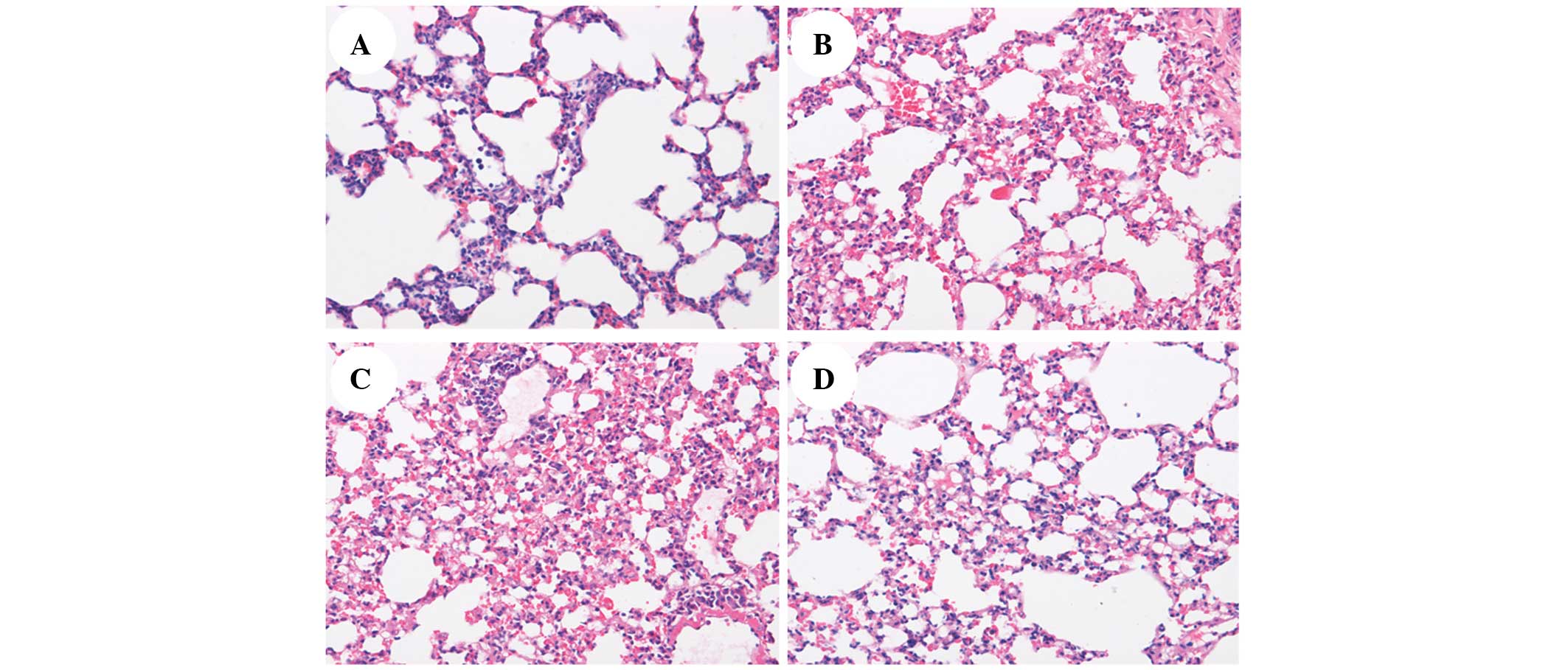
Mice in the IPF and IPF + PBS treatment groups
demonstrated severe alveolar destruction compared with that of the
normal control group and the ADSC intervention group. Pathological
changes were observed, such as a significant increase in collagen
fibers around the bronchi and vessels of the IPF and IPF + PBS
treatment groups, and light blue collagen fibers were identified in
the interstitial lung. These data indicate that ADSC intervention
alleviates IPF (Fig. 1).
ADSC transplantation decreases the
apoptosis of alveolar epithelial cells
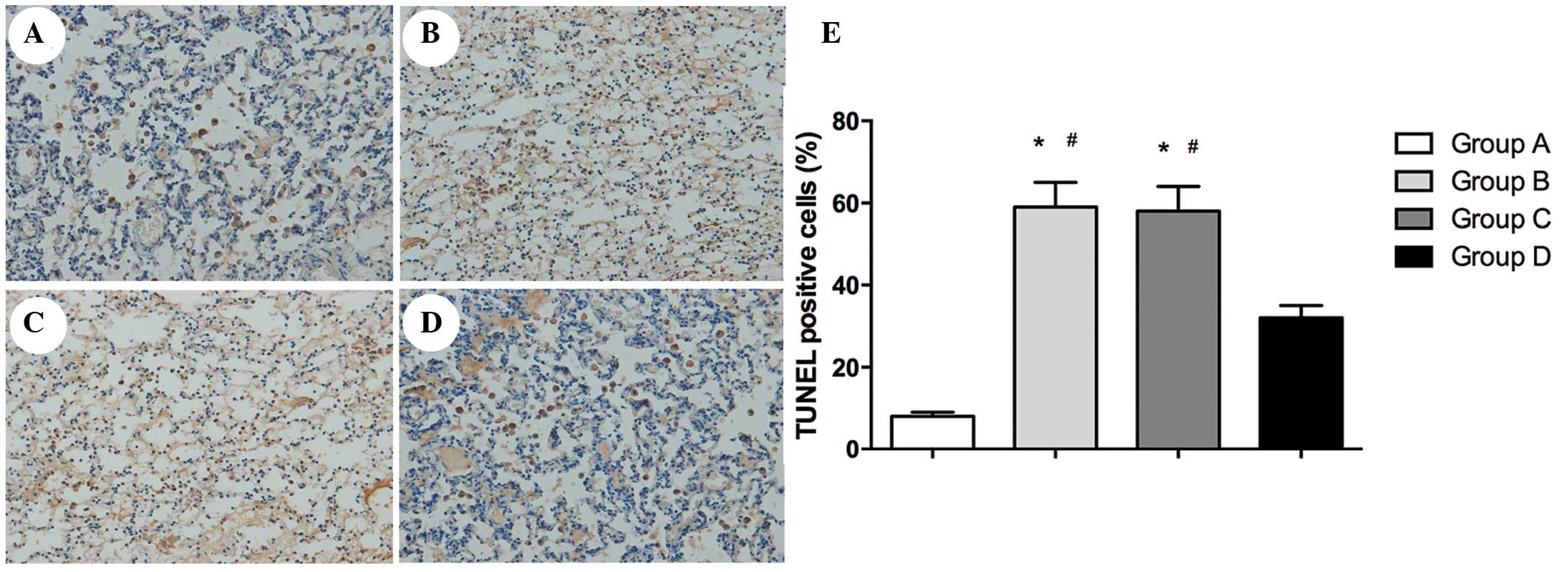
As shown in Fig. 2,
the cell nuclei of the apoptotic alveolar epithelial cells were
stained yellow. The number of apoptotic cells in the ADSC
transplantation group was less than that of groups B and C,
indicating that the transplantation of ADSCs contributes to a
decrease in apoptotic lung cells.
Immunohistochemical staining of MMP-2 and
MMP-9
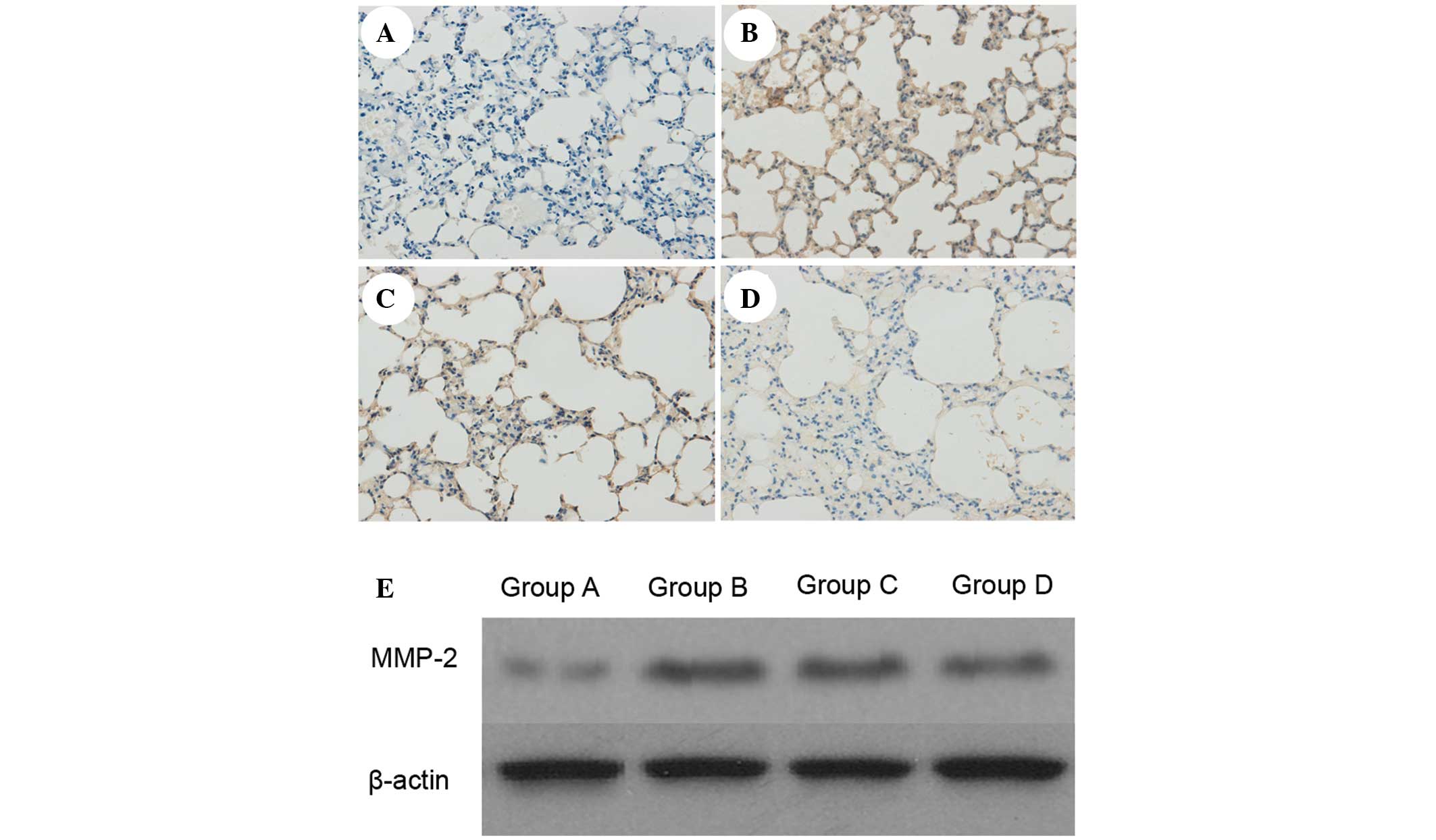
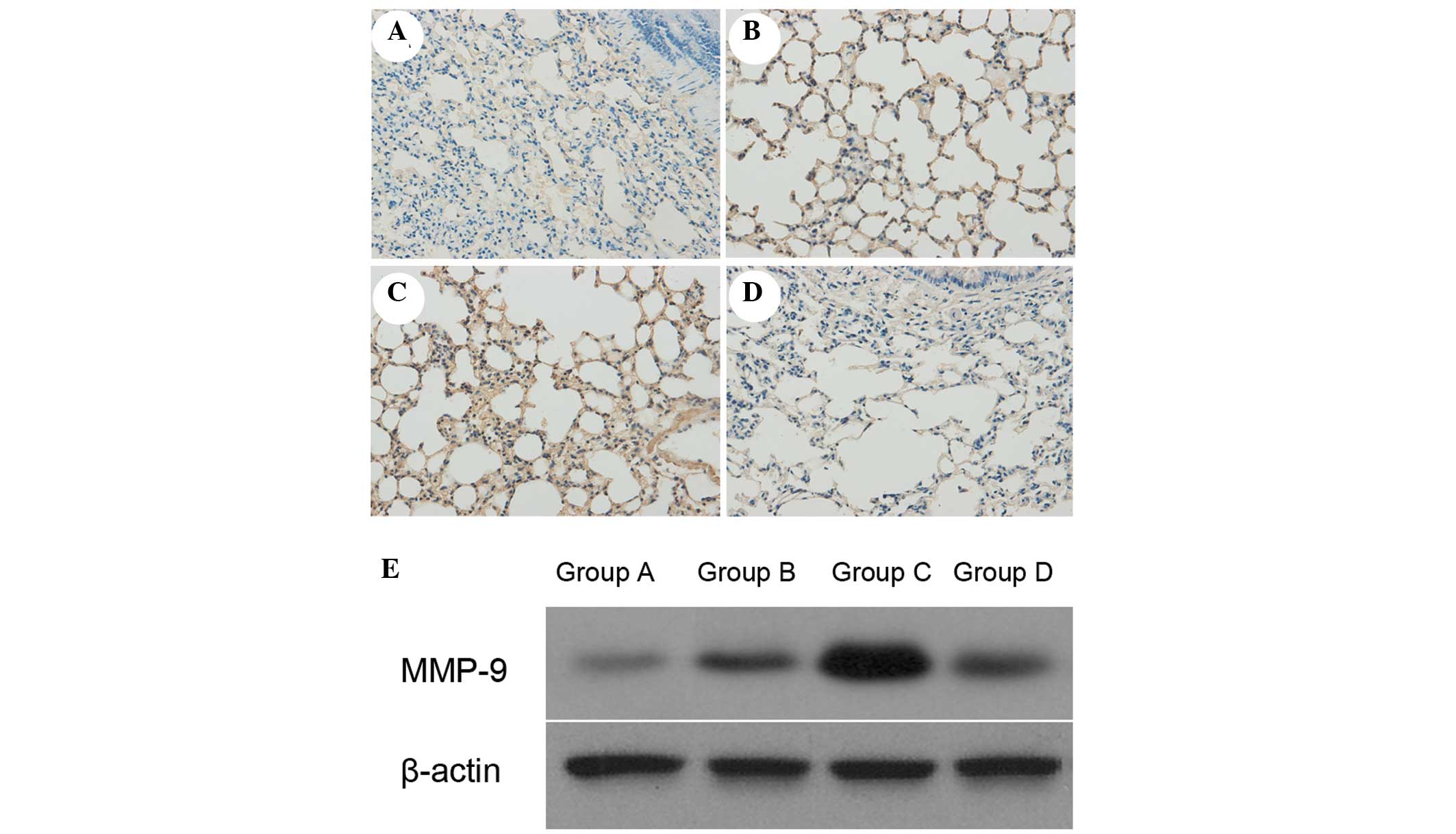
A large number of cells with a yellow-stained
cytoplasm were identified in the IPF and the IPF + PBS treatment
groups, although not in the normal control group, indicating
increased collagen deposition in these two groups. However, no
significant difference was observed between the IPF and the IPF +
PBS treatment groups (P>0.05; Figs.
3 and 4).
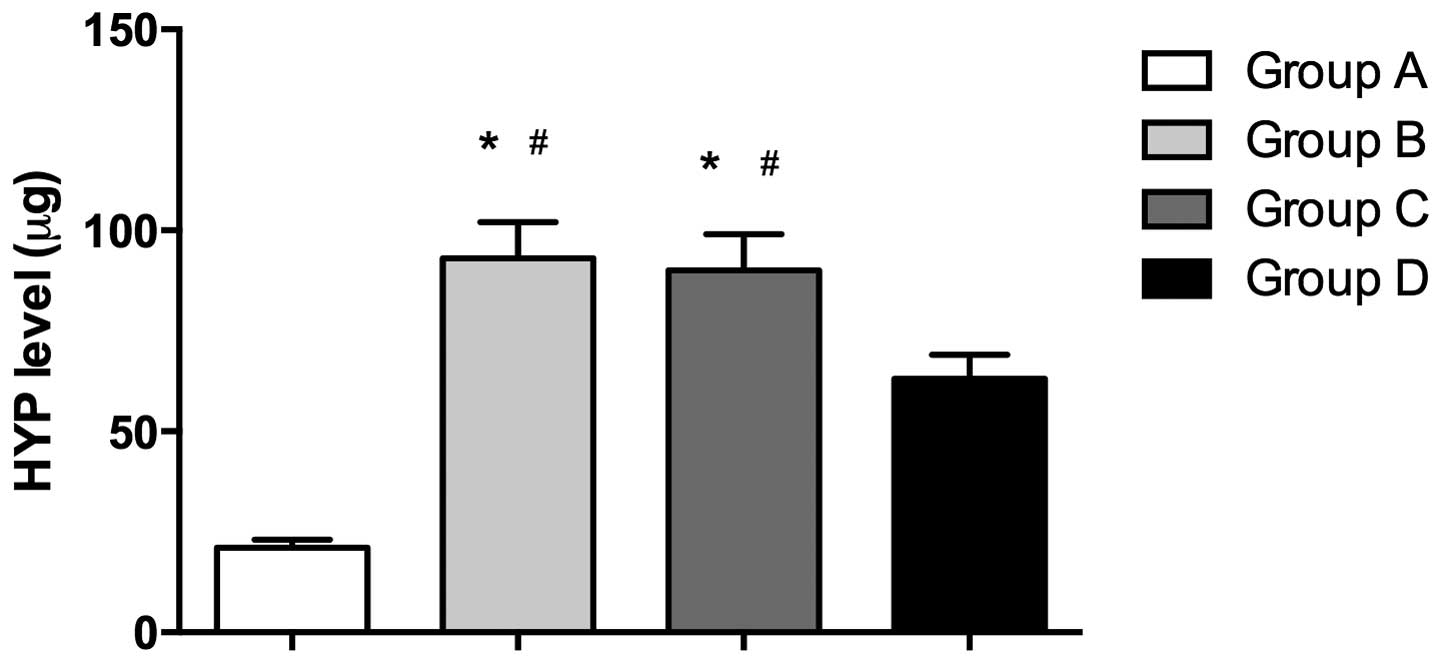
Hyp content in lung tissue samples
When compared with that of groups A and D, an
increase in the Hyp content was observed in groups B and C,
indicating that collagen deposition increased following lung IPF,
and ADSC transplantation decreased the occurrence of lung fibrosis
(P<0.05; Fig. 5).
Increased IL-1, PDGF and TNF-α levels in
the BALF of each IPF group
The concentrations of IL-1, PDGF, and TNF-α in the
BALF of groups B, C and D were observed to be significantly
increased when compared with those observed in the control group
(A). The expression of IL-1, PDGF,and TNF-α was not significantly
different between groups B and C; however, the cytokine level was
significantly decreased in the ADSC transplantation group, when
compared with that of groups B and C. These results indicate that
transplantation of ADSCs decreases the production of these
particular proinflammatory factors within the mouse lung (Fig. 6).
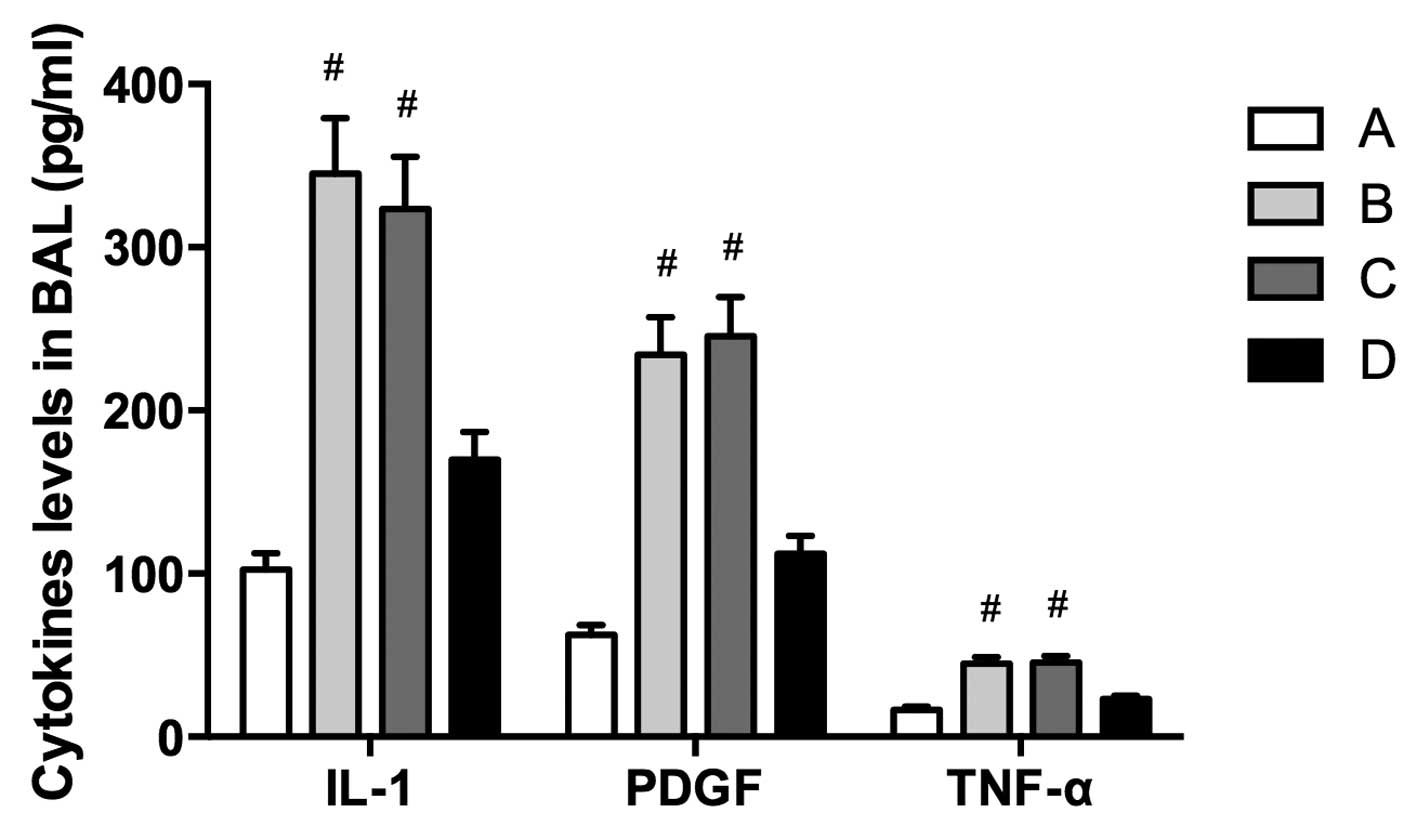 | Figure 6IL-1, PDGF and TNF-α levels in the
BALF of each group. When compared with the cytokine level in group
D (IPF + ADSCs), the concentrations of IL-1, PDGF and TNF-α in the
BALF of groups B (IPF) and C (IPF + phosphate-buffered saline) were
significantly increased. The expression of IL-1, PDGF and TNF-α was
not significantly different between groups B and C; however, the
cytokine level was significantly decreased in the ADSC
transplantation group when compared with that in groups B and C.
(*P<0.05, compared with Group A;
#P<0.05, compared with Group D). BALF,
bronchoalveolar lavage fluid; IL-1, interleukin-1; PDGF,
platelet-derived growth factor; TNF-α, tumor necrosis factor alpha;
IPF, idiopathic pulmonary fibrosis; ADSCs, adipose-derived stem
cells. |
Discussion
It has been reported that MSCs may be used for the
treatment of lung disease, such as chronic obstructive pulmonary
disease (COPD) and IPF (12–15).
Furthermore, BMSCs have been identified as effective in the therapy
of pulmonary fibrosis (16–18).
As the harvesting of BMSCs is considered to be difficult and low
yielding, ADSCs may potentially be an ideal cell source, owing to
the biological features that are comparable with BMSCs. Therefore,
in the current study, the effect of transplanted ADSCs in mice with
IPF was evaluated.
The IPF mouse model was established by injecting
mice with BLM (a glycopeptide antibiotic that is produced by the
bacterium, Streptomyces verticillus), which causes pulmonary
fibrosis and impairs lung function. The epithelium of the mouse
airway was subjected to BLM exposure, which resulted in the
development IPF and cystic fibrosis (19).
Previous studies have identified that AT II cells
may be involved in the repair and regeneration of damaged alveoli
in cases of IPF; however, this type of cell is rare (20,21).
Therefore, the transplantation of exogenous stem cells to enhance
the repair capacity of the lungs may provide an effective
alternative. In the current study, the effect of ADSC
transplantation into mice with IPF was investigated. Histological
staining revealed thickening of the pulmonary interstitium,
narrowing alveolar width, and pulmonary fibrosis, which were
observed in the IPF and the IPF + PBS groups, whereas attenuating
responses were observed in the ADSC transplantation group. The
collagen fiber deposition was also apparent in the IPF and the IPF
+ PBS groups. This finding indicates that injection of ADSCs
decreases pulmonary fibrosis; however, the specific underlying
mechanism remains unclear. Recent studies have indicated that lung
MSCs are triggered to differentiate into myofibroblasts in a local
microenvironment, which induces pulmonary fibrosis (22,23).
In the present study, the ADSCs were injected into mice 1 h after
pulmonary fibrosis induction, and it was hypothesized that ADSCs
could not differentiate into myofibroblasts at this early
stage.
MMP is a type of proteinase that is capable of
degrading the extracellular matrix, which has been reported as
vital in lung fibrosis (24).
MMP-2 and MMP-9 levels were considered to be directly proportional
to the occurrence of pulmonary fibrosis, and overactivation of
MMP-2 may be the cause of type IV collagen degradation, which is
involved in the initiation of lung fibrosis. In the present study,
immunohistochemical staining of MMP-2 and MMP-9 revealed that the
expression of MMPs in the lungs of mice increased following BLM
treatment. The same results were also observed during western blot
analysis. Kim et al reported that the MMP-2/MMP-9 activity
was upregulated in the early stage of lung fibrosis, while the
expression of tissue inhibitor of metalloproteinases, TIMP1/2
increased and MMP-2/MMP-9 activity decreased in the later time
period (25). In addition, it has
been reported that the level of MMPs in the serum and sputum of
COPD patients increased, although the specific association between
MMPs and COPD requires further investigation. Notably, the
expression of MMPs decreased significantly following ADSC
transplantation, indicating that ADSC transplantation may be
involved in the process of lung repair. It was hypothesized in the
current study that ADSCs migrate into the injured lung and
proliferate, thus inhibiting fibroblast proliferation and collagen
deposition.
Additionally, Hyp has been recognized as a key
marker of collagen deposition in pulmonary fibrosis. Therefore, in
the present study, the expression of Hyp was detected and the
result revealed increased collagen fiber deposition in the IPF and
IPF + PBS groups. Wang et al also reported that immediate
MSC transplantation following fibrosis induction decreased the Hyp
content (26), however, the MSC
transplantation at a later stage of fibrosis induction in mice
demonstrated no significant improvement to lung fibrosis,
indicating that stem cells transplantation at an early stage may be
critical in lung repair.
In conclusion, ADSC transplantation in the lungs may
enhance lung injury repair and extenuate lung fibrosis when
administered at an early stage, thus providing an effective option
for the treatment of lung diseases, such as IPF and COPD.
Acknowledgments
The present study was supported by the Shanghai
Municipal Natural Science Foundation (no. 14ZR1434500).
References
|
1
|
Tzouvelekis A, Koliakos G, Ntolios P,
Baira I, Bouros E, Oikonomou A, Zissimopoulos A, Kolios G, Kakagia
D, Paspaliaris V, et al: Stem cell therapy for idiopathic pulmonary
fibrosis: a protocol proposal. J Transl Med. 9:1822011. View Article : Google Scholar : PubMed/NCBI
|
|
2
|
D'Agostino B, Sullo N, Siniscalco D, De
Angelis A and Rossi F: Mesenchymal stem cell therapy for the
treatment of chronic obstructive pulmonary disease. Expert Opin
Biol Ther. 10:681–687. 2010. View Article : Google Scholar : PubMed/NCBI
|
|
3
|
Zhang WG, He L, Shi XM, Wu SS, Zhang B,
Mei L, Xu YJ, Zhang ZX, Zhao JP and Zhang HL: Regulation of
transplanted mesenchymal stem cells by the lung progenitor niche in
rats with chronic obstructive pulmonary disease. Respir Res.
15:332014. View Article : Google Scholar : PubMed/NCBI
|
|
4
|
Moodley Y, Atienza D, Manuelpillai U,
Samuel CS, Tchongue J, Ilancheran S, Boyd R and Trounson A: Human
umbilical cord mesenchymal stem cells reduce fibrosis of
bleomycin-induced lung injury. Am J Pathol. 175:303–313. 2009.
View Article : Google Scholar : PubMed/NCBI
|
|
5
|
Gupta N, Su X, Popov B, Lee JW, Serikov V
and Matthay MA: Intrapulmonary delivery of bone marrow-derived
mesenchymal stem cells improves survival and attenuates
endotoxin-induced acute lung injury in mice. J Immunol.
179:1855–1863. 2007. View Article : Google Scholar : PubMed/NCBI
|
|
6
|
Taghi GM, Ghasem Kashani Maryam H, Taghi
L, Leili H and Leyla M: Characterization of in vitro cultured bone
marrow and adipose tissue-derived mesenchymal stem cells and their
ability to express neurotrophic factors. Cell Biol Int.
36:1239–1249. 2012. View Article : Google Scholar : PubMed/NCBI
|
|
7
|
Nakao N, Nakayama T, Yahata T, Muguruma Y,
Saito S, Miyata Y, Yamamoto K and Naoe T: Adipose tissue-derived
mesenchymal stem cells facilitate hematopoiesis in vitro and in
vivo: advantages over bone marrow-derived mesenchymal stem cells.
Am J Pathol. 177:547–554. 2010. View Article : Google Scholar : PubMed/NCBI
|
|
8
|
Ding L, Dolgachev V, Wu Z, Liu T,
Nakashima T, Wu Z, Ullenbruch M, Lukacs NW, Chen Z and Phan SH:
Essential role of stem cell factor-c-Kit signalling pathway in
bleomycin-induced pulmonary fibrosis. J Pathol. 230:205–214. 2013.
View Article : Google Scholar : PubMed/NCBI
|
|
9
|
Liu HY, Chiou JF, Wu AT, Tsai CY, Leu JD,
Ting LL, Wang MF, Chen HY, Lin CT, Williams DF, et al: The effect
of diminished osteogenic signals on reduced osteoporosis recovery
in aged mice and the potential therapeutic use of adipose-derived
stem cells. Biomaterials. 33:6105–6112. 2012. View Article : Google Scholar : PubMed/NCBI
|
|
10
|
Hattori N, Degen JL, Sisson TH, Liu H,
Moore BB, Pandrangi RG, Simon RH and Drew AF: Bleomycin-induced
pulmonary fibrosis in fibrinogen-null mice. J Clin Invest.
106:1341–1350. 2000. View
Article : Google Scholar : PubMed/NCBI
|
|
11
|
Monteiro-Amado F, Castro-Silva II, Lima
CJ, Soares FA, Kowalski LP and Granjeiro JM: Immunohistochemical
evaluation of MMP-2, MMP-9 and CD31/microvascular density in
squamous cell carcinomas of the floor of the mouth. Braz Dent J.
24:3–9. 2013. View Article : Google Scholar : PubMed/NCBI
|
|
12
|
Inamdar AC and Inamdar AA: Mesenchymal
stem cell therapy in lung disorders: pathogenesis of lung diseases
and mechanism of action of mesenchymal stem cell. Exp Lung Res.
39:315–327. 2013. View Article : Google Scholar : PubMed/NCBI
|
|
13
|
Moodley Y, Manuelpillai U and Weiss DJ:
Cellular therapies for lung disease: a distant horizon.
Respirology. 16:223–237. 2011. View Article : Google Scholar : PubMed/NCBI
|
|
14
|
Sdrimas K and Kourembanas S: MSC
microvesicles for the treatment of lung disease: a new paradigm for
cell-free therapy. Antioxid Redox Signal. 21:1905–1915. 2014.
View Article : Google Scholar : PubMed/NCBI
|
|
15
|
Huleihel L, Levine M and Rojas M: The
potential of cell-based therapy in lung diseases. Expert Opin Biol
Ther. 13:1429–1440. 2013. View Article : Google Scholar : PubMed/NCBI
|
|
16
|
Rhieu BH, Epperly MW, Cao S, Franicola D,
Shields D, Goff J, Wang H and Greenberger JS: Increased
hematopoiesis in long-term bone marrow cultures and reduced
irradiation-induced pulmonary fibrosis in Von Willebrand factor
homologous deletion recombinant mice. In Vivo. 28:449–456.
2014.PubMed/NCBI
|
|
17
|
Gilpin SE, Lung K, de Couto GT, Cypel M,
Sato M, Singer LG, Keshavjee S and Waddell TK: Bone marrow-derived
progenitor cells in end-stage lung disease patients. BMC Pulm Med.
13:482013. View Article : Google Scholar : PubMed/NCBI
|
|
18
|
Aguilar S, Scotton CJ, McNulty K, Nye E,
Stamp G, Laurent G, Bonnet D and Janes SM: Bone marrow stem cells
expressing keratinocyte growth factor via an inducible lentivirus
protects against bleomycin-induced pulmonary fibrosis. PLoS One.
4:e80132009. View Article : Google Scholar : PubMed/NCBI
|
|
19
|
Kalayarasan S, Sriram N, Soumyakrishnan S
and Sudhandiran G: Diallylsulfide attenuates excessive collagen
production and apoptosis in a rat model of bleomycin induced
pulmonary fibrosis through the involvement of protease activated
receptor-2. Toxicol Appl Pharmacol. 271:184–195. 2013. View Article : Google Scholar : PubMed/NCBI
|
|
20
|
Rawlins EL: Lung epithelial progenitor
cells: lessons from development. Proc Am Thorac Soc. 5:675–681.
2008. View Article : Google Scholar : PubMed/NCBI
|
|
21
|
Reynolds SD and Malkinson AM: Clara cell:
progenitor for the bronchiolar epithelium. Int J Biochem Cell Biol.
42:1–4. 2010. View Article : Google Scholar
|
|
22
|
Popova AP, Bozyk PD, Goldsmith AM, Linn
MJ, Lei J, Bentley JK and Hershenson MB: Autocrine production of
TGF-beta1 promotes myofibroblastic differentiation of neonatal lung
mesenchymal stem cells. Am J Physiol Lung Cell Mol Physiol.
298:L735–L743. 2010. View Article : Google Scholar : PubMed/NCBI
|
|
23
|
Sun Z, Wang C, Shi C, Sun F, Xu X, Qian W,
Nie S and Han X: Activated Wnt signaling induces myofibroblast
differentiation of mesenchymal stem cells, contributing to
pulmonary fibrosis. Int J Mol Med. 33:1097–1109. 2014.PubMed/NCBI
|
|
24
|
Lagente V, Manoury B, Nénan S, Le Quément
S, Martin-Chouly C and Boichot E: Role of matrix metalloproteinases
in the development of airway inflammation and remodeling. J Med
Biol Res. 38:1521–1530. 2005. View Article : Google Scholar
|
|
25
|
Kim JY, Choeng HC, Ahn C and Cho SH: Early
and late changes of MMP-2 and MMP-9 in bleomycin-induced pulmonary
fibrosis. Yonsei Med J. 50:68–77. 2009. View Article : Google Scholar : PubMed/NCBI
|
|
26
|
Wang Q, Zhu H, Zhou WG, Guo XC, Wu MJ, Xu
ZY, Jiang JF, Shen C and Liu HQ: N-acetylcysteine-pretreated human
embryonic mesenchymal stem cell administration protects against
bleomycin-induced lung injury. Am J Med Sci. 346:113–122. 2013.
View Article : Google Scholar
|