Spandidos Publications Logo
  • About
    • About Spandidos
    • Aims and Scopes
    • Abstracting and Indexing
    • Editorial Policies
    • Reprints and Permissions
    • Job Opportunities
    • Terms and Conditions
    • Contact
  • Journals
    • All Journals
    • Oncology Letters
      • Oncology Letters
      • Information for Authors
      • Editorial Policies
      • Editorial Board
      • Aims and Scope
      • Abstracting and Indexing
      • Bibliographic Information
      • Archive
    • International Journal of Oncology
      • International Journal of Oncology
      • Information for Authors
      • Editorial Policies
      • Editorial Board
      • Aims and Scope
      • Abstracting and Indexing
      • Bibliographic Information
      • Archive
    • Molecular and Clinical Oncology
      • Molecular and Clinical Oncology
      • Information for Authors
      • Editorial Policies
      • Editorial Board
      • Aims and Scope
      • Abstracting and Indexing
      • Bibliographic Information
      • Archive
    • Experimental and Therapeutic Medicine
      • Experimental and Therapeutic Medicine
      • Information for Authors
      • Editorial Policies
      • Editorial Board
      • Aims and Scope
      • Abstracting and Indexing
      • Bibliographic Information
      • Archive
    • International Journal of Molecular Medicine
      • International Journal of Molecular Medicine
      • Information for Authors
      • Editorial Policies
      • Editorial Board
      • Aims and Scope
      • Abstracting and Indexing
      • Bibliographic Information
      • Archive
    • Biomedical Reports
      • Biomedical Reports
      • Information for Authors
      • Editorial Policies
      • Editorial Board
      • Aims and Scope
      • Abstracting and Indexing
      • Bibliographic Information
      • Archive
    • Oncology Reports
      • Oncology Reports
      • Information for Authors
      • Editorial Policies
      • Editorial Board
      • Aims and Scope
      • Abstracting and Indexing
      • Bibliographic Information
      • Archive
    • Molecular Medicine Reports
      • Molecular Medicine Reports
      • Information for Authors
      • Editorial Policies
      • Editorial Board
      • Aims and Scope
      • Abstracting and Indexing
      • Bibliographic Information
      • Archive
    • World Academy of Sciences Journal
      • World Academy of Sciences Journal
      • Information for Authors
      • Editorial Policies
      • Editorial Board
      • Aims and Scope
      • Abstracting and Indexing
      • Bibliographic Information
      • Archive
    • International Journal of Functional Nutrition
      • International Journal of Functional Nutrition
      • Information for Authors
      • Editorial Policies
      • Editorial Board
      • Aims and Scope
      • Abstracting and Indexing
      • Bibliographic Information
      • Archive
    • International Journal of Epigenetics
      • International Journal of Epigenetics
      • Information for Authors
      • Editorial Policies
      • Editorial Board
      • Aims and Scope
      • Abstracting and Indexing
      • Bibliographic Information
      • Archive
    • Medicine International
      • Medicine International
      • Information for Authors
      • Editorial Policies
      • Editorial Board
      • Aims and Scope
      • Abstracting and Indexing
      • Bibliographic Information
      • Archive
  • Articles
  • Information
    • Information for Authors
    • Information for Reviewers
    • Information for Librarians
    • Information for Advertisers
    • Conferences
  • Language Editing
Spandidos Publications Logo
  • About
    • About Spandidos
    • Aims and Scopes
    • Abstracting and Indexing
    • Editorial Policies
    • Reprints and Permissions
    • Job Opportunities
    • Terms and Conditions
    • Contact
  • Journals
    • All Journals
    • Biomedical Reports
      • Information for Authors
      • Editorial Policies
      • Editorial Board
      • Aims and Scope
      • Abstracting and Indexing
      • Bibliographic Information
      • Archive
    • Experimental and Therapeutic Medicine
      • Information for Authors
      • Editorial Policies
      • Editorial Board
      • Aims and Scope
      • Abstracting and Indexing
      • Bibliographic Information
      • Archive
    • International Journal of Epigenetics
      • Information for Authors
      • Editorial Policies
      • Editorial Board
      • Aims and Scope
      • Abstracting and Indexing
      • Bibliographic Information
      • Archive
    • International Journal of Functional Nutrition
      • Information for Authors
      • Editorial Policies
      • Editorial Board
      • Aims and Scope
      • Abstracting and Indexing
      • Bibliographic Information
      • Archive
    • International Journal of Molecular Medicine
      • Information for Authors
      • Editorial Policies
      • Editorial Board
      • Aims and Scope
      • Abstracting and Indexing
      • Bibliographic Information
      • Archive
    • International Journal of Oncology
      • Information for Authors
      • Editorial Policies
      • Editorial Board
      • Aims and Scope
      • Abstracting and Indexing
      • Bibliographic Information
      • Archive
    • Medicine International
      • Information for Authors
      • Editorial Policies
      • Editorial Board
      • Aims and Scope
      • Abstracting and Indexing
      • Bibliographic Information
      • Archive
    • Molecular and Clinical Oncology
      • Information for Authors
      • Editorial Policies
      • Editorial Board
      • Aims and Scope
      • Abstracting and Indexing
      • Bibliographic Information
      • Archive
    • Molecular Medicine Reports
      • Information for Authors
      • Editorial Policies
      • Editorial Board
      • Aims and Scope
      • Abstracting and Indexing
      • Bibliographic Information
      • Archive
    • Oncology Letters
      • Information for Authors
      • Editorial Policies
      • Editorial Board
      • Aims and Scope
      • Abstracting and Indexing
      • Bibliographic Information
      • Archive
    • Oncology Reports
      • Information for Authors
      • Editorial Policies
      • Editorial Board
      • Aims and Scope
      • Abstracting and Indexing
      • Bibliographic Information
      • Archive
    • World Academy of Sciences Journal
      • Information for Authors
      • Editorial Policies
      • Editorial Board
      • Aims and Scope
      • Abstracting and Indexing
      • Bibliographic Information
      • Archive
  • Articles
  • Information
    • For Authors
    • For Reviewers
    • For Librarians
    • For Advertisers
    • Conferences
  • Language Editing
Login Register Submit
  • This site uses cookies
  • You can change your cookie settings at any time by following the instructions in our Cookie Policy. To find out more, you may read our Privacy Policy.

    I agree
Search articles by DOI, keyword, author or affiliation
Search
Advanced Search
presentation
Molecular Medicine Reports
Join Editorial Board Propose a Special Issue
Print ISSN: 1791-2997 Online ISSN: 1791-3004
Journal Cover
December-2016 Volume 14 Issue 6

Full Size Image

Sign up for eToc alerts
Recommend to Library

Journals

International Journal of Molecular Medicine

International Journal of Molecular Medicine

International Journal of Molecular Medicine is an international journal devoted to molecular mechanisms of human disease.

International Journal of Oncology

International Journal of Oncology

International Journal of Oncology is an international journal devoted to oncology research and cancer treatment.

Molecular Medicine Reports

Molecular Medicine Reports

Covers molecular medicine topics such as pharmacology, pathology, genetics, neuroscience, infectious diseases, molecular cardiology, and molecular surgery.

Oncology Reports

Oncology Reports

Oncology Reports is an international journal devoted to fundamental and applied research in Oncology.

Experimental and Therapeutic Medicine

Experimental and Therapeutic Medicine

Experimental and Therapeutic Medicine is an international journal devoted to laboratory and clinical medicine.

Oncology Letters

Oncology Letters

Oncology Letters is an international journal devoted to Experimental and Clinical Oncology.

Biomedical Reports

Biomedical Reports

Explores a wide range of biological and medical fields, including pharmacology, genetics, microbiology, neuroscience, and molecular cardiology.

Molecular and Clinical Oncology

Molecular and Clinical Oncology

International journal addressing all aspects of oncology research, from tumorigenesis and oncogenes to chemotherapy and metastasis.

World Academy of Sciences Journal

World Academy of Sciences Journal

Multidisciplinary open-access journal spanning biochemistry, genetics, neuroscience, environmental health, and synthetic biology.

International Journal of Functional Nutrition

International Journal of Functional Nutrition

Open-access journal combining biochemistry, pharmacology, immunology, and genetics to advance health through functional nutrition.

International Journal of Epigenetics

International Journal of Epigenetics

Publishes open-access research on using epigenetics to advance understanding and treatment of human disease.

Medicine International

Medicine International

An International Open Access Journal Devoted to General Medicine.

Journal Cover
December-2016 Volume 14 Issue 6

Full Size Image

Sign up for eToc alerts
Recommend to Library

  • Article
  • Citations
    • Cite This Article
    • Download Citation
    • Create Citation Alert
    • Remove Citation Alert
    • Cited By
  • Similar Articles
    • Related Articles (in Spandidos Publications)
    • Similar Articles (Google Scholar)
    • Similar Articles (PubMed)
  • Download PDF
  • Download XML
  • View XML
Article

Daidzein impairs Leydig cell testosterone production and Sertoli cell function in neonatal mouse testes: An in vitro study

  • Authors:
    • Yanfeng Zhu
    • Hua Xu
    • Min Li
    • Zhibin Gao
    • Jie Huang
    • Linxi Liu
    • Xiaoming Huang
    • Yun Li
  • View Affiliations / Copyright

    Affiliations: Department of Nutrition, Food Safety and Toxicology, West China School of Public Health, Sichuan University, Chengdu, Sichuan 610041, P.R. China, Department of Public Health, Luzhou Medical College, Luzhou, Sichuan 646000, P.R. China
  • Pages: 5325-5333
    |
    Published online on: October 26, 2016
       https://doi.org/10.3892/mmr.2016.5896
  • Expand metrics +
Metrics: Total Views: 0 (Spandidos Publications: | PMC Statistics: )
Metrics: Total PDF Downloads: 0 (Spandidos Publications: | PMC Statistics: )
Cited By (CrossRef): 0 citations Loading Articles...

This article is mentioned in:


Abstract

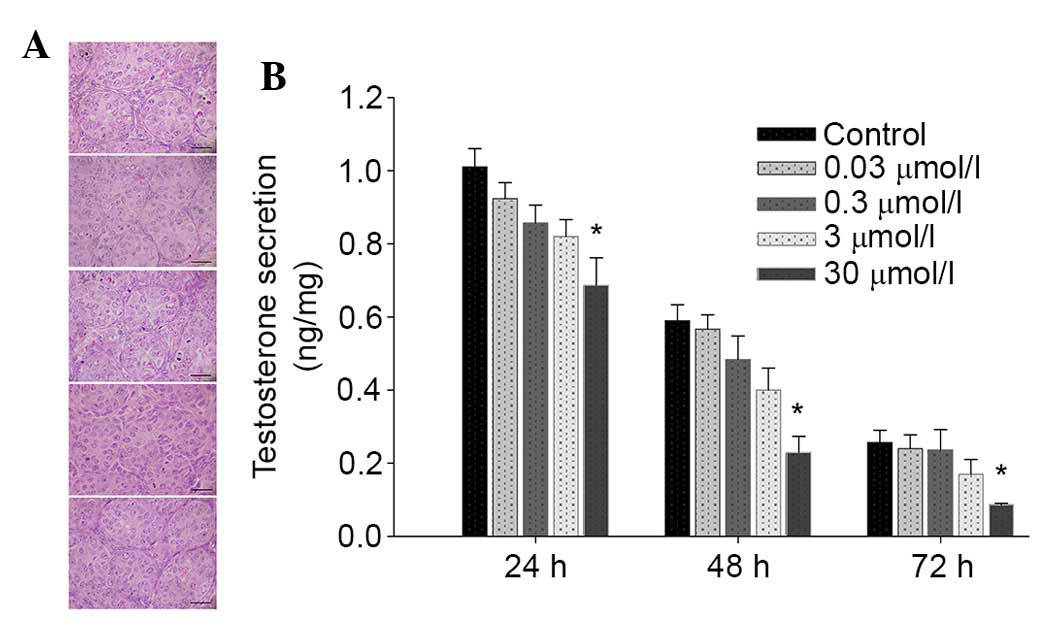
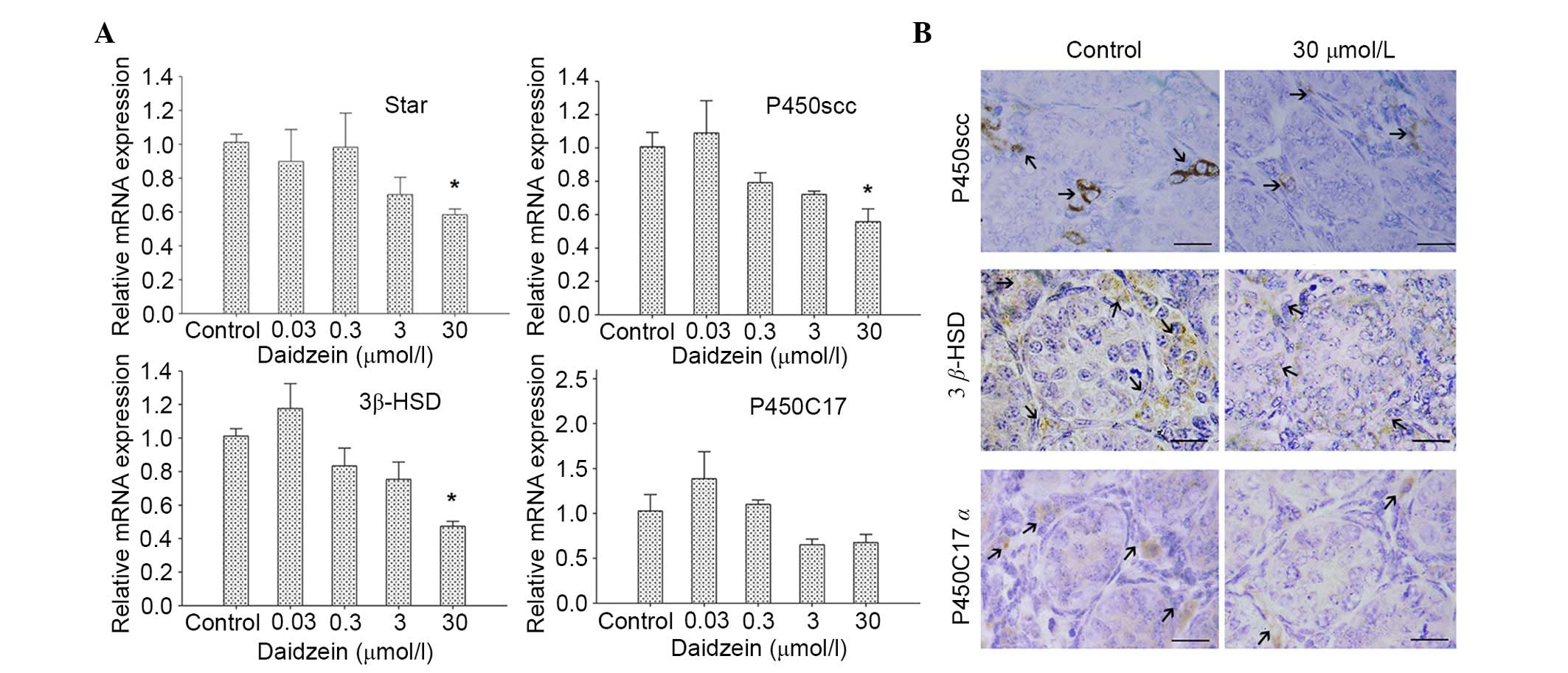
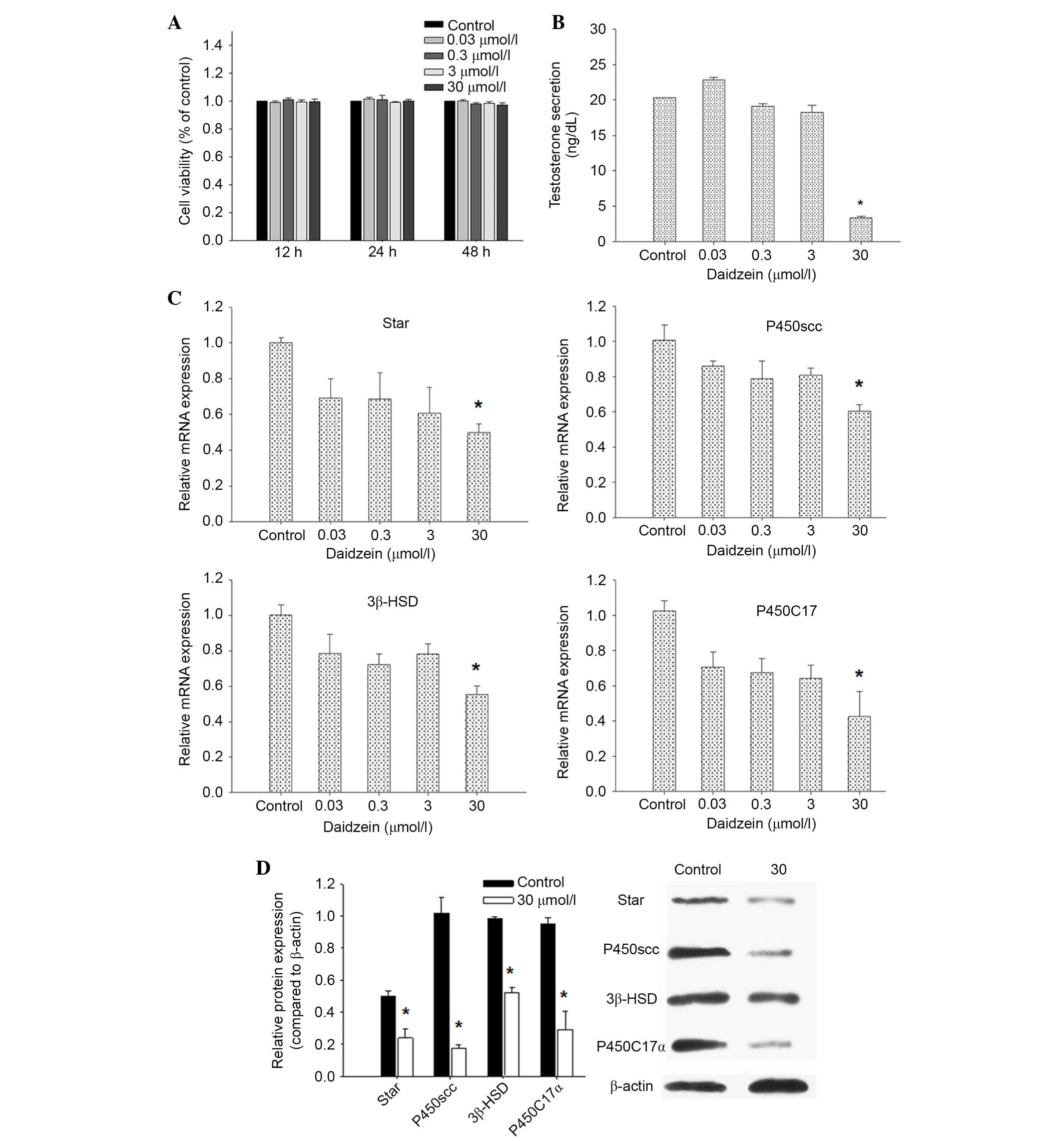
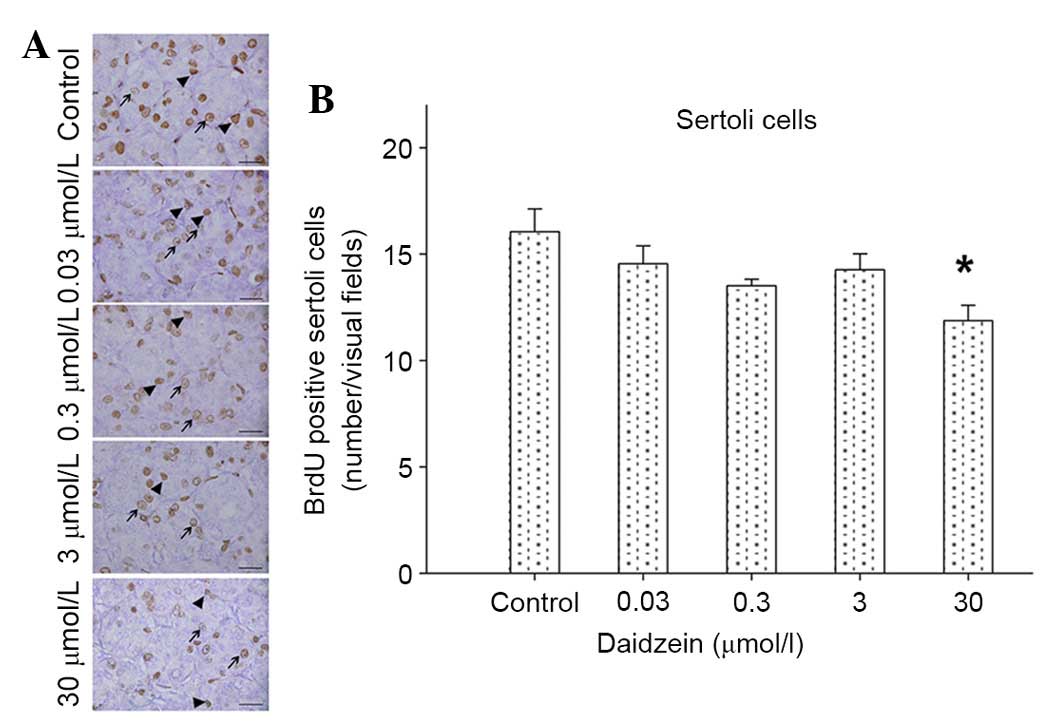
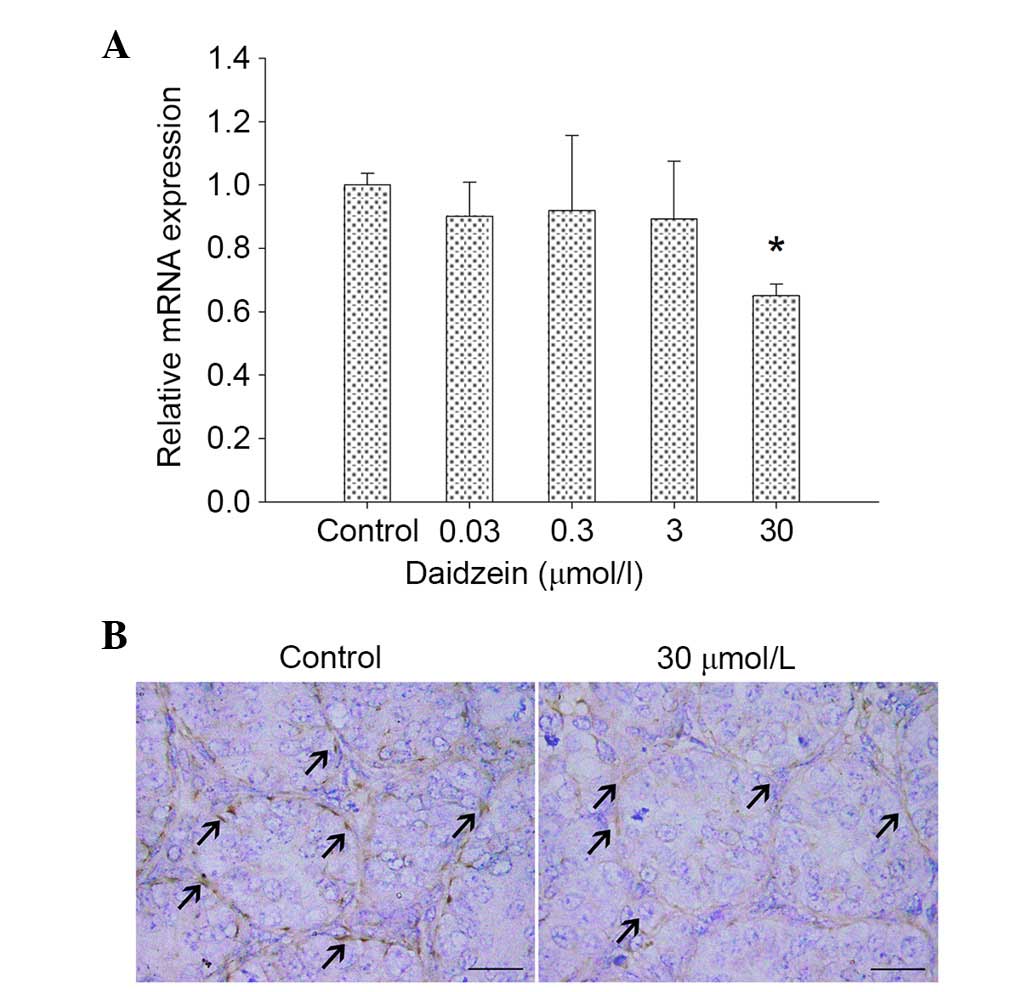
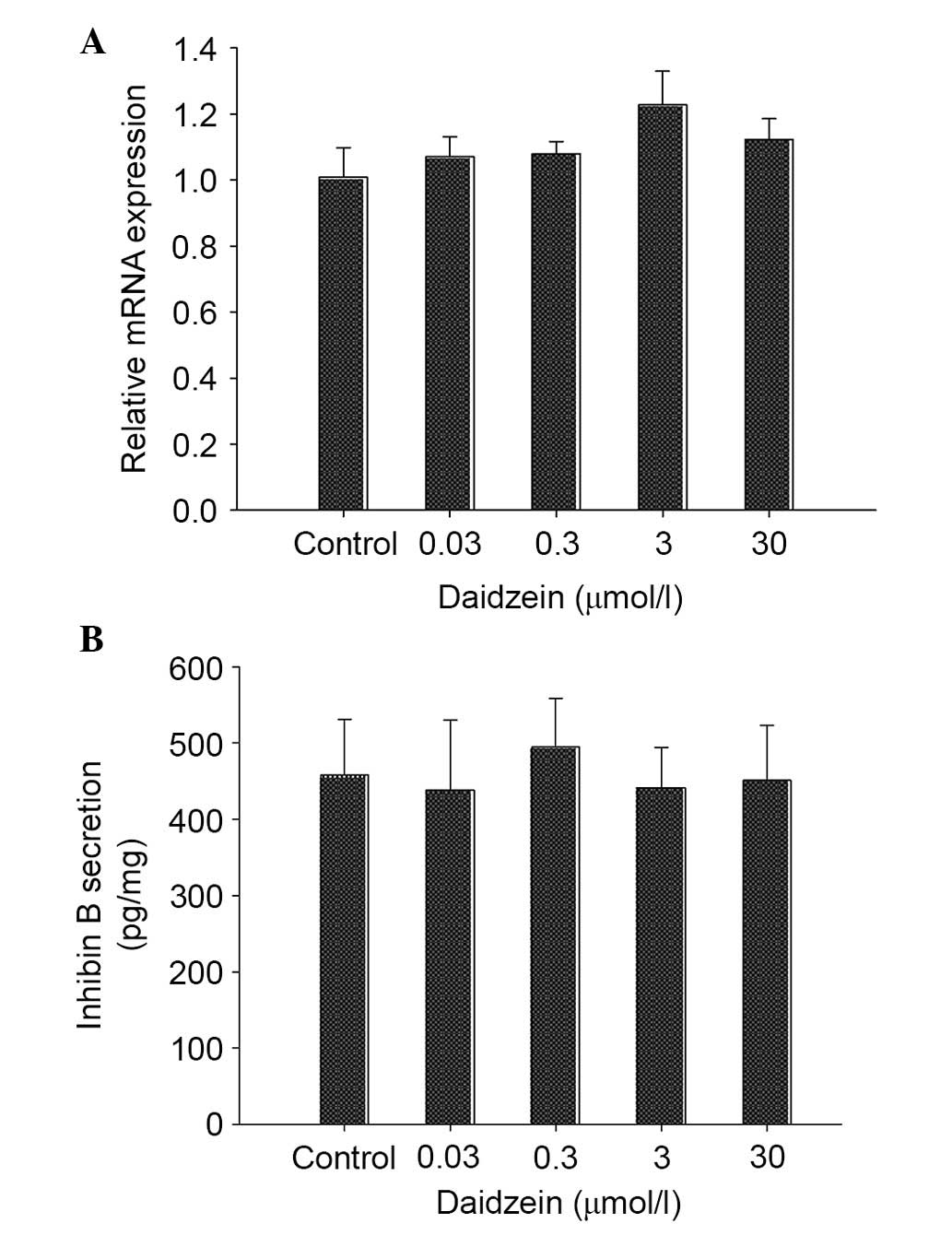
Isoflavone is a type of phytoestrogen that exists in soy‑based products. Previous studies have reported that certain foods containing isoflavones, particularly infant formula, may have potential adverse effects on male reproductive function. However, few studies have focused on the effects of isoflavones on testosterone biosynthesis and Sertoli cell function during the neonatal period. The aim of the present study was to investigate the influence of daidzein, a common isoflavone, on testosterone secretion and Sertoli cell function during the neonatal period. The organ culture method was used to assess the effects of daidzein on neonatal mouse testes. Cultured testes were treated with daidzein (0, 0.03, 0.3, 3 or 30 µmol/l) for 72 h. To verify the mechanism of action of daidzein on androgen production, Leydig cells were also treated with daidzein for 24 h. As anticipated, testosterone secretions were suppressed by daidzein (30 µmol/l) in cultured testes and Leydig cells. Further analysis demonstrated that the expression levels of steroidogenic acute regulatory protein (StAR), cholesterol side‑chain cleavage enzyme (P450scc) and 3β‑hydroxysteroid dehydrogenase (3β‑HSD), which are transport proteins and key enzymes in androgen biosynthesis, were suppressed in cultured neonatal mouse testes. In addition, the expression levels of StAR, P450scc, 3β‑HSD and 17α‑hydroxylase/20‑lyase were decreased in Leydig cells. Notably, proliferation of Sertoli cells was also inhibited by daidzein (30 µmol/l). Furthermore, the expression levels of vimentin were significantly suppressed in the testes following treatment with daidzein, whereas inhibin B expression exhibited no change. In conclusion, daidzein may suppress steroidogenic capability and impair Sertoli cell function in the neonatal period in vitro.
View Figures

Figure 1

Figure 2

Figure 3

Figure 4

Figure 5

Figure 6

View References

1 

Kurzer MS and Xu X: Dietary phytoestrogens. Annu Rev Nutr. 17:353–381. 1997. View Article : Google Scholar : PubMed/NCBI

2 

Coward L, Barnes NC, Setchell KDR and Barnes S: Genistein, daidzein, and their β-glycoside conjugates: Antitumor isoflavones in soybean food from American and Asian diets. J Agri Food Chem. 41:1961–1967. 1993. View Article : Google Scholar

3 

Morton MS, Arisaka O, Miyake N, Morgan LD and Evans BA: Phytoestrogen concentrations in serum from Japanese men and women over forty years of age. J Nutr. 132:3168–3171. 2002.PubMed/NCBI

4 

McCarver G, Bhatia J, Chambers C, Clarke R, Etzel R, Foster W, Hoyer P, Leeder JS, Peters JM, Rissman E, et al: NTP-CERHR expert panel report on the developmental toxicity of soy infant formula. Birth Defects Res B Dev Reprod Toxicol. 92:421–468. 2011. View Article : Google Scholar : PubMed/NCBI

5 

Lagari VS and Levis S: Phytoestrogens for menopausal bone loss and climacteric symptoms. J Steroid Biochem Mol Biol. 139:294–301. 2014. View Article : Google Scholar : PubMed/NCBI

6 

Magee PJ and Rowland I: Soy products in the management of breast cancer. Curr Opin Clin Nutr Metab Care. 15:586–591. 2012. View Article : Google Scholar : PubMed/NCBI

7 

Adjakly M, Ngollo M, Boiteux JP, Bignon YJ, Guy L and Bernard-Gallon D: Genistein and daidzein: Different molecular effects on prostate cancer. Anticancer Res. 33:39–44. 2013.PubMed/NCBI

8 

Liu ZM, Ho SC, Chen YM and Ho YP: The effects of isoflavones combined with soy protein on lipid profiles, C-reactive protein and cardiovascular risk among postmenopausal Chinese women. Nutr Metab Cardiovasc Dis. 22:712–719. 2012. View Article : Google Scholar : PubMed/NCBI

9 

Jungbauer A and Medjakovic S: Phytoestrogens and the metabolic syndrome. J Steroid Biochem Mol Biol. 139:277–289. 2014. View Article : Google Scholar : PubMed/NCBI

10 

Rozman KK, Bhatia J, Calafat AM, Chambers C, Culty M, Etzel RA, Flaws JA, Hansen DK, Hoyer PB, Jeffery EH, et al: NTP-CERHR expert panel report on the reproductive and developmental toxicity of genistein. Birth Defects Res B Dev Reprod Toxicol. 77:485–638. 2006. View Article : Google Scholar : PubMed/NCBI

11 

Akingbemi BT, Braden TD, Kemppainen BW, Hancock KD, Sherrill JD, Cook SJ, He X and Supko JG: Exposure to phytoestrogens in the perinatal period affects androgen secretion by testicular Leydig cells in the adult rat. Endocrinology. 148:4475–4488. 2007. View Article : Google Scholar : PubMed/NCBI

12 

Yuan XX, Zhang B, Li LL, Xiao CW, Fan JX, Geng MM and Yin YL: Effects of soybean isoflavones on reproductive parameters in Chinese mini-pig boars. J Anim Sci Biotechnol. 3:312012. View Article : Google Scholar : PubMed/NCBI

13 

Caceres S, Pena L, Moyano G, Martinez-Fernandez L, Monsalve B, Illera MJ, Millan P, Illera JC and Silvan G: Isoflavones and their effects on the onset of puberty in male Wistar rats. Andrologia. 47:1139–1146. 2015. View Article : Google Scholar : PubMed/NCBI

14 

Huang Y, Pan L, Xia X, Feng Y, Jiang C and Cui Y: Long-term effects of phytoestrogen daidzein on penile cavernosal structures in adult rats. Urology. 72:220–224. 2008. View Article : Google Scholar : PubMed/NCBI

15 

Pan L, Xia X, Feng Y, Jiang C and Huang Y: Exposure to the phytoestrogen daidzein attenuates apomorphine-induced penile erection concomitant with plasma testosterone level reduction in dose- and time-related manner in adult rats. Urology. 70:613–617. 2007. View Article : Google Scholar : PubMed/NCBI

16 

Hu GX, Zhao BH, Chu YH, Zhou HY, Akingbemi BT, Zheng ZQ and Ge RS: Effects of genistein and equol on human and rat testicular 3beta-hydroxysteroid dehydrogenase and 17beta-hydroxysteroid dehydrogenase 3 activities. Asian J Androl. 12:519–526. 2010. View Article : Google Scholar : PubMed/NCBI

17 

Chavarro JE, Toth TL, Sadio SM and Hauser R: Soy food and isoflavone intake in relation to semen quality parameters among men from an infertility clinic. Hum Reprod. 23:2584–2590. 2008. View Article : Google Scholar : PubMed/NCBI

18 

Cederroth CR, Zimmermann C, Beny JL, Schaad O, Combepine C, Descombes P, Doerge DR, Pralong FP, Vassalli JD and Nef S: Potential detrimental effects of a phytoestrogen-rich diet on male fertility in mice. Mol Cell Endocrinol. 321:152–160. 2010. View Article : Google Scholar : PubMed/NCBI

19 

Adachi T, Okuno Y, Takenaka S, Matsuda K, Ohta N, Takashima K, Yamazaki K, Nishimura D, Miyatake K, Mori C and Tsujimoto G: Comprehensive analysis of the effect of phytoestrogen, daidzein, on a testicular cell line, using mRNA and protein expression profile. Food Chem Toxicol. 43:529–535. 2005. View Article : Google Scholar : PubMed/NCBI

20 

Pfaehler A, Nanjappa MK, Coleman ES, Mansour M, Wanders D, Plaisance EP, Judd RL and Akingbemi BT: Regulation of adiponectin secretion by soy isoflavones has implication for endocrine function of the testis. Toxicol Lett. 209:78–85. 2012. View Article : Google Scholar : PubMed/NCBI

21 

Livera G, Delbes G, Pairault C, Rouiller-Fabre V and Habert R: Organotypic culture, a powerful model for studying rat and mouse fetal testis development. Cell Tissue Res. 324:507–521. 2006. View Article : Google Scholar : PubMed/NCBI

22 

Lehraiki A, Chamaillard C, Krust A, Habert R and Levacher C: Genistein impairs early testosterone production in fetal mouse testis via estrogen receptor alpha. Toxicol In Vitro. 25:1542–1547. 2011. View Article : Google Scholar : PubMed/NCBI

23 

Xu H, Huang J, Li M, Gao ZB, Zhu YF and Li Y: The effects of di- (2-ethylhexyl) phthalate (DEHP) in testosterone synthesis and its molecular mechanisms in the fetal testis of male mouse by organ culture in vitro. Sichuan Da Xue Xue Bao Yi Xue Ban. 44:511–516. 2013.(In Chinese). PubMed/NCBI

24 

Liu Y, Zhu YF, Gao ZB, Li M, Zhong LY, Yin DJ and Li Y: Establishment of a rotary aerobic culture system for in vitro culture of mouse testis. Nan Fang Yi Ke Da Xue Xue Bao. 35:66–71. 2015.(In Chinese). PubMed/NCBI

25 

Li Y and Yu ZL: Effect of zinc on bone metabolism in fetal mouse limb culture. Biomed Environ Sci. 15:323–329. 2002.PubMed/NCBI

26 

Liu JZ, Guo HB, Deng CH, Ou YH and Peng AP: The culture and identification of rat testis Leydig cell. Zhonghua Nan Ke Xue. 12:14–17. 2006.(In Chinese). PubMed/NCBI

27 

Livak KJ and Schmittgen TD: Analysis of relative gene expression data using real-time quantitative PCR and the 2(−Delta Delta C(T)) Method. Methods. 25:402–408. 2001. View Article : Google Scholar : PubMed/NCBI

28 

Doerge DR, Twaddle NC, Churchwell MI, Newbold RR and Delclos KB: Lactational transfer of the soy isoflavone, genistein, in Sprague-Dawley rats consuming dietary genistein. Reprod Toxicol. 21:307–312. 2006. View Article : Google Scholar : PubMed/NCBI

29 

Steinberger A and Steinberger E: Differentiation of rat seminiferous epithelium in organ culture. J Reprod Fertil. 9:243–248. 1965. View Article : Google Scholar : PubMed/NCBI

30 

Yokonishi T, Sato T, Katagiri K and Ogawa T: In vitro spermatogenesis using an organ culture technique. Methods Mol Biol. 927:479–488. 2013. View Article : Google Scholar : PubMed/NCBI

31 

Sato T, Katagiri K, Gohbara A, Inoue K, Ogonuki N, Ogura A, Kubota Y and Ogawa T: In vitro production of functional sperm in cultured neonatal mouse testes. Nature. 471:504–507. 2011. View Article : Google Scholar : PubMed/NCBI

32 

Sato T, Katagiri K, Kubota Y and Ogawa T: In vitro sperm production from mouse spermatogonial stem cell lines using an organ culture method. Nat Protoc. 8:2098–2104. 2013. View Article : Google Scholar : PubMed/NCBI

33 

Lehraiki A, Racine C, Krust A, Habert R and Levacher C: Phthalates impair germ cell number in the mouse fetal testis by an androgen- and estrogen-independent mechanism. Toxicol Sci. 111:372–382. 2009. View Article : Google Scholar : PubMed/NCBI

34 

Lambrot R, Livera G, Coffigny H, Pairault C, Frydman R, Habert R and Rouiller-Fabre V: A new method for toxicity assays on human and mouse fetal testis. Biochimie. 88:1831–1835. 2006. View Article : Google Scholar : PubMed/NCBI

35 

Auger J, Eustache F, Rouiller-Fabre V, Canivenc-Lavier MC and Livera G: Integrative rodent models for assessing male reproductive toxicity of environmental endocrine active substances. Asian J Androl. 16:60–70. 2014. View Article : Google Scholar : PubMed/NCBI

36 

Boberg J, Mandrup KR, Jacobsen PR, Isling LK, Hadrup N, Berthelsen L, Elleby A, Kiersgaard M, Vinggaard AM, Hass U and Nellemann C: Endocrine disrupting effects in rats perinatally exposed to a dietary relevant mixture of phytoestrogens. Reprod Toxicol. 40:41–51. 2013. View Article : Google Scholar : PubMed/NCBI

37 

Opalka DM, Kaminska B, Piskula MK, Puchajda-Skowronska H and Dusza L: Effects of phytoestrogens on testosterone secretion by Leydig cells from Bilgoraj ganders (Anser anser). Br Poult Sci. 47:237–245. 2006. View Article : Google Scholar : PubMed/NCBI

38 

Opalka M, Kaminska B, Leska A and Dusza L: Mechanism of phytoestrogen action in Leydig cells of ganders (Anser anser domesticus): Interaction with estrogen receptors and steroidogenic enzymes. J Environ Sci Health A Tox Hazard Subst Environ Eng. 47:1335–1339. 2012. View Article : Google Scholar : PubMed/NCBI

39 

Hannas BR, Lambright CS, Furr J, Evans N, Foster PM, Gray EL and Wilson VS: Genomic biomarkers of phthalate-induced male reproductive developmental toxicity: A targeted RT-PCR array approach for defining relative potency. Toxicol Sci. 125:544–557. 2012. View Article : Google Scholar : PubMed/NCBI

40 

Ye L, Su ZJ and Ge RS: Inhibitors of testosterone biosynthetic and metabolic activation enzymes. Molecules. 16:9983–10001. 2011. View Article : Google Scholar : PubMed/NCBI

41 

Liu S, Wang D, Zhang J, Zhang D, Gong M, Wang C, Wei N, Liu W, Wang Y, Zhao C, et al: Citrinin reduces testosterone secretion by inducing apoptosis in rat Leydig cells. Toxicol In Vitro. 26:856–861. 2012. View Article : Google Scholar : PubMed/NCBI

42 

N'Tumba-Byn T, Moison D, Lacroix M, Lecureuil C, Lesage L, Prud'homme SM, Pozzi-Gaudin S, Frydman R, Benachi A, Livera G, et al: Differential effects of bisphenol A and diethylstilbestrol on human, rat and mouse fetal Leydig cell function. PLoS One. 7:e515792012. View Article : Google Scholar : PubMed/NCBI

43 

Delbès G, Duquenne C, Szenker J, Taccoen J, Habert R and Levacher C: Developmental changes in testicular sensitivity to estrogens throughout fetal and neonatal life. Toxicol Sci. 99:234–243. 2007. View Article : Google Scholar : PubMed/NCBI

44 

Ryser S, Glauser D, Vigier M, Zhang YQ, Tachini P, Schlegel W, Durand P and Irminger-Finger I: Gene expression profiling of rat spermatogonia and Sertoli cells reveals signaling pathways from stem cells to niche and testicular cancer cells to surrounding stroma. BMC Genomics. 12:292011. View Article : Google Scholar : PubMed/NCBI

45 

Yin D, Zhu Y, Liu L, Xu H, Huang J and Li Y: Potential detrimental effect of soy isoflavones on testis sertoli cells. Zhong Nan Da Xue Xue Bao Yi Xue Ban. 39:598–604. 2014.(In Chinese). PubMed/NCBI

46 

Feng Y, Fang X, Shi Z, Xu M and Dai J: Effects of PFNA exposure on expression of junction-associated molecules and secretory function in rat Sertoli cells. Reprod Toxicol. 30:429–437. 2010. View Article : Google Scholar : PubMed/NCBI

47 

Tay TW, Andriana BB, Ishii M, Tsunekawa N, Kanai Y and Kurohmaru M: Disappearance of vimentin in Sertoli cells: A mono(2-ethylhexyl) phthalate effect. Int J Toxicol. 26:289–295. 2007. View Article : Google Scholar : PubMed/NCBI

48 

Pierik FH, Vreeburg JT, Stijnen T, De Jong FH and Weber RF: Serum inhibin B as a marker of spermatogenesis. J Clin Endocrinol Metab. 83:3110–3114. 1998. View Article : Google Scholar : PubMed/NCBI

49 

Andersson AM, Petersen JH, Jørgensen N, Jensen TK and Skakkebaek NE: Serum inhibin B and follicle-stimulating hormone levels as tools in the evaluation of infertile men: Significance of adequate reference values from proven fertile men. J Clin Endocrinol Metab. 89:2873–2879. 2004. View Article : Google Scholar : PubMed/NCBI

50 

Monsees TK, Franz M, Gebhardt S, Winterstein U, Schill WB and Hayatpour J: Sertoli cells as a target for reproductive hazards. Andrologia. 32:239–246. 2000. View Article : Google Scholar : PubMed/NCBI

Related Articles

  • Abstract
  • View
  • Download
  • Twitter
Copy and paste a formatted citation
Spandidos Publications style
Zhu Y, Xu H, Li M, Gao Z, Huang J, Liu L, Huang X and Li Y: Daidzein impairs Leydig cell testosterone production and Sertoli cell function in neonatal mouse testes: An in vitro study. Mol Med Rep 14: 5325-5333, 2016.
APA
Zhu, Y., Xu, H., Li, M., Gao, Z., Huang, J., Liu, L. ... Li, Y. (2016). Daidzein impairs Leydig cell testosterone production and Sertoli cell function in neonatal mouse testes: An in vitro study. Molecular Medicine Reports, 14, 5325-5333. https://doi.org/10.3892/mmr.2016.5896
MLA
Zhu, Y., Xu, H., Li, M., Gao, Z., Huang, J., Liu, L., Huang, X., Li, Y."Daidzein impairs Leydig cell testosterone production and Sertoli cell function in neonatal mouse testes: An in vitro study". Molecular Medicine Reports 14.6 (2016): 5325-5333.
Chicago
Zhu, Y., Xu, H., Li, M., Gao, Z., Huang, J., Liu, L., Huang, X., Li, Y."Daidzein impairs Leydig cell testosterone production and Sertoli cell function in neonatal mouse testes: An in vitro study". Molecular Medicine Reports 14, no. 6 (2016): 5325-5333. https://doi.org/10.3892/mmr.2016.5896
Copy and paste a formatted citation
x
Spandidos Publications style
Zhu Y, Xu H, Li M, Gao Z, Huang J, Liu L, Huang X and Li Y: Daidzein impairs Leydig cell testosterone production and Sertoli cell function in neonatal mouse testes: An in vitro study. Mol Med Rep 14: 5325-5333, 2016.
APA
Zhu, Y., Xu, H., Li, M., Gao, Z., Huang, J., Liu, L. ... Li, Y. (2016). Daidzein impairs Leydig cell testosterone production and Sertoli cell function in neonatal mouse testes: An in vitro study. Molecular Medicine Reports, 14, 5325-5333. https://doi.org/10.3892/mmr.2016.5896
MLA
Zhu, Y., Xu, H., Li, M., Gao, Z., Huang, J., Liu, L., Huang, X., Li, Y."Daidzein impairs Leydig cell testosterone production and Sertoli cell function in neonatal mouse testes: An in vitro study". Molecular Medicine Reports 14.6 (2016): 5325-5333.
Chicago
Zhu, Y., Xu, H., Li, M., Gao, Z., Huang, J., Liu, L., Huang, X., Li, Y."Daidzein impairs Leydig cell testosterone production and Sertoli cell function in neonatal mouse testes: An in vitro study". Molecular Medicine Reports 14, no. 6 (2016): 5325-5333. https://doi.org/10.3892/mmr.2016.5896
Follow us
  • Twitter
  • LinkedIn
  • Facebook
About
  • Spandidos Publications
  • Careers
  • Cookie Policy
  • Privacy Policy
How can we help?
  • Help
  • Live Chat
  • Contact
  • Email to our Support Team