Spandidos Publications Logo
  • About
    • About Spandidos
    • Aims and Scopes
    • Abstracting and Indexing
    • Editorial Policies
    • Reprints and Permissions
    • Job Opportunities
    • Terms and Conditions
    • Contact
  • Journals
    • All Journals
    • Oncology Letters
      • Oncology Letters
      • Information for Authors
      • Editorial Policies
      • Editorial Board
      • Aims and Scope
      • Abstracting and Indexing
      • Bibliographic Information
      • Archive
    • International Journal of Oncology
      • International Journal of Oncology
      • Information for Authors
      • Editorial Policies
      • Editorial Board
      • Aims and Scope
      • Abstracting and Indexing
      • Bibliographic Information
      • Archive
    • Molecular and Clinical Oncology
      • Molecular and Clinical Oncology
      • Information for Authors
      • Editorial Policies
      • Editorial Board
      • Aims and Scope
      • Abstracting and Indexing
      • Bibliographic Information
      • Archive
    • Experimental and Therapeutic Medicine
      • Experimental and Therapeutic Medicine
      • Information for Authors
      • Editorial Policies
      • Editorial Board
      • Aims and Scope
      • Abstracting and Indexing
      • Bibliographic Information
      • Archive
    • International Journal of Molecular Medicine
      • International Journal of Molecular Medicine
      • Information for Authors
      • Editorial Policies
      • Editorial Board
      • Aims and Scope
      • Abstracting and Indexing
      • Bibliographic Information
      • Archive
    • Biomedical Reports
      • Biomedical Reports
      • Information for Authors
      • Editorial Policies
      • Editorial Board
      • Aims and Scope
      • Abstracting and Indexing
      • Bibliographic Information
      • Archive
    • Oncology Reports
      • Oncology Reports
      • Information for Authors
      • Editorial Policies
      • Editorial Board
      • Aims and Scope
      • Abstracting and Indexing
      • Bibliographic Information
      • Archive
    • Molecular Medicine Reports
      • Molecular Medicine Reports
      • Information for Authors
      • Editorial Policies
      • Editorial Board
      • Aims and Scope
      • Abstracting and Indexing
      • Bibliographic Information
      • Archive
    • World Academy of Sciences Journal
      • World Academy of Sciences Journal
      • Information for Authors
      • Editorial Policies
      • Editorial Board
      • Aims and Scope
      • Abstracting and Indexing
      • Bibliographic Information
      • Archive
    • International Journal of Functional Nutrition
      • International Journal of Functional Nutrition
      • Information for Authors
      • Editorial Policies
      • Editorial Board
      • Aims and Scope
      • Abstracting and Indexing
      • Bibliographic Information
      • Archive
    • International Journal of Epigenetics
      • International Journal of Epigenetics
      • Information for Authors
      • Editorial Policies
      • Editorial Board
      • Aims and Scope
      • Abstracting and Indexing
      • Bibliographic Information
      • Archive
    • Medicine International
      • Medicine International
      • Information for Authors
      • Editorial Policies
      • Editorial Board
      • Aims and Scope
      • Abstracting and Indexing
      • Bibliographic Information
      • Archive
  • Articles
  • Information
    • Information for Authors
    • Information for Reviewers
    • Information for Librarians
    • Information for Advertisers
    • Conferences
  • Language Editing
Spandidos Publications Logo
  • About
    • About Spandidos
    • Aims and Scopes
    • Abstracting and Indexing
    • Editorial Policies
    • Reprints and Permissions
    • Job Opportunities
    • Terms and Conditions
    • Contact
  • Journals
    • All Journals
    • Biomedical Reports
      • Information for Authors
      • Editorial Policies
      • Editorial Board
      • Aims and Scope
      • Abstracting and Indexing
      • Bibliographic Information
      • Archive
    • Experimental and Therapeutic Medicine
      • Information for Authors
      • Editorial Policies
      • Editorial Board
      • Aims and Scope
      • Abstracting and Indexing
      • Bibliographic Information
      • Archive
    • International Journal of Epigenetics
      • Information for Authors
      • Editorial Policies
      • Editorial Board
      • Aims and Scope
      • Abstracting and Indexing
      • Bibliographic Information
      • Archive
    • International Journal of Functional Nutrition
      • Information for Authors
      • Editorial Policies
      • Editorial Board
      • Aims and Scope
      • Abstracting and Indexing
      • Bibliographic Information
      • Archive
    • International Journal of Molecular Medicine
      • Information for Authors
      • Editorial Policies
      • Editorial Board
      • Aims and Scope
      • Abstracting and Indexing
      • Bibliographic Information
      • Archive
    • International Journal of Oncology
      • Information for Authors
      • Editorial Policies
      • Editorial Board
      • Aims and Scope
      • Abstracting and Indexing
      • Bibliographic Information
      • Archive
    • Medicine International
      • Information for Authors
      • Editorial Policies
      • Editorial Board
      • Aims and Scope
      • Abstracting and Indexing
      • Bibliographic Information
      • Archive
    • Molecular and Clinical Oncology
      • Information for Authors
      • Editorial Policies
      • Editorial Board
      • Aims and Scope
      • Abstracting and Indexing
      • Bibliographic Information
      • Archive
    • Molecular Medicine Reports
      • Information for Authors
      • Editorial Policies
      • Editorial Board
      • Aims and Scope
      • Abstracting and Indexing
      • Bibliographic Information
      • Archive
    • Oncology Letters
      • Information for Authors
      • Editorial Policies
      • Editorial Board
      • Aims and Scope
      • Abstracting and Indexing
      • Bibliographic Information
      • Archive
    • Oncology Reports
      • Information for Authors
      • Editorial Policies
      • Editorial Board
      • Aims and Scope
      • Abstracting and Indexing
      • Bibliographic Information
      • Archive
    • World Academy of Sciences Journal
      • Information for Authors
      • Editorial Policies
      • Editorial Board
      • Aims and Scope
      • Abstracting and Indexing
      • Bibliographic Information
      • Archive
  • Articles
  • Information
    • For Authors
    • For Reviewers
    • For Librarians
    • For Advertisers
    • Conferences
  • Language Editing
Login Register Submit
  • This site uses cookies
  • You can change your cookie settings at any time by following the instructions in our Cookie Policy. To find out more, you may read our Privacy Policy.

    I agree
Search articles by DOI, keyword, author or affiliation
Search
Advanced Search
presentation
Molecular Medicine Reports
Join Editorial Board Propose a Special Issue
Print ISSN: 1791-2997 Online ISSN: 1791-3004
Journal Cover
July-2017 Volume 16 Issue 1

Full Size Image

Sign up for eToc alerts
Recommend to Library

Journals

International Journal of Molecular Medicine

International Journal of Molecular Medicine

International Journal of Molecular Medicine is an international journal devoted to molecular mechanisms of human disease.

International Journal of Oncology

International Journal of Oncology

International Journal of Oncology is an international journal devoted to oncology research and cancer treatment.

Molecular Medicine Reports

Molecular Medicine Reports

Covers molecular medicine topics such as pharmacology, pathology, genetics, neuroscience, infectious diseases, molecular cardiology, and molecular surgery.

Oncology Reports

Oncology Reports

Oncology Reports is an international journal devoted to fundamental and applied research in Oncology.

Experimental and Therapeutic Medicine

Experimental and Therapeutic Medicine

Experimental and Therapeutic Medicine is an international journal devoted to laboratory and clinical medicine.

Oncology Letters

Oncology Letters

Oncology Letters is an international journal devoted to Experimental and Clinical Oncology.

Biomedical Reports

Biomedical Reports

Explores a wide range of biological and medical fields, including pharmacology, genetics, microbiology, neuroscience, and molecular cardiology.

Molecular and Clinical Oncology

Molecular and Clinical Oncology

International journal addressing all aspects of oncology research, from tumorigenesis and oncogenes to chemotherapy and metastasis.

World Academy of Sciences Journal

World Academy of Sciences Journal

Multidisciplinary open-access journal spanning biochemistry, genetics, neuroscience, environmental health, and synthetic biology.

International Journal of Functional Nutrition

International Journal of Functional Nutrition

Open-access journal combining biochemistry, pharmacology, immunology, and genetics to advance health through functional nutrition.

International Journal of Epigenetics

International Journal of Epigenetics

Publishes open-access research on using epigenetics to advance understanding and treatment of human disease.

Medicine International

Medicine International

An International Open Access Journal Devoted to General Medicine.

Journal Cover
July-2017 Volume 16 Issue 1

Full Size Image

Sign up for eToc alerts
Recommend to Library

  • Article
  • Citations
    • Cite This Article
    • Download Citation
    • Create Citation Alert
    • Remove Citation Alert
    • Cited By
  • Similar Articles
    • Related Articles (in Spandidos Publications)
    • Similar Articles (Google Scholar)
    • Similar Articles (PubMed)
  • Download PDF
  • Download XML
  • View XML
Article

Contribution of methylglyoxal to delayed healing of bone injury in diabetes

  • Authors:
    • Takao Aikawa
    • Hidenori Matsubara
    • Shuhei Ugaji
    • Junichi Shirakawa
    • Ryoji Nagai
    • Seiichi Munesue
    • Ai Harashima
    • Yasuhiko Yamamoto
    • Hiroyuki Tsuchiya
  • View Affiliations / Copyright

    Affiliations: Department of Orthopaedic Surgery, Kanazawa University Graduate School of Medical Sciences, Kanazawa 920‑8641, Japan, Laboratory of Food and Regulation Biology, Graduate School of Agriculture, Tokai University, Minamiaso, Aso‑gun, Kumamoto 869‑1404, Japan, Department of Biochemistry and Molecular Vascular Biology, Kanazawa University Graduate School of Medical Sciences, Kanazawa 920‑8640, Japan
  • Pages: 403-409
    |
    Published online on: May 16, 2017
       https://doi.org/10.3892/mmr.2017.6589
  • Expand metrics +
Metrics: Total Views: 0 (Spandidos Publications: | PMC Statistics: )
Metrics: Total PDF Downloads: 0 (Spandidos Publications: | PMC Statistics: )
Cited By (CrossRef): 0 citations Loading Articles...

This article is mentioned in:


Abstract

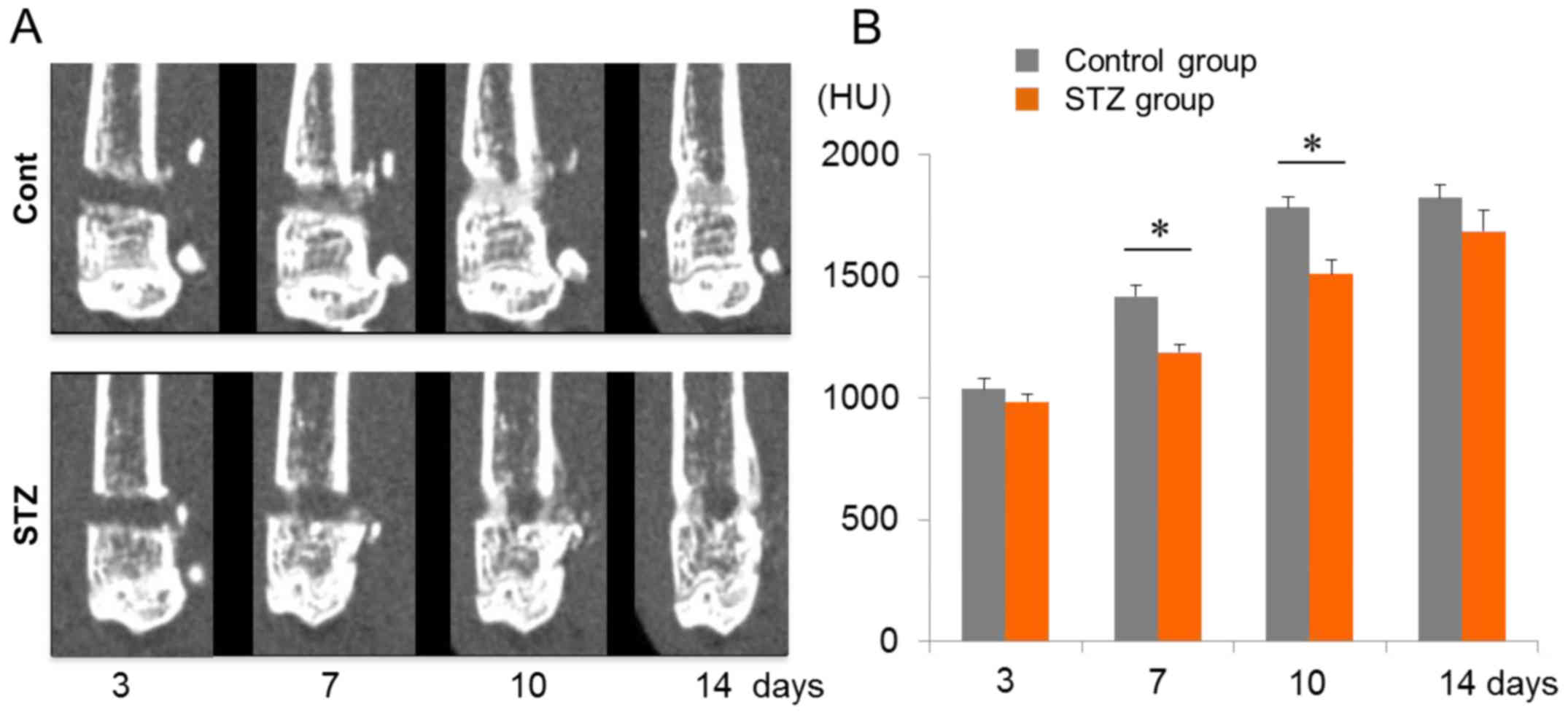
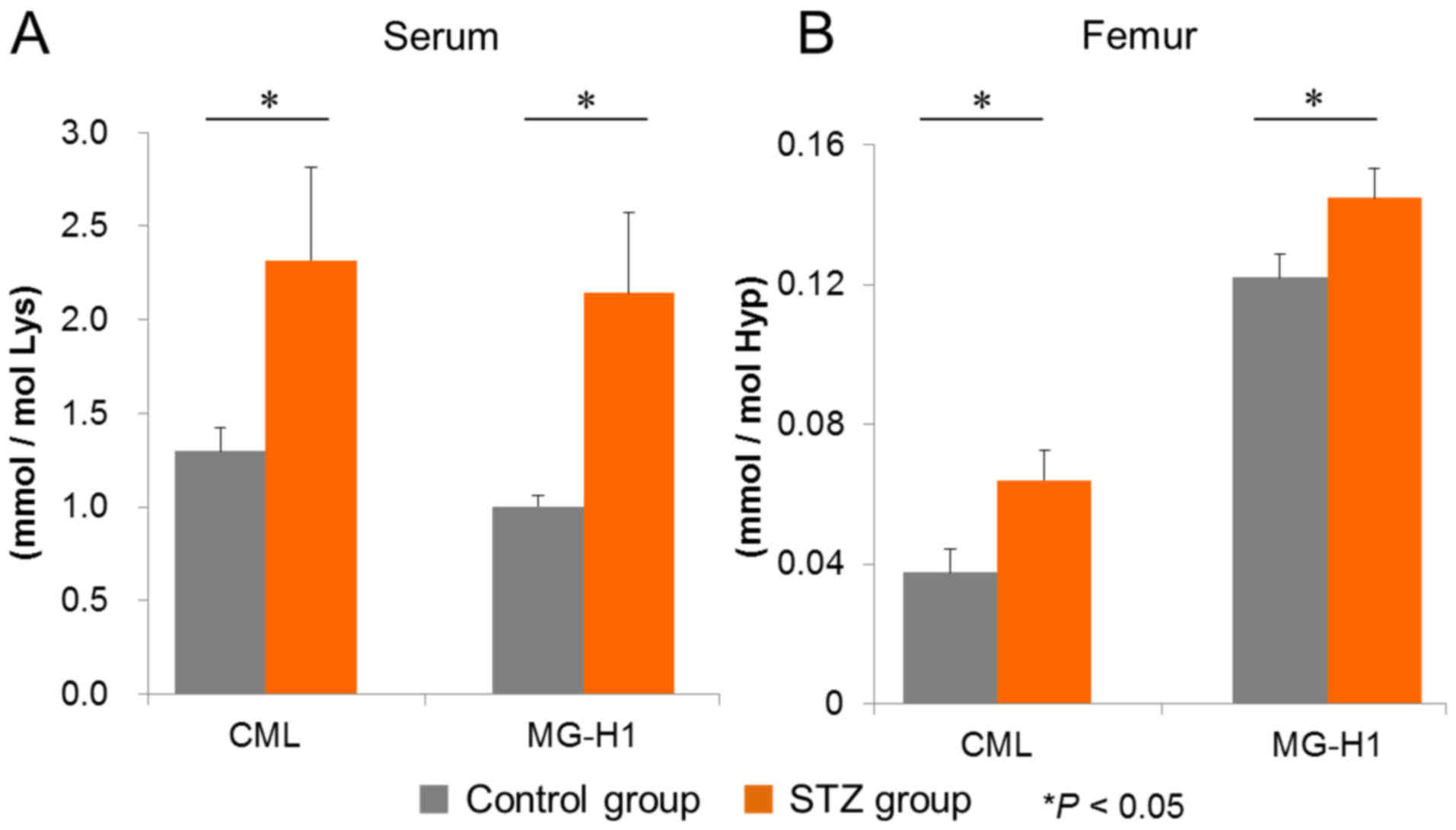
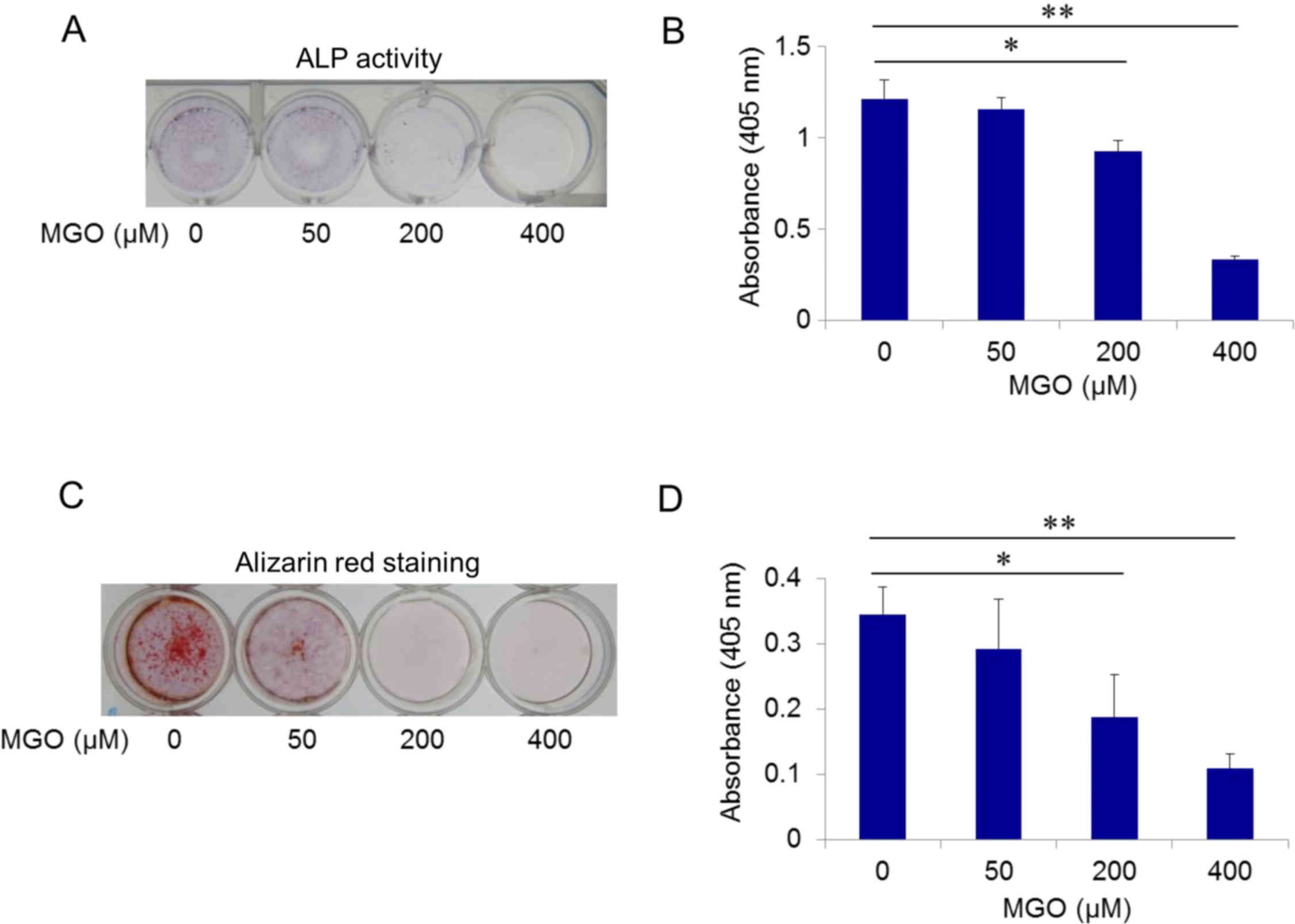
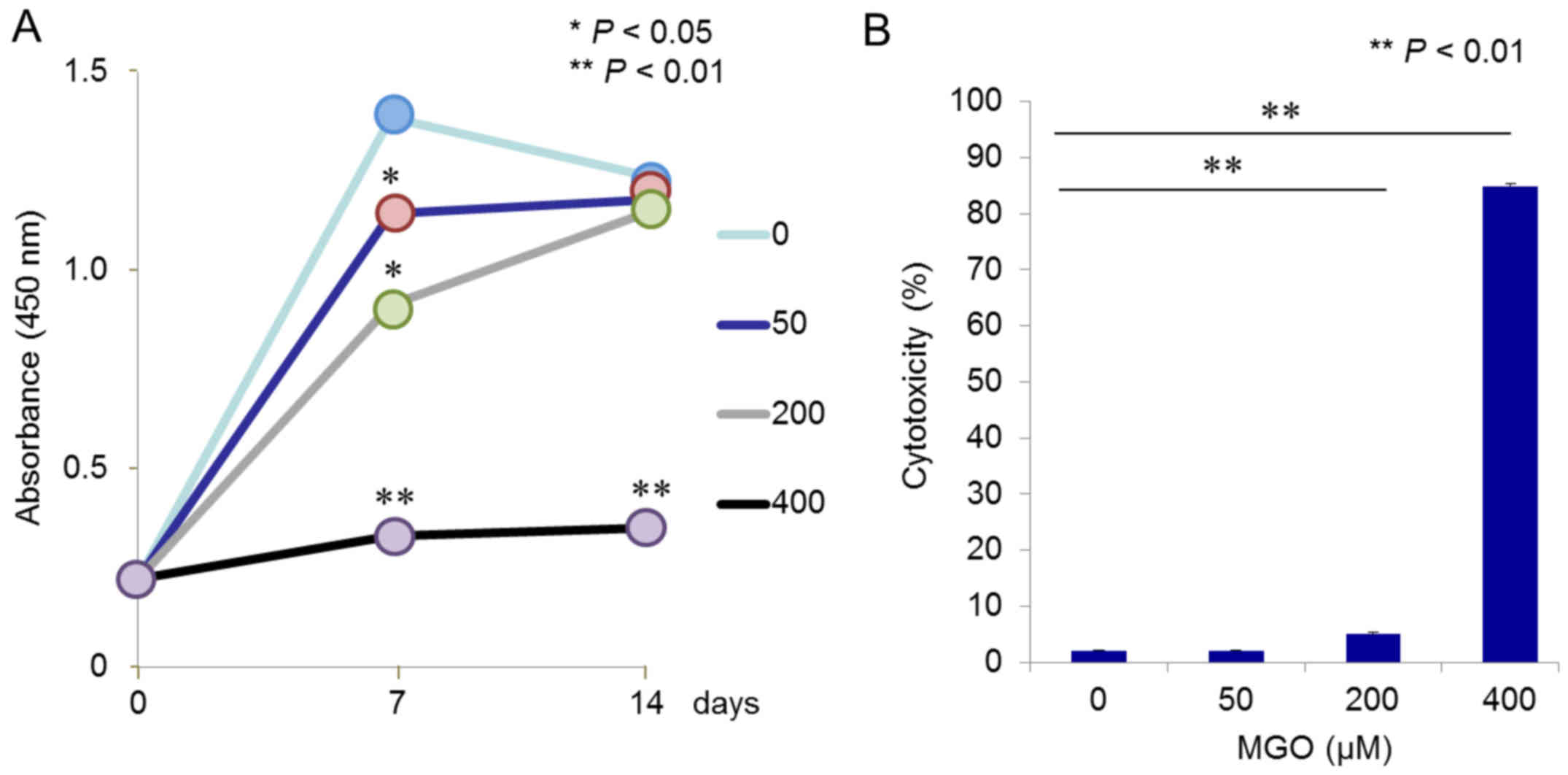
Patients with diabetes are vulnerable to delayed bone fracture healing or pseudoarthrosis. Chronic sustained hyperglycemia, reactive intermediate derivatives of glucose metabolism, such as methylglyoxal (MGO), and advanced glycation end‑products (AGEs) are implicated in diabetic complications. In the present study, it was examined whether MGO is able to cause disturbed bone healing in diabetes. Diabetes was induced in male mice by injection of streptozotocin (50 mg/kg) for 5 days. A bone defect (1.0‑mm diameter) was created in the left distal femur, and bone repair was assessed from an examination of computed tomography scans. ST2 cells were exposed to MGO (0‑400 µM) to investigate osteoblastic differentiation, cell viability, and damage. Consequently, blood glucose and hemoglobin A1c levels in diabetic mice were determined to be 493±14.1 mg/dl and 8.0±0.05%, respectively. Compared with non‑diabetic control mice, diabetic mice exhibited markedly delayed bone healing, with increased levels of the MGO‑derived AGEs, Nε‑(carboxymethyl)‑lysine and Nδ‑(5‑hydro‑5‑methyl‑4‑imidazolone‑2‑yl)‑ornithine, in the sera and femurs. MGO inhibited the osteoblastic differentiation of ST2 cells in a dose‑dependent manner, and markedly decreased cell proliferation through cytotoxicity. In conclusion, MGO has been demonstrated to cause impaired osteoblastic differentiation and delayed bone repair in diabetes. Therefore, detoxification of MGO may be a potentially useful strategy against bone problems in patients with diabetes.
View Figures

Figure 1

Figure 2

Figure 3

Figure 4

View References

1 

Vestergaard P: Discrepancies in bone mineral density and fracture risk in patients with type 1 and type 2 diabetes-a meta- analysis. Osteoporosis Int. 18:427–444. 2007. View Article : Google Scholar

2 

Kayal RA, Alblowi J, McKenzie E, Krothapalli N, Silkman L, Gerstenfeld L, Einhorn TA and Graves DT: Diabetes causes the accelerated loss of cartilage during fracture repair which is reversed by insulin treatment. Bone. 44:357–363. 2009. View Article : Google Scholar : PubMed/NCBI

3 

Retzepi M and Donos N: The effect of diabetes mellitus on osseous healing. Clin Oral Implants Res. 21:673–681. 2010. View Article : Google Scholar : PubMed/NCBI

4 

Simpson CM, Calori GM and Giannoudis PV: Diabetes and fracture healing: The skeletal effects of diabetic drugs. Expert Opin Drug Saf. 11:215–220. 2012. View Article : Google Scholar : PubMed/NCBI

5 

de Liefde II, van der Klift M, de Laet CE, van Daele PL, Hofman A and Pols HA: Bone mineral density and fracture risk in type-2 diabetes mellitus: The Rotterdam study. Osteoporosis Int. 16:1713–1720. 2005. View Article : Google Scholar

6 

Kayal RA, Tsatsas D, Bauer MA, Allen B, Al-Sebaei MO, Kakar S, Leone CW, Morgan EF, Gerstenfeld LC, Einhorn TA and Graves DT: Diminished bone formation during diabetic fracture healing is related to the premature resorption of cartilage associated with increased osteoclast activity. J Bone Miner Res. 22:560–568. 2007. View Article : Google Scholar : PubMed/NCBI

7 

Kayal RA, Siqueira M, Alblowi J, McLean J, Krothapalli N, Faibish D, Einhorn TA, Gerstenfeld LC and Graves DT: TNF-alpha mediates diabetes-enhanced chondrocyte apoptosis during fracture healing and stimulates chondrocyte apoptosis through FOXO1. J Bone Miner Res. 25:1604–1615. 2010. View Article : Google Scholar : PubMed/NCBI

8 

Loder RT: The influence of diabetes mellitus on the healing of closed fractures. Clin Orthop Relat Res. 210–216. 1988.PubMed/NCBI

9 

Folk JW, Starr AJ and Early JS: Early wound complications of operative treatment of calcaneus fractures: Analysis of 190 fractures. J Orthop Trauma. 13:369–372. 1999. View Article : Google Scholar : PubMed/NCBI

10 

Botushanov NP and Orbetzova MM: Bone mineral density and fracture risk in patients with type 1 and type 2 diabetes mellitus. Folia Med (Plovdiv). 51:12–17. 2009.PubMed/NCBI

11 

Stolzing A, Sellers D, Llewelyn O and Scutt A: Diabetes induced changes in rat mesenchymal stem cells. Cells Tissues Organs. 191:453–465. 2010. View Article : Google Scholar : PubMed/NCBI

12 

Sheweita SA and Khoshhal KI: Calcium metabolism and oxidative stress in bone fractures: Role of antioxidants. Curr Drug Metab. 8:519–525. 2007. View Article : Google Scholar : PubMed/NCBI

13 

Sanguineti R, Storace D, Monacelli F, Federici A and Odetti P: Pentosidine effects on human osteoblasts in vitro. Ann N Y Acad Sci. 1126:166–172. 2008. View Article : Google Scholar : PubMed/NCBI

14 

Alikhani M, Alikhani Z, Boyd C, MacLellan CM, Raptis M, Liu R, Pischon N, Trackman PC, Gerstenfeld L and Graves DT: Advanced glycation end products stimulate osteoblast apoptosis via the MAP kinase and cytosolic apoptotic pathways. Bone. 40:345–353. 2007. View Article : Google Scholar : PubMed/NCBI

15 

Brownlee M: Biochemistry and molecular cell biology of diabetic complications. Nature. 414:813–820. 2001. View Article : Google Scholar : PubMed/NCBI

16 

Westwood ME and Thornalley PJ: Molecular characteristics of methylglyoxal-modified bovine and human serum albumins. Comparison with glucose-derived advanced glycation end product-modified serum albumins. J Protein Chem. 14:359–372. 1995. View Article : Google Scholar : PubMed/NCBI

17 

Phillips SA and Thornalley PJ: The formation of methylglyoxal from triose phosphates. Investigation using a specific assay for methylglyoxal. Eur J Biochem. 212:101–105. 1993. View Article : Google Scholar : PubMed/NCBI

18 

Silva Sousa M, Gomes RA, Ferreira AE, Ponces Freire A and Cordeiro C: The glyoxalase pathway: The first hundred years… and beyond. Biochem J. 453:1–15. 2013. View Article : Google Scholar : PubMed/NCBI

19 

Thornalley PJ: Pharmacology of methylglyoxal: Formation, modification of proteins and nucleic acids, and enzymatic detoxification-a role in pathogenesis and antiproliferative chemotherapy. Gen Pharmacol. 27:565–573. 1996. View Article : Google Scholar : PubMed/NCBI

20 

Kalapos MP: Methylglyoxal in living organisms: Chemistry, biochemistry, toxicology and biological implications. Toxicol Lett. 110:145–175. 1999. View Article : Google Scholar : PubMed/NCBI

21 

Vander Jagt DL and Hunsaker LA: Methylglyoxal metabolism and diabetic complications: Roles of aldose reductase, glyoxalase-I, betaine aldehyde dehydrogenase and 2-oxoaldehyde dehydrogenase. Chem Biol Interact. 143–144:341–351. 2003. View Article : Google Scholar

22 

Scheijen JL and Schalkwijk CG: Quantification of glyoxal, methylglyoxal and 3-deoxyglucosone in blood and plasma by ultra performance liquid chromatography tandem mass spectrometry: Evaluation of blood specimen. Clin Chem Lab Med. 52:85–91. 2014. View Article : Google Scholar : PubMed/NCBI

23 

Yamanaka M, Matsumura T, Ohno R, Fujiwara Y, Shinagawa M, Sugawa H, Hatano K, Shirakawa J, Kinoshita H, Ito K, et al: Non-invasive measurement of skin autofluorescence to evaluate diabetic complications. J Clin Biochem Nutr. 58:135–140. 2016. View Article : Google Scholar : PubMed/NCBI

24 

Shirakawa J, Arakawa S, Tagawa T, Gotoh K, Oikawa N, Ohno R, Shinagawa M, Hatano K, Sugawa H, Ichimaru K, et al: Salacia chinensis L. extract ameliorates abnormal glucose metabolism and improves the bone strength and accumulation of AGEs in type 1 diabetic rats. Food Funct. 7:2508–2515. 2016. View Article : Google Scholar : PubMed/NCBI

25 

Otsuka E, Yamaguchi A, Hirose S and Hagiwara H: Characterization of osteoblastic differentiation of stromal cell line ST2 that is induced by ascorbic acid. Am J Physiol. 277:C132–C138. 1999.PubMed/NCBI

26 

Yamaguchi A, Ishizuya T, Kintou N, Wada Y, Katagiri T, Wozney JM, Rosen V and Yoshiki S: Effects of BMP-2, BMP-4 and BMP-6 on osteoblastic differentiation of bone marrow-derived stromal cell lines, ST2 and MC3T3-G2/PA6. Biochem Biophys Res Commun. 220:366–371. 1996. View Article : Google Scholar : PubMed/NCBI

27 

Suh KS, Choi EM, Rhee SY and Kim YS: Methylglyoxal induces oxidative stress and mitochondrial dysfunction in osteoblastic MC3T3-E1 cells. Free Radic Res. 48:206–217. 2014. View Article : Google Scholar : PubMed/NCBI

28 

McLellan AC, Thornalley PJ, Benn J and Sonksen PH: Glyoxalase system in clinical diabetes mellitus and correlation with diabetic complications. Clin Sci (Lond). 87:21–29. 1994. View Article : Google Scholar : PubMed/NCBI

29 

Lapolla A, Reitano R, Seraglia R, Sartore G, Ragazzi E and Traldi P: Evaluation of advanced glycation end products and carbonyl compounds in patients with different conditions of oxidative stress. Mol Nutr Food Res. 49:685–690. 2005. View Article : Google Scholar : PubMed/NCBI

30 

Chaplen FW, Fahl WE and Cameron DC: Evidence of high levels of methylglyoxal in cultured Chinese hamster ovary cells. Proc Natl Acad Sci USA. 95:5533–5538. 1998. View Article : Google Scholar : PubMed/NCBI

31 

Webb-Robertson BJ, Lowry DF, Jarman KH, Harbo SJ, Meng QR, Fuciarelli AF, Pounds JG and Lee KM: A study of spectral integration and normalization in NMR-based metabonomic analyses. J Pharm Biomed Anal. 39:830–836. 2005. View Article : Google Scholar : PubMed/NCBI

32 

Chan WH, Wu HJ and Shiao NH: Apoptotic signaling in methylglyoxal-treated human osteoblasts involves oxidative stress, c-Jun N-terminal kinase, caspase-3, and p21-activated kinase 2. J Cell Biochem. 100:1056–1069. 2007. View Article : Google Scholar : PubMed/NCBI

33 

Ai-Aql ZS, Alagl AS, Graves DT, Gerstenfeld LC and Einhorn TA: Molecular mechanisms controlling bone formation during fracture healing and distraction osteogenesis. J Dent Res. 87:107–118. 2008. View Article : Google Scholar : PubMed/NCBI

34 

Gerstenfeld LC, Wronski TJ, Hollinger JO and Einhorn TA: Application of histomorphometric methods to the study of bone repair. J Bone Miner Res. 20:1715–1722. 2005. View Article : Google Scholar : PubMed/NCBI

35 

Shin L and Peterson DA: Impaired therapeutic capacity of autologous stem cells in a model of type 2 diabetes. Stem Cells Transl Med. 1:125–135. 2012. View Article : Google Scholar : PubMed/NCBI

36 

Follak N, Kloting I and Merk H: Influence of diabetic metabolic state on fracture healing in spontaneously diabetic rats. Diabetes Metab Res Rev. 21:288–296. 2005. View Article : Google Scholar : PubMed/NCBI

37 

Kawaguchi H, Kurokawa T, Hanada K, Hiyama Y, Tamura M, Ogata E and Matsumoto T: Stimulation of fracture repair by recombination human basic fibroblast growth factor in normal and streptozotocin-diabetic rats. Endocrinology. 135:774–781. 1994. View Article : Google Scholar : PubMed/NCBI

38 

Bahney CS, Hu DP, Miclau T III and Marcucio RS: The multifaceted role of the vasculature in endochondral fracture repair. Front Endocrinol (Lausanne). 6:42015.PubMed/NCBI

39 

Liao YF, Chen LL, Zeng TS, Li YM, Fan Y, Hu LJ and Ling Yue: Number of circulating endothelial progenitor cells as a marker of vascular endothelial function for type 2 diabetes. Vasc Med. 15:279–285. 2010. View Article : Google Scholar : PubMed/NCBI

40 

Okazaki K, Yamaguchi T, Tanaka K, Notsu M, Ogawa N, Yano S and Sugimoto T: Advanced glycation end products (AGEs), but not high glucose, inhibit the osteoblastic differentiation of mouse stromal ST2 cells through the suppression of osterix expression, and inhibit cell growth and increasing cell apoptosis. Calcif Tissu Int. 91:286–296. 2012. View Article : Google Scholar

41 

Xue J, Ray R, Singer D, Böhme D, Burz DS, Rai V, Hoffmann R and Shekhtman A: The receptor for advanced glycation end products (RAGE) specifically recognizes methylglyoxal-derived AGEs. Biochemistry. 53:3327–3335. 2014. View Article : Google Scholar : PubMed/NCBI

42 

Voziyan PA and Hudson BG: Pyridoxamine as a multifunctional pharmaceutical: Targeting pathogenic glycation and oxidative damage. Cell Mol Life Sci. 62:1671–1681. 2005. View Article : Google Scholar : PubMed/NCBI

43 

Degenhardt TP, Alderson NL, Arrington DD, Beattie RJ, Basgen JM, Steffes MW, Thorpe SR and Baynes JW: Pyridoxamine inhibits early renal disease and dyslipidemia in the streptozotocin-diabetic rat. Kidney Int. 61:939–950. 2002. View Article : Google Scholar : PubMed/NCBI

44 

Zhu P, Lin H, Sun C, Lin F, Yu H, Zhuo X, Zhou C and Deng Z: Synergistic effects of telmisartan and pyridoxamine on early renal damage in spontaneously hypertensive rats. Mol Med Rep. 5:655–662. 2012.PubMed/NCBI

45 

Waanders F, van den Berg E, Nagai R, van Veen I, Navis G and van Goor H: Renoprotective effects of the AGE-inhibitor pyridoxamine in experimental chronic allograft nephropathy in rats. Nephrol Dial Transplant. 23:518–524. 2008. View Article : Google Scholar : PubMed/NCBI

46 

Alderson NL, Chachich ME, Youssef NN, Beattie RJ, Nachtigal M, Thorpe SR and Baynes JW: The AGE inhibitor pyridoxamine inhibits lipemia and development of renal and vascular disease in Zucker obese rats. Kidney Int. 63:2123–2133. 2003. View Article : Google Scholar : PubMed/NCBI

47 

Tanimoto M, Gohda T, Kaneko S, Hagiwara S, Murakoshi M, Aoki T, Yamada K, Ito T, Matsumoto M, Horikoshi S and Tomino Y: Effect of pyridoxamine (K-163), an inhibitor of advanced glycation end products, on type 2 diabetic nephropathy in KK-A(y)/Ta mice. Metabolism. 56:160–167. 2007. View Article : Google Scholar : PubMed/NCBI

48 

Williams ME, Bolton WK, Khalifah RG, Degenhardt TP, Schotzinger RJ and McGill JB: Effects of pyridoxamine in combined phase 2 studies of patients with type 1 and type 2 diabetes and overt nephropathy. Am J Nephrol. 27:605–614. 2007. View Article : Google Scholar : PubMed/NCBI

49 

Lewis EJ, Greene T, Spitalewiz S, Blumenthal S, Berl T, Hunsicker LG, Pohl MA, Rohde RD, Raz I, Yerushalmy Y, et al: Pyridorin in type 2 diabetic nephropathy. J Am Soc Nephrol. 23:131–136. 2012. View Article : Google Scholar : PubMed/NCBI

50 

Garg S, Syngle A and Vohra K: Efficacy and tolerability of advanced glycation end-products inhibitor in osteoarthritis: A randomized, double-blind, placebo-controlled study. Clin J Pain. 29:717–724. 2013. View Article : Google Scholar : PubMed/NCBI

51 

Nagaraj RH, Sarkar P, Mally A, Biemel KM, Lederer MO and Padayatti PS: Effect of pyridoxamine on chemical modification of proteins by carbonyls in diabetic rats: Characterization of a major product from the reaction of pyridoxamine and methylglyoxal. Arch Biochem Biophys. 402:110–119. 2002. View Article : Google Scholar : PubMed/NCBI

52 

Ruggiero-Lopez D, Lecomte M, Moinet G, Patereau G, Lagarde M and Wiernsperger N: Reaction of metformin with dicarbonyl compounds. Possible implication in the inhibition of advanced glycation end product formation. Biochem Pharmacol. 58:1765–1773. 1999. View Article : Google Scholar : PubMed/NCBI

53 

Effect of intensive blood-glucose control with metformin on complications in overweight patients with type 2 diabetes (UKPDS 34). UK Prospective Diabetes Study (UKPDS) Group. Lancet. 352:854–865. 1998. View Article : Google Scholar : PubMed/NCBI

54 

Kender Z, Fleming T, Kopf S, Torzsa P, Grolmusz V, Herzig S, Schleicher E, Rácz K, Reismann P and Nawroth PP: Effect of metformin on methylglyoxal metabolism in patients with type 2 diabetes. Exp Clin Endocrinol Diabetes. 122:316–319. 2014. View Article : Google Scholar : PubMed/NCBI

Related Articles

  • Abstract
  • View
  • Download
  • Twitter
Copy and paste a formatted citation
Spandidos Publications style
Aikawa T, Matsubara H, Ugaji S, Shirakawa J, Nagai R, Munesue S, Harashima A, Yamamoto Y and Tsuchiya H: Contribution of methylglyoxal to delayed healing of bone injury in diabetes. Mol Med Rep 16: 403-409, 2017.
APA
Aikawa, T., Matsubara, H., Ugaji, S., Shirakawa, J., Nagai, R., Munesue, S. ... Tsuchiya, H. (2017). Contribution of methylglyoxal to delayed healing of bone injury in diabetes. Molecular Medicine Reports, 16, 403-409. https://doi.org/10.3892/mmr.2017.6589
MLA
Aikawa, T., Matsubara, H., Ugaji, S., Shirakawa, J., Nagai, R., Munesue, S., Harashima, A., Yamamoto, Y., Tsuchiya, H."Contribution of methylglyoxal to delayed healing of bone injury in diabetes". Molecular Medicine Reports 16.1 (2017): 403-409.
Chicago
Aikawa, T., Matsubara, H., Ugaji, S., Shirakawa, J., Nagai, R., Munesue, S., Harashima, A., Yamamoto, Y., Tsuchiya, H."Contribution of methylglyoxal to delayed healing of bone injury in diabetes". Molecular Medicine Reports 16, no. 1 (2017): 403-409. https://doi.org/10.3892/mmr.2017.6589
Copy and paste a formatted citation
x
Spandidos Publications style
Aikawa T, Matsubara H, Ugaji S, Shirakawa J, Nagai R, Munesue S, Harashima A, Yamamoto Y and Tsuchiya H: Contribution of methylglyoxal to delayed healing of bone injury in diabetes. Mol Med Rep 16: 403-409, 2017.
APA
Aikawa, T., Matsubara, H., Ugaji, S., Shirakawa, J., Nagai, R., Munesue, S. ... Tsuchiya, H. (2017). Contribution of methylglyoxal to delayed healing of bone injury in diabetes. Molecular Medicine Reports, 16, 403-409. https://doi.org/10.3892/mmr.2017.6589
MLA
Aikawa, T., Matsubara, H., Ugaji, S., Shirakawa, J., Nagai, R., Munesue, S., Harashima, A., Yamamoto, Y., Tsuchiya, H."Contribution of methylglyoxal to delayed healing of bone injury in diabetes". Molecular Medicine Reports 16.1 (2017): 403-409.
Chicago
Aikawa, T., Matsubara, H., Ugaji, S., Shirakawa, J., Nagai, R., Munesue, S., Harashima, A., Yamamoto, Y., Tsuchiya, H."Contribution of methylglyoxal to delayed healing of bone injury in diabetes". Molecular Medicine Reports 16, no. 1 (2017): 403-409. https://doi.org/10.3892/mmr.2017.6589
Follow us
  • Twitter
  • LinkedIn
  • Facebook
About
  • Spandidos Publications
  • Careers
  • Cookie Policy
  • Privacy Policy
How can we help?
  • Help
  • Live Chat
  • Contact
  • Email to our Support Team