Spandidos Publications Logo
  • About
    • About Spandidos
    • Aims and Scopes
    • Abstracting and Indexing
    • Editorial Policies
    • Reprints and Permissions
    • Job Opportunities
    • Terms and Conditions
    • Contact
  • Journals
    • All Journals
    • Oncology Letters
      • Oncology Letters
      • Information for Authors
      • Editorial Policies
      • Editorial Board
      • Aims and Scope
      • Abstracting and Indexing
      • Bibliographic Information
      • Archive
    • International Journal of Oncology
      • International Journal of Oncology
      • Information for Authors
      • Editorial Policies
      • Editorial Board
      • Aims and Scope
      • Abstracting and Indexing
      • Bibliographic Information
      • Archive
    • Molecular and Clinical Oncology
      • Molecular and Clinical Oncology
      • Information for Authors
      • Editorial Policies
      • Editorial Board
      • Aims and Scope
      • Abstracting and Indexing
      • Bibliographic Information
      • Archive
    • Experimental and Therapeutic Medicine
      • Experimental and Therapeutic Medicine
      • Information for Authors
      • Editorial Policies
      • Editorial Board
      • Aims and Scope
      • Abstracting and Indexing
      • Bibliographic Information
      • Archive
    • International Journal of Molecular Medicine
      • International Journal of Molecular Medicine
      • Information for Authors
      • Editorial Policies
      • Editorial Board
      • Aims and Scope
      • Abstracting and Indexing
      • Bibliographic Information
      • Archive
    • Biomedical Reports
      • Biomedical Reports
      • Information for Authors
      • Editorial Policies
      • Editorial Board
      • Aims and Scope
      • Abstracting and Indexing
      • Bibliographic Information
      • Archive
    • Oncology Reports
      • Oncology Reports
      • Information for Authors
      • Editorial Policies
      • Editorial Board
      • Aims and Scope
      • Abstracting and Indexing
      • Bibliographic Information
      • Archive
    • Molecular Medicine Reports
      • Molecular Medicine Reports
      • Information for Authors
      • Editorial Policies
      • Editorial Board
      • Aims and Scope
      • Abstracting and Indexing
      • Bibliographic Information
      • Archive
    • World Academy of Sciences Journal
      • World Academy of Sciences Journal
      • Information for Authors
      • Editorial Policies
      • Editorial Board
      • Aims and Scope
      • Abstracting and Indexing
      • Bibliographic Information
      • Archive
    • International Journal of Functional Nutrition
      • International Journal of Functional Nutrition
      • Information for Authors
      • Editorial Policies
      • Editorial Board
      • Aims and Scope
      • Abstracting and Indexing
      • Bibliographic Information
      • Archive
    • International Journal of Epigenetics
      • International Journal of Epigenetics
      • Information for Authors
      • Editorial Policies
      • Editorial Board
      • Aims and Scope
      • Abstracting and Indexing
      • Bibliographic Information
      • Archive
    • Medicine International
      • Medicine International
      • Information for Authors
      • Editorial Policies
      • Editorial Board
      • Aims and Scope
      • Abstracting and Indexing
      • Bibliographic Information
      • Archive
  • Articles
  • Information
    • Information for Authors
    • Information for Reviewers
    • Information for Librarians
    • Information for Advertisers
    • Conferences
  • Language Editing
Spandidos Publications Logo
  • About
    • About Spandidos
    • Aims and Scopes
    • Abstracting and Indexing
    • Editorial Policies
    • Reprints and Permissions
    • Job Opportunities
    • Terms and Conditions
    • Contact
  • Journals
    • All Journals
    • Biomedical Reports
      • Information for Authors
      • Editorial Policies
      • Editorial Board
      • Aims and Scope
      • Abstracting and Indexing
      • Bibliographic Information
      • Archive
    • Experimental and Therapeutic Medicine
      • Information for Authors
      • Editorial Policies
      • Editorial Board
      • Aims and Scope
      • Abstracting and Indexing
      • Bibliographic Information
      • Archive
    • International Journal of Epigenetics
      • Information for Authors
      • Editorial Policies
      • Editorial Board
      • Aims and Scope
      • Abstracting and Indexing
      • Bibliographic Information
      • Archive
    • International Journal of Functional Nutrition
      • Information for Authors
      • Editorial Policies
      • Editorial Board
      • Aims and Scope
      • Abstracting and Indexing
      • Bibliographic Information
      • Archive
    • International Journal of Molecular Medicine
      • Information for Authors
      • Editorial Policies
      • Editorial Board
      • Aims and Scope
      • Abstracting and Indexing
      • Bibliographic Information
      • Archive
    • International Journal of Oncology
      • Information for Authors
      • Editorial Policies
      • Editorial Board
      • Aims and Scope
      • Abstracting and Indexing
      • Bibliographic Information
      • Archive
    • Medicine International
      • Information for Authors
      • Editorial Policies
      • Editorial Board
      • Aims and Scope
      • Abstracting and Indexing
      • Bibliographic Information
      • Archive
    • Molecular and Clinical Oncology
      • Information for Authors
      • Editorial Policies
      • Editorial Board
      • Aims and Scope
      • Abstracting and Indexing
      • Bibliographic Information
      • Archive
    • Molecular Medicine Reports
      • Information for Authors
      • Editorial Policies
      • Editorial Board
      • Aims and Scope
      • Abstracting and Indexing
      • Bibliographic Information
      • Archive
    • Oncology Letters
      • Information for Authors
      • Editorial Policies
      • Editorial Board
      • Aims and Scope
      • Abstracting and Indexing
      • Bibliographic Information
      • Archive
    • Oncology Reports
      • Information for Authors
      • Editorial Policies
      • Editorial Board
      • Aims and Scope
      • Abstracting and Indexing
      • Bibliographic Information
      • Archive
    • World Academy of Sciences Journal
      • Information for Authors
      • Editorial Policies
      • Editorial Board
      • Aims and Scope
      • Abstracting and Indexing
      • Bibliographic Information
      • Archive
  • Articles
  • Information
    • For Authors
    • For Reviewers
    • For Librarians
    • For Advertisers
    • Conferences
  • Language Editing
Login Register Submit
  • This site uses cookies
  • You can change your cookie settings at any time by following the instructions in our Cookie Policy. To find out more, you may read our Privacy Policy.

    I agree
Search articles by DOI, keyword, author or affiliation
Search
Advanced Search
presentation
Molecular Medicine Reports
Join Editorial Board Propose a Special Issue
Print ISSN: 1791-2997 Online ISSN: 1791-3004
Journal Cover
September-2018 Volume 18 Issue 3

Full Size Image

Sign up for eToc alerts
Recommend to Library

Journals

International Journal of Molecular Medicine

International Journal of Molecular Medicine

International Journal of Molecular Medicine is an international journal devoted to molecular mechanisms of human disease.

International Journal of Oncology

International Journal of Oncology

International Journal of Oncology is an international journal devoted to oncology research and cancer treatment.

Molecular Medicine Reports

Molecular Medicine Reports

Covers molecular medicine topics such as pharmacology, pathology, genetics, neuroscience, infectious diseases, molecular cardiology, and molecular surgery.

Oncology Reports

Oncology Reports

Oncology Reports is an international journal devoted to fundamental and applied research in Oncology.

Experimental and Therapeutic Medicine

Experimental and Therapeutic Medicine

Experimental and Therapeutic Medicine is an international journal devoted to laboratory and clinical medicine.

Oncology Letters

Oncology Letters

Oncology Letters is an international journal devoted to Experimental and Clinical Oncology.

Biomedical Reports

Biomedical Reports

Explores a wide range of biological and medical fields, including pharmacology, genetics, microbiology, neuroscience, and molecular cardiology.

Molecular and Clinical Oncology

Molecular and Clinical Oncology

International journal addressing all aspects of oncology research, from tumorigenesis and oncogenes to chemotherapy and metastasis.

World Academy of Sciences Journal

World Academy of Sciences Journal

Multidisciplinary open-access journal spanning biochemistry, genetics, neuroscience, environmental health, and synthetic biology.

International Journal of Functional Nutrition

International Journal of Functional Nutrition

Open-access journal combining biochemistry, pharmacology, immunology, and genetics to advance health through functional nutrition.

International Journal of Epigenetics

International Journal of Epigenetics

Publishes open-access research on using epigenetics to advance understanding and treatment of human disease.

Medicine International

Medicine International

An International Open Access Journal Devoted to General Medicine.

Journal Cover
September-2018 Volume 18 Issue 3

Full Size Image

Sign up for eToc alerts
Recommend to Library

  • Article
  • Citations
    • Cite This Article
    • Download Citation
    • Create Citation Alert
    • Remove Citation Alert
    • Cited By
  • Similar Articles
    • Related Articles (in Spandidos Publications)
    • Similar Articles (Google Scholar)
    • Similar Articles (PubMed)
  • Download PDF
  • Download XML
  • View XML
Article

UNBS5162 inhibits proliferation of human melanoma cells by inducing apoptosis via the PI3K/Akt pathway

  • Authors:
    • Xueli Shi
    • Liu Yang
    • Jun Xie
    • Yumei Zhao
    • Junzi Cong
    • Zhiping Li
    • Haiyan Li
    • Xianzhi Cheng
    • Jinghui Fan
  • View Affiliations / Copyright

    Affiliations: Department of Pharmacy, Hongqi Hospital Affiliated to Mudanjiang Medical University, Mudanjiang, Heilongjiang 157011, P.R. China, Department of Central Sterile Supply, Hongqi Hospital Affiliated to Mudanjiang Medical University, Mudanjiang, Heilongjiang 157011, P.R. China, Department of Nephrology, Hongqi Hospital Affiliated to Mudanjiang Medical University, Mudanjiang, Heilongjiang 157011, P.R. China
  • Pages: 3382-3388
    |
    Published online on: July 25, 2018
       https://doi.org/10.3892/mmr.2018.9321
  • Expand metrics +
Metrics: Total Views: 0 (Spandidos Publications: | PMC Statistics: )
Metrics: Total PDF Downloads: 0 (Spandidos Publications: | PMC Statistics: )
Cited By (CrossRef): 0 citations Loading Articles...

This article is mentioned in:


Abstract

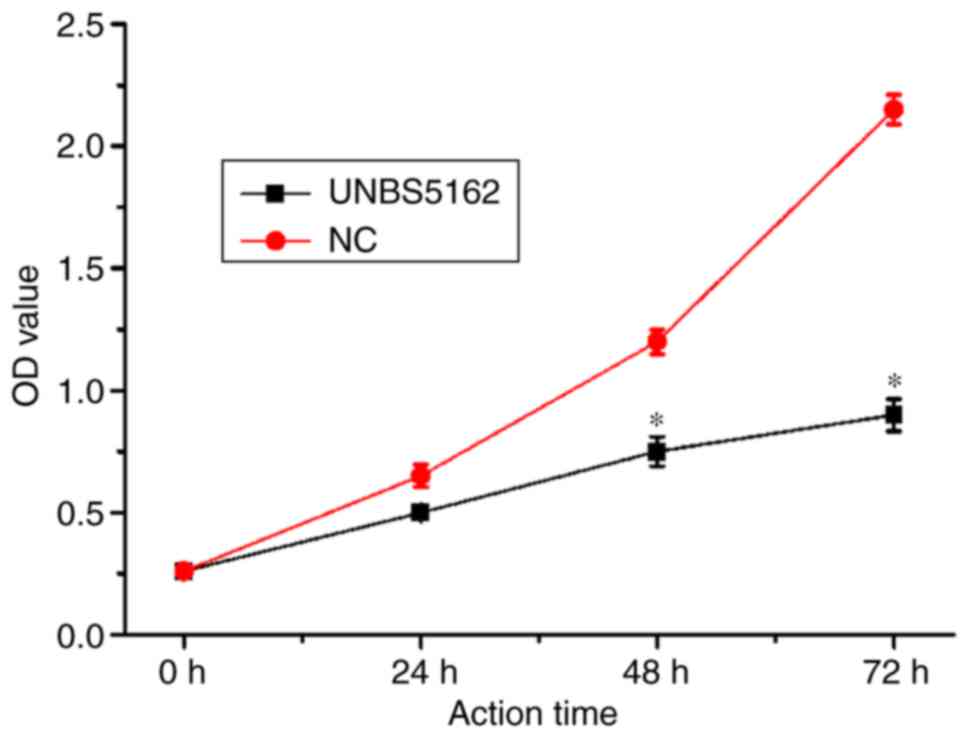
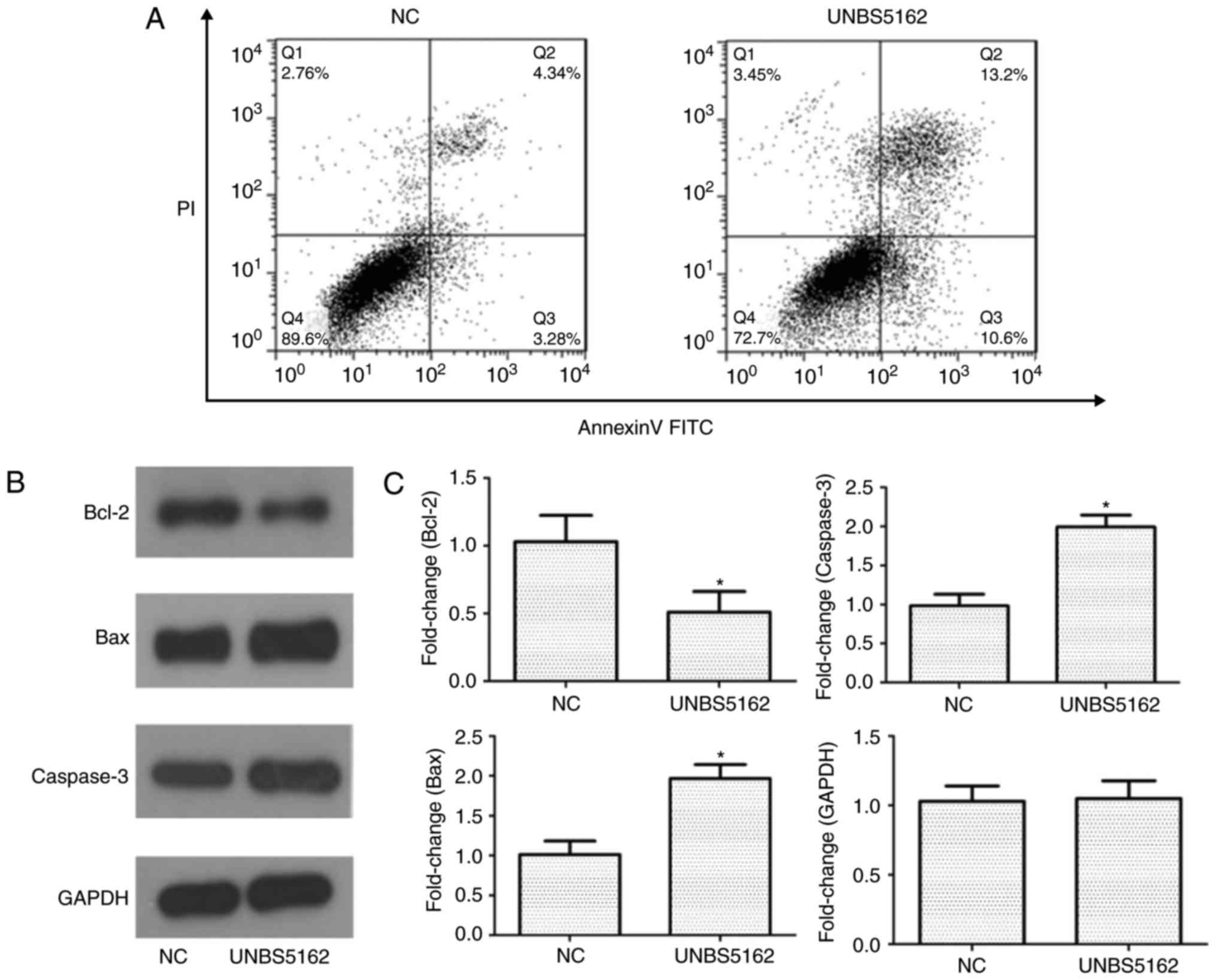
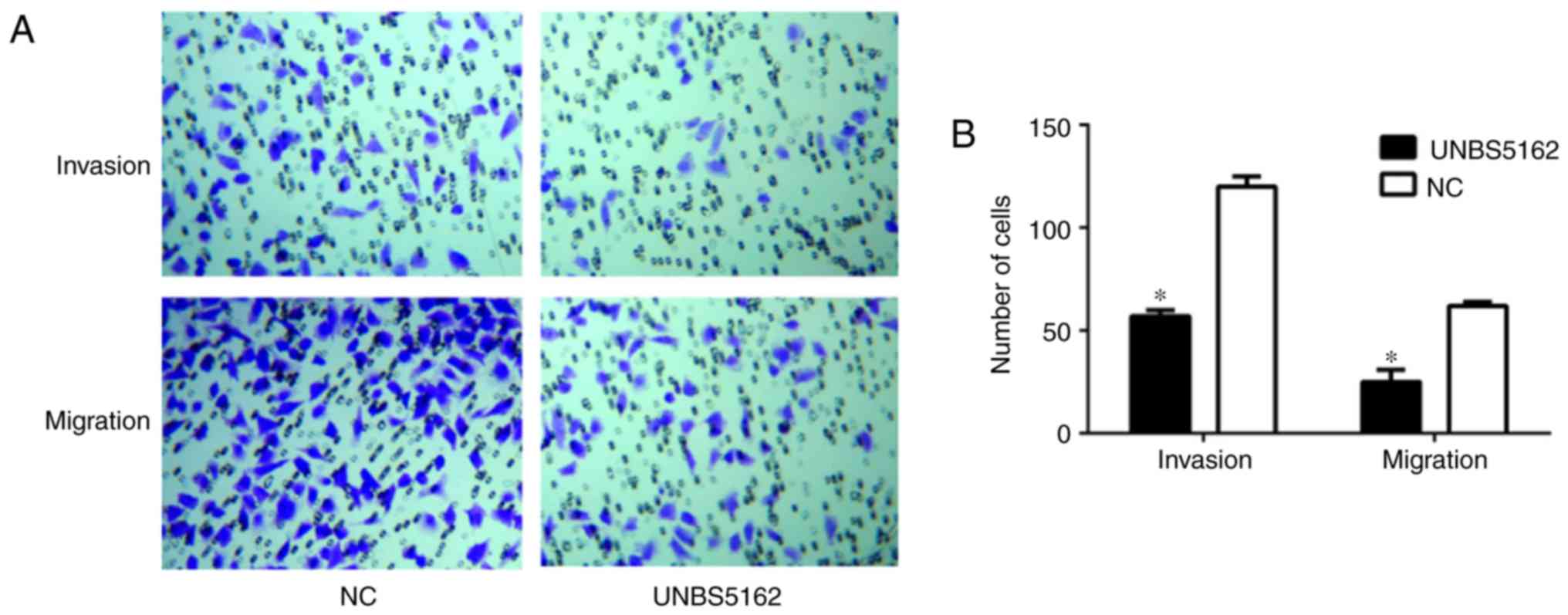
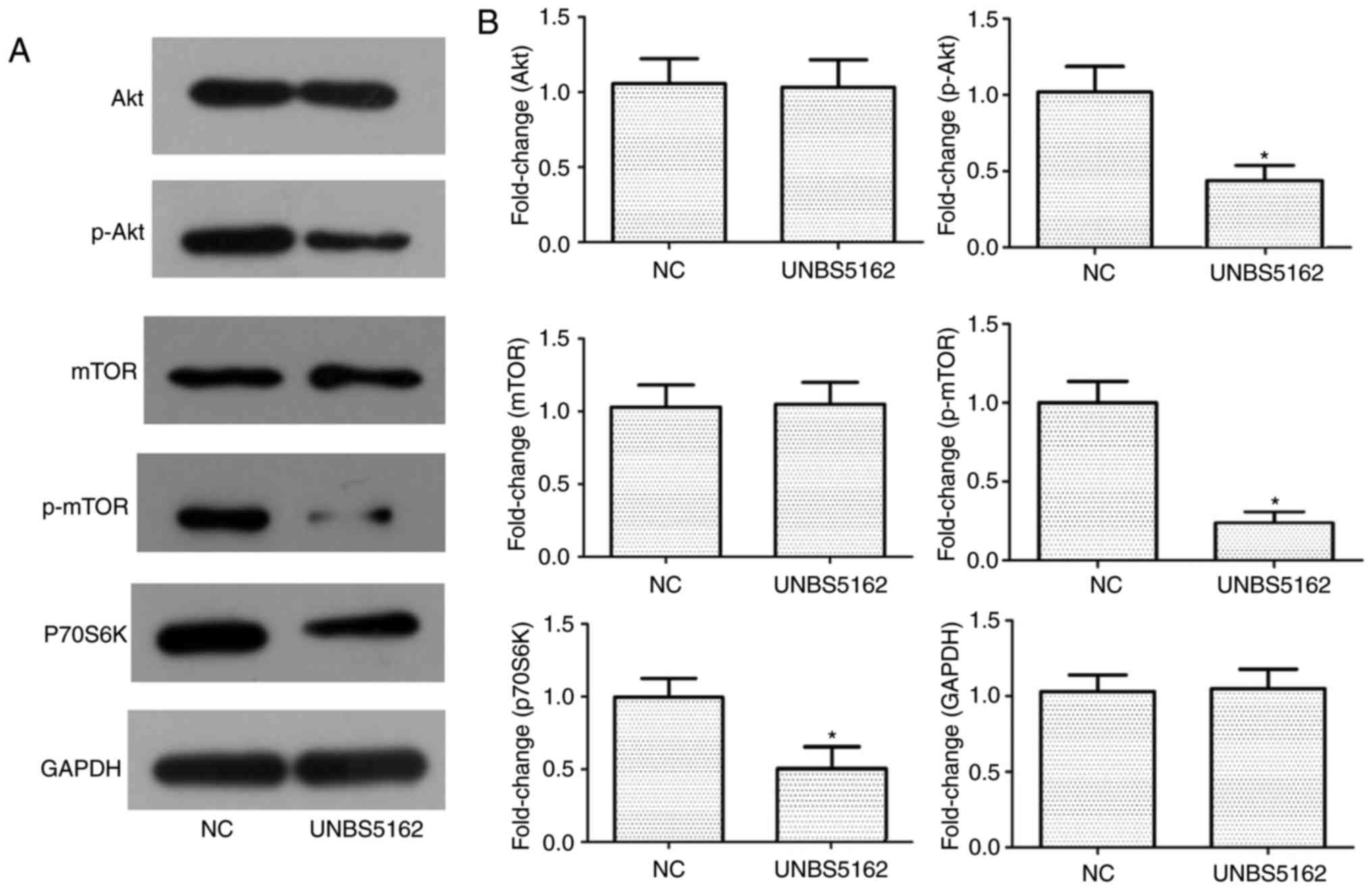
UNBS5162, a novel naphthalimide, is generated by UNBS3157 hydrolysis in physiological saline. In the present study, the effects of UNBS5162 on M14 human melanoma cells were evaluated by Cell Counting Kit‑8 and transwell assays, as well as western blotting. The underlying mechanism of apoptosis induced by UNBS5162 was investigated. The results demonstrated that proliferation of UNBS5162‑treated M14 melanoma cells was markedly inhibited in a time‑dependent manner. The flow cytometry results indicated a markedly increased apoptosis rate in the experimental group compared with in the control group (23.8±0.4 vs. 7.62±0.5%). Microscopy analysis revealed that the invasive and migratory abilities of UNBS5162‑treated M14 cells were markedly suppressed. Furthermore, UNBS5162 treatment led to decreased expression of the anti‑apoptotic protein B‑cell lymphoma 2, but increased expression of the pro‑apoptotic proteins Bcl‑2‑associated X protein and caspase‑3. In addition, the expression of several key proteins involved in the phosphatidylinositol‑4,5‑bisphosphate 3‑kinase/protein kinase B/mammalian target of rapamycin (PI3K/Akt/mTOR) signaling pathway was altered in M14 cells treated with UNBS5162. Based on these results, it may be hypothesized that UNBS5162 suppresses the proliferation of M14 cells by inducing apoptosis via inhibition of key proteins in the PI3K/Akt/mTOR signaling pathway.
View Figures

Figure 1

Figure 2

Figure 3

Figure 4

View References

1 

Trinh VA: Current management of metastatic melanoma. Am J Health Syst Pharm. 65 Suppl 9:S3–S8. 2008. View Article : Google Scholar : PubMed/NCBI

2 

Mete M, Sirakov NM, Griffin J and Menter A: A novel classification system for dysplastic nevus and malignant melanomaProceedings of the IEEE International Conference on Image Processing. Phoenix, AZ: pp. 3414–3418. 2016

3 

Cho E, Rosner BA and Colditz GA: Risk factors for melanoma by body site. Cancer Epidemiol Biomarkers Prev. 14:1241–1244. 2005. View Article : Google Scholar : PubMed/NCBI

4 

Trautmann F, Meier F, Seidler A and Schmitt J: Effects of the German skin cancer screening programme on melanoma incidence and indicators of disease severity. Br J Dermatol. 175:912–919. 2016. View Article : Google Scholar : PubMed/NCBI

5 

Whiteman DC, Green AC and Olsen CM: The Growing Burden of Invasive Melanoma: Projections of Incidence Rates and Numbers of New Cases in Six Susceptible Populations through 2031. J Invest Dermatol. 136:1161–1171. 2016. View Article : Google Scholar : PubMed/NCBI

6 

Ingrassia L, Lefranc F, Kiss R and Mijatovic T: Naphthalimides and azonafides as promising anti-cancer agents. Curr Med Chem. 16:1192–1213. 2009. View Article : Google Scholar : PubMed/NCBI

7 

Ralhan R and Kaur J: Alkylating agents and cancer therapy. Expert Opin Ther Pat. 17:1061–1075. 2007. View Article : Google Scholar

8 

Xie L, Cui J, Qian X, Xu Y, Liu J and Xu R: 5-Non-amino aromatic substituted naphthalimides as potential antitumor agents: Synthesis via Suzuki reaction, antiproliferative activity, and DNA-binding behavior. Bioorg Med Chem. 19:961–967. 2011. View Article : Google Scholar : PubMed/NCBI

9 

Zhu H, Huang M, Yang F, Chen Y, Miao ZH, Qian XH, Xu YF, Qin YX, Luo HB, Shen X, et al: R16, a novel amonafide analogue, induces apoptosis and G2-M arrest via poisoning topoisomerase II. Mol Cancer Ther. 6:484–495. 2007. View Article : Google Scholar : PubMed/NCBI

10 

Antonini I, Volpini R, Dal Ben D, Lambertucci C and Cristalli G: Design, synthesis, and biological evaluation of new mitonafide derivatives as potential antitumor drugs. Bioorg Med Chem. 16:8440–8446. 2008. View Article : Google Scholar : PubMed/NCBI

11 

Braña MF, Cacho M, García MA, de Pascual-Teresa B, Ramos A, Domínguez MT, Pozuelo JM, Abradelo C, Rey-Stolle MF, Yuste M, et al: New analogues of amonafide and elinafide, containing aromatic heterocycles: Synthesis, antitumor activity, molecular modeling, and DNA binding properties. J Med Chem. 47:1391–1399. 2004. View Article : Google Scholar : PubMed/NCBI

12 

Dumont P, Ribaucour F, Quaquebeke EV, Darro F and Kiss R: UNBS3157, a new amonafide derivative with improved in vivo efficacy and decreased toxicity. Cancer Res. 66:11052006.PubMed/NCBI

13 

Van Quaquebeke E, Mahieu T, Dumont P, Dewelle J, Ribaucour F, Simon G, Sauvage S, Gaussin JF, Tuti J, El Yazidi M, et al: 2,2,2-Trichloro-N-({2-[2-(dimethylamino)ethyl]-1,3-dioxo-2,3-dihydro-1H-benzo[de]isoquinolin-5-yl}carbamoyl)acetamide (UNBS3157), a novel nonhematotoxic naphthalimide derivative with potent antitumor activity. J Med Chem. 50:4122–4134. 2007. View Article : Google Scholar : PubMed/NCBI

14 

Seliga R, Pilatova M, Sarissky M, Viglasky V, Walko M and Mojzis J: Novel naphthalimide polyamine derivatives as potential antitumor agents. Mol Biol Rep. 40:4129–4137. 2013. View Article : Google Scholar : PubMed/NCBI

15 

Mahieu T, Mijatovic T, Quaquebeke EV, Lefranc F, Vynckt FV, Darro F and Kiss R: UNBS5162 is a novel naphthalimide derivative that induces autophagy and senescence in human prostate cancer cells. Mol Cancer Ther. 6:3373S2007.

16 

Mijatovic T, Mahieu T, Bruyère C, De Nève N, Dewelle J, Simon G, Dehoux MJM, van der Aar E, Haibe-Kains B, Bontempi G, et al: UNBS5162, a novel naphthalimide that decreases CXCL chemokine expression in experimental prostate cancers. Neoplasia. 10:573–586. 2008. View Article : Google Scholar : PubMed/NCBI

17 

Babchia N, Calipel A, Mouriaux F, Faussat AM and Mascarelli F: The PI3K/Akt and mTOR/P70S6K signaling pathways in human uveal melanoma cells: Interaction with B-Raf/ERK. Invest Ophthalmol Vis Sci. 51:421–429. 2010. View Article : Google Scholar : PubMed/NCBI

18 

Wang B, Shen J and Wang J: UNBS5162 inhibits proliferation of human retinoblastoma cells by promoting cell apoptosis. OncoTargets Ther. 10:5303–5309. 2017. View Article : Google Scholar

19 

Kiliçkan L, Gonca S, Dalçik C, Dalçik H, Solak M, Bayindir O, Süzer K, Omay O and Calikan E: General anesthesia with thoracic epidural anesthesia in the cardiopulmonary bypass surgery reduces apoptosis by upregulating antiapoptotic protein Bcl-2. J Cardiovasc Surg (Torino). 47:315–322. 2006.PubMed/NCBI

20 

Siddiqui WA, Ahad A and Ahsan H: The mystery of BCL2 family: Bcl-2 proteins and apoptosis: an update. Arch Toxicol. 89:289–317. 2015. View Article : Google Scholar : PubMed/NCBI

21 

Wojtuszkiewicz A, Schuurhuis GJ, Kessler FL, Piersma SR, Knol JC, Pham TV, Jansen G, Musters RJ, van Meerloo J, Assaraf YG, et al: Exosomes Secreted by Apoptosis-Resistant Acute Myeloid Leukemia (AML) Blasts Harbor Regulatory Network Proteins Potentially Involved in Antagonism of Apoptosis. Mol Cell Proteomics. 15:1281–1298. 2016. View Article : Google Scholar : PubMed/NCBI

22 

Huang L, Han J, Ben-Hail D, He L, Li B, Chen Z, Wang Y, Yang Y, Liu L, Zhu Y, et al: A New Fungal Diterpene Induces VDAC1-dependent Apoptosis in Bax/Bak-deficient Cells. J Biol Chem. 290:23563–23578. 2015. View Article : Google Scholar : PubMed/NCBI

23 

Singh L, Pushker N, Saini N, Sen S, Sharma A, Bakhshi S, Chawla B and Kashyap S: Expression of pro-apoptotic Bax and anti-apoptotic Bcl-2 proteins in human retinoblastoma. Clin Experiment Ophthalmol. 43:259–267. 2015. View Article : Google Scholar : PubMed/NCBI

24 

Zhu L, Han MB, Gao Y, Wang H, Dai L, Wen Y and Na LX: Curcumin triggers apoptosis via upregulation of Bax/Bcl-2 ratio and caspase activation in SW872 human adipocytes. Mol Med Rep. 12:1151–1156. 2015. View Article : Google Scholar : PubMed/NCBI

25 

Zhou S, Wang Y and Zhu JJ: Simultaneous Detection of Tumor Cell Apoptosis Regulators Bcl-2 and Bax through a Dual-Signal-Marked Electrochemical Immunosensor. ACS Appl Mater Interfaces. 8:7674–7682. 2016. View Article : Google Scholar : PubMed/NCBI

26 

Jiang H, Liu J, Gao J, Meng M, Qin X and Wang T: Up-regulations of Bax and caspase-3 and down-regulation of Bcl-2 after Xinfeng capsule treatment in adjuvant-induced arthritis rats. Xi Bao Yu Fen Zi Mian Yi Xue Za Zhi. 32:457–461. 2016.(In Chinese). PubMed/NCBI

27 

Wang D, Chen J, Chen H, Duan Z, Xu Q, Wei M, Wang L and Zhong M: Leptin regulates proliferation and apoptosis of colorectal carcinoma through PI3K/Akt/mTOR signalling pathway. J Biosci. 37:91–101. 2012. View Article : Google Scholar : PubMed/NCBI

28 

Kang S, Dong SM, Kim BR, Park MS, Trink B, Byun HJ and Rho SB: Thioridazine induces apoptosis by targeting the PI3K/Akt/mTOR pathway in cervical and endometrial cancer cells. Apoptosis. 17:989–997. 2012. View Article : Google Scholar : PubMed/NCBI

29 

Sun CH, Chang YH and Pan CC: Activation of the PI3K/Akt/mTOR pathway correlates with tumour progression and reduced survival in patients with urothelial carcinoma of the urinary bladder. Histopathology. 58:1054–1063. 2011. View Article : Google Scholar : PubMed/NCBI

30 

Jiang Z, Liu Y and Wang C: Oncogenic NanogP8 expression regulates cell proliferation and migration through the Akt/mTOR signaling pathway in human gastric cancer - SGC-7901cell line. OncoTargets Ther. 9:4859–4866. 2016. View Article : Google Scholar

31 

Leleu X, Coiteux V, Corm S, Robu D, Dupire S, Moreau AS, Gay J, Berthon C, Pascal L, Cliquenois E, et al: The AKT signaling pathway is the key regulator of cell survival and homing in Waldenstrom macroglobulinemia. Hématologie. 14:14–17. 2008.

32 

Yang H, Zhou J, Mi J, Ma K, Fan Y, Ning J, Wang C, Wei X, Zhao H and Li E: HOXD10 acts as a tumor-suppressive factor via inhibition of the RHOC/AKT/MAPK pathway in human cholangiocellular carcinoma. Oncol Rep. 34:1681–1691. 2015. View Article : Google Scholar : PubMed/NCBI

33 

Asnaghi L, Bruno P, Priulla M and Nicolin A: mTOR: A protein kinase switching between life and death. Pharmacol Res. 50:545–549. 2004. View Article : Google Scholar : PubMed/NCBI

34 

Yu JS and Cui W: Proliferation, survival and metabolism: The role of PI3K/AKT/mTOR signalling in pluripotency and cell fate determination. Development. 143:3050–3060. 2016. View Article : Google Scholar : PubMed/NCBI

35 

Liu YD, Zheng QX, Wu HB, Guo XD, Li JF and Hao SF: The effects of rapamycin on expression ratio of Bax/Bcl-2 and the expression of activated caspase-3 in different types of tumor cells. Tumor. 33(2)2013.

Related Articles

  • Abstract
  • View
  • Download
  • Twitter
Copy and paste a formatted citation
Spandidos Publications style
Shi X, Yang L, Xie J, Zhao Y, Cong J, Li Z, Li H, Cheng X and Fan J: UNBS5162 inhibits proliferation of human melanoma cells by inducing apoptosis via the PI3K/Akt pathway. Mol Med Rep 18: 3382-3388, 2018.
APA
Shi, X., Yang, L., Xie, J., Zhao, Y., Cong, J., Li, Z. ... Fan, J. (2018). UNBS5162 inhibits proliferation of human melanoma cells by inducing apoptosis via the PI3K/Akt pathway. Molecular Medicine Reports, 18, 3382-3388. https://doi.org/10.3892/mmr.2018.9321
MLA
Shi, X., Yang, L., Xie, J., Zhao, Y., Cong, J., Li, Z., Li, H., Cheng, X., Fan, J."UNBS5162 inhibits proliferation of human melanoma cells by inducing apoptosis via the PI3K/Akt pathway". Molecular Medicine Reports 18.3 (2018): 3382-3388.
Chicago
Shi, X., Yang, L., Xie, J., Zhao, Y., Cong, J., Li, Z., Li, H., Cheng, X., Fan, J."UNBS5162 inhibits proliferation of human melanoma cells by inducing apoptosis via the PI3K/Akt pathway". Molecular Medicine Reports 18, no. 3 (2018): 3382-3388. https://doi.org/10.3892/mmr.2018.9321
Copy and paste a formatted citation
x
Spandidos Publications style
Shi X, Yang L, Xie J, Zhao Y, Cong J, Li Z, Li H, Cheng X and Fan J: UNBS5162 inhibits proliferation of human melanoma cells by inducing apoptosis via the PI3K/Akt pathway. Mol Med Rep 18: 3382-3388, 2018.
APA
Shi, X., Yang, L., Xie, J., Zhao, Y., Cong, J., Li, Z. ... Fan, J. (2018). UNBS5162 inhibits proliferation of human melanoma cells by inducing apoptosis via the PI3K/Akt pathway. Molecular Medicine Reports, 18, 3382-3388. https://doi.org/10.3892/mmr.2018.9321
MLA
Shi, X., Yang, L., Xie, J., Zhao, Y., Cong, J., Li, Z., Li, H., Cheng, X., Fan, J."UNBS5162 inhibits proliferation of human melanoma cells by inducing apoptosis via the PI3K/Akt pathway". Molecular Medicine Reports 18.3 (2018): 3382-3388.
Chicago
Shi, X., Yang, L., Xie, J., Zhao, Y., Cong, J., Li, Z., Li, H., Cheng, X., Fan, J."UNBS5162 inhibits proliferation of human melanoma cells by inducing apoptosis via the PI3K/Akt pathway". Molecular Medicine Reports 18, no. 3 (2018): 3382-3388. https://doi.org/10.3892/mmr.2018.9321
Follow us
  • Twitter
  • LinkedIn
  • Facebook
About
  • Spandidos Publications
  • Careers
  • Cookie Policy
  • Privacy Policy
How can we help?
  • Help
  • Live Chat
  • Contact
  • Email to our Support Team