Spandidos Publications Logo
  • About
    • About Spandidos
    • Aims and Scopes
    • Abstracting and Indexing
    • Editorial Policies
    • Reprints and Permissions
    • Job Opportunities
    • Terms and Conditions
    • Contact
  • Journals
    • All Journals
    • Oncology Letters
      • Oncology Letters
      • Information for Authors
      • Editorial Policies
      • Editorial Board
      • Aims and Scope
      • Abstracting and Indexing
      • Bibliographic Information
      • Archive
    • International Journal of Oncology
      • International Journal of Oncology
      • Information for Authors
      • Editorial Policies
      • Editorial Board
      • Aims and Scope
      • Abstracting and Indexing
      • Bibliographic Information
      • Archive
    • Molecular and Clinical Oncology
      • Molecular and Clinical Oncology
      • Information for Authors
      • Editorial Policies
      • Editorial Board
      • Aims and Scope
      • Abstracting and Indexing
      • Bibliographic Information
      • Archive
    • Experimental and Therapeutic Medicine
      • Experimental and Therapeutic Medicine
      • Information for Authors
      • Editorial Policies
      • Editorial Board
      • Aims and Scope
      • Abstracting and Indexing
      • Bibliographic Information
      • Archive
    • International Journal of Molecular Medicine
      • International Journal of Molecular Medicine
      • Information for Authors
      • Editorial Policies
      • Editorial Board
      • Aims and Scope
      • Abstracting and Indexing
      • Bibliographic Information
      • Archive
    • Biomedical Reports
      • Biomedical Reports
      • Information for Authors
      • Editorial Policies
      • Editorial Board
      • Aims and Scope
      • Abstracting and Indexing
      • Bibliographic Information
      • Archive
    • Oncology Reports
      • Oncology Reports
      • Information for Authors
      • Editorial Policies
      • Editorial Board
      • Aims and Scope
      • Abstracting and Indexing
      • Bibliographic Information
      • Archive
    • Molecular Medicine Reports
      • Molecular Medicine Reports
      • Information for Authors
      • Editorial Policies
      • Editorial Board
      • Aims and Scope
      • Abstracting and Indexing
      • Bibliographic Information
      • Archive
    • World Academy of Sciences Journal
      • World Academy of Sciences Journal
      • Information for Authors
      • Editorial Policies
      • Editorial Board
      • Aims and Scope
      • Abstracting and Indexing
      • Bibliographic Information
      • Archive
    • International Journal of Functional Nutrition
      • International Journal of Functional Nutrition
      • Information for Authors
      • Editorial Policies
      • Editorial Board
      • Aims and Scope
      • Abstracting and Indexing
      • Bibliographic Information
      • Archive
    • International Journal of Epigenetics
      • International Journal of Epigenetics
      • Information for Authors
      • Editorial Policies
      • Editorial Board
      • Aims and Scope
      • Abstracting and Indexing
      • Bibliographic Information
      • Archive
    • Medicine International
      • Medicine International
      • Information for Authors
      • Editorial Policies
      • Editorial Board
      • Aims and Scope
      • Abstracting and Indexing
      • Bibliographic Information
      • Archive
  • Articles
  • Information
    • Information for Authors
    • Information for Reviewers
    • Information for Librarians
    • Information for Advertisers
    • Conferences
  • Language Editing
Spandidos Publications Logo
  • About
    • About Spandidos
    • Aims and Scopes
    • Abstracting and Indexing
    • Editorial Policies
    • Reprints and Permissions
    • Job Opportunities
    • Terms and Conditions
    • Contact
  • Journals
    • All Journals
    • Biomedical Reports
      • Information for Authors
      • Editorial Policies
      • Editorial Board
      • Aims and Scope
      • Abstracting and Indexing
      • Bibliographic Information
      • Archive
    • Experimental and Therapeutic Medicine
      • Information for Authors
      • Editorial Policies
      • Editorial Board
      • Aims and Scope
      • Abstracting and Indexing
      • Bibliographic Information
      • Archive
    • International Journal of Epigenetics
      • Information for Authors
      • Editorial Policies
      • Editorial Board
      • Aims and Scope
      • Abstracting and Indexing
      • Bibliographic Information
      • Archive
    • International Journal of Functional Nutrition
      • Information for Authors
      • Editorial Policies
      • Editorial Board
      • Aims and Scope
      • Abstracting and Indexing
      • Bibliographic Information
      • Archive
    • International Journal of Molecular Medicine
      • Information for Authors
      • Editorial Policies
      • Editorial Board
      • Aims and Scope
      • Abstracting and Indexing
      • Bibliographic Information
      • Archive
    • International Journal of Oncology
      • Information for Authors
      • Editorial Policies
      • Editorial Board
      • Aims and Scope
      • Abstracting and Indexing
      • Bibliographic Information
      • Archive
    • Medicine International
      • Information for Authors
      • Editorial Policies
      • Editorial Board
      • Aims and Scope
      • Abstracting and Indexing
      • Bibliographic Information
      • Archive
    • Molecular and Clinical Oncology
      • Information for Authors
      • Editorial Policies
      • Editorial Board
      • Aims and Scope
      • Abstracting and Indexing
      • Bibliographic Information
      • Archive
    • Molecular Medicine Reports
      • Information for Authors
      • Editorial Policies
      • Editorial Board
      • Aims and Scope
      • Abstracting and Indexing
      • Bibliographic Information
      • Archive
    • Oncology Letters
      • Information for Authors
      • Editorial Policies
      • Editorial Board
      • Aims and Scope
      • Abstracting and Indexing
      • Bibliographic Information
      • Archive
    • Oncology Reports
      • Information for Authors
      • Editorial Policies
      • Editorial Board
      • Aims and Scope
      • Abstracting and Indexing
      • Bibliographic Information
      • Archive
    • World Academy of Sciences Journal
      • Information for Authors
      • Editorial Policies
      • Editorial Board
      • Aims and Scope
      • Abstracting and Indexing
      • Bibliographic Information
      • Archive
  • Articles
  • Information
    • For Authors
    • For Reviewers
    • For Librarians
    • For Advertisers
    • Conferences
  • Language Editing
Login Register Submit
  • This site uses cookies
  • You can change your cookie settings at any time by following the instructions in our Cookie Policy. To find out more, you may read our Privacy Policy.

    I agree
Search articles by DOI, keyword, author or affiliation
Search
Advanced Search
presentation
Molecular Medicine Reports
Join Editorial Board Propose a Special Issue
Print ISSN: 1791-2997 Online ISSN: 1791-3004
Journal Cover
December-2018 Volume 18 Issue 6

Full Size Image

Sign up for eToc alerts
Recommend to Library

Journals

International Journal of Molecular Medicine

International Journal of Molecular Medicine

International Journal of Molecular Medicine is an international journal devoted to molecular mechanisms of human disease.

International Journal of Oncology

International Journal of Oncology

International Journal of Oncology is an international journal devoted to oncology research and cancer treatment.

Molecular Medicine Reports

Molecular Medicine Reports

Covers molecular medicine topics such as pharmacology, pathology, genetics, neuroscience, infectious diseases, molecular cardiology, and molecular surgery.

Oncology Reports

Oncology Reports

Oncology Reports is an international journal devoted to fundamental and applied research in Oncology.

Experimental and Therapeutic Medicine

Experimental and Therapeutic Medicine

Experimental and Therapeutic Medicine is an international journal devoted to laboratory and clinical medicine.

Oncology Letters

Oncology Letters

Oncology Letters is an international journal devoted to Experimental and Clinical Oncology.

Biomedical Reports

Biomedical Reports

Explores a wide range of biological and medical fields, including pharmacology, genetics, microbiology, neuroscience, and molecular cardiology.

Molecular and Clinical Oncology

Molecular and Clinical Oncology

International journal addressing all aspects of oncology research, from tumorigenesis and oncogenes to chemotherapy and metastasis.

World Academy of Sciences Journal

World Academy of Sciences Journal

Multidisciplinary open-access journal spanning biochemistry, genetics, neuroscience, environmental health, and synthetic biology.

International Journal of Functional Nutrition

International Journal of Functional Nutrition

Open-access journal combining biochemistry, pharmacology, immunology, and genetics to advance health through functional nutrition.

International Journal of Epigenetics

International Journal of Epigenetics

Publishes open-access research on using epigenetics to advance understanding and treatment of human disease.

Medicine International

Medicine International

An International Open Access Journal Devoted to General Medicine.

Journal Cover
December-2018 Volume 18 Issue 6

Full Size Image

Sign up for eToc alerts
Recommend to Library

  • Article
  • Citations
    • Cite This Article
    • Download Citation
    • Create Citation Alert
    • Remove Citation Alert
    • Cited By
  • Similar Articles
    • Related Articles (in Spandidos Publications)
    • Similar Articles (Google Scholar)
    • Similar Articles (PubMed)
  • Download PDF
  • Download XML
  • View XML
Article Open Access

Selenocysteine mimics the effect of dietary restriction on lifespan via SKN‑1 and retards age‑associated pathophysiological changes in Caenorhabditis elegans

  • Authors:
    • So‑Hyeon Kim
    • Bo‑Kyoung Kim
    • Sang‑Kyu Park
  • View Affiliations / Copyright

    Affiliations: Department of Medical Biotechnology, College of Medical Sciences, Soonchunhyang University, Asan, Chungnam 31538, Republic of Korea
    Copyright: © Kim et al. This is an open access article distributed under the terms of Creative Commons Attribution License.
  • Pages: 5389-5398
    |
    Published online on: October 24, 2018
       https://doi.org/10.3892/mmr.2018.9590
  • Expand metrics +
Metrics: Total Views: 0 (Spandidos Publications: | PMC Statistics: )
Metrics: Total PDF Downloads: 0 (Spandidos Publications: | PMC Statistics: )
Cited By (CrossRef): 0 citations Loading Articles...

This article is mentioned in:


Abstract

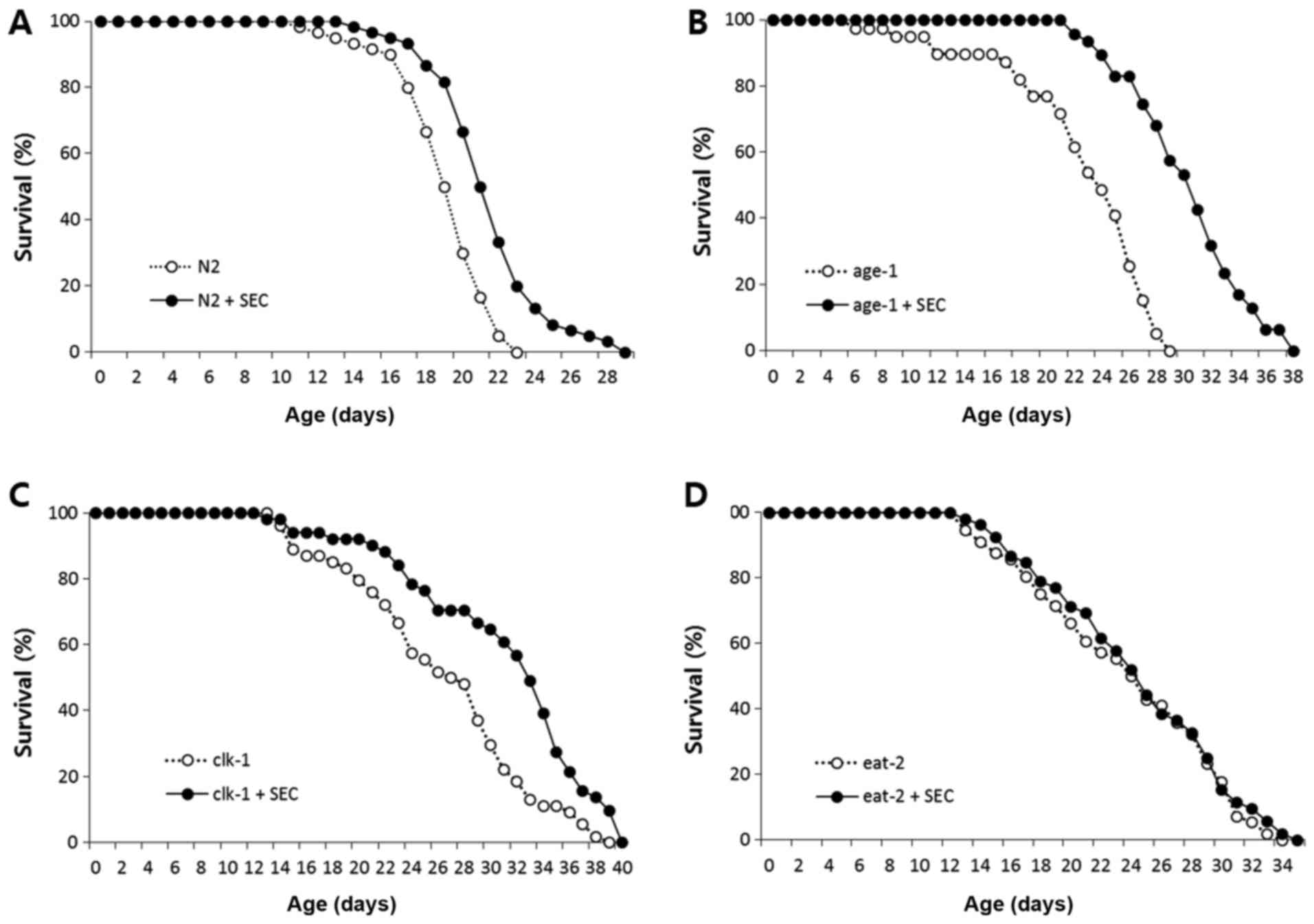
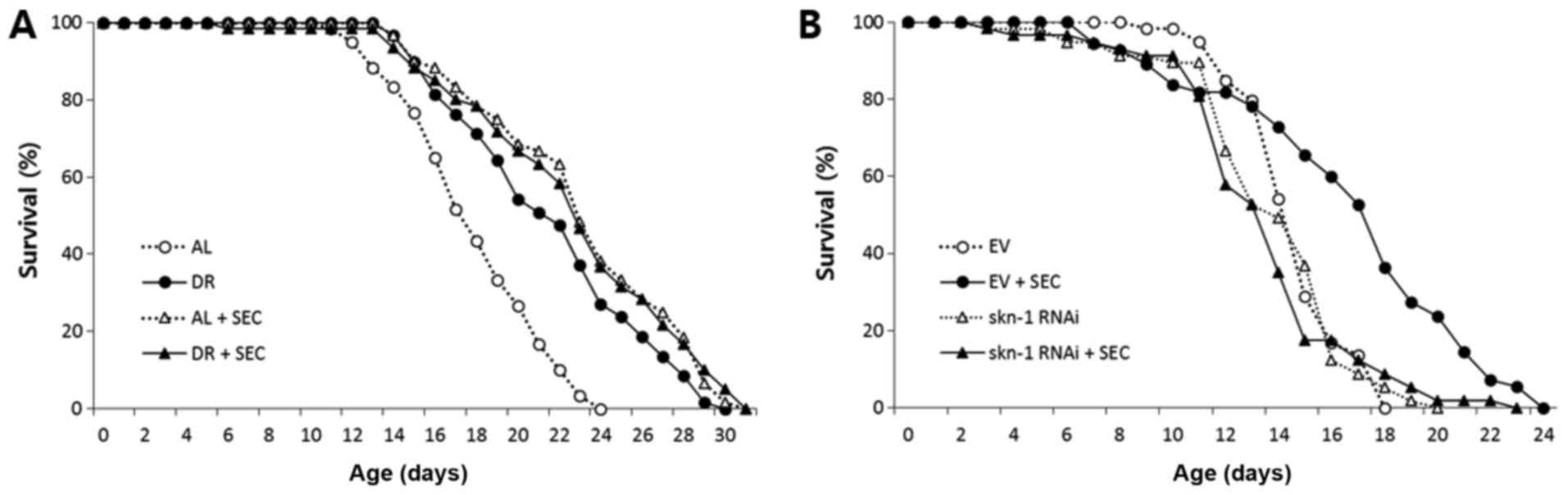
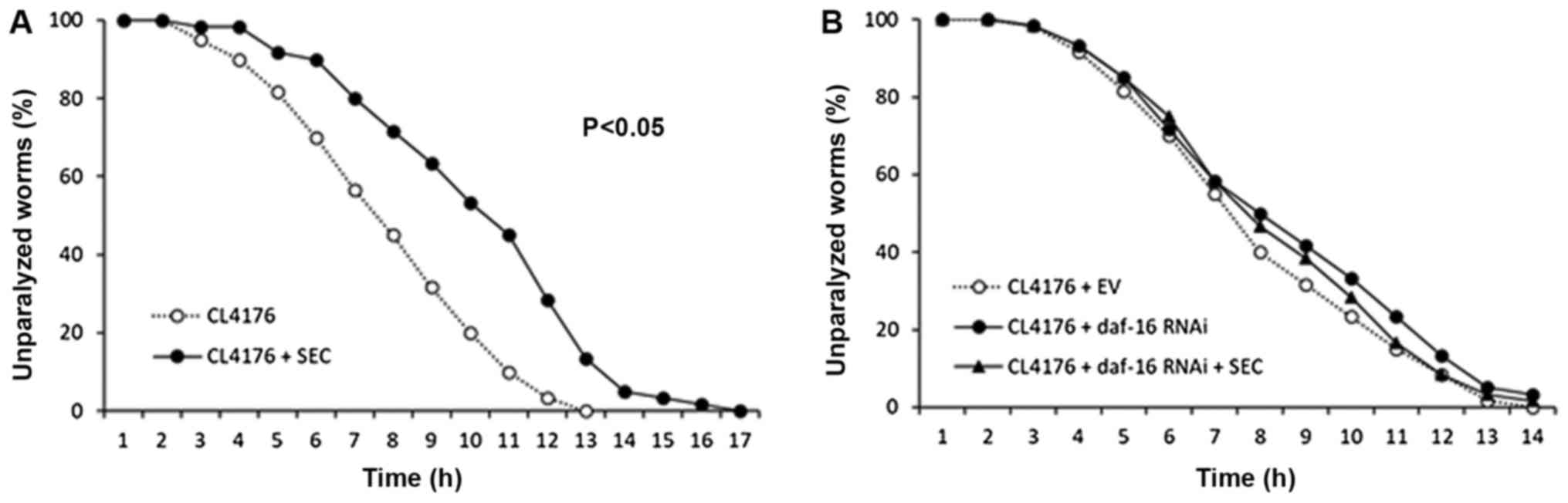
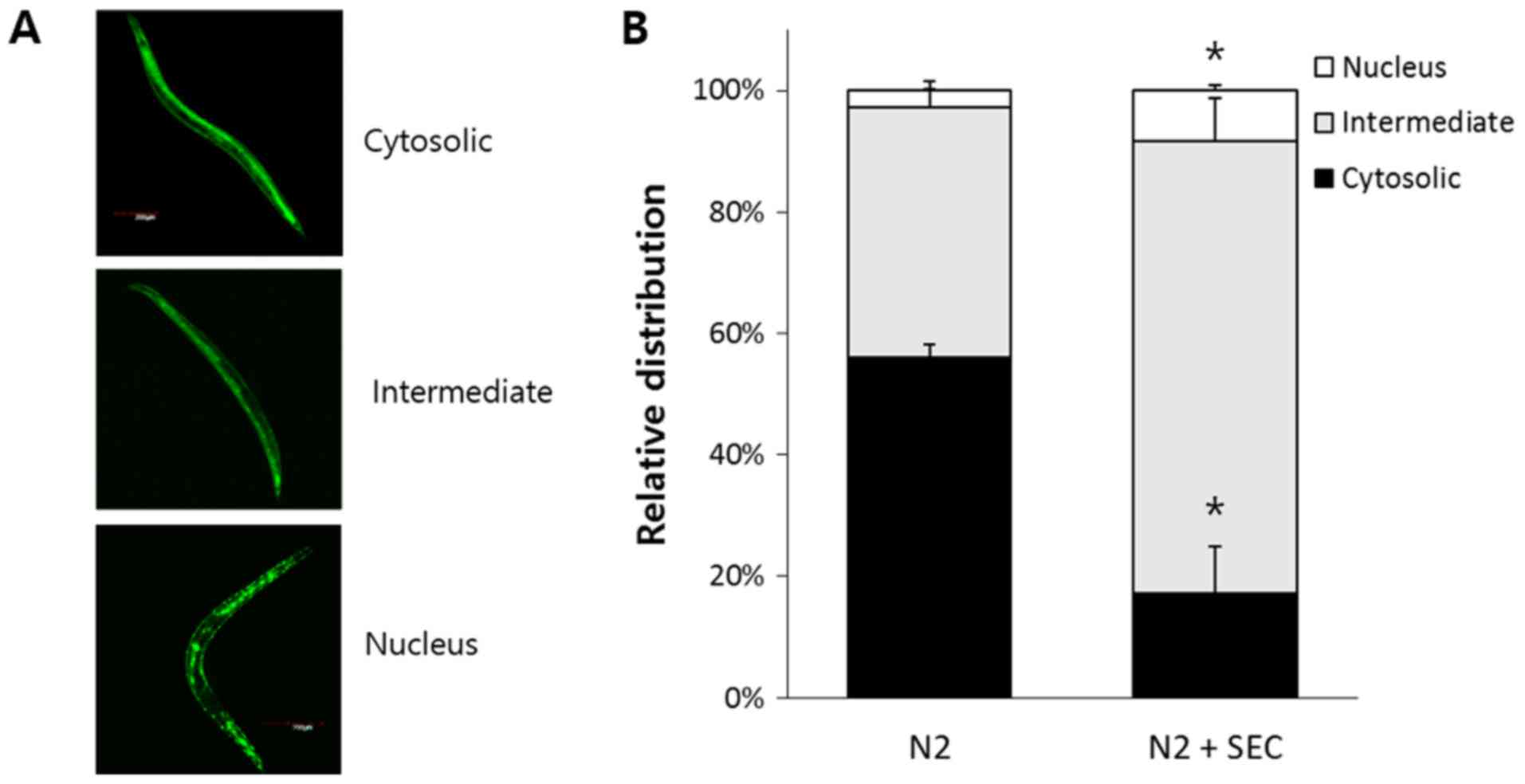
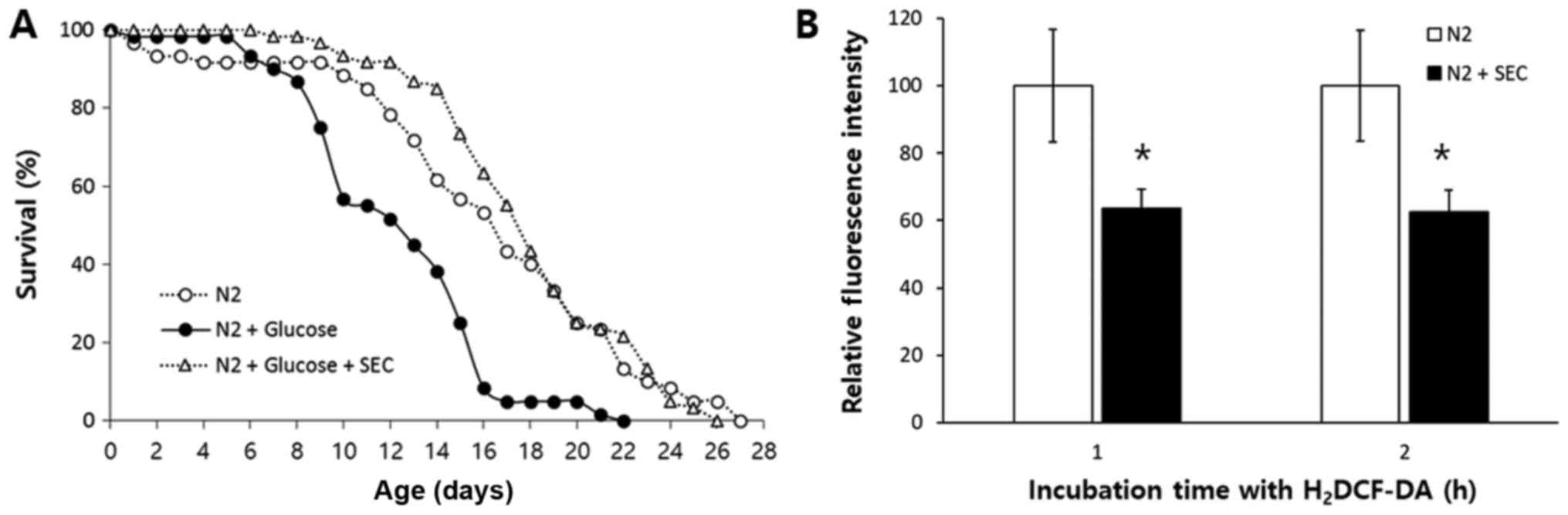
Selenocysteine, a sulfur‑containing amino acid, can modulate cellular oxidative stress defense systems by incorporating into anti‑oxidant enzymes such as glutathione peroxidase and thioredoxin reductase. Selenocysteine can also prevent cancer, neurodegenerative diseases and cardiovascular diseases. A recent study revealed that dietary supplementation with selenocysteine can increase the resistance of Caenorhabditis elegans to environmental stressors and its lifespan. The objective of the present study was to identify the underlying mechanism involved in the lifespan‑extending effect of selenocysteine and the effect of selenocysteine on age‑associated pathophysiological changes. Lifespan assays with known long‑lived mutants of age‑1 (the ortholog of the phosphoinositide 3-kinase), clk‑1 (the ortholog of demethoxyubiquinone hydroxylase) and eat‑2 (a ligand-gated ion channel subunit) revealed that the effect of selenocysteine on lifespan specifically overlapped with that of the eat‑2 mutation, a genetic model of dietary restriction (DR). Selenocysteine mimicked the effect of DR on the bacterial dilution method. It required SKN-1 (the ortholog of mammalian nuclear factor-erythroid-related factor) for lifespan extension. In addition, selenocysteine significantly delayed the paralysis induced by human amyloid‑β gene, positively correlated with the incidence of Alzheimer's disease. The effect of selenocysteine on amyloid‑β‑induced toxicity was dependent on the nuclear localization of DAF‑16. Reduced survival caused by high‑glucose‑diet was recovered by selenocysteine. Selenocysteine also reduced the cellular level of reactive oxygen species known to be increased by high‑glucose‑diet. The results of the present study suggested that selenocysteine can mimic the effect of DR on lifespan and age‑associated pathophysiological alterations, providing scientific evidence for the development of DR mimetics using selenocysteine.
View Figures

Figure 1

Figure 2

Figure 3

Figure 4

Figure 5

View References

1 

Osborne TB, Mendel LB and Ferry EL: The effect of retardation of growth upon the breeding period and duration of life of rats. Science. 45:294–295. 1917. View Article : Google Scholar : PubMed/NCBI

2 

Chippindale AK, Leroi AM, Kim SB and Rose MR: Phenotypic plasticity and selection in Drosophila life history evolution. I. Nutrition and the cost of reproduction. J Evol Biol. 6:171–193. 1993. View Article : Google Scholar

3 

Sohal RS, Ku HH, Agarwal S, Forster MJ and Lal H: Oxidative damage, mitochondrial oxidant generation and antioxidant defenses during aging and in response to food restriction in the mouse. Mech Ageing Dev. 74:121–133. 1994. View Article : Google Scholar : PubMed/NCBI

4 

Colman RJ, Anderson RM, Johnson SC, Kastman EK, Kosmatka KJ, Beasley TM, Allison DB, Cruzen C, Simmons HA, Kemnitz JW and Weindruch R: Caloric restriction delays disease onset and mortality in rhesus monkeys. Science. 325:201–204. 2009. View Article : Google Scholar : PubMed/NCBI

5 

Klass MR: Aging in the nematode Caenorhabditis elegans: Major biological and environmental factors influencing life span. Mech Ageing Dev. 6:413–429. 1977. View Article : Google Scholar : PubMed/NCBI

6 

Lakowski B and Hekimi S: The genetics of caloric restriction in Caenorhabditis elegans. Proc Natl Acad Sci USA. 95:13091–13096. 1998. View Article : Google Scholar : PubMed/NCBI

7 

Szewczyk NJ, Udranszky IA, Kozak E, Sunga J, Kim SK, Jacobson LA and Conley CA: Delayed development and lifespan extension as features of metabolic lifestyle alteration in C. elegans under dietary restriction. J Exp Biol. 209:4129–4139. 2006. View Article : Google Scholar : PubMed/NCBI

8 

Mair W, Goymer P, Pletcher SD and Partridge L: Demography of dietary restriction and death in Drosophila. Science. 301:1731–1733. 2003. View Article : Google Scholar : PubMed/NCBI

9 

Wood JG, Rogina B, Lavu S, Howitz K, Helfand SL, Tatar M and Sinclair D: Sirtuin activators mimic caloric restriction and delay ageing in metazoans. Nature. 430:686–689. 2004. View Article : Google Scholar : PubMed/NCBI

10 

Barger JL, Kayo T, Vann JM, Arias EB, Wang J, Hacker TA, Wang Y, Raederstorff D, Morrow JD, Leeuwenburgh C, et al: A low dose of dietary resveratrol partially mimics caloric restriction and retards aging parameters in mice. PLoS One. 3:e22642008. View Article : Google Scholar : PubMed/NCBI

11 

Caruana M, Cauchi R and Vassallo N: Putative role of red wine polyphenols against brain pathology in Alzheimer's and Parkinson's disease. Front Nutr. 3:312016. View Article : Google Scholar : PubMed/NCBI

12 

Ben Sahra I, Le Marchand-Brustel Y, Tanti JF and Bost F: Metformin in cancer therapy: A new perspective for an old antidiabetic drug? Mol Cancer Ther. 9:1092–1099. 2010. View Article : Google Scholar : PubMed/NCBI

13 

Papanas N and Maltezos E: Oral antidiabetic agents: Anti-atherosclerotic properties beyond glucose lowering? Curr Pharm Des. 15:3179–3192. 2009. View Article : Google Scholar : PubMed/NCBI

14 

Pilmore HL: Review: Metformin: Potential benefits and use in chronic kidney disease. Nephrology (Carlton). 15:412–418. 2010. View Article : Google Scholar : PubMed/NCBI

15 

Greer EL, Dowlatshahi D, Banko MR, Villen J, Hoang K, Blanchard D, Gygi SP and Brunet A: An AMPK-FOXO pathway mediates longevity induced by a novel method of dietary restriction in C. elegans. Curr Biol. 17:1646–1656. 2007. View Article : Google Scholar : PubMed/NCBI

16 

Onken B and Driscoll M: Metformin induces a dietary restriction-like state and the oxidative stress response to extend C. elegans Healthspan via AMPK, LKB1, and SKN-1. PLoS One. 5:e87582010. View Article : Google Scholar : PubMed/NCBI

17 

Dhahbi JM, Mote PL, Fahy GM and Spindler SR: Identification of potential caloric restriction mimetics by microarray profiling. Physiol Genomics. 23:343–350. 2005. View Article : Google Scholar : PubMed/NCBI

18 

Shintani T, Sakoguchi H, Yoshihara A, Izumori K and Sato M: d-Allulose, a stereoisomer of d-fructose, extends Caenorhabditis elegans lifespan through a dietary restriction mechanism: A new candidate dietary restriction mimetic. Biochem Biophys Res Commun. 493:1528–1533. 2017. View Article : Google Scholar : PubMed/NCBI

19 

Li F, Lutz PB, Pepelyayeva Y, Arnér ES, Bayse CA and Rozovsky S: Redox active motifs in selenoproteins. Proc Natl Acad Sci USA. 111:6976–6981. 2014. View Article : Google Scholar : PubMed/NCBI

20 

Brenneisen P, Steinbrenner H and Sies H: Selenium, oxidative stress, and health aspects. Mol Aspects Med. 26:256–267. 2005. View Article : Google Scholar : PubMed/NCBI

21 

Kleinman WA and Richie JP Jr: Status of glutathione and other thiols and disulfides in human plasma. Biochem Pharmacol. 60:19–29. 2000. View Article : Google Scholar : PubMed/NCBI

22 

Tapiero H, Townsend DM and Tew KD: The antioxidant role of selenium and seleno-compounds. Biomed Pharmacother. 57:134–144. 2003. View Article : Google Scholar : PubMed/NCBI

23 

Jiang Q, Pan Y, Cheng Y and Li H and Li H: Protection of rat liver against hepatic ischemia-reperfusion injury by a novel selenocysteine-containing 7-mer peptide. Mol Med Rep. 14:2007–2015. 2016. View Article : Google Scholar : PubMed/NCBI

24 

Balaban H, Nazıroğlu M, Demirci K and Övey İS: The protective role of selenium on scopolamine-induced memory impairment, oxidative stress, and apoptosis in aged rats: The involvement of TRPM2 and TRPV1 channels. Mol Neurobiol. 54:2852–2868. 2017. View Article : Google Scholar : PubMed/NCBI

25 

Puppala AK, French RL, Matthies D, Baxa U, Subramaniam S and Simonović M: Structural basis for early-onset neurological disorders caused by mutations in human selenocysteine synthase. Sci Rep. 6:325632016. View Article : Google Scholar : PubMed/NCBI

26 

Wollenhaupt SG, Soares AT, Salgueiro WG, Noremberg S, Reis G, Viana C, Gubert P, Soares FA, Affeldt RF, Lüdtke DS, et al: Seleno- and telluro-xylofuranosides attenuate Mn-induced toxicity in C. elegans via the DAF-16/FOXO pathway. Food Chem Toxicol. 64:192–199. 2014. View Article : Google Scholar : PubMed/NCBI

27 

Stenvall J, Fierro-González JC, Swoboda P, Saamarthy K, Cheng Q, Cacho-Valadez B, Arnér ES, Persson OP, Miranda-Vizuete A and Tuck S: Selenoprotein TRXR-1 and GSR-1 are essential for removal of old cuticle during molting in Caenorhabditis elegans. Proc Natl Acad Sci USA. 108:1064–1069. 2011. View Article : Google Scholar : PubMed/NCBI

28 

Kim JS, Kim SH and Park SK: Selenocysteine modulates resistance to environmental stress and confers anti-aging effects in C. elegans. Clinics (Sao Paulo). 72:491–498. 2017. View Article : Google Scholar : PubMed/NCBI

29 

Kamath RS, Fraser AG, Dong Y, Poulin G, Durbin R, Gotta M, Kanapin A, Le Bot N, Moreno S, Sohrmann M, et al: Systematic functional analysis of the Caenorhabditis elegans genome using RNAi. Nature. 421:231–237. 2003. View Article : Google Scholar : PubMed/NCBI

30 

Peto R and Peto J: Asymptotically efficient rank invariant test procedures. JSTOR. 135:pp185–207. 1972.

31 

Johnson TE: Increased life-span of age-1 mutants in Caenorhabditis elegans and lower Gompertz rate of aging. Science. 249:908–912. 1990. View Article : Google Scholar : PubMed/NCBI

32 

Wong A, Boutis P and Hekimi S: Mutations in the clk-1 gene of Caenorhabditis elegans affect developmental and behavioral timing. Genetics. 139:1247–1259. 1995.PubMed/NCBI

33 

Bishop NA and Guarente L: Two neurons mediate diet-restriction-induced longevity in C. elegans. Nature. 447:545–549. 2007. View Article : Google Scholar : PubMed/NCBI

34 

Du Z, Santella A, He F, Tiongson M and Bao Z: De novo inference of systems-level mechanistic models of development from live-imaging-based phenotype analysis. Cell. 156:359–372. 2014. View Article : Google Scholar : PubMed/NCBI

35 

Park SK, Tedesco PM and Johnson TE: Oxidative stress and longevity in Caenorhabditis elegans as mediated by SKN-1. Aging Cell. 8:258–269. 2009. View Article : Google Scholar : PubMed/NCBI

36 

Jiang B, Ren C, Li Y, Lu Y, Li W, Wu Y, Gao Y, Ratcliffe PJ, Liu H and Zhang C: Sodium sulfite is a potential hypoxia inducer that mimics hypoxic stress in Caenorhabditis elegans. J Biol Inorg Chem. 16:267–274. 2011. View Article : Google Scholar : PubMed/NCBI

37 

Masse I, Molin L, Billaud M and Solari F: Lifespan and dauer regulation by tissue-specific activities of Caenorhabditis elegans DAF-18. Dev Biol. 286:91–101. 2005. View Article : Google Scholar : PubMed/NCBI

38 

Barger JL, Walford RL and Weindruch R: The retardation of aging by caloric restriction: Its significance in the transgenic era. Exp Gerontol. 38:1343–1351. 2003. View Article : Google Scholar : PubMed/NCBI

39 

Cohen E and Dillin A: The insulin paradox: Aging, proteotoxicity and neurodegeneration. Nat Rev Neurosci. 9:759–767. 2008. View Article : Google Scholar : PubMed/NCBI

40 

Henderson ST and Johnson TE: daf-16 integrates developmental and environmental inputs to mediate aging in the nematode Caenorhabditis elegans. Curr Biol. 11:1975–1980. 2001. View Article : Google Scholar : PubMed/NCBI

41 

Ihara A, Uno M, Miyatake K, Honjoh S and Nishida E: Cholesterol regulates DAF-16 nuclear localization and fasting-induced longevity in C. elegans. Exp Gerontol. 87:40–47. 2017. View Article : Google Scholar : PubMed/NCBI

42 

Mayurasakorn K, Hasanah N, Homma T, Homma M, Rangel IK, Garza AE, Romero JR, Adler GK, Williams GH and Pojoga LH: Caloric restriction improves glucose homeostasis, yet increases cardiometabolic risk in caveolin-1-deficient mice. Metabolism. 83:92–101. 2018. View Article : Google Scholar : PubMed/NCBI

43 

Schlernitzauer A, Oiry C, Hamad R, Galas S, Cortade F, Chabi B, Casas F, Pessemesse L, Fouret G, Feillet-Coudray C, et al: Chicoric acid is an antioxidant molecule that stimulates AMP kinase pathway in L6 myotubes and extends lifespan in Caenorhabditis elegans. PLoS One. 8:e787882013. View Article : Google Scholar : PubMed/NCBI

44 

Willcox BJ, Willcox DC and Suzuki M: Demographic, phenotypic, and genetic characteristics of centenarians in Okinawa and Japan: Part 1-centenarians in Okinawa. Mech Ageing Dev. 165:75–79. 2017. View Article : Google Scholar : PubMed/NCBI

45 

Park SK, Link CD and Johnson TE: Life-span extension by dietary restriction is mediated by NLP-7 signaling and coelomocyte endocytosis in C. elegans. FASEB J. 24:383–392. 2010. View Article : Google Scholar : PubMed/NCBI

46 

Greer EL and Brunet A: Different dietary restriction regimens extend lifespan by both independent and overlapping genetic pathways in C. elegans. Aging Cell. 8:113–127. 2009. View Article : Google Scholar : PubMed/NCBI

47 

Honjoh S, Yamamoto T, Uno M and Nishida E: Signalling through RHEB-1 mediates intermittent fasting-induced longevity in C. elegans. Nature. 457:726–730. 2009. View Article : Google Scholar : PubMed/NCBI

48 

Baur JA: Resveratrol, sirtuins, and the promise of a DR mimetic. Mech Ageing Dev. 131:261–269. 2010. View Article : Google Scholar : PubMed/NCBI

49 

Howitz KT, Bitterman KJ, Cohen HY, Lamming DW, Lavu S, Wood JG, Zipkin RE, Chung P, Kisielewski A, Zhang LL, et al: Small molecule activators of sirtuins extend Saccharomyces cerevisiae lifespan. Nature. 425:191–196. 2003. View Article : Google Scholar : PubMed/NCBI

50 

Mouchiroud L, Houtkooper RH, Moullan N, Katsyuba E, Ryu D, Cantó C, Mottis A, Jo YS, Viswanathan M, Schoonjans K, et al: The NAD(+)/Sirtuin pathway modulates longevity through activation of mitochondrial UPR and FOXO signaling. Cell. 154:430–441. 2013. View Article : Google Scholar : PubMed/NCBI

51 

Blagosklonny MV: Calorie restriction: Decelerating mTOR-driven aging from cells to organisms (including humans). Cell Cycle. 9:683–688. 2010. View Article : Google Scholar : PubMed/NCBI

52 

Flynn JM, O'Leary MN, Zambataro CA, Academia EC, Presley MP, Garrett BJ, Zykovich A, Mooney SD, Strong R, Rosen CJ, et al: Late-life rapamycin treatment reverses age-related heart dysfunction. Aging Cell. 12:851–862. 2013. View Article : Google Scholar : PubMed/NCBI

53 

Halloran J, Hussong SA, Burbank R, Podlutskaya N, Fischer KE, Sloane LB, Austad SN, Strong R, Richardson A, Hart MJ and Galvan V: Chronic inhibition of mammalian target of rapamycin by rapamycin modulates cognitive and non-cognitive components of behavior throughout lifespan in mice. Neuroscience. 223:102–113. 2012. View Article : Google Scholar : PubMed/NCBI

54 

Tatar M, Bartke A and Antebi A: The endocrine regulation of aging by insulin-like signals. Science. 299:1346–1351. 2003. View Article : Google Scholar : PubMed/NCBI

55 

Oh SI and Park SK: N-acetyl-l-cysteine mimics the effect of dietary restriction on lifespan and reduces amyloid beta-induced toxicity in Caenorhabditis elegans. Food Sci Biotechnol. 26:783–790. 2017. View Article : Google Scholar : PubMed/NCBI

56 

Kim JS and Park SK: Supplementation of S-ALLYL cysteine improves health span in Caenorhabditis elegans. Biosci J. 33:411–421. 2017. View Article : Google Scholar

57 

Halagappa VK, Guo Z, Pearson M, Matsuoka Y, Cutler RG, Laferla FM and Mattson MP: Intermittent fasting and caloric restriction ameliorate age-related behavioral deficits in the triple-transgenic mouse model of Alzheimer's disease. Neurobiol Dis. 26:212–220. 2007. View Article : Google Scholar : PubMed/NCBI

58 

Miller BF, Robinson MM, Reuland DJ, Drake JC, Peelor FF III, Bruss MD, Hellerstein MK and Hamilton KL: Calorie restriction does not increase short-term or long-term protein synthesis. J Gerontol A Biol Sci Med Sci. 68:530–538. 2013. View Article : Google Scholar : PubMed/NCBI

59 

Masoro EJ, Yu BP and Bertrand HA: Action of food restriction in delaying the aging process. Proc Natl Acad Sci USA. 79:4239–4241. 1982. View Article : Google Scholar : PubMed/NCBI

60 

McKiernan SH, Bua E, McGorray J and Aiken J: Early-onset calorie restriction conserves fiber number in aging rat skeletal muscle. FASEB J. 18:580–581. 2004. View Article : Google Scholar : PubMed/NCBI

61 

Selman C: Dietary restriction and the pursuit of effective mimetics. Proc Nutr Soc. 73:260–270. 2014. View Article : Google Scholar : PubMed/NCBI

62 

Boussageon R, Supper I, Bejan-Angoulvant T, Kellou N, Cucherat M, Boissel JP, Kassai B, Moreau A, Gueyffier F and Cornu C: Reappraisal of metformin efficacy in the treatment of type 2 diabetes: A meta-analysis of randomised controlled trials. PLoS Med. 9:e10012042012. View Article : Google Scholar : PubMed/NCBI

63 

Bass TM, Weinkove D, Houthoofd K, Gems D and Partridge L: Effects of resveratrol on lifespan in Drosophila melanogaster and Caenorhabditis elegans. Mech Ageing Dev. 128:546–552. 2007. View Article : Google Scholar : PubMed/NCBI

Related Articles

  • Abstract
  • View
  • Download
  • Twitter
Copy and paste a formatted citation
Spandidos Publications style
Kim SH, Kim BK and Park SK: Selenocysteine mimics the effect of dietary restriction on lifespan via SKN‑1 and retards age‑associated pathophysiological changes in Caenorhabditis elegans. Mol Med Rep 18: 5389-5398, 2018.
APA
Kim, S., Kim, B., & Park, S. (2018). Selenocysteine mimics the effect of dietary restriction on lifespan via SKN‑1 and retards age‑associated pathophysiological changes in Caenorhabditis elegans. Molecular Medicine Reports, 18, 5389-5398. https://doi.org/10.3892/mmr.2018.9590
MLA
Kim, S., Kim, B., Park, S."Selenocysteine mimics the effect of dietary restriction on lifespan via SKN‑1 and retards age‑associated pathophysiological changes in Caenorhabditis elegans". Molecular Medicine Reports 18.6 (2018): 5389-5398.
Chicago
Kim, S., Kim, B., Park, S."Selenocysteine mimics the effect of dietary restriction on lifespan via SKN‑1 and retards age‑associated pathophysiological changes in Caenorhabditis elegans". Molecular Medicine Reports 18, no. 6 (2018): 5389-5398. https://doi.org/10.3892/mmr.2018.9590
Copy and paste a formatted citation
x
Spandidos Publications style
Kim SH, Kim BK and Park SK: Selenocysteine mimics the effect of dietary restriction on lifespan via SKN‑1 and retards age‑associated pathophysiological changes in Caenorhabditis elegans. Mol Med Rep 18: 5389-5398, 2018.
APA
Kim, S., Kim, B., & Park, S. (2018). Selenocysteine mimics the effect of dietary restriction on lifespan via SKN‑1 and retards age‑associated pathophysiological changes in Caenorhabditis elegans. Molecular Medicine Reports, 18, 5389-5398. https://doi.org/10.3892/mmr.2018.9590
MLA
Kim, S., Kim, B., Park, S."Selenocysteine mimics the effect of dietary restriction on lifespan via SKN‑1 and retards age‑associated pathophysiological changes in Caenorhabditis elegans". Molecular Medicine Reports 18.6 (2018): 5389-5398.
Chicago
Kim, S., Kim, B., Park, S."Selenocysteine mimics the effect of dietary restriction on lifespan via SKN‑1 and retards age‑associated pathophysiological changes in Caenorhabditis elegans". Molecular Medicine Reports 18, no. 6 (2018): 5389-5398. https://doi.org/10.3892/mmr.2018.9590
Follow us
  • Twitter
  • LinkedIn
  • Facebook
About
  • Spandidos Publications
  • Careers
  • Cookie Policy
  • Privacy Policy
How can we help?
  • Help
  • Live Chat
  • Contact
  • Email to our Support Team