Spandidos Publications Logo
  • About
    • About Spandidos
    • Aims and Scopes
    • Abstracting and Indexing
    • Editorial Policies
    • Reprints and Permissions
    • Job Opportunities
    • Terms and Conditions
    • Contact
  • Journals
    • All Journals
    • Oncology Letters
      • Oncology Letters
      • Information for Authors
      • Editorial Policies
      • Editorial Board
      • Aims and Scope
      • Abstracting and Indexing
      • Bibliographic Information
      • Archive
    • International Journal of Oncology
      • International Journal of Oncology
      • Information for Authors
      • Editorial Policies
      • Editorial Board
      • Aims and Scope
      • Abstracting and Indexing
      • Bibliographic Information
      • Archive
    • Molecular and Clinical Oncology
      • Molecular and Clinical Oncology
      • Information for Authors
      • Editorial Policies
      • Editorial Board
      • Aims and Scope
      • Abstracting and Indexing
      • Bibliographic Information
      • Archive
    • Experimental and Therapeutic Medicine
      • Experimental and Therapeutic Medicine
      • Information for Authors
      • Editorial Policies
      • Editorial Board
      • Aims and Scope
      • Abstracting and Indexing
      • Bibliographic Information
      • Archive
    • International Journal of Molecular Medicine
      • International Journal of Molecular Medicine
      • Information for Authors
      • Editorial Policies
      • Editorial Board
      • Aims and Scope
      • Abstracting and Indexing
      • Bibliographic Information
      • Archive
    • Biomedical Reports
      • Biomedical Reports
      • Information for Authors
      • Editorial Policies
      • Editorial Board
      • Aims and Scope
      • Abstracting and Indexing
      • Bibliographic Information
      • Archive
    • Oncology Reports
      • Oncology Reports
      • Information for Authors
      • Editorial Policies
      • Editorial Board
      • Aims and Scope
      • Abstracting and Indexing
      • Bibliographic Information
      • Archive
    • Molecular Medicine Reports
      • Molecular Medicine Reports
      • Information for Authors
      • Editorial Policies
      • Editorial Board
      • Aims and Scope
      • Abstracting and Indexing
      • Bibliographic Information
      • Archive
    • World Academy of Sciences Journal
      • World Academy of Sciences Journal
      • Information for Authors
      • Editorial Policies
      • Editorial Board
      • Aims and Scope
      • Abstracting and Indexing
      • Bibliographic Information
      • Archive
    • International Journal of Functional Nutrition
      • International Journal of Functional Nutrition
      • Information for Authors
      • Editorial Policies
      • Editorial Board
      • Aims and Scope
      • Abstracting and Indexing
      • Bibliographic Information
      • Archive
    • International Journal of Epigenetics
      • International Journal of Epigenetics
      • Information for Authors
      • Editorial Policies
      • Editorial Board
      • Aims and Scope
      • Abstracting and Indexing
      • Bibliographic Information
      • Archive
    • Medicine International
      • Medicine International
      • Information for Authors
      • Editorial Policies
      • Editorial Board
      • Aims and Scope
      • Abstracting and Indexing
      • Bibliographic Information
      • Archive
  • Articles
  • Information
    • Information for Authors
    • Information for Reviewers
    • Information for Librarians
    • Information for Advertisers
    • Conferences
  • Language Editing
Spandidos Publications Logo
  • About
    • About Spandidos
    • Aims and Scopes
    • Abstracting and Indexing
    • Editorial Policies
    • Reprints and Permissions
    • Job Opportunities
    • Terms and Conditions
    • Contact
  • Journals
    • All Journals
    • Biomedical Reports
      • Information for Authors
      • Editorial Policies
      • Editorial Board
      • Aims and Scope
      • Abstracting and Indexing
      • Bibliographic Information
      • Archive
    • Experimental and Therapeutic Medicine
      • Information for Authors
      • Editorial Policies
      • Editorial Board
      • Aims and Scope
      • Abstracting and Indexing
      • Bibliographic Information
      • Archive
    • International Journal of Epigenetics
      • Information for Authors
      • Editorial Policies
      • Editorial Board
      • Aims and Scope
      • Abstracting and Indexing
      • Bibliographic Information
      • Archive
    • International Journal of Functional Nutrition
      • Information for Authors
      • Editorial Policies
      • Editorial Board
      • Aims and Scope
      • Abstracting and Indexing
      • Bibliographic Information
      • Archive
    • International Journal of Molecular Medicine
      • Information for Authors
      • Editorial Policies
      • Editorial Board
      • Aims and Scope
      • Abstracting and Indexing
      • Bibliographic Information
      • Archive
    • International Journal of Oncology
      • Information for Authors
      • Editorial Policies
      • Editorial Board
      • Aims and Scope
      • Abstracting and Indexing
      • Bibliographic Information
      • Archive
    • Medicine International
      • Information for Authors
      • Editorial Policies
      • Editorial Board
      • Aims and Scope
      • Abstracting and Indexing
      • Bibliographic Information
      • Archive
    • Molecular and Clinical Oncology
      • Information for Authors
      • Editorial Policies
      • Editorial Board
      • Aims and Scope
      • Abstracting and Indexing
      • Bibliographic Information
      • Archive
    • Molecular Medicine Reports
      • Information for Authors
      • Editorial Policies
      • Editorial Board
      • Aims and Scope
      • Abstracting and Indexing
      • Bibliographic Information
      • Archive
    • Oncology Letters
      • Information for Authors
      • Editorial Policies
      • Editorial Board
      • Aims and Scope
      • Abstracting and Indexing
      • Bibliographic Information
      • Archive
    • Oncology Reports
      • Information for Authors
      • Editorial Policies
      • Editorial Board
      • Aims and Scope
      • Abstracting and Indexing
      • Bibliographic Information
      • Archive
    • World Academy of Sciences Journal
      • Information for Authors
      • Editorial Policies
      • Editorial Board
      • Aims and Scope
      • Abstracting and Indexing
      • Bibliographic Information
      • Archive
  • Articles
  • Information
    • For Authors
    • For Reviewers
    • For Librarians
    • For Advertisers
    • Conferences
  • Language Editing
Login Register Submit
  • This site uses cookies
  • You can change your cookie settings at any time by following the instructions in our Cookie Policy. To find out more, you may read our Privacy Policy.

    I agree
Search articles by DOI, keyword, author or affiliation
Search
Advanced Search
presentation
Molecular Medicine Reports
Join Editorial Board Propose a Special Issue
Print ISSN: 1791-2997 Online ISSN: 1791-3004
Journal Cover
September-2019 Volume 20 Issue 3

Full Size Image

Sign up for eToc alerts
Recommend to Library

Journals

International Journal of Molecular Medicine

International Journal of Molecular Medicine

International Journal of Molecular Medicine is an international journal devoted to molecular mechanisms of human disease.

International Journal of Oncology

International Journal of Oncology

International Journal of Oncology is an international journal devoted to oncology research and cancer treatment.

Molecular Medicine Reports

Molecular Medicine Reports

Covers molecular medicine topics such as pharmacology, pathology, genetics, neuroscience, infectious diseases, molecular cardiology, and molecular surgery.

Oncology Reports

Oncology Reports

Oncology Reports is an international journal devoted to fundamental and applied research in Oncology.

Experimental and Therapeutic Medicine

Experimental and Therapeutic Medicine

Experimental and Therapeutic Medicine is an international journal devoted to laboratory and clinical medicine.

Oncology Letters

Oncology Letters

Oncology Letters is an international journal devoted to Experimental and Clinical Oncology.

Biomedical Reports

Biomedical Reports

Explores a wide range of biological and medical fields, including pharmacology, genetics, microbiology, neuroscience, and molecular cardiology.

Molecular and Clinical Oncology

Molecular and Clinical Oncology

International journal addressing all aspects of oncology research, from tumorigenesis and oncogenes to chemotherapy and metastasis.

World Academy of Sciences Journal

World Academy of Sciences Journal

Multidisciplinary open-access journal spanning biochemistry, genetics, neuroscience, environmental health, and synthetic biology.

International Journal of Functional Nutrition

International Journal of Functional Nutrition

Open-access journal combining biochemistry, pharmacology, immunology, and genetics to advance health through functional nutrition.

International Journal of Epigenetics

International Journal of Epigenetics

Publishes open-access research on using epigenetics to advance understanding and treatment of human disease.

Medicine International

Medicine International

An International Open Access Journal Devoted to General Medicine.

Journal Cover
September-2019 Volume 20 Issue 3

Full Size Image

Sign up for eToc alerts
Recommend to Library

  • Article
  • Citations
    • Cite This Article
    • Download Citation
    • Create Citation Alert
    • Remove Citation Alert
    • Cited By
  • Similar Articles
    • Related Articles (in Spandidos Publications)
    • Similar Articles (Google Scholar)
    • Similar Articles (PubMed)
  • Download PDF
  • Download XML
  • View XML
Article Open Access

Alleviation of sepsis‑induced cardiac dysfunction by overexpression of Sestrin2 is associated with inhibition of p‑S6K and activation of the p‑AMPK pathway

  • Authors:
    • Ziwen Wang
    • Lin Bu
    • Peng Yang
    • Shoujie Feng
    • Feng Xu
  • View Affiliations / Copyright

    Affiliations: Department of Emergency Surgery, The First Affiliated Hospital of Soochow University, Suzhou, Jiangsu 215006, P.R. China, Intensive Care Unit, The Affiliated Hospital of Xuzhou Medical University, Xuzhou, Jiangsu 221000, P.R. China, Department of Thoracic Surgery, The Affiliated Hospital of Xuzhou Medical University, Xuzhou, Jiangsu 221000, P.R. China
    Copyright: © Wang et al. This is an open access article distributed under the terms of Creative Commons Attribution License.
  • Pages: 2511-2518
    |
    Published online on: July 23, 2019
       https://doi.org/10.3892/mmr.2019.10520
  • Expand metrics +
Metrics: Total Views: 0 (Spandidos Publications: | PMC Statistics: )
Metrics: Total PDF Downloads: 0 (Spandidos Publications: | PMC Statistics: )
Cited By (CrossRef): 0 citations Loading Articles...

This article is mentioned in:


Abstract

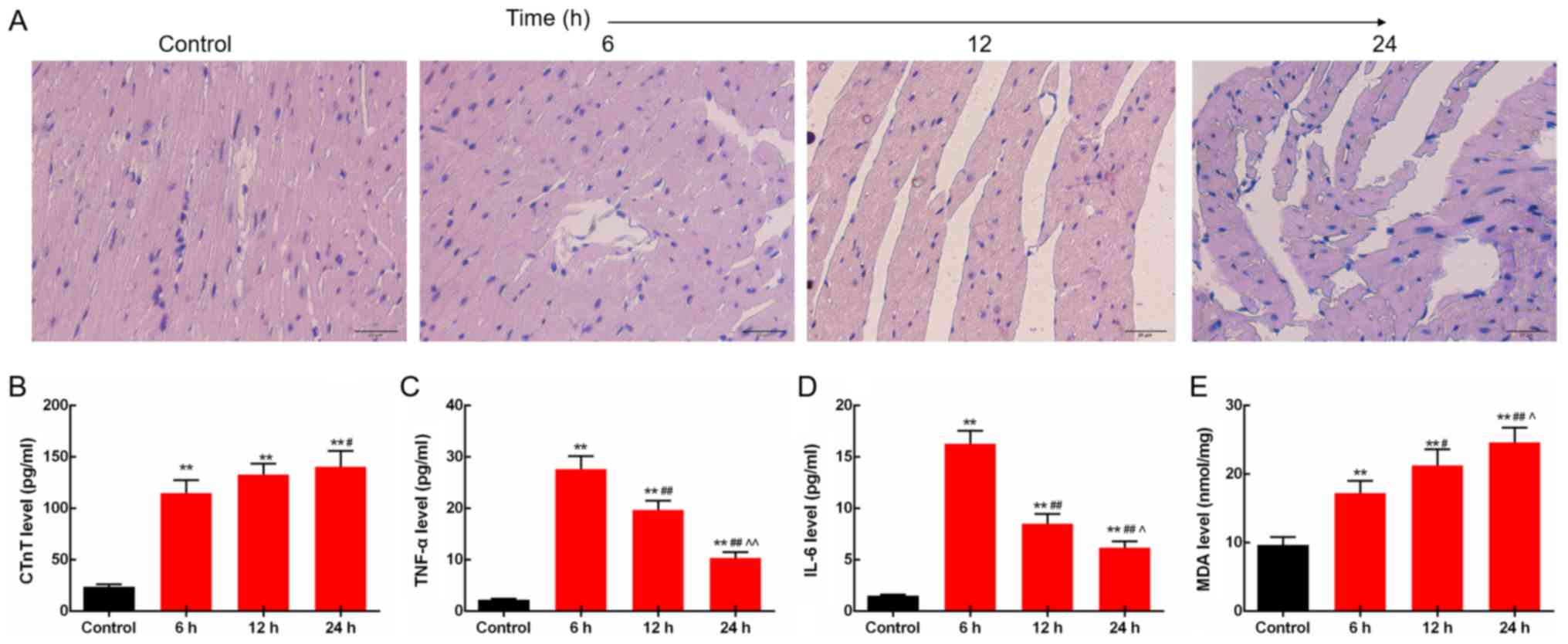
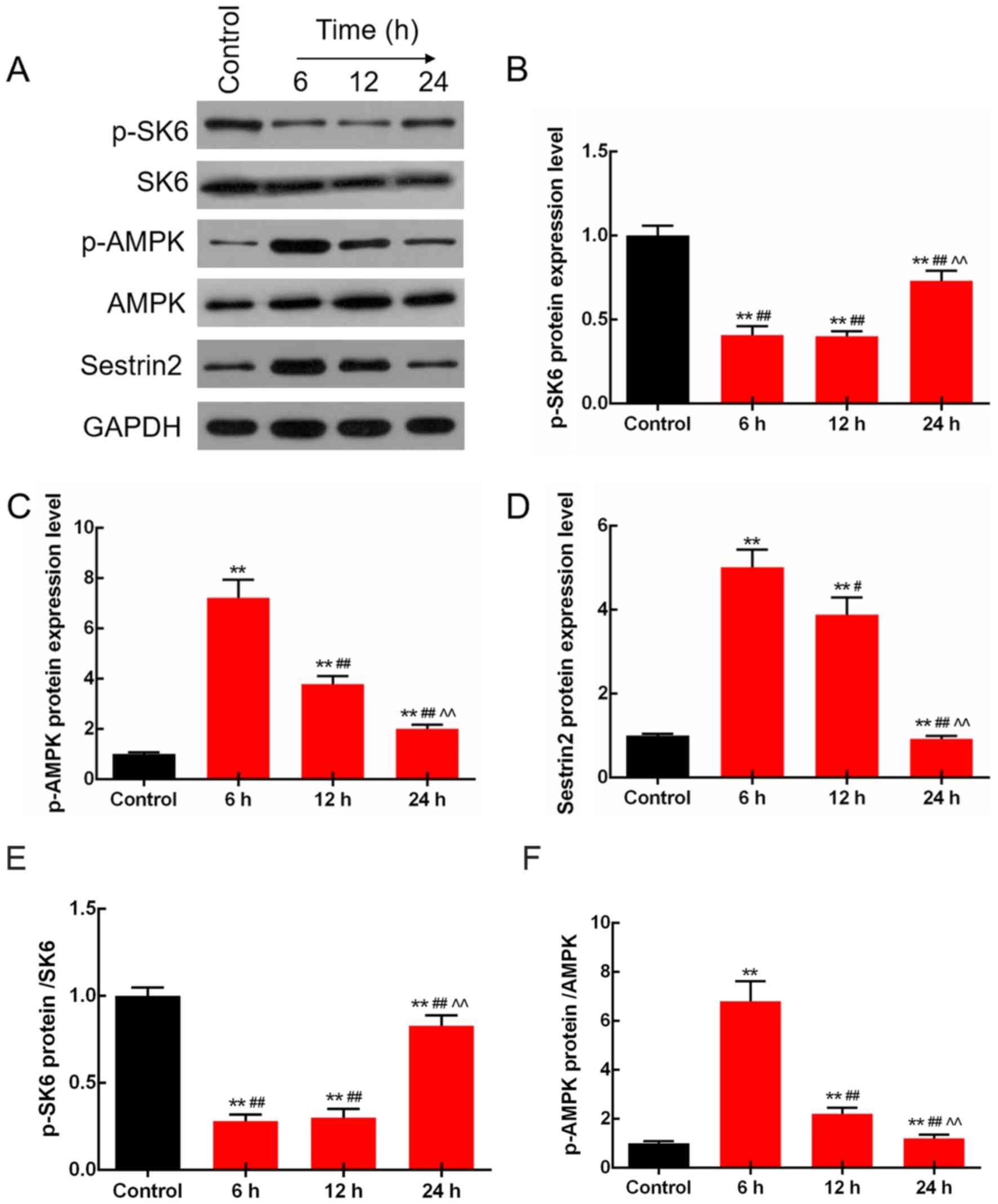
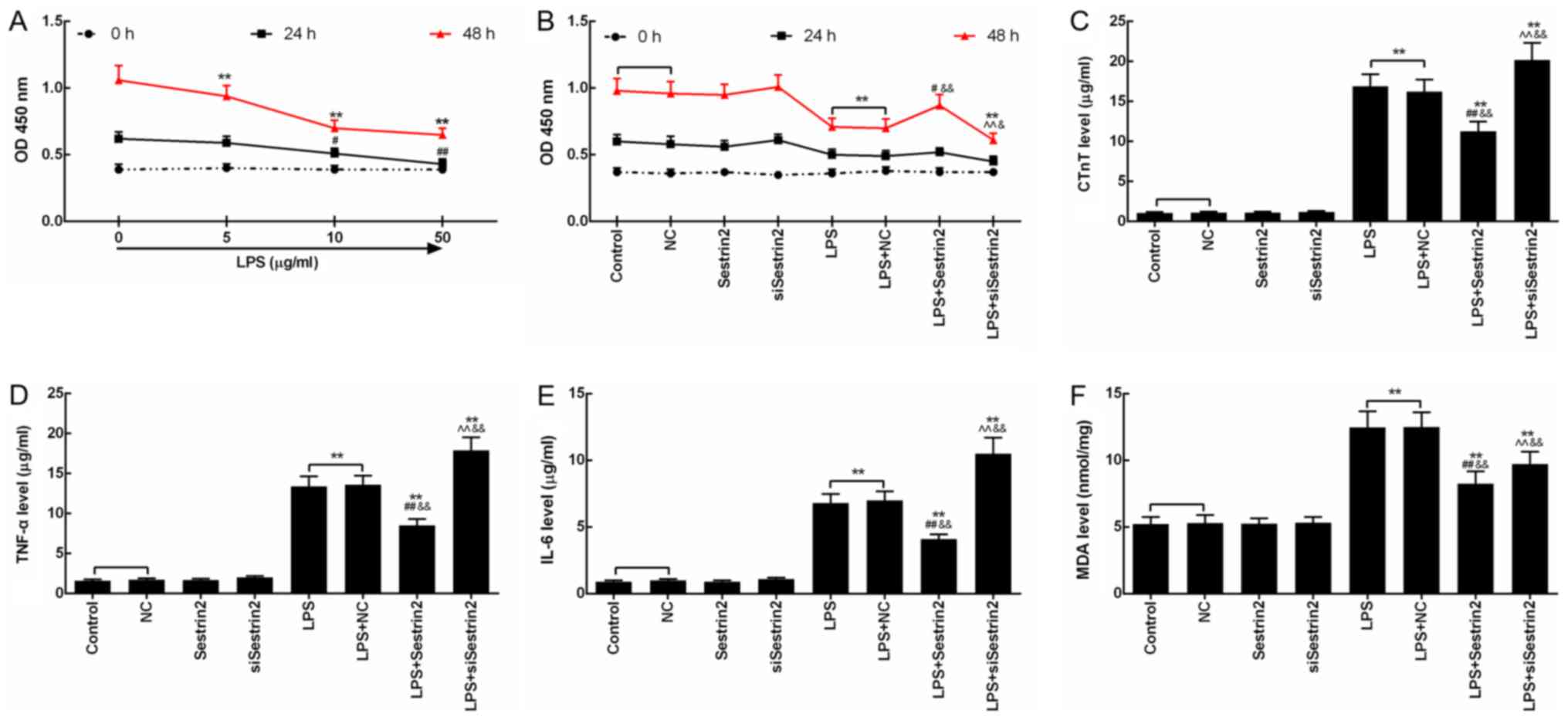
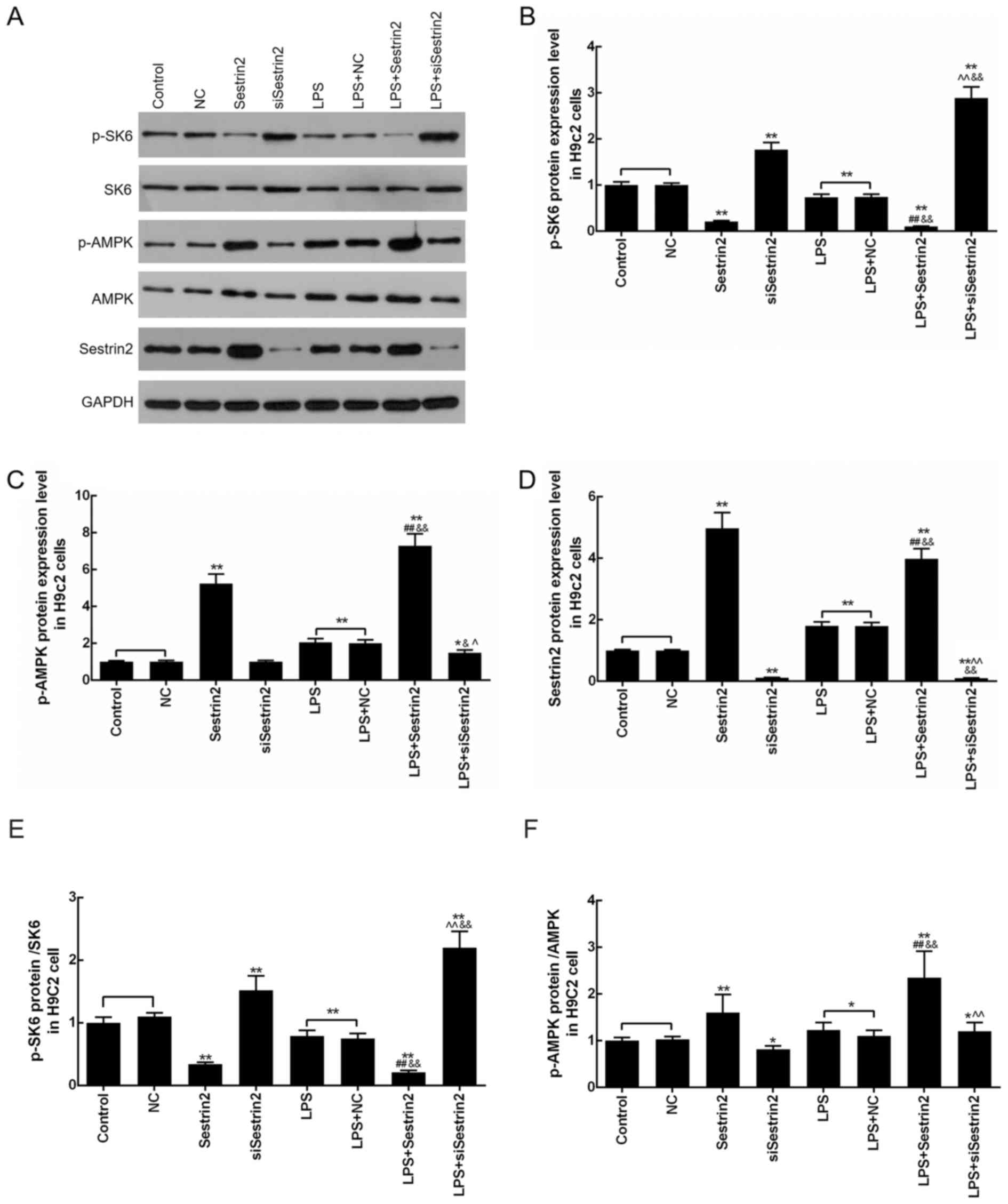
Sepsis‑induced myocardial injury is one of the manifestations of multiple organ dysfunction in sepsis. The aim of the present study was to determine the mechanism of alleviation of lipopolysaccharide (LPS)‑induced injury on cardiomyocytes by Sestrin2. A sepsis model using LPS injection was constructed in Sprague‑Dawley (SD) rats, and after 6, 12 and 24 h, rat blood was collected and cardiac troponin T (CTnT) levels were determined using ELISA. Heart specimens were excised, tumor necrosis factor‑α (TNF‑α) and interleukin 6 (IL‑6) levels were detected by ELISA, malondialdehyde (MDA) levels were estimated using colorimetric analysis, and phosphorylated (p)‑S6K and p‑AMP‑activated protein kinase (AMPK) levels were determined by western blot analysis. In the septic rats, phenomenon of myocardial fiber rupture, interstitial edema and inflammatory cell infiltration were observed under light microscope. Following LPS injection, CTnT in serum and MDA in myocardial homogenate were increased time‑dependently. TNF‑α and IL‑6 levels were significantly increased, with a peak at 6 h. p‑S6K levels were adaptively downregulated, and levels of p‑AMPK and Sestrin2 were adaptively upregulated by LPS. In LPS‑injured H9c2 cells, Sestrin2 overexpression attenuated the LPS‑mediated inhibitory effects on cell viability, suppressed LPS‑mediated increase in CTnT, TNF‑α, IL‑6 and MDA levels, as well as attenuated p‑S6K levels and elevated p‑AMPK and Sestrin2 levels. Sestrin2 interference showed the opposite effect. Sestrin2 promoted cell viability and inhibited the inflammatory responses of LPS‑injured myocardial cells. The phenomena may be associated with inhibition of p‑S6K and activation of the p‑AMPK pathway.
View Figures

Figure 1

Figure 2

Figure 3

Figure 4

View References

1 

McNevin C, McDowell R, Fitzpatrick F, O'Sullivan R and Wakai A: The prevalence of severe sepsis or septic shock in an irish emergency department. Ir Med J. 111:6922018.PubMed/NCBI

2 

Koivikko P, Arola O, Inkinen O and Tallgren M: One-year survival after inhospital cardiac arrest-does prearrest sepsis matter? Shock. 50:38–43. 2018. View Article : Google Scholar : PubMed/NCBI

3 

Ruangchan S, Chusri S, Saengsanga P, Kiamkan N, Phunpairoth P and Chayakul P: Clinical outcomes of community-acquired severe sepsis after implementation of a simple severe sepsis fast track. J Med Assoc Thai. 99:877–885. 2016.PubMed/NCBI

4 

Gao M, Wang X, Zhang X, Ha T, Ma H, Liu L, Kalbfleisch JH, Gao X, Kao RL, Williams DL and Li C: Attenuation of cardiac dysfunction in polymicrobial sepsis by MicroRNA-146a is mediated via targeting of IRAK1 and TRAF6 expression. J Immunol. 195:672–682. 2015. View Article : Google Scholar : PubMed/NCBI

5 

Walley KR: Sepsis-induced myocardial dysfunction. Curr Opin Crit Care. 24:292–299. 2018. View Article : Google Scholar : PubMed/NCBI

6 

Fattahi F, Frydrych LM, Bian G, Kalbitz M, Herron TJ, Malan EA, Delano MJ and Ward PA: Role of complement C5a and histones in septic cardiomyopathy. Mol Immunol. 102:32–41. 2018. View Article : Google Scholar : PubMed/NCBI

7 

Sagy M, Al-Qaqaa Y and Kim P: Definitions and pathophysiology of sepsis. Curr Probl Pediatr Adolesc Health Care. 43:260–263. 2013. View Article : Google Scholar : PubMed/NCBI

8 

Abraham E and Singer M: Mechanisms of sepsis-induced organ dysfunction. Crit Care Med. 35:2408–2416. 2007. View Article : Google Scholar : PubMed/NCBI

9 

Liu YC, Yu MM, Shou ST and Chai YF: Sepsis-induced cardiomyopathy: Mechanisms and treatments. Front Immunol. 8:10212017. View Article : Google Scholar : PubMed/NCBI

10 

Cimolai MC, Alvarez S, Bode C and Bugger H: Mitochondrial mechanisms in septic cardiomyopathy. Int J Mol Sci. 16:17763–17778. 2015. View Article : Google Scholar : PubMed/NCBI

11 

Yang C, Wu K, Li SH and You Q: Protective effect of curcumin against cardiac dysfunction in sepsis rats. Pharm Biol. 51:482–487. 2013. View Article : Google Scholar : PubMed/NCBI

12 

Cavaillon JM and Adib-Conquy M: Bench-to-bedside review: Endotoxin tolerance as a model of leukocyte reprogramming in sepsis. Crit Care. 10:2332006. View Article : Google Scholar : PubMed/NCBI

13 

Kong W, Kang K, Gao Y, Liu H, Meng X, Yang S, Yu K and Zhao M: Dexmedetomidine alleviates LPS-induced septic cardiomyopathy via the cholinergic anti-inflammatory pathway in mice. Am J Transl Res. 9:5040–5047. 2017.PubMed/NCBI

14 

Zhao P, Kuai J, Gao J, Sun L, Wang Y and Yao L: Delta opioid receptor agonist attenuates lipopolysaccharide-induced myocardial injury by regulating autophagy. Biochem Biophys Res Commun. 492:140–146. 2017. View Article : Google Scholar : PubMed/NCBI

15 

Silwal P, Lim K, Heo JY, Park JI, Namgung U and Park SK: Adenine attenuates lipopolysaccharide-induced inflammatory reactions. Korean J Physiol Pharmacol. 22:379–389. 2018. View Article : Google Scholar : PubMed/NCBI

16 

Lee JH, Budanov AV and Karin M: Sestrins orchestrate cellular metabolism to attenuate aging. Cell Metab. 18:792–801. 2013. View Article : Google Scholar : PubMed/NCBI

17 

Lee JH, Budanov AV, Talukdar S, Park EJ, Park HL, Park HW, Bandyopadhyay G, Li N, Aghajan M, Jang I, et al: Maintenance of metabolic homeostasis by Sestrin2 and Sestrin3. Cell Metab. 16:311–321. 2012. View Article : Google Scholar : PubMed/NCBI

18 

Bae SH, Sung SH, Oh SY, Lim JM, Lee SK, Park YN, Lee HE, Kang D and Rhee SG: Sestrins activate Nrf2 by promoting p62-dependent autophagic degradation of Keap1 and prevent oxidative liver damage. Cell Metab. 17:73–84. 2013. View Article : Google Scholar : PubMed/NCBI

19 

Lee JH, Budanov AV, Park EJ, Birse R, Kim TE, Perkins GA, Ocorr K, Ellisman MH, Bodmer R, Bier E and Karin M: Sestrin as a feedback inhibitor of TOR that prevents age-related pathologies. Science. 327:1223–1228. 2010. View Article : Google Scholar : PubMed/NCBI

20 

Zeng YC, Chi F, Xing R, Zeng J, Gao S, Chen JJ, Wang HM, Duan QY, Sun YN, Niu N, et al: Sestrin2 protects the myocardium against radiation-induced damage. Radiat Environ Biophys. 55:195–202. 2016. View Article : Google Scholar : PubMed/NCBI

21 

Sun W, Quan N, Wang L, Yang H, Chu D, Liu Q, Zhao X, Leng J and Li J: Cardiac-specific deletion of the Pdha1 gene sensitizes heart to toxicological actions of ischemic stress. Toxicol Sci. 151:193–203. 2016. View Article : Google Scholar : PubMed/NCBI

22 

Morrison A, Chen L, Wang J, Zhang M, Yang H, Ma Y, Budanov A, Lee JH, Karin M and Li J: Sestrin2 promotes LKB1-mediated AMPK activation in the ischemic heart. FASEB J. 29:408–417. 2015. View Article : Google Scholar : PubMed/NCBI

23 

Mendes SJF, Sousa FIAB, Pereira DMS, Ferro TAF, Pereira ICP, Silva BLR, Pinheiro AJMCR, Mouchrek AQS, Monteiro-Neto V, Costa SKP, et al: Cinnamaldehyde modulates LPS-induced systemic inflammatory response syndrome through TRPA1-dependent and independent mechanisms. Int Immunopharmacol. 34:60–70. 2016. View Article : Google Scholar : PubMed/NCBI

24 

Abulizi P, Loganathan N, Zhao D, Mele T, Zhang Y, Zwiep T, Liu K and Zheng X: Growth differentiation factor-15 deficiency augments inflammatory response and exacerbates septic heart and renal injury induced by lipopolysaccharide. Sci Rep. 7:10372017. View Article : Google Scholar : PubMed/NCBI

25 

Huxtable AG, Smith SM, Vinit S, Watters JJ and Mitchell GS: Systemic LPS induces spinal inflammatory gene expression and impairs phrenic long-term facilitation following acute intermittent hypoxia. J Appl Physiol (1985). 114:879–887. 2013. View Article : Google Scholar : PubMed/NCBI

26 

Kong W, Kang K, Gao Y, Liu H, Meng X, Cao Y, Yang S, Liu W, Zhang J, Yu K and Zhao M: GTS-21 protected against LPS-induced sepsis myocardial injury in mice through α7nAChR. Inflammation. 41:1073–1083. 2018. View Article : Google Scholar : PubMed/NCBI

27 

Rahman A and Broadley SA: Review article: Elevated troponin: Diagnostic gold or fool's gold? Emerg Med Australas. 26:125–130. 2014. View Article : Google Scholar : PubMed/NCBI

28 

Choon-ngarm T and Partpisanu P: Serum cardiac troponin-T as a prognostic marker in septic shock. J Med Assoc Thai. 91:1818–1821. 2008.PubMed/NCBI

29 

Yuan Y, Ding D, Zhang N, Xia Z, Wang J, Yang H, Guo F and Li B: TNF-α induces autophagy through ERK1/2 pathway to regulate apoptosis in neonatal necrotizing enterocolitis model cells IEC-6. Cell Cycle. 17:1390–1402. 2018. View Article : Google Scholar : PubMed/NCBI

30 

Lv S, Han M, Yi R, Kwon S, Dai C and Wang R: Anti-TNF-α therapy for patients with sepsis: A systematic meta-analysis. Int J Clin Pract. 68:520–528. 2014. View Article : Google Scholar : PubMed/NCBI

31 

Tripsianis G, Papadopoulou E, Anagnostopoulos K, Botaitis S, Katotomichelakis M, Romanidis K, Kontomanolis E, Tentes I and Kortsaris A: Coexpression of IL-6 and TNF-α: Prognostic significance on breast cancer outcome. Neoplasma. 61:205–212. 2014. View Article : Google Scholar : PubMed/NCBI

32 

Hua F, Li CH, Wang H and Xu HG: Relationship between expression of COX-2, TNF-α, IL-6 and autoimmune-type recurrent miscarriage. Asian Pac J Trop Med. 6:990–994. 2013. View Article : Google Scholar : PubMed/NCBI

33 

Hwang TL and Yeh CC: Hemodynamic and hepatic microcirculational changes in endotoxemic rats treated with different NOS inhibitors. Hepatogastroenterology. 50:188–191. 2003.PubMed/NCBI

34 

Ward JR, Wilson HL, Francis SE, Crossman DC and Sabroe I: Translational mini-review series on immunology of vascular disease: Inflammation, infections and Toll-like receptors in cardiovascular disease. Clin Exp Immunol. 156:386–394. 2009. View Article : Google Scholar : PubMed/NCBI

35 

Aosasa S, Ono S, Mochizuki H, Tsujimoto H, Ueno C and Matsumoto A: Mechanism of the inhibitory effect of protease inhibitor on tumor necrosis factor alpha production of monocytes. Shock. 15:101–105. 2001. View Article : Google Scholar : PubMed/NCBI

36 

Tsikas D, Rothmann S, Schneider JY, Suchy MT, Trettin A, Modun D, Stuke N, Maassen N and Frölich JC: Development, validation and biomedical applications of stable-isotope dilution GC-MS and GC-MS/MS techniques for circulating malondialdehyde (MDA) after pentafluorobenzyl bromide derivatization: MDA as a biomarker of oxidative stress and its relation to 15(S)-8-iso-prostaglandin F2α and nitric oxide (NO). J Chromatogr B Analyt Technol Biomed Life Sci. 1019:95–111. 2016. View Article : Google Scholar : PubMed/NCBI

37 

Zhou F, Sun W and Zhao M: Controlled formation of emulsion gels stabilized by salted myofibrillar protein under malondialdehyde (MDA)-induced oxidative stress. J Agric Food Chem. 63:3766–3777. 2015. View Article : Google Scholar : PubMed/NCBI

38 

Wang B, Ding W, Zhang M, Li H and Gu Y: Rapamycin attenuates aldosterone-induced tubulointerstitial inflammation and fibrosis. Cell Physiol Biochem. 35:116–125. 2015. View Article : Google Scholar : PubMed/NCBI

39 

Xue B, Yang Z, Wang X and Shi H: Omega-3 polyunsaturated fatty acids antagonize macrophage inflammation via activation of AMPK/SIRT1 pathway. PLoS One. 7:e459902012. View Article : Google Scholar : PubMed/NCBI

40 

Yang Z, Kahn BB, Shi H and Xue BZ: Macrophage alpha1 AMP-activated protein kinase (alpha1AMPK) antagonizes fatty acid-induced inflammation through SIRT1. J Biol Chem. 285:19051–19059. 2010. View Article : Google Scholar : PubMed/NCBI

41 

Calvert JW, Gundewar S, Jha S, Greer JJ, Bestermann WH, Tian R and Lefer DJ: Acute metformin therapy confers cardioprotection against myocardial infarction via AMPK-eNOS-mediated signaling. Diabetes. 57:696–705. 2008. View Article : Google Scholar : PubMed/NCBI

Related Articles

  • Abstract
  • View
  • Download
  • Twitter
Copy and paste a formatted citation
Spandidos Publications style
Wang Z, Bu L, Yang P, Feng S and Xu F: Alleviation of sepsis‑induced cardiac dysfunction by overexpression of Sestrin2 is associated with inhibition of p‑S6K and activation of the p‑AMPK pathway. Mol Med Rep 20: 2511-2518, 2019.
APA
Wang, Z., Bu, L., Yang, P., Feng, S., & Xu, F. (2019). Alleviation of sepsis‑induced cardiac dysfunction by overexpression of Sestrin2 is associated with inhibition of p‑S6K and activation of the p‑AMPK pathway. Molecular Medicine Reports, 20, 2511-2518. https://doi.org/10.3892/mmr.2019.10520
MLA
Wang, Z., Bu, L., Yang, P., Feng, S., Xu, F."Alleviation of sepsis‑induced cardiac dysfunction by overexpression of Sestrin2 is associated with inhibition of p‑S6K and activation of the p‑AMPK pathway". Molecular Medicine Reports 20.3 (2019): 2511-2518.
Chicago
Wang, Z., Bu, L., Yang, P., Feng, S., Xu, F."Alleviation of sepsis‑induced cardiac dysfunction by overexpression of Sestrin2 is associated with inhibition of p‑S6K and activation of the p‑AMPK pathway". Molecular Medicine Reports 20, no. 3 (2019): 2511-2518. https://doi.org/10.3892/mmr.2019.10520
Copy and paste a formatted citation
x
Spandidos Publications style
Wang Z, Bu L, Yang P, Feng S and Xu F: Alleviation of sepsis‑induced cardiac dysfunction by overexpression of Sestrin2 is associated with inhibition of p‑S6K and activation of the p‑AMPK pathway. Mol Med Rep 20: 2511-2518, 2019.
APA
Wang, Z., Bu, L., Yang, P., Feng, S., & Xu, F. (2019). Alleviation of sepsis‑induced cardiac dysfunction by overexpression of Sestrin2 is associated with inhibition of p‑S6K and activation of the p‑AMPK pathway. Molecular Medicine Reports, 20, 2511-2518. https://doi.org/10.3892/mmr.2019.10520
MLA
Wang, Z., Bu, L., Yang, P., Feng, S., Xu, F."Alleviation of sepsis‑induced cardiac dysfunction by overexpression of Sestrin2 is associated with inhibition of p‑S6K and activation of the p‑AMPK pathway". Molecular Medicine Reports 20.3 (2019): 2511-2518.
Chicago
Wang, Z., Bu, L., Yang, P., Feng, S., Xu, F."Alleviation of sepsis‑induced cardiac dysfunction by overexpression of Sestrin2 is associated with inhibition of p‑S6K and activation of the p‑AMPK pathway". Molecular Medicine Reports 20, no. 3 (2019): 2511-2518. https://doi.org/10.3892/mmr.2019.10520
Follow us
  • Twitter
  • LinkedIn
  • Facebook
About
  • Spandidos Publications
  • Careers
  • Cookie Policy
  • Privacy Policy
How can we help?
  • Help
  • Live Chat
  • Contact
  • Email to our Support Team