Spandidos Publications Logo
  • About
    • About Spandidos
    • Aims and Scopes
    • Abstracting and Indexing
    • Editorial Policies
    • Reprints and Permissions
    • Job Opportunities
    • Terms and Conditions
    • Contact
  • Journals
    • All Journals
    • Oncology Letters
      • Oncology Letters
      • Information for Authors
      • Editorial Policies
      • Editorial Board
      • Aims and Scope
      • Abstracting and Indexing
      • Bibliographic Information
      • Archive
    • International Journal of Oncology
      • International Journal of Oncology
      • Information for Authors
      • Editorial Policies
      • Editorial Board
      • Aims and Scope
      • Abstracting and Indexing
      • Bibliographic Information
      • Archive
    • Molecular and Clinical Oncology
      • Molecular and Clinical Oncology
      • Information for Authors
      • Editorial Policies
      • Editorial Board
      • Aims and Scope
      • Abstracting and Indexing
      • Bibliographic Information
      • Archive
    • Experimental and Therapeutic Medicine
      • Experimental and Therapeutic Medicine
      • Information for Authors
      • Editorial Policies
      • Editorial Board
      • Aims and Scope
      • Abstracting and Indexing
      • Bibliographic Information
      • Archive
    • International Journal of Molecular Medicine
      • International Journal of Molecular Medicine
      • Information for Authors
      • Editorial Policies
      • Editorial Board
      • Aims and Scope
      • Abstracting and Indexing
      • Bibliographic Information
      • Archive
    • Biomedical Reports
      • Biomedical Reports
      • Information for Authors
      • Editorial Policies
      • Editorial Board
      • Aims and Scope
      • Abstracting and Indexing
      • Bibliographic Information
      • Archive
    • Oncology Reports
      • Oncology Reports
      • Information for Authors
      • Editorial Policies
      • Editorial Board
      • Aims and Scope
      • Abstracting and Indexing
      • Bibliographic Information
      • Archive
    • Molecular Medicine Reports
      • Molecular Medicine Reports
      • Information for Authors
      • Editorial Policies
      • Editorial Board
      • Aims and Scope
      • Abstracting and Indexing
      • Bibliographic Information
      • Archive
    • World Academy of Sciences Journal
      • World Academy of Sciences Journal
      • Information for Authors
      • Editorial Policies
      • Editorial Board
      • Aims and Scope
      • Abstracting and Indexing
      • Bibliographic Information
      • Archive
    • International Journal of Functional Nutrition
      • International Journal of Functional Nutrition
      • Information for Authors
      • Editorial Policies
      • Editorial Board
      • Aims and Scope
      • Abstracting and Indexing
      • Bibliographic Information
      • Archive
    • International Journal of Epigenetics
      • International Journal of Epigenetics
      • Information for Authors
      • Editorial Policies
      • Editorial Board
      • Aims and Scope
      • Abstracting and Indexing
      • Bibliographic Information
      • Archive
    • Medicine International
      • Medicine International
      • Information for Authors
      • Editorial Policies
      • Editorial Board
      • Aims and Scope
      • Abstracting and Indexing
      • Bibliographic Information
      • Archive
  • Articles
  • Information
    • Information for Authors
    • Information for Reviewers
    • Information for Librarians
    • Information for Advertisers
    • Conferences
  • Language Editing
Spandidos Publications Logo
  • About
    • About Spandidos
    • Aims and Scopes
    • Abstracting and Indexing
    • Editorial Policies
    • Reprints and Permissions
    • Job Opportunities
    • Terms and Conditions
    • Contact
  • Journals
    • All Journals
    • Biomedical Reports
      • Information for Authors
      • Editorial Policies
      • Editorial Board
      • Aims and Scope
      • Abstracting and Indexing
      • Bibliographic Information
      • Archive
    • Experimental and Therapeutic Medicine
      • Information for Authors
      • Editorial Policies
      • Editorial Board
      • Aims and Scope
      • Abstracting and Indexing
      • Bibliographic Information
      • Archive
    • International Journal of Epigenetics
      • Information for Authors
      • Editorial Policies
      • Editorial Board
      • Aims and Scope
      • Abstracting and Indexing
      • Bibliographic Information
      • Archive
    • International Journal of Functional Nutrition
      • Information for Authors
      • Editorial Policies
      • Editorial Board
      • Aims and Scope
      • Abstracting and Indexing
      • Bibliographic Information
      • Archive
    • International Journal of Molecular Medicine
      • Information for Authors
      • Editorial Policies
      • Editorial Board
      • Aims and Scope
      • Abstracting and Indexing
      • Bibliographic Information
      • Archive
    • International Journal of Oncology
      • Information for Authors
      • Editorial Policies
      • Editorial Board
      • Aims and Scope
      • Abstracting and Indexing
      • Bibliographic Information
      • Archive
    • Medicine International
      • Information for Authors
      • Editorial Policies
      • Editorial Board
      • Aims and Scope
      • Abstracting and Indexing
      • Bibliographic Information
      • Archive
    • Molecular and Clinical Oncology
      • Information for Authors
      • Editorial Policies
      • Editorial Board
      • Aims and Scope
      • Abstracting and Indexing
      • Bibliographic Information
      • Archive
    • Molecular Medicine Reports
      • Information for Authors
      • Editorial Policies
      • Editorial Board
      • Aims and Scope
      • Abstracting and Indexing
      • Bibliographic Information
      • Archive
    • Oncology Letters
      • Information for Authors
      • Editorial Policies
      • Editorial Board
      • Aims and Scope
      • Abstracting and Indexing
      • Bibliographic Information
      • Archive
    • Oncology Reports
      • Information for Authors
      • Editorial Policies
      • Editorial Board
      • Aims and Scope
      • Abstracting and Indexing
      • Bibliographic Information
      • Archive
    • World Academy of Sciences Journal
      • Information for Authors
      • Editorial Policies
      • Editorial Board
      • Aims and Scope
      • Abstracting and Indexing
      • Bibliographic Information
      • Archive
  • Articles
  • Information
    • For Authors
    • For Reviewers
    • For Librarians
    • For Advertisers
    • Conferences
  • Language Editing
Login Register Submit
  • This site uses cookies
  • You can change your cookie settings at any time by following the instructions in our Cookie Policy. To find out more, you may read our Privacy Policy.

    I agree
Search articles by DOI, keyword, author or affiliation
Search
Advanced Search
presentation
Molecular Medicine Reports
Join Editorial Board Propose a Special Issue
Print ISSN: 1791-2997 Online ISSN: 1791-3004
Journal Cover
June-2020 Volume 21 Issue 6

Full Size Image

Sign up for eToc alerts
Recommend to Library

Journals

International Journal of Molecular Medicine

International Journal of Molecular Medicine

International Journal of Molecular Medicine is an international journal devoted to molecular mechanisms of human disease.

International Journal of Oncology

International Journal of Oncology

International Journal of Oncology is an international journal devoted to oncology research and cancer treatment.

Molecular Medicine Reports

Molecular Medicine Reports

Covers molecular medicine topics such as pharmacology, pathology, genetics, neuroscience, infectious diseases, molecular cardiology, and molecular surgery.

Oncology Reports

Oncology Reports

Oncology Reports is an international journal devoted to fundamental and applied research in Oncology.

Experimental and Therapeutic Medicine

Experimental and Therapeutic Medicine

Experimental and Therapeutic Medicine is an international journal devoted to laboratory and clinical medicine.

Oncology Letters

Oncology Letters

Oncology Letters is an international journal devoted to Experimental and Clinical Oncology.

Biomedical Reports

Biomedical Reports

Explores a wide range of biological and medical fields, including pharmacology, genetics, microbiology, neuroscience, and molecular cardiology.

Molecular and Clinical Oncology

Molecular and Clinical Oncology

International journal addressing all aspects of oncology research, from tumorigenesis and oncogenes to chemotherapy and metastasis.

World Academy of Sciences Journal

World Academy of Sciences Journal

Multidisciplinary open-access journal spanning biochemistry, genetics, neuroscience, environmental health, and synthetic biology.

International Journal of Functional Nutrition

International Journal of Functional Nutrition

Open-access journal combining biochemistry, pharmacology, immunology, and genetics to advance health through functional nutrition.

International Journal of Epigenetics

International Journal of Epigenetics

Publishes open-access research on using epigenetics to advance understanding and treatment of human disease.

Medicine International

Medicine International

An International Open Access Journal Devoted to General Medicine.

Journal Cover
June-2020 Volume 21 Issue 6

Full Size Image

Sign up for eToc alerts
Recommend to Library

  • Article
  • Citations
    • Cite This Article
    • Download Citation
    • Create Citation Alert
    • Remove Citation Alert
    • Cited By
  • Similar Articles
    • Related Articles (in Spandidos Publications)
    • Similar Articles (Google Scholar)
    • Similar Articles (PubMed)
  • Download PDF
  • Download XML
  • View XML
Article Open Access

Ketamine promotes the neural differentiation of mouse embryonic stem cells by activating mTOR

  • Authors:
    • Xuhui Zhou
    • Xiang Lv
    • Lei Zhang
    • Jia Yan
    • Rong Hu
    • Yu Sun
    • Siwei Xi
    • Hong Jiang
  • View Affiliations / Copyright

    Affiliations: Department of Anesthesiology, Shanghai Ninth People's Hospital, Shanghai Jiao Tong University School of Medicine, Center for Specialty Strategy Research of Shanghai Jiao Tong University China Hospital Development Institute, Shanghai 200011, P.R. China
    Copyright: © Zhou et al. This is an open access article distributed under the terms of Creative Commons Attribution License.
  • Pages: 2443-2451
    |
    Published online on: March 30, 2020
       https://doi.org/10.3892/mmr.2020.11043
  • Expand metrics +
Metrics: Total Views: 0 (Spandidos Publications: | PMC Statistics: )
Metrics: Total PDF Downloads: 0 (Spandidos Publications: | PMC Statistics: )
Cited By (CrossRef): 0 citations Loading Articles...

This article is mentioned in:


Abstract

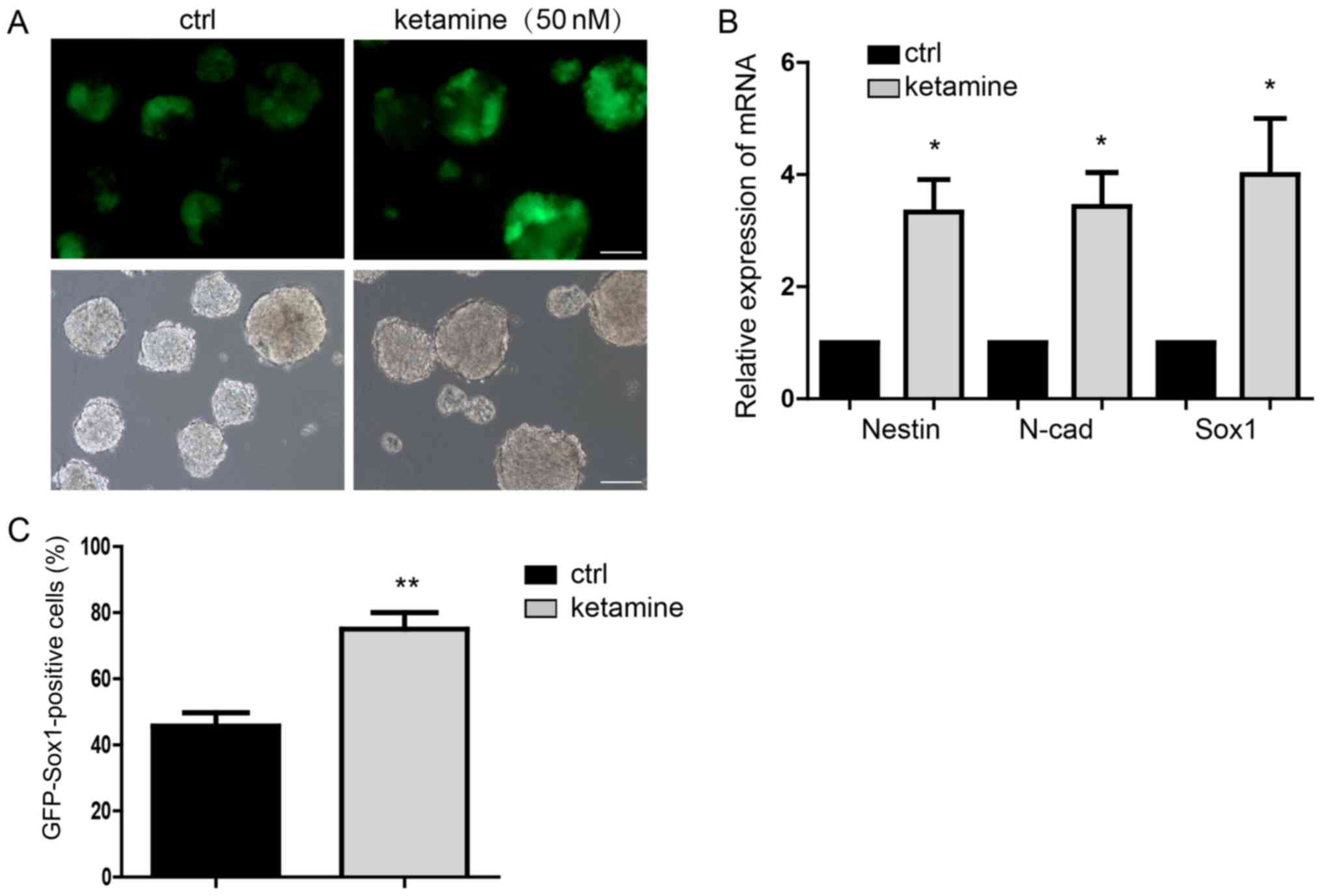
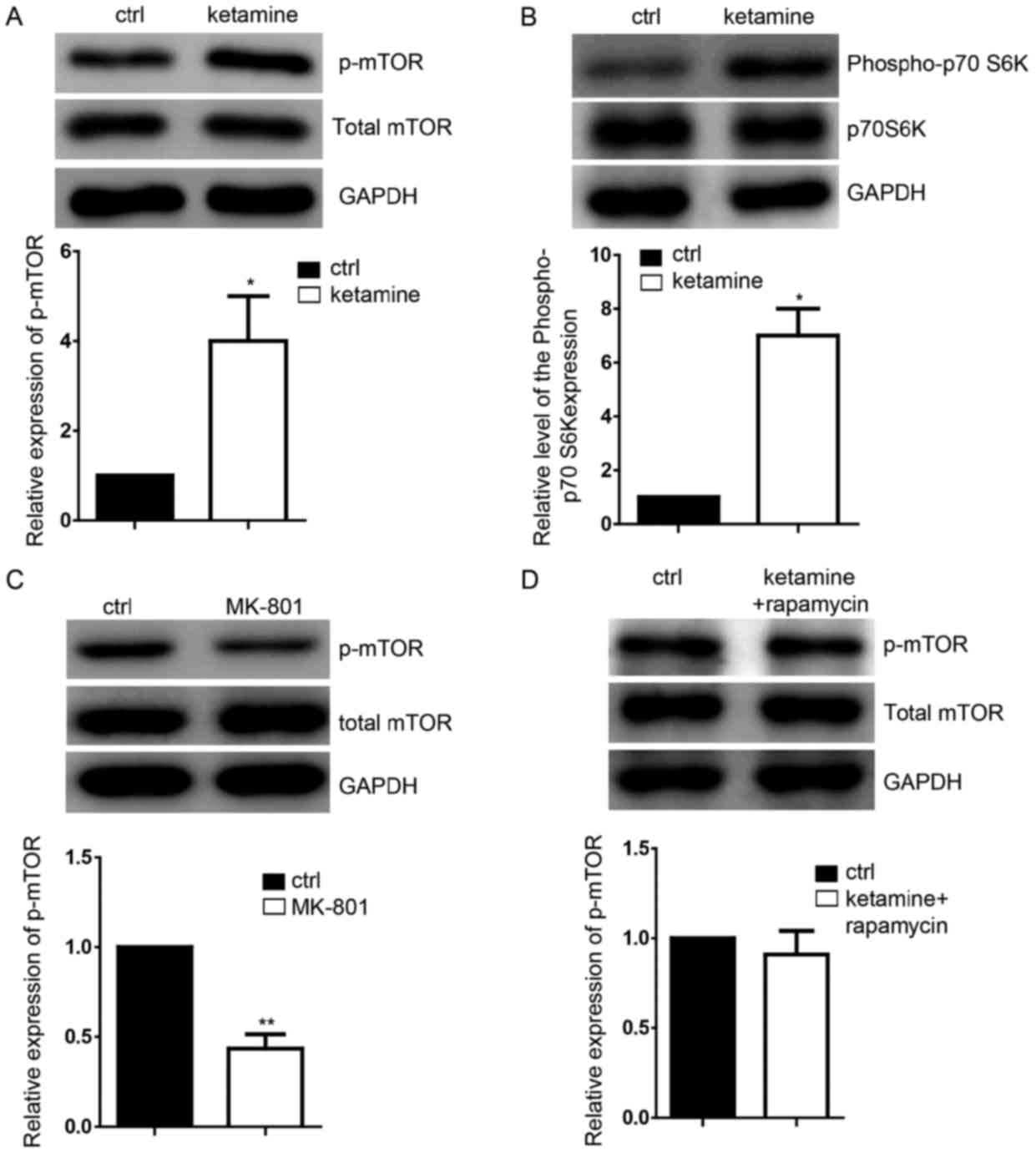
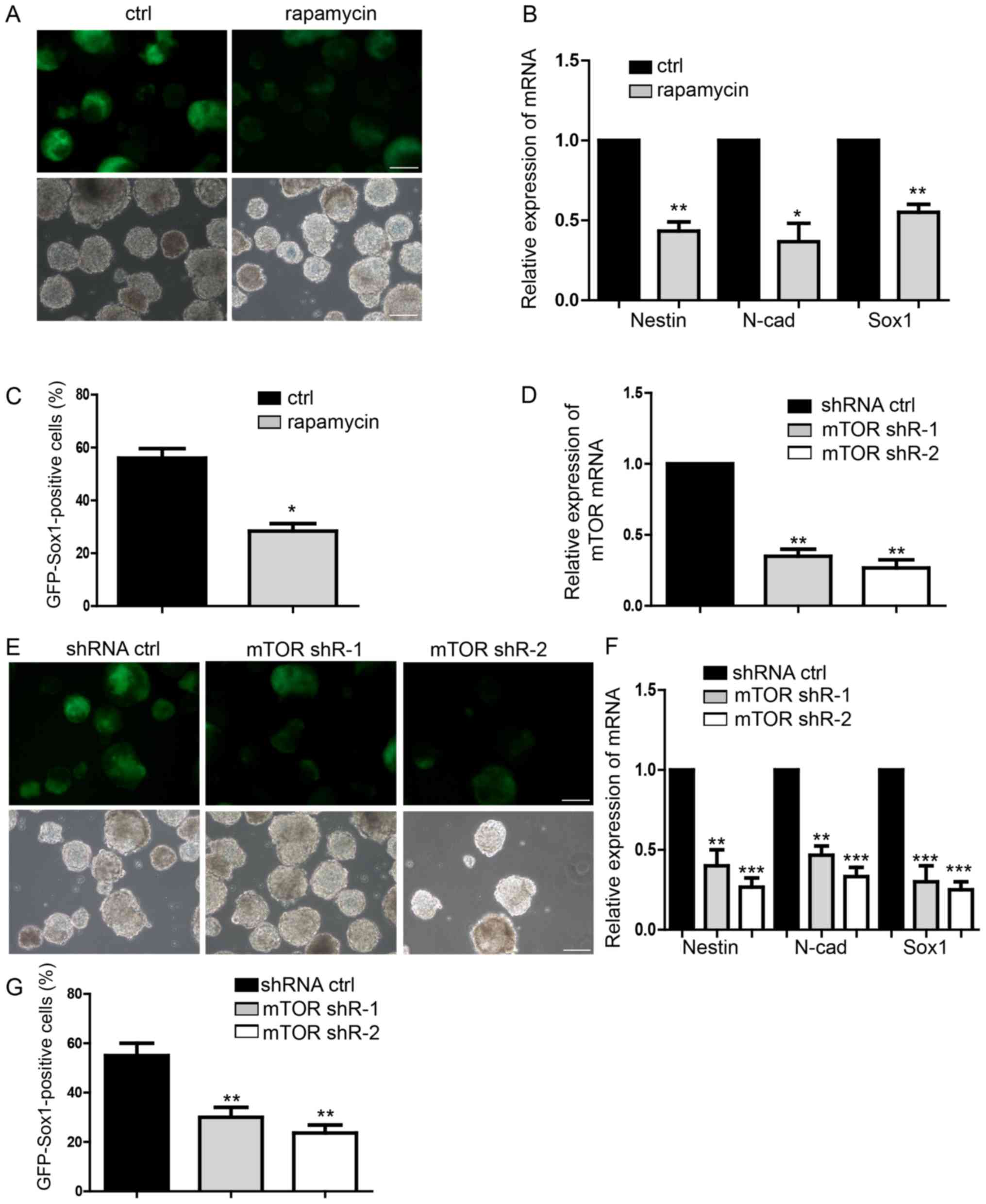
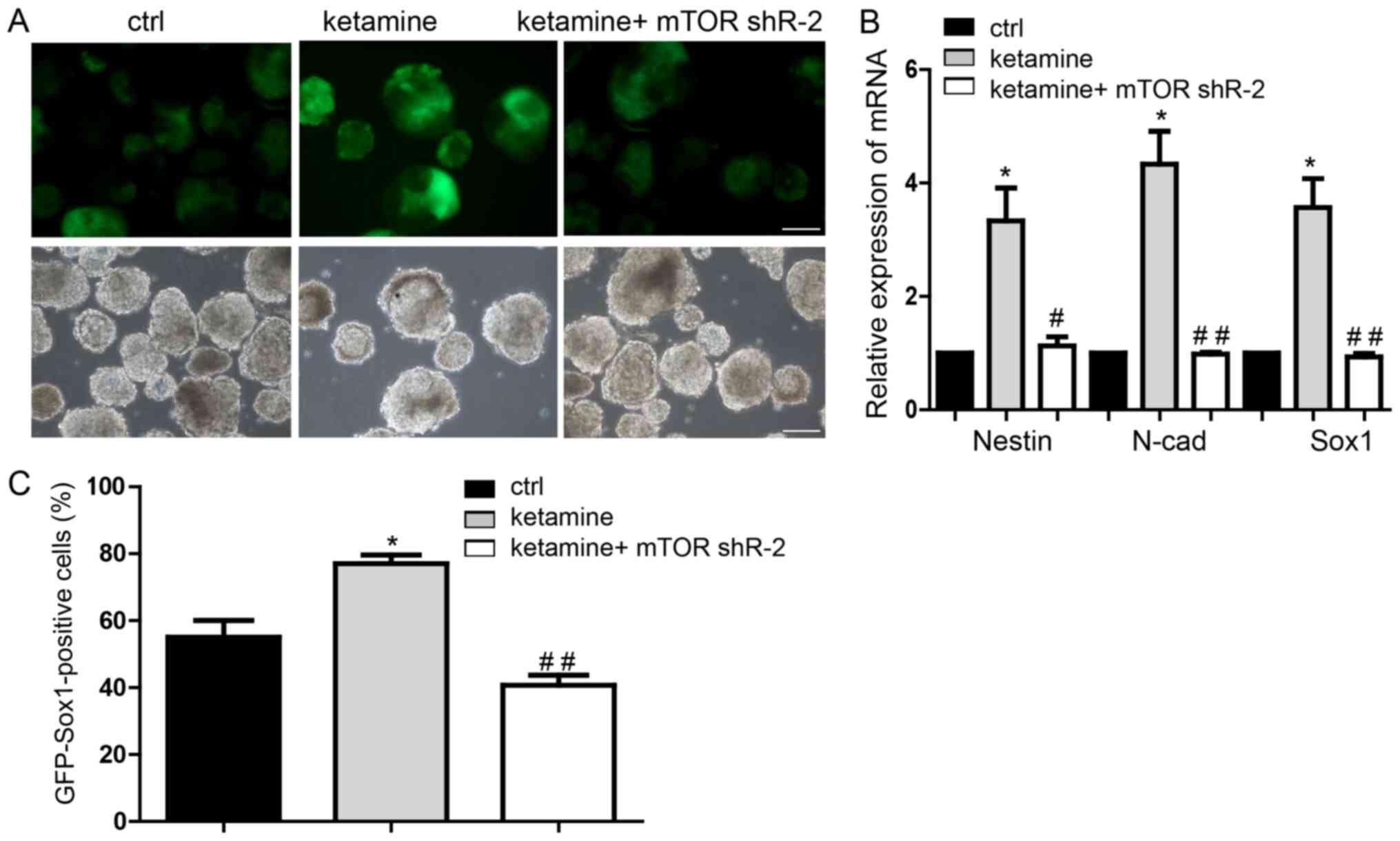
Ketamine is a widely used general anesthetic and has been reported to demonstrate neurotoxicity and neuroprotection. Investigation into the regulatory mechanism of ketamine on influencing neural development is of importance for a better and safer way of relieving pain. Reverse transcription‑quantitative polymerase chain reaction and western blotting were used to detect the critical neural associated gene expression, and flow cytometry to detect the neural differentiation effect. Hence, in the present study the underlying mechanism of ketamine (50 nM) on neural differentiation of the mouse embryonic stem cell (mESC) line 46C was investigated. The results demonstrated that a low dose of ketamine (50 nM) promoted the differentiation of mESCs to neural stem cells (NSCs) and activated mammalian target of rapamycin (mTOR) by upregulating the expression levels of phosphorylated (p)‑mTOR. Furthermore, inhibition of the mTOR signaling pathway by rapamycin or knockdown of mTOR suppressed neural differentiation. A rescue experiment further confirmed that downregulation of mTOR inhibited the promotion of neural differentiation induced by ketamine. Taken together, the present study indicated that a low level of ketamine upregulated p‑mTOR expression levels, promoting neural differentiation.
View Figures

Figure 1

Figure 2

Figure 3

Figure 4

View References

1 

Sinner B and Graf BM: Ketamine. Handb Exp Pharmacol. 313–333. 2008. View Article : Google Scholar : PubMed/NCBI

2 

Rofael HZ, Turkall RM and Abdel-Rahman MS: Immunomodulation by cocaine and ketamine in postnatal rats. Toxicology. 188:101–114. 2003. View Article : Google Scholar : PubMed/NCBI

3 

Reitman E and Flood P: Anaesthetic considerations for non-obstetric surgery during pregnancy. Br J Anaesth. 107 (Suppl 1):i72–i78. 2011. View Article : Google Scholar : PubMed/NCBI

4 

Wilder RT, Flick RP, Sprung J, Katusic SK, Barbaresi WJ, Mickelson C, Gleich SJ, Schroeder DR, Weaver AL and Warner DO: Early exposure to anesthesia and learning disabilities in a population-based birth cohort. Anesthesiology. 110:796–804. 2009. View Article : Google Scholar : PubMed/NCBI

5 

Huang H, Liu CM, Sun J, Hao T, Xu CM, Wang D and Wu YQ: Ketamine affects the neurogenesis of the hippocampal dentate gyrus in 7-day-old rats. Neurotox Res. 30:185–198. 2016. View Article : Google Scholar : PubMed/NCBI

6 

Wang J, Zhou M, Wang X, Yang X, Wang M, Zhang C, Zhou S and Tang N: Impact of ketamine on learning and memory function, neuronal apoptosis and its potential association with mir-214 and pten in adolescent rats. PLoS One. 9:e998552014. View Article : Google Scholar : PubMed/NCBI

7 

Yan J, Huang Y, Lu Y, Chen J and Jiang H: Repeated administration of ketamine can induce hippocampal neurodegeneration and long-term cognitive impairment via the ROS/HIF-1α pathway in developing rats. Cell Physiol Biochem. 33:1715–1732. 2014. View Article : Google Scholar : PubMed/NCBI

8 

Hudetz JA, Patterson KM, Iqbal Z, Gandhi SD, Byrne AJ, Hudetz AG, Warltier DC and Pagel PS: Ketamine attenuates delirium after cardiac surgery with cardiopulmonary bypass. J Cardiothorac Vasc Anesth. 23:651–657. 2009. View Article : Google Scholar : PubMed/NCBI

9 

Hovaguimian F, Tschopp C, Beck-Schimmer B and Puhan M: Intraoperative ketamine administration to prevent delirium or postoperative cognitive dysfunction: A systematic review and meta-analysis. Acta Anaesthesiol Scand. 62:1182–1193. 2018. View Article : Google Scholar : PubMed/NCBI

10 

Nikiforuk A and Popik P: Ketamine prevents stress-induced cognitive inflexibility in rats. Psychoneuroendocrinology. 40:119–122. 2014. View Article : Google Scholar : PubMed/NCBI

11 

Wang CQ, Ye Y, Chen F, Han WC, Sun JM, Lu X, Guo R, Cao K, Zheng MJ and Liao LC: Posttraumatic administration of a sub-anesthetic dose of ketamine exerts neuroprotection via attenuating inflammation and autophagy. Neuroscience. 343:30–38. 2017. View Article : Google Scholar : PubMed/NCBI

12 

Hertle DN, Dreier JP, Woitzik J, Hartings JA, Bullock R, Okonkwo DO, Shutter LA, Vidgeon S, Strong AJ, Kowoll C, et al: Effect of analgesics and sedatives on the occurrence of spreading depolarizations accompanying acute brain injury. Brain. 135:2390–2398. 2012. View Article : Google Scholar : PubMed/NCBI

13 

Koerner IP and Brambrink AM: Brain protection by anesthetic agents. Curr Opin Anaesthesiol. 19:481–486. 2006. View Article : Google Scholar : PubMed/NCBI

14 

Sanders RD, Ma D, Brooks P and Maze M: Balancing paediatric anaesthesia: Preclinical insights into analgesia, hypnosis, neuroprotection, and neurotoxicity. Br J Anaesth. 101:597–609. 2008. View Article : Google Scholar : PubMed/NCBI

15 

Murrough JW: Ketamine for depression: An update. Biol Psychiatry. 80:416–418. 2016. View Article : Google Scholar : PubMed/NCBI

16 

Dong C, Rovnaghi CR and Anand KJ: Ketamine alters the neurogenesis of rat cortical neural stem progenitor cells. Crit Care Med. 40:2407–2416. 2012. View Article : Google Scholar : PubMed/NCBI

17 

Bosnjak ZJ, Yan Y, Canfield S, Muravyeva MY, Kikuchi C, Wells CW, Corbett JA and Bai X: Ketamine induces toxicity in human neurons differentiated from embryonic stem cells via mitochondrial apoptosis pathway. Curr Drug Saf. 7:106–119. 2012. View Article : Google Scholar : PubMed/NCBI

18 

Czechanski A, Byers C, Greenstein I, Schrode N, Donahue LR, Hadjantonakis AK and Reinholdt LG: Derivation and characterization of mouse embryonic stem cells from permissive and nonpermissive strains. Nat Protoc. 9:559–574. 2014. View Article : Google Scholar : PubMed/NCBI

19 

Dang LT, Wong L and Tropepe V: Zfhx1b induces a definitive neural stem cell fate in mouse embryonic stem cells. Stem Cells Dev. 21:2838–2851. 2012. View Article : Google Scholar : PubMed/NCBI

20 

Tang S, Huang G, Fan W, Chen Y, Ward JM, Xu X, Xu Q, Kang A, McBurney MW, Fargo DC, et al: SIRT1-mediated deacetylation of CRABPII regulates cellular retinoic acid signaling and modulates embryonic stem cell differentiation. Mol Cell. 55:843–855. 2014. View Article : Google Scholar : PubMed/NCBI

21 

Zhang L, Zheng Y, Sun Y, Zhang Y, Yan J, Chen Z and Jiang H: MiR-134-Mbd3 axis regulates the induction of pluripotency. J Cell Mol Med. 20:1150–1158. 2016. View Article : Google Scholar : PubMed/NCBI

22 

Meng SS, Guo FM, Zhang XW, Chang W, Peng F, Qiu HB and Yang Y: mTOR/STAT-3 pathway mediates mesenchymal stem cell-secreted hepatocyte growth factor protective effects against lipopolysaccharide-induced vascular endothelial barrier dysfunction and apoptosis. J Cell Biochem. 120:3637–3650. 2018. View Article : Google Scholar : PubMed/NCBI

23 

Nguyen K, Yan Y, Yuan B, Dasgupta A, Sun JC, Mu H, Do KA, Ueno NT, Andreeff M and Battula VL: ST8SIA1 regulates tumor growth and metastasis in TNBC by activating the FAK-AKT-mTOR signaling pathway. Mol Cancer Ther. 17:2689–2701. 2018. View Article : Google Scholar : PubMed/NCBI

24 

Wang Y, Ma J, Qiu W, Zhang J, Feng S, Zhou X, Wang X, Jin L, Long K, Liu L, et al: Guanidinoacetic acid regulates myogenic differentiation and muscle growth through miR-133a-3p and miR-1a-3p Co-mediated Akt/mTOR/S6K signaling pathway. Int J Mol Sci. 19(pii): E28372018. View Article : Google Scholar : PubMed/NCBI

25 

Magri L and Galli R: Mtor signaling in neural stem cells: From basic biology to disease. Cell Mol Life Sci. 70:2887–2898. 2013. View Article : Google Scholar : PubMed/NCBI

26 

Han J, Wang B, Xiao Z, Gao Y, Zhao Y, Zhang J, Chen B, Wang X and Dai J: Mammalian target of rapamycin (mTOR) is involved in the neuronal differentiation of neural progenitors induced by insulin. Mol Cell Neurosci. 39:118–124. 2008. View Article : Google Scholar : PubMed/NCBI

27 

Dai J, Bercury KK and Macklin WB: Interaction of mTOR and Erk1/2 signaling to regulate oligodendrocyte differentiation. Glia. 62:2096–2109. 2014. View Article : Google Scholar : PubMed/NCBI

28 

Ka M, Smith AL and Kim WY: MTOR controls genesis and autophagy of GABAergic interneurons during brain development. Autophagy. 13:1348–1363. 2017. View Article : Google Scholar : PubMed/NCBI

29 

Xing J and Lu J: Effects of mTOR on neurological deficits after transient global ischemia. Transl Neurosci. 8:21–26. 2017. View Article : Google Scholar : PubMed/NCBI

30 

Barraud P, Thompson L, Kirik D, Bjorklund A and Parmar M: Isolation and characterization of neural precursor cells from the Sox1-GFP reporter mouse. Eur J Neurosci. 22:1555–1569. 2005. View Article : Google Scholar : PubMed/NCBI

31 

Reinés A, Bernier LP, McAdam R, Belkaid W, Shan W, Koch AW, Séguéla P, Colman DR and Dhaunchak AS: N-cadherin prodomain processing regulates synaptogenesis. J Neurosci. 32:6323–6334. 2012. View Article : Google Scholar : PubMed/NCBI

32 

Zhang J and Jiao J: Molecular biomarkers for embryonic and adult neural stem cell and neurogenesis. Biomed Res Int. 2015:7275422015.PubMed/NCBI

33 

Ying QL, Stavridis M, Griffiths D, Li M and Smith A: Conversion of embryonic stem cells into neuroectodermal precursors in adherent monoculture. Nat Biotechnol. 21:183–186. 2003. View Article : Google Scholar : PubMed/NCBI

34 

Watanabe K, Kamiya D, Nishiyama A, Katayama T, Nozaki S, Kawasaki H, Watanabe Y, Mizuseki K and Sasai Y: Directed differentiation of telencephalic precursors from embryonic stem cells. Nat Neurosci. 8:288–296. 2005. View Article : Google Scholar : PubMed/NCBI

35 

Livak KJ and Schmittgen TD: Analysis of relative gene expression data using real-time quantitative pcr and the 2(-delta delta c(t)) method. Methods. 25:402–408. 2001. View Article : Google Scholar : PubMed/NCBI

36 

Gass N, Schwarz AJ, Sartorius A, Schenker E, Risterucci C, Spedding M, Zheng L, Meyer-Lindenberg A and Weber-Fahr W: Sub-anesthetic ketamine modulates intrinsic BOLD connectivity within the hippocampal-prefrontal circuit in the rat. Neuropsychopharmacology. 39:895–906. 2014. View Article : Google Scholar : PubMed/NCBI

37 

Yan J and Jiang H: Dual effects of ketamine: Neurotoxicity versus neuroprotection in anesthesia for the developing brain. J Neurosurg Anesthesiol. 26:155–160. 2014. View Article : Google Scholar : PubMed/NCBI

38 

Theurillat R, Larenza MP, Feige K, Bettschart-Wolfensberger R and Thormann W: Development of a method for analysis of ketamine and norketamine enantiomers in equine brain and cerebrospinal fluid by capillary electrophoresis. Electrophoresis. 35:2863–2869. 2014. View Article : Google Scholar : PubMed/NCBI

39 

Li J, Wang B, Wu H, Yu Y, Xue G and Hou Y: 17β-estradiol attenuates ketamine-induced neuroapoptosis and persistent cognitive deficits in the developing brain. Brain Res. 1593:30–39. 2014. View Article : Google Scholar : PubMed/NCBI

40 

Permoda-Osip A, Kisielewski J, Bartkowska-Sniatkowska A and Rybakowski JK: Single ketamine infusion and neurocognitive performance in bipolar depression. Pharmacopsychiatry. 48:78–79. 2015.PubMed/NCBI

41 

Diamond PR, Farmery AD, Atkinson S, Haldar J, Williams N, Cowen PJ, Geddes JR and McShane R: Ketamine infusions for treatment resistant depression: A series of 28 patients treated weekly or twice weekly in an ECT clinic. J Psychopharmacol. 28:536–544. 2014. View Article : Google Scholar : PubMed/NCBI

42 

Neri CM, Pestieau SR and Darbari DS: Low-dose ketamine as a potential adjuvant therapy for painful vaso-occlusive crises in sickle cell disease. Paediatr Anaesth. 23:684–689. 2013. View Article : Google Scholar : PubMed/NCBI

43 

Shibuta S, Morita T, Kosaka J, Kamibayashi T and Fujino Y: Only extra-high dose of ketamine affects l-glutamate-induced intracellular Ca(2+) elevation and neurotoxicity. Neurosci Res. 98:9–16. 2015. View Article : Google Scholar : PubMed/NCBI

44 

Bhutta AT, Schmitz ML, Swearingen C, James LP, Wardbegnoche WL, Lindquist DM, Glasier CM, Tuzcu V, Prodhan P, Dyamenahalli U, et al: Ketamine as a neuroprotective and anti-inflammatory agent in children undergoing surgery on cardiopulmonary bypass: A pilot randomized, double-blind, placebo-controlled trial. Pediatr Crit Care Med. 13:328–337. 2012. View Article : Google Scholar : PubMed/NCBI

45 

Sheridan MA and McLaughlin KA: Dimensions of early experience and neural development: Deprivation and threat. Trends Cogn Sci. 18:580–585. 2014. View Article : Google Scholar : PubMed/NCBI

46 

Kolb B, Mychasiuk R and Gibb R: Brain development, experience, and behavior. Pediatr Blood Cancer. 61:1720–1723. 2014. View Article : Google Scholar : PubMed/NCBI

47 

Lu AQ, Popova EY and Barnstable CJ: Activin signals through SMAD2/3 to increase photoreceptor precursor yield during embryonic stem cell differentiation. Stem Cell Reports. 9:838–852. 2017. View Article : Google Scholar : PubMed/NCBI

48 

Liu Q, Wang G, Chen Y, Li G, Yang D and Kang J: A miR-590/Acvr2a/Rad51b axis regulates DNA damage repair during mESC proliferation. Stem Cell Reports. 3:1103–1117. 2014. View Article : Google Scholar : PubMed/NCBI

49 

Xu N, Papagiannakopoulos T, Pan G, Thomson JA and Kosik KS: MicroRNA-145 regulates OCT4, SOX2, and KLF4 and represses pluripotency in human embryonic stem cells. Cell. 137:647–658. 2009. View Article : Google Scholar : PubMed/NCBI

50 

Lei J, Yuan Y, Lyu Z, Wang M, Liu Q, Wang H, Yuan L and Chen H: Deciphering the role of sulfonated unit in heparin-mimicking polymer to promote neural differentiation of embryonic stem cells. ACS Appl Mater Interfaces. 9:28209–28221. 2017. View Article : Google Scholar : PubMed/NCBI

51 

Gazina EV, Morrisroe E, Mendis GDC, Michalska AE, Chen J, Nefzger CM, Rollo BN, Reid CA, Pera MF and Petrou S: Method of derivation and differentiation of mouse embryonic stem cells generating synchronous neuronal networks. J Neurosci Methods. 293:53–58. 2018. View Article : Google Scholar : PubMed/NCBI

52 

Fischer U, Keller A, Voss M, Backes C, Welter C and Meese E: Genome-wide gene amplification during differentiation of neural progenitor cells in vitro. PLoS One. 7:e374222012. View Article : Google Scholar : PubMed/NCBI

53 

Mateo JL, van den Berg DL, Haeussler M, Drechsel D, Gaber ZB, Castro DS, Robson P, Lu QR, Crawford GE, Flicek P, et al: Characterization of the neural stem cell gene regulatory network identifies OLIG2 as a multifunctional regulator of self-renewal. Genome Res. 25:41–56. 2015. View Article : Google Scholar : PubMed/NCBI

54 

Forouzanfar M, Rabiee F, Ghaedi K, Beheshti S, Tanhaei S, Shoaraye Nejati A, Jodeiri Farshbaf M, Baharvand H and Nasr-Esfahani MH: Fndc5 overexpression facilitated neural differentiation of mouse embryonic stem cells. Cell Biol Int. 39:629–637. 2015. View Article : Google Scholar : PubMed/NCBI

55 

Skalecka A, Liszewska E, Bilinski R, Gkogkas C, Khoutorsky A, Malik AR, Sonenberg N and Jaworski J: mTOR kinase is needed for the development and stabilization of dendritic arbors in newly born olfactory bulb neurons. Dev Neurobiol. 76:1308–1327. 2016. View Article : Google Scholar : PubMed/NCBI

56 

Zhang X, He X, Li Q, Kong X, Ou Z, Zhang L, Gong Z, Long D, Li J, Zhang M, et al: PI3K/AKT/mTOR signaling mediates valproic acid-induced neuronal differentiation of neural stem cells through epigenetic modifications. Stem Cell Reports. 8:1256–1269. 2017. View Article : Google Scholar : PubMed/NCBI

57 

Polchi A, Magini A, Meo DD, Tancini B and Emiliani C: mTOR signaling and neural stem cells: The tuberous sclerosis complex model. Int J Mol Sci. 19(pii): E14742018. View Article : Google Scholar : PubMed/NCBI

Related Articles

  • Abstract
  • View
  • Download
  • Twitter
Copy and paste a formatted citation
Spandidos Publications style
Zhou X, Lv X, Zhang L, Yan J, Hu R, Sun Y, Xi S and Jiang H: Ketamine promotes the neural differentiation of mouse embryonic stem cells by activating mTOR. Mol Med Rep 21: 2443-2451, 2020.
APA
Zhou, X., Lv, X., Zhang, L., Yan, J., Hu, R., Sun, Y. ... Jiang, H. (2020). Ketamine promotes the neural differentiation of mouse embryonic stem cells by activating mTOR. Molecular Medicine Reports, 21, 2443-2451. https://doi.org/10.3892/mmr.2020.11043
MLA
Zhou, X., Lv, X., Zhang, L., Yan, J., Hu, R., Sun, Y., Xi, S., Jiang, H."Ketamine promotes the neural differentiation of mouse embryonic stem cells by activating mTOR". Molecular Medicine Reports 21.6 (2020): 2443-2451.
Chicago
Zhou, X., Lv, X., Zhang, L., Yan, J., Hu, R., Sun, Y., Xi, S., Jiang, H."Ketamine promotes the neural differentiation of mouse embryonic stem cells by activating mTOR". Molecular Medicine Reports 21, no. 6 (2020): 2443-2451. https://doi.org/10.3892/mmr.2020.11043
Copy and paste a formatted citation
x
Spandidos Publications style
Zhou X, Lv X, Zhang L, Yan J, Hu R, Sun Y, Xi S and Jiang H: Ketamine promotes the neural differentiation of mouse embryonic stem cells by activating mTOR. Mol Med Rep 21: 2443-2451, 2020.
APA
Zhou, X., Lv, X., Zhang, L., Yan, J., Hu, R., Sun, Y. ... Jiang, H. (2020). Ketamine promotes the neural differentiation of mouse embryonic stem cells by activating mTOR. Molecular Medicine Reports, 21, 2443-2451. https://doi.org/10.3892/mmr.2020.11043
MLA
Zhou, X., Lv, X., Zhang, L., Yan, J., Hu, R., Sun, Y., Xi, S., Jiang, H."Ketamine promotes the neural differentiation of mouse embryonic stem cells by activating mTOR". Molecular Medicine Reports 21.6 (2020): 2443-2451.
Chicago
Zhou, X., Lv, X., Zhang, L., Yan, J., Hu, R., Sun, Y., Xi, S., Jiang, H."Ketamine promotes the neural differentiation of mouse embryonic stem cells by activating mTOR". Molecular Medicine Reports 21, no. 6 (2020): 2443-2451. https://doi.org/10.3892/mmr.2020.11043
Follow us
  • Twitter
  • LinkedIn
  • Facebook
About
  • Spandidos Publications
  • Careers
  • Cookie Policy
  • Privacy Policy
How can we help?
  • Help
  • Live Chat
  • Contact
  • Email to our Support Team