Spandidos Publications Logo
  • About
    • About Spandidos
    • Aims and Scopes
    • Abstracting and Indexing
    • Editorial Policies
    • Reprints and Permissions
    • Job Opportunities
    • Terms and Conditions
    • Contact
  • Journals
    • All Journals
    • Oncology Letters
      • Oncology Letters
      • Information for Authors
      • Editorial Policies
      • Editorial Board
      • Aims and Scope
      • Abstracting and Indexing
      • Bibliographic Information
      • Archive
    • International Journal of Oncology
      • International Journal of Oncology
      • Information for Authors
      • Editorial Policies
      • Editorial Board
      • Aims and Scope
      • Abstracting and Indexing
      • Bibliographic Information
      • Archive
    • Molecular and Clinical Oncology
      • Molecular and Clinical Oncology
      • Information for Authors
      • Editorial Policies
      • Editorial Board
      • Aims and Scope
      • Abstracting and Indexing
      • Bibliographic Information
      • Archive
    • Experimental and Therapeutic Medicine
      • Experimental and Therapeutic Medicine
      • Information for Authors
      • Editorial Policies
      • Editorial Board
      • Aims and Scope
      • Abstracting and Indexing
      • Bibliographic Information
      • Archive
    • International Journal of Molecular Medicine
      • International Journal of Molecular Medicine
      • Information for Authors
      • Editorial Policies
      • Editorial Board
      • Aims and Scope
      • Abstracting and Indexing
      • Bibliographic Information
      • Archive
    • Biomedical Reports
      • Biomedical Reports
      • Information for Authors
      • Editorial Policies
      • Editorial Board
      • Aims and Scope
      • Abstracting and Indexing
      • Bibliographic Information
      • Archive
    • Oncology Reports
      • Oncology Reports
      • Information for Authors
      • Editorial Policies
      • Editorial Board
      • Aims and Scope
      • Abstracting and Indexing
      • Bibliographic Information
      • Archive
    • Molecular Medicine Reports
      • Molecular Medicine Reports
      • Information for Authors
      • Editorial Policies
      • Editorial Board
      • Aims and Scope
      • Abstracting and Indexing
      • Bibliographic Information
      • Archive
    • World Academy of Sciences Journal
      • World Academy of Sciences Journal
      • Information for Authors
      • Editorial Policies
      • Editorial Board
      • Aims and Scope
      • Abstracting and Indexing
      • Bibliographic Information
      • Archive
    • International Journal of Functional Nutrition
      • International Journal of Functional Nutrition
      • Information for Authors
      • Editorial Policies
      • Editorial Board
      • Aims and Scope
      • Abstracting and Indexing
      • Bibliographic Information
      • Archive
    • International Journal of Epigenetics
      • International Journal of Epigenetics
      • Information for Authors
      • Editorial Policies
      • Editorial Board
      • Aims and Scope
      • Abstracting and Indexing
      • Bibliographic Information
      • Archive
    • Medicine International
      • Medicine International
      • Information for Authors
      • Editorial Policies
      • Editorial Board
      • Aims and Scope
      • Abstracting and Indexing
      • Bibliographic Information
      • Archive
  • Articles
  • Information
    • Information for Authors
    • Information for Reviewers
    • Information for Librarians
    • Information for Advertisers
    • Conferences
  • Language Editing
Spandidos Publications Logo
  • About
    • About Spandidos
    • Aims and Scopes
    • Abstracting and Indexing
    • Editorial Policies
    • Reprints and Permissions
    • Job Opportunities
    • Terms and Conditions
    • Contact
  • Journals
    • All Journals
    • Biomedical Reports
      • Information for Authors
      • Editorial Policies
      • Editorial Board
      • Aims and Scope
      • Abstracting and Indexing
      • Bibliographic Information
      • Archive
    • Experimental and Therapeutic Medicine
      • Information for Authors
      • Editorial Policies
      • Editorial Board
      • Aims and Scope
      • Abstracting and Indexing
      • Bibliographic Information
      • Archive
    • International Journal of Epigenetics
      • Information for Authors
      • Editorial Policies
      • Editorial Board
      • Aims and Scope
      • Abstracting and Indexing
      • Bibliographic Information
      • Archive
    • International Journal of Functional Nutrition
      • Information for Authors
      • Editorial Policies
      • Editorial Board
      • Aims and Scope
      • Abstracting and Indexing
      • Bibliographic Information
      • Archive
    • International Journal of Molecular Medicine
      • Information for Authors
      • Editorial Policies
      • Editorial Board
      • Aims and Scope
      • Abstracting and Indexing
      • Bibliographic Information
      • Archive
    • International Journal of Oncology
      • Information for Authors
      • Editorial Policies
      • Editorial Board
      • Aims and Scope
      • Abstracting and Indexing
      • Bibliographic Information
      • Archive
    • Medicine International
      • Information for Authors
      • Editorial Policies
      • Editorial Board
      • Aims and Scope
      • Abstracting and Indexing
      • Bibliographic Information
      • Archive
    • Molecular and Clinical Oncology
      • Information for Authors
      • Editorial Policies
      • Editorial Board
      • Aims and Scope
      • Abstracting and Indexing
      • Bibliographic Information
      • Archive
    • Molecular Medicine Reports
      • Information for Authors
      • Editorial Policies
      • Editorial Board
      • Aims and Scope
      • Abstracting and Indexing
      • Bibliographic Information
      • Archive
    • Oncology Letters
      • Information for Authors
      • Editorial Policies
      • Editorial Board
      • Aims and Scope
      • Abstracting and Indexing
      • Bibliographic Information
      • Archive
    • Oncology Reports
      • Information for Authors
      • Editorial Policies
      • Editorial Board
      • Aims and Scope
      • Abstracting and Indexing
      • Bibliographic Information
      • Archive
    • World Academy of Sciences Journal
      • Information for Authors
      • Editorial Policies
      • Editorial Board
      • Aims and Scope
      • Abstracting and Indexing
      • Bibliographic Information
      • Archive
  • Articles
  • Information
    • For Authors
    • For Reviewers
    • For Librarians
    • For Advertisers
    • Conferences
  • Language Editing
Login Register Submit
  • This site uses cookies
  • You can change your cookie settings at any time by following the instructions in our Cookie Policy. To find out more, you may read our Privacy Policy.

    I agree
Search articles by DOI, keyword, author or affiliation
Search
Advanced Search
presentation
Molecular Medicine Reports
Join Editorial Board Propose a Special Issue
Print ISSN: 1791-2997 Online ISSN: 1791-3004
Journal Cover
August-2020 Volume 22 Issue 2

Full Size Image

Sign up for eToc alerts
Recommend to Library

Journals

International Journal of Molecular Medicine

International Journal of Molecular Medicine

International Journal of Molecular Medicine is an international journal devoted to molecular mechanisms of human disease.

International Journal of Oncology

International Journal of Oncology

International Journal of Oncology is an international journal devoted to oncology research and cancer treatment.

Molecular Medicine Reports

Molecular Medicine Reports

Covers molecular medicine topics such as pharmacology, pathology, genetics, neuroscience, infectious diseases, molecular cardiology, and molecular surgery.

Oncology Reports

Oncology Reports

Oncology Reports is an international journal devoted to fundamental and applied research in Oncology.

Experimental and Therapeutic Medicine

Experimental and Therapeutic Medicine

Experimental and Therapeutic Medicine is an international journal devoted to laboratory and clinical medicine.

Oncology Letters

Oncology Letters

Oncology Letters is an international journal devoted to Experimental and Clinical Oncology.

Biomedical Reports

Biomedical Reports

Explores a wide range of biological and medical fields, including pharmacology, genetics, microbiology, neuroscience, and molecular cardiology.

Molecular and Clinical Oncology

Molecular and Clinical Oncology

International journal addressing all aspects of oncology research, from tumorigenesis and oncogenes to chemotherapy and metastasis.

World Academy of Sciences Journal

World Academy of Sciences Journal

Multidisciplinary open-access journal spanning biochemistry, genetics, neuroscience, environmental health, and synthetic biology.

International Journal of Functional Nutrition

International Journal of Functional Nutrition

Open-access journal combining biochemistry, pharmacology, immunology, and genetics to advance health through functional nutrition.

International Journal of Epigenetics

International Journal of Epigenetics

Publishes open-access research on using epigenetics to advance understanding and treatment of human disease.

Medicine International

Medicine International

An International Open Access Journal Devoted to General Medicine.

Journal Cover
August-2020 Volume 22 Issue 2

Full Size Image

Sign up for eToc alerts
Recommend to Library

  • Article
  • Citations
    • Cite This Article
    • Download Citation
    • Create Citation Alert
    • Remove Citation Alert
    • Cited By
  • Similar Articles
    • Related Articles (in Spandidos Publications)
    • Similar Articles (Google Scholar)
    • Similar Articles (PubMed)
  • Download PDF
  • Download XML
  • View XML
Article Open Access

Adiponectin inhibits cardiac arrest/cardiopulmonary resuscitation‑induced apoptosis in brain by increasing autophagy involved in AdipoR1‑AMPK signaling

  • Authors:
    • Yarong He
    • Bofu Liu
    • Peng Yao
    • Yuming Shao
    • Yanwei  Cheng
    • Jie  Zhao
    • Jiang Wu
    • Zhi Wei Zhao
    • Wen Huang
    • Theodore   A. Christopher
    • Bernard Lopez
    • Xinliang Ma
    • Yu Cao
  • View Affiliations / Copyright

    Affiliations: Emergency Medicine Department, West China Hospital, West China Hospital, Sichuan University, Chengdu, Sichuan 610041, P.R. China, West China Clinical Medical School, Sichuan University, Chengdu, Sichuan 610041, P.R. China, West China School of Preclinical and Forensic Medicine, Sichuan University, Chengdu, Sichuan 610041, P.R. China, Laboratory of Ethnopharmacology, Regenerative Medicine Research Center, West China Hospital, Sichuan University, Chengdu, Sichuan 610041, P.R. China, Emergency Medicine Department, Thomas Jefferson University Hospital, Philadelphia, PA 19107, USA
    Copyright: © He et al. This is an open access article distributed under the terms of Creative Commons Attribution License.
  • Pages: 870-878
    |
    Published online on: May 22, 2020
       https://doi.org/10.3892/mmr.2020.11181
  • Expand metrics +
Metrics: Total Views: 0 (Spandidos Publications: | PMC Statistics: )
Metrics: Total PDF Downloads: 0 (Spandidos Publications: | PMC Statistics: )
Cited By (CrossRef): 0 citations Loading Articles...

This article is mentioned in:


Abstract

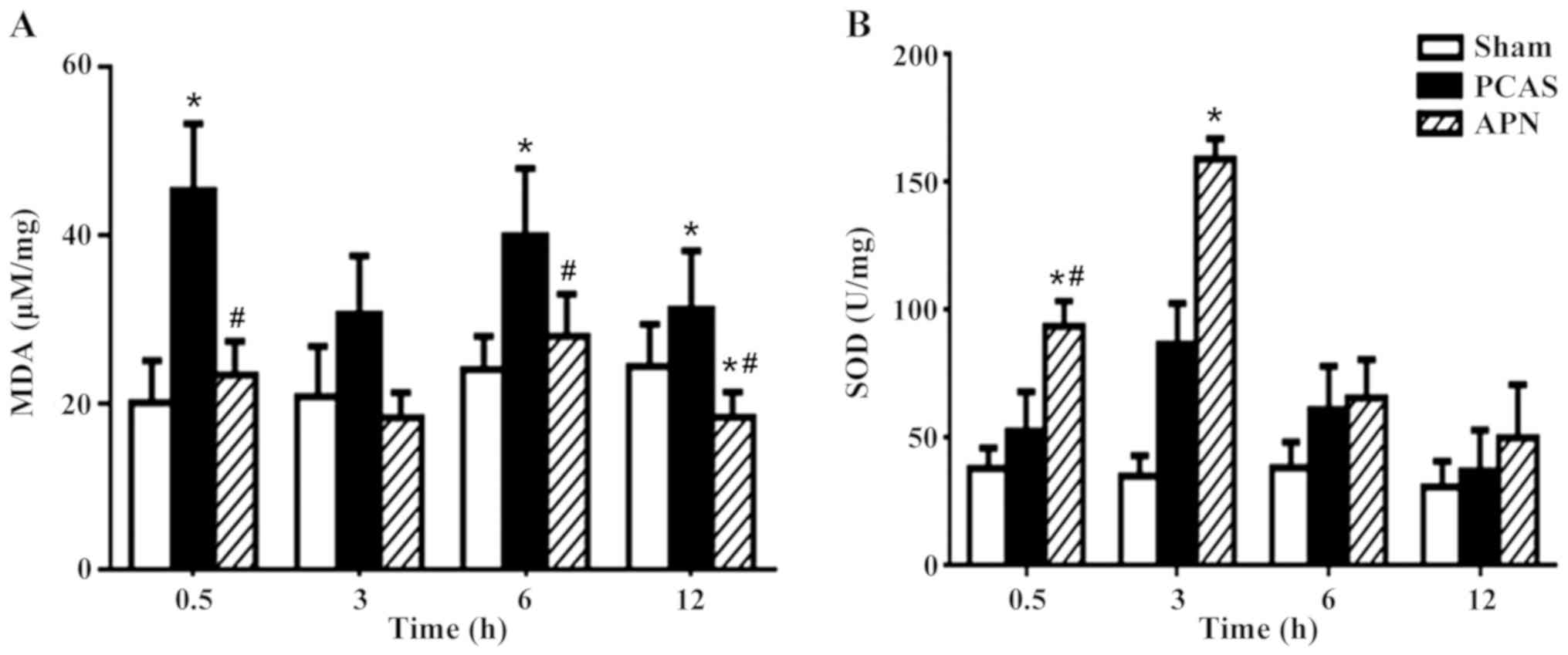
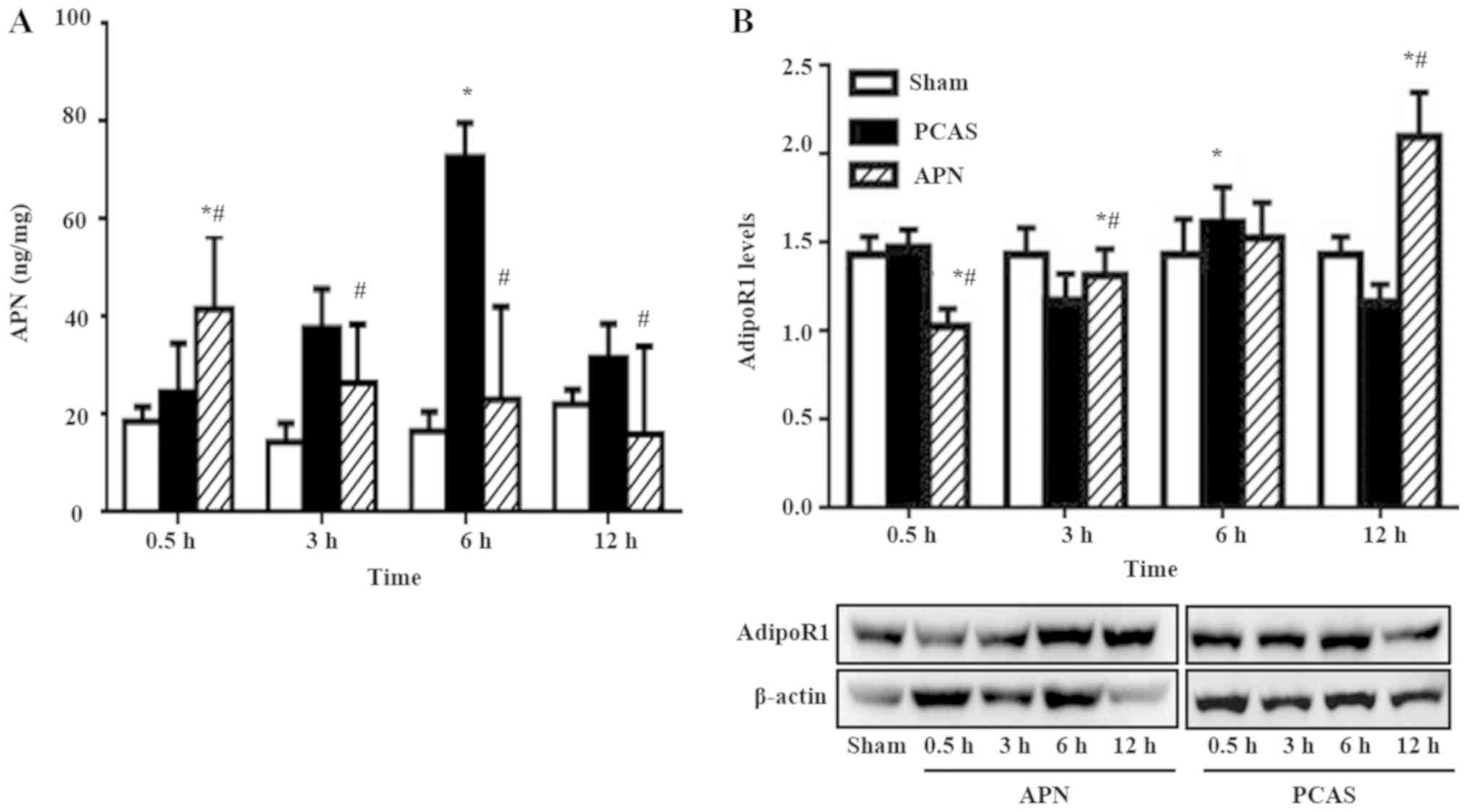
Emerging evidence suggests that both apoptosis and autophagy contribute to global cerebral ischemia‑reperfusion (GCIR)‑induced neuronal death, which results from cardiac arrest (CA). However, the mechanism of how GCIR may affect the balance between apoptosis and autophagy resulting from CA remains to be elucidated. Additionally, the role of adiponectin (APN) in reversing the apoptosis and autophagy induced by GCIR following cardiac arrest‑cardiopulmonary resuscitation (CA‑CPR) is unclear. Thus, the aim of the present study was to investigate how GCIR affect the apoptosis and autophagy in response to CA and to clarify whether APN may alter the apoptosis and autophagy of neuronal death in GCIR‑injured brain post‑CA‑CPR. Using normal controls (Sham group) and two experimental groups [CA‑CPR‑induced GCIR injury (PCAS) group and exogenous treatment with adiponectin post‑CA‑CPR (APN group)], it was demonstrated that both apoptosis and autophagy were observed simultaneously in the brain subjected to GCIR, but apoptosis appeared to be more apparent. Exogenous administration of APN significantly reduced the formation of malondialdehyde, a marker of oxidative stress and increased the expression of superoxide dismutase, an anti‑oxidative enzyme, resulting in the stimulation of autophagy, inhibition of apoptosis and reduced brain tissue injury (P<0.05 vs. PCAS). APN treatment increased the expression of APN receptor 1 (AdipR1) and the phosphorylation of AMP‑activated protein kinase (AMPK; Ser182) in brain tissues. In conclusion, GCIR induced apoptosis and inhibited autophagy, contributing to brain injury in CA‑CPR. By contrast, APN reduced the brain injury by reversing the changes of neuronal autophagy and apoptosis induced by GCIR. The possible mechanism might owe to its effects on the activation of AMPK after combining with AdipR1 on neurons, which suggests a novel intervention against GCIR injury in CA‑CPR conditions.
View Figures

Figure 1

Figure 2

Figure 3

Figure 4

Figure 5

Figure 6

View References

1 

Jerry N: Cardiac arrest and cardiopulmonary resuscitation. Semin Neurol. 37:05–012. 2017. View Article : Google Scholar

2 

Wang JW, Qiu YR, Fu Y, Liu J, He ZJ and Huang ZT: Transplantation with hypoxia-preconditioned mesenchymal stem cells suppresses brain injury caused by cardiac arrest-induced global cerebral ischemia in rats: Hypoxic stem cells rescue global cerebral ischemia. J Neurosci Resh. 95:2059–2070. 2017. View Article : Google Scholar

3 

Sanganalmath SK, Gopal P, Parker JR, Downs RK, Parker JC Jr and Dawn BJ: Global cerebral ischemia due to circulatory arrest: Insights into cellular pathophysiology and diagnostic modalities. Mol Cell Biochem. 426:111–127. 2017. View Article : Google Scholar : PubMed/NCBI

4 

Fakharnia F, Khodagholi F, Dargahi L and Ahmadiani A: Prevention of cyclophilin d-mediated mPTP opening using cyclosporine-A alleviates the elevation of necroptosis, autophagy and apoptosis-related markers following global cerebral ischemia-reperfusion. J Mol Neurosci. 61:52–60. 2017. View Article : Google Scholar : PubMed/NCBI

5 

Cui D, Shang H, Zhang X, Jiang W and Jia X: Cardiac arrest triggers hippocampal neuronal death through autophagic and apoptotic pathways. Sci Rep. 6:276422016. View Article : Google Scholar : PubMed/NCBI

6 

Mirzaei H and Regnier F: Protein: Protein aggregation induced by protein oxidation. J Chromatogr B Analyt Technol Biomed Life Sci. 873:8–14. 2008. View Article : Google Scholar : PubMed/NCBI

7 

Liu CL, Ge P, Zhang F and Hu BR: Co-translational protein aggregation after transient cerebral ischemia. Neuroscience. 134:1273–1284. 2005. View Article : Google Scholar : PubMed/NCBI

8 

Zhang YP, Zhang Y, Xiao ZB, Zhang YB, Zhang J, Li ZQ and Zhu YB: CFTR prevents neuronal apoptosis following cerebral ischemia reperfusion via regulating mitochondrial oxidative stress. J Mol Med (Berl). 426:111–127. 2018.

9 

Lavandero S, Chiong M, Rothermel BA and Hill JA: Autophagy in cardiovascular biology. J Clin Invest. 125:55–64. 2015. View Article : Google Scholar : PubMed/NCBI

10 

Rami A, Langhagen A and Steiger S: Focal cerebral ischemia induces upregulation of Beclin 1 and autophagy-like cell death. Neurobiol Dis. 29:132–141. 2008. View Article : Google Scholar : PubMed/NCBI

11 

Yu B, Ruan M, Liang T, Huang SW, Yu Y, Cheng HB and Shen XC: The synergic effect of tetramethylpyrazine phosphate and borneol for protecting against ischemia injury in cortex and hippocampus regions by modulating apoptosis and autophagy. J Mol Neurosci. 63:70–83. 2017. View Article : Google Scholar : PubMed/NCBI

12 

Ryan F, Khodagholi F, Dargahi L, Minai-Tehrani D and Ahmadiani A: Temporal pattern and crosstalk of necroptosis markers with autophagy and apoptosis associated proteins in ischemic hippocampus. Neurotox Res. 34:79–92. 2018. View Article : Google Scholar : PubMed/NCBI

13 

Berg AH, Combs TP and Scherer PE: ACRP30/adiponectin: An adipokine regulating glucose and lipid metabolism. Trends Endocrinol Metab. 13:84–89. 2002. View Article : Google Scholar : PubMed/NCBI

14 

Efstathiou SP, Tsioulos DI, Tsiakou AG, Gratsias YE, Pefanis AV and Mountokalakis TD: Plasma adiponectin levels and five-year survival after first-ever ischemic stroke. Stroke. 36:1915–1919. 2005. View Article : Google Scholar : PubMed/NCBI

15 

Li X, Guo H, Zhao L, Wang B, Liu H, Yue L, Bai H, Jiang H, Gao L, Feng DY and Qu Y: Adiponectin attenuates NADPH oxidase-mediated oxidative stress and neuronal damage induced by cerebral ischemia-reperfusion injury. Biochim Biophys Acta Mol Basis Dis. 1863:3265–3276. 2017. View Article : Google Scholar : PubMed/NCBI

16 

National Research Council (US), . Committee Guide for the care and use of laboratory animals. National Academies Press (US). 2011."ref-label" rowspan="1" colspan="1">

17 

Yao R, Cao Y, He YR, Lau WB, Zeng Z and Liang ZA: Adiponectin attenuates lung fibroblasts activation and pulmonary fibrosis induced by paraquat. PLoS One. 10:e01251692015. View Article : Google Scholar : PubMed/NCBI

18 

Ding W, Cai Y, Wang W, Ji L, Dong Y and Zhang X, Su M, Liu J, Lu G and Zhang X: Adiponectin protects the kidney against chronic intermittent hypoxia-induced injury through inhibiting endoplasmic reticulum stress. Sleep Breath. 20:1069–1074. 2016. View Article : Google Scholar : PubMed/NCBI

19 

Chen MH, Liu TW, Xie L, Song FO, He T, Zeng ZY and Mo SR: A simpler cardiac arrest model in rats. Am J Emerg Med. 25:623–630. 2007. View Article : Google Scholar : PubMed/NCBI

20 

Chen MH, Liu TW, Xie L, Song FQ and He T: A comparison of transoesophageal cardiac pacing and epinephrine for cardiopulmonary resuscitation. Am J Emerg Med. 24:545–552. 2006. View Article : Google Scholar : PubMed/NCBI

21 

Song Y, Zhong M and Cai FC: Oxcarbazepine causes neurocyte apoptosis and developing brain damage by triggering Bax/Bcl-2 signaling pathway mediated caspase 3 activation in neonatal rats. Eur Rev Med Pharmacol Sci. 22:250–261. 2018.PubMed/NCBI

22 

Bennett MW, O'connell J, O'sullivan GC, Roche D, Brady C, Kelly J, Collins JK and Shanahan F: Expression of Fas ligand by human gastric adenocarcinomas: A potential mechanism of immune escape in stomach cancer. Gut. 44:156–162. 1999. View Article : Google Scholar : PubMed/NCBI

23 

Wolf AM, Wolf D, Avila MA, Moschen AR, Berasain C, Enrich B, Rumpold H and Tilg H: Up-regulation of the anti-inflammatory adipokine adiponectin in acute liver failure in mice. J Hepatol. 44:537–543. 2006. View Article : Google Scholar : PubMed/NCBI

24 

Zhu X, Tang Z, Cong B, Du J, Wang C, Wang L, Ni X and Lu J: Estrogens increase cystathionine-gamma-lyase expression and decrease inflammation and oxidative stress in the myocardium of ovariectomized rats. Menopause. 20:1084–1091. 2013. View Article : Google Scholar : PubMed/NCBI

25 

Yang T, Mao YF, Liu SQ, Hou J, Cai ZY, Hu JY, Ni X, Deng XM and Zhu XY: Protective effects of the free radical scavenger edaravone on acute pancreatitis-associated lung injury. Eur J Pharmacol. 630:152–157. 2010. View Article : Google Scholar : PubMed/NCBI

26 

Chen X, Li L, Xu S, Bu W, Chen K, Li M and Gu H: Ultraviolet B radiation down-regulates ULK1 and ATG7 expression and impairs the autophagy response in human keratinocytes. J Photochem Photobiol B. 178:152–164. 2018. View Article : Google Scholar : PubMed/NCBI

27 

Han Y, Zhang T, Su J, Zhao Y and Li X: Apigenin attenuates oxidative stress and neuronal apoptosis in early brain injury following subarachnoid hemorrhage. J Clin Neurosci. 40:157–162. 2017. View Article : Google Scholar : PubMed/NCBI

28 

Li Y, Mei Z, Liu S, Wang T, Li H, Li XX, Han S, Yang Y, Li J and Xu ZD: Galanin protects from caspase-8/12-initiated neuronal apoptosis in the ischemic mouse brain via GalR1. Aging Dis. 8:85–100. 2017. View Article : Google Scholar : PubMed/NCBI

29 

Zhang M, Wu J, Ding H, Wu W and Xiao G: Progesterone provides the pleiotropic neuroprotective effect on traumatic brain injury through the Nrf2/ARE signaling pathway. Neurocrit Care. 26:292–300. 2017. View Article : Google Scholar : PubMed/NCBI

30 

Osellame LD, Blacker TS and Duchen MR: Cellular and molecular mechanisms of mitochondrial function. Best Pract Res Cl En. 26:711–723. 2012. View Article : Google Scholar

31 

Mongardon N, Dumas F, Ricome S, Grimaldi D, Hissem T, Pène F and Cariou A: Postcardiac arrest syndrome: From immediate resuscitation to long-term outcome. Ann Intensive Care. 1:452011. View Article : Google Scholar : PubMed/NCBI

32 

Denicola A and Radi R: Peroxynitrite and drug-dependent toxicity. Toxicology. 208:273–288. 2005. View Article : Google Scholar : PubMed/NCBI

33 

Zhu Y, Yang GY, Ahlemeyer B, Pang L, Che XM, Culmsee C, Klumpp S and Krieglstein J: Transforming growth factor-β1 increases bad phosphorylation and protects neurons against damage. Neurosci. 22:3898–3909. 2002. View Article : Google Scholar

34 

Sun Y, Zhao D, Yang Y, Gao C, Zhang X, Ma Z, Jiang S, Zhao L, Chen W, Ren KJ, et al: Adiponectin exerts cardioprotection against ischemia/reperfusion injury partially via calreticulin mediated anti-apoptotic and anti-oxidative actions. Apoptosis. 22:108–117. 2017. View Article : Google Scholar : PubMed/NCBI

35 

Yi W and Yang Q: Adiponectin improves diabetic nephropathy by inhibiting necrotic apoptosis. AMS. 15:1321–1328. 2019.PubMed/NCBI

36 

Wang Y, Li Y, Qiao J, Li N and Qiao S: AMPK α1 mediates the protective effect of adiponectin against insulin resistance in INS-1 pancreatic β cells. Cell Biochem Funct. 37:625–632. 2019. View Article : Google Scholar : PubMed/NCBI

37 

Wiklund L, Martijn C, Miclescu A, Semenas E, Rubertsson S and Sharma HS: Central nervous tissue damage after hypoxia and reperfusion in conjunction with cardiac arrest and cardiopulmonary resuscitation: Mechanisms of action and possibilities for mitigation. Int Rev Neurobiol. 102:173–187. 2012. View Article : Google Scholar : PubMed/NCBI

38 

Xu KY, Zweier JL and Becker LC: Hydroxyl radical inhibits sarcoplasmic reticulum Ca(2+)-ATPase function by direct attack on the ATP binding site. Circ Res. 80:76–81. 1997. View Article : Google Scholar : PubMed/NCBI

39 

Liu Z, Gan L, Wu T, Feng F, Luo D, Gu H, Liu S and Sun C: Adiponectin reduces ER stress-induced apoptosis through PPARα transcriptional regulation of ATF2 in mouse adipose. Cell Death Dis. 7:e24872016. View Article : Google Scholar : PubMed/NCBI

40 

Guo F, Jiang T, Song W, Wei H, Wang F, Liu L, Ma L, Yin H, Wang Q and Xiong L: Electroacupuncture attenuates cerebral ischemia-reperfusion injury in diabetic mice through adiponectin receptor 1-mediated phosphorylation of GSK-3β. Mol Neurobiol. 51:685–695. 2015. View Article : Google Scholar : PubMed/NCBI

41 

Yue L, Zhao L, Liu H, Li X, Wang B, Guo H, Gao L, Feng D and Qu Y: Adiponectin protects against glutamate-induced excitotoxicity via activating SIRT1-dependent PGC-1 expression in HT22 hippocampal neurons. Oxid Med Cell Longev. 2016:29573542016. View Article : Google Scholar : PubMed/NCBI

42 

Adrie C, Adib-Conquy M, Laurent I, Monchi M, Vinsonneau C, Fitting C, Fraisse F, Dinh-Xuan AT, Carli P, Spaulding C, et al: Successful cardiopulmonary resuscitation after cardiac arrest as a ‘sepsis-Like’ syndrome. Circulation. 106:562–568. 2002. View Article : Google Scholar : PubMed/NCBI

43 

Gairolla J, Kler R, Modi M and Khurana DJ: Leptin and adiponectin: Pathophysiological role and possible therapeutic target of inflammation in ischemic stroke. Rev Neurosci. 28:295–306. 2017. View Article : Google Scholar : PubMed/NCBI

44 

Duan J, Yin Y, Cui J, Yan J, Zhu Y, Guan Y, Wei G, Weng Y, Wu X, Guo C, et al: Chikusetsu saponin IVa ameliorates cerebral ischemia reperfusion injury in diabetic mice via adiponectin-mediated AMPK/GSK-3beta pathway in vivo and in vitro. Mol Neurobiol. 53:728–743. 2016. View Article : Google Scholar : PubMed/NCBI

45 

Piao L, Yu C, Xu W, Inoue A, Shibata R, Li X, Nan Y, Zhao G, Wang H, Meng X, et al: Adiponectin/AdiopR1 signal inactivation contributes to impaired angiogenesis in mice of advanced age. Int J Cardiol. 267:150–155. 2018. View Article : Google Scholar : PubMed/NCBI

46 

Gamberi T, Modesti A, Magherini F, D'Souza DM, Hawke T and Fiaschi T: Activation of autophagy by globular adiponectin is required for muscle differentiation. Biochim Biophys Acta. 1863:694–702. 2016. View Article : Google Scholar : PubMed/NCBI

Related Articles

  • Abstract
  • View
  • Download
  • Twitter
Copy and paste a formatted citation
Spandidos Publications style
He Y, Liu B, Yao P, Shao Y, Cheng Y, Zhao J, Wu J, Zhao ZW, Huang W, Christopher TA, Christopher TA, et al: Adiponectin inhibits cardiac arrest/cardiopulmonary resuscitation‑induced apoptosis in brain by increasing autophagy involved in AdipoR1‑AMPK signaling. Mol Med Rep 22: 870-878, 2020.
APA
He, Y., Liu, B., Yao, P., Shao, Y., Cheng, Y., Zhao, J. ... Cao, Y. (2020). Adiponectin inhibits cardiac arrest/cardiopulmonary resuscitation‑induced apoptosis in brain by increasing autophagy involved in AdipoR1‑AMPK signaling. Molecular Medicine Reports, 22, 870-878. https://doi.org/10.3892/mmr.2020.11181
MLA
He, Y., Liu, B., Yao, P., Shao, Y., Cheng, Y., Zhao, J., Wu, J., Zhao, Z. W., Huang, W., Christopher, T. A., Lopez, B., Ma, X., Cao, Y."Adiponectin inhibits cardiac arrest/cardiopulmonary resuscitation‑induced apoptosis in brain by increasing autophagy involved in AdipoR1‑AMPK signaling". Molecular Medicine Reports 22.2 (2020): 870-878.
Chicago
He, Y., Liu, B., Yao, P., Shao, Y., Cheng, Y., Zhao, J., Wu, J., Zhao, Z. W., Huang, W., Christopher, T. A., Lopez, B., Ma, X., Cao, Y."Adiponectin inhibits cardiac arrest/cardiopulmonary resuscitation‑induced apoptosis in brain by increasing autophagy involved in AdipoR1‑AMPK signaling". Molecular Medicine Reports 22, no. 2 (2020): 870-878. https://doi.org/10.3892/mmr.2020.11181
Copy and paste a formatted citation
x
Spandidos Publications style
He Y, Liu B, Yao P, Shao Y, Cheng Y, Zhao J, Wu J, Zhao ZW, Huang W, Christopher TA, Christopher TA, et al: Adiponectin inhibits cardiac arrest/cardiopulmonary resuscitation‑induced apoptosis in brain by increasing autophagy involved in AdipoR1‑AMPK signaling. Mol Med Rep 22: 870-878, 2020.
APA
He, Y., Liu, B., Yao, P., Shao, Y., Cheng, Y., Zhao, J. ... Cao, Y. (2020). Adiponectin inhibits cardiac arrest/cardiopulmonary resuscitation‑induced apoptosis in brain by increasing autophagy involved in AdipoR1‑AMPK signaling. Molecular Medicine Reports, 22, 870-878. https://doi.org/10.3892/mmr.2020.11181
MLA
He, Y., Liu, B., Yao, P., Shao, Y., Cheng, Y., Zhao, J., Wu, J., Zhao, Z. W., Huang, W., Christopher, T. A., Lopez, B., Ma, X., Cao, Y."Adiponectin inhibits cardiac arrest/cardiopulmonary resuscitation‑induced apoptosis in brain by increasing autophagy involved in AdipoR1‑AMPK signaling". Molecular Medicine Reports 22.2 (2020): 870-878.
Chicago
He, Y., Liu, B., Yao, P., Shao, Y., Cheng, Y., Zhao, J., Wu, J., Zhao, Z. W., Huang, W., Christopher, T. A., Lopez, B., Ma, X., Cao, Y."Adiponectin inhibits cardiac arrest/cardiopulmonary resuscitation‑induced apoptosis in brain by increasing autophagy involved in AdipoR1‑AMPK signaling". Molecular Medicine Reports 22, no. 2 (2020): 870-878. https://doi.org/10.3892/mmr.2020.11181
Follow us
  • Twitter
  • LinkedIn
  • Facebook
About
  • Spandidos Publications
  • Careers
  • Cookie Policy
  • Privacy Policy
How can we help?
  • Help
  • Live Chat
  • Contact
  • Email to our Support Team