Spandidos Publications Logo
  • About
    • About Spandidos
    • Aims and Scopes
    • Abstracting and Indexing
    • Editorial Policies
    • Reprints and Permissions
    • Job Opportunities
    • Terms and Conditions
    • Contact
  • Journals
    • All Journals
    • Oncology Letters
      • Oncology Letters
      • Information for Authors
      • Editorial Policies
      • Editorial Board
      • Aims and Scope
      • Abstracting and Indexing
      • Bibliographic Information
      • Archive
    • International Journal of Oncology
      • International Journal of Oncology
      • Information for Authors
      • Editorial Policies
      • Editorial Board
      • Aims and Scope
      • Abstracting and Indexing
      • Bibliographic Information
      • Archive
    • Molecular and Clinical Oncology
      • Molecular and Clinical Oncology
      • Information for Authors
      • Editorial Policies
      • Editorial Board
      • Aims and Scope
      • Abstracting and Indexing
      • Bibliographic Information
      • Archive
    • Experimental and Therapeutic Medicine
      • Experimental and Therapeutic Medicine
      • Information for Authors
      • Editorial Policies
      • Editorial Board
      • Aims and Scope
      • Abstracting and Indexing
      • Bibliographic Information
      • Archive
    • International Journal of Molecular Medicine
      • International Journal of Molecular Medicine
      • Information for Authors
      • Editorial Policies
      • Editorial Board
      • Aims and Scope
      • Abstracting and Indexing
      • Bibliographic Information
      • Archive
    • Biomedical Reports
      • Biomedical Reports
      • Information for Authors
      • Editorial Policies
      • Editorial Board
      • Aims and Scope
      • Abstracting and Indexing
      • Bibliographic Information
      • Archive
    • Oncology Reports
      • Oncology Reports
      • Information for Authors
      • Editorial Policies
      • Editorial Board
      • Aims and Scope
      • Abstracting and Indexing
      • Bibliographic Information
      • Archive
    • Molecular Medicine Reports
      • Molecular Medicine Reports
      • Information for Authors
      • Editorial Policies
      • Editorial Board
      • Aims and Scope
      • Abstracting and Indexing
      • Bibliographic Information
      • Archive
    • World Academy of Sciences Journal
      • World Academy of Sciences Journal
      • Information for Authors
      • Editorial Policies
      • Editorial Board
      • Aims and Scope
      • Abstracting and Indexing
      • Bibliographic Information
      • Archive
    • International Journal of Functional Nutrition
      • International Journal of Functional Nutrition
      • Information for Authors
      • Editorial Policies
      • Editorial Board
      • Aims and Scope
      • Abstracting and Indexing
      • Bibliographic Information
      • Archive
    • International Journal of Epigenetics
      • International Journal of Epigenetics
      • Information for Authors
      • Editorial Policies
      • Editorial Board
      • Aims and Scope
      • Abstracting and Indexing
      • Bibliographic Information
      • Archive
    • Medicine International
      • Medicine International
      • Information for Authors
      • Editorial Policies
      • Editorial Board
      • Aims and Scope
      • Abstracting and Indexing
      • Bibliographic Information
      • Archive
  • Articles
  • Information
    • Information for Authors
    • Information for Reviewers
    • Information for Librarians
    • Information for Advertisers
    • Conferences
  • Language Editing
Spandidos Publications Logo
  • About
    • About Spandidos
    • Aims and Scopes
    • Abstracting and Indexing
    • Editorial Policies
    • Reprints and Permissions
    • Job Opportunities
    • Terms and Conditions
    • Contact
  • Journals
    • All Journals
    • Biomedical Reports
      • Information for Authors
      • Editorial Policies
      • Editorial Board
      • Aims and Scope
      • Abstracting and Indexing
      • Bibliographic Information
      • Archive
    • Experimental and Therapeutic Medicine
      • Information for Authors
      • Editorial Policies
      • Editorial Board
      • Aims and Scope
      • Abstracting and Indexing
      • Bibliographic Information
      • Archive
    • International Journal of Epigenetics
      • Information for Authors
      • Editorial Policies
      • Editorial Board
      • Aims and Scope
      • Abstracting and Indexing
      • Bibliographic Information
      • Archive
    • International Journal of Functional Nutrition
      • Information for Authors
      • Editorial Policies
      • Editorial Board
      • Aims and Scope
      • Abstracting and Indexing
      • Bibliographic Information
      • Archive
    • International Journal of Molecular Medicine
      • Information for Authors
      • Editorial Policies
      • Editorial Board
      • Aims and Scope
      • Abstracting and Indexing
      • Bibliographic Information
      • Archive
    • International Journal of Oncology
      • Information for Authors
      • Editorial Policies
      • Editorial Board
      • Aims and Scope
      • Abstracting and Indexing
      • Bibliographic Information
      • Archive
    • Medicine International
      • Information for Authors
      • Editorial Policies
      • Editorial Board
      • Aims and Scope
      • Abstracting and Indexing
      • Bibliographic Information
      • Archive
    • Molecular and Clinical Oncology
      • Information for Authors
      • Editorial Policies
      • Editorial Board
      • Aims and Scope
      • Abstracting and Indexing
      • Bibliographic Information
      • Archive
    • Molecular Medicine Reports
      • Information for Authors
      • Editorial Policies
      • Editorial Board
      • Aims and Scope
      • Abstracting and Indexing
      • Bibliographic Information
      • Archive
    • Oncology Letters
      • Information for Authors
      • Editorial Policies
      • Editorial Board
      • Aims and Scope
      • Abstracting and Indexing
      • Bibliographic Information
      • Archive
    • Oncology Reports
      • Information for Authors
      • Editorial Policies
      • Editorial Board
      • Aims and Scope
      • Abstracting and Indexing
      • Bibliographic Information
      • Archive
    • World Academy of Sciences Journal
      • Information for Authors
      • Editorial Policies
      • Editorial Board
      • Aims and Scope
      • Abstracting and Indexing
      • Bibliographic Information
      • Archive
  • Articles
  • Information
    • For Authors
    • For Reviewers
    • For Librarians
    • For Advertisers
    • Conferences
  • Language Editing
Login Register Submit
  • This site uses cookies
  • You can change your cookie settings at any time by following the instructions in our Cookie Policy. To find out more, you may read our Privacy Policy.

    I agree
Search articles by DOI, keyword, author or affiliation
Search
Advanced Search
presentation
Molecular Medicine Reports
Join Editorial Board Propose a Special Issue
Print ISSN: 1791-2997 Online ISSN: 1791-3004
Journal Cover
November-2020 Volume 22 Issue 5

Full Size Image

Sign up for eToc alerts
Recommend to Library

Journals

International Journal of Molecular Medicine

International Journal of Molecular Medicine

International Journal of Molecular Medicine is an international journal devoted to molecular mechanisms of human disease.

International Journal of Oncology

International Journal of Oncology

International Journal of Oncology is an international journal devoted to oncology research and cancer treatment.

Molecular Medicine Reports

Molecular Medicine Reports

Covers molecular medicine topics such as pharmacology, pathology, genetics, neuroscience, infectious diseases, molecular cardiology, and molecular surgery.

Oncology Reports

Oncology Reports

Oncology Reports is an international journal devoted to fundamental and applied research in Oncology.

Experimental and Therapeutic Medicine

Experimental and Therapeutic Medicine

Experimental and Therapeutic Medicine is an international journal devoted to laboratory and clinical medicine.

Oncology Letters

Oncology Letters

Oncology Letters is an international journal devoted to Experimental and Clinical Oncology.

Biomedical Reports

Biomedical Reports

Explores a wide range of biological and medical fields, including pharmacology, genetics, microbiology, neuroscience, and molecular cardiology.

Molecular and Clinical Oncology

Molecular and Clinical Oncology

International journal addressing all aspects of oncology research, from tumorigenesis and oncogenes to chemotherapy and metastasis.

World Academy of Sciences Journal

World Academy of Sciences Journal

Multidisciplinary open-access journal spanning biochemistry, genetics, neuroscience, environmental health, and synthetic biology.

International Journal of Functional Nutrition

International Journal of Functional Nutrition

Open-access journal combining biochemistry, pharmacology, immunology, and genetics to advance health through functional nutrition.

International Journal of Epigenetics

International Journal of Epigenetics

Publishes open-access research on using epigenetics to advance understanding and treatment of human disease.

Medicine International

Medicine International

An International Open Access Journal Devoted to General Medicine.

Journal Cover
November-2020 Volume 22 Issue 5

Full Size Image

Sign up for eToc alerts
Recommend to Library

  • Article
  • Citations
    • Cite This Article
    • Download Citation
    • Create Citation Alert
    • Remove Citation Alert
    • Cited By
  • Similar Articles
    • Related Articles (in Spandidos Publications)
    • Similar Articles (Google Scholar)
    • Similar Articles (PubMed)
  • Download PDF
  • Download XML
  • View XML

  • Supplementary Files
    • Supplementary_Data.pdf
Article Open Access

ITCH regulates oxidative stress induced by high glucose through thioredoxin interacting protein in cultured human lens epithelial cells

  • Authors:
    • Lingfeng Jiang
    • Wenkai Zhou
    • Bo Lu
    • Qichang Yan
  • View Affiliations / Copyright

    Affiliations: Department of Ophthalmology, Fourth Affiliated Hospital of China Medical University, Ophthalmology Hospital of China Medical University, Key Laboratory of Lens in Liaoning Province, Shenyang, Liaoning 110005, P.R. China
    Copyright: © Jiang et al. This is an open access article distributed under the terms of Creative Commons Attribution License.
  • Pages: 4307-4319
    |
    Published online on: September 9, 2020
       https://doi.org/10.3892/mmr.2020.11499
  • Expand metrics +
Metrics: Total Views: 0 (Spandidos Publications: | PMC Statistics: )
Metrics: Total PDF Downloads: 0 (Spandidos Publications: | PMC Statistics: )
Cited By (CrossRef): 0 citations Loading Articles...

This article is mentioned in:


Abstract

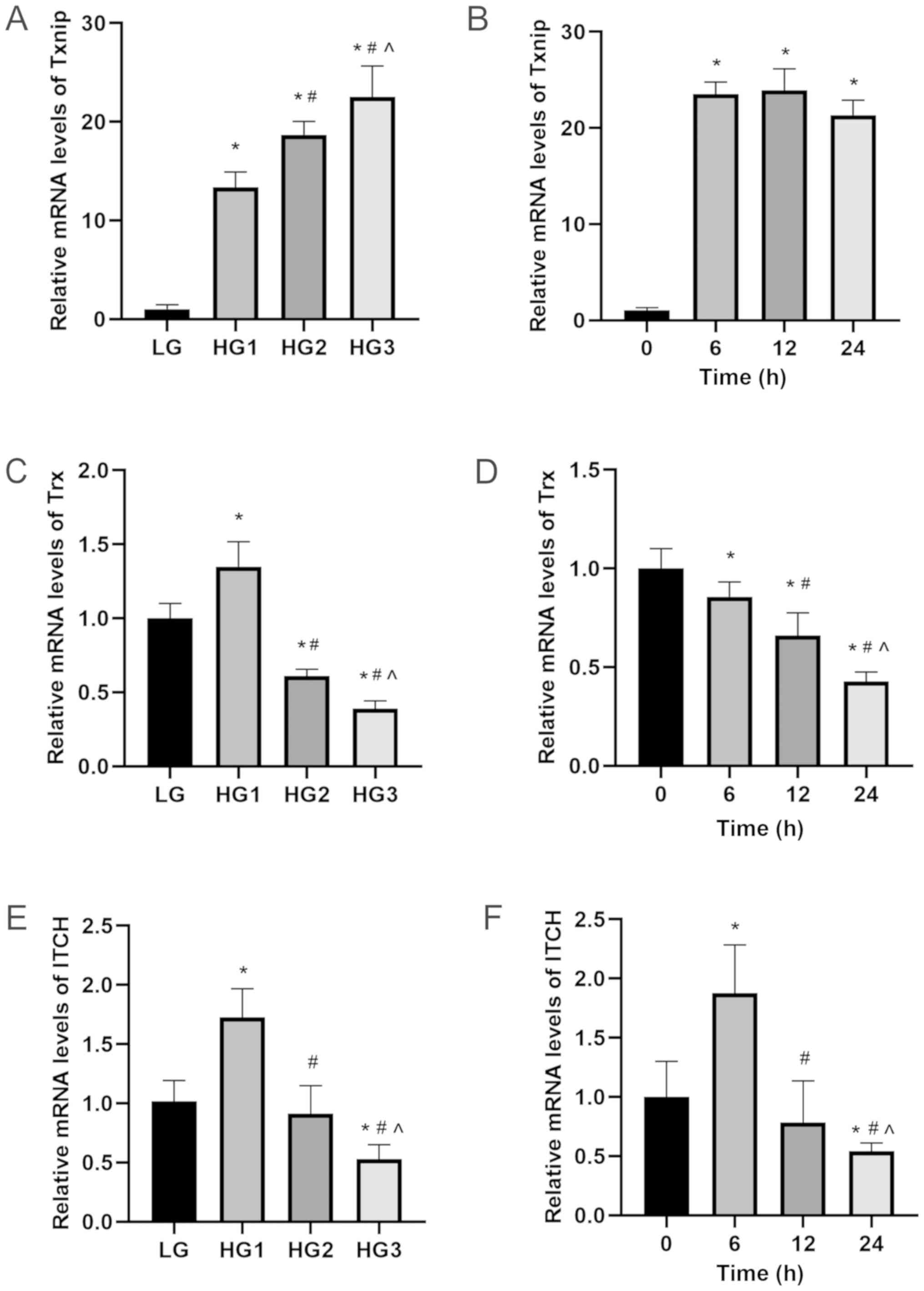
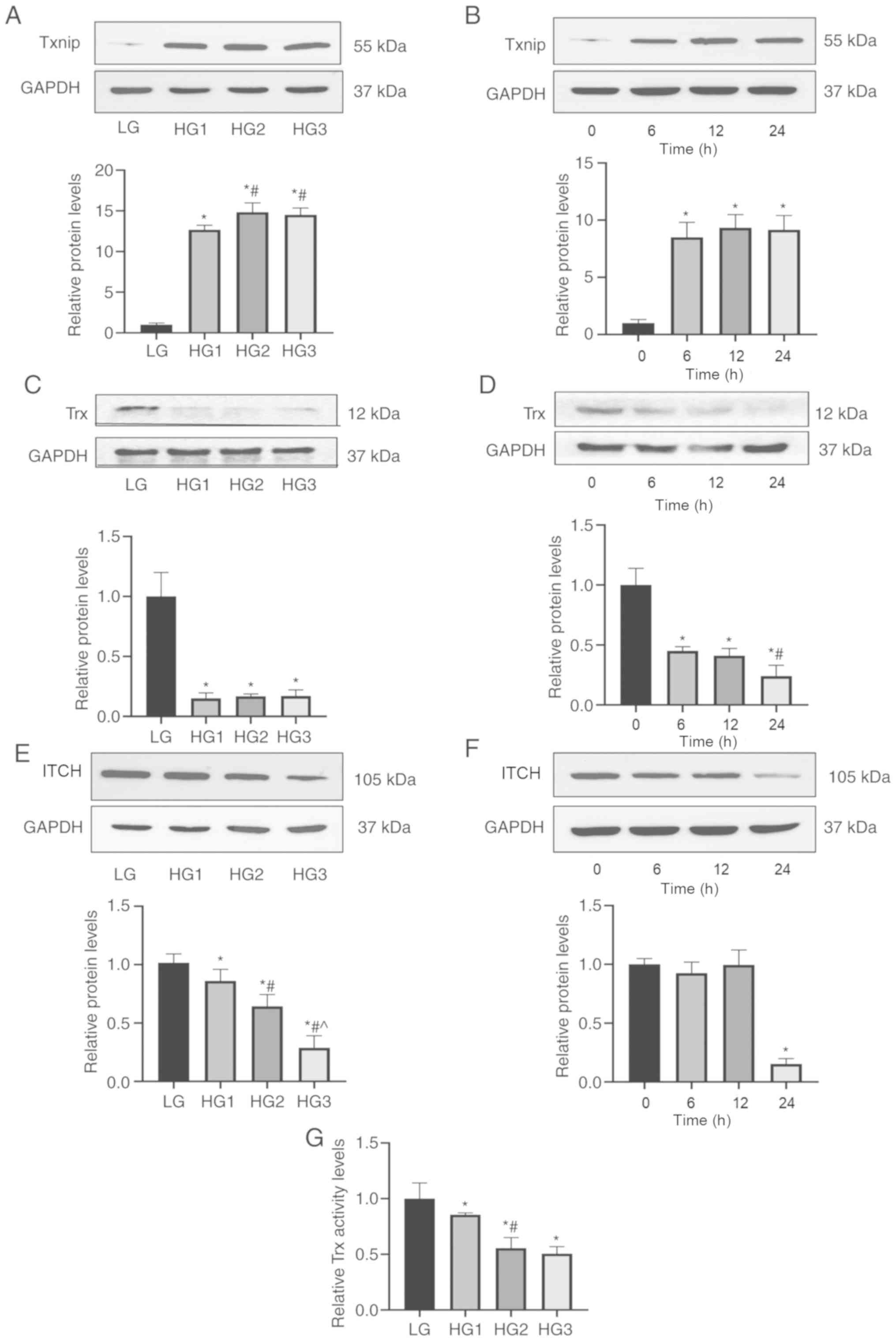
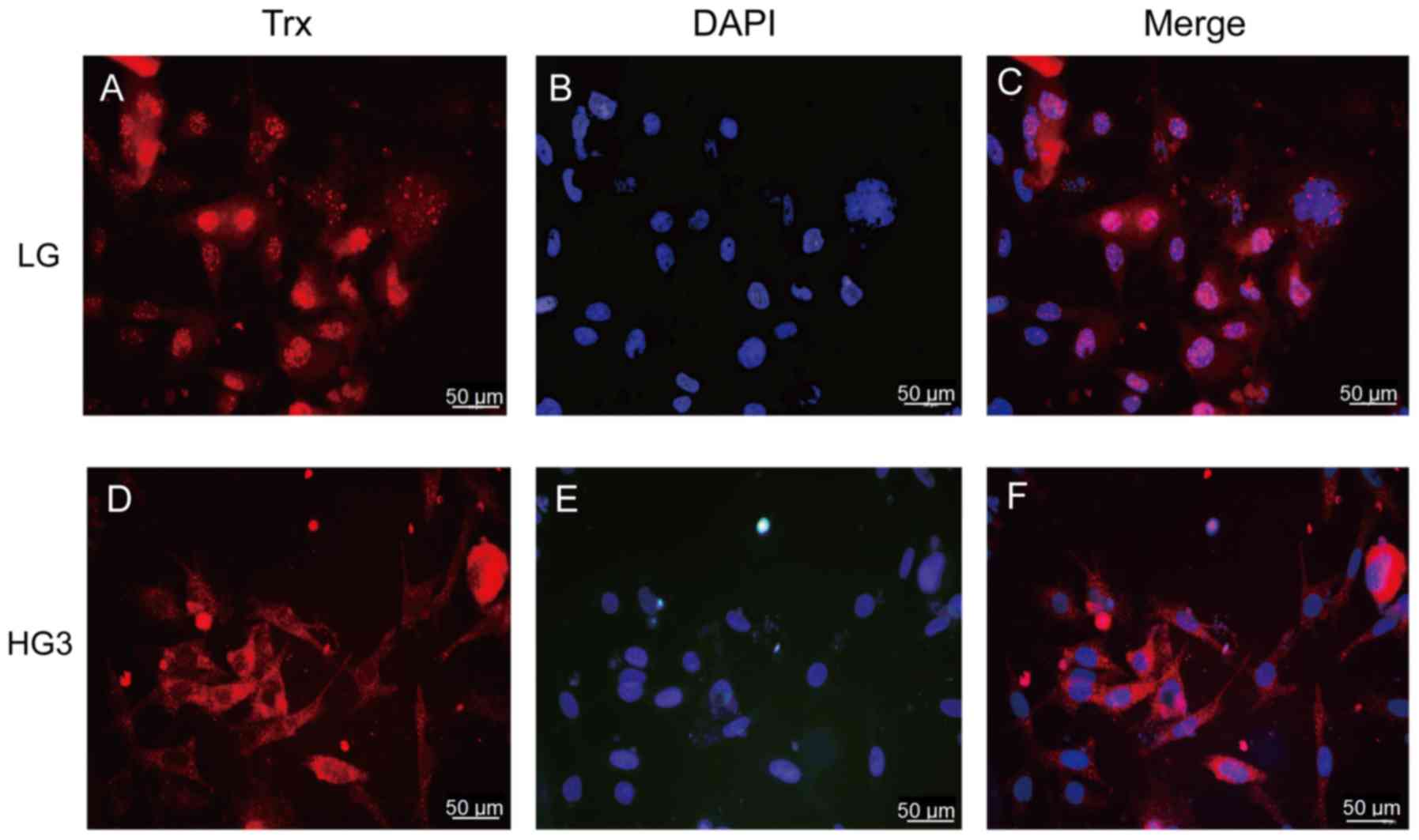
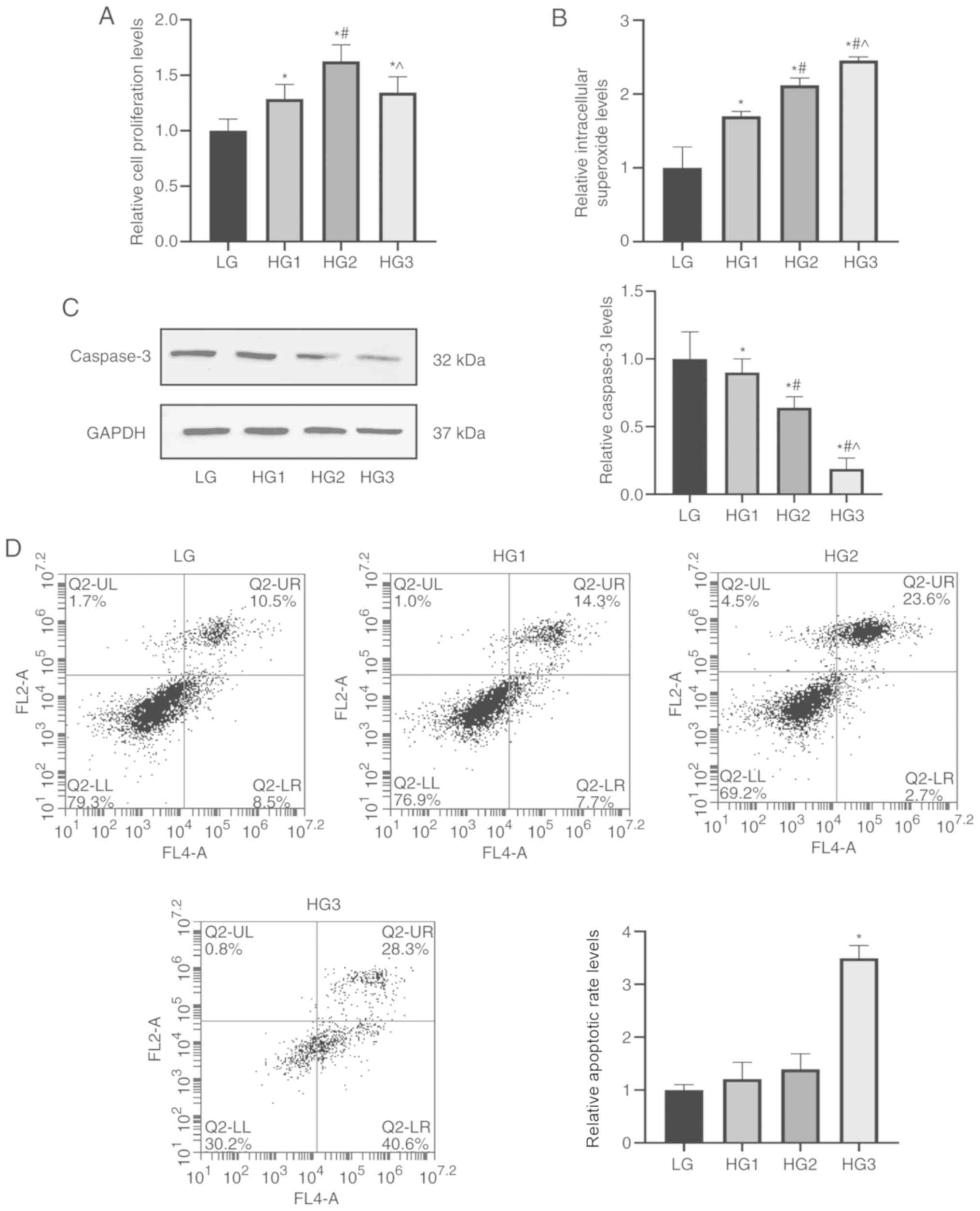
Thioredoxin (Trx) is an important protein that controls oxidative damage in almost all eukaryotic cells. Trx interaction protein (Txnip) has been reported to negatively regulate the bioavailability of Trx and inhibit its biological function. The E3 ubiquitin ligase ITCH can specifically degrade Txnip via ubiquitination. The apoptosis of human lens epithelial cells (HLECs), which are highly sensitive to redox caused by oxidative stress, is a significant factor for the development of sugar cataract in a high‑glucose environment. However, whether Trx, Txnip and ITCH contribute to the progression of sugar cataracts and the underlying mechanisms remain unknown, and thus, identifying these were the aims of the present study. The present results suggested that the expression levels of Trx, Txnip and ITCH in HLECs cultured with different glucose concentrations were detected by reverse transcription‑quantitative PCR and western blotting, and the apoptotic rate of the cells was detected by flow cytometry and superoxide detection assay. The interaction between ITCH and Txnip was determined by co‑localization immunofluorescence and co‑immunoprecipitation. In addition, a vector and small interfering RNA of ITCH were transfected to overexpress and knockdown ITCH, respectively, to alter the expression of downstream proteins and cell apoptosis. It was found that Txnip was highly expressed in cultured HLECs in high‑glucose environment, and the antioxidative function of Trx was restricted and suppressed, thus promoting apoptosis. The overexpression of ITCH increased the expression of Trx and decreased oxidative stress and apoptosis by decreasing Txnip in cultured HLECs, while downregulation of ITCH significantly decreased the expression of Trx and enhanced oxidative stress and apoptosis. Therefore, the present results indicated that ITCH could regulate the apoptosis of HLECs that were cultured in high‑glucose concentration and that it may be a treatment target for sugar cataract.
View Figures

Figure 1

Figure 2

Figure 3

Figure 4

Figure 5

Figure 6

Figure 7

Figure 8

View References

1 

Fukuoka H and Afshari NA: The impact of age-related cataract on measures of frailty in an aging global population. Curr Opin Ophthalmol. 28:93–97. 2017. View Article : Google Scholar : PubMed/NCBI

2 

Francis PJ and Moore AT: Genetics of childhood cataract. Curr Opin Ophthalmol. 15:10–15. 2004. View Article : Google Scholar : PubMed/NCBI

3 

Andley UP, Tycksen E, McGlasson-Naumann BN and Hamilton PD: Probing the changes in gene expression due to α-crystallin mutations in mouse models of hereditary human cataract. PLoS One. 13:e01908172018. View Article : Google Scholar : PubMed/NCBI

4 

Bahia S, Blais E, Murugkar S, Chauhan V and Kumarathasan P: Oxidative and nitrative stress-related changes in human lens epithelial cells following exposure to X-rays. Int J Radiat Biol. 94:366–373. 2018. View Article : Google Scholar : PubMed/NCBI

5 

Bhagat AK, Bhardwaj H, Bhardwaj BL, Goyal S, Jaura S and Jain P: Acute bilateral cataract in patient with type 1 diabetes mellitus. J Assoc Physicians India. 67:832019.PubMed/NCBI

6 

Mirsky N, Cohen R, Eliaz A and Dovrat A: Featured article: Inhibition of diabetic cataract by glucose tolerance factor extracted from yeast. Exp Biol Med (Maywood). 241:817–829. 2016. View Article : Google Scholar : PubMed/NCBI

7 

Tinkov AA, Bjørklund G, Skalny AV, Holmgren A, Skalnaya MG, Chirumbolo S and Aaseth J: The role of the thioredoxin/thioredoxin reductase system in the metabolic syndrome: Towards a possible prognostic marker? Cell Mol Life Sci. 75:1567–1586. 2018. View Article : Google Scholar : PubMed/NCBI

8 

Montano SJ, Lu J, Gustafsson TN and Holmgren A: Activity assays of mammalian thioredoxin and thioredoxin reductase: Fluorescent disulfide substrates, mechanisms, and use with tissue samples. Anal Biochem. 449:139–146. 2014. View Article : Google Scholar : PubMed/NCBI

9 

Lu J and Holmgren A: The thioredoxin antioxidant system. Free Radic Biol Med. 66:75–87. 2014. View Article : Google Scholar : PubMed/NCBI

10 

Chen KS and DeLuca HF: Isolation and characterization of a novel cDNA from HL-60 cells treated with 1,25-dihydroxyvitamin D-3. Biochim Biophys Acta. 1219:26–32. 1994. View Article : Google Scholar : PubMed/NCBI

11 

Patwari P, Higgins LJ, Chutkow WA, Yoshioka J and Lee RT: The interaction of thioredoxin with Txnip. Evidence for formation of a mixed disulfide by disulfide exchange. J Biol Chem. 281:21884–21891. 2006. View Article : Google Scholar : PubMed/NCBI

12 

Abderrazak A, Syrovets T, Couchie D, El Hadri K, Friguet B, Simmet T and Rouis M: NLRP3 inflammasome: From a danger signal sensor to a regulatory node of oxidative stress and inflammatory diseases. Redox Biol. 4:296–307. 2015. View Article : Google Scholar : PubMed/NCBI

13 

Nishiyama A, Matsui M, Iwata S, Hirota K, Masutani H, Nakamura H, Takagi Y, Sono H, Gon Y and Yodoi J: Identification of thioredoxin-binding protein-2/vitamin D(3) up-regulated protein 1 as a negative regulator of thioredoxin function and expression. J Biol Chem. 274:21645–21650. 1999. View Article : Google Scholar : PubMed/NCBI

14 

Pasternak Y, Ohana M, Biron-Shental T, Cohen-Hagai K, Benchetrit S and Zitman-Gal T: Thioredoxin, thioredoxin interacting protein and transducer and activator of transcription 3 in gestational diabetes. Mol Biol Rep. 47:1199–1206. 2020. View Article : Google Scholar : PubMed/NCBI

15 

Gao C, Huang W, Kanasaki K and Xu Y: The role of ubiquitination and sumoylation in diabetic nephropathy. Biomed Res Int. 2014:1606922014. View Article : Google Scholar : PubMed/NCBI

16 

Lorenz S: Structural mechanisms of HECT-type ubiquitin ligases. Biol Chem. 399:127–145. 2018. View Article : Google Scholar : PubMed/NCBI

17 

Michelle C, Vourc'h P, Mignon L and Andres CR: What was the set of ubiquitin and ubiquitin-like conjugating enzymes in the eukaryote common ancestor? J Mol Evol. 68:616–628. 2009. View Article : Google Scholar : PubMed/NCBI

18 

Li W, Bengtson MH, Ulbrich A, Matsuda A, Reddy VA, Orth A, Chanda SK, Batalov S and Joazeiro CA: Genome-wide and functional annotation of human E3 ubiquitin ligases identifies MULAN, a mitochondrial E3 that regulates the organelle's dynamics and signaling. PLoS One. 3:e14872008. View Article : Google Scholar : PubMed/NCBI

19 

Aki D, Zhang W and Liu YC: The E3 ligase Itch in immune regulation and beyond. Immunol Rev. 266:6–26. 2015. View Article : Google Scholar : PubMed/NCBI

20 

Otaki Y, Takahashi H, Watanabe T, Funayama A, Netsu S, Honda Y, Narumi T, Kadowaki S, Hasegawa H, Honda S, et al: HECT-type ubiquitin E3 ligase ITCH interacts with thioredoxin-interacting protein and ameliorates reactive oxygen species-induced cardiotoxicity. J Am Heart Assoc. 5:e0024852016. View Article : Google Scholar : PubMed/NCBI

21 

Han X, Dong XX, Shi MY, Feng L, Wang XL, Zhang JS and Yan QC: SUMOylation and deacetylation affect NF-κB p65 activity induced by high glucose in human lens epithelial cells. Int J Ophthalmol. 12:1371–1379. 2019. View Article : Google Scholar : PubMed/NCBI

22 

Schmittgen TD and Livak KJ: Analyzing real-time PCR data by the comparative C(T) method. Nat Protoc. 3:1101–1108. 2008. View Article : Google Scholar : PubMed/NCBI

23 

Park YJ, Oanh NTK, Heo J, Kim SG, Lee HS, Lee H, Lee JH, Kang HC, Lim W, Yoo YS and Cho H: Dual targeting of RIG-I and MAVS by MARCH5 mitochondria ubiquitin ligase in innate immunity. Cell Signal. 67:1095202020. View Article : Google Scholar : PubMed/NCBI

24 

Junn E, Han SH, Im JY, Yang Y, Cho EW, Um HD, Kim DK, Lee KW, Han PL, Rhee SG and Choi I: Vitamin D3 up-regulated protein 1 mediates oxidative stress via suppressing the thioredoxin function. J Immunol. 164:6287–6295. 2000. View Article : Google Scholar : PubMed/NCBI

25 

Wang Y, De Keulenaer GW and Lee RT: Vitamin D(3)-up- regulated protein-1 is a stress-responsive gene that regulates cardiomyocyte viability through interaction with thioredoxin. J Biol Chem. 277:26496–26500. 2002. View Article : Google Scholar : PubMed/NCBI

26 

Osnes-Ringen Ø, Berg KH, Moe MC, Zetterström C, Røger M and Nicolaissen B: Cell death pattern in lens epithelium of cataract patients. Acta Ophthalmol. 94:514–520. 2016. View Article : Google Scholar : PubMed/NCBI

27 

Bron AJ, Brown NA, Harding JJ and Ganea E: The lens and cataract in diabetes. Int Ophthalmol Clin. 38:37–67. 1998. View Article : Google Scholar : PubMed/NCBI

28 

Collet JF and Messens J: Structure, function, and mechanism of thioredoxin proteins. Antioxid Redox Signal. 13:1205–1216. 2010. View Article : Google Scholar : PubMed/NCBI

29 

Chen KS and DeLuca HF: Cloning of the human 1 alpha, 25-dihydroxyvitamin D-3 24-hydroxylase gene promoter and identification of two vitamin D-responsive elements. Biochim Biophys Acta. 1263:1–9. 1995. View Article : Google Scholar : PubMed/NCBI

30 

Jeanine CS, Amie DM and Walter HW: Oxidation and nuclear localization of thioredoxin-1 in sparse cell cultures. J Cell Biochem. 104:1879–1889. 2008. View Article : Google Scholar : PubMed/NCBI

31 

Zhang X, Zhang JH, Chen XY, Hu QH, Wang MX, Jin R, Zhang QY, Wang W, Wang R, Kang LL, et al: Reactive oxygen species-induced TXNIP drives fructose-mediated hepatic inflammation and lipid accumulation through NLRP3 inflammasome activation. Antioxid Redox Signal. 22:848–870. 2015. View Article : Google Scholar : PubMed/NCBI

32 

Oslowski CM, Hara T, O'Sullivan-Murphy B, Kanekura K, Lu S, Hara M, Ishigaki S, Zhu LJ, Hayashi E, Hui ST, et al: Thioredoxin-interacting protein mediates ER stress-induced β cell death through initiation of the inflammasome. Cell Metab. 16:265–273. 2012. View Article : Google Scholar : PubMed/NCBI

33 

Bernardini S, Gravina P, Croce N, Perricone R, Knight RA, Valentini A, Melino G and Federici G: Itch gene polymorphisms in healthy population and in patients affected by rheumatoid arthritis and atopic dermatitis. Cell Cycle. 7:3607–3609. 2008. View Article : Google Scholar : PubMed/NCBI

34 

Zhang P, Wang C, Gao K, Wang D, Mao J, An J, Xu C, Wu D, Yu H, Liu JO and Yu L: The ubiquitin ligase itch regulates apoptosis by targeting thioredoxin-interacting protein for ubiquitin-dependent degradation. J Biol Chem. 285:8869–8879. 2010. View Article : Google Scholar : PubMed/NCBI

35 

Mouchantaf R, Azakir BA, McPherson PS, Millard SM, Wood SA and Angers A: The ubiquitin ligase itch is auto-ubiquitylated in vivo and in vitro but is protected from degradation by interacting with the deubiquitylating enzyme FAM/USP9X. J Biol Chem. 281:38738–38747. 2006. View Article : Google Scholar : PubMed/NCBI

Related Articles

  • Abstract
  • View
  • Download
  • Twitter
Copy and paste a formatted citation
Spandidos Publications style
Jiang L, Zhou W, Lu B and Yan Q: ITCH regulates oxidative stress induced by high glucose through thioredoxin interacting protein in cultured human lens epithelial cells. Mol Med Rep 22: 4307-4319, 2020.
APA
Jiang, L., Zhou, W., Lu, B., & Yan, Q. (2020). ITCH regulates oxidative stress induced by high glucose through thioredoxin interacting protein in cultured human lens epithelial cells. Molecular Medicine Reports, 22, 4307-4319. https://doi.org/10.3892/mmr.2020.11499
MLA
Jiang, L., Zhou, W., Lu, B., Yan, Q."ITCH regulates oxidative stress induced by high glucose through thioredoxin interacting protein in cultured human lens epithelial cells". Molecular Medicine Reports 22.5 (2020): 4307-4319.
Chicago
Jiang, L., Zhou, W., Lu, B., Yan, Q."ITCH regulates oxidative stress induced by high glucose through thioredoxin interacting protein in cultured human lens epithelial cells". Molecular Medicine Reports 22, no. 5 (2020): 4307-4319. https://doi.org/10.3892/mmr.2020.11499
Copy and paste a formatted citation
x
Spandidos Publications style
Jiang L, Zhou W, Lu B and Yan Q: ITCH regulates oxidative stress induced by high glucose through thioredoxin interacting protein in cultured human lens epithelial cells. Mol Med Rep 22: 4307-4319, 2020.
APA
Jiang, L., Zhou, W., Lu, B., & Yan, Q. (2020). ITCH regulates oxidative stress induced by high glucose through thioredoxin interacting protein in cultured human lens epithelial cells. Molecular Medicine Reports, 22, 4307-4319. https://doi.org/10.3892/mmr.2020.11499
MLA
Jiang, L., Zhou, W., Lu, B., Yan, Q."ITCH regulates oxidative stress induced by high glucose through thioredoxin interacting protein in cultured human lens epithelial cells". Molecular Medicine Reports 22.5 (2020): 4307-4319.
Chicago
Jiang, L., Zhou, W., Lu, B., Yan, Q."ITCH regulates oxidative stress induced by high glucose through thioredoxin interacting protein in cultured human lens epithelial cells". Molecular Medicine Reports 22, no. 5 (2020): 4307-4319. https://doi.org/10.3892/mmr.2020.11499
Follow us
  • Twitter
  • LinkedIn
  • Facebook
About
  • Spandidos Publications
  • Careers
  • Cookie Policy
  • Privacy Policy
How can we help?
  • Help
  • Live Chat
  • Contact
  • Email to our Support Team