Spandidos Publications Logo
  • About
    • About Spandidos
    • Aims and Scopes
    • Abstracting and Indexing
    • Editorial Policies
    • Reprints and Permissions
    • Job Opportunities
    • Terms and Conditions
    • Contact
  • Journals
    • All Journals
    • Oncology Letters
      • Oncology Letters
      • Information for Authors
      • Editorial Policies
      • Editorial Board
      • Aims and Scope
      • Abstracting and Indexing
      • Bibliographic Information
      • Archive
    • International Journal of Oncology
      • International Journal of Oncology
      • Information for Authors
      • Editorial Policies
      • Editorial Board
      • Aims and Scope
      • Abstracting and Indexing
      • Bibliographic Information
      • Archive
    • Molecular and Clinical Oncology
      • Molecular and Clinical Oncology
      • Information for Authors
      • Editorial Policies
      • Editorial Board
      • Aims and Scope
      • Abstracting and Indexing
      • Bibliographic Information
      • Archive
    • Experimental and Therapeutic Medicine
      • Experimental and Therapeutic Medicine
      • Information for Authors
      • Editorial Policies
      • Editorial Board
      • Aims and Scope
      • Abstracting and Indexing
      • Bibliographic Information
      • Archive
    • International Journal of Molecular Medicine
      • International Journal of Molecular Medicine
      • Information for Authors
      • Editorial Policies
      • Editorial Board
      • Aims and Scope
      • Abstracting and Indexing
      • Bibliographic Information
      • Archive
    • Biomedical Reports
      • Biomedical Reports
      • Information for Authors
      • Editorial Policies
      • Editorial Board
      • Aims and Scope
      • Abstracting and Indexing
      • Bibliographic Information
      • Archive
    • Oncology Reports
      • Oncology Reports
      • Information for Authors
      • Editorial Policies
      • Editorial Board
      • Aims and Scope
      • Abstracting and Indexing
      • Bibliographic Information
      • Archive
    • Molecular Medicine Reports
      • Molecular Medicine Reports
      • Information for Authors
      • Editorial Policies
      • Editorial Board
      • Aims and Scope
      • Abstracting and Indexing
      • Bibliographic Information
      • Archive
    • World Academy of Sciences Journal
      • World Academy of Sciences Journal
      • Information for Authors
      • Editorial Policies
      • Editorial Board
      • Aims and Scope
      • Abstracting and Indexing
      • Bibliographic Information
      • Archive
    • International Journal of Functional Nutrition
      • International Journal of Functional Nutrition
      • Information for Authors
      • Editorial Policies
      • Editorial Board
      • Aims and Scope
      • Abstracting and Indexing
      • Bibliographic Information
      • Archive
    • International Journal of Epigenetics
      • International Journal of Epigenetics
      • Information for Authors
      • Editorial Policies
      • Editorial Board
      • Aims and Scope
      • Abstracting and Indexing
      • Bibliographic Information
      • Archive
    • Medicine International
      • Medicine International
      • Information for Authors
      • Editorial Policies
      • Editorial Board
      • Aims and Scope
      • Abstracting and Indexing
      • Bibliographic Information
      • Archive
  • Articles
  • Information
    • Information for Authors
    • Information for Reviewers
    • Information for Librarians
    • Information for Advertisers
    • Conferences
  • Language Editing
Spandidos Publications Logo
  • About
    • About Spandidos
    • Aims and Scopes
    • Abstracting and Indexing
    • Editorial Policies
    • Reprints and Permissions
    • Job Opportunities
    • Terms and Conditions
    • Contact
  • Journals
    • All Journals
    • Biomedical Reports
      • Information for Authors
      • Editorial Policies
      • Editorial Board
      • Aims and Scope
      • Abstracting and Indexing
      • Bibliographic Information
      • Archive
    • Experimental and Therapeutic Medicine
      • Information for Authors
      • Editorial Policies
      • Editorial Board
      • Aims and Scope
      • Abstracting and Indexing
      • Bibliographic Information
      • Archive
    • International Journal of Epigenetics
      • Information for Authors
      • Editorial Policies
      • Editorial Board
      • Aims and Scope
      • Abstracting and Indexing
      • Bibliographic Information
      • Archive
    • International Journal of Functional Nutrition
      • Information for Authors
      • Editorial Policies
      • Editorial Board
      • Aims and Scope
      • Abstracting and Indexing
      • Bibliographic Information
      • Archive
    • International Journal of Molecular Medicine
      • Information for Authors
      • Editorial Policies
      • Editorial Board
      • Aims and Scope
      • Abstracting and Indexing
      • Bibliographic Information
      • Archive
    • International Journal of Oncology
      • Information for Authors
      • Editorial Policies
      • Editorial Board
      • Aims and Scope
      • Abstracting and Indexing
      • Bibliographic Information
      • Archive
    • Medicine International
      • Information for Authors
      • Editorial Policies
      • Editorial Board
      • Aims and Scope
      • Abstracting and Indexing
      • Bibliographic Information
      • Archive
    • Molecular and Clinical Oncology
      • Information for Authors
      • Editorial Policies
      • Editorial Board
      • Aims and Scope
      • Abstracting and Indexing
      • Bibliographic Information
      • Archive
    • Molecular Medicine Reports
      • Information for Authors
      • Editorial Policies
      • Editorial Board
      • Aims and Scope
      • Abstracting and Indexing
      • Bibliographic Information
      • Archive
    • Oncology Letters
      • Information for Authors
      • Editorial Policies
      • Editorial Board
      • Aims and Scope
      • Abstracting and Indexing
      • Bibliographic Information
      • Archive
    • Oncology Reports
      • Information for Authors
      • Editorial Policies
      • Editorial Board
      • Aims and Scope
      • Abstracting and Indexing
      • Bibliographic Information
      • Archive
    • World Academy of Sciences Journal
      • Information for Authors
      • Editorial Policies
      • Editorial Board
      • Aims and Scope
      • Abstracting and Indexing
      • Bibliographic Information
      • Archive
  • Articles
  • Information
    • For Authors
    • For Reviewers
    • For Librarians
    • For Advertisers
    • Conferences
  • Language Editing
Login Register Submit
  • This site uses cookies
  • You can change your cookie settings at any time by following the instructions in our Cookie Policy. To find out more, you may read our Privacy Policy.

    I agree
Search articles by DOI, keyword, author or affiliation
Search
Advanced Search
presentation
Molecular Medicine Reports
Join Editorial Board Propose a Special Issue
Print ISSN: 1791-2997 Online ISSN: 1791-3004
Journal Cover
December-2020 Volume 22 Issue 6

Full Size Image

Sign up for eToc alerts
Recommend to Library

Journals

International Journal of Molecular Medicine

International Journal of Molecular Medicine

International Journal of Molecular Medicine is an international journal devoted to molecular mechanisms of human disease.

International Journal of Oncology

International Journal of Oncology

International Journal of Oncology is an international journal devoted to oncology research and cancer treatment.

Molecular Medicine Reports

Molecular Medicine Reports

Covers molecular medicine topics such as pharmacology, pathology, genetics, neuroscience, infectious diseases, molecular cardiology, and molecular surgery.

Oncology Reports

Oncology Reports

Oncology Reports is an international journal devoted to fundamental and applied research in Oncology.

Experimental and Therapeutic Medicine

Experimental and Therapeutic Medicine

Experimental and Therapeutic Medicine is an international journal devoted to laboratory and clinical medicine.

Oncology Letters

Oncology Letters

Oncology Letters is an international journal devoted to Experimental and Clinical Oncology.

Biomedical Reports

Biomedical Reports

Explores a wide range of biological and medical fields, including pharmacology, genetics, microbiology, neuroscience, and molecular cardiology.

Molecular and Clinical Oncology

Molecular and Clinical Oncology

International journal addressing all aspects of oncology research, from tumorigenesis and oncogenes to chemotherapy and metastasis.

World Academy of Sciences Journal

World Academy of Sciences Journal

Multidisciplinary open-access journal spanning biochemistry, genetics, neuroscience, environmental health, and synthetic biology.

International Journal of Functional Nutrition

International Journal of Functional Nutrition

Open-access journal combining biochemistry, pharmacology, immunology, and genetics to advance health through functional nutrition.

International Journal of Epigenetics

International Journal of Epigenetics

Publishes open-access research on using epigenetics to advance understanding and treatment of human disease.

Medicine International

Medicine International

An International Open Access Journal Devoted to General Medicine.

Journal Cover
December-2020 Volume 22 Issue 6

Full Size Image

Sign up for eToc alerts
Recommend to Library

  • Article
  • Citations
    • Cite This Article
    • Download Citation
    • Create Citation Alert
    • Remove Citation Alert
    • Cited By
  • Similar Articles
    • Related Articles (in Spandidos Publications)
    • Similar Articles (Google Scholar)
    • Similar Articles (PubMed)
  • Download PDF
  • Download XML
  • View XML
Article Open Access

Capsaicin suppresses breast cancer cell viability by regulating the CDK8/PI3K/Akt/Wnt/β‑catenin signaling pathway

  • Authors:
    • Di Wu
    • Hongyao Jia
    • Zhiru Zhang
    • Sijie Li
  • View Affiliations / Copyright

    Affiliations: Department of Breast Surgery, The First Hospital of Jilin University, Changchun, Jilin 130021, P.R. China
    Copyright: © Wu et al. This is an open access article distributed under the terms of Creative Commons Attribution License.
  • Pages: 4868-4876
    |
    Published online on: October 11, 2020
       https://doi.org/10.3892/mmr.2020.11585
  • Expand metrics +
Metrics: Total Views: 0 (Spandidos Publications: | PMC Statistics: )
Metrics: Total PDF Downloads: 0 (Spandidos Publications: | PMC Statistics: )
Cited By (CrossRef): 0 citations Loading Articles...

This article is mentioned in:


Abstract

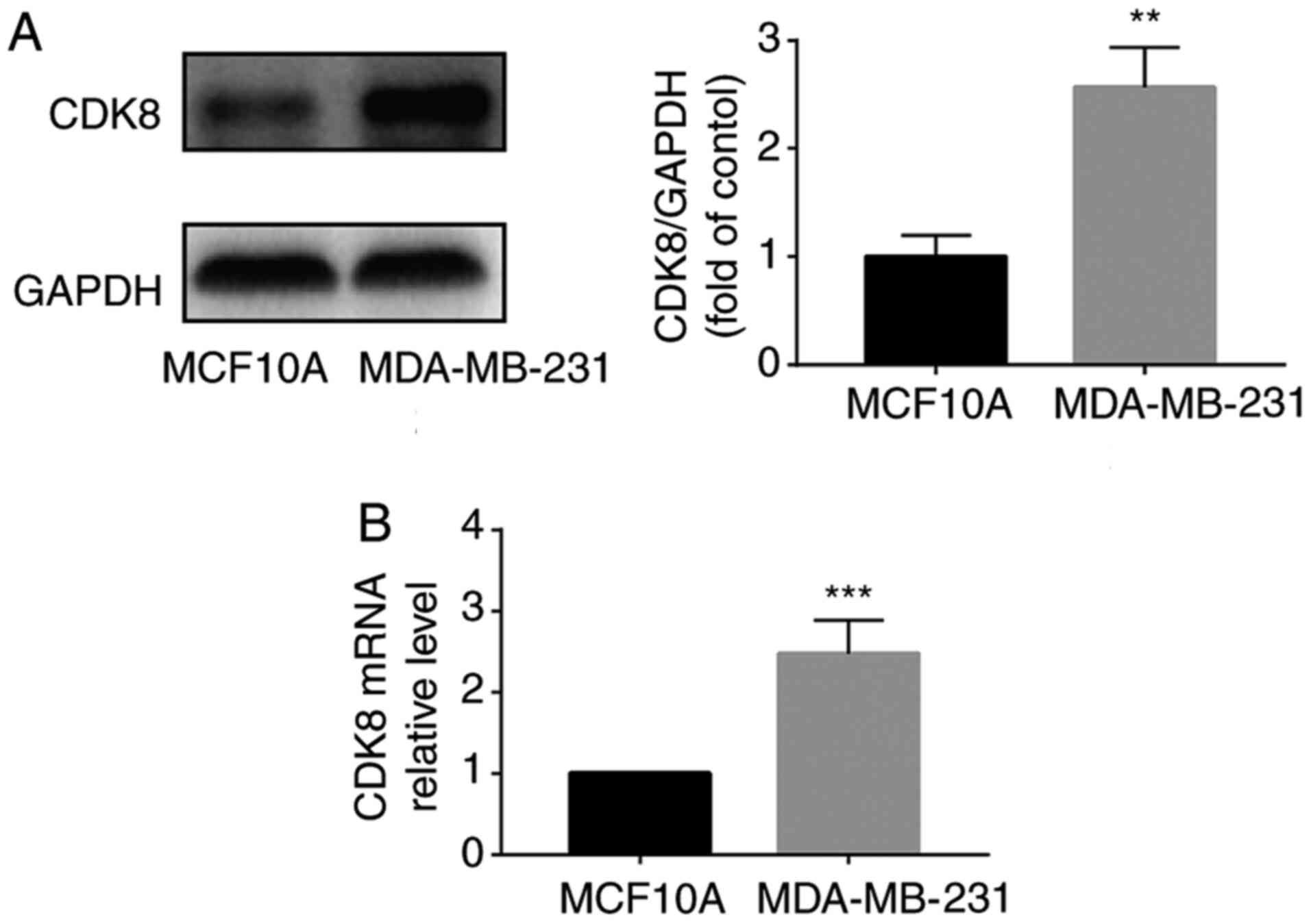
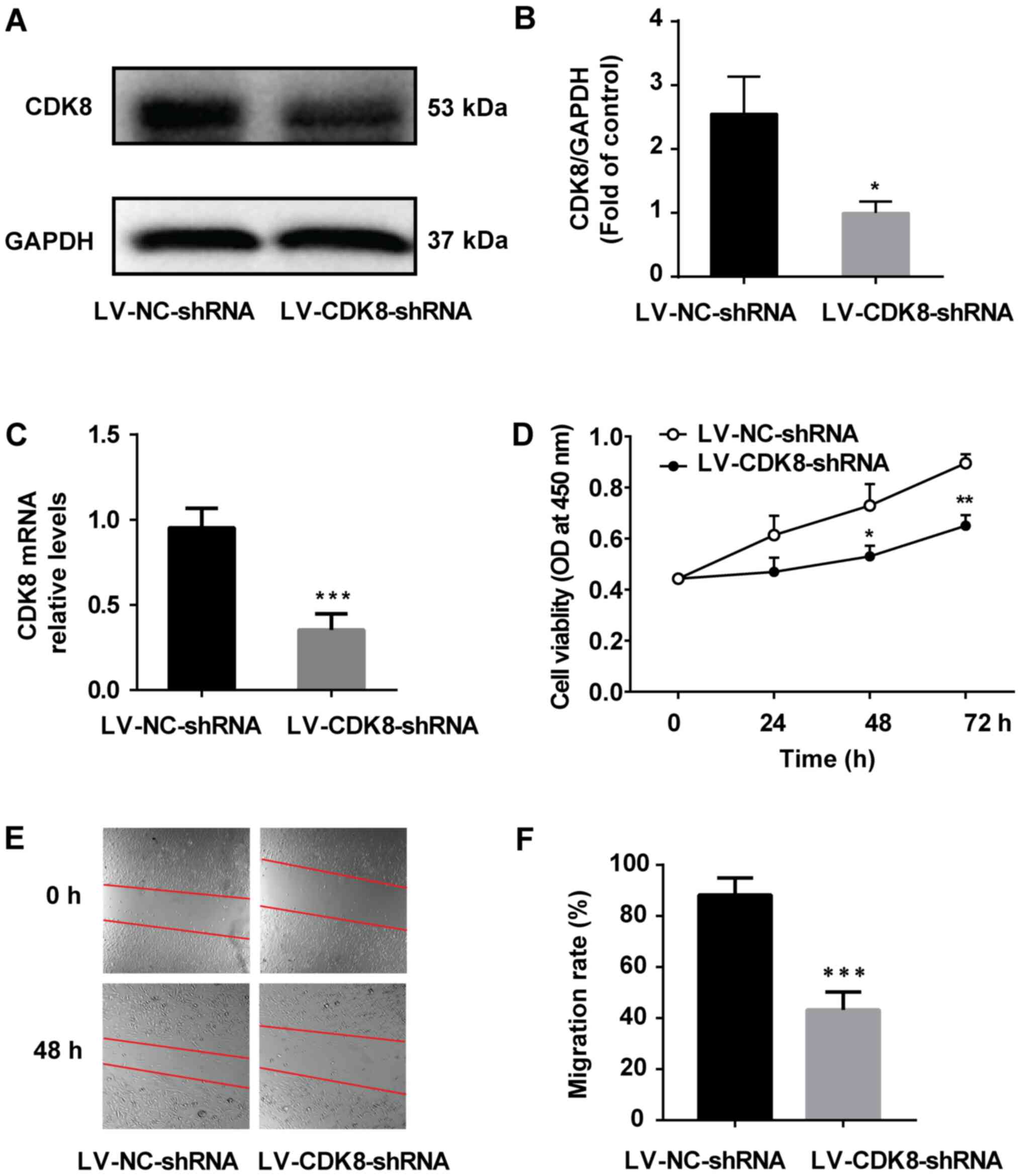
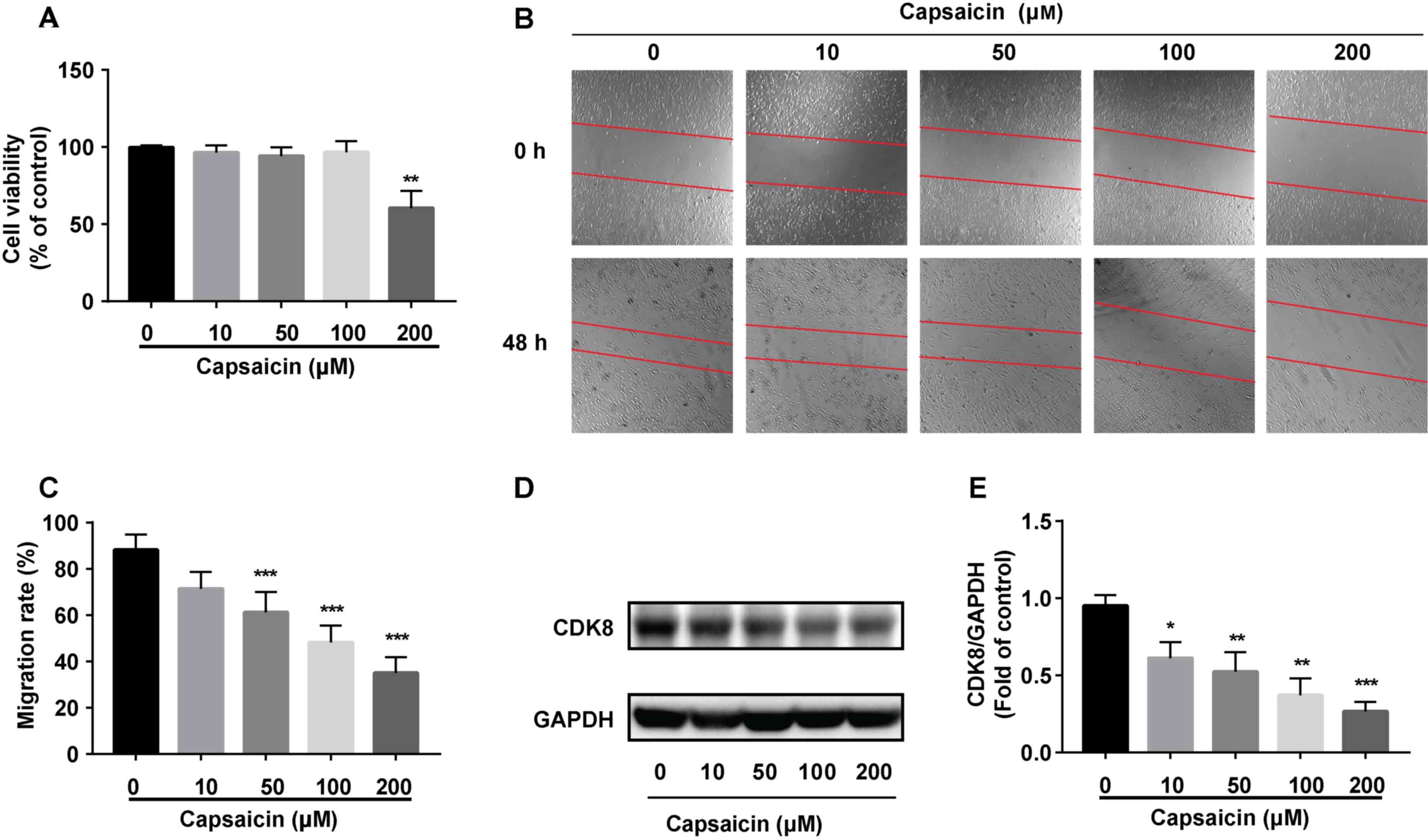
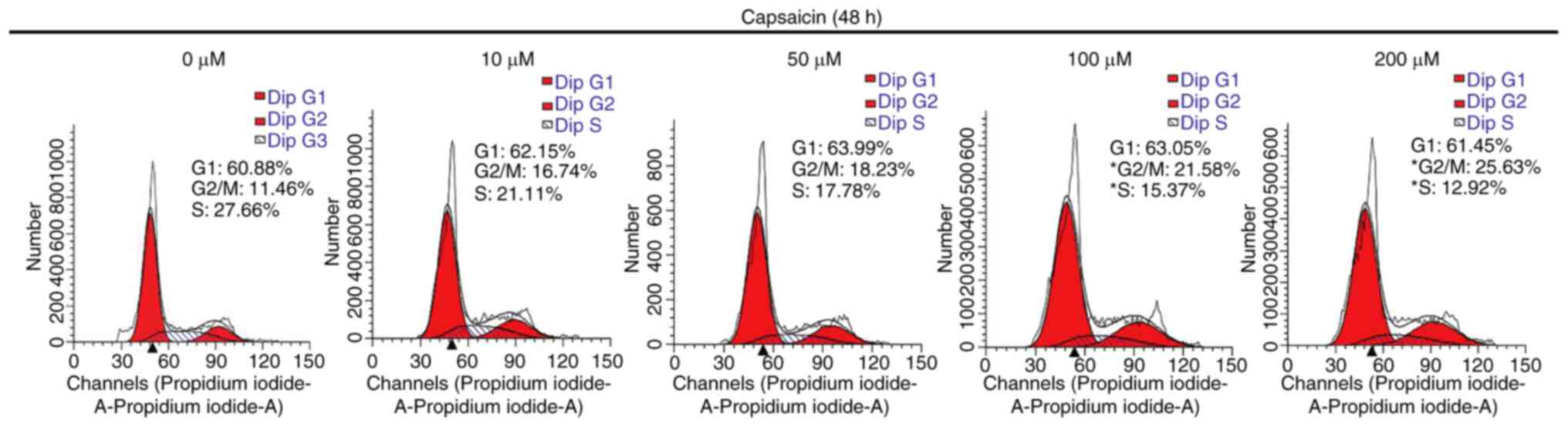
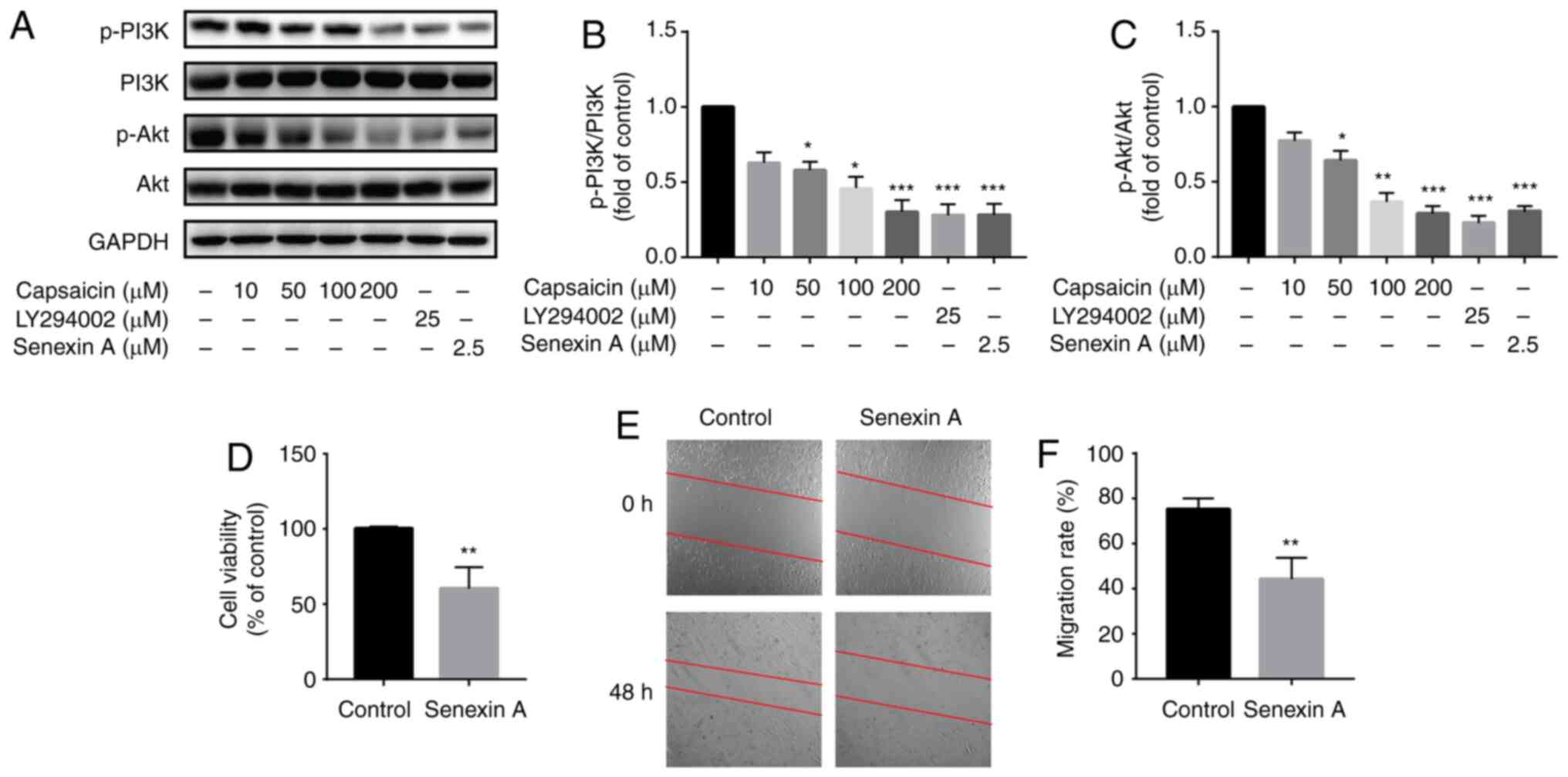
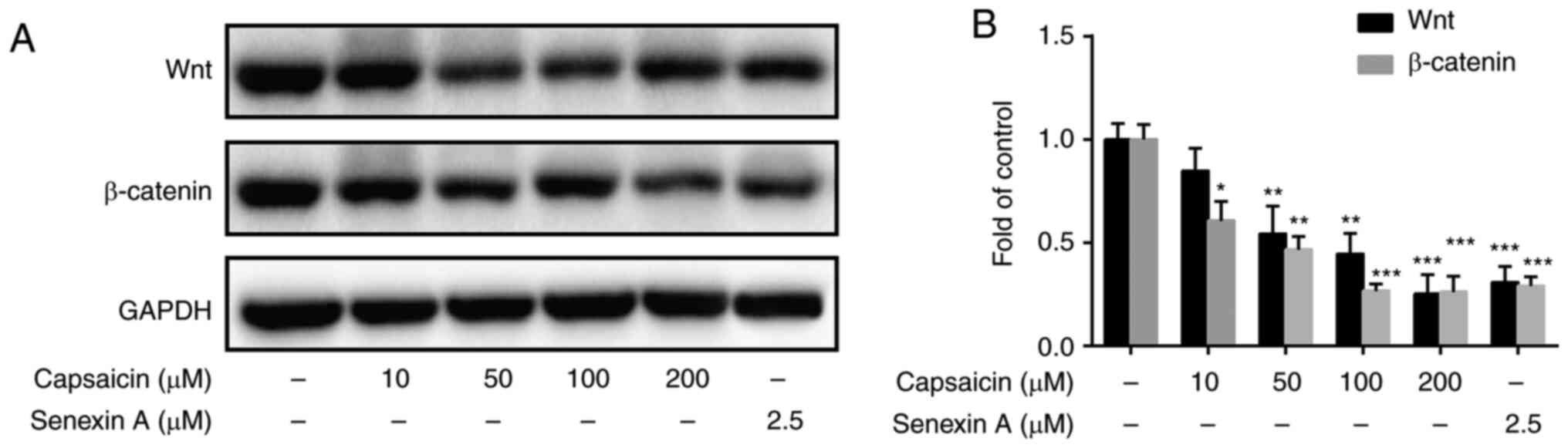
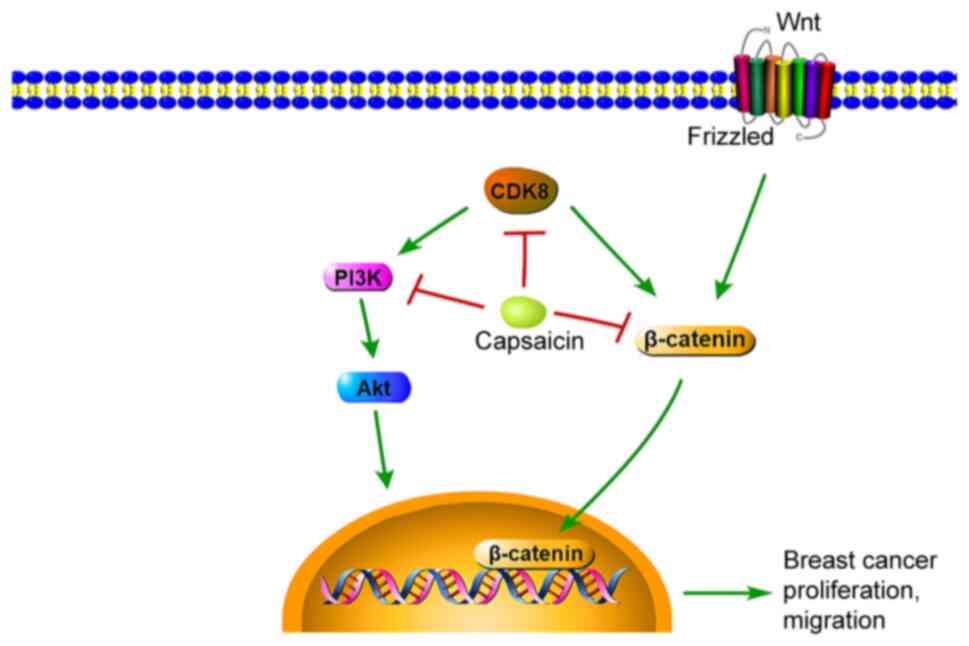
Breast cancer displays high morbidity and mortality. Despite exerting certain effects, traditional treatments cannot eliminate every cancer cell and may kill normal cells due to inaccurate targeting. However, as a traditional Chinese medicine, capsaicin, an active compound extracted from chili peppers, has displayed potent anticarcinogenic activities in vitro and in vivo, but the underlying mechanism is not completely understood. The pharmacological effects of capsaicin on tumors was evaluated in MDA MB 231 breast cancer cells. The MTT, cell scratch assay, cell cycle analysis, cell transfection, reverse transcription‑quantitative PCR and western blotting were performed to investigate the potential antitumor mechanisms of capsaicin. In the present study, the potential anticancer mechanism underlying capsaicin in MDA‑MB‑231 cells in vitro was investigated. Capsaicin significantly inhibited MDA‑MB‑231 breast cancer cell viability and migration compared with the control group. The flow cytometry results indicated that capsaicin induced G2/M cell cycle arrest in MDA‑MB‑231 cells. In addition, capsaicin significantly reduced the expression of cyclin‑dependent kinase 8 (CDK8) in breast cancer cells compared with the control group. Moreover, LV‑CDK8 small interfering RNA‑transduced MDA‑MB‑231 cells displayed lower CDK8 mRNA and protein expression levels compared with LV‑negative control‑shRNA‑transduced cells. Furthermore, capsaicin significantly reduced the expression levels of phosphorylated (p)‑PI3K, p‑Akt, Wnt and β‑catenin in vitro compared with the control group. Collectively, the results of the present study suggested that capsaicin inhibited breast cancer cell viability, induced G2/M cell cycle arrest, reduced CDK8 expression levels, decreased the phosphorylation of PI3K and Akt and downregulated Wnt and β‑catenin expression levels in MDA‑MB‑231 cells.
View Figures

Figure 1

Figure 2

Figure 3

Figure 4

Figure 5

Figure 6

Figure 7

View References

1 

Bray F, Ferlay J, Soerjomataram I, Siegel RL, Torre LA and Jemal A: Global cancer statistics 2018: GLOBOCAN estimates of incidence and mortality worldwide for 36 cancers in 185 countries. CA Cancer J Clin. 68:394–424. 2018. View Article : Google Scholar : PubMed/NCBI

2 

Burney IA, Furrukh M and Al-Moundhri MS: What are our options in the fight against breast cancer? Sultan Qaboos Univ Med J. 14:e149–e151. 2014.PubMed/NCBI

3 

Akarolo-Anthony SN, Ogundiran TO and Adebamowo CA: Emerging breast cancer epidemic: Evidence from Africa. Breast Cancer Res. 12 (Suppl 4):S82010. View Article : Google Scholar : PubMed/NCBI

4 

Pan H, Gray R, Braybrooke J, Davies C, Taylor C, McGale P, Peto R, Pritchard KI, Bergh J, Dowsett M, et al: 20-Year risks of breast-cancer recurrence after stopping endocrine therapy at 5 years. N Engl J Med. 377:1836–1846. 2017. View Article : Google Scholar : PubMed/NCBI

5 

Roskoski R Jr: Cyclin-dependent protein serine/threonine kinase inhibitors as anticancer drugs. Pharmacol Res. 139:471–488. 2019. View Article : Google Scholar : PubMed/NCBI

6 

Asghar U, Witkiewicz AK, Turner NC and Knudsen ES: The history and future of targeting cyclin-dependent kinases in cancer therapy. Nat Rev Drug Discov. 14:130–146. 2015. View Article : Google Scholar : PubMed/NCBI

7 

Leake R: The cell cycle and regulation of cancer cell growth. Ann N Y Acad Sci. 784:252–262. 1996. View Article : Google Scholar : PubMed/NCBI

8 

Sarita Rajender P, Ramasree D, Bhargavi K, Vasavi M and Uma V: Selective inhibition of proteins regulating CDK/cyclin complexes: Strategy against cancer-a review. J Recept Signal Transduct Res. 30:206–213. 2010. View Article : Google Scholar : PubMed/NCBI

9 

Rzymski T, Mikula M, Wiklik K and Brzozka K: CDK8 kinase-an emerging target in targeted cancer therapy. Biochim Biophys Acta. 1854:1617–1629. 2015. View Article : Google Scholar : PubMed/NCBI

10 

Xi M, Chen T, Wu C, Gao X, Wu Y, Luo X, Du K, Yu L, Cai T, Shen R and Sun H: CDK8 as a therapeutic target for cancers and recent developments in discovery of CDK8 inhibitors. Eur J Med Chem. 164:77–91. 2019. View Article : Google Scholar : PubMed/NCBI

11 

Pelish HE, Liau BB, Nitulescu II, Tangpeerachaikul A, Poss ZC, Da Silva DH, Caruso BT, Arefolov A, Fadeyi O, Christie AL, et al: Mediator kinase inhibition further activates super-enhancer-associated genes in AML. Nature. 526:273–276. 2015. View Article : Google Scholar : PubMed/NCBI

12 

Firestein R, Bass AJ, Kim SY, Dunn IF, Silver SJ, Guney I, Freed E, Ligon AH, Vena N, Ogino S, et al: CDK8 is a colorectal cancer oncogene that regulates beta-catenin activity. Nature. 455:547–551. 2008. View Article : Google Scholar : PubMed/NCBI

13 

Donner AJ, Ebmeier CC, Taatjes DJ and Espinosa JM: CDK8 is a positive regulator of transcriptional elongation within the serum response network. Nat Struct Mol Biol. 17:194–201. 2010. View Article : Google Scholar : PubMed/NCBI

14 

Trakala M and Malumbres M: Cyclin C surprises in tumour suppression. Nat Cell Biol. 16:1031–1033. 2014. View Article : Google Scholar : PubMed/NCBI

15 

Philip S, Kumarasiri M, Teo T, Yu M and Wang S: Cyclin-dependent kinase 8: A new hope in targeted cancer therapy? J Med Chem. 61:5073–5092. 2018. View Article : Google Scholar : PubMed/NCBI

16 

McDermott MS, Chumanevich AA, Lim CU, Liang J, Chen M, Altilia S, Oliver D, Rae JM, Shtutman M, Kiaris H, et al: Inhibition of CDK8 mediator kinase suppresses estrogen dependent transcription and the growth of estrogen receptor positive breast cancer. Oncotarget. 8:12558–12575. 2017. View Article : Google Scholar : PubMed/NCBI

17 

Zhu M, Yu X, Zheng Z, Huang J, Yang X and Shi H: Capsaicin suppressed activity of prostate cancer stem cells by inhibition of Wnt/β-catenin pathway. Phytother Res. 34:817–824. 2020. View Article : Google Scholar : PubMed/NCBI

18 

Rollyson WD, Stover CA, Brown KC, Perry HE, Stevenson CD, McNees CA, Ball JG, Valentovic MA and Dasgupta P: Bioavailability of capsaicin and its implications for drug delivery. J Control Release. 196:96–105. 2014. View Article : Google Scholar : PubMed/NCBI

19 

Linderoth L, Peters GH, Madsen R and Andresen TL: Drug delivery by an enzyme-mediated cyclization of a lipid prodrug with unique bilayer-formation properties. Angew Chem Int Ed Engl. 48:1823–1826. 2009. View Article : Google Scholar : PubMed/NCBI

20 

Shin DH, Kim OH, Jun HS and Kang MK: Inhibitory effect of capsaicin on B16-F10 melanoma cell migration via the phosphatidylinositol 3-kinase/Akt/Rac1 signal pathway. Exp Mol Med. 40:486–494. 2008. View Article : Google Scholar : PubMed/NCBI

21 

Livak KJ and Schmittgen TD: Analysis of relative gene expression data using real-time quantitative PCR and the 2(-Delta Delta C(T)) method. Methods. 25:402–408. 2001. View Article : Google Scholar : PubMed/NCBI

22 

Menzl I, Witalisz-Siepracka A and Sexl V: CDK8-Novel therapeutic opportunities. Pharmaceuticals (Basel). 12:922019. View Article : Google Scholar

23 

He L, Lu N, Dai Q, Zhao Y, Zhao L, Wang H, Li Z, You Q and Guo Q: Wogonin induced G1 cell cycle arrest by regulating Wnt/β-catenin signaling pathway and inactivating CDK8 in human colorectal cancer carcinoma cells. Toxicology. 312:36–47. 2013. View Article : Google Scholar : PubMed/NCBI

24 

Xu D, Li CF, Zhang X, Gong Z, Chan CH, Lee SW, Jin G, Rezaeian AH, Han F, Wang J, et al: Skp2-macroH2A1-CDK8 axis orchestrates G2/M transition and tumorigenesis. Nat Commun. 6:66412015. View Article : Google Scholar : PubMed/NCBI

25 

Li K, Pan WT, Ma YB, Xu XL, Gao Y, He YQ, Wei L and Zhang JW: BMX activates Wnt/β-catenin signaling pathway to promote cell proliferation and migration in breast cancer. Breast Cancer. 27:363–371. 2020. View Article : Google Scholar : PubMed/NCBI

26 

Katoh M and Katoh M: WNT signaling pathway and stem cell signaling network. Clin Cancer Res. 13:4042–4045. 2007. View Article : Google Scholar : PubMed/NCBI

27 

Galbraith MD, Donner AJ and Espinosa JM: CDK8: A positive regulator of transcription. Transcription. 1:4–12. 2010. View Article : Google Scholar : PubMed/NCBI

28 

Cai WS, Shen F, Feng Z, Chen JW, Liu QC, Li EM, Xu B and Cao J: Downregulation of CDK-8 inhibits colon cancer hepatic metastasis by regulating Wnt/β-catenin pathway. Biomed Pharmacother. 74:153–157. 2015. View Article : Google Scholar : PubMed/NCBI

29 

Xu W and Ji JY: Dysregulation of CDK8 and cyclin C in tumorigenesis. J Genet Genomics. 38:439–452. 2011. View Article : Google Scholar : PubMed/NCBI

30 

Kapoor A, Goldberg MS, Cumberland LK, Ratnakumar K, Segura MF, Emanuel PO, Menendez S, Vardabasso C, Leroy G, Vidal CI, et al: The histone variant macroH2A suppresses melanoma progression through regulation of CDK8. Nature. 468:1105–1109. 2010. View Article : Google Scholar : PubMed/NCBI

31 

Aggarwal BB, Kunnumakkara AB, Harikumar KB, Tharakan ST, Sung B and Anand P: Potential of spice-derived phytochemicals for cancer prevention. Planta Med. 74:1560–1569. 2008. View Article : Google Scholar : PubMed/NCBI

32 

Fattori V, Hohmann MS, Rossaneis AC, Pinho-Ribeiro FA and Verri WA: Capsaicin: Current understanding of its mechanisms and therapy of pain and other pre-clinical and clinical uses. Molecules. 21:8442016. View Article : Google Scholar

33 

Sharma SK, Vij AS and Sharma M: Mechanisms and clinical uses of capsaicin. Eur J Pharmacol. 720:55–62. 2013. View Article : Google Scholar : PubMed/NCBI

34 

Bessler H and Djaldetti M: Capsaicin modulates the immune cross talk between human mononuclears and cells from two colon carcinoma lines. Nutr Cancer. 69:14–20. 2017. View Article : Google Scholar : PubMed/NCBI

35 

Zhang JH, Lai FJ, Chen H, Luo J, Zhang RY, Bu HQ, Wang ZH, Lin HH and Lin SZ: Involvement of the phosphoinositide 3-kinase/Akt pathway in apoptosis induced by capsaicin in the human pancreatic cancer cell line PANC-1. Oncol Lett. 5:43–48. 2013. View Article : Google Scholar : PubMed/NCBI

36 

Chang HC, Chen ST, Chien SY, Kuo SJ, Tsai HT and Chen DR: Capsaicin may induce breast cancer cell death through apoptosis-inducing factor involving mitochondrial dysfunction. Hum Exp Toxicol. 30:1657–1665. 2011. View Article : Google Scholar : PubMed/NCBI

37 

Nazıroğlu M, Çiğ B, Blum W, Vizler C, Buhala A, Marton A, Katona R, Jósvay K, Schwaller B, Oláh Z and Pecze L: Targeting breast cancer cells by MRS1477, a positive allosteric modulator of TRPV1 channels. PLoS One. 12:e01799502017. View Article : Google Scholar : PubMed/NCBI

38 

Qian K, Wang G, Cao R, Liu T, Qian G, Guan X, Guo Z, Xiao Y and Wang X: Capsaicin suppresses cell proliferation, induces cell cycle arrest and ROS production in bladder cancer cells through FOXO3a-mediated pathways. Molecules. 21:14062016. View Article : Google Scholar

39 

Lin CH, Lu WC, Wang CW, Chan YC and Chen MK: Capsaicin induces cell cycle arrest and apoptosis in human KB cancer cells. BMC Complement Altern Med. 13:462013. View Article : Google Scholar : PubMed/NCBI

40 

de-Sá-Júnior PL, Pasqualoto KFM, Ferreira AK, Tavares MT, Costa Bernstorff Damião MCF, de Azevedo RA, Dias Câmara DA, Pereira A, de Souza DM and Filho RP: RPF101, a new capsaicin-like analogue, disrupts the microtubule network accompanied by arrest in the G2/M phase, inducing apoptosis and mitotic catastrophe in the MCF-7 breast cancer cells. Toxicol Appl Pharmacol. 266:385–398. 2013. View Article : Google Scholar : PubMed/NCBI

41 

Sharma VR, Gupta GK and Sharma AK, Batra N, Sharma DK, Joshi A and Sharma AK: PI3K/Akt/mTOR intracellular pathway and breast cancer: Factors, mechanism and regulation. Curr Pharm Des. 23:1633–1638. 2017. View Article : Google Scholar : PubMed/NCBI

42 

Saini KS, Loi S, de Azambuja E, Metzger-Filho O, Saini ML, Ignatiadis M, Dancey JE and Piccart-Gebhart MJ: Targeting the PI3K/AKT/mTOR and Raf/MEK/ERK pathways in the treatment of breast cancer. Cancer Treat Rev. 39:935–946. 2013. View Article : Google Scholar : PubMed/NCBI

43 

Nougarede A, Popgeorgiev N, Kassem L, Omarjee S, Borel S, Mikaelian I, Lopez J, Gadet R, Marcillat O, Treilleux I, et al: Breast cancer targeting through inhibition of the endoplasmic reticulum-based apoptosis regulator Nrh/BCL2L10. Cancer Res. 78:1404–1417. 2018. View Article : Google Scholar : PubMed/NCBI

44 

Shi L, Wu Z, Miao J, Du S, Ai S, Xu E, Feng M, Song J and Guan W: Adenosine interaction with adenosine receptor A2a promotes gastric cancer metastasis by enhancing PI3K-AKT-mTOR signaling. Mol Biol Cell. 30:2527–2534. 2019. View Article : Google Scholar : PubMed/NCBI

45 

Ghosh JC, Seo JH, Agarwal E, Wang Y, Kossenkov AV, Tang HY, Speicher DW and Altieri DC: Akt phosphorylation of mitochondrial Lonp1 protease enables oxidative metabolism and advanced tumor traits. Oncogene. 38:6926–6939. 2019. View Article : Google Scholar : PubMed/NCBI

46 

Guo Y and Pei X: Tetrandrine-induced autophagy in MDA-MB-231 triple-negative breast cancer cell through the inhibition of PI3K/AKT/mTOR signaling. Evid Based Complement Alternat Med. 2019:75174312019. View Article : Google Scholar : PubMed/NCBI

47 

Kleszcz R: The canonical Wnt pathway. Postepy Biochem. 65:183–192. 2019.(In Polish). View Article : Google Scholar : PubMed/NCBI

48 

Kim MY, Han SI and Lim SC: Roles of cyclin-dependent kinase 8 and β-catenin in the oncogenesis and progression of gastric adenocarcinoma. Int J Oncol. 38:1375–1383. 2011.PubMed/NCBI

49 

Firestein R, Shima K, Nosho K, Irahara N, Baba Y, Bojarski E, Giovannucci EL, Hahn WC, Fuchs CS and Ogino S: CDK8 expression in 470 colorectal cancers in relation to beta-catenin activation, other molecular alterations and patient survival. Int J Cancer. 126:2863–2873. 2010.PubMed/NCBI

50 

Broude EV, Gyorffy B, Chumanevich AA, Chen M, McDermott MSJ, Shtutman M, Catroppo JF and Roninson IB: Expression of CDK8 and CDK8-interacting genes as potential biomarkers in breast cancer. Curr Cancer Drug Targets. 15:739–749. 2015. View Article : Google Scholar : PubMed/NCBI

Related Articles

  • Abstract
  • View
  • Download
  • Twitter
Copy and paste a formatted citation
Spandidos Publications style
Wu D, Jia H, Zhang Z and Li S: Capsaicin suppresses breast cancer cell viability by regulating the CDK8/PI3K/Akt/Wnt/β‑catenin signaling pathway. Mol Med Rep 22: 4868-4876, 2020.
APA
Wu, D., Jia, H., Zhang, Z., & Li, S. (2020). Capsaicin suppresses breast cancer cell viability by regulating the CDK8/PI3K/Akt/Wnt/β‑catenin signaling pathway. Molecular Medicine Reports, 22, 4868-4876. https://doi.org/10.3892/mmr.2020.11585
MLA
Wu, D., Jia, H., Zhang, Z., Li, S."Capsaicin suppresses breast cancer cell viability by regulating the CDK8/PI3K/Akt/Wnt/β‑catenin signaling pathway". Molecular Medicine Reports 22.6 (2020): 4868-4876.
Chicago
Wu, D., Jia, H., Zhang, Z., Li, S."Capsaicin suppresses breast cancer cell viability by regulating the CDK8/PI3K/Akt/Wnt/β‑catenin signaling pathway". Molecular Medicine Reports 22, no. 6 (2020): 4868-4876. https://doi.org/10.3892/mmr.2020.11585
Copy and paste a formatted citation
x
Spandidos Publications style
Wu D, Jia H, Zhang Z and Li S: Capsaicin suppresses breast cancer cell viability by regulating the CDK8/PI3K/Akt/Wnt/β‑catenin signaling pathway. Mol Med Rep 22: 4868-4876, 2020.
APA
Wu, D., Jia, H., Zhang, Z., & Li, S. (2020). Capsaicin suppresses breast cancer cell viability by regulating the CDK8/PI3K/Akt/Wnt/β‑catenin signaling pathway. Molecular Medicine Reports, 22, 4868-4876. https://doi.org/10.3892/mmr.2020.11585
MLA
Wu, D., Jia, H., Zhang, Z., Li, S."Capsaicin suppresses breast cancer cell viability by regulating the CDK8/PI3K/Akt/Wnt/β‑catenin signaling pathway". Molecular Medicine Reports 22.6 (2020): 4868-4876.
Chicago
Wu, D., Jia, H., Zhang, Z., Li, S."Capsaicin suppresses breast cancer cell viability by regulating the CDK8/PI3K/Akt/Wnt/β‑catenin signaling pathway". Molecular Medicine Reports 22, no. 6 (2020): 4868-4876. https://doi.org/10.3892/mmr.2020.11585
Follow us
  • Twitter
  • LinkedIn
  • Facebook
About
  • Spandidos Publications
  • Careers
  • Cookie Policy
  • Privacy Policy
How can we help?
  • Help
  • Live Chat
  • Contact
  • Email to our Support Team