Spandidos Publications Logo
  • About
    • About Spandidos
    • Aims and Scopes
    • Abstracting and Indexing
    • Editorial Policies
    • Reprints and Permissions
    • Job Opportunities
    • Terms and Conditions
    • Contact
  • Journals
    • All Journals
    • Oncology Letters
      • Oncology Letters
      • Information for Authors
      • Editorial Policies
      • Editorial Board
      • Aims and Scope
      • Abstracting and Indexing
      • Bibliographic Information
      • Archive
    • International Journal of Oncology
      • International Journal of Oncology
      • Information for Authors
      • Editorial Policies
      • Editorial Board
      • Aims and Scope
      • Abstracting and Indexing
      • Bibliographic Information
      • Archive
    • Molecular and Clinical Oncology
      • Molecular and Clinical Oncology
      • Information for Authors
      • Editorial Policies
      • Editorial Board
      • Aims and Scope
      • Abstracting and Indexing
      • Bibliographic Information
      • Archive
    • Experimental and Therapeutic Medicine
      • Experimental and Therapeutic Medicine
      • Information for Authors
      • Editorial Policies
      • Editorial Board
      • Aims and Scope
      • Abstracting and Indexing
      • Bibliographic Information
      • Archive
    • International Journal of Molecular Medicine
      • International Journal of Molecular Medicine
      • Information for Authors
      • Editorial Policies
      • Editorial Board
      • Aims and Scope
      • Abstracting and Indexing
      • Bibliographic Information
      • Archive
    • Biomedical Reports
      • Biomedical Reports
      • Information for Authors
      • Editorial Policies
      • Editorial Board
      • Aims and Scope
      • Abstracting and Indexing
      • Bibliographic Information
      • Archive
    • Oncology Reports
      • Oncology Reports
      • Information for Authors
      • Editorial Policies
      • Editorial Board
      • Aims and Scope
      • Abstracting and Indexing
      • Bibliographic Information
      • Archive
    • Molecular Medicine Reports
      • Molecular Medicine Reports
      • Information for Authors
      • Editorial Policies
      • Editorial Board
      • Aims and Scope
      • Abstracting and Indexing
      • Bibliographic Information
      • Archive
    • World Academy of Sciences Journal
      • World Academy of Sciences Journal
      • Information for Authors
      • Editorial Policies
      • Editorial Board
      • Aims and Scope
      • Abstracting and Indexing
      • Bibliographic Information
      • Archive
    • International Journal of Functional Nutrition
      • International Journal of Functional Nutrition
      • Information for Authors
      • Editorial Policies
      • Editorial Board
      • Aims and Scope
      • Abstracting and Indexing
      • Bibliographic Information
      • Archive
    • International Journal of Epigenetics
      • International Journal of Epigenetics
      • Information for Authors
      • Editorial Policies
      • Editorial Board
      • Aims and Scope
      • Abstracting and Indexing
      • Bibliographic Information
      • Archive
    • Medicine International
      • Medicine International
      • Information for Authors
      • Editorial Policies
      • Editorial Board
      • Aims and Scope
      • Abstracting and Indexing
      • Bibliographic Information
      • Archive
  • Articles
  • Information
    • Information for Authors
    • Information for Reviewers
    • Information for Librarians
    • Information for Advertisers
    • Conferences
  • Language Editing
Spandidos Publications Logo
  • About
    • About Spandidos
    • Aims and Scopes
    • Abstracting and Indexing
    • Editorial Policies
    • Reprints and Permissions
    • Job Opportunities
    • Terms and Conditions
    • Contact
  • Journals
    • All Journals
    • Biomedical Reports
      • Information for Authors
      • Editorial Policies
      • Editorial Board
      • Aims and Scope
      • Abstracting and Indexing
      • Bibliographic Information
      • Archive
    • Experimental and Therapeutic Medicine
      • Information for Authors
      • Editorial Policies
      • Editorial Board
      • Aims and Scope
      • Abstracting and Indexing
      • Bibliographic Information
      • Archive
    • International Journal of Epigenetics
      • Information for Authors
      • Editorial Policies
      • Editorial Board
      • Aims and Scope
      • Abstracting and Indexing
      • Bibliographic Information
      • Archive
    • International Journal of Functional Nutrition
      • Information for Authors
      • Editorial Policies
      • Editorial Board
      • Aims and Scope
      • Abstracting and Indexing
      • Bibliographic Information
      • Archive
    • International Journal of Molecular Medicine
      • Information for Authors
      • Editorial Policies
      • Editorial Board
      • Aims and Scope
      • Abstracting and Indexing
      • Bibliographic Information
      • Archive
    • International Journal of Oncology
      • Information for Authors
      • Editorial Policies
      • Editorial Board
      • Aims and Scope
      • Abstracting and Indexing
      • Bibliographic Information
      • Archive
    • Medicine International
      • Information for Authors
      • Editorial Policies
      • Editorial Board
      • Aims and Scope
      • Abstracting and Indexing
      • Bibliographic Information
      • Archive
    • Molecular and Clinical Oncology
      • Information for Authors
      • Editorial Policies
      • Editorial Board
      • Aims and Scope
      • Abstracting and Indexing
      • Bibliographic Information
      • Archive
    • Molecular Medicine Reports
      • Information for Authors
      • Editorial Policies
      • Editorial Board
      • Aims and Scope
      • Abstracting and Indexing
      • Bibliographic Information
      • Archive
    • Oncology Letters
      • Information for Authors
      • Editorial Policies
      • Editorial Board
      • Aims and Scope
      • Abstracting and Indexing
      • Bibliographic Information
      • Archive
    • Oncology Reports
      • Information for Authors
      • Editorial Policies
      • Editorial Board
      • Aims and Scope
      • Abstracting and Indexing
      • Bibliographic Information
      • Archive
    • World Academy of Sciences Journal
      • Information for Authors
      • Editorial Policies
      • Editorial Board
      • Aims and Scope
      • Abstracting and Indexing
      • Bibliographic Information
      • Archive
  • Articles
  • Information
    • For Authors
    • For Reviewers
    • For Librarians
    • For Advertisers
    • Conferences
  • Language Editing
Login Register Submit
  • This site uses cookies
  • You can change your cookie settings at any time by following the instructions in our Cookie Policy. To find out more, you may read our Privacy Policy.

    I agree
Search articles by DOI, keyword, author or affiliation
Search
Advanced Search
presentation
Molecular Medicine Reports
Join Editorial Board Propose a Special Issue
Print ISSN: 1791-2997 Online ISSN: 1791-3004
Journal Cover
March-2021 Volume 23 Issue 3

Full Size Image

Sign up for eToc alerts
Recommend to Library

Journals

International Journal of Molecular Medicine

International Journal of Molecular Medicine

International Journal of Molecular Medicine is an international journal devoted to molecular mechanisms of human disease.

International Journal of Oncology

International Journal of Oncology

International Journal of Oncology is an international journal devoted to oncology research and cancer treatment.

Molecular Medicine Reports

Molecular Medicine Reports

Covers molecular medicine topics such as pharmacology, pathology, genetics, neuroscience, infectious diseases, molecular cardiology, and molecular surgery.

Oncology Reports

Oncology Reports

Oncology Reports is an international journal devoted to fundamental and applied research in Oncology.

Experimental and Therapeutic Medicine

Experimental and Therapeutic Medicine

Experimental and Therapeutic Medicine is an international journal devoted to laboratory and clinical medicine.

Oncology Letters

Oncology Letters

Oncology Letters is an international journal devoted to Experimental and Clinical Oncology.

Biomedical Reports

Biomedical Reports

Explores a wide range of biological and medical fields, including pharmacology, genetics, microbiology, neuroscience, and molecular cardiology.

Molecular and Clinical Oncology

Molecular and Clinical Oncology

International journal addressing all aspects of oncology research, from tumorigenesis and oncogenes to chemotherapy and metastasis.

World Academy of Sciences Journal

World Academy of Sciences Journal

Multidisciplinary open-access journal spanning biochemistry, genetics, neuroscience, environmental health, and synthetic biology.

International Journal of Functional Nutrition

International Journal of Functional Nutrition

Open-access journal combining biochemistry, pharmacology, immunology, and genetics to advance health through functional nutrition.

International Journal of Epigenetics

International Journal of Epigenetics

Publishes open-access research on using epigenetics to advance understanding and treatment of human disease.

Medicine International

Medicine International

An International Open Access Journal Devoted to General Medicine.

Journal Cover
March-2021 Volume 23 Issue 3

Full Size Image

Sign up for eToc alerts
Recommend to Library

  • Article
  • Citations
    • Cite This Article
    • Download Citation
    • Create Citation Alert
    • Remove Citation Alert
    • Cited By
  • Similar Articles
    • Related Articles (in Spandidos Publications)
    • Similar Articles (Google Scholar)
    • Similar Articles (PubMed)
  • Download PDF
  • Download XML
  • View XML
Article Open Access

Propofol ameliorates endotoxin‑induced myocardial cell injury by inhibiting inflammation and apoptosis via the PPARγ/HMGB1/NLRP3 axis

  • Authors:
    • Hui Zhao
    • Ying Gu
    • Hai Chen
  • View Affiliations / Copyright

    Affiliations: Department of Anesthesiology, The Second Affiliated Hospital of Air Force Medical University, Xi'an, Shaanxi 710032, P.R. China
    Copyright: © Zhao et al. This is an open access article distributed under the terms of Creative Commons Attribution License.
  • Article Number: 176
    |
    Published online on: December 30, 2020
       https://doi.org/10.3892/mmr.2020.11815
  • Expand metrics +
Metrics: Total Views: 0 (Spandidos Publications: | PMC Statistics: )
Metrics: Total PDF Downloads: 0 (Spandidos Publications: | PMC Statistics: )
Cited By (CrossRef): 0 citations Loading Articles...

This article is mentioned in:


Abstract

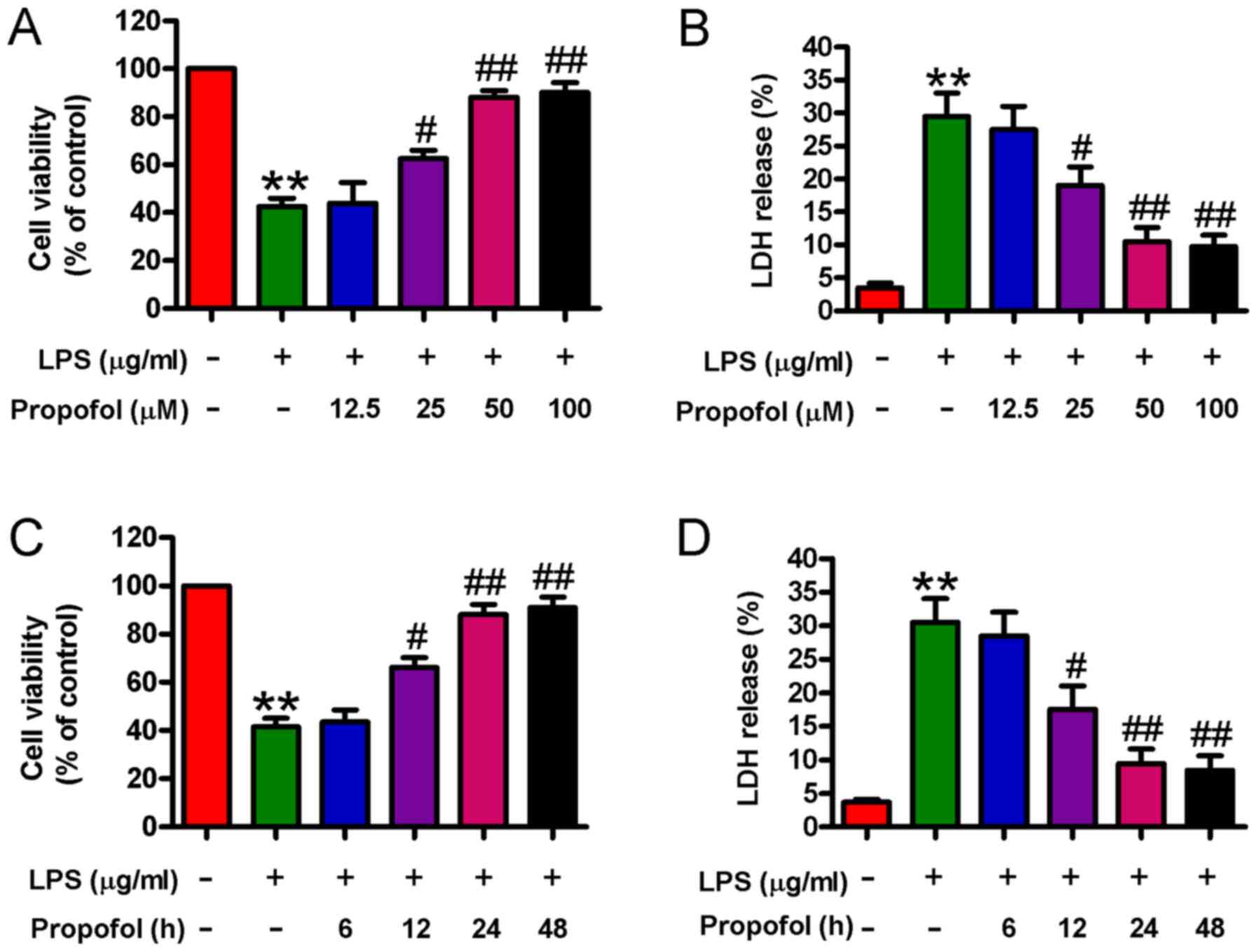
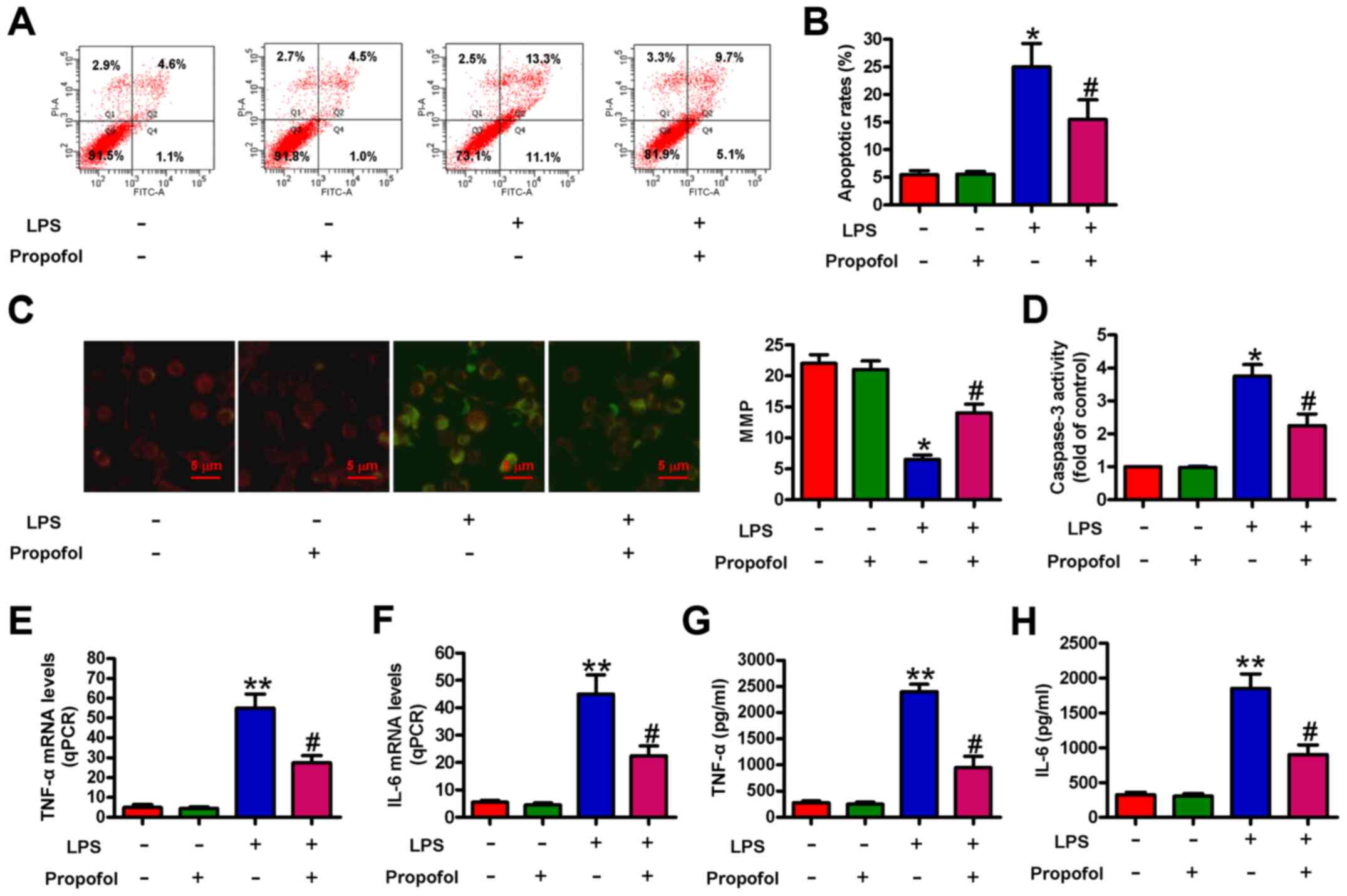
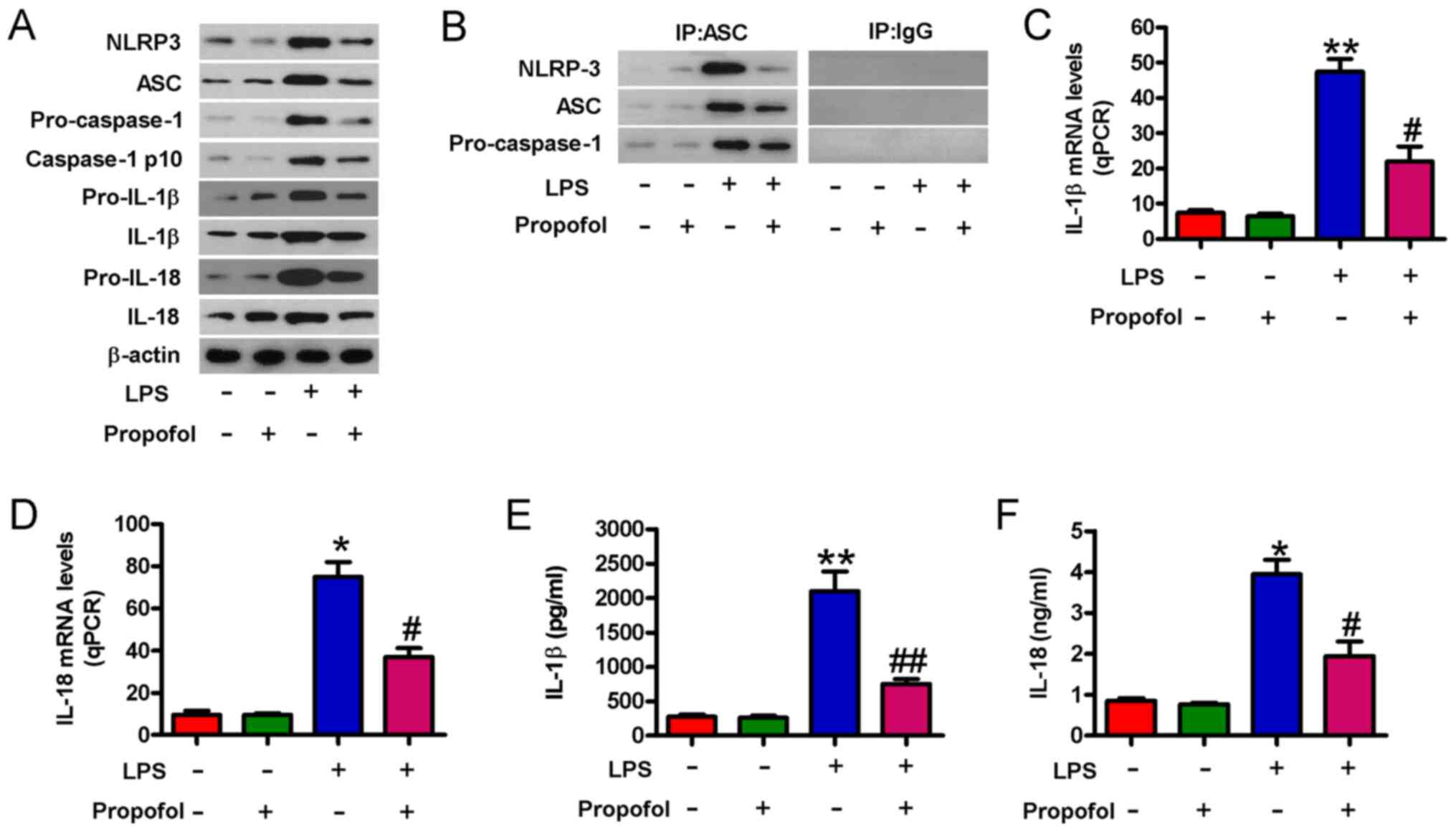
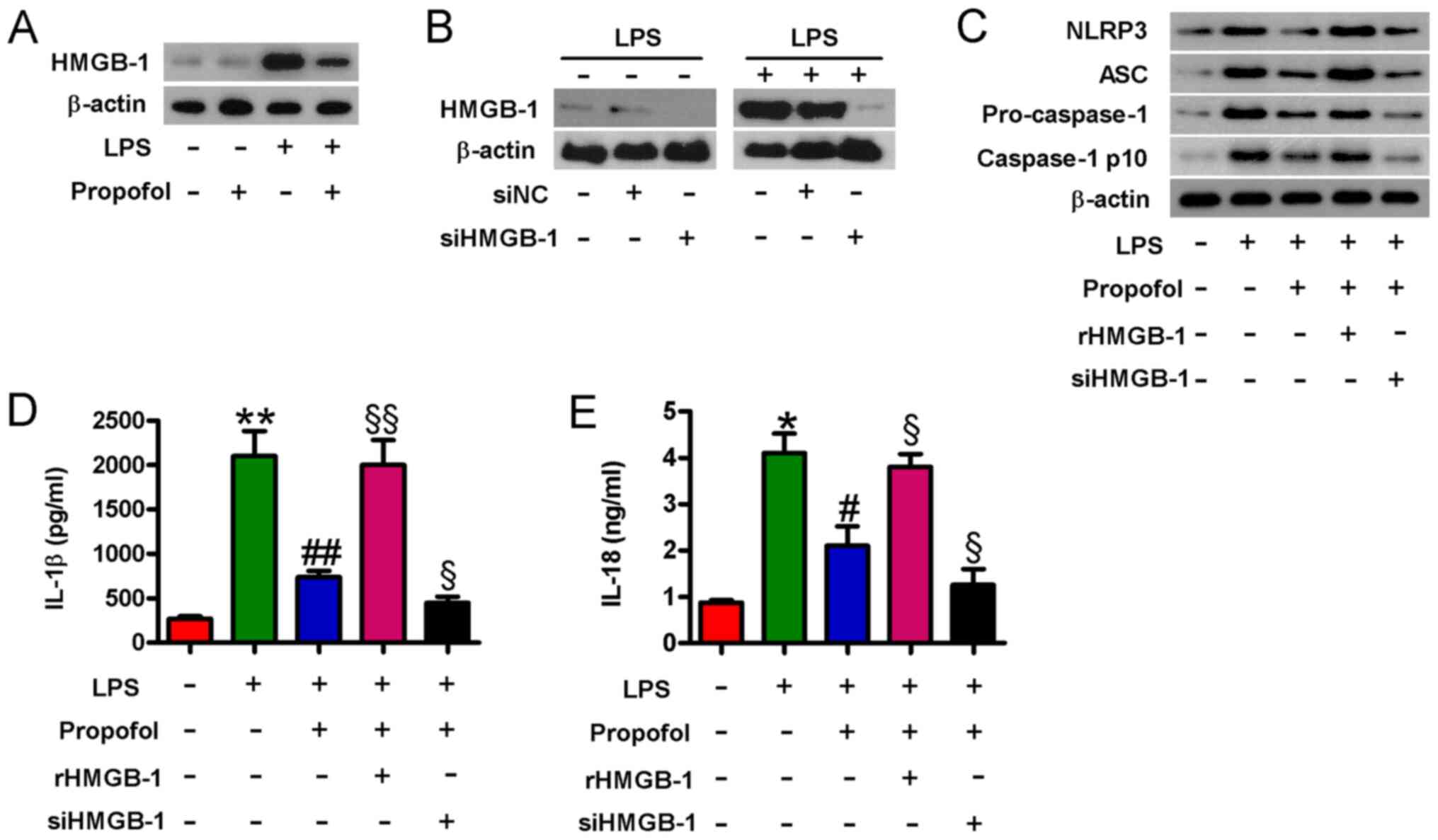
Endotoxin lipopolysaccharide (LPS) is one of the primary causes of myocardial injury. Propofol confers protective effects against LPS‑induced myocardial damage; however, the biological functions and mechanisms underlying propofol are not completely understood. The present study aimed to investigate the effects of propofol on LPS‑induced myocardial injury. Primary neonatal rat cardiomyocytes were treated with LPS to establish a myocardial injury model. LDH release in the culture media was measured using a LDH assay kit. The interactions between NLR family pyrin domain containing 3 (NLRP3), apoptosis‑associated speck‑like protein containing A CARD (ASC) and pro‑caspase‑1 were determined using a co‑immunoprecipitation assay. Cell viability was measured using an MTT assay, and the levels of cell apoptosis were determined using flow cytometry, JC‑1 staining (mitochondrial membrane potential) and caspase‑3 activity assays. The mRNA expression levels of TNF‑α, IL‑6, IL‑1β and IL‑18, and the protein expression levels of NLRP3, ASC, pro‑caspase‑1, caspase‑1 p10, pro‑IL‑1β, IL‑1β, pro‑IL‑18, IL‑18, high mobility group box‑1 (HMGB1) and peroxisome proliferator‑activated receptor γ (PPARγ) were analyzed using reverse transcription‑quantitative PCR and western blotting analyses, respectively. ELISAs were performed to measure the production of inflammatory mediators, including TNF‑α, IL‑6, IL‑1β and IL‑18. The present results demonstrated that pretreatment with propofol significantly attenuated LPS‑induced neonatal rat cardiomyocyte injury in a concentration‑ and time‑dependent manner. Propofol pretreatment also significantly inhibited LPS‑induced cardiomyocyte inflammation and apoptosis. The results suggested that propofol pretreatment inactivated HMGB1‑dependent NLRP3 inflammasome signaling, which involved PPARγ activation. Therefore, the results indicated that propofol reduced endotoxin‑induced cardiomyocyte injury by inhibiting inflammation and apoptosis via the PPARγ/HMGB1/NLRP3 axis, suggesting that propofol may serve as a potential therapeutic agent for septic myocardial damage.
View Figures

Figure 1

Figure 2

Figure 3

Figure 4

Figure 5

View References

1 

Angus DC and van der Poll T: Severe sepsis and septic shock. N Engl J Med. 369:840–851. 2013. View Article : Google Scholar : PubMed/NCBI

2 

Cohen J, Vincent JL, Adhikari NK, Machado FR, Angus DC, Calandra T, Jaton K, Giulieri S, Delaloye J, Opal S, et al: Sepsis: A roadmap for future research. Lancet Infect Dis. 15:581–614. 2015. View Article : Google Scholar : PubMed/NCBI

3 

Delano MJ and Ward PA: Sepsis-induced immune dysfunction: Can immune therapies reduce mortality? J Clin Invest. 126:23–31. 2016. View Article : Google Scholar : PubMed/NCBI

4 

Romero-Bermejo FJ, Ruiz-Bailen M, Gil-Cebrian J and Huertos-Ranchal MJ: Sepsis-induced cardiomyopathy. Curr Cardiol Rev. 7:163–183. 2011. View Article : Google Scholar : PubMed/NCBI

5 

Li F, Lang F, Zhang H, Xu L, Wang Y and Hao E: Role of TFEB mediated autophagy, oxidative stress, inflammation, and cell death in endotoxin induced myocardial toxicity of young and aged mice. Oxid Med Cell Longev. 2016:53803192016. View Article : Google Scholar : PubMed/NCBI

6 

Yasuda S and Lew WY: Lipopolysaccharide depresses cardiac contractility and beta-adrenergic contractile response by decreasing myofilament response to Ca2+ in cardiac myocytes. Circ Res. 81:1011–1020. 1997. View Article : Google Scholar : PubMed/NCBI

7 

Suliman HB, Welty-Wolf KE, Carraway M, Tatro L and Piantadosi CA: Lipopolysaccharide induces oxidative cardiac mitochondrial damage and biogenesis. Cardiovasc Res. 64:279–288. 2004. View Article : Google Scholar : PubMed/NCBI

8 

Cavaillon JM: Exotoxins and endotoxins: Inducers of inflammatory cytokines. Toxicon. 149:45–53. 2018. View Article : Google Scholar : PubMed/NCBI

9 

Fallach R, Shainberg A, Avlas O, Fainblut M, Chepurko Y, Porat E and Hochhauser E: Cardiomyocyte Toll-like receptor 4 is involved in heart dysfunction following septic shock or myocardial ischemia. J Mol Cell Cardiol. 48:1236–1244. 2010. View Article : Google Scholar : PubMed/NCBI

10 

Latz E, Xiao TS and Stutz A: Activation and regulation of the inflammasomes. Nat Rev Immunol. 13:397–411. 2013. View Article : Google Scholar : PubMed/NCBI

11 

Schroder K and Tschopp J: The inflammasomes. Cell. 140:821–832. 2010. View Article : Google Scholar : PubMed/NCBI

12 

Rathinam VA, Vanaja SK and Fitzgerald KA: Regulation of inflammasome signaling. Nat Immunol. 13:333–342. 2012. View Article : Google Scholar : PubMed/NCBI

13 

Kim EJ, Park SY, Baek SE, Jang MA, Lee WS, Bae SS, Kim K and Kim CD: HMGB1 increases IL-1β production in vascular smooth muscle cells via NLRP3 inflammasome. Front Physiol. 9:3132018. View Article : Google Scholar : PubMed/NCBI

14 

Xu H, Su Z, Wu J, Yang M, Penninger JM, Martin CM, Kvietys PR and Rui T: The alarmin cytokine, high mobility group box 1, is produced by viable cardiomyocytes and mediates the lipopolysaccharide-induced myocardial dysfunction via a TLR4/phosphatidylinositol 3-kinase gamma pathway. J Immunol. 184:1492–1498. 2010. View Article : Google Scholar : PubMed/NCBI

15 

Hwang JS, Kang ES, Ham SA, Yoo T, Lee H, Paek KS, Park C, Kim JH, Lim DS and Seo HG: Activation of peroxisome proliferator-activated receptor gamma by rosiglitazone inhibits lipopolysaccharide-induced release of high mobility group box 1. Mediators Inflamm. 2012:3528072012. View Article : Google Scholar : PubMed/NCBI

16 

Drosatos K, Khan RS, Trent CM, Jiang H, Son NH, Blaner WS, Homma S, Schulze PC and Goldberg IJ: Peroxisome proliferator-activated receptor-g activation prevents sepsis-related cardiac dysfunction and mortality in mice. Circ Heart Fail. 6:550–562. 2013. View Article : Google Scholar : PubMed/NCBI

17 

Green TR, Bennett SR and Nelson VM: Specificity and properties of propofol as an antioxidant free radical scavenger. Toxicol Appl Pharmacol. 129:163–169. 1994. View Article : Google Scholar : PubMed/NCBI

18 

Marik PE: Propofol: An immunomodulating agent. Pharmacotherapy. 25:28S–33S. 2005. View Article : Google Scholar : PubMed/NCBI

19 

Vasileiou I, Xanthos T, Koudouna E, Perrea D, Klonaris C, Katsargyris A and Papadimitriou L: Propofol: A review of its non-anaesthetic effects. Eur J Pharmacol. 605:1–8. 2009. View Article : Google Scholar : PubMed/NCBI

20 

Hans P, Deby-Dupont G, Deby C, Pieron F, Verbesselt R, Franssen C and Lamy M: Increase in antioxidant capacity of plasma during propofol anesthesia. J Neurosurg Anesthesiol. 9:234–236. 1997. View Article : Google Scholar : PubMed/NCBI

21 

Vanlersberghe C and Camu F: Propofol. Handb Exp Pharmacol. 227–252. 2008. View Article : Google Scholar : PubMed/NCBI

22 

Tang J, Hu JJ, Lu CH, Liang JN, Xiao JF, Liu YT, Lin CS and Qin ZS: Propofol inhibits lipopolysaccharide-induced tumor necrosis factor-alpha expression and myocardial depression through decreasing the generation of superoxide anion in cardiomyocytes. Oxid Med Cell Longev. 2014:1573762014. View Article : Google Scholar : PubMed/NCBI

23 

Yang Z, Cheng F, Yan G, Xiong L and Liu H: Propofol protects against endotoxin-induced myocardial injury by inhibiting NF-kB-mediated inflammation. Exp Ther Med. 15:2032–2036. 2018.PubMed/NCBI

24 

Shinjo T, Tanaka T, Okuda H, Kawaguchi AT, Oh-Hashi K, Terada Y, Isonishi A, Morita-Takemura S, Tatsumi K, Kawaguchi M and Wanaka A: Propofol induces nuclear localization of Nrf2 under conditions of oxidative stress in cardiac H9c2 cells. PLoS One. 13:e01961912018. View Article : Google Scholar : PubMed/NCBI

25 

Javadov SA, Lim KH, Kerr PM, Suleiman MS, Angelini GD and Halestrap AP: Protection of hearts from reperfusion injury by propofol is associated with inhibition of the mitochondrial permeability transition. Cardiovasc Res. 45:360–369. 2000. View Article : Google Scholar : PubMed/NCBI

26 

Jin YC, Kim W, Ha YM, Shin IW, Sohn JT, Kim HJ, Seo HG, Lee JH and Chang KC: Propofol limits rat myocardial ischemia and reperfusion injury with an associated reduction in apoptotic cell death in vivo. Vascul Pharmacol. 50:71–77. 2009. View Article : Google Scholar : PubMed/NCBI

27 

Huang B, You J, Qiao Y, Wu Z, Liu D, Yin D, He H and He M: Tetramethylpyrazine attenuates lipopolysaccharide-induced cardiomyocyte injury via improving mitochondrial function mediated by 14-3-3g. Eur J Pharmacol. 832:67–74. 2018. View Article : Google Scholar : PubMed/NCBI

28 

Jiang H and Qu P: Effects of Ginkgo biloba leaf extract on local renin-angiotensin system through TLR4/NF-κB pathway in cardiac myocyte. Exp Ther Med. 14:5857–5862. 2017.PubMed/NCBI

29 

Livak KJ and Schmittgen TD: Analysis of relative gene expression data using real-time quantitative PCR and the 2(-Delta Delta C(T)) method. Methods. 25:402–408. 2001. View Article : Google Scholar : PubMed/NCBI

30 

Toldo S and Abbate A: The NLRP3 inflammasome in acute myocardial infarction. Nat Rev Cardiol. 15:203–214. 2018. View Article : Google Scholar : PubMed/NCBI

31 

Huang Z, Zhuang X, Xie C, Hu X, Dong X, Guo Y, Li S and Liao X: Exogenous hydrogen sulfide attenuates high glucose-induced cardiotoxicity by inhibiting NLRP3 inflammasome activation by suppressing TLR4/NF-κB pathway in H9c2 cells. Cell Physiol Biochem. 40:1578–1590. 2016. View Article : Google Scholar : PubMed/NCBI

32 

Hsing CH, Chou W, Wang JJ, Chen HW and Yeh CH: Propofol increases bone morphogenetic protein-7 and decreases oxidative stress in sepsis-induced acute kidney injury. Nephrol Dial Transplant. 26:1162–1172. 2011. View Article : Google Scholar : PubMed/NCBI

33 

Ma X, Li SF, Qin ZS, Ye J, Zhao ZL, Fang HH, Yao ZW, Gu MN and Hu YW: Propofol up-regulates expression of ABCA1, ABCG1, and SR-B1 through the PPARγ/LXRα signaling pathway in THP-1 macrophage-derived foam cells. Cardiovasc Pathol. 24:230–235. 2015. View Article : Google Scholar : PubMed/NCBI

34 

Munford RS: Endotoxemia-menace, marker, or mistake? J Leukoc Biol. 100:687–698. 2016. View Article : Google Scholar : PubMed/NCBI

35 

Turdi S, Han X, Huff AF, Roe ND, Hu N, Gao F and Ren J: Cardiac-specific overexpression of catalase attenuates lipopolysaccharide-induced myocardial contractile dysfunction: Role of autophagy. Free Radic Biol Med. 53:1327–1338. 2012. View Article : Google Scholar : PubMed/NCBI

36 

Liu D, Yi B, Liao Z, Tang L, Yin D, Zeng S, Yao J and He M: 14-3-3γ protein attenuates lipopolysaccharide-induced cardiomyocytes injury through the Bcl-2 family/mitochondria pathway. Int Immunopharmacol. 21:509–515. 2014. View Article : Google Scholar : PubMed/NCBI

37 

Xianchu L, Lan PZ, Qiufang L, Yi L, Xiangcheng R, Wenqi H and Yang D: Naringin protects against lipopolysaccharide-induced cardiac injury in mice. Environ Toxicol Pharmacol. 48:1–6. 2016. View Article : Google Scholar : PubMed/NCBI

38 

Du J, An J, Wei N, Guan T, Pritchard KA Jr and Shi Y: Increased resistance to LPS-induced myocardial dysfunction in the brown norway rats versus Dahl S rats: Roles of inflammatory cytokines and nuclear factor kappaB pathway. Shock. 33:332–336. 2010. View Article : Google Scholar : PubMed/NCBI

39 

Matsuno K, Iwata K, Matsumoto M, Katsuyama M, Cui W, Murata A, Nakamura H, Ibi M, Ikami K, Zhang J, et al: NOX1/NADPH oxidase is involved in endotoxin-induced cardiomyocyte apoptosis. Free Radic Biol Med. 53:1718–1728. 2012. View Article : Google Scholar : PubMed/NCBI

40 

Essandoh K, Yang L, Wang X, Huang W, Qin D, Hao J, Wang Y, Zingarelli B, Peng T and Fan GC: Blockade of exosome generation with GW4869 dampens the sepsis-induced inflammation and cardiac dysfunction. Biochim Biophys Acta. 1852:2362–2371. 2015. View Article : Google Scholar : PubMed/NCBI

41 

Liu XR, Cao L, Li T, Chen LL, Yu YY, Huang WJ, Liu L and Tan XQ: Propofol attenuates H2O2-induced oxidative stress and apoptosis via the mitochondria- and ER-medicated pathways in neonatal rat cardiomyocytes. Apoptosis. 22:639–646. 2017. View Article : Google Scholar : PubMed/NCBI

42 

Toldo S, Mezzaroma E, Mauro AG, Salloum F, Van Tassell BW and Abbate A: The inflammasome in myocardial injury and cardiac remodeling. Antioxid Redox Signal. 22:1146–1161. 2015. View Article : Google Scholar : PubMed/NCBI

43 

Guo H, Callaway JB and Ting JP: Inflammasomes: Mechanism of action, role in disease, and therapeutics. Nat Med. 21:677–687. 2015. View Article : Google Scholar : PubMed/NCBI

44 

Ulland TK, Ferguson PJ and Sutterwala FS: Evasion of inflammasome activation by microbial pathogens. J Clin Invest. 125:469–477. 2015. View Article : Google Scholar : PubMed/NCBI

45 

Haneklaus M and O'Neill LA: NLRP3 at the interface of metabolism and inflammation. Immunol Rev. 265:53–62. 2015. View Article : Google Scholar : PubMed/NCBI

46 

Klune JR, Dhupar R, Cardinal J, Billiar TR and Tsung A: HMGB1: Endogenous danger signaling. Mol Med. 14:476–484. 2008. View Article : Google Scholar : PubMed/NCBI

47 

Chen HM, Liou SF, Hsu JH, Chen TJ, Cheng TL, Chiu CC and Yeh JL: Baicalein inhibits HMGB1 release and MMP-2/-9 expression in lipopolysaccharide-induced cardiac hypertrophy. Am J Chin Med. 42:785–797. 2014. View Article : Google Scholar : PubMed/NCBI

48 

Ding HS and Yang J: High mobility group box-1 and cardiovascular diseases. Saudi Med J. 31:486–489. 2010.PubMed/NCBI

49 

Qin S, Wang H, Yuan R, Li H, Ochani M, Ochani K, Rosas-Ballina M, Czura CJ, Huston JM, Miller E, et al: Role of HMGB1 in apoptosis-mediated sepsis lethality. J Exp Med. 203:1637–1642. 2006. View Article : Google Scholar : PubMed/NCBI

50 

Wang H, Ward MF and Sama AE: Novel HMGB1-inhibiting therapeutic agents for experimental sepsis. Shock. 32:348–357. 2009. View Article : Google Scholar : PubMed/NCBI

51 

Ricote M and Glass CK: PPARs and molecular mechanisms of transrepression. Biochim Biophys Acta. 1771:926–935. 2007. View Article : Google Scholar : PubMed/NCBI

52 

Zhong CB, Chen X, Zhou XY and Wang XB: The role of peroxisome proliferator-activated receptor g in mediating cardioprotection against ischemia/reperfusion injury. J Cardiovasc Pharmacol Ther. 23:46–56. 2018. View Article : Google Scholar : PubMed/NCBI

53 

Takano H, Nagai T, Asakawa M, Toyozaki T, Oka T, Komuro I, Saito T and Masuda Y: Peroxisome proliferator-activated receptor activators inhibit lipopolysaccharide-induced tumor necrosis factor-alpha expression in neonatal rat cardiac myocytes. Circ Res. 87:596–602. 2000. View Article : Google Scholar : PubMed/NCBI

54 

Hong W, Hu S, Zou J, Xiao J, Zhang X, Fu C, Feng X and Ye Z: Peroxisome proliferator-activated receptor gamma prevents the production of NOD-like receptor family, pyrin domain containing 3 inflammasome and interleukin 1β in HK-2 renal tubular epithelial cells stimulated by monosodium urate crystals. Mol Med Rep. 12:6221–6226. 2015. View Article : Google Scholar : PubMed/NCBI

55 

Xu Y, Yao J, Zou C, Zhang H, Zhang S, Liu J, Ma G, Jiang P and Zhang W: Asiatic acid protects against hepatic ischemia/reperfusion injury by inactivation of Kupffer cells via PPARγ/NLRP3 inflammasome signaling pathway. Oncotarget. 8:86339–86355. 2017. View Article : Google Scholar : PubMed/NCBI

Related Articles

  • Abstract
  • View
  • Download
  • Twitter
Copy and paste a formatted citation
Spandidos Publications style
Zhao H, Gu Y and Chen H: Propofol ameliorates endotoxin‑induced myocardial cell injury by inhibiting inflammation and apoptosis via the PPARγ/HMGB1/NLRP3 axis. Mol Med Rep 23: 176, 2021.
APA
Zhao, H., Gu, Y., & Chen, H. (2021). Propofol ameliorates endotoxin‑induced myocardial cell injury by inhibiting inflammation and apoptosis via the PPARγ/HMGB1/NLRP3 axis. Molecular Medicine Reports, 23, 176. https://doi.org/10.3892/mmr.2020.11815
MLA
Zhao, H., Gu, Y., Chen, H."Propofol ameliorates endotoxin‑induced myocardial cell injury by inhibiting inflammation and apoptosis via the PPARγ/HMGB1/NLRP3 axis". Molecular Medicine Reports 23.3 (2021): 176.
Chicago
Zhao, H., Gu, Y., Chen, H."Propofol ameliorates endotoxin‑induced myocardial cell injury by inhibiting inflammation and apoptosis via the PPARγ/HMGB1/NLRP3 axis". Molecular Medicine Reports 23, no. 3 (2021): 176. https://doi.org/10.3892/mmr.2020.11815
Copy and paste a formatted citation
x
Spandidos Publications style
Zhao H, Gu Y and Chen H: Propofol ameliorates endotoxin‑induced myocardial cell injury by inhibiting inflammation and apoptosis via the PPARγ/HMGB1/NLRP3 axis. Mol Med Rep 23: 176, 2021.
APA
Zhao, H., Gu, Y., & Chen, H. (2021). Propofol ameliorates endotoxin‑induced myocardial cell injury by inhibiting inflammation and apoptosis via the PPARγ/HMGB1/NLRP3 axis. Molecular Medicine Reports, 23, 176. https://doi.org/10.3892/mmr.2020.11815
MLA
Zhao, H., Gu, Y., Chen, H."Propofol ameliorates endotoxin‑induced myocardial cell injury by inhibiting inflammation and apoptosis via the PPARγ/HMGB1/NLRP3 axis". Molecular Medicine Reports 23.3 (2021): 176.
Chicago
Zhao, H., Gu, Y., Chen, H."Propofol ameliorates endotoxin‑induced myocardial cell injury by inhibiting inflammation and apoptosis via the PPARγ/HMGB1/NLRP3 axis". Molecular Medicine Reports 23, no. 3 (2021): 176. https://doi.org/10.3892/mmr.2020.11815
Follow us
  • Twitter
  • LinkedIn
  • Facebook
About
  • Spandidos Publications
  • Careers
  • Cookie Policy
  • Privacy Policy
How can we help?
  • Help
  • Live Chat
  • Contact
  • Email to our Support Team