Spandidos Publications Logo
  • About
    • About Spandidos
    • Aims and Scopes
    • Abstracting and Indexing
    • Editorial Policies
    • Reprints and Permissions
    • Job Opportunities
    • Terms and Conditions
    • Contact
  • Journals
    • All Journals
    • Oncology Letters
      • Oncology Letters
      • Information for Authors
      • Editorial Policies
      • Editorial Board
      • Aims and Scope
      • Abstracting and Indexing
      • Bibliographic Information
      • Archive
    • International Journal of Oncology
      • International Journal of Oncology
      • Information for Authors
      • Editorial Policies
      • Editorial Board
      • Aims and Scope
      • Abstracting and Indexing
      • Bibliographic Information
      • Archive
    • Molecular and Clinical Oncology
      • Molecular and Clinical Oncology
      • Information for Authors
      • Editorial Policies
      • Editorial Board
      • Aims and Scope
      • Abstracting and Indexing
      • Bibliographic Information
      • Archive
    • Experimental and Therapeutic Medicine
      • Experimental and Therapeutic Medicine
      • Information for Authors
      • Editorial Policies
      • Editorial Board
      • Aims and Scope
      • Abstracting and Indexing
      • Bibliographic Information
      • Archive
    • International Journal of Molecular Medicine
      • International Journal of Molecular Medicine
      • Information for Authors
      • Editorial Policies
      • Editorial Board
      • Aims and Scope
      • Abstracting and Indexing
      • Bibliographic Information
      • Archive
    • Biomedical Reports
      • Biomedical Reports
      • Information for Authors
      • Editorial Policies
      • Editorial Board
      • Aims and Scope
      • Abstracting and Indexing
      • Bibliographic Information
      • Archive
    • Oncology Reports
      • Oncology Reports
      • Information for Authors
      • Editorial Policies
      • Editorial Board
      • Aims and Scope
      • Abstracting and Indexing
      • Bibliographic Information
      • Archive
    • Molecular Medicine Reports
      • Molecular Medicine Reports
      • Information for Authors
      • Editorial Policies
      • Editorial Board
      • Aims and Scope
      • Abstracting and Indexing
      • Bibliographic Information
      • Archive
    • World Academy of Sciences Journal
      • World Academy of Sciences Journal
      • Information for Authors
      • Editorial Policies
      • Editorial Board
      • Aims and Scope
      • Abstracting and Indexing
      • Bibliographic Information
      • Archive
    • International Journal of Functional Nutrition
      • International Journal of Functional Nutrition
      • Information for Authors
      • Editorial Policies
      • Editorial Board
      • Aims and Scope
      • Abstracting and Indexing
      • Bibliographic Information
      • Archive
    • International Journal of Epigenetics
      • International Journal of Epigenetics
      • Information for Authors
      • Editorial Policies
      • Editorial Board
      • Aims and Scope
      • Abstracting and Indexing
      • Bibliographic Information
      • Archive
    • Medicine International
      • Medicine International
      • Information for Authors
      • Editorial Policies
      • Editorial Board
      • Aims and Scope
      • Abstracting and Indexing
      • Bibliographic Information
      • Archive
  • Articles
  • Information
    • Information for Authors
    • Information for Reviewers
    • Information for Librarians
    • Information for Advertisers
    • Conferences
  • Language Editing
Spandidos Publications Logo
  • About
    • About Spandidos
    • Aims and Scopes
    • Abstracting and Indexing
    • Editorial Policies
    • Reprints and Permissions
    • Job Opportunities
    • Terms and Conditions
    • Contact
  • Journals
    • All Journals
    • Biomedical Reports
      • Information for Authors
      • Editorial Policies
      • Editorial Board
      • Aims and Scope
      • Abstracting and Indexing
      • Bibliographic Information
      • Archive
    • Experimental and Therapeutic Medicine
      • Information for Authors
      • Editorial Policies
      • Editorial Board
      • Aims and Scope
      • Abstracting and Indexing
      • Bibliographic Information
      • Archive
    • International Journal of Epigenetics
      • Information for Authors
      • Editorial Policies
      • Editorial Board
      • Aims and Scope
      • Abstracting and Indexing
      • Bibliographic Information
      • Archive
    • International Journal of Functional Nutrition
      • Information for Authors
      • Editorial Policies
      • Editorial Board
      • Aims and Scope
      • Abstracting and Indexing
      • Bibliographic Information
      • Archive
    • International Journal of Molecular Medicine
      • Information for Authors
      • Editorial Policies
      • Editorial Board
      • Aims and Scope
      • Abstracting and Indexing
      • Bibliographic Information
      • Archive
    • International Journal of Oncology
      • Information for Authors
      • Editorial Policies
      • Editorial Board
      • Aims and Scope
      • Abstracting and Indexing
      • Bibliographic Information
      • Archive
    • Medicine International
      • Information for Authors
      • Editorial Policies
      • Editorial Board
      • Aims and Scope
      • Abstracting and Indexing
      • Bibliographic Information
      • Archive
    • Molecular and Clinical Oncology
      • Information for Authors
      • Editorial Policies
      • Editorial Board
      • Aims and Scope
      • Abstracting and Indexing
      • Bibliographic Information
      • Archive
    • Molecular Medicine Reports
      • Information for Authors
      • Editorial Policies
      • Editorial Board
      • Aims and Scope
      • Abstracting and Indexing
      • Bibliographic Information
      • Archive
    • Oncology Letters
      • Information for Authors
      • Editorial Policies
      • Editorial Board
      • Aims and Scope
      • Abstracting and Indexing
      • Bibliographic Information
      • Archive
    • Oncology Reports
      • Information for Authors
      • Editorial Policies
      • Editorial Board
      • Aims and Scope
      • Abstracting and Indexing
      • Bibliographic Information
      • Archive
    • World Academy of Sciences Journal
      • Information for Authors
      • Editorial Policies
      • Editorial Board
      • Aims and Scope
      • Abstracting and Indexing
      • Bibliographic Information
      • Archive
  • Articles
  • Information
    • For Authors
    • For Reviewers
    • For Librarians
    • For Advertisers
    • Conferences
  • Language Editing
Login Register Submit
  • This site uses cookies
  • You can change your cookie settings at any time by following the instructions in our Cookie Policy. To find out more, you may read our Privacy Policy.

    I agree
Search articles by DOI, keyword, author or affiliation
Search
Advanced Search
presentation
Molecular Medicine Reports
Join Editorial Board Propose a Special Issue
Print ISSN: 1791-2997 Online ISSN: 1791-3004
Journal Cover
October-2021 Volume 24 Issue 4

Full Size Image

Sign up for eToc alerts
Recommend to Library

Journals

International Journal of Molecular Medicine

International Journal of Molecular Medicine

International Journal of Molecular Medicine is an international journal devoted to molecular mechanisms of human disease.

International Journal of Oncology

International Journal of Oncology

International Journal of Oncology is an international journal devoted to oncology research and cancer treatment.

Molecular Medicine Reports

Molecular Medicine Reports

Covers molecular medicine topics such as pharmacology, pathology, genetics, neuroscience, infectious diseases, molecular cardiology, and molecular surgery.

Oncology Reports

Oncology Reports

Oncology Reports is an international journal devoted to fundamental and applied research in Oncology.

Experimental and Therapeutic Medicine

Experimental and Therapeutic Medicine

Experimental and Therapeutic Medicine is an international journal devoted to laboratory and clinical medicine.

Oncology Letters

Oncology Letters

Oncology Letters is an international journal devoted to Experimental and Clinical Oncology.

Biomedical Reports

Biomedical Reports

Explores a wide range of biological and medical fields, including pharmacology, genetics, microbiology, neuroscience, and molecular cardiology.

Molecular and Clinical Oncology

Molecular and Clinical Oncology

International journal addressing all aspects of oncology research, from tumorigenesis and oncogenes to chemotherapy and metastasis.

World Academy of Sciences Journal

World Academy of Sciences Journal

Multidisciplinary open-access journal spanning biochemistry, genetics, neuroscience, environmental health, and synthetic biology.

International Journal of Functional Nutrition

International Journal of Functional Nutrition

Open-access journal combining biochemistry, pharmacology, immunology, and genetics to advance health through functional nutrition.

International Journal of Epigenetics

International Journal of Epigenetics

Publishes open-access research on using epigenetics to advance understanding and treatment of human disease.

Medicine International

Medicine International

An International Open Access Journal Devoted to General Medicine.

Journal Cover
October-2021 Volume 24 Issue 4

Full Size Image

Sign up for eToc alerts
Recommend to Library

  • Article
  • Citations
    • Cite This Article
    • Download Citation
    • Create Citation Alert
    • Remove Citation Alert
    • Cited By
  • Similar Articles
    • Related Articles (in Spandidos Publications)
    • Similar Articles (Google Scholar)
    • Similar Articles (PubMed)
  • Download PDF
  • Download XML
  • View XML
Article

Inhibition of the p‑SPAK/p‑NKCC1 signaling pathway protects the blood‑brain barrier and reduces neuronal apoptosis in a rat model of surgical brain injury

  • Authors:
    • Yating Gong
    • Muyao Wu
    • Fan Gao
    • Mengying Shi
    • Haiping Gu
    • Rong Gao
    • Bao-Qi Dang
    • Gang Chen
  • View Affiliations / Copyright

    Affiliations: Department of Rehabilitation, Zhangjiagang Traditional Chinese Medicine Hospital Affiliated to Nanjing University of Chinese Medicine, Suzhou, Jiangsu 215600, P.R. China, Department of Anesthesiology, Zhangjiagang Traditional Chinese Medicine Hospital Affiliated to Nanjing University of Chinese Medicine, Suzhou, Jiangsu 215600, P.R. China, Department of Neurology, Zhangjiagang Traditional Chinese Medicine Hospital Affiliated to Nanjing University of Chinese Medicine, Suzhou, Jiangsu 215600, P.R. China, Department of Neurosurgery, Zhangjiagang Traditional Chinese Medicine Hospital Affiliated to Nanjing University of Chinese Medicine, Suzhou, Jiangsu 215600, P.R. China, Brain and Nerve Research Laboratory, Department of Neurosurgery, The First Affiliated Hospital of Soochow University, Suzhou, Jiangsu 215006, P.R. China
  • Article Number: 717
    |
    Published online on: August 10, 2021
       https://doi.org/10.3892/mmr.2021.12356
  • Expand metrics +
Metrics: Total Views: 0 (Spandidos Publications: | PMC Statistics: )
Metrics: Total PDF Downloads: 0 (Spandidos Publications: | PMC Statistics: )
Cited By (CrossRef): 0 citations Loading Articles...

This article is mentioned in:


Abstract

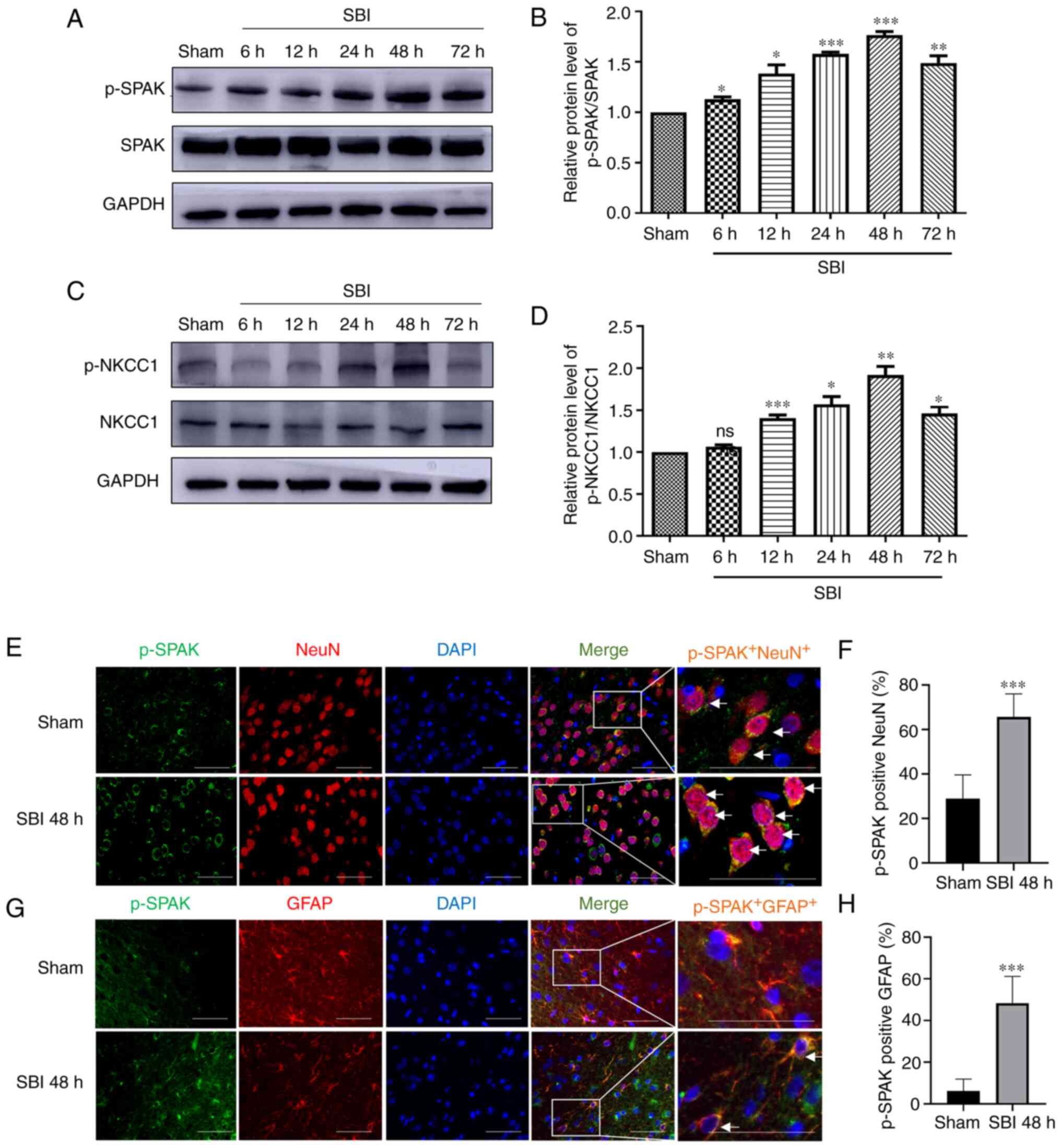
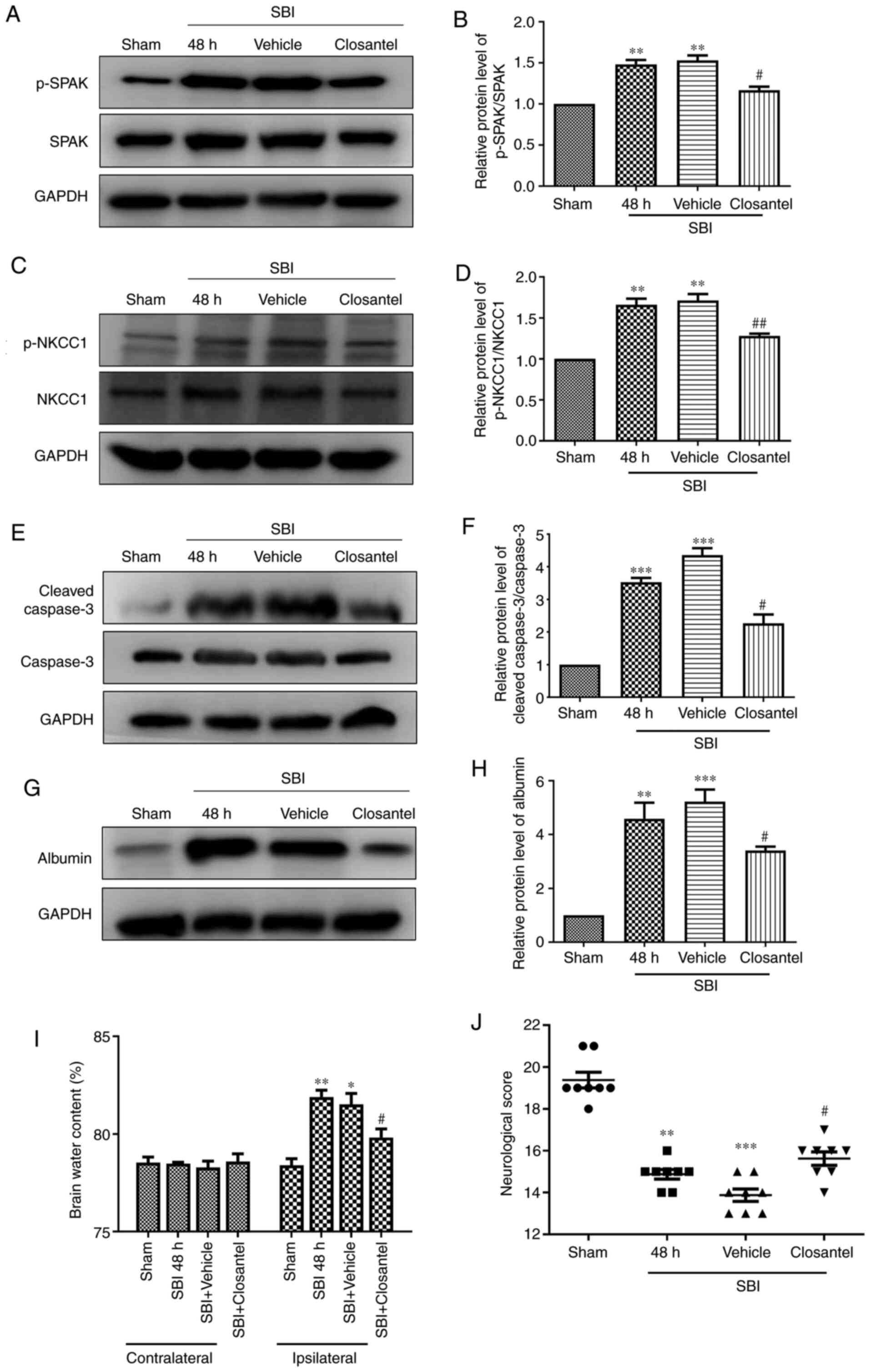
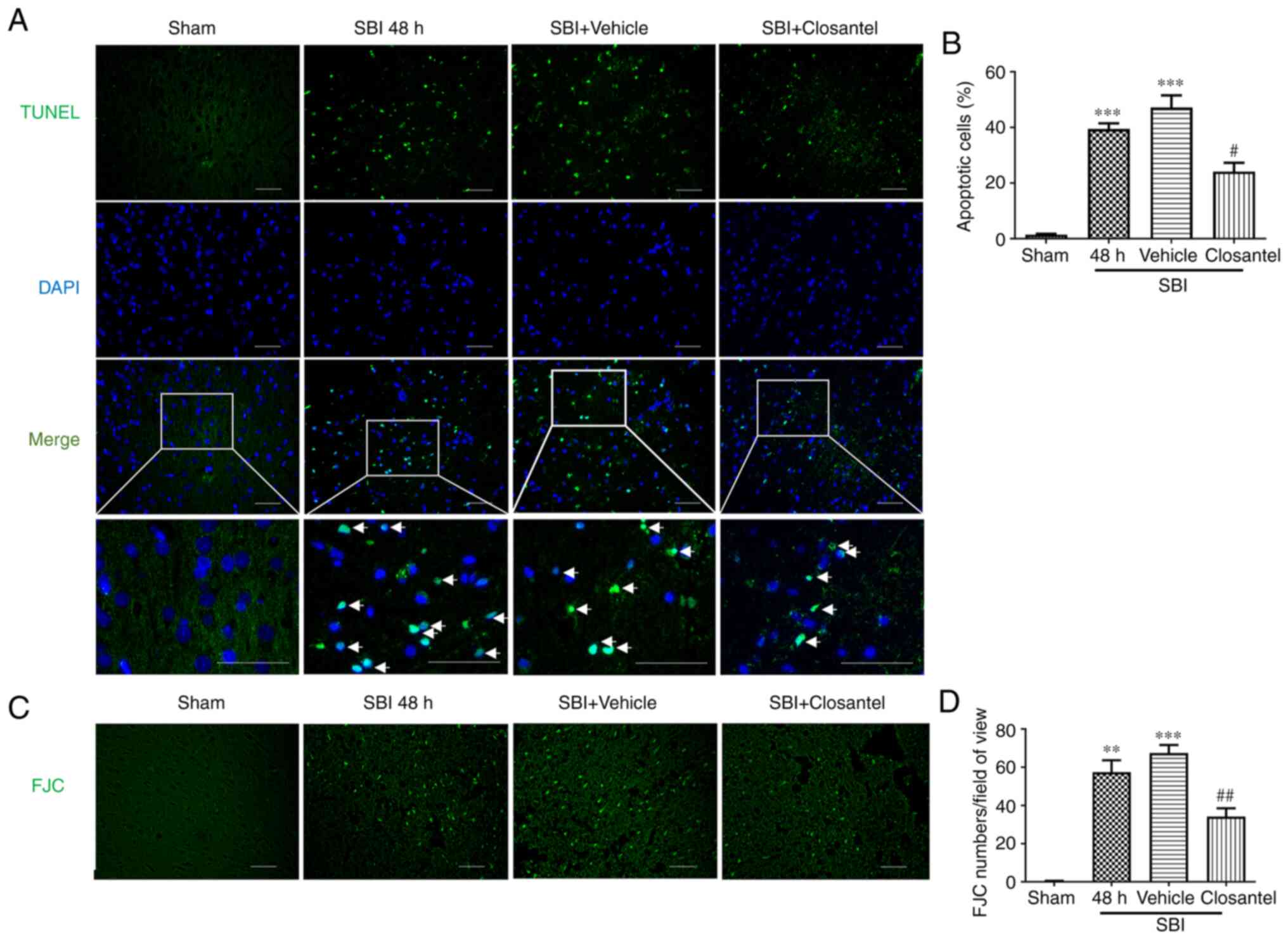
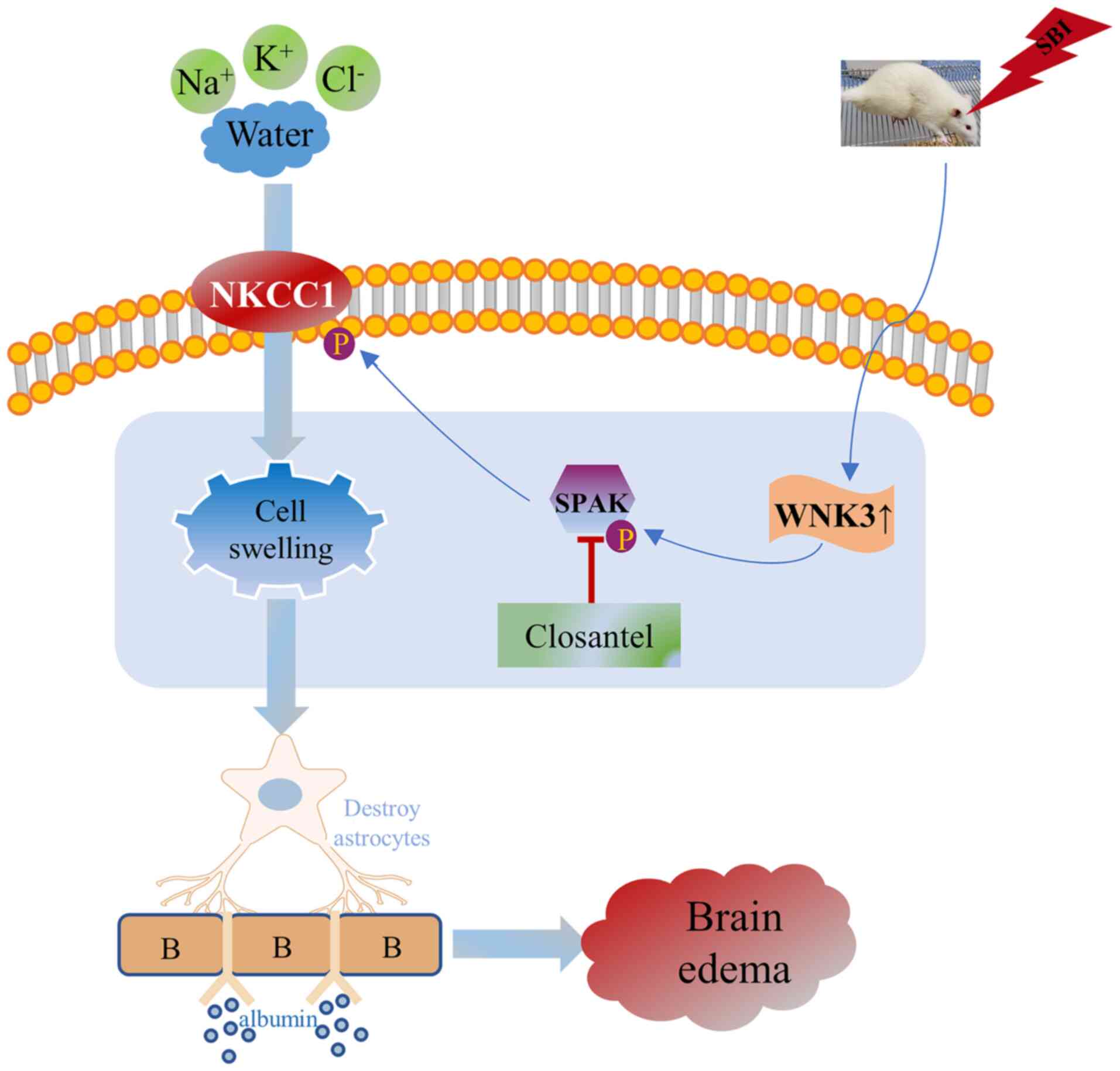
Surgical brain injury (SBI) can disrupt the function of the blood‑brain barrier (BBB), leading to brain edema and neurological dysfunction. Thus, protecting the BBB and mitigating cerebral edema are key factors in improving the neurological function and prognosis of patients with SBI. The inhibition of WNK lysine deficient protein kinase/STE20/SPS1‑related proline/alanine‑rich kinase (SPAK) signaling ameliorates cerebral edema, and this signaling pathway regulates the phosphorylation of the downstream Na+‑K+‑Cl‑ cotransporter 1 (NKCC1). Therefore, the purpose of the present study was to investigate the role of SPAK in SBI‑induced cerebral edema and to determine whether the SPAK/NKCC1 signaling pathway was involved in SBI via regulating phosphorylation. An SBI model was established in male Sprague‑Dawley rats, and the effects of SPAK on the regulation of the NKCC1 signaling pathway on BBB permeability and nerve cell apoptosis by western blotting analysis, immunofluorescence staining, TUNEL staining, Fluoro‑Jade C staining, and brain edema and nervous system scores. The results demonstrated that, compared with those in the sham group, phosphorylated (p)‑SPAK and p‑NKCC1 protein expression levels were significantly increased in the SBI model group. After inhibiting p‑SPAK, the expression level of p‑NKCC1, neuronal apoptosis and BBB permeability were significantly reduced in SBI model rats. Taken together, these findings suggested that SBI‑induced increases in p‑SPAK and p‑NKCC1 expression exacerbated post‑traumatic neural and BBB damage, which may be mediated via the ion‑transport‑induced regulation of cell edema.
View Figures

Figure 1

Figure 2

Figure 3

Figure 4

Figure 5

View References

1 

Zakhary G, Sherchan P, Li Q, Tang J and Zhang JH: Modification of kynurenine pathway via inhibition of kynurenine hydroxylase attenuates surgical brain injury complications in a male rat model. J Neurosci Res. 98:155–167. 2020.PubMed/NCBI

2 

Matchett G, Hahn J, Obenaus A and Zhang J: Surgically induced brain injury in rats: The effect of erythropoietin. J Neurosci Methods. 158:234–241. 2006. View Article : Google Scholar : PubMed/NCBI

3 

Benggon M, Chen H, Applegate RL II and Zhang J: Thrombin preconditioning in surgical brain injury in rats. Acta Neurochir Suppl. 121:299–304. 2016. View Article : Google Scholar : PubMed/NCBI

4 

Eser Ocak P, Ocak U, Sherchan P, Gamdzyk M, Tang J and Zhang JH: Overexpression of Mfsd2a attenuates blood brain barrier dysfunction via Cav-1/Keap-1/Nrf-2/HO-1 pathway in a rat model of surgical brain injury. Exp Neurol. 326:1132032020. View Article : Google Scholar : PubMed/NCBI

5 

Chen JH, Hsu WC, Huang KF and Hung CH: Neuroprotective effects of collagen-glycosaminoglycan matrix implantation following surgical brain injury. Mediators Inflamm. 2019:68489432019. View Article : Google Scholar : PubMed/NCBI

6 

Kim CH, McBride DW, Sherchan P, Person CE, Gren ECK, Kelln W, Lekic T, Hayes WK, Tang J and Zhang JH: Crotalus helleri venom preconditioning reduces postoperative cerebral edema and improves neurological outcomes after surgical brain injury. Neurobiol Dis. 107:66–72. 2017. View Article : Google Scholar : PubMed/NCBI

7 

Wu MY, Gao F, Yang XM, Qin X, Chen GZ, Li D, Dang BQ and Chen G: Matrix metalloproteinase-9 regulates the blood brain barrier via the hedgehog pathway in a rat model of traumatic brain injury. Brain Res. 1727:1465532020. View Article : Google Scholar : PubMed/NCBI

8 

Zhao H, Nepomuceno R, Gao X, Foley LM, Wang S, Begum G, Zhu W, Pigott VM, Falgoust LM, Kahle KT, et al: Deletion of the WNK3-SPAK kinase complex in mice improves radiographic and clinical outcomes in malignant cerebral edema after ischemic stroke. J Cereb Blood Flow Metab. 37:550–563. 2017. View Article : Google Scholar : PubMed/NCBI

9 

Gong YT, Wu MY, Tang JF, Shen JC, Li J, Gao R, Dang BQ and Chen G: Advances in the study of the role and molecular mechanism of withnolysine kinase 3 in nervous system diseases (Review). Mol Med Rep. 23:3932021. View Article : Google Scholar : PubMed/NCBI

10 

Klug NR, Chechneva OV, Hung BY and O'Donnell ME: High glucose-induced effects on Na+-K+−2Cl− cotransport and Na+/H+ exchange of blood-brain barrier endothelial cells: Involvement of SGK1, PKCβII, and SPAK/OSR1. Am J Physiol Cell Physiol. 320:C619–C634. 2021. View Article : Google Scholar : PubMed/NCBI

11 

Wu D, Lai N, Deng R, Liang T, Pan P, Yuan G, Li X, Li H, Shen H, Wang Z and Chen G: Activated WNK3 induced by intracerebral hemorrhage deteriorates brain injury maybe via WNK3/SPAK/NKCC1 pathway. Exp Neurol. 332:1133862020. View Article : Google Scholar : PubMed/NCBI

12 

Delpire E and Austin TM: Kinase regulation of Na+-K+−2Cl− cotransport in primary afferent neurons. J Physiol. 588:3365–3373. 2010. View Article : Google Scholar : PubMed/NCBI

13 

Zhang J, Gao G, Begum G, Wang J, Khanna AR, Shmukler BE, Daubner GM, de Los Heros P, Davies P, Varghese J, et al: Functional kinomics establishes a critical node of volume-sensitive cation-Cl− cotransporter regulation in the mammalian brain. Sci Rep. 6:359862016. View Article : Google Scholar : PubMed/NCBI

14 

Lykke K, Assentoft M, Hørlyck S, Helms HC, Stoica A, Toft-Bertelsen TL, Tritsaris K, Vilhardt F, Brodin B and MacAulay N: Evaluating the involvement of cerebral microvascular endothelial Na+/K+-ATPase and Na+-K+−2Cl− co-transporter in electrolyte fluxes in an in vitro blood-brain barrier model of dehydration. J Cereb Blood Flow Metab. 39:497–512. 2019. View Article : Google Scholar : PubMed/NCBI

15 

Watanabe M and Fukuda A: Development and regulation of chloride homeostasis in the central nervous system. Front Cell Neurosci. 9:3712015. View Article : Google Scholar : PubMed/NCBI

16 

Haas BR, Cuddapah VA, Watkins S, Rohn KJ, Dy TE and Sontheimer H: With-No-Lysine Kinase 3 (WNK3) stimulates glioma invasion by regulating cell volume. Am J Physiol Cell Physiol. 301:C1150–C1160. 2011. View Article : Google Scholar : PubMed/NCBI

17 

Zhang J, Karimy JK, Delpire E and Kahle KT: Pharmacological targeting of SPAK kinase in disorders of impaired epithelial transport. Expert Opin Ther Targets. 21:795–804. 2017. View Article : Google Scholar : PubMed/NCBI

18 

Gagnon KB and Delpire E: Multiple pathways for protein phosphatase 1 (PP1) regulation of Na-K-2Cl cotransporter (NKCC1) function: The N-terminal tail of the Na-K-2Cl cotransporter serves as a regulatory scaffold for Ste20-related proline/alanine-rich kinase (SPAK) AND PP1. J Biol Chem. 285:14115–14121. 2010. View Article : Google Scholar : PubMed/NCBI

19 

Cao-Pham AH, Urano D, Ross-Elliott TJ and Jones AM: Nudge-nudge, WNK-WNK (kinases), say no more? New Phytol. 220:35–48. 2018. View Article : Google Scholar : PubMed/NCBI

20 

Alessi DR, Zhang J, Khanna A, Hochdörfer T, Shang Y and Kahle KT: The WNK-SPAK/OSR1 pathway: Master regulator of cation-chloride cotransporters. Sci Signal. 7:re32014. View Article : Google Scholar : PubMed/NCBI

21 

Begum G, Yuan H, Kahle KT, Li L, Wang S, Shi Y, Shmukler BE, Yang SS, Lin SH, Alper SL and Sun D: Inhibition of WNK3 kinase signaling reduces brain damage and accelerates neurological recovery after stroke. Stroke. 46:1956–1965. 2015. View Article : Google Scholar : PubMed/NCBI

22 

Zhang M, Cui Z, Cui H, Cao Y, Zhong C and Wang Y: Astaxanthin alleviates cerebral edema by modulating NKCC1 and AQP4 expression after traumatic brain injury in mice. BMC Neurosci. 17:602016. View Article : Google Scholar : PubMed/NCBI

23 

Tian Y, Guo SX, Li JR, Du HG, Wang CH, Zhang JM and Wu Q: Topiramate attenuates early brain injury following subarachnoid haemorrhage in rats via duplex protection against inflammation and neuronal cell death. Brain Res. 1622:174–185. 2015. View Article : Google Scholar : PubMed/NCBI

24 

AlAmri MA, Kadri H, Alderwick LJ, Simpkins NS and Mehellou Y: Rafoxanide and closantel inhibit SPAK and OSR1 kinases by binding to a highly conserved allosteric site on Their C-terminal domains. ChemMedChem. 12:639–645. 2017. View Article : Google Scholar : PubMed/NCBI

25 

Lin GM, Liu PY, Wu CF, Wang WB and Han CL: Perspective of future drugs targeting sterile 20/SPS1-related proline/alanine-rich kinase for blood pressure control. World J Cardiol. 7:306–310. 2015. View Article : Google Scholar : PubMed/NCBI

26 

Kikuchi E, Mori T, Zeniya M, Isobe K, Ishigami-Yuasa M, Fujii S, Kagechika H, Ishihara T, Mizushima T, Sasaki S, et al: Discovery of Novel SPAK inhibitors that block WNK kinase signaling to cation chloride transporters. J Am Soc Nephrol. 26:1525–1536. 2015. View Article : Google Scholar : PubMed/NCBI

27 

Wu BJ QC, Kong Q, Tan DM and Tan Y: Laboratory animal-Guideline for using animals in the education. Chinese Association for Laboratory Animal Sciences. 2017.

28 

Akyol O, Sherchan P, Yilmaz G, Reis C, Ho WM, Wang Y, Huang L, Solaroglu I and Zhang JH: Neurotrophin-3 provides neuroprotection via TrkC receptor dependent pErk5 activation in a rat surgical brain injury model. Exp Neurol. 307:82–89. 2018. View Article : Google Scholar : PubMed/NCBI

29 

Feng D, Wang B, Wang L, Abraham N, Tao K, Huang L, Shi W, Dong Y and Qu Y: Pre-ischemia melatonin treatment alleviated acute neuronal injury after ischemic stroke by inhibiting endoplasmic reticulum stress-dependent autophagy via PERK and IRE1 signalings. J Pineal Res. 622017.doi: 10.1111/jpi.12395.

30 

Zhang J, Xu X, Zhou D, Li H, You W, Wang Z and Chen G: Possible role of Raf-1 kinase in the development of cerebral vasospasm and early brain injury after experimental subarachnoid hemorrhage in rats. Mol Neurobiol. 52:1527–1539. 2015. View Article : Google Scholar : PubMed/NCBI

31 

Zhao Y, Huang G, Chen S, Gou Y, Dong Z and Zhang X: Homocysteine aggravates cortical neural cell injury through neuronal autophagy overactivation following rat cerebral ischemia-reperfusion. Int J Mol Sci. 17:11962016. View Article : Google Scholar : PubMed/NCBI

32 

Wang YC, Cui Y, Cui JZ, Sun LQ, Cui CM, Zhang HA, Zhu HX, Li R, Tian YX and Gao JL: Neuroprotective effects of brilliant blue G on the brain following traumatic brain injury in rats. Mol Med Rep. 12:2149–2154. 2015. View Article : Google Scholar : PubMed/NCBI

33 

Eroğlu H, Kaş HS, Oner L, Türkoğlu OF, Akalan N, Sargon MF and Ozer N: The in-vitro and in-vivo characterization of PLGA:L-PLA microspheres containing dexamethasone sodium phosphate. J Microencapsul. 18:603–612. 2001. View Article : Google Scholar

34 

Ke K, Rui Y, Li L, Zheng H, Xu W, Tan X, Cao J, Wu X, Cui G and Cao M: Upregulation of EHD2 after intracerebral hemorrhage in adult rats. J Mol Neurosci. 54:171–180. 2014. View Article : Google Scholar : PubMed/NCBI

35 

Bankstahl M, Breuer H, Leiter I, Märkel M, Bascuñana P, Michalski D, Bengel FM, Löscher W, Meier M, Bankstahl JP and Härtig W: Blood-brain barrier leakage during early epileptogenesis is associated with rapid remodeling of the neurovascular unit. eNeuro. 5:ENEURO.0123–18.2018. 2018. View Article : Google Scholar

36 

Yamazaki Y and Kanekiyo T: Blood-brain barrier dysfunction and the pathogenesis of Alzheimer's disease. Int J Mol Sci. 18:19652017. View Article : Google Scholar : PubMed/NCBI

37 

Lu KT, Cheng NC, Wu CY and Yang YL: NKCC1-mediated traumatic brain injury-induced brain edema and neuron death via Raf/MEK/MAPK cascade. Crit Care Med. 36:917–922. 2008. View Article : Google Scholar : PubMed/NCBI

38 

Zhang J, Bhuiyan MIH, Zhang T, Karimy JK, Wu Z, Fiesler VM, Zhang J, Huang H, Hasan MN, Skrzypiec AE, et al: Modulation of brain cation-Cl− cotransport via the SPAK kinase inhibitor ZT-1a. Nat Commun. 11:782020. View Article : Google Scholar : PubMed/NCBI

39 

Lee HA, Jeong H, Kim EY, Nam MY, Yoo YJ, Seo JT, Shin DM, Ohk SH and Lee SI: Bumetanide, the specific inhibitor of Na+-K+−2Cl− cotransport, inhibits 1alpha,25-dihydroxyvitamin D3-induced osteoclastogenesis in a mouse co-culture system. Exp Physiol. 88:569–574. 2003. View Article : Google Scholar : PubMed/NCBI

40 

Huang H, Song S, Banerjee S, Jiang T, Zhang J, Kahle KT, Sun D and Zhang Z: The WNK-SPAK/OSR1 kinases and the cation-chloride cotransporters as therapeutic targets for neurological diseases. Aging Dis. 10:626–636. 2019. View Article : Google Scholar : PubMed/NCBI

41 

Thastrup JO, Rafiqi FH, Vitari AC, Pozo-Guisado E, Deak M, Mehellou Y and Alessi DR: SPAK/OSR1 regulate NKCC1 and WNK activity: Analysis of WNK isoform interactions and activation by T-loop trans-autophosphorylation. Biochem J. 441:325–337. 2012. View Article : Google Scholar : PubMed/NCBI

42 

Yang SS, Huang CL, Chen HE, Tung CS, Shih HP and Liu YP: Effects of SPAK knockout on sensorimotor gating, novelty exploration, and brain area-dependent expressions of NKCC1 and KCC2 in a mouse model of schizophrenia. Prog Neuropsychopharmacol Biol Psychiatry. 61:30–36. 2015. View Article : Google Scholar : PubMed/NCBI

43 

Luo WD, Min JW, Huang WX, Wang X, Peng YY, Han S, Yin J, Liu WH, He XH and Peng BW: Vitexin reduces epilepsy after hypoxic ischemia in the neonatal brain via inhibition of NKCC1. J Neuroinflammation. 15:1862018. View Article : Google Scholar : PubMed/NCBI

44 

Simard JM, Kahle KT and Gerzanich V: Molecular mechanisms of microvascular failure in central nervous system injury-synergistic roles of NKCC1 and SUR1/TRPM4. J Neurosurg. 113:622–629. 2010. View Article : Google Scholar : PubMed/NCBI

45 

LeVine SM: Albumin and multiple sclerosis. BMC Neurol. 16:472016. View Article : Google Scholar : PubMed/NCBI

46 

Lee YC, Kao ST and Cheng CY: Acorus tatarinowii Schott extract reduces cerebral edema caused by ischemia-reperfusion injury in rats: Involvement in regulation of astrocytic NKCC1/AQP4 and JNK/iNOS-mediated signaling. BMC Complement Med Ther. 20:3742020. View Article : Google Scholar : PubMed/NCBI

47 

Taherian M, Norenberg MD, Panickar KS, Shamaladevi N, Ahmad A, Rahman P and Jayakumar AR: Additive effect of resveratrol on astrocyte swelling post-exposure to ammonia, ischemia and trauma in vitro. Neurochem Res. 45:1156–1167. 2020. View Article : Google Scholar : PubMed/NCBI

48 

Zhang M, Cui Z, Cui H, Wang Y and Zhong C: Astaxanthin protects astrocytes against trauma-induced apoptosis through inhibition of NKCC1 expression via the NF-kappaB signaling pathway. BMC Neurosci. 18:422017. View Article : Google Scholar : PubMed/NCBI

49 

Luo L, Guan X, Begum G, Ding D, Gayden J, Hasan MN, Fiesler VM, Dodelson J, Kohanbash G, Hu B, et al: Blockade of cell volume regulatory protein NKCC1 increases TMZ-induced glioma apoptosis and reduces astrogliosis. Mol Cancer Ther. 19:1550–1561. 2020. View Article : Google Scholar : PubMed/NCBI

50 

Campisi M, Shin Y, Osaki T, Hajal C, Chiono V and Kamm RD: 3D self-organized microvascular model of the human blood-brain barrier with endothelial cells, pericytes and astrocytes. Biomaterials. 180:117–129. 2018. View Article : Google Scholar : PubMed/NCBI

51 

McBride DW, Wang Y, Adam L, Oudin G, Louis JS, Tang J and Zhang JH: Correlation between subacute sensorimotor deficits and brain edema in rats after surgical brain injury. Acta Neurochir Suppl. 121:317–321. 2016. View Article : Google Scholar : PubMed/NCBI

52 

Gong Y, Wu M, Shen J, Tang J, Li J, Xu J, Dang B and Chen G: Inhibition of the NKCC1/NF-κB signaling pathway decreases inflammation and improves brain edema and nerve cell apoptosis in an SBI Rat model. Front Mol Neurosci. 14:6419932021. View Article : Google Scholar : PubMed/NCBI

Related Articles

  • Abstract
  • View
  • Download
  • Twitter
Copy and paste a formatted citation
Spandidos Publications style
Gong Y, Wu M, Gao F, Shi M, Gu H, Gao R, Dang B and Chen G: Inhibition of the p‑SPAK/p‑NKCC1 signaling pathway protects the blood‑brain barrier and reduces neuronal apoptosis in a rat model of surgical brain injury. Mol Med Rep 24: 717, 2021.
APA
Gong, Y., Wu, M., Gao, F., Shi, M., Gu, H., Gao, R. ... Chen, G. (2021). Inhibition of the p‑SPAK/p‑NKCC1 signaling pathway protects the blood‑brain barrier and reduces neuronal apoptosis in a rat model of surgical brain injury. Molecular Medicine Reports, 24, 717. https://doi.org/10.3892/mmr.2021.12356
MLA
Gong, Y., Wu, M., Gao, F., Shi, M., Gu, H., Gao, R., Dang, B., Chen, G."Inhibition of the p‑SPAK/p‑NKCC1 signaling pathway protects the blood‑brain barrier and reduces neuronal apoptosis in a rat model of surgical brain injury". Molecular Medicine Reports 24.4 (2021): 717.
Chicago
Gong, Y., Wu, M., Gao, F., Shi, M., Gu, H., Gao, R., Dang, B., Chen, G."Inhibition of the p‑SPAK/p‑NKCC1 signaling pathway protects the blood‑brain barrier and reduces neuronal apoptosis in a rat model of surgical brain injury". Molecular Medicine Reports 24, no. 4 (2021): 717. https://doi.org/10.3892/mmr.2021.12356
Copy and paste a formatted citation
x
Spandidos Publications style
Gong Y, Wu M, Gao F, Shi M, Gu H, Gao R, Dang B and Chen G: Inhibition of the p‑SPAK/p‑NKCC1 signaling pathway protects the blood‑brain barrier and reduces neuronal apoptosis in a rat model of surgical brain injury. Mol Med Rep 24: 717, 2021.
APA
Gong, Y., Wu, M., Gao, F., Shi, M., Gu, H., Gao, R. ... Chen, G. (2021). Inhibition of the p‑SPAK/p‑NKCC1 signaling pathway protects the blood‑brain barrier and reduces neuronal apoptosis in a rat model of surgical brain injury. Molecular Medicine Reports, 24, 717. https://doi.org/10.3892/mmr.2021.12356
MLA
Gong, Y., Wu, M., Gao, F., Shi, M., Gu, H., Gao, R., Dang, B., Chen, G."Inhibition of the p‑SPAK/p‑NKCC1 signaling pathway protects the blood‑brain barrier and reduces neuronal apoptosis in a rat model of surgical brain injury". Molecular Medicine Reports 24.4 (2021): 717.
Chicago
Gong, Y., Wu, M., Gao, F., Shi, M., Gu, H., Gao, R., Dang, B., Chen, G."Inhibition of the p‑SPAK/p‑NKCC1 signaling pathway protects the blood‑brain barrier and reduces neuronal apoptosis in a rat model of surgical brain injury". Molecular Medicine Reports 24, no. 4 (2021): 717. https://doi.org/10.3892/mmr.2021.12356
Follow us
  • Twitter
  • LinkedIn
  • Facebook
About
  • Spandidos Publications
  • Careers
  • Cookie Policy
  • Privacy Policy
How can we help?
  • Help
  • Live Chat
  • Contact
  • Email to our Support Team