Spandidos Publications Logo
  • About
    • About Spandidos
    • Aims and Scopes
    • Abstracting and Indexing
    • Editorial Policies
    • Reprints and Permissions
    • Job Opportunities
    • Terms and Conditions
    • Contact
  • Journals
    • All Journals
    • Oncology Letters
      • Oncology Letters
      • Information for Authors
      • Editorial Policies
      • Editorial Board
      • Aims and Scope
      • Abstracting and Indexing
      • Bibliographic Information
      • Archive
    • International Journal of Oncology
      • International Journal of Oncology
      • Information for Authors
      • Editorial Policies
      • Editorial Board
      • Aims and Scope
      • Abstracting and Indexing
      • Bibliographic Information
      • Archive
    • Molecular and Clinical Oncology
      • Molecular and Clinical Oncology
      • Information for Authors
      • Editorial Policies
      • Editorial Board
      • Aims and Scope
      • Abstracting and Indexing
      • Bibliographic Information
      • Archive
    • Experimental and Therapeutic Medicine
      • Experimental and Therapeutic Medicine
      • Information for Authors
      • Editorial Policies
      • Editorial Board
      • Aims and Scope
      • Abstracting and Indexing
      • Bibliographic Information
      • Archive
    • International Journal of Molecular Medicine
      • International Journal of Molecular Medicine
      • Information for Authors
      • Editorial Policies
      • Editorial Board
      • Aims and Scope
      • Abstracting and Indexing
      • Bibliographic Information
      • Archive
    • Biomedical Reports
      • Biomedical Reports
      • Information for Authors
      • Editorial Policies
      • Editorial Board
      • Aims and Scope
      • Abstracting and Indexing
      • Bibliographic Information
      • Archive
    • Oncology Reports
      • Oncology Reports
      • Information for Authors
      • Editorial Policies
      • Editorial Board
      • Aims and Scope
      • Abstracting and Indexing
      • Bibliographic Information
      • Archive
    • Molecular Medicine Reports
      • Molecular Medicine Reports
      • Information for Authors
      • Editorial Policies
      • Editorial Board
      • Aims and Scope
      • Abstracting and Indexing
      • Bibliographic Information
      • Archive
    • World Academy of Sciences Journal
      • World Academy of Sciences Journal
      • Information for Authors
      • Editorial Policies
      • Editorial Board
      • Aims and Scope
      • Abstracting and Indexing
      • Bibliographic Information
      • Archive
    • International Journal of Functional Nutrition
      • International Journal of Functional Nutrition
      • Information for Authors
      • Editorial Policies
      • Editorial Board
      • Aims and Scope
      • Abstracting and Indexing
      • Bibliographic Information
      • Archive
    • International Journal of Epigenetics
      • International Journal of Epigenetics
      • Information for Authors
      • Editorial Policies
      • Editorial Board
      • Aims and Scope
      • Abstracting and Indexing
      • Bibliographic Information
      • Archive
    • Medicine International
      • Medicine International
      • Information for Authors
      • Editorial Policies
      • Editorial Board
      • Aims and Scope
      • Abstracting and Indexing
      • Bibliographic Information
      • Archive
  • Articles
  • Information
    • Information for Authors
    • Information for Reviewers
    • Information for Librarians
    • Information for Advertisers
    • Conferences
  • Language Editing
Spandidos Publications Logo
  • About
    • About Spandidos
    • Aims and Scopes
    • Abstracting and Indexing
    • Editorial Policies
    • Reprints and Permissions
    • Job Opportunities
    • Terms and Conditions
    • Contact
  • Journals
    • All Journals
    • Biomedical Reports
      • Information for Authors
      • Editorial Policies
      • Editorial Board
      • Aims and Scope
      • Abstracting and Indexing
      • Bibliographic Information
      • Archive
    • Experimental and Therapeutic Medicine
      • Information for Authors
      • Editorial Policies
      • Editorial Board
      • Aims and Scope
      • Abstracting and Indexing
      • Bibliographic Information
      • Archive
    • International Journal of Epigenetics
      • Information for Authors
      • Editorial Policies
      • Editorial Board
      • Aims and Scope
      • Abstracting and Indexing
      • Bibliographic Information
      • Archive
    • International Journal of Functional Nutrition
      • Information for Authors
      • Editorial Policies
      • Editorial Board
      • Aims and Scope
      • Abstracting and Indexing
      • Bibliographic Information
      • Archive
    • International Journal of Molecular Medicine
      • Information for Authors
      • Editorial Policies
      • Editorial Board
      • Aims and Scope
      • Abstracting and Indexing
      • Bibliographic Information
      • Archive
    • International Journal of Oncology
      • Information for Authors
      • Editorial Policies
      • Editorial Board
      • Aims and Scope
      • Abstracting and Indexing
      • Bibliographic Information
      • Archive
    • Medicine International
      • Information for Authors
      • Editorial Policies
      • Editorial Board
      • Aims and Scope
      • Abstracting and Indexing
      • Bibliographic Information
      • Archive
    • Molecular and Clinical Oncology
      • Information for Authors
      • Editorial Policies
      • Editorial Board
      • Aims and Scope
      • Abstracting and Indexing
      • Bibliographic Information
      • Archive
    • Molecular Medicine Reports
      • Information for Authors
      • Editorial Policies
      • Editorial Board
      • Aims and Scope
      • Abstracting and Indexing
      • Bibliographic Information
      • Archive
    • Oncology Letters
      • Information for Authors
      • Editorial Policies
      • Editorial Board
      • Aims and Scope
      • Abstracting and Indexing
      • Bibliographic Information
      • Archive
    • Oncology Reports
      • Information for Authors
      • Editorial Policies
      • Editorial Board
      • Aims and Scope
      • Abstracting and Indexing
      • Bibliographic Information
      • Archive
    • World Academy of Sciences Journal
      • Information for Authors
      • Editorial Policies
      • Editorial Board
      • Aims and Scope
      • Abstracting and Indexing
      • Bibliographic Information
      • Archive
  • Articles
  • Information
    • For Authors
    • For Reviewers
    • For Librarians
    • For Advertisers
    • Conferences
  • Language Editing
Login Register Submit
  • This site uses cookies
  • You can change your cookie settings at any time by following the instructions in our Cookie Policy. To find out more, you may read our Privacy Policy.

    I agree
Search articles by DOI, keyword, author or affiliation
Search
Advanced Search
presentation
Molecular Medicine Reports
Join Editorial Board Propose a Special Issue
Print ISSN: 1791-2997 Online ISSN: 1791-3004
Journal Cover
October-2025 Volume 32 Issue 4

Full Size Image

Sign up for eToc alerts
Recommend to Library

Journals

International Journal of Molecular Medicine

International Journal of Molecular Medicine

International Journal of Molecular Medicine is an international journal devoted to molecular mechanisms of human disease.

International Journal of Oncology

International Journal of Oncology

International Journal of Oncology is an international journal devoted to oncology research and cancer treatment.

Molecular Medicine Reports

Molecular Medicine Reports

Covers molecular medicine topics such as pharmacology, pathology, genetics, neuroscience, infectious diseases, molecular cardiology, and molecular surgery.

Oncology Reports

Oncology Reports

Oncology Reports is an international journal devoted to fundamental and applied research in Oncology.

Experimental and Therapeutic Medicine

Experimental and Therapeutic Medicine

Experimental and Therapeutic Medicine is an international journal devoted to laboratory and clinical medicine.

Oncology Letters

Oncology Letters

Oncology Letters is an international journal devoted to Experimental and Clinical Oncology.

Biomedical Reports

Biomedical Reports

Explores a wide range of biological and medical fields, including pharmacology, genetics, microbiology, neuroscience, and molecular cardiology.

Molecular and Clinical Oncology

Molecular and Clinical Oncology

International journal addressing all aspects of oncology research, from tumorigenesis and oncogenes to chemotherapy and metastasis.

World Academy of Sciences Journal

World Academy of Sciences Journal

Multidisciplinary open-access journal spanning biochemistry, genetics, neuroscience, environmental health, and synthetic biology.

International Journal of Functional Nutrition

International Journal of Functional Nutrition

Open-access journal combining biochemistry, pharmacology, immunology, and genetics to advance health through functional nutrition.

International Journal of Epigenetics

International Journal of Epigenetics

Publishes open-access research on using epigenetics to advance understanding and treatment of human disease.

Medicine International

Medicine International

An International Open Access Journal Devoted to General Medicine.

Journal Cover
October-2025 Volume 32 Issue 4

Full Size Image

Sign up for eToc alerts
Recommend to Library

  • Article
  • Citations
    • Cite This Article
    • Download Citation
    • Create Citation Alert
    • Remove Citation Alert
    • Cited By
  • Similar Articles
    • Related Articles (in Spandidos Publications)
    • Similar Articles (Google Scholar)
    • Similar Articles (PubMed)
  • Download PDF
  • Download XML
  • View XML

  • Supplementary Files
    • Supplementary_Data.pdf
Article Open Access

Rev‑erbα: The circadian guardian against NLRP3‑driven liver fibrosis

  • Authors:
    • Junmin Wang
    • Yanping Wang
    • Liubing Lin
    • Wen Pei
    • Yong Li
  • View Affiliations / Copyright

    Affiliations: Department of Gastroenterology, Shanghai Municipal Hospital of Traditional Chinese Medicine, Shanghai University of Traditional Chinese Medicine, Shanghai 200071, P.R. China, Department of Cardiology, Jing'an District Hospital of Traditional Chinese Medicine, Shanghai University of Traditional Chinese Medicine, Shanghai 200072, P.R. China
    Copyright: © Wang et al. This is an open access article distributed under the terms of Creative Commons Attribution License.
  • Article Number: 270
    |
    Published online on: July 24, 2025
       https://doi.org/10.3892/mmr.2025.13635
  • Expand metrics +
Metrics: Total Views: 0 (Spandidos Publications: | PMC Statistics: )
Metrics: Total PDF Downloads: 0 (Spandidos Publications: | PMC Statistics: )
Cited By (CrossRef): 0 citations Loading Articles...

This article is mentioned in:


Abstract

Liver fibrosis is a pivotal pathological process in the progression of various chronic liver diseases toward cirrhosis, primarily driven by the activation of hepatic stellate cells. Recent studies have implicated dysregulation of circadian clock genes in the pathogenesis of hepatic disorders. The present investigation focused on the role of the circadian regulator nuclear receptor subfamily 1 group D member 1 (Rev‑erbα) in liver fibrosis and its mechanistic interplay with the NLR family domain containing protein 3 (NLRP3) inflammasome. A mouse model of liver fibrosis was established via carbon tetrachloride (CCl4) administration. The expression of Rev‑erbα was modulated pharmacologically using the agonist GSK4112 and the antagonist SR8278 to assess its impact on fibrogenesis. In parallel, lentiviral vectors were employed in in vitro studies to generate LX‑2 cell lines with Rev‑erbα overexpression or knockout. Transforming growth factor‑β1 (TGF‑β1) was applied to induce cellular activation, and subsequent effects on the NLRP3 inflammasome and its downstream mediators were analyzed. The extent of fibrosis and molecular alterations were evaluated using Masson's trichrome staining, Sirius Red staining, immunohistochemistry, western blotting and reverse transcription‑quantitative PCR. Rev‑erbα expression was significantly downregulated in both CCl4‑induced murine models and TGF‑β1‑activated LX‑2 cells. Pharmacological activation of Rev‑erbα attenuated hepatic fibrosis, evidenced by reduced collagen accumulation and suppression of fibrogenic markers (α‑smooth muscle actin, collagen 1 and TGF‑β1). By contrast, inhibition of Rev‑erbα exacerbated fibrotic responses. Mechanistically, Rev‑erbα activation inhibited NLRP3 inflammasome signaling and downstream pro‑inflammatory cytokines [interleukin (IL)‑18 and IL‑1β], underscoring its anti‑fibrotic function via NLRP3 pathway modulation. Rev‑erbα functions as a key negative regulator of hepatic fibrosis by suppressing NLRP3 inflammasome activation, representing a promising therapeutic target for the management of liver fibrosis.
View Figures

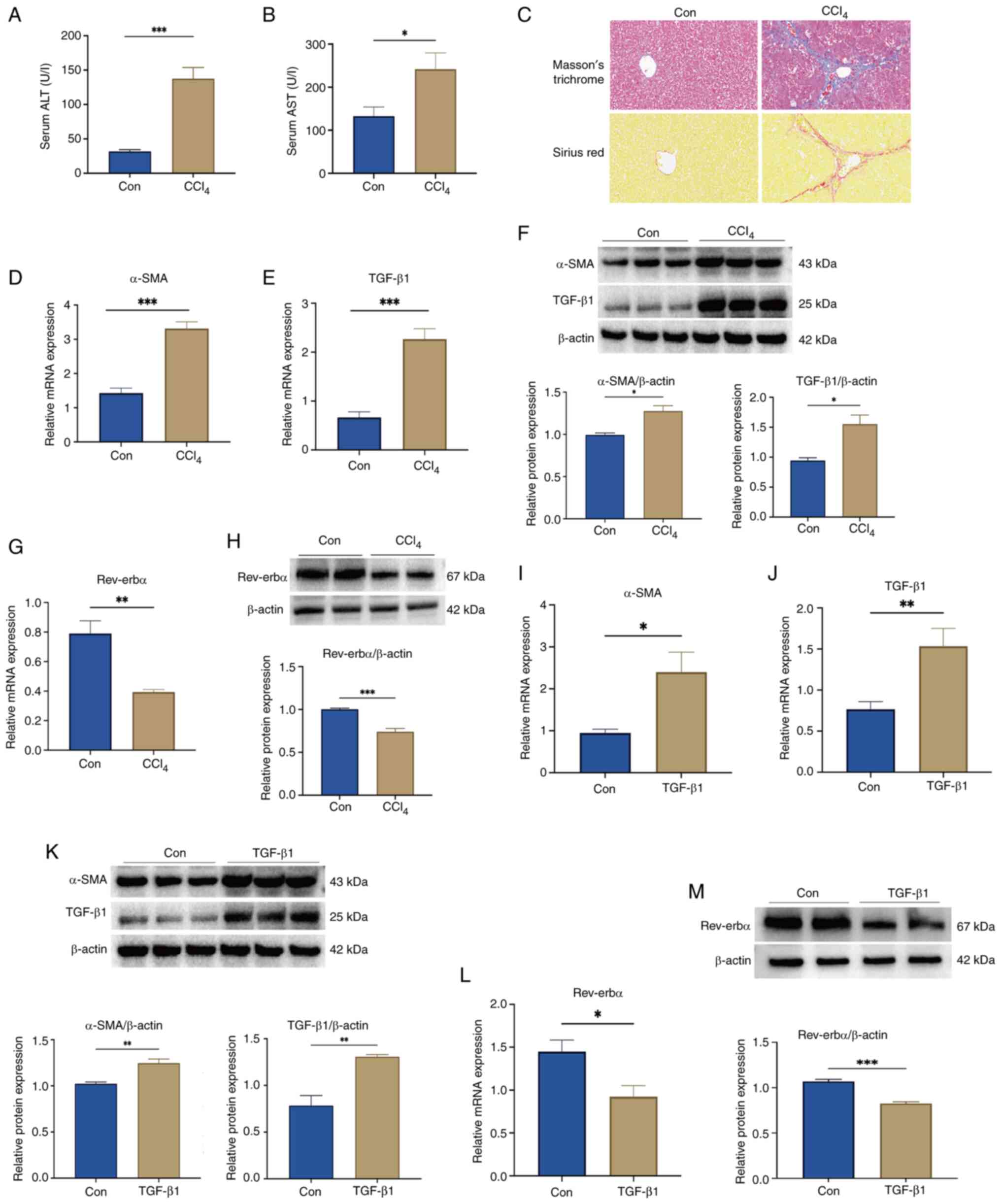
Figure 1

Decreased expression of circadian
clock gene Rev-erbα in liver fibrosis. (A) Serum ALT levels in Con
and CCl4-treated mice (n=6). (B) Serum AST levels in Con
and CCl4-treated mice (n=6). (C) Masson's trichrome and
Sirius red staining of liver tissue in Con and
CCl4-treated mice (×200 magnification). (D) The mRNA
expression levels of α-SMA in liver tissue in Con and
CCl4-treated mice (n=6). (E) The mRNA expression levels
of TGF-β1 in liver tissue in Con and CCl4-treated mice
(n=6). (F) Protein expression levels of α-SMA and TGF-β1 in liver
tissue from Con and CCl4-treated mice (n=3). (G) The
mRNA expression levels of Rev-erbα in liver tissue from Con and
CCl4-treated mice (n=6). (H) Protein expression levels
of Rev-erbα in liver tissue from Con and CCl4-treated
mice (n=4). (I) The mRNA expression levels of α-SMA in Con and
TGF-β1-treated cell groups (n=6). (J) The mRNA expression levels of
TGF-β1 in Con and TGF-β1-treated cell groups (n=6). (K) Protein
expression levels of α-SMA and TGF-β1 in Con and TGF-β1-treated
cell groups (n=3). (L) The mRNA expression levels of Rev-erbα in
Con and TGF-β1-treated cell groups (n=6). (M) Protein expression
levels of Rev-erbα in Con and TGF-β1-treated cell groups (n=4).
Data are expressed as the mean ± SEM; *P<0.05, **P<0.01 and
***P<0.001. Con, control; Rev-erbα, nuclear receptor subfamily 1
group D member 1; TGF-β1, transforming growth factor-β1; α-SMA,
α-smooth muscle actin; CCl4, carbon tetrachloride.

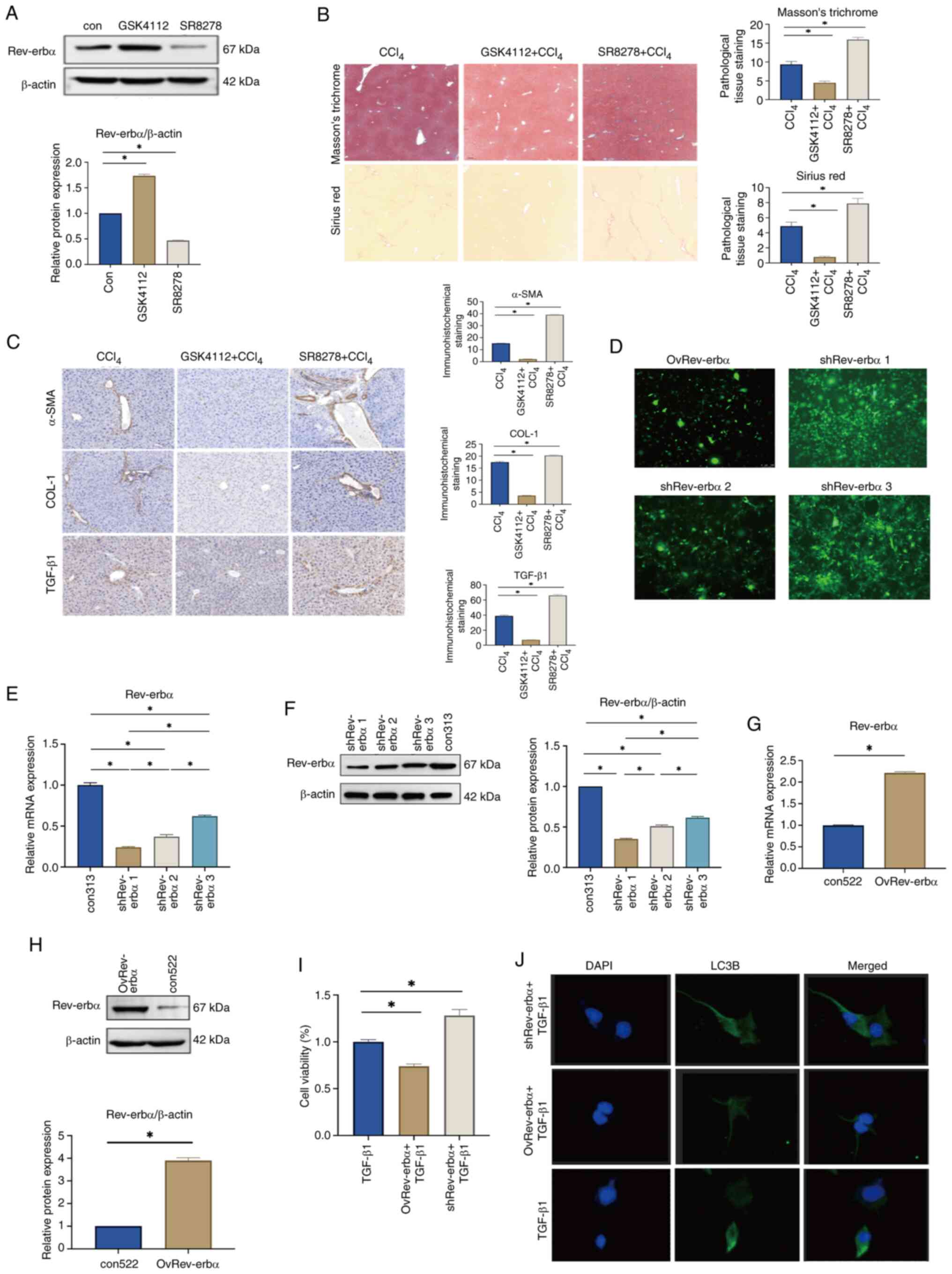
Figure 2

Rev-erbα significantly inhibits liver
fibrosis. (A) Rev-erbα protein expression in mouse liver tissue
following administration of Rev-erbα agonist GSK4112 or inhibitor
SR8278 (n=3). (B) Liver histopathology in the CCl4,
GSK4112 + CCl4 and SR8278 + CCl4 groups
(Masson's trichrome and Sirius red staining; ×100 magnification)
(n=3). (C) Expression of α-SMA, COL-1 and TGF-β1 in liver tissue of
CCl4-induced liver fibrosis mice from in the
CCl4, GSK4112 + CCl4 and SR8278 +
CCl4 groups (×400 magnification) (n=3). (D) Lentiviral
fluorescence expression in stable Rev-erbα gene knockdown or
overexpression cell lines (×200 magnification). The greater the
extent of green fluorescent areas, the better the lentiviral
transduction efficacy. (E) The mRNA expression of Rev-erbα in
shRev-erbα cell groups (n=6). (F) Protein expression of Rev-erbα in
the shRev-erbα cell group (n=6). (G) The mRNA expression of
Rev-erbα in the OvRev-erbα cell group (n=6). (H) Protein expression
of Rev-erbα in the OvRev-erbα cell group (n=6). (I) LX-2 cell
viability in the TGF-β1, OvRev-erbα + TGF-β1 and shRev-erbα +
TGF-β1 groups (n=3). (J) Expression of α-SMA in the TGF-β1,
OvRev-erbα + TGF-β1 and shRev-erbα + TGF-β1 groups
(immunofluorescence; ×200 magnification). Data are expressed as the
mean ± SEM; *P<0.05. Con, control; Rev-erbα, nuclear receptor
subfamily 1 group D member 1; TGF-β1, transforming growth
factor-β1; α-SMA, α-smooth muscle actin; CCl4, carbon
tetrachloride; COL-1, collagen 1; DAPI,
4′,6-diamidino-2-phenylindole; LC3B, microtubule-associated protein
1A/1B light chain 3β.

Figure 3

Rev-erbα inhibits NLRP3 and reduces
liver fibrosis. (A) Protein expression of Rev-erbα in the
CCl4, GSK4112 + CCl4 and SR8278 +
CCl4 groups (n=3). (B) The mRNA expression of NLRP3,
caspase-1, ASC, IL-18 and IL-1β in the CCl4, GSK4112 +
CCl4 and SR8278 + CCl4 groups (n=3). (C)
Protein expression of NLRP3, caspase-1, ASC, IL-18 and IL-1β in the
CCl4, GSK4112 + CCl4 and SR8278 +
CCl4 groups (n=3). (D) Protein expression of Rev-erbα in
the TGF-β1, OvRev-erbα + TGF-β1 and shRev-erbα + TGF-β1 groups
(n=3). (E) The mRNA expression of NLRP3, caspase-1, ASC, IL-18 and
IL-1β in the TGF-β1, OvRev-erbα + TGF-β1 and shRev-erbα + TGF-β1
groups (n=3). (F) Protein expression of NLRP3, caspase-1, ASC,
IL-18 and IL-1β in the TGF-β1, OvRev-erbα + TGF-β1 and shRev-erbα +
TGF-β1 groups (n=3). Data are expressed as the mean ± SEM; ns, not
significant; *P<0.05. Rev-erbα, nuclear receptor
subfamily 1 group D member 1; TGF-β1, transforming growth
factor-β1; CCl4, carbon tetrachloride; NLRP3, NLR family
domain containing protein 3; ASC, apoptosis associated speck; IL,
interleukin.

Figure 4

Mechanism of Rev-erbα promoting the
progression of liver fibrosis. The decrease in the expression of
the biological clock gene Rev-erbα promotes the activation of NLRP3
inflammasomes (ASC, caspase-1 and NLRP3) and downstream
inflammatory pathways (IL-18 and IL-1β), and promotes the
progression of liver fibrosis. ASC, apoptosis-associated speck;
α-SMA, α-smooth muscle actin; CCl4, carbon
tetrachloride; COL-1, collagen 1; IL, interleukin; NLRP3, NLR
family domain containing protein 3; Rev-erbα, nuclear receptor
subfamily 1 group D member 1; TGF-β1, transforming growth
factor-β1.
View References

1 

Hernandez-Gea V and Friedman SL: Pathogenesis of liver fibrosis. Annu Rev Pathol. 6:425–456. 2011. View Article : Google Scholar : PubMed/NCBI

2 

Parola M and Pinzani M: Liver fibrosis: Pathophysiology, pathogenetic targets and clinical issues. Mol Aspects Med. 65:37–55. 2019. View Article : Google Scholar : PubMed/NCBI

3 

Higashi T, Friedman SL and Hoshida Y: Hepatic stellate cells as key target in liver fibrosis. Adv Drug Deliv Rev. 121:27–42. 2017. View Article : Google Scholar : PubMed/NCBI

4 

Tsuchida T and Friedman SL: Mechanisms of hepatic stellate cell activation. Nat Rev Gastroenterol Hepatol. 14:397–411. 2017. View Article : Google Scholar : PubMed/NCBI

5 

Frazier K, Manzoor S, Carroll K, DeLeon O, Miyoshi S, Miyoshi J, St George M, Tan A, Chrisler EA, Izumo M, et al: Gut microbes and the liver circadian clock partition glucose and lipid metabolism. J Clin Invest. 133:e1625152023. View Article : Google Scholar : PubMed/NCBI

6 

Mukherji A, Bailey SM, Staels B and Baumert TF: The circadian clock and liver function in health and disease. J Hepatol. 71:200–211. 2019. View Article : Google Scholar : PubMed/NCBI

7 

Piggins HD: Human clock genes. Ann Med. 34:394–400. 2002. View Article : Google Scholar : PubMed/NCBI

8 

Cox KH and Takahashi JS: Circadian clock genes and the transcriptional architecture of the clock mechanism. J Mol Endocrinol. 63:R93–R102. 2019. View Article : Google Scholar : PubMed/NCBI

9 

Tsang AH, Sánchez-Moreno C, Bode B, Rossner MJ, Garaulet M and Oster H: Tissue-specific interaction of Per1/2 and Dec2 in the regulation of fibroblast circadian rhythms. J Biol Rhythms. 27:478–489. 2012. View Article : Google Scholar : PubMed/NCBI

10 

González-Fernández B, Sánchez DI, Crespo I, San-Miguel B, de Urbina JO, González-Gallego J and Tuñón MJ: Melatonin attenuates dysregulation of the circadian clock pathway in mice with CCl4-Induced fibrosis and human hepatic stellate cells. Front Pharmacol. 9:5562018. View Article : Google Scholar : PubMed/NCBI

11 

Chen P, Kakan X, Wang S, Dong W, Jia A, Cai C and Zhang J: Deletion of clock gene Per2 exacerbates cholestatic liver injury and fibrosis in mice. Exp Toxicol Pathol. 65:427–432. 2013. View Article : Google Scholar : PubMed/NCBI

12 

Chen P, Han Z, Yang P, Zhu L, Hua Z and Zhang J: Loss of clock gene mPer2 promotes liver fibrosis induced by carbon tetrachloride. Hepatol Res. 40:1117–1127. 2010. View Article : Google Scholar : PubMed/NCBI

13 

Laitinen S, Fontaine C, Fruchart JC and Staels B: The role of the orphan nuclear receptor Rev-Erb alpha in adipocyte differentiation and function. Biochimie. 87:21–25. 2005. View Article : Google Scholar : PubMed/NCBI

14 

Cho H, Zhao X, Hatori M, Yu RT, Barish GD, Lam MT, Chong LW, DiTacchio L, Atkins AR, Glass CK, et al: Regulation of circadian behaviour and metabolism by REV-ERB-α and REV-ERB-β. Nature. 485:123–127. 2012. View Article : Google Scholar : PubMed/NCBI

15 

Stujanna EN, Murakoshi N, Tajiri K, Xu D, Kimura T, Qin R, Feng D, Yonebayashi S, Ogura Y, Yamagami F, et al: Rev-erb agonist improves adverse cardiac remodeling and survival in myocardial infarction through an anti-inflammatory mechanism. PLoS One. 12:e01893302017. View Article : Google Scholar : PubMed/NCBI

16 

Ding G, Li X, Hou X, Zhou W, Gong Y, Liu F, He Y, Song J, Wang J, Basil P, et al: REV-ERB in GABAergic neurons controls diurnal hepatic insulin sensitivity. Nature. 592:763–767. 2021. View Article : Google Scholar : PubMed/NCBI

17 

da Rocha AL, Pinto AP, Bedo BLS, Morais GP, Oliveira LC, Carolino ROG, Pauli JR, Simabuco FM, de Moura LP, Ropelle ER, et al: Exercise alters the circadian rhythm of REV-ERB-α and downregulates autophagy-related genes in peripheral and central tissues. Sci Rep. 12:200062022. View Article : Google Scholar : PubMed/NCBI

18 

Luo X, Song S, Qi L, Tien CL, Li H, Xu W, Mathuram TL, Burris T, Zhao Y, Sun Z and Zhang L: REV-ERB is essential in cardiac fibroblasts homeostasis. Front Pharmacol. 13:8996282022. View Article : Google Scholar : PubMed/NCBI

19 

Griffin P, Dimitry JM and Musiek ES: Rev-erbs and Glia-implications for neurodegenerative diseases. J Exp Neurosci. 13:11790695198532332019. View Article : Google Scholar : PubMed/NCBI

20 

Hu C, Zhao L, Tao J and Li L: Protective role of melatonin in Early-stage and end-stage liver cirrhosis. J Cell Mol Med. 23:7151–7162. 2019. View Article : Google Scholar : PubMed/NCBI

21 

Chen L, Xia S, Wang F, Zhou Y, Wang S, Yang T, Li Y, Xu M, Zhou Y, Kong D, et al: m6A methylation-induced NR1D1 ablation disrupts the HSC circadian clock and promotes hepatic fibrosis hepatic fibrosis. Pharmacol Res. 189:1067042023. View Article : Google Scholar : PubMed/NCBI

22 

Wang S, Lin Y, Yuan X, Li F, Guo L and Wu B: REV-ERBα integrates colon clock with experimental colitis through regulation of NF-κB/NLRP3 axis. Nat Commun. 9:42462018. View Article : Google Scholar : PubMed/NCBI

23 

Tao Y, Wang N, Qiu T and Sun X: The Role of Autophagy and NLRP3 inflammasome in liver fibrosis. Biomed Res Int. 2020:72691502020. View Article : Google Scholar : PubMed/NCBI

24 

Wree A, McGeough MD, Inzaugarat ME, Eguchi A, Schuster S, Johnson CD, Peña CA, Geisler LJ, Papouchado BG, Hoffman HM, et al: NLRP3 inflammasome driven liver injury and fibrosis: Roles of IL-17 and TNF in mice. Hepatology. 67:736–749. 2018. View Article : Google Scholar : PubMed/NCBI

25 

Zhang K, Lin L, Zhu Y, Zhang N, Zhou M and Li Y: Saikosaponin d alleviates liver fibrosis by negatively regulating the ROS/NLRP3 inflammasome through activating the ERβ pathway. Front Pharmacol. 13:8949812022. View Article : Google Scholar : PubMed/NCBI

26 

Shao R, Yang Y, Fan K, Wu X, Jiang R, Tang L, Li L, Shen Y, Liu G and Zhang L: REV-ERBα Agonist GSK4112 attenuates Fas-induced Acute Hepatic Damage in Mice. Int J Med Sci. 18:3831–3838. 2021. View Article : Google Scholar : PubMed/NCBI

27 

Kim J, Park I, Jang S, Choi M, Kim D, Sun W, Choe Y, Choi JW, Moon C, Park SH, et al: Pharmacological rescue with SR8278, a circadian nuclear receptor REV-ERBα antagonist as a therapy for mood disorders in Parkinson's disease. Neurotherapeutics. 19:592–607. 2022. View Article : Google Scholar : PubMed/NCBI

28 

Kojetin D, Wang Y, Kamenecka TM and Burris TP: Identification of SR8278, a synthetic antagonist of the nuclear heme receptor REV-ERB. ACS Chem Biol. 6:131–134. 2011. View Article : Google Scholar : PubMed/NCBI

29 

Lin L, Zhou M, Que R, Chen Y, Liu X, Zhang K, Shi Z and Li Y: Saikosaponin-d protects against liver fibrosis by regulating the estrogen receptor-β/NLRP3 inflammasome pathway. Biochem Cell Biol. 99:666–674. 2021. View Article : Google Scholar : PubMed/NCBI

30 

Livak KJ and Schmittgen TD: Analysis of relative gene expression data using real-time quantitative PCR and the 2(−Delta Delta C(T)) method. Methods. 25:402–408. 2001. View Article : Google Scholar : PubMed/NCBI

31 

Yue J, He J, Wei Y, Shen K, Wu K, Yang X, Liu S, Zhang C and Yang H: Decreased expression of Rev-Erbα in the epileptic foci of temporal lobe epilepsy and activation of Rev-Erbα have anti-inflammatory and neuroprotective effects in the pilocarpine model. J Neuroinflammation. 17:432020. View Article : Google Scholar : PubMed/NCBI

32 

Niu WX, Bao YY, Zhang N, Lu ZN, Ge MX, Li YM, Li Y, Chen MH and He HW: Dehydromevalonolactone ameliorates liver fibrosis and inflammation by repressing activation of NLRP3 inflammasome. Bioorg Chem. 127:1059712022. View Article : Google Scholar : PubMed/NCBI

33 

Zhang X, Kuang G, Wan J, Jiang R, Ma L, Gong X and Liu X: Salidroside protects mice against CCl4-induced acute liver injury via down-regulating CYP2E1 expression and inhibiting NLRP3 inflammasome activation. Int Immunopharmacol. 85:1066622020. View Article : Google Scholar : PubMed/NCBI

34 

Kisseleva T and Brenner D: Molecular and cellular mechanisms of liver fibrosis and its regression. Nat Rev Gastroenterol Hepatol. 18:151–166. 2021. View Article : Google Scholar : PubMed/NCBI

35 

Pan X, Mota S and Zhang B: Circadian clock regulation on lipid metabolism and metabolic diseases. Adv Exp Med Biol. 1276:53–66. 2020. View Article : Google Scholar : PubMed/NCBI

36 

Bailey SM: Emerging role of circadian clock disruption in Alcohol-induced liver disease. Am J Physiol Gastrointest Liver Physiol. 315:G364–G373. 2018. View Article : Google Scholar : PubMed/NCBI

37 

Richards J and Gumz ML: Advances in understanding the peripheral circadian clocks. FASEB J. 26:3602–3613. 2012. View Article : Google Scholar : PubMed/NCBI

38 

Horii R, Honda M, Shirasaki T, Shimakami T, Shimizu R, Yamanaka S, Murai K, Kawaguchi K, Arai K, Yamashita T, et al: MicroRNA-10a impairs liver metabolism in Hepatitis C Virus-related cirrhosis through deregulation of the circadian clock gene brain and Muscle Aryl hydrocarbon receptor nuclear Translocator-Like 1. Hepatol Commun. 3:1687–1703. 2019. View Article : Google Scholar : PubMed/NCBI

39 

Zhang D, Tong X, Nelson BB, Jin E, Sit J, Charney N, Yang M, Omary MB and Yin L: The hepatic BMAL1/AKT/lipogenesis axis protects against alcoholic liver disease in mice via promoting PPARα pathway. Hepatology. 68:883–896. 2018. View Article : Google Scholar : PubMed/NCBI

40 

Pan X, Queiroz J and Hussain MM: Nonalcoholic fatty liver disease in CLOCK mutant mice. J Clin Invest. 130:4282–4300. 2020.PubMed/NCBI

41 

Zhou B, Zhang Y, Zhang F, Xia Y, Liu J, Huang R, Wang Y, Hu Y, Wu J, Dai C, et al: CLOCK/BMAL1 regulates circadian change of mouse hepatic insulin sensitivity by SIRT1. Hepatology. 59:2196–2206. 2014. View Article : Google Scholar : PubMed/NCBI

42 

Gnocchi D, Custodero C, Sabbà C and Mazzocca A: Circadian rhythms: A possible new player in Non-alcoholic fatty liver disease pathophysiology. J Mol Med (Berl). 97:741–759. 2019. View Article : Google Scholar : PubMed/NCBI

43 

Forman BM, Chen J, Blumberg B, Kliewer SA, Henshaw R, Ong ES and Evans RM: Cross-talk among ROR alpha 1 and the Rev-erb family of orphan nuclear receptors. Mol Endocrinol. 8:1253–1261. 1994. View Article : Google Scholar : PubMed/NCBI

44 

Le Martelot G, Claudel T, Gatfield D, Schaad O, Kornmann B, Lo Sasso G, Moschetta A and Schibler U: REV-ERBalpha participates in circadian SREBP signaling and bile acid homeostasis. PLoS Biol. 7:e10001812009. View Article : Google Scholar : PubMed/NCBI

45 

Zhou D, Wang Y, Chen L, Jia L, Yuan J, Sun M, Zhang W, Wang P, Zuo J, Xu Z and Luan J: Evolving roles of circadian rhythms in liver homeostasis and pathology. Oncotarget. 7:8625–8639. 2016. View Article : Google Scholar : PubMed/NCBI

46 

Ni Y, Zhao Y, Ma L, Wang Z, Ni L, Hu L and Fu Z: Pharmacological activation of REV-ERBα improves nonalcoholic steatohepatitis by regulating intestinal permeability. Metabolism. 114:1544092021. View Article : Google Scholar : PubMed/NCBI

47 

Lin Y, Wang S, Gao L, Zhou Z, Yang Z, Lin J, Ren S, Xing H and Wu B: Oscillating lncRNA Platr4 regulates NLRP3 inflammasome to ameliorate nonalcoholic steatohepatitis in mice. Theranostics. 11:426–444. 2021. View Article : Google Scholar : PubMed/NCBI

48 

Yu F, Wang Z, Zhang T, Chen X, Xu H, Wang F, Guo L, Chen M, Liu K and Wu B: Deficiency of intestinal Bmal1 prevents obesity induced by high-fat feeding. Nat Commun. 12:53232021. View Article : Google Scholar : PubMed/NCBI

49 

Lin Y, Lin L, Gao L, Wang S and Wu B: Rev-erbα regulates hepatic ischemia-reperfusion injury in mice. Biochem Biophys Res Commun. 529:916–921. 2020. View Article : Google Scholar : PubMed/NCBI

50 

Liu Q, Xu L, Wu M, Zhou Y, Yang J, Huang C, Xu T, Li J and Zhang L: Rev-erbα exacerbates hepatic steatosis in alcoholic liver diseases through regulating autophagy. Cell Biosci. 11:1292021. View Article : Google Scholar : PubMed/NCBI

51 

Yang Z, Smalling RV, Huang Y, Jiang Y, Kusumanchi P, Bogaert W, Wang L, Delker DA, Skill NJ, Han S, et al: The role of SHP/REV-ERBα/CYP4A axis in the pathogenesis of Alcohol-associated liver disease. JCI Insight. 6:e1406872021. View Article : Google Scholar : PubMed/NCBI

52 

Wang J, Yin L and Lazar MA: The orphan nuclear receptor Rev-erb alpha regulates circadian expression of plasminogen activator inhibitor type 1. J Biol Chem. 281:33842–33848. 2006. View Article : Google Scholar : PubMed/NCBI

53 

Crouchet E, Dachraoui M, Jühling F, Roehlen N, Oudot MA, Durand SC, Ponsolles C, Gadenne C, Meiss-Heydmann L, Moehlin J, et al: Targeting the liver clock improves fibrosis by restoring TGF-β signaling. J Hepatol. 82:120–133. 2025. View Article : Google Scholar : PubMed/NCBI

54 

Grant D, Yin L, Collins JL, Parks DJ, Orband-Miller LA, Wisely GB, Joshi S, Lazar MA, Willson TM and Zuercher WJ: GSK4112, a small molecule chemical probe for the cell biology of the nuclear heme receptor Rev-erbα. ACS Chem Biol. 5:925–932. 2010. View Article : Google Scholar : PubMed/NCBI

55 

Dong D, Sun H, Wu Z, Wu B, Xue Y and Li Z: A validated ultra-performance liquid chromatography-tandem mass spectrometry method to identify the pharmacokinetics of SR8278 in normal and streptozotocin-induced diabetic rats. J Chromatogr B Analyt Technol Biomed Life Sci. 1020:142–147. 2016. View Article : Google Scholar : PubMed/NCBI

56 

Ishizuka T and Lazar MA: The N-CoR/histone deacetylase 3 complex is required for repression by thyroid hormone receptor. Mol Cell Biol. 23:5122–5131. 2003. View Article : Google Scholar : PubMed/NCBI

57 

Yin L and Lazar MA: The orphan nuclear receptor Rev-erbalpha recruits the N-CoR/histone deacetylase 3 corepressor to regulate the circadian Bmal1 gene. Mol Endocrinol. 19:1452–1459. 2005. View Article : Google Scholar : PubMed/NCBI

58 

Yin L, Joshi S, Wu N, Tong X and Lazar MA: E3 ligases Arf-bp1 and Pam mediate lithium-stimulated degradation of the circadian heme receptor Rev-erb alpha. Proc Natl Acad Sci USA. 107:11614–11619. 2010. View Article : Google Scholar : PubMed/NCBI

59 

Yin L, Wang J, Klein PS and Lazar MA: Nuclear receptor Rev-erbalpha is a critical lithium-sensitive component of the circadian clock. Science. 311:1002–1005. 2006. View Article : Google Scholar : PubMed/NCBI

60 

Kisseleva T and Brenner DA: Hepatic stellate cells and the reversal of fibrosis. J Gastroenterol Hepatol. 21 (Suppl 3):S84–S87. 2006. View Article : Google Scholar : PubMed/NCBI

61 

Liu XY, Liu RX, Hou F, Cui LJ, Li CY, Chi C, Yi E, Wen Y and Yin CH: Fibronectin expression is critical for liver fibrogenesis in vivo and in vitro. Mol Med Rep. 14:3669–3675. 2016. View Article : Google Scholar : PubMed/NCBI

62 

Friedman SL: Hepatic stellate cells: Protean, multifunctional, and enigmatic cells of the liver. Physiol Rev. 88:125–172. 2008. View Article : Google Scholar : PubMed/NCBI

63 

Xiang D, Zou J, Zhu X, Chen X, Luo J, Kong L and Zhang H: Physalin D attenuates hepatic stellate cell activation and liver fibrosis by blocking TGF-β/Smad and YAP signaling. Phytomedicine. 78:1532942020. View Article : Google Scholar : PubMed/NCBI

64 

Zhang J, Jiang N, Ping J and Xu L: TGF-β1-induced autophagy activates hepatic stellate cells via the ERK and JNK signaling pathways. Int J Mol Med. 47:256–266. 2021. View Article : Google Scholar : PubMed/NCBI

65 

Wu Z, Liao F, Luo G, Qian Y, He X, Xu W, Ding S and Pu J: NR1D1 Deletion induces Rupture-prone vulnerable plaques by regulating macrophage pyroptosis via the NF-κB/NLRP3 inflammasome pathway. Oxid Med Cell Longev. 2021:52175722021. View Article : Google Scholar : PubMed/NCBI

66 

Ka NL, Park MK, Kim SS, Jeon Y, Hwang S, Kim SM, Lim GY, Lee H and Lee MO: NR1D1 Stimulates antitumor immune responses in breast cancer by activating cGAS-STING signaling. Cancer Res. 83:3045–3058. 2023. View Article : Google Scholar : PubMed/NCBI

67 

Kou L, Chi X, Sun Y, Han C, Wan F, Hu J, Yin S, Wu J, Li Y, Zhou Q, et al: The circadian clock protein Rev-erbα provides neuroprotection and attenuates neuroinflammation against Parkinson's disease via the microglial NLRP3 inflammasome. J Neuroinflammation. 19:1332022. View Article : Google Scholar : PubMed/NCBI

68 

Huang ZN, Wang J, Wang ZY, Min LY, Ni HL, Han YL, Tian YY, Cui YZ, Han JX and Cheng XF: SR9009 attenuates inflammation-related NPMSC pyroptosis and IVDD through NR1D1/NLRP3/IL-1β pathway. iScience. 27:1097332024. View Article : Google Scholar : PubMed/NCBI

Related Articles

  • Abstract
  • View
  • Download
  • Twitter
Copy and paste a formatted citation
Spandidos Publications style
Wang J, Wang Y, Lin L, Pei W and Li Y: Rev‑erb&alpha;: The circadian guardian against NLRP3‑driven liver fibrosis. Mol Med Rep 32: 270, 2025.
APA
Wang, J., Wang, Y., Lin, L., Pei, W., & Li, Y. (2025). Rev‑erb&alpha;: The circadian guardian against NLRP3‑driven liver fibrosis. Molecular Medicine Reports, 32, 270. https://doi.org/10.3892/mmr.2025.13635
MLA
Wang, J., Wang, Y., Lin, L., Pei, W., Li, Y."Rev‑erb&alpha;: The circadian guardian against NLRP3‑driven liver fibrosis". Molecular Medicine Reports 32.4 (2025): 270.
Chicago
Wang, J., Wang, Y., Lin, L., Pei, W., Li, Y."Rev‑erb&alpha;: The circadian guardian against NLRP3‑driven liver fibrosis". Molecular Medicine Reports 32, no. 4 (2025): 270. https://doi.org/10.3892/mmr.2025.13635
Copy and paste a formatted citation
x
Spandidos Publications style
Wang J, Wang Y, Lin L, Pei W and Li Y: Rev‑erb&alpha;: The circadian guardian against NLRP3‑driven liver fibrosis. Mol Med Rep 32: 270, 2025.
APA
Wang, J., Wang, Y., Lin, L., Pei, W., & Li, Y. (2025). Rev‑erb&alpha;: The circadian guardian against NLRP3‑driven liver fibrosis. Molecular Medicine Reports, 32, 270. https://doi.org/10.3892/mmr.2025.13635
MLA
Wang, J., Wang, Y., Lin, L., Pei, W., Li, Y."Rev‑erb&alpha;: The circadian guardian against NLRP3‑driven liver fibrosis". Molecular Medicine Reports 32.4 (2025): 270.
Chicago
Wang, J., Wang, Y., Lin, L., Pei, W., Li, Y."Rev‑erb&alpha;: The circadian guardian against NLRP3‑driven liver fibrosis". Molecular Medicine Reports 32, no. 4 (2025): 270. https://doi.org/10.3892/mmr.2025.13635
Follow us
  • Twitter
  • LinkedIn
  • Facebook
About
  • Spandidos Publications
  • Careers
  • Cookie Policy
  • Privacy Policy
How can we help?
  • Help
  • Live Chat
  • Contact
  • Email to our Support Team