Spandidos Publications Logo
  • About
    • About Spandidos
    • Aims and Scopes
    • Abstracting and Indexing
    • Editorial Policies
    • Reprints and Permissions
    • Job Opportunities
    • Terms and Conditions
    • Contact
  • Journals
    • All Journals
    • Oncology Letters
      • Oncology Letters
      • Information for Authors
      • Editorial Policies
      • Editorial Board
      • Aims and Scope
      • Abstracting and Indexing
      • Bibliographic Information
      • Archive
    • International Journal of Oncology
      • International Journal of Oncology
      • Information for Authors
      • Editorial Policies
      • Editorial Board
      • Aims and Scope
      • Abstracting and Indexing
      • Bibliographic Information
      • Archive
    • Molecular and Clinical Oncology
      • Molecular and Clinical Oncology
      • Information for Authors
      • Editorial Policies
      • Editorial Board
      • Aims and Scope
      • Abstracting and Indexing
      • Bibliographic Information
      • Archive
    • Experimental and Therapeutic Medicine
      • Experimental and Therapeutic Medicine
      • Information for Authors
      • Editorial Policies
      • Editorial Board
      • Aims and Scope
      • Abstracting and Indexing
      • Bibliographic Information
      • Archive
    • International Journal of Molecular Medicine
      • International Journal of Molecular Medicine
      • Information for Authors
      • Editorial Policies
      • Editorial Board
      • Aims and Scope
      • Abstracting and Indexing
      • Bibliographic Information
      • Archive
    • Biomedical Reports
      • Biomedical Reports
      • Information for Authors
      • Editorial Policies
      • Editorial Board
      • Aims and Scope
      • Abstracting and Indexing
      • Bibliographic Information
      • Archive
    • Oncology Reports
      • Oncology Reports
      • Information for Authors
      • Editorial Policies
      • Editorial Board
      • Aims and Scope
      • Abstracting and Indexing
      • Bibliographic Information
      • Archive
    • Molecular Medicine Reports
      • Molecular Medicine Reports
      • Information for Authors
      • Editorial Policies
      • Editorial Board
      • Aims and Scope
      • Abstracting and Indexing
      • Bibliographic Information
      • Archive
    • World Academy of Sciences Journal
      • World Academy of Sciences Journal
      • Information for Authors
      • Editorial Policies
      • Editorial Board
      • Aims and Scope
      • Abstracting and Indexing
      • Bibliographic Information
      • Archive
    • International Journal of Functional Nutrition
      • International Journal of Functional Nutrition
      • Information for Authors
      • Editorial Policies
      • Editorial Board
      • Aims and Scope
      • Abstracting and Indexing
      • Bibliographic Information
      • Archive
    • International Journal of Epigenetics
      • International Journal of Epigenetics
      • Information for Authors
      • Editorial Policies
      • Editorial Board
      • Aims and Scope
      • Abstracting and Indexing
      • Bibliographic Information
      • Archive
    • Medicine International
      • Medicine International
      • Information for Authors
      • Editorial Policies
      • Editorial Board
      • Aims and Scope
      • Abstracting and Indexing
      • Bibliographic Information
      • Archive
  • Articles
  • Information
    • Information for Authors
    • Information for Reviewers
    • Information for Librarians
    • Information for Advertisers
    • Conferences
  • Language Editing
Spandidos Publications Logo
  • About
    • About Spandidos
    • Aims and Scopes
    • Abstracting and Indexing
    • Editorial Policies
    • Reprints and Permissions
    • Job Opportunities
    • Terms and Conditions
    • Contact
  • Journals
    • All Journals
    • Biomedical Reports
      • Information for Authors
      • Editorial Policies
      • Editorial Board
      • Aims and Scope
      • Abstracting and Indexing
      • Bibliographic Information
      • Archive
    • Experimental and Therapeutic Medicine
      • Information for Authors
      • Editorial Policies
      • Editorial Board
      • Aims and Scope
      • Abstracting and Indexing
      • Bibliographic Information
      • Archive
    • International Journal of Epigenetics
      • Information for Authors
      • Editorial Policies
      • Editorial Board
      • Aims and Scope
      • Abstracting and Indexing
      • Bibliographic Information
      • Archive
    • International Journal of Functional Nutrition
      • Information for Authors
      • Editorial Policies
      • Editorial Board
      • Aims and Scope
      • Abstracting and Indexing
      • Bibliographic Information
      • Archive
    • International Journal of Molecular Medicine
      • Information for Authors
      • Editorial Policies
      • Editorial Board
      • Aims and Scope
      • Abstracting and Indexing
      • Bibliographic Information
      • Archive
    • International Journal of Oncology
      • Information for Authors
      • Editorial Policies
      • Editorial Board
      • Aims and Scope
      • Abstracting and Indexing
      • Bibliographic Information
      • Archive
    • Medicine International
      • Information for Authors
      • Editorial Policies
      • Editorial Board
      • Aims and Scope
      • Abstracting and Indexing
      • Bibliographic Information
      • Archive
    • Molecular and Clinical Oncology
      • Information for Authors
      • Editorial Policies
      • Editorial Board
      • Aims and Scope
      • Abstracting and Indexing
      • Bibliographic Information
      • Archive
    • Molecular Medicine Reports
      • Information for Authors
      • Editorial Policies
      • Editorial Board
      • Aims and Scope
      • Abstracting and Indexing
      • Bibliographic Information
      • Archive
    • Oncology Letters
      • Information for Authors
      • Editorial Policies
      • Editorial Board
      • Aims and Scope
      • Abstracting and Indexing
      • Bibliographic Information
      • Archive
    • Oncology Reports
      • Information for Authors
      • Editorial Policies
      • Editorial Board
      • Aims and Scope
      • Abstracting and Indexing
      • Bibliographic Information
      • Archive
    • World Academy of Sciences Journal
      • Information for Authors
      • Editorial Policies
      • Editorial Board
      • Aims and Scope
      • Abstracting and Indexing
      • Bibliographic Information
      • Archive
  • Articles
  • Information
    • For Authors
    • For Reviewers
    • For Librarians
    • For Advertisers
    • Conferences
  • Language Editing
Login Register Submit
  • This site uses cookies
  • You can change your cookie settings at any time by following the instructions in our Cookie Policy. To find out more, you may read our Privacy Policy.

    I agree
Search articles by DOI, keyword, author or affiliation
Search
Advanced Search
presentation
Molecular Medicine Reports
Join Editorial Board Propose a Special Issue
Print ISSN: 1791-2997 Online ISSN: 1791-3004
Journal Cover
October-2026 Volume 34 Issue 4

Full Size Image

Sign up for eToc alerts
Recommend to Library

Journals

International Journal of Molecular Medicine

International Journal of Molecular Medicine

International Journal of Molecular Medicine is an international journal devoted to molecular mechanisms of human disease.

International Journal of Oncology

International Journal of Oncology

International Journal of Oncology is an international journal devoted to oncology research and cancer treatment.

Molecular Medicine Reports

Molecular Medicine Reports

Covers molecular medicine topics such as pharmacology, pathology, genetics, neuroscience, infectious diseases, molecular cardiology, and molecular surgery.

Oncology Reports

Oncology Reports

Oncology Reports is an international journal devoted to fundamental and applied research in Oncology.

Experimental and Therapeutic Medicine

Experimental and Therapeutic Medicine

Experimental and Therapeutic Medicine is an international journal devoted to laboratory and clinical medicine.

Oncology Letters

Oncology Letters

Oncology Letters is an international journal devoted to Experimental and Clinical Oncology.

Biomedical Reports

Biomedical Reports

Explores a wide range of biological and medical fields, including pharmacology, genetics, microbiology, neuroscience, and molecular cardiology.

Molecular and Clinical Oncology

Molecular and Clinical Oncology

International journal addressing all aspects of oncology research, from tumorigenesis and oncogenes to chemotherapy and metastasis.

World Academy of Sciences Journal

World Academy of Sciences Journal

Multidisciplinary open-access journal spanning biochemistry, genetics, neuroscience, environmental health, and synthetic biology.

International Journal of Functional Nutrition

International Journal of Functional Nutrition

Open-access journal combining biochemistry, pharmacology, immunology, and genetics to advance health through functional nutrition.

International Journal of Epigenetics

International Journal of Epigenetics

Publishes open-access research on using epigenetics to advance understanding and treatment of human disease.

Medicine International

Medicine International

An International Open Access Journal Devoted to General Medicine.

Journal Cover
October-2026 Volume 34 Issue 4

Full Size Image

Sign up for eToc alerts
Recommend to Library

  • Article
  • Citations
    • Cite This Article
    • Download Citation
    • Create Citation Alert
    • Remove Citation Alert
    • Cited By
  • Similar Articles
    • Related Articles (in Spandidos Publications)
    • Similar Articles (Google Scholar)
    • Similar Articles (PubMed)
  • Download PDF
  • Download XML
  • View XML

  • Supplementary Files
    • Supplementary_Data1.pdf
    • Supplementary_Data2.pdf
Article Open Access

UBE2A as a prognostic indicator across human cancers: Insights from multi‑omics and immune landscape analyses

  • Authors:
    • Yun Wen
    • Pengfei Luo
  • View Affiliations / Copyright

    Affiliations: Department of Breast and Thyroid Surgery, The Central Hospital of Yongzhou, Yongzhou, Hunan 425000, P.R. China, Department of Oncology, The Central Hospital of Yongzhou, Yongzhou, Hunan 425000, P.R. China
    Copyright: © Wen et al. This is an open access article distributed under the terms of Creative Commons Attribution License.
  • Article Number: 260
    |
    Published online on: July 23, 2026
       https://doi.org/10.3892/mmr.2026.13970
  • Expand metrics +
Metrics: Total Views: 0 (Spandidos Publications: | PMC Statistics: )
Metrics: Total PDF Downloads: 0 (Spandidos Publications: | PMC Statistics: )
Cited By (CrossRef): 0 citations Loading Articles...

This article is mentioned in:


Abstract

Ubiquitin‑conjugating enzyme E2A (UBE2A), a member of the ubiquitin‑conjugating E2 enzyme family, has been implicated in tumor development; however, its role across human cancer types remains incompletely understood. The present study aimed to systematically characterize the expression pattern, prognostic importance and immune relevance of UBE2A in a pan‑cancer context. Public datasets, including The Cancer Genome Atlas, Gene Expression Omnibus and Genotype‑Tissue Expression, were integrated to evaluate UBE2A expression, clinical importance, molecular characteristics, immune associations and biological functions across cancer types. Single‑cell RNA sequencing data were analyzed to investigate the cellular distribution of UBE2A. Functional validation was performed through UBE2A knockdown in breast cancer cell lines. Results indicated that UBE2A was significantly upregulated in a number of cancer types and was associated with unfavorable overall and progression‑free survival. UBE2A expression exhibited significant correlations with immune cell infiltration and immune checkpoint‑associated genes across cancer types. Functional enrichment analyses indicated that UBE2A was primarily involved in cell cycle regulation and proliferative processes. Single‑cell analysis revealed preferential UBE2A expression in proliferative T‑cell populations. Furthermore, in vitro experiments demonstrated that UBE2A knockdown significantly suppressed breast cancer cell proliferation, migration and invasion. Overall, UBE2A was shown to be a promising prognostic biomarker associated with tumor progression, cell cycle activity and immune‑associated characteristics across cancer types. Its preferential expression in proliferative T‑cell populations and oncogenic role in breast cancer suggest that UBE2A may serve as a potential therapeutic target and a candidate biomarker for evaluating tumor prognosis and the tumor immune microenvironment.
View Figures

Figure 1

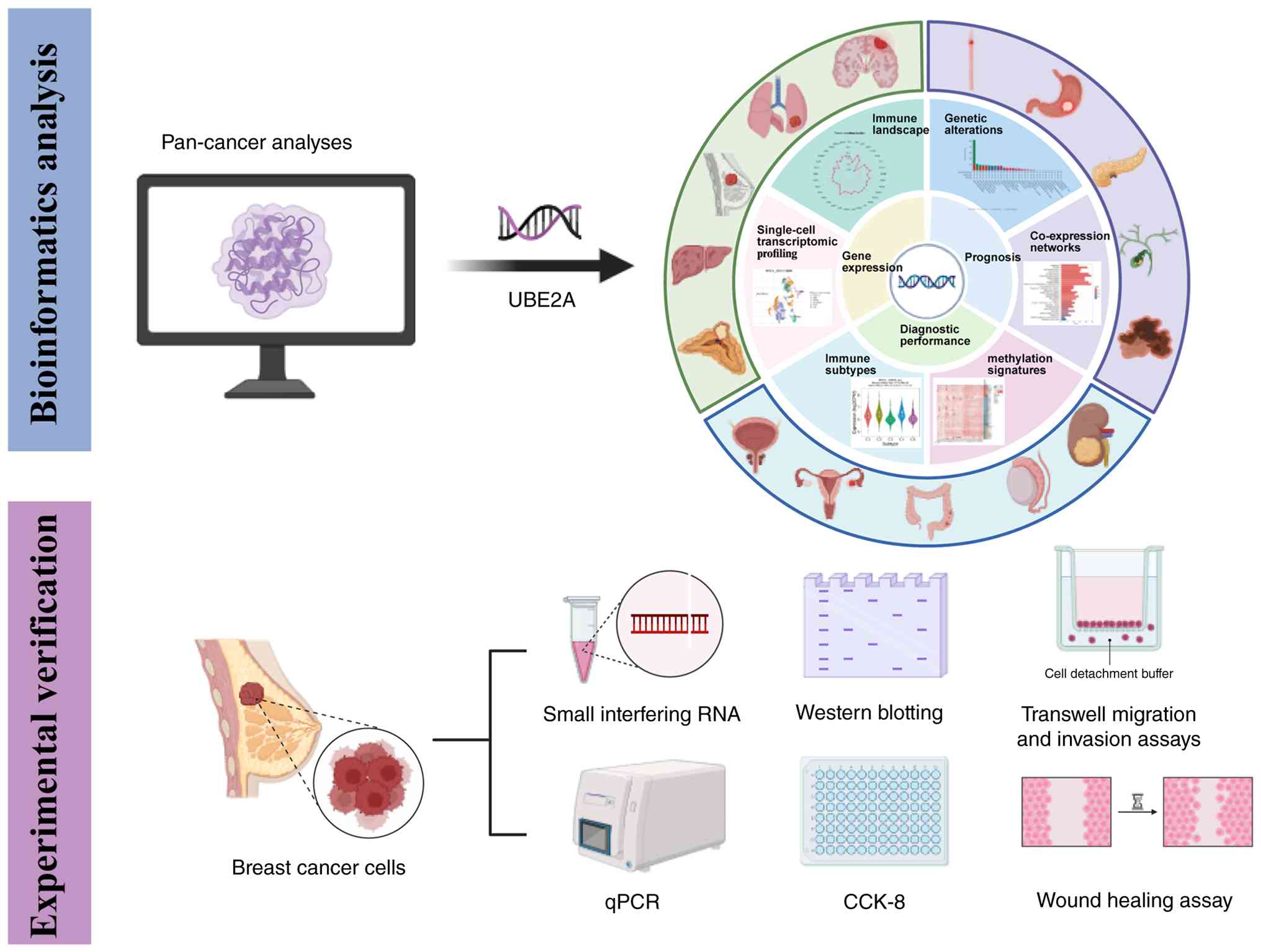
Study overview. An integrated
pan-cancer analysis based on The Cancer Genome Atlas datasets was
performed to systematically characterize the expression patterns,
prognostic value, epigenetic regulation and immune relevance of
UBE2A. In vitro functional assays in breast cancer cell
lines further validated the oncogenic role of UBE2A in cancer
progression. The graphical abstract was created using BioRender.
UBE2A, ubiquitin conjugating enzyme E2A; qPCR, quantitative PCR;
CCK-8; Cell Counting Kit-8.

Figure 2

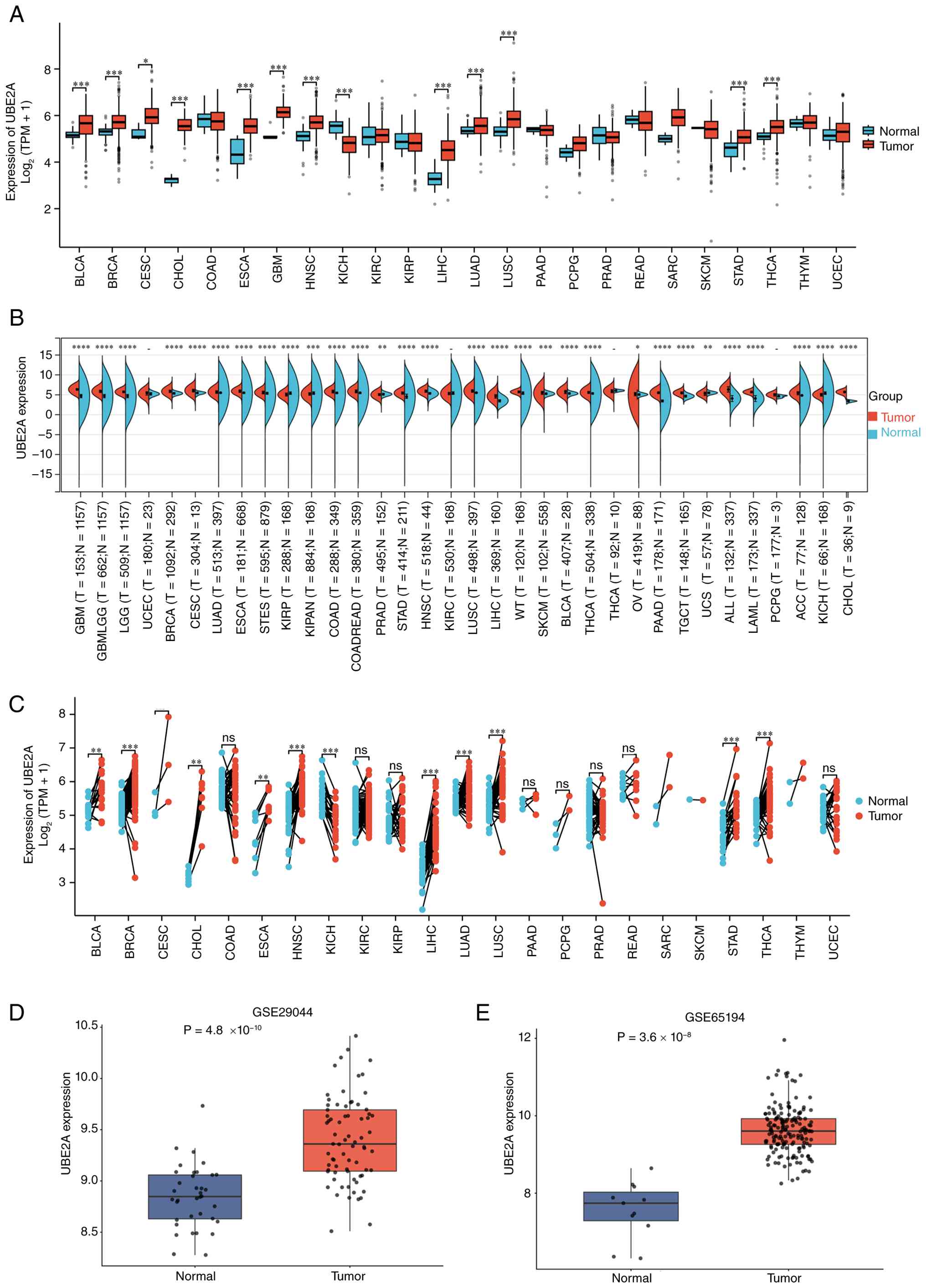
Expression landscape of UBE2A across
human cancers. (A) Differential expression analysis of UBE2A
between tumor and normal tissues across TCGA cancer types. (B)
UBE2A expression profiles based on integrated TCGA and
Genotype-Tissue Expression Project datasets. (C) Paired comparison
of UBE2A expression between tumor tissues and matched adjacent
normal tissues in TCGA cohorts. (D) Independent validation of UBE2A
expression in the breast cancer cohort GSE29044. (E) Independent
validation of UBE2A expression in the breast cancer cohort
GSE65194. *P<0.05, **P<0.01, ***P<0.001 and
****P<0.0001. UBE2A, ubiquitin conjugating enzyme E2A; TCGA, The
Cancer Genome Atlas; TPM, transcripts per million; ns, not
significant.

Figure 3

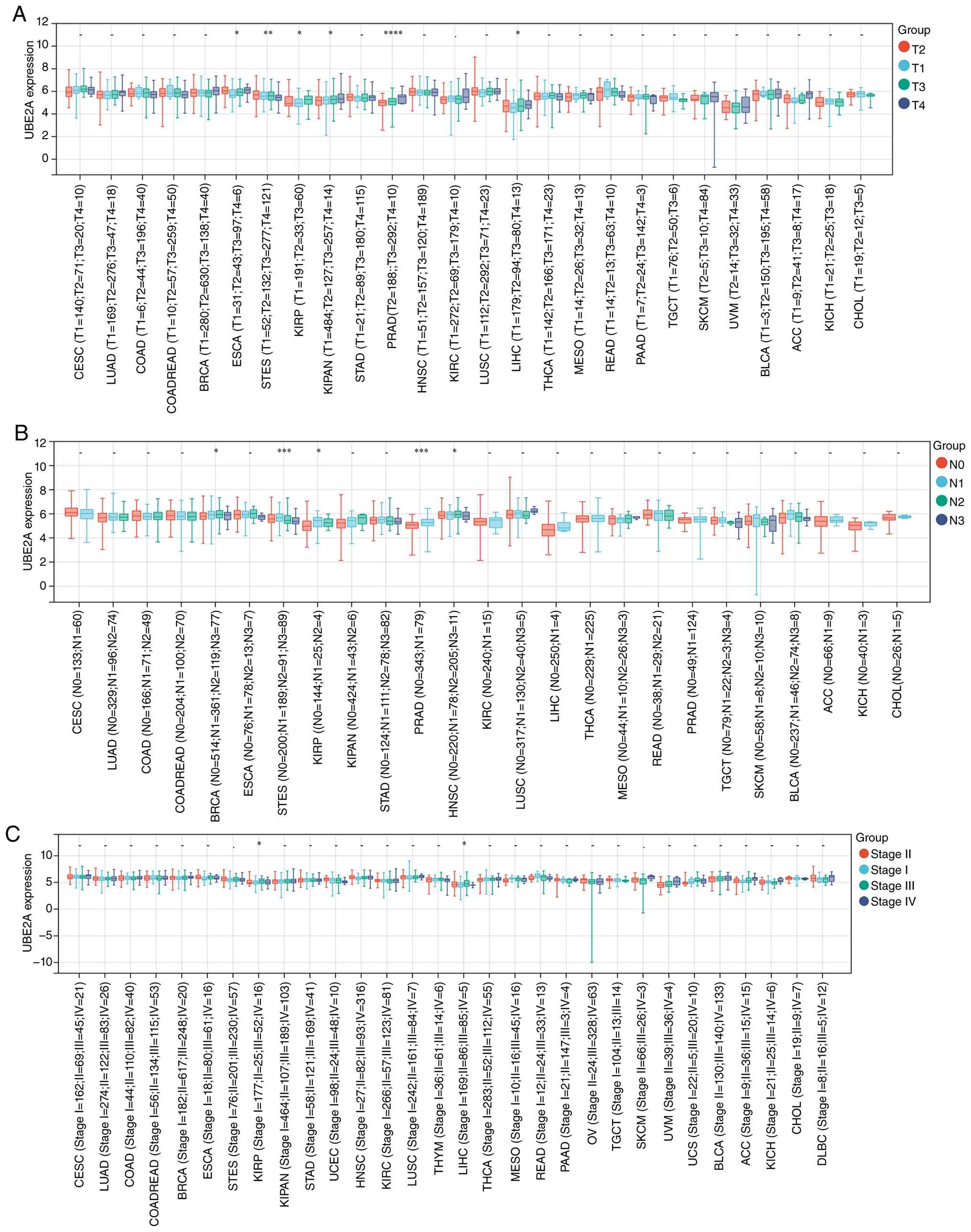
Associations between UBE2A expression
and clinicopathological parameters in pan-cancer analysis. (A)
Distribution of UBE2A expression across different T stages in
selected cancer types. (B) Association between UBE2A expression and
N stage across cancer types. (C) UBE2A expression according to
integrated TNM stage in pan-cancer cohorts. *P<0.05,
**P<0.01, ***P<0.001 and ****P<0.0001. UBE2A, ubiquitin
conjugating enzyme E2A.

Figure 4

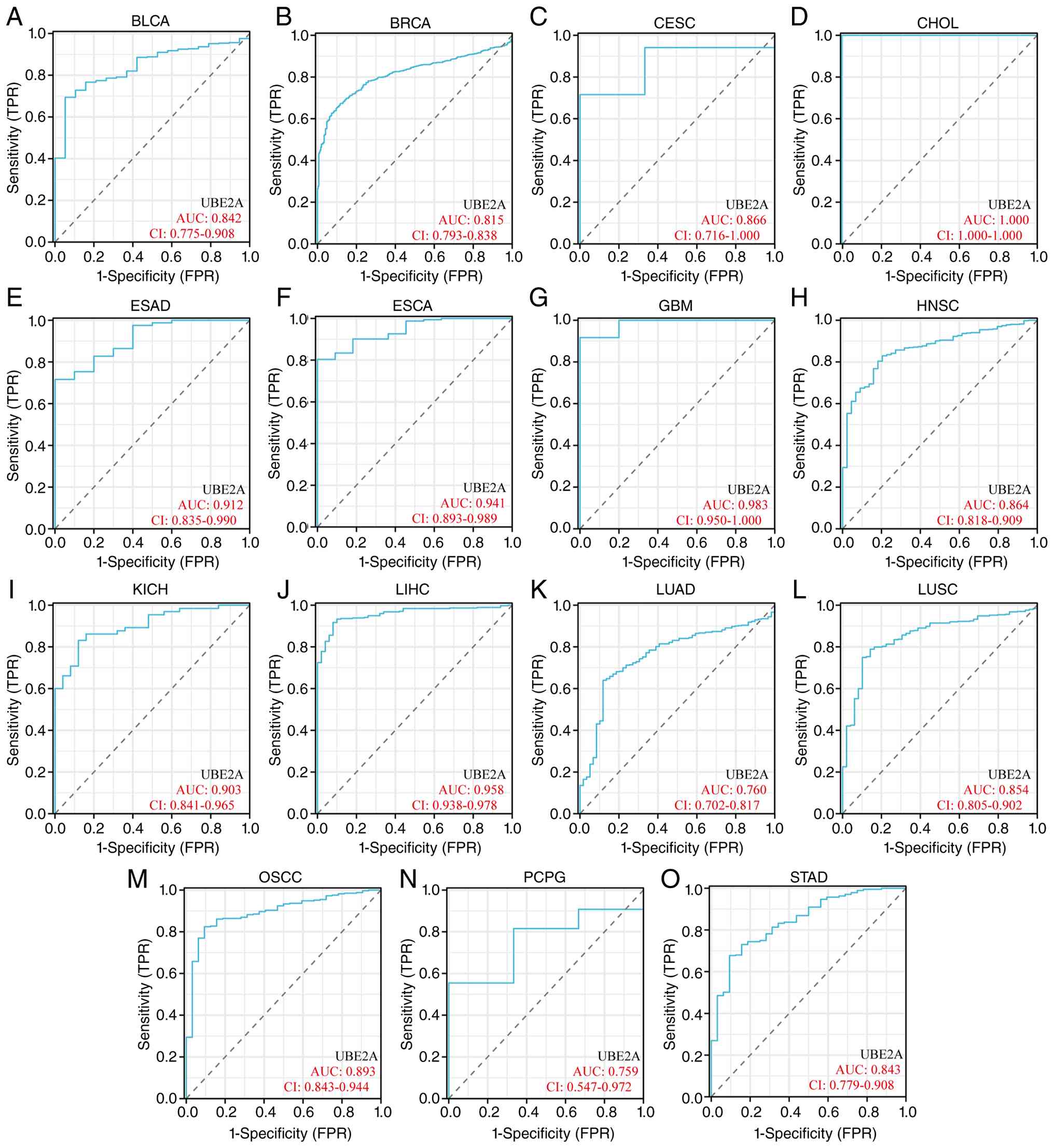
Diagnostic performance of UBE2A
expression across cancer types. Receiver operating characteristic
(ROC) curves evaluating the ability of UBE2A expression to
distinguish tumor tissues from normal tissues in (A) BLCA, (B)
BRCA, (C) CESC, (D) CHOL, (E) ESAD, (F) ESCA, (G) GBM, (H) HNSC,
(I) KICH, (J) LIHC, (K) LUAD, (L) LUSC, (M) OSCC, (N) PCPG and (O)
STAD. UBE2A, ubiquitin conjugating enzyme E2A; ROC, receiver
operating characteristic; AUC, area under the curve; FPR, false
positive rate; TRP, true positive rate.

Figure 5

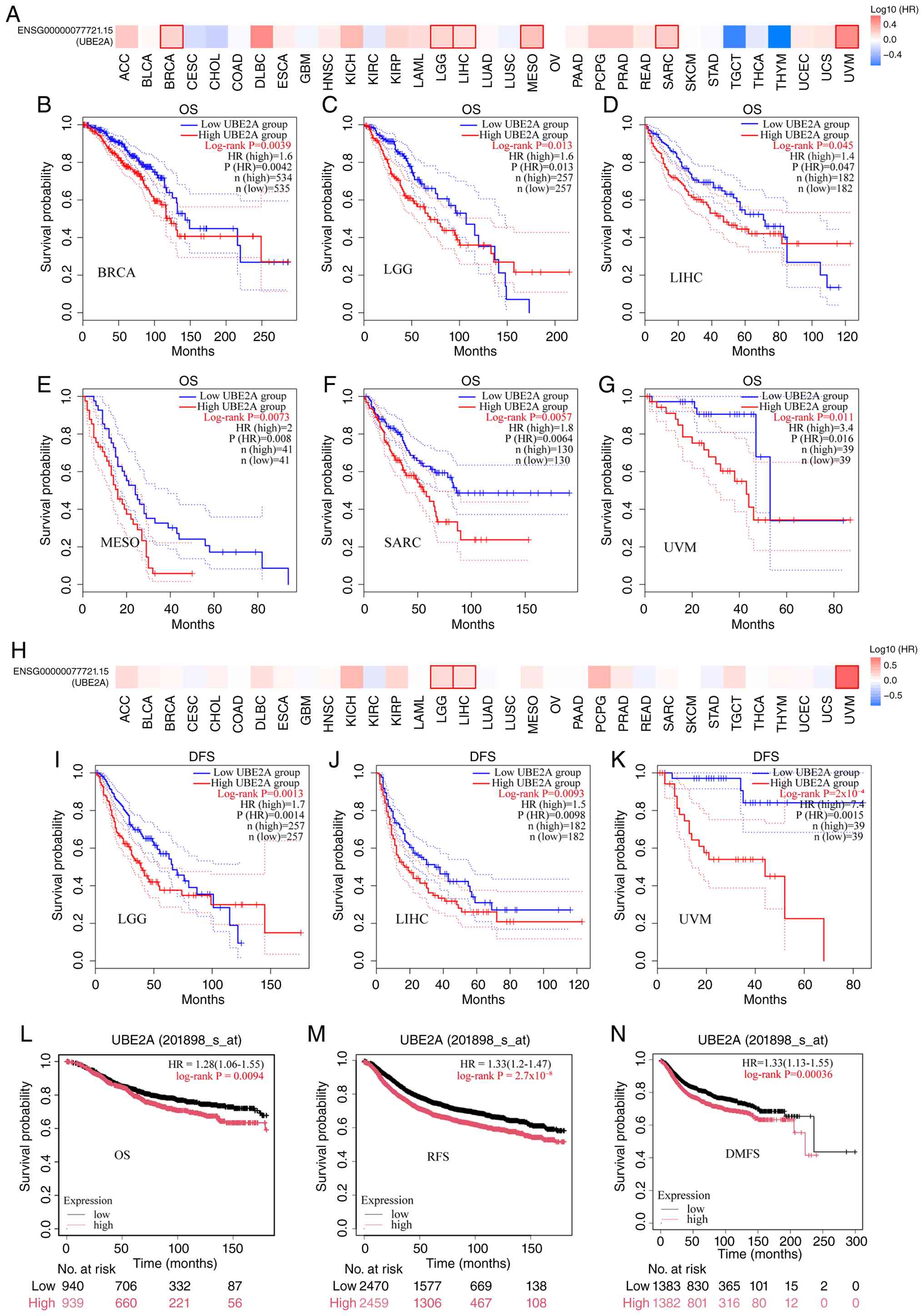
Prognostic relevance of UBE2A
expression across human cancers. (A) Overview of the associations
between UBE2A expression and OS across TCGA cancer types.
Kaplan-Meier analysis of OS in (B) BRCA, (C) LGG, (D) LIHC, (E)
MESO, (F) SARC and (G) UVM. (H) Overview of the associations
between UBE2A expression and DFS across TCGA cancer types.
Kaplan-Meier analysis of DFS in (I) LGG, (J) LIHC and (K) UVM. (L)
Kaplan-Meier Plotter validation of OS in BRCA. (M) Kaplan-Meier
Plotter validation of RFS in BRCA. (N) Kaplan-Meier Plotter
validation of DMFS in BRCA. UBE2A, ubiquitin conjugating enzyme
E2A; OS, overall survival; DFS, disease-free survival; RFS,
relapse-free survival; HR, hazard ratio.

Figure 6

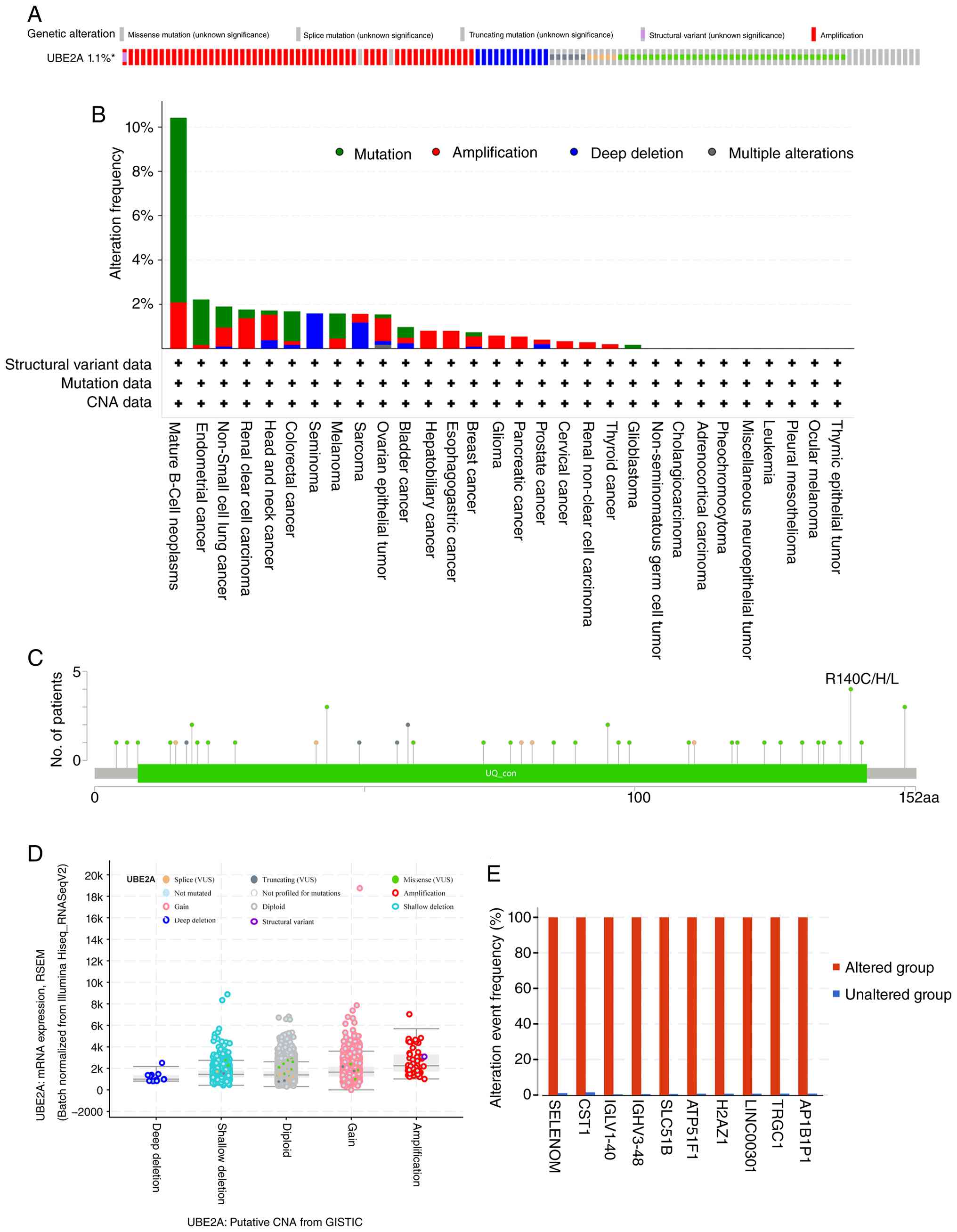
Genomic landscape of UBE2A
aberrations across cancer types. (A) Overall mutation frequency of
UBE2A across all cancer types. (B) Frequency of UBE2A alterations
across different tumor types. (C) Mutation site distribution in
UBE2A. (D) Classification of UBE2A alteration types. (E)
Co-mutation analysis of UBE2A and associated genes. UBE2A,
ubiquitin conjugating enzyme E2A; CNA, copy number alteration;
RSEM, RNA-Seq by expectation-maximization; VUS, variant of
uncertain significance; GISTIC, genomic identification of
significant targets in cancer.

Figure 7

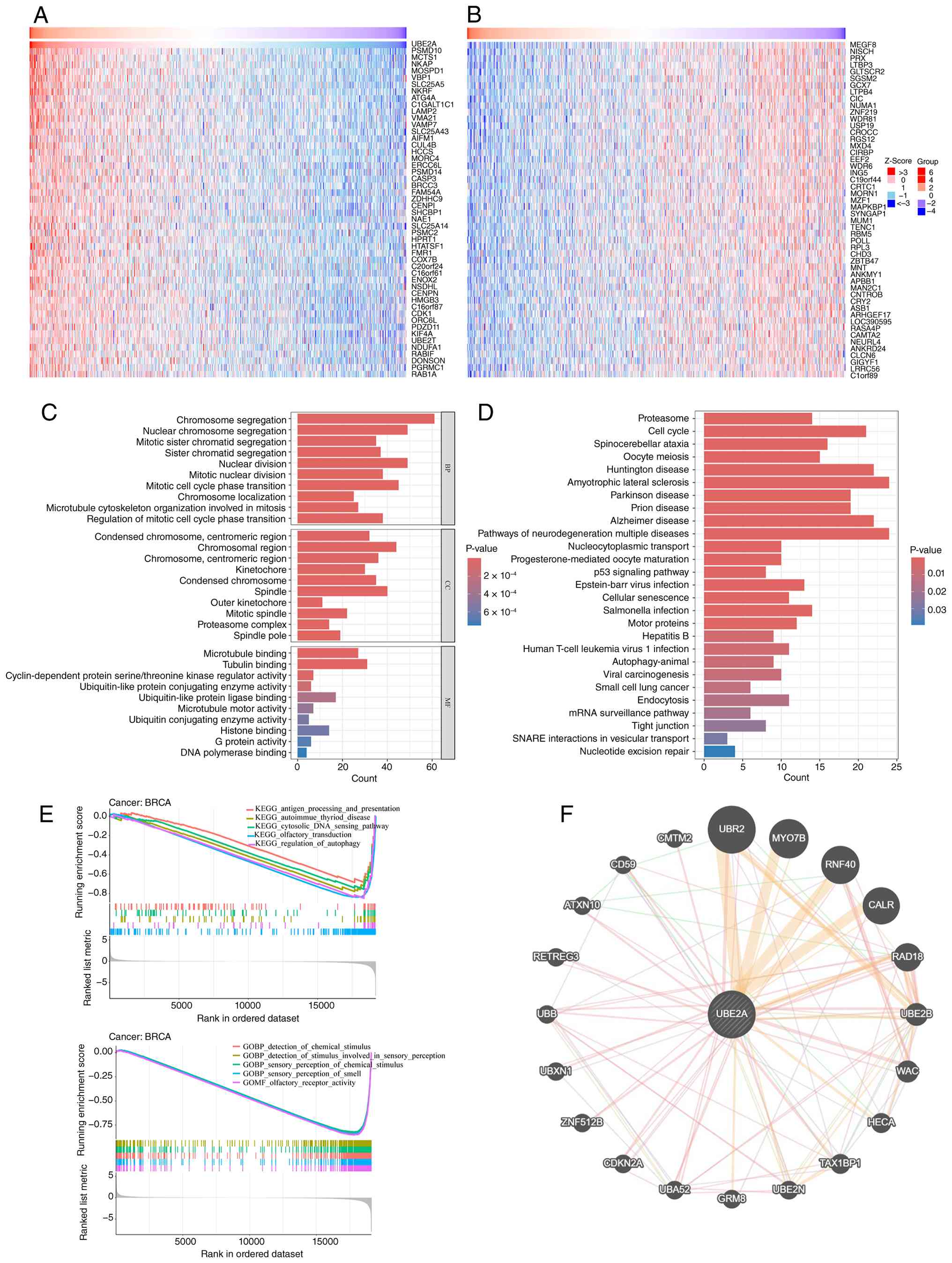
Co-expression analysis, functional
enrichment and PPI network of UBE2A. Heatmaps showing the top 50
genes positively (A) and negatively (B) correlated with UBE2A
expression. (C) GO enrichment analysis of UBE2A co-expressed genes.
(D) KEGG pathway enrichment analysis of UBE2A-associated gene sets.
(E) Gene Set Enrichment Analysis comparing high and low UBE2A
expression groups in the BRCA cohort. (F) PPI network of UBE2A
generated using GeneMANIA. UBE2A, ubiquitin conjugating enzyme E2A;
PPI, protein-protein interaction; GO, Gene Ontology; GOBP, GO
biological process; GOMF, GO molecular function; KEGG, Kyoto
Encyclopedia of Genes and Genomes.

Figure 8

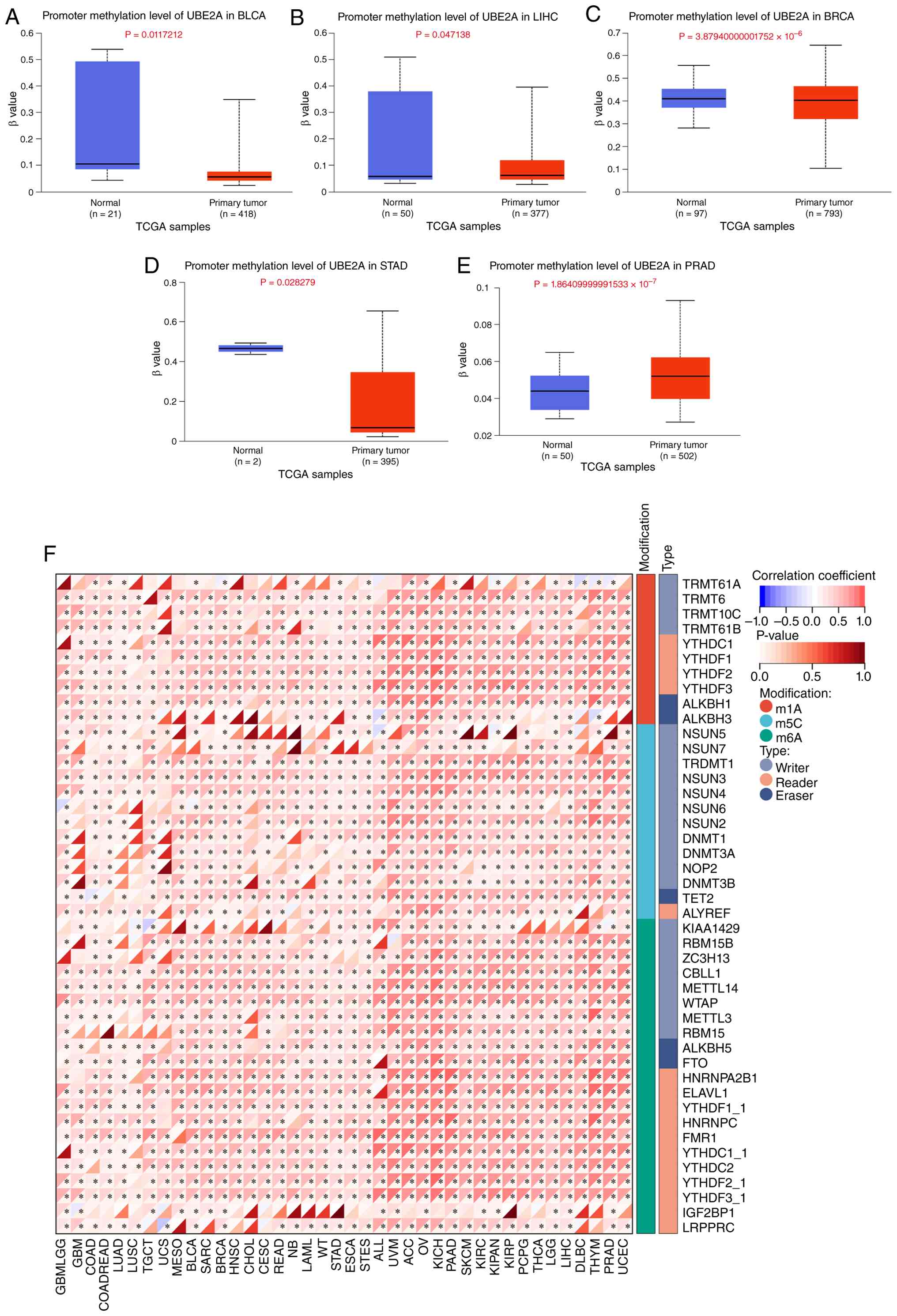
DNA promoter methylation and mRNA
methylation analysis of UBE2A across human cancers. Promoter
methylation levels of UBE2A in (A) BLCA, (B) LIHC, (C) BRCA, (D)
STAD and (E) PRAD from the University of Alabama at Birmingham
Cancer Data Analysis Portal database. (F) Correlation between UBE2A
expression and RNA methylation-associated genes across cancers.
*P<0.05. UBE2A, ubiquitin conjugating enzyme E2A; TCGA, The
Cancer Genome Atlas.

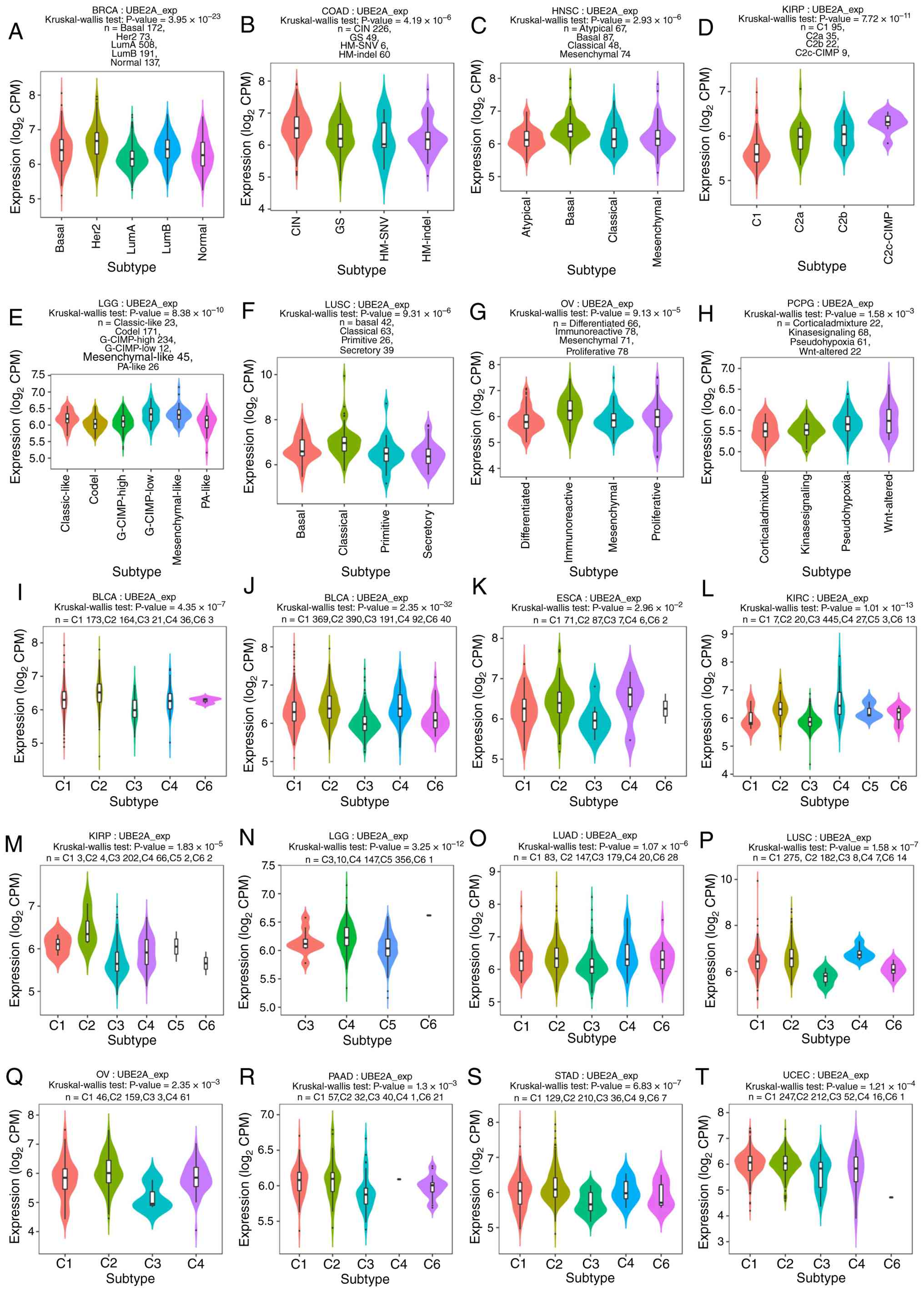
Figure 9

UBE2A expression patterns across
molecular and immune subtypes in 33 cancer types. (A-H) UBE2A
expression among molecular subtypes in (A) BRCA, (B) COAD, (C)
HNSC, (D) KIRP, (E) LGG and (F) LUSC, (G) OV and (H) PCPG. (I-T)
UBE2A expression profiles across immune subtypes in (I) BLBA, (J)
BRCA, (K) ESCA, (L) KIRC, (M) KIRP, (N) LGG, (O) LUAD, (P) LUSC,
(Q) OV, (R) PAAD, (S) STAD and (T) UCEC. UBE2A, ubiquitin
conjugating enzyme E2A; Lum, luminal; CIN, chromosomal instability;
GS, genomically stable; HM, hypermutated; SNV, single nucleotide
variant; indel, insertion/deletion; G-CIMP, glioma CpG island
methylator phenotype.

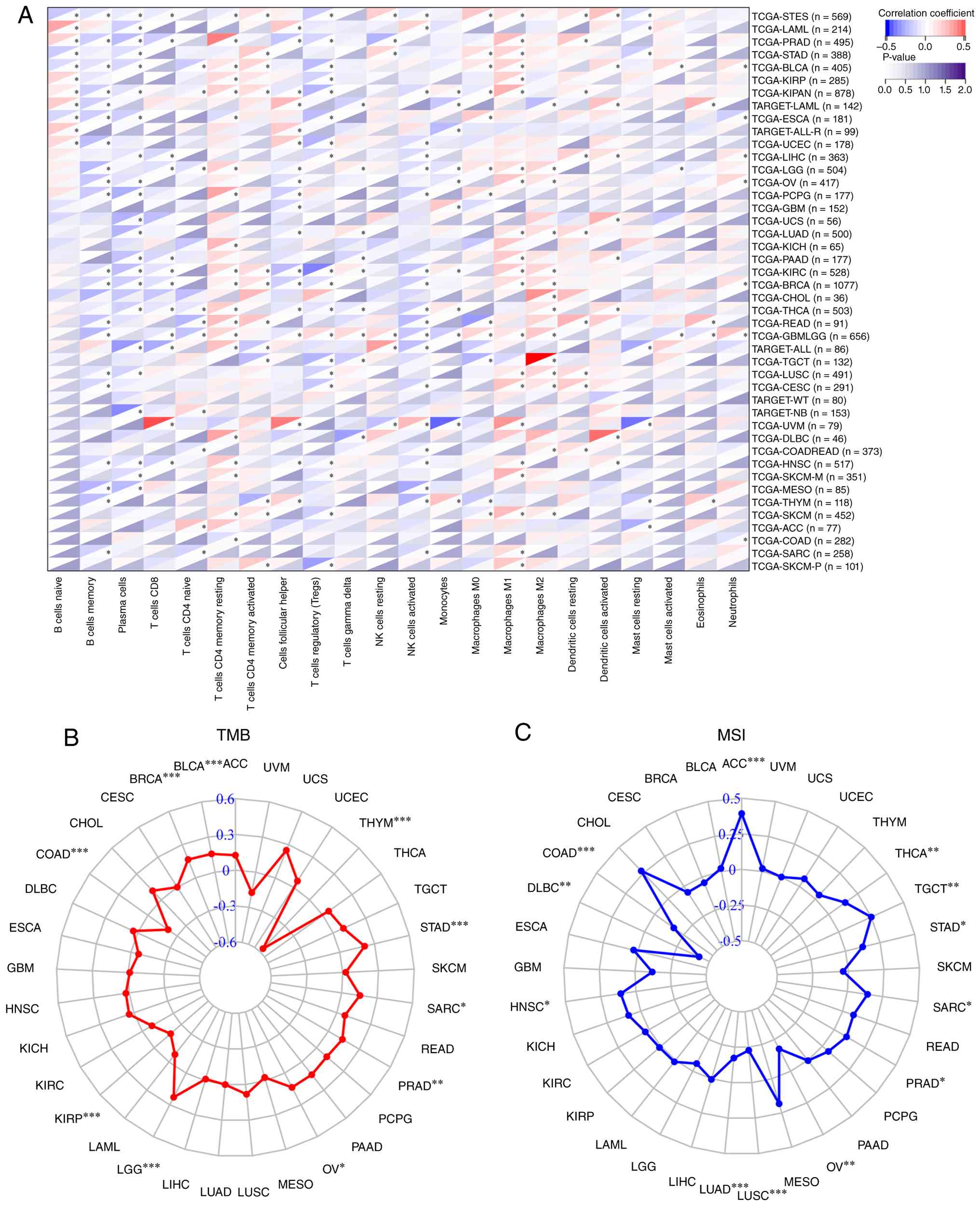
Figure 10

Associations of UBE2A expression with
the immune microenvironment, TMB and MSI across cancers. (A)
Heatmap showing the correlation between UBE2A expression and
infiltration levels of 22 immune cell types across various cancers.
(B) Correlation analysis between UBE2A expression and TMB in
pan-cancer. (C) Correlation between UBE2A expression and MSI across
cancers. *P<0.05, **P<0.01 and ***P<0.001. UBE2A,
ubiquitin conjugating enzyme E2A; TMB, tumor mutational burden;
MSI, microsatellite instability.

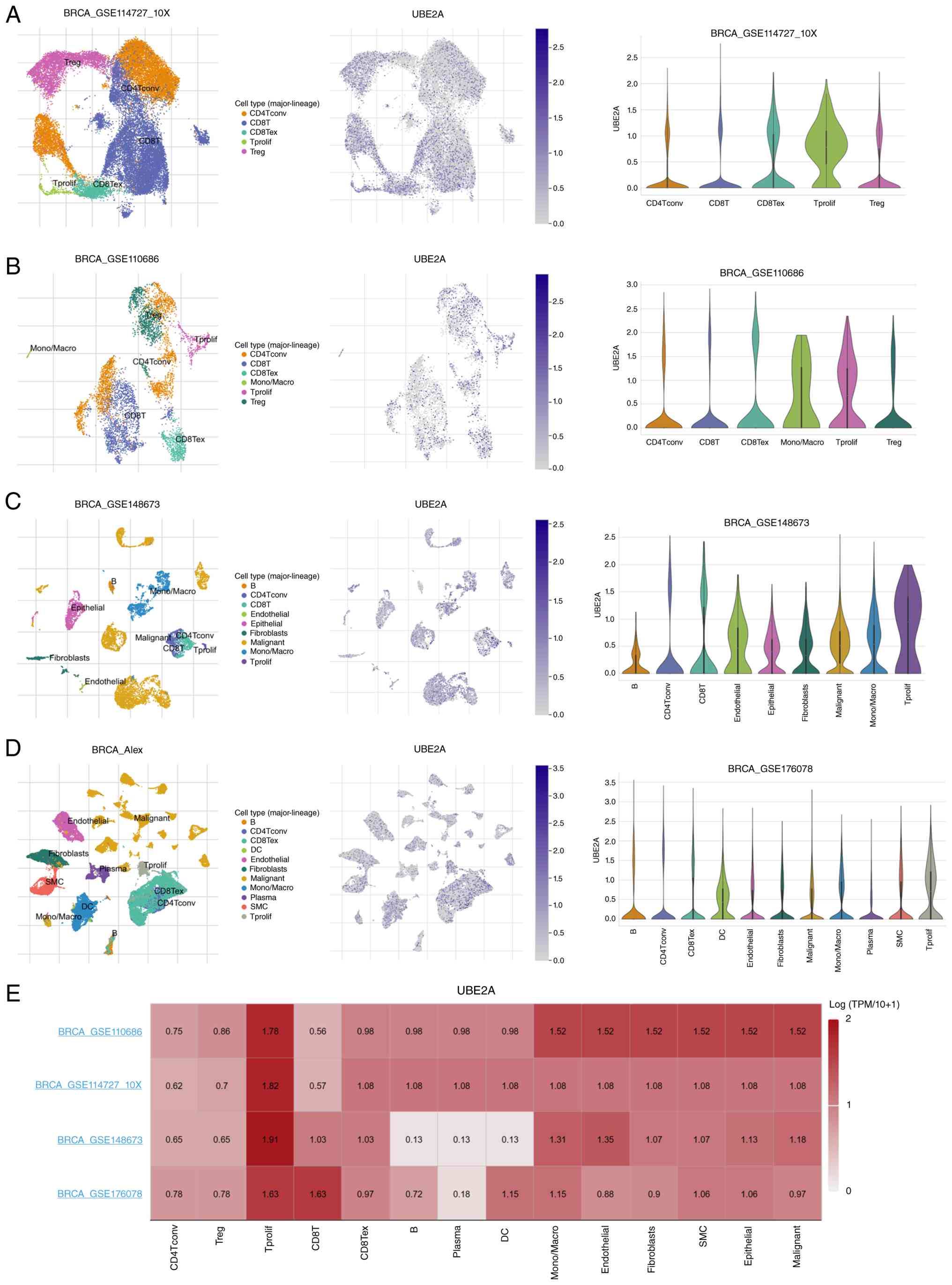
Figure 11

Single-cell transcriptomic
characterization of UBE2A expression in breast cancer. Uniform
Manifold Approximation and Projection and Violin plots showing the
expression levels of UBE2A across different cellular subpopulations
in BRCA single-cell RNA sequencing datasets (A) GSE114727, (B)
GSE110686, (C) GSE148673 and (D) GSE176078. (E) UBE2A expression
landscape across cellular subpopulations, highlighting preferential
expression in proliferative T-cell populations. UBE2A, ubiquitin
conjugating enzyme E2A; TPM, transcripts per million; DC, dendritic
cell; SMC, smooth muscle cell; conv, conventional T cell; ex,
exhausted T cell; Tprolif, proliferative T-cell; Treg, regulatory
T-cell.

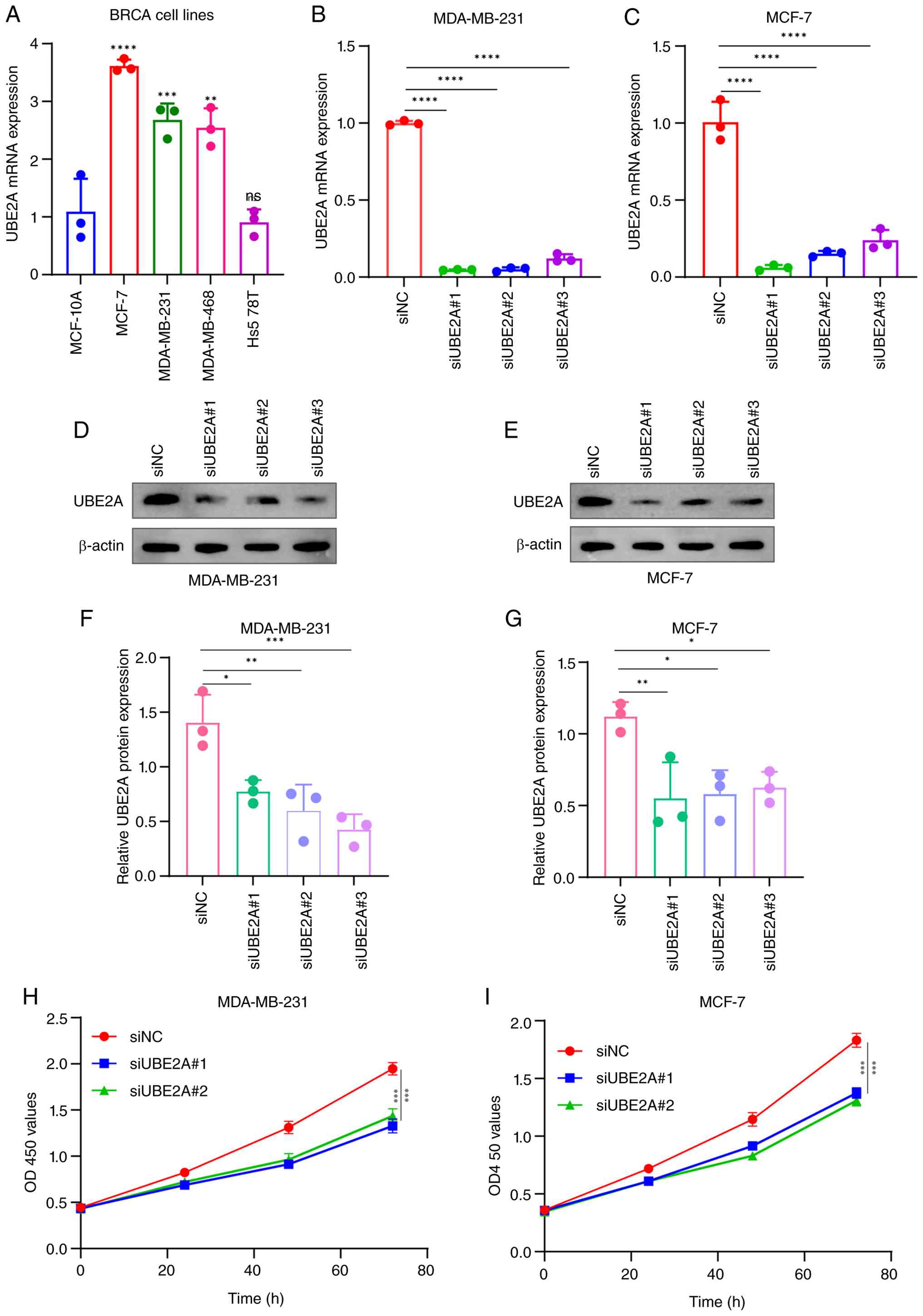
Figure 12

UBE2A expression in BRCA cell lines
and validation of siRNA-mediated knockdown. (A) Relative UBE2A mRNA
levels in BRCA cell lines and the normal breast epithelial cell
line determined by qPCR. (B) qPCR analysis of UBE2A mRNA levels
following transfection with three siRNAs in MDA-MB-231 cells. (C)
qPCR analysis of UBE2A mRNA levels following transfection with
three siRNAs in MCF-7 cells. (D-G) Western blotting assessment of
UBE2A protein expression after siRNA transfection. (H and I) Cell
Counting Kit-8 assays evaluating the effects of UBE2A knockdown on
proliferation in MDA-MB-231 and MCF-7 cells. Statistical
comparisons were performed relative to the siNC group. *P<0.05,
**P<0.01, ***P<0.001 and ****P<0.0001. UBE2A, ubiquitin
conjugating enzyme E2A; si, small interfering; NC, negative
control; qPCR, quantitative PCR; OD450, optical density at 450 nm;
ns, not significant.

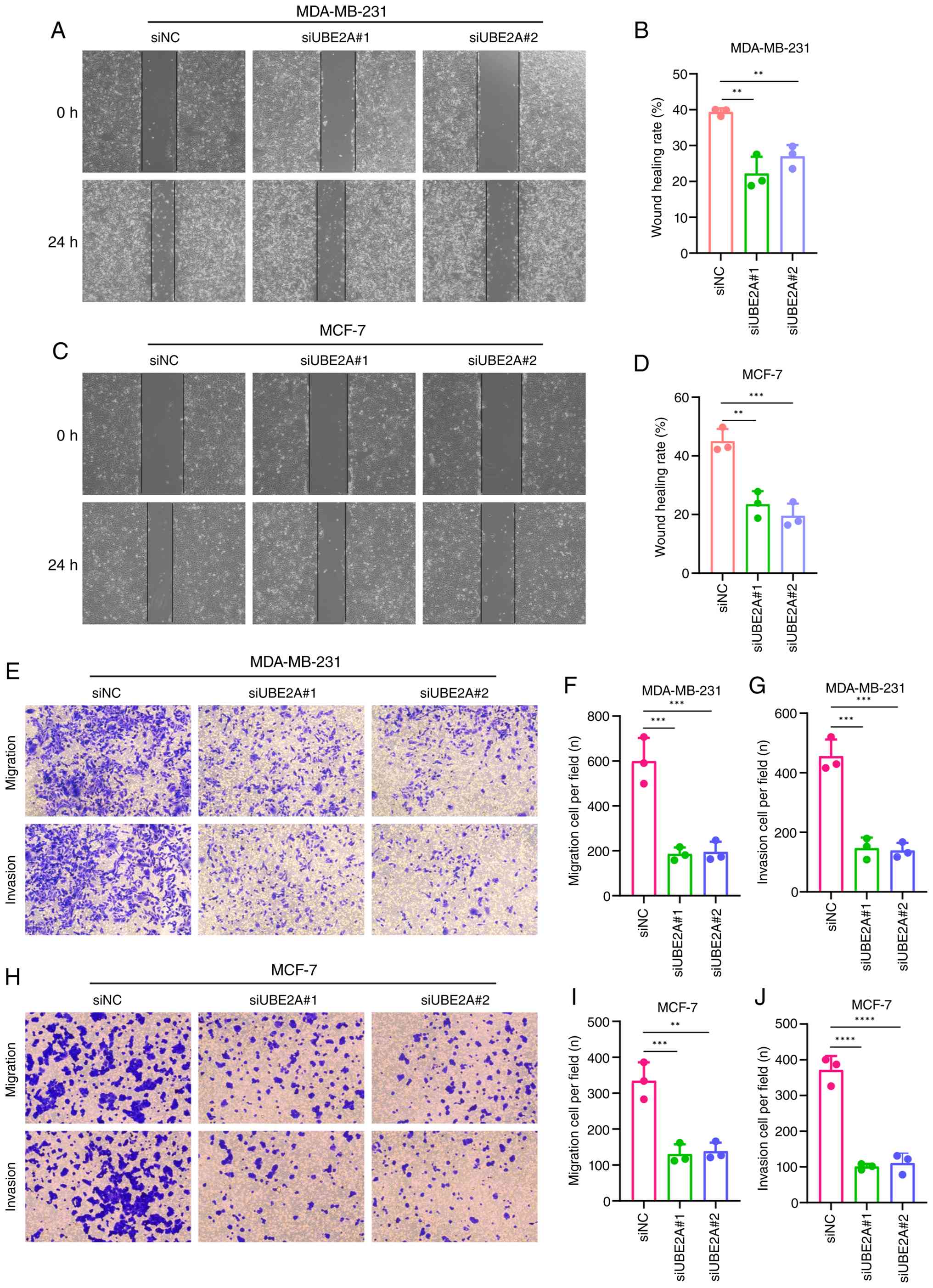
Figure 13

Effects of UBE2A knockdown on
migration and invasion of BRCA cells. (A) Representative wound
healing images of MDA-MB-231 cells following UBE2A knockdown.
Magnification, ×4. (B) Quantitative analysis of wound closure in
MDA-MB-231 cells. (C) Representative wound healing images of MCF-7
cells following UBE2A knockdown. Magnification, ×4. (D)
Quantitative analysis of wound closure in MCF-7 cells. (E)
Representative images of Transwell migration and invasion assays in
MDA-MB-231 cells. Magnification, ×10. (F) Quantification of
migrated MDA-MB-231 cells. (G) Quantification of invaded MDA-MB-231
cells. (H) Representative images of Transwell migration and
invasion assays in MCF-7 cells. Magnification, ×10. (I)
Quantification of migrated MCF-7 cells. (J) Quantification of
invaded MCF-7 cells. Statistical comparisons were performed
relative to the siNC group. Statistical comparisons were performed
relative to the siNC group. **P<0.01, ***P<0.001 and
****P<0.0001. UBE2A, ubiquitin conjugating enzyme E2A; si, small
interfering; NC, negative control.
View References

1 

Bray F, Laversanne M, Sung H, Ferlay J, Siegel RL, Soerjomataram I and Jemal A: Global cancer statistics 2022: GLOBOCAN estimates of incidence and mortality worldwide for 36 cancers in 185 countries. CA Cancer J Clin. 74:229–263. 2024.PubMed/NCBI

2 

Bizuayehu HM, Ahmed KY, Kibret GD, Dadi AF, Belachew SA, Bagade T, Tegegne TK, Venchiarutti RL, Kibret KT, Hailegebireal AH, et al: Global disparities of cancer and its projected burden in 2050. JAMA Netw Open. 7:e24431982024. View Article : Google Scholar : PubMed/NCBI

3 

Tanaka M, Lum L, Hu KH, Chaudhary P, Hughes S, Ledezma-Soto C, Samad B, Superville D, Ng K, Chumber A, et al: Tumor cell heterogeneity drives spatial organization of the intratumoral immune response. J Exp Med. 222:e202422822025. View Article : Google Scholar : PubMed/NCBI

4 

MacDonald WJ, Purcell C, Pinho-Schwermann M, Stubbs NM, Srinivasan PR and El-Deiry WS: Heterogeneity in cancer. Cancers. 17:4412025. View Article : Google Scholar : PubMed/NCBI

5 

Wang J, Chen Q, Shan Q, Liang T, Forde P and Zheng L: Clinical development of immuno-oncology therapeutics. Cancer Lett. 617:2176162025. View Article : Google Scholar : PubMed/NCBI

6 

Zhang M, Liu C, Tu J, Tang M, Ashrafizadeh M, Nabavi N, Sethi G, Zhao P and Liu S: Advances in cancer immunotherapy: Historical perspectives, current developments, and future directions. Mol Cancer. 24:1362025. View Article : Google Scholar : PubMed/NCBI

7 

Saw PE, Liu Q, Wong PP and Song E: Cancer stem cell mimicry for immune evasion and therapeutic resistance. Cell Stem Cell. 31:1101–1112. 2024. View Article : Google Scholar : PubMed/NCBI

8 

Barkley D, Moncada R, Pour M, Liberman DA, Dryg I, Werba G, Wang W, Baron M, Rao A, Xia B, et al: Cancer cell states recur across tumor types and form specific interactions with the tumor microenvironment. Nat Genet. 54:1192–1201. 2022. View Article : Google Scholar : PubMed/NCBI

9 

Wang X, Wang J, Wang Q, Ding G, Huang Y and Feng Y: Precision cytokine modulation to overcome tumor microenvironment-driven resistance to immune checkpoint blockade. Biochim Biophys Acta Rev Cancer. 1881:1895362026. View Article : Google Scholar : PubMed/NCBI

10 

Wickramasekara R, Jones V, Zhao Y, Luo S, Sun G and Huang RP: Mechanisms of therapy resistance in the tumor microenvironment: Insights from antibody array-based cytokine profiling. Drug Resist Updat. 86:1013782026. View Article : Google Scholar : PubMed/NCBI

11 

Cen X, Lan Y, Zou J, Chen R, Hu C, Tong Y, Zhang C, Chen J, Wang Y, Zhou R, et al: Pan-cancer analysis shapes the understanding of cancer biology and medicine. Cancer Commun (Lond). 45:728–746. 2025. View Article : Google Scholar : PubMed/NCBI

12 

Knol JC, Lyu M, Böttger F, Nunes Monteiro M, Pham TV, Rolfs F, Vallés-Martí A, Schelfhorst T, de Goeij-de Haas RR, Bijnsdorp IV, et al: The pan-cancer proteome atlas, a mass spectrometry-based landscape for discovering tumor biology, biomarkers, and therapeutic targets. Cancer Cell. 43:1328–1346.e8. 2025. View Article : Google Scholar : PubMed/NCBI

13 

Bai L, Lyu J, Feng J, Qiao X, Qu Y, Yang G, Zhu Y, Liao L, Gao H, Zang A, et al: Cancer biomarkers discovered using pan-cancer plasma proteomic profiling. Nat Biomed Eng. 10:16–38. 2025. View Article : Google Scholar : PubMed/NCBI

14 

Hao Q, Zhou T, Yan H, Ren Z, Mao W, Huang LB, Chen YY, Wang Y, Xiao M, He Y, et al: A pan-cancer single cell landscape reveals heterogeneity and functional diversity of double-negative T cells. Mol Cancer. 25:242026. View Article : Google Scholar : PubMed/NCBI

15 

Lusby R, Demirdizen E, Inayatullah M, Kundu P, Maiques O, Zhang Z, Terp MG, Sanz-Moreno V and Tiwari VK: Pan-cancer drivers of metastasis. Mol Cancer. 24:22025. View Article : Google Scholar : PubMed/NCBI

16 

Cai F, Chen P, Chen L, Biskup E, Liu Y, Chen PC, Chang JF, Jiang W, Jing Y, Chen Y, et al: Human RAD6 promotes G1-S transition and cell proliferation through upregulation of cyclin D1 expression. PLoS One. 9:e1137272014. View Article : Google Scholar : PubMed/NCBI

17 

Hong JH, Kaustov L, Coyaud E, Srikumar T, Wan J, Arrowsmith C and Raught B: KCMF1 (potassium channel modulatory factor 1) Links RAD6 to UBR4 (ubiquitin N-recognin domain-containing E3 ligase 4) and lysosome-mediated degradation. Mol Cell Proteomics. 14:674–685. 2015. View Article : Google Scholar : PubMed/NCBI

18 

Somasagara RR, Spencer SM, Tripathi K, Clark DW, Mani C, Madeira da Silva L, Scalici J, Kothayer H, Westwell AD, Rocconi RP and Palle K: RAD6 promotes DNA repair and stem cell signaling in ovarian cancer and is a promising therapeutic target to prevent and treat acquired chemoresistance. Oncogene. 36:6680–6690. 2017. View Article : Google Scholar : PubMed/NCBI

19 

Barnsby-Greer L, Mabbitt PD, Dery MA, Squair DR, Wood NT, Lamoliatte F, Lange SM and Virdee S: UBE2A and UBE2B are recruited by an atypical E3 ligase module in UBR4. Nat Struct Mol Biol. 31:351–363. 2024. View Article : Google Scholar : PubMed/NCBI

20 

Ramatenki V, Potlapally SR, Dumpati RK, Vadija R and Vuruputuri U: Homology modeling and virtual screening of ubiquitin conjugation enzyme E2A for designing a novel selective antagonist against cancer. J Recept Signal Transduct Res. 35:536–549. 2015. View Article : Google Scholar : PubMed/NCBI

21 

Magistroni V, Mauri M, D'Aliberti D, Mezzatesta C, Crespiatico I, Nava M, Fontana D, Sharma N, Parker W, Schreiber A, et al: De novo UBE2A mutations are recurrently acquired during chronic myeloid leukemia progression and interfere with myeloid differentiation pathways. Haematologica. 104:1789–1797. 2019. View Article : Google Scholar : PubMed/NCBI

22 

Yan Y, Nie Y, Peng C, Xing F, Ji S, Liu H and Zhu C: The circular RNA hsa_circ_0001394 promotes hepatocellular carcinoma progression by targeting the miR-527/UBE2A axis. Cell Death Discov. 8:812022. View Article : Google Scholar : PubMed/NCBI

23 

Wickham H: ggplot2: Elegant Graphics for Data Analysis. Springer-Verlag; New York, NY: 2016, Available from:. https://ggplot2.tidyverse.org

24 

Chen D, Xu L, Xing H, Shen W, Song Z, Li H, Zhu X, Li X, Wu L, Jiao H, et al: Sangerbox 2: Enhanced functionalities and update for a comprehensive clinical bioinformatics data analysis platform. Imeta. 3:e2382024. View Article : Google Scholar : PubMed/NCBI

25 

Colak D, Nofal A, Albakheet A, Nirmal M, Jeprel H, Eldali A, Al-Tweigeri T, Tulbah A, Ajarim D, Malik OA, et al: Age-specific gene expression signatures for breast tumors and cross-species conserved potential cancer progression markers in young women. PLoS One. 8:e632042013. View Article : Google Scholar : PubMed/NCBI

26 

Maire V, Némati F, Richardson M, Vincent-Salomon A, Tesson B, Rigaill G, Gravier E, Marty-Prouvost B, De Koning L, Lang G, et al: Polo-like kinase 1: A potential therapeutic option in combination with conventional chemotherapy for the management of patients with triple-negative breast cancer. Cancer Res. 73:813–823. 2012. View Article : Google Scholar : PubMed/NCBI

27 

Ru B, Wong CN, Tong Y, Zhong JY, Zhong SSW, Wu WC, Chu KC, Wong CY, Lau CY, Chen I, et al: TISIDB: An integrated repository portal for tumor-immune system interactions. Bioinformatics. 35:4200–4202. 2019. View Article : Google Scholar : PubMed/NCBI

28 

Robin X, Turck N, Hainard A, Tiberti N, Lisacek F, Sanchez JC and Müller M: pROC: An open-source package for R and S+ to analyze and compare ROC curves. BMC Bioinformatics. 12:772011. View Article : Google Scholar : PubMed/NCBI

29 

Tang Z, Kang B, Li C, Chen T and Zhang Z: GEPIA2: An enhanced web server for large-scale expression profiling and interactive analysis. Nucleic Acids Res. 47:W556–W560. 2019. View Article : Google Scholar : PubMed/NCBI

30 

Lánczky A and Győrffy B: Web-based survival analysis tool tailored for medical research (KMplot): Development and implementation. J Med Internet Res. 23:e276332021. View Article : Google Scholar : PubMed/NCBI

31 

Gao J, Aksoy BA, Dogrusoz U, Dresdner G, Gross B, Sumer SO, Sun Y, Jacobsen A, Sinha R, Larsson E, et al: Integrative analysis of complex cancer genomics and clinical profiles using the cBioPortal. Sci Signal. 6:pl12013. View Article : Google Scholar : PubMed/NCBI

32 

Vasaikar SV, Straub P, Wang J and Zhang B: LinkedOmics: Analyzing multi-omics data within and across 32 cancer types. Nucleic Acids Res. 46:D956–D963. 2018. View Article : Google Scholar : PubMed/NCBI

33 

Balakrishnan R, Harris MA, Huntley R, Van Auken K and Cherry JM: A guide to best practices for Gene Ontology (GO) manual annotation. Database (Oxford). 2013:bat0542013. View Article : Google Scholar : PubMed/NCBI

34 

Kanehisa M and Goto S: KEGG: Kyoto encyclopedia of genes and genomes. Nucleic Acids Res. 28:27–30. 2000. View Article : Google Scholar : PubMed/NCBI

35 

Yu G, Wang LG, Han Y and He QY: clusterProfiler: An R package for comparing biological themes among gene clusters. OMICS. 16:284–287. 2012. View Article : Google Scholar : PubMed/NCBI

36 

Franz M, Rodriguez H, Lopes C, Zuberi K, Montojo J, Bader GD and Morris Q: GeneMANIA update 2018. Nucleic Acids Res. 46:W60–W64. 2018. View Article : Google Scholar : PubMed/NCBI

37 

Lee AV, Nestler KA and Chiappinelli KB: Therapeutic targeting of DNA methylation alterations in cancer. Pharmacol Ther. 258:1086402024. View Article : Google Scholar : PubMed/NCBI

38 

Xu C, Xu X, Huang Y, Shang S and Ma L: RNA methylation: A new promising biomaker in cancer liquid biopsy. Biochim Biophys Acta Rev Cancer. 1880:1893372025. View Article : Google Scholar : PubMed/NCBI

39 

Chandrashekar DS, Karthikeyan SK, Korla PK, Patel H, Shovon AR, Athar M, Netto GJ, Qin ZS, Kumar S, Manne U, et al: UALCAN: An update to the integrated cancer data analysis platform. Neoplasia. 25:18–27. 2022. View Article : Google Scholar : PubMed/NCBI

40 

Newman AM, Liu CL, Green MR, Gentles AJ, Feng W, Xu Y, Hoang CD, Diehn M and Alizadeh AA: Robust enumeration of cell subsets from tissue expression profiles. Nat Methods. 12:453–457. 2015. View Article : Google Scholar : PubMed/NCBI

41 

Li T, Fan J, Wang B, Traugh N, Chen Q, Liu JS, Li B and Liu XS: TIMER: A web server for comprehensive analysis of tumor-infiltrating immune cells. Cancer Res. 77:e108–e110. 2017. View Article : Google Scholar : PubMed/NCBI

42 

Racle J and Gfeller D: EPIC: A tool to estimate the proportions of different cell types from bulk gene expression data. Methods Mol Biol. 2120:233–248. 2020. View Article : Google Scholar : PubMed/NCBI

43 

Plattner C, Finotello F and Rieder D: Deconvoluting tumor-infiltrating immune cells from RNA-seq data using quanTIseq. Methods Enzymol. 636:261–285. 2019.PubMed/NCBI

44 

Aran D, Hu Z and Butte AJ: xCell: Digitally portraying the tissue cellular heterogeneity landscape. Genome Biol. 18:2202017. View Article : Google Scholar : PubMed/NCBI

45 

Han Y, Wang Y, Dong X, Sun D, Liu Z, Yue J, Wang H, Li T and Wang C: TISCH2: Expanded datasets and new tools for single-cell transcriptome analyses of the tumor micro-environment. Nucleic Acids Res. 51:D1425–D1431. 2023. View Article : Google Scholar : PubMed/NCBI

46 

Azizi E, Carr AJ, Plitas G, Cornish AE, Konopacki C, Prabhakaran S, Nainys J, Wu K, Kiseliovas V, Setty M, et al: Single-cell map of diverse immune phenotypes in the breast tumor microenvironment. Cell. 174:1293–1308.e36. 2018. View Article : Google Scholar : PubMed/NCBI

47 

Savas P, Virassamy B, Ye C, Salim A, Mintoff CP, Caramia F, Salgado R, Byrne DJ, Teo ZL, Dushyanthen S, et al: Single-cell profiling of breast cancer T cells reveals a tissue-resident memory subset associated with improved prognosis. Nat Med. 24:986–993. 2018. View Article : Google Scholar : PubMed/NCBI

48 

Gao R, Bai S, Henderson YC, Lin Y, Schalck A, Yan Y, Kumar T, Hu M, Sei E, Davis A, et al: Delineating copy number and clonal substructure in human tumors from single-cell transcriptomes. Nat Biotechnol. 39:599–608. 2021. View Article : Google Scholar : PubMed/NCBI

49 

Wu SZ, Al-Eryani G, Roden DL, Junankar S, Harvey K, Andersson A, Thennavan A, Wang C, Torpy JR, Bartonicek N, et al: A single-cell and spatially resolved atlas of human breast cancers. Nat Genet. 53:1334–1347. 2021. View Article : Google Scholar : PubMed/NCBI

50 

Livak KJ and Schmittgen TD: Analysis of relative gene expression data using real-time quantitative PCR and the 2(−Delta Delta C(T)) method. Methods. 25:402–408. 2001. View Article : Google Scholar : PubMed/NCBI

51 

Zheng M: Super-high tumor mutational burden predicts complete remission following immunotherapy: From Peto's paradox to druggable cancer hallmark. J Immunother Cancer. 13:e0104862025. View Article : Google Scholar : PubMed/NCBI

52 

Landre T and Des Guetz G: Microsatellite instability-high status as a pan-cancer biomarker for immunotherapy efficacy. Cancer Immunol Immunother. 74:1222025. View Article : Google Scholar : PubMed/NCBI

53 

Cheng X, Peng T, Chu T, Yang Y, Liu J, Gao Q, Cao C and Wei J: Application of single-cell and spatial omics in deciphering cellular hallmarks of cancer drug response and resistance. J Hematol Oncol. 18:702025. View Article : Google Scholar : PubMed/NCBI

54 

Tirosh I and Suva ML: Cancer cell states: Lessons from ten years of single-cell RNA-sequencing of human tumors. Cancer Cell. 42:1497–1506. 2024. View Article : Google Scholar : PubMed/NCBI

55 

Siegel RL, Giaquinto AN and Jemal A: Cancer statistics, 2024. CA Cancer J Clin. 74:12–49. 2024.PubMed/NCBI

56 

Diao X, Guo C, Jin Y, Li B, Gao X, Du X, Chen Z, Jo M, Zeng Y, Ding C, et al: Cancer situation in China: An analysis based on the global epidemiological data released in 2024. Cancer Commun (Lond). 45:178–197. 2025. View Article : Google Scholar : PubMed/NCBI

57 

Cordani M, Dando I, Ambrosini G and González-Menéndez P: Signaling, cancer cell plasticity, and intratumor heterogeneity. Cell Commun Signal. 22:2552024. View Article : Google Scholar : PubMed/NCBI

58 

Shen JD, Fu SZ, Ju LL, Wang YF, Dai F, Liu ZX, Ji HZ, Shao JG and Bian ZL: High expression of ubiquitin-conjugating enzyme E2A predicts poor prognosis in hepatocellular carcinoma. Oncol Lett. 15:7362–7368. 2018.PubMed/NCBI

59 

Zou R, Xu H, Li F, Wang S and Zhu L: Increased expression of UBE2T predicting poor survival of epithelial ovarian cancer: Based on comprehensive analysis of UBE2s, clinical samples, and the GEO database. DNA Cell Biol. 40:36–60. 2021. View Article : Google Scholar : PubMed/NCBI

60 

Rosner K, Mehregan DR, Kirou E, Abrams J, Kim S, Campbell M, Frieder J, Lawrence K, Haynes B and Shekhar MP: Melanoma development and progression are associated with Rad6 Upregulation and β-catenin relocation to the cell membrane. J Skin Cancer. 2014:4392052014. View Article : Google Scholar : PubMed/NCBI

61 

Zamani-Ahmadmahmudi M, Nassiri SM and Soltaninezhad F: Development of an RNA sequencing-based prognostic gene signature in multiple myeloma. Br J Haematol. 192:310–321. 2021. View Article : Google Scholar : PubMed/NCBI

62 

Berdasco M and Esteller M: Clinical epigenetics: Seizing opportunities for translation. Nat Rev Genet. 20:109–127. 2018. View Article : Google Scholar : PubMed/NCBI

63 

Wang Z, Strasser A and Kelly GL: Should mutant TP53 be targeted for cancer therapy? Cell Death Differ. 29:911–120. 2022. View Article : Google Scholar : PubMed/NCBI

64 

Hauseman ZJ, Stauffer F, Beyer KS, Mollé S, Cavicchioli E, Marchand JR, Fodor M, Viscomi J, Dhembi A, Katz S, et al: Targeting the SHOC2-RAS interaction in RAS-mutant cancers. Nature. 642:232–241. 2025. View Article : Google Scholar : PubMed/NCBI

65 

de Miranda NFCC, Georgiou K, Chen L, Wu C, Gao Z, Zaravinos A, Lisboa S, Enblad G, Teixeira MR, Zeng Y, et al: Exome sequencing reveals novel mutation targets in diffuse large B-cell lymphomas derived from Chinese patients. Blood. 124:2544–2553. 2014. View Article : Google Scholar : PubMed/NCBI

66 

de Visser KE and Joyce JA: The evolving tumor microenvironment: From cancer initiation to metastatic outgrowth. Cancer Cell. 41:374–403. 2023. View Article : Google Scholar : PubMed/NCBI

67 

Zeng D, Yu Y, Qiu W, Ou Q, Mao Q, Jiang L, Wu J, Wu J, Luo H, Luo P, et al: Immunotyping the tumor microenvironment reveals molecular heterogeneity for personalized immunotherapy in cancer. Adv Sci (Weinh). 12:e24175932025. View Article : Google Scholar : PubMed/NCBI

68 

Cheng M, Chen S, Li K, Wang G, Xiong G, Ling R, Zhang C, Zhang Z, Han H, Chen Z, et al: CD276-dependent efferocytosis by tumor-associated macrophages promotes immune evasion in bladder cancer. Nat Commun. 15:28182024. View Article : Google Scholar : PubMed/NCBI

69 

Baessler A and Vignali DAA: T cell exhaustion. Annu Rev Immunol. 42:179–206. 2024. View Article : Google Scholar : PubMed/NCBI

70 

Chen S, Wang DL, Liu Y, Zhao L and Sun FL: RAD6 regulates the dosage of p53 by a combination of transcriptional and posttranscriptional mechanisms. Mol Cell Biol. 32:576–587. 2012. View Article : Google Scholar : PubMed/NCBI

71 

Chen S, Wang C, Sun L, Wang DL, Chen L, Huang Z, Yang Q, Gao J, Yang XB, Chang JF, et al: RAD6 promotes homologous recombination repair by activating the autophagy-mediated degradation of heterochromatin protein HP1. Mol Cell Biol. 35:406–416. 2014. View Article : Google Scholar : PubMed/NCBI

Related Articles

  • Abstract
  • View
  • Download
  • Twitter
Copy and paste a formatted citation
Spandidos Publications style
Wen Y and Luo P: UBE2A as a prognostic indicator across human cancers: Insights from multi‑omics and immune landscape analyses. Mol Med Rep 34: 260, 2026.
APA
Wen, Y., & Luo, P. (2026). UBE2A as a prognostic indicator across human cancers: Insights from multi‑omics and immune landscape analyses. Molecular Medicine Reports, 34, 260. https://doi.org/10.3892/mmr.2026.13970
MLA
Wen, Y., Luo, P."UBE2A as a prognostic indicator across human cancers: Insights from multi‑omics and immune landscape analyses". Molecular Medicine Reports 34.4 (2026): 260.
Chicago
Wen, Y., Luo, P."UBE2A as a prognostic indicator across human cancers: Insights from multi‑omics and immune landscape analyses". Molecular Medicine Reports 34, no. 4 (2026): 260. https://doi.org/10.3892/mmr.2026.13970
Copy and paste a formatted citation
x
Spandidos Publications style
Wen Y and Luo P: UBE2A as a prognostic indicator across human cancers: Insights from multi‑omics and immune landscape analyses. Mol Med Rep 34: 260, 2026.
APA
Wen, Y., & Luo, P. (2026). UBE2A as a prognostic indicator across human cancers: Insights from multi‑omics and immune landscape analyses. Molecular Medicine Reports, 34, 260. https://doi.org/10.3892/mmr.2026.13970
MLA
Wen, Y., Luo, P."UBE2A as a prognostic indicator across human cancers: Insights from multi‑omics and immune landscape analyses". Molecular Medicine Reports 34.4 (2026): 260.
Chicago
Wen, Y., Luo, P."UBE2A as a prognostic indicator across human cancers: Insights from multi‑omics and immune landscape analyses". Molecular Medicine Reports 34, no. 4 (2026): 260. https://doi.org/10.3892/mmr.2026.13970
Follow us
  • Twitter
  • LinkedIn
  • Facebook
About
  • Spandidos Publications
  • Careers
  • Cookie Policy
  • Privacy Policy
How can we help?
  • Help
  • Live Chat
  • Contact
  • Email to our Support Team