Spandidos Publications Logo
  • About
    • About Spandidos
    • Aims and Scopes
    • Abstracting and Indexing
    • Editorial Policies
    • Reprints and Permissions
    • Job Opportunities
    • Terms and Conditions
    • Contact
  • Journals
    • All Journals
    • Oncology Letters
      • Oncology Letters
      • Information for Authors
      • Editorial Policies
      • Editorial Board
      • Aims and Scope
      • Abstracting and Indexing
      • Bibliographic Information
      • Archive
    • International Journal of Oncology
      • International Journal of Oncology
      • Information for Authors
      • Editorial Policies
      • Editorial Board
      • Aims and Scope
      • Abstracting and Indexing
      • Bibliographic Information
      • Archive
    • Molecular and Clinical Oncology
      • Molecular and Clinical Oncology
      • Information for Authors
      • Editorial Policies
      • Editorial Board
      • Aims and Scope
      • Abstracting and Indexing
      • Bibliographic Information
      • Archive
    • Experimental and Therapeutic Medicine
      • Experimental and Therapeutic Medicine
      • Information for Authors
      • Editorial Policies
      • Editorial Board
      • Aims and Scope
      • Abstracting and Indexing
      • Bibliographic Information
      • Archive
    • International Journal of Molecular Medicine
      • International Journal of Molecular Medicine
      • Information for Authors
      • Editorial Policies
      • Editorial Board
      • Aims and Scope
      • Abstracting and Indexing
      • Bibliographic Information
      • Archive
    • Biomedical Reports
      • Biomedical Reports
      • Information for Authors
      • Editorial Policies
      • Editorial Board
      • Aims and Scope
      • Abstracting and Indexing
      • Bibliographic Information
      • Archive
    • Oncology Reports
      • Oncology Reports
      • Information for Authors
      • Editorial Policies
      • Editorial Board
      • Aims and Scope
      • Abstracting and Indexing
      • Bibliographic Information
      • Archive
    • Molecular Medicine Reports
      • Molecular Medicine Reports
      • Information for Authors
      • Editorial Policies
      • Editorial Board
      • Aims and Scope
      • Abstracting and Indexing
      • Bibliographic Information
      • Archive
    • World Academy of Sciences Journal
      • World Academy of Sciences Journal
      • Information for Authors
      • Editorial Policies
      • Editorial Board
      • Aims and Scope
      • Abstracting and Indexing
      • Bibliographic Information
      • Archive
    • International Journal of Functional Nutrition
      • International Journal of Functional Nutrition
      • Information for Authors
      • Editorial Policies
      • Editorial Board
      • Aims and Scope
      • Abstracting and Indexing
      • Bibliographic Information
      • Archive
    • International Journal of Epigenetics
      • International Journal of Epigenetics
      • Information for Authors
      • Editorial Policies
      • Editorial Board
      • Aims and Scope
      • Abstracting and Indexing
      • Bibliographic Information
      • Archive
    • Medicine International
      • Medicine International
      • Information for Authors
      • Editorial Policies
      • Editorial Board
      • Aims and Scope
      • Abstracting and Indexing
      • Bibliographic Information
      • Archive
  • Articles
  • Information
    • Information for Authors
    • Information for Reviewers
    • Information for Librarians
    • Information for Advertisers
    • Conferences
  • Language Editing
Spandidos Publications Logo
  • About
    • About Spandidos
    • Aims and Scopes
    • Abstracting and Indexing
    • Editorial Policies
    • Reprints and Permissions
    • Job Opportunities
    • Terms and Conditions
    • Contact
  • Journals
    • All Journals
    • Biomedical Reports
      • Information for Authors
      • Editorial Policies
      • Editorial Board
      • Aims and Scope
      • Abstracting and Indexing
      • Bibliographic Information
      • Archive
    • Experimental and Therapeutic Medicine
      • Information for Authors
      • Editorial Policies
      • Editorial Board
      • Aims and Scope
      • Abstracting and Indexing
      • Bibliographic Information
      • Archive
    • International Journal of Epigenetics
      • Information for Authors
      • Editorial Policies
      • Editorial Board
      • Aims and Scope
      • Abstracting and Indexing
      • Bibliographic Information
      • Archive
    • International Journal of Functional Nutrition
      • Information for Authors
      • Editorial Policies
      • Editorial Board
      • Aims and Scope
      • Abstracting and Indexing
      • Bibliographic Information
      • Archive
    • International Journal of Molecular Medicine
      • Information for Authors
      • Editorial Policies
      • Editorial Board
      • Aims and Scope
      • Abstracting and Indexing
      • Bibliographic Information
      • Archive
    • International Journal of Oncology
      • Information for Authors
      • Editorial Policies
      • Editorial Board
      • Aims and Scope
      • Abstracting and Indexing
      • Bibliographic Information
      • Archive
    • Medicine International
      • Information for Authors
      • Editorial Policies
      • Editorial Board
      • Aims and Scope
      • Abstracting and Indexing
      • Bibliographic Information
      • Archive
    • Molecular and Clinical Oncology
      • Information for Authors
      • Editorial Policies
      • Editorial Board
      • Aims and Scope
      • Abstracting and Indexing
      • Bibliographic Information
      • Archive
    • Molecular Medicine Reports
      • Information for Authors
      • Editorial Policies
      • Editorial Board
      • Aims and Scope
      • Abstracting and Indexing
      • Bibliographic Information
      • Archive
    • Oncology Letters
      • Information for Authors
      • Editorial Policies
      • Editorial Board
      • Aims and Scope
      • Abstracting and Indexing
      • Bibliographic Information
      • Archive
    • Oncology Reports
      • Information for Authors
      • Editorial Policies
      • Editorial Board
      • Aims and Scope
      • Abstracting and Indexing
      • Bibliographic Information
      • Archive
    • World Academy of Sciences Journal
      • Information for Authors
      • Editorial Policies
      • Editorial Board
      • Aims and Scope
      • Abstracting and Indexing
      • Bibliographic Information
      • Archive
  • Articles
  • Information
    • For Authors
    • For Reviewers
    • For Librarians
    • For Advertisers
    • Conferences
  • Language Editing
Login Register Submit
  • This site uses cookies
  • You can change your cookie settings at any time by following the instructions in our Cookie Policy. To find out more, you may read our Privacy Policy.

    I agree
Search articles by DOI, keyword, author or affiliation
Search
Advanced Search
presentation
Oncology Letters
Join Editorial Board Propose a Special Issue
Print ISSN: 1792-1074 Online ISSN: 1792-1082
Journal Cover
November 2012 Volume 4 Issue 5

Full Size Image

Sign up for eToc alerts
Recommend to Library

Journals

International Journal of Molecular Medicine

International Journal of Molecular Medicine

International Journal of Molecular Medicine is an international journal devoted to molecular mechanisms of human disease.

International Journal of Oncology

International Journal of Oncology

International Journal of Oncology is an international journal devoted to oncology research and cancer treatment.

Molecular Medicine Reports

Molecular Medicine Reports

Covers molecular medicine topics such as pharmacology, pathology, genetics, neuroscience, infectious diseases, molecular cardiology, and molecular surgery.

Oncology Reports

Oncology Reports

Oncology Reports is an international journal devoted to fundamental and applied research in Oncology.

Experimental and Therapeutic Medicine

Experimental and Therapeutic Medicine

Experimental and Therapeutic Medicine is an international journal devoted to laboratory and clinical medicine.

Oncology Letters

Oncology Letters

Oncology Letters is an international journal devoted to Experimental and Clinical Oncology.

Biomedical Reports

Biomedical Reports

Explores a wide range of biological and medical fields, including pharmacology, genetics, microbiology, neuroscience, and molecular cardiology.

Molecular and Clinical Oncology

Molecular and Clinical Oncology

International journal addressing all aspects of oncology research, from tumorigenesis and oncogenes to chemotherapy and metastasis.

World Academy of Sciences Journal

World Academy of Sciences Journal

Multidisciplinary open-access journal spanning biochemistry, genetics, neuroscience, environmental health, and synthetic biology.

International Journal of Functional Nutrition

International Journal of Functional Nutrition

Open-access journal combining biochemistry, pharmacology, immunology, and genetics to advance health through functional nutrition.

International Journal of Epigenetics

International Journal of Epigenetics

Publishes open-access research on using epigenetics to advance understanding and treatment of human disease.

Medicine International

Medicine International

An International Open Access Journal Devoted to General Medicine.

Journal Cover
November 2012 Volume 4 Issue 5

Full Size Image

Sign up for eToc alerts
Recommend to Library

  • Article
  • Citations
    • Cite This Article
    • Download Citation
    • Create Citation Alert
    • Remove Citation Alert
    • Cited By
  • Similar Articles
    • Related Articles (in Spandidos Publications)
    • Similar Articles (Google Scholar)
    • Similar Articles (PubMed)
  • Download PDF
  • Download XML
  • View XML
Article

Downregulation of KLF4 and the Bcl-2/Bax ratio in advanced epithelial ovarian cancer

  • Authors:
    • Ok Yoon
    • Jaesook Roh
  • View Affiliations / Copyright

    Affiliations: Department of Anatomy and Cell Biology, College of Medicine, Hanyang University, Seoul 133-791, Republic of Korea
  • Pages: 1033-1036
    |
    Published online on: July 30, 2012
       https://doi.org/10.3892/ol.2012.834
  • Expand metrics +
Metrics: Total Views: 0 (Spandidos Publications: | PMC Statistics: )
Metrics: Total PDF Downloads: 0 (Spandidos Publications: | PMC Statistics: )
Cited By (CrossRef): 0 citations Loading Articles...

This article is mentioned in:


Abstract

Kruppel-like factor 4 (KLF4) is a key transcriptional regulator of cell differentiation and proliferation and an altered expression of KLF4 has been reported in a number of human malignancies. In the present study, we investigated KLF4 expression and its role in cell proliferation in advanced epithelial ovarian cancer (EOC). We compared KLF4, Bcl-2 and Bax transcript levels in ovaries isolated from advanced EOC and normal control ovaries. In addition, the KLF4 gene was transduced into ovarian cancer cells and transcript levels of Bcl-2 and Bax and cell proliferation were analyzed by real‑time RT-PCR and MTT assays, respectively. Ovarian KLF4 expression and Bcl-2/Bax ratios were downregulated in most cases of advanced EOC. In addition, KLF4 overexpression in ovarian cancer cells increased the Bcl-2/Bax ratio. However, MTT analysis indicated that the overexpression of KLF4 had no effect on the proliferation of ovarian cancer cells. The inactivation of KLF4 is frequently observed in ovarian cancers and a reduced expression of KLF4 in the ovarian cancers may lead to a reduction in the Bcl-2/Bax ratio. The latter has a role in predicting cancer grade, although its exact role in ovarian carcinogenesis requires clarification.

Introduction

Epithelial ovarian cancer (EOC) is the most lethal of all gynecologic cancers and most women are diagnosed at an advanced stage (1). Overall mortality rates have remained relatively constant over the past several decades and the cause of EOC is largely unknown.

The Kruppel-like factor 4 (KLF4) gene encodes an epithelial cell-enriched, zinc finger-containing transcription factor that has been shown to play important roles in cell proliferation and differentiation (2,3). In total, 70% of breast carcinomas have elevated KLF4 mRNA levels, which are associated with a more aggressive phenotype (4,5). By contrast, KLF4 expression is frequently lost in various human cancers, including gastrointestinal (6), bladder (7) and advanced prostate cancer, and KLF4 has been found to exert tumor-suppressive effects (8). The dual and opposing roles of KLF4 in tumorigenesis suggest that KLF4 is one of the molecular elements that define the tissue-specific epithelial carcinogenesis pathway.

Conversely, the ultimate vulnerability of cells to apoptosis is determined by the relative ratio of various pro-apoptotic and anti-apoptotic members of the Bcl-2 family (9). The expression of Bcl-2 and Bax has been reported to be a prognostic factor in ovarian cancer (10,11). In addition, KLF4 overexpression in a leukemia cell line affected the transcriptional regulation of Bcl-2 and Bax, with effects on apoptosis and cell growth (12).

The expression of KLF4 and its role in the development of ovarian cancer has not previously been studied. Therefore, to investigate the possible role of KLF4 in ovarian carcinogenesis, we examined its expression in human ovarian cancer tissues and measured Bcl-2 and Bax mRNA levels in the same specimens. We also transduced the KLF4 gene into ovarian cancer cells to investigate the changes in Bcl-2 and Bax gene expression and the consequences in terms of cell proliferation.

Materials and methods

Patients

This study was approved by the institutional review board of Hanyang University Hospital (HYUHIRB-2009-R-50) and written informed consent was obtained from each patient. The patients included were women with surgically determined primary advanced stage (III–IV) EOC who received debulking surgery at our institution. Normal control samples obtained at the time of salpingo-oophorectomy for benign indications were used for comparative purposes. All tumor samples were snap frozen at the time of surgery and stored at −70°C until use.

Real-time RT-PCR analysis

RNA from EOC, normal tissues and ovarian cancer cells was isolated using an RNeasy extraction kit (Qiagen Inc., Valencia, CA, USA). Following quantification of RNA and verification of its integrity, 1 μg samples were reverse transcribed with an Advantage RT for PCR kit (BD Biosciences, Clontech, Palo Alto, CA, USA). Primers were designed with the Primers Express program (PE Applied Biosystems, Carlsbad, CA, USA): KLF4 forward, 5′-ATCAGATGCAGCCGCAAGTCCC-3′ and reverse, 5′-TCT TCATGTGTAAGGCGAGGTGGTCC-3′ (GenBank accession no. NM_004235.4); Bcl-2 forward, 5′-ATGTGTGTG GAGAGCGTCAA-3′ and reverse, 5′-ACAGTTCCACAA AGGCATCC-3′ (GenBank accession no. NM_000633.2); and Bax forward, 5′-GGGGACGAACTGGACAGTAA-3′ and reverse, 5′-CAGTTGAAGTTGCCGTCAGA-3′ (GenBank accession no. NM_004324.3). Amplification of glyceraldehyde-3-phosphate dehydrogenase (GAPDH) (forward, 5′-CAGCCTCAAGATCATCAGCA-3′ and reverse, 5′-TGT GGTCATGAGTCCTTCCA-3′; GenBank accession no. NM_002046.3) was used to normalize each reaction (amplification product sizes 369, 136, 122 and 106 bps for KLF4, Bcl-2, Bax and GAPDH, respectively). Real-time PCR reactions were carried out in total volumes of 25 μl using SYBR-Green Supermix (Bio-Rad, Hercules, CA, USA) with an iCycler™ Thermal Cycler (Bio-Rad). PCR conditions were 10 min at 95°C, 35 cycles of 95°C for 15 sec, 60°C for 45 sec and 72°C for 1 min. Samples were run in triplicate in 96-well optical plates (Bio-Rad) and the mean values were compared with normal controls to obtain relative transcript levels.

Cell line transfection

Human ovarian cancer cell lines (SKOV3 and SNU251) were purchased from the Korean Cell Line Bank (Seoul, Korea) and transiently transfected with pCMV3xFLAG-KLF4 made by subcloning the PCR-amplified coding region of KLF4. The cells were plated in 6-well plates and incubated with 2 μg aliquots of plasmid or empty vector in the presence of Lipofectamine 2000 reagent (Invitrogen, Carlsbad, CA, USA). Following incubation for 24–48 h, the cells were harvested for the analysis of RNA, protein and cell numbers.

Cell proliferation assay

For assays examining FLAG-KLF4 abundance and turnover, cell pellets were lysed in Laemmli buffer containing β-mercaptoethanol (Bio-Rad). Samples were resolved by 4–12% NuPAGE gel electrophoresis (Invitrogen), transferred to Hybond-P membranes (Amersham Pharmacia Biotech, Arlington Heights, IL, USA) and immunoblotted with anti-FLAG M2 antibody (1:1000) (F3165, Sigma, St. Louis, MO, USA). Promega horseradish peroxidase-conjugated anti-mouse immunoglobin G (W402B) antibody was used as a secondary antibody. To ensure that lysates were loaded equally, the blots were stripped and incubated with an anti-β-actin antibody (1:1000; Sigma).

For the cell proliferation assays, cells were transferred to 96-well microplates 24 or 48 h after transfection and seeded at a density of approximately 1x10⁵ cells per well before the assay. Cell viability was subsequently determined using an MTT cell proliferation assay kit (Cayman Chemical Company, Ann Arbor, MI, USA). Absorbance was measured at 570 nm with a microplate reader. The experiment was repeated 3 times and the data were expressed as fold changes relative to empty vector-transfected cells cultured for 24 h.

Statistical analysis

All data were analyzed using the Student’s t-test, with P<0.05 considered to indicate a statistically significant result. Data are expressed as the means ± standard deviation (SD) of triplicate measurements.

Results

Using real-time RT-PCR, we analyzed mRNA expression in pathology specimens from 3 normal ovaries and 12 cases of advanced EOC, including 3 cases each of serous, clear cell and endometrioid carcinoma and 3 mucinous cystadenocarcinomas.

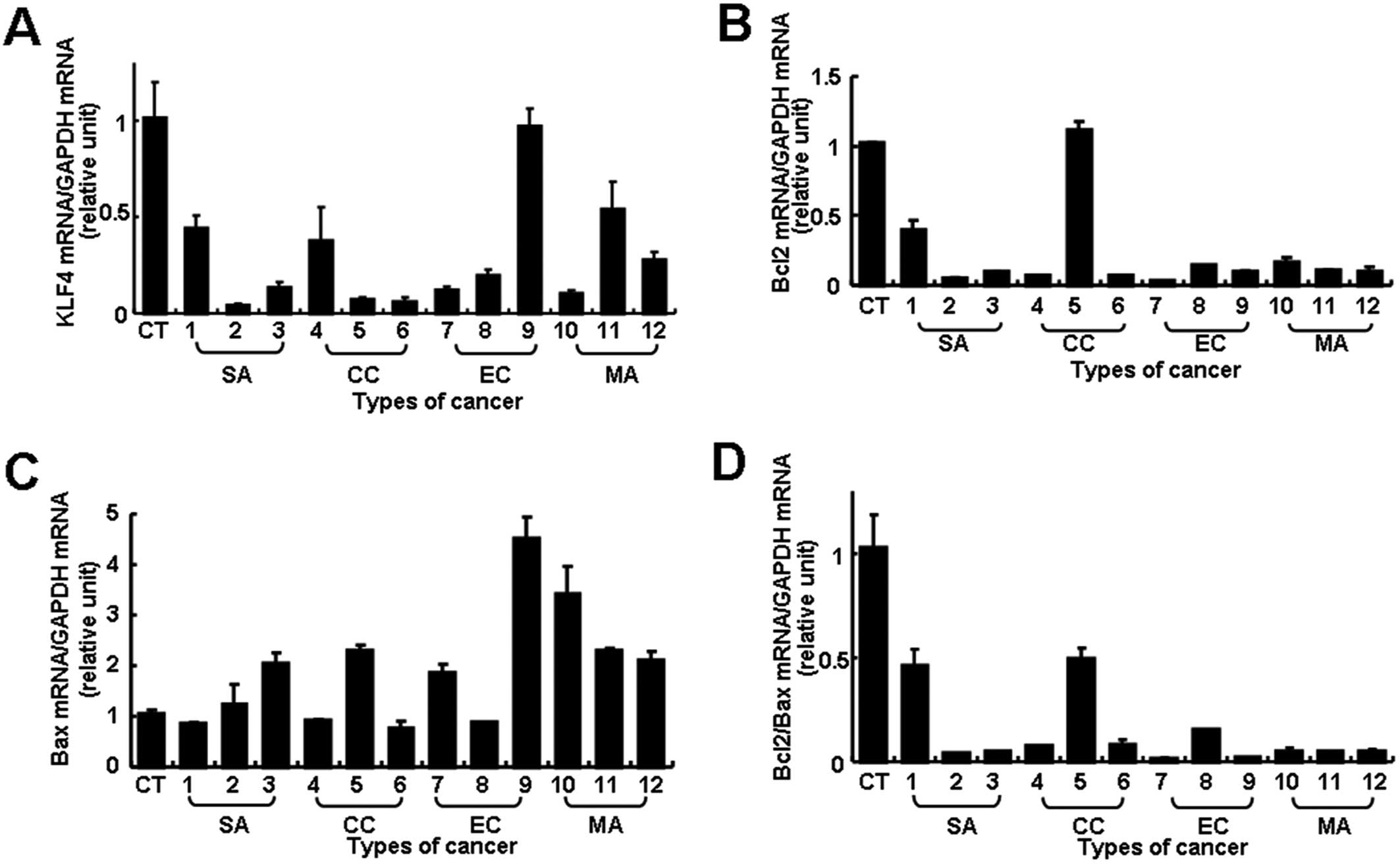
KLF4 transcript levels were substantially lower in most of the EOC samples (11 of 12 specimens) than in the normal controls, although the extent of the difference varied between tumors (Fig. 1A). The level of expression in most samples was less than half the normal level and it was particularly low (less than 0.3-fold of normal level) in 7 EOC samples. Bcl-2 or Bax mRNA expression also varied between tumors and there was no correlation with histological type (Fig. 1B and C). However, an analysis of the Bcl-2/Bax ratio showed a significantly reduced ratio, more than 2-fold lower than normal in all 12 cases and even lower in 10 cases (more than 5-fold less than normal) (Fig. 1D). Thus, both reduced KLF4 transcript levels and lower Bcl-2/Bax ratios were found in most of the EOC samples, but the extents of the changes were not always correlated.

Figure 1

Real-time RT-PCR analysis of KLF4, Bcl-2 and Bax expression in ovarian cancer tissues. Transcript levels of (A) KLF4, (B) Bcl-2, (C) Bax and (D) Bcl-2/Bax ratios were determined in normal ovarian tissues (n=3) and advanced primary epithelial ovarian cancer tissues (n=12). CT, normal ovarian tissues; SA (1–3), serous cystadenocarcinoma; CC (4–6), clear cell carcinoma; EC (7–9), endometrioid carcinoma; MA (10–12), mucinous adenocarcinoma. GAPDH mRNA was used as an internal control. Mean values were compared with the normal control value to calculate relative amounts of transcripts. Data are represented as the means ± SD of the triplicate assays.

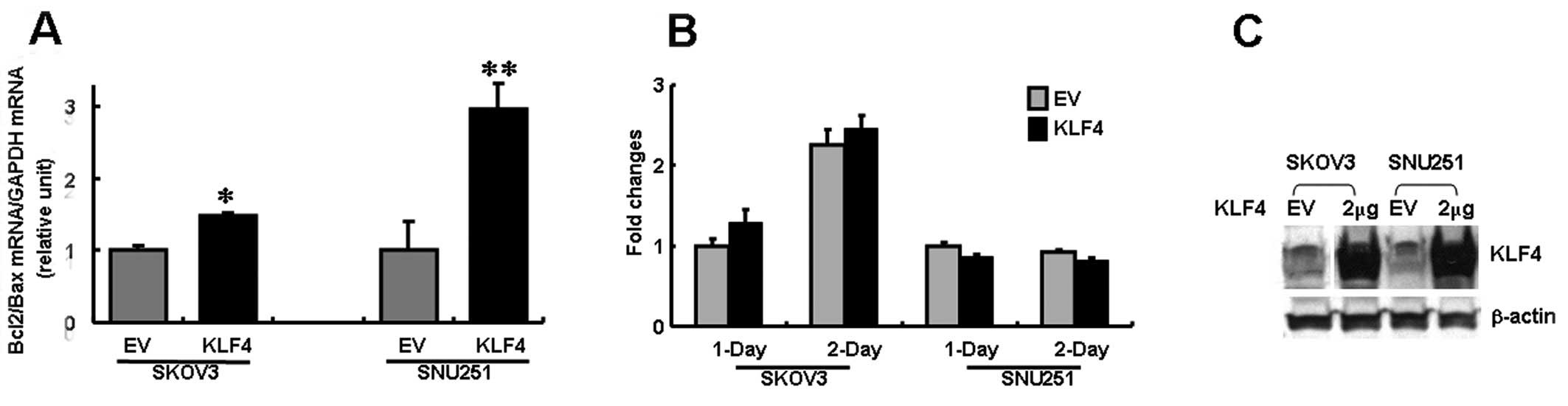
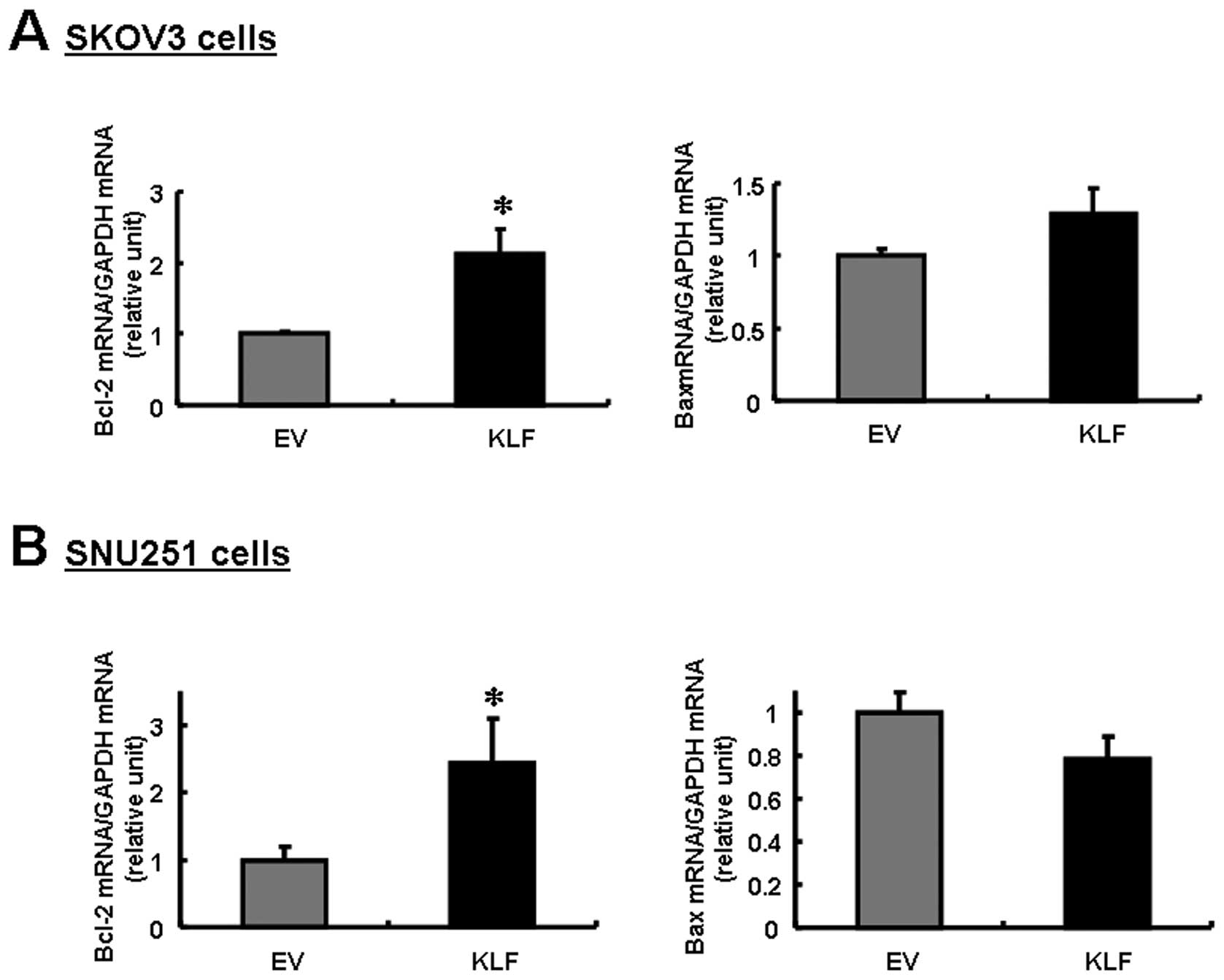
In order to examine the biological effects of KLF4 expression in ovarian cancer cells, SKOV3 and SNU251 cells were transfected with FLAG-KLF4. An immunoblot analysis confirmed marked expression of KLF4 in the transfected cells (Fig. 2C). Notably, Bcl-2 expression was upregulated in both cell lines, whereas Bax was downregulated in SNU251 cells and slightly upregulated in SKOV3 cells (Fig. 3). The differential regulation of Bcl-2 and Bax expression resulted in a decreased Bcl-2/Bax ratio in both cell lines, but the decrease was particularly significant in the SNU251 cells (P<0.03; Fig. 2A). This result suggests that the decreased expression of KLF4 in EOC is correlated with the reduced Bcl-2/Bax ratio, which is a known prognostic factor in EOC.

Figure 2

Effect of KLF4 on Bcl-2/Bax expression and cell proliferation. (A) Real-time RT-PCR analysis of Bcl-2/Bax expression in KLF4-expressing and control vector-only SKOV3 and SNU251 cells. GAPDH mRNA was used as an internal control. Mean values were compared with the value of empty vector-transfected cells to calculate relative amounts of transcripts; (B) MTT cell proliferation assays of KLF4-expressing and vector-only SKOV3 and SNU251 cells from 1 and 2-day cultures. Each bar represents the fold change compared to the value for empty vector-transfected cells cultured for 24 h; (C) Immunoblot analysis of KLF4 protein in transfected cells. β-actin was used as an internal control. EV, empty vector; KLF4, pCMV3xFLAG-KLF4 plasmid (2 μg). Data are the means ± SD of 3 separate experiments. P-values were compared to EVs using the Student’s t-test (*P=0.024; **P=0.014).

Figure 3

Real-time RT-PCR analysis of Bcl-2 and Bax mRNA expression in (A) SKOV3 and (B) SNU251 cells overexpressing KLF4. GAPDH mRNA was used as an internal control. Mean values were compared with the normal control value (empty vector-transfected cells) to calculate relative amounts of transcripts. Data are represented as the means ± SD of the triplicate assays. P-values were compared to empty vectors using the Student’s t-test (*P<0.05).

To evaluate the effect of KLF4 on cell proliferation, we used the MTT assay for quantitative analysis. In contrast to the known inhibition of cell growth and induction of apoptosis by KLF4 in a number of non-gonadal cancer cells, the in vitro assays indicated that cell proliferation following KLF4 gene transfection was unaffected at both 24 or 48 h of culture (P>0.05; Fig. 2B).

Discussion

This study is the first to suggest that KLF4 may play an important role in the development and progression of ovarian cancer. We found that both the expression of KLF4 and the Bcl-2/Bax ratio were downregulated in many advanced EOC cases, and that KLF4 overexpression in ovarian cancer cells resulted in an increased Bcl-2/Bax ratio, which is known to indicate a favorable prognosis in ovarian cancer.

Several lines of evidence indicate that KLF4 has variable effects on cell cycle arrest and inhibition of apoptosis depending on the cellular context (7,8,12,13). Although the expression of KLF4 was found to be downregulated in ovarian cancers in this study, which is consistent with the results for many human cancers, we observed no change in cell proliferation due to KLF4 overexpression (Fig. 2B). Given that the multiplication of human Sertoli cells is not affected by a lack of KLF4 (14), it is likely that the different effects of KLF4 on cell proliferation depend on unidentified cellular factors.

In this study we found that Bax and Bcl-2 expression levels varied among tumors, as demonstrated in other studies (10,11). Thus, it has been suggested that the ratio of Bcl-2 to Bax, rather than the absolute concentration of either, is predictive of cell fate (9), and their relative expression has been reported to be a better predictor of outcome for both progression-free survival and overall survival (10,11). The transcription of Bcl-2 and Bax in leukemia cells is affected by KLF4 overexpression (12). We also demonstrated in this study that the transgenic expression of KLF4 in ovarian cancer cells modulates Bcl-2/Bax gene expression (Fig. 2A). Previously, a microarray study showed that decreased KLF4 expression was associated with chemotherapy resistance in ovarian cancers (15). In principle, chemotherapeutics act on rapidly proliferating cells and promote cell cycle arrest or apoptosis. Thus, lower expression of KLF4 linked to a lower Bcl-2/Bax ratio may possibly contribute to resistance or relapse in advanced EOC. This increases the possibility that a crucial function of KLF4 is to increase the Bcl-2/Bax ratio, at least in ovarian cells, and that this is essential for a favorable prognosis in ovarian cancer.

Although further research should be devoted to understanding why KLF4 regulates cell growth and apoptosis in many other cancer cells (6–8) but not in ovarian cancer cells, our data indicate that the downregulation of KLF4 may be a frequent step in ovarian carcinogenesis. The decreased expression of KLF4 in ovarian cancer may modulate Bcl-2/Bax expression, a known prognostic factor for cancer grade, although its exact role in ovarian carcinogenesis needs to be clarified.

Acknowledgements

We thank Professor Hyun Kook (Medical Research Center for Gene Regulation, Chonnam National University Medical School, Gwangju, Korea) for the gift of the pCMV3-FLAG-KLF4 plasmid construct. This study was supported by a Korea Research Foundation Grant funded by the Korean Government (KRF 2009-0074679 and 2009-0065769).

References

1. 

A JemalT MurrayE WardA SamuelsRC TiwariA GhafoorEJ FeuerMJ ThunCancer statistics, 2005CA Cancer J Clin551030200510.3322/canjclin.55.1.10

2. 

LA Garrett-SinhaH EberspaecherMF SeldinB de CrombruggheA gene for a novel zinc-finger protein expressed in differentiated epithelial cells and transiently in certain mesenchymal cellsJ Biol Chem2713138431390199610.1074/jbc.271.49.31384

3. 

JM ShieldsRJ ChristyVW YangIdentification and characterization of a gene encoding a gut-enriched Kruppel-like factor expressed during growth arrestJ Biol Chem2712000920017199610.1074/jbc.271.33.200098702718

4. 

KW FosterAR FrostP McKie-BellCY LinJA EnglerWE GrizzleJM RuppertIncrease of GKLF messenger RNA and protein expression during progression of breast cancerCancer Res6064886495200011103818

5. 

AY PandyaLI TalleyAR FrostTJ FitzgeraldV TrivediM ChakravarthyDC ChhiengWE GrizzleJA EnglerH KrontirasNuclear localization of KLF4 is associated with an aggressive phenotype in early-stage breast cancerClin Cancer Res1027092719200410.1158/1078-0432.CCR-03-048415102675

6. 

AM GhalebJP KatzKH KaestnerJX DuVW YangKruppel-like factor 4 exhibits antiapoptotic activity following gamma-radiation-induced DNA damageOncogene2623652373200710.1038/sj.onc.121002217016435

7. 

S OhnishiS OhnamiF LaubK AokiK SuzukiY KanaiK HagaM AsakaF RamirezT YoshidaDownregulation and growth inhibitory effect of epithelial-type Kruppel-like transcription factor KLF4, but not KLF5, in bladder cancerBiochem Biophys Res Commun308251256200310.1016/S0006-291X(03)01356-112901861

8. 

J WangRF PlaceV HuangX WangEJ NoonanCE MagyarJ HuangLC LiPrognostic value and function of KLF4 in prostate cancer: RNAa and vector-mediated overexpression identify KLF4 as an inhibitor of tumor cell growth and migrationCancer Res701018210191201010.1158/0008-5472.CAN-10-241421159640

9. 

ZN OltvaiCL MillimanSJ KorsmeyerBcl-2 heterodimerizes in vivo with a conserved homolog, Bax, that accelerates programmed cell deathCell74609619199310.1016/0092-8674(93)90509-O8358790

10. 

FJ de la TorreA GarciaA Gil-MorenoJ PlanagumaJ ReventosS Ramon y CajalJ XercavinsApoptosis in epithelial ovarian tumours Prognostic significance of clinical and histopathologic factors and its association with the immunohistochemical expression of apoptotic regulatory proteins (p53, bcl-2 and bax)Eur J Obstet Gynecol Reprod Biol1301211282007

11. 

M SchuyerME van der BurgSC Henzen-LogmansJH FieretJG KlijnMP LookJA FoekensG StoterEM BernsReduced expression of BAX is associated with poor prognosis in patients with epithelial ovarian cancer: a multifactorial analysis of TP53, p21, BAX and BCL-2Br J Cancer8513591367200110.1054/bjoc.2001.210111720475

12. 

Z LiJ ZhaoQ LiW YangQ SongW LiJ LiuKLF4 promotes hydrogen-peroxide-induced apoptosis of chronic myeloid leukemia cells involving the bcl-2/bax pathwayCell Stress Chaperones15905912201010.1007/s12192-010-0199-520401760

13. 

BD RowlandDS PeeperKLF4, p21 and context-dependent opposing forces in cancerNat Rev Cancer61123200610.1038/nrc178016372018

14. 

M GodmannC KosanR BehrKruppel-like factor 4 is widely expressed in the mouse male and female reproductive tract and responds as an immediate early gene to activation of the protein kinase A in TM4 Sertoli cellsReproduction139771782201010.1530/REP-09-053120051481

15. 

AA JazaeriCS AwtreyGV ChandramouliYE ChuangJ KhanC SotiriouO AprelikovaCJ YeeKK ZornMJ BirrerJC BarrettJ BoydGene expression profiles associated with response to chemotherapy in epithelial ovarian cancersClin Cancer Res1163006310200510.1158/1078-0432.CCR-04-268216144934

Related Articles

  • Abstract
  • View
  • Download
  • Twitter
Copy and paste a formatted citation
Spandidos Publications style
Yoon O and Roh J: Downregulation of KLF4 and the Bcl-2/Bax ratio in advanced epithelial ovarian cancer. Oncol Lett 4: 1033-1036, 2012.
APA
Yoon, O., & Roh, J. (2012). Downregulation of KLF4 and the Bcl-2/Bax ratio in advanced epithelial ovarian cancer. Oncology Letters, 4, 1033-1036. https://doi.org/10.3892/ol.2012.834
MLA
Yoon, O., Roh, J."Downregulation of KLF4 and the Bcl-2/Bax ratio in advanced epithelial ovarian cancer". Oncology Letters 4.5 (2012): 1033-1036.
Chicago
Yoon, O., Roh, J."Downregulation of KLF4 and the Bcl-2/Bax ratio in advanced epithelial ovarian cancer". Oncology Letters 4, no. 5 (2012): 1033-1036. https://doi.org/10.3892/ol.2012.834
Copy and paste a formatted citation
x
Spandidos Publications style
Yoon O and Roh J: Downregulation of KLF4 and the Bcl-2/Bax ratio in advanced epithelial ovarian cancer. Oncol Lett 4: 1033-1036, 2012.
APA
Yoon, O., & Roh, J. (2012). Downregulation of KLF4 and the Bcl-2/Bax ratio in advanced epithelial ovarian cancer. Oncology Letters, 4, 1033-1036. https://doi.org/10.3892/ol.2012.834
MLA
Yoon, O., Roh, J."Downregulation of KLF4 and the Bcl-2/Bax ratio in advanced epithelial ovarian cancer". Oncology Letters 4.5 (2012): 1033-1036.
Chicago
Yoon, O., Roh, J."Downregulation of KLF4 and the Bcl-2/Bax ratio in advanced epithelial ovarian cancer". Oncology Letters 4, no. 5 (2012): 1033-1036. https://doi.org/10.3892/ol.2012.834
Follow us
  • Twitter
  • LinkedIn
  • Facebook
About
  • Spandidos Publications
  • Careers
  • Cookie Policy
  • Privacy Policy
How can we help?
  • Help
  • Live Chat
  • Contact
  • Email to our Support Team