Spandidos Publications Logo
  • About
    • About Spandidos
    • Aims and Scopes
    • Abstracting and Indexing
    • Editorial Policies
    • Reprints and Permissions
    • Job Opportunities
    • Terms and Conditions
    • Contact
  • Journals
    • All Journals
    • Oncology Letters
      • Oncology Letters
      • Information for Authors
      • Editorial Policies
      • Editorial Board
      • Aims and Scope
      • Abstracting and Indexing
      • Bibliographic Information
      • Archive
    • International Journal of Oncology
      • International Journal of Oncology
      • Information for Authors
      • Editorial Policies
      • Editorial Board
      • Aims and Scope
      • Abstracting and Indexing
      • Bibliographic Information
      • Archive
    • Molecular and Clinical Oncology
      • Molecular and Clinical Oncology
      • Information for Authors
      • Editorial Policies
      • Editorial Board
      • Aims and Scope
      • Abstracting and Indexing
      • Bibliographic Information
      • Archive
    • Experimental and Therapeutic Medicine
      • Experimental and Therapeutic Medicine
      • Information for Authors
      • Editorial Policies
      • Editorial Board
      • Aims and Scope
      • Abstracting and Indexing
      • Bibliographic Information
      • Archive
    • International Journal of Molecular Medicine
      • International Journal of Molecular Medicine
      • Information for Authors
      • Editorial Policies
      • Editorial Board
      • Aims and Scope
      • Abstracting and Indexing
      • Bibliographic Information
      • Archive
    • Biomedical Reports
      • Biomedical Reports
      • Information for Authors
      • Editorial Policies
      • Editorial Board
      • Aims and Scope
      • Abstracting and Indexing
      • Bibliographic Information
      • Archive
    • Oncology Reports
      • Oncology Reports
      • Information for Authors
      • Editorial Policies
      • Editorial Board
      • Aims and Scope
      • Abstracting and Indexing
      • Bibliographic Information
      • Archive
    • Molecular Medicine Reports
      • Molecular Medicine Reports
      • Information for Authors
      • Editorial Policies
      • Editorial Board
      • Aims and Scope
      • Abstracting and Indexing
      • Bibliographic Information
      • Archive
    • World Academy of Sciences Journal
      • World Academy of Sciences Journal
      • Information for Authors
      • Editorial Policies
      • Editorial Board
      • Aims and Scope
      • Abstracting and Indexing
      • Bibliographic Information
      • Archive
    • International Journal of Functional Nutrition
      • International Journal of Functional Nutrition
      • Information for Authors
      • Editorial Policies
      • Editorial Board
      • Aims and Scope
      • Abstracting and Indexing
      • Bibliographic Information
      • Archive
    • International Journal of Epigenetics
      • International Journal of Epigenetics
      • Information for Authors
      • Editorial Policies
      • Editorial Board
      • Aims and Scope
      • Abstracting and Indexing
      • Bibliographic Information
      • Archive
    • Medicine International
      • Medicine International
      • Information for Authors
      • Editorial Policies
      • Editorial Board
      • Aims and Scope
      • Abstracting and Indexing
      • Bibliographic Information
      • Archive
  • Articles
  • Information
    • Information for Authors
    • Information for Reviewers
    • Information for Librarians
    • Information for Advertisers
    • Conferences
  • Language Editing
Spandidos Publications Logo
  • About
    • About Spandidos
    • Aims and Scopes
    • Abstracting and Indexing
    • Editorial Policies
    • Reprints and Permissions
    • Job Opportunities
    • Terms and Conditions
    • Contact
  • Journals
    • All Journals
    • Biomedical Reports
      • Information for Authors
      • Editorial Policies
      • Editorial Board
      • Aims and Scope
      • Abstracting and Indexing
      • Bibliographic Information
      • Archive
    • Experimental and Therapeutic Medicine
      • Information for Authors
      • Editorial Policies
      • Editorial Board
      • Aims and Scope
      • Abstracting and Indexing
      • Bibliographic Information
      • Archive
    • International Journal of Epigenetics
      • Information for Authors
      • Editorial Policies
      • Editorial Board
      • Aims and Scope
      • Abstracting and Indexing
      • Bibliographic Information
      • Archive
    • International Journal of Functional Nutrition
      • Information for Authors
      • Editorial Policies
      • Editorial Board
      • Aims and Scope
      • Abstracting and Indexing
      • Bibliographic Information
      • Archive
    • International Journal of Molecular Medicine
      • Information for Authors
      • Editorial Policies
      • Editorial Board
      • Aims and Scope
      • Abstracting and Indexing
      • Bibliographic Information
      • Archive
    • International Journal of Oncology
      • Information for Authors
      • Editorial Policies
      • Editorial Board
      • Aims and Scope
      • Abstracting and Indexing
      • Bibliographic Information
      • Archive
    • Medicine International
      • Information for Authors
      • Editorial Policies
      • Editorial Board
      • Aims and Scope
      • Abstracting and Indexing
      • Bibliographic Information
      • Archive
    • Molecular and Clinical Oncology
      • Information for Authors
      • Editorial Policies
      • Editorial Board
      • Aims and Scope
      • Abstracting and Indexing
      • Bibliographic Information
      • Archive
    • Molecular Medicine Reports
      • Information for Authors
      • Editorial Policies
      • Editorial Board
      • Aims and Scope
      • Abstracting and Indexing
      • Bibliographic Information
      • Archive
    • Oncology Letters
      • Information for Authors
      • Editorial Policies
      • Editorial Board
      • Aims and Scope
      • Abstracting and Indexing
      • Bibliographic Information
      • Archive
    • Oncology Reports
      • Information for Authors
      • Editorial Policies
      • Editorial Board
      • Aims and Scope
      • Abstracting and Indexing
      • Bibliographic Information
      • Archive
    • World Academy of Sciences Journal
      • Information for Authors
      • Editorial Policies
      • Editorial Board
      • Aims and Scope
      • Abstracting and Indexing
      • Bibliographic Information
      • Archive
  • Articles
  • Information
    • For Authors
    • For Reviewers
    • For Librarians
    • For Advertisers
    • Conferences
  • Language Editing
Login Register Submit
  • This site uses cookies
  • You can change your cookie settings at any time by following the instructions in our Cookie Policy. To find out more, you may read our Privacy Policy.

    I agree
Search articles by DOI, keyword, author or affiliation
Search
Advanced Search
presentation
Oncology Letters
Join Editorial Board Propose a Special Issue
Print ISSN: 1792-1074 Online ISSN: 1792-1082
Journal Cover
December 2012 Volume 4 Issue 6

Full Size Image

Sign up for eToc alerts
Recommend to Library

Journals

International Journal of Molecular Medicine

International Journal of Molecular Medicine

International Journal of Molecular Medicine is an international journal devoted to molecular mechanisms of human disease.

International Journal of Oncology

International Journal of Oncology

International Journal of Oncology is an international journal devoted to oncology research and cancer treatment.

Molecular Medicine Reports

Molecular Medicine Reports

Covers molecular medicine topics such as pharmacology, pathology, genetics, neuroscience, infectious diseases, molecular cardiology, and molecular surgery.

Oncology Reports

Oncology Reports

Oncology Reports is an international journal devoted to fundamental and applied research in Oncology.

Experimental and Therapeutic Medicine

Experimental and Therapeutic Medicine

Experimental and Therapeutic Medicine is an international journal devoted to laboratory and clinical medicine.

Oncology Letters

Oncology Letters

Oncology Letters is an international journal devoted to Experimental and Clinical Oncology.

Biomedical Reports

Biomedical Reports

Explores a wide range of biological and medical fields, including pharmacology, genetics, microbiology, neuroscience, and molecular cardiology.

Molecular and Clinical Oncology

Molecular and Clinical Oncology

International journal addressing all aspects of oncology research, from tumorigenesis and oncogenes to chemotherapy and metastasis.

World Academy of Sciences Journal

World Academy of Sciences Journal

Multidisciplinary open-access journal spanning biochemistry, genetics, neuroscience, environmental health, and synthetic biology.

International Journal of Functional Nutrition

International Journal of Functional Nutrition

Open-access journal combining biochemistry, pharmacology, immunology, and genetics to advance health through functional nutrition.

International Journal of Epigenetics

International Journal of Epigenetics

Publishes open-access research on using epigenetics to advance understanding and treatment of human disease.

Medicine International

Medicine International

An International Open Access Journal Devoted to General Medicine.

Journal Cover
December 2012 Volume 4 Issue 6

Full Size Image

Sign up for eToc alerts
Recommend to Library

  • Article
  • Citations
    • Cite This Article
    • Download Citation
    • Create Citation Alert
    • Remove Citation Alert
    • Cited By
  • Similar Articles
    • Related Articles (in Spandidos Publications)
    • Similar Articles (Google Scholar)
    • Similar Articles (PubMed)
  • Download PDF
  • Download XML
  • View XML
Article

Downregulation of BCSG1 may correlate with better outcome of neoadjuvant chemotherapy for triple-negative breast cancer

  • Authors:
    • Jinsong He
    • Weicai Chen
    • Huisheng Wu
    • Min Wang
    • Yuan Wang
    • Xiaojia She
    • Shufen Song
    • Hong Guan
    • Xianming Wang
  • View Affiliations / Copyright

    Affiliations: Center of Breast Diseases, Second Hospital of Shenzhen, First Affiliated Hospital of Shenzhen University, Shenzhen, Guangdong 518035, P.R. China, Center of Breast Diseases, Second Hospital of Shenzhen, First Affiliated Hospital of Shenzhen University, Shenzhen, Guangdong 518035, P.R. China, Department of Pathology, Second Hospital of Shenzhen, First Affiliated Hospital of Shenzhen University, Shenzhen, Guangdong 518035, P.R. China
  • Pages: 1209-1212
    |
    Published online on: September 12, 2012
       https://doi.org/10.3892/ol.2012.911
  • Expand metrics +
Metrics: Total Views: 0 (Spandidos Publications: | PMC Statistics: )
Metrics: Total PDF Downloads: 0 (Spandidos Publications: | PMC Statistics: )
Cited By (CrossRef): 0 citations Loading Articles...

This article is mentioned in:


Abstract

The aim of this study was to investigate the correlation between breast cancer-specific gene 1 (BCSG1) and the effect of neoadjuvant chemotherapy (NAC) in patients with triple-negative breast cancer (TNBC). Real-time RT-PCR and immunohistochemistry were used to determine the expression of BCSG1 mRNA and protein levels of 32 TNBC patients before and after NAC. Tumor size was reduced significantly after NAC in all 32 TNBC patients. The expression of BCSG1 was also decreased after NAC at both mRNA and protein levels. There was a negative correlation between BCSG1 levels after NAC and the effect of NAC. BCSG1 may be a potential target for NAC in the treatment of TNBC.

Introduction

Triple-negative breast cancer (TNBC) is a type of high-risk breast cancer in which the estrogen receptor (ER), progesterone receptor (PR) and human epidermal growth factor receptor (HER2/ErbB2) are all negative (1). TNBC accounts for 15–20% of all breast cancer cases. Since the effective targeted endocrine therapy cannot be used, patients with TNBC usually have a poor prognosis. In addition to surgical therapy, the main treatment for TNBC is chemotherapy. Neoadjuvant chemotherapy (NAC) has been widely accepted in the treatment of breast cancer. Despite the relative chemosensitivity, less than 25% of all patients with TNBC treated with standard NAC achieve complete pathological response (pCR). However, the evaluation of the effect of NAC is limited to the clinical and pathological changes of the tumors and metastatic lymph nodes. Therefore, a method to simply and accurately evaluate the effect of NAC in the treatment of TNBC would be extremely valuable.

A breast cancer-specific gene, BCSG1, was identified by Ji et al (2) in 1997. BCSG1 is highly expressed in human-infiltrating breast carcinomas but not expressed in normal or benign breast tissues and the expression of BCSG1 is also stage-specific for breast cancer (3). Overexpression of BCSG1 in breast cancer cells increases the motility and invasiveness in vitro and stimulates metastasis in vivo (4). In a clinical trial, patients with BCSG1-positive breast tumors generally had shorter disease-free survival and overall survival and higher probability of mortality compared with the patients with BCSG1-negative tumors (5). Therefore, BCSG1 may be used as a marker for breast cancer progression and prognosis (5,6). Although a number of studies have established the significance of BCSG1 in breast cancer, few results concerning the correlation between BCSG1 and TNBC have been reported (7). Therefore, we analyzed the correlation between BCSG1 expression and the effect of NAC in the treatment of TNBC in the present study to determine the role of BCSG1 in the treatment of TNBC with NAC.

Patients and methods

Patients and treatment

All 32 patients (female, 27–45 years old; median age, 40) were treated at the Center of Breast Diseases at the Second People’s Hospital of Shenzhen between September 2009 and August 2011. All patients were diagnosed with triple-negative invasive non-specific cancer by pathological evaluation and hormone receptors test. Patients underwent breasts, double axillary and liver type-B ultrasonic scan, chest X-ray and whole body bone scan prior to chemotherapy. The TNM stages were: IIA, 11; IIB, 14; IIIA, 5; IIIB, 2 (UICC/AJCC, 2003). A total of 18 patients were found to have ipsilateral axillary lymph node metastasis. No other treatment was administered prior to definite diagnosis. No serious heart, liver or kidney damage was detected (Karnofsky score=100).

All the 32 patients were administered a combination of 600 mg/m2 cyclophosphamide (CTX), 80 mg/m2 epirubicin (EPI) and 500 mg/m2 fluorouracil (5-FU) on day 1 and then every 21 days. After 2 cycles of chemotherapy, patients underwent modified radical mastectomy or breast-conserving surgery. The changes of lesions were evaluated according to the criteria of the World Health Organization (WHO) for anticancer drugs prior to and following NAC-based clinical response and B ultrasound (3). Complete response (CR) and partial response (PR) were calculated as clinical overall response. Breast cancer tissues were obtained through core-needle biopsy prior to NAC or surgery following NAC. Written informed consent was obtained from the patients. The study was approved by the ethics committee of the First Affiliated Hospital of Shenzhen University, Shenzhen, Guangdong, China.

Immunohistochemistry

Immunohistochemistry was performed according to the manufacturer’s instructions with BCSG1 polyclonal antibody (Santa Cruz Biotechnology, Inc., Santa Cruz, CA, USA; 1:100 dilution). Brain tissue was used as a positive control and PBS as a negative control. BCSG1-positive cells were defined according to the standard reported by Mohsin et al (8). The BCSG1 expression score was calculated from the proportion of positive cells and the color intensity of the cells: i) number of positive cells, grade 0, <25%; grade 1, 26–50%; grade 2, 51–75%; grade 3, ≥75%; ii) color intensity, grade 1, weak; grade 2, moderate; grade 3, strong. The score for each slice is the summation of the two parts. A total score <3 was considered to indicate low expression and ≥3 to indicate high expression.

Real-time RT-PCR

Total RNA was isolated from breast cancer tissue with TRIzol reagent (Invitrogen, Carlsbad, CA, USA) according to the manufacturer’s instructions. The concentration and purity of total RNA were determined by a spectrophotometer (Eppendorf, Hamburg, Germany). Reverse transcription was performed using Random primer RT mixtures with M-MLV (20 U/μl; Promega, Madison, WI, USA) reverse transcriptase 20 U/20 μl, total RNA 1 μg/20 μl. cDNA was stored at −20°C. Quantitative real-time PCR was performed with an ABI stepone plus Real-time PCR system. The sequences of the primers were as follows: BCSG1, forward 5′-AGGAGGGGGTCATGTATGTG-3′, reverse 5′-TTCTCTTTGGATGCCTCACC-3′; GAPDH forward 5′-GGAAGGTGAAGGTCGGAGT-3′, reverse 5′-CCTGGAAGATGGTGAGGG-3′. PCR mixtures contained 1 μl cDNA, 12.5 μl SYBR® Premix 2X (Toyobo, Osaka, Japan) and 0.16 μmol/l forward and reverse primers in a total volume of 25 μl. Reactions were started with a polymerase activation step at 94°C for 5 min followed by 35 cycles of 94°C for 30 sec, 57°C for 45 sec and 72°C for 30 sec. Fluorescence data were acquired after each cycle. The amount of specific mRNA in samples was calculated using the ΔΔCT method.

Statistical analysis

Measurement data are expressed as mean ± SD. Data were analyzed using SPSS 13.0 for Windows (SPSS Inc., Chicago, IL, USA). The paired Student’s t-test was used for comparing the BCSG1 expression difference before and after NAC. The χ2 test was used for comparing the clinical overall response rate in patients with high or low BCSG1 expression. The correlation between the effect of NAC and BCSG1 expression was measured by Spearman rank correlation analysis. P<0.05 was considered to indicate a statistically significant result.

Results

Response to neoadjuvant chemotherapy

The tumor softened in 62.5% of patients (20/32) 10 days after NAC and reduced in size in 71.9% of patients (23/32) after one cycle of NAC. Tumor size shrank markedly in 84.4% (27/32) patients after 2 cycles of NAC. There were 3 CR, 24 PR and 5 stable disease (SD) with an overall response rate of 84.4% (27/32). In 28 cases of postoperative cancer tissue specimens, a clear boundary between the cancer tissue and the breast tissue and white cut surface and little necrosis on tumor tissue were observable with the naked eye. Various degrees of cell degeneration and necrosis of the tumor cells, nuclear contraction, rupture and cytoplasmic coagulation necrosis of the cells surrounding the tumor tissue and vascular endothelial hyperplasia and blood vessel narrowing or occlusion were observed with a light microscope. In the remaining four cases, various degrees of cell degeneration were observed, but necrosis was not clear. Various degrees of nuclear contraction and fragmentation, necrosis, calcification and fibrosis were also observed in the cancer cells in the axillary lymph nodes.

BCSG1 mRNA expression

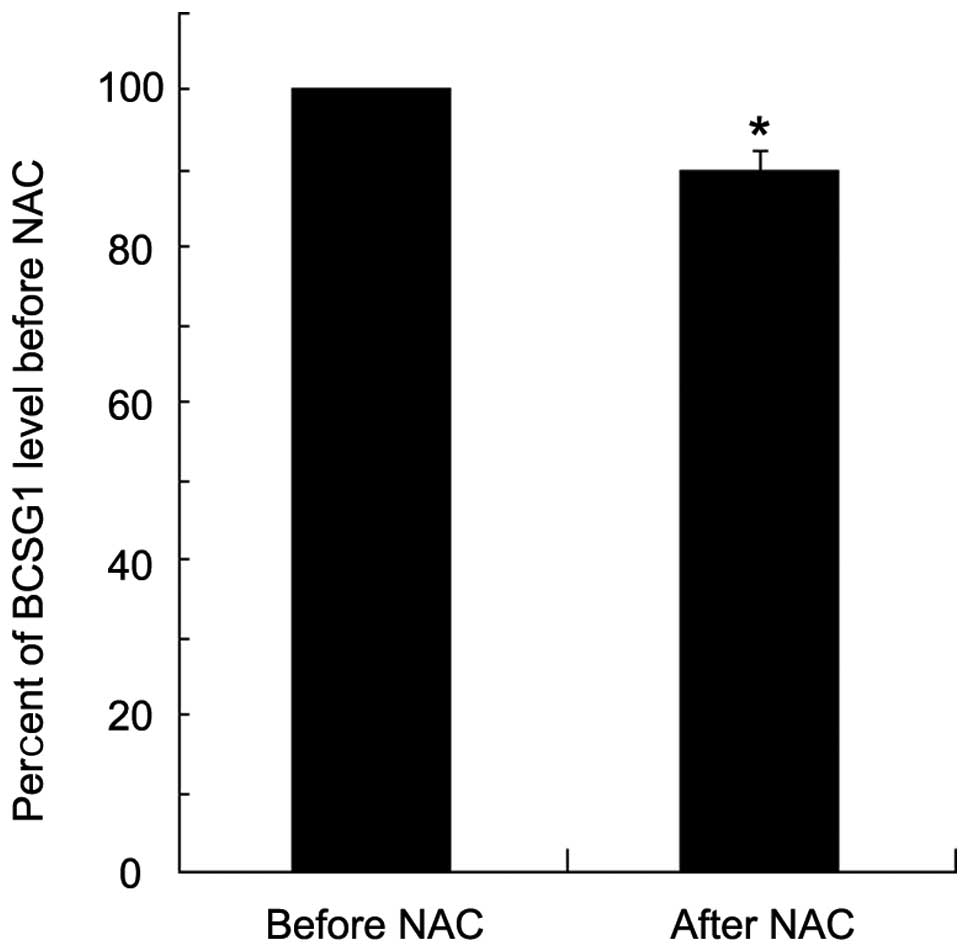
Real time RT-PCR was performed to examine the BCSG1 mRNA level in the cancer tissues of each patient prior to and following NAC (Fig. 1). The BCSG1 mRNA level in breast cancer tissues after NAC was decreased significantly compared with that before NAC (a decrease of ∼10%).

Figure 1.

Expression of BCSG1 mRNA in the breast cancer tissues. Before and after NAC, breast cancer tissues were obtained through core-needle biopsy or surgery, respectively. The BCSG1 mRNA levels were determined by real-time RT-PCR. The amounts of specific mRNA in samples were calculated using the ΔΔCT method. Data are expressed as mean ± SD (n=32). *P<0.05, compared with before NAC. BCSG1, breast cancer-specific gene 1; NAC, neoadjuvant chemotherapy.

Correlation of the BCSG1 level and the effect of NAC

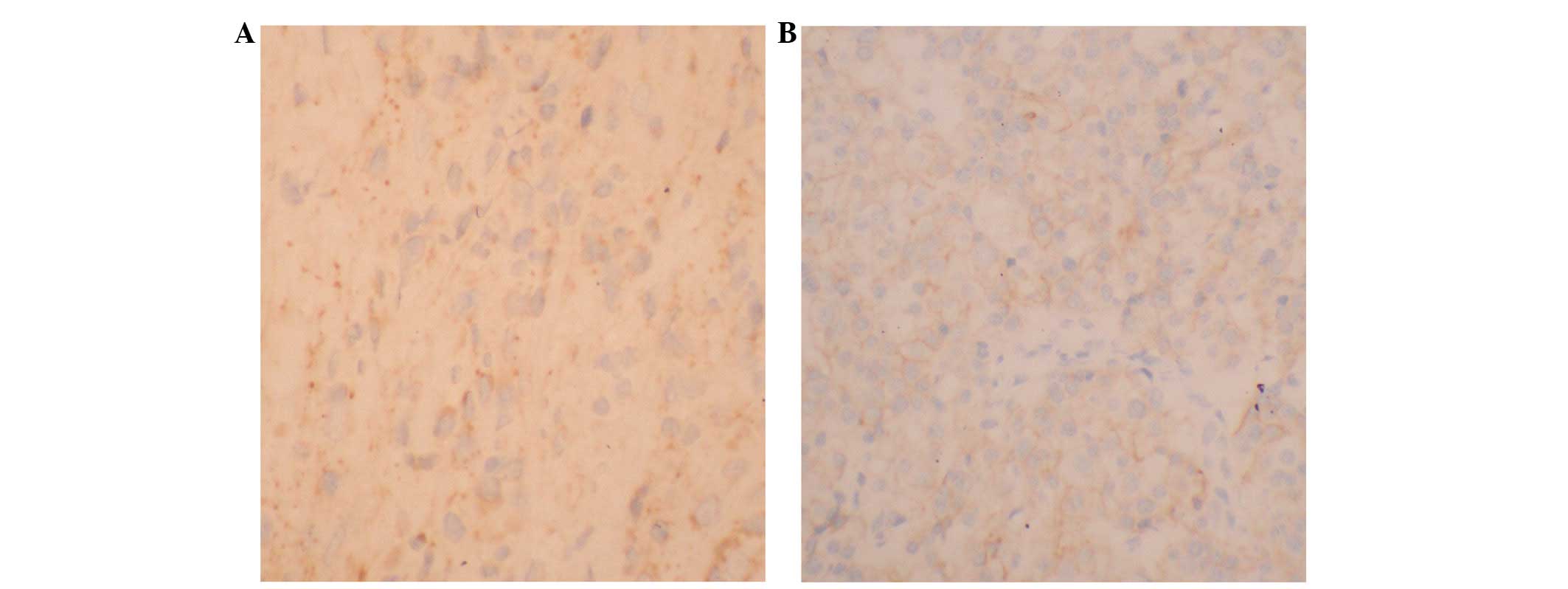
The expression of BCSG1 protein was determined with immunohistochemistry (Fig. 2). BCSG1 protein was highly expressed in 22 patients (68.8%) before NAC, but only in nine patients after NAC (28.1%). The difference was significant. There was a negative correlation between the BCSG1 level and the effect of NAC (r= −0.584, P<0.01; Table I).

Figure 2.

Immunohistochemistry for BCSG1 expression. (A) BCSG1 was markedly expressed in TNBC tissues prior to NAC (x100). (B) BCSG1 expression was lowered in TNBC tissues following NAC (x100). BCSG1, breast cancer-specific gene 1; TNBC, triple-negative breast cancer; NAC, neoadjuvant chemotherapy.

Table I.

Correlation of BCSG1 expression and curative effect of NAC (n=32).

Table I.

Correlation of BCSG1 expression and curative effect of NAC (n=32).

BCSG1 expression
Curative effect of NACHigh expressionLow expressionP-valuer
CR + PR522<0.01−0.584
SD41

[i] BCSG1, breast cancer-specific gene 1; NAC, neoadjuvant chemotherapy; CR, complete response; PR, partial response; SD, stable disease.

Discussion

In the present study, we found that the expression of BCSG1 was decreased following NAC in TNBC patients. There was a negative correlation between the BCSG1 level and the effect of NAC in TNBC. Our results indicate that there is a correlation between the BCSG1 levels and the effect of NAC in patients with TNBC.

BCSG1, also known as SNCG (γ-synuclein gene), was identified in 1997 by direct sequencing of cDNA gene in breast cancer (2). BCSG1 is not expressed in normal breast tissue but is highly expressed in most invasive and metastatic breast cancers. It has been shown that overexpression of BCSG1 promoted the invasion and metastasis of breast cancer cells (4). Overexpression of BCSG1 is also an event in advanced breast cancer and predicts poor clinical outcome in breast cancer (5,6) These results suggest that BCSG1 is a predicator for the tumor invasion and metastasis and a target for gene therapy. Therefore, detecting BCSG1 may aid the evaluation of the invasive and metastatic ability and the prognosis of breast cancer. In our study, we found that BCSG1 was also highly expressed in TNBC patients before NAC, suggesting a potential therapy target for the TNBC. Our results showed that TNBC patients who gained more benefit from NAC had lower BCSG1 expression, indicating that BCSG1 is involved in the NAC treatment. TNBC is a subtype of breast cancer. Although TNBC is an initially chemosensitive disease, less than 25% of patients with TNBC who received standard NAC achieved pCR and the remaining patients usually have a poor prognosis (9). Several approaches have been reported to improve the NAC efficacy in previous studies, including different anthracycline-based regimens, anthracycline-taxane combinations, sequential regimens and dose-dense schedules (9). Furthermore, certain researchers have revealed other characteristics of TNBC, including overexpression of EGFR and c-KIT, increased proliferative rate through MAP kinase and Akt pathways (10) and providing some basis for the targeted therapy in those patients. Poly-ADP-ribose polymerase (PARP), a DNA-repair nuclear enzyme, has gained attention as a therapeutic target for cancer. Inhibition of PARP may improve the efficacy of certain DNA-damaging chemicals, including platinum compounds and topoisomerase inhibitors (11,12). However, lack of consistency and the complexity of the analysis and interpretation of molecular classification data hindered the application of these targets in the treatment of TNBC (9). Since TNBC patients cannot benefit from target endocrine therapy and anti-HER-2 treatment, systemic chemotherapy treatment is the only one option in combination with local surgery and radiotherapy. In the present study, we showed that patients with lower BCSG1 levels after NAC gained more benefit from NAC than patients with high BCSG1 levels. Since the expression level of BCSG1 has been indicated to correlate with the effect of chemotherapy, BCSG1 would be used as a new target in NAC and a screening compound for TNBC.

The current study has certain limitations. First, the number of patients enrolled in the study was small and further research is required to support the conclusion. Second, the correlation between the BCSG1 levels and the long-term prognosis of the TNBC patients also requires further investigation in the future.

In summary, the results of the present study revealed a correlation between the BCSG1 level after NAC and the effect of NAC, indicating that BCSG1 may act as a target for chemotherapy and be used in the screening of new agents for TNBC treatment.

Acknowledgements

This study was supported by grants from the Medical Science and Technology Research Foundation of Guangdong Province (A2008605) and the Science and Technology Research Foundation of Shenzhen (no. 200802030 and no. 201101005).

References

1. 

G CuriglianoA GoldhirschThe triple-negative subtype: new ideas for the poorest prognosis breast cancerJ Natl Cancer Inst Monogr2011108110201110.1093/jncimonographs/lgr03822043054

2. 

H JiYE LiuT JiaIdentification of a breast cancer-specific gene, BCSG1, by direct differential cDNA sequencingCancer Res5775976419979044857

3. 

K WuZ WengQ TaoStage-specific expression of breast cancer-specific gene gamma-synucleinCancer Epidemiol Biomarkers Prev12920925200314504205

4. 

T JiaYE LiuJ LiuYE ShiStimulation of breast cancer invasion and metastasis by synuclein gammaCancer Res5974274719999973226

5. 

J GuoC ShouL MengNeuronal protein synuclein gamma predicts poor clinical outcome in breast cancerInt J Cancer12112961305200710.1002/ijc.2276317534899

6. 

K WuZ QuanZ WengExpression of neuronal protein synuclein gamma gene as a novel marker for breast cancer prognosisBreast Cancer Res Treat101259267200710.1007/s10549-006-9296-716821081

7. 

A BoschP ErolesR ZaragozaJR ViñaA LluchTriple-negative breast cancer: molecular features, pathogenesis, treatment and current lines of researchCancer Treat Rev36206215201010.1016/j.ctrv.2009.12.00220060649

8. 

SK MohsinM ZhangGM ClarkD Craig AllredMaspin expression in invasive breast cancer: association with other prognostic factorsJ Pathol199432435200310.1002/path.131912635133

9. 

Z NahlehNeoadjuvant chemotherapy for ‘triple negative’ breast cancer: a review of current practice and future outlookMed Oncol275315392010

10. 

S CleatorW HellerRC CoombesTriple-negative breast cancer: therapeutic optionsLancet Oncol8235244200710.1016/S1470-2045(07)70074-817329194

11. 

H FarmerN McCabeCJ LordTargeting the DNA repair defect in BRCA mutant cells as a therapeutic strategyNature434917921200510.1038/nature0344515829967

12. 

K RatnamJA LowCurrent development of clinical inhibitors of poly(ADP-ribose) polymerase in oncologyClin Cancer Res1313831388200710.1158/1078-0432.CCR-06-226017332279

Related Articles

  • Abstract
  • View
  • Download
  • Twitter
Copy and paste a formatted citation
Spandidos Publications style
He J, Chen W, Wu H, Wang M, Wang Y, She X, Song S, Guan H and Wang X: Downregulation of BCSG1 may correlate with better outcome of neoadjuvant chemotherapy for triple-negative breast cancer. Oncol Lett 4: 1209-1212, 2012.
APA
He, J., Chen, W., Wu, H., Wang, M., Wang, Y., She, X. ... Wang, X. (2012). Downregulation of BCSG1 may correlate with better outcome of neoadjuvant chemotherapy for triple-negative breast cancer. Oncology Letters, 4, 1209-1212. https://doi.org/10.3892/ol.2012.911
MLA
He, J., Chen, W., Wu, H., Wang, M., Wang, Y., She, X., Song, S., Guan, H., Wang, X."Downregulation of BCSG1 may correlate with better outcome of neoadjuvant chemotherapy for triple-negative breast cancer". Oncology Letters 4.6 (2012): 1209-1212.
Chicago
He, J., Chen, W., Wu, H., Wang, M., Wang, Y., She, X., Song, S., Guan, H., Wang, X."Downregulation of BCSG1 may correlate with better outcome of neoadjuvant chemotherapy for triple-negative breast cancer". Oncology Letters 4, no. 6 (2012): 1209-1212. https://doi.org/10.3892/ol.2012.911
Copy and paste a formatted citation
x
Spandidos Publications style
He J, Chen W, Wu H, Wang M, Wang Y, She X, Song S, Guan H and Wang X: Downregulation of BCSG1 may correlate with better outcome of neoadjuvant chemotherapy for triple-negative breast cancer. Oncol Lett 4: 1209-1212, 2012.
APA
He, J., Chen, W., Wu, H., Wang, M., Wang, Y., She, X. ... Wang, X. (2012). Downregulation of BCSG1 may correlate with better outcome of neoadjuvant chemotherapy for triple-negative breast cancer. Oncology Letters, 4, 1209-1212. https://doi.org/10.3892/ol.2012.911
MLA
He, J., Chen, W., Wu, H., Wang, M., Wang, Y., She, X., Song, S., Guan, H., Wang, X."Downregulation of BCSG1 may correlate with better outcome of neoadjuvant chemotherapy for triple-negative breast cancer". Oncology Letters 4.6 (2012): 1209-1212.
Chicago
He, J., Chen, W., Wu, H., Wang, M., Wang, Y., She, X., Song, S., Guan, H., Wang, X."Downregulation of BCSG1 may correlate with better outcome of neoadjuvant chemotherapy for triple-negative breast cancer". Oncology Letters 4, no. 6 (2012): 1209-1212. https://doi.org/10.3892/ol.2012.911
Follow us
  • Twitter
  • LinkedIn
  • Facebook
About
  • Spandidos Publications
  • Careers
  • Cookie Policy
  • Privacy Policy
How can we help?
  • Help
  • Live Chat
  • Contact
  • Email to our Support Team