Spandidos Publications Logo
  • About
    • About Spandidos
    • Aims and Scopes
    • Abstracting and Indexing
    • Editorial Policies
    • Reprints and Permissions
    • Job Opportunities
    • Terms and Conditions
    • Contact
  • Journals
    • All Journals
    • Oncology Letters
      • Oncology Letters
      • Information for Authors
      • Editorial Policies
      • Editorial Board
      • Aims and Scope
      • Abstracting and Indexing
      • Bibliographic Information
      • Archive
    • International Journal of Oncology
      • International Journal of Oncology
      • Information for Authors
      • Editorial Policies
      • Editorial Board
      • Aims and Scope
      • Abstracting and Indexing
      • Bibliographic Information
      • Archive
    • Molecular and Clinical Oncology
      • Molecular and Clinical Oncology
      • Information for Authors
      • Editorial Policies
      • Editorial Board
      • Aims and Scope
      • Abstracting and Indexing
      • Bibliographic Information
      • Archive
    • Experimental and Therapeutic Medicine
      • Experimental and Therapeutic Medicine
      • Information for Authors
      • Editorial Policies
      • Editorial Board
      • Aims and Scope
      • Abstracting and Indexing
      • Bibliographic Information
      • Archive
    • International Journal of Molecular Medicine
      • International Journal of Molecular Medicine
      • Information for Authors
      • Editorial Policies
      • Editorial Board
      • Aims and Scope
      • Abstracting and Indexing
      • Bibliographic Information
      • Archive
    • Biomedical Reports
      • Biomedical Reports
      • Information for Authors
      • Editorial Policies
      • Editorial Board
      • Aims and Scope
      • Abstracting and Indexing
      • Bibliographic Information
      • Archive
    • Oncology Reports
      • Oncology Reports
      • Information for Authors
      • Editorial Policies
      • Editorial Board
      • Aims and Scope
      • Abstracting and Indexing
      • Bibliographic Information
      • Archive
    • Molecular Medicine Reports
      • Molecular Medicine Reports
      • Information for Authors
      • Editorial Policies
      • Editorial Board
      • Aims and Scope
      • Abstracting and Indexing
      • Bibliographic Information
      • Archive
    • World Academy of Sciences Journal
      • World Academy of Sciences Journal
      • Information for Authors
      • Editorial Policies
      • Editorial Board
      • Aims and Scope
      • Abstracting and Indexing
      • Bibliographic Information
      • Archive
    • International Journal of Functional Nutrition
      • International Journal of Functional Nutrition
      • Information for Authors
      • Editorial Policies
      • Editorial Board
      • Aims and Scope
      • Abstracting and Indexing
      • Bibliographic Information
      • Archive
    • International Journal of Epigenetics
      • International Journal of Epigenetics
      • Information for Authors
      • Editorial Policies
      • Editorial Board
      • Aims and Scope
      • Abstracting and Indexing
      • Bibliographic Information
      • Archive
    • Medicine International
      • Medicine International
      • Information for Authors
      • Editorial Policies
      • Editorial Board
      • Aims and Scope
      • Abstracting and Indexing
      • Bibliographic Information
      • Archive
  • Articles
  • Information
    • Information for Authors
    • Information for Reviewers
    • Information for Librarians
    • Information for Advertisers
    • Conferences
  • Language Editing
Spandidos Publications Logo
  • About
    • About Spandidos
    • Aims and Scopes
    • Abstracting and Indexing
    • Editorial Policies
    • Reprints and Permissions
    • Job Opportunities
    • Terms and Conditions
    • Contact
  • Journals
    • All Journals
    • Biomedical Reports
      • Information for Authors
      • Editorial Policies
      • Editorial Board
      • Aims and Scope
      • Abstracting and Indexing
      • Bibliographic Information
      • Archive
    • Experimental and Therapeutic Medicine
      • Information for Authors
      • Editorial Policies
      • Editorial Board
      • Aims and Scope
      • Abstracting and Indexing
      • Bibliographic Information
      • Archive
    • International Journal of Epigenetics
      • Information for Authors
      • Editorial Policies
      • Editorial Board
      • Aims and Scope
      • Abstracting and Indexing
      • Bibliographic Information
      • Archive
    • International Journal of Functional Nutrition
      • Information for Authors
      • Editorial Policies
      • Editorial Board
      • Aims and Scope
      • Abstracting and Indexing
      • Bibliographic Information
      • Archive
    • International Journal of Molecular Medicine
      • Information for Authors
      • Editorial Policies
      • Editorial Board
      • Aims and Scope
      • Abstracting and Indexing
      • Bibliographic Information
      • Archive
    • International Journal of Oncology
      • Information for Authors
      • Editorial Policies
      • Editorial Board
      • Aims and Scope
      • Abstracting and Indexing
      • Bibliographic Information
      • Archive
    • Medicine International
      • Information for Authors
      • Editorial Policies
      • Editorial Board
      • Aims and Scope
      • Abstracting and Indexing
      • Bibliographic Information
      • Archive
    • Molecular and Clinical Oncology
      • Information for Authors
      • Editorial Policies
      • Editorial Board
      • Aims and Scope
      • Abstracting and Indexing
      • Bibliographic Information
      • Archive
    • Molecular Medicine Reports
      • Information for Authors
      • Editorial Policies
      • Editorial Board
      • Aims and Scope
      • Abstracting and Indexing
      • Bibliographic Information
      • Archive
    • Oncology Letters
      • Information for Authors
      • Editorial Policies
      • Editorial Board
      • Aims and Scope
      • Abstracting and Indexing
      • Bibliographic Information
      • Archive
    • Oncology Reports
      • Information for Authors
      • Editorial Policies
      • Editorial Board
      • Aims and Scope
      • Abstracting and Indexing
      • Bibliographic Information
      • Archive
    • World Academy of Sciences Journal
      • Information for Authors
      • Editorial Policies
      • Editorial Board
      • Aims and Scope
      • Abstracting and Indexing
      • Bibliographic Information
      • Archive
  • Articles
  • Information
    • For Authors
    • For Reviewers
    • For Librarians
    • For Advertisers
    • Conferences
  • Language Editing
Login Register Submit
  • This site uses cookies
  • You can change your cookie settings at any time by following the instructions in our Cookie Policy. To find out more, you may read our Privacy Policy.

    I agree
Search articles by DOI, keyword, author or affiliation
Search
Advanced Search
presentation
Oncology Letters
Join Editorial Board Propose a Special Issue
Print ISSN: 1792-1074 Online ISSN: 1792-1082
Journal Cover
July-2014 Volume 8 Issue 1

Full Size Image

Sign up for eToc alerts
Recommend to Library

Journals

International Journal of Molecular Medicine

International Journal of Molecular Medicine

International Journal of Molecular Medicine is an international journal devoted to molecular mechanisms of human disease.

International Journal of Oncology

International Journal of Oncology

International Journal of Oncology is an international journal devoted to oncology research and cancer treatment.

Molecular Medicine Reports

Molecular Medicine Reports

Covers molecular medicine topics such as pharmacology, pathology, genetics, neuroscience, infectious diseases, molecular cardiology, and molecular surgery.

Oncology Reports

Oncology Reports

Oncology Reports is an international journal devoted to fundamental and applied research in Oncology.

Experimental and Therapeutic Medicine

Experimental and Therapeutic Medicine

Experimental and Therapeutic Medicine is an international journal devoted to laboratory and clinical medicine.

Oncology Letters

Oncology Letters

Oncology Letters is an international journal devoted to Experimental and Clinical Oncology.

Biomedical Reports

Biomedical Reports

Explores a wide range of biological and medical fields, including pharmacology, genetics, microbiology, neuroscience, and molecular cardiology.

Molecular and Clinical Oncology

Molecular and Clinical Oncology

International journal addressing all aspects of oncology research, from tumorigenesis and oncogenes to chemotherapy and metastasis.

World Academy of Sciences Journal

World Academy of Sciences Journal

Multidisciplinary open-access journal spanning biochemistry, genetics, neuroscience, environmental health, and synthetic biology.

International Journal of Functional Nutrition

International Journal of Functional Nutrition

Open-access journal combining biochemistry, pharmacology, immunology, and genetics to advance health through functional nutrition.

International Journal of Epigenetics

International Journal of Epigenetics

Publishes open-access research on using epigenetics to advance understanding and treatment of human disease.

Medicine International

Medicine International

An International Open Access Journal Devoted to General Medicine.

Journal Cover
July-2014 Volume 8 Issue 1

Full Size Image

Sign up for eToc alerts
Recommend to Library

  • Article
  • Citations
    • Cite This Article
    • Download Citation
    • Create Citation Alert
    • Remove Citation Alert
    • Cited By
  • Similar Articles
    • Related Articles (in Spandidos Publications)
    • Similar Articles (Google Scholar)
    • Similar Articles (PubMed)
  • Download PDF
  • Download XML
  • View XML
Article Open Access

High expression of erythropoietin‑producing hepatoma cell line-B2 (EphB2) predicts the efficiency of the Qingyihuaji formula treatment in pancreatic cancer CFPAC‑1 cells through the EphrinB1‑EphB2 pathway

  • Authors:
    • Yong‑Qiang Hua
    • Zhen Chen
    • Zhi‑Qiang Meng
    • Hao Chen
    • Jian‑Gang Shen
    • Kun Wang
    • Wang Peng
    • Ye‑Hua Shen
    • Lu‑Ming Liu
  • View Affiliations / Copyright

    Affiliations: Department of Integrative Hepatobiliary and Pancreatic Oncology, Fudan University Shanghai Cancer Center, Shanghai 200032, P.R. China, School of Chinese Medicine, University of Hong Kong, Hong Kong, SAR, P.R. China
  • Pages: 17-24
    |
    Published online on: May 12, 2014
       https://doi.org/10.3892/ol.2014.2134
  • Expand metrics +
Metrics: Total Views: 0 (Spandidos Publications: | PMC Statistics: )
Metrics: Total PDF Downloads: 0 (Spandidos Publications: | PMC Statistics: )
Cited By (CrossRef): 0 citations Loading Articles...

This article is mentioned in:


Abstract

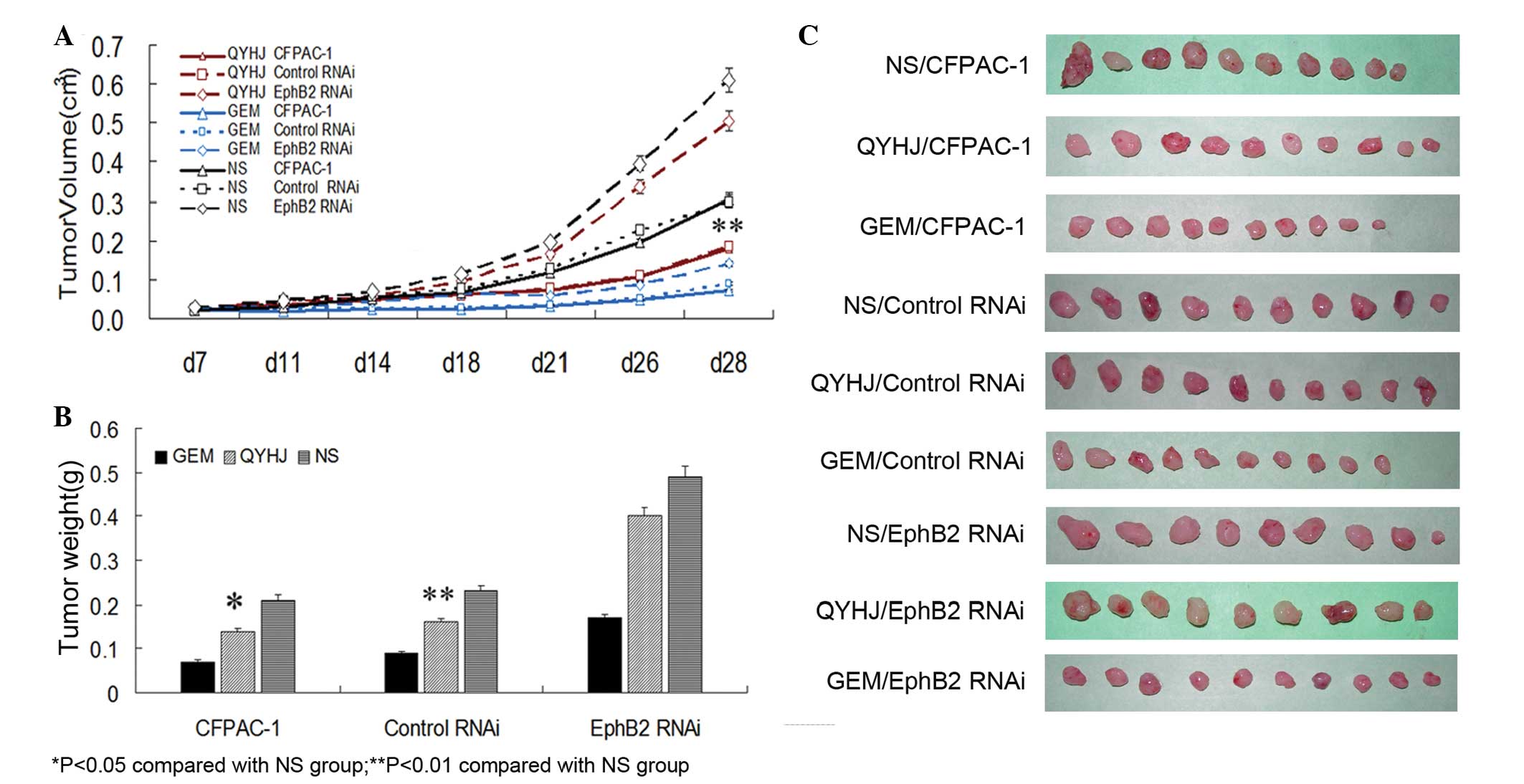
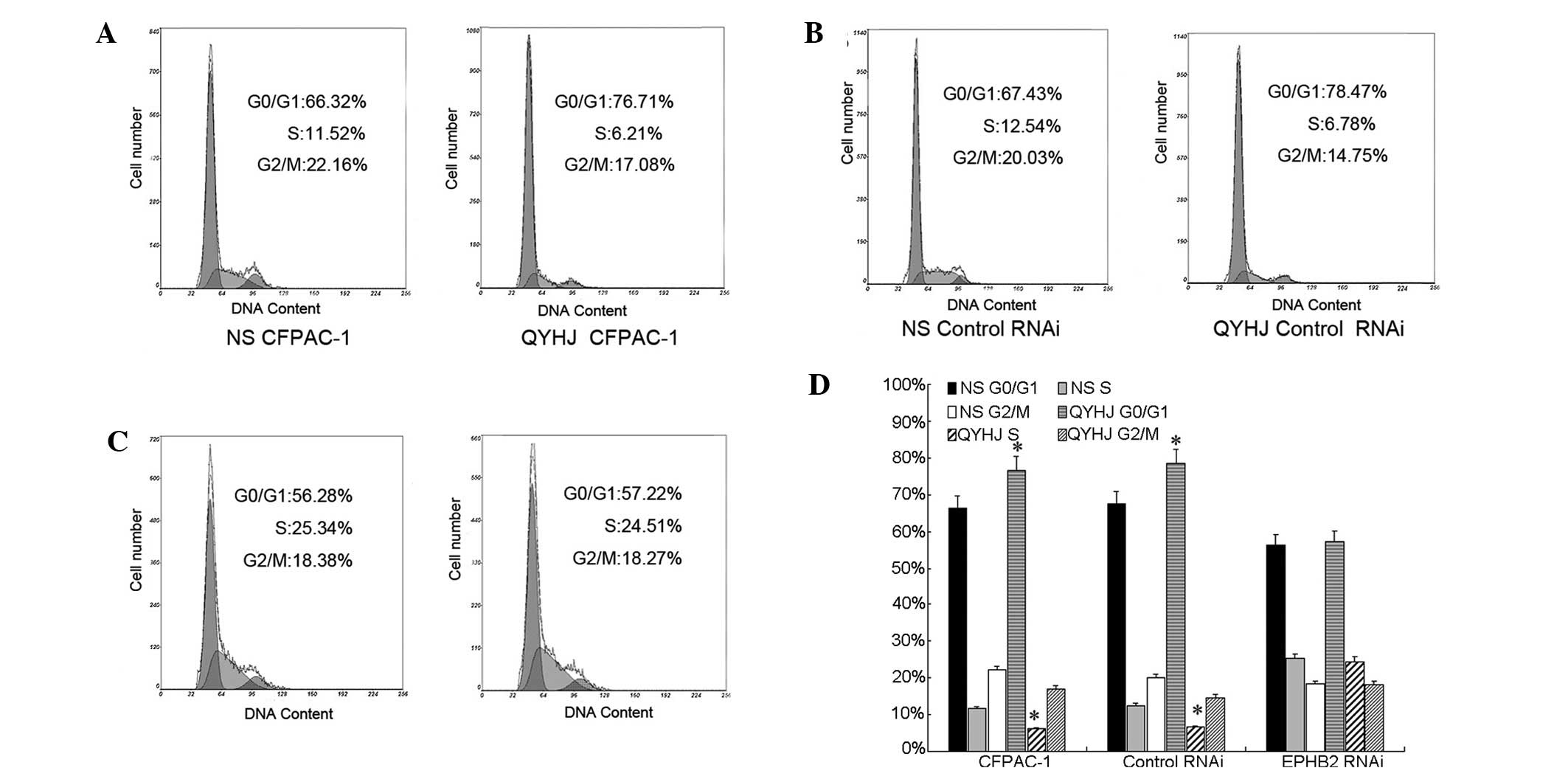
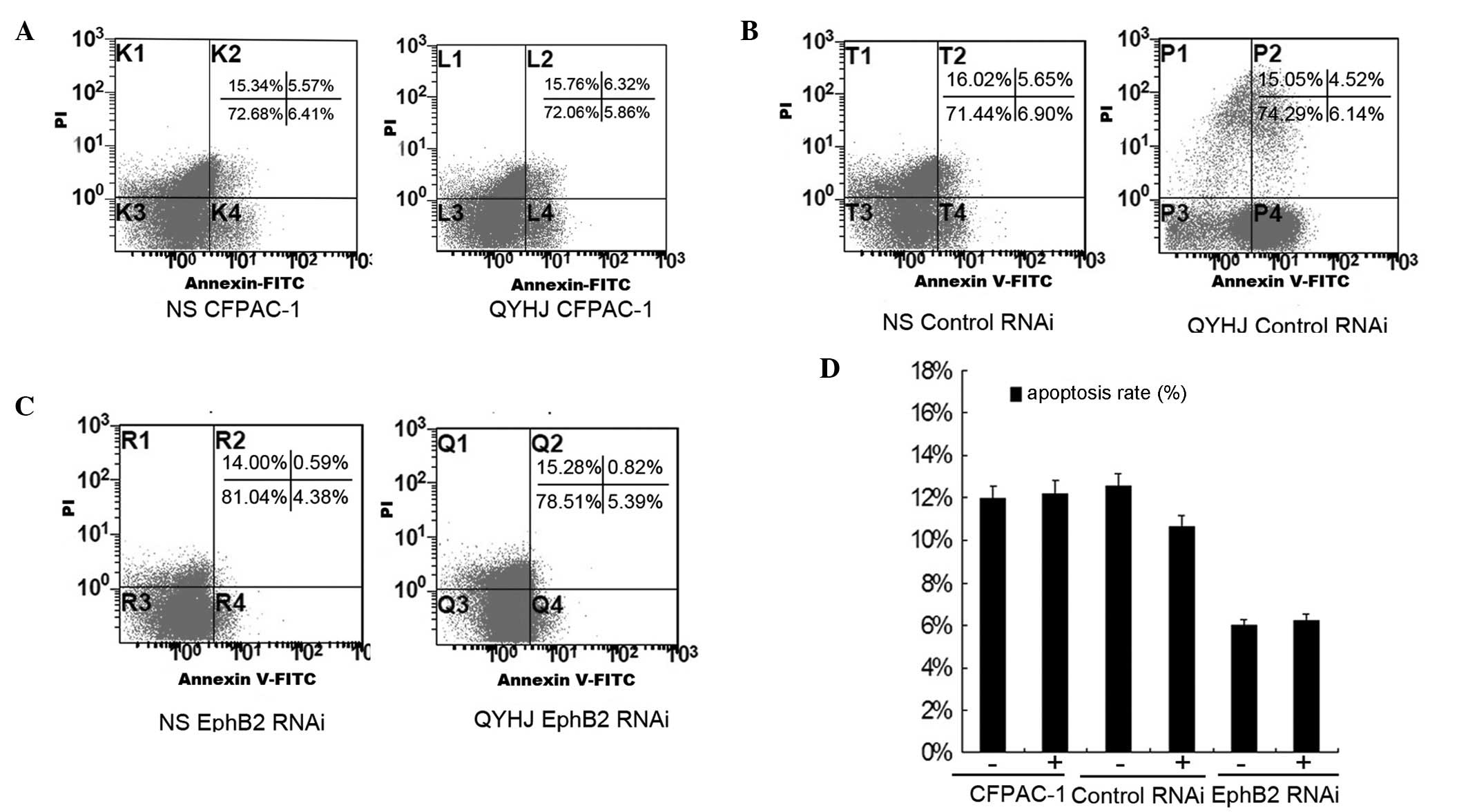
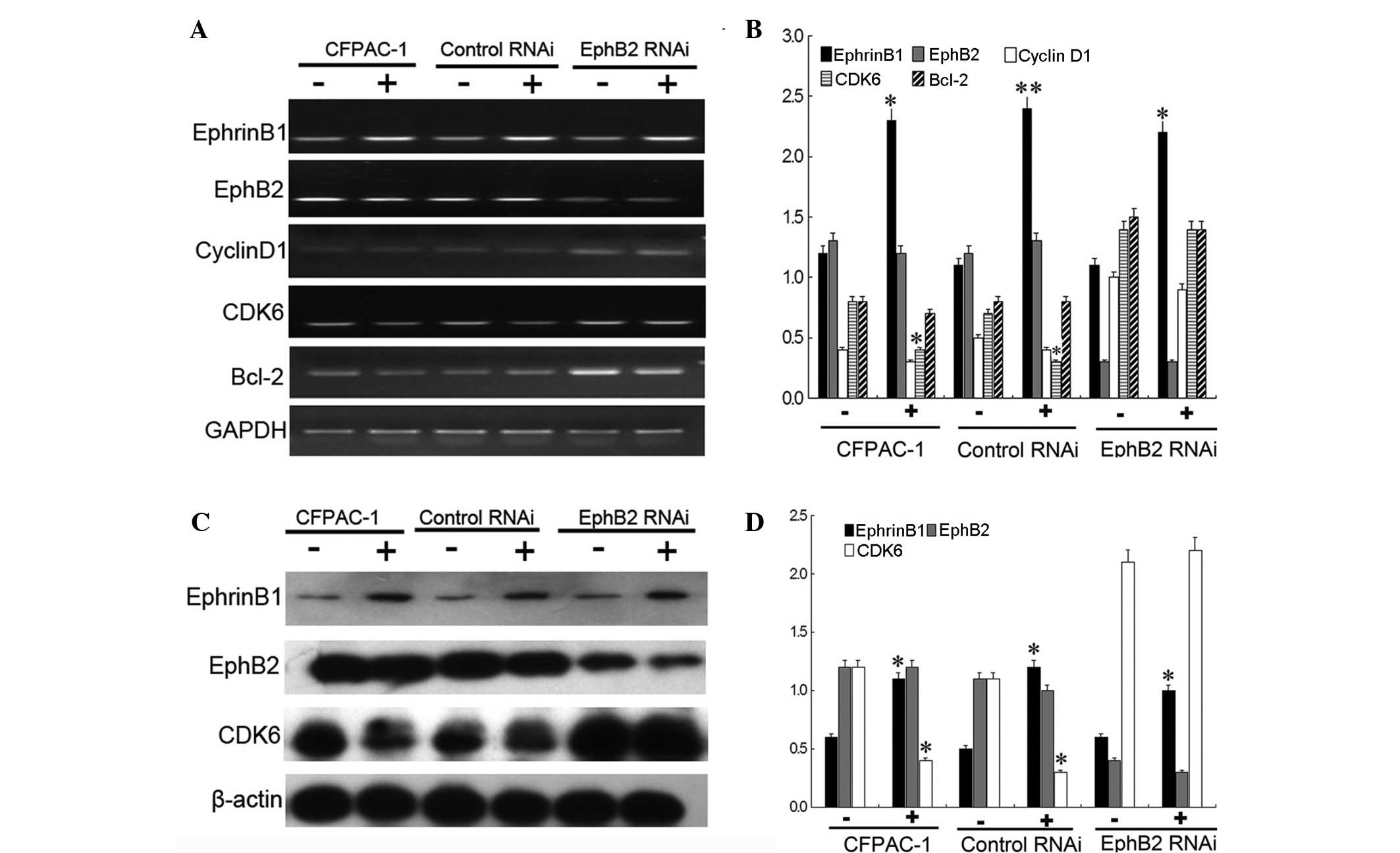
Our previous study demonstrated that inhibition of erythropoietin‑producing hepatoma cell line‑B2 (EphB2) expression resulted in the promotion of cancer growth, with EphB2 acting as a tumor suppressor in pancreatic cancer. Qingyihuaji formula (QYHJ), a traditional Chinese medicine, acts as an independent protective factor for pancreatic cancer patient survival and different patients have shown various responses to QYHJ treatment. In the current study, the different effects on tumor growth inhibition following QYHJ treatment in cells with different levels of EphB2 expression were investigated to reveal the mechanism. A subcutaneously transplanted tumor model using cancer cells with different levels of EphB2 expression were established in vivo and received a four‑week QYHJ intervention. Tumor weight inhibitory rate and tumor volume deflation were evaluated. The cell cycle and apoptosis were analyzed by flow cytometry, and reverse transcription polymerase chain reaction and western blot analysis were used to assess mRNA and protein levels. The results showed that the tumor weight inhibitory rate was 31.40, 31.33 and 18.36% in CFPAC‑1, CFPAC‑1 control RNAi and CFPAC‑1 EphB2 RNAi cells following QYHJ treatment, respectively. A statistically significant difference was identified in CFPAC‑1 (P<0.05) and CFPAC‑1 control RNAi (P<0.01) cells. In addition, a statistically significant increase was identified in the G0/G1 phase population (P<0.05) and a statistically significant decrease was identified in the S phase population (P<0.05) in CFPAC‑1 and CFPAC‑1 control RNAi cells; however, no significant difference was identified in the CFPAC‑1 EphB2 RNAi cells following QYHJ treatment. QYHJ upregulated the mRNA and protein level of Eph receptor‑interacting B1 (EphrinB1) in the cells that were expressing different levels of EphB2, however, QYHJ did not regulate EphB2 expression. In CFPAC‑1 and CFPAC‑1 control RNAi cells, the QYHJ treatment resulted in a statistically significant decrease in cyclin‑dependent kinase 6 (CDK6) mRNA (P<0.05) and protein (P<0.05) levels. The high expression of EphB2 predicted the superior response rate to the QYHJ treatment through a mechanism of inhibiting the cell cycle by an EphrinB1‑EphB2‑induced CDK6 decrease in CFPAC‑1 cells. Therefore, EphB2 acts as a predictive factor for QYHJ treatment in pancreatic cancer CFPAC‑1 cells.
View Figures

Figure 1

Figure 2

Figure 3

Figure 4

View References

1 

Siegel R, Naishadham D and Jemal A: Cancer statistics, 2012. CA Cancer J Clin. 62:10–29. 2012.

2 

Dai M, Ren JS, Li N, Li Q, Yang L and Chen YH: Estimation and prediction on cancer related incidence and mortality in China, 2008. Zhonghua Liu Xing Bing Xue Za Zhi. 33:57–61. 2012.(In Chinese).

3 

Ouyang H, Wang P, Meng Z, et al: Multimodality treatment of pancreatic cancer with liver metastases using chemotherapy, radiation therapy, and/or Chinese herbal medicine. Pancreas. 40:120–125. 2011.

4 

Shen YH, Liu LM, Chen Z, et al: Study on Chinese medicine combined with chemotherapy for treatment of 32 cases of advanced pancreatic cancer. Zhong Yi Za Zhi. 47:115–117. 2006.(In Chinese).

5 

Shen YH, Liu LM, Meng ZQ, et al: Survival analysis on 64 cases of advanced pancreatic cancer treated by integrated Western and traditional Chinese medicine mainly with Qingyi Huaji formula. Zhong Yi Za Zhi. 50:39–42. 2009.(In Chinese).

6 

Shen YH, Liu LM, Lu Y, et al: Impact of Qingyi Xiaoji Decoction on gene expression of experimental pancreatic cancer in vivo. Zhongguo Ai Zheng Za Zhi. 15:454–457. 2005.(In Chinese).

7 

Kataoka H, Tanaka M, Kanamori M, et al: Expression profile of EFNB1, EFNB2, two ligands of EPHB2 in human gastric cancer. J Cancer Res Clin Oncol. 128:343–348. 2002.

8 

Wu Q, Suo Z, Risberg B, Karlsson MG, Villman K and Nesland JM: Expression of Ephb2 and Ephb4 in breast carcinoma. Pathol Oncol Res. 10:26–33. 2004.

9 

Guo DL, Zhang J, Yuen ST, et al: Reduced expression of EphB2 that parallels invasion and metastasis in colorectal tumours. Carcinogenesis. 27:454–464. 2006.

10 

Hafner C, Schmitz G, Meyer S, et al: Differential gene expression of Eph receptors and ephrins in benign human tissues and cancers. Clin Chem. 50:490–499. 2004.

11 

Jubb AM, Zhong F, Bheddah S, et al: EphB2 is a prognostic factor in colorectal cancer. Clin Cancer Res. 11:5181–5187. 2005.

12 

Genander M, Halford MM, Xu NJ, et al: Dissociation of EphB2 signaling pathways mediating progenitor cell proliferation and tumor suppression. Cell. 139:679–692. 2009.

13 

Batlle E, Bacani J, Begthel H, et al: EphB receptor activity suppresses colorectal cancer progression. Nature. 435:1126–1130. 2005.

14 

Huusko P, Ponciano-Jackson D, Wolf M, et al: Nonsense-mediated decay microarray analysis identifies mutations of EPHB2 in human prostate cancer. Nat Genet. 36:979–983. 2004.

15 

Yu G, Gao Y, Ni C, et al: Reduced expression of EphB2 is significantly associated with nodal metastasis in Chinese patients with gastric cancer. J Cancer Res Clin Oncol. 137:73–80. 2011.

16 

Hua YQ, Ouyang HQ, Chen Z, et al: Promoted cancer growth by stimulating cell proliferation and decreasing apoptosis using a lentivirus-based EphB2 RNAi in pancreatic carcinoma CFPAC-1 cells. Biomed Pharmacother. 65:123–131. 2011.

17 

McCulloch M, See C, Shu XJ, et al: Astragalus-based Chinese herbs and platinum-based chemotherapy for advanced non-small-cell lung cancer: meta-analysis of randomized trials. J Clin Oncol. 24:419–430. 2006.

18 

Guo H, Liu JX, Xu L, Madebo T and Baak JPA: Traditional Chinese medicine herbal treatment may have a relevant impact on the prognosis of patients with stage IV adenocarcinoma of the lung treated with platinum-based chemotherapy or combined targeted therapy and chemotherapy. Integr Cancer Ther. 10:127–137. 2011.

19 

Schoumacher RA, Ram J, Iannuzzi MC, et al: A cystic fibrosis pancreatic adenocarcinoma cell line. Proc Natl Acad Sci USA. 87:4012–4016. 1990.

20 

Pasquale EB: Eph-ephrin bidirectional signaling in physiology and disease. Cell. 133:38–52. 2008.

21 

Noberini R and Pasquale EB: Proliferation and tumor suppression: not mutually exclusive for Eph receptors. Cancer Cell. 16:452–454. 2009.

22 

Nakada M, Niska JA, Tran NL, McDonough WS and Berens ME: EphB2/R-Ras signaling regulates glioma cell adhesion, growth, and invasion. Am J Pathol. 167:565–576. 2005.

23 

Wade TP, Halaby IA, Stapleton DR, Virgo KS and Johnson FE: Population-based analysis of treatment of pancreatic cancer and Whipple resection: Department of Defense hospitals, 1989–1994. Surgery. 120:680–687. 1996.

24 

Masui T, Hosotani R, Ito D, et al: Bcl-XL antisense oligonucleotides coupled with antennapedia enhances radiation-induced apoptosis in pancreatic cancer. Surgery. 140:149–160. 2006.

25 

Reni M, Pasetto L, Aprile G, et al: Raltitrexed-eloxatin salvage chemotherapy in gemcitabine-resistant metastatic pancreatic cancer. Br J Cancer. 94:785–791. 2006.

26 

Lemke G: A coherent nomenclature for Eph receptors and their ligands. Mol Cell Neurosci. 9:331–332. 1997.

27 

Himanen JP and Nikolov DB: Eph signaling: a structural view. Trends Neurosci. 26:46–51. 2003.

28 

Gale NW, Holland SJ, Valenzuela DM, et al: Eph receptors and ligands comprise two major specificity subclasses and are reciprocally compartmentalized during embryogenesis. Neuron. 17:9–19. 1996.

29 

Lugli A, Spichtin H, Maurer R, et al: EphB2 expression across 138 human tumor types in a tissue microarray: high levels of expression in gastrointestinal cancers. Clin Cancer Res. 11:6450–6458. 2005.

30 

Li X, Yang G, Zhang Y, et al: Traditional Chinese medicine in cancer care: a review of controlled clinical studies published in chinese. PLoS One. 8:e603382013.

31 

DeWitt J, Yu M, Al-Haddad MA, Sherman S, McHenry L and Leblanc JK: Survival in patients with pancreatic cancer after the diagnosis of malignant ascites or liver metastases by EUS-FNA. Gastrointest Endosc. 71:260–265. 2010.

32 

Jiang T, Kambadakone A, Kulkarni NM, Zhu AX and Sahani DV: Monitoring response to antiangiogenic treatment and predicting outcomes in advanced hepatocellular carcinoma using image biomarkers, CT perfusion, tumor density, and tumor size (RECIST). Invest Radiol. 47:11–17. 2012.

33 

Manuyakorn A, Paulus R, Farrell J, et al: Cellular histone modification patterns predict prognosis and treatment response in resectable pancreatic adenocarcinoma: results from RTOG 9704. J Clin Oncol. 28:1358–1365. 2010.

34 

Lundin KB, Henningson M, Hietala M, Ingvar C, Rose C and Jernström H: Androgen receptor genotypes predict response to endocrine treatment in breast cancer patients. Br J Cancer. 105:1676–1683. 2011.

35 

Krause DS and Van Etten RA: Tyrosine kinases as targets for cancer therapy. N Engl J Med. 353:172–187. 2005.

36 

Shawver LK, Slamon D and Ullrich A: Smart drugs: tyrosine kinase inhibitors in cancer therapy. Cancer Cell. 1:117–123. 2002.

37 

Chow LQ and Eckhardt SG: Sunitinib: from rational design to clinical efficacy. J Clin Oncol. 25:884–896. 2007.

38 

Bell DW, Lynch TJ, Haserlat SM, et al: Epidermal growth factor receptor mutations and gene amplification in non-small-cell lung cancer: molecular analysis of the IDEAL/INTACT gefitinib trials. J Clin Oncol. 23:8081–8092. 2005.

39 

Lièvre A, Bachet JB, Boige V, et al: KRAS mutations as an independent prognostic factor in patients with advanced colorectal cancer treated with cetuximab. J Clin Oncol. 26:374–379. 2008.

40 

Senior PV, Zhang BX and Chan ST: Loss of cell-surface receptor EphB2 is important for the growth, migration, and invasiveness of a colon cancer cell line. Int J Colorectal Dis. 25:687–694. 2010.

41 

Kandouz M, Haidara K, Zhao J, Brisson ML and Batist G: The EphB2 tumor suppressor induces autophagic cell death via concomitant activation of the ERK1/2 and PI3K pathways. Cell Cycle. 9:398–407. 2010.

Related Articles

  • Abstract
  • View
  • Download
  • Twitter
Copy and paste a formatted citation
Spandidos Publications style
Hua YQ, Chen Z, Meng ZQ, Chen H, Shen JG, Wang K, Peng W, Shen YH and Liu LM: High expression of erythropoietin‑producing hepatoma cell line-B2 (EphB2) predicts the efficiency of the Qingyihuaji formula treatment in pancreatic cancer CFPAC‑1 cells through the EphrinB1‑EphB2 pathway. Oncol Lett 8: 17-24, 2014.
APA
Hua, Y., Chen, Z., Meng, Z., Chen, H., Shen, J., Wang, K. ... Liu, L. (2014). High expression of erythropoietin‑producing hepatoma cell line-B2 (EphB2) predicts the efficiency of the Qingyihuaji formula treatment in pancreatic cancer CFPAC‑1 cells through the EphrinB1‑EphB2 pathway. Oncology Letters, 8, 17-24. https://doi.org/10.3892/ol.2014.2134
MLA
Hua, Y., Chen, Z., Meng, Z., Chen, H., Shen, J., Wang, K., Peng, W., Shen, Y., Liu, L."High expression of erythropoietin‑producing hepatoma cell line-B2 (EphB2) predicts the efficiency of the Qingyihuaji formula treatment in pancreatic cancer CFPAC‑1 cells through the EphrinB1‑EphB2 pathway". Oncology Letters 8.1 (2014): 17-24.
Chicago
Hua, Y., Chen, Z., Meng, Z., Chen, H., Shen, J., Wang, K., Peng, W., Shen, Y., Liu, L."High expression of erythropoietin‑producing hepatoma cell line-B2 (EphB2) predicts the efficiency of the Qingyihuaji formula treatment in pancreatic cancer CFPAC‑1 cells through the EphrinB1‑EphB2 pathway". Oncology Letters 8, no. 1 (2014): 17-24. https://doi.org/10.3892/ol.2014.2134
Copy and paste a formatted citation
x
Spandidos Publications style
Hua YQ, Chen Z, Meng ZQ, Chen H, Shen JG, Wang K, Peng W, Shen YH and Liu LM: High expression of erythropoietin‑producing hepatoma cell line-B2 (EphB2) predicts the efficiency of the Qingyihuaji formula treatment in pancreatic cancer CFPAC‑1 cells through the EphrinB1‑EphB2 pathway. Oncol Lett 8: 17-24, 2014.
APA
Hua, Y., Chen, Z., Meng, Z., Chen, H., Shen, J., Wang, K. ... Liu, L. (2014). High expression of erythropoietin‑producing hepatoma cell line-B2 (EphB2) predicts the efficiency of the Qingyihuaji formula treatment in pancreatic cancer CFPAC‑1 cells through the EphrinB1‑EphB2 pathway. Oncology Letters, 8, 17-24. https://doi.org/10.3892/ol.2014.2134
MLA
Hua, Y., Chen, Z., Meng, Z., Chen, H., Shen, J., Wang, K., Peng, W., Shen, Y., Liu, L."High expression of erythropoietin‑producing hepatoma cell line-B2 (EphB2) predicts the efficiency of the Qingyihuaji formula treatment in pancreatic cancer CFPAC‑1 cells through the EphrinB1‑EphB2 pathway". Oncology Letters 8.1 (2014): 17-24.
Chicago
Hua, Y., Chen, Z., Meng, Z., Chen, H., Shen, J., Wang, K., Peng, W., Shen, Y., Liu, L."High expression of erythropoietin‑producing hepatoma cell line-B2 (EphB2) predicts the efficiency of the Qingyihuaji formula treatment in pancreatic cancer CFPAC‑1 cells through the EphrinB1‑EphB2 pathway". Oncology Letters 8, no. 1 (2014): 17-24. https://doi.org/10.3892/ol.2014.2134
Follow us
  • Twitter
  • LinkedIn
  • Facebook
About
  • Spandidos Publications
  • Careers
  • Cookie Policy
  • Privacy Policy
How can we help?
  • Help
  • Live Chat
  • Contact
  • Email to our Support Team