Introduction
Neuroendocrine tumors are rare benign or malignant
neoplasms that originate from the endocrine and nervous systems,
and may develop in various organs (1). Neuroendocrine carcinoma of the uterine
cervix (NECC) is a rare cancer that was first described by
Albores-Saavedra in 1976 and accounts for almost 2% of all cervical
malignancies (2). In the USA, almost
250 patients are diagnosed with NECC each year (3). The main histopathological types of
cervical malignancies include small cell NECC, large cell NECC,
typical carcinoid tumors and atypical carcinoid tumors. While
carcinoid tumors are considered as low-grade malignant tumors, the
other histopathological subtypes are poorly differentiated or
high-grade carcinomas, which are associated with an overall poor
prognosis (4). Due to the
particularly aggressive biological behavior, small and large cell
NECC necessitates a wide resection in order to gain control of the
disease. The present study reports the case of a 41-year-old female
in whom a large cell NECC was identified. The patient underwent
surgery and a radical total hysterectomy, with bilateral
adnexectomy, pelvic and para-aortic lymph node dissection, was
performed. The patient provided written informed consent.
Case report
A 41-year-old female patient presented with pelvic
pain and vaginal bleeding at Ilfov County Hospital, Bucharest,
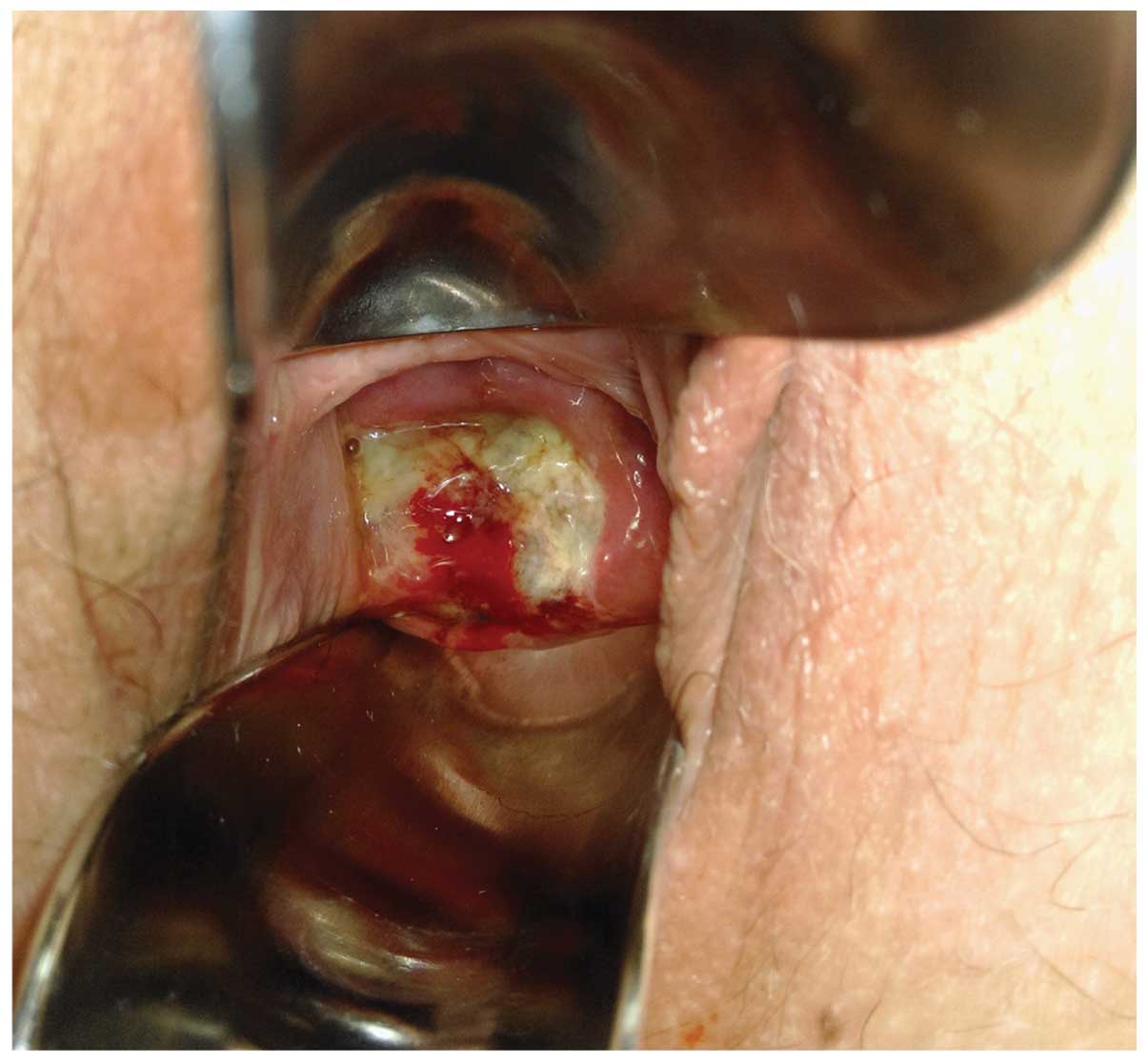
Romania in February 2014. Local examination revealed a cervical
tumor, with no signs of local invasion. Colposcopy revealed the
presence of a 3-cm red polipoid endocervical tumor, which was
biopsied. Histopathological examination revealed the presence of a
malignant epithelial tumor with round cells and numerous mitoses.
Immunohistochemistry revealed the presence of synaptophisin,
chromogranin and cytokeratine-7 in the tumor cells. In up to 90% of
the tumor cells, this was associated with Ki-67 expression and no
Wilms tumor protein (WT)-1 or estrogen receptor expression. These
findings determined the diagnosis of large cell NECC. Pelvic
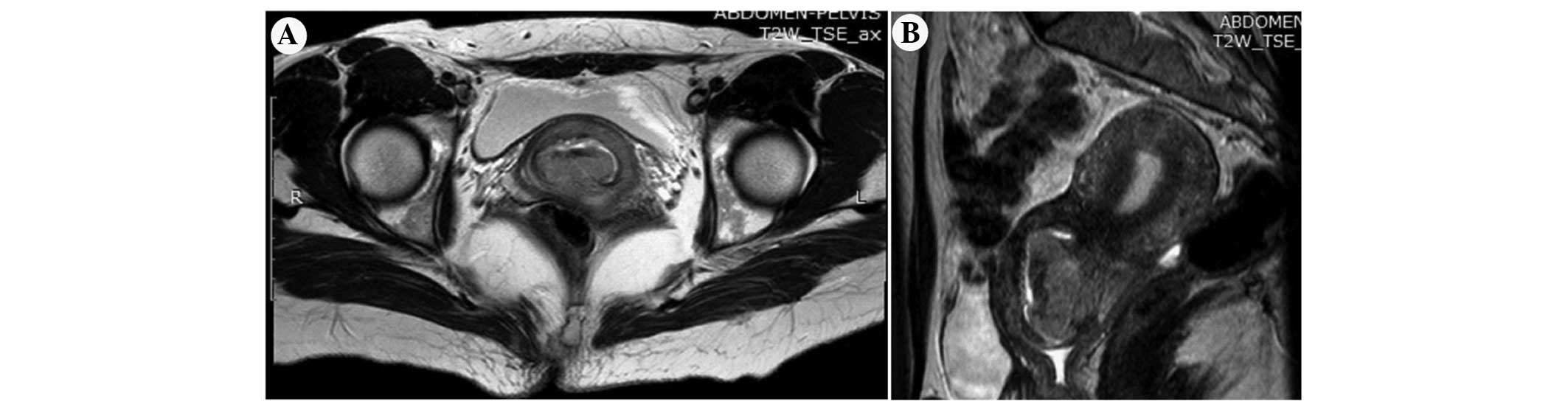
magnetic resonance imaging confirmed the presence of a 4 cm tumor,
with no signs of local invasion or distant metastases (Fig. 1A and B). The patient underwent surgery
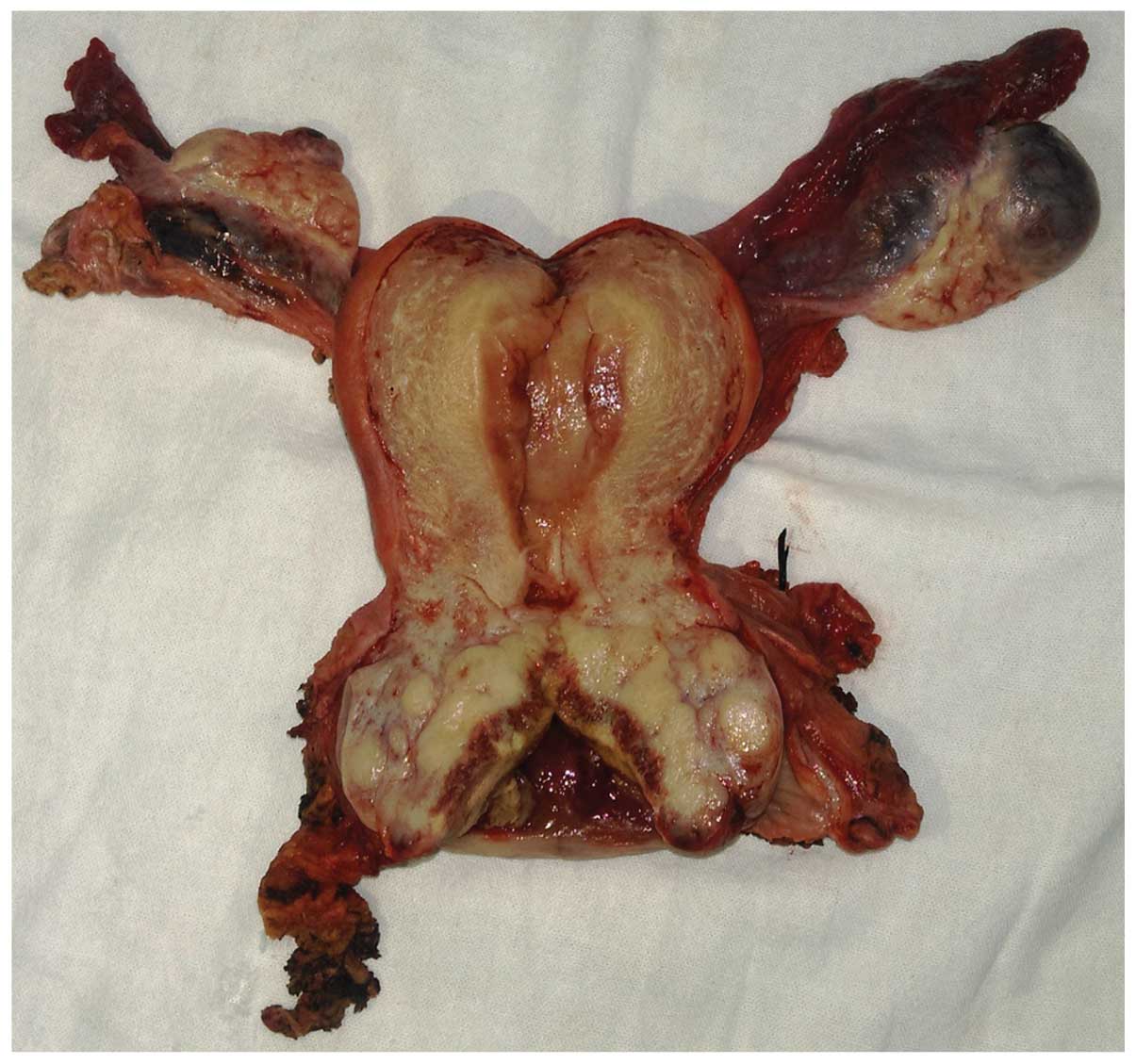
and a total radical hysterectomy with bilateral adnexectomy, pelvic
and para-aortic lymph node dissection was performed (Figs. 2–9). The
patient was discharged on post-operative day 8.
Histopathological examination confirmed the
pre-operative diagnosis of a large cell NECC, with vascular tumor
emboli (Fig. 10A–C). The tumor cells
expressed synaptophisin, chromogranin and cytokeratine-7, and in up
to 90% of the cells, this was associated with Ki-67 expression and
no estrogen receptor expression. The tumor cells did not express
progesteron receptors, which were expressed in the surrounding
stroma and cervical glands (Fig.
10D–I). The histopathological examination also revealed 2
pelvic lymph nodes that were positive for metastasis. Therefore,
the patient was referred to the Oncology Clinic of Brăila County
Hospital (Brăila, Romania) for adjuvant chemotherapy. In total, the
patient received 6 cycles of cisplatin (60 mg/m2, day 1,
with 4-week cycles) and etoposide (100 mg/m2/day, days
1–3), which was well-tolerated. At the 1-year follow-up the patient
was free of any local or distant recurrence.
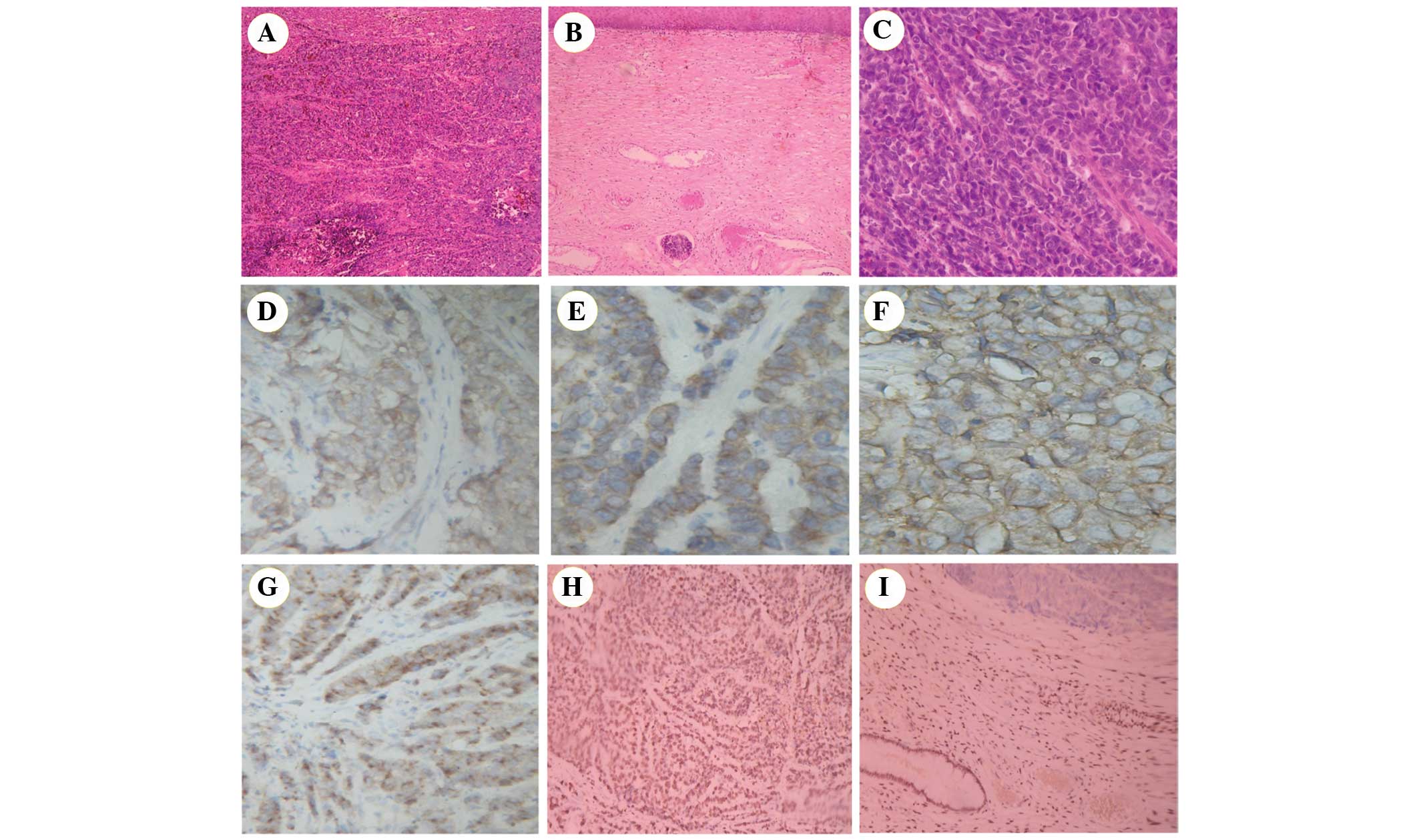 | Figure 10.Histopathological investigations
revealed (A) the presence of a neuroendocrine cervical tumor
(H&E staining; magnification, ×10), (B) intravascular tumor
embolus in the inferior region of the image (magnification, ×10),
(C) and a malignant tumor with high grade mitotic activity (H&E
staining; magnification, ×40). Immunohistochemistry investigations
revealed the expression of (D) synaptophysin (magnification, ×20),
(E) cytokeratin-7 (magnification, ×40), (F) carcinoembryonic
antigen (magnification, ×40), (G) chromogranin (magnification, ×40)
and (H) Ki-67 (magnification, ×20), and (I) the lack of progesteron
receptor expression in tumor cells (top), but the presence of
progesteron receptor in the surrounding stroma (magnification,
×20). H&E, hematoxylin and eosin. |
Discussion
NECC tumors are uncommon and the etiology and risk
factors of this disease are not clearly known. Although several
studies have demonstrated that there may be an association between
human papilloma virus (HPV) and NECC (4,5), the
studies have failed to demonstrate that an HPV screening test could
provide an early diagnosis for NECC, in a pre-invasive phase
(5).
Due to distinct histopathological behavior, NECC
tumors are associated with the local symptoms characteristic of a
cervical tumor, such as vaginal bleeding and pelvic pain, and
general para-neoplastic syndromes that involve the endocrine and
nervous system, for example syndrome of inappropriate antidiuretic
hormone, Cushing's syndrome or hypercalcemia. These general
syndromes are also identified in neuroendocrine tumors with other
localization, the most common are those located in the lungs
(6).
Large cell NECC is a special subcategory that
accounts for up to 0.6% of all cervical malignancies, and
demonstrated an extremely aggressive biological behavior (7,8). The
presence of prominent vesicular nuclei and nucleoli with >10
mitotic figures/10 high-power fields associated with variable areas
of necrosis is required for the diagnosis of large cell NECC
(3). Immunohistochemical
demonstration of the presence of ≥1 neuroendocrine marker, such as
chromogranin, synaptophysin, cluster of differentiation (CD)-56 or
protein gene product 9.5, is also mandatory for diagnosis (3).
There is no standard protocol for the treatment of
NECC malignancies, due to their rarity. However, the main treatment
principles are extrapolated from standard treatment protocols for
other neuroendocrine tumors, including high-grade lung
neuroendocrine cancer (9).
In patients presenting with early-stage tumors
measuring <4 cm, with no signs of local invasion or distant
metastases, the gold-standard of treatment is surgery consisting of
a radical hysterectomy with bilateral adnexectomy, pelvic and
para-aortic lymph-node dissection, followed by adjuvant
chemo-irradiation (10–13). The most recommended adjuvant
chemotherapy regimen is a combination of cisplatin and etoposide
(14). By contrast, patients
presenting with local invasion or distant extra-pelvic disease are
candidates for neo-adjuvant chemotherapy with vincristine,
adriamycin and cyclophosphamide, alternating with cisplatin and
etoposide and followed by radical surgery (10–14).
As with other histopathological types of cervical
cancer, one of the most important prognostic factors for NECC is
the stage of disease at the time of diagnosis. Chen et al
concluded that patients diagnosed at an early stage of disease
demonstrate a significantly increased 5-year overall survival rate;
stages I–IIA resulted in an overall survival of 37%, while for more
advanced stages this decreased to 9% (10). McCuscker et al reported a
5-year overall survival rate of 42% for stage I, 19% for stage II,
10% for stage III, and 2.3% for stage IV disease (11). Chen et al also described a
5-year overall survival rate of 36% for patients with NECC and an
almost double survival rate (70%) for patients with other
histopathological types of cervical cancer (10).
However, it appears that the 5-year overall survival
rate for patients with early and advanced stage NECC is increased
when compared to pulmonary neuroendocrine tumors. For early stage
NECC, the 5-year overall survival rate ranges between 19 and 42%,
while for lung neuroendocrine carcinoma the 5-year overall survival
rate is 10%. For advanced stage NECC, the 5-year overall survival
rate is 10–20%, while for lung neuroendocrine carcinoma the 5-year
overall survival rate is 1–2% (12).
Rekhi et al conducted a study using 50
patients diagnosed with NECC, 24 of whom were diagnosed with large
cell NECC (13). This study concluded
that patients with small cell NECC possess a poorer prognosis in
comparison to those with large cell NECC. The most common prognosis
factors associated with NECC identified by Rekhi et al were
synaptophysin, which was present in 59.4% of the cases, and
chromogranin, which was present in 72.9% of the cases (13). By contrast, Gilks et al
reported similar rates of survival for small and large cell NECC
(14).
Embry et al performed a literature review
using the Medline database and the keywords ‘uterine cervical
neoplasms’, ‘large cell NECC’, ‘NECC’ and ‘large cell carcinoma’
(15). The authors obtained data on
the cases of 62 women diagnosed with large cell NECC. In total, 54
cases contained data pertaining to the overall survival rate of
patients. Embry et al reported an overall median survival
time of the 54 patients of 16.5 months, and concluded that the most
important prognostic factors associated with an improved survival
time were a younger age (P=0.03), initial earlier Federation of
Gynecologists and Obstetricians stage of the disease (P<0.0001),
radical surgery (P=0.006) and chemotherapy at any point during
initial treatment (P=0.049). In addition, this study investigated
whether platinum-based chemotherapy regimens act as a prognostic
factor associated with increased overall survival. The results of
this study revealed that the platinum (P=0.034) and platinum with
etoposide (P=0.027) regimens provided an improved outcome when
compared to other chemotherapy regimens (15).
The absence of pelvic lymph node metastases may be
another positive prognostic factor, indicating a significantly
improved survival rate in patients diagnosed with NECC (8,16). Wang
et al reported a mean overall survival time of 12 months in
patients with involved pelvic lymph nodes, whereas in patients with
no lymph node metastases, the mean survival time increased to 67
months (8).
Kasamatu et al performed a study in which 10
patients with NECC underwent radical hysterectomy with bilateral
adnexectomy. Histopathological studies revealed that 4 patients
possessed pathological tumor-mode-metastasis (pTNM) stage pT1bN0
disease, 4 possessed pT1bN1 disease, 1 possessed pT2aN0 disease,
and 1 possessed pT2bN1 disease. Lymph node metastases were reported
in 4 patients and lymph-vascular space invasion was reported in 7
patients; all patients possessed stage T1b disease. All patients
with N1 disease underwent adjuvant chemotherapy or radiotherapy.
Recurrence arose in 7 patients at a median interval of 8 months
subsequent to surgery. Following recurrence, the median survival
time was 16 months, despite aggressive multimodal treatment. For
all 10 patients, the 5-year overall survival rate was 43% and the
reported median survival time was 29 months. Pelvic lymph node
metastases were identified in 3 patients among those who relapsed,
and in a single patient that did not experience recurrence. The
main sites of recurrence were as follows: Liver, 3 patients; lungs,
3 patients; brain, 1 patient; and para-aortic lymph nodes, 1
patient. Kasamatu et al concluded that the most important
prognostic factors were the initial stage of the tumor, as stromal
invasion >6 mm is associated with a poor prognosis, and the
presence of positive lymph nodes, which significantly increased the
rates of recurrence (17).
Large cell NECC is an aggressive tumor, with a
poorer prognosis at each stage compared with similar stages of
squamous cell carcinoma of the cervix. Due to the rarity of large
cell NECC, it is challenging to determine the most appropriate
therapy protocol. However it appears that long-term survival may be
obtained with an aggressive surgical approach combined with
peri-operative platinum-based chemotherapy regimens.
Glossary
Abbreviations
Abbreviations:
|
NECC
|
neuroendocrine carcinoma of the
uterine cervix
|
References
|
1
|
Klimstra DS, Modlin IR, Coppola D, Lloyd
RV and Suster S: The pathologic classification of neuroendocrine
tumors: A review of nomenclature, grading, and staging systems.
Pancreas. 39:707–712. 2010. View Article : Google Scholar : PubMed/NCBI
|
|
2
|
Albores-Saavedra J, Larraza O, Poucell S
and Rodriguez Martinez HA: Carcinoid of the uterine cervix:
Additional observations on a new tumor entity. Cancer.
38:2328–2342. 1976. View Article : Google Scholar : PubMed/NCBI
|
|
3
|
Albores-Saavedra J, Gersell D, Gilks CB,
Henson DE, Lindberg G, Santiago H, Scully RE, Silva E, Sobin LH,
Tavassoli FJ, et al: Terminology of endocrine tumors of the uterine
cervix: Results of a workshop sponsored by the College of American
Pathologists and the National Cancer Institute. Arch Pathol Lab
Med. 121:34–39. 1997.PubMed/NCBI
|
|
4
|
Reagan JW, Hamonic MJ and Wentz WB:
Analytical study of the cells in cervical squamous-cell cancer. Lab
Invest. 6:241–250. 1957.PubMed/NCBI
|
|
5
|
Stoler MH, Mills SE, Gersell DJ and Walker
AN: Small-cell neuroendocrine carcinoma of the cervix. A human
papillomavirus type 18-associated cancer. Am J Surg Pathol.
15:28–32. 1991. View Article : Google Scholar : PubMed/NCBI
|
|
6
|
Hirahatake K, Hareyama H, Kure R,
Kawaguchi I, Yamaguchi J, Sakuragi N and Fujimoto S: Cytologic and
hormonal findings in a carcinoid tumor of the uterine cervix. Acta
Cytol. 34:119–124. 1990.PubMed/NCBI
|
|
7
|
Sato Y, Shimamoto T, Amada S, Asada Y and
Hayashi T: Large cell neuroendocrine carcinoma of the uterine
cervix: A clinicopathological study of six cases. Int J Gynecol
Pathol. 22:226–230. 2003. View Article : Google Scholar : PubMed/NCBI
|
|
8
|
Wang KL, Wang TY, Huang YC, Lai JC, Chang
TC and Yen MS: Human papillomavirus type and clinical manifestation
in seven cases of large-cell neuroendocrine cervical carcinoma. J
Formos Med Assoc. 108:428–432. 2009. View Article : Google Scholar : PubMed/NCBI
|
|
9
|
Strosberg JR, Coppola D, Klimstra DS, Phan
AT, Kulke MH, Wiseman GA and Kvols LK: North American
Neuroendocrine Tumor Society (NANETS): The NANETS consensus
guidelines for the diagnosis and management of poorly
differentiated (high-grade) extrapulmonary neuroendocrine
carcinomas. Pancreas. 39:799–800. 2010. View Article : Google Scholar : PubMed/NCBI
|
|
10
|
Chen J, Macdonald OK and Gaffney DK:
Incidence, mortality, and prognostic factors of small cell
carcinoma of the cervix. Obstet Gynecol. 111:1394–1402. 2008.
View Article : Google Scholar : PubMed/NCBI
|
|
11
|
McCusker ME, Coté TR, Clegg LX and
Tavassoli FJ: Endocrine tumors of the uterine cervix: Incidence,
demographics, and survival with comparison to squamous cell
carcinoma. Gynecol Oncol. 88:333–339. 2003. View Article : Google Scholar : PubMed/NCBI
|
|
12
|
Gaspar LE, Gay EG, Crawford J, Putnam JB,
Herbst RS and Bonner JA: Limited-stage small-cell lung cancer
(stages I–III): Observations from the National Cancer Data Base.
Clin Lung Cancer. 6:355–360. 2005. View Article : Google Scholar : PubMed/NCBI
|
|
13
|
Rekhi B, Patil B, Deodhar KK, Maheshwari
AA, Kerkar R, Gupta S, Tongaonkar HB and Shrivastava SK: Spectrum
of neuroendocrine carcinomas of the uterine cervix, including
histopathologic features, terminology, immunohistochemical profile,
and clinical outcomes in a series of 50 cases from a single
institution in India. Ann Diagn Pathol. 17:1–9. 2013. View Article : Google Scholar : PubMed/NCBI
|
|
14
|
Gilks CB, Young RH, Gersell DJ and Clement
PB: Large cell neuroendocrine [corrected] carcinoma of the uterine
cervix: A clinicopathologic study of 12 cases. Am J Surg Pathol.
21:905–914. 1997. View Article : Google Scholar : PubMed/NCBI
|
|
15
|
Embry JR, Kelly MG, Post MD and Spillman
MA: Large cell neuroendocrine carcinoma of the cervix: Prognostic
factors and survival advantage with platinum chemotherapy. Gynecol
Oncol. 120:444–448. 2011. View Article : Google Scholar : PubMed/NCBI
|
|
16
|
Boruta DM II, Schorge JO, Duska LA, Crum
CP, Castrillon DH and Sheets EE: Multimodality therapy in
early-stage neuroendocrine carcinoma of the uterine cervix. Gynecol
Oncol. 81:82–87. 2001. View Article : Google Scholar : PubMed/NCBI
|
|
17
|
Kasamatsu T, Sasajima Y, Onda T, Sawada M,
Kato T and Tanikawa M: Surgical treatment for neuroendocrine
carcinoma of the uterine cervix. Int J Gynaecol Obstet. 99:225–228.
2007. View Article : Google Scholar : PubMed/NCBI
|