Spandidos Publications Logo
  • About
    • About Spandidos
    • Aims and Scopes
    • Abstracting and Indexing
    • Editorial Policies
    • Reprints and Permissions
    • Job Opportunities
    • Terms and Conditions
    • Contact
  • Journals
    • All Journals
    • Oncology Letters
      • Oncology Letters
      • Information for Authors
      • Editorial Policies
      • Editorial Board
      • Aims and Scope
      • Abstracting and Indexing
      • Bibliographic Information
      • Archive
    • International Journal of Oncology
      • International Journal of Oncology
      • Information for Authors
      • Editorial Policies
      • Editorial Board
      • Aims and Scope
      • Abstracting and Indexing
      • Bibliographic Information
      • Archive
    • Molecular and Clinical Oncology
      • Molecular and Clinical Oncology
      • Information for Authors
      • Editorial Policies
      • Editorial Board
      • Aims and Scope
      • Abstracting and Indexing
      • Bibliographic Information
      • Archive
    • Experimental and Therapeutic Medicine
      • Experimental and Therapeutic Medicine
      • Information for Authors
      • Editorial Policies
      • Editorial Board
      • Aims and Scope
      • Abstracting and Indexing
      • Bibliographic Information
      • Archive
    • International Journal of Molecular Medicine
      • International Journal of Molecular Medicine
      • Information for Authors
      • Editorial Policies
      • Editorial Board
      • Aims and Scope
      • Abstracting and Indexing
      • Bibliographic Information
      • Archive
    • Biomedical Reports
      • Biomedical Reports
      • Information for Authors
      • Editorial Policies
      • Editorial Board
      • Aims and Scope
      • Abstracting and Indexing
      • Bibliographic Information
      • Archive
    • Oncology Reports
      • Oncology Reports
      • Information for Authors
      • Editorial Policies
      • Editorial Board
      • Aims and Scope
      • Abstracting and Indexing
      • Bibliographic Information
      • Archive
    • Molecular Medicine Reports
      • Molecular Medicine Reports
      • Information for Authors
      • Editorial Policies
      • Editorial Board
      • Aims and Scope
      • Abstracting and Indexing
      • Bibliographic Information
      • Archive
    • World Academy of Sciences Journal
      • World Academy of Sciences Journal
      • Information for Authors
      • Editorial Policies
      • Editorial Board
      • Aims and Scope
      • Abstracting and Indexing
      • Bibliographic Information
      • Archive
    • International Journal of Functional Nutrition
      • International Journal of Functional Nutrition
      • Information for Authors
      • Editorial Policies
      • Editorial Board
      • Aims and Scope
      • Abstracting and Indexing
      • Bibliographic Information
      • Archive
    • International Journal of Epigenetics
      • International Journal of Epigenetics
      • Information for Authors
      • Editorial Policies
      • Editorial Board
      • Aims and Scope
      • Abstracting and Indexing
      • Bibliographic Information
      • Archive
    • Medicine International
      • Medicine International
      • Information for Authors
      • Editorial Policies
      • Editorial Board
      • Aims and Scope
      • Abstracting and Indexing
      • Bibliographic Information
      • Archive
  • Articles
  • Information
    • Information for Authors
    • Information for Reviewers
    • Information for Librarians
    • Information for Advertisers
    • Conferences
  • Language Editing
Spandidos Publications Logo
  • About
    • About Spandidos
    • Aims and Scopes
    • Abstracting and Indexing
    • Editorial Policies
    • Reprints and Permissions
    • Job Opportunities
    • Terms and Conditions
    • Contact
  • Journals
    • All Journals
    • Biomedical Reports
      • Information for Authors
      • Editorial Policies
      • Editorial Board
      • Aims and Scope
      • Abstracting and Indexing
      • Bibliographic Information
      • Archive
    • Experimental and Therapeutic Medicine
      • Information for Authors
      • Editorial Policies
      • Editorial Board
      • Aims and Scope
      • Abstracting and Indexing
      • Bibliographic Information
      • Archive
    • International Journal of Epigenetics
      • Information for Authors
      • Editorial Policies
      • Editorial Board
      • Aims and Scope
      • Abstracting and Indexing
      • Bibliographic Information
      • Archive
    • International Journal of Functional Nutrition
      • Information for Authors
      • Editorial Policies
      • Editorial Board
      • Aims and Scope
      • Abstracting and Indexing
      • Bibliographic Information
      • Archive
    • International Journal of Molecular Medicine
      • Information for Authors
      • Editorial Policies
      • Editorial Board
      • Aims and Scope
      • Abstracting and Indexing
      • Bibliographic Information
      • Archive
    • International Journal of Oncology
      • Information for Authors
      • Editorial Policies
      • Editorial Board
      • Aims and Scope
      • Abstracting and Indexing
      • Bibliographic Information
      • Archive
    • Medicine International
      • Information for Authors
      • Editorial Policies
      • Editorial Board
      • Aims and Scope
      • Abstracting and Indexing
      • Bibliographic Information
      • Archive
    • Molecular and Clinical Oncology
      • Information for Authors
      • Editorial Policies
      • Editorial Board
      • Aims and Scope
      • Abstracting and Indexing
      • Bibliographic Information
      • Archive
    • Molecular Medicine Reports
      • Information for Authors
      • Editorial Policies
      • Editorial Board
      • Aims and Scope
      • Abstracting and Indexing
      • Bibliographic Information
      • Archive
    • Oncology Letters
      • Information for Authors
      • Editorial Policies
      • Editorial Board
      • Aims and Scope
      • Abstracting and Indexing
      • Bibliographic Information
      • Archive
    • Oncology Reports
      • Information for Authors
      • Editorial Policies
      • Editorial Board
      • Aims and Scope
      • Abstracting and Indexing
      • Bibliographic Information
      • Archive
    • World Academy of Sciences Journal
      • Information for Authors
      • Editorial Policies
      • Editorial Board
      • Aims and Scope
      • Abstracting and Indexing
      • Bibliographic Information
      • Archive
  • Articles
  • Information
    • For Authors
    • For Reviewers
    • For Librarians
    • For Advertisers
    • Conferences
  • Language Editing
Login Register Submit
  • This site uses cookies
  • You can change your cookie settings at any time by following the instructions in our Cookie Policy. To find out more, you may read our Privacy Policy.

    I agree
Search articles by DOI, keyword, author or affiliation
Search
Advanced Search
presentation
Oncology Letters
Join Editorial Board Propose a Special Issue
Print ISSN: 1792-1074 Online ISSN: 1792-1082
Journal Cover
July-2016 Volume 12 Issue 1

Full Size Image

Sign up for eToc alerts
Recommend to Library

Journals

International Journal of Molecular Medicine

International Journal of Molecular Medicine

International Journal of Molecular Medicine is an international journal devoted to molecular mechanisms of human disease.

International Journal of Oncology

International Journal of Oncology

International Journal of Oncology is an international journal devoted to oncology research and cancer treatment.

Molecular Medicine Reports

Molecular Medicine Reports

Covers molecular medicine topics such as pharmacology, pathology, genetics, neuroscience, infectious diseases, molecular cardiology, and molecular surgery.

Oncology Reports

Oncology Reports

Oncology Reports is an international journal devoted to fundamental and applied research in Oncology.

Experimental and Therapeutic Medicine

Experimental and Therapeutic Medicine

Experimental and Therapeutic Medicine is an international journal devoted to laboratory and clinical medicine.

Oncology Letters

Oncology Letters

Oncology Letters is an international journal devoted to Experimental and Clinical Oncology.

Biomedical Reports

Biomedical Reports

Explores a wide range of biological and medical fields, including pharmacology, genetics, microbiology, neuroscience, and molecular cardiology.

Molecular and Clinical Oncology

Molecular and Clinical Oncology

International journal addressing all aspects of oncology research, from tumorigenesis and oncogenes to chemotherapy and metastasis.

World Academy of Sciences Journal

World Academy of Sciences Journal

Multidisciplinary open-access journal spanning biochemistry, genetics, neuroscience, environmental health, and synthetic biology.

International Journal of Functional Nutrition

International Journal of Functional Nutrition

Open-access journal combining biochemistry, pharmacology, immunology, and genetics to advance health through functional nutrition.

International Journal of Epigenetics

International Journal of Epigenetics

Publishes open-access research on using epigenetics to advance understanding and treatment of human disease.

Medicine International

Medicine International

An International Open Access Journal Devoted to General Medicine.

Journal Cover
July-2016 Volume 12 Issue 1

Full Size Image

Sign up for eToc alerts
Recommend to Library

  • Article
  • Citations
    • Cite This Article
    • Download Citation
    • Create Citation Alert
    • Remove Citation Alert
    • Cited By
  • Similar Articles
    • Related Articles (in Spandidos Publications)
    • Similar Articles (Google Scholar)
    • Similar Articles (PubMed)
  • Download PDF
  • Download XML
  • View XML
Article Open Access

The impact of high co-expression of Sp1 and HIF1α on prognosis of patients with hepatocellular cancer

  • Authors:
    • Liang Liu
    • Ping Ji
    • Ning Qu
    • Wei‑Lin Pu
    • Dao‑Wen Jiang
    • Wei‑Yan Liu
    • Ya‑Qi Li
    • Rong‑Liang Shi
  • View Affiliations / Copyright

    Affiliations: Department of Oncology, Fudan University Shanghai Cancer Center, Fudan University, Shanghai 200032, P.R. China, Shanghai Public Health Clinical Center, Key Laboratory of Medical Molecular Virology of MOE/MOH, Fudan University, Shanghai 201508, P.R. China, Department of Head and Neck Surgery, Fudan University Shanghai Cancer Center, Fudan University, Shanghai 200032, P.R. China, Ministry of Education Key Laboratory of Contemporary Anthropology and State Key Laboratory of Genetic Engineering, Fudan University, Shanghai 200433, P.R. China, Department of General Surgery, Minhang Hospital, Fudan University, Shanghai 201199, P.R. China, Department of Colorectal Surgery, Fudan University Shanghai Cancer Center, Fudan University, Shanghai 200032, P.R. China
    Copyright: © Liu et al. This is an open access article distributed under the terms of Creative Commons Attribution License.
  • Pages: 504-512
    |
    Published online on: May 26, 2016
       https://doi.org/10.3892/ol.2016.4634
  • Expand metrics +
Metrics: Total Views: 0 (Spandidos Publications: | PMC Statistics: )
Metrics: Total PDF Downloads: 0 (Spandidos Publications: | PMC Statistics: )
Cited By (CrossRef): 0 citations Loading Articles...

This article is mentioned in:


Abstract

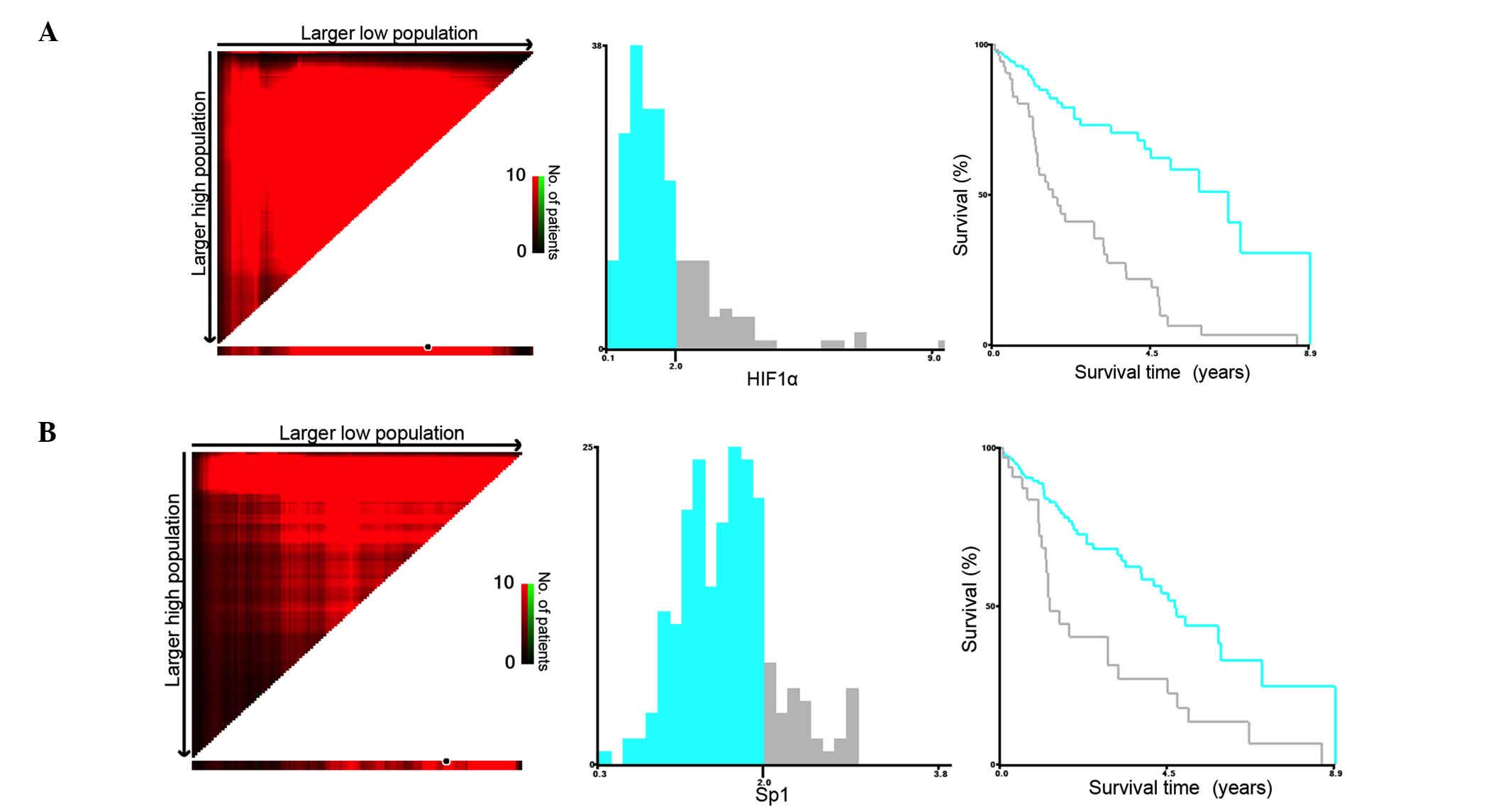
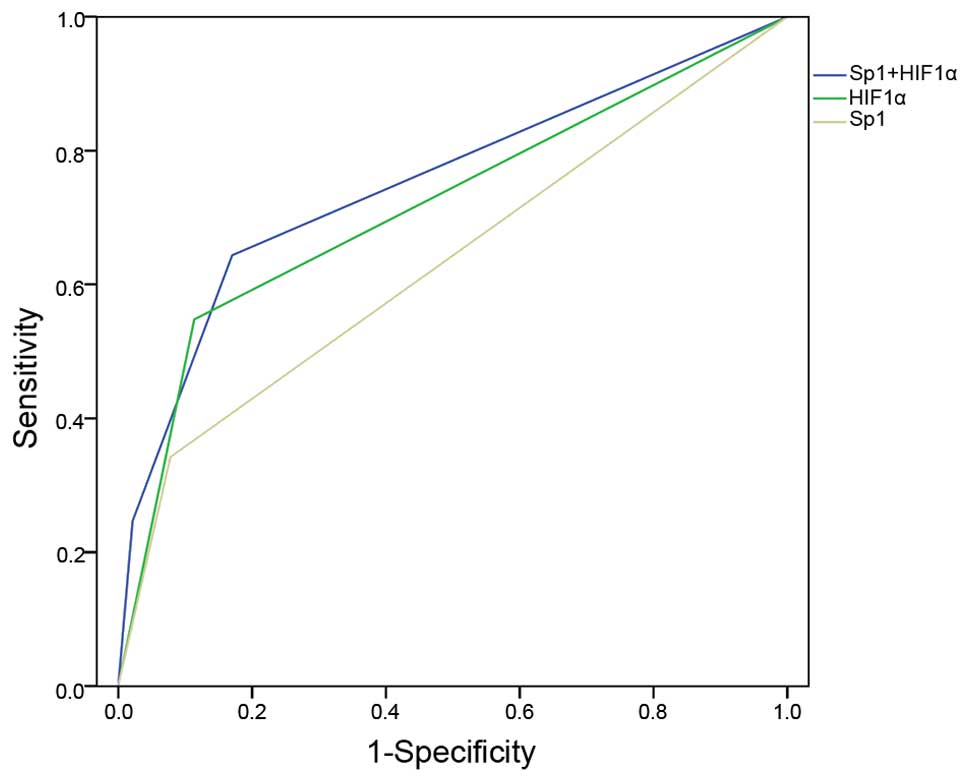
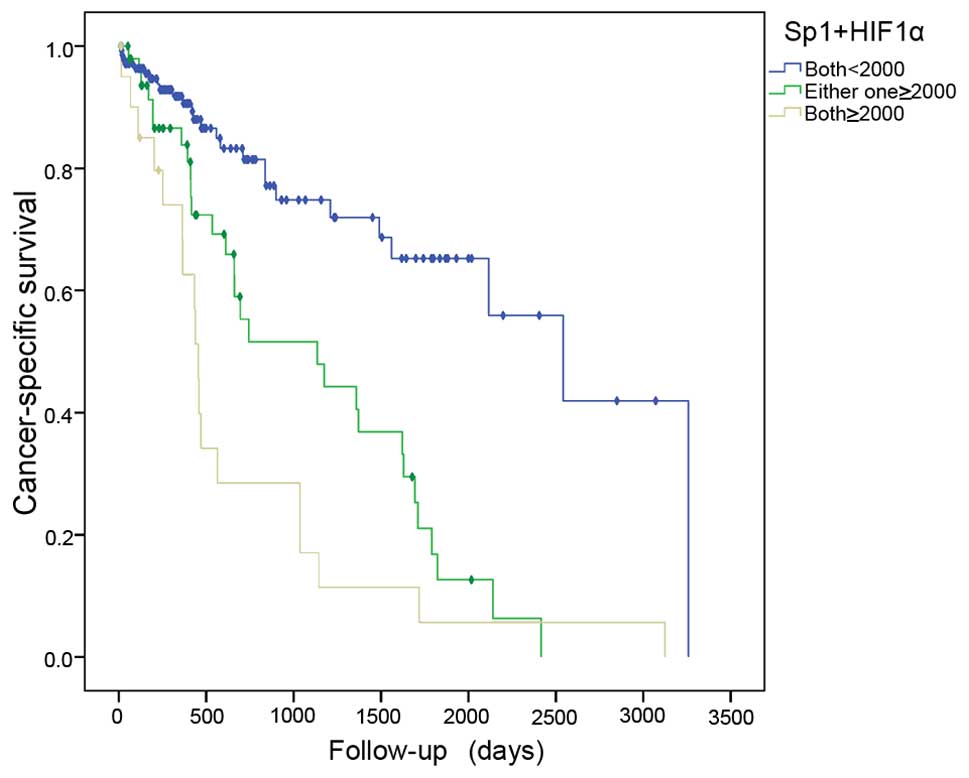
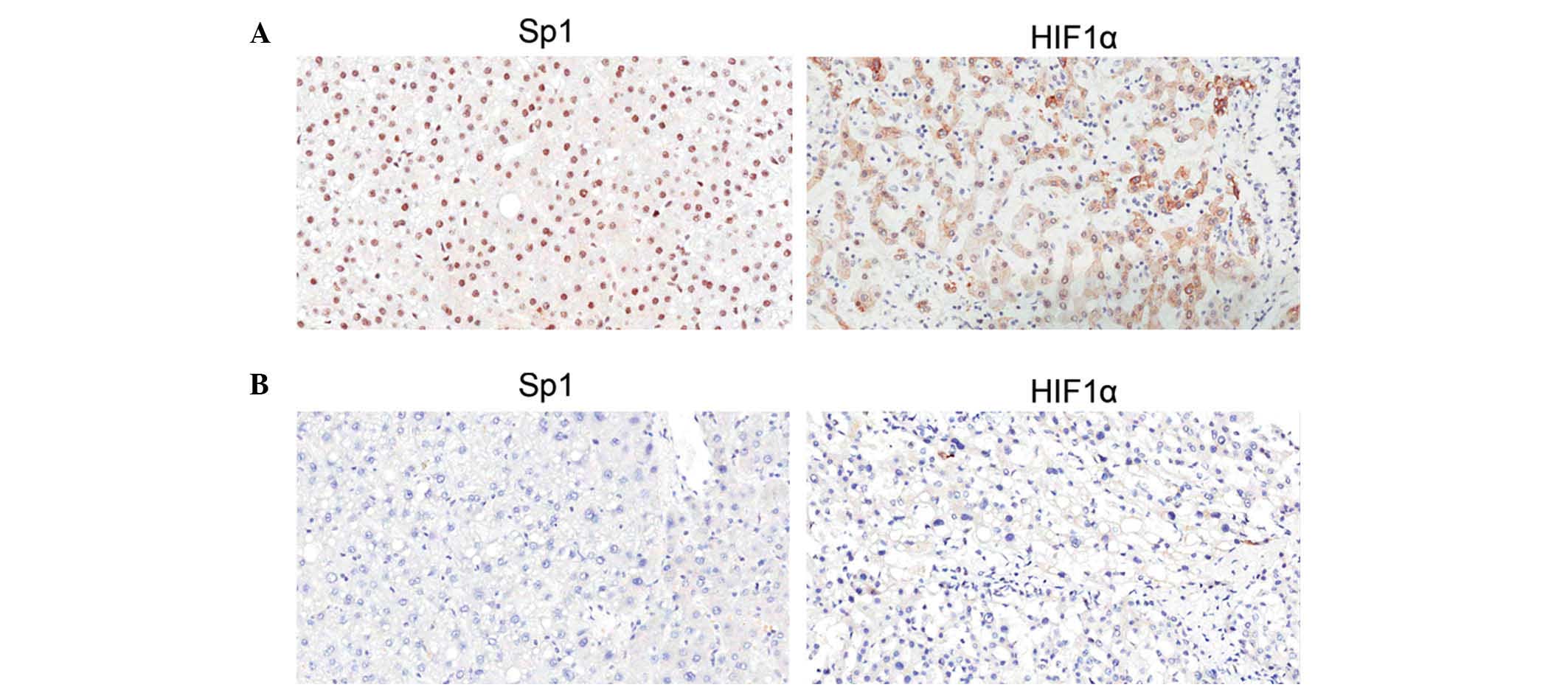
Transcription factor specificity protein 1 (Sp1) and hypoxia-inducible factor 1α (HIF1α) serve vital roles in tumor growth and metastasis. The present study aimed to evaluate the impact of co‑expression of Sp1 and HIF1α on the prognosis of patients with hepatocellular cancer (HCC) using The Cancer Genome Atlas (TCGA) database and to validate the association between the expression levels of Sp1/HIF1α in HCC specimens and patient survival using immunohistochemical analysis. A total of 214 eligible patients with HCC from TCGA database were collected for the study. The expression profile of Sp1 and HIF1α were obtained from the TCGA RNAseq database. Clinicopathological characteristics, including age, height, weight, gender, race, ethnicity, family cancer history, serum α‑fetoprotein (AFP), surgical procedures and TNM stage were collected. The Cox proportional hazards regression model and Kaplan‑Meier curves were used to assess the relative factors. Receiver operating characteristic (ROC) curves for cancer‑specific survival (CSS) prediction were plotted to compare the prediction ability of expression of Sp1 and HIF1α and their co‑expression. The location and expression of Sp1 and HIF1α in the HCC tissues were detected by immunohistochemistry (IHC) to verify the association between these two genes and CSS. The results demonstrated that the expressions of Sp1 and HIF1α were significantly increased in the succumbed group (P=0.001), compared with the surviving group. The CSS rates were 60.1% at 3 years (1,067 days), 35.8% at 5 years (1,823 days) and 9.5% at 10 years (3,528 days). Multivariate Cox regression analysis demonstrated that only the high expression levels of Sp1 and HIF1α (≥2x10³) were independent predictors for cancer mortality, with P=0.001 and P=0.029, respectively. The area under the curve for the ROC was found to be higher using the combination testing for two genes (0.751) in predicting cancer mortality, compared to a single gene (0.632 for Sp1 and 0.717 for HIF1α). Based on the cutoff points for gene expression, patients were divided into 3 groups: G1 (both genes <2x10³), G2 (either gene ≥2x10³) and G3 (both genes ≥2x10³). The risk of cancer mortality increased with high expression of genes, and G3 exhibited a greater risk than G2 when compared with the G1 group (HR=5.420, 95% CI 2.767‑10.616, P=0.001; HR=3.270, 95% CI 1.843‑5.803, P=0.001). The IHC staining results indicated that patients who died of cancer presented with significantly higher expression levels of these genes compared with those that did not (P=0.001). In summary, high expression levels of Sp1 and HIF1α in HCC tissues were associated with poor prognosis; in particular, the co-expression of these two genes increased the risk of cancer mortality.
View Figures

Figure 1

Figure 2

Figure 3

Figure 4

View References

1 

Tang ZY, Ye SL, Liu YK, Qin LX, Sun HC, Ye QH, Wang L, Zhou J, Qiu SJ, Li Y, et al: A decade's studies on metastasis of hepatocellular carcinoma. J Cancer Res Clin Oncol. 130:187–196. 2004. View Article : Google Scholar : PubMed/NCBI

2 

Gu XQ, Zheng WP, Teng DH, Sun JS and Zheng H: Impact of non-oncological factors on tumor recurrence after liver transplantation in hepatocellular carcinoma patients. World J Gastroenterol. 22:2749–2759. 2016. View Article : Google Scholar : PubMed/NCBI

3 

Briggs MR, Kadonaga JT, Bell SP and Tjian R: Purification and biochemical characterization of the promoter-specific transcription factor, Sp1. Science. 234:47–52. 1986. View Article : Google Scholar : PubMed/NCBI

4 

Ishibashi H, Nakagawa K, Onimaru M, Castellanous EJ, Kaneda Y, Nakashima Y, Shirasuna K and Sueishi K: Sp1 decoy transfected to carcinoma cells suppresses the expression of vascular endothelial growth factor, transforming growth factor beta1, and tissue factor and also cell growth and invasion activities. Cancer Res. 60:6531–6536. 2000.PubMed/NCBI

5 

Jiang W, Jin Z, Zhou F, Cui J and Wang L and Wang L: High co-expression of Sp1 and HER-2 is correlated with poor prognosis of gastric cancer patients. Surg Oncol. 24:220–225. 2015. View Article : Google Scholar : PubMed/NCBI

6 

Wang XB, Peng WQ, Yi ZJ, Zhu SL and Gan QH: Expression and prognostic value of transcriptional factor sp1 in breast cancer. Ai Zheng. 26:996–1000. 2007.PubMed/NCBI

7 

Yuan P, Wang L, Wei D, Zhang J, Jia Z, Li Q, Le X, Wang H, Yao J and Xie K: Therapeutic inhibition of Sp1 expression in growing tumors by mithramycin a correlates directly with potent antiangiogenic effects on human pancreatic cancer. Cancer. 110:2682–2690. 2007. View Article : Google Scholar : PubMed/NCBI

8 

Pawlus MR and Hu CJ: Enhanceosomes as integrators of hypoxia inducible factor (HIF) and other transcription factors in the hypoxic transcriptional response. Cell Signal. 25:1895–1903. 2013. View Article : Google Scholar : PubMed/NCBI

9 

Lee H, Palm J, Grimes SM and Ji HP: The Cancer Genome Atlas Clinical Explorer: a web and mobile interface for identifying clinical-genomic driver associations. Genome Med. 7:1122015. View Article : Google Scholar : PubMed/NCBI

10 

Carbajo-Pescador S, Ordoñez R, Benet M, Jover R, García-Palomo A, Mauriz JL and González-Gallego J: Inhibition of VEGF expression through blockade of Hif1α and STAT3 signalling mediates the anti-angiogenic effect of melatonin in HepG2 liver cancer cells. Br J Cancer. 109:83–91. 2013. View Article : Google Scholar : PubMed/NCBI

11 

Sobin LH, Gospodarowicz MK and Wittekind C: UICC: TNM Classification of Malignant Tumors (7th). Wiley-Liss. New York, USA: 1–3. 2009.

12 

Edge SB and Compton CC: The American joint committee on cancer: The 7th edition of the AJCC cancer staging manual and the future of TNM. Ann Surg Oncol. 17:1471–1474. 2010. View Article : Google Scholar : PubMed/NCBI

13 

Dinse GE and Lagakos SW: Nonparametric estimation of lifetime and disease onset distributions from incomplete observations. Biometrics. 38:921–932. 1982. View Article : Google Scholar : PubMed/NCBI

14 

Gill RD: Multistate life-tables and regression models. Math Popul Stud. 3:259–276. 1992. View Article : Google Scholar : PubMed/NCBI

15 

Camp RL, Dolled-Filhart M and Rimm DL: X-tile: A new bio-informatics tool for biomarker assessment and outcome-based cut-point optimization. Clin Cancer Res. 10:7252–7259. 2004. View Article : Google Scholar : PubMed/NCBI

16 

Cao W, Xu X, Zhang J and Duan Y: Tumor angiogenesis after heated lipiodol infusion via the hepatic artery in a rabbit model of VX2 liver cancer. PLoS One. 8:e615832013. View Article : Google Scholar : PubMed/NCBI

17 

Fusté M, Pinacho R, Meléndez-Pérez I, Villalmanzo N, Villalta-Gil V, Haro JM and Ramos B: Reduced expression of SP1 and SP4 transcription factors in peripheral blood mononuclear cells in first-episode psychosis. J Psychiatr Res. 47:1608–1614. 2013. View Article : Google Scholar : PubMed/NCBI

18 

Villa C, Ridolfi E, Fenoglio C, Ghezzi L, Vimercati R, Clerici F, Marcone A, Gallone S, Serpente M, Cantoni C, et al: Expression of the transcription factor Sp1 and its regulatory hsa-miR-29b in peripheral blood mononuclear cells from patients with Alzheimer's disease. J Alzheimers Dis. 35:487–494. 2013.PubMed/NCBI

19 

Sun RC and Denko NC: Hypoxic regulation of glutamine metabolism through HIF1 and SIAH2 supports lipid synthesis that is necessary for tumor growth. Cell Metab. 19:285–292. 2014. View Article : Google Scholar : PubMed/NCBI

20 

Chiavarina B, Whitaker-Menezes D, Migneco G, Martinez-Outschoorn UE, Pavlides S, Howell A, Tanowitz HB, Casimiro MC, Wang C, Pestell RG, et al: HIF1-alpha functions as a tumor promoter in cancer associated fibroblasts, and as a tumor suppressor in breast cancer cells: Autophagy drives compartment-specific oncogenesis. Cell Cycle. 9:3534–3551. 2010. View Article : Google Scholar : PubMed/NCBI

21 

Jia Z, Zhang J, Wei D, Wang L, Yuan P, Le X, Li Q, Yao J and Xie K: Molecular basis of the synergistic antiangiogenic activity of bevacizumab and mithramycin A. Cancer Res. 67:4878–4885. 2007. View Article : Google Scholar : PubMed/NCBI

22 

Seznec J, Silkenstedt B and Naumann U: Therapeutic effects of the Sp1 inhibitor mithramycin A in glioblastoma. J Neurooncol. 101:365–377. 2011. View Article : Google Scholar : PubMed/NCBI

23 

McDonald PC, Chafe SC and Dedhar S: Overcoming hypoxia-mediated tumor progression: combinatorial approaches targeting pH regulation, angiogenesis and immune dysfunction. Front Cell Dev Biol. 4:272016. View Article : Google Scholar : PubMed/NCBI

24 

Badowska-Kozakiewicz AM, Budzik MP and Przybylski J: Hypoxia in breast cancer. Pol J Pathol. 66:337–346. 2015. View Article : Google Scholar : PubMed/NCBI

25 

Ulivi P, Marisi G and Passardi A: Relationship between hypoxia and response to antiangiogenic therapy in metastatic colorectal cancer. Oncotarget. Apr 12–2016.(E-pub ahead of print). doi: 10.18632/oncotarget.8712.

26 

Ye LY, Chen W, Bai XL, Xu XY, Zhang Q, Xia XF, Sun X, Li GG, Hu QD, Fu QH and Liang TB: Hypoxia-induced epithelial-to-mesenchymal transition in hepatocellular carcinoma induces an immunosuppressive tumor microenvironment to promote metastasis. Cancer Res. 76:818–830. 2016. View Article : Google Scholar : PubMed/NCBI

27 

Berghoff AS, Ilhan-Mutlu A, Wöhrer A, Hackl M, Widhalm G, Hainfellner JA, Dieckmann K, Melchardt T, Dome B, Heinzl H, et al: Prognostic significance of Ki-67 proliferation index, HIF alpha index and microvascular density in patients with non-small cell lung cancer brain metastases. Strahlenther Onkol. 190:676–685. 2014. View Article : Google Scholar : PubMed/NCBI

28 

Zhao H, Wu Y, Chen Y and Liu H: Clinical significance of hypoxia-inducible factor 1 and VEGF-A in osteosarcoma. Int J Clin Oncol. 20:1233–1243. 2015. View Article : Google Scholar : PubMed/NCBI

29 

dos Santos M, Mercante AM, Louro ID, Goncalves AJ, de Carvalho MB, de Silva EH and da Silva AM: HIF1-alpha expression predicts survival of patients with squamous cell carcinoma of the oral cavity. PLoS One. 7:e452282012. View Article : Google Scholar : PubMed/NCBI

30 

Wenger RH: Mammalian oxygen sensing, signalling and gene regulation. J Exp Biol. 203:1253–1263. 2000.PubMed/NCBI

31 

Hu TH, Huang CC, Lin PR, Chang HW, Ger LP, Lin YW, Changchien CS, Lee CM and Tai MH: Expression and prognostic role of tumor suppressor gene PTEN/MMAC1/TEP1 in hepatocellular carcinoma. Cancer. 97:1929–1940. 2003. View Article : Google Scholar : PubMed/NCBI

32 

Huang Z, Huang L, Shen S, Li J, Lu H, Mo W, Dang Y, Luo D, Chen G and Feng Z: Sp1 cooperates with Sp3 to upregulate MALAT1 expression in human hepatocellular carcinoma. Oncol Rep. 34:2403–2412. 2015.PubMed/NCBI

33 

Guo X, Li D, Chen Y, An J, Wang K, Xu Z, Chen Z and Xing J: SNP rs2057482 in HIF1A gene predicts clinical outcome of aggressive hepatocellular carcinoma patients after surgery. Sci Rep. 5:118462015. View Article : Google Scholar : PubMed/NCBI

Related Articles

  • Abstract
  • View
  • Download
  • Twitter
Copy and paste a formatted citation
Spandidos Publications style
Liu L, Ji P, Qu N, Pu WL, Jiang DW, Liu WY, Li YQ and Shi RL: The impact of high co-expression of Sp1 and HIF1α on prognosis of patients with hepatocellular cancer. Oncol Lett 12: 504-512, 2016.
APA
Liu, L., Ji, P., Qu, N., Pu, W., Jiang, D., Liu, W. ... Shi, R. (2016). The impact of high co-expression of Sp1 and HIF1α on prognosis of patients with hepatocellular cancer. Oncology Letters, 12, 504-512. https://doi.org/10.3892/ol.2016.4634
MLA
Liu, L., Ji, P., Qu, N., Pu, W., Jiang, D., Liu, W., Li, Y., Shi, R."The impact of high co-expression of Sp1 and HIF1α on prognosis of patients with hepatocellular cancer". Oncology Letters 12.1 (2016): 504-512.
Chicago
Liu, L., Ji, P., Qu, N., Pu, W., Jiang, D., Liu, W., Li, Y., Shi, R."The impact of high co-expression of Sp1 and HIF1α on prognosis of patients with hepatocellular cancer". Oncology Letters 12, no. 1 (2016): 504-512. https://doi.org/10.3892/ol.2016.4634
Copy and paste a formatted citation
x
Spandidos Publications style
Liu L, Ji P, Qu N, Pu WL, Jiang DW, Liu WY, Li YQ and Shi RL: The impact of high co-expression of Sp1 and HIF1α on prognosis of patients with hepatocellular cancer. Oncol Lett 12: 504-512, 2016.
APA
Liu, L., Ji, P., Qu, N., Pu, W., Jiang, D., Liu, W. ... Shi, R. (2016). The impact of high co-expression of Sp1 and HIF1α on prognosis of patients with hepatocellular cancer. Oncology Letters, 12, 504-512. https://doi.org/10.3892/ol.2016.4634
MLA
Liu, L., Ji, P., Qu, N., Pu, W., Jiang, D., Liu, W., Li, Y., Shi, R."The impact of high co-expression of Sp1 and HIF1α on prognosis of patients with hepatocellular cancer". Oncology Letters 12.1 (2016): 504-512.
Chicago
Liu, L., Ji, P., Qu, N., Pu, W., Jiang, D., Liu, W., Li, Y., Shi, R."The impact of high co-expression of Sp1 and HIF1α on prognosis of patients with hepatocellular cancer". Oncology Letters 12, no. 1 (2016): 504-512. https://doi.org/10.3892/ol.2016.4634
Follow us
  • Twitter
  • LinkedIn
  • Facebook
About
  • Spandidos Publications
  • Careers
  • Cookie Policy
  • Privacy Policy
How can we help?
  • Help
  • Live Chat
  • Contact
  • Email to our Support Team