Spandidos Publications Logo
  • About
    • About Spandidos
    • Aims and Scopes
    • Abstracting and Indexing
    • Editorial Policies
    • Reprints and Permissions
    • Job Opportunities
    • Terms and Conditions
    • Contact
  • Journals
    • All Journals
    • Oncology Letters
      • Oncology Letters
      • Information for Authors
      • Editorial Policies
      • Editorial Board
      • Aims and Scope
      • Abstracting and Indexing
      • Bibliographic Information
      • Archive
    • International Journal of Oncology
      • International Journal of Oncology
      • Information for Authors
      • Editorial Policies
      • Editorial Board
      • Aims and Scope
      • Abstracting and Indexing
      • Bibliographic Information
      • Archive
    • Molecular and Clinical Oncology
      • Molecular and Clinical Oncology
      • Information for Authors
      • Editorial Policies
      • Editorial Board
      • Aims and Scope
      • Abstracting and Indexing
      • Bibliographic Information
      • Archive
    • Experimental and Therapeutic Medicine
      • Experimental and Therapeutic Medicine
      • Information for Authors
      • Editorial Policies
      • Editorial Board
      • Aims and Scope
      • Abstracting and Indexing
      • Bibliographic Information
      • Archive
    • International Journal of Molecular Medicine
      • International Journal of Molecular Medicine
      • Information for Authors
      • Editorial Policies
      • Editorial Board
      • Aims and Scope
      • Abstracting and Indexing
      • Bibliographic Information
      • Archive
    • Biomedical Reports
      • Biomedical Reports
      • Information for Authors
      • Editorial Policies
      • Editorial Board
      • Aims and Scope
      • Abstracting and Indexing
      • Bibliographic Information
      • Archive
    • Oncology Reports
      • Oncology Reports
      • Information for Authors
      • Editorial Policies
      • Editorial Board
      • Aims and Scope
      • Abstracting and Indexing
      • Bibliographic Information
      • Archive
    • Molecular Medicine Reports
      • Molecular Medicine Reports
      • Information for Authors
      • Editorial Policies
      • Editorial Board
      • Aims and Scope
      • Abstracting and Indexing
      • Bibliographic Information
      • Archive
    • World Academy of Sciences Journal
      • World Academy of Sciences Journal
      • Information for Authors
      • Editorial Policies
      • Editorial Board
      • Aims and Scope
      • Abstracting and Indexing
      • Bibliographic Information
      • Archive
    • International Journal of Functional Nutrition
      • International Journal of Functional Nutrition
      • Information for Authors
      • Editorial Policies
      • Editorial Board
      • Aims and Scope
      • Abstracting and Indexing
      • Bibliographic Information
      • Archive
    • International Journal of Epigenetics
      • International Journal of Epigenetics
      • Information for Authors
      • Editorial Policies
      • Editorial Board
      • Aims and Scope
      • Abstracting and Indexing
      • Bibliographic Information
      • Archive
    • Medicine International
      • Medicine International
      • Information for Authors
      • Editorial Policies
      • Editorial Board
      • Aims and Scope
      • Abstracting and Indexing
      • Bibliographic Information
      • Archive
  • Articles
  • Information
    • Information for Authors
    • Information for Reviewers
    • Information for Librarians
    • Information for Advertisers
    • Conferences
  • Language Editing
Spandidos Publications Logo
  • About
    • About Spandidos
    • Aims and Scopes
    • Abstracting and Indexing
    • Editorial Policies
    • Reprints and Permissions
    • Job Opportunities
    • Terms and Conditions
    • Contact
  • Journals
    • All Journals
    • Biomedical Reports
      • Information for Authors
      • Editorial Policies
      • Editorial Board
      • Aims and Scope
      • Abstracting and Indexing
      • Bibliographic Information
      • Archive
    • Experimental and Therapeutic Medicine
      • Information for Authors
      • Editorial Policies
      • Editorial Board
      • Aims and Scope
      • Abstracting and Indexing
      • Bibliographic Information
      • Archive
    • International Journal of Epigenetics
      • Information for Authors
      • Editorial Policies
      • Editorial Board
      • Aims and Scope
      • Abstracting and Indexing
      • Bibliographic Information
      • Archive
    • International Journal of Functional Nutrition
      • Information for Authors
      • Editorial Policies
      • Editorial Board
      • Aims and Scope
      • Abstracting and Indexing
      • Bibliographic Information
      • Archive
    • International Journal of Molecular Medicine
      • Information for Authors
      • Editorial Policies
      • Editorial Board
      • Aims and Scope
      • Abstracting and Indexing
      • Bibliographic Information
      • Archive
    • International Journal of Oncology
      • Information for Authors
      • Editorial Policies
      • Editorial Board
      • Aims and Scope
      • Abstracting and Indexing
      • Bibliographic Information
      • Archive
    • Medicine International
      • Information for Authors
      • Editorial Policies
      • Editorial Board
      • Aims and Scope
      • Abstracting and Indexing
      • Bibliographic Information
      • Archive
    • Molecular and Clinical Oncology
      • Information for Authors
      • Editorial Policies
      • Editorial Board
      • Aims and Scope
      • Abstracting and Indexing
      • Bibliographic Information
      • Archive
    • Molecular Medicine Reports
      • Information for Authors
      • Editorial Policies
      • Editorial Board
      • Aims and Scope
      • Abstracting and Indexing
      • Bibliographic Information
      • Archive
    • Oncology Letters
      • Information for Authors
      • Editorial Policies
      • Editorial Board
      • Aims and Scope
      • Abstracting and Indexing
      • Bibliographic Information
      • Archive
    • Oncology Reports
      • Information for Authors
      • Editorial Policies
      • Editorial Board
      • Aims and Scope
      • Abstracting and Indexing
      • Bibliographic Information
      • Archive
    • World Academy of Sciences Journal
      • Information for Authors
      • Editorial Policies
      • Editorial Board
      • Aims and Scope
      • Abstracting and Indexing
      • Bibliographic Information
      • Archive
  • Articles
  • Information
    • For Authors
    • For Reviewers
    • For Librarians
    • For Advertisers
    • Conferences
  • Language Editing
Login Register Submit
  • This site uses cookies
  • You can change your cookie settings at any time by following the instructions in our Cookie Policy. To find out more, you may read our Privacy Policy.

    I agree
Search articles by DOI, keyword, author or affiliation
Search
Advanced Search
presentation
Oncology Letters
Join Editorial Board Propose a Special Issue
Print ISSN: 1792-1074 Online ISSN: 1792-1082
Journal Cover
November-2016 Volume 12 Issue 5

Full Size Image

Sign up for eToc alerts
Recommend to Library

Journals

International Journal of Molecular Medicine

International Journal of Molecular Medicine

International Journal of Molecular Medicine is an international journal devoted to molecular mechanisms of human disease.

International Journal of Oncology

International Journal of Oncology

International Journal of Oncology is an international journal devoted to oncology research and cancer treatment.

Molecular Medicine Reports

Molecular Medicine Reports

Covers molecular medicine topics such as pharmacology, pathology, genetics, neuroscience, infectious diseases, molecular cardiology, and molecular surgery.

Oncology Reports

Oncology Reports

Oncology Reports is an international journal devoted to fundamental and applied research in Oncology.

Experimental and Therapeutic Medicine

Experimental and Therapeutic Medicine

Experimental and Therapeutic Medicine is an international journal devoted to laboratory and clinical medicine.

Oncology Letters

Oncology Letters

Oncology Letters is an international journal devoted to Experimental and Clinical Oncology.

Biomedical Reports

Biomedical Reports

Explores a wide range of biological and medical fields, including pharmacology, genetics, microbiology, neuroscience, and molecular cardiology.

Molecular and Clinical Oncology

Molecular and Clinical Oncology

International journal addressing all aspects of oncology research, from tumorigenesis and oncogenes to chemotherapy and metastasis.

World Academy of Sciences Journal

World Academy of Sciences Journal

Multidisciplinary open-access journal spanning biochemistry, genetics, neuroscience, environmental health, and synthetic biology.

International Journal of Functional Nutrition

International Journal of Functional Nutrition

Open-access journal combining biochemistry, pharmacology, immunology, and genetics to advance health through functional nutrition.

International Journal of Epigenetics

International Journal of Epigenetics

Publishes open-access research on using epigenetics to advance understanding and treatment of human disease.

Medicine International

Medicine International

An International Open Access Journal Devoted to General Medicine.

Journal Cover
November-2016 Volume 12 Issue 5

Full Size Image

Sign up for eToc alerts
Recommend to Library

  • Article
  • Citations
    • Cite This Article
    • Download Citation
    • Create Citation Alert
    • Remove Citation Alert
    • Cited By
  • Similar Articles
    • Related Articles (in Spandidos Publications)
    • Similar Articles (Google Scholar)
    • Similar Articles (PubMed)
  • Download PDF
  • Download XML
  • View XML
Article

9-AAA inhibits growth and induces apoptosis in human melanoma A375 and rat prostate adenocarcinoma AT‑2 and Mat-LyLu cell lines but does not affect the growth and viability of normal fibroblasts

  • Authors:
    • Włodzimierz Korohoda
    • Anna Hapek
    • Monika Pietrzak
    • Damian Ryszawy
    • Zbigniew Madeja
  • View Affiliations / Copyright

    Affiliations: Department of Cell Biology, Faculty of Biophysics, Biochemistry and Biotechnology, Jagiellonian University, Krakow 30‑387, Poland
  • Pages: 4125-4132
    |
    Published online on: September 28, 2016
       https://doi.org/10.3892/ol.2016.5201
  • Expand metrics +
Metrics: Total Views: 0 (Spandidos Publications: | PMC Statistics: )
Metrics: Total PDF Downloads: 0 (Spandidos Publications: | PMC Statistics: )
Cited By (CrossRef): 0 citations Loading Articles...

This article is mentioned in:


Abstract

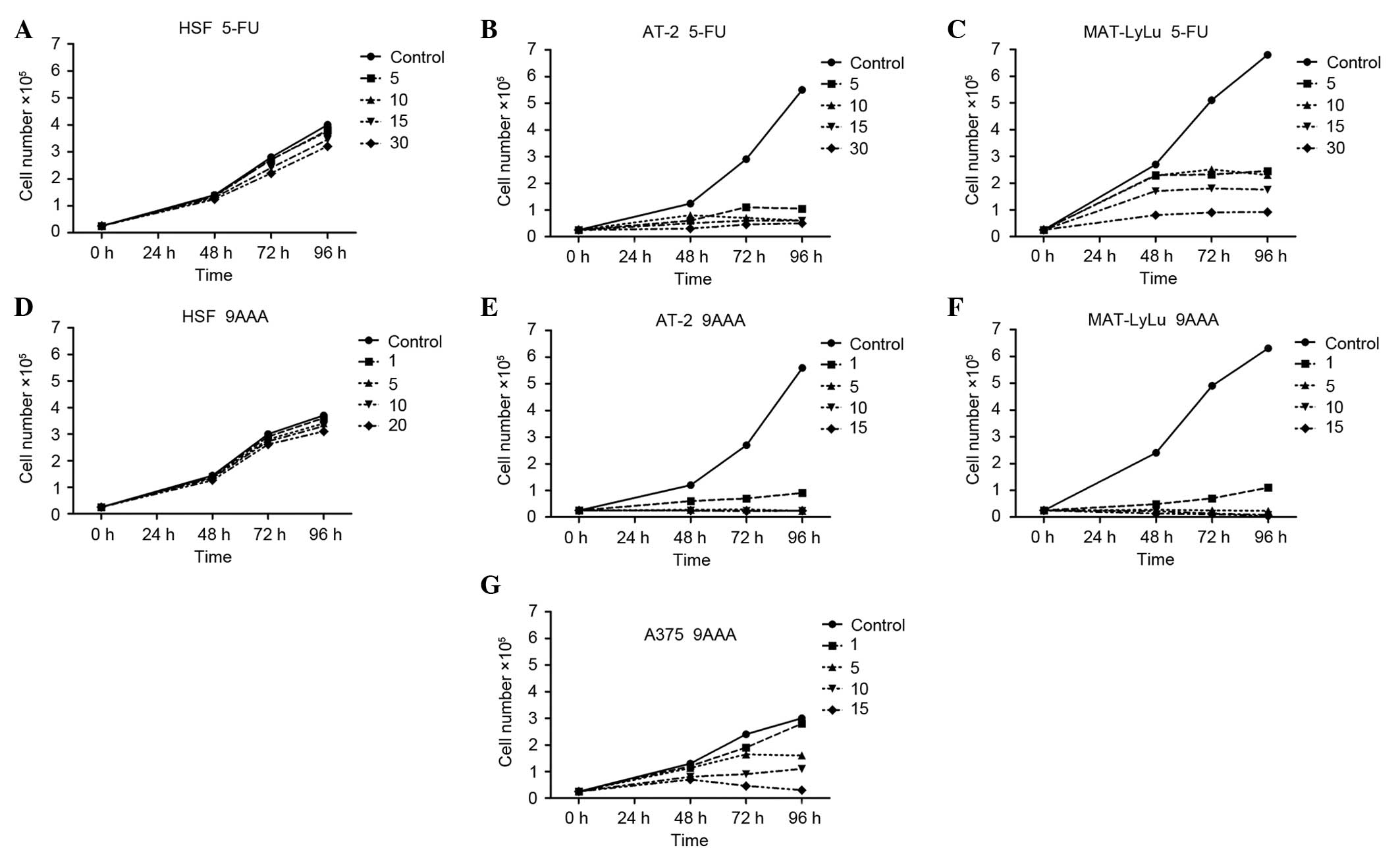
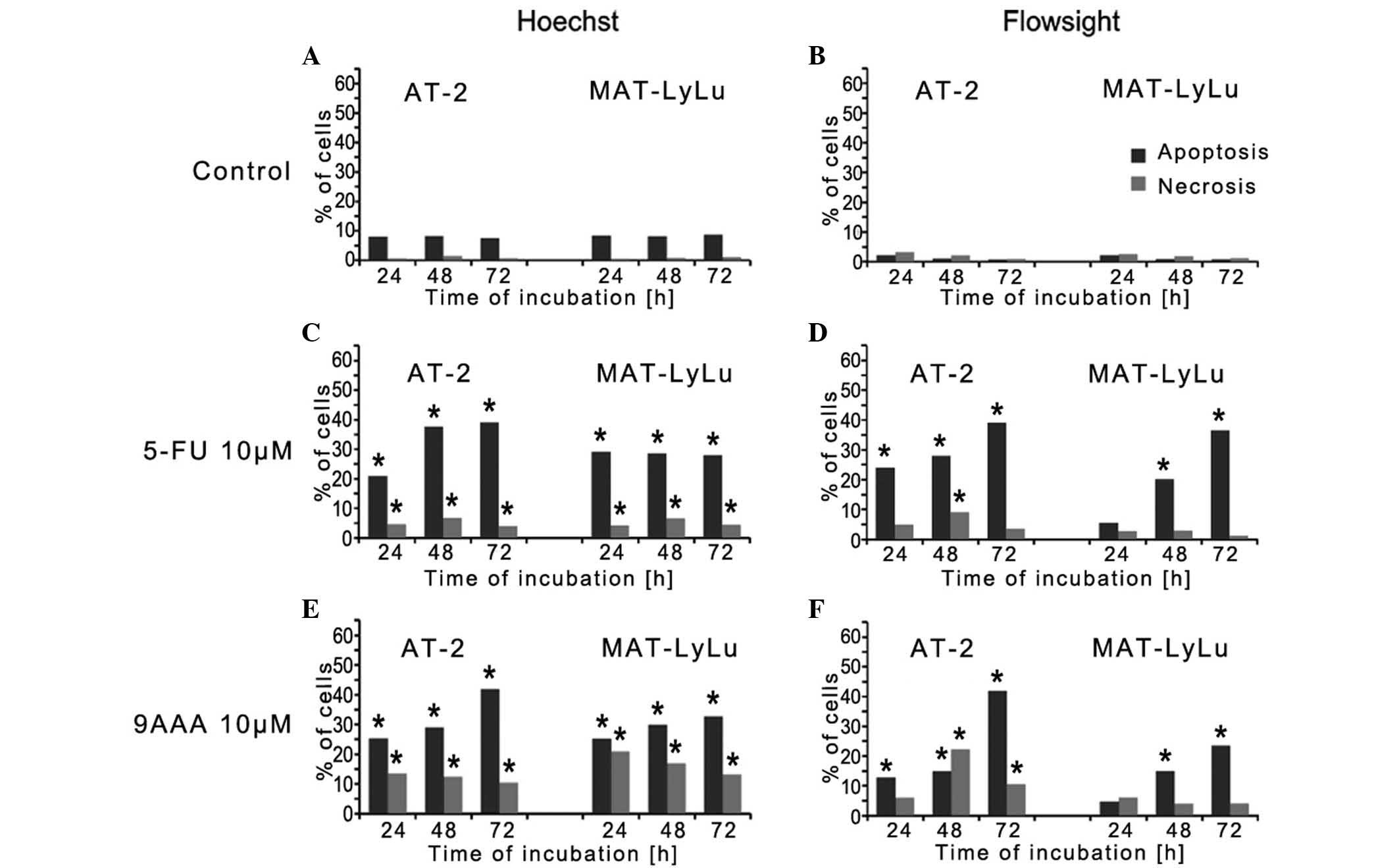
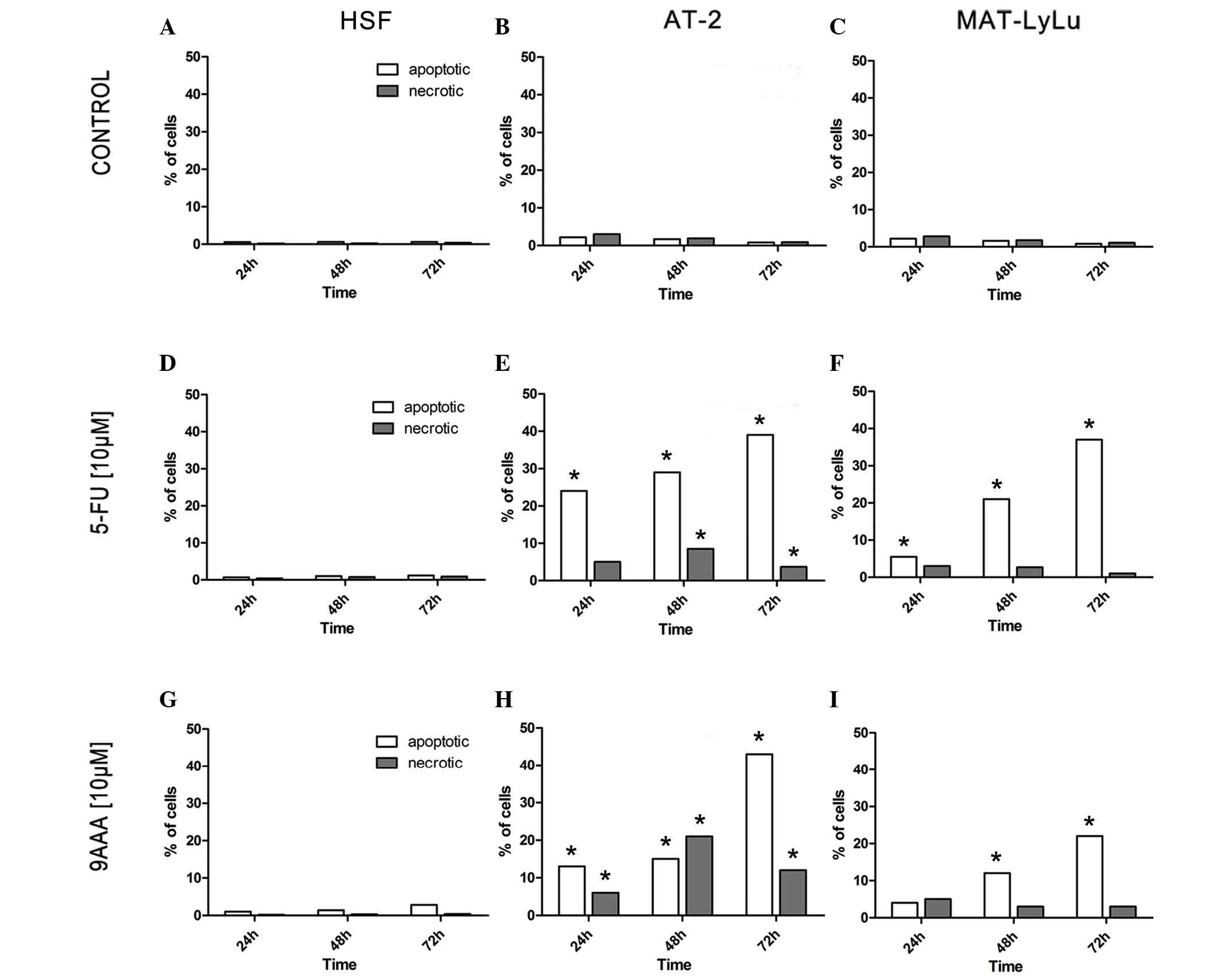
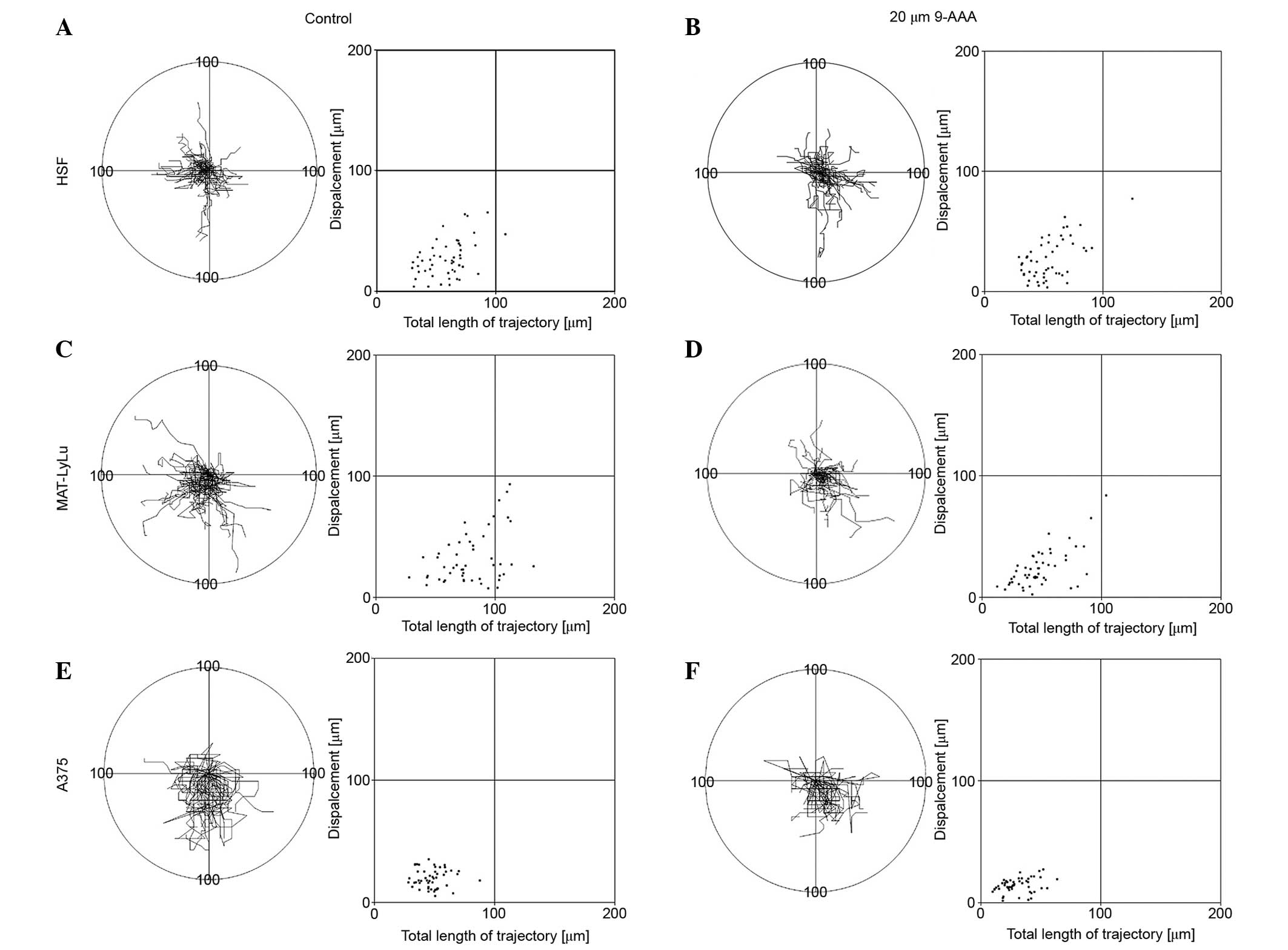
The present study found that, similarly to 5-fluorouracil, low concentrations (1-10 µM) of 9-aminoacridine (9-AAA) inhibited the growth of the two rat prostate cancer AT‑2 and Mat‑LyLu cell lines and the human melanoma A375 cell line. However, at the same concentrations, 9‑AAA had no effect on the growth and apoptosis of normal human skin fibroblasts (HSFs). The differences between the cellular responses of the AT‑2 and Mat‑LyLu cell lines, which differ in malignancy, were found to be relatively small compared with the differences between normal HSFs and the cancer cell lines. Visible effects on the cell growth and survival of tumor cell lines were observed after 24‑48 h of treatment with 9‑AAA, and increased over time. The inhibition of cancer cell growth was found to be due to the gradually increasing number of cells dying by apoptosis, which was observed using two methods, direct counting and FlowSight analysis. Simultaneously, cell motile activity decreased to the same degree in cancer and normal cells within the first 8 h of incubation in the presence of 9‑AAA. The results presented in the current study suggest that short‑lasting tests for potential anticancer substances can be insufficient; which may result in cell type‑dependent differences in the responses of cells to tested compounds that act with a delay being overlooked. The observed differences in responses between normal human fibroblasts and cancer cells to 9‑AAA show the requirement for additional studies to be performed simultaneously on differently reacting cancer and normal cells, to determine the molecular mechanisms responsible for these differences.
View Figures

Figure 1

Figure 2

Figure 3

Figure 4

View References

1 

Grys M, Madeja Z and Korohoda W: Decreasing the thresholds for electroporation by sensitizing cells with local cationic anesthetics and substances that decrease the surface negative electric charge. Cell Mol Biol Lett. 19:65–76. 2014. View Article : Google Scholar : PubMed/NCBI

2 

Wainwright M: Acridine-a neglected antibacterial chromophore. J Antimicrob Chemother. 47:1–13. 2001. View Article : Google Scholar : PubMed/NCBI

3 

Sebestic J, Hlavácek J and Stibor I: A role of the 9-aminoacridines and their conjugates in a life science. Curr Protein Pept Sci. 8:471–483. 2007. View Article : Google Scholar : PubMed/NCBI

4 

Valdés A: Acridine and acridinones: Old and new structures with antimalarial activity. Open Med Chem J. 5:11–20. 2011. View Article : Google Scholar : PubMed/NCBI

5 

Kopsidas G and MacPhee D: Glucose inhibition of mutagenesis by 9-aminoacridine in Salmonella typhimurium. Mutat Res. 285:101–108. 1993. View Article : Google Scholar : PubMed/NCBI

6 

Kopsidas G and MacPhee D: Frameshift mutagenesis by 9-aminoacridine: Antimutagenic effects of adenosine compounds. Mutat Res. 352:135–142. 1996. View Article : Google Scholar : PubMed/NCBI

7 

Acharya N, Abu-Nasr N, Kawaguchi G, Imai M and Yamamoto K: Frameshift mutations produced by 9-aminoacridine in wild-type, uvrA and recA strains of Escherichia coli; specificity within a hotspot. J Radiat Res. 48:361–368. 2007. View Article : Google Scholar : PubMed/NCBI

8 

Galluce M, Agar G, Aslan A, Karadayi M, Bozari S and Orhan F: Protective effects of methanol extracts from Cladonia rangiformis and Umbilicaria vellea against known mutagens sodium azide and 9-aminoacridine. Toxicol Ind Health. 27:675–682. 2011. View Article : Google Scholar : PubMed/NCBI

9 

Hoffmann GR, Laterza AM, Sylvia KE and Tartaglione JP: Potentation of the mutagenicity and recombinagenicity of bleomycin in yeast by unconventional intercalating agents. Environ Mol Mutagen. 52:130–144. 2011. View Article : Google Scholar : PubMed/NCBI

10 

Koschelev SG and Khodorov BI: Blockade of open NMDA channel by tetrabutylammonium, 9-aminoacridine and tacrine prevents channels closing and desensitization. Biologicheskie Membrany. 9:93–110. 1995.

11 

Kim KH, Gmiro VE, Tikhonov DB and Magazanik LG: Mechanism of blockade of glutamate receptor ionic channels: Paradox of 9-aminoacridine. Biochemistry (Moscow) Supplement Series A: Membrane and Cell Biology. 1:88–95. 2007. View Article : Google Scholar

12 

Barygin OI, Luchkina NV, Gmiro VE and Tikhonov DB: Different mechanisms of the 9-aminoacridine block of NMDA-and AMPA-receptor ion channels. Biologicheskie Membrany. 26:280–286. 2009.

13 

Muravenko OV, Amosova AV, Samatadze TE, Popov KV, Poletaev AI and Zelenin AV: 9-aminoacridine: An efficient reagent to improve human and plant chromosome banding patterns and to standardize chromosome image analysis. Cytometry A. 51:52–57. 2003. View Article : Google Scholar : PubMed/NCBI

14 

Theuvenet AP, Van De Wijngaard WM, Van De Rijke JW and Borst-Pauwels GW: Application of 9-aminoacridine as a probe of the surface potential experienced by cation transporters in the plasma membrane of yeast cells. Biochim Biophys Acta. 775:161–168. 1984. View Article : Google Scholar

15 

Ivanov AG and DiCosmo F: Microelectrophoretic and 9-aminoacridine fluorescence study of the surface electrical properties of suspension cultured Catharanthus roseus cells and isolated protoplasts: Effects of abscinic acid treatment. Plant Cell Physiol. 36:709–715. 1995.

16 

Gage RA, Theuvenet AP and Borst-Pauwels GW: Effect of plasmolysis upon monovalent cation uptake, 9-aminoacridine binding and the zeta potential of yeast cells. Biochim Biophys Acta. 854:77–83. 1986. View Article : Google Scholar

17 

Aharon D, Weitman H and Ehrenberg B: The effect of liposomes' surface electric potential on the uptake of hematoporphyrin. Biochim Biophys Acta. 1808:2031–2035. 2011. View Article : Google Scholar : PubMed/NCBI

18 

Radzikowski C, Ledóchowski Z, Ledóchowski A, Wrzołek S, Hrabowska M and Konopa J: The evaluation of antitumor properties of acridine derivatives on the basis of the results from some in vivo and in vitro tests. Arch Immunol Ther Exp (Warsz). 15:126–128. 1967.PubMed/NCBI

19 

Mendecki J, Więckowska Z and Chorąży M: Inhibition of RNA synthesis by 9-aminoacridine in regenerating rat liver and cell culture. Acta Biochim Pol. 16:253–262. 1969.PubMed/NCBI

20 

Rehn C and Pindur U: Molecular modeling of intercalation complexes of antitumor active 9-aminoacridine and a [d, e]-anellated isoquinoline derivative with base paired deoxytetranucleotides. Monatshefte für Chemie. 127:645–658. 1996. View Article : Google Scholar

21 

Murza A, Sánchez-Cortéz S, Garcia-Ramos JV, Guisan JM, Alfonso C and Rivas G: Interaction of the antitumor drug 9-aminoacridine with guanidinobenzoatase studied by spectroscopic methods: A possible tumor marker probe based on the fluorescence exciplex emission. Biochemistry. 39:10557–10565. 2000. View Article : Google Scholar : PubMed/NCBI

22 

Temple MD, Recabarren P, McFadyen WD, Holmes RJ, Denny WA and Murray V: The interaction of DNA-targeted 9-aminoacridine-4-carboxamide platinum complexes with DNA in intact human cells. Biochim Biophys Acta. 1574:223–230. 2002. View Article : Google Scholar : PubMed/NCBI

23 

Kumar P, Kumar R and Prasad DN: Synthesis and biological evaluation of new 9-aminoacridine-4-carboxamide derivatives as anticancer agents: 1st Cancer Update. Arab J Chem. 6:59–65. 2013. View Article : Google Scholar

24 

Wang WG, Ho WC, Dicker DT, MacKinnon C, Winkler JD, Marmorstein R and El-Deiry WS: Acridine derivatives activate p53 and induce tumor cell death through Bax. Cancer Biol Ther. 4:893–898. 2005. View Article : Google Scholar : PubMed/NCBI

25 

Ryan E, Blake AJ, Benoit A, David MF and Robert AK: Efficacy of substituted 9-aminoacridine derivatives in small cell lung cancer. Invest New Drugs. 31:285–292. 2013. View Article : Google Scholar : PubMed/NCBI

26 

Reiss K and Korohoda W: The formation of myotubes in cultures of chick embryo myogenic cells in serum-free medium is induced by the insulin pulse treatment. Folia Histochem Cytobiol. 26:133–141. 1988.PubMed/NCBI

27 

Reiss K, Kajstura J and Korohoda W: The insulin signal initiating cellular differentiation is preserved by chick embryo myoblasts incubated at 2°C. Europ J Cell Biol. 53:42–47. 1990.PubMed/NCBI

28 

Longley DB, Harkin DP and Johnston PG: 5-fluorouracil: Mechanisms of action and clinical strategies. Nat Rev Cancer. 3:330–338. 2003. View Article : Google Scholar : PubMed/NCBI

29 

Raghunathan K and Priest DG: Modulation of fluorouracil antitumor activity by folic acid in a murine model system. Biochem Pharmacol. 58:835–839. 1999. View Article : Google Scholar : PubMed/NCBI

30 

Djamgoz MBA, Mycielska M, Madeja Z, Fraser SP and Korohoda W: Directional movement of rat prostate cancer cells in direct-current electric field. Involvement of voltagegated Na+ channel activity. J Cell Sci. 114:2697–2705. 2001.PubMed/NCBI

31 

Waligórska A, Wianecka-Skoczeń M, Nowak P and Korohoda W: Some difficulties in research into cell motile activity under isotropic conditions. Folia Biol (Kraków). 55:9–16. 2007. View Article : Google Scholar

32 

Musialik E, Ryszawy D, Madeja Z and Korohoda W: Morpho-physiological heterogeneity of cells within two rat prostate carcinoma cell lines AT-2 and MAT-LyLu differing in the degree of malignancy observed by cell cloning and the effects of caffeine, theophylline and papaverine upon a proportion of the clones. Oncol Rep. 29:1789–1796. 2013.PubMed/NCBI

33 

Ryszawy D, Sarna M, Rak M, Szpak K, Kędracka-Krok S, Michalik M, Siedlar M, Zuba-Surma E, Burda K, Korohoda W, et al: Functional links between Snail-1 and Cx43 account for the recruitment of Cx43-positive cells into the invasive front of prostate cancer. Carcinogenesis. 35:1920–1930. 2014. View Article : Google Scholar : PubMed/NCBI

34 

Gurova KV, Hill JE, Guo C, Prokvolit A, Burdelya LG, Samoylova E, Khodyakova AV, Ganapathi R, Ganapathi M, Tararova ND, et al: Small molecules that reactivate p53 in renal cell carcinoma reveal a NF-kappaB-dependent mechanism of p53 suppression in tumors. Proc Natl Acad Sci USA. 102:17448–17453. 2005. View Article : Google Scholar : PubMed/NCBI

35 

Guo C, Gasparian AV, Zhuang Z, Bosykh DA, Komar AA, Gudkov AV and Gurova KV: 9-aminoacridine-based anticancer drugs target the PI3K/AKT/mTOR, NF-kappaB and p53 pathways. Oncogene. 28:1151–1161. 2009. View Article : Google Scholar : PubMed/NCBI

36 

Teitelbaum AM, Gallardo JI, Bedi J, Giri R, Renoit AR, Olin MR, Morizio KM, Ohlfest JR, Remmel RP and Ferguson DM: 9-Amino acridine pharmacokinetics, brain distribution and in vitro/in vivo efficacy against malignant glioma. Cancer Chemother Pharmacol. 69:1519–1527. 2012. View Article : Google Scholar : PubMed/NCBI

37 

Galvez-Peralta M, Hackbarth JS, Flatten KS, Kaufmann SH, Hiasa H, Xing C and Ferguson DM: On the role of topoisomerase I in mediating the cytotoxicity of 9-aminoacridine-based anticancer agents. Bioorg Med Chem Lett. 19:4459–4462. 2009. View Article : Google Scholar : PubMed/NCBI

38 

Abercrombie M and Ambrose EJ: The surface properties of cancer cells: A review. Cancer Res. 22:525–548. 1962.PubMed/NCBI

39 

Carter HB and Coffey DS: Cell surface charge in predicting metastatic potential of aspirated cells from the Dunning rat prostatic adenocarcinoma model. J Urol. 140:173–175. 1988.PubMed/NCBI

40 

Mehrishi JN: Molecular aspects of the mammalian cell surfaceProgress in Biophysics and Molecular Biology. Butler JAV and Noble D: Pergamon Press; Oxford: pp. 3–70. 1972

41 

Mehrishi JN and Bauer J: Electrophoresis of cells and the biological relevance of surface charge. Electrophoresis. 23:1984–1994. 2002. View Article : Google Scholar : PubMed/NCBI

42 

Korohoda W and Wilk A: Cell electrophoresis-a method for cell separation and research into cell surface properties. Cell Mol Biol Lett. 13:312–326. 2008. View Article : Google Scholar : PubMed/NCBI

43 

Searle GF and Barber J: The involvement of the electrical double layer in the quenching of 9-aminoacridine fluorescence by negatively charged surfaces. Biochim Biophys Acta. 502:309–320. 1978. View Article : Google Scholar : PubMed/NCBI

44 

Doyle GM and Mohler JL: Prediction of metastatic potential of aspirated cells from the Dunning R-3327 prostatic carcinoma model. J Urol. 147:756–759. 1992.PubMed/NCBI

45 

Wyckoff JB, Segall JE and Condeelis JS: The collection of the motile population of cells from a living tumor. Cancer Res. 60:5401–5404. 2000.PubMed/NCBI

46 

Preet R, Mohapatra P, Mohanty S, Sahu SK, Choudhuri T, Wyatt MD and Kundu CN: Quinacrine has anticancer activity in breast cancer cells through inhibition of topoisomerase activity. Int J Cancer. 130:1660–1670. 2012. View Article : Google Scholar : PubMed/NCBI

Related Articles

  • Abstract
  • View
  • Download
  • Twitter
Copy and paste a formatted citation
Spandidos Publications style
Korohoda W, Hapek A, Pietrzak M, Ryszawy D and Madeja Z: 9-AAA inhibits growth and induces apoptosis in human melanoma A375 and rat prostate adenocarcinoma AT‑2 and Mat-LyLu cell lines but does not affect the growth and viability of normal fibroblasts. Oncol Lett 12: 4125-4132, 2016.
APA
Korohoda, W., Hapek, A., Pietrzak, M., Ryszawy, D., & Madeja, Z. (2016). 9-AAA inhibits growth and induces apoptosis in human melanoma A375 and rat prostate adenocarcinoma AT‑2 and Mat-LyLu cell lines but does not affect the growth and viability of normal fibroblasts. Oncology Letters, 12, 4125-4132. https://doi.org/10.3892/ol.2016.5201
MLA
Korohoda, W., Hapek, A., Pietrzak, M., Ryszawy, D., Madeja, Z."9-AAA inhibits growth and induces apoptosis in human melanoma A375 and rat prostate adenocarcinoma AT‑2 and Mat-LyLu cell lines but does not affect the growth and viability of normal fibroblasts". Oncology Letters 12.5 (2016): 4125-4132.
Chicago
Korohoda, W., Hapek, A., Pietrzak, M., Ryszawy, D., Madeja, Z."9-AAA inhibits growth and induces apoptosis in human melanoma A375 and rat prostate adenocarcinoma AT‑2 and Mat-LyLu cell lines but does not affect the growth and viability of normal fibroblasts". Oncology Letters 12, no. 5 (2016): 4125-4132. https://doi.org/10.3892/ol.2016.5201
Copy and paste a formatted citation
x
Spandidos Publications style
Korohoda W, Hapek A, Pietrzak M, Ryszawy D and Madeja Z: 9-AAA inhibits growth and induces apoptosis in human melanoma A375 and rat prostate adenocarcinoma AT‑2 and Mat-LyLu cell lines but does not affect the growth and viability of normal fibroblasts. Oncol Lett 12: 4125-4132, 2016.
APA
Korohoda, W., Hapek, A., Pietrzak, M., Ryszawy, D., & Madeja, Z. (2016). 9-AAA inhibits growth and induces apoptosis in human melanoma A375 and rat prostate adenocarcinoma AT‑2 and Mat-LyLu cell lines but does not affect the growth and viability of normal fibroblasts. Oncology Letters, 12, 4125-4132. https://doi.org/10.3892/ol.2016.5201
MLA
Korohoda, W., Hapek, A., Pietrzak, M., Ryszawy, D., Madeja, Z."9-AAA inhibits growth and induces apoptosis in human melanoma A375 and rat prostate adenocarcinoma AT‑2 and Mat-LyLu cell lines but does not affect the growth and viability of normal fibroblasts". Oncology Letters 12.5 (2016): 4125-4132.
Chicago
Korohoda, W., Hapek, A., Pietrzak, M., Ryszawy, D., Madeja, Z."9-AAA inhibits growth and induces apoptosis in human melanoma A375 and rat prostate adenocarcinoma AT‑2 and Mat-LyLu cell lines but does not affect the growth and viability of normal fibroblasts". Oncology Letters 12, no. 5 (2016): 4125-4132. https://doi.org/10.3892/ol.2016.5201
Follow us
  • Twitter
  • LinkedIn
  • Facebook
About
  • Spandidos Publications
  • Careers
  • Cookie Policy
  • Privacy Policy
How can we help?
  • Help
  • Live Chat
  • Contact
  • Email to our Support Team