Spandidos Publications Logo
  • About
    • About Spandidos
    • Aims and Scopes
    • Abstracting and Indexing
    • Editorial Policies
    • Reprints and Permissions
    • Job Opportunities
    • Terms and Conditions
    • Contact
  • Journals
    • All Journals
    • Oncology Letters
      • Oncology Letters
      • Information for Authors
      • Editorial Policies
      • Editorial Board
      • Aims and Scope
      • Abstracting and Indexing
      • Bibliographic Information
      • Archive
    • International Journal of Oncology
      • International Journal of Oncology
      • Information for Authors
      • Editorial Policies
      • Editorial Board
      • Aims and Scope
      • Abstracting and Indexing
      • Bibliographic Information
      • Archive
    • Molecular and Clinical Oncology
      • Molecular and Clinical Oncology
      • Information for Authors
      • Editorial Policies
      • Editorial Board
      • Aims and Scope
      • Abstracting and Indexing
      • Bibliographic Information
      • Archive
    • Experimental and Therapeutic Medicine
      • Experimental and Therapeutic Medicine
      • Information for Authors
      • Editorial Policies
      • Editorial Board
      • Aims and Scope
      • Abstracting and Indexing
      • Bibliographic Information
      • Archive
    • International Journal of Molecular Medicine
      • International Journal of Molecular Medicine
      • Information for Authors
      • Editorial Policies
      • Editorial Board
      • Aims and Scope
      • Abstracting and Indexing
      • Bibliographic Information
      • Archive
    • Biomedical Reports
      • Biomedical Reports
      • Information for Authors
      • Editorial Policies
      • Editorial Board
      • Aims and Scope
      • Abstracting and Indexing
      • Bibliographic Information
      • Archive
    • Oncology Reports
      • Oncology Reports
      • Information for Authors
      • Editorial Policies
      • Editorial Board
      • Aims and Scope
      • Abstracting and Indexing
      • Bibliographic Information
      • Archive
    • Molecular Medicine Reports
      • Molecular Medicine Reports
      • Information for Authors
      • Editorial Policies
      • Editorial Board
      • Aims and Scope
      • Abstracting and Indexing
      • Bibliographic Information
      • Archive
    • World Academy of Sciences Journal
      • World Academy of Sciences Journal
      • Information for Authors
      • Editorial Policies
      • Editorial Board
      • Aims and Scope
      • Abstracting and Indexing
      • Bibliographic Information
      • Archive
    • International Journal of Functional Nutrition
      • International Journal of Functional Nutrition
      • Information for Authors
      • Editorial Policies
      • Editorial Board
      • Aims and Scope
      • Abstracting and Indexing
      • Bibliographic Information
      • Archive
    • International Journal of Epigenetics
      • International Journal of Epigenetics
      • Information for Authors
      • Editorial Policies
      • Editorial Board
      • Aims and Scope
      • Abstracting and Indexing
      • Bibliographic Information
      • Archive
    • Medicine International
      • Medicine International
      • Information for Authors
      • Editorial Policies
      • Editorial Board
      • Aims and Scope
      • Abstracting and Indexing
      • Bibliographic Information
      • Archive
  • Articles
  • Information
    • Information for Authors
    • Information for Reviewers
    • Information for Librarians
    • Information for Advertisers
    • Conferences
  • Language Editing
Spandidos Publications Logo
  • About
    • About Spandidos
    • Aims and Scopes
    • Abstracting and Indexing
    • Editorial Policies
    • Reprints and Permissions
    • Job Opportunities
    • Terms and Conditions
    • Contact
  • Journals
    • All Journals
    • Biomedical Reports
      • Information for Authors
      • Editorial Policies
      • Editorial Board
      • Aims and Scope
      • Abstracting and Indexing
      • Bibliographic Information
      • Archive
    • Experimental and Therapeutic Medicine
      • Information for Authors
      • Editorial Policies
      • Editorial Board
      • Aims and Scope
      • Abstracting and Indexing
      • Bibliographic Information
      • Archive
    • International Journal of Epigenetics
      • Information for Authors
      • Editorial Policies
      • Editorial Board
      • Aims and Scope
      • Abstracting and Indexing
      • Bibliographic Information
      • Archive
    • International Journal of Functional Nutrition
      • Information for Authors
      • Editorial Policies
      • Editorial Board
      • Aims and Scope
      • Abstracting and Indexing
      • Bibliographic Information
      • Archive
    • International Journal of Molecular Medicine
      • Information for Authors
      • Editorial Policies
      • Editorial Board
      • Aims and Scope
      • Abstracting and Indexing
      • Bibliographic Information
      • Archive
    • International Journal of Oncology
      • Information for Authors
      • Editorial Policies
      • Editorial Board
      • Aims and Scope
      • Abstracting and Indexing
      • Bibliographic Information
      • Archive
    • Medicine International
      • Information for Authors
      • Editorial Policies
      • Editorial Board
      • Aims and Scope
      • Abstracting and Indexing
      • Bibliographic Information
      • Archive
    • Molecular and Clinical Oncology
      • Information for Authors
      • Editorial Policies
      • Editorial Board
      • Aims and Scope
      • Abstracting and Indexing
      • Bibliographic Information
      • Archive
    • Molecular Medicine Reports
      • Information for Authors
      • Editorial Policies
      • Editorial Board
      • Aims and Scope
      • Abstracting and Indexing
      • Bibliographic Information
      • Archive
    • Oncology Letters
      • Information for Authors
      • Editorial Policies
      • Editorial Board
      • Aims and Scope
      • Abstracting and Indexing
      • Bibliographic Information
      • Archive
    • Oncology Reports
      • Information for Authors
      • Editorial Policies
      • Editorial Board
      • Aims and Scope
      • Abstracting and Indexing
      • Bibliographic Information
      • Archive
    • World Academy of Sciences Journal
      • Information for Authors
      • Editorial Policies
      • Editorial Board
      • Aims and Scope
      • Abstracting and Indexing
      • Bibliographic Information
      • Archive
  • Articles
  • Information
    • For Authors
    • For Reviewers
    • For Librarians
    • For Advertisers
    • Conferences
  • Language Editing
Login Register Submit
  • This site uses cookies
  • You can change your cookie settings at any time by following the instructions in our Cookie Policy. To find out more, you may read our Privacy Policy.

    I agree
Search articles by DOI, keyword, author or affiliation
Search
Advanced Search
presentation
Oncology Letters
Join Editorial Board Propose a Special Issue
Print ISSN: 1792-1074 Online ISSN: 1792-1082
Journal Cover
September-2018 Volume 16 Issue 3

Full Size Image

Sign up for eToc alerts
Recommend to Library

Journals

International Journal of Molecular Medicine

International Journal of Molecular Medicine

International Journal of Molecular Medicine is an international journal devoted to molecular mechanisms of human disease.

International Journal of Oncology

International Journal of Oncology

International Journal of Oncology is an international journal devoted to oncology research and cancer treatment.

Molecular Medicine Reports

Molecular Medicine Reports

Covers molecular medicine topics such as pharmacology, pathology, genetics, neuroscience, infectious diseases, molecular cardiology, and molecular surgery.

Oncology Reports

Oncology Reports

Oncology Reports is an international journal devoted to fundamental and applied research in Oncology.

Experimental and Therapeutic Medicine

Experimental and Therapeutic Medicine

Experimental and Therapeutic Medicine is an international journal devoted to laboratory and clinical medicine.

Oncology Letters

Oncology Letters

Oncology Letters is an international journal devoted to Experimental and Clinical Oncology.

Biomedical Reports

Biomedical Reports

Explores a wide range of biological and medical fields, including pharmacology, genetics, microbiology, neuroscience, and molecular cardiology.

Molecular and Clinical Oncology

Molecular and Clinical Oncology

International journal addressing all aspects of oncology research, from tumorigenesis and oncogenes to chemotherapy and metastasis.

World Academy of Sciences Journal

World Academy of Sciences Journal

Multidisciplinary open-access journal spanning biochemistry, genetics, neuroscience, environmental health, and synthetic biology.

International Journal of Functional Nutrition

International Journal of Functional Nutrition

Open-access journal combining biochemistry, pharmacology, immunology, and genetics to advance health through functional nutrition.

International Journal of Epigenetics

International Journal of Epigenetics

Publishes open-access research on using epigenetics to advance understanding and treatment of human disease.

Medicine International

Medicine International

An International Open Access Journal Devoted to General Medicine.

Journal Cover
September-2018 Volume 16 Issue 3

Full Size Image

Sign up for eToc alerts
Recommend to Library

  • Article
  • Citations
    • Cite This Article
    • Download Citation
    • Create Citation Alert
    • Remove Citation Alert
    • Cited By
  • Similar Articles
    • Related Articles (in Spandidos Publications)
    • Similar Articles (Google Scholar)
    • Similar Articles (PubMed)
  • Download PDF
  • Download XML
  • View XML
Article

MicroRNA‑2682‑3p inhibits osteosarcoma cell proliferation by targeting CCND2, MMP8 and Myd88

  • Authors:
    • Fan Zhang
    • Yanjie Zhu
    • Guoxin Fan
    • Shuo Hu
  • View Affiliations / Copyright

    Affiliations: Department of Orthopedics, Shanghai Tenth People's Hospital, Tongji University School of Medicine, Shanghai 200072, P.R. China
  • Pages: 3359-3364
    |
    Published online on: June 27, 2018
       https://doi.org/10.3892/ol.2018.9029
  • Expand metrics +
Metrics: Total Views: 0 (Spandidos Publications: | PMC Statistics: )
Metrics: Total PDF Downloads: 0 (Spandidos Publications: | PMC Statistics: )
Cited By (CrossRef): 0 citations Loading Articles...

This article is mentioned in:


Abstract

Osteosarcoma is the most common primary bone malignancy in children and young adults. It is associated with dysregulation of certain microRNAs (miRNAs/miRs), which provides a target for osteosarcoma therapy. miR‑2682‑3p expression in osteosarcoma cell lines and tissues was assayed by reverse transcription‑quantitative polymerase chain reaction and was upregulated or downregulated by transfection with miRNA mimics or inhibitors. miR‑2682‑3p was downregulated in osteosarcoma tissues and cell lines, and overexpression of miR‑2682‑3p inhibited tumor growth. Further studies revealed that cyclin D1 (CCND)2, matrix metalloproteinase (MMP)8, and myeloid differentiation primary response (Myd)88 were the direct targets of miR‑2682‑3p in osteosarcoma cells. Overexpression of miR‑2682‑3p promoted osteosarcoma cell apoptosis by targeting CCND2, MMP8, and Myd88, and vice‑versa. Therefore, miR‑2682‑3p may act as a tumor suppressor gene, the downregulation of which contributed to the progression and metastasis of osteosarcoma, to provide a potential therapy target for patients with osteosarcoma.

Introduction

Osteosarcoma, an aggressive malignant neoplasm arising from primitive transformed cells of mesenchymal origin, is the most common type of human primary bone sarcoma and a leading cause of cancer death in children and adolescents (1–5). The treatment for osteosarcoma is unsatisfactory and new targets for the treatment of osteosarcoma are urgently needed (6–9).

The mechanisms on the formation and development of osteosarcoma have been studied for a long time (6,7,9). Recent evidence has shown that gene expression is regulated by microRNAs (miRNAs/miRs), which are small noncoding RNAs (about 22 nt in length) that play crucial roles in regulating tumor growth by binding to the 3′ untranslated region (UTR) of target mRNAs, which represses their translation (9–12). Hundreds of target mRNAs have been associated with osteosarcoma, but the underlying mechanisms are unclear (13–18).

One example is miR-2682-3p (19). Recently, we studied whether the dysregulation of miR-2682-3p is involved in osteosarcoma. This study is aimed at determining the role of miR-2682-3p in osteosarcoma cell growth and the target genes for miR-2682-3p. In the present study, miR-2682-3p was decreased in osteosarcoma tissues and cell lines, and overexpression of miR-2682-3p inhibited osteosarcoma cell proliferation. Moreover, in vitro experiments proved that downregulation of miR-2682-3p promoted tumor proliferation; these experiments also identified cyclin D1 (CCND)2, matrix metalloproteinase 8 (MMP8), and Myd88 as the direct targets of miR-2682-3p in osteosarcoma cells. Our findings suggest the involvement of miR-2682-3p in osteosarcoma cell apoptosis induced by CCND2, MMP8, and Myd88.

Materials and methods

Ethics statement

All patients participated in the study provided written informed consent, and the study was approved by the Ethics Committee of Shanghai Tenth People's Hospital (20).

Tissues and cell culture

Twelve paired osteosarcoma tissues were obtained from Shanghai Tenth People's Hospital. Human normal osteoblast cells (hFOB) and osteosarcoma cell lines (Saos-2, MG-63, and U2OS) were purchased from American Type Culture Collection (Manassas, VA, USA) and cultured in Dulbecco's modified Eagle's medium at 37°C in an atmosphere of 5% CO2 (9,17).

Cell proliferation assay

Cells were cultured in 96-well microplates at 1×10⁴ per well for 3 days after transfection. CCK-8 (Dojindo, Kumamoto, Japan) were used to analyze the viability of the cells (9). The viable cells were counted by absorbance measurement at 450 nm using an auto-microplate reader.

Colon formation assay

U2OS and MG63 cells were counted and diluted to 100 cells/ml. Aliquots (2 ml) of each suspension were added to wells of six-well culture plates. The medium was refreshed every 3 days until cell clones could be observed with the naked eye.

RNA extraction and quantitative PCR

Total RNA was extracted from the cells or tissues using the miRNA isolation kit (Ambion, Auston, TX, USA). Reverse transcriptions were performed using an RNA PCR kit (Takara Bio, Shiga, Japan) in accordance with manufacturer's instructions (9). To quantify gene transcripts, real-time PCR was performed using SYBR-Green Premix Ex Taq (Takara Bio) on LightCycler 480 (Roche, Basel, Switzerland). U6 and glycerladehyde-3-phosphate dehydrogenase (GAPDH) were used as the normalizing controls for quantifying miRNA and mRNA, respectively (9).

Oligonucleotide and transfection

miR-2682-3p mimics and scrambled miRNAs (Shanghai GenePharma Co., Ltd., Shanghai, China) were transfected into cells using DharmaFECT1 reagent (Dharmacon, Austin, TX, USA) according to the manufacturer's instructions (9).

Western blot analysis

Tissues or cells were prepared using ice-cold lysis buffer (50 mM Tris-HCl, pH 7.0, 1% w/v SDS, 10% glycerol), then were centrifuged at 4°C. Proteins in each supernatant were quantified. The proteins were separated by 10% SDS-PAGE and were blotted to PVDF membranes (Amersham BioSciences, Buckinghamshire, UK) (9). After blocking using 5% nonfat milk for 1 h, the membranes were incubated with antibodies. After using horseradish peroxidase-linked secondary antibodies (Cell Signaling Technology, Inc., Beverley, MA, USA), proteins bands were visualized (9).

Luciferase reporter assay

Primers were designed in accordance with the pGL3-CCND2, and MMP8, and Myd88 gene mRNA sequence. MG-63 cells were cultured in 96-well plates for 48 h at 1×10⁴ cells per well, and then were transfected with miR-2682-3p mimics or scramble, 10 ng pGL3, and pGL3-CCND2, MMP8 and Myd88-3′UTR or pGL3-CCND2, and MMP8 and Myd88-3′UTR Mut plasmid per well using Lipofectamine 3000 (9). The Dual-Luciferase Reporter Assay System (Promega Corporation, Madison, WI, USA) was used to calculate relative luciferase activity of the cells after 48 h. Normalized firefly luciferase activity for each construct was compared with that of the pmirGLO Vector no insert (NO) control (9).

Statistical analysis

Data are presented as the mean ± SD from three separate experiments. Student's t-test was used to compare the differences between the two groups, and ordinary one-way ANOVA followed by Dunnett's multiple comparisons test was used to analyze the differences in multigroups. The Pearson's correlation analysis was used to verify the relevance and the log-rank test was used to compare the statistical significance difference. A P-value <0.05 was considered statistically significant. GraphPad Prism 6 (GraphPad Software, Inc., La Jolla, CA, USA) was used for statistical analyses.

Results

miR-2682-3p expression is decreased in osteosarcoma tissues and cell lines

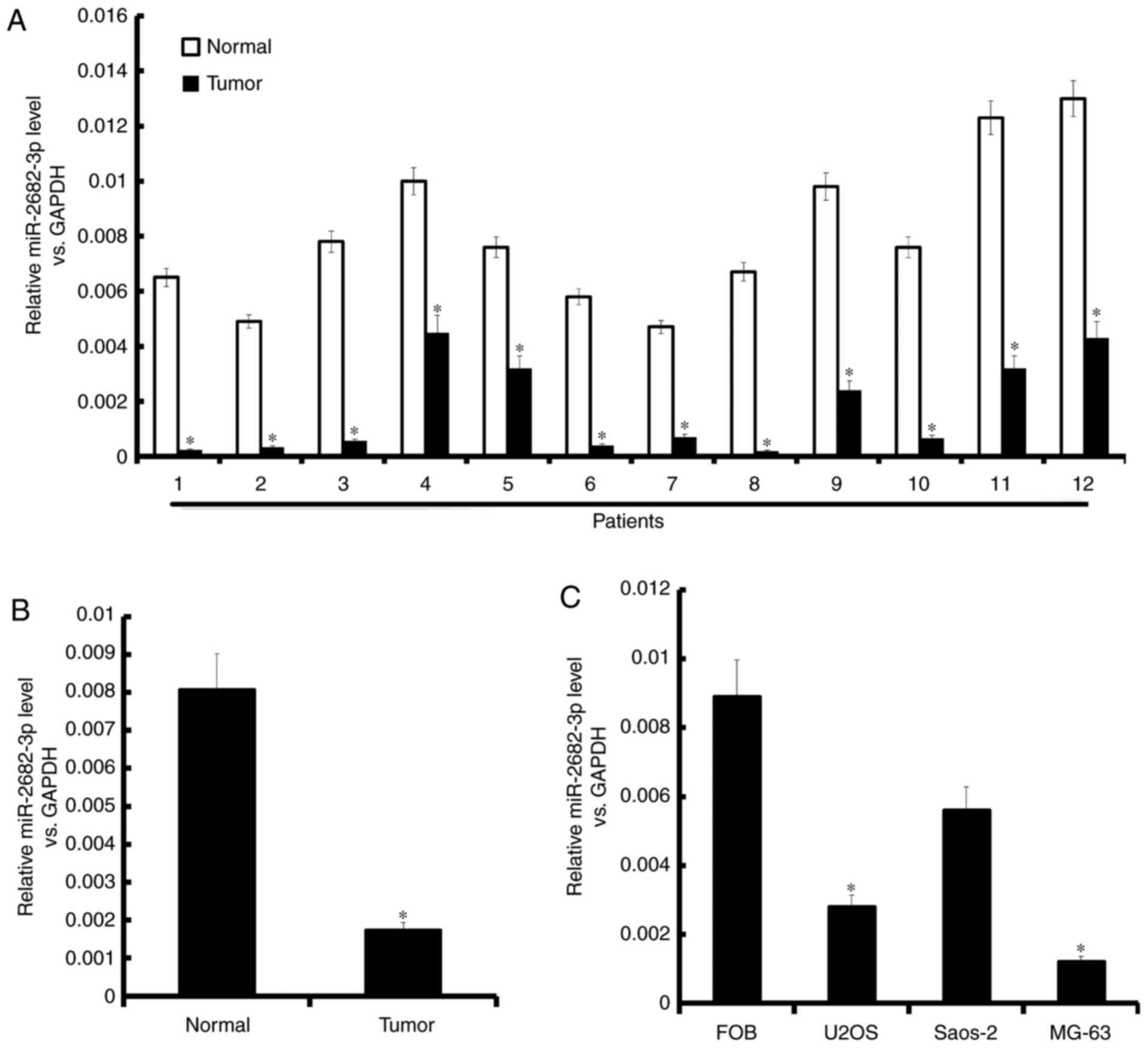
miR-2682-3p expression was lower in tumor tissues than in normal tissues (Fig. 1). miR-2682-3p expression was decreased in the osteosarcoma tissues and cell lines of the patients (Fig. 1A and B). Moreover, miR-2682-3p expression was lower in the three osteosarcoma cell lines (Saos-2, MG-63, and U2OS) than in normal osteoblast cells (FOB) (Fig. 1C).

Figure 1.

miR-2682-3p expression is decreased in osteosarcoma tissues and cell lines. (A) miR-2682-3p expression was determined by qRT-PCR in 12 paired osteosarcoma tissues of patient; The expression was uniformized to U6 snRNA. (B) Relative miR-2682-3p expression levels in osteosarcoma tissues and normal tissues; (C) miR-2682-3p expression analyzed in normal osteoblast cells (hFOB) and Saos-2, MG-63, and U2OS cell lines. *P<0.05. miR, microRNA.

Overexpression of miR-2682-3p inhibited osteosarcoma cell proliferation

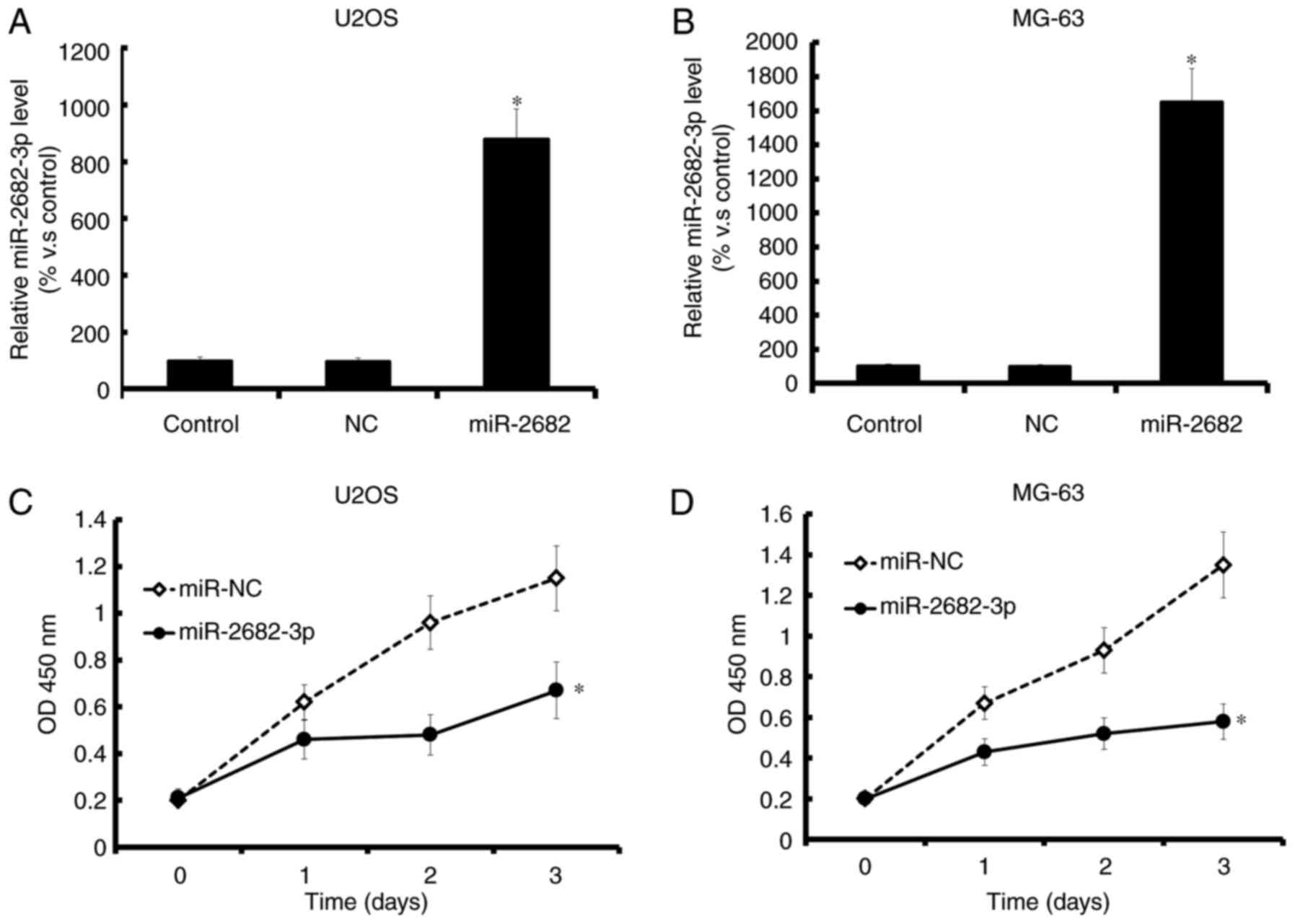
Increased miR-2682-3p expression was confirmed by qRT-PCR (Fig. 2A and B); overexpression of miR-2682-3p decreased the proliferation of tumor cells (MG-63, and U2OS) (Fig. 2C and D).

Figure 2.

Overexpression of miR-2682-3p inhibited osteosarcoma cell proliferation. (A and B) qRT-PCR analysis of miR-2682-3p expression after the transfection of miR-2682-3p mimics or no change or control. (C and D) CCK-8 assay used to evaluate the proliferation of MG-63 and U2OS cells after being transferred with miR-2682-3p mimics or no change or control; relative ratio of invasive cells per field (right). *P<0.05. miR, microRNA.

Downregulation of miR-2682-3p promoted tumor proliferation

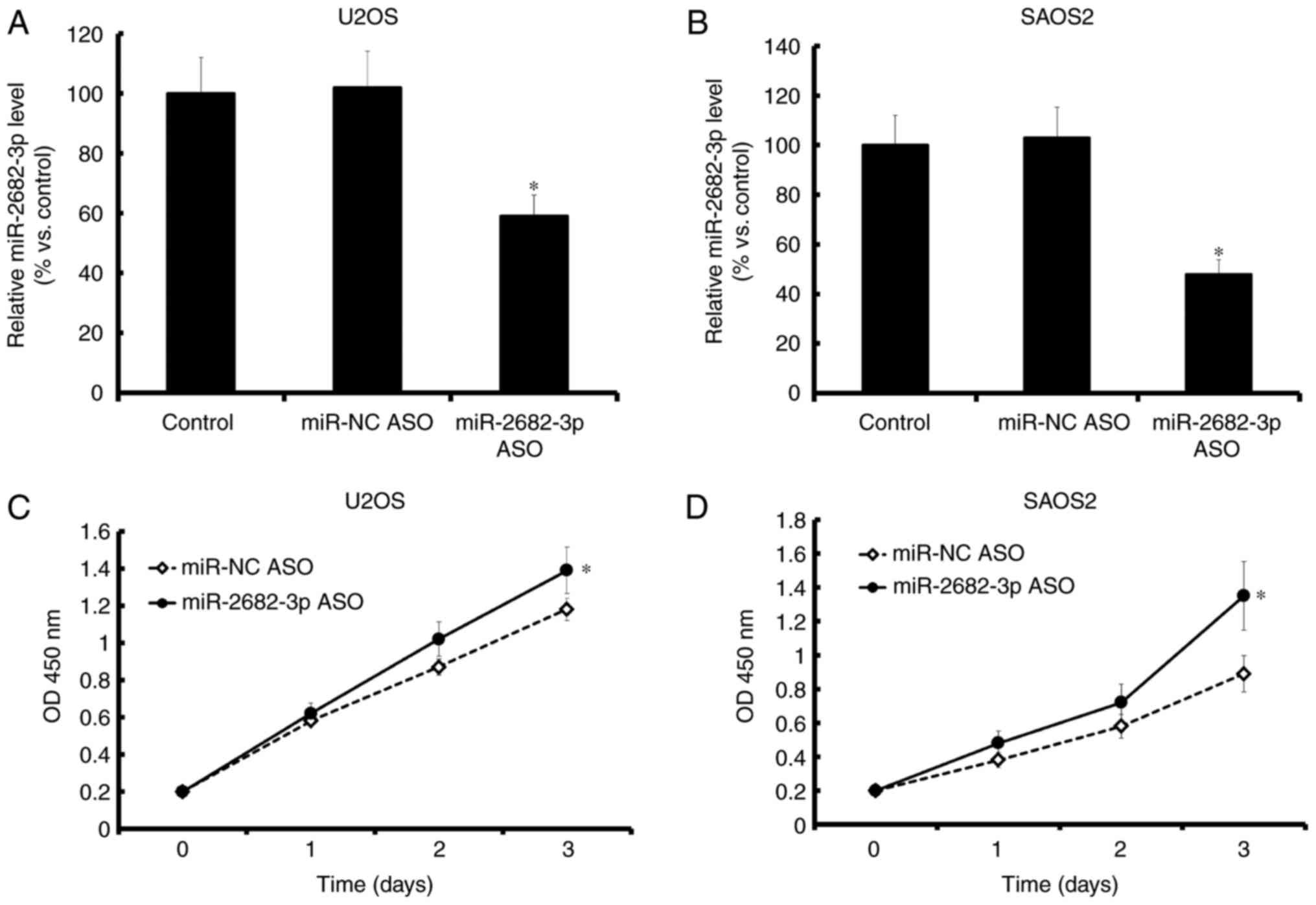
Decreased miR-2682-3p expression, which was confirmed by qRT-PCR (Fig. 3A and B), promoted the proliferation of tumor cells (MG-63 and U2OS) (Fig. 3C and D).

Figure 3.

Decreased miR-2682-3p expression promoted osteosarcoma proliferation. (A and B) qRT-PCR analysis on miR-2682-3p expression after the transfection of miR-2682-3p mimics or no change or control. (C and D) CCK-8 assay evaluated the proliferation of MG-63 and U2OS cells after being transferred with miR-2682-3p mimics or no change or control. *P<0.05.

CCND2, MMP8, and Myd88 are the direct targets of miR-2682-3p in osteosarcoma cells

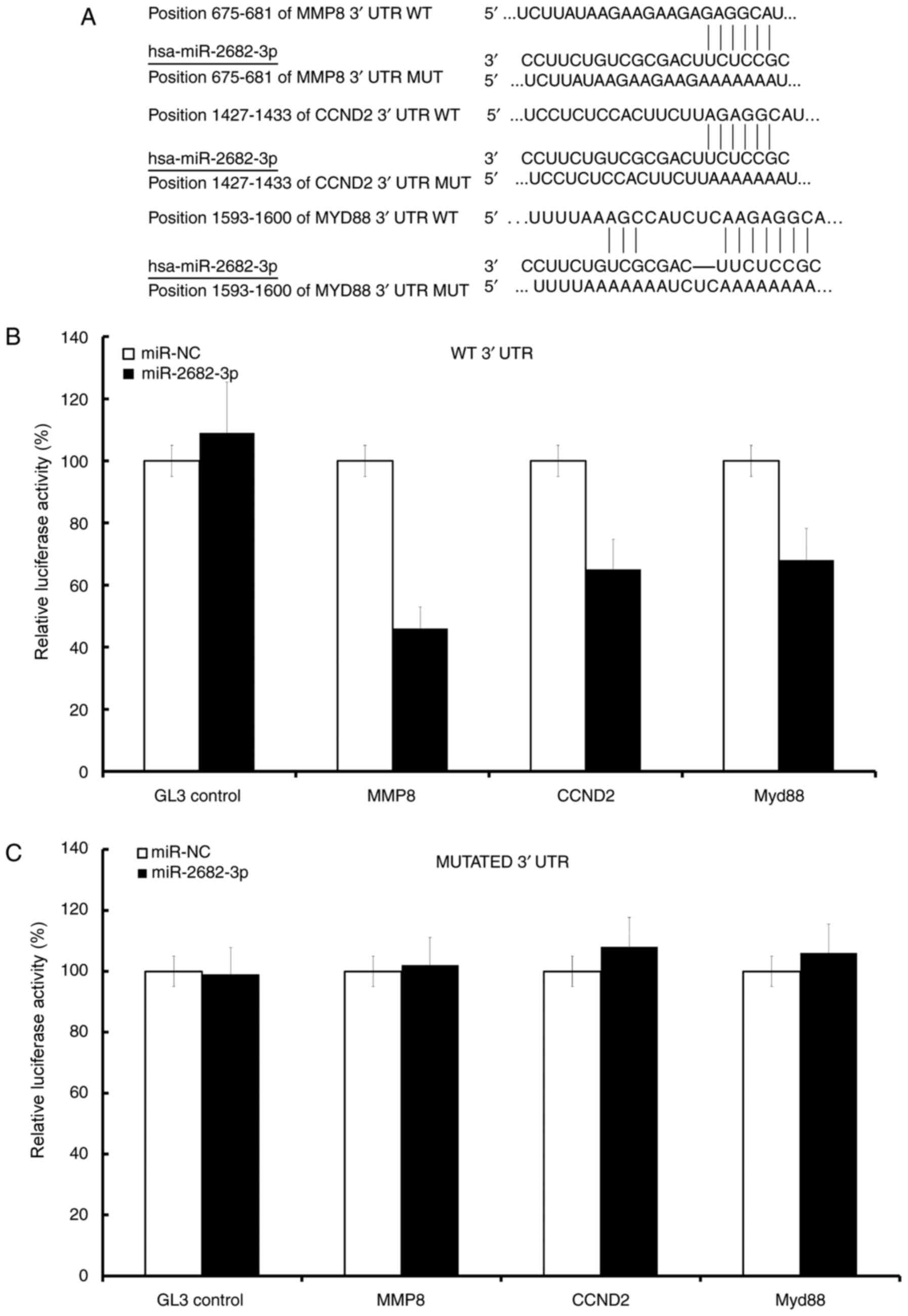
CCND2, MMP8, and Myd88 were predicted to be miR-2682-3p targets (Fig. 4A). The mRNA levels of CCND2, MMP8, and Myd88 were inhibited in the miR-2682-3p mimic groups but not in the control groups (Fig. 4B), the mutation of 3′UTR conversely (Fig. 4C).

Figure 4.

miR-2682-3p directly targeted the CCND2, MMP8 and Myd88 in osteosarcoma. (A) Possible miR-2682-3p binding site at the 3′-UTR of CCND2, MMP8 and Myd88 mRNA, prediction by TargetScan. (B) Cells were transfected with wild-type 3′-UTR reporter or mutant constructs, with 20 nM miR-2682-3p mimics or controls. (C) Luciferase was normalized by the ratio of firefly and Renilla luciferase signals; relative ratio of invasive cells per field, the mutation of 3′UTR conversely. miR, microRNA; MMP8, matrix metalloproteinase 8; Myd88, myeloid differentiation primary response 88.

MMP8, CCND2, and Myd88 were upregulated in osteosarcoma and inversely correlated with miR-2682-3p expression

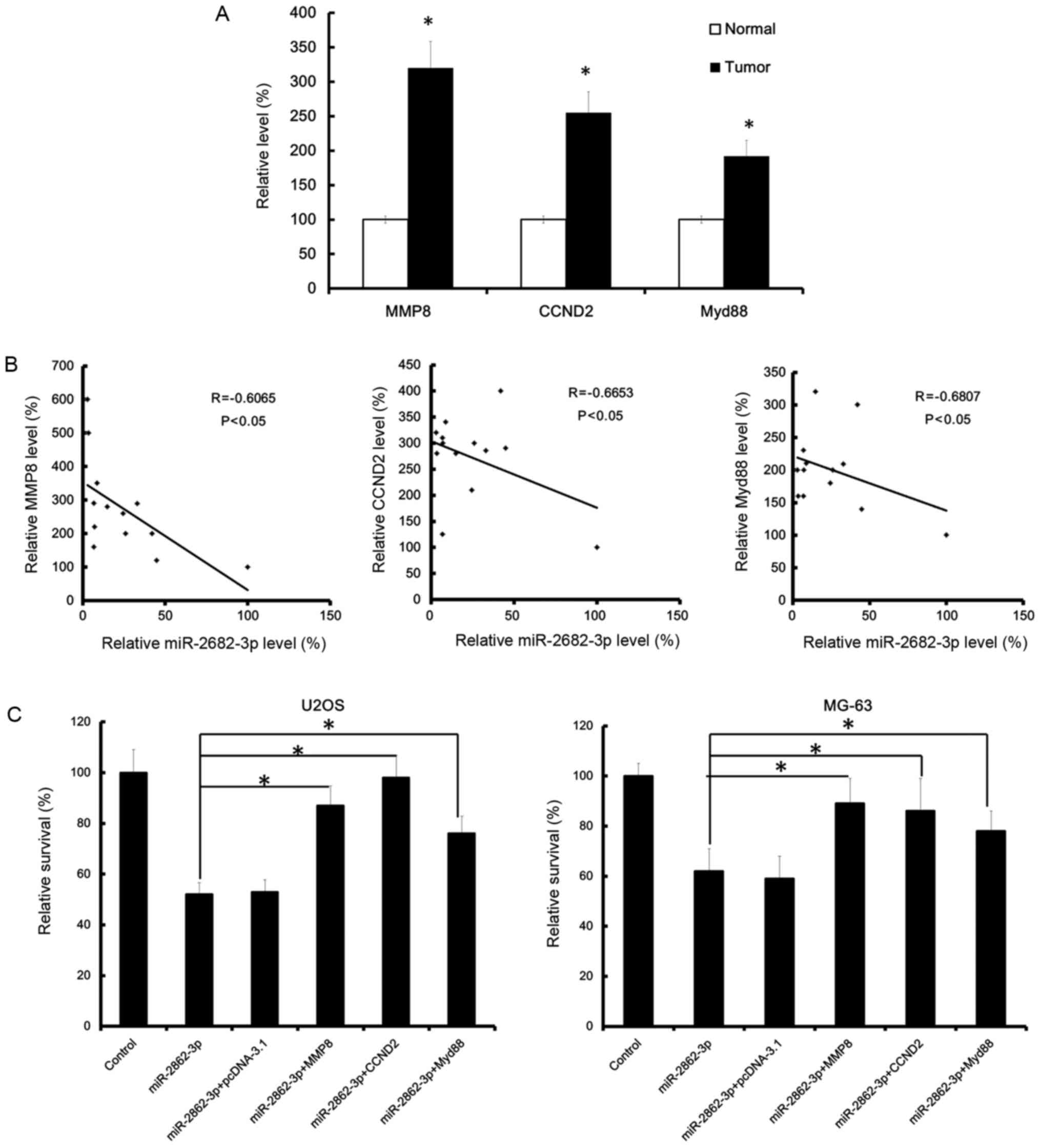
MMP8, CCND2, and Myd88 were upregulated in osteosarcoma tissues. Moreover, the upregulation of MMP8, CCND2, and Myd88 and miR-2682-3p expression were inversely correlated in osteosarcoma tissues of patients (Fig. 5A and B).

Figure 5.

miR-2682-3p restrained osteosarcoma cell proliferation by targeting CCND2, MMP8 and Myd88. (A) qRT-PCR analysis of CCND2, MMP8 and Myd88 expression in osteosarcoma tissues. Upregulated mRNA expression levels of CCND2, MMP8 and Myd88 in osteosarcoma. Expression levels of CCND2, MMP8 and Myd88 normalized to GAPDH. (B) Inverse correlation between MMP8, CCND2 and Myd88 upregulation and miR-2682-3p expression in osteosarcoma patients. (C) Decreased survival rates in osteosarcoma cells by overexpression of miR-2682-3p (U2OS, MG-63). Significant increases in the survival rates of the co-transfected groups relative to those of cells overexpressing miR-2682-3p. Relative ratio of invasive cells per field (right). *P<0.05. miR, microRNA; MMP8, matrix metalloproteinase 8; Myd88, myeloid differentiation primary response 88.

miR-2682-3p restrained osteosarcoma cell proliferation by targeting CCND2, MMP8 and Myd88

CCND2, MMP8, and Myd88 promoted osteosarcoma cell proliferation. The miR-2682-3p mimic that was added into tumor cells inhibited osteosarcoma cell proliferation and invasion. Consistent with our data, the survival rate was significantly decreased in the miR-2682-3p groups. However, in the co-transfected group, the survival rate was significantly increased, indicating that CCND2, MMP8 and Myd88 partly rescued the effect of miR-2682-3p on osteosarcoma (Fig. 5C).

Discussion

Accumulating evidence has shown that miR-2682-3p expression is downregulated in osteosarcoma tissues and cell lines (17). The data obtained in this study show that overexpression of miR-2682-3p inhibits cell proliferation in MG-63 and U2OS cells. Moreover, CCND2, MMP8, and Myd88 are considered to be direct targets of miR-2682-3p. When miR-2682-3p mimic and CCND2, MMP8, and Myd88 were added into tumor cells, the effect of miR-2682-3p was partly rescued in osteosarcoma. These results indicate that miR-2682-3p is a potential tumor suppressor gene of osteosarcoma. However, further investigations of the role of miR-2682-3p in vivo are needed.

Increasing evidence indicates that miR-2682-3p is involved in the progression of some cancers, such as osteosarcoma (9). The same study recently suggested that CCND2, MMP8, and MyD88 can promote cancer metastasis and that the proliferation of many cancer cells can be induced by regulating the composition of extracellular matrix (9). However, the underlying mechanisms by which CCND2, MMP8, and Myd88 stimulate MG-63 cell growth still need to be clarified. The present results show that one of the tumor suppressor miRNAs is miR-2682-3p in osteosarcoma.

In conclusion, miR-2682-3p expression was decreased in osteosarcoma tissues and cell lines. Overexpression of miR-2682-3p leads to the inhibition cell proliferation of osteosarcoma. CCND2, MMP8, and Myd88 are potential targets of miR-2682-3p. Thus, miR-2682-3p has potential value as a new target for the treatment of osteosarcoma in future.

Acknowledgements

Not applicable.

Funding

No funding was received.

Availability of data and materials

All data generated or analyzed during this study are included in this published article.

Authors' contributions

FZ analyzed and interpreted the patient data regarding the osteosarcoma. YZ performed the cytology examination of the osteosarcoma. GF was a major contributor in writing the manuscript and helped with the experiment and statistical analysis. SH as the leader of this study, designed the experiment and reviewed the article. All authors read and approved the final manuscript.

Ethics approval and consent to participate

All patients participated in the study provided written informed consent, and the study was approved by the Ethics Committee of Shanghai Tenth People's Hospital.

Consent for publication

All the patients and researchers consented for publication.

Competing interests

The authors declare that they have no competing interests.

References

1 

Gorlick R and Khanna C: Osteosarcoma. J Bone Miner Res. 25:683–691. 2010. View Article : Google Scholar : PubMed/NCBI

2 

Ritter J and Bielack SS: Osteosarcoma. Ann Oncol. 21 Suppl 7:Vii320–Vii325. 2010. View Article : Google Scholar : PubMed/NCBI

3 

Kager L, Zoubek A, Dominkus M, Lang S, Bodmer N, Jundt G, Klingebiel T, Jürgens H, Gadner H and Bielack S: COSS Study Group: Osteosarcoma in very young children: Experience of the cooperative osteosarcoma study group. Cancer. 116:5316–5324. 2010. View Article : Google Scholar : PubMed/NCBI

4 

Botter SM, Neri D and Fuchs B: Recent advances in osteosarcoma. Curr Opin Pharmacol. 16:15–23. 2014. View Article : Google Scholar : PubMed/NCBI

5 

Moore DD and Luu HH: Osteosarcoma. Cancer Treat Res. 162:65–92. 2014. View Article : Google Scholar : PubMed/NCBI

6 

Gianferante DM, Mirabello L and Savage SA: Germline and somatic genetics of osteosarcoma-connecting aetiology, biology and therapy. Nat Rev Endocrinol. 13:480–191. 2017. View Article : Google Scholar : PubMed/NCBI

7 

Anderson ME: Update on survival in osteosarcoma. Orthop Clin North Am. 47:283–292. 2016. View Article : Google Scholar : PubMed/NCBI

8 

Szewczyk M, Lechowski R and Zabielska K: What do we know about canine osteosarcoma treatment? review. Vet Res Commun. 39:61–67. 2015. View Article : Google Scholar : PubMed/NCBI

9 

Niu G, Li B, Sun L and An C: MicroRNA-153 inhibits osteosarcoma cells proliferation and invasion by targeting TGF-β2. PLoS One. 10:e01192252015. View Article : Google Scholar : PubMed/NCBI

10 

Rupaimoole R and Slack FJ: MicroRNA therapeutics: Towards a new era for the management of cancer and other diseases. Nat Rev Drug Discov. 16:203–222. 2017. View Article : Google Scholar : PubMed/NCBI

11 

Deng K, Wang H, Guo X and Xia J: The cross talk between long, non-coding RNAs and microRNAs in gastric cancer. Acta Biochim Biophys Sin (Shanghai). 48:111–116. 2016. View Article : Google Scholar : PubMed/NCBI

12 

Jothy SL, Chen Y, Vijayarathna S, Kanwar JR and Sasidharan S: MicroRNAs: Association with radioresistant and potential uses of natural remedies as green gene therapeutic approaches. Curr Gene Ther. 15:15–20. 2015. View Article : Google Scholar : PubMed/NCBI

13 

Zou P, Ding J and Fu S: Elevated expression of microRNA-19a predicts a poor prognosis in patients with osteosarcoma. Pathol Res Pract. 213:194–198. 2017. View Article : Google Scholar : PubMed/NCBI

14 

Lian D, Wang ZZ and Liu NS: MicroRNA-1908 is a biomarker for poor prognosis in human osteosarcoma. Eur Rev Med Pharmacol Sci. 20:1258–1262. 2016.PubMed/NCBI

15 

Chen J, Yan D, Wu W, Zhu J, Ye W and Shu Q: MicroRNA-130a promotes the metastasis and epithelial-mesenchymal transition of osteosarcoma by targeting PTEN. Oncol Rep. 35:3285–3292. 2016. View Article : Google Scholar : PubMed/NCBI

16 

Zhang S, Zhao Y and Wang L: MicroRNA-198 inhibited tumorous behaviors of human osteosarcoma through directly targeting ROCK1. Biochem Biophys Res Commun. 472:557–565. 2016. View Article : Google Scholar : PubMed/NCBI

17 

Waresijiang N, Sun J, Abuduaini R, Jiang T, Zhou W and Yuan H: The downregulation of miR-125a-5p functions as a tumor suppressor by directly targeting MMP-11 in osteosarcoma. Mol Med Rep. 13:4859–4864. 2016. View Article : Google Scholar : PubMed/NCBI

18 

Zhang J, Hou W, Chai M, Zhao H, Jia J, Sun X, Zhao B and Wang R: MicroRNA-127-3p inhibits proliferation and invasion by targeting SETD8 in human osteosarcoma cells. Biochem Biophys Res Commun. 469:1006–1011. 2016. View Article : Google Scholar : PubMed/NCBI

19 

Duan J, Shi J, Fiorentino A, Leites C, Chen X, Moy W, Chen J, Alexandrov BS, Usheva A, He D, et al: A rare functional noncoding variant at the GWAS-implicated MIR137/MIR2682 locus might confer risk to schizophrenia and bipolar disorder. Am J Hum Genet. 95:744–753. 2014. View Article : Google Scholar : PubMed/NCBI

20 

Hu J, Lv G, Zhou S, Zhou Y, Nie B, Duan H, Zhang Y and Yuan X: The Downregulation of MiR-182 is associated with the growth and invasion of osteosarcoma cells through the regulation of TIAM1 expression. PLoS One. 10:e01211752015. View Article : Google Scholar : PubMed/NCBI

Related Articles

  • Abstract
  • View
  • Download
  • Twitter
Copy and paste a formatted citation
Spandidos Publications style
Zhang F, Zhu Y, Fan G and Hu S: MicroRNA‑2682‑3p inhibits osteosarcoma cell proliferation by targeting CCND2, MMP8 and Myd88. Oncol Lett 16: 3359-3364, 2018.
APA
Zhang, F., Zhu, Y., Fan, G., & Hu, S. (2018). MicroRNA‑2682‑3p inhibits osteosarcoma cell proliferation by targeting CCND2, MMP8 and Myd88. Oncology Letters, 16, 3359-3364. https://doi.org/10.3892/ol.2018.9029
MLA
Zhang, F., Zhu, Y., Fan, G., Hu, S."MicroRNA‑2682‑3p inhibits osteosarcoma cell proliferation by targeting CCND2, MMP8 and Myd88". Oncology Letters 16.3 (2018): 3359-3364.
Chicago
Zhang, F., Zhu, Y., Fan, G., Hu, S."MicroRNA‑2682‑3p inhibits osteosarcoma cell proliferation by targeting CCND2, MMP8 and Myd88". Oncology Letters 16, no. 3 (2018): 3359-3364. https://doi.org/10.3892/ol.2018.9029
Copy and paste a formatted citation
x
Spandidos Publications style
Zhang F, Zhu Y, Fan G and Hu S: MicroRNA‑2682‑3p inhibits osteosarcoma cell proliferation by targeting CCND2, MMP8 and Myd88. Oncol Lett 16: 3359-3364, 2018.
APA
Zhang, F., Zhu, Y., Fan, G., & Hu, S. (2018). MicroRNA‑2682‑3p inhibits osteosarcoma cell proliferation by targeting CCND2, MMP8 and Myd88. Oncology Letters, 16, 3359-3364. https://doi.org/10.3892/ol.2018.9029
MLA
Zhang, F., Zhu, Y., Fan, G., Hu, S."MicroRNA‑2682‑3p inhibits osteosarcoma cell proliferation by targeting CCND2, MMP8 and Myd88". Oncology Letters 16.3 (2018): 3359-3364.
Chicago
Zhang, F., Zhu, Y., Fan, G., Hu, S."MicroRNA‑2682‑3p inhibits osteosarcoma cell proliferation by targeting CCND2, MMP8 and Myd88". Oncology Letters 16, no. 3 (2018): 3359-3364. https://doi.org/10.3892/ol.2018.9029
Follow us
  • Twitter
  • LinkedIn
  • Facebook
About
  • Spandidos Publications
  • Careers
  • Cookie Policy
  • Privacy Policy
How can we help?
  • Help
  • Live Chat
  • Contact
  • Email to our Support Team