Spandidos Publications Logo
  • About
    • About Spandidos
    • Aims and Scopes
    • Abstracting and Indexing
    • Editorial Policies
    • Reprints and Permissions
    • Job Opportunities
    • Terms and Conditions
    • Contact
  • Journals
    • All Journals
    • Oncology Letters
      • Oncology Letters
      • Information for Authors
      • Editorial Policies
      • Editorial Board
      • Aims and Scope
      • Abstracting and Indexing
      • Bibliographic Information
      • Archive
    • International Journal of Oncology
      • International Journal of Oncology
      • Information for Authors
      • Editorial Policies
      • Editorial Board
      • Aims and Scope
      • Abstracting and Indexing
      • Bibliographic Information
      • Archive
    • Molecular and Clinical Oncology
      • Molecular and Clinical Oncology
      • Information for Authors
      • Editorial Policies
      • Editorial Board
      • Aims and Scope
      • Abstracting and Indexing
      • Bibliographic Information
      • Archive
    • Experimental and Therapeutic Medicine
      • Experimental and Therapeutic Medicine
      • Information for Authors
      • Editorial Policies
      • Editorial Board
      • Aims and Scope
      • Abstracting and Indexing
      • Bibliographic Information
      • Archive
    • International Journal of Molecular Medicine
      • International Journal of Molecular Medicine
      • Information for Authors
      • Editorial Policies
      • Editorial Board
      • Aims and Scope
      • Abstracting and Indexing
      • Bibliographic Information
      • Archive
    • Biomedical Reports
      • Biomedical Reports
      • Information for Authors
      • Editorial Policies
      • Editorial Board
      • Aims and Scope
      • Abstracting and Indexing
      • Bibliographic Information
      • Archive
    • Oncology Reports
      • Oncology Reports
      • Information for Authors
      • Editorial Policies
      • Editorial Board
      • Aims and Scope
      • Abstracting and Indexing
      • Bibliographic Information
      • Archive
    • Molecular Medicine Reports
      • Molecular Medicine Reports
      • Information for Authors
      • Editorial Policies
      • Editorial Board
      • Aims and Scope
      • Abstracting and Indexing
      • Bibliographic Information
      • Archive
    • World Academy of Sciences Journal
      • World Academy of Sciences Journal
      • Information for Authors
      • Editorial Policies
      • Editorial Board
      • Aims and Scope
      • Abstracting and Indexing
      • Bibliographic Information
      • Archive
    • International Journal of Functional Nutrition
      • International Journal of Functional Nutrition
      • Information for Authors
      • Editorial Policies
      • Editorial Board
      • Aims and Scope
      • Abstracting and Indexing
      • Bibliographic Information
      • Archive
    • International Journal of Epigenetics
      • International Journal of Epigenetics
      • Information for Authors
      • Editorial Policies
      • Editorial Board
      • Aims and Scope
      • Abstracting and Indexing
      • Bibliographic Information
      • Archive
    • Medicine International
      • Medicine International
      • Information for Authors
      • Editorial Policies
      • Editorial Board
      • Aims and Scope
      • Abstracting and Indexing
      • Bibliographic Information
      • Archive
  • Articles
  • Information
    • Information for Authors
    • Information for Reviewers
    • Information for Librarians
    • Information for Advertisers
    • Conferences
  • Language Editing
Spandidos Publications Logo
  • About
    • About Spandidos
    • Aims and Scopes
    • Abstracting and Indexing
    • Editorial Policies
    • Reprints and Permissions
    • Job Opportunities
    • Terms and Conditions
    • Contact
  • Journals
    • All Journals
    • Biomedical Reports
      • Information for Authors
      • Editorial Policies
      • Editorial Board
      • Aims and Scope
      • Abstracting and Indexing
      • Bibliographic Information
      • Archive
    • Experimental and Therapeutic Medicine
      • Information for Authors
      • Editorial Policies
      • Editorial Board
      • Aims and Scope
      • Abstracting and Indexing
      • Bibliographic Information
      • Archive
    • International Journal of Epigenetics
      • Information for Authors
      • Editorial Policies
      • Editorial Board
      • Aims and Scope
      • Abstracting and Indexing
      • Bibliographic Information
      • Archive
    • International Journal of Functional Nutrition
      • Information for Authors
      • Editorial Policies
      • Editorial Board
      • Aims and Scope
      • Abstracting and Indexing
      • Bibliographic Information
      • Archive
    • International Journal of Molecular Medicine
      • Information for Authors
      • Editorial Policies
      • Editorial Board
      • Aims and Scope
      • Abstracting and Indexing
      • Bibliographic Information
      • Archive
    • International Journal of Oncology
      • Information for Authors
      • Editorial Policies
      • Editorial Board
      • Aims and Scope
      • Abstracting and Indexing
      • Bibliographic Information
      • Archive
    • Medicine International
      • Information for Authors
      • Editorial Policies
      • Editorial Board
      • Aims and Scope
      • Abstracting and Indexing
      • Bibliographic Information
      • Archive
    • Molecular and Clinical Oncology
      • Information for Authors
      • Editorial Policies
      • Editorial Board
      • Aims and Scope
      • Abstracting and Indexing
      • Bibliographic Information
      • Archive
    • Molecular Medicine Reports
      • Information for Authors
      • Editorial Policies
      • Editorial Board
      • Aims and Scope
      • Abstracting and Indexing
      • Bibliographic Information
      • Archive
    • Oncology Letters
      • Information for Authors
      • Editorial Policies
      • Editorial Board
      • Aims and Scope
      • Abstracting and Indexing
      • Bibliographic Information
      • Archive
    • Oncology Reports
      • Information for Authors
      • Editorial Policies
      • Editorial Board
      • Aims and Scope
      • Abstracting and Indexing
      • Bibliographic Information
      • Archive
    • World Academy of Sciences Journal
      • Information for Authors
      • Editorial Policies
      • Editorial Board
      • Aims and Scope
      • Abstracting and Indexing
      • Bibliographic Information
      • Archive
  • Articles
  • Information
    • For Authors
    • For Reviewers
    • For Librarians
    • For Advertisers
    • Conferences
  • Language Editing
Login Register Submit
  • This site uses cookies
  • You can change your cookie settings at any time by following the instructions in our Cookie Policy. To find out more, you may read our Privacy Policy.

    I agree
Search articles by DOI, keyword, author or affiliation
Search
Advanced Search
presentation
Oncology Letters
Join Editorial Board Propose a Special Issue
Print ISSN: 1792-1074 Online ISSN: 1792-1082
Journal Cover
March-2022 Volume 23 Issue 3

Full Size Image

Sign up for eToc alerts
Recommend to Library

Journals

International Journal of Molecular Medicine

International Journal of Molecular Medicine

International Journal of Molecular Medicine is an international journal devoted to molecular mechanisms of human disease.

International Journal of Oncology

International Journal of Oncology

International Journal of Oncology is an international journal devoted to oncology research and cancer treatment.

Molecular Medicine Reports

Molecular Medicine Reports

Covers molecular medicine topics such as pharmacology, pathology, genetics, neuroscience, infectious diseases, molecular cardiology, and molecular surgery.

Oncology Reports

Oncology Reports

Oncology Reports is an international journal devoted to fundamental and applied research in Oncology.

Experimental and Therapeutic Medicine

Experimental and Therapeutic Medicine

Experimental and Therapeutic Medicine is an international journal devoted to laboratory and clinical medicine.

Oncology Letters

Oncology Letters

Oncology Letters is an international journal devoted to Experimental and Clinical Oncology.

Biomedical Reports

Biomedical Reports

Explores a wide range of biological and medical fields, including pharmacology, genetics, microbiology, neuroscience, and molecular cardiology.

Molecular and Clinical Oncology

Molecular and Clinical Oncology

International journal addressing all aspects of oncology research, from tumorigenesis and oncogenes to chemotherapy and metastasis.

World Academy of Sciences Journal

World Academy of Sciences Journal

Multidisciplinary open-access journal spanning biochemistry, genetics, neuroscience, environmental health, and synthetic biology.

International Journal of Functional Nutrition

International Journal of Functional Nutrition

Open-access journal combining biochemistry, pharmacology, immunology, and genetics to advance health through functional nutrition.

International Journal of Epigenetics

International Journal of Epigenetics

Publishes open-access research on using epigenetics to advance understanding and treatment of human disease.

Medicine International

Medicine International

An International Open Access Journal Devoted to General Medicine.

Journal Cover
March-2022 Volume 23 Issue 3

Full Size Image

Sign up for eToc alerts
Recommend to Library

  • Article
  • Citations
    • Cite This Article
    • Download Citation
    • Create Citation Alert
    • Remove Citation Alert
    • Cited By
  • Similar Articles
    • Related Articles (in Spandidos Publications)
    • Similar Articles (Google Scholar)
    • Similar Articles (PubMed)
  • Download PDF
  • Download XML
  • View XML
Article Open Access

Quercetin induces tongue squamous cell carcinoma cell apoptosis via the JNK activation‑regulated ERK/GSK‑3α/β‑mediated mitochondria‑dependent apoptotic signaling pathway

  • Authors:
    • Chun-Fa Huang
    • Shing-Hwa Liu
    • Tsung-Jung Ho
    • Kuan-I Lee
    • Kai-Min Fang
    • Wu-Chia Lo
    • Jui-Ming Liu
    • Chin-Ching Wu
    • Chin-Chuan Su
  • View Affiliations / Copyright

    Affiliations: School of Chinese Medicine, College of Chinese Medicine, China Medical University, Taichung 404, Taiwan, R.O.C., Institute of Toxicology, College of Medicine, National Taiwan University, Taipei 100, Taiwan, R.O.C., Integration Center of Traditional Chinese and Modern Medicine, Hualien Tzu Chi Hospital, Hualien 970, Taiwan, R.O.C., Department of Emergency, Taichung Tzu Chi Hospital, Buddhist Tzu Chi Medical Foundation, Taichung 427, Taiwan, R.O.C., Department of Otolaryngology, Far Eastern Memorial Hospital, New Taipei City 220, Taiwan, R.O.C., Department of Urology, Taoyuan General Hospital, Ministry of Health and Welfare, Taoyuan 330, Taiwan, R.O.C., Department of Public Health, China Medical University, Taichung 404, Taiwan, R.O.C., Department of Otorhinolaryngology, Head and Neck Surgery, Changhua Christian Hospital, Changhua 500, Taiwan, R.O.C.
    Copyright: © Huang et al. This is an open access article distributed under the terms of Creative Commons Attribution License.
  • Article Number: 78
    |
    Published online on: January 11, 2022
       https://doi.org/10.3892/ol.2022.13198
  • Expand metrics +
Metrics: Total Views: 0 (Spandidos Publications: | PMC Statistics: )
Metrics: Total PDF Downloads: 0 (Spandidos Publications: | PMC Statistics: )
Cited By (CrossRef): 0 citations Loading Articles...

This article is mentioned in:


Abstract

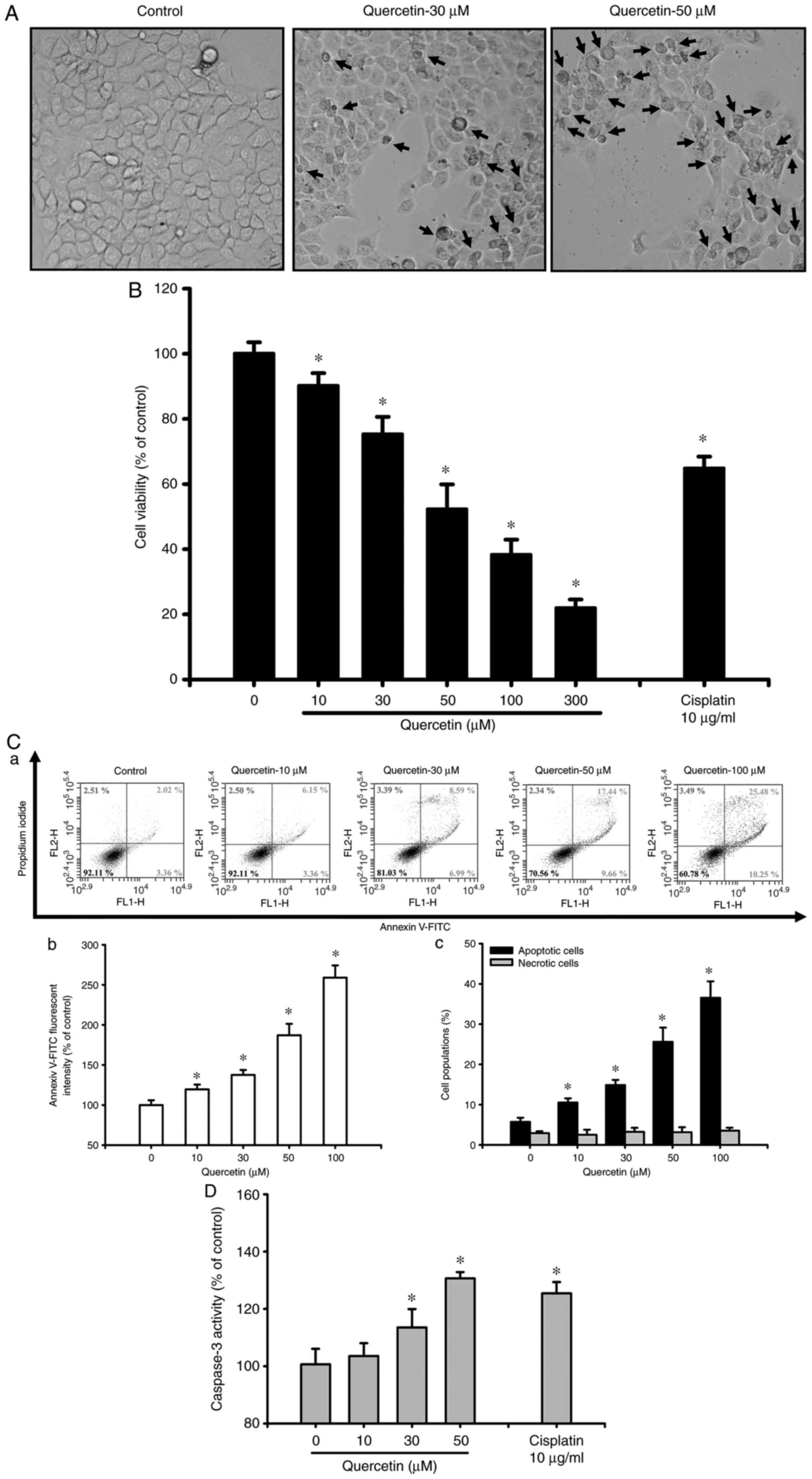
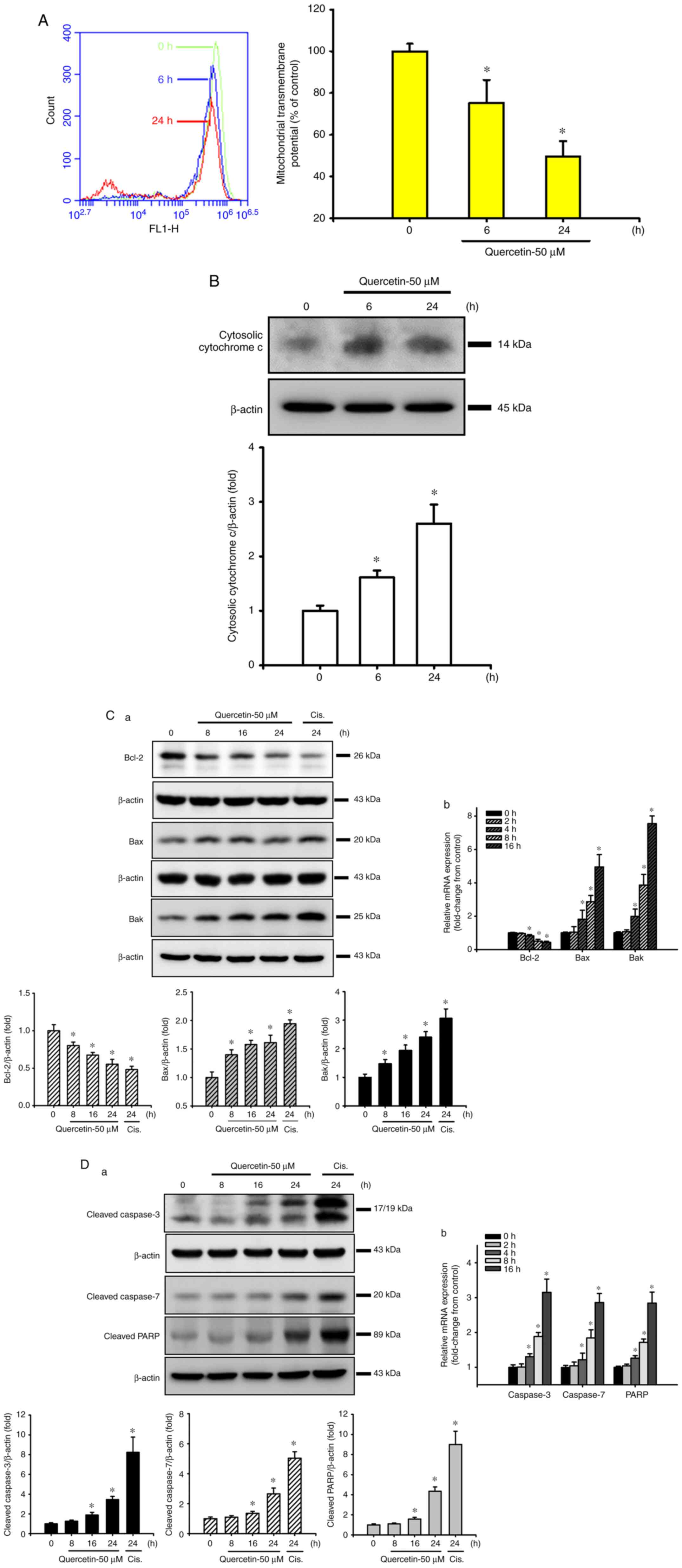
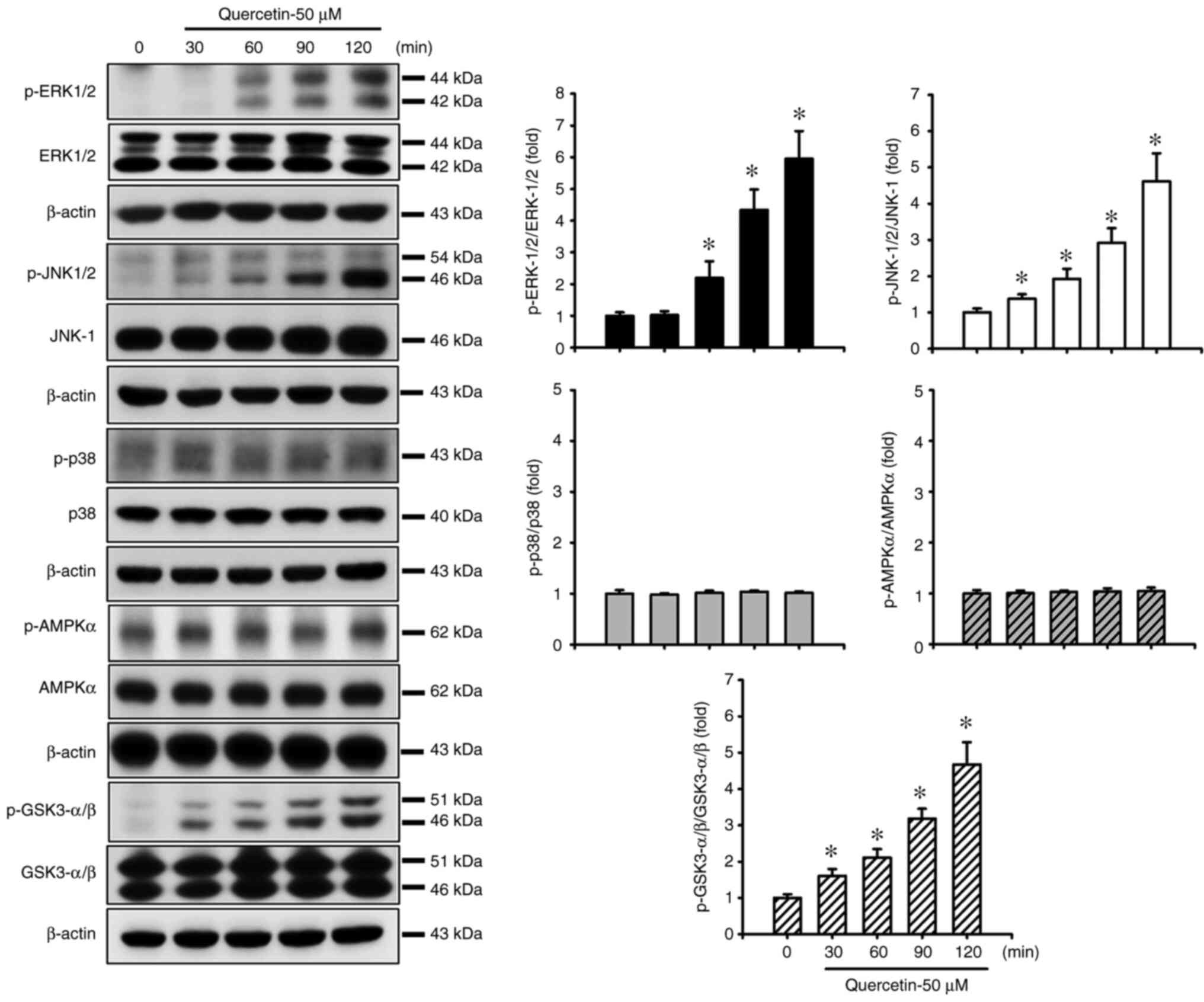
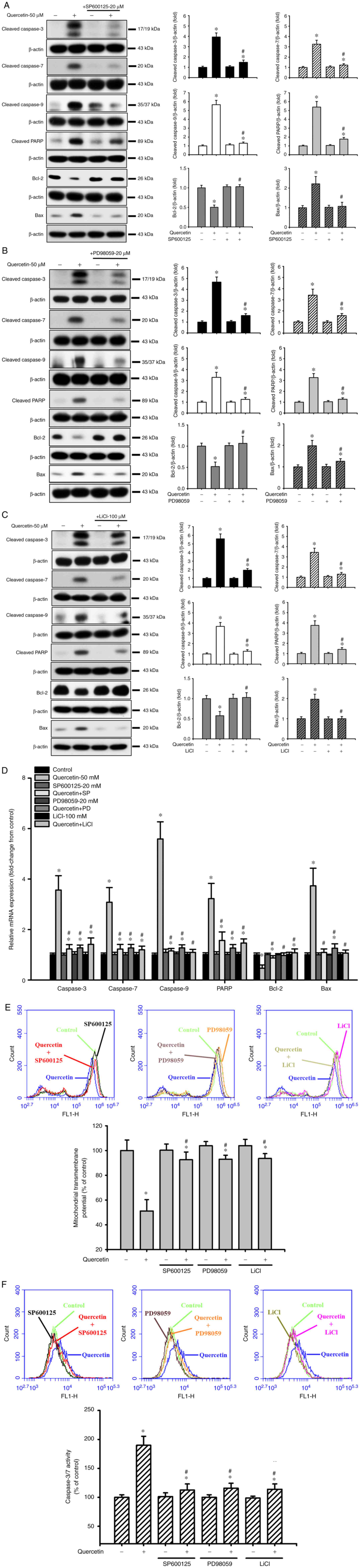
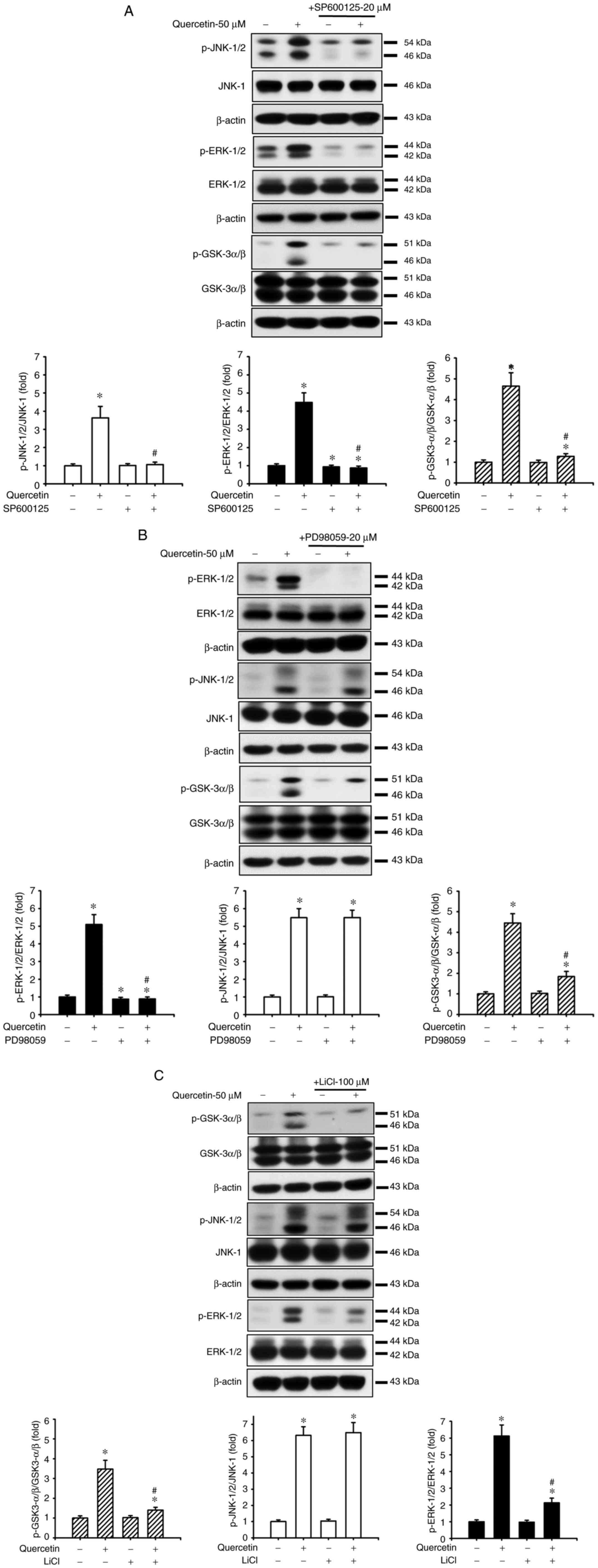
Tongue squamous cell carcinoma (SCC) is a most common type of oral cancer. Due to its highly invasive nature and poor survival rate, the development of effective pharmacological therapeutic agents is urgently required. Quercetin (3,3',4',5,7‑pentahydroxyflavone) is a polyphenolic flavonoid found in plants and is an active component of Chinese herbal medicine. The present study investigated the pharmacological effects and possible mechanisms of quercetin on apoptosis of the tongue SCC‑derived SAS cell line. Following treatment with quercetin, cell viability was assessed via the MTT assay. Apoptotic and necrotic cells, mitochondrial transmembrane potential and caspase‑3/7 activity were analyzed via flow cytometric analyses. A caspase‑3 activity assay kit was used to detect the expression of caspase‑3 activity. Western blot analysis was performed to examine the expression levels of proteins associated with the MAPKs, AMPKα, GSK3‑α/β and caspase‑related signaling pathways. The results revealed that quercetin induced morphological alterations and decreased the viability of SAS cells. Quercetin also increased apoptosis‑related Annexin V‑FITC fluorescence and caspase‑3 activity, and induced mitochondria‑dependent apoptotic signals, including a decrease in mitochondrial transmembrane potential and Bcl‑2 protein expression, and an increase in cytosolic cytochrome c, Bax, Bak, cleaved caspase‑3, cleaved caspase‑7 and cleaved poly (ADP‑ribose) polymerase protein expression. Furthermore, quercetin significantly increased the protein expression levels of phosphorylated (p)‑ERK, p‑JNK1/2 and p‑GSK3‑α/β, but not p‑p38 or p‑AMPKα in SAS cells. Pretreatment with the pharmacological JNK inhibitor SP600125 effectively reduced the quercetin‑induced apoptosis‑related signals, as well as p‑ERK1/2 and p‑GSK3‑α/β protein expression. Both ERK1/2 and GSK3‑α/β inhibitors, PD98059 and LiCl, respectively, could significantly prevent the quercetin‑induced phosphorylation of ERK1/2 and GSK3‑α/β, but not JNK activation. Taken together, these results suggested that quercetin may induce tongue SCC cell apoptosis via the JNK‑activation‑regulated ERK1/2 and GSK3‑α/β‑mediated mitochondria‑dependent apoptotic signaling pathway.
View Figures

Figure 1

Figure 2

Figure 3

Figure 4

Figure 5

View References

1 

Johnson NW, Jayasekara P and Amarasinghe AA: Squamous cell carcinoma and precursor lesions of the oral cavity: Epidemiology and aetiology. Periodontol 2000. 57:19–37. 2011. View Article : Google Scholar : PubMed/NCBI

2 

Hung CM, Chang CC, Lin CW, Ko SY and Hsu YC: Cucurbitacin E as inducer of cell death and apoptosis in human oral squamous cell carcinoma cell line SAS. Int J Mol Sci. 14:17147–17156. 2013. View Article : Google Scholar : PubMed/NCBI

3 

Su CC, Lee KI, Chen MK, Kuo CY, Tang CH and Liu SH: Cantharidin induced oral squamous cell carcinoma cell apoptosis via the JNK-regulated mitochondria and endoplasmic reticulum stress-related signaling pathways. PLoS One. 11:e01680952016. View Article : Google Scholar : PubMed/NCBI

4 

Blot WJ, McLaughlin JK, Winn DM, Austin DF, Greenberg RS, Preston-Martin S, Bernstein L, Schoenberg JB, Stemhagen A and Fraumeni JF Jr: Smoking and drinking in relation to oral and pharyngeal cancer. Cancer Res. 48:3282–3287. 1988.PubMed/NCBI

5 

Koo K, Barrowman R, McCullough M, Iseli T and Wiesenfeld D: Non-smoking non-drinking elderly females: A clinically distinct subgroup of oral squamous cell carcinoma patients. Int J Oral Maxillofac Surg. 42:929–933. 2013. View Article : Google Scholar : PubMed/NCBI

6 

Wong T and Wiesenfeld D: Oral cancer. Aust Dent J. 63 (Suppl 1):S91–S99. 2018. View Article : Google Scholar : PubMed/NCBI

7 

World Health Organization, (WHO), . Oral health. Available from. https://www.who.int/news-room/fact-sheets/detail/oral-healthMarch 25–2020

8 

Australian Institute of Health, Welfare (AIHW), . Australian Cancer Incidence and Mortality (ACIM) books: Head and neck including lip. Available from. http://www.aihw.gov.au/acim-booksJuly;2017.

9 

Yang YH, Chen CH, Chang JS, Lin CC, Cheng TC and Shieh TY: Incidence rates of oral cancer and oral pre-cancerous lesions in a 6-year follow-up study of a Taiwanese aboriginal community. J Oral Pathol Med. 34:596–601. 2005. View Article : Google Scholar : PubMed/NCBI

10 

Lin NC, Hsien SI, Hsu JT and Chen MY: Impact on patients with oral squamous cell carcinoma in different anatomical subsites: A single-center study in Taiwan. Sci Rep. 11:154462021. View Article : Google Scholar : PubMed/NCBI

11 

Shiboski CH, Schmidt BL and Jordan RC: Tongue and tonsil carcinoma: Increasing trends in the U.S. population ages 20–44 years. Cancer. 103:1843–1849. 2005. View Article : Google Scholar : PubMed/NCBI

12 

Day AJ and Williamson G: Human metabolism of dietary quercetin glycosides. Plant Polyphenols 2: Chemistry, Biology, Pharmacology, Ecology. Gross GG, Hemingway RW, Yoshida T. Basic Life Sciences. Vol 66. Kluwer Academic/Plenum Publishers; New York, NY: pp. 415–434. 1999, View Article : Google Scholar

13 

Harnly JM, Doherty RF, Beecher GR, Holden JM, Haytowitz DB, Bhagwat S and Gebhardt S: Flavonoid content of US fruits, vegetables, and nuts. J Agric Food Chem. 54:9966–9977. 2006. View Article : Google Scholar : PubMed/NCBI

14 

Harwood M, Danielewska-Nikiel B, Borzelleca JF, Flamm GW, Williams GM and Lines TC: A critical review of the data related to the safety of quercetin and lack of evidence of in vivo toxicity, including lack of genotoxic/carcinogenic properties. Food Chem Toxicol. 45:2179–2205. 2007. View Article : Google Scholar : PubMed/NCBI

15 

Li H, Tan L, Zhang JW, Chen H, Liang B, Qiu T, Li QS, Cai M and Zhang QH: Quercetin is the active component of Yang-Yin-Qing-Fei-Tang to induce apoptosis in non-small cell lung cancer. Am J Chin Med. 47:879–893. 2019. View Article : Google Scholar : PubMed/NCBI

16 

Wu H, Chen M, Fan Y, Elsebaei F and Zhu Y: Determination of rutin and quercetin in Chinese herbal medicine by ionic liquid-based pressurized liquid extraction-liquid chromatography-chemiluminescence detection. Talanta. 88:222–229. 2012. View Article : Google Scholar : PubMed/NCBI

17 

Lee S, Lee HH, Shin YS, Kang H and Cho H: The anti-HSV-1 effect of quercetin is dependent on the suppression of TLR-3 in Raw 264.7 cells. Arch Pharm Res. 40:623–630. 2017. View Article : Google Scholar : PubMed/NCBI

18 

Xu D, Hu MJ, Wang YQ and Cui YL: Antioxidant activities of quercetin and its complexes for medicinal application. Molecules. 24:11232019. View Article : Google Scholar : PubMed/NCBI

19 

Khan F, Niaz K, Maqbool F, Ismail Hassan F, Abdollahi M, Nagulapalli Venkata KC, Nabavi SM and Bishayee A: Molecular targets underlying the anticancer effects of quercetin: An update. Nutrients. 8:5292016. View Article : Google Scholar : PubMed/NCBI

20 

Murakami A, Ashida H and Terao J: Multitargeted cancer prevention by quercetin. Cancer Lett. 269:315–325. 2008. View Article : Google Scholar : PubMed/NCBI

21 

Kim JY, An JM, Chung WY, Park KK, Hwang JK, Kim du S, Seo SR and Seo JT: Xanthorrhizol induces apoptosis through ROS-mediated MAPK activation in human oral squamous cell carcinoma cells and inhibits DMBA-induced oral carcinogenesis in hamsters. Phytother Res. 27:493–498. 2013. View Article : Google Scholar : PubMed/NCBI

22 

Pistritto G, Trisciuoglio D, Ceci C, Garufi A and D'Orazi G: Apoptosis as anticancer mechanism: Function and dysfunction of its modulators and targeted therapeutic strategies. Aging (Albany NY). 8:603–619. 2016. View Article : Google Scholar : PubMed/NCBI

23 

Lorenzo PI and Saatcioglu F: Inhibition of apoptosis in prostate cancer cells by androgens is mediated through downregulation of c-Jun N-terminal kinase activation. Neoplasia. 10:418–428. 2008. View Article : Google Scholar : PubMed/NCBI

24 

Kim DM, Won M, Chung CS, Kim S, Yim HJ, Jung SH and Jeong S: JNK-mediated transcriptional upregulation of RhoB is critical for apoptosis of HCT-116 colon cancer cells by a novel diarylsulfonylurea derivative. Apoptosis. 15:1540–1548. 2010. View Article : Google Scholar : PubMed/NCBI

25 

Wei G, Wang M and Carr BI: Sorafenib combined vitamin K induces apoptosis in human pancreatic cancer cell lines through RAF/MEK/ERK and c-Jun NH2-terminal kinase pathways. J Cell Physiol. 224:112–119. 2010.PubMed/NCBI

26 

Gopalan A, Yu W, Sanders BG and Kline K: Simvastatin inhibition of mevalonate pathway induces apoptosis in human breast cancer cells via activation of JNK/CHOP/DR5 signaling pathway. Cancer Lett. 329:9–16. 2013. View Article : Google Scholar : PubMed/NCBI

27 

Ryu MJ and Chung HS: [10]-Gingerol induces mitochondrial apoptosis through activation of MAPK pathway in HCT116 human colon cancer cells. In Vitro Cell Dev Biol Anim. 51:92–101. 2015. View Article : Google Scholar : PubMed/NCBI

28 

Lee KI, Lin JW, Su CC, Fang KM, Yang CY, Kuo CY, Wu CC, Wu CT and Chen YW: Silica nanoparticles induce caspase-dependent apoptosis through reactive oxygen species-activated endoplasmic reticulum stress pathway in neuronal cells. Toxicol In Vitro. 63:1047392020. View Article : Google Scholar : PubMed/NCBI

29 

Lee SH, Meng XW, Flatten KS, Loegering DA and Kaufmann SH: Phosphatidylserine exposure during apoptosis reflects bidirectional trafficking between plasma membrane and cytoplasm. Cell Death Differ. 20:64–76. 2013. View Article : Google Scholar : PubMed/NCBI

30 

Chen YW, Yang YT, Hung DZ, Su CC and Chen KL: Paraquat induces lung alveolar epithelial cell apoptosis via Nrf-2-regulated mitochondrial dysfunction and ER stress. Arch Toxicol. 86:1547–1558. 2012. View Article : Google Scholar : PubMed/NCBI

31 

Lu TH, Su CC, Tang FC, Chen CH, Yen CC, Fang KM, Lee KI, Hung DZ and Chen YW: Chloroacetic acid triggers apoptosis in neuronal cells via a reactive oxygen species-induced endoplasmic reticulum stress signaling pathway. Chem Biol Interact. 225:1–12. 2015. View Article : Google Scholar : PubMed/NCBI

32 

Chung YP, Yen CC, Tang FC, Lee KI, Liu SH, Wu CC, Hsieh SS, Su CC, Kuo CY and Chen YW: Methylmercury exposure induces ROS/Akt inactivation-triggered endoplasmic reticulum stress-regulated neuronal cell apoptosis. Toxicology. 425:1522452019. View Article : Google Scholar : PubMed/NCBI

33 

Livak KJ and Schmittgen TD: Analysis of relative gene expression data using real-time quantitative PCR and the 2(−Delta Delta C(T)) method. Methods. 25:402–408. 2001. View Article : Google Scholar : PubMed/NCBI

34 

Simon C and Plinkert PK: Combined modality approaches in the treatment of head and neck cancer patients. HNO. 56:575–584. 2008.(In German). View Article : Google Scholar : PubMed/NCBI

35 

Wu JY, Yi C, Chung HR, Wang DJ, Chang WC, Lee SY, Lin CT, Yang YC and Yang WC: Potential biomarkers in saliva for oral squamous cell carcinoma. Oral Oncol. 46:226–231. 2010. View Article : Google Scholar : PubMed/NCBI

36 

Pérez-Sayáns M, Suárez-Peñaranda JM, Gayoso-Diz P, Barros-Angueira F, Gándara-Rey JM and García-García A: Tissue inhibitor of metalloproteinases in oral squamous cell carcinomas-a therapeutic target? Cancer Lett. 323:11–19. 2012. View Article : Google Scholar : PubMed/NCBI

37 

Shafabakhsh R and Asemi Z: Quercetin: A natural compound for ovarian cancer treatment. J Ovarian Res. 12:552019. View Article : Google Scholar : PubMed/NCBI

38 

Choi JA, Kim JY, Lee JY, Kang CM, Kwon HJ, Yoo YD, Kim TW, Lee YS and Lee SJ: Induction of cell cycle arrest and apoptosis in human breast cancer cells by quercetin. Int J Oncol. 19:837–844. 2001.PubMed/NCBI

39 

Kuo PC, Liu HF and Chao JI: Survivin and p53 modulate quercetin-induced cell growth inhibition and apoptosis in human lung carcinoma cells. J Biol Chem. 279:55875–55885. 2004. View Article : Google Scholar : PubMed/NCBI

40 

Ong CS, Tran E, Nguyen TT, Ong CK, Lee SK, Lee JJ, Ng CP, Leong C and Huynh H: Quercetin-induced growth inhibition and cell death in nasopharyngeal carcinoma cells are associated with increase in Bad and hypophosphorylated retinoblastoma expressions. Oncol Rep. 11:727–733. 2004.PubMed/NCBI

41 

Sharmila G, Bhat FA, Arunkumar R, Elumalai P, Raja Singh P, Senthilkumar K and Arunakaran J: Chemopreventive effect of quercetin, a natural dietary flavonoid on prostate cancer in in vivo model. Clin Nutr. 33:718–726. 2014. View Article : Google Scholar : PubMed/NCBI

42 

Matsuo M, Sasaki N, Saga K and Kaneko T: Cytotoxicity of flavonoids toward cultured normal human cells. Biol Pharm Bull. 28:253–259. 2005. View Article : Google Scholar : PubMed/NCBI

43 

Taylor RC, Cullen SP and Martin SJ: Apoptosis: Controlled demolition at the cellular level. Nat Rev Mol Cell Biol. 9:231–241. 2008. View Article : Google Scholar : PubMed/NCBI

44 

Lopez J and Tait SW: Mitochondrial apoptosis: Killing cancer using the enemy within. Br J Cancer. 112:957–962. 2015. View Article : Google Scholar : PubMed/NCBI

45 

Tait SW, Parsons MJ, Llambi F, Bouchier-Hayes L, Connell S, Muñoz-Pinedo C and Green DR: Resistance to caspase-independent cell death requires persistence of intact mitochondria. Dev Cell. 18:802–813. 2010. View Article : Google Scholar : PubMed/NCBI

46 

Metodiewa D, Jaiswal AK, Cenas N, Dickancaité E and Segura-Aguilar J: Quercetin may act as a cytotoxic prooxidant after its metabolic activation to semiquinone and quinoidal product. Free Radic Biol Med. 26:107–116. 1999. View Article : Google Scholar : PubMed/NCBI

47 

Awad HM, Boersma MG, Vervoort J and Rietjens IM: Peroxidase-catalyzed formation of quercetin quinone methide-glutathione adducts. Arch Biochem Biophys. 378:224–233. 2000. View Article : Google Scholar : PubMed/NCBI

48 

Shang HS, Lu HF, Lee CH, Chiang HS, Chu YL, Chen A, Lin YF and Chung JG: Quercetin induced cell apoptosis and altered gene expression in AGS human gastric cancer cells. Environ Toxicol. 33:1168–1181. 2018. View Article : Google Scholar : PubMed/NCBI

49 

Chien SY, Wu YC, Chung JG, Yang JS, Lu HF, Tsou MF, Wood WG, Kuo SJ and Chen DR: Quercetin-induced apoptosis acts through mitochondrial- and caspase-3-dependent pathways in human breast cancer MDA-MB-231 cells. Hum. Exp Toxicol. 28:493–503. 2009. View Article : Google Scholar : PubMed/NCBI

50 

Ma YS, Yao CN, Liu HC, Yu FS, Lin JJ, Lu KW, Liao CL, Chueh FS and Chung JG: Quercetin induced apoptosis of human oral cancer SAS cells through mitochondria and endoplasmic reticulum mediated signaling pathways. Oncol Lett. 15:9663–9672. 2018.PubMed/NCBI

51 

Ichijo H: From receptors to stress-activated MAP kinases. Oncogene. 18:6087–6093. 1999. View Article : Google Scholar : PubMed/NCBI

52 

Mansouri A, Ridgway LD, Korapati AL, Zhang Q, Tian L, Wang Y, Siddik ZH, Mills GB and Claret FX: Sustained activation of JNK/p38 MAPK pathways in response to cisplatin leads to Fas ligand induction and cell death in ovarian carcinoma cells. J Biol Chem. 278:19245–19256. 2003. View Article : Google Scholar : PubMed/NCBI

53 

Yuan L, Wang J, Xiao H, Wu W, Wang Y and Liu X: MAPK signaling pathways regulate mitochondrial-mediated apoptosis induced by isoorientin in human hepatoblastoma cancer cells. Food Chem Toxicol. 53:62–68. 2013. View Article : Google Scholar : PubMed/NCBI

54 

Song H, Kim W, Choi JH, Kim SH, Lee D, Park CH, Kim S, Kim DY and Kim KT: Stress-induced nuclear translocation of CDK5 suppresses neuronal death by downregulating ERK activation via VRK3 phosphorylation. Sci Rep. 6:286342016. View Article : Google Scholar : PubMed/NCBI

55 

Mancinelli R, Carpino G, Petrungaro S, Mammola CL, Tomaipitinca L, Filippini A, Facchiano A, Ziparo E and Giampietri C: Multifaceted roles of GSK-3 in cancer and autophagy-related diseases. Oxid Med Cell Longev. 2017:46294952017. View Article : Google Scholar : PubMed/NCBI

56 

Frame S and Cohen P: GSK3 takes centre stage more than 20 years after its discovery. Biochem J. 359:1–16. 2001. View Article : Google Scholar : PubMed/NCBI

57 

Oh BY, Kim KH, Chung SS and Lee RA: Silencing the livin gene enhances the cytotoxic effects of anticancer drugs on colon cancer cells. Ann Surg Treat Res. 91:273–277. 2016. View Article : Google Scholar : PubMed/NCBI

58 

Yu JH, Zheng GB, Liu CY, Zhang LY, Gao HM, Zhang YH, Dai CY, Huang L, Meng XY, Zhang WY and Yu XF: Dracorhodin perchlorate induced human breast cancer MCF-7 apoptosis through mitochondrial pathways. Int J Med Sci. 10:1149–1156. 2013. View Article : Google Scholar : PubMed/NCBI

59 

Uchiumi F, Watanabe T, Ohta R, Abe H and Tanuma S: PARP1 gene expression is downregulated by knockdown of PARG gene. Oncol Rep. 29:1683–1688. 2013. View Article : Google Scholar : PubMed/NCBI

60 

Nencioni L, De Chiara G, Sgarbanti R, Amatore D, Aquilano K, Marcocci ME, Serafino A, Torcia M, Cozzolino F, Ciriolo MR, et al: Bcl-2 expression and p38MAPK activity in cells infected with influenza A virus: impact on virally induced apoptosis and viral replication. J Biol Chem. 284:16004–16015. 2009. View Article : Google Scholar : PubMed/NCBI

61 

Kotsafti A, Farinati F, Cardin R, Cillo U, Nitti D and Bortolami M: Autophagy and apoptosis-related genes in chronic liver disease and hepatocellular carcinoma. BMC Gastroenterol. 12:1182012. View Article : Google Scholar : PubMed/NCBI

62 

Hasan Z, Ashraf M, Tayyebi A and Hussain R: M. leprae inhibits apoptosis in THP-1 cells by downregulation of Bad and Bak and upregulation of Mcl-1 gene expression. BMC Microbiol. 6:782006. View Article : Google Scholar : PubMed/NCBI

63 

Goidin D, Mamessier A, Staquet MJ, Schmitt D and Berthier-Vergnes O: Ribosomal 18S RNA prevails over glyceraldehyde-3-phosphate dehydrogenase and beta-actin genes as internal standard for quantitative comparison of mRNA levels in invasive and noninvasive human melanoma cell subpopulations. Anal Biochem. 295:17–21. 2001. View Article : Google Scholar : PubMed/NCBI

Related Articles

  • Abstract
  • View
  • Download
  • Twitter
Copy and paste a formatted citation
Spandidos Publications style
Huang C, Liu S, Ho T, Lee K, Fang K, Lo W, Liu J, Wu C and Su C: Quercetin induces tongue squamous cell carcinoma cell apoptosis via the JNK activation‑regulated ERK/GSK‑3α/β‑mediated mitochondria‑dependent apoptotic signaling pathway. Oncol Lett 23: 78, 2022.
APA
Huang, C., Liu, S., Ho, T., Lee, K., Fang, K., Lo, W. ... Su, C. (2022). Quercetin induces tongue squamous cell carcinoma cell apoptosis via the JNK activation‑regulated ERK/GSK‑3α/β‑mediated mitochondria‑dependent apoptotic signaling pathway. Oncology Letters, 23, 78. https://doi.org/10.3892/ol.2022.13198
MLA
Huang, C., Liu, S., Ho, T., Lee, K., Fang, K., Lo, W., Liu, J., Wu, C., Su, C."Quercetin induces tongue squamous cell carcinoma cell apoptosis via the JNK activation‑regulated ERK/GSK‑3α/β‑mediated mitochondria‑dependent apoptotic signaling pathway". Oncology Letters 23.3 (2022): 78.
Chicago
Huang, C., Liu, S., Ho, T., Lee, K., Fang, K., Lo, W., Liu, J., Wu, C., Su, C."Quercetin induces tongue squamous cell carcinoma cell apoptosis via the JNK activation‑regulated ERK/GSK‑3α/β‑mediated mitochondria‑dependent apoptotic signaling pathway". Oncology Letters 23, no. 3 (2022): 78. https://doi.org/10.3892/ol.2022.13198
Copy and paste a formatted citation
x
Spandidos Publications style
Huang C, Liu S, Ho T, Lee K, Fang K, Lo W, Liu J, Wu C and Su C: Quercetin induces tongue squamous cell carcinoma cell apoptosis via the JNK activation‑regulated ERK/GSK‑3α/β‑mediated mitochondria‑dependent apoptotic signaling pathway. Oncol Lett 23: 78, 2022.
APA
Huang, C., Liu, S., Ho, T., Lee, K., Fang, K., Lo, W. ... Su, C. (2022). Quercetin induces tongue squamous cell carcinoma cell apoptosis via the JNK activation‑regulated ERK/GSK‑3α/β‑mediated mitochondria‑dependent apoptotic signaling pathway. Oncology Letters, 23, 78. https://doi.org/10.3892/ol.2022.13198
MLA
Huang, C., Liu, S., Ho, T., Lee, K., Fang, K., Lo, W., Liu, J., Wu, C., Su, C."Quercetin induces tongue squamous cell carcinoma cell apoptosis via the JNK activation‑regulated ERK/GSK‑3α/β‑mediated mitochondria‑dependent apoptotic signaling pathway". Oncology Letters 23.3 (2022): 78.
Chicago
Huang, C., Liu, S., Ho, T., Lee, K., Fang, K., Lo, W., Liu, J., Wu, C., Su, C."Quercetin induces tongue squamous cell carcinoma cell apoptosis via the JNK activation‑regulated ERK/GSK‑3α/β‑mediated mitochondria‑dependent apoptotic signaling pathway". Oncology Letters 23, no. 3 (2022): 78. https://doi.org/10.3892/ol.2022.13198
Follow us
  • Twitter
  • LinkedIn
  • Facebook
About
  • Spandidos Publications
  • Careers
  • Cookie Policy
  • Privacy Policy
How can we help?
  • Help
  • Live Chat
  • Contact
  • Email to our Support Team