Spandidos Publications Logo
  • About
    • About Spandidos
    • Aims and Scopes
    • Abstracting and Indexing
    • Editorial Policies
    • Reprints and Permissions
    • Job Opportunities
    • Terms and Conditions
    • Contact
  • Journals
    • All Journals
    • Oncology Letters
      • Oncology Letters
      • Information for Authors
      • Editorial Policies
      • Editorial Board
      • Aims and Scope
      • Abstracting and Indexing
      • Bibliographic Information
      • Archive
    • International Journal of Oncology
      • International Journal of Oncology
      • Information for Authors
      • Editorial Policies
      • Editorial Board
      • Aims and Scope
      • Abstracting and Indexing
      • Bibliographic Information
      • Archive
    • Molecular and Clinical Oncology
      • Molecular and Clinical Oncology
      • Information for Authors
      • Editorial Policies
      • Editorial Board
      • Aims and Scope
      • Abstracting and Indexing
      • Bibliographic Information
      • Archive
    • Experimental and Therapeutic Medicine
      • Experimental and Therapeutic Medicine
      • Information for Authors
      • Editorial Policies
      • Editorial Board
      • Aims and Scope
      • Abstracting and Indexing
      • Bibliographic Information
      • Archive
    • International Journal of Molecular Medicine
      • International Journal of Molecular Medicine
      • Information for Authors
      • Editorial Policies
      • Editorial Board
      • Aims and Scope
      • Abstracting and Indexing
      • Bibliographic Information
      • Archive
    • Biomedical Reports
      • Biomedical Reports
      • Information for Authors
      • Editorial Policies
      • Editorial Board
      • Aims and Scope
      • Abstracting and Indexing
      • Bibliographic Information
      • Archive
    • Oncology Reports
      • Oncology Reports
      • Information for Authors
      • Editorial Policies
      • Editorial Board
      • Aims and Scope
      • Abstracting and Indexing
      • Bibliographic Information
      • Archive
    • Molecular Medicine Reports
      • Molecular Medicine Reports
      • Information for Authors
      • Editorial Policies
      • Editorial Board
      • Aims and Scope
      • Abstracting and Indexing
      • Bibliographic Information
      • Archive
    • World Academy of Sciences Journal
      • World Academy of Sciences Journal
      • Information for Authors
      • Editorial Policies
      • Editorial Board
      • Aims and Scope
      • Abstracting and Indexing
      • Bibliographic Information
      • Archive
    • International Journal of Functional Nutrition
      • International Journal of Functional Nutrition
      • Information for Authors
      • Editorial Policies
      • Editorial Board
      • Aims and Scope
      • Abstracting and Indexing
      • Bibliographic Information
      • Archive
    • International Journal of Epigenetics
      • International Journal of Epigenetics
      • Information for Authors
      • Editorial Policies
      • Editorial Board
      • Aims and Scope
      • Abstracting and Indexing
      • Bibliographic Information
      • Archive
    • Medicine International
      • Medicine International
      • Information for Authors
      • Editorial Policies
      • Editorial Board
      • Aims and Scope
      • Abstracting and Indexing
      • Bibliographic Information
      • Archive
  • Articles
  • Information
    • Information for Authors
    • Information for Reviewers
    • Information for Librarians
    • Information for Advertisers
    • Conferences
  • Language Editing
Spandidos Publications Logo
  • About
    • About Spandidos
    • Aims and Scopes
    • Abstracting and Indexing
    • Editorial Policies
    • Reprints and Permissions
    • Job Opportunities
    • Terms and Conditions
    • Contact
  • Journals
    • All Journals
    • Biomedical Reports
      • Information for Authors
      • Editorial Policies
      • Editorial Board
      • Aims and Scope
      • Abstracting and Indexing
      • Bibliographic Information
      • Archive
    • Experimental and Therapeutic Medicine
      • Information for Authors
      • Editorial Policies
      • Editorial Board
      • Aims and Scope
      • Abstracting and Indexing
      • Bibliographic Information
      • Archive
    • International Journal of Epigenetics
      • Information for Authors
      • Editorial Policies
      • Editorial Board
      • Aims and Scope
      • Abstracting and Indexing
      • Bibliographic Information
      • Archive
    • International Journal of Functional Nutrition
      • Information for Authors
      • Editorial Policies
      • Editorial Board
      • Aims and Scope
      • Abstracting and Indexing
      • Bibliographic Information
      • Archive
    • International Journal of Molecular Medicine
      • Information for Authors
      • Editorial Policies
      • Editorial Board
      • Aims and Scope
      • Abstracting and Indexing
      • Bibliographic Information
      • Archive
    • International Journal of Oncology
      • Information for Authors
      • Editorial Policies
      • Editorial Board
      • Aims and Scope
      • Abstracting and Indexing
      • Bibliographic Information
      • Archive
    • Medicine International
      • Information for Authors
      • Editorial Policies
      • Editorial Board
      • Aims and Scope
      • Abstracting and Indexing
      • Bibliographic Information
      • Archive
    • Molecular and Clinical Oncology
      • Information for Authors
      • Editorial Policies
      • Editorial Board
      • Aims and Scope
      • Abstracting and Indexing
      • Bibliographic Information
      • Archive
    • Molecular Medicine Reports
      • Information for Authors
      • Editorial Policies
      • Editorial Board
      • Aims and Scope
      • Abstracting and Indexing
      • Bibliographic Information
      • Archive
    • Oncology Letters
      • Information for Authors
      • Editorial Policies
      • Editorial Board
      • Aims and Scope
      • Abstracting and Indexing
      • Bibliographic Information
      • Archive
    • Oncology Reports
      • Information for Authors
      • Editorial Policies
      • Editorial Board
      • Aims and Scope
      • Abstracting and Indexing
      • Bibliographic Information
      • Archive
    • World Academy of Sciences Journal
      • Information for Authors
      • Editorial Policies
      • Editorial Board
      • Aims and Scope
      • Abstracting and Indexing
      • Bibliographic Information
      • Archive
  • Articles
  • Information
    • For Authors
    • For Reviewers
    • For Librarians
    • For Advertisers
    • Conferences
  • Language Editing
Login Register Submit
  • This site uses cookies
  • You can change your cookie settings at any time by following the instructions in our Cookie Policy. To find out more, you may read our Privacy Policy.

    I agree
Search articles by DOI, keyword, author or affiliation
Search
Advanced Search
presentation
Oncology Letters
Join Editorial Board Propose a Special Issue
Print ISSN: 1792-1074 Online ISSN: 1792-1082
Journal Cover
April-2025 Volume 29 Issue 4

Full Size Image

Sign up for eToc alerts
Recommend to Library

Journals

International Journal of Molecular Medicine

International Journal of Molecular Medicine

International Journal of Molecular Medicine is an international journal devoted to molecular mechanisms of human disease.

International Journal of Oncology

International Journal of Oncology

International Journal of Oncology is an international journal devoted to oncology research and cancer treatment.

Molecular Medicine Reports

Molecular Medicine Reports

Covers molecular medicine topics such as pharmacology, pathology, genetics, neuroscience, infectious diseases, molecular cardiology, and molecular surgery.

Oncology Reports

Oncology Reports

Oncology Reports is an international journal devoted to fundamental and applied research in Oncology.

Experimental and Therapeutic Medicine

Experimental and Therapeutic Medicine

Experimental and Therapeutic Medicine is an international journal devoted to laboratory and clinical medicine.

Oncology Letters

Oncology Letters

Oncology Letters is an international journal devoted to Experimental and Clinical Oncology.

Biomedical Reports

Biomedical Reports

Explores a wide range of biological and medical fields, including pharmacology, genetics, microbiology, neuroscience, and molecular cardiology.

Molecular and Clinical Oncology

Molecular and Clinical Oncology

International journal addressing all aspects of oncology research, from tumorigenesis and oncogenes to chemotherapy and metastasis.

World Academy of Sciences Journal

World Academy of Sciences Journal

Multidisciplinary open-access journal spanning biochemistry, genetics, neuroscience, environmental health, and synthetic biology.

International Journal of Functional Nutrition

International Journal of Functional Nutrition

Open-access journal combining biochemistry, pharmacology, immunology, and genetics to advance health through functional nutrition.

International Journal of Epigenetics

International Journal of Epigenetics

Publishes open-access research on using epigenetics to advance understanding and treatment of human disease.

Medicine International

Medicine International

An International Open Access Journal Devoted to General Medicine.

Journal Cover
April-2025 Volume 29 Issue 4

Full Size Image

Sign up for eToc alerts
Recommend to Library

  • Article
  • Citations
    • Cite This Article
    • Download Citation
    • Create Citation Alert
    • Remove Citation Alert
    • Cited By
  • Similar Articles
    • Related Articles (in Spandidos Publications)
    • Similar Articles (Google Scholar)
    • Similar Articles (PubMed)
  • Download PDF
  • Download XML
  • View XML

  • Supplementary Files
    • Supplementary_Data1.pdf
    • Supplementary_Data2.pdf
Article Open Access

Hypoxia‑induced SREBP1‑mediated lipogenesis and autophagy promote cell survival via fatty acid oxidation in breast cancer cells

  • Authors:
    • Jae-Ha Jung
    • Yeseul Yang
    • Yongbaek Kim
  • View Affiliations / Copyright

    Affiliations: Laboratory of Clinical Pathology, College of Veterinary Medicine, Seoul National University, Seoul 08826, Republic of Korea
    Copyright: © Jung et al. This is an open access article distributed under the terms of Creative Commons Attribution License.
  • Article Number: 175
    |
    Published online on: February 7, 2025
       https://doi.org/10.3892/ol.2025.14921
  • Expand metrics +
Metrics: Total Views: 0 (Spandidos Publications: | PMC Statistics: )
Metrics: Total PDF Downloads: 0 (Spandidos Publications: | PMC Statistics: )
Cited By (CrossRef): 0 citations Loading Articles...

This article is mentioned in:


Abstract

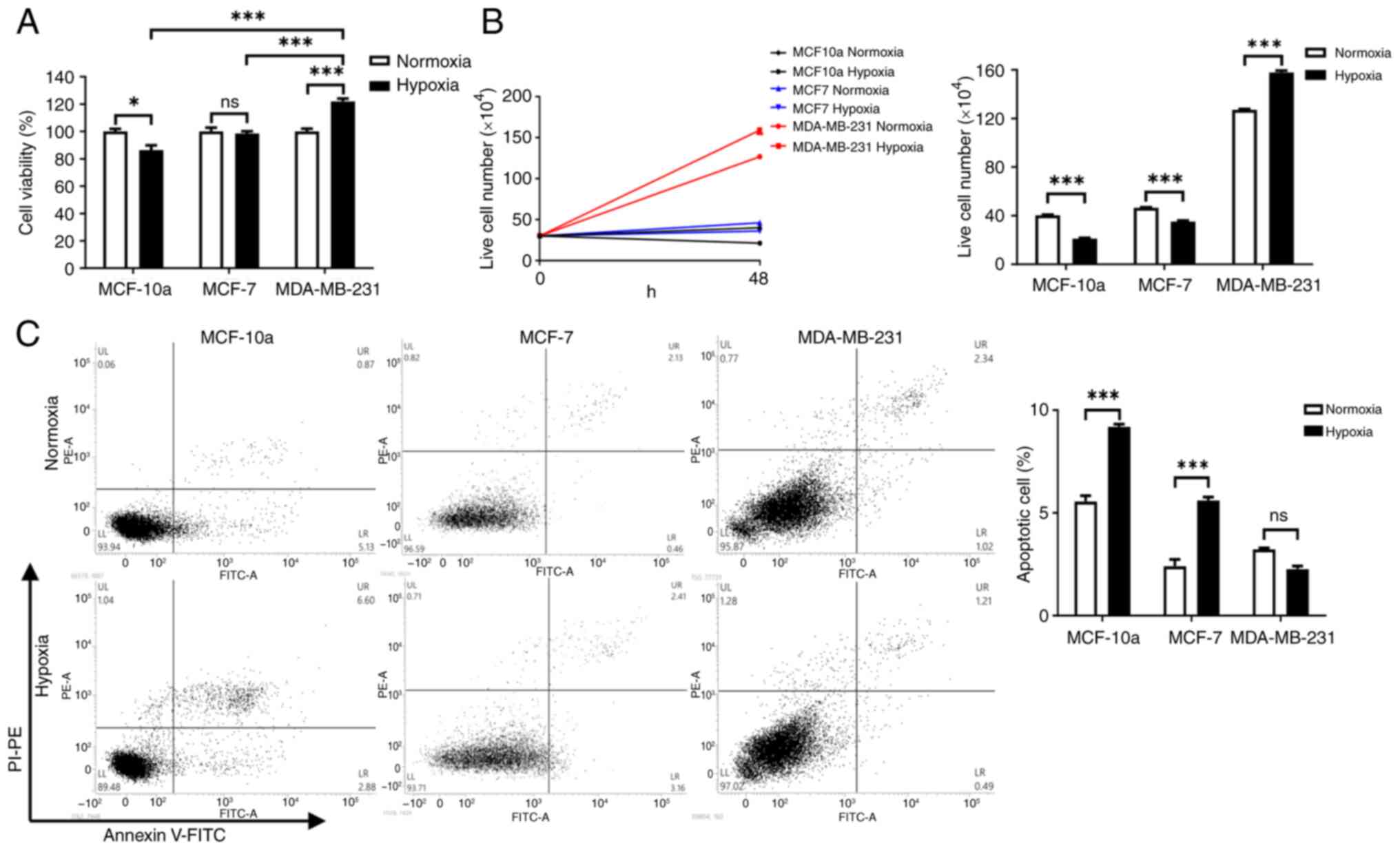
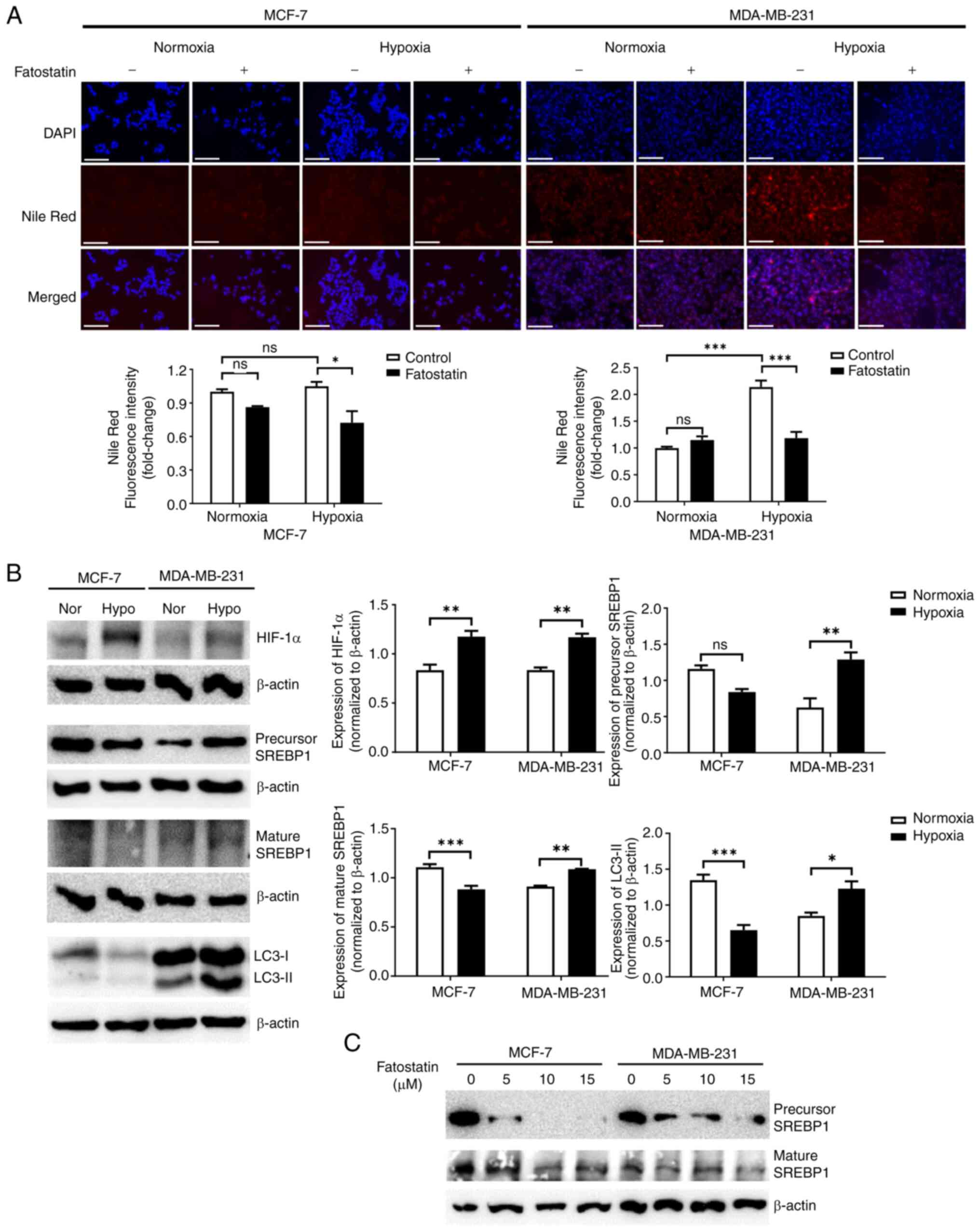
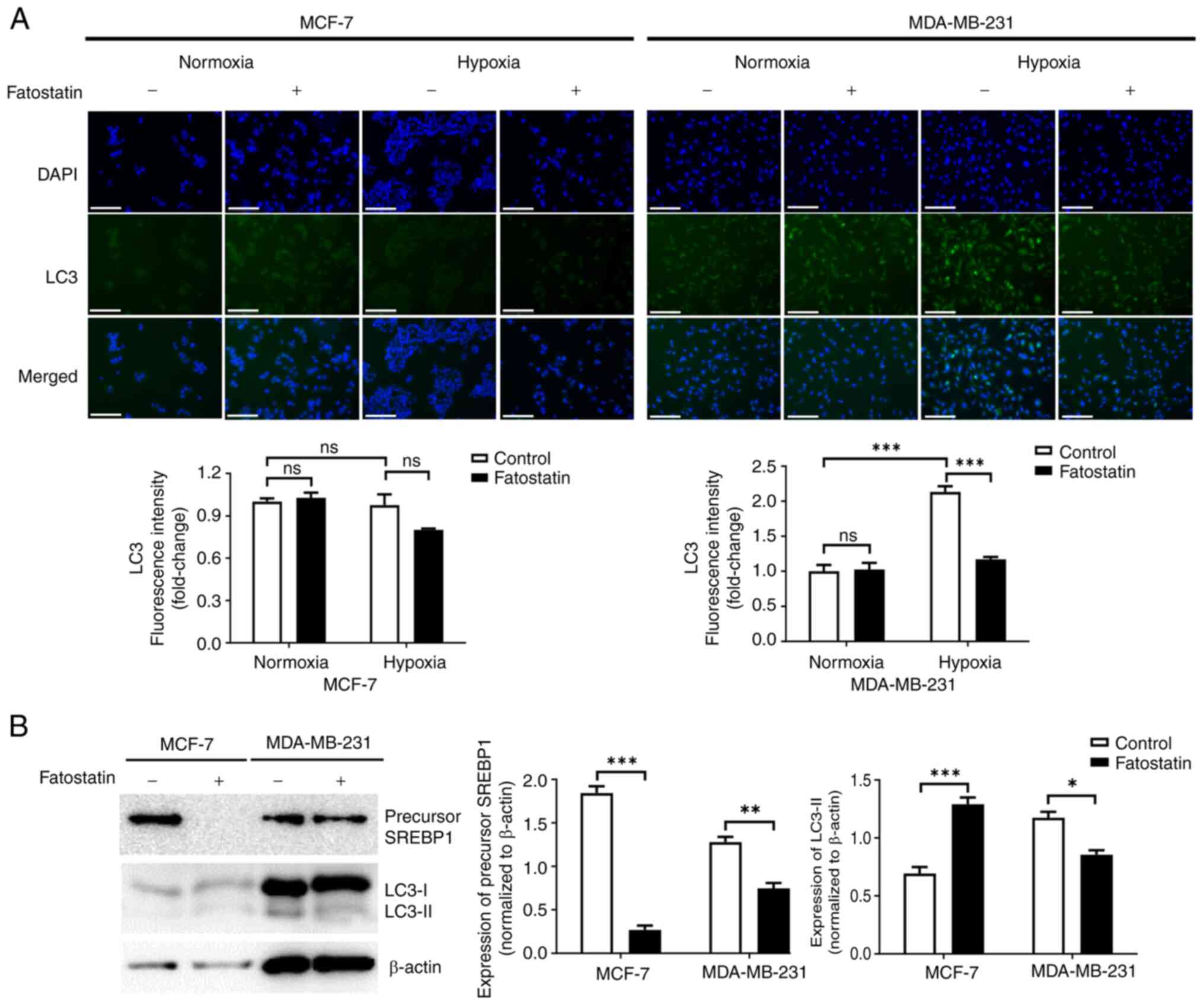
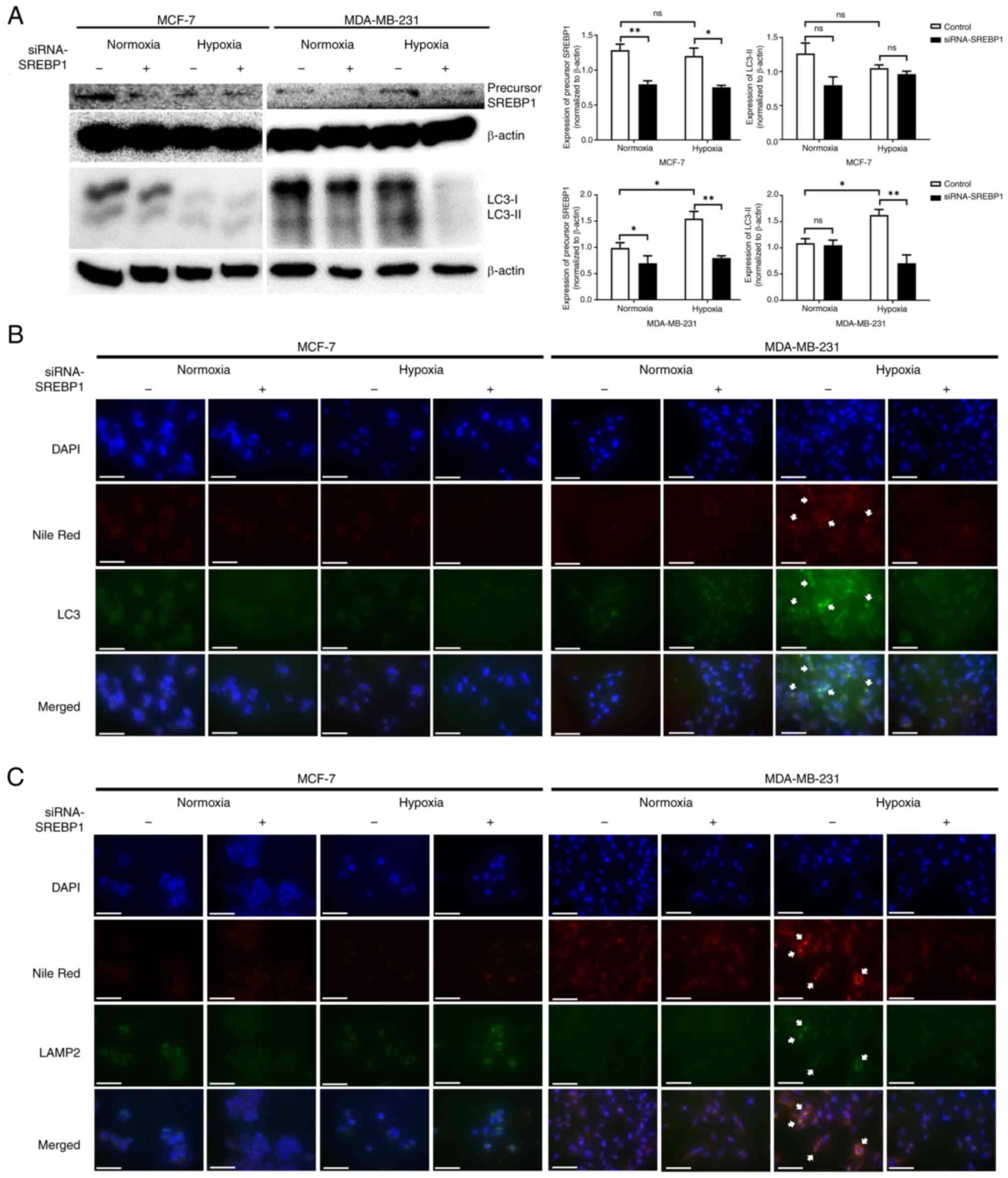
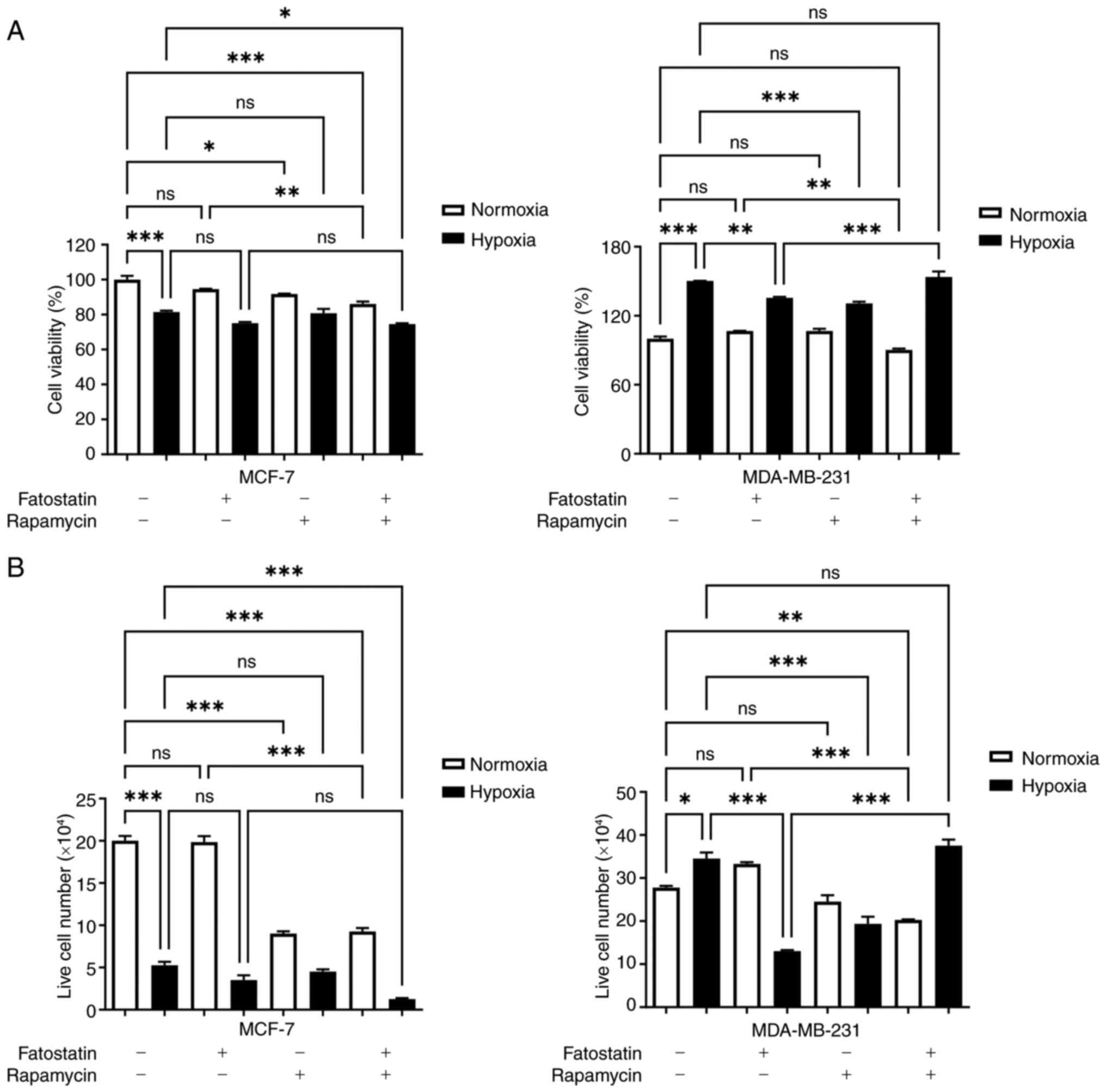
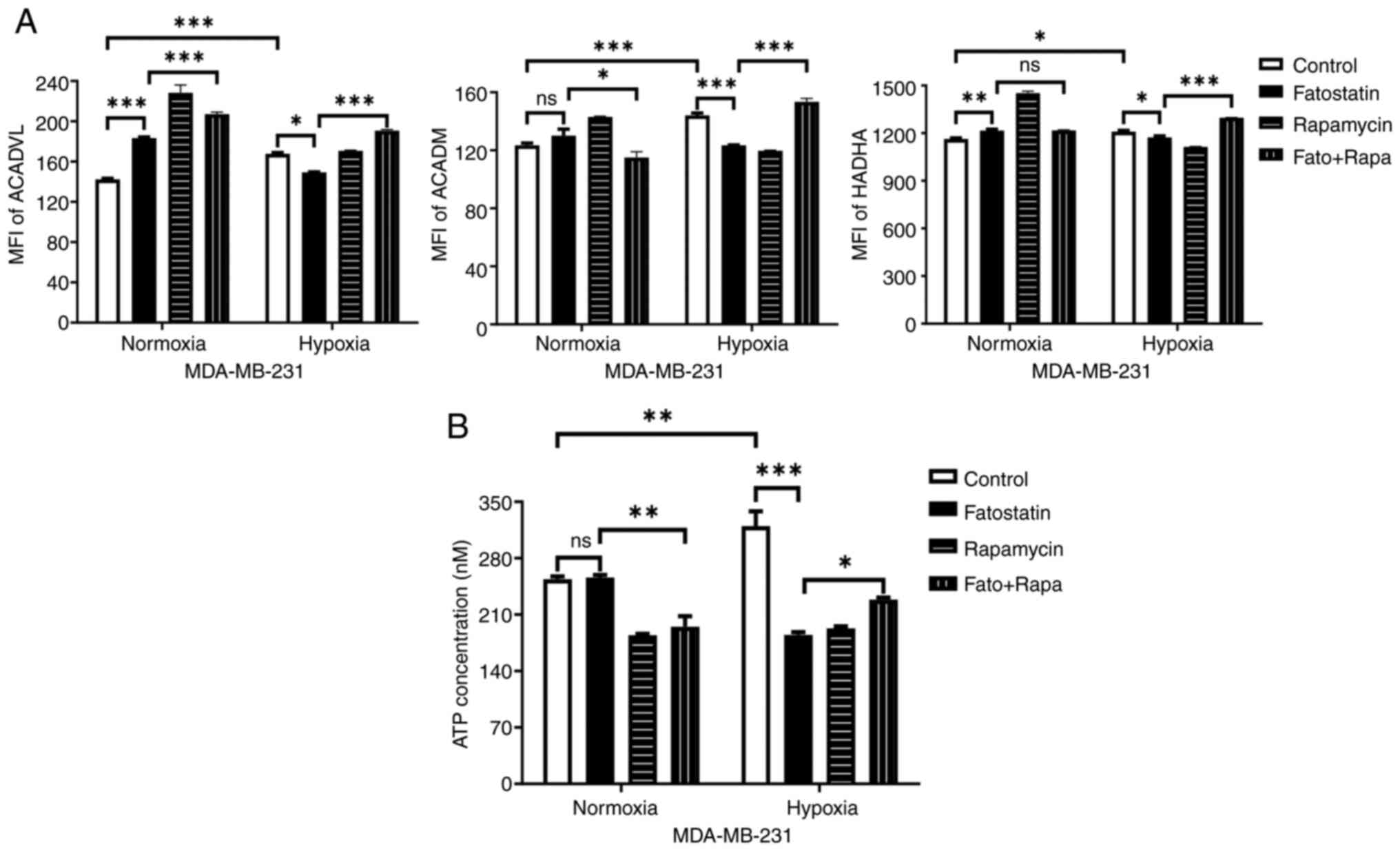
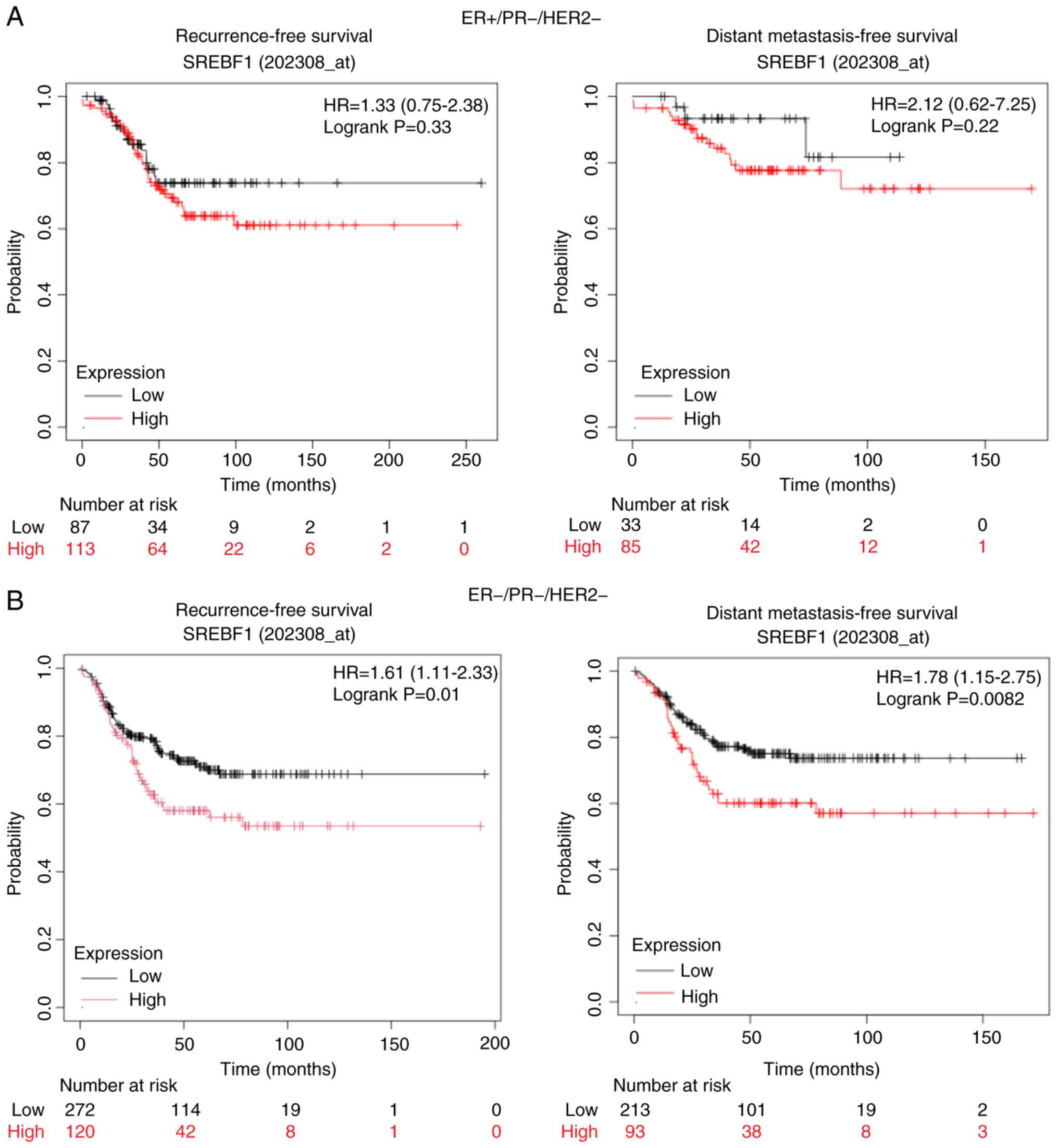
In the hypoxic tumor microenvironment, cancer cells undergo metabolic reprogramming to survive. The present study aimed to assess the effects of hypoxic conditions on the lipid metabolism of breast cancer cells to elucidate the mechanisms by which cancer cells survive in an unfavorable environment. Cell viability was assessed by trypan blue staining, MTT and Annexin V‑PI assays. Intracellular lipid levels were quantified using Nile red stain with immunofluorescence (IF). Autophagy was detected using LC3 antibody, Cyto‑ID stain, IF, Western blotting, and flow cytometry. Fatty acid oxidation (FAO) and ATP production were analyzed using specific assays, while gene expression was assessed by reverse transcription‑polymerase chain reaction. siRNA transfection was used for gene knockdown, and Kaplan‑Meier analysis was performed for survival analysis. Fatostatin and rapamycin served as an inhibitor of sterol regulatory element‑binding protein 1 (SREBP1) and an autophagy inducer, respectively. Under hypoxic conditions, triple‑negative breast cancer (TNBC) MDA‑MB‑231 cells showed markedly increased survival and proliferation rates compared with normal cells (MCF‑10A) and estrogen receptor‑positive cells (MCF‑7), with no change in apoptosis. Under hypoxic conditions, MDA‑MB‑231 cells showed increased expression of lipogenesis, autophagy and FAO‑related enzymes and activation of SREBP1, a key transcription factor for lipogenic genes, whereas these changes were not observed in MCF‑7 cells. When SREBP1 was inhibited with chemical inhibitors and siRNA, the expression of lipogenic, autophagic and FAO‑related enzymes decreased, resulting in reduced ATP production and viability in hypoxic MDA‑MB‑231 cells; however, this effect was restored when an autophagy inducer was added. Kaplan‑Meier analysis demonstrated that higher SREBP1 expression in patients with TNBC was associated with a worse prognosis, suggesting that SREBP1‑mediated reprogramming of lipid metabolism and autophagy under hypoxia is essential for TNBC cell survival. The results of the present study indicate that strategies targeting SREBP1 could be exploited to treat TNBC and improve prognosis.
View Figures

Figure 1

Figure 2

Figure 3

Figure 4

Figure 5

Figure 6

Figure 7

View References

1 

Liu S, Zhang X, Wang W, Li X, Sun X, Zhao Y, Wang Q, Li Y, Hu F and Ren H: Metabolic reprogramming and therapeutic resistance in primary and metastatic breast cancer. Mol Cancer. 23:2612024. View Article : Google Scholar : PubMed/NCBI

2 

Warburg O: On the origin of cancer cells. Science. 123:309–314. 1956. View Article : Google Scholar : PubMed/NCBI

3 

Munir R, Lisec J, Swinnen JV and Zaidi N: Lipid metabolism in cancer cells under metabolic stress. Br J Cancer. 120:1090–1098. 2019. View Article : Google Scholar : PubMed/NCBI

4 

Broadfield LA, Pane AA, Talebi A, Swinnen JV and Fendt SM: Lipid metabolism in cancer: New perspectives and emerging mechanisms. Dev Cell. 56:1363–1393. 2021. View Article : Google Scholar : PubMed/NCBI

5 

Global Burden of Disease 2019 Cancer Collaboration, . Kocarnik JM, Compton K, Dean FE, Fu W, Gaw BL, Harvey JD, Henrikson HJ, Lu D, Pennini A, et al: Cancer incidence, mortality, years of life lost, years lived with disability, and disability-adjusted life years for 29 cancer groups from 2010 to 2019: A systematic analysis for the global burden of disease study 2019. JAMA Oncol. 8:420–444. 2022. View Article : Google Scholar : PubMed/NCBI

6 

Zipinotti dos Santos D, de Souza JC, Pimenta TM, da Silva Martins B, Junior RSR, Butzene SMS, Tessarolo NG, Cilas PML Jr, Silva IV and Rangel LBA: The impact of lipid metabolism on breast cancer: A review about its role in tumorigenesis and immune escape. Cell Commun Signal. 21:1612023. View Article : Google Scholar : PubMed/NCBI

7 

Harborg S, Zachariae R, Olsen J, Johannsen M, Cronin-Fenton D, Bøggild H and Borgquist S: Overweight and prognosis in triple-negative breast cancer patients: A systematic review and meta-analysis. NPJ Breast Cancer. 7:1192021. View Article : Google Scholar : PubMed/NCBI

8 

Kaul K, Misri S, Ramaswamy B and Ganju RK: Contribution of the tumor and obese microenvironment to triple negative breast cancer. Cancer Lett. 509:115–120. 2021. View Article : Google Scholar : PubMed/NCBI

9 

Sun X, Wang M, Wang M, Yu X, Guo J, Sun T, Li X, Yao L, Dong H and Xu Y: Metabolic reprogramming in triple-negative breast cancer. Front Oncol. 10:4282020. View Article : Google Scholar : PubMed/NCBI

10 

Wang Z, Jiang Q and Dong C: Metabolic reprogramming in triple-negative breast cancer. Cancer Biol Med. 17:44–59. 2020. View Article : Google Scholar : PubMed/NCBI

11 

Marino N, German R, Rao X, Simpson E, Liu S, Wan J, Liu Y, Sandusky G, Jacobsen M, Stoval M, et al: Upregulation of lipid metabolism genes in the breast prior to cancer diagnosis. NPJ Breast Cancer. 6:502020. View Article : Google Scholar : PubMed/NCBI

12 

Giró-Perafita A, Palomeras S, Lum DH, Blancafort A, Viñas G, Oliveras G, Pérez-Bueno F, Sarrats A, Welm AL and Puig T: Preclinical evaluation of fatty acid synthase and EGFR inhibition in triple-negative breast cancer. Clin Cancer Res. 22:4687–4697. 2016. View Article : Google Scholar : PubMed/NCBI

13 

Liu X, Zhang P, Xu J, Lv G and Li Y: Lipid metabolism in tumor microenvironment: Novel therapeutic targets. Cancer Cell Int. 22:2242022. View Article : Google Scholar : PubMed/NCBI

14 

Guo D, Bell EH, Mischel P and Chakravarti A: Targeting SREBP-1-driven lipid metabolism to treat cancer. Curr Pharm Des. 20:2619–2626. 2014. View Article : Google Scholar : PubMed/NCBI

15 

Cheng C, Geng F, Cheng X and Guo D: Lipid metabolism reprogramming and its potential targets in cancer. Cancer Commun (Lond). 38:272018.PubMed/NCBI

16 

Griffiths B, Lewis CA, Bensaad K, Ros S, Zhang Q, Ferber EC, Konisti S, Peck B, Miess H, East P, et al: Sterol regulatory element binding protein-dependent regulation of lipid synthesis supports cell survival and tumor growth. Cancer Metab. 1:32013. View Article : Google Scholar : PubMed/NCBI

17 

Lo AKF, Lung RWM, Dawson CW, Young LS, Ko CW, Yeung WW, Kang W, To KF and Lo KW: Activation of sterol regulatory element-binding protein 1 (SREBP1)-mediated lipogenesis by the Epstein-Barr virus-encoded latent membrane protein 1 (LMP1) promotes cell proliferation and progression of nasopharyngeal carcinoma. J Pathol. 246:180–190. 2018. View Article : Google Scholar : PubMed/NCBI

18 

Shi Z, Zhou Q, Gao S, Li W, Li X, Liu Z, Jin P and Jiang J: Silibinin inhibits endometrial carcinoma via blocking pathways of STAT3 activation and SREBP1-mediated lipid accumulation. Life Sci. 217:70–80. 2019. View Article : Google Scholar : PubMed/NCBI

19 

Zhang N, Zhang H, Liu Y, Su P, Zhang J, Wang X, Sun M, Chen B, Zhao W, Wang L, et al: SREBP1, targeted by miR-18a-5p, modulates epithelial-mesenchymal transition in breast cancer via forming a co-repressor complex with Snail and HDAC1/2. Cell Death Differ. 26:843–859. 2019. View Article : Google Scholar : PubMed/NCBI

20 

Mahmud I, Tian G, Wang J, Hutchinson TE, Kim BJ, Awasthee N, Hale S, Meng C, Moore A, Zhao L, et al: DAXX drives de novo lipogenesis and contributes to tumorigenesis. Nat Commun. 14:19272023. View Article : Google Scholar : PubMed/NCBI

21 

Hu P, Zhou P, Sun T, Liu D, Yin J and Liu L: Therapeutic protein PAK restrains the progression of triple negative breast cancer through degrading SREBP-1 mRNA. Breast Cancer Res. 25:1512023. View Article : Google Scholar : PubMed/NCBI

22 

Azam A and Sounni NE: Lipid metabolism heterogeneity and crosstalk with mitochondria functions drive breast cancer progression and drug resistance. Cancers (Basel). 14:62672022. View Article : Google Scholar : PubMed/NCBI

23 

Listenberger LL, Han X, Lewis SE, Cases S, Farese RV Jr, Ory DS and Schaffer JE: Triglyceride accumulation protects against fatty acid-induced lipotoxicity. Proc Natl Acad Sci USA. 100:3077–3082. 2003. View Article : Google Scholar : PubMed/NCBI

24 

Yoon H, Shaw JL, Haigis MC and Greka A: Lipid metabolism in sickness and in health: Emerging regulators of lipotoxicity. Mol Cell. 81:3708–3730. 2021. View Article : Google Scholar : PubMed/NCBI

25 

Lee H, Woo SM, Jang H, Kang M and Kim SY: Cancer depends on fatty acids for ATP production: A possible link between cancer and obesity. Semin Cancer Biol. 86:347–357. 2022. View Article : Google Scholar : PubMed/NCBI

26 

Ping P, Li J, Lei H and Xu X: Fatty acid metabolism: A new therapeutic target for cervical cancer. Front Oncol. 13:11117782023. View Article : Google Scholar : PubMed/NCBI

27 

Miller DM and Shakes DC: Immunofluorescence microscopy. Methods Cell Biol. 48:365–394. 1995. View Article : Google Scholar : PubMed/NCBI

28 

Livak KJ and Schmittgen TD: Analysis of relative gene expression data using real-time quantitative PCR and the 2(−Delta Delta C(T)) method. Methods. 25:402–408. 2001. View Article : Google Scholar : PubMed/NCBI

29 

Ghosh R, Gilda JE and Gomes AV: The necessity of and strategies for improving confidence in the accuracy of western blots. Expert Rev Proteomics. 11:549–560. 2014. View Article : Google Scholar : PubMed/NCBI

30 

Mizushima N, Yoshimori T and Levine B: Methods in mammalian autophagy research. Cell. 140:313–326. 2010. View Article : Google Scholar : PubMed/NCBI

31 

Mulcahy Levy JM and Thorburn A: Autophagy in cancer: Moving from understanding mechanism to improving therapy responses in patients. Cell Death Differ. 27:843–857. 2020. View Article : Google Scholar : PubMed/NCBI

32 

Daskalaki I, Gkikas I and Tavernarakis N: Hypoxia and selective autophagy in cancer development and therapy. Front Cell Dev Biol. 6:1042018. View Article : Google Scholar : PubMed/NCBI

33 

Hanahan D and Weinberg RA: Hallmarks of cancer: The next generation. Cell. 144:646–674. 2011. View Article : Google Scholar : PubMed/NCBI

34 

Finger EC and Giaccia AJ: Hypoxia, inflammation, and the tumor microenvironment in metastatic disease. Cancer Metastasis Rev. 29:285–293. 2010. View Article : Google Scholar : PubMed/NCBI

35 

Zhang Y, Zhang H, Wang M, Schmid T, Xin L, Kozhuharova L, Yu WK, Huang Y, Cai F and Biskup E: Hypoxia in breast cancer-scientific translation to therapeutic and diagnostic clinical applications. Front Oncol. 11:6522662021. View Article : Google Scholar : PubMed/NCBI

36 

Cancer Genome Atlas Network, . Comprehensive molecular portraits of human breast tumours. Nature. 490:61–70. 2012. View Article : Google Scholar : PubMed/NCBI

37 

Todd BL, Stewart EV, Burg JS, Hughes AL and Espenshade PJ: Sterol regulatory element binding protein is a principal regulator of anaerobic gene expression in fission yeast. Mol Cell Biol. 26:2817–2831. 2006. View Article : Google Scholar : PubMed/NCBI

38 

Bensaad K, Favaro E, Lewis CA, Peck B, Lord S, Collins JM, Pinnick KE, Wigfield S, Buffa FM, Li JL, et al: Fatty acid uptake and lipid storage induced by HIF-1α contribute to cell growth and survival after hypoxia-reoxygenation. Cell Rep. 9:349–365. 2014. View Article : Google Scholar : PubMed/NCBI

39 

Lewis C, Brault C, Peck B, Bensaad K, Griffiths B, Mitter R, Chakravarty P, East P, Dankworth B, Alibhai D, et al: SREBP maintains lipid biosynthesis and viability of cancer cells under lipid- and oxygen-deprived conditions and defines a gene signature associated with poor survival in glioblastoma multiforme. Oncogene. 34:5128–5140. 2015. View Article : Google Scholar : PubMed/NCBI

40 

Li W, He P, Huang YF, Li Y, Lu J, Li M, Kurihara H, Luo Z, Meng T, Onishi M, et al: Selective autophagy of intracellular organelles: Recent research advances. Theranostics. 11:222–256. 2021. View Article : Google Scholar : PubMed/NCBI

41 

Soto-Avellaneda A and Morrison BE: Signaling and other functions of lipids in autophagy: A review. Lipids Health Dis. 19:2142020. View Article : Google Scholar : PubMed/NCBI

42 

Yan Q, Song Y, Zhang L, Chen Z, Yang C, Liu S, Yuan X, Gao H, Ding G and Wang H: Autophagy activation contributes to lipid accumulation in tubular epithelial cells during kidney fibrosis. Cell Death Discov. 4:22018. View Article : Google Scholar : PubMed/NCBI

43 

Zhou C, Qian W, Li J, Ma J, Chen X, Jiang Z, Cheng L, Duan W, Wang Z, Wu Z, et al: High glucose microenvironment accelerates tumor growth via SREBP1-autophagy axis in pancreatic cancer. J Exp Clin Cancer Res. 38:3022019. View Article : Google Scholar : PubMed/NCBI

44 

Singh R, Kaushik S, Wang Y, Xiang Y, Novak I, Komatsu M, Tanaka K, Cuervo AM and Czaja MJ: Autophagy regulates lipid metabolism. Nature. 458:1131–1135. 2009. View Article : Google Scholar : PubMed/NCBI

45 

Pham DV, Tilija Pun N and Park PH: Autophagy activation and SREBP-1 induction contribute to fatty acid metabolic reprogramming by leptin in breast cancer cells. Mol Oncol. 15:657–678. 2021. View Article : Google Scholar : PubMed/NCBI

46 

Chandel NS, Budinger GR, Choe SH and Schumacker PT: Cellular respiration during hypoxia. Role of cytochrome oxidase as the oxygen sensor in hepatocytes. J Biol Chem. 272:18808–18816. 1997. View Article : Google Scholar : PubMed/NCBI

47 

Ashton TM, McKenna WG, Kunz-Schughart LA and Higgins GS: Oxidative phosphorylation as an emerging target in cancer therapy. Clin Cancer Res. 24:2482–2490. 2018. View Article : Google Scholar : PubMed/NCBI

Related Articles

  • Abstract
  • View
  • Download
  • Twitter
Copy and paste a formatted citation
Spandidos Publications style
Jung J, Yang Y and Kim Y: Hypoxia‑induced SREBP1‑mediated lipogenesis and autophagy promote cell survival via fatty acid oxidation in breast cancer cells. Oncol Lett 29: 175, 2025.
APA
Jung, J., Yang, Y., & Kim, Y. (2025). Hypoxia‑induced SREBP1‑mediated lipogenesis and autophagy promote cell survival via fatty acid oxidation in breast cancer cells. Oncology Letters, 29, 175. https://doi.org/10.3892/ol.2025.14921
MLA
Jung, J., Yang, Y., Kim, Y."Hypoxia‑induced SREBP1‑mediated lipogenesis and autophagy promote cell survival via fatty acid oxidation in breast cancer cells". Oncology Letters 29.4 (2025): 175.
Chicago
Jung, J., Yang, Y., Kim, Y."Hypoxia‑induced SREBP1‑mediated lipogenesis and autophagy promote cell survival via fatty acid oxidation in breast cancer cells". Oncology Letters 29, no. 4 (2025): 175. https://doi.org/10.3892/ol.2025.14921
Copy and paste a formatted citation
x
Spandidos Publications style
Jung J, Yang Y and Kim Y: Hypoxia‑induced SREBP1‑mediated lipogenesis and autophagy promote cell survival via fatty acid oxidation in breast cancer cells. Oncol Lett 29: 175, 2025.
APA
Jung, J., Yang, Y., & Kim, Y. (2025). Hypoxia‑induced SREBP1‑mediated lipogenesis and autophagy promote cell survival via fatty acid oxidation in breast cancer cells. Oncology Letters, 29, 175. https://doi.org/10.3892/ol.2025.14921
MLA
Jung, J., Yang, Y., Kim, Y."Hypoxia‑induced SREBP1‑mediated lipogenesis and autophagy promote cell survival via fatty acid oxidation in breast cancer cells". Oncology Letters 29.4 (2025): 175.
Chicago
Jung, J., Yang, Y., Kim, Y."Hypoxia‑induced SREBP1‑mediated lipogenesis and autophagy promote cell survival via fatty acid oxidation in breast cancer cells". Oncology Letters 29, no. 4 (2025): 175. https://doi.org/10.3892/ol.2025.14921
Follow us
  • Twitter
  • LinkedIn
  • Facebook
About
  • Spandidos Publications
  • Careers
  • Cookie Policy
  • Privacy Policy
How can we help?
  • Help
  • Live Chat
  • Contact
  • Email to our Support Team