Spandidos Publications Logo
  • About
    • About Spandidos
    • Aims and Scopes
    • Abstracting and Indexing
    • Editorial Policies
    • Reprints and Permissions
    • Job Opportunities
    • Terms and Conditions
    • Contact
  • Journals
    • All Journals
    • Oncology Letters
      • Oncology Letters
      • Information for Authors
      • Editorial Policies
      • Editorial Board
      • Aims and Scope
      • Abstracting and Indexing
      • Bibliographic Information
      • Archive
    • International Journal of Oncology
      • International Journal of Oncology
      • Information for Authors
      • Editorial Policies
      • Editorial Board
      • Aims and Scope
      • Abstracting and Indexing
      • Bibliographic Information
      • Archive
    • Molecular and Clinical Oncology
      • Molecular and Clinical Oncology
      • Information for Authors
      • Editorial Policies
      • Editorial Board
      • Aims and Scope
      • Abstracting and Indexing
      • Bibliographic Information
      • Archive
    • Experimental and Therapeutic Medicine
      • Experimental and Therapeutic Medicine
      • Information for Authors
      • Editorial Policies
      • Editorial Board
      • Aims and Scope
      • Abstracting and Indexing
      • Bibliographic Information
      • Archive
    • International Journal of Molecular Medicine
      • International Journal of Molecular Medicine
      • Information for Authors
      • Editorial Policies
      • Editorial Board
      • Aims and Scope
      • Abstracting and Indexing
      • Bibliographic Information
      • Archive
    • Biomedical Reports
      • Biomedical Reports
      • Information for Authors
      • Editorial Policies
      • Editorial Board
      • Aims and Scope
      • Abstracting and Indexing
      • Bibliographic Information
      • Archive
    • Oncology Reports
      • Oncology Reports
      • Information for Authors
      • Editorial Policies
      • Editorial Board
      • Aims and Scope
      • Abstracting and Indexing
      • Bibliographic Information
      • Archive
    • Molecular Medicine Reports
      • Molecular Medicine Reports
      • Information for Authors
      • Editorial Policies
      • Editorial Board
      • Aims and Scope
      • Abstracting and Indexing
      • Bibliographic Information
      • Archive
    • World Academy of Sciences Journal
      • World Academy of Sciences Journal
      • Information for Authors
      • Editorial Policies
      • Editorial Board
      • Aims and Scope
      • Abstracting and Indexing
      • Bibliographic Information
      • Archive
    • International Journal of Functional Nutrition
      • International Journal of Functional Nutrition
      • Information for Authors
      • Editorial Policies
      • Editorial Board
      • Aims and Scope
      • Abstracting and Indexing
      • Bibliographic Information
      • Archive
    • International Journal of Epigenetics
      • International Journal of Epigenetics
      • Information for Authors
      • Editorial Policies
      • Editorial Board
      • Aims and Scope
      • Abstracting and Indexing
      • Bibliographic Information
      • Archive
    • Medicine International
      • Medicine International
      • Information for Authors
      • Editorial Policies
      • Editorial Board
      • Aims and Scope
      • Abstracting and Indexing
      • Bibliographic Information
      • Archive
  • Articles
  • Information
    • Information for Authors
    • Information for Reviewers
    • Information for Librarians
    • Information for Advertisers
    • Conferences
  • Language Editing
Spandidos Publications Logo
  • About
    • About Spandidos
    • Aims and Scopes
    • Abstracting and Indexing
    • Editorial Policies
    • Reprints and Permissions
    • Job Opportunities
    • Terms and Conditions
    • Contact
  • Journals
    • All Journals
    • Biomedical Reports
      • Information for Authors
      • Editorial Policies
      • Editorial Board
      • Aims and Scope
      • Abstracting and Indexing
      • Bibliographic Information
      • Archive
    • Experimental and Therapeutic Medicine
      • Information for Authors
      • Editorial Policies
      • Editorial Board
      • Aims and Scope
      • Abstracting and Indexing
      • Bibliographic Information
      • Archive
    • International Journal of Epigenetics
      • Information for Authors
      • Editorial Policies
      • Editorial Board
      • Aims and Scope
      • Abstracting and Indexing
      • Bibliographic Information
      • Archive
    • International Journal of Functional Nutrition
      • Information for Authors
      • Editorial Policies
      • Editorial Board
      • Aims and Scope
      • Abstracting and Indexing
      • Bibliographic Information
      • Archive
    • International Journal of Molecular Medicine
      • Information for Authors
      • Editorial Policies
      • Editorial Board
      • Aims and Scope
      • Abstracting and Indexing
      • Bibliographic Information
      • Archive
    • International Journal of Oncology
      • Information for Authors
      • Editorial Policies
      • Editorial Board
      • Aims and Scope
      • Abstracting and Indexing
      • Bibliographic Information
      • Archive
    • Medicine International
      • Information for Authors
      • Editorial Policies
      • Editorial Board
      • Aims and Scope
      • Abstracting and Indexing
      • Bibliographic Information
      • Archive
    • Molecular and Clinical Oncology
      • Information for Authors
      • Editorial Policies
      • Editorial Board
      • Aims and Scope
      • Abstracting and Indexing
      • Bibliographic Information
      • Archive
    • Molecular Medicine Reports
      • Information for Authors
      • Editorial Policies
      • Editorial Board
      • Aims and Scope
      • Abstracting and Indexing
      • Bibliographic Information
      • Archive
    • Oncology Letters
      • Information for Authors
      • Editorial Policies
      • Editorial Board
      • Aims and Scope
      • Abstracting and Indexing
      • Bibliographic Information
      • Archive
    • Oncology Reports
      • Information for Authors
      • Editorial Policies
      • Editorial Board
      • Aims and Scope
      • Abstracting and Indexing
      • Bibliographic Information
      • Archive
    • World Academy of Sciences Journal
      • Information for Authors
      • Editorial Policies
      • Editorial Board
      • Aims and Scope
      • Abstracting and Indexing
      • Bibliographic Information
      • Archive
  • Articles
  • Information
    • For Authors
    • For Reviewers
    • For Librarians
    • For Advertisers
    • Conferences
  • Language Editing
Login Register Submit
  • This site uses cookies
  • You can change your cookie settings at any time by following the instructions in our Cookie Policy. To find out more, you may read our Privacy Policy.

    I agree
Search articles by DOI, keyword, author or affiliation
Search
Advanced Search
presentation
Oncology Letters
Join Editorial Board Propose a Special Issue
Print ISSN: 1792-1074 Online ISSN: 1792-1082
Journal Cover
November-2025 Volume 30 Issue 5

Full Size Image

Sign up for eToc alerts
Recommend to Library

Journals

International Journal of Molecular Medicine

International Journal of Molecular Medicine

International Journal of Molecular Medicine is an international journal devoted to molecular mechanisms of human disease.

International Journal of Oncology

International Journal of Oncology

International Journal of Oncology is an international journal devoted to oncology research and cancer treatment.

Molecular Medicine Reports

Molecular Medicine Reports

Covers molecular medicine topics such as pharmacology, pathology, genetics, neuroscience, infectious diseases, molecular cardiology, and molecular surgery.

Oncology Reports

Oncology Reports

Oncology Reports is an international journal devoted to fundamental and applied research in Oncology.

Experimental and Therapeutic Medicine

Experimental and Therapeutic Medicine

Experimental and Therapeutic Medicine is an international journal devoted to laboratory and clinical medicine.

Oncology Letters

Oncology Letters

Oncology Letters is an international journal devoted to Experimental and Clinical Oncology.

Biomedical Reports

Biomedical Reports

Explores a wide range of biological and medical fields, including pharmacology, genetics, microbiology, neuroscience, and molecular cardiology.

Molecular and Clinical Oncology

Molecular and Clinical Oncology

International journal addressing all aspects of oncology research, from tumorigenesis and oncogenes to chemotherapy and metastasis.

World Academy of Sciences Journal

World Academy of Sciences Journal

Multidisciplinary open-access journal spanning biochemistry, genetics, neuroscience, environmental health, and synthetic biology.

International Journal of Functional Nutrition

International Journal of Functional Nutrition

Open-access journal combining biochemistry, pharmacology, immunology, and genetics to advance health through functional nutrition.

International Journal of Epigenetics

International Journal of Epigenetics

Publishes open-access research on using epigenetics to advance understanding and treatment of human disease.

Medicine International

Medicine International

An International Open Access Journal Devoted to General Medicine.

Journal Cover
November-2025 Volume 30 Issue 5

Full Size Image

Sign up for eToc alerts
Recommend to Library

  • Article
  • Citations
    • Cite This Article
    • Download Citation
    • Create Citation Alert
    • Remove Citation Alert
    • Cited By
  • Similar Articles
    • Related Articles (in Spandidos Publications)
    • Similar Articles (Google Scholar)
    • Similar Articles (PubMed)
  • Download PDF
  • Download XML
  • View XML
Article Open Access

ARHGEF6 downregulation as a key mediator of tumor cell apoptosis in breast cancer

  • Authors:
    • Yang Zhang
    • Dandan Zhou
    • Xuting Shen
    • Qinqin Song
    • Liuyang Yang
    • Wenbo Li
    • Xinxin Zhao
    • Wenxiang Fang
    • Bian Liu
    • Chencen Xing
    • Jisong Liu
    • Haoshu Fang
    • Qilun Zhang
  • View Affiliations / Copyright

    Affiliations: Department of Central Laboratory, The Third People's Hospital of Bengbu Affiliated to Bengbu Medical University, Bengbu, Anhui 233000, P.R. China, Department of Critical Care Medicine, Shanghai East Hospital, Tongji University School of Medicine, Shanghai 200120, P.R. China, Department of Pathophysiology, Anhui Medical University, Hefei, Anhui 230032, P.R. China, Department of Burn and Plastic Surgery, The Third People's Hospital of Bengbu Affiliated to Bengbu Medical University, Bengbu, Anhui 233000, P.R. China, Core Facility Center for Medical Sciences, The First Affiliated Hospital of USTC, Division of Life Sciences and Medicine, University of Science and Technology of China, Hefei, Anhui 230001, P.R. China, Animal Experiment Center, The First Affiliated Hospital of USTC, Division of Life Sciences and Medicine, University of Science and Technology of China, Hefei, Anhui 230001, P.R. China, Department of Medical Education, The Fifth People's Hospital of Bengbu, Bengbu, Anhui 233000, P.R. China
    Copyright: © Zhang et al. This is an open access article distributed under the terms of Creative Commons Attribution License.
  • Article Number: 522
    |
    Published online on: September 12, 2025
       https://doi.org/10.3892/ol.2025.15268
  • Expand metrics +
Metrics: Total Views: 0 (Spandidos Publications: | PMC Statistics: )
Metrics: Total PDF Downloads: 0 (Spandidos Publications: | PMC Statistics: )
Cited By (CrossRef): 0 citations Loading Articles...

This article is mentioned in:


Abstract

The present study aimed to identify novel clinical biomarkers for breast cancer (BRCA) through bioinformatics analyses and cellular experiments, due to the ongoing need for improved diagnosis and prognosis in BRCA. The GSE21422 and The Cancer Genome Atlas‑BRCA (TCGA‑BRCA) datasets were utilized to identify differentially expressed genes (DEGs) in BRCA. Common DEGs were subjected to comprehensive analyses, including risk score modeling, expression profiling, receiver operating characteristic curve evaluation, survival analysis and the development of a prognostic nomogram, to pinpoint clinically significant genes. Cellular assays were subsequently performed to investigate the functional roles of these key genes in BRCA. Through bioinformatics analyses, 5 genes with diagnostic value were identified: Aldehyde dehydrogenase 1 family member A1 (ALDH1A1), Rac/Cdc42 guanine nucleotide exchange factor 6 (ARHGEF6), enhancer of zeste 2 polycomb repressive complex 2 subunit, integrin α1 (ITGA1) and PIK3R1, as well as 3 genes with prognostic value: ALDH1A1, ARHGEF6 and ITGA1. Among them, ARHGEF6 was recognized as the key gene in BRCA. Overexpression of ARHGEF6 was shown to suppress cell proliferation, invasion and migration, while promoting apoptosis in BRCA. In conclusion, by bioinformatics analysis, new diagnostic and prognostic biomarkers for patients with BRCA have been identified and the key gene, ARHGEF6, is a suppressor gene in BRCA progression. These findings provide new directions for BRCA clinical application.
View Figures

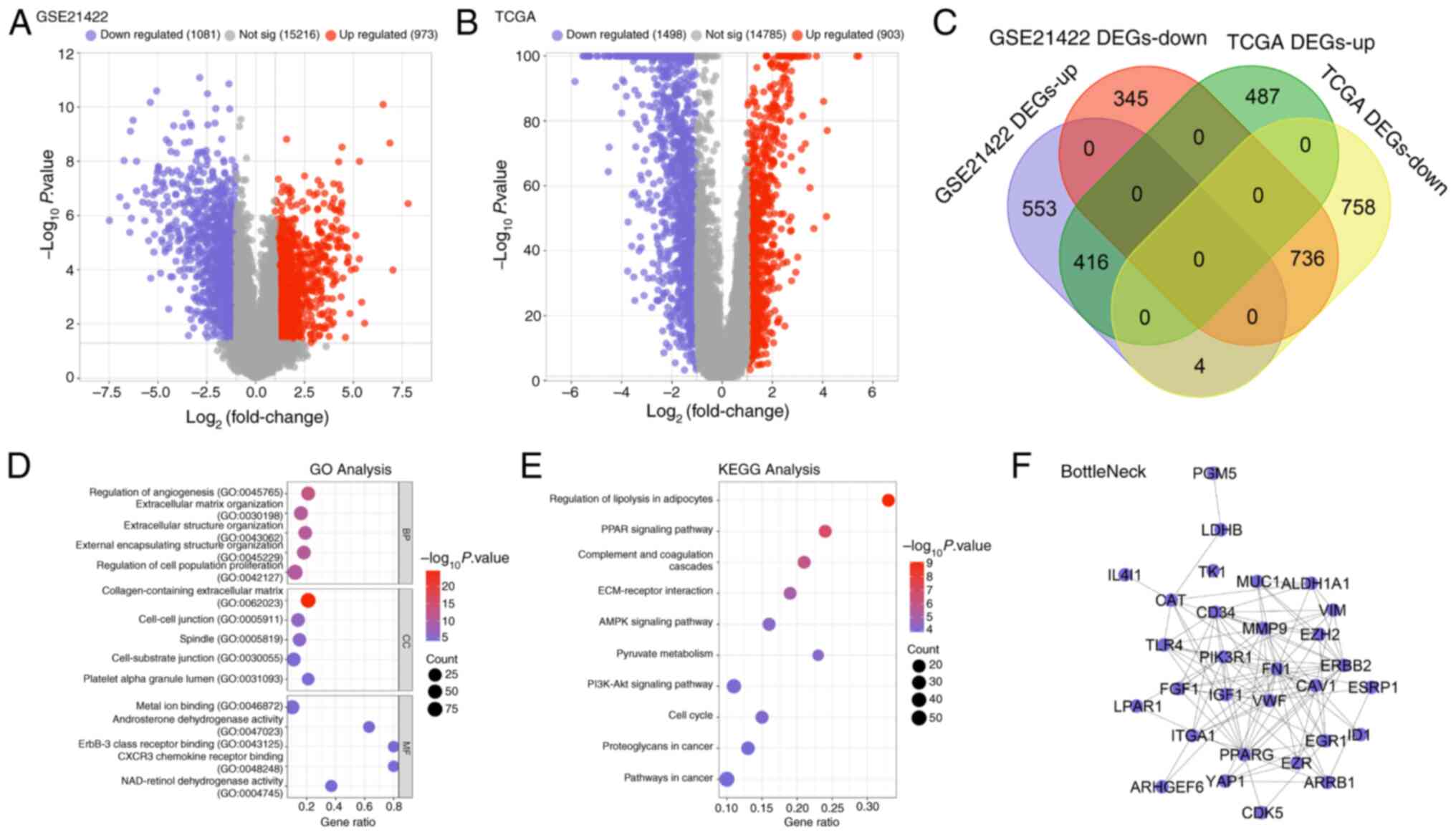
Figure 1

Overlapping DEGs were obtained from
GSE21422 and TCGA datasets. (A) DEGs in the GSE21422 dataset
includes 1,081 downregulated genes, 973 upregulated genes and
15,216 non-significant genes. (B) DEGs in TCGA dataset includes 903
upregulated genes, 1,498 downregulated genes and 14,785
non-significant genes. (C) The Venn diagram of overlapping DEGs
from the GSE21422 and TCGA datasets. Purple represents upregulated
GSE21422 DEGs, orange represents downregulated GSE21422 DEGs, green
represents upregulated TCGA DEGs and yellow represents
downregulated TCGA DEGs. (D) The enriched GO terms of overlapping
DEGs, including BP, CC and MF. (E) The enriched KEGG pathways of
the overlapping DEGs. (F) The protein-protein interaction network
of overlapping DEGs analyzed by BottleNeck algorithm, with 30
nodes. DEGs, differentially expressed genes; TCGA, The Cancer
Genome Atlas; GO, Gene Ontology; BP, Biological Process; CC, Cell
Component; MF, Molecular Function; KEGG, Kyoto Encyclopedia of
Genes and Genomes.

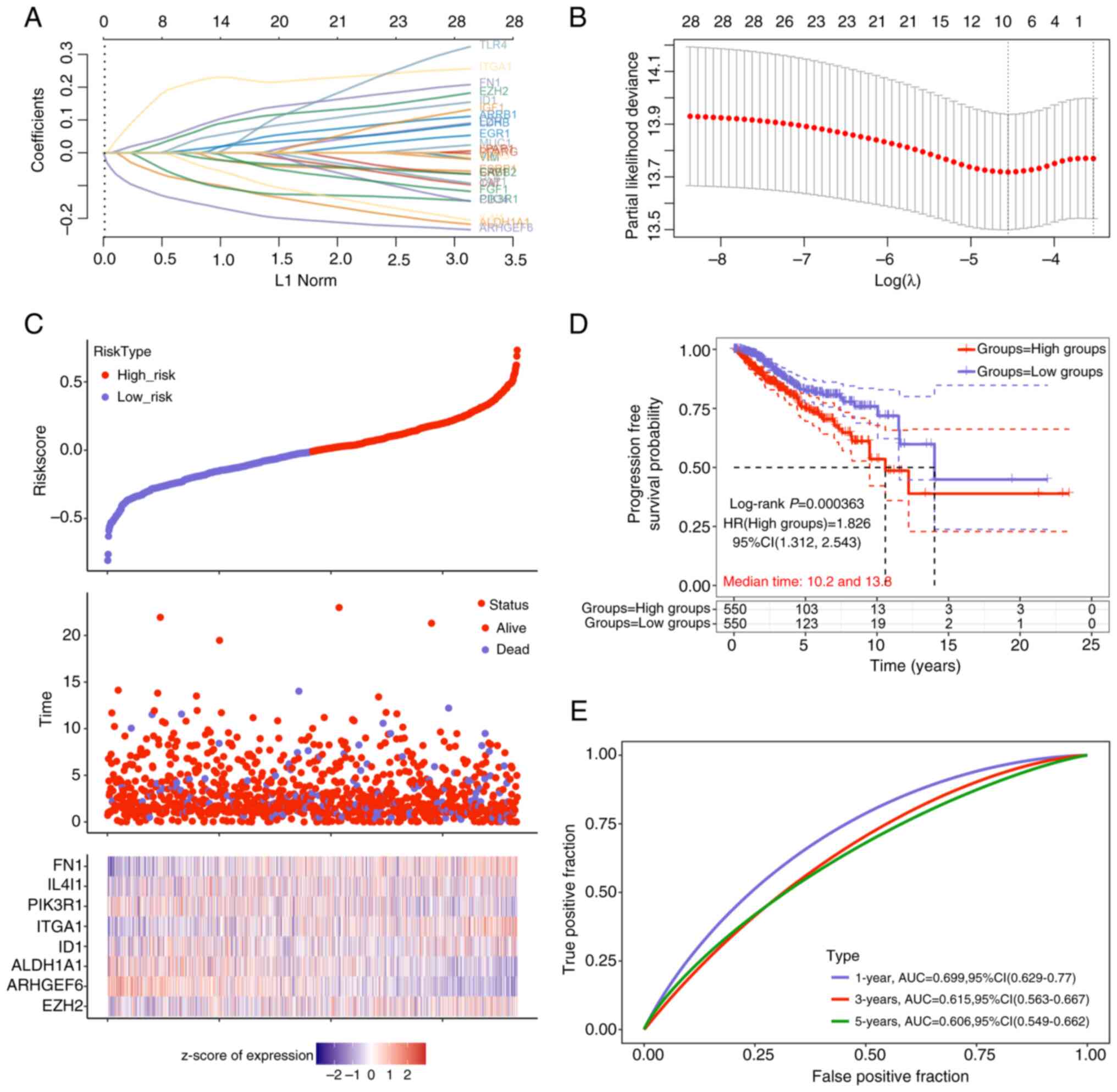
Figure 2

Prognostic signature genes were
identified by the risk score model. (A) Detailed table shows the
feature gene selection corresponding to the λmin value.
Each row represents a feature gene, and the columns include the
gene name and its corresponding coefficient. (B) The LASSO
regression coefficient plot illustrates the selection of 8
signature genes out of the 30 interactive genes. The vertical axis
represents the coefficient magnitude, and the horizontal axis
represents log(λ) values, where λ is the regularization parameter.
The vertical line at λmin indicates the selection of the
feature genes. (C) Risk score (top), survival time (middle) and
signature gene expression (bottom) from the low-risk group to
high-risk group. (D) Kaplan-Meier survival curve based on
progression-free survival reveals a significantly worse prognosis
in the high-risk group, indicating the prognostic risk model's
capability. (E) AUC values from the ROC curve analysis demonstrate
good predictive accuracy of the risk model for survival at 1, 3 and
5 years, with the highest prediction accuracy observed at the
1-year mark (AUC=0.699). LASSO, Least Absolute Shrinkage and
Selection Operator; AUC, area under the curve; HR, hazard ratio;
CI, confidence interval.

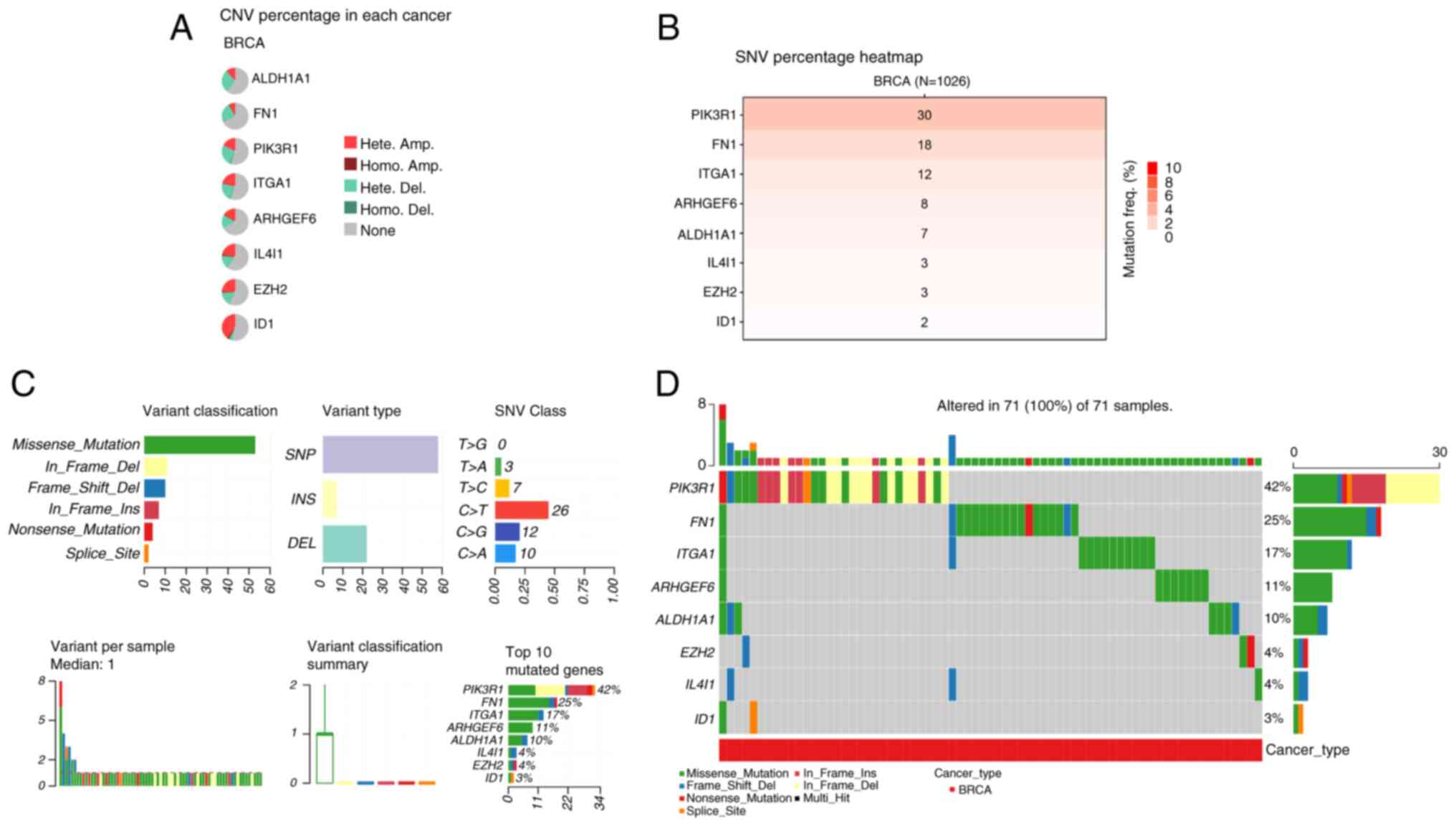
Figure 3

Gene mutation analysis of 8 signature
genes in BRCA. (A) The CNV percentage of 8 signature genes in BRCA
samples was evaluated to assess the genomic alterations. (B) A
heatmap displaying the SNV percentage of the 8 signature genes in
breast cancer samples (n=1,026) was generated to visualize the
mutation frequency. (C) The gene mutation details of signature
genes, including variant classification, variant type, SNV Class,
variants per sample, variant classification summary and the top 10
mutated genes. (D) The mutation types of 8 signature genes altered
in 71 (100%) of 71 BRCA samples. BRCA, breast cancer; CNV, copy
number variation; Hete Amp, heterozygous amplification; Homo Amp,
homozygous amplification; Hete Del, heterozygous deletion; Homo
Del, homozygous deletion; SNV, single nucleotide variant.

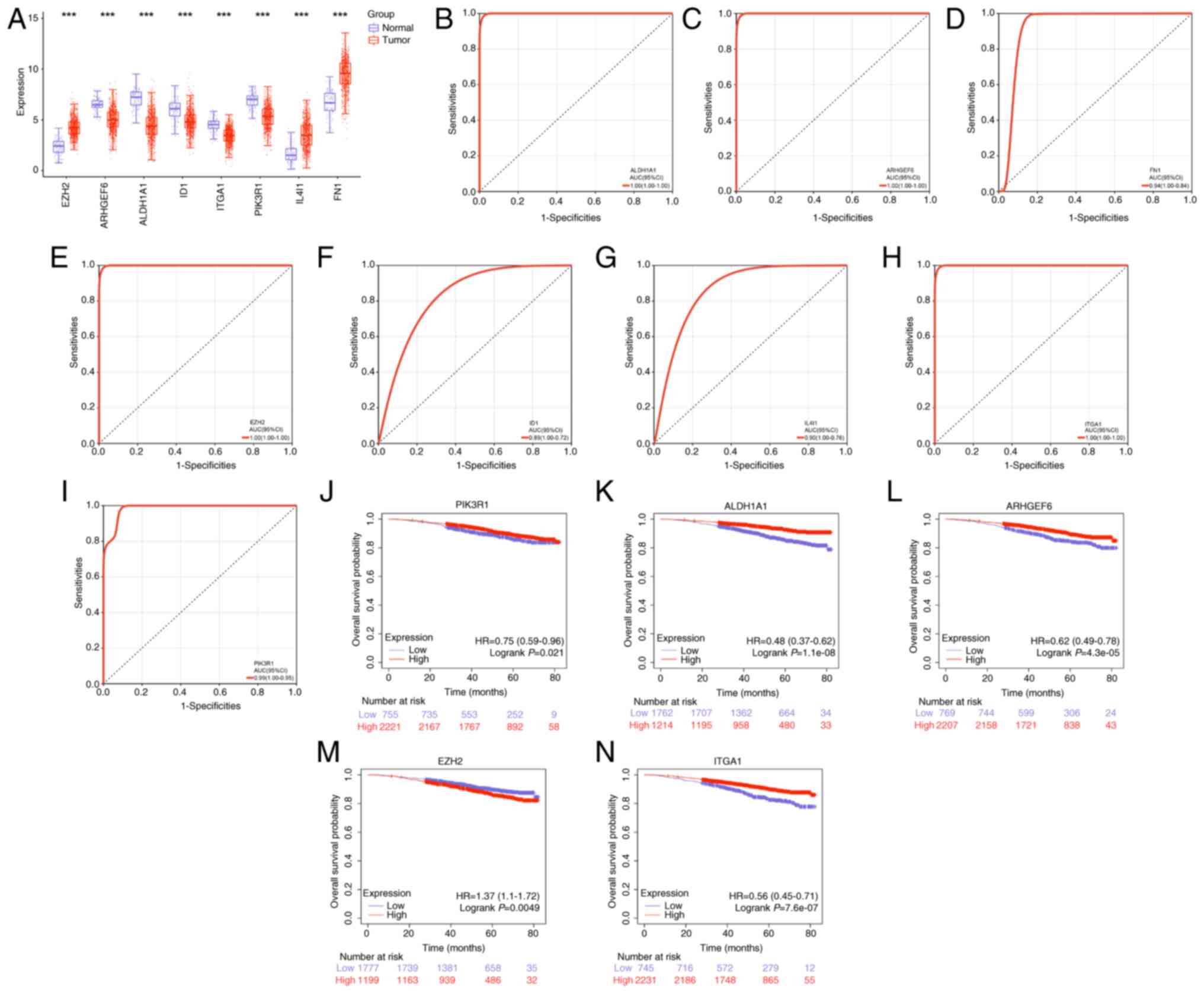
Figure 4

Candidate genes with diagnostic and
prognostic value in BRCA were identified. (A) The expression levels
of 8 signature genes in normal and BRCA tumor groups. (B-I) The
receiver operating calibration curve analysis of 8 signature genes.
The top 5 genes with the highest AUC values are ALDH1A1, ARHGEF6,
EZH2, ITGA1 and PIK3R1. (J-N) The Kaplan-Meier survival analysis of
PIK3R1, ALDH1A1, ARHGEF6, EZH2 and ITGA1. ***P<0.001. BRCA,
breast cancer; AUC, area under the curve; HR, hazard ratio; CI,
confidence interval; ALDH1A1, aldehyde dehydrogenase 1 family
member A1; ARHGEF6, Rac/Cdc42 guanine nucleotide exchange factor 6;
EZH2, enhancer of zeste 2 polycomb repressive complex 2 subunit;
ITGA1, integrin α1; ID1, inhibitor of DNA binding 1; FN1,
fibronectin.

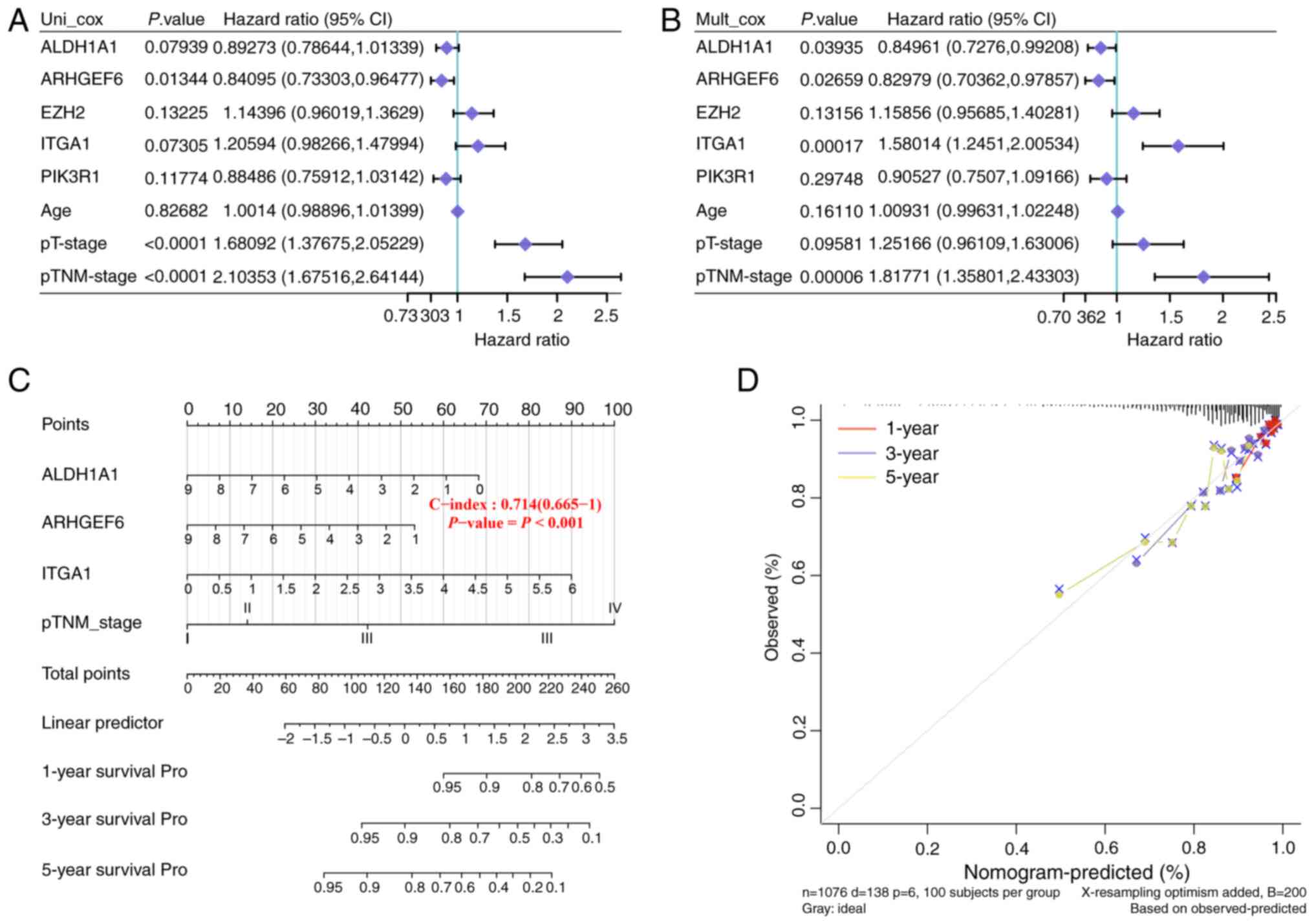
Figure 5

ARHGEF6 was targeted in the present
study as the key gene. (A) Univariate and (B) multivariate Cox
regression analyses were performed to assess the prognostic
significance of PIK3R1, ALDH1A1, ARHGEF6, EZH2 and ITGA1. (C) The
prognostic nomogram integrated ALDH1A1, ARHGEF6, ITGA1 and pTNM
stage to predict the 1-, 3- and 5-year survival probability. (D)
The performance of the prognostic nomogram was evaluated using
calibration curves. ALDH1A1, aldehyde dehydrogenase 1 family member
A1; ARHGEF6, Rac/Cdc42 guanine nucleotide exchange factor 6; EZH2,
enhancer of zeste 2 polycomb repressive complex 2 subunit; ITGA1,
integrin α1; CI, confidence interval.

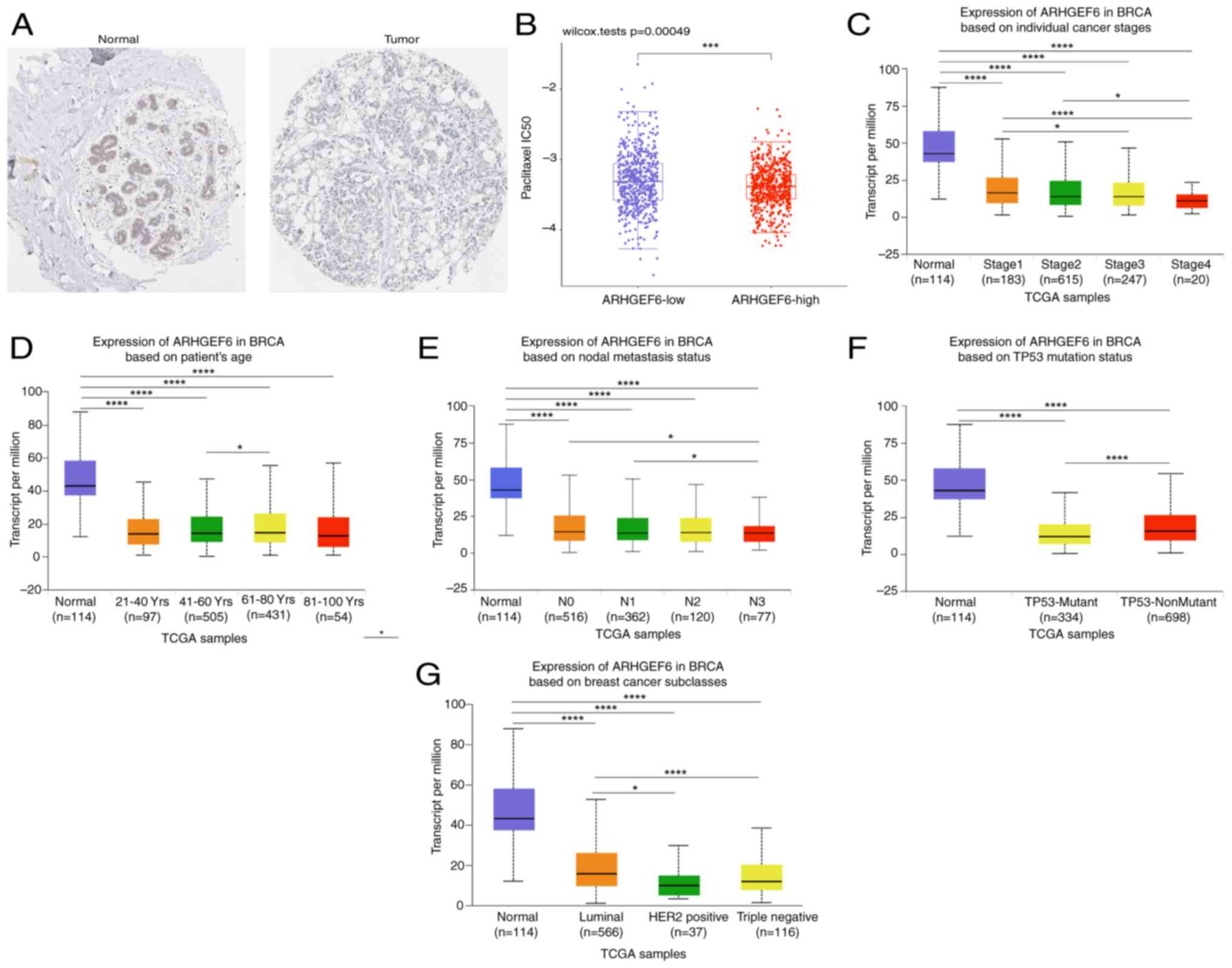
Figure 6

ARHGEF6 is a suppressor gene in BRCA.
(A) The ARHGEF6 protein level was downregulated in the BRCA tumor
group from the Human Protein Atlas database. (B) Lower ARHGEF6
expression is associated with higher IC50 values for
paclitaxel. The downregulation of ARHGEF6 was also observed in BRCA
samples based on individual (C) cancer stages, (D) age, (E) nodal
metastasis status, (F) TP53 mutation status and (G) major subclass.
*P<0.05, ***P<0.001 and ****P<0.0001. ARHGEF6, Rac/Cdc42
guanine nucleotide exchange factor 6; TCGA, The Cancer Genome
Atlas; BRCA, breast cancer.

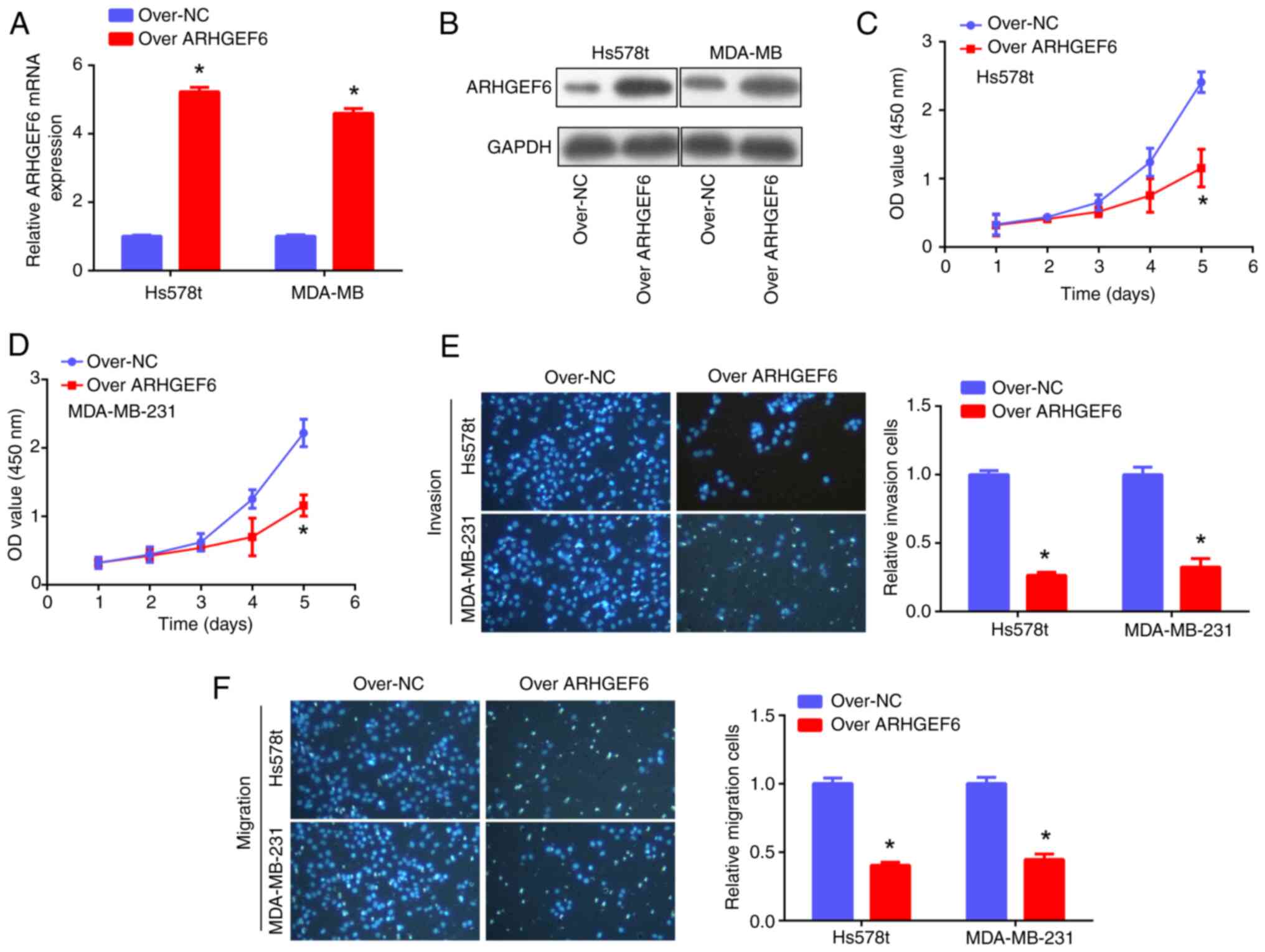
Figure 7

Over-ARHGEF6 suppresses
proliferation, invasion and migration of BRCA cell lines. ARHGEF6
was overexpressed in Hs578t and MDA-MB-231 cells, which was
detected by (A) reverse transcription-quantitative PCR and (B)
western blotting assays. (C) Over-ARHGEF6 suppressed proliferation
of Hs578t and (D) Over-ARHGEF6 suppressed proliferation of
MDA-MB-231 cells, detected by CCK-8. (E) Over-ARHGEF6 suppressed
invasion and (F) Over-ARHGEF6 suppressed migration in BRCA cell
lines (magnification ×100). *P<0.05. BRCA, breast cancer;
ARHGEF6, Rac/Cdc42 guanine nucleotide exchange factor 6; NC,
negative control; Over-ARHGEF6, ARHGEF6 overexpression; OD, optical
density.

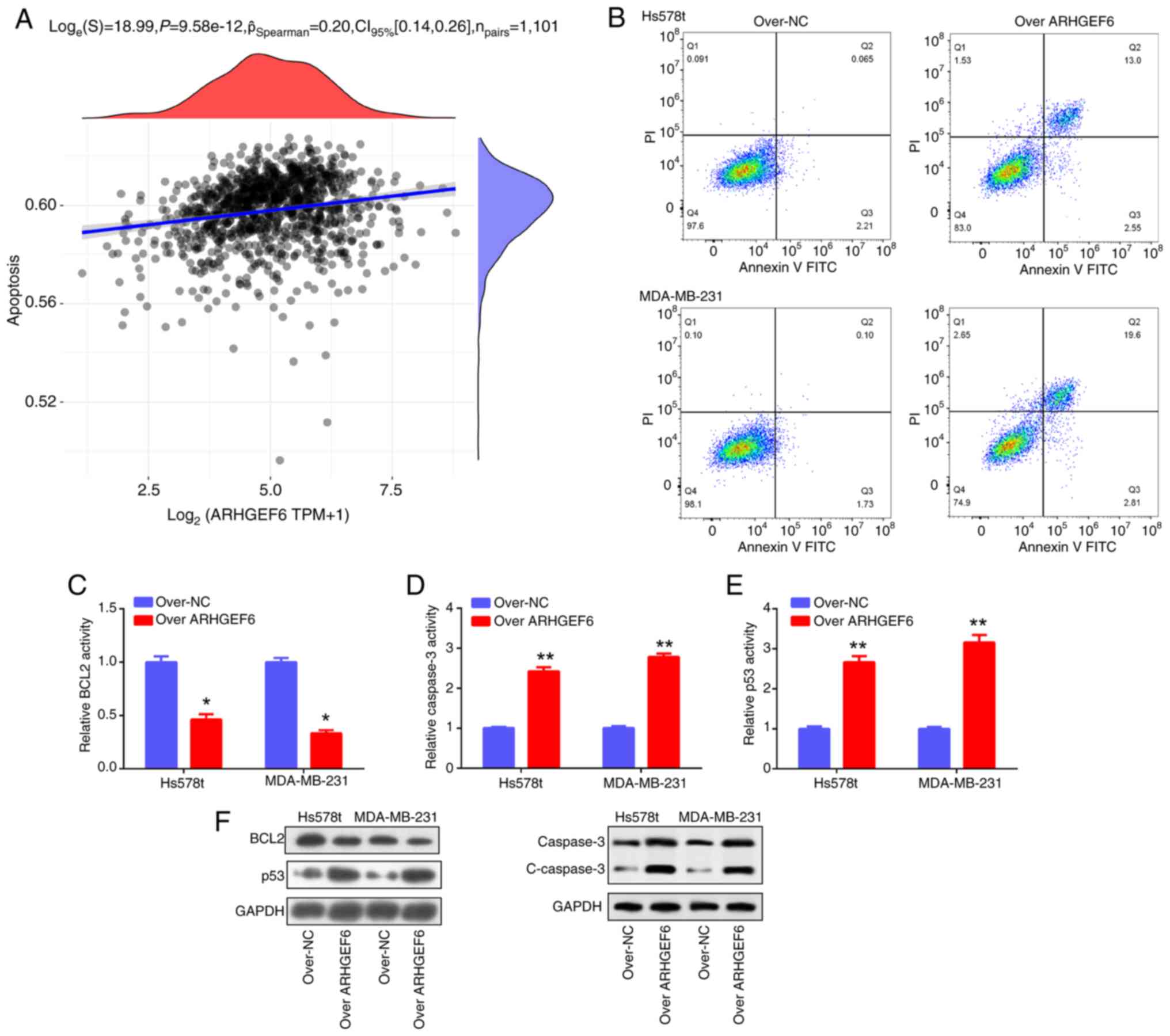
Figure 8

Over-ARHGEF6 promotes cell apoptosis.
(A) Spearman's correlation analysis showed that ARHGEF6 had a
positive correlation with apoptosis. (B) Flow cytometry showed that
over-ARHGEF6 suppressed cell apoptosis. (C) Over-ARHGEF6
downregulated BCL2 mRNA expression. (D) Over-ARHGEF6 upregulated
caspase3 mRNA expression. (E) Over-ARHGEF6 upregulated p53 mRNA
expression. (F) Over-ARHGEF6 downregulated BCL2 and upregulated
caspase3, c-caspase3 and p53 protein expression. *P<0.05,
**P<0.01. ARHGEF6, Rac/Cdc42 guanine nucleotide exchange factor
6; NC, negative control; Over-ARHGEF6, ARHGEF6 overexpression; TPM,
transcripts per million; c-caspase3, cleaved-caspase3.
View References

1 

Liyanage PY, Hettiarachchi SD, Zhou Y, Ouhtit A, Seven ES, Oztan CY, Celik E and Leblanc RM: Nanoparticle-mediated targeted drug delivery for breast cancer treatment. Biochim Biophys Acta Rev Cancer. 1871:419–433. 2019. View Article : Google Scholar : PubMed/NCBI

2 

Al-Mulhim F, Alqosaib AI, Al-Muhnna A, Fari K, Abdel-Ghany S, Rizk H, Prince AB, Isichei A and Sabit H: CRISPR/Cas9-mediated activation of CDH1 suppresses metastasis of breast cancer in rats. Electronic J Biotechnol. 53:54–60. 2021. View Article : Google Scholar

3 

Mao XD, Wei X, Xu T, Li TP and Liu KS: Research progress in breast cancer stem cells: Characterization and future perspectives. Am J Cancer Res. 12:3208–3222. 2022.PubMed/NCBI

4 

Yousef AJA: Male breast cancer: Epidemiology and risk factors. Semin Oncol. 44:267–272. 2017. View Article : Google Scholar : PubMed/NCBI

5 

Momenimovahed Z and Salehiniya H: Epidemiological characteristics of and risk factors for breast cancer in the world. Breast Cancer (Dove Med Press). 11:151–164. 2019.PubMed/NCBI

6 

Lei Y, Tang R, Xu J, Wang W, Zhang B, Liu J, Yu X and Shi S: Applications of single-cell sequencing in cancer research: Progress and perspectives. J Hematol Oncol. 14:912021. View Article : Google Scholar : PubMed/NCBI

7 

Wang K, Li L, Fu L, Yuan Y, Dai H, Zhu T, Zhou Y and Yuan F: Integrated bioinformatics analysis the function of RNA binding proteins (RBPs) and their prognostic value in breast cancer. Front Pharmacol. 10:1402019. View Article : Google Scholar : PubMed/NCBI

8 

Feng Y, Spezia M, Huang S, Yuan C, Zeng Z, Zhang L, Ji X, Liu W, Huang B, Luo W, et al: Breast cancer development and progression: Risk factors, cancer stem cells, signaling pathways, genomics, and molecular pathogenesis. Genes Dis. 5:77–106. 2018. View Article : Google Scholar : PubMed/NCBI

9 

Marra A, Trapani D, Viale G, Criscitiello C and Curigliano G: Practical classification of triple-negative breast cancer: Intratumoral heterogeneity, mechanisms of drug resistance, and novel therapies. NPJ Breast Cancer. 6:542020. View Article : Google Scholar : PubMed/NCBI

10 

Sheikh A, Hussain SA, Ghori Q, Naeem N, Fazil A, Giri S, Sathian B, Mainali P and Al Tamimi DM: The spectrum of genetic mutations in breast cancer. Asian Pac J Cancer Prev. 16:2177–2185. 2015. View Article : Google Scholar : PubMed/NCBI

11 

Viedma-Rodríguez R, Baiza-Gutman L, Salamanca-Gómez F, Diaz-Zaragoza M, Martínez-Hernández G, Esparza-Garrido R, Velázquez-Flores MA and Arenas-Aranda D: Mechanisms associated with resistance to tamoxifen in estrogen receptor-positive breast cancer. Oncol Rep. 32:3–15. 2014. View Article : Google Scholar : PubMed/NCBI

12 

Nagini S: Breast cancer: Current molecular therapeutic targets and new players. Anticancer Agents Med Chem. 17:152–163. 2017. View Article : Google Scholar : PubMed/NCBI

13 

Kretschmer C, Sterner-Kock A, Siedentopf F, Schoenegg W, Schlag PM and Kemmner W: Identification of early molecular markers for breast cancer. Mol Cancer. 10:152011. View Article : Google Scholar : PubMed/NCBI

14 

Thul PJ and Lindskog C: The human protein atlas: A spatial map of the human proteome. Protein Sci. 27:233–244. 2018. View Article : Google Scholar : PubMed/NCBI

15 

Livak KJ and Schmittgen TD: Analysis of relative gene expression data using real-time quantitative PCR and the 2(−Delta Delta C(T)) method. Methods. 25:402–408. 2001. View Article : Google Scholar : PubMed/NCBI

16 

Sutcliffe M, Radley G and Barton A: Personalized medicine in rheumatic diseases: How close are we to being able to use genetic biomarkers to predict response to TNF inhibitors? Expert Rev Clin Immunol. 16:389–396. 2020. View Article : Google Scholar : PubMed/NCBI

17 

Ahmadzada T, Kao S, Reid G, Boyer M, Mahar A and Cooper WA: An update on predictive biomarkers for treatment selection in non-small cell lung cancer. J Clin Med. 7:1532018. View Article : Google Scholar : PubMed/NCBI

18 

Pao W and Girard N: New driver mutations in non-small-cell lung cancer. Lancet Oncol. 12:175–180. 2011. View Article : Google Scholar : PubMed/NCBI

19 

Meng X, Huang Z, Teng F, Xing L and Yu J: Predictive biomarkers in PD-1/PD-L1 checkpoint blockade immunotherapy. Cancer Treat Rev. 41:868–876. 2015. View Article : Google Scholar : PubMed/NCBI

20 

Sivapiragasam A, Kumar P, Sokol ES, Albacker LA, Killian JK, Ramkissoon SH, Huang RSP, Severson EA, Brown CA, Danziger N, et al: Predictive biomarkers for immune checkpoint inhibitors in metastatic breast cancer. Cancer Med. 10:53–61. 2021. View Article : Google Scholar : PubMed/NCBI

21 

Januškevičienė I and Petrikaitė V: Heterogeneity of breast cancer: The importance of interaction between different tumor cell populations. Life Sci. 239:1170092019. View Article : Google Scholar : PubMed/NCBI

22 

Ibragimova MK, Tsyganov MM and Litviakov NV: Molecular-genetic portrait of breast cancer with triple negative phenotype. Cancers (Basel). 13:53482021. View Article : Google Scholar : PubMed/NCBI

23 

Melincovici CS, Boşca AB, Şuşman S, Mărginean M and Mihu C, Istrate M, Moldovan IM, Roman AL and Mihu C: Vascular endothelial growth factor (VEGF)-key factor in normal and pathological angiogenesis. Rom J Morphol Embryol. 59:455–467. 2018.PubMed/NCBI

24 

Kajdaniuk D, Marek B, Borgiel-Marek H and Kos-Kudła B: Vascular endothelial growth factor (VEGF)-part 1: In physiology and pathophysiology. Endokrynol Pol. 62:444–455. 2011.PubMed/NCBI

25 

Yuan Z, Li Y, Zhang S, Wang X, Dou H, Yu X, Zhang Z, Yang S and Xiao M: Extracellular matrix remodeling in tumor progression and immune escape: from mechanisms to treatments. Mol Cancer. 22:482023. View Article : Google Scholar : PubMed/NCBI

26 

Insua-Rodríguez J and Oskarsson T: The extracellular matrix in breast cancer. Adv Drug Deliv Rev. 97:41–55. 2016. View Article : Google Scholar : PubMed/NCBI

27 

Park KC, Dharmasivam M and Richardson DR: The role of extracellular proteases in tumor progression and the development of innovative metal ion chelators that inhibit their activity. Int J Mol Sci. 21:68052020. View Article : Google Scholar : PubMed/NCBI

28 

Stelling MP, Motta JM, Mashid M, Johnson WE, Pavão MS and Farrell NP: Metal ions and the extracellular matrix in tumor migration. FEBS J. 286:2950–2964. 2019. View Article : Google Scholar : PubMed/NCBI

29 

Tomita H, Tanaka K, Tanaka T and Hara A: Aldehyde dehydrogenase 1A1 in stem cells and cancer. Oncotarget. 7:11018–11032. 2016. View Article : Google Scholar : PubMed/NCBI

30 

Poturnajova M, Kozovska Z and Matuskova M: Aldehyde dehydrogenase 1A1 and 1A3 isoforms-mechanism of activation and regulation in cancer. Cell Signal. 87:1101202021. View Article : Google Scholar : PubMed/NCBI

31 

Ciccone V, Morbidelli L, Ziche M and Donnini S: How to conjugate the stemness marker ALDH1A1 with tumor angiogenesis, progression, and drug resistance. Cancer Drug Resist. 3:26–27. 2020.PubMed/NCBI

32 

Kong Y, Lyu N, Wu J, Tang H and Xie X, Yang L, Li X, Wei W and Xie X: Breast cancer stem cell markers CD44 and ALDH1A1 in serum: Distribution and prognostic value in patients with primary breast cancer. J Cancer. 9:3728–3735. 2018. View Article : Google Scholar : PubMed/NCBI

33 

Li W, Ma H, Zhang J, Zhu L, Wang C and Yang Y: Unraveling the roles of CD44/CD24 and ALDH1 as cancer stem cell markers in tumorigenesis and metastasis. Sci Rep. 7:138562017. View Article : Google Scholar : PubMed/NCBI

34 

Adorno-Cruz V and Liu H: Regulation and functions of integrin α2 in cell adhesion and disease. Genes Dis. 6:16–24. 2019. View Article : Google Scholar : PubMed/NCBI

35 

Gharibi A, La Kim S, Molnar J, Brambilla D, Adamian Y, Hoover M, Hong J, Lin J, Wolfenden L and Kelber JA: ITGA1 is a pre-malignant biomarker that promotes therapy resistance and metastatic potential in pancreatic cancer. Sci Rep. 7:100602017. View Article : Google Scholar : PubMed/NCBI

36 

Wei L, Yin F, Zhang W and Li L: ITGA1 and cell adhesion-mediated drug resistance in ovarian cancer. Int J Clin Exp Pathol. 10:5522–5529. 2017.

37 

Han Y, Wang J and Xu B: Novel biomarkers and prediction model for the pathological complete response to neoadjuvant treatment of triple-negative breast cancer. J Cancer. 12:936–945. 2021. View Article : Google Scholar : PubMed/NCBI

38 

Tong L, Wang S, Yang J, Zhang Q, Gu X, Mo T, Luo Y, Zhang C, Zhang J and Liu Y: Combined ARHGEF6 and tumor mutational burden may serve as a potential biomarker for immunotherapy of lung adenocarcinoma. Heliyon. 9:e185012023. View Article : Google Scholar : PubMed/NCBI

39 

Hemmesi K, Squadrito ML, Mestdagh P, Conti V, Cominelli M, Piras IS, Sergi LS, Piccinin S, Maestro R, Poliani PL, et al: miR-135a inhibits cancer stem cell-driven medulloblastoma development by directly repressing Arhgef6 expression. Stem Cells. 33:1377–1389. 2015. View Article : Google Scholar : PubMed/NCBI

40 

Guan X, Guan X, Dong C and Jiao Z: Rho GTPases and related signaling complexes in cell migration and invasion. Exp Cell Res. 388:1118242020. View Article : Google Scholar : PubMed/NCBI

41 

Zhou W, Li X and Premont RT: Expanding functions of GIT Arf GTPase-activating proteins, PIX Rho guanine nucleotide exchange factors and GIT-PIX complexes. J Cell Sci. 129:1963–1974. 2016. View Article : Google Scholar : PubMed/NCBI

Related Articles

  • Abstract
  • View
  • Download
  • Twitter
Copy and paste a formatted citation
Spandidos Publications style
Zhang Y, Zhou D, Shen X, Song Q, Yang L, Li W, Zhao X, Fang W, Liu B, Xing C, Xing C, et al: ARHGEF6 downregulation as a key mediator of tumor cell apoptosis in breast cancer. Oncol Lett 30: 522, 2025.
APA
Zhang, Y., Zhou, D., Shen, X., Song, Q., Yang, L., Li, W. ... Zhang, Q. (2025). ARHGEF6 downregulation as a key mediator of tumor cell apoptosis in breast cancer. Oncology Letters, 30, 522. https://doi.org/10.3892/ol.2025.15268
MLA
Zhang, Y., Zhou, D., Shen, X., Song, Q., Yang, L., Li, W., Zhao, X., Fang, W., Liu, B., Xing, C., Liu, J., Fang, H., Zhang, Q."ARHGEF6 downregulation as a key mediator of tumor cell apoptosis in breast cancer". Oncology Letters 30.5 (2025): 522.
Chicago
Zhang, Y., Zhou, D., Shen, X., Song, Q., Yang, L., Li, W., Zhao, X., Fang, W., Liu, B., Xing, C., Liu, J., Fang, H., Zhang, Q."ARHGEF6 downregulation as a key mediator of tumor cell apoptosis in breast cancer". Oncology Letters 30, no. 5 (2025): 522. https://doi.org/10.3892/ol.2025.15268
Copy and paste a formatted citation
x
Spandidos Publications style
Zhang Y, Zhou D, Shen X, Song Q, Yang L, Li W, Zhao X, Fang W, Liu B, Xing C, Xing C, et al: ARHGEF6 downregulation as a key mediator of tumor cell apoptosis in breast cancer. Oncol Lett 30: 522, 2025.
APA
Zhang, Y., Zhou, D., Shen, X., Song, Q., Yang, L., Li, W. ... Zhang, Q. (2025). ARHGEF6 downregulation as a key mediator of tumor cell apoptosis in breast cancer. Oncology Letters, 30, 522. https://doi.org/10.3892/ol.2025.15268
MLA
Zhang, Y., Zhou, D., Shen, X., Song, Q., Yang, L., Li, W., Zhao, X., Fang, W., Liu, B., Xing, C., Liu, J., Fang, H., Zhang, Q."ARHGEF6 downregulation as a key mediator of tumor cell apoptosis in breast cancer". Oncology Letters 30.5 (2025): 522.
Chicago
Zhang, Y., Zhou, D., Shen, X., Song, Q., Yang, L., Li, W., Zhao, X., Fang, W., Liu, B., Xing, C., Liu, J., Fang, H., Zhang, Q."ARHGEF6 downregulation as a key mediator of tumor cell apoptosis in breast cancer". Oncology Letters 30, no. 5 (2025): 522. https://doi.org/10.3892/ol.2025.15268
Follow us
  • Twitter
  • LinkedIn
  • Facebook
About
  • Spandidos Publications
  • Careers
  • Cookie Policy
  • Privacy Policy
How can we help?
  • Help
  • Live Chat
  • Contact
  • Email to our Support Team