Spandidos Publications Logo
  • About
    • About Spandidos
    • Aims and Scopes
    • Abstracting and Indexing
    • Editorial Policies
    • Reprints and Permissions
    • Job Opportunities
    • Terms and Conditions
    • Contact
  • Journals
    • All Journals
    • Oncology Letters
      • Oncology Letters
      • Information for Authors
      • Editorial Policies
      • Editorial Board
      • Aims and Scope
      • Abstracting and Indexing
      • Bibliographic Information
      • Archive
    • International Journal of Oncology
      • International Journal of Oncology
      • Information for Authors
      • Editorial Policies
      • Editorial Board
      • Aims and Scope
      • Abstracting and Indexing
      • Bibliographic Information
      • Archive
    • Molecular and Clinical Oncology
      • Molecular and Clinical Oncology
      • Information for Authors
      • Editorial Policies
      • Editorial Board
      • Aims and Scope
      • Abstracting and Indexing
      • Bibliographic Information
      • Archive
    • Experimental and Therapeutic Medicine
      • Experimental and Therapeutic Medicine
      • Information for Authors
      • Editorial Policies
      • Editorial Board
      • Aims and Scope
      • Abstracting and Indexing
      • Bibliographic Information
      • Archive
    • International Journal of Molecular Medicine
      • International Journal of Molecular Medicine
      • Information for Authors
      • Editorial Policies
      • Editorial Board
      • Aims and Scope
      • Abstracting and Indexing
      • Bibliographic Information
      • Archive
    • Biomedical Reports
      • Biomedical Reports
      • Information for Authors
      • Editorial Policies
      • Editorial Board
      • Aims and Scope
      • Abstracting and Indexing
      • Bibliographic Information
      • Archive
    • Oncology Reports
      • Oncology Reports
      • Information for Authors
      • Editorial Policies
      • Editorial Board
      • Aims and Scope
      • Abstracting and Indexing
      • Bibliographic Information
      • Archive
    • Molecular Medicine Reports
      • Molecular Medicine Reports
      • Information for Authors
      • Editorial Policies
      • Editorial Board
      • Aims and Scope
      • Abstracting and Indexing
      • Bibliographic Information
      • Archive
    • World Academy of Sciences Journal
      • World Academy of Sciences Journal
      • Information for Authors
      • Editorial Policies
      • Editorial Board
      • Aims and Scope
      • Abstracting and Indexing
      • Bibliographic Information
      • Archive
    • International Journal of Functional Nutrition
      • International Journal of Functional Nutrition
      • Information for Authors
      • Editorial Policies
      • Editorial Board
      • Aims and Scope
      • Abstracting and Indexing
      • Bibliographic Information
      • Archive
    • International Journal of Epigenetics
      • International Journal of Epigenetics
      • Information for Authors
      • Editorial Policies
      • Editorial Board
      • Aims and Scope
      • Abstracting and Indexing
      • Bibliographic Information
      • Archive
    • Medicine International
      • Medicine International
      • Information for Authors
      • Editorial Policies
      • Editorial Board
      • Aims and Scope
      • Abstracting and Indexing
      • Bibliographic Information
      • Archive
  • Articles
  • Information
    • Information for Authors
    • Information for Reviewers
    • Information for Librarians
    • Information for Advertisers
    • Conferences
  • Language Editing
Spandidos Publications Logo
  • About
    • About Spandidos
    • Aims and Scopes
    • Abstracting and Indexing
    • Editorial Policies
    • Reprints and Permissions
    • Job Opportunities
    • Terms and Conditions
    • Contact
  • Journals
    • All Journals
    • Biomedical Reports
      • Information for Authors
      • Editorial Policies
      • Editorial Board
      • Aims and Scope
      • Abstracting and Indexing
      • Bibliographic Information
      • Archive
    • Experimental and Therapeutic Medicine
      • Information for Authors
      • Editorial Policies
      • Editorial Board
      • Aims and Scope
      • Abstracting and Indexing
      • Bibliographic Information
      • Archive
    • International Journal of Epigenetics
      • Information for Authors
      • Editorial Policies
      • Editorial Board
      • Aims and Scope
      • Abstracting and Indexing
      • Bibliographic Information
      • Archive
    • International Journal of Functional Nutrition
      • Information for Authors
      • Editorial Policies
      • Editorial Board
      • Aims and Scope
      • Abstracting and Indexing
      • Bibliographic Information
      • Archive
    • International Journal of Molecular Medicine
      • Information for Authors
      • Editorial Policies
      • Editorial Board
      • Aims and Scope
      • Abstracting and Indexing
      • Bibliographic Information
      • Archive
    • International Journal of Oncology
      • Information for Authors
      • Editorial Policies
      • Editorial Board
      • Aims and Scope
      • Abstracting and Indexing
      • Bibliographic Information
      • Archive
    • Medicine International
      • Information for Authors
      • Editorial Policies
      • Editorial Board
      • Aims and Scope
      • Abstracting and Indexing
      • Bibliographic Information
      • Archive
    • Molecular and Clinical Oncology
      • Information for Authors
      • Editorial Policies
      • Editorial Board
      • Aims and Scope
      • Abstracting and Indexing
      • Bibliographic Information
      • Archive
    • Molecular Medicine Reports
      • Information for Authors
      • Editorial Policies
      • Editorial Board
      • Aims and Scope
      • Abstracting and Indexing
      • Bibliographic Information
      • Archive
    • Oncology Letters
      • Information for Authors
      • Editorial Policies
      • Editorial Board
      • Aims and Scope
      • Abstracting and Indexing
      • Bibliographic Information
      • Archive
    • Oncology Reports
      • Information for Authors
      • Editorial Policies
      • Editorial Board
      • Aims and Scope
      • Abstracting and Indexing
      • Bibliographic Information
      • Archive
    • World Academy of Sciences Journal
      • Information for Authors
      • Editorial Policies
      • Editorial Board
      • Aims and Scope
      • Abstracting and Indexing
      • Bibliographic Information
      • Archive
  • Articles
  • Information
    • For Authors
    • For Reviewers
    • For Librarians
    • For Advertisers
    • Conferences
  • Language Editing
Login Register Submit
  • This site uses cookies
  • You can change your cookie settings at any time by following the instructions in our Cookie Policy. To find out more, you may read our Privacy Policy.

    I agree
Search articles by DOI, keyword, author or affiliation
Search
Advanced Search
presentation
Oncology Letters
Join Editorial Board Propose a Special Issue
Print ISSN: 1792-1074 Online ISSN: 1792-1082
Journal Cover
November-2025 Volume 30 Issue 5

Full Size Image

Sign up for eToc alerts
Recommend to Library

Journals

International Journal of Molecular Medicine

International Journal of Molecular Medicine

International Journal of Molecular Medicine is an international journal devoted to molecular mechanisms of human disease.

International Journal of Oncology

International Journal of Oncology

International Journal of Oncology is an international journal devoted to oncology research and cancer treatment.

Molecular Medicine Reports

Molecular Medicine Reports

Covers molecular medicine topics such as pharmacology, pathology, genetics, neuroscience, infectious diseases, molecular cardiology, and molecular surgery.

Oncology Reports

Oncology Reports

Oncology Reports is an international journal devoted to fundamental and applied research in Oncology.

Experimental and Therapeutic Medicine

Experimental and Therapeutic Medicine

Experimental and Therapeutic Medicine is an international journal devoted to laboratory and clinical medicine.

Oncology Letters

Oncology Letters

Oncology Letters is an international journal devoted to Experimental and Clinical Oncology.

Biomedical Reports

Biomedical Reports

Explores a wide range of biological and medical fields, including pharmacology, genetics, microbiology, neuroscience, and molecular cardiology.

Molecular and Clinical Oncology

Molecular and Clinical Oncology

International journal addressing all aspects of oncology research, from tumorigenesis and oncogenes to chemotherapy and metastasis.

World Academy of Sciences Journal

World Academy of Sciences Journal

Multidisciplinary open-access journal spanning biochemistry, genetics, neuroscience, environmental health, and synthetic biology.

International Journal of Functional Nutrition

International Journal of Functional Nutrition

Open-access journal combining biochemistry, pharmacology, immunology, and genetics to advance health through functional nutrition.

International Journal of Epigenetics

International Journal of Epigenetics

Publishes open-access research on using epigenetics to advance understanding and treatment of human disease.

Medicine International

Medicine International

An International Open Access Journal Devoted to General Medicine.

Journal Cover
November-2025 Volume 30 Issue 5

Full Size Image

Sign up for eToc alerts
Recommend to Library

  • Article
  • Citations
    • Cite This Article
    • Download Citation
    • Create Citation Alert
    • Remove Citation Alert
    • Cited By
  • Similar Articles
    • Related Articles (in Spandidos Publications)
    • Similar Articles (Google Scholar)
    • Similar Articles (PubMed)
  • Download PDF
  • Download XML
  • View XML
Article Open Access

Anticancer effects of thymoquinone on prostate cancer cells and natural killer cell activity

  • Authors:
    • Nouf A. Aldarmahi
    • Nesrin I. Tarbiah
    • Nuha A. Alkhattabi
    • Huda F. Alshaibi
  • View Affiliations / Copyright

    Affiliations: Department of Biochemistry, Faculty of Science, King Abdulaziz University, Jeddah 21589, Saudi Arabia
    Copyright: © Aldarmahi et al. This is an open access article distributed under the terms of Creative Commons Attribution License.
  • Article Number: 530
    |
    Published online on: September 18, 2025
       https://doi.org/10.3892/ol.2025.15276
  • Expand metrics +
Metrics: Total Views: 0 (Spandidos Publications: | PMC Statistics: )
Metrics: Total PDF Downloads: 0 (Spandidos Publications: | PMC Statistics: )
Cited By (CrossRef): 0 citations Loading Articles...

This article is mentioned in:


Abstract

Dark cumin, or Nigella sativa, is a well‑known and popular herbal medicine that may be used in the treatment of gastrointestinal issues, diabetes, bronchitis, high blood pressure and cancer. The anticancer action of Nigella sativa may be associated with the immune‑modulatory effect of its activation of human natural killer (NK) cells. NK cells, a subset of lymphocytes, are a component of innate immunity, the body's initial line of defense against infections. To identify potential ways to improve immunotherapy using natural products, the present study aimed to assess the impact of thymoquinone (TQ), a key component of Nigella sativa, on the activity of NK cells through their cytotoxicity and released chemicals. CD56 NK cells that were isolated and positively selected from blood samples, were cultured with PC3‑RFP prostate cancer cells and treated with TQ at different concentrations (25 and 50 µM). Cytotoxicity was measured, and perforin, granzyme B and interferon‑α (IFN‑α) levels were assessed using ELISA. The results demonstrated that the cytotoxic effect of NK cells on PC3‑RFP was significantly increased in the presence of TQ from 55.1 to 85.35%. Furthermore, with 50 µM TQ, there was a significant increase in secretion of perforin (0.80 ng/ml) compared with the control (0.2 ng/ml), and of granzyme B (1.24 ng/ml) compared with the control (0.65 ng/ml). Moreover, the production of IFN‑α by the NK cells significantly increased in the presence of 25 and 50 µM TQ (0.5 and 0.7 ng/ml, respectively) compared with the control (0.3 ng/ml). In summary, TQ increased NK cell cytotoxicity against PC3‑RFP cells, indicating a potential application in the development of cell‑based immunity treatment that requires more research and has promising prospects. 
View Figures

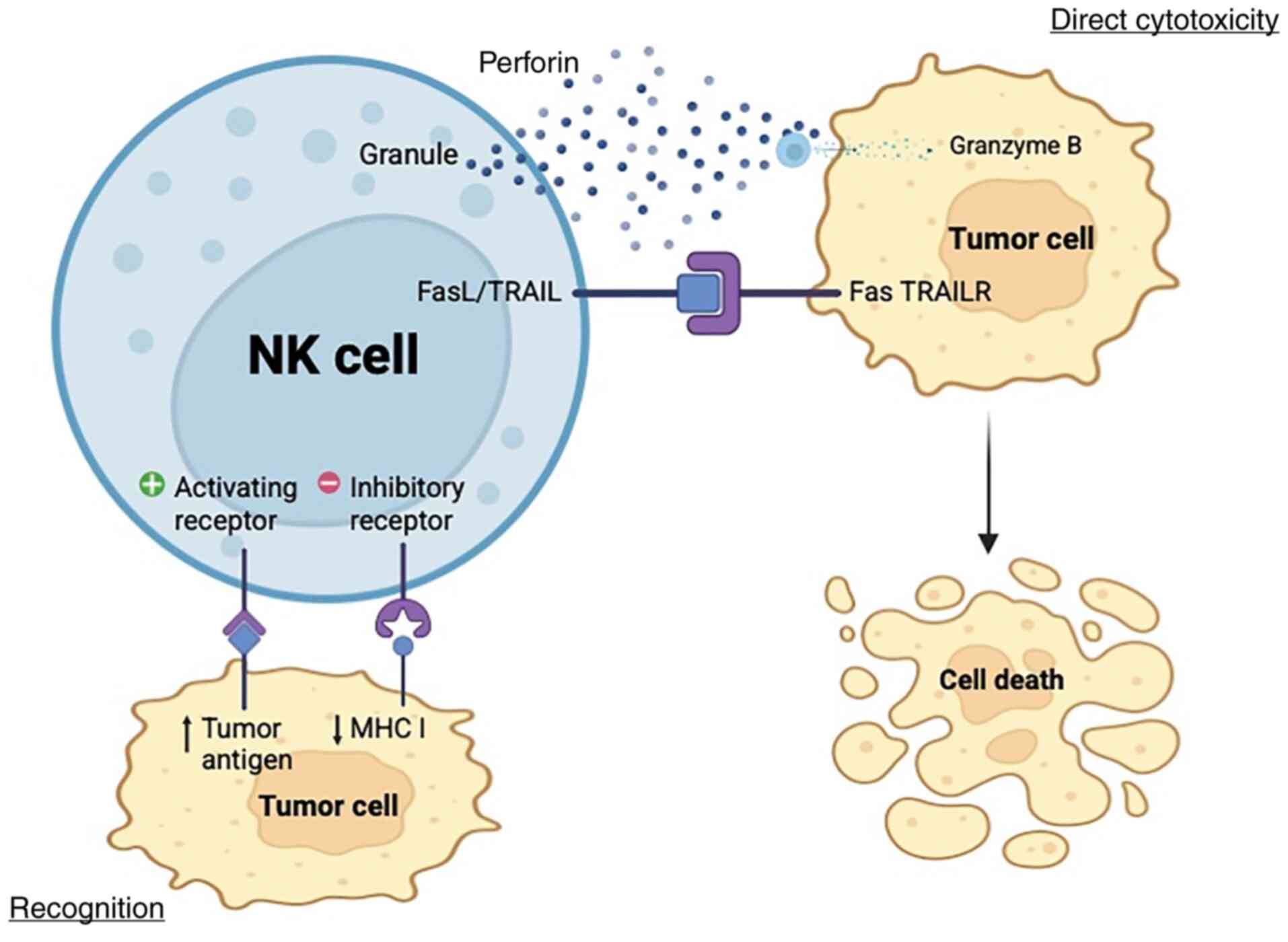
Figure 1

Cytotoxicity mechanism of NK cells.
By evaluating the net input of activating and inhibitory signals
from target cells through NK cell surface receptors, NK cells
discriminate healthy cells from target cells. However, several
tumors develop mechanisms to escape NK cell immune responses by
modifying their cell surface molecules, such as low immunogenicity.
Following the identification of the target cell by NK cells, the
stimulation domain is activated. This is initiated by the secretion
of a cytolytic enzyme, known as perforin, stored in NK cell
vesicles. Perforin creates pores in the cell membrane of the target
cell, allowing the passage of granzymes into the target cell and
starting protein digestion (cytolysis). NK cells express TRAIL and
FasL, which interact with TRAIL receptors and FAS ligands in cancer
cells, respectively. This interaction results in cell death,
signaling complex stimulating apoptosis. NK, natural killer; TRAIL,
TNF-related apoptosis inducing ligand; TRAILR, TRAIL receptor; MHC,
major histocompatibility complex; FasL, FAS ligand. Created in
BioRender.com.

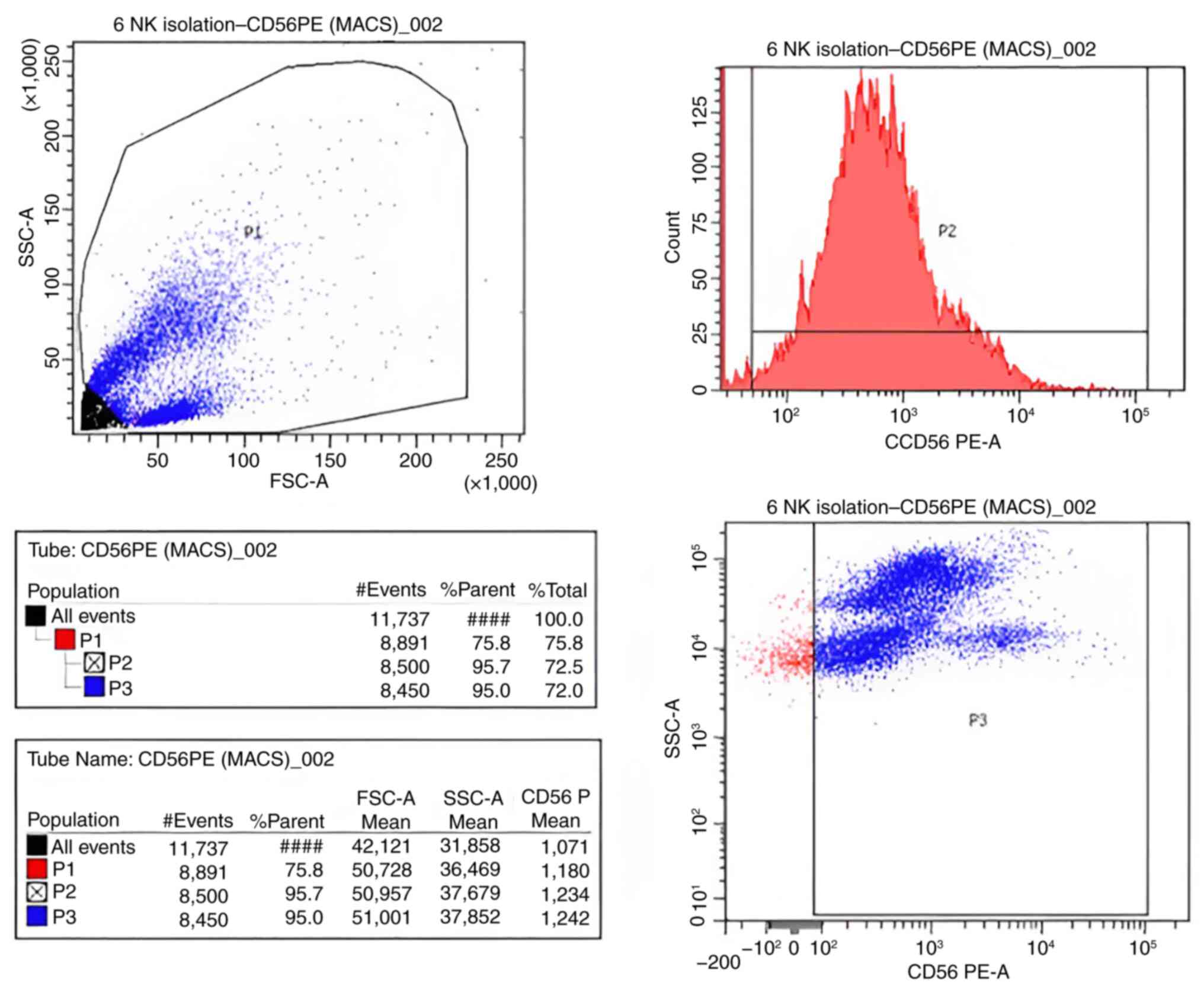
Figure 2

NK cells dot plot before treatment.
CD56 positivity was determined by comparison with defined cut-off
values obtained from unstained control cells. The NK cell purity
was 95.7%. NK, natural killer.

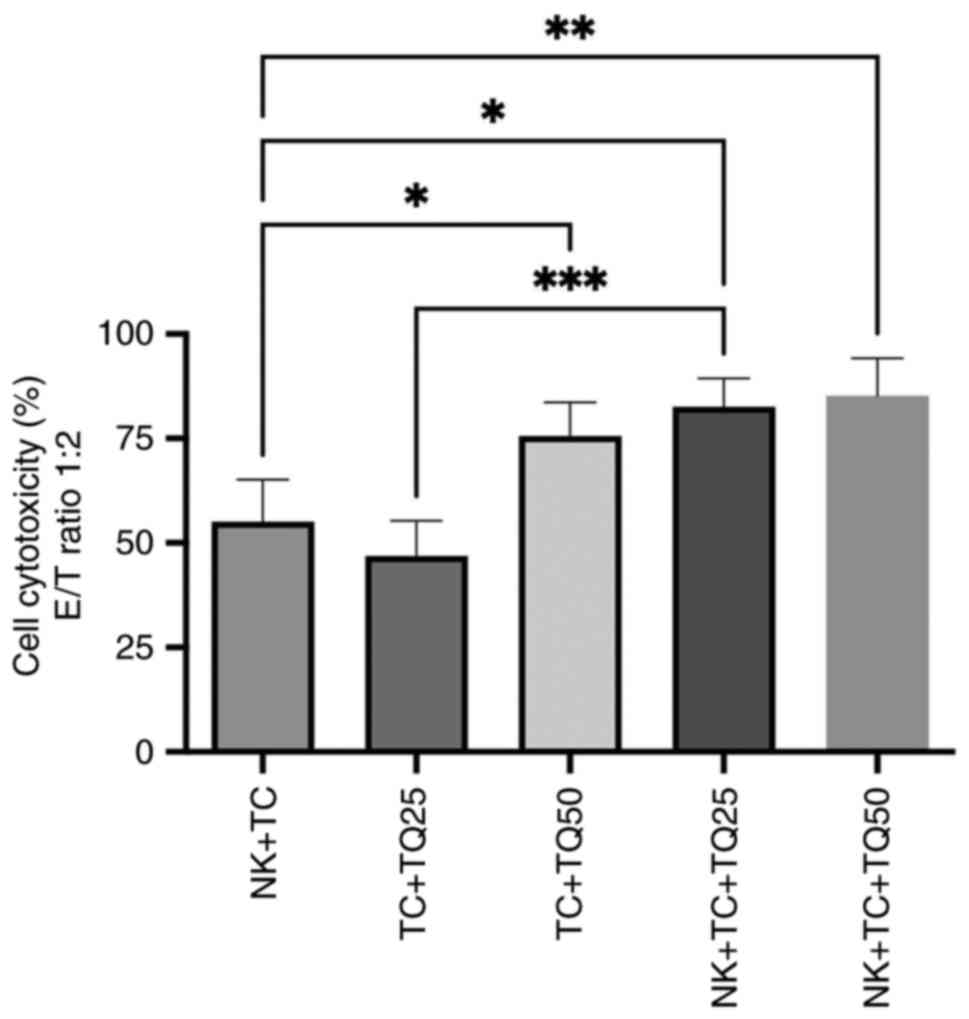
Figure 3

NK cell cytotoxicity against PC3-RFP
cells in the presence or absence of TQ. The effector (NK cells) and
target (PC3-RFP) ratio was 1:2. *P<0.05; **P<0.01;
***P<0.001. NK, natural killer; TQ, thymoquinone; TC, tumor
cells.

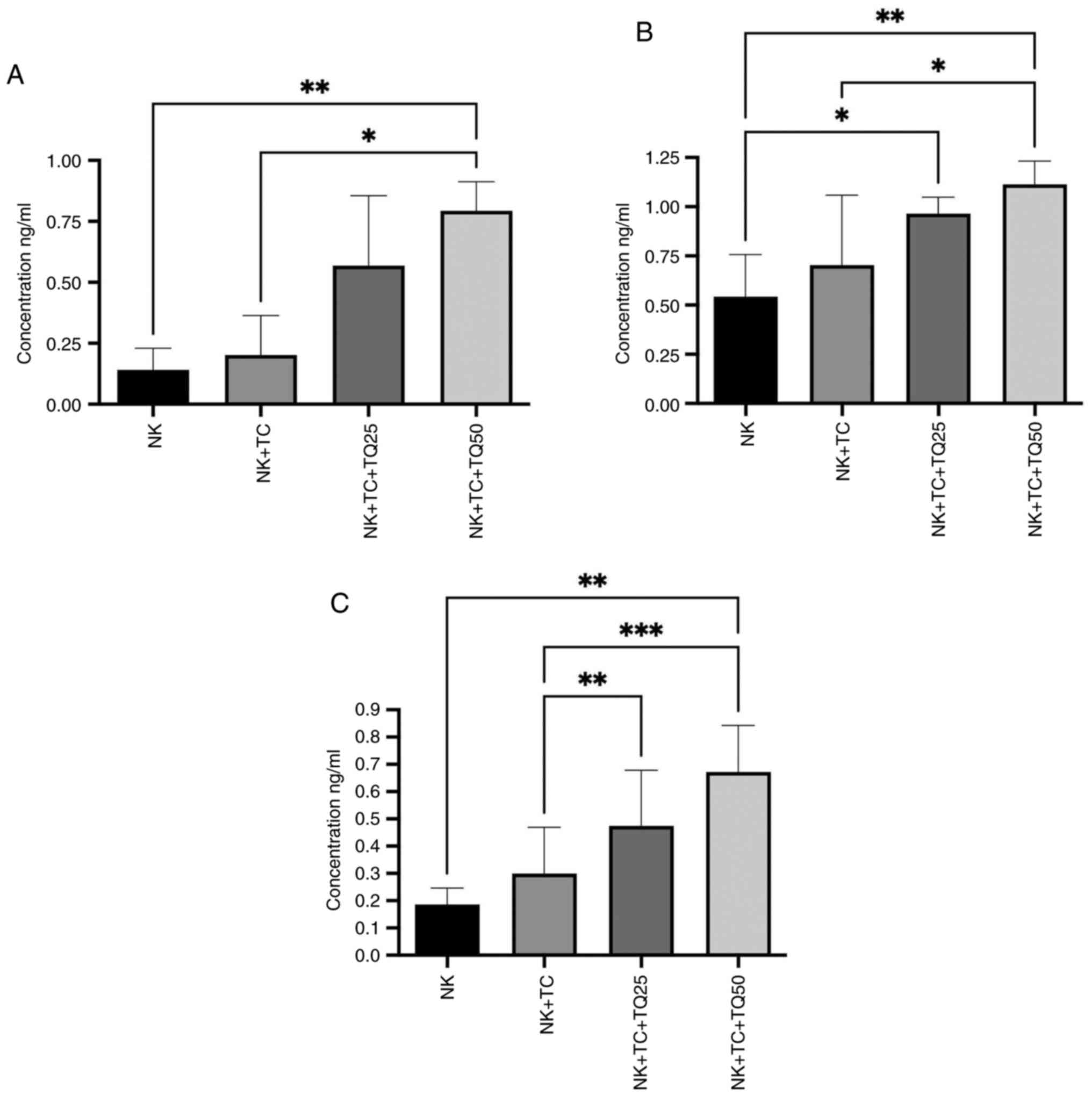
Figure 4

Production of major cytokines against
PC3-RFP cells by NK cells in the presence or absence of TQ. TQ
enhances the release of (A) perforin, (B) granzyme B and (C) IFN-α,
the major secreted cytokines of NK cells. *P<0.05; **P<0.01;
***P<0.001. NK, natural killer; TQ, thymoquinone; TC, tumor
cells.

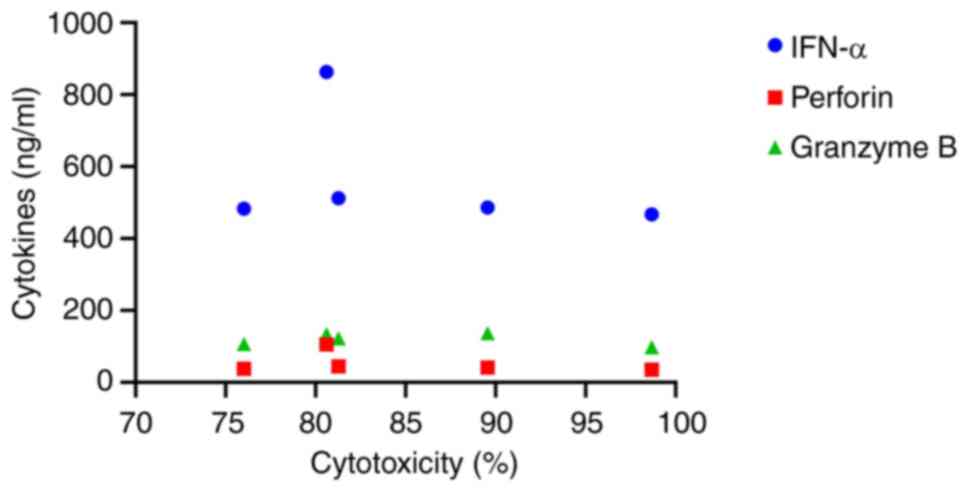
Figure 5

Spearman correlation coefficients
(2-tailed) of perforin, IFN-α and granzyme B cytokines, and natural
killer cytotoxicity with PC3-RFP cells.
View References

1 

Omran AR: The epidemiological transition: A theory of the epidemiology of population change. Millbank Mem Fund Q. 49:509–538. 1971. View Article : Google Scholar : PubMed/NCBI

2 

Ferlay J, Ervik M, Lam F, Laversanne M, Colombet M, Mery L, Piñeros M, Znaor A, Soerjomataram I and Bray F; Global Cancer Observatory, : World. International Agency for Research on Cancer; Lyon, France: https://gco.iarc.who.int/media/globocan/factsheets/populations/900-world-fact-sheet.pdfDecember 26–2024

3 

Bray F, Ferlay J, Soerjomataram I, Siegel RL, Torre LA and Jemal A: Global cancer statistics 2018: GLOBOCAN estimates of incidence and mortality worldwide for 36 cancers in 185 countries. CA Cancer J Clin. 68:394–424. 2018.PubMed/NCBI

4 

Sung H, Ferlay J, Siegel RL, Laversanne M, Soerjomataram I, Jemal A and Bray F: Global cancer statistics 2020: GLOBOCAN estimates of incidence and mortality worldwide for 36 cancers in 185 countries. CA Cancer J Clin. 71:209–249. 2021.PubMed/NCBI

5 

Panigrahi GK, Praharaj PP, Kittaka H, Mridha AR, Black OM, Singh R, Mercer R, van Bokhoven A, Torkko KC, Agarwal C, et al: Exosome proteomic analyses identify inflammatory phenotype and novel biomarkers in African American prostate cancer patients. Cancer Med. 8:1110–1123. 2019. View Article : Google Scholar : PubMed/NCBI

6 

Rawla P: Epidemiology of prostate cancer. World J Oncol. 10:63–89. 2019. View Article : Google Scholar : PubMed/NCBI

7 

Chan JM, Gann PH and Giovannucci EL: Role of diet in prostate cancer development and progression. J Clin Oncol. 23:8152–8160. 2005. View Article : Google Scholar : PubMed/NCBI

8 

Platz EA, Leitzmann MF, Michaud DS, Willett WC and Giovannucci E: Interrelation of energy intake, body size, and physical activity with prostate cancer in a large prospective cohort study. Cancer Res. 63:8542–8548. 2003.PubMed/NCBI

9 

Hegde PS and Chen DS: Top 10 challenges in cancer immunotherapy. Immunity. 52:17–35. 2020. View Article : Google Scholar : PubMed/NCBI

10 

Lopez-Bujanda Z and Drake CG: Myeloid-derived cells in prostate cancer progression: Phenotype and prospective therapies. J Leukoc Biol. 102:393–406. 2017. View Article : Google Scholar : PubMed/NCBI

11 

Beltran H, Rickman DS, Park K, Chae SS, Sboner A, MacDonald TY, Wang Y, Sheikh KL, Terry S, Tagawa ST, et al: Molecular characterization of neuroendocrine prostate cancer and identification of new drug targets. Cancer Discov. 1:487–495. 2011. View Article : Google Scholar : PubMed/NCBI

12 

Fridman WH, Pagès F, Sautès-Fridman C and Galon J: The immune contexture in human tumours: Impact on clinical outcome. Nat Rev Cancer. 12:298–306. 2012. View Article : Google Scholar : PubMed/NCBI

13 

O'Donnell JS, Teng MWL and Smyth MJ: Cancer immunoediting and resistance to T cell-based immunotherapy. Nat Rev Clin Oncol. 16:151–167. 2019. View Article : Google Scholar : PubMed/NCBI

14 

Pardoll DM: The blockade of immune checkpoints in cancer immunotherapy. Nat Rev Cancer. 12:252–264. 2012. View Article : Google Scholar : PubMed/NCBI

15 

Langer CJ, Gadgeel SM, Borghaei H, Papadimitrakopoulou VA, Patnaik A, Powell SF, Gentzler RD, Martins RG, Stevenson JP, Jalal SI, et al: Carboplatin and pemetrexed with or without pembrolizumab for advanced, non-squamous non-small-cell lung cancer: A randomised, phase 2 cohort of the open-label KEYNOTE-021 study. Lancet Oncol. 17:1497–1508. 2016. View Article : Google Scholar : PubMed/NCBI

16 

Patel SH, Rimner A and Cohen RB: Combining immunotherapy and radiation therapy for small cell lung cancer and thymic tumors. Transl Lung Cancer Res. 6:186–195. 2017. View Article : Google Scholar : PubMed/NCBI

17 

Orange JS and Ballas ZK: Natural killer cells in human health and disease. Clin Immunol. 118:1–10. 2006. View Article : Google Scholar : PubMed/NCBI

18 

Vivier E, Tomasello E, Baratin M, Walzer T and Ugolini S: Functions of natural killer cells. Nat Immunol. 9:503–510. 2008. View Article : Google Scholar : PubMed/NCBI

19 

Doherty DG and O'Farrelly C: Innate and adaptive lymphoid cells in the human liver. Immunol Rev. 174:5–20. 2000. View Article : Google Scholar : PubMed/NCBI

20 

Joyce JA and Pollard JW: Microenvironmental regulation of metastasis. Nat Rev Cancer. 9:239–252. 2009. View Article : Google Scholar : PubMed/NCBI

21 

Ferlazzo G, Pack M, Thomas D, Paludan C, Schmid D, Strowig T, Bougras G, Muller WA, Moretta L and Münz C: Distinct roles of IL-12 and IL-15 in human natural killer cell activation by dendritic cells from secondary lymphoid organs. Proc Natl Acad Sci USA. 101:16606–16611. 2004. View Article : Google Scholar : PubMed/NCBI

22 

Romagnani C, Juelke K, Falco M, Morandi B, D'Agostino A, Costa R, Ratto G, Forte G, Carrega P, Lui G, et al: CD56brightCD16- killer Ig-like receptor-NK cells display longer telomeres and acquire features of CD56dim NK cells upon activation. J Immunol. 178:4947–4955. View Article : Google Scholar : PubMed/NCBI

23 

Cooper MA, Fehniger TA and Caligiuri MA: The biology of human natural killer-cell subsets. Trends Immunol. 22:633–640. 2001. View Article : Google Scholar : PubMed/NCBI

24 

Domaica CI, Sierra JM, Zwirner NW and Fuertes MB: Immunomodulation of NK cell activity. Methods Mol Biol. 2097:125–136. 2020. View Article : Google Scholar : PubMed/NCBI

25 

Balsamo M, Scordamaglia F, Pietra G, Manzini C, Cantoni C, Boitano M, Queirolo P, Vermi W, Facchetti F, Moretta A, et al: Melanoma-associated fibroblasts modulate NK cell phenotype and antitumor cytotoxicity. Proc Natl Acad Sci USA. 106:20847–20852. 2009. View Article : Google Scholar : PubMed/NCBI

26 

Lee HH and Cho H: Improved anti-cancer effect of curcumin on breast cancer cells by increasing the activity of natural killer cells. J Microbiol Biotechnol. 28:874–882. 2018. View Article : Google Scholar : PubMed/NCBI

27 

Montagner IM, Penna A, Fracasso G, Carpanese D, Dalla Pietà A, Barbieri V, Zuccolotto G and Rosato A: Anti-PSMA CAR-engineered NK-92 cells: An off-the-shelf cell therapy for prostate cancer. Cells. 9:13822020. View Article : Google Scholar : PubMed/NCBI

28 

Lundholm M, Schröder M, Nagaeva O, Baranov V, Widmark A, Mincheva-Nilsson L and Wikström P: Prostate tumor-derived exosomes down-regulate NKG2D expression on natural killer cells and CD8+ T cells: Mechanism of immune evasion. PLoS One. 9:e1089252014. View Article : Google Scholar : PubMed/NCBI

29 

Levy EM, Roberti MP and Mordoh J: Natural killer cells in human cancer: From biological functions to clinical applications. Biomed Res Int. 2011:6761982011. View Article : Google Scholar

30 

Tian T and Li Z: Targeting Tim-3 in cancer with resistance to PD-1/PD-L1 blockade. Front Oncol. 11:7311752021. View Article : Google Scholar : PubMed/NCBI

31 

Siemińska I and Baran J: Myeloid-derived suppressor cells as key players and promising therapy targets in prostate cancer. Front Oncol. 12:8624162022. View Article : Google Scholar : PubMed/NCBI

32 

Modena A, Ciccarese C, Iacovelli R, Brunelli M, Montironi R, Fiorentino M, Tortora G and Massari F: Immune checkpoint inhibitors and prostate cancer: A new frontier? Oncol Rev. 10:2932016.PubMed/NCBI

33 

Kamada T, Togashi Y, Tay C, Ha D, Sasaki A, Nakamura Y, Sato E, Fukuoka S, Tada Y, Tanaka A, et al: PD-1(+) regulatory T cells amplified by PD-1 blockade promote hyperprogression of cancer. Proc Natl Acad Sci USA. 116:9999–10008. 2019. View Article : Google Scholar : PubMed/NCBI

34 

Quatrini L, Mariotti FR, Munari E, Tumino N, Vacca P and Moretta L: The immune checkpoint PD-1 in natural killer cells: Expression, function and targeting in tumour immunotherapy. Cancers (Basel). 12:32852020. View Article : Google Scholar : PubMed/NCBI

35 

Majdalawieh AF and Fayyad MW: Recent advances on the anti-cancer properties of Nigella sativa, a widely used food additive. J Ayurveda Integr Med. 7:173–180. 2016. View Article : Google Scholar : PubMed/NCBI

36 

Dajani EZ, Shahwan TG and Dajani NE: Overview of the preclinical pharmacological properties of Nigella sativa (black seeds): A complementary drug with historical and clinical significance. J Physiol Pharmacol. 67:801–817. 2016.PubMed/NCBI

37 

Bayır AG and Karakaş I: The Role of Nigella sativa and Its Active Component Thymoquinone in Cancer Prevention and Treatment: A Review Article. Eurasian J Med Biol Sci. 1:1–12. 2021.

38 

Ramadan MF: Nutritional value, functional properties and nutraceutical applications of black cumin (Nigella sativa L.): An overview. Int J Food Sci Technol. 42:1208–1218. 2007. View Article : Google Scholar

39 

AlShaibi HF, Ahmed F, Buckle C, Fowles ACM, Awlia J, Cecchini MG and Eaton CL: The BMP antagonist Noggin is produced by osteoblasts in response to the presence of prostate cancer cells. Biotechnol Appl Biochem. 65:407–418. 2018. View Article : Google Scholar : PubMed/NCBI

40 

Randhawa MA and Alghamdi MS: Anticancer activity of Nigella sativa (black seed)-a review. Am J Chin Med. 39:1075–1091. 2011. View Article : Google Scholar : PubMed/NCBI

41 

Schneider-Stock R, Fakhoury IH, Zaki AM, El-Baba CO and Gali-Muhtasib HU: Thymoquinone: Fifty years of success in the battle against cancer models. Drug Discov Today. 19:18–30. 2014. View Article : Google Scholar : PubMed/NCBI

42 

Khan MA, Tania M, Fu S and Fu J: Thymoquinone, as an anticancer molecule: From basic research to clinical investigation. Oncotarget. 8:519072017. View Article : Google Scholar : PubMed/NCBI

43 

Khan MA, Tania M, Wei C, Mei Z, Fu S, Cheng J, Xu J and Fu J: Thymoquinone inhibits cancer metastasis by downregulating TWIST1 expression to reduce epithelial to mesenchymal transition. Oncotarget. 6:19580–19591. 2015. View Article : Google Scholar : PubMed/NCBI

44 

Majdalawieh AF, Hmaidan R and Carr RI: Nigella sativa modulates splenocyte proliferation, Th1/Th2 cytokine profile, macrophage function and NK anti-tumor activity. J Ethnopharmacol. 131:268–275. 2010. View Article : Google Scholar : PubMed/NCBI

45 

Sjs B, Kavithaa K, Poornima A, Haribalan P, Renukadevi B and Sumathi S: Modulation of gene expression by thymoquinone conjugated zinc oxide nanoparticles arrested cell cycle, DNA damage and increased apoptosis in triple negative breast cancer cell line MDA-MB-231. Drug Dev Ind Pharm. 47:1–19. 2022.

46 

Alshaibi HF, Aldarmahi NA, Alkhattabi NA, Alsufiani HM and Tarbiah NI: Studying the anticancer effects of thymoquinone on breast cancer cells through natural killer cell activity. Biomed Res Int. 2022:92186402022. View Article : Google Scholar : PubMed/NCBI

47 

Murphy EM, Centner CS, Bates PJ, Malik MT and Kopechek JA: Delivery of thymoquinone to cancer cells with as1411-conjugated nanodroplets. PLoS One. 15:e02334662020. View Article : Google Scholar : PubMed/NCBI

48 

Peng L, Liu A, Shen Y, Xu HZ, Yang SZ, Ying XZ, Liao W, Liu HX, Lin ZQ, Chen QY, et al: Antitumor and anti-angiogenesis effects of thymoquinone on osteosarcoma through the NF-κB pathway. Oncol Rep. 29:571–578. 2013. View Article : Google Scholar : PubMed/NCBI

49 

Waggoner SN, Daniels KA and Welsh RM: Therapeutic depletion of natural killer cells controls persistent infection. J Virol. 88:1953–1960. 2014. View Article : Google Scholar : PubMed/NCBI

50 

Krebs P, Barnes MJ, Lampe K, Whitley K, Bahjat KS, Beutler B, Janssen E and Hoebe K: NK cell-mediated killing of target cells triggers robust antigen-specific T cell-mediated and humoral responses. Blood. 113:6593–6602. 2009. View Article : Google Scholar : PubMed/NCBI

51 

Karim S, Burzangi AS, Ahmad A, Siddiqui NA, Ibrahim IM, Sharma P, Abualsunun WA and Gabr GA: PI3K-AKT pathway modulation by thymoquinone limits tumor growth and glycolytic metabolism in colorectal cancer. Int J Mol Sci. 23:23052022. View Article : Google Scholar : PubMed/NCBI

52 

Khan A, Alsahli MA, Aljasir MA, Maswadeh H, Mobark MA, Azam F, Allemailem KS, Alrumaihi F, Alhumaydhi FA, Almatroudi AA, et al: Experimental and theoretical insights on chemopreventive effect of the liposomal thymoquinone against benzo [a] pyrene-induced lung cancer in swiss albino mice. J Inflamm Res. 15:2263–2280. 2022. View Article : Google Scholar : PubMed/NCBI

53 

Mirzaei S, Zarrabi A, Hashemi F, Zabolian A, Saleki H, Ranjbar A, Saleh SH, Bagherian M, Sharifzadeh SO, Hushmandi K, et al: Regulation of nuclear factor-KappaB (NF-κB) signaling pathway by non-coding RNAs in cancer: Inhibiting or promoting carcinogenesis? Cancer Lett. 509:63–80. 2021. View Article : Google Scholar : PubMed/NCBI

54 

Zhang N and Bevan MJ: CD8+ T cells: Foot soldiers of the immune system. Immunity. 35:161–168. 2011. View Article : Google Scholar : PubMed/NCBI

55 

Ibrahim S, Fahim SA, Tadros SA and Badary OA: Suppressive effects of thymoquinone on the initiation stage of diethylnitrosamine hepatocarcinogenesis in rats. J Biochem Mol Toxicol. 36:e230782022. View Article : Google Scholar : PubMed/NCBI

56 

Zhang B, Ting WJ, Gao J, Kang ZF, Huang CY and Weng YJ: Erk phosphorylation reduces the thymoquinone toxicity in human hepatocarcinoma. Environ Toxicol. 36:1990–1998. 2021. View Article : Google Scholar : PubMed/NCBI

57 

Zhang R, Wu T, Zheng P, Liu M, Xu G, Xi M and Yu J: Thymoquinone sensitizes human hepatocarcinoma cells to TRAIL-induced apoptosis via oxidative DNA damage. DNA Repair (Amst). 103:1031172021. View Article : Google Scholar : PubMed/NCBI

58 

Narayanan P, Farghadani R, Nyamathulla S, Rajarajeswaran J, Thirugnanasampandan R and Bhuwaneswari G: Natural quinones induce ROS-mediated apoptosis and inhibit cell migration in PANC-1 human pancreatic cancer cell line. J Biochem Mol Toxicol. 36:e230082022. View Article : Google Scholar : PubMed/NCBI

59 

Zhang M, Du H, Wang L, Yue Y, Zhang P, Huang Z, Lv W, Ma J, Shao Q, Ma M, et al: Thymoquinone suppresses invasion and metastasis in bladder cancer cells by reversing EMT through the Wnt/β-catenin signaling pathway. Chem Biol Interact. 320:1090222020. View Article : Google Scholar : PubMed/NCBI

60 

Sutton VR, Davis JE, Cancilla M, Johnstone RW, Ruefli AA, Sedelies K, Browne KA and Trapani JA: Initiation of apoptosis by granzyme B requires direct cleavage of bid, but not direct granzyme B-mediated caspase activation. J Exp Med. 192:1403–1414. 2000. View Article : Google Scholar : PubMed/NCBI

61 

Shimasaki N, Jain A and Campana D: NK cells for cancer immunotherapy. Nat Rev Drug Discov. 19:200–218. 2020. View Article : Google Scholar : PubMed/NCBI

62 

Smyth MJ, Cretney E, Kelly JM, Westwood JA, Street SE, Yagita H, Takeda K, van Dommelen SL, Degli-Esposti MA and Hayakawa Y: Activation of NK cell cytotoxicity. Mol Immunol. 42:501–510. 2005. View Article : Google Scholar : PubMed/NCBI

63 

Kingdom of Saudi Arabia, Saudi Health Council, National Cancer Center, Saudi Cancer Registry, . Cancer Incididence Report Saudi Arabia 2020. https://shc.gov.sa/Arabic/NewNCC/Activities/AnnualReports/2020.pdfJanuary 5–2025

64 

Chowdhury D and Lieberman J: Death by a thousand cuts: Granzyme pathways of programmed cell death. Annu Rev Immunol. 26:389–420. 2008. View Article : Google Scholar : PubMed/NCBI

65 

Young JD, Hengartner H, Podack ER and Cohn ZA: Purification and characterization of a cytolytic pore-forming protein from granules of cloned lymphocytes with natural killer activity. Cell. 44:849–859. 1986. View Article : Google Scholar : PubMed/NCBI

66 

Singh SK, Mishra MK, Lillard JW and Singh R: Thymoquinone enhanced the tumoricidal activity of NK cells against lung cancer. J Immunol. 200 (Supplement_1):S124–S125. 2018. View Article : Google Scholar : PubMed/NCBI

67 

Sethi G, Ahn KS and Aggarwal BB: Targeting nuclear factor-κB activation pathway by thymoquinone: role in suppression of antiapoptotic gene products and enhancement of apoptosis. Mol Cancer Res. 6:1059–1070. 2008. View Article : Google Scholar : PubMed/NCBI

68 

Sadeghi E, Imenshahidi M and Hosseinzadeh H: Molecular mechanisms and signaling pathways of black cumin (Nigella sativa) and its active constituent, thymoquinone: A review. Mol Biol Rep. 50:5439–5454. 2023. View Article : Google Scholar : PubMed/NCBI

Related Articles

  • Abstract
  • View
  • Download
  • Twitter
Copy and paste a formatted citation
Spandidos Publications style
Aldarmahi NA, Tarbiah NI, Alkhattabi NA and Alshaibi HF: Anticancer effects of thymoquinone on prostate cancer cells and natural killer cell activity. Oncol Lett 30: 530, 2025.
APA
Aldarmahi, N.A., Tarbiah, N.I., Alkhattabi, N.A., & Alshaibi, H.F. (2025). Anticancer effects of thymoquinone on prostate cancer cells and natural killer cell activity. Oncology Letters, 30, 530. https://doi.org/10.3892/ol.2025.15276
MLA
Aldarmahi, N. A., Tarbiah, N. I., Alkhattabi, N. A., Alshaibi, H. F."Anticancer effects of thymoquinone on prostate cancer cells and natural killer cell activity". Oncology Letters 30.5 (2025): 530.
Chicago
Aldarmahi, N. A., Tarbiah, N. I., Alkhattabi, N. A., Alshaibi, H. F."Anticancer effects of thymoquinone on prostate cancer cells and natural killer cell activity". Oncology Letters 30, no. 5 (2025): 530. https://doi.org/10.3892/ol.2025.15276
Copy and paste a formatted citation
x
Spandidos Publications style
Aldarmahi NA, Tarbiah NI, Alkhattabi NA and Alshaibi HF: Anticancer effects of thymoquinone on prostate cancer cells and natural killer cell activity. Oncol Lett 30: 530, 2025.
APA
Aldarmahi, N.A., Tarbiah, N.I., Alkhattabi, N.A., & Alshaibi, H.F. (2025). Anticancer effects of thymoquinone on prostate cancer cells and natural killer cell activity. Oncology Letters, 30, 530. https://doi.org/10.3892/ol.2025.15276
MLA
Aldarmahi, N. A., Tarbiah, N. I., Alkhattabi, N. A., Alshaibi, H. F."Anticancer effects of thymoquinone on prostate cancer cells and natural killer cell activity". Oncology Letters 30.5 (2025): 530.
Chicago
Aldarmahi, N. A., Tarbiah, N. I., Alkhattabi, N. A., Alshaibi, H. F."Anticancer effects of thymoquinone on prostate cancer cells and natural killer cell activity". Oncology Letters 30, no. 5 (2025): 530. https://doi.org/10.3892/ol.2025.15276
Follow us
  • Twitter
  • LinkedIn
  • Facebook
About
  • Spandidos Publications
  • Careers
  • Cookie Policy
  • Privacy Policy
How can we help?
  • Help
  • Live Chat
  • Contact
  • Email to our Support Team