Spandidos Publications Logo
  • About
    • About Spandidos
    • Aims and Scopes
    • Abstracting and Indexing
    • Editorial Policies
    • Reprints and Permissions
    • Job Opportunities
    • Terms and Conditions
    • Contact
  • Journals
    • All Journals
    • Oncology Letters
      • Oncology Letters
      • Information for Authors
      • Editorial Policies
      • Editorial Board
      • Aims and Scope
      • Abstracting and Indexing
      • Bibliographic Information
      • Archive
    • International Journal of Oncology
      • International Journal of Oncology
      • Information for Authors
      • Editorial Policies
      • Editorial Board
      • Aims and Scope
      • Abstracting and Indexing
      • Bibliographic Information
      • Archive
    • Molecular and Clinical Oncology
      • Molecular and Clinical Oncology
      • Information for Authors
      • Editorial Policies
      • Editorial Board
      • Aims and Scope
      • Abstracting and Indexing
      • Bibliographic Information
      • Archive
    • Experimental and Therapeutic Medicine
      • Experimental and Therapeutic Medicine
      • Information for Authors
      • Editorial Policies
      • Editorial Board
      • Aims and Scope
      • Abstracting and Indexing
      • Bibliographic Information
      • Archive
    • International Journal of Molecular Medicine
      • International Journal of Molecular Medicine
      • Information for Authors
      • Editorial Policies
      • Editorial Board
      • Aims and Scope
      • Abstracting and Indexing
      • Bibliographic Information
      • Archive
    • Biomedical Reports
      • Biomedical Reports
      • Information for Authors
      • Editorial Policies
      • Editorial Board
      • Aims and Scope
      • Abstracting and Indexing
      • Bibliographic Information
      • Archive
    • Oncology Reports
      • Oncology Reports
      • Information for Authors
      • Editorial Policies
      • Editorial Board
      • Aims and Scope
      • Abstracting and Indexing
      • Bibliographic Information
      • Archive
    • Molecular Medicine Reports
      • Molecular Medicine Reports
      • Information for Authors
      • Editorial Policies
      • Editorial Board
      • Aims and Scope
      • Abstracting and Indexing
      • Bibliographic Information
      • Archive
    • World Academy of Sciences Journal
      • World Academy of Sciences Journal
      • Information for Authors
      • Editorial Policies
      • Editorial Board
      • Aims and Scope
      • Abstracting and Indexing
      • Bibliographic Information
      • Archive
    • International Journal of Functional Nutrition
      • International Journal of Functional Nutrition
      • Information for Authors
      • Editorial Policies
      • Editorial Board
      • Aims and Scope
      • Abstracting and Indexing
      • Bibliographic Information
      • Archive
    • International Journal of Epigenetics
      • International Journal of Epigenetics
      • Information for Authors
      • Editorial Policies
      • Editorial Board
      • Aims and Scope
      • Abstracting and Indexing
      • Bibliographic Information
      • Archive
    • Medicine International
      • Medicine International
      • Information for Authors
      • Editorial Policies
      • Editorial Board
      • Aims and Scope
      • Abstracting and Indexing
      • Bibliographic Information
      • Archive
  • Articles
  • Information
    • Information for Authors
    • Information for Reviewers
    • Information for Librarians
    • Information for Advertisers
    • Conferences
  • Language Editing
Spandidos Publications Logo
  • About
    • About Spandidos
    • Aims and Scopes
    • Abstracting and Indexing
    • Editorial Policies
    • Reprints and Permissions
    • Job Opportunities
    • Terms and Conditions
    • Contact
  • Journals
    • All Journals
    • Biomedical Reports
      • Information for Authors
      • Editorial Policies
      • Editorial Board
      • Aims and Scope
      • Abstracting and Indexing
      • Bibliographic Information
      • Archive
    • Experimental and Therapeutic Medicine
      • Information for Authors
      • Editorial Policies
      • Editorial Board
      • Aims and Scope
      • Abstracting and Indexing
      • Bibliographic Information
      • Archive
    • International Journal of Epigenetics
      • Information for Authors
      • Editorial Policies
      • Editorial Board
      • Aims and Scope
      • Abstracting and Indexing
      • Bibliographic Information
      • Archive
    • International Journal of Functional Nutrition
      • Information for Authors
      • Editorial Policies
      • Editorial Board
      • Aims and Scope
      • Abstracting and Indexing
      • Bibliographic Information
      • Archive
    • International Journal of Molecular Medicine
      • Information for Authors
      • Editorial Policies
      • Editorial Board
      • Aims and Scope
      • Abstracting and Indexing
      • Bibliographic Information
      • Archive
    • International Journal of Oncology
      • Information for Authors
      • Editorial Policies
      • Editorial Board
      • Aims and Scope
      • Abstracting and Indexing
      • Bibliographic Information
      • Archive
    • Medicine International
      • Information for Authors
      • Editorial Policies
      • Editorial Board
      • Aims and Scope
      • Abstracting and Indexing
      • Bibliographic Information
      • Archive
    • Molecular and Clinical Oncology
      • Information for Authors
      • Editorial Policies
      • Editorial Board
      • Aims and Scope
      • Abstracting and Indexing
      • Bibliographic Information
      • Archive
    • Molecular Medicine Reports
      • Information for Authors
      • Editorial Policies
      • Editorial Board
      • Aims and Scope
      • Abstracting and Indexing
      • Bibliographic Information
      • Archive
    • Oncology Letters
      • Information for Authors
      • Editorial Policies
      • Editorial Board
      • Aims and Scope
      • Abstracting and Indexing
      • Bibliographic Information
      • Archive
    • Oncology Reports
      • Information for Authors
      • Editorial Policies
      • Editorial Board
      • Aims and Scope
      • Abstracting and Indexing
      • Bibliographic Information
      • Archive
    • World Academy of Sciences Journal
      • Information for Authors
      • Editorial Policies
      • Editorial Board
      • Aims and Scope
      • Abstracting and Indexing
      • Bibliographic Information
      • Archive
  • Articles
  • Information
    • For Authors
    • For Reviewers
    • For Librarians
    • For Advertisers
    • Conferences
  • Language Editing
Login Register Submit
  • This site uses cookies
  • You can change your cookie settings at any time by following the instructions in our Cookie Policy. To find out more, you may read our Privacy Policy.

    I agree
Search articles by DOI, keyword, author or affiliation
Search
Advanced Search
presentation
Oncology Letters
Join Editorial Board Propose a Special Issue
Print ISSN: 1792-1074 Online ISSN: 1792-1082
Journal Cover
November-2025 Volume 30 Issue 5

Full Size Image

Sign up for eToc alerts
Recommend to Library

Journals

International Journal of Molecular Medicine

International Journal of Molecular Medicine

International Journal of Molecular Medicine is an international journal devoted to molecular mechanisms of human disease.

International Journal of Oncology

International Journal of Oncology

International Journal of Oncology is an international journal devoted to oncology research and cancer treatment.

Molecular Medicine Reports

Molecular Medicine Reports

Covers molecular medicine topics such as pharmacology, pathology, genetics, neuroscience, infectious diseases, molecular cardiology, and molecular surgery.

Oncology Reports

Oncology Reports

Oncology Reports is an international journal devoted to fundamental and applied research in Oncology.

Experimental and Therapeutic Medicine

Experimental and Therapeutic Medicine

Experimental and Therapeutic Medicine is an international journal devoted to laboratory and clinical medicine.

Oncology Letters

Oncology Letters

Oncology Letters is an international journal devoted to Experimental and Clinical Oncology.

Biomedical Reports

Biomedical Reports

Explores a wide range of biological and medical fields, including pharmacology, genetics, microbiology, neuroscience, and molecular cardiology.

Molecular and Clinical Oncology

Molecular and Clinical Oncology

International journal addressing all aspects of oncology research, from tumorigenesis and oncogenes to chemotherapy and metastasis.

World Academy of Sciences Journal

World Academy of Sciences Journal

Multidisciplinary open-access journal spanning biochemistry, genetics, neuroscience, environmental health, and synthetic biology.

International Journal of Functional Nutrition

International Journal of Functional Nutrition

Open-access journal combining biochemistry, pharmacology, immunology, and genetics to advance health through functional nutrition.

International Journal of Epigenetics

International Journal of Epigenetics

Publishes open-access research on using epigenetics to advance understanding and treatment of human disease.

Medicine International

Medicine International

An International Open Access Journal Devoted to General Medicine.

Journal Cover
November-2025 Volume 30 Issue 5

Full Size Image

Sign up for eToc alerts
Recommend to Library

  • Article
  • Citations
    • Cite This Article
    • Download Citation
    • Create Citation Alert
    • Remove Citation Alert
    • Cited By
  • Similar Articles
    • Related Articles (in Spandidos Publications)
    • Similar Articles (Google Scholar)
    • Similar Articles (PubMed)
  • Download PDF
  • Download XML
  • View XML

  • Supplementary Files
    • Supplementary_Data1.pdf
    • Supplementary_Data2.pdf
Article Open Access

Identification of key molecules in micropapillary progression of lung adenocarcinoma: A comprehensive gene expression analysis study using the spatial gene expression solution methodology

  • Authors:
    • Mai Matsumura
    • Hideaki Mitsui
    • Tetsukan Woo
    • Takehisa Suzuki
    • Hiromasa Arai
    • Chihiro Koike
    • Toshiaki Kataoka
    • Daisuke Motooka
    • Kiyoharu Fukushima
    • Koji Okudela
  • View Affiliations / Copyright

    Affiliations: Department of Pathology, Saitama Medical University, Moroyama‑cho, Saitama 350‑0495, Japan, Department of Pathology, Yokohama City University, School of Medicine, Yokohama, Kanagawa 236‑0004, Japan, Department of General Thoracic Surgery, Yokohama City University Medical Center Hospital, Yokohama, Kanagawa 232‑0024, Japan, Department of Surgery, Kanagawa Prefectural Cardiovascular and Respiratory Center Hospital, Yokohama, Kanagawa 236‑0051, Japan, Department of Infection Metagenomics, Genome Information Research Center, Research Institute for Microbial Diseases, Suita, Osaka 565‑0871, Japan, Department of Respiratory Medicine and Clinical Immunology, Osaka University Graduate School of Medicine, Suita, Osaka 565‑0871, Japan
    Copyright: © Matsumura et al. This is an open access article distributed under the terms of Creative Commons Attribution License.
  • Article Number: 533
    |
    Published online on: September 18, 2025
       https://doi.org/10.3892/ol.2025.15278
  • Expand metrics +
Metrics: Total Views: 0 (Spandidos Publications: | PMC Statistics: )
Metrics: Total PDF Downloads: 0 (Spandidos Publications: | PMC Statistics: )
Cited By (CrossRef): 0 citations Loading Articles...

This article is mentioned in:


Abstract

The micropapillary histological subtype is a high‑grade element and a poor prognostic marker in lung adenocarcinoma (LUAD). This subtype develops through the lepidic‑filigree micropapillary (filigree)‑conventional/overt micropapillary (mPAP) pathway. The present study aimed to identify key molecules that promote this progression. To this end, gene expression profiles specific to lepidic, filigree and mPAP elements were investigated in histological sections obtained from 4 different LUAD cases. The 10x Genomics Visium Spatial Gene Expression Solution was used due to its superior resolution compared with conventional microdissection techniques. Cellular retinoic acid binding protein 2 (CRABP2), carcinoembryonic antigen‑related cell adhesion molecule 5 (CEACAM5) and mucin 21 (MUC21) were identified as common molecules with significantly elevated levels along the lepidic‑filigree‑mPAP pathway. Furthermore, the present findings indicated that CRABP2 may serve an important role in the early stage of this process, as its level significantly increases during the transition from the lepidic to the filigree substage. Immunohistochemical analysis of the expression of CRABP2, CEACAM5 and MUC21 proteins in 207 surgically resected LUAD samples (expanded sample size) was performed. The present study revealed an increase in the expression levels of CRABP2 between the lepidic and filigree elements, and between filigree and mPAP for CEACAM5 and MUC21. Thus, these three proteins were demonstrated to serve roles in the lepidic‑filigree‑mPAP pathway at different stages. Notably, these molecules were associated with poor prognosis, characterized by an elevated recurrence rate and poor survival rate. In conclusion, crucial molecules that promote the lepidic‑filigree‑mPAP pathway, and exhibit potential clinical utility as prognostic markers and molecular therapeutic targets, were identified.
View Figures

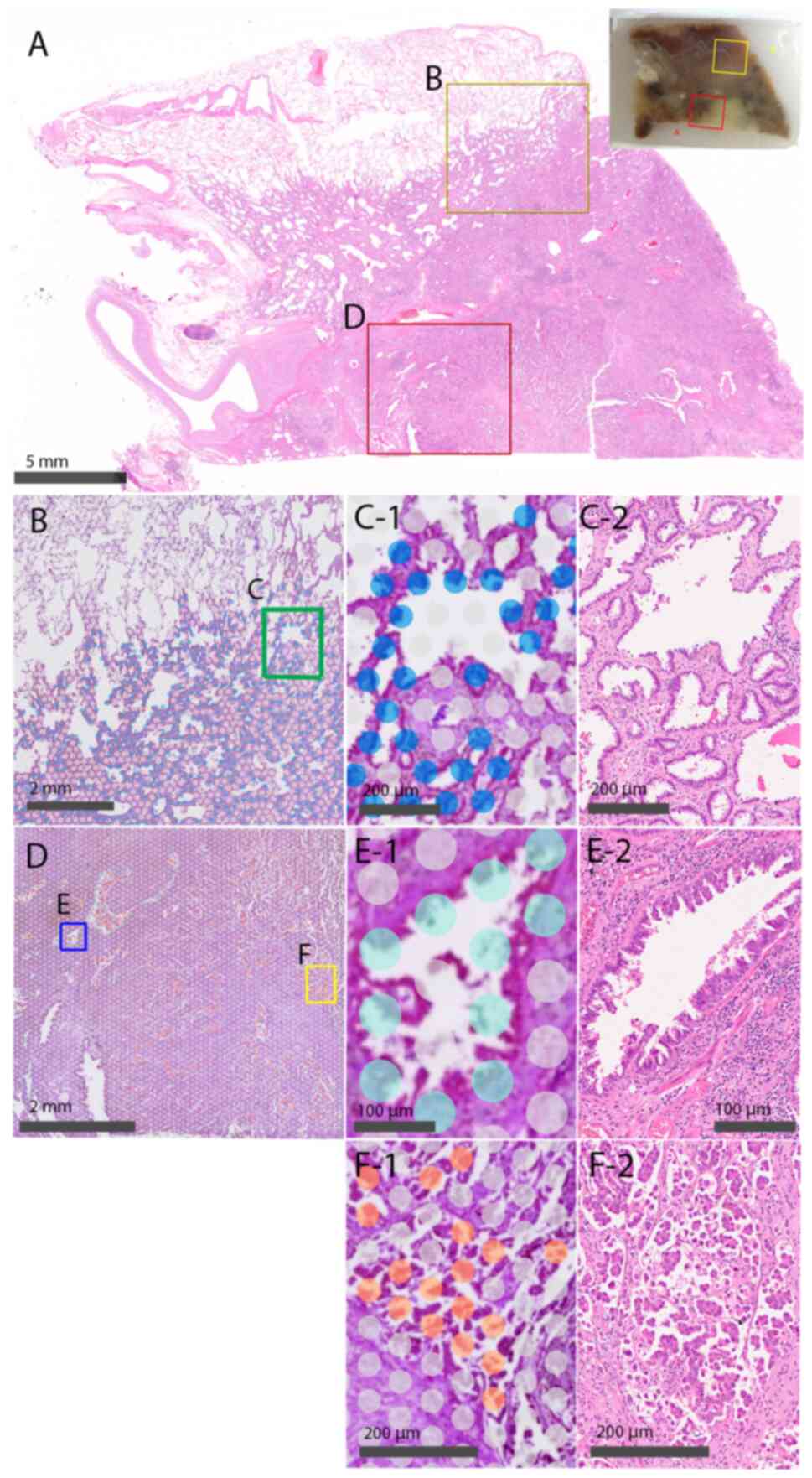
Figure 1

Representative H&E staining
images of patient 1 acquired using Visium profiling. (A) Loupe
slide of surgically resected lung adenocarcinoma. Tissue sections
in situ and invaded areas were analyzed using Visium
profiling. Scale bar, 5 mm. (B) Tumor cells consisted of lepidic
elements in situ. Scale bar, 2 mm. (C) High magnification
view of the green square in (B). The lepidic element was
characterized by neoplastic cell extension along the alveolar wall
surface. (C-1) Blue spots. (C-2) Serial section. Scale bar, 200 µm.
(D) Tumor cells in the invaded area comprised both filigree and
mPAP elements. Scale bar, 2 mm. (E) High magnification view of the
blue square in (D). Filigree element consisted of stacked tumor
cells extending from alveolar walls towards airspace without
fibrovascular cores. (E-1) Light green spots. (E-2) Serial section.
Scale bar, 100 µm. (F) High magnification view of the yellow square
in (D). mPAP elements were characterized by the formation of tufted
papillary structures with a central fibrovascular core and floated
in the alveolar space. (F-1) Orange spots. (F-2) Serial section.
Scale bar, 200 µm. mPAP, conventional/overt micropapillary.

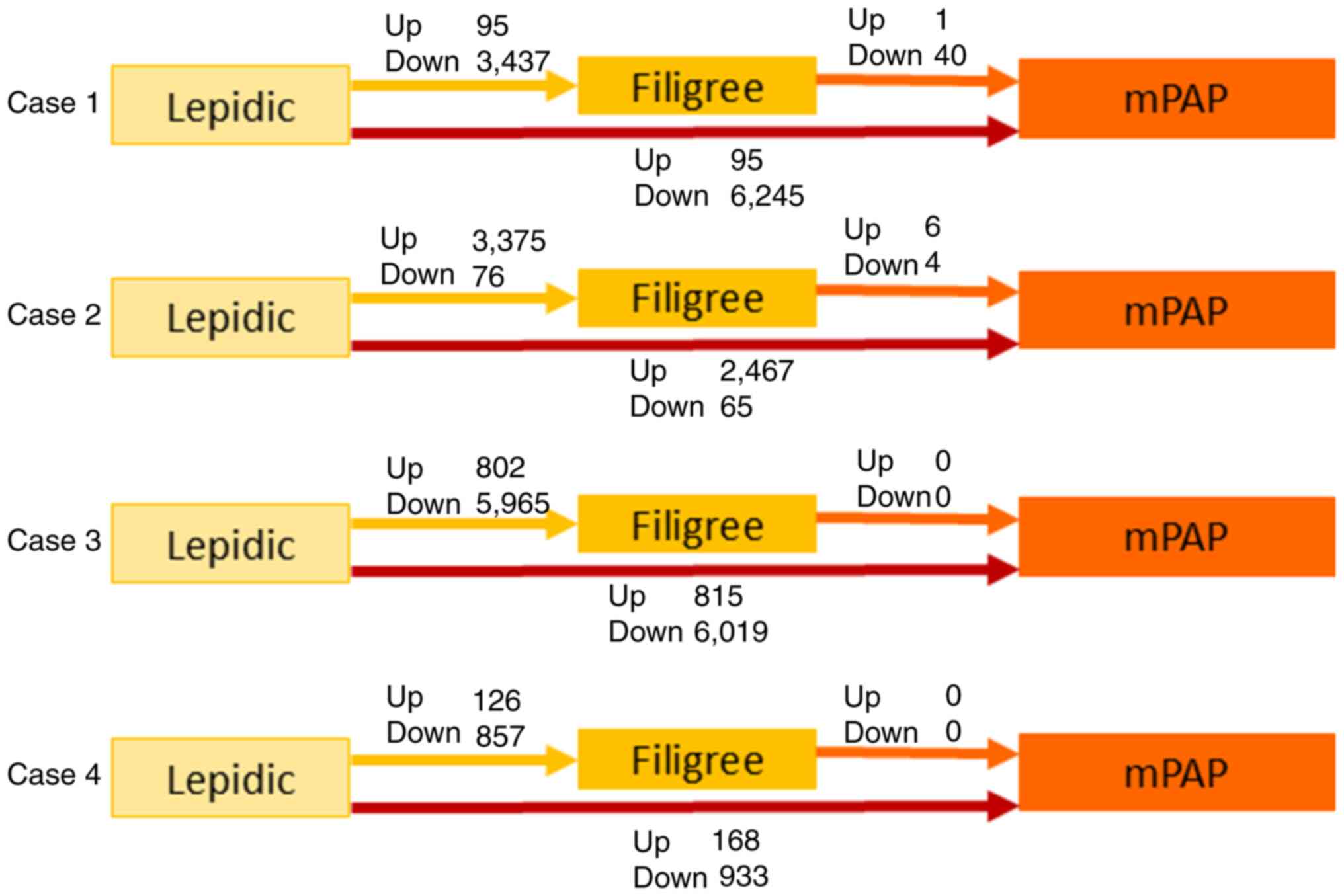
Figure 2

Number of significantly
differentially expressed genes among histological elements in 4
cases. The numbers of changes in gene expression between lepidic
and mPAP elements were a few dozen to several thousand. Most of the
changes in gene expression during the transition from lepidic to
mPAP elements occurred between the lepidic and filigree elements
(approximately one hundred to several thousand). By contrast,
relatively few changes were observed between filigree and mPAP
elements (<50). mPAP, conventional/overt micropapillary.

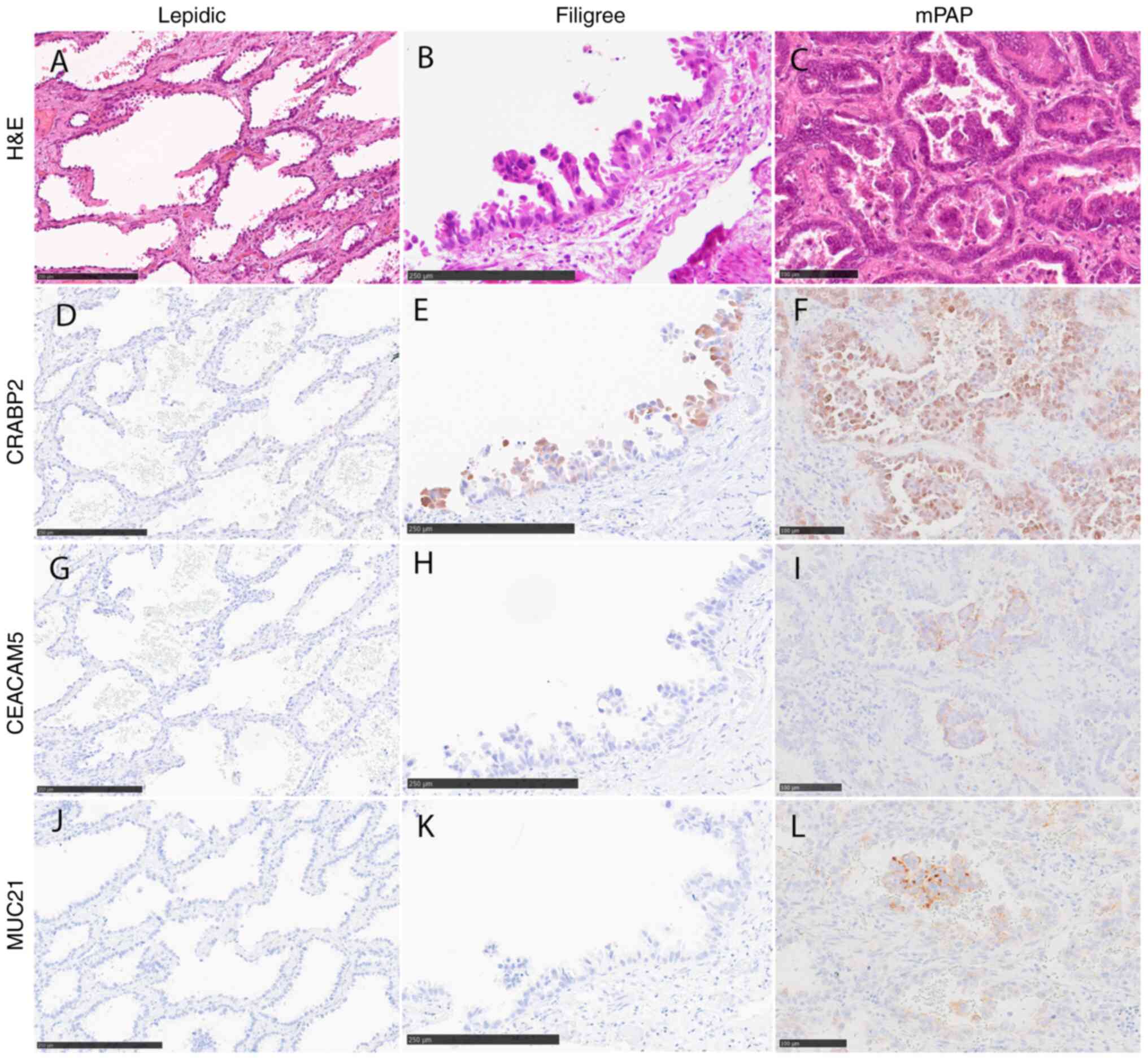
Figure 3

Representative images of CRABP2,
CEACAM5 and MUC21 immunohistochemical staining. (A) Lepidic, (B)
filigree and (C) mPAP elements stained with H&E. (D) CRABP2,
(G) CEACAM5 and (J) MUC21 were rarely expressed in lepidic
elements. CRABP2 was expressed in (E) filigree and (F) mPAP
elements. (I) CEACAM5 and (L) MUC21 were expressed only in mPAP
elements. (H) CEACAM5 and (K) MUC21 were rarely expressed in
filigree elements. Scale bar, 250 µm (A, B, D, E, G, H, J and K) or
100 µm (C, F, I and L). CEACAM5, carcinoembryonic antigen-related
cell adhesion molecule 5; CRABP2, cellular retinoic acid binding
protein 2; mPAP, conventional/overt micropapillary; MUC21, mucin
21.

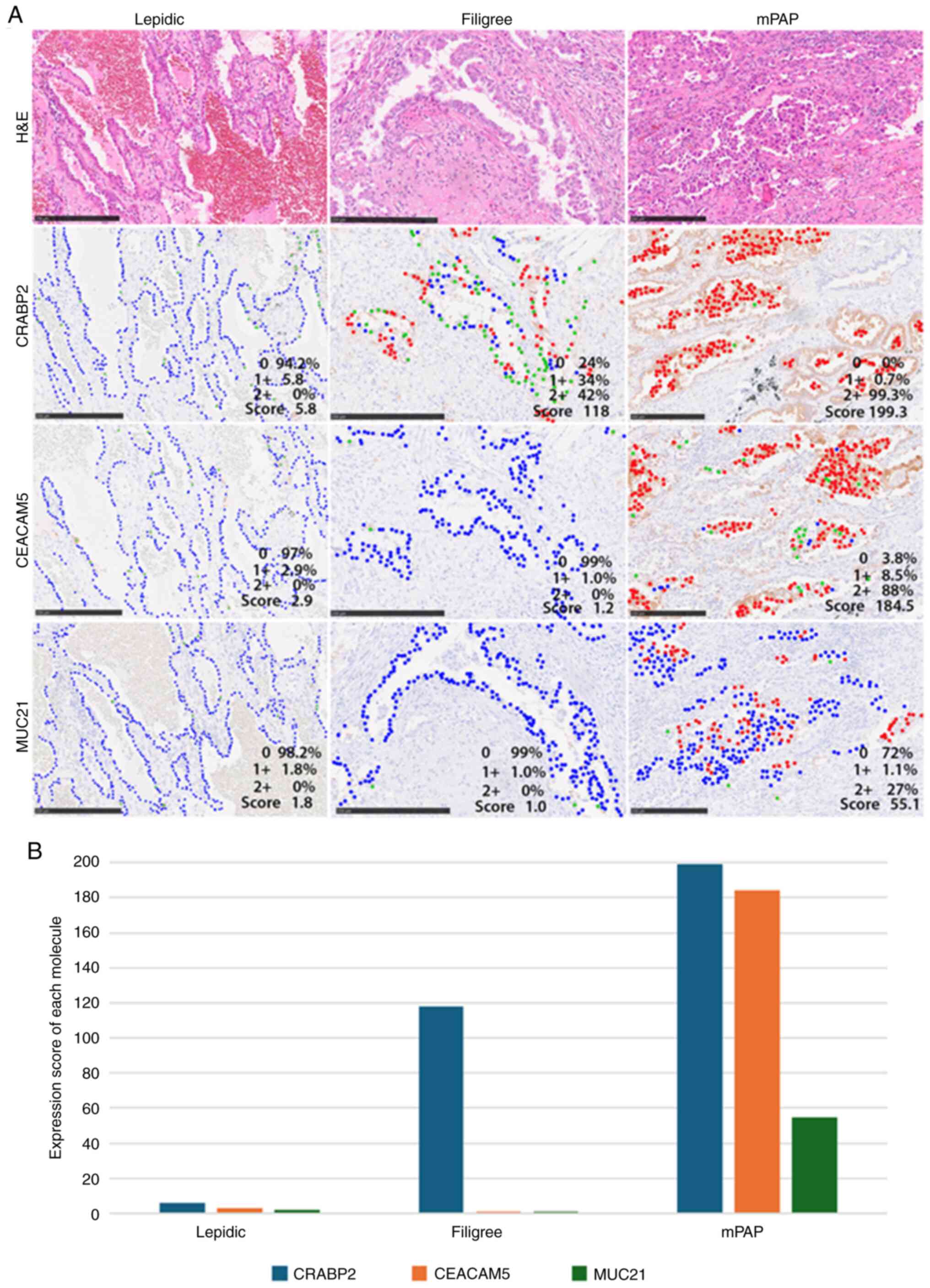
Figure 4

Representative images of tumors with
various immunohistochemical scores. Red, green and blue dots
indicate tumor cells with strong, weak and no signals (intensity,
2, 1 and 0, respectively) (A) Lepidic elements (left) rarely
exhibited positive signals for each antibody (CRABP2, CEACAM5 and
MUC21 scores: 5.8, 2.9 and 1.8). Filigree elements (center) showed
some strong and weak CRABP2 signals in most neoplastic cells
(score, 118=1×34+2×42). Signals for CEACAM5 and MUC21 were rarely
positive (scores, 1.2 and 1.0, respectively). mPAP elements (right)
exhibited stronger signals in most neoplastic cells for CRABP2,
CEACAM5 and MUC21 than the other elements (lepidic and filigree)
(scores, 199.3=1×0.7+2×99.3, 184.5=1×8.5+2×88 and 55.1=1×1.1+2×27,
respectively). Scale bar, 250 µm. (B) All scores were low in
lepidic elements. Only the expression score for CRABP2 was high in
the filigree element, whereas the scores for all three proteins
were high in mPAP elements. CEACAM5, carcinoembryonic
antigen-related cell adhesion molecule 5; CRABP2, cellular retinoic
acid binding protein 2; mPAP, conventional/overt micropapillary;
MUC21, mucin 21.

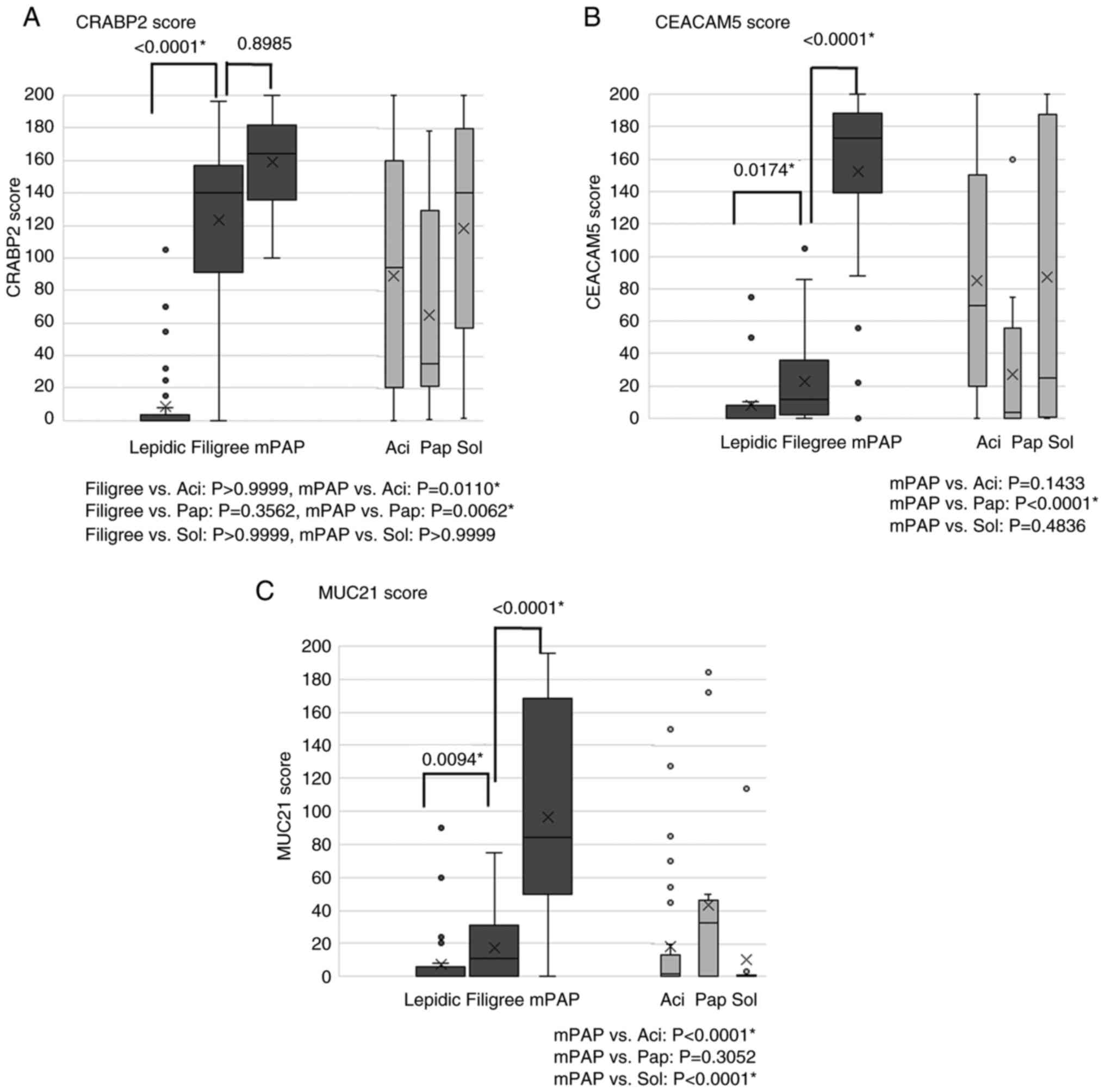
Figure 5

Association between histological
elements and CRABP2, CEACAM5 and MUC21 immunohistochemical scores.
(A) The CRABP2 score was significantly higher in filigree elements
than in lepidic elements (P<0.0001) but no significant
difference was observed between mPAP elements and filigree elements
(P=0.8985). (B) The CEACAM5 score was significantly higher in
filigree elements than in lepidic elements (P=0.0174) and
significantly higher in mPAP elements than in filigree elements
(P<0.0001). This difference was more significant between
filigree and mPAP elements than between filigree and lepidic
elements. (C) The MUC21 score was significantly higher in filigree
elements than in lepidic elements (P=0.0094) and significantly
higher in mPAP elements than in filigree elements (P<0.0001).
This difference was more significant between filigree and mPAP
elements than between filigree and lepidic elements.
Box-and-whisker plots show immunohistochemical scores for 50
surgically resected lung adenocarcinoma cases (median, thick line;
25th-75th percentiles, box; 10th-90th percentiles, whiskers;
outliers, dots). P<0.05 (Kruskal-Wallis test with Dunn's
multiple comparison test). *Statistically significant. Aci, acinar;
CEACAM5, carcinoembryonic antigen-related cell adhesion molecule 5;
CRABP2, cellular retinoic acid binding protein 2; mPAP,
conventional/overt micropapillary; MUC21, mucin 21; Pap, papillary;
Sol, solid.

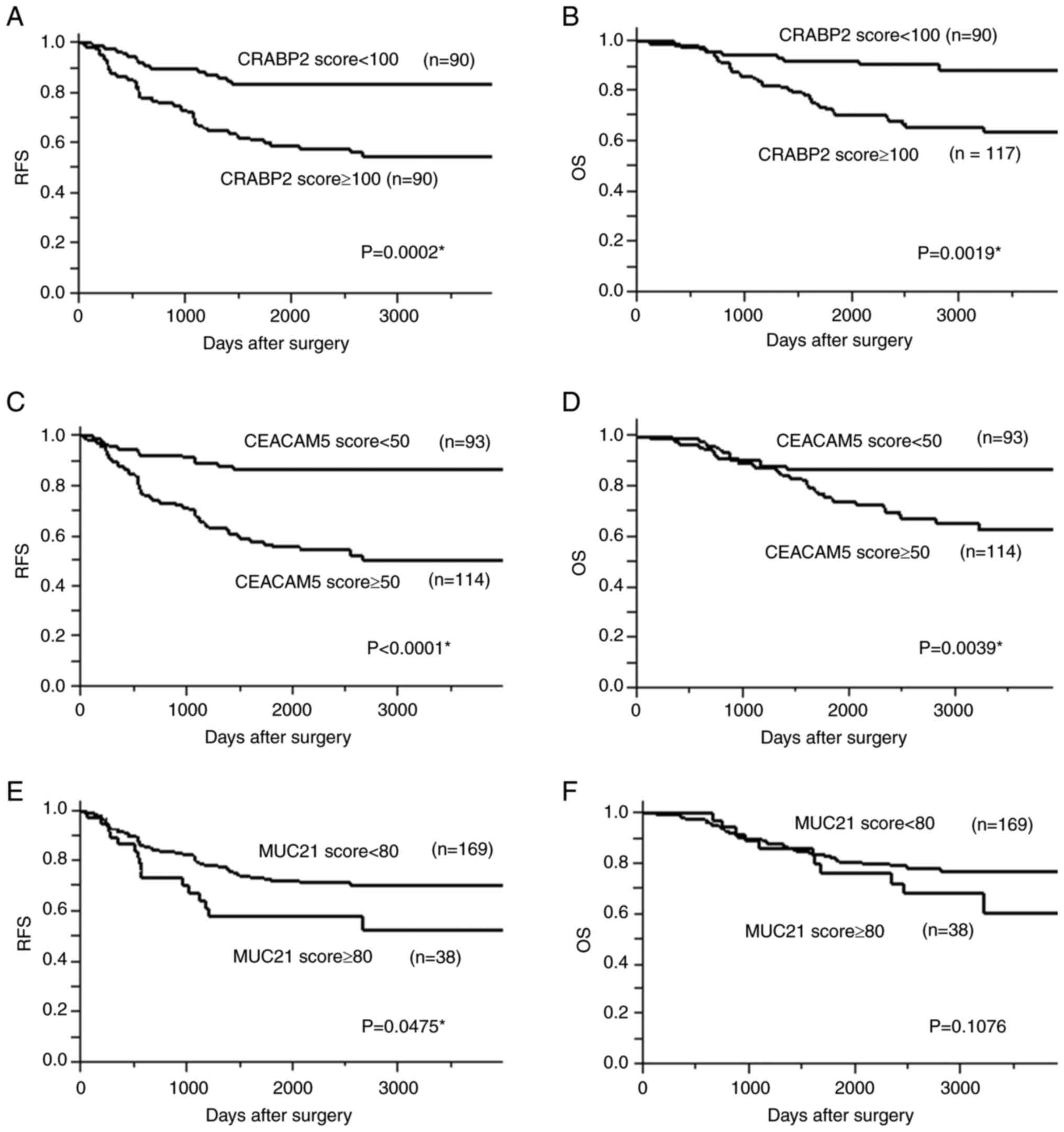
Figure 6

Kaplan-Meier RFS and OS curves of the
associations between CRABP2, CEACAM5 and MUC21 and disease
recurrence and survival. RFS rates were significantly worse in
samples with high (A) CRABP2, (C) CEACAM5 and (E) MUC21 expression
levels. OS rates were significantly worse in samples with high (B)
CRABP2 and (D) CEACAM5 expression levels. (F) No significant
difference in OS rates was observed between patients with high and
low MUC21 expression levels. P<0.05, log-rank test.
*Statistically significant. A total of 207 patients with lung
adenocarcinoma were followed up for a median of 84 (4–201) months. CEACAM5, carcinoembryonic
antigen-related cell adhesion molecule 5; CRABP2, cellular retinoic
acid binding protein 2; MUC21, mucin 21; n, number of tumors; OS,
overall survival; RFS, recurrence-free survival.
View References

1 

Makimoto Y, Nabeshima K, Iwasaki H, Miyoshi T, Enatsu S, Shiraishi T, Iwasaki A, Shirakusa T and Kikuchi M: Micropapillary pattern: A distinct pathological marker to subclassify tumours with a significantly poor prognosis within small peripheral lung adenocarcinoma (</=20 mm) with mixed bronchioloalveolar and invasive subtypes (Noguchi's type C tumours). Histopathology. 46:677–684. 2005. View Article : Google Scholar : PubMed/NCBI

2 

Miyoshi T, Satoh Y, Okumura S, Nakagawa K, Shirakusa T, Tsuchiya E and Ishikawa Y: Early-stage lung adenocarcinomas with a micropapillary pattern, a distinct pathologic marker for a significantly poor prognosis. Am J Surg Pathol. 27:101–109. 2003. View Article : Google Scholar : PubMed/NCBI

3 

Chao L, Yi-Sheng H, Yu C, Li-Xu Y, Xin-Lan L, Dong-Lan L, Jie C, Yi-Lon W and Hui LY: Relevance of EGFR mutation with micropapillary pattern according to the novel IASLC/ATS/ERS lung adenocarcinoma classification and correlation with prognosis in Chinese patients. Lung Cancer. 86:164–169. 2014. View Article : Google Scholar : PubMed/NCBI

4 

Matsumura M, Okudela K, Kojima Y, Umeda S, Tateishi Y, Sekine A, Arai H, Woo T, Tajiri M and Ohashi K: A histopathological feature of EGFR-mutated lung adenocarcinomas with highly malignant potential-An implication of micropapillary element. PLOS One. 11:e01667952016. View Article : Google Scholar : PubMed/NCBI

5 

Husain A, Farver C and Nicholson A: Adenocarcinoma of the lung. WHO classification of tumours. Borczuk A, Chan J, Cooper W, Dacic S, Kerr K, Lantuejoul S and Marx A: 5th edition. IARC; Lyon: 2021

6 

Fukutomi T, Hayashi Y, Emoto K, Kamiya K, Kohno M and Sakamoto M: Low papillary structure in lepidic growth component of lung adenocarcinoma: A unique histologic hallmark of aggressive behavior. Hum Pathol. 44:1849–1858. 2013. View Article : Google Scholar : PubMed/NCBI

7 

Gracia Villacampa E, Larsson L, Mirzazadeh R, Kvastad L, Andersson A, Mollbrink A, Kokaraki G, Monteil V, Schultz N, Appelberg KS, et al: Genome-wide spatial expression profiling in formalin-fixed tissues. Cell Genom. 1:1000652021. View Article : Google Scholar : PubMed/NCBI

8 

Xie L, Kong H, Yu J, Sun M, Lu S, Zhang Y, Hu J, Du F, Lian Q, Xin H, et al: Spatial transcriptomics reveals heterogeneity of histological subtypes between lepidic and acinar lung adenocarcinoma. Clin Transl Med. 14:e15732024. View Article : Google Scholar : PubMed/NCBI

9 

Takano Y, Suzuki J, Nomura K, Fujii G, Zenkoh J, Kawai H, Kuze Y, Kashima Y, Nagasawa S, Nakamura Y, et al: Spatially resolved gene expression profiling of tumor microenvironment reveals key steps of lung adenocarcinoma development. Nat Commun. 15:106372024. View Article : Google Scholar : PubMed/NCBI

10 

Sobue T, Yamamoto S, Hara M, Sasazuki S, Sasaki S and Tsugane S: Cigarette smoking and subsequent risk of lung cancer by histologic type in middle-aged Japanese men and women: the JPHC study. Int J Cancer. 99:245–251. 2002. View Article : Google Scholar : PubMed/NCBI

11 

Suzuki M, Shinozaki-Ushiku A, Yuhara S, Nagano M, Sato M and Ushiku T: The prognostic impact of extra-alveolar invasion in lung adenocarcinoma. Lung Cancer. 205:1086122025. View Article : Google Scholar : PubMed/NCBI

12 

Kawai H, Miura T, Kawamatsu N, Nakagawa T, Shiba-Ishii A, Yoshimoto T, Amano Y, Kihara A, Sakuma Y, Fujita K, et al: Expression patterns of HNF4a, tTF-1, and SMARCA4 in lung adenocarcinomas: Impacts on clinicopathological and genetic features. Virchows Archiv. 486:343–354. 2025. View Article : Google Scholar : PubMed/NCBI

13 

Matsumura M, Okudela K, Nakashima Y, Mitsui H, Denda-Nagai K, Suzuki T, Arai H, Umeda S, Tateishi Y, Koike C, et al: Specific expression of MUC21 in micropapillary elements of lung adenocarcinomas-Implications for the progression of EGFR-mutated lung adenocarcinomas. PLoS One. 14:e02152372019. View Article : Google Scholar : PubMed/NCBI

14 

Wu JI, Lin YP, Tseng CW, Chen HJ and Wang LH: Crabp2 promotes metastasis of lung cancer cells via HuR and integrin β1/FAK/ERK signaling. Sci Rep. 9:8452019. View Article : Google Scholar : PubMed/NCBI

15 

Feng X, Zhang M, Wang B, Zhou C, Mu Y, Li J, Liu X, Wang Y, Song Z and Liu P: CRABP2 regulates invasion and metastasis of breast cancer through hippo pathway dependent on ER status. J Exp Clin Cancer Res. 38:3612019. View Article : Google Scholar : PubMed/NCBI

16 

Liu RZ, Li S, Garcia E, Glubrecht DD, Poon HY, Easaw JC and Godbout R: Association between cytoplasmic CRABP2, altered retinoic acid signaling, and poor prognosis in glioblastoma. Glia. 64:963–976. 2016. View Article : Google Scholar : PubMed/NCBI

17 

Xu L, Su H, Zhao S, Si H, Xie H, Ren Y, Gao J, Wang F, Xie X, Dai C, et al: Development of the semi-dry dot-blot method for intraoperative detecting micropapillary component in lung adenocarcinoma based on proteomics analysis. Br J Cancer. 128:2116–2125. 2023. View Article : Google Scholar : PubMed/NCBI

18 

Dai T, Adachi J, Dai Y, Nakano N, Yamato M, Kikuchi S, Usui S, Minami Y, Tomonaga T, Noguchi M, et al: In-depth proteomics reveals the characteristic developmental profiles of early lung adenocarcinoma with epidermal growth factor receptor mutation. Cancer Med. 12:10755–10767. 2023. View Article : Google Scholar : PubMed/NCBI

19 

Zhang X, Han X, Zuo P, Zhang X and Xu H: CEACAM5 stimulates the progression of non-small-cell lung cancer by promoting cell proliferation and migration. J Int Med Res. 48:3000605209594782020. View Article : Google Scholar : PubMed/NCBI

20 

Li Q, Li Y, Li J, Ma Y, Dai W, Mo S, Xu Y, Li X and Cai S: FBW7 suppresses metastasis of colorectal cancer by inhibiting HIF1α/CEACAM5 functional axis. Int J Biol Sci. 14:726–735. 2018. View Article : Google Scholar : PubMed/NCBI

21 

Süer H, Erus S, Cesur EE, Yavuz Ö, Ağcaoğlu O, Bulutay P, Önder TT, Tanju S and Dilege Ş: Combination of CEACAM5, EpCAM and CK19 gene expressions in mediastinal lymph node micrometastasis is a prognostic factor for non-small cell lung cancer. J Cardiothorac Surg. 18:1892023. View Article : Google Scholar : PubMed/NCBI

22 

Odintsov I and Sholl LM: Prognostic and predictive biomarkers in non-small cell lung carcinoma. Pathology. 56:192–204. 2024. View Article : Google Scholar : PubMed/NCBI

23 

Yoshimoto T, Matsubara D, Soda M, Ueno T, Amano Y, Kihara A, Sakatani T, Nakano T, Shibano T, Endo S, et al: Mucin 21 is a key molecule involved in the incohesive growth pattern in lung adenocarcinoma. Cancer Sci. 110:3006–3011. 2019. View Article : Google Scholar : PubMed/NCBI

24 

Yi Y, Kamata-Sakurai M, Denda-Nagai K, Itoh T, Okada K, Ishii-Schrade K, Iguchi A, Sugiura D and Irimura T: Mucin 21/epiglycanin modulates cell adhesion. J Biol Chem. 285:21233–21240. 2010. View Article : Google Scholar : PubMed/NCBI

25 

Denda-Nagai K, Ishii-Schrade KB, Tian Y, Okada K and Irimura T: Immunohistochemistry of mucin. Glycoscience protocols (GlycoPODv2). Nishihara S, Angata K, Aoki-Kinoshita KF and Hirabayashi J: Japan Consortium for Glycobiology and Glycotechnology; Saitama: pp. p212021, PubMed/NCBI

26 

Miyoshi T, Shirakusa T, Ishikawa Y, Iwasaki A, Shiraishi T, Makimoto Y, Iwasaki H and Nabeshima K: Possible mechanism of metastasis in lung adenocarcinomas with a micropapillary pattern. Pathol Int. 55:419–424. 2005. View Article : Google Scholar : PubMed/NCBI

27 

Djureinovic D, Pontén V, Landelius P, Al Sayegh S, Kappert K, Kamali-Moghaddam M, Micke P and Ståhle E: Multiplex plasma protein profiling identifies novel markers to discriminate patients with adenocarcinoma of the lung. BMC Cancer. 19:7412019. View Article : Google Scholar : PubMed/NCBI

28 

Lung Cancer Cohort Consortium (LC3), . The blood proteome of imminent lung cancer diagnosis. Nat Commun. 14:30422023. View Article : Google Scholar : PubMed/NCBI

29 

Kim DJ, Kim WJ, Lim M, Hong Y, Lee SJ, Hong SH, Heo J, Lee HY and Han SS: Plasma CRABP2 as a novel biomarker in patients with non-small cell lung cancer. J Korean Med Sci. 33:e1782018. View Article : Google Scholar : PubMed/NCBI

30 

Lefebvre AM, Adam J, Nicolazzi C, Larois C, Attenot F, Falda-Buscaiot F, Dib C, Masson N, Ternès N, Bauchet AL, et al: The search for therapeutic targets in lung cancer: Preclinical and human studies of carcinoembryonic antigen-related cell adhesion molecule 5 expression and its associated molecular landscape. Lung Cancer. 184:1073562023. View Article : Google Scholar : PubMed/NCBI

Related Articles

  • Abstract
  • View
  • Download
  • Twitter
Copy and paste a formatted citation
Spandidos Publications style
Matsumura M, Mitsui H, Woo T, Suzuki T, Arai H, Koike C, Kataoka T, Motooka D, Fukushima K, Okudela K, Okudela K, et al: Identification of key molecules in micropapillary progression of lung adenocarcinoma: A comprehensive gene expression analysis study using the spatial gene expression solution methodology. Oncol Lett 30: 533, 2025.
APA
Matsumura, M., Mitsui, H., Woo, T., Suzuki, T., Arai, H., Koike, C. ... Okudela, K. (2025). Identification of key molecules in micropapillary progression of lung adenocarcinoma: A comprehensive gene expression analysis study using the spatial gene expression solution methodology. Oncology Letters, 30, 533. https://doi.org/10.3892/ol.2025.15278
MLA
Matsumura, M., Mitsui, H., Woo, T., Suzuki, T., Arai, H., Koike, C., Kataoka, T., Motooka, D., Fukushima, K., Okudela, K."Identification of key molecules in micropapillary progression of lung adenocarcinoma: A comprehensive gene expression analysis study using the spatial gene expression solution methodology". Oncology Letters 30.5 (2025): 533.
Chicago
Matsumura, M., Mitsui, H., Woo, T., Suzuki, T., Arai, H., Koike, C., Kataoka, T., Motooka, D., Fukushima, K., Okudela, K."Identification of key molecules in micropapillary progression of lung adenocarcinoma: A comprehensive gene expression analysis study using the spatial gene expression solution methodology". Oncology Letters 30, no. 5 (2025): 533. https://doi.org/10.3892/ol.2025.15278
Copy and paste a formatted citation
x
Spandidos Publications style
Matsumura M, Mitsui H, Woo T, Suzuki T, Arai H, Koike C, Kataoka T, Motooka D, Fukushima K, Okudela K, Okudela K, et al: Identification of key molecules in micropapillary progression of lung adenocarcinoma: A comprehensive gene expression analysis study using the spatial gene expression solution methodology. Oncol Lett 30: 533, 2025.
APA
Matsumura, M., Mitsui, H., Woo, T., Suzuki, T., Arai, H., Koike, C. ... Okudela, K. (2025). Identification of key molecules in micropapillary progression of lung adenocarcinoma: A comprehensive gene expression analysis study using the spatial gene expression solution methodology. Oncology Letters, 30, 533. https://doi.org/10.3892/ol.2025.15278
MLA
Matsumura, M., Mitsui, H., Woo, T., Suzuki, T., Arai, H., Koike, C., Kataoka, T., Motooka, D., Fukushima, K., Okudela, K."Identification of key molecules in micropapillary progression of lung adenocarcinoma: A comprehensive gene expression analysis study using the spatial gene expression solution methodology". Oncology Letters 30.5 (2025): 533.
Chicago
Matsumura, M., Mitsui, H., Woo, T., Suzuki, T., Arai, H., Koike, C., Kataoka, T., Motooka, D., Fukushima, K., Okudela, K."Identification of key molecules in micropapillary progression of lung adenocarcinoma: A comprehensive gene expression analysis study using the spatial gene expression solution methodology". Oncology Letters 30, no. 5 (2025): 533. https://doi.org/10.3892/ol.2025.15278
Follow us
  • Twitter
  • LinkedIn
  • Facebook
About
  • Spandidos Publications
  • Careers
  • Cookie Policy
  • Privacy Policy
How can we help?
  • Help
  • Live Chat
  • Contact
  • Email to our Support Team