Spandidos Publications Logo
  • About
    • About Spandidos
    • Aims and Scopes
    • Abstracting and Indexing
    • Editorial Policies
    • Reprints and Permissions
    • Job Opportunities
    • Terms and Conditions
    • Contact
  • Journals
    • All Journals
    • Oncology Letters
      • Oncology Letters
      • Information for Authors
      • Editorial Policies
      • Editorial Board
      • Aims and Scope
      • Abstracting and Indexing
      • Bibliographic Information
      • Archive
    • International Journal of Oncology
      • International Journal of Oncology
      • Information for Authors
      • Editorial Policies
      • Editorial Board
      • Aims and Scope
      • Abstracting and Indexing
      • Bibliographic Information
      • Archive
    • Molecular and Clinical Oncology
      • Molecular and Clinical Oncology
      • Information for Authors
      • Editorial Policies
      • Editorial Board
      • Aims and Scope
      • Abstracting and Indexing
      • Bibliographic Information
      • Archive
    • Experimental and Therapeutic Medicine
      • Experimental and Therapeutic Medicine
      • Information for Authors
      • Editorial Policies
      • Editorial Board
      • Aims and Scope
      • Abstracting and Indexing
      • Bibliographic Information
      • Archive
    • International Journal of Molecular Medicine
      • International Journal of Molecular Medicine
      • Information for Authors
      • Editorial Policies
      • Editorial Board
      • Aims and Scope
      • Abstracting and Indexing
      • Bibliographic Information
      • Archive
    • Biomedical Reports
      • Biomedical Reports
      • Information for Authors
      • Editorial Policies
      • Editorial Board
      • Aims and Scope
      • Abstracting and Indexing
      • Bibliographic Information
      • Archive
    • Oncology Reports
      • Oncology Reports
      • Information for Authors
      • Editorial Policies
      • Editorial Board
      • Aims and Scope
      • Abstracting and Indexing
      • Bibliographic Information
      • Archive
    • Molecular Medicine Reports
      • Molecular Medicine Reports
      • Information for Authors
      • Editorial Policies
      • Editorial Board
      • Aims and Scope
      • Abstracting and Indexing
      • Bibliographic Information
      • Archive
    • World Academy of Sciences Journal
      • World Academy of Sciences Journal
      • Information for Authors
      • Editorial Policies
      • Editorial Board
      • Aims and Scope
      • Abstracting and Indexing
      • Bibliographic Information
      • Archive
    • International Journal of Functional Nutrition
      • International Journal of Functional Nutrition
      • Information for Authors
      • Editorial Policies
      • Editorial Board
      • Aims and Scope
      • Abstracting and Indexing
      • Bibliographic Information
      • Archive
    • International Journal of Epigenetics
      • International Journal of Epigenetics
      • Information for Authors
      • Editorial Policies
      • Editorial Board
      • Aims and Scope
      • Abstracting and Indexing
      • Bibliographic Information
      • Archive
    • Medicine International
      • Medicine International
      • Information for Authors
      • Editorial Policies
      • Editorial Board
      • Aims and Scope
      • Abstracting and Indexing
      • Bibliographic Information
      • Archive
  • Articles
  • Information
    • Information for Authors
    • Information for Reviewers
    • Information for Librarians
    • Information for Advertisers
    • Conferences
  • Language Editing
Spandidos Publications Logo
  • About
    • About Spandidos
    • Aims and Scopes
    • Abstracting and Indexing
    • Editorial Policies
    • Reprints and Permissions
    • Job Opportunities
    • Terms and Conditions
    • Contact
  • Journals
    • All Journals
    • Biomedical Reports
      • Information for Authors
      • Editorial Policies
      • Editorial Board
      • Aims and Scope
      • Abstracting and Indexing
      • Bibliographic Information
      • Archive
    • Experimental and Therapeutic Medicine
      • Information for Authors
      • Editorial Policies
      • Editorial Board
      • Aims and Scope
      • Abstracting and Indexing
      • Bibliographic Information
      • Archive
    • International Journal of Epigenetics
      • Information for Authors
      • Editorial Policies
      • Editorial Board
      • Aims and Scope
      • Abstracting and Indexing
      • Bibliographic Information
      • Archive
    • International Journal of Functional Nutrition
      • Information for Authors
      • Editorial Policies
      • Editorial Board
      • Aims and Scope
      • Abstracting and Indexing
      • Bibliographic Information
      • Archive
    • International Journal of Molecular Medicine
      • Information for Authors
      • Editorial Policies
      • Editorial Board
      • Aims and Scope
      • Abstracting and Indexing
      • Bibliographic Information
      • Archive
    • International Journal of Oncology
      • Information for Authors
      • Editorial Policies
      • Editorial Board
      • Aims and Scope
      • Abstracting and Indexing
      • Bibliographic Information
      • Archive
    • Medicine International
      • Information for Authors
      • Editorial Policies
      • Editorial Board
      • Aims and Scope
      • Abstracting and Indexing
      • Bibliographic Information
      • Archive
    • Molecular and Clinical Oncology
      • Information for Authors
      • Editorial Policies
      • Editorial Board
      • Aims and Scope
      • Abstracting and Indexing
      • Bibliographic Information
      • Archive
    • Molecular Medicine Reports
      • Information for Authors
      • Editorial Policies
      • Editorial Board
      • Aims and Scope
      • Abstracting and Indexing
      • Bibliographic Information
      • Archive
    • Oncology Letters
      • Information for Authors
      • Editorial Policies
      • Editorial Board
      • Aims and Scope
      • Abstracting and Indexing
      • Bibliographic Information
      • Archive
    • Oncology Reports
      • Information for Authors
      • Editorial Policies
      • Editorial Board
      • Aims and Scope
      • Abstracting and Indexing
      • Bibliographic Information
      • Archive
    • World Academy of Sciences Journal
      • Information for Authors
      • Editorial Policies
      • Editorial Board
      • Aims and Scope
      • Abstracting and Indexing
      • Bibliographic Information
      • Archive
  • Articles
  • Information
    • For Authors
    • For Reviewers
    • For Librarians
    • For Advertisers
    • Conferences
  • Language Editing
Login Register Submit
  • This site uses cookies
  • You can change your cookie settings at any time by following the instructions in our Cookie Policy. To find out more, you may read our Privacy Policy.

    I agree
Search articles by DOI, keyword, author or affiliation
Search
Advanced Search
presentation
Oncology Letters
Join Editorial Board Propose a Special Issue
Print ISSN: 1792-1074 Online ISSN: 1792-1082
Journal Cover
December-2025 Volume 30 Issue 6

Full Size Image

Sign up for eToc alerts
Recommend to Library

Journals

International Journal of Molecular Medicine

International Journal of Molecular Medicine

International Journal of Molecular Medicine is an international journal devoted to molecular mechanisms of human disease.

International Journal of Oncology

International Journal of Oncology

International Journal of Oncology is an international journal devoted to oncology research and cancer treatment.

Molecular Medicine Reports

Molecular Medicine Reports

Covers molecular medicine topics such as pharmacology, pathology, genetics, neuroscience, infectious diseases, molecular cardiology, and molecular surgery.

Oncology Reports

Oncology Reports

Oncology Reports is an international journal devoted to fundamental and applied research in Oncology.

Experimental and Therapeutic Medicine

Experimental and Therapeutic Medicine

Experimental and Therapeutic Medicine is an international journal devoted to laboratory and clinical medicine.

Oncology Letters

Oncology Letters

Oncology Letters is an international journal devoted to Experimental and Clinical Oncology.

Biomedical Reports

Biomedical Reports

Explores a wide range of biological and medical fields, including pharmacology, genetics, microbiology, neuroscience, and molecular cardiology.

Molecular and Clinical Oncology

Molecular and Clinical Oncology

International journal addressing all aspects of oncology research, from tumorigenesis and oncogenes to chemotherapy and metastasis.

World Academy of Sciences Journal

World Academy of Sciences Journal

Multidisciplinary open-access journal spanning biochemistry, genetics, neuroscience, environmental health, and synthetic biology.

International Journal of Functional Nutrition

International Journal of Functional Nutrition

Open-access journal combining biochemistry, pharmacology, immunology, and genetics to advance health through functional nutrition.

International Journal of Epigenetics

International Journal of Epigenetics

Publishes open-access research on using epigenetics to advance understanding and treatment of human disease.

Medicine International

Medicine International

An International Open Access Journal Devoted to General Medicine.

Journal Cover
December-2025 Volume 30 Issue 6

Full Size Image

Sign up for eToc alerts
Recommend to Library

  • Article
  • Citations
    • Cite This Article
    • Download Citation
    • Create Citation Alert
    • Remove Citation Alert
    • Cited By
  • Similar Articles
    • Related Articles (in Spandidos Publications)
    • Similar Articles (Google Scholar)
    • Similar Articles (PubMed)
  • Download PDF
  • Download XML
  • View XML
Article Open Access

Histone acetyltransferase 1 promotes ovarian cancer progression by regulating cell proliferation and the cell cycle

  • Authors:
    • Xiao Han
    • Ling Liu
    • Jing Li
    • Yunxiao Zhi
    • Lanlan Zhao
    • Limin Yuan
    • Xuezhe Ouyang
    • Jie Liu
  • View Affiliations / Copyright

    Affiliations: Department of Medical Genetic and Prenatal Diagnosis, The Third Affiliated Hospital of Zhengzhou University, Zhengzhou, Henan 450052, P.R. China, Department of Oncology, The Affiliated Cancer Hospital of Zhengzhou University and Henan Cancer Hospital, Zhengzhou University, Zhengzhou, Henan 450008, P.R. China
    Copyright: © Han et al. This is an open access article distributed under the terms of Creative Commons Attribution License.
  • Article Number: 539
    |
    Published online on: September 22, 2025
       https://doi.org/10.3892/ol.2025.15285
  • Expand metrics +
Metrics: Total Views: 0 (Spandidos Publications: | PMC Statistics: )
Metrics: Total PDF Downloads: 0 (Spandidos Publications: | PMC Statistics: )
Cited By (CrossRef): 0 citations Loading Articles...

This article is mentioned in:


Abstract

Ovarian cancer (OC) is the most common cause of gynecological cancer‑related death. Histone acetyltransferase 1 (HAT1) has generated interest as a potential target for therapy due to it being involved in a variety of diseases, including cancer. However, to the best of our knowledge, the role of HAT1 in OC has not yet been investigated. In the present study, HAT1 was upregulated in OC and the high expression of HAT1 was associated with unfavorable prognosis. The transcription factor forkhead box protein A1 (FOXA1) transcriptionally regulated HAT1 expression. Furthermore, HAT1 knockdown in OC cells significantly suppressed cell proliferation and colony formation. In addition, the inhibition of HAT1 promoted cell cycle arrest, and reduced cyclin‑dependent kinase (CDK)2, CDK4 and cyclin E levels in OC cells. Taken together, the present data suggested that HAT1 served an oncogenic role in OC; therefore, HAT1 may represents a new potential therapeutic target in OC treatment.
View Figures

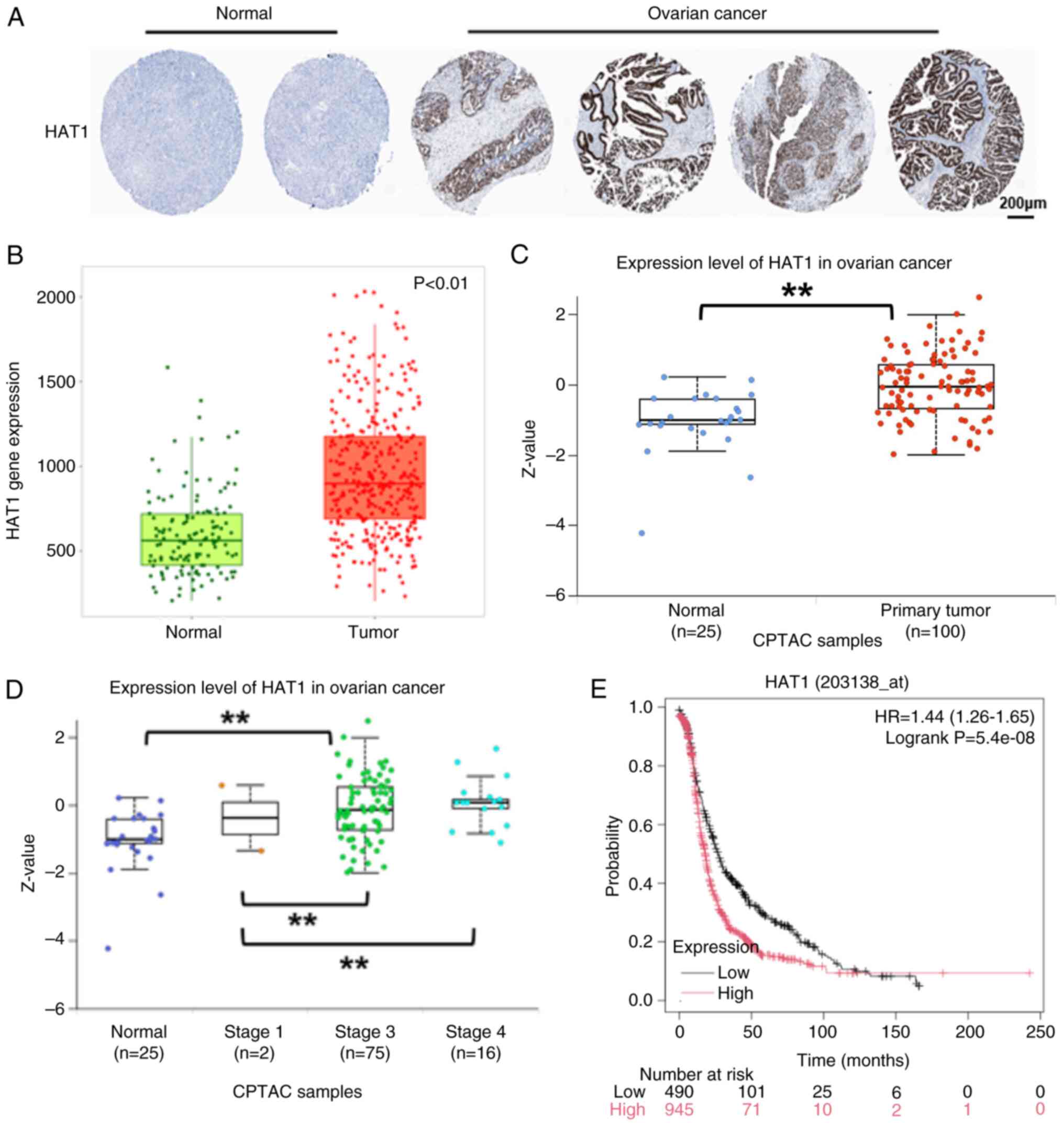
Figure 1

HAT1 levels are upregulated in human
ovarian cancer tissue and higher HAT1 levels indicate a poor
prognosis. (A) Representative images depicting the representative
immunostaining of HAT1 in ovarian cancer tissues and healthy human
tissues in The Human Protein Altas database. Scale bar=200 µm. (B)
Analysis of the TNMplot database showed that HAT1 was highly
expressed in ovarian cancer tissues compared with healthy controls.
(C) Protein levels of HAT1 in ovarian cancer and healthy human
samples from healthy controls were analyzed in the CPTAC database.
(D) HAT1 protein levels were upregulated with tumor grade in
ovarian cancer tissues. (E) Higher HAT1 levels were associated with
an unfavorable prognosis in patients with ovarian cancer. Data are
presented as the mean ± SD. **P<0.01. HAT1, histone
acetyltransferase 1; CPTAC, Clinical Proteomic Tumor Analysis
Consortium; HR, hazard ratio.

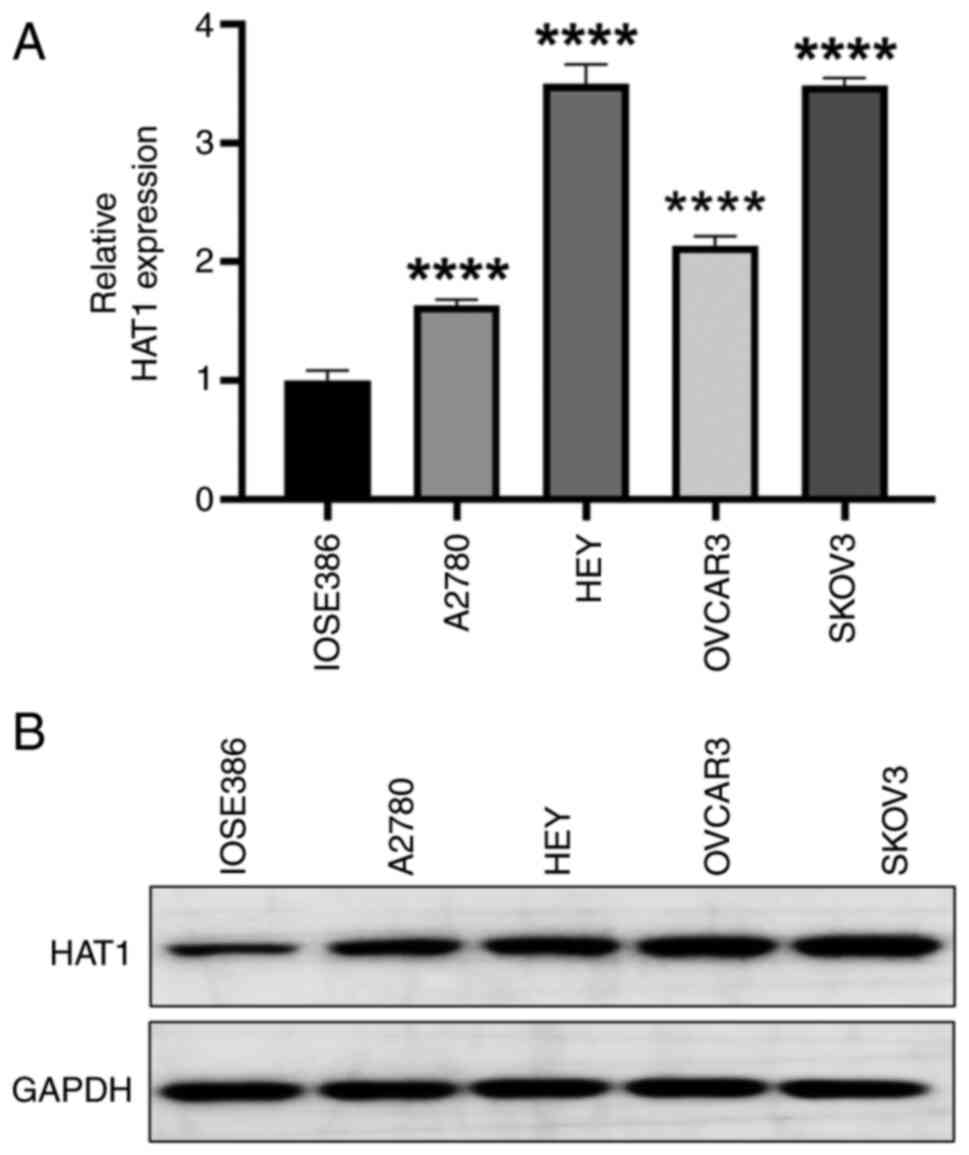
Figure 2

HAT1 expression levels are
upregulated in human ovarian cancer cell lines. (A) Relative
expression levels of HAT1 were detected by reverse
transcription-quantitative PCR in A2780, HEY, OVCAR3, SKOV3 and
normal IOSE386 cell lines. (B) Western blot analysis of HAT1
expression in A2780, HEY, OVCAR3, SKOV3 and IOSE386 cell lines.
****P<0.0001 vs. IOSE386. HAT1, histone acetyltransferase 1.

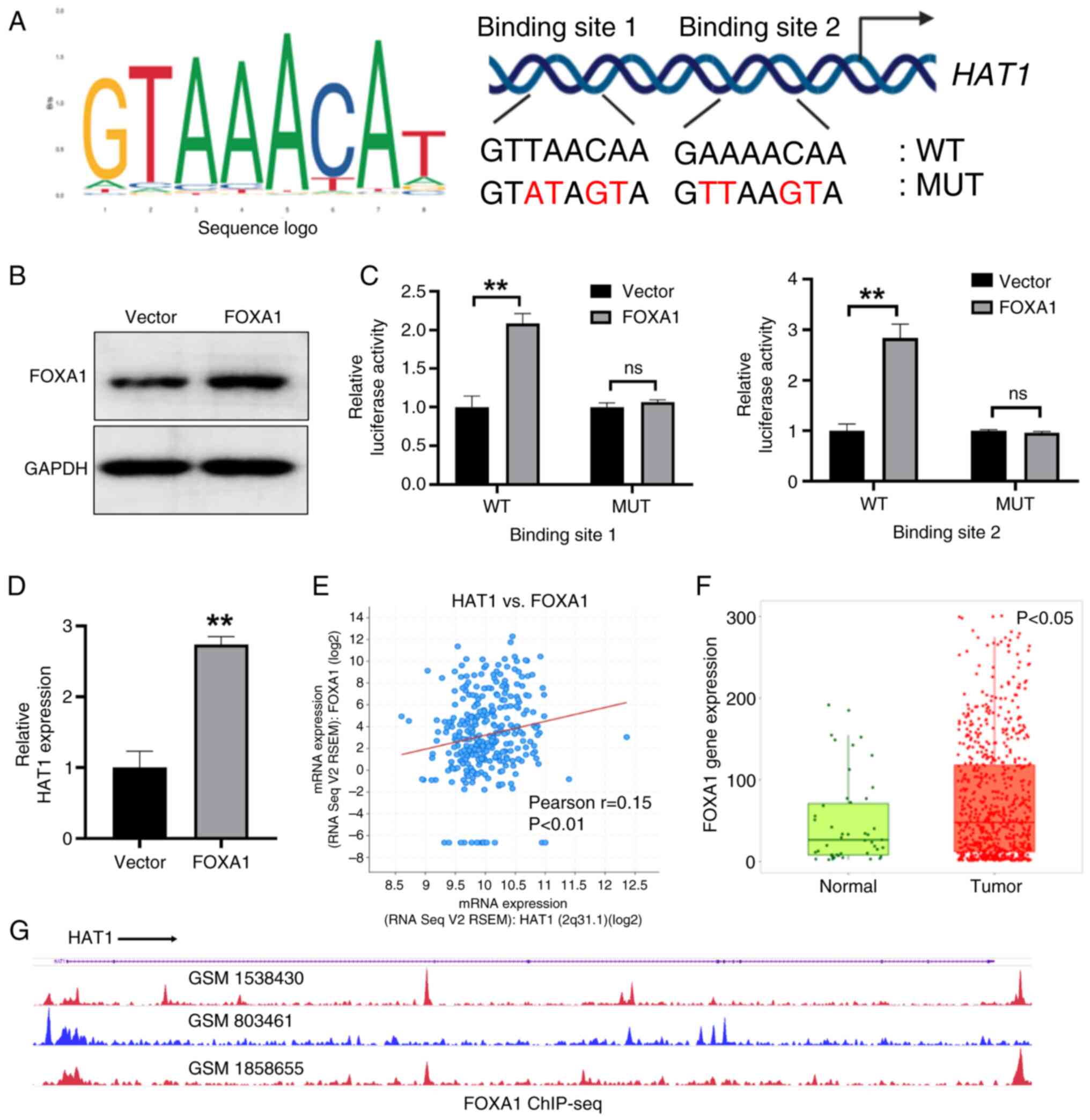
Figure 3

FOXA1 transcriptionally regulates
HAT1 expression levels. (A) FOXA1 binding sites in the HAT1
promoter region were predicted using the JASPAR database. MUT
constructs were generated at the binding sequence regions as
indicated. (B) The expression levels of FOXA1 in HEY cells
transfected with an empty or FOXA1 vector. (C) HEY cells were
transfected with pmirGLO reporter vectors containing either WT or
MUT plasmids alongside an empty or FOXA1 vector. Luciferase
activities were determined 24 h after transfection. (D)
Overexpression of FOXA1 induced HAT1 expression levels. (E)
cBioPortal database was adopted to analyze the correlation between
FOXA1 and HAT1. Pearson's rank correlation between HAT1 and FOXA1
was analyzed in ovarian cancer tissues. (F) FOXA1 levels in ovarian
cancer tissues from TCGA were determined using TNMplot database.
(G) FOXA1 was enriched at the HAT1 promoter region as suggested by
Cistrome DB. Data are presented as the mean ± SD of three
replicates. **P<0.01 vs. vector or as indicated; ns, not
significant. ChIP-seq, chromatin immunoprecipitation sequencing;
FOXA1, forkhead box protein A1; HAT1, histone acetyltransferase 1;
WT, wild-type; MUT, mutant.

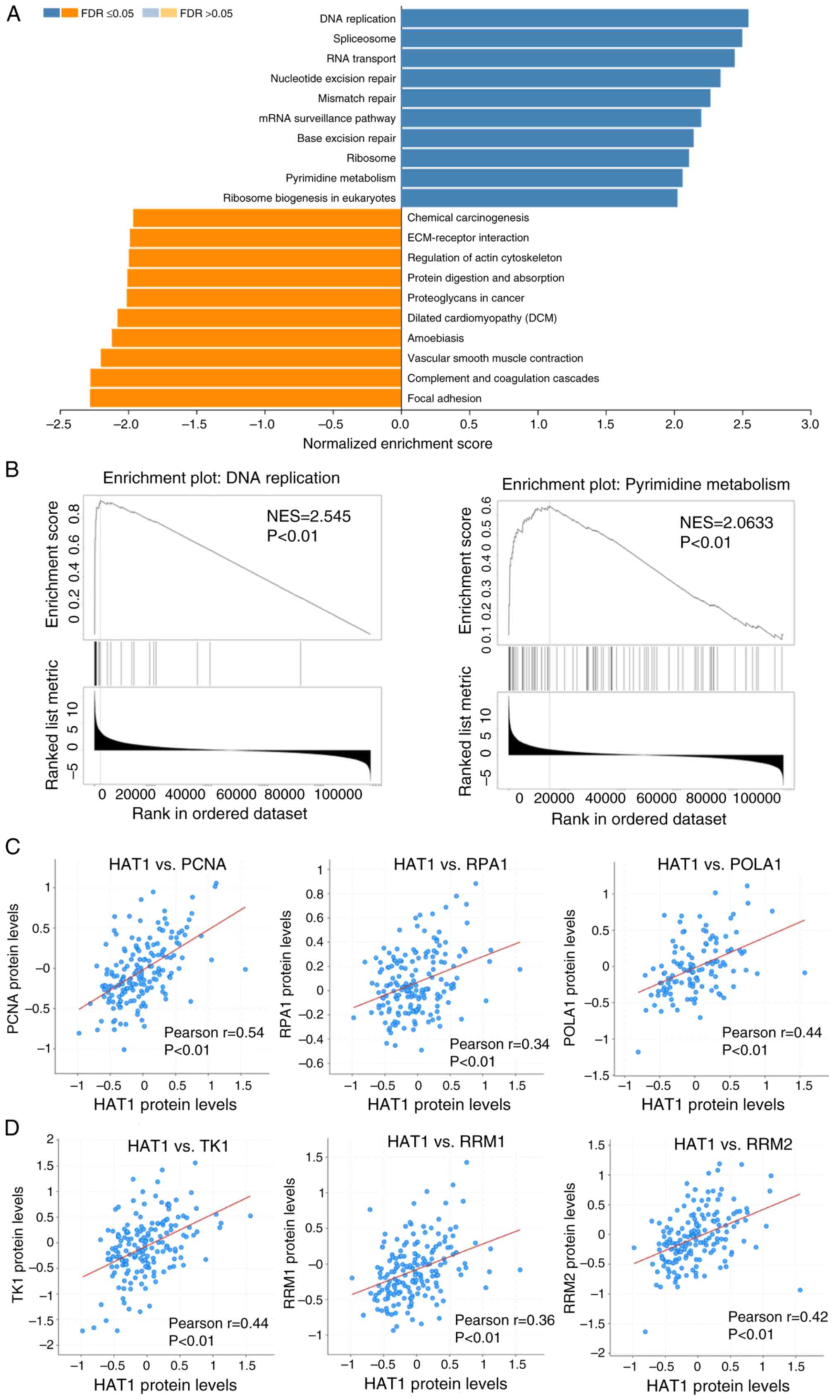
Figure 4

Relationship between HAT1 and DNA
replication and pyrimidine metabolism pathways. (A) LinkedOmics
database suggested that differentially expressed genes of HAT1 were
enriched in several biological processes, such as ‘DNA
replication’, ‘pyrimidine metabolism’ and ‘RNA transport’. (B) Gene
set enrichment analysis revealed that genes altered by HAT1 were
positively associated with ‘DNA replication’ as well as ‘pyrimidine
metabolism’ pathways. (C) cBioPortal database was used to analyze
the correlations between HAT1 and regulatory proteins of the DNA
replication pathway. Pearson's rank correlation between HAT1 and
DNA replication-related proteins (PCNA, RPA1 and POLA1) was
analyzed in ovarian cancer tissues. (D) Pearson's rank correlation
between HAT1 and pyrimidine metabolism-related proteins (TK1, RRM1
and RRM2) was analyzed in ovarian cancer tissues as suggested in
the cBioPortal database. HAT1, histone acetyltransferase 1; PCNA,
proliferating cell nuclear antigen; RPA1, replication protein A1;
POLA1, DNA polymerase α catalytic subunit; TK1, thymidine kinase 1;
RRM, ribonucleoside-diphosphate reductase subunit M; NES,
normalized enrichment score; FDR, false discovery rate.

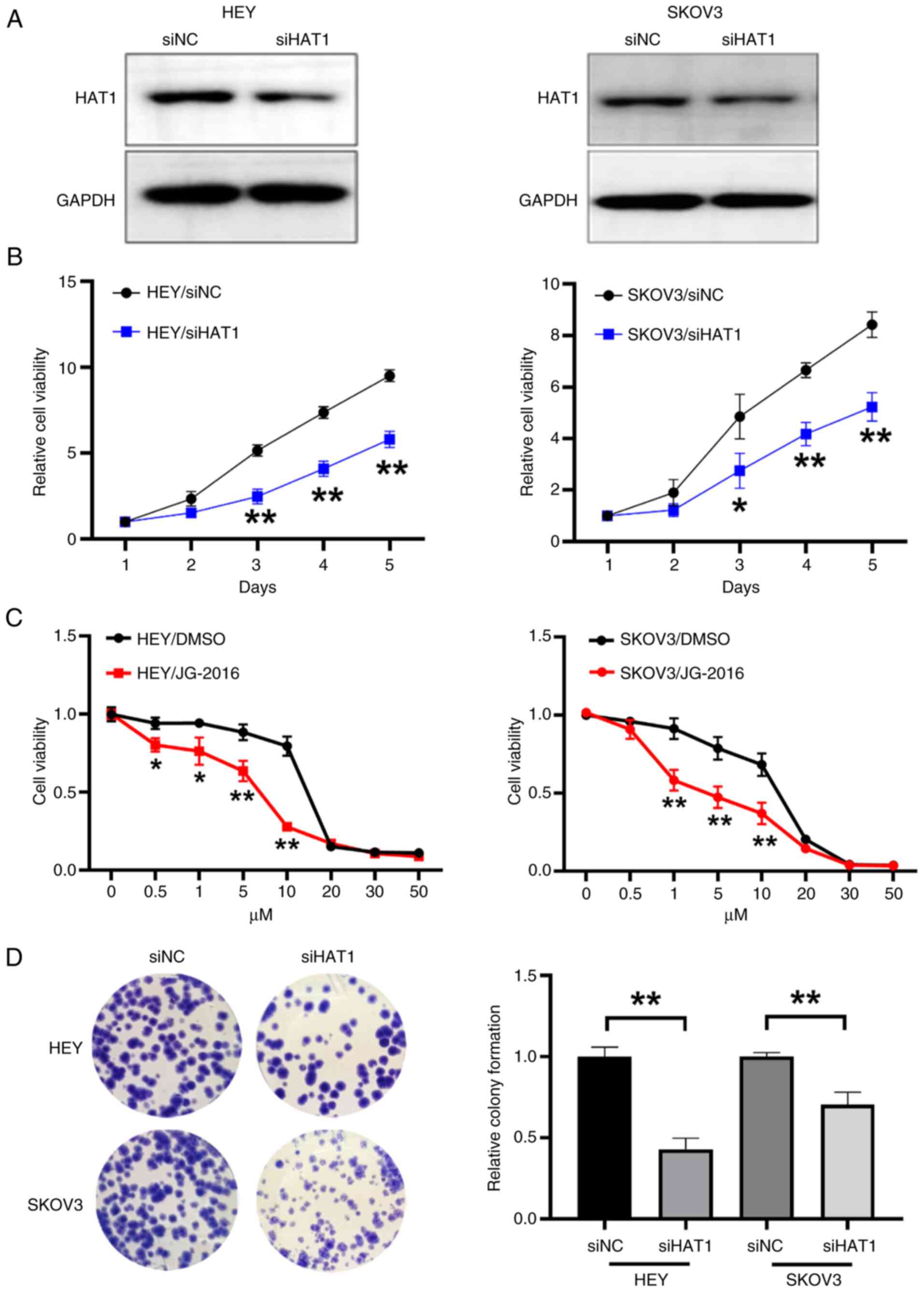
Figure 5

Inhibition of HAT1 suppresses cell
viability and colony formation in vitro. (A) Western blot
analysis of HAT1 expression in HEY and SKOV3 cells transfected with
HAT1 siRNA or NC siRNA. (B) Cell Counting Kit-8 assays were
performed to determine cell viability after HAT1 was knocked down
in HEY and SKOV3 cells. (C) HEY and SKOV3 cells were treated with
HAT1 inhibitor JG-2016 for 72 h, which significantly inhibited cell
viability. (D) Knockdown of HAT1 decreased the colony formation
capacity of HEY and SKOV3 cells. Data are presented as the mean ±
SD of three replicates. *P<0.05 and **P<0.01 vs. siNC in
figure 5B and DMSO group in figure 5C. HAT1, histone
acetyltransferase 1; si, small interfering; NC, negative
control.

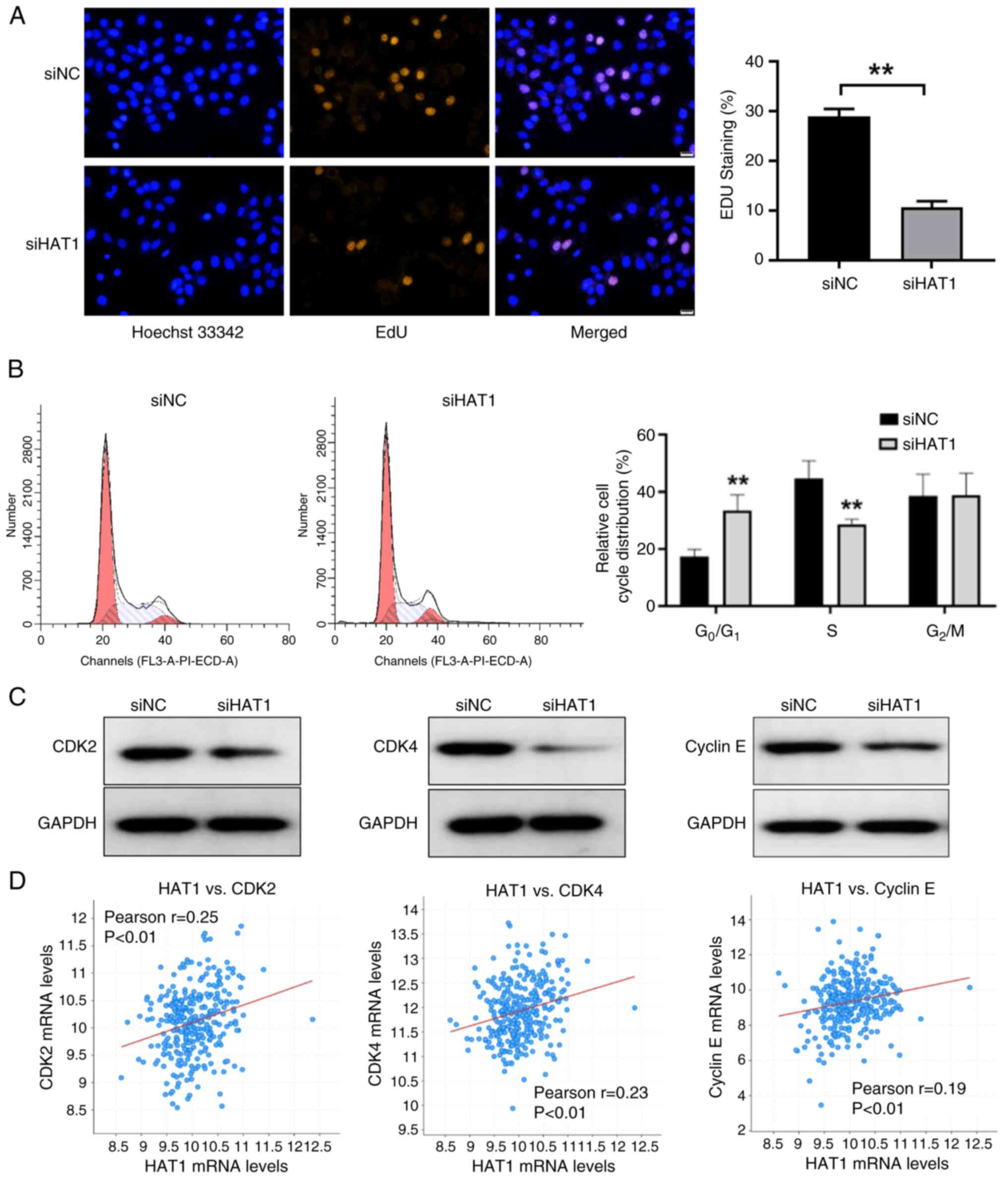
Figure 6

HAT1 knockdown inhibits cell
proliferation. (A) EdU assays of HEY cells were performed showing
that suppression of HAT1 attenuated cell proliferation activities.
Scale bar, 20 µm. (B) Cell cycle analysis was carried out on the
HAT1 knockdown and siNC cell lines, and the distribution of
G0/G1, S and G2/M percentages were
analyzed. (C) Western blot analysis of cell cycle-related protein
expression after knockdown of HAT1. (D) Pearson's rank correlation
between HAT1 and CDK2, CDK4 and cyclin E was analyzed in ovarian
cancer tissues. Data are presented as the mean ± SD of three
replicates. **P<0.01 vs. siNC. HAT1, histone acetyltransferase
1; si, small interfering; NC, negative control; CDK,
cyclin-dependent kinase.
View References

1 

Obermair A, Beale P, Scott CL, Beshay V, Kichenadasse G, Simcock B, Nicklin J, Lee YC, Cohen P and Meniawy T: Insights into ovarian cancer care: report from the ANZGOG ovarian cancer webinar series 2020. J Gynecol Oncol. 32:e952021. View Article : Google Scholar : PubMed/NCBI

2 

Xia CF, Dong XS, Li H, Cao M, Sun D, He S, Yang F, Yan X, Zhang S, Li N and Chen W: Cancer statistics in China and United States, 2022: Profiles, trends, and determinants. Chin Med J (Engl). 135:584–590. 2022. View Article : Google Scholar : PubMed/NCBI

3 

Garrido MP, Fredes AN, Lobos-Gonzalez L, Valenzuela-Valderrama M, Vera DB and Romero C: Current treatments and new possible complementary therapies for epithelial ovarian cancer. Biomedicines. 10:772021. View Article : Google Scholar : PubMed/NCBI

4 

Jayde V, White K and Blomfield P: Symptoms and diagnostic delay in ovarian cancer: A summary of the literature. Contemp Nurse. 34:55–65. 2009. View Article : Google Scholar : PubMed/NCBI

5 

Konstantinopoulos PA and Matulonis UA: Clinical and translational advances in ovarian cancer therapy. Nat Cancer. 4:1239–1257. 2023. View Article : Google Scholar : PubMed/NCBI

6 

Orr JA and Hamilton PW: Histone acetylation and chromatin pattern in cancer. A review. Anal Quant Cytol Histol. 29:17–31. 2007.PubMed/NCBI

7 

Makowski AM, Dutnall RN and Annunziato AT: Effects of acetylation of histone H4 at lysines 8 and 16 on activity of the Hat1 histone acetyltransferase. J Biol Chem. 276:43499–43502. 2001. View Article : Google Scholar : PubMed/NCBI

8 

Jin X, Tian SH and Li PP: Histone acetyltransferase 1 promotes cell proliferation and induces cisplatin resistance in hepatocellular carcinoma. Oncol Res. 25:939–946. 2017. View Article : Google Scholar : PubMed/NCBI

9 

Klett-Mingo JI, Pinto-Díez C, Cambronero-Plaza J, Carrión-Marchante R, Barragán-Usero M, Pérez-Morgado MI, Rodríguez-Martín E, Toledo-Lobo MV, González VM and Martín ME: Potential therapeutic use of aptamers against HAT1 in lung cancer. Cancers (Basel). 15:2272022. View Article : Google Scholar : PubMed/NCBI

10 

Xue L, Hou J, Wang Q, Yao L, Xu S and Ge D: RNAi screening identifies HAT1 as a potential drug target in esophageal squamous cell carcinoma. Int J Clin Exp Patho. 7:3898–3907. 2014.PubMed/NCBI

11 

Sarkar T, Dhar S, Chakraborty D, Pati S, Bose S, Panda AK, Basak U, Chakraborty S, Mukherjee S, Guin A, et al: FOXP3/HAT1 axis controls treg infiltration in the tumor microenvironment by inducing CCR4 expression in breast cancer. Front Immunol. 13:7405882022. View Article : Google Scholar : PubMed/NCBI

12 

Sun Y, Ren D, Zhou Y, Shen J, Wu H and Jin X: Histone acetyltransferase 1 promotes gemcitabine resistance by regulating the PVT1/EZH2 complex in pancreatic cancer. Cell Death Dis. 12:8782021. View Article : Google Scholar : PubMed/NCBI

13 

Yang G, Yuan Y, Yuan H, Wang J, Yun H, Geng Y, Zhao M, Li L, Weng Y, Liu Z, et al: Histone acetyltransferase 1 is a succinyltransferase for histones and non-histones and promotes tumorigenesis. Embo Rep. 22:e509672021. View Article : Google Scholar : PubMed/NCBI

14 

Livak KJ and Schmittgen TD: Analysis of relative gene expression data using real-time quantitative PCR and the 2(−Delta Delta C(T)) method. Methods. 25:402–408. 2001. View Article : Google Scholar : PubMed/NCBI

15 

Weidemüller P, Kholmatov M, Petsalaki E and Zaugg JB: Transcription factors: Bridge between cell signaling and gene regulation. Proteomics. 21:e20000342021. View Article : Google Scholar : PubMed/NCBI

16 

Hanahan D: Hallmarks of cancer: New dimensions. Cancer Discov. 12:31–46. 2022. View Article : Google Scholar : PubMed/NCBI

17 

Sung H, Ferlay J, Siegel RL, Laversanne M, Soerjomataram I, Jemal A and Bray F: Global cancer statistics 2020: GLOBOCAN estimates of incidence and mortality worldwide for 36 cancers in 185 countries. CA Cancer J Clin. 71:209–249. 2021.PubMed/NCBI

18 

Webb PM and Jordan SJ: Epidemiology of epithelial ovarian cancer. Best Pract Res Clin Obstet Gynaecol. 41:3–14. 2017. View Article : Google Scholar : PubMed/NCBI

19 

Shirvaliloo M: The landscape of histone modifications in epigenomics since 2020. Epigenomics. 14:1465–1477. 2022. View Article : Google Scholar : PubMed/NCBI

20 

Shvedunova M and Akhtar A: Modulation of cellular processes by histone and non-histone protein acetylation. Nat Rev Mol Cell Bio. 23:329–349. 2022. View Article : Google Scholar : PubMed/NCBI

21 

Sun LC, Zhang HF and Gao P: Metabolic reprogramming and epigenetic modifications on the path to cancer. Protein Cell. 13:877–919. 2022. View Article : Google Scholar : PubMed/NCBI

22 

Fan P, Zhao J, Meng Z, Wu H, Wang B, Wu H and Jin X: Overexpressed histone acetyltransferase 1 regulates cancer immunity by increasing programmed death-ligand 1 expression in pancreatic cancer. J Exp Clin Cancer Res. 38:472019. View Article : Google Scholar : PubMed/NCBI

23 

Gruber JJ, Geller B, Lipchik AM, Chen J, Salahudeen AA, Ram AN, Ford JM, Kuo CJ and Snyder MP: HAT1 coordinates histone production and acetylation via H4 promoter binding. Mol Cell. 75:711–724.e5. 2019. View Article : Google Scholar : PubMed/NCBI

24 

Carroll JS, Liu XS, Brodsky AS, Li W, Meyer CA, Szary AJ, Eeckhoute J, Shao W, Hestermann EV, Geistlinger TR, et al: Chromosome-wide mapping of estrogen receptor binding reveals long-range regulation requiring the forkhead protein FoxA1. Cell. 122:33–43. 2005. View Article : Google Scholar : PubMed/NCBI

25 

Cirillo LA, Lin FR, Cuesta I, Friedman D, Jarnik M and Zaret KS: Opening of compacted chromatin by early developmental transcription factors HNF3 (FoxA) and GATA-4. Mol Cell. 9:279–289. 2002. View Article : Google Scholar : PubMed/NCBI

26 

Cirillo LA and Zaret KS: An early developmental transcription factor complex that is more stable on nucleosome core particles than on free DNA. Mol Cell. 4:961–969. 1999. View Article : Google Scholar : PubMed/NCBI

27 

Laganière J, Deblois G, Lefebvre C, Bataille AR, Robert F and Giguère V: From the Cover: Location analysis of estrogen receptor alpha target promoters reveals that FOXA1 defines a domain of the estrogen response. Proc Natl Acad Sci USA. 102:11651–11656. 2005. View Article : Google Scholar : PubMed/NCBI

28 

Zaret K: Developmental competence of the gut endoderm: Genetic potentiation by GATA and HNF3/fork head proteins. Dev Biol. 209:1–10. 1999. View Article : Google Scholar : PubMed/NCBI

29 

Albergaria A, Paredes J, Sousa B, Milanezi F, Carneiro V, Bastos J, Costa S, Vieira D, Lopes N, Lam EW, et al: Expression of FOXA1 and GATA-3 in breast cancer: The prognostic significance in hormone receptor-negative tumours. Breast Cancer Res. 11:R402009. View Article : Google Scholar : PubMed/NCBI

30 

He Y, Wang L, Wei T, Xiao YT, Sheng H, Su H, Hollern DP, Zhang X, Ma J, Wen S, et al: FOXA1 overexpression suppresses interferon signaling and immune response in cancer. J Clin Invest. 131:e1470252021. View Article : Google Scholar : PubMed/NCBI

31 

Abe Y, Ijichi N, Ikeda K, Kayano H, Horie-Inoue K, Takeda S and Inoue S: Forkhead box transcription factor, forkhead box A1, shows negative association with lymph node status in endometrial cancer, and represses cell proliferation and migration of endometrial cancer cells. Cancer Sci. 103:806–812. 2012. View Article : Google Scholar : PubMed/NCBI

32 

Agudelo Garcia PA, Lovejoy CM, Nagarajan P, Park D, Popova LV, Freitas MA and Parthun MR: Histone acetyltransferase 1 is required for DNA replication fork function and stability. J Biol Chem. 295:8363–8373. 2020. View Article : Google Scholar : PubMed/NCBI

33 

Yang X, Li L, Liang J, Shi L, Yang J, Yi X, Zhang D, Han X, Yu N and Shang Y: Histone acetyltransferase 1 promotes homologous recombination in DNA repair by facilitating histone turnover. J Biol Chem. 288:18271–18282. 2013. View Article : Google Scholar : PubMed/NCBI

34 

Agudelo Garcia PA, Hoover ME, Zhang P, Nagarajan P, Freitas MA and Parthun MR: Identification of multiple roles for histone acetyltransferase 1 in replication-coupled chromatin assembly. Nucleic Acids Res. 45:9319–9335. 2017. View Article : Google Scholar : PubMed/NCBI

35 

Kelman Z and O'Donnell M: Structural and functional similarities of prokaryotic and eukaryotic DNA polymerase sliding clamps. Nucleic Acids Res. 23:3613–3620. 1995. View Article : Google Scholar : PubMed/NCBI

36 

Taftachi R, Ayhan A, Ekici S, Ergen A and Ozen H: Proliferating-cell nuclear antigen (PCNA) as an independent prognostic marker in patients after prostatectomy: A comparison of PCNA and Ki-67. BJU Int. 95:650–654. 2005. View Article : Google Scholar : PubMed/NCBI

37 

Tan Z, Wortman M, Dillehay KL, Seibel WL, Evelyn CR, Smith SJ, Malkas LH, Zheng Y, Lu S and Dong Z: Small-molecule targeting of proliferating cell nuclear antigen chromatin association inhibits tumor cell growth. Mol Pharmacol. 81:811–819. 2012. View Article : Google Scholar : PubMed/NCBI

38 

Xiong Y, Zhang H and Beach D: D type cyclins associate with multiple protein kinases and the DNA replication and repair factor PCNA. Cell. 71:505–514. 1992. View Article : Google Scholar : PubMed/NCBI

39 

Koundrioukoff S, Jónsson ZO, Hasan S, de Jong RN, van der Vliet PC, Hottiger MO and Hübscher U: A direct interaction between proliferating cell nuclear antigen (PCNA) and Cdk2 targets PCNA-interacting proteins for phosphorylation. J Biol Chem. 275:22882–22887. 2000. View Article : Google Scholar : PubMed/NCBI

40 

Suski JM, Braun M, Strmiska V and Sicinski P: Targeting cell-cycle machinery in cancer. Cancer Cell. 39:759–778. 2021. View Article : Google Scholar : PubMed/NCBI

41 

Cavalu S, Abdelhamid AM, Saber S, Elmorsy EA, Hamad RS, Abdel-Reheim MA, Yahya G and Salama MM: Cell cycle machinery in oncology: A comprehensive review of therapeutic targets. FASEB J. 38:e237342024. View Article : Google Scholar : PubMed/NCBI

42 

Zhou P, Peng X, Zhang K, Cheng J, Tang M, Shen L, Zhou Q, Li D and Yang L: HAT1/HDAC2 mediated ACSL4 acetylation confers radiosensitivity by inducing ferroptosis in nasopharyngeal carcinoma. Cell Death Dis. 16:1602025. View Article : Google Scholar : PubMed/NCBI

43 

Gaddameedi JD, Chou T, Geller BS, Rangarajan A, Swaminathan TA, Dixon D, Long K, Golder CJ, Vuong VA, Banuelos S, et al: Acetyl-click screening platform identifies small-molecule inhibitors of histone acetyltransferase 1 (HAT1). J Med Chem. 66:5774–5801. 2023. View Article : Google Scholar : PubMed/NCBI

Related Articles

  • Abstract
  • View
  • Download
  • Twitter
Copy and paste a formatted citation
Spandidos Publications style
Han X, Liu L, Li J, Zhi Y, Zhao L, Yuan L, Ouyang X and Liu J: Histone acetyltransferase 1 promotes ovarian cancer progression by regulating cell proliferation and the cell cycle. Oncol Lett 30: 539, 2025.
APA
Han, X., Liu, L., Li, J., Zhi, Y., Zhao, L., Yuan, L. ... Liu, J. (2025). Histone acetyltransferase 1 promotes ovarian cancer progression by regulating cell proliferation and the cell cycle. Oncology Letters, 30, 539. https://doi.org/10.3892/ol.2025.15285
MLA
Han, X., Liu, L., Li, J., Zhi, Y., Zhao, L., Yuan, L., Ouyang, X., Liu, J."Histone acetyltransferase 1 promotes ovarian cancer progression by regulating cell proliferation and the cell cycle". Oncology Letters 30.6 (2025): 539.
Chicago
Han, X., Liu, L., Li, J., Zhi, Y., Zhao, L., Yuan, L., Ouyang, X., Liu, J."Histone acetyltransferase 1 promotes ovarian cancer progression by regulating cell proliferation and the cell cycle". Oncology Letters 30, no. 6 (2025): 539. https://doi.org/10.3892/ol.2025.15285
Copy and paste a formatted citation
x
Spandidos Publications style
Han X, Liu L, Li J, Zhi Y, Zhao L, Yuan L, Ouyang X and Liu J: Histone acetyltransferase 1 promotes ovarian cancer progression by regulating cell proliferation and the cell cycle. Oncol Lett 30: 539, 2025.
APA
Han, X., Liu, L., Li, J., Zhi, Y., Zhao, L., Yuan, L. ... Liu, J. (2025). Histone acetyltransferase 1 promotes ovarian cancer progression by regulating cell proliferation and the cell cycle. Oncology Letters, 30, 539. https://doi.org/10.3892/ol.2025.15285
MLA
Han, X., Liu, L., Li, J., Zhi, Y., Zhao, L., Yuan, L., Ouyang, X., Liu, J."Histone acetyltransferase 1 promotes ovarian cancer progression by regulating cell proliferation and the cell cycle". Oncology Letters 30.6 (2025): 539.
Chicago
Han, X., Liu, L., Li, J., Zhi, Y., Zhao, L., Yuan, L., Ouyang, X., Liu, J."Histone acetyltransferase 1 promotes ovarian cancer progression by regulating cell proliferation and the cell cycle". Oncology Letters 30, no. 6 (2025): 539. https://doi.org/10.3892/ol.2025.15285
Follow us
  • Twitter
  • LinkedIn
  • Facebook
About
  • Spandidos Publications
  • Careers
  • Cookie Policy
  • Privacy Policy
How can we help?
  • Help
  • Live Chat
  • Contact
  • Email to our Support Team