Spandidos Publications Logo
  • About
    • About Spandidos
    • Aims and Scopes
    • Abstracting and Indexing
    • Editorial Policies
    • Reprints and Permissions
    • Job Opportunities
    • Terms and Conditions
    • Contact
  • Journals
    • All Journals
    • Oncology Letters
      • Oncology Letters
      • Information for Authors
      • Editorial Policies
      • Editorial Board
      • Aims and Scope
      • Abstracting and Indexing
      • Bibliographic Information
      • Archive
    • International Journal of Oncology
      • International Journal of Oncology
      • Information for Authors
      • Editorial Policies
      • Editorial Board
      • Aims and Scope
      • Abstracting and Indexing
      • Bibliographic Information
      • Archive
    • Molecular and Clinical Oncology
      • Molecular and Clinical Oncology
      • Information for Authors
      • Editorial Policies
      • Editorial Board
      • Aims and Scope
      • Abstracting and Indexing
      • Bibliographic Information
      • Archive
    • Experimental and Therapeutic Medicine
      • Experimental and Therapeutic Medicine
      • Information for Authors
      • Editorial Policies
      • Editorial Board
      • Aims and Scope
      • Abstracting and Indexing
      • Bibliographic Information
      • Archive
    • International Journal of Molecular Medicine
      • International Journal of Molecular Medicine
      • Information for Authors
      • Editorial Policies
      • Editorial Board
      • Aims and Scope
      • Abstracting and Indexing
      • Bibliographic Information
      • Archive
    • Biomedical Reports
      • Biomedical Reports
      • Information for Authors
      • Editorial Policies
      • Editorial Board
      • Aims and Scope
      • Abstracting and Indexing
      • Bibliographic Information
      • Archive
    • Oncology Reports
      • Oncology Reports
      • Information for Authors
      • Editorial Policies
      • Editorial Board
      • Aims and Scope
      • Abstracting and Indexing
      • Bibliographic Information
      • Archive
    • Molecular Medicine Reports
      • Molecular Medicine Reports
      • Information for Authors
      • Editorial Policies
      • Editorial Board
      • Aims and Scope
      • Abstracting and Indexing
      • Bibliographic Information
      • Archive
    • World Academy of Sciences Journal
      • World Academy of Sciences Journal
      • Information for Authors
      • Editorial Policies
      • Editorial Board
      • Aims and Scope
      • Abstracting and Indexing
      • Bibliographic Information
      • Archive
    • International Journal of Functional Nutrition
      • International Journal of Functional Nutrition
      • Information for Authors
      • Editorial Policies
      • Editorial Board
      • Aims and Scope
      • Abstracting and Indexing
      • Bibliographic Information
      • Archive
    • International Journal of Epigenetics
      • International Journal of Epigenetics
      • Information for Authors
      • Editorial Policies
      • Editorial Board
      • Aims and Scope
      • Abstracting and Indexing
      • Bibliographic Information
      • Archive
    • Medicine International
      • Medicine International
      • Information for Authors
      • Editorial Policies
      • Editorial Board
      • Aims and Scope
      • Abstracting and Indexing
      • Bibliographic Information
      • Archive
  • Articles
  • Information
    • Information for Authors
    • Information for Reviewers
    • Information for Librarians
    • Information for Advertisers
    • Conferences
  • Language Editing
Spandidos Publications Logo
  • About
    • About Spandidos
    • Aims and Scopes
    • Abstracting and Indexing
    • Editorial Policies
    • Reprints and Permissions
    • Job Opportunities
    • Terms and Conditions
    • Contact
  • Journals
    • All Journals
    • Biomedical Reports
      • Information for Authors
      • Editorial Policies
      • Editorial Board
      • Aims and Scope
      • Abstracting and Indexing
      • Bibliographic Information
      • Archive
    • Experimental and Therapeutic Medicine
      • Information for Authors
      • Editorial Policies
      • Editorial Board
      • Aims and Scope
      • Abstracting and Indexing
      • Bibliographic Information
      • Archive
    • International Journal of Epigenetics
      • Information for Authors
      • Editorial Policies
      • Editorial Board
      • Aims and Scope
      • Abstracting and Indexing
      • Bibliographic Information
      • Archive
    • International Journal of Functional Nutrition
      • Information for Authors
      • Editorial Policies
      • Editorial Board
      • Aims and Scope
      • Abstracting and Indexing
      • Bibliographic Information
      • Archive
    • International Journal of Molecular Medicine
      • Information for Authors
      • Editorial Policies
      • Editorial Board
      • Aims and Scope
      • Abstracting and Indexing
      • Bibliographic Information
      • Archive
    • International Journal of Oncology
      • Information for Authors
      • Editorial Policies
      • Editorial Board
      • Aims and Scope
      • Abstracting and Indexing
      • Bibliographic Information
      • Archive
    • Medicine International
      • Information for Authors
      • Editorial Policies
      • Editorial Board
      • Aims and Scope
      • Abstracting and Indexing
      • Bibliographic Information
      • Archive
    • Molecular and Clinical Oncology
      • Information for Authors
      • Editorial Policies
      • Editorial Board
      • Aims and Scope
      • Abstracting and Indexing
      • Bibliographic Information
      • Archive
    • Molecular Medicine Reports
      • Information for Authors
      • Editorial Policies
      • Editorial Board
      • Aims and Scope
      • Abstracting and Indexing
      • Bibliographic Information
      • Archive
    • Oncology Letters
      • Information for Authors
      • Editorial Policies
      • Editorial Board
      • Aims and Scope
      • Abstracting and Indexing
      • Bibliographic Information
      • Archive
    • Oncology Reports
      • Information for Authors
      • Editorial Policies
      • Editorial Board
      • Aims and Scope
      • Abstracting and Indexing
      • Bibliographic Information
      • Archive
    • World Academy of Sciences Journal
      • Information for Authors
      • Editorial Policies
      • Editorial Board
      • Aims and Scope
      • Abstracting and Indexing
      • Bibliographic Information
      • Archive
  • Articles
  • Information
    • For Authors
    • For Reviewers
    • For Librarians
    • For Advertisers
    • Conferences
  • Language Editing
Login Register Submit
  • This site uses cookies
  • You can change your cookie settings at any time by following the instructions in our Cookie Policy. To find out more, you may read our Privacy Policy.

    I agree
Search articles by DOI, keyword, author or affiliation
Search
Advanced Search
presentation
Oncology Letters
Join Editorial Board Propose a Special Issue
Print ISSN: 1792-1074 Online ISSN: 1792-1082
Journal Cover
December-2025 Volume 30 Issue 6

Full Size Image

Sign up for eToc alerts
Recommend to Library

Journals

International Journal of Molecular Medicine

International Journal of Molecular Medicine

International Journal of Molecular Medicine is an international journal devoted to molecular mechanisms of human disease.

International Journal of Oncology

International Journal of Oncology

International Journal of Oncology is an international journal devoted to oncology research and cancer treatment.

Molecular Medicine Reports

Molecular Medicine Reports

Covers molecular medicine topics such as pharmacology, pathology, genetics, neuroscience, infectious diseases, molecular cardiology, and molecular surgery.

Oncology Reports

Oncology Reports

Oncology Reports is an international journal devoted to fundamental and applied research in Oncology.

Experimental and Therapeutic Medicine

Experimental and Therapeutic Medicine

Experimental and Therapeutic Medicine is an international journal devoted to laboratory and clinical medicine.

Oncology Letters

Oncology Letters

Oncology Letters is an international journal devoted to Experimental and Clinical Oncology.

Biomedical Reports

Biomedical Reports

Explores a wide range of biological and medical fields, including pharmacology, genetics, microbiology, neuroscience, and molecular cardiology.

Molecular and Clinical Oncology

Molecular and Clinical Oncology

International journal addressing all aspects of oncology research, from tumorigenesis and oncogenes to chemotherapy and metastasis.

World Academy of Sciences Journal

World Academy of Sciences Journal

Multidisciplinary open-access journal spanning biochemistry, genetics, neuroscience, environmental health, and synthetic biology.

International Journal of Functional Nutrition

International Journal of Functional Nutrition

Open-access journal combining biochemistry, pharmacology, immunology, and genetics to advance health through functional nutrition.

International Journal of Epigenetics

International Journal of Epigenetics

Publishes open-access research on using epigenetics to advance understanding and treatment of human disease.

Medicine International

Medicine International

An International Open Access Journal Devoted to General Medicine.

Journal Cover
December-2025 Volume 30 Issue 6

Full Size Image

Sign up for eToc alerts
Recommend to Library

  • Article
  • Citations
    • Cite This Article
    • Download Citation
    • Create Citation Alert
    • Remove Citation Alert
    • Cited By
  • Similar Articles
    • Related Articles (in Spandidos Publications)
    • Similar Articles (Google Scholar)
    • Similar Articles (PubMed)
  • Download PDF
  • Download XML
  • View XML

  • Supplementary Files
    • Supplementary_Data1.pdf
    • Supplementary_Data2.pdf
Article Open Access

Prognostic value of M2 macrophage‑related genes and their importance in the immunotherapy response in hepatocellular carcinoma

  • Authors:
    • Aiping Wang
    • Xiaojing Li
    • Zi Wang
    • Lan Chen
  • View Affiliations / Copyright

    Affiliations: Department of Gastroenterology, The Sixth Hospital of Wuhan, Affiliated Hospital of Jianghan University, Wuhan, Hubei 430015, P.R. China, Department of Pathology, Wuhan Puren Hospital, Puren Hospital Affiliated of Wuhan University of Science and Technology, Wuhan, Hubei 430080, P.R. China, College of Medicine, Hubei Three Gorges Polytechnic, Yichang, Hubei 443000, P.R. China
    Copyright: © Wang et al. This is an open access article distributed under the terms of Creative Commons Attribution License.
  • Article Number: 540
    |
    Published online on: September 22, 2025
       https://doi.org/10.3892/ol.2025.15286
  • Expand metrics +
Metrics: Total Views: 0 (Spandidos Publications: | PMC Statistics: )
Metrics: Total PDF Downloads: 0 (Spandidos Publications: | PMC Statistics: )
Cited By (CrossRef): 0 citations Loading Articles...

This article is mentioned in:


Abstract

Liver hepatocellular carcinoma (LIHC) is a major contributor to cancer‑associated mortality worldwide, with a poor prognosis due to late‑stage diagnosis and limited therapeutic options. M2 macrophages serve crucial roles in the tumor microenvironment (TME), contributing to tumor progression, immune evasion and resistance to therapy. However, the prognostic importance of M2 macrophage‑related genes in LIHC and their potential for predicting responses to immunotherapy remain underexplored. A bioinformatics analysis was performed using The Cancer Genome Atlas data to identify M2 macrophage‑related genes in LIHC. Differential expression and weighted gene co‑expression network analysis were used to identify key gene modules and a prognostic model was developed and validated using Kaplan‑Meier analysis and receiver operating characteristic curves. The immune therapy response was assessed using tracking of indels by decomposition and Submap analyses. Killer cell lectin like receptor B1 (KLRB1) was knocked down in HuH‑7 cells and overexpressed in HuH‑1 cells to evaluate its effect on tumor cells and macrophage regulation. The effect on human umbilical vein endothelial cell tube formation was also assessed. A total of two M2 macrophage‑related genes (KLRB1 and phosphatidylinositol‑5‑phosphate 4‑kinase type 2α) were identified as notable prognostic biomarkers for LIHC. The prognostic model demonstrated certain predictive power, with high‑risk patients exhibiting markedly worse overall survival. This model was validated in external datasets and associated with immune infiltration patterns. Furthermore, low‑risk patients were more likely to respond to immune checkpoint blockade therapy. The inhibition of KLRB1 enhanced LIHC cell activity and increased macrophage polarization from the M0 phenotype to the M2 phenotype by regulating LIHC cell secretions. In conclusion, M2 macrophage‑related genes are valuable prognostic biomarkers in LIHC. The prognostic model effectively stratifies patients by survival risk and predicts immunotherapy responses, thereby highlighting the potential for improved TME‑targeted therapies in LIHC. The mechanism of KLRB1 regulation in LIHC‑macrophage interactions and its impact on LIHC activities were also evaluated.
View Figures

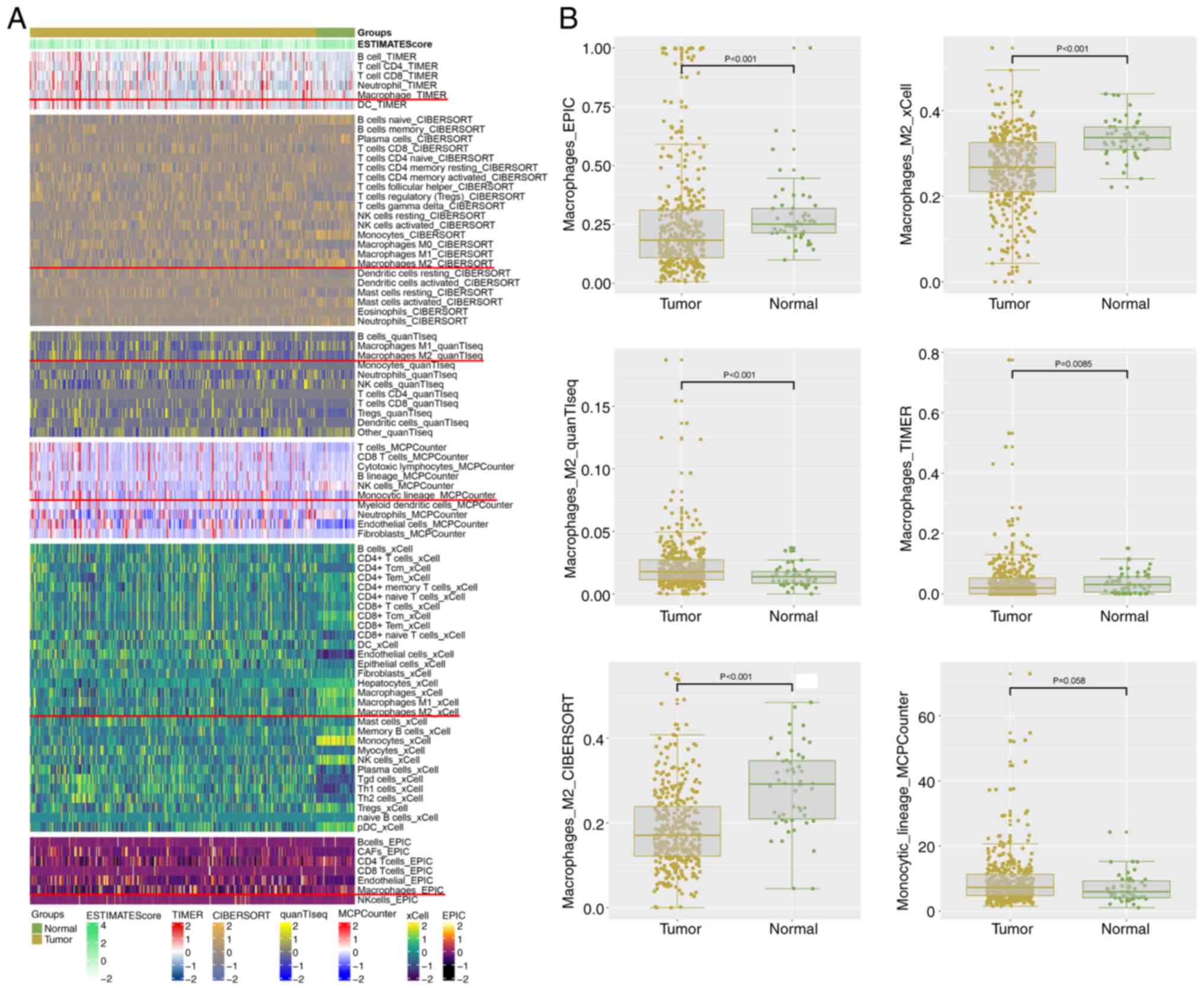
Figure 1

Macrophage infiltration and M2
macrophage differential expression in LIHC. (A) Heatmap
illustrating macrophage infiltration levels in LIHC and normal
tissue samples, as quantified by six different immune infiltration
analysis methods. The heatmap provides a visual representation of
macrophage levels across all methods. The red lines indicate the
distribution of infiltrating macrophages in both LIHC and normal
samples across the different methods. (B) Differential expression
analysis of M2 macrophages between patients with LIHC and normal
controls. Significant differences in M2 macrophage expression were
observed in LIHC samples compared with normal controls across all
methods, with the exception of the MCPCOUNTER method. LIHC, liver
hepatocellular carcinoma.

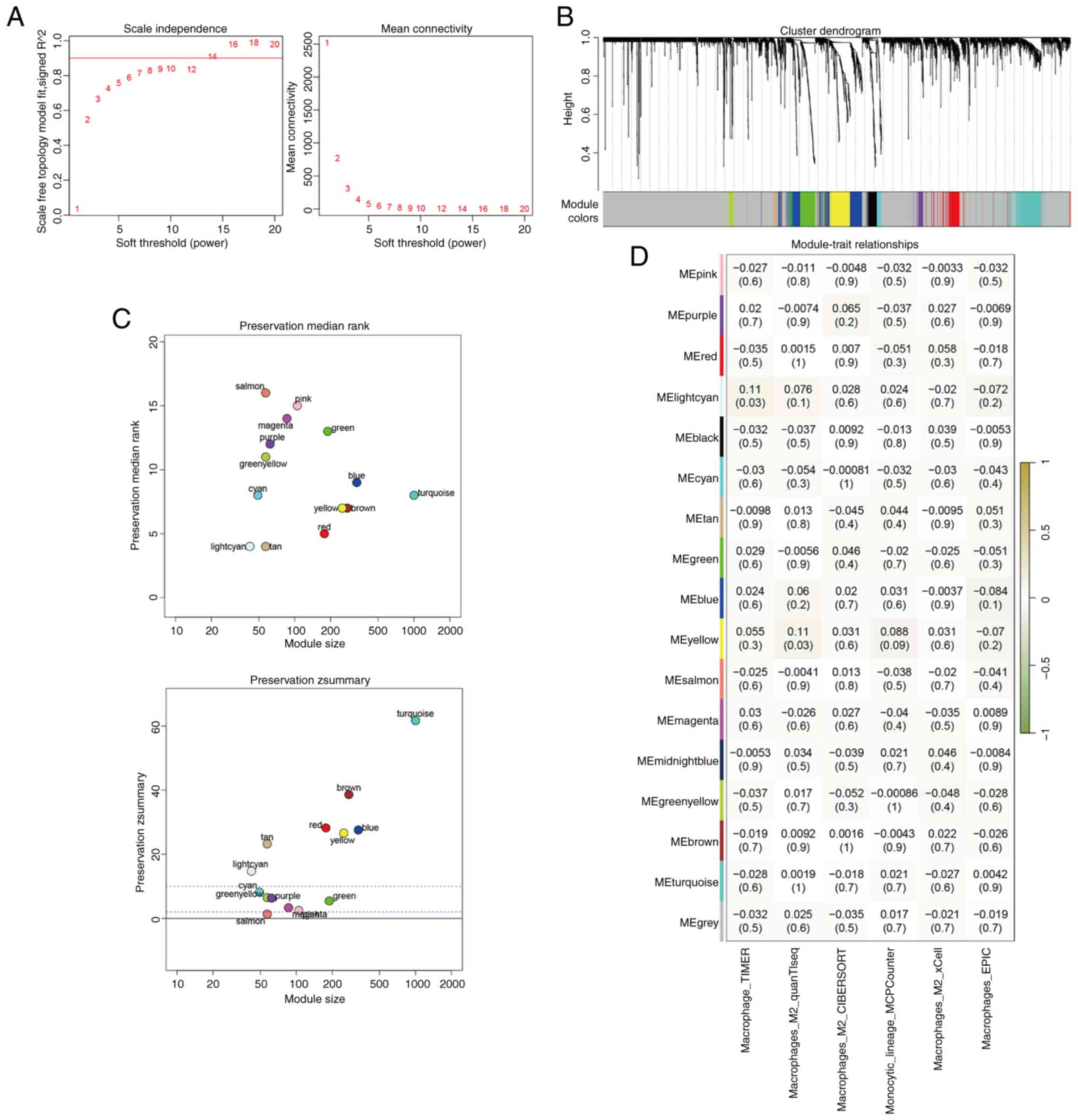
Figure 2

Identification and preservation of
gene modules associated with M2 macrophages. (A) Determination of
the optimal soft threshold for network construction based on the
scale-free topology model fit. A power value of 14 was selected,
achieving a model fit close to 0.9. (B) Dendrogram showing the
identification of 16 gene modules using weighted gene co-expression
network analysis. (C) Preservation analysis of the identified gene
modules. Modules with Z scores <2 (grey, gold, midnight blue and
black) were excluded due to poor preservation. (D) Correlation
analysis between M2 macrophage expression levels and the gene
modules. ME, module eigengene.

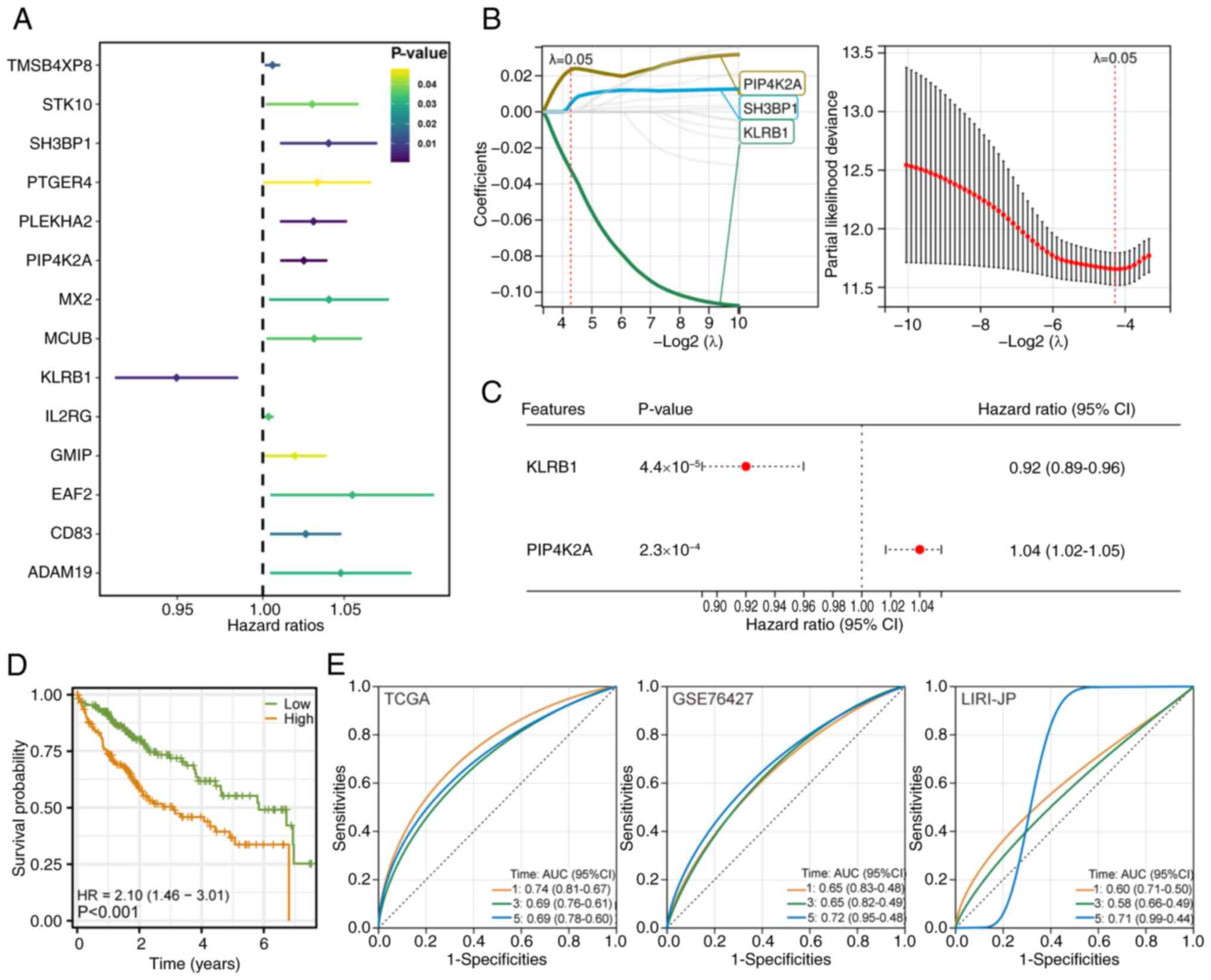
Figure 3

Development and validation of the M2
macrophage-related prognostic model. (A) Univariate Cox regression
analysis identified 14 genes with significant prognostic value
(P<0.05) in patients with LIHC. (B) Least Absolute Shrinkage and
Selection Operator-Cox regression was applied to refine the gene
set, selecting three key genes based on a λ value of 0.0514
(10-fold cross-validation). (C) Multivariate Cox regression
confirmed the independent prognostic significance of the two
selected genes. A prognostic risk score model was constructed using
the following formula: RiskScore = PIP4K2A × 1.0165 + KLRB1 ×
0.8897. (D) Kaplan-Meier survival curves comparing two risk groups
in the TCGA-LIHC cohort. A significant difference in overall
survival was observed between the groups. (E) Time-dependent
receiver operating characteristic curve analysis of the prognostic
risk score model, showing certain predictive performance across
three independent cohorts: TCGA-LIHC, GSE76427 (Gene Expression
Omnibus) and LIRI-JP (International Cancer Genome Consortium).
LIHC, liver hepatocellular carcinoma; TCGA, The Cancer Genome
Atlas; PIP4K2A, phosphatidylinositol-5-phosphate 4-kinase type 2α;
SH3BP1, SH3 domain binding protein 1; KLRB1, killer cell lectin
like receptor B1; AUC, area under the curve; TMSB4XP8, TMSB4X
pseudogene 8; STK10, serine/threonine kinase 10; PTGER4,
prostaglandin E receptor 4; PLEKHA2, pleckstrin homology domain
containing A2; MX2, MX dynamin like GTPase 2; MCUB, mitochondrial
calcium uniporter dominant negative subunit β; IL2RG, IL2 receptor
subunit γ; GMIP, GEM interacting protein; EAF2, ELL associated
factor 2; ADAM19, ADAM metallopeptidase domain 19; HR, hazard
ratio.

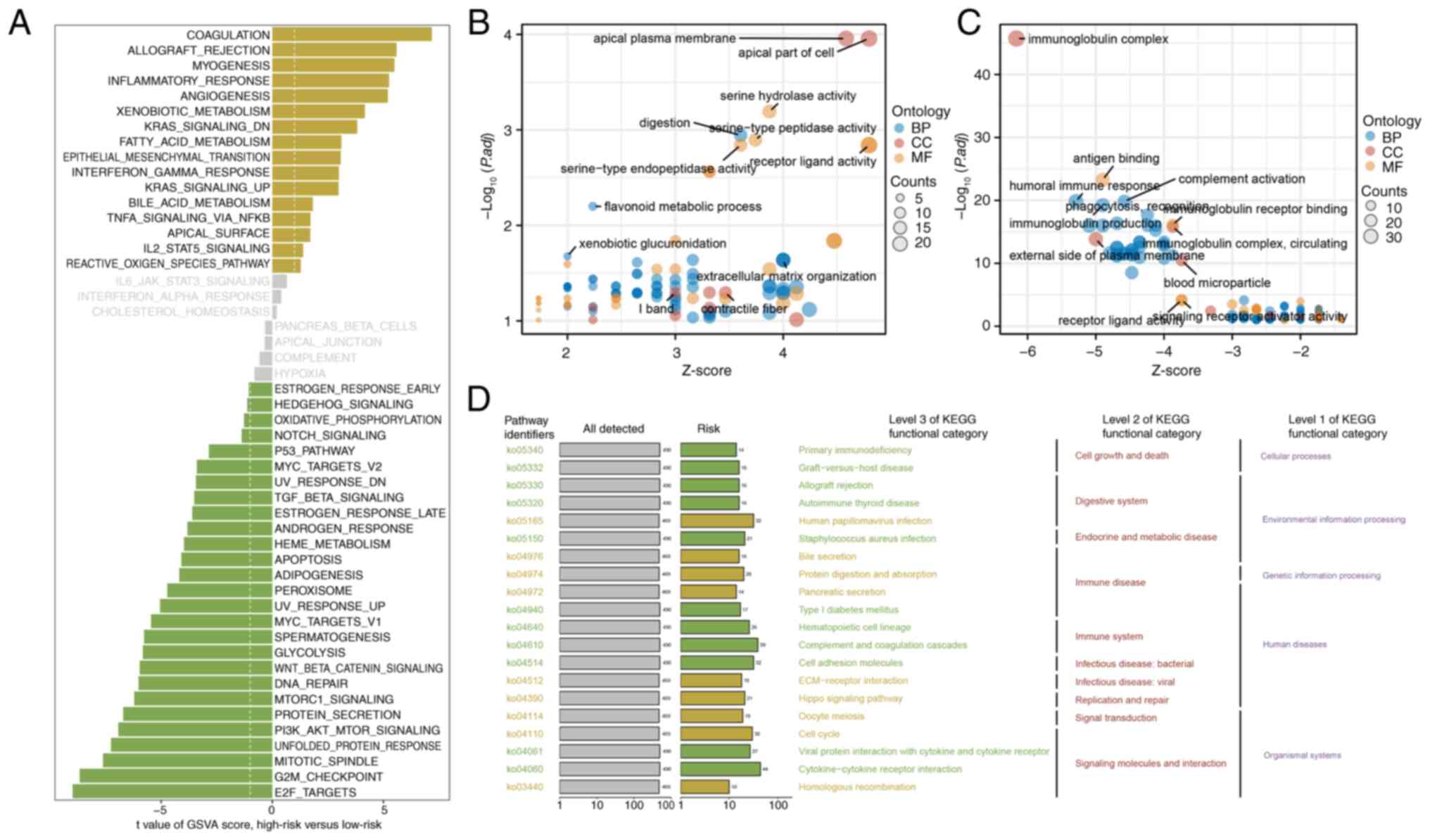
Figure 4

Differential pathway and functional
enrichment analysis. (A) GSVA of the hallmark gene sets revealed
significant differences in pathway activation between the two risk
groups. (B) GO functional enrichment analysis identified
significant enrichment for pathways related to cellular polarity
and apical membrane organization in the high-risk group. (C) GO
analysis of the low-risk group showed enrichment for immune
response-related pathways, including immunoglobulin antigen
binding. (D) KEGG pathway enrichment analysis identified
differential activation of signaling pathways between the two risk
groups. Pathways were categorized based on shared biological
functions to reveal common themes across the groups. GO, Gene
Ontology; KEGG, Kyoto Encyclopedia of Genes and Genomes; GSVA, Gene
Set Variation Analysis; BP, biological process; CC, cellular
component; MF, molecular function.

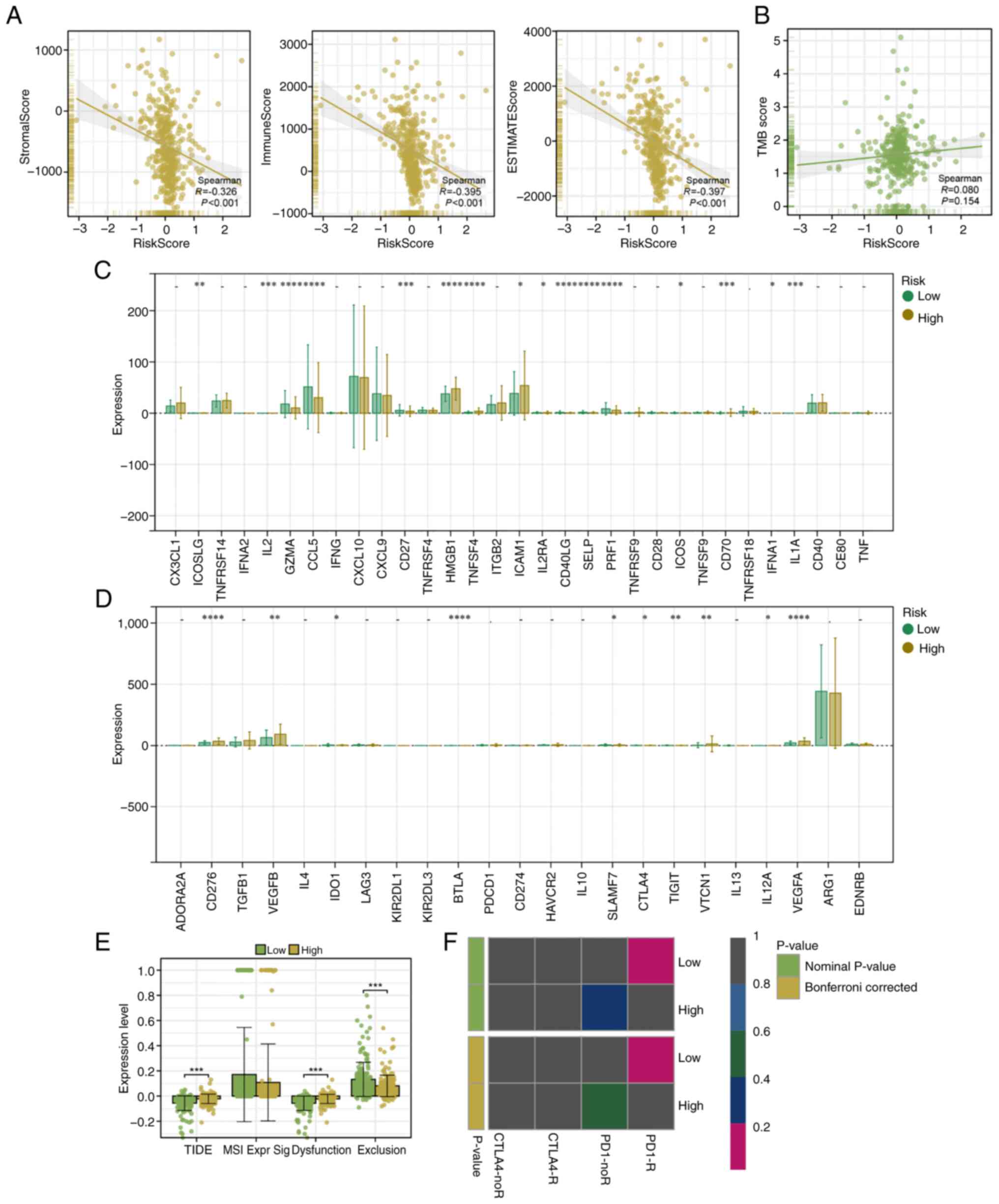
Figure 5

Immune infiltration, TMB, immune
checkpoint expression and immunotherapy response in two risk
groups. (A) Correlation between the prognostic risk score and the
immune, stromal and ESTIMATE scores, calculated using the ESTIMATE
algorithm. (B) Correlation analysis between the risk score and TMB
showed no significant association. (C) Differential expression
analysis of inhibitory immune checkpoint genes revealed significant
differences between two risk groups. (D) Differential expression of
stimulatory immune checkpoint genes showed no significant
differences between the two groups. (E) TIDE analysis demonstrated
that low-risk patients had significantly lower TIDE scores,
suggesting they have an improved immune response and a reduced
potential for immune escape. (F) SubMap analysis predicted that
low-risk patients are more likely to respond to immune checkpoint
blockade therapy, highlighting their greater potential for
benefiting from immunotherapy. PD1-R indicates a response to PD1
treatment, while PD1-noR indicates no response to PD1 treatment.
CTLA4-R indicates a response to CTLA4 treatment, while CTLA4-noR
indicates no response to CTLA4 treatment. *P<0.05; **P<0.01;
***P<0.001; ****P<0.0001; t-test based P-value. TMB, tumor
mutational burden; TIDE, Tumor Immune Dysfunction and Exclusion;
PD1, programmed cell death protein 1; CTLA4, cytotoxic T-lymphocyte
associated protein 4.

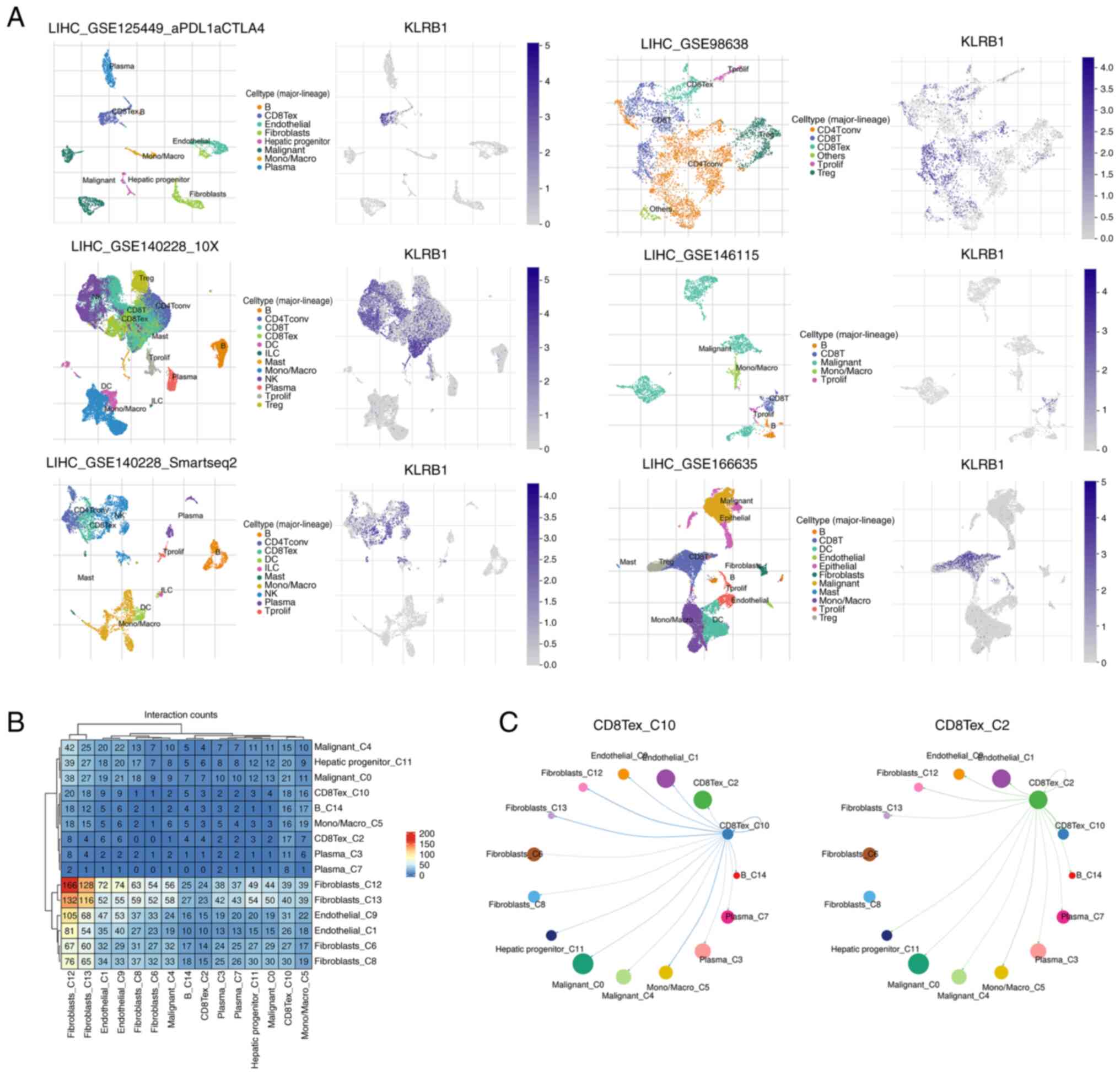
Figure 6

KLRB1 expression and ligand-receptor
interactions in the TME. (A) Expression of KLRB1 across six
single-cell RNA-sequencing datasets from the Tumor Immune Single
Cell Hub 2 database. KLRB1 was predominantly expressed in
CD8+ T cells, CD8+ Tex and NK cells. (B)
Heatmap showing the strength of ligand-receptor interactions
between different immune cell populations. (C) Network diagram
illustrating the intensity of ligand-receptor interactions between
CD8+ T cells and other cell populations in the TME.
KLRB1, killer cell lectin like receptor B1; TME, tumor
microenvironment; NK, natural killer; Tex, exhausted T cells; LIHC,
liver hepatocellular carcinoma; DC, dendritic cell; Treg,
T-regulatory cell.

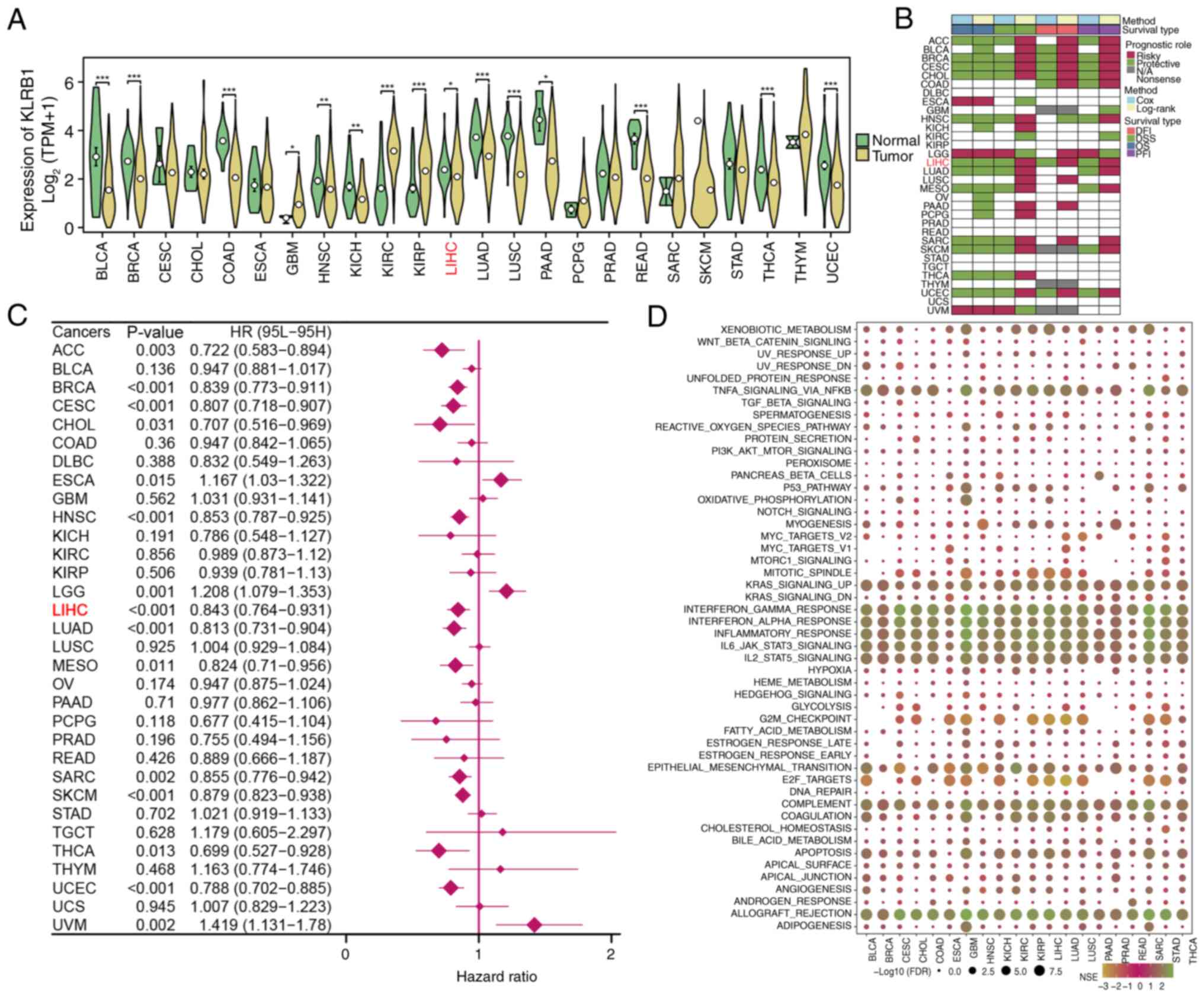
Figure 7

Pan-cancer analysis of KLRB1
expression and prognostic impact. (A) Expression of KLRB1 across
multiple cancer types in The Cancer Genome Atlas. Significant
differences in KLRB1 expression were observed in several cancer
types, including LIHC. (B) Prognostic analysis of KLRB1 expression
in pan-cancer datasets, including DFI, DSS, OS and PFI. (C) Forest
plot analysis of OS based on KLRB1 expression in pan-cancer. (D)
Gene Set Enrichment Analysis revealed significant biological
pathways enriched in both high- and low-expression groups,
suggesting that KLRB1 may regulate important tumor-related
processes. *P<0.05; **P<0.01; ***P<0.001; t-test based
P-value. KLRB1, killer cell lectin like receptor B1; LIHC, liver
hepatocellular carcinoma; DFI, disease-free interval; DSS,
disease-specific survival; OS, overall survival; PFI, platinum-free
interval; FDR, false discovery rate; NES, normalized enrichment
score; ACC, adrenocortical carcinoma; BLCA, bladder cancer; BRCA,
breast invasive carcinoma; CESC, cervical squamous cell carcinoma;
CHOL, cholangiocarcinoma; COAD, colon adenocarcinoma; DLBC, diffuse
large B-cell lymphoma; ESCA, esophageal carcinoma; GBM,
glioblastoma multiforme; HNSC, head and neck squamous cell
carcinoma; KICH, kidney chromophobe; KIRC, kidney clear cell
carcinoma; KIRP, kidney renal papillary cell carcinoma; LGG, brain
lower grade glioma; LIHC, liver hepatocellular carcinoma; LUAD,
lung adenocarcinoma; LUSC, lung squamous cell carcinoma; MESO,
mesothelioma; OV, ovarian serous cystadenocarcinoma; PAAD,
pancreatic adenocarcinoma; PCPG, pheochromocytoma and
paraganglioma; PRAD, prostate adenocarcinoma; READ, rectum
adenocarcinoma; SARC, sarcoma; SKCM, skin cutaneous melanoma; STAD,
stomach adenocarcinoma; TGCT, testicular germ cell tumor; THCA,
thyroid carcinoma; THYM, thymoma; UCEC, uterine corpus endometrioid
carcinoma; UCS, uterine carcinosarcoma; UVM, uveal melanoma.

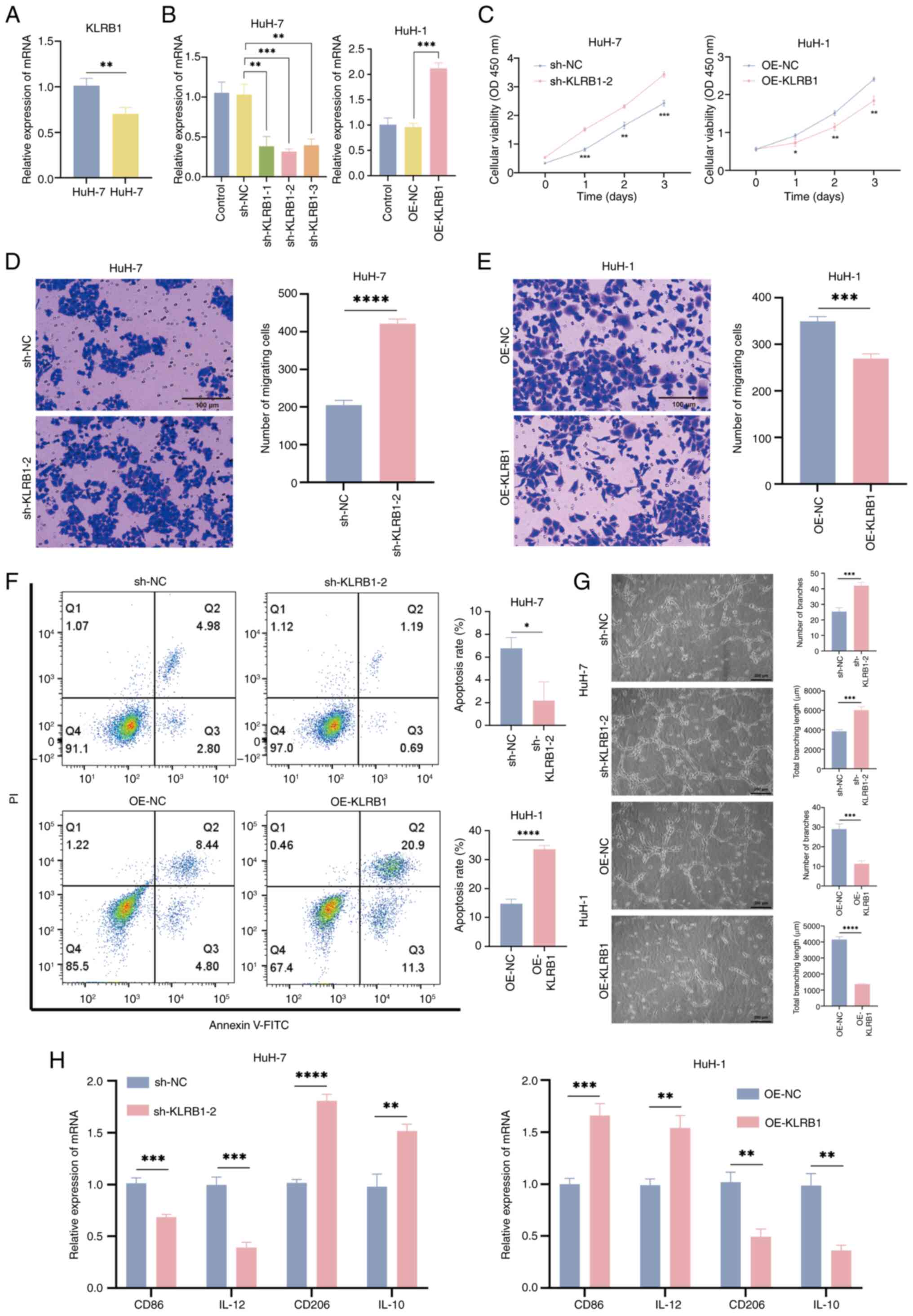
Figure 8

KLRB1 regulates the activity of LIHC
cells and its influence on macrophages through LIHC cells. (A) qPCR
detection of KLRB1 expression in HuH-7 and HuH-1 cells. (B)
Validation of shRNA knockdown KLRB1 in the HuH-7 cell line and
lentivirus overexpression of KLRB1 in the HuH-1 cell line. (C) Cell
proliferation curve of sh-KLRB1-2 and OE-KLRB1. Cell migration
assay of (D) sh-KLRB1-2 and (E) OE-KLRB1 cells (scale bars, 100
µm). (F) Annexin V-FITC/PI assessed apoptosis in sh-KLRB1-2 and
OE-KLRB1 transfected cells. (G) Tube formation assay of HUVECs
treated with sh-KLRB1-2 and OE-KLRB1 cell conditioned media (scale
bar, 200 µm). (H) qPCR detection of polarization markers in M0 to
M1/M2 cells, treated with sh-KLRB1-2 or OE-KLRB1 cell conditioned
media. *P<0.05; **P<0.01; ***P<0.001; ****P<0.0001;
t-test based P-value. LIHC, liver hepatocellular carcinoma; PI,
propidium iodide qPCR, quantitative PCR; KLRB1, killer cell lectin
like receptor B1; sh, short hairpin; OE, overexpression; NC,
negative control; OD, optical density.
View References

1 

Siegel RL, Giaquinto AN and Jemal A: Cancer statistics, 2024. CA Cancer J Clin. 74:12–49. 2024.PubMed/NCBI

2 

Zheng Z, Mei J, Guan R, Zhang J, Xiong X, Gan J, Li S and Guo R: A novel liver-function-indicators-based prognosis signature for patients with hepatocellular carcinoma treated with anti-programmed cell death-1 therapy. Cancer Immunol Immunother. 73:1582024. View Article : Google Scholar : PubMed/NCBI

3 

Antonius Y, Kharisma VD, Widyananda MH, Ansori ANM, Trinugroho JP, Ullah Md E, Naw SW, Jakhmola V and Wahjudi M: Prediction of aflatoxin-B1 (AFB1) molecular mechanism network and interaction to oncoproteins growth factor in hepatocellular carcinoma. J Pure Appl Microbiol. 16:1844–1854. 2022. View Article : Google Scholar

4 

Jia G, He P, Dai T, Goh D, Wang J, Sun M, Wee F, Li F, Lim JCT, Hao S, et al: Spatial immune scoring system predicts hepatocellular carcinoma recurrence. Nature. 640:1031–1041. 2025. View Article : Google Scholar : PubMed/NCBI

5 

Yu B and Ma W: Biomarker discovery in hepatocellular carcinoma (HCC) for personalized treatment and enhanced prognosis. Cytokine Growth Factor Rev. 79:29–38. 2024. View Article : Google Scholar : PubMed/NCBI

6 

Li M, Yang Y, Xiong L, Jiang P, Wang J and Li C: Metabolism, metabolites, and macrophages in cancer. J Hematol Oncol. 16:802023. View Article : Google Scholar : PubMed/NCBI

7 

Brockmann L, Tran A, Huang Y, Edwards M, Ronda C, Wang HH and Ivanov II: Intestinal microbiota-specific Th17 cells possess regulatory properties and suppress effector T cells via c-MAF and IL-10. Immunity. 56:2719–2735.e7. 2023. View Article : Google Scholar : PubMed/NCBI

8 

Pascual-García M, Bonfill-Teixidor E, Planas-Rigol E, Rubio-Perez C, Iurlaro R, Arias A, Cuartas I, Sala-Hojman A, Escudero L, Martínez-Ricarte F, et al: LIF regulates CXCL9 in tumor-associated macrophages and prevents CD8+ T cell tumor-infiltration impairing anti-PD1 therapy. Nat Commun. 10:24162019. View Article : Google Scholar : PubMed/NCBI

9 

Han S, Bao X, Zou Y, Wang L, Li Y, Yang L, Liao A, Zhang X, Jiang X, Liang D, et al: d-lactate modulates M2 tumor-associated macrophages and remodels immunosuppressive tumor microenvironment for hepatocellular carcinoma. Sci Adv. 9:eadg26972023. View Article : Google Scholar : PubMed/NCBI

10 

Li D, Zhang T, Guo Y, Bi C, Liu M and Wang G: Biological impact and therapeutic implication of tumor-associated macrophages in hepatocellular carcinoma. Cell Death Dis. 15:4982024. View Article : Google Scholar : PubMed/NCBI

11 

Zhang Y, Han G, Gu J, Chen Z and Wu J: Role of tumor-associated macrophages in hepatocellular carcinoma: impact, mechanism, and therapy. Front Immunol. 15:14298122024. View Article : Google Scholar : PubMed/NCBI

12 

Sun Y, Zhao M, Cheng L, He X, Shen S, Lv J, Zhang J, Shao Q, Yin W, Zhao F, et al: Reduction of alternative polarization of macrophages by short-term activated hepatic stellate cell-derived small extracellular vesicles. J Exp Clin Cancer Res. 44:1172025. View Article : Google Scholar : PubMed/NCBI

13 

Du Y, Wu S, Xi S, Xu W, Sun L, Yan J, Gao H, Wang Y, Zheng J, Wang F, et al: ASH1L in hepatoma cells and hepatic stellate cells promotes fibrosis-associated hepatocellular carcinoma by modulating tumor-associated macrophages. Adv Sci (Weinh). 11:e24047562024. View Article : Google Scholar : PubMed/NCBI

14 

Jeong JM, Choi SE, Shim YR, Kim HH, Lee YS, Yang K, Kim K, Kim MJ, Chung KPS, Kim SH, et al: CX 3 CR1 + macrophages interact with HSCs to promote HCC through CD8 + T-cell suppression. Hepatology. 82:655–668. 2025. View Article : Google Scholar : PubMed/NCBI

15 

Cai J, Song L, Zhang F, Wu S, Zhu G, Zhang P, Chen S, Du J, Wang B, Cai Y, et al: Targeting SRSF10 might inhibit M2 macrophage polarization and potentiate anti-PD-1 therapy in hepatocellular carcinoma. Cancer Commun (Lond). 44:1231–1260. 2024. View Article : Google Scholar : PubMed/NCBI

16 

Newman AM, Liu CL, Green MR, Gentles AJ, Feng W, Xu Y, Hoang CD, Diehn M and Alizadeh AA: Robust enumeration of cell subsets from tissue expression profiles. Nat Methods. 12:453–457. 2015. View Article : Google Scholar : PubMed/NCBI

17 

Aran D, Hu Z and Butte AJ: xCell: Digitally portraying the tissue cellular heterogeneity landscape. Genome Biol. 18:2202017. View Article : Google Scholar : PubMed/NCBI

18 

Mellman I, Chen DS, Powles T and Turley SJ: The cancer-immunity cycle: Indication, genotype, and immunotype. Immunity. 56:2188–2205. 2023. View Article : Google Scholar : PubMed/NCBI

19 

Finotello F, Mayer C, Plattner C, Laschober G, Rieder D, Hackl H, Krogsdam A, Loncova Z, Posch W, Wilflingseder D, et al: Molecular and pharmacological modulators of the tumor immune contexture revealed by deconvolution of RNA-seq data. Genome Med. 11:342019. View Article : Google Scholar : PubMed/NCBI

20 

Racle J, de Jonge K, Baumgaertner P, Speiser DE and Gfeller D: Simultaneous enumeration of cancer and immune cell types from bulk tumor gene expression data. Elife. 6:e264762017. View Article : Google Scholar : PubMed/NCBI

21 

Becht E, Giraldo NA, Lacroix L, Buttard B, Elarouci N, Petitprez F, Selves J, Laurent-Puig P, Sautès-Fridman C, Fridman WH and de Reyniès A: Estimating the population abundance of tissue-infiltrating immune and stromal cell populations using gene expression. Genome Biol. 17:2182016. View Article : Google Scholar : PubMed/NCBI

22 

Langfelder P and Horvath S: WGCNA: An R package for weighted correlation network analysis. BMC Bioinformatics. 9:5592008. View Article : Google Scholar : PubMed/NCBI

23 

Hänzelmann S, Castelo R and Guinney J: GSVA: Gene set variation analysis for microarray and RNA-seq data. BMC Bioinformatics. 14:72013. View Article : Google Scholar : PubMed/NCBI

24 

Wang G, Liu T and He WT: Visualization analysis of research hotspots and trends on gastrointestinal tumor organoids. World J Gastrointest Oncol. 16:2826–2841. 2024. View Article : Google Scholar : PubMed/NCBI

25 

Jiang P, Gu S, Pan D, Fu J, Sahu A, Hu X, Li Z, Traugh N, Bu X, Li B, et al: Signatures of T cell dysfunction and exclusion predict cancer immunotherapy response. Nat Med. 24:1550–1558. 2018. View Article : Google Scholar : PubMed/NCBI

26 

Kalhor K, Chen CJ, Lee HS, Cai M, Nafisi M, Que R, Palmer CR, Yuan Y, Zhang Y, Li X, et al: Mapping human tissues with highly multiplexed RNA in situ hybridization. Nat Commun. 15:25112024. View Article : Google Scholar : PubMed/NCBI

27 

Han Y, Wang Y, Dong X, Sun D, Liu Z, Yue J, Wang H, Li T and Wang C: TISCH2: expanded datasets and new tools for single-cell transcriptome analyses of the tumor microenvironment. Nucleic Acids Res. 51:D1425–D1431. 2023. View Article : Google Scholar : PubMed/NCBI

28 

Livak KJ and Schmittgen TD: Analysis of relative gene expression data using real-time quantitative PCR and the 2(−Delta Delta C(T)) method. Methods. 25:402–408. 2001. View Article : Google Scholar : PubMed/NCBI

29 

Yang X, Yang C, Zhang S, Geng H, Zhu AX, Bernards R, Qin W, Fan J, Wang C and Gao Q: Precision treatment in advanced hepatocellular carcinoma. Cancer Cell. 42:180–197. 2024. View Article : Google Scholar : PubMed/NCBI

30 

Ruf B, Bruhns M, Babaei S, Kedei N, Ma L, Revsine M, Benmebarek MR, Ma C, Heinrich B, Subramanyam V, et al: Tumor-associated macrophages trigger MAIT cell dysfunction at the HCC invasive margin. Cell. 186:3686–3705.e32. 2023. View Article : Google Scholar : PubMed/NCBI

31 

Jin R, Neufeld L and McGaha TL: Linking macrophage metabolism to function in the tumor microenvironment. Nat Cancer. 6:239–252. 2025. View Article : Google Scholar : PubMed/NCBI

32 

Zeng W, Li F, Jin S, Ho PC, Liu PS and Xie X: Functional polarization of tumor-associated macrophages dictated by metabolic reprogramming. J Exp Clin Cancer Res. 42:2452023. View Article : Google Scholar : PubMed/NCBI

33 

Zhang D, Zhao K, Han T, Zhang X, Xu X, Liu Z, Ren X, Zhang X, Lu Z and Qin C: Bisphenol A promote the cell proliferation and invasion ability of prostate cancer cells via regulating the androgen receptor. Ecotoxicol Environ Saf. 269:1158182024. View Article : Google Scholar : PubMed/NCBI

34 

Cai J, Chen T, Jiang Z, Yan J, Ye Z, Ruan Y, Tao L, Shen Z, Liang X, Wang Y, et al: Bulk and single-cell transcriptome profiling reveal extracellular matrix mechanical regulation of lipid metabolism reprograming through YAP/TEAD4/ACADL axis in hepatocellular carcinoma. Int J Biol Sci. 19:2114–2131. 2023. View Article : Google Scholar : PubMed/NCBI

35 

Qu X, Zhao X, Lin K, Wang N, Li X, Li S, Zhang L and Shi Y: M2-like tumor-associated macrophage-related biomarkers to construct a novel prognostic signature, reveal the immune landscape, and screen drugs in hepatocellular carcinoma. Front Immunol. 13:9940192022. View Article : Google Scholar : PubMed/NCBI

36 

Chen S, Zhang P, Zhu G, Wang B, Cai J, Song L, Wan J, Yang Y, Du J, Cai Y, et al: Targeting GSDME-mediated macrophage polarization for enhanced antitumor immunity in hepatocellular carcinoma. Cell Mol Immunol. 21:1505–1521. 2024. View Article : Google Scholar : PubMed/NCBI

37 

Vizcaino Castro A, Daemen T and Oyarce C: Strategies to reprogram anti-inflammatory macrophages towards pro-inflammatory macrophages to support cancer immunotherapies. Immunol Lett. 267:1068642024. View Article : Google Scholar : PubMed/NCBI

38 

Mace EM: Human natural killer cells: Form, function, and development. J Allergy Clin Immunol. 151:371–385. 2023. View Article : Google Scholar : PubMed/NCBI

39 

Huang G, Xiao S, Jiang Z, Zhou X, Chen L, Long L, Zhang S, Xu K, Chen J and Jiang B: Machine learning immune-related gene based on KLRB1 model for predicting the prognosis and immune cell infiltration of breast cancer. Front Endocrinol (Lausanne). 14:11857992023. View Article : Google Scholar : PubMed/NCBI

Related Articles

  • Abstract
  • View
  • Download
  • Twitter
Copy and paste a formatted citation
Spandidos Publications style
Wang A, Li X, Wang Z and Chen L: Prognostic value of M2 macrophage‑related genes and their importance in the immunotherapy response in hepatocellular carcinoma. Oncol Lett 30: 540, 2025.
APA
Wang, A., Li, X., Wang, Z., & Chen, L. (2025). Prognostic value of M2 macrophage‑related genes and their importance in the immunotherapy response in hepatocellular carcinoma. Oncology Letters, 30, 540. https://doi.org/10.3892/ol.2025.15286
MLA
Wang, A., Li, X., Wang, Z., Chen, L."Prognostic value of M2 macrophage‑related genes and their importance in the immunotherapy response in hepatocellular carcinoma". Oncology Letters 30.6 (2025): 540.
Chicago
Wang, A., Li, X., Wang, Z., Chen, L."Prognostic value of M2 macrophage‑related genes and their importance in the immunotherapy response in hepatocellular carcinoma". Oncology Letters 30, no. 6 (2025): 540. https://doi.org/10.3892/ol.2025.15286
Copy and paste a formatted citation
x
Spandidos Publications style
Wang A, Li X, Wang Z and Chen L: Prognostic value of M2 macrophage‑related genes and their importance in the immunotherapy response in hepatocellular carcinoma. Oncol Lett 30: 540, 2025.
APA
Wang, A., Li, X., Wang, Z., & Chen, L. (2025). Prognostic value of M2 macrophage‑related genes and their importance in the immunotherapy response in hepatocellular carcinoma. Oncology Letters, 30, 540. https://doi.org/10.3892/ol.2025.15286
MLA
Wang, A., Li, X., Wang, Z., Chen, L."Prognostic value of M2 macrophage‑related genes and their importance in the immunotherapy response in hepatocellular carcinoma". Oncology Letters 30.6 (2025): 540.
Chicago
Wang, A., Li, X., Wang, Z., Chen, L."Prognostic value of M2 macrophage‑related genes and their importance in the immunotherapy response in hepatocellular carcinoma". Oncology Letters 30, no. 6 (2025): 540. https://doi.org/10.3892/ol.2025.15286
Follow us
  • Twitter
  • LinkedIn
  • Facebook
About
  • Spandidos Publications
  • Careers
  • Cookie Policy
  • Privacy Policy
How can we help?
  • Help
  • Live Chat
  • Contact
  • Email to our Support Team