Spandidos Publications Logo
  • About
    • About Spandidos
    • Aims and Scopes
    • Abstracting and Indexing
    • Editorial Policies
    • Reprints and Permissions
    • Job Opportunities
    • Terms and Conditions
    • Contact
  • Journals
    • All Journals
    • Oncology Letters
      • Oncology Letters
      • Information for Authors
      • Editorial Policies
      • Editorial Board
      • Aims and Scope
      • Abstracting and Indexing
      • Bibliographic Information
      • Archive
    • International Journal of Oncology
      • International Journal of Oncology
      • Information for Authors
      • Editorial Policies
      • Editorial Board
      • Aims and Scope
      • Abstracting and Indexing
      • Bibliographic Information
      • Archive
    • Molecular and Clinical Oncology
      • Molecular and Clinical Oncology
      • Information for Authors
      • Editorial Policies
      • Editorial Board
      • Aims and Scope
      • Abstracting and Indexing
      • Bibliographic Information
      • Archive
    • Experimental and Therapeutic Medicine
      • Experimental and Therapeutic Medicine
      • Information for Authors
      • Editorial Policies
      • Editorial Board
      • Aims and Scope
      • Abstracting and Indexing
      • Bibliographic Information
      • Archive
    • International Journal of Molecular Medicine
      • International Journal of Molecular Medicine
      • Information for Authors
      • Editorial Policies
      • Editorial Board
      • Aims and Scope
      • Abstracting and Indexing
      • Bibliographic Information
      • Archive
    • Biomedical Reports
      • Biomedical Reports
      • Information for Authors
      • Editorial Policies
      • Editorial Board
      • Aims and Scope
      • Abstracting and Indexing
      • Bibliographic Information
      • Archive
    • Oncology Reports
      • Oncology Reports
      • Information for Authors
      • Editorial Policies
      • Editorial Board
      • Aims and Scope
      • Abstracting and Indexing
      • Bibliographic Information
      • Archive
    • Molecular Medicine Reports
      • Molecular Medicine Reports
      • Information for Authors
      • Editorial Policies
      • Editorial Board
      • Aims and Scope
      • Abstracting and Indexing
      • Bibliographic Information
      • Archive
    • World Academy of Sciences Journal
      • World Academy of Sciences Journal
      • Information for Authors
      • Editorial Policies
      • Editorial Board
      • Aims and Scope
      • Abstracting and Indexing
      • Bibliographic Information
      • Archive
    • International Journal of Functional Nutrition
      • International Journal of Functional Nutrition
      • Information for Authors
      • Editorial Policies
      • Editorial Board
      • Aims and Scope
      • Abstracting and Indexing
      • Bibliographic Information
      • Archive
    • International Journal of Epigenetics
      • International Journal of Epigenetics
      • Information for Authors
      • Editorial Policies
      • Editorial Board
      • Aims and Scope
      • Abstracting and Indexing
      • Bibliographic Information
      • Archive
    • Medicine International
      • Medicine International
      • Information for Authors
      • Editorial Policies
      • Editorial Board
      • Aims and Scope
      • Abstracting and Indexing
      • Bibliographic Information
      • Archive
  • Articles
  • Information
    • Information for Authors
    • Information for Reviewers
    • Information for Librarians
    • Information for Advertisers
    • Conferences
  • Language Editing
Spandidos Publications Logo
  • About
    • About Spandidos
    • Aims and Scopes
    • Abstracting and Indexing
    • Editorial Policies
    • Reprints and Permissions
    • Job Opportunities
    • Terms and Conditions
    • Contact
  • Journals
    • All Journals
    • Biomedical Reports
      • Information for Authors
      • Editorial Policies
      • Editorial Board
      • Aims and Scope
      • Abstracting and Indexing
      • Bibliographic Information
      • Archive
    • Experimental and Therapeutic Medicine
      • Information for Authors
      • Editorial Policies
      • Editorial Board
      • Aims and Scope
      • Abstracting and Indexing
      • Bibliographic Information
      • Archive
    • International Journal of Epigenetics
      • Information for Authors
      • Editorial Policies
      • Editorial Board
      • Aims and Scope
      • Abstracting and Indexing
      • Bibliographic Information
      • Archive
    • International Journal of Functional Nutrition
      • Information for Authors
      • Editorial Policies
      • Editorial Board
      • Aims and Scope
      • Abstracting and Indexing
      • Bibliographic Information
      • Archive
    • International Journal of Molecular Medicine
      • Information for Authors
      • Editorial Policies
      • Editorial Board
      • Aims and Scope
      • Abstracting and Indexing
      • Bibliographic Information
      • Archive
    • International Journal of Oncology
      • Information for Authors
      • Editorial Policies
      • Editorial Board
      • Aims and Scope
      • Abstracting and Indexing
      • Bibliographic Information
      • Archive
    • Medicine International
      • Information for Authors
      • Editorial Policies
      • Editorial Board
      • Aims and Scope
      • Abstracting and Indexing
      • Bibliographic Information
      • Archive
    • Molecular and Clinical Oncology
      • Information for Authors
      • Editorial Policies
      • Editorial Board
      • Aims and Scope
      • Abstracting and Indexing
      • Bibliographic Information
      • Archive
    • Molecular Medicine Reports
      • Information for Authors
      • Editorial Policies
      • Editorial Board
      • Aims and Scope
      • Abstracting and Indexing
      • Bibliographic Information
      • Archive
    • Oncology Letters
      • Information for Authors
      • Editorial Policies
      • Editorial Board
      • Aims and Scope
      • Abstracting and Indexing
      • Bibliographic Information
      • Archive
    • Oncology Reports
      • Information for Authors
      • Editorial Policies
      • Editorial Board
      • Aims and Scope
      • Abstracting and Indexing
      • Bibliographic Information
      • Archive
    • World Academy of Sciences Journal
      • Information for Authors
      • Editorial Policies
      • Editorial Board
      • Aims and Scope
      • Abstracting and Indexing
      • Bibliographic Information
      • Archive
  • Articles
  • Information
    • For Authors
    • For Reviewers
    • For Librarians
    • For Advertisers
    • Conferences
  • Language Editing
Login Register Submit
  • This site uses cookies
  • You can change your cookie settings at any time by following the instructions in our Cookie Policy. To find out more, you may read our Privacy Policy.

    I agree
Search articles by DOI, keyword, author or affiliation
Search
Advanced Search
presentation
Oncology Letters
Join Editorial Board Propose a Special Issue
Print ISSN: 1792-1074 Online ISSN: 1792-1082
Journal Cover
December-2025 Volume 30 Issue 6

Full Size Image

Sign up for eToc alerts
Recommend to Library

Journals

International Journal of Molecular Medicine

International Journal of Molecular Medicine

International Journal of Molecular Medicine is an international journal devoted to molecular mechanisms of human disease.

International Journal of Oncology

International Journal of Oncology

International Journal of Oncology is an international journal devoted to oncology research and cancer treatment.

Molecular Medicine Reports

Molecular Medicine Reports

Covers molecular medicine topics such as pharmacology, pathology, genetics, neuroscience, infectious diseases, molecular cardiology, and molecular surgery.

Oncology Reports

Oncology Reports

Oncology Reports is an international journal devoted to fundamental and applied research in Oncology.

Experimental and Therapeutic Medicine

Experimental and Therapeutic Medicine

Experimental and Therapeutic Medicine is an international journal devoted to laboratory and clinical medicine.

Oncology Letters

Oncology Letters

Oncology Letters is an international journal devoted to Experimental and Clinical Oncology.

Biomedical Reports

Biomedical Reports

Explores a wide range of biological and medical fields, including pharmacology, genetics, microbiology, neuroscience, and molecular cardiology.

Molecular and Clinical Oncology

Molecular and Clinical Oncology

International journal addressing all aspects of oncology research, from tumorigenesis and oncogenes to chemotherapy and metastasis.

World Academy of Sciences Journal

World Academy of Sciences Journal

Multidisciplinary open-access journal spanning biochemistry, genetics, neuroscience, environmental health, and synthetic biology.

International Journal of Functional Nutrition

International Journal of Functional Nutrition

Open-access journal combining biochemistry, pharmacology, immunology, and genetics to advance health through functional nutrition.

International Journal of Epigenetics

International Journal of Epigenetics

Publishes open-access research on using epigenetics to advance understanding and treatment of human disease.

Medicine International

Medicine International

An International Open Access Journal Devoted to General Medicine.

Journal Cover
December-2025 Volume 30 Issue 6

Full Size Image

Sign up for eToc alerts
Recommend to Library

  • Article
  • Citations
    • Cite This Article
    • Download Citation
    • Create Citation Alert
    • Remove Citation Alert
    • Cited By
  • Similar Articles
    • Related Articles (in Spandidos Publications)
    • Similar Articles (Google Scholar)
    • Similar Articles (PubMed)
  • Download PDF
  • Download XML
  • View XML

  • Supplementary Files
    • Supplementary_Data1.pdf
    • Supplementary_Data2.pdf
Article Open Access

Protein arginine methyltransferase 7 regulates the cell cycle and promotes the progression of prostate cancer

  • Authors:
    • Hongyuan Wan
    • Hangshen Zhou
    • Jiandong Gui
    • Dongjie Yang
    • Rong Wang
    • Jiang Ni
    • Sheng Wu
    • Yan Qin
    • Qiaowei Qi
    • Lijie Zhu
    • Ninghan Feng
    • Yuanyuan Mi
  • View Affiliations / Copyright

    Affiliations: Department of Urology, Affiliated Hospital of Jiangnan University, Wuxi, Jiangsu 214122, P.R. China, Department of Pathology, Affiliated Hospital of Jiangnan University, Wuxi, Jiangsu 214122, P.R. China, Institute of Integrated Traditional Chinese and Western Medicine, Wuxi Medical College, Jiangnan University, Wuxi, Jiangsu 214122, P.R. China, Department of Pharmacy, Affiliated Hospital of Jiangnan University, Wuxi, Jiangsu 214122, P.R. China, Department of Urology, Jiangnan University Medical Center, Wuxi, Jiangsu 214043, P.R. China
    Copyright: © Wan et al. This is an open access article distributed under the terms of Creative Commons Attribution License.
  • Article Number: 549
    |
    Published online on: September 23, 2025
       https://doi.org/10.3892/ol.2025.15295
  • Expand metrics +
Metrics: Total Views: 0 (Spandidos Publications: | PMC Statistics: )
Metrics: Total PDF Downloads: 0 (Spandidos Publications: | PMC Statistics: )
Cited By (CrossRef): 0 citations Loading Articles...

This article is mentioned in:


Abstract

Prostate cancer (PCa) is the second most common cancer in men worldwide. Protein arginine methyltransferase 7 (PRMT7) expression is associated with tumor growth, as it can drive tumor cell proliferation and promote its invasiveness in several types of cancer. However, its mechanism in PCa remains to be elucidated. In the present study, the function and associated mechanism of PRMT7 in PCa cells were investigated. The relationship between PRMT7 and PCa was analyzed using The Cancer Genome Atlas online database. Tissue chip techniques were used to identify the clinical relevance of PRMT7 expression. PRMT7 expression levels in PCa tissues and cells were verified using reverse transcription‑quantitative PCR (RT‑qPCR). Cell cycle, migration, proliferation and apoptosis of PC3 and DU145 cells were observed using flow cytometry, Cell Counting Kit‑8, wound healing, plate cloning and cell invasion assays. Gene set enrichment analysis and chip expression profiles were used to predict the potential signaling pathway involved in the action of PRMT7 in PCa. First, The Cancer Genome Atlas database, tissue microarray analysis and RT‑qPCR revealed that PRMT7 expression was increased in PCa tissues and cells. Furthermore, small interfering RNA‑mediated PRMT7 knockdown led to a notable reduction in the proliferation of cells, increased apoptosis, affected the cell cycle and decreased cell migration and invasion. Furthermore, PRMT7 regulated the functions of Yin Yang 1 (YY1), tumor protein p53 (TP53), cyclin D2 (CCND2), CDK6 and retinoblastoma 1 (RB1) in PCa. PRMT7 may promote proliferation, migration and metastasis in PCa cells by regulating the activity of YY1, TP53, CCND2, CDK6 and RB1 in the cell cycle signaling pathway.
View Figures

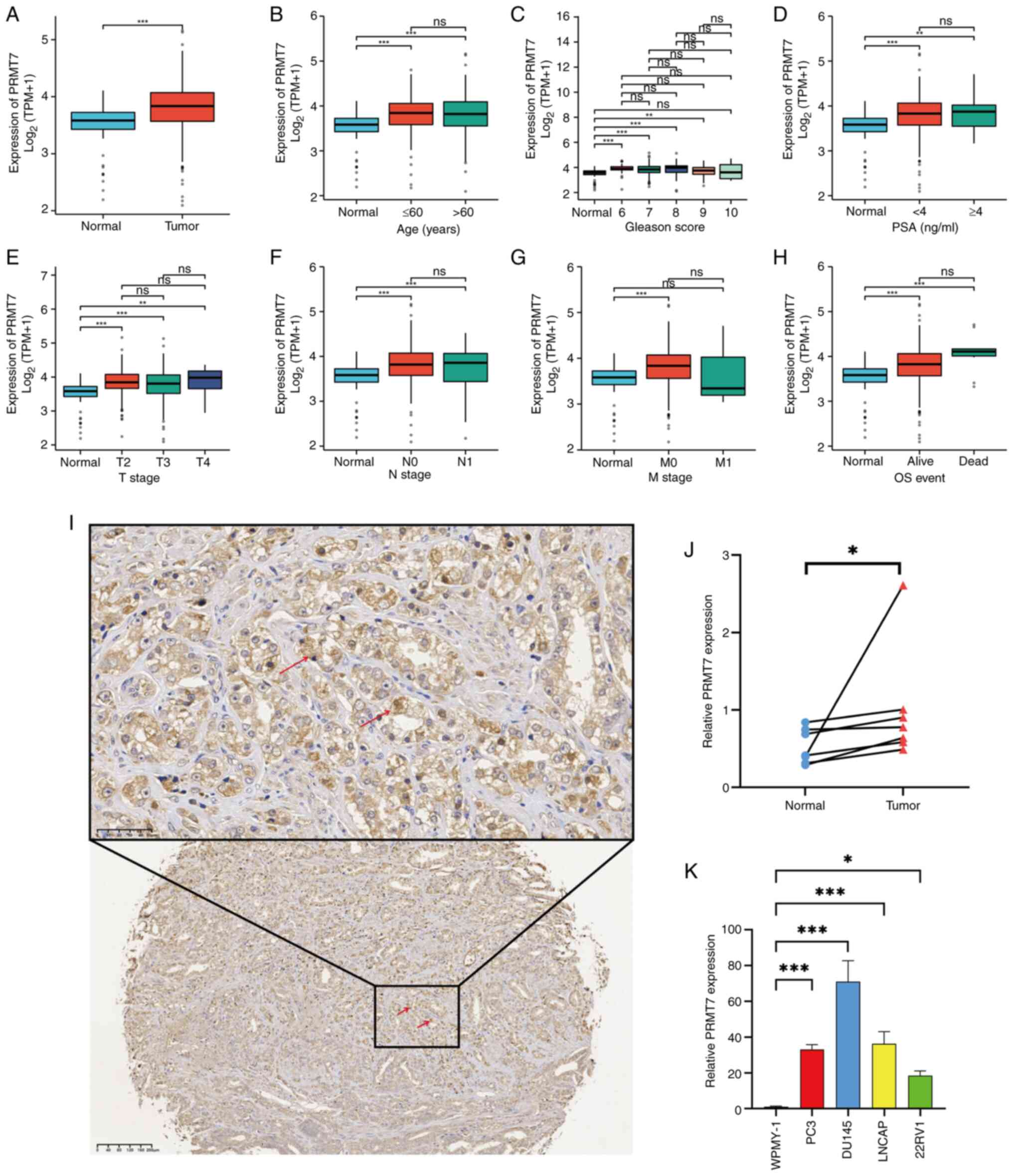
Figure 1

Differential gene expression patterns
of PRMT7 in PCa. (A) The correlation between PRMT7 expression in
cancerous and adjacent tissues of patients with PCa in TCGA
database. (B) The correlation between PRMT7 expression and age of
patients with PCa in TCGA database. (C) The correlation between
PRMT7 expression and Gleason score of patients with PCa in TCGA
database. (D) The correlation between PRMT7 expression and PSA
levels of patients with PCa in TCGA database. The correlation
between PRMT7 expression and (E) T, (F) N and (G) M stage of
patients with PCa in TCGA database. (H) The correlation between
PRMT7 expression and OS event of patients with PCa in TCGA
database. (I) Representative image of PRMT7 immunohistochemical
staining of PCa tissues and adjacent normal tissues (magnification,
50 and 100×; scale bar, 40 and 10 µm). The red arrows indicate the
PRMT7 positive areas. (J) The expression levels of PRMT7 in PCa
tissues was detected using RT-qPCR. The blue circle represents the
normal tissue around the cancer, while the red arrow represents the
tumor tissue. (K) The expression level of PRMT7 in PCa cell lines
and normal prostate cells was detected using RT-qPCR. *P<0.05,
**P<0.01 and ***P<0.001. PRMT7, protein arginine
methyltransferase 7; PCa, prostate cancer; PSA, protein specific
antigen; TPM, transcript per million; TCGA, The Cancer Genome
Atlas; RT-qPCR, reverse transcription-quantitative PCR; ns, not
significant.

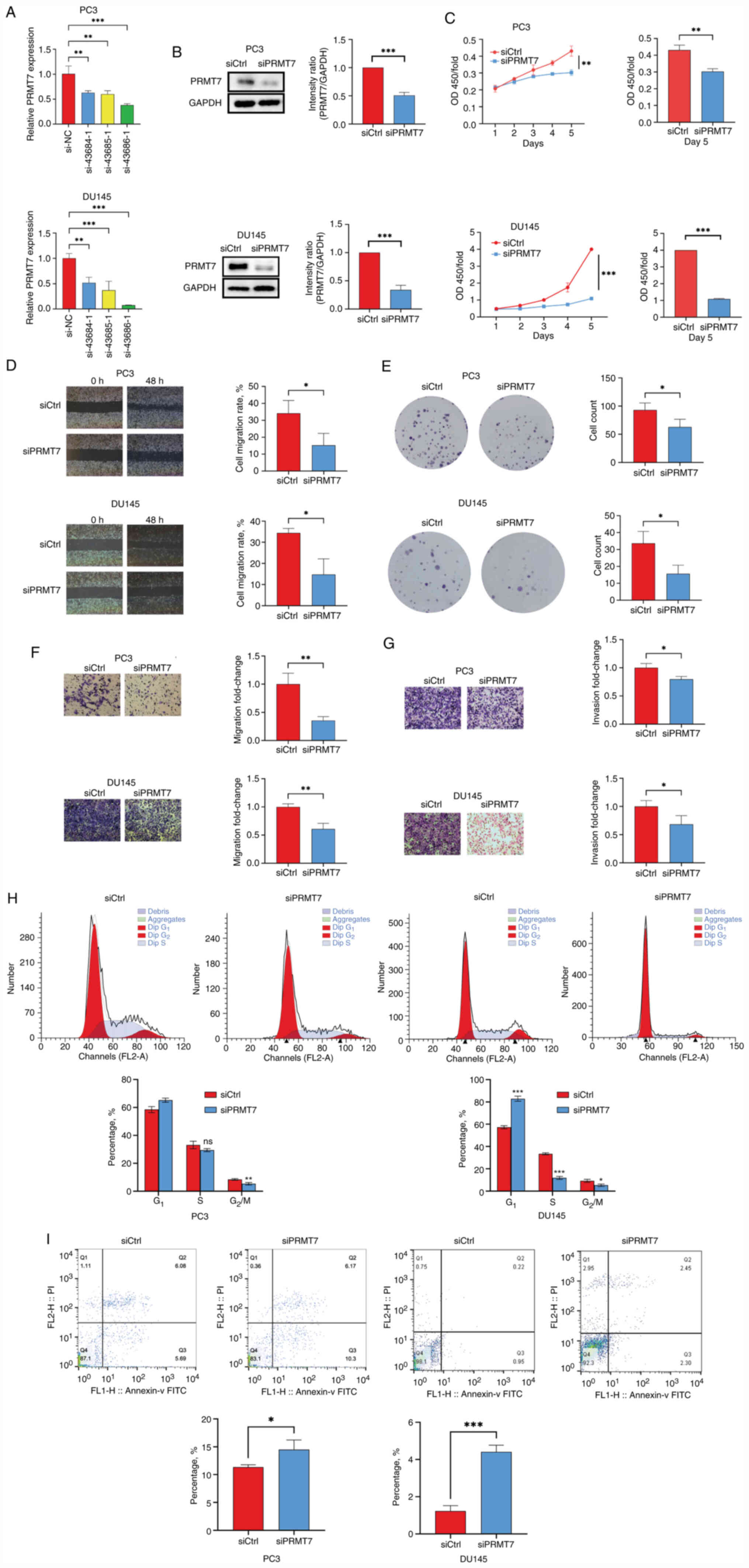
Figure 2

Function of PRMT7 in the PC3 and
DU145 cell lines. (A) The inhibition efficiency of siPRMT7 in cell
lines was determined using RT-qPCR. (B) Western blotting was used
to detect the protein expression levels of PRMT7 in the siPRMT7 and
siCtrl groups. (C) Cell proliferation in the siCtrl and siPRMT7
groups was assessed using a Cell Counting Kit-8 assay. (D) A wound
healing assay was used to investigate the migratory ability of PCa
cells after PRMT7 knockdown (scale bar, 500 µm). (E) Plate colony
formation assays were performed to determine the proliferation
abilities of PC3 and DU145 cells treated with siCtrl and siPRMT7.
The (F) migration and (G) invasion of PC3 and DU145 cells were
investigated using a Transwell assay after PRMT7 knockdown (scale
bar, 100 µm). (H) PI-FACS detection of the effect of PRMT7
knockdown on the PCa cell cycle. (I) The effect of PRMT7 knockdown
on the apoptosis of PCa cells was detected using Annexin V-APC
single staining. *P<0.05, **P<0.01 and ***P<0.001. PRMT7,
protein arginine methyltransferase 7; PCa, prostate cancer;
RT-qPCR, reverse transcription-quantitative PCR; siRNA, small
interfering RNA; si, siRNA; Ctrl; control; NC, negative control;
CCK-8, Cell Counting Kit-8.

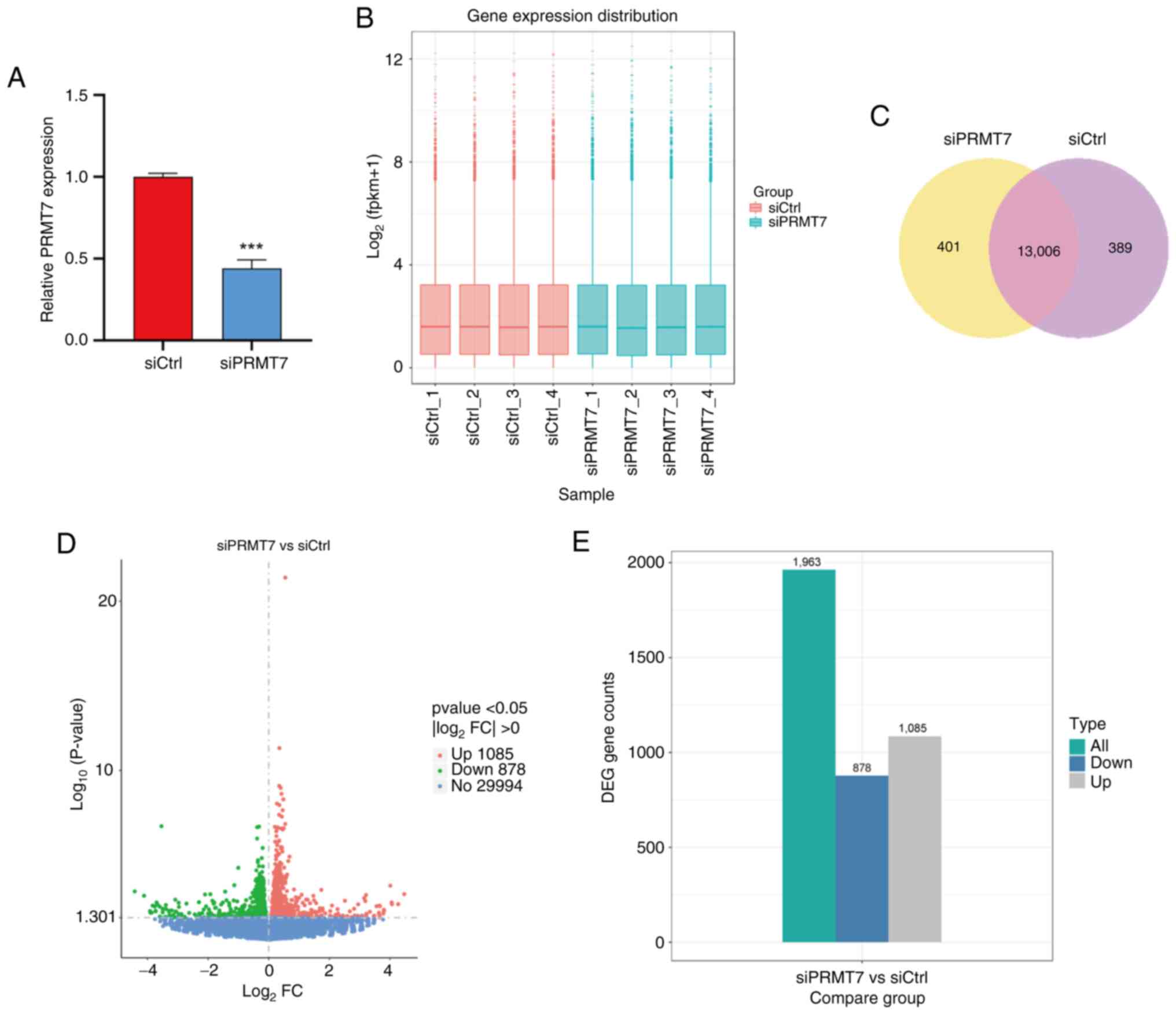
Figure 3

Transcriptome sequencing reveals
differential gene expression after PRMT7 knockdown. (A) PRMT7
expression differences among transcriptome sequencing samples were
detected using RT-qPCR. (B) Sample gene expression distribution box
diagram. After calculating the FPKM values for all genes in each
sample, the distribution of gene expression levels across different
samples were visualized using boxplots. (C) Co-expression Venn
diagram demonstrates the number of genes uniquely expressed in each
group/sample. The overlapping regions indicate the number of
co-expressed genes in two or more groups/samples. The comparison of
the number of differentially expressed genes is displayed in the
form of (D) volcano plot and (E) statistical histogram. Volcano
plot displaying DEGs. The x-axis demonstrates log2FC
between the treatment and control groups and the y-axis represents
the adjusted P-value (−log10Adjusted P). Red dots denote
significantly upregulated genes (log2FC>1; Adjusted
P<0.05), while green dots indicate downregulated genes
(log2FC<-1; Adjusted P<0.05). PRMT7, protein
arginine methyltransferase 7; DEGs; differentially expressed genes;
FPKM, fragments per KB of transcript per million mapped reads;
log2FC, log2 fold change; RT-qPCR, reverse
transcription-quantitative PCR; si, small interfering.

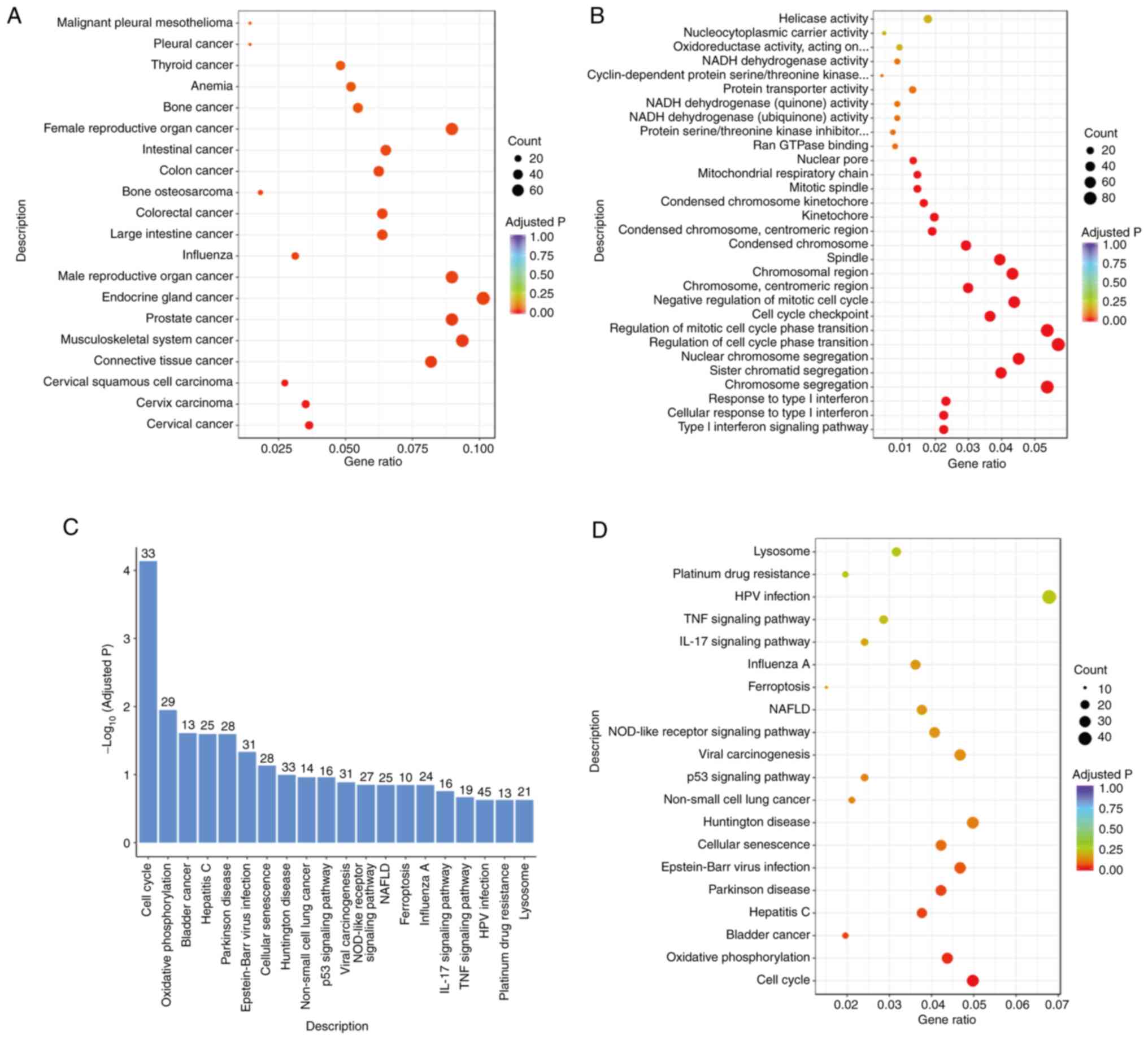
Figure 4

PRMT7 is involved in the regulation
of cell cycle-related pathways and affects the cell cycle in PCa.
(A) The DO enrichment distribution map of the DEGs associated with
PRMT7. DO is a biomedical database that systematically annotates
associations between human gene functions and diseases, providing
standardized disease descriptors for functional genomics research.
(B) Map of the GO enrichment sites of the DEGs associated with
PRMT7. GO is a comprehensive bioinformatics resource that
systematically characterizes gene functions through three
orthogonal categories: Biological processes, cellular components
and molecular functions. (C) KEGG enrichment analysis of the DEGs
associated with PRMT7. KEGG is an integrated database that
systematically consolidates genomic, chemical and systems
functional information to facilitate biological pathway analysis
and network modeling. (D) KEGG enrichment and distribution map of
the PRMT7 differential genes. PRMT7, protein arginine
methyltransferase 7; DEGs, Differentially expressed genes;
log2FC, log2 fold change; DO, Disease
Ontology; GO, Gene Ontology; KEGG, Kyoto Encyclopedia of Genes and
Genomes; NAFLD, Non-alcoholic fatty liver disease; NOD,
Nucleotide-binding Oligomerization Domain.

Figure 5

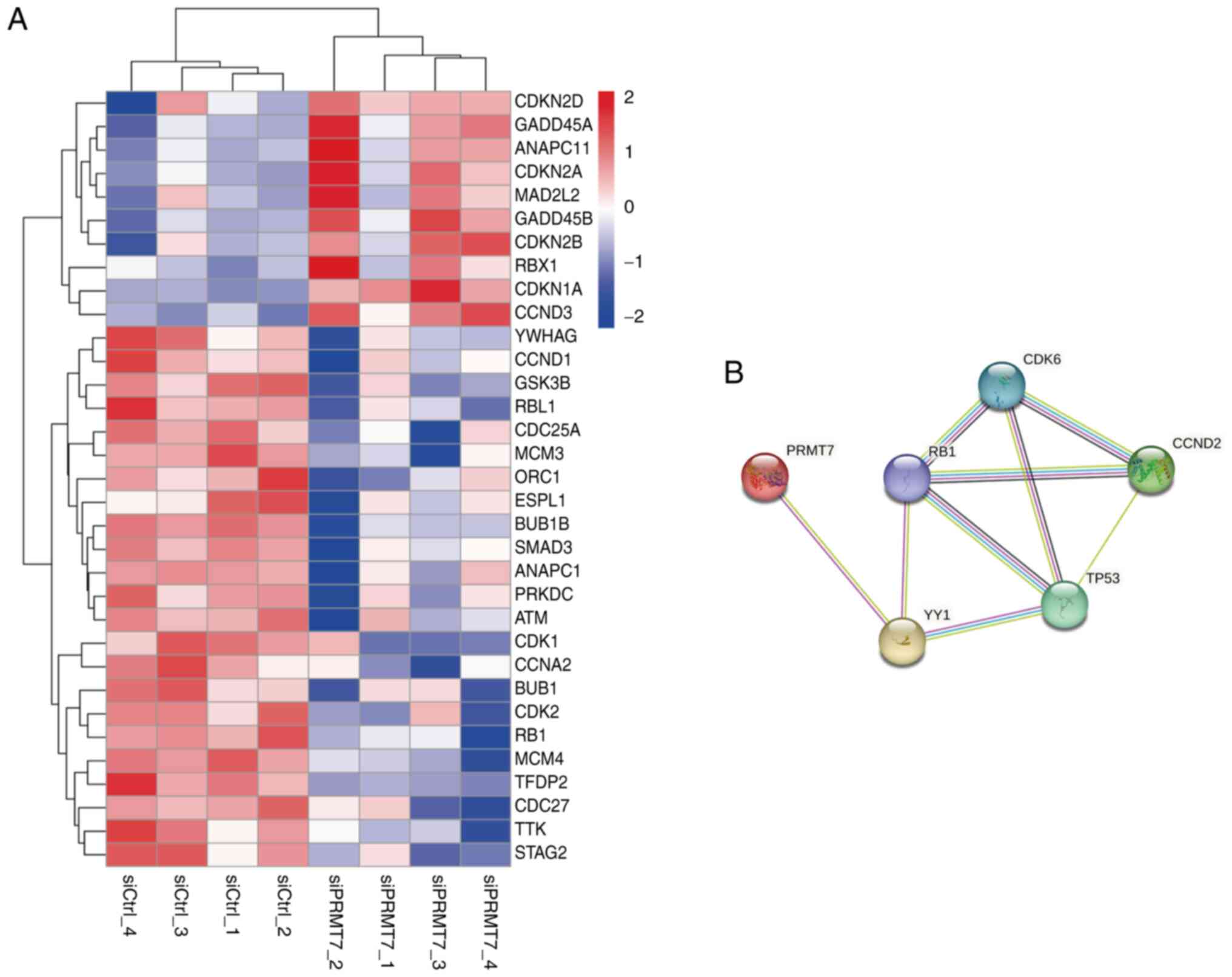
PRMT7 is involved in the
YY1/TP53/CCND2/CDK6/RB1 cell cycle signaling axis. (A) Heatmaps of
cell cycle-related differential genes identified using
transcriptome sequencing. (B) Cell cycle-related regulatory
proteins predicted in the STRING database and their component
signaling axes. PRMT7, protein arginine methyltransferase 7; YY1,
Yin Yang 1; TP53, tumor protein p53; CCND2, cyclin D2; RB1,
retinoblastoma 1; STRING, Search Tool for the Retrieval of
Interacting Genes/Proteins.
View References

1 

Siegel RL, Giaquinto AN and Jemal A: Cancer statistics, 2024. CA Cancer J Clin. 74:12–49. 2024.PubMed/NCBI

2 

Bray F, Laversanne M, Sung H, Ferlay J, Siegel RL, Soerjomataram I and Jemal A: Global cancer statistics 2022: GLOBOCAN estimates of incidence and mortality worldwide for 36 cancers in 185 countries. CA Cancer J Clin. 74:229–263. 2024.PubMed/NCBI

3 

Sugiura M, Sato H, Kanesaka M, Imamura Y, Sakamoto S, Ichikawa T and Kaneda A: Epigenetic modifications in prostate cancer. Int J Urol. 28:140–149. 2021. View Article : Google Scholar : PubMed/NCBI

4 

Liu J, Dong L, Zhu Y, Dong B, Sha J, Zhu HH, Pan J and Xue W: Prostate cancer treatment-China's perspective. Cancer Lett. 550:2159272022. View Article : Google Scholar : PubMed/NCBI

5 

Liu X, Yu C, Bi Y and Zhang ZJ: Trends and age-period-cohort effect on incidence and mortality of prostate cancer from 1990 to 2017 in China. Public Health. 172:70–80. 2019. View Article : Google Scholar : PubMed/NCBI

6 

Wang F, Wang C, Xia H, Lin Y, Zhang D, Yin P and Yao S: Burden of prostate cancer in China, 1990–2019: Findings from the 2019 global burden of disease study. Front Endocrinol (Lausanne). 13:8536232022. View Article : Google Scholar : PubMed/NCBI

7 

Han B, Zheng R, Zeng H, Wang S, Sun K, Chen R, Li L, Wei W and He J: Cancer incidence and mortality in China, 2022. J Natl Cancer Cent. 4:47–53. 2024.PubMed/NCBI

8 

Cao W, Chen HD, Yu YW, Li N and Chen WQ: Changing profiles of cancer burden worldwide and in China: A secondary analysis of the global cancer statistics 2020. Chin Med J (Engl). 134:783–791. 2021. View Article : Google Scholar : PubMed/NCBI

9 

Allemani C, Matsuda T, Di Carlo V, Harewood R, Matz M, Nikšić M, Bonaventure A, Valkov M, Johnson CJ, Estève J, et al: Global surveillance of trends in cancer survival 2000–14 (CONCORD-3): Analysis of individual records for 37 513 025 patients diagnosed with one of 18 cancers from 322 population-based registries in 71 countries. Lancet. 391:1023–1075. 2018. View Article : Google Scholar : PubMed/NCBI

10 

Pound CR, Partin AW, Eisenberger MA, Chan DW, Pearson JD and Walsh PC: Natural history of progression after PSA elevation following radical prostatectomy. JAMA. 281:1591–1597. 1999. View Article : Google Scholar : PubMed/NCBI

11 

Lobo J, Barros-Silva D, Henrique R and Jeronimo C: The emerging role of epitranscriptomics in cancer: Focus on urological tumors. Genes (Basel). 9:5522018. View Article : Google Scholar : PubMed/NCBI

12 

Rebello RJ, Oing C, Knudsen KE, Loeb S, Johnson DC, Reiter RE, Gillessen S, Van der Kwast T and Bristow RG: Prostate cancer. Nat Rev Dis Primers. 7:92021. View Article : Google Scholar : PubMed/NCBI

13 

Barsouk A, Padala SA, Vakiti A, Mohammed A, Saginala K, Thandra KC, Rawla P and Barsouk A: Epidemiology, staging and management of prostate cancer. Med Sci (Basel). 8:282020.PubMed/NCBI

14 

Feldman BJ and Feldman D: The development of androgen-independent prostate cancer. Nat Rev Cancer. 1:34–45. 2001. View Article : Google Scholar : PubMed/NCBI

15 

Hirst M and Marra MA: Epigenetics and human disease. Int J Biochem Cell Biol. 41:136–146. 2009. View Article : Google Scholar : PubMed/NCBI

16 

Miremadi A, Oestergaard MZ, Pharoah PD and Caldas C: Cancer genetics of epigenetic genes. Hum Mol Genet. 16:R28–R49. 2007. View Article : Google Scholar : PubMed/NCBI

17 

Fisk JC, Sayegh J, Zurita-Lopez C, Menon S, Presnyak V, Clarke SG and Read LK: A type III protein arginine methyltransferase from the protozoan parasite Trypanosoma brucei. J Biol Chem. 284:11590–11600. 2009. View Article : Google Scholar : PubMed/NCBI

18 

Feng Y, Hadjikyriacou A and Clarke SG: Substrate specificity of human protein arginine methyltransferase 7 (PRMT7): The importance of acidic residues in the double E loop. J Biol Chem. 289:32604–32616. 2014. View Article : Google Scholar : PubMed/NCBI

19 

Zurita-Lopez CI, Sandberg T, Kelly R and Clarke SG: Human protein arginine methyltransferase 7 (PRMT7) is a type III enzyme forming omega-NG-monomethylated arginine residues. J Biol Chem. 287:7859–7870. 2012. View Article : Google Scholar : PubMed/NCBI

20 

Debler EW, Jain K, Warmack RA, Feng Y, Clarke SG, Blobel G and Stavropoulos P: A glutamate/aspartate switch controls product specificity in a protein arginine methyltransferase. Proc Natl Acad Sci USA. 113:2068–2073. 2016. View Article : Google Scholar : PubMed/NCBI

21 

Bedford MT and Richard S: Arginine methylation an emerging regulator of protein function. Mol Cell. 18:263–272. 2005. View Article : Google Scholar : PubMed/NCBI

22 

Bedford MT and Clarke SG: Protein arginine methylation in mammals: Who, what, and why. Mol Cell. 33:1–13. 2009. View Article : Google Scholar : PubMed/NCBI

23 

Yang Y and Bedford MT: Protein arginine methyltransferases and cancer. Nat Rev Cancer. 13:37–50. 2013. View Article : Google Scholar : PubMed/NCBI

24 

Liu F, Wan L, Zou H, Pan Z, Zhou W and Lu X: PRMT7 promotes the growth of renal cell carcinoma through modulating the beta-catenin/C-MYC axis. Int J Biochem Cell Biol. 120:1056862020. View Article : Google Scholar : PubMed/NCBI

25 

Baldwin RM, Haghandish N, Daneshmand M, Amin S, Paris G, Falls TJ, Bell JC, Islam S and Côté J: Protein arginine methyltransferase 7 promotes breast cancer cell invasion through the induction of MMP9 expression. Oncotarget. 6:3013–3032. 2015. View Article : Google Scholar : PubMed/NCBI

26 

Yao R, Jiang H, Ma Y, Wang L, Wang L, Du J, Hou P, Gao Y, Zhao L, Wang G, et al: PRMT7 induces epithelial-to-mesenchymal transition and promotes metastasis in breast cancer. Cancer Res. 74:5656–5667. 2014. View Article : Google Scholar : PubMed/NCBI

27 

Ma W, Sun X, Zhang S, Chen Z and Yu J: Circ_0039960 regulates growth and Warburg effect of breast cancer cells via modulating miR-1178/PRMT7 axis. Mol Cell Probes. 64:1018292022. View Article : Google Scholar : PubMed/NCBI

28 

Fuhrmann J and Thompson PR: Protein arginine methylation and citrullination in epigenetic regulation. ACS Chem Biol. 11:654–668. 2016. View Article : Google Scholar : PubMed/NCBI

29 

Fuhrmann J, Clancy KW and Thompson PR: Chemical biology of protein arginine modifications in epigenetic regulation. Chem Rev. 115:5413–5461. 2015. View Article : Google Scholar : PubMed/NCBI

30 

Yao B, Zhu S, Wei X, Chen MK, Feng Y, Li Z, Xu X, Zhang Y, Wang Y, Zhou J, et al: The circSPON2/miR-331-3p axis regulates PRMT5, an epigenetic regulator of CAMK2N1 transcription and prostate cancer progression. Mol Cancer. 21:1192022. View Article : Google Scholar : PubMed/NCBI

31 

Beketova E, Fang S, Owens JL, Liu S, Chen X, Zhang Q, Asberry AM, Deng X, Malola J, Huang J, et al: Protein arginine methyltransferase 5 promotes pICln-dependent androgen receptor transcription in castration-resistant prostate cancer. Cancer Res. 80:4904–4917. 2020. View Article : Google Scholar : PubMed/NCBI

32 

Vieira FQ, Costa-Pinheiro P, Ramalho-Carvalho J, Pereira A, Menezes FD, Antunes L, Carneiro I, Oliveira J, Henrique R and Jerónimo C: Deregulated expression of selected histone methylases and demethylases in prostate carcinoma. Endocr Relat Cancer. 21:51–61. 2014. View Article : Google Scholar : PubMed/NCBI

33 

Epstein JI, Egevad L, Amin MB, Delahunt B, Srigley JR and Humphrey PA: The 2014 international society of urological pathology (ISUP) consensus conference on gleason grading of prostatic carcinoma: Definition of grading patterns and proposal for a new grading system. Am J Surg Pathol. 40:244–252. 2016. View Article : Google Scholar : PubMed/NCBI

34 

Xiao WJ, Zhu Y, Zhu Y, Dai B and Ye DW: Evaluation of clinical staging of the American Joint Committee on Cancer (eighth edition) for prostate cancer. World J Urol. 36:769–774. 2018. View Article : Google Scholar : PubMed/NCBI

35 

Feng Y, Sun C, Zhang L, Wan H, Zhou H, Chen Y, Zhu L, Xia G and Mi Y: Upregulation of COPB2 promotes prostate cancer proliferation and invasion through the MAPK/TGF-β signaling pathway. Front Oncol. 12:8653172022. View Article : Google Scholar : PubMed/NCBI

36 

Mi YY, Ji Y, Zhang L, Sun CY, Wei BB, Yang DJ, Wan HY, Qi XW, Wu S and Zhu LJ: A first-in-class HBO1 inhibitor WM-3835 inhibits castration-resistant prostate cancer cell growth in vitro and in vivo. Cell Death Dis. 14:672023. View Article : Google Scholar : PubMed/NCBI

37 

Jaiswal B, Agarwal A and Gupta A: Lysine acetyltransferases and their role in AR signaling and prostate cancer. Front Endocrinol (Lausanne). 13:8865942022. View Article : Google Scholar : PubMed/NCBI

38 

Cocchiola R, Romaniello D, Grillo C, Altieri F, Liberti M, Magliocca FM, Chichiarelli S, Marrocco I, Borgoni G, Perugia G and Eufemi M: Analysis of STAT3 post-translational modifications (PTMs) in human prostate cancer with different Gleason Score. Oncotarget. 8:42560–42570. 2017. View Article : Google Scholar : PubMed/NCBI

39 

Deng X, Shao G, Zhang HT, Li C, Zhang D, Cheng L, Elzey BD, Pili R, Ratliff TL, Huang J and Hu CD: Protein arginine methyltransferase 5 functions as an epigenetic activator of the androgen receptor to promote prostate cancer cell growth. Oncogene. 36:1223–1231. 2017. View Article : Google Scholar : PubMed/NCBI

40 

Liu L, Zhang X, Ding H, Liu X, Cao D, Liu Y, Liu J, Lin C, Zhang N, Wang G, et al: Arginine and lysine methylation of MRPS23 promotes breast cancer metastasis through regulating OXPHOS. Oncogene. 40:3548–3563. 2021. View Article : Google Scholar : PubMed/NCBI

41 

Liu Y, Li L, Liu X, Wang Y, Liu L, Peng L, Liu J, Zhang L, Wang G, Li H, et al: Arginine methylation of SHANK2 by PRMT7 promotes human breast cancer metastasis through activating endosomal FAK signalling. Elife. 9:e576172020. View Article : Google Scholar : PubMed/NCBI

42 

Nicot C: PRMT7: A survive-or-die switch in cancer stem cells. Mol Cancer. 21:1272022. View Article : Google Scholar : PubMed/NCBI

43 

Liu C, Zou W, Nie D, Li S, Duan C, Zhou M, Lai P, Yang S, Ji S, Li Y, et al: Loss of PRMT7 reprograms glycine metabolism to selectively eradicate leukemia stem cells in CML. Cell Metab. 34:818–35.e7. 2022. View Article : Google Scholar : PubMed/NCBI

44 

Rodrigo-Faus M, Vincelle-Nieto A, Vidal N, Puente J, Saiz-Pardo M, Lopez-Garcia A, Mendiburu-Eliçabe M, Palao N, Baquero C, Linzoain-Agos P, et al: CRISPR/Cas9 screenings unearth protein arginine methyltransferase 7 as a novel essential gene in prostate cancer metastasis. Cancer Lett. 588:2167762024. View Article : Google Scholar : PubMed/NCBI

45 

Cheng D, He Z, Zheng L, Xie D, Dong S and Zhang P: PRMT7 contributes to the metastasis phenotype in human non-small-cell lung cancer cells possibly through the interaction with HSPA5 and EEF2. Onco Targets Ther. 11:4869–4876. 2018. View Article : Google Scholar : PubMed/NCBI

46 

Chen J: The Cell-cycle arrest and apoptotic functions of p53 in tumor initiation and progression. Cold Spring Harb Perspect Med. 6:a0261042016. View Article : Google Scholar : PubMed/NCBI

47 

Marei HE, Althani A, Afifi N, Hasan A, Caceci T, Pozzoli G, Morrione A, Giordano A and Cenciarelli C: p53 signaling in cancer progression and therapy. Cancer Cell Int. 21:7032021. View Article : Google Scholar : PubMed/NCBI

48 

Hashimoto N, Nagano H and Tanaka T: The role of tumor suppressor p53 in metabolism and energy regulation, and its implication in cancer and lifestyle-related diseases. Endocr J. 66:485–496. 2019. View Article : Google Scholar : PubMed/NCBI

49 

Liu J, Zhang C, Hu W and Feng Z: Tumor suppressor p53 and metabolism. J Mol Cell Biol. 11:284–292. 2019. View Article : Google Scholar : PubMed/NCBI

50 

Zhang H, Xu J, Long Y, Maimaitijiang A, Su Z, Li W and Li J: Unraveling the guardian: P53′s multifaceted role in the DNA Damage response and tumor treatment strategies. Int J Mol Sci. 25:129282024. View Article : Google Scholar : PubMed/NCBI

51 

Mirzayans R, Andrais B, Kumar P and Murray D: Significance of Wild-type p53 signaling in suppressing apoptosis in response to chemical genotoxic agents: Impact on chemotherapy outcome. Int J Mol Sci. 18:9282017. View Article : Google Scholar : PubMed/NCBI

52 

Madan E, Gogna R, Bhatt M, Pati U, Kuppusamy P and Mahdi AA: Regulation of glucose metabolism by p53: Emerging new roles for the tumor suppressor. Oncotarget. 2:948–957. View Article : Google Scholar : PubMed/NCBI

53 

Wang W, Li D and Sui G: YY1 is an inducer of cancer metastasis. Crit Rev Oncog. 22:1–11. 2017. View Article : Google Scholar : PubMed/NCBI

54 

Li Z, Wang F, Tian X, Long J, Ling B, Zhang W, Xu J and Liang A: HCK maintains the self-renewal of leukaemia stem cells via CDK6 in AML. J Exp Clin Cancer Res. 40:2102021. View Article : Google Scholar : PubMed/NCBI

55 

Buontempo F, McCubrey JA, Orsini E, Ruzzene M, Cappellini A, Lonetti A, Evangelisti C, Chiarini F, Evangelisti C, Barata JT and Martelli AM: Therapeutic targeting of CK2 in acute and chronic leukemias. Leukemia. 32:1–10. 2018. View Article : Google Scholar : PubMed/NCBI

56 

Rizkallah R, Alexander KE, Kassardjian A, Lüscher B and Hurt MM: The transcription factor YY1 is a substrate for Polo-like kinase 1 at the G2/M transition of the cell cycle. PLoS One. 6:e159282011. View Article : Google Scholar : PubMed/NCBI

57 

Dong X, Guo R, Ji T, Zhang J, Xu J, Li Y, Sheng Y, Wang Y, Fang K, Wen Y, et al: YY1 safeguard multidimensional epigenetic landscape associated with extended pluripotency. Nucleic Acids Res. 50:12019–12038. 2022. View Article : Google Scholar : PubMed/NCBI

58 

Huang F, Zhao H, Du Z and Jiang H: miR-615 inhibits prostate cancer cell proliferation and invasion by directly targeting Cyclin D2. Oncol Res. 27:293–299. 2019. View Article : Google Scholar : PubMed/NCBI

59 

Dong Q, Meng P, Wang T, Qin W, Qin W, Wang F, Yuan J, Chen Z, Yang A and Wang H: MicroRNA let-7a inhibits proliferation of human prostate cancer cells in vitro and in vivo by targeting E2F2 and CCND2. PLoS One. 5:e101472010. View Article : Google Scholar : PubMed/NCBI

60 

Chen X, Wu Y, Wang X, Xu C, Wang L, Jian J, Wu D and Wu G: CDK6 is upregulated and may be a potential therapeutic target in enzalutamide-resistant castration-resistant prostate cancer. Eur J Med Res. 27:1052022. View Article : Google Scholar : PubMed/NCBI

61 

Yu Z, Zhan C, Du H and Zhang L, Liang C and Zhang L: Baicalin suppresses the cell cycle progression and proliferation of prostate cancer cells through the CDK6/FOXM1 axis. Mol Cell Biochem. 469:169–178. 2020. View Article : Google Scholar : PubMed/NCBI

62 

Chakraborty G, Armenia J, Mazzu YZ, Nandakumar S, Stopsack KH, Atiq MO, Komura K, Jehane L, Hirani R, Chadalavada K, et al: Significance of BRCA2 and RB1 Co-loss in aggressive prostate cancer progression. Clin Cancer Res. 26:2047–2064. 2020. View Article : Google Scholar : PubMed/NCBI

63 

Ku SY, Rosario S, Wang Y, Mu P, Seshadri M, Goodrich ZW, Goodrich MM, Labbé DP, Gomez EC, Wang J, et al: Rb1 and Trp53 cooperate to suppress prostate cancer lineage plasticity, metastasis, and antiandrogen resistance. Science. 355:78–83. 2017. View Article : Google Scholar : PubMed/NCBI

64 

Li Y, Wang F, Xu J, Ye F, Shen Y, Zhou J, Lu W, Wan X, Ma D and Xie X: Progressive miRNA expression profiles in cervical carcinogenesis and identification of HPV-related target genes for miR-29. J Pathol. 224:484–495. 2011. View Article : Google Scholar : PubMed/NCBI

65 

McNair C, Urbanucci A, Comstock CE, Augello MA, Goodwin JF, Launchbury R, Zhao SG, Schiewer MJ, Ertel A, Karnes J, et al: Cell cycle-coupled expansion of AR activity promotes cancer progression. Oncogene. 36:1655–1668. 2017. View Article : Google Scholar : PubMed/NCBI

66 

Oner M, Lin E, Chen MC, Hsu FN, Shazzad Hossain Prince GM, Chiu KY, Teng CJ, Yang TY, Wang HY, Yue CH, et al: Future aspects of CDK5 in prostate cancer: From pathogenesis to therapeutic implications. Int J Mol Sci. 20:38812019. View Article : Google Scholar : PubMed/NCBI

67 

Zolochevska O and Figueiredo ML: Cell cycle regulator cdk2ap1 inhibits prostate cancer cell growth and modifies androgen-responsive pathway function. Prostate. 69:1586–1597. 2009. View Article : Google Scholar : PubMed/NCBI

68 

Schiewer MJ, Augello MA and Knudsen KE: The AR dependent cell cycle: Mechanisms and cancer relevance. Mol Cell Endocrinol. 352:34–45. 2012. View Article : Google Scholar : PubMed/NCBI

69 

Agus DB, Cordon-Cardo C, Fox W, Drobnjak M, Koff A, Golde DW and Scher HI: Prostate cancer cell cycle regulators: Response to androgen withdrawal and development of androgen independence. J Natl Cancer Inst. 91:1869–1876. 1999. View Article : Google Scholar : PubMed/NCBI

70 

Huggins C and Hodges CV: Studies on prostatic cancer: I. The effect of castration, of estrogen and of androgen injection on serum phosphatases in metastatic carcinoma of the prostate. 1941. J Urol. 168:9–12. 2002. View Article : Google Scholar : PubMed/NCBI

71 

Knudsen KE, Arden KC and Cavenee WK: Multiple G1 regulatory elements control the androgen-dependent proliferation of prostatic carcinoma cells. J Biol Chem. 273:20213–20222. 1998. View Article : Google Scholar : PubMed/NCBI

72 

Lee YM and Sicinski P: Targeting cyclins and cyclin-dependent kinases in cancer: Lessons from mice, hopes for therapeutic applications in human. Cell Cycle. 5:2110–2114. 2006. View Article : Google Scholar : PubMed/NCBI

73 

Malumbres M and Barbacid M: Cell cycle kinases in cancer. Curr Opin Genet Dev. 17:60–65. 2007. View Article : Google Scholar : PubMed/NCBI

74 

Sherr CJ and Roberts JM: Living with or without cyclins and cyclin-dependent kinases. Genes Dev. 18:2699–2711. 2004. View Article : Google Scholar : PubMed/NCBI

75 

Xu Y, Chen SY, Ross KN and Balk SP: Androgens induce prostate cancer cell proliferation through mammalian target of rapamycin activation and post-Transcriptional increases in cyclin D proteins. Cancer Res. 66:7783–7792. 2006. View Article : Google Scholar : PubMed/NCBI

76 

Knudsen ES and Knudsen KE: Tailoring to RB: Tumour suppressor status and therapeutic response. Nat Rev Cancer. 8:714–724. 2008. View Article : Google Scholar : PubMed/NCBI

77 

Jain K, Jin CY and Clarke SG: Epigenetic control via allosteric regulation of mammalian protein arginine methyltransferases. Proc Natl Acad Sci USA. 114:10101–10106. 2017. View Article : Google Scholar : PubMed/NCBI

78 

Jain K and Clarke SG: PRMT7 as a unique member of the protein arginine methyltransferase family: A review. Arch Biochem Biophys. 665:36–45. 2019. View Article : Google Scholar : PubMed/NCBI

Related Articles

  • Abstract
  • View
  • Download
  • Twitter
Copy and paste a formatted citation
Spandidos Publications style
Wan H, Zhou H, Gui J, Yang D, Wang R, Ni J, Wu S, Qin Y, Qi Q, Zhu L, Zhu L, et al: Protein arginine methyltransferase 7 regulates the cell cycle and promotes the progression of prostate cancer. Oncol Lett 30: 549, 2025.
APA
Wan, H., Zhou, H., Gui, J., Yang, D., Wang, R., Ni, J. ... Mi, Y. (2025). Protein arginine methyltransferase 7 regulates the cell cycle and promotes the progression of prostate cancer. Oncology Letters, 30, 549. https://doi.org/10.3892/ol.2025.15295
MLA
Wan, H., Zhou, H., Gui, J., Yang, D., Wang, R., Ni, J., Wu, S., Qin, Y., Qi, Q., Zhu, L., Feng, N., Mi, Y."Protein arginine methyltransferase 7 regulates the cell cycle and promotes the progression of prostate cancer". Oncology Letters 30.6 (2025): 549.
Chicago
Wan, H., Zhou, H., Gui, J., Yang, D., Wang, R., Ni, J., Wu, S., Qin, Y., Qi, Q., Zhu, L., Feng, N., Mi, Y."Protein arginine methyltransferase 7 regulates the cell cycle and promotes the progression of prostate cancer". Oncology Letters 30, no. 6 (2025): 549. https://doi.org/10.3892/ol.2025.15295
Copy and paste a formatted citation
x
Spandidos Publications style
Wan H, Zhou H, Gui J, Yang D, Wang R, Ni J, Wu S, Qin Y, Qi Q, Zhu L, Zhu L, et al: Protein arginine methyltransferase 7 regulates the cell cycle and promotes the progression of prostate cancer. Oncol Lett 30: 549, 2025.
APA
Wan, H., Zhou, H., Gui, J., Yang, D., Wang, R., Ni, J. ... Mi, Y. (2025). Protein arginine methyltransferase 7 regulates the cell cycle and promotes the progression of prostate cancer. Oncology Letters, 30, 549. https://doi.org/10.3892/ol.2025.15295
MLA
Wan, H., Zhou, H., Gui, J., Yang, D., Wang, R., Ni, J., Wu, S., Qin, Y., Qi, Q., Zhu, L., Feng, N., Mi, Y."Protein arginine methyltransferase 7 regulates the cell cycle and promotes the progression of prostate cancer". Oncology Letters 30.6 (2025): 549.
Chicago
Wan, H., Zhou, H., Gui, J., Yang, D., Wang, R., Ni, J., Wu, S., Qin, Y., Qi, Q., Zhu, L., Feng, N., Mi, Y."Protein arginine methyltransferase 7 regulates the cell cycle and promotes the progression of prostate cancer". Oncology Letters 30, no. 6 (2025): 549. https://doi.org/10.3892/ol.2025.15295
Follow us
  • Twitter
  • LinkedIn
  • Facebook
About
  • Spandidos Publications
  • Careers
  • Cookie Policy
  • Privacy Policy
How can we help?
  • Help
  • Live Chat
  • Contact
  • Email to our Support Team