Spandidos Publications Logo
  • About
    • About Spandidos
    • Aims and Scopes
    • Abstracting and Indexing
    • Editorial Policies
    • Reprints and Permissions
    • Job Opportunities
    • Terms and Conditions
    • Contact
  • Journals
    • All Journals
    • Oncology Letters
      • Oncology Letters
      • Information for Authors
      • Editorial Policies
      • Editorial Board
      • Aims and Scope
      • Abstracting and Indexing
      • Bibliographic Information
      • Archive
    • International Journal of Oncology
      • International Journal of Oncology
      • Information for Authors
      • Editorial Policies
      • Editorial Board
      • Aims and Scope
      • Abstracting and Indexing
      • Bibliographic Information
      • Archive
    • Molecular and Clinical Oncology
      • Molecular and Clinical Oncology
      • Information for Authors
      • Editorial Policies
      • Editorial Board
      • Aims and Scope
      • Abstracting and Indexing
      • Bibliographic Information
      • Archive
    • Experimental and Therapeutic Medicine
      • Experimental and Therapeutic Medicine
      • Information for Authors
      • Editorial Policies
      • Editorial Board
      • Aims and Scope
      • Abstracting and Indexing
      • Bibliographic Information
      • Archive
    • International Journal of Molecular Medicine
      • International Journal of Molecular Medicine
      • Information for Authors
      • Editorial Policies
      • Editorial Board
      • Aims and Scope
      • Abstracting and Indexing
      • Bibliographic Information
      • Archive
    • Biomedical Reports
      • Biomedical Reports
      • Information for Authors
      • Editorial Policies
      • Editorial Board
      • Aims and Scope
      • Abstracting and Indexing
      • Bibliographic Information
      • Archive
    • Oncology Reports
      • Oncology Reports
      • Information for Authors
      • Editorial Policies
      • Editorial Board
      • Aims and Scope
      • Abstracting and Indexing
      • Bibliographic Information
      • Archive
    • Molecular Medicine Reports
      • Molecular Medicine Reports
      • Information for Authors
      • Editorial Policies
      • Editorial Board
      • Aims and Scope
      • Abstracting and Indexing
      • Bibliographic Information
      • Archive
    • World Academy of Sciences Journal
      • World Academy of Sciences Journal
      • Information for Authors
      • Editorial Policies
      • Editorial Board
      • Aims and Scope
      • Abstracting and Indexing
      • Bibliographic Information
      • Archive
    • International Journal of Functional Nutrition
      • International Journal of Functional Nutrition
      • Information for Authors
      • Editorial Policies
      • Editorial Board
      • Aims and Scope
      • Abstracting and Indexing
      • Bibliographic Information
      • Archive
    • International Journal of Epigenetics
      • International Journal of Epigenetics
      • Information for Authors
      • Editorial Policies
      • Editorial Board
      • Aims and Scope
      • Abstracting and Indexing
      • Bibliographic Information
      • Archive
    • Medicine International
      • Medicine International
      • Information for Authors
      • Editorial Policies
      • Editorial Board
      • Aims and Scope
      • Abstracting and Indexing
      • Bibliographic Information
      • Archive
  • Articles
  • Information
    • Information for Authors
    • Information for Reviewers
    • Information for Librarians
    • Information for Advertisers
    • Conferences
  • Language Editing
Spandidos Publications Logo
  • About
    • About Spandidos
    • Aims and Scopes
    • Abstracting and Indexing
    • Editorial Policies
    • Reprints and Permissions
    • Job Opportunities
    • Terms and Conditions
    • Contact
  • Journals
    • All Journals
    • Biomedical Reports
      • Information for Authors
      • Editorial Policies
      • Editorial Board
      • Aims and Scope
      • Abstracting and Indexing
      • Bibliographic Information
      • Archive
    • Experimental and Therapeutic Medicine
      • Information for Authors
      • Editorial Policies
      • Editorial Board
      • Aims and Scope
      • Abstracting and Indexing
      • Bibliographic Information
      • Archive
    • International Journal of Epigenetics
      • Information for Authors
      • Editorial Policies
      • Editorial Board
      • Aims and Scope
      • Abstracting and Indexing
      • Bibliographic Information
      • Archive
    • International Journal of Functional Nutrition
      • Information for Authors
      • Editorial Policies
      • Editorial Board
      • Aims and Scope
      • Abstracting and Indexing
      • Bibliographic Information
      • Archive
    • International Journal of Molecular Medicine
      • Information for Authors
      • Editorial Policies
      • Editorial Board
      • Aims and Scope
      • Abstracting and Indexing
      • Bibliographic Information
      • Archive
    • International Journal of Oncology
      • Information for Authors
      • Editorial Policies
      • Editorial Board
      • Aims and Scope
      • Abstracting and Indexing
      • Bibliographic Information
      • Archive
    • Medicine International
      • Information for Authors
      • Editorial Policies
      • Editorial Board
      • Aims and Scope
      • Abstracting and Indexing
      • Bibliographic Information
      • Archive
    • Molecular and Clinical Oncology
      • Information for Authors
      • Editorial Policies
      • Editorial Board
      • Aims and Scope
      • Abstracting and Indexing
      • Bibliographic Information
      • Archive
    • Molecular Medicine Reports
      • Information for Authors
      • Editorial Policies
      • Editorial Board
      • Aims and Scope
      • Abstracting and Indexing
      • Bibliographic Information
      • Archive
    • Oncology Letters
      • Information for Authors
      • Editorial Policies
      • Editorial Board
      • Aims and Scope
      • Abstracting and Indexing
      • Bibliographic Information
      • Archive
    • Oncology Reports
      • Information for Authors
      • Editorial Policies
      • Editorial Board
      • Aims and Scope
      • Abstracting and Indexing
      • Bibliographic Information
      • Archive
    • World Academy of Sciences Journal
      • Information for Authors
      • Editorial Policies
      • Editorial Board
      • Aims and Scope
      • Abstracting and Indexing
      • Bibliographic Information
      • Archive
  • Articles
  • Information
    • For Authors
    • For Reviewers
    • For Librarians
    • For Advertisers
    • Conferences
  • Language Editing
Login Register Submit
  • This site uses cookies
  • You can change your cookie settings at any time by following the instructions in our Cookie Policy. To find out more, you may read our Privacy Policy.

    I agree
Search articles by DOI, keyword, author or affiliation
Search
Advanced Search
presentation
Oncology Letters
Join Editorial Board Propose a Special Issue
Print ISSN: 1792-1074 Online ISSN: 1792-1082
Journal Cover
December-2025 Volume 30 Issue 6

Full Size Image

Sign up for eToc alerts
Recommend to Library

Journals

International Journal of Molecular Medicine

International Journal of Molecular Medicine

International Journal of Molecular Medicine is an international journal devoted to molecular mechanisms of human disease.

International Journal of Oncology

International Journal of Oncology

International Journal of Oncology is an international journal devoted to oncology research and cancer treatment.

Molecular Medicine Reports

Molecular Medicine Reports

Covers molecular medicine topics such as pharmacology, pathology, genetics, neuroscience, infectious diseases, molecular cardiology, and molecular surgery.

Oncology Reports

Oncology Reports

Oncology Reports is an international journal devoted to fundamental and applied research in Oncology.

Experimental and Therapeutic Medicine

Experimental and Therapeutic Medicine

Experimental and Therapeutic Medicine is an international journal devoted to laboratory and clinical medicine.

Oncology Letters

Oncology Letters

Oncology Letters is an international journal devoted to Experimental and Clinical Oncology.

Biomedical Reports

Biomedical Reports

Explores a wide range of biological and medical fields, including pharmacology, genetics, microbiology, neuroscience, and molecular cardiology.

Molecular and Clinical Oncology

Molecular and Clinical Oncology

International journal addressing all aspects of oncology research, from tumorigenesis and oncogenes to chemotherapy and metastasis.

World Academy of Sciences Journal

World Academy of Sciences Journal

Multidisciplinary open-access journal spanning biochemistry, genetics, neuroscience, environmental health, and synthetic biology.

International Journal of Functional Nutrition

International Journal of Functional Nutrition

Open-access journal combining biochemistry, pharmacology, immunology, and genetics to advance health through functional nutrition.

International Journal of Epigenetics

International Journal of Epigenetics

Publishes open-access research on using epigenetics to advance understanding and treatment of human disease.

Medicine International

Medicine International

An International Open Access Journal Devoted to General Medicine.

Journal Cover
December-2025 Volume 30 Issue 6

Full Size Image

Sign up for eToc alerts
Recommend to Library

  • Article
  • Citations
    • Cite This Article
    • Download Citation
    • Create Citation Alert
    • Remove Citation Alert
    • Cited By
  • Similar Articles
    • Related Articles (in Spandidos Publications)
    • Similar Articles (Google Scholar)
    • Similar Articles (PubMed)
  • Download PDF
  • Download XML
  • View XML
Article Open Access

Methionine‑MAT2A‑SAM axis controls lipid levels by regulating ACSL4

  • Authors:
    • Chaoyi Xia
    • Jingshu Min
  • View Affiliations / Copyright

    Affiliations: Zhejiang Provincial Engineering Research Center of New Technologies and Applications for Targeted Therapy of Major Diseases, College of Life Sciences and Medicine, Zhejiang Sci‑Tech University, Hangzhou, Zhejiang 310018, P.R. China
    Copyright: © Xia et al. This is an open access article distributed under the terms of Creative Commons Attribution License.
  • Article Number: 551
    |
    Published online on: September 24, 2025
       https://doi.org/10.3892/ol.2025.15297
  • Expand metrics +
Metrics: Total Views: 0 (Spandidos Publications: | PMC Statistics: )
Metrics: Total PDF Downloads: 0 (Spandidos Publications: | PMC Statistics: )
Cited By (CrossRef): 0 citations Loading Articles...

This article is mentioned in:


Abstract

The four major metabolic pathways in cells, including amino acid, glucose, nucleotide and lipid metabolism, constitute the fundamental framework of cellular metabolic networks. However, the intricate reciprocal regulatory mechanisms between amino acid metabolism and lipid metabolism remain poorly understood. In the present study, an essential amino acid‑deficient culture medium was established and applied to cell cultures. Subsequent analysis using flow cytometry demonstrated that methionine deprivation significantly reduced cellular lipid accumulation and impaired the fatty acid uptake capacity. Mechanistic investigations using western blotting revealed that the methionine‑methionine adenosyltransferase 2A (MAT2A)‑S‑adenosylmethionine (SAM) metabolic axis regulates the protein expression of ACSL4, a critical enzyme governing fatty acid uptake. Notably, the results indicated that the protein expression of MAT2A may be tightly regulated by SAM through a feedback mechanism, ensuring homeostasis of the methionine‑MAT2A‑SAM metabolic axis. In summary, the findings of the present study demonstrate that the methionine‑MAT2A‑SAM axis modulates lipid metabolism by regulating ACSL4 expression and function.
View Figures

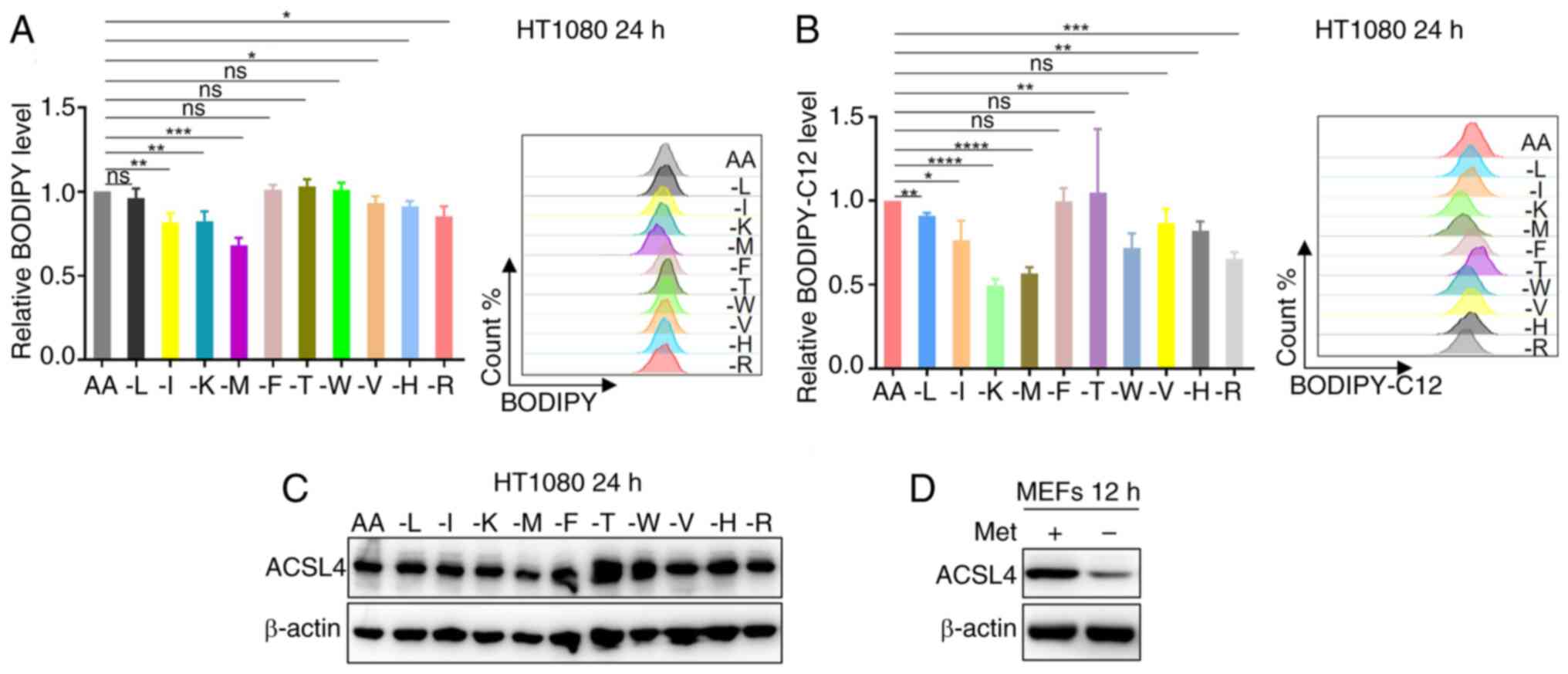
Figure 1

Methionine restriction downregulates
cellular lipid levels. (A) HT1080 cells were cultured without
leucine, isoleucine, lysine, methionine, phenylalanine, tyrosine,
tryptophan, valine, histidine or arginine as indicated for 24 h,
and the intracellular lipids were determined by BODIPY staining
coupled with flow cytometry (n=3). (B) HT1080 cells were cultured
without leucine, isoleucine, lysine, methionine, phenylalanine,
tyrosine, tryptophan, valine, histidine, or arginine as indicated
for 24 h, and fatty acid uptake capacity was determined by
BODIPY-C12 staining coupled with flow cytometry (n=3). (C) Western
blot analysis of ACSL4 expression in HT1080 cells treated with
medium without leucine, isoleucine, lysine, methionine,
phenylalanine, tyrosine, tryptophan, valine, histidine or arginine
as indicated for 24 h. (D) Western blot analysis of ACSL4
expression in MEFs cells treated with medium without methionine for
12 h. Data are presented as the mean ± SD with P-values determined
by one-way ANOVA followed by Tukey's Honestly Significant
Difference. *P<0.05, **P<0.01, ***P<0.001,
****P<0.0001. AA, all amino acids; L, isoleucine; I, isoleucine;
K, lysine; M, methionine; F, phenylalanine; T, threonine; W,
tryptophan; V, valine; H, histidine; R, arginine; ACSL4, acyl-CoA
synthetase long chain family member 4; MEFs, mouse embryonic
fibroblasts; Met, methionine.

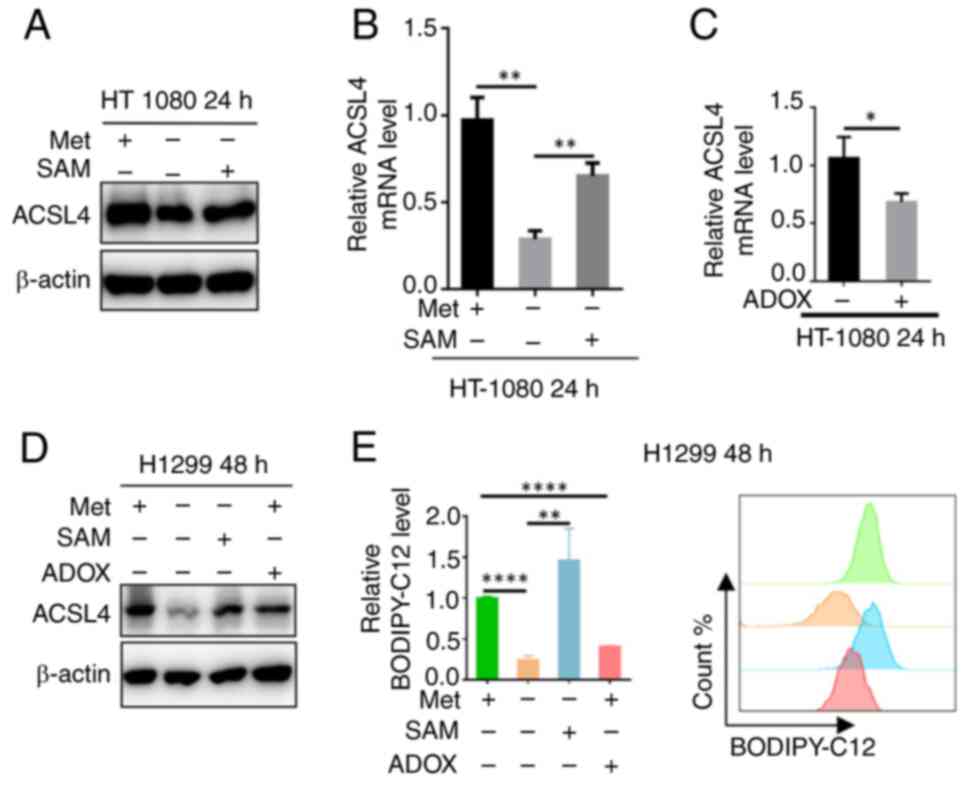
Figure 2

Methionine regulates ACSL4 through
SAM. (A) Western blot analysis of ACSL4 expression in HT1080 cells
cultured ± methionine or ± SAM as indicated for 24 h. The
ACSL4 mRNA levels in HT1080 cells cultured (B) ± methionine
and ± SAM (C) or ± ADOX as indicated for 24 h were analyzed using
reverse transcription-quantitative PCR (n=3). (D) Western blot
analysis of ACSL4 expression in H1299 cells cultured ± methionine,
± SAM or ± ADOX as indicated for 48 h. (E) H1299 cells were
cultured ± methionine, ± SAM or ± ADOX as indicated for 48 h, and
fatty acid uptake capacity was determined by BODIPY-C12 staining
coupled with flow cytometry (n=3). Data are presented as mean ± SD
with P-values determined by one-way ANOVA followed by Tukey's
Honestly Significant Difference. *P<0.05, **P<0.01,
****P<0.0001. ACSL4, acyl-CoA synthetase long chain family
member 4; SAM, S-adenosylmethionine; ADOX, adenosine dialdehyde;
Met, methionine.

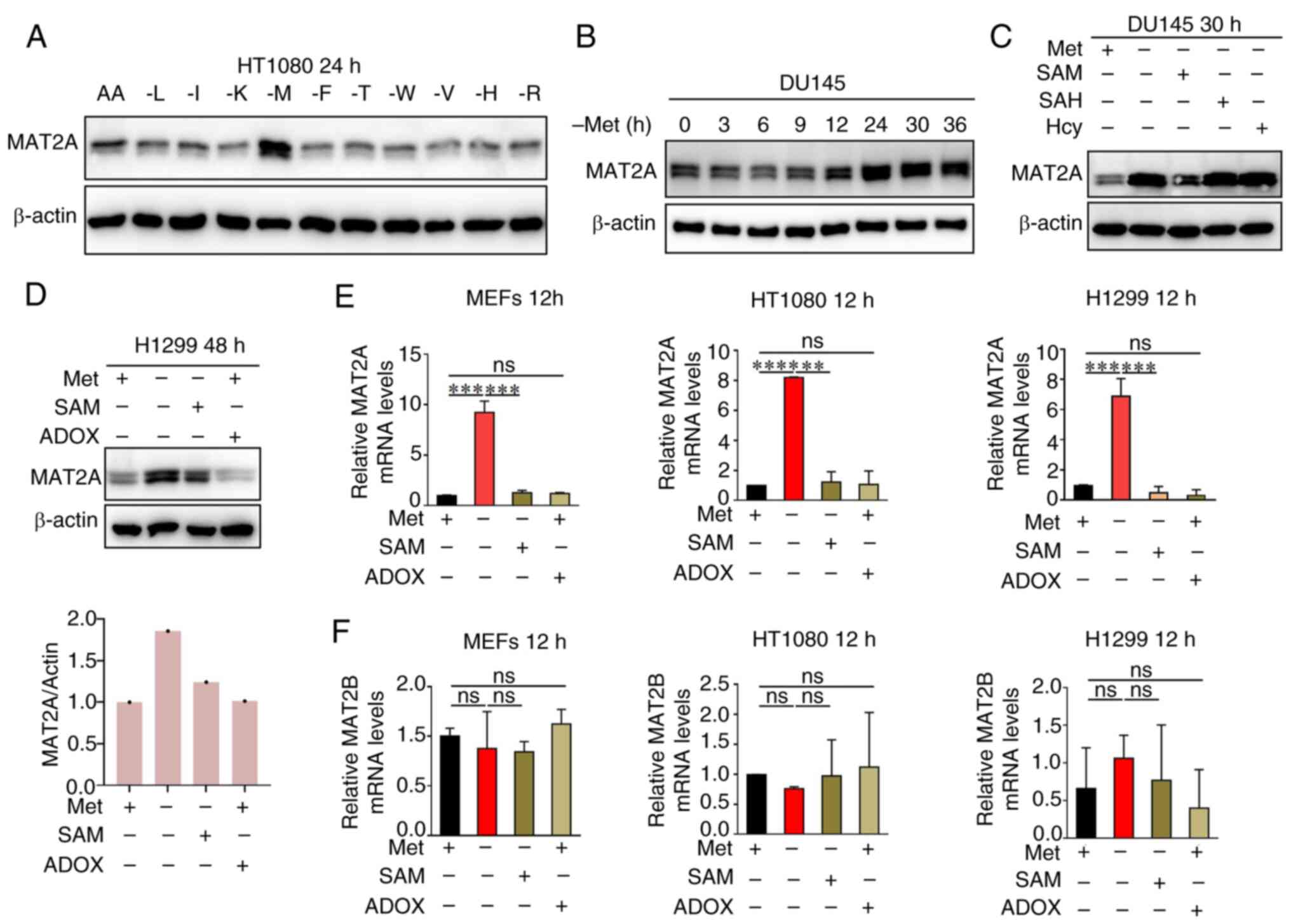
Figure 3

MAT2A can be dynamically regulated by
the level of SAM. (A) Western blot analysis of MAT2A expression in
HT1080 cells treated with medium without leucine, isoleucine,
lysine, methionine, phenylalanine, tyrosine, tryptophan, valine,
histidine, or arginine as indicated for 24 h. (B) Western blot
analysis of MAT2A expression in DU145 cells treated with medium
without methionine as indicated for 0, 3, 6, 9, 12, 24, 30 and 36
h. (C) Western blot analysis of MAT2A expression in DU145 cells
cultured ± methionine, ± SAM, ± SAH or ± Hcy as indicated for 30 h.
(D) Western blot analysis of MAT2A expression in H1299 cells
cultured ± methionine, ± SAM or ± ADOX, as indicated for 48 h. The
(E) MAT2A and (F) MAT2B mRNA levels in MEFs and
HT1080 and H1299 cells cultured ± methionine, ± SAM or ± ADOX as
indicated for 12 h, were analyzed using reverse
transcription-quantitative PCR (n=3). Data are presented as mean ±
SD with P-values determined by one-way ANOVA followed by Tukey's
Honestly Significant Difference. **P<0.01, ***P<0.001,
****P<0.0001. ns, non-significant; AA, all amino acids; L,
isoleucine; I, isoleucine; K, lysine; M, methionine; F,
phenylalanine; T, threonine; W, tryptophan; V, valine; H,
histidine; R, arginine; MEFs, mouse embryonic fibroblasts; SAM,
S-adenosylmethionine; ADOX, adenosine dialdehyde; SAH,
S-adenosylhomocysteine; Hcy, homocysteine; MAT2A/B, methionine
adenosyltransferase 2A/B; Met, methionine.

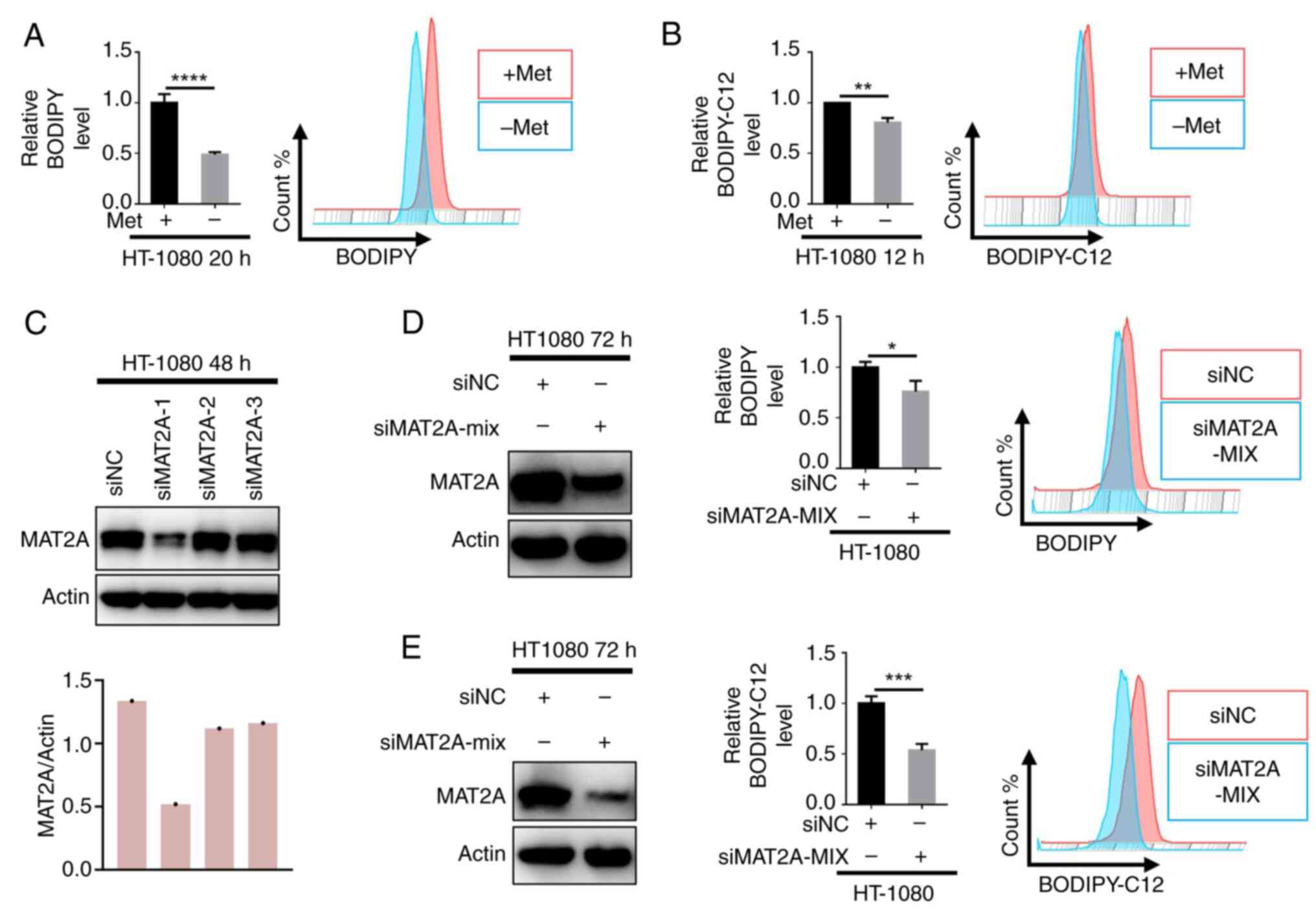
Figure 4

Knocking down MAT2A expression
reduces the intracellular lipid levels. (A) HT1080 cells were
cultured ± methionine as indicated for 20 h, and the intracellular
lipids were determined by BODIPY staining coupled with flow
cytometry (n=3). (B) HT1080 cells were cultured ± methionine as
indicated for 12 h, and fatty acid uptake capacity was determined
by BODIPY-C12 staining coupled with flow cytometry (n=3). (C)
Western blot analysis of MAT2A expression in HT1080 cells
transfected with siMAT2A or siNC. (D) The intracellular lipids in
HT1080 cells transfected with siMAT2A or siNC were determined by
BODIPY staining coupled with flow cytometry (n=3). (E) Fatty acid
uptake capacity in HT1080 cells transfected with siMAT2A or siNC
was determined by BODIPY-C12 staining coupled with flow cytometry
(n=3). Data are presented as mean ± SD, with P-values determined by
one-way ANOVA followed by Tukey's Honestly Significant Difference.
*P<0.05, **P<0.01, ***P<0.001, ****P<0.0001. MAT2A,
methionine adenosyltransferase 2A; si, small interfering (RNA); NC,
negative control; Met, methionine.

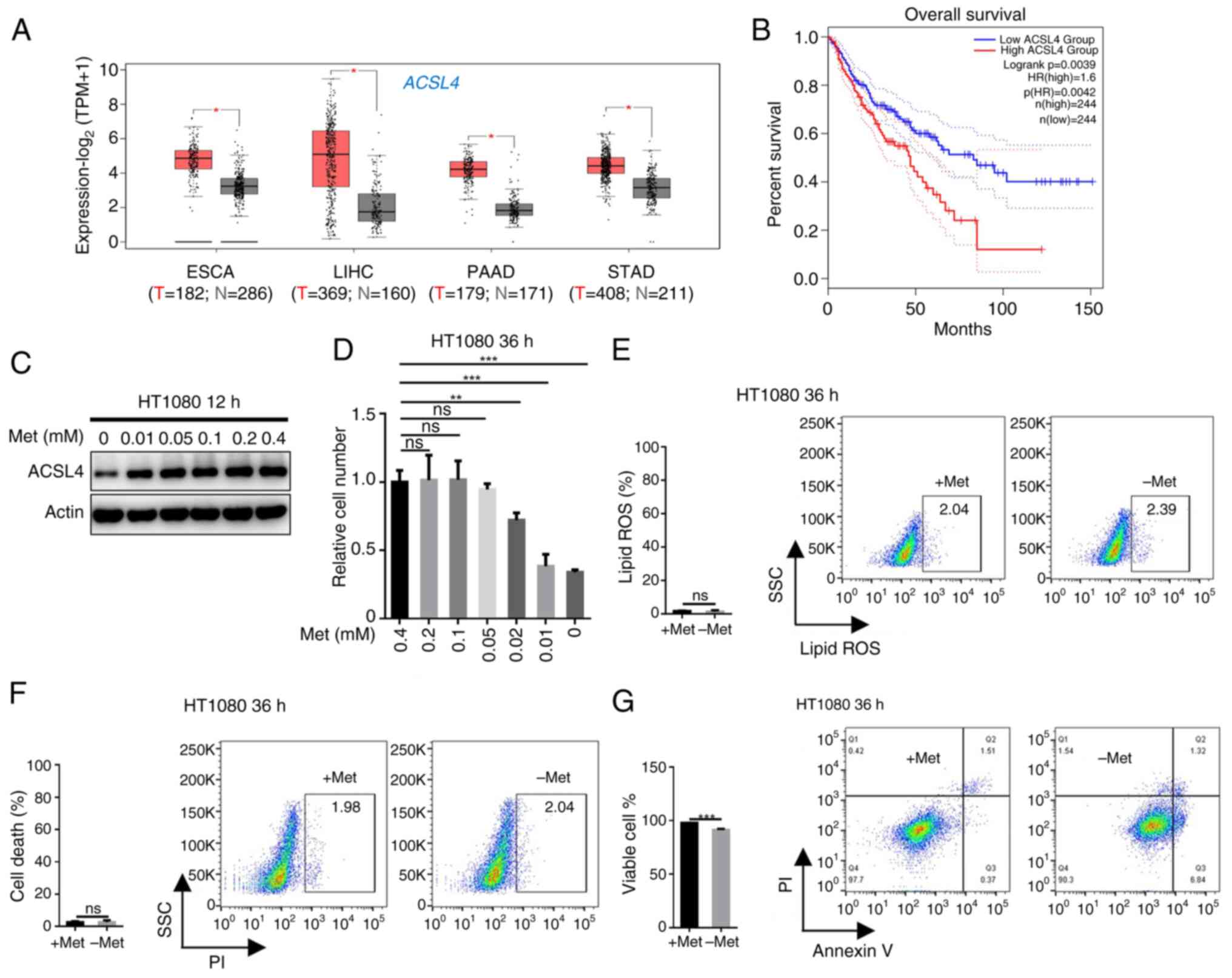
Figure 5

Methionine restriction suppresses
tumor cell proliferation by inhibiting ACLS4. (A) Analysis of
ACSL4 expression in tumor and adjacent tissues based on TCGA
database. (B) Analysis of the correlation between ACSL4 expression
and overall survival based on TCGA database through GEPIA2
(http://gepia2.cancer-pku.cn/). (C)
Western blot analysis of ACSL4 expression in HT1080 cells treated
with medium without methionine as indicated for 12 h. (D) The
number of HT1080 cells after methionine deprivation as indicated
for 36 h were counted using a microscope and cell counter (n=3).
(E) HT1080 cells were cultured ± methionine as indicated for 36 h
and the lipid ROS level was determined by BODIPY-C11 staining
coupled with flow cytometry (n=3). (F) HT1080 cells were cultured ±
methionine as indicated for 36 h and cell death was determined by
PI staining coupled with flow cytometry (n=3). (G) HT1080 cells
were cultured ± methionine as indicated for 36 h and cell apoptosis
was determined by PI staining coupled with flow cytometry (n=3).
Data are presented as mean ± SD, with P-values determined by
one-way ANOVA followed by Tukey's Honestly Significant Difference.
*P<0.05, **P<0.01, ***P<0.001. ns, non-significant; TCGA,
The Cancer Genome Atlas; TPM, transcripts per million; ESCA,
esophageal carcinoma; LIHC, liver hepatocellular carcinoma; PAAD,
pancreatic adenocarcinoma; STAD, stomach adenocarcinoma; T, tumor;
N, normal; HR, hazard ratio; ACSL4, acyl-CoA synthetase long chain
family member 4; SSC, side Scatter; ROS, reactive oxygen species;
PI, propidium iodide; Met, methionine.
View References

1 

Cairns RA, Harris IS and Mak TW: Regulation of cancer cell metabolism. Nat Rev Cancer. 11:85–95. 2011. View Article : Google Scholar

2 

Mossmann D, Park S and Hall MN: mTOR signalling and cellular metabolism are mutual determinants in cancer. Nat Rev Cancer. 18:744–757. 2018. View Article : Google Scholar

3 

Wang W and Zou W: Amino acids and their transporters in T cell immunity and cancer therapy. Mol Cell. 80:384–395. 2020. View Article : Google Scholar

4 

Yoneshiro T, Wang Q, Tajima K, Matsushita M, Maki H, Igarashi K, Dai Z, White PJ, McGarrah RW, Ilkayeva OR, et al: BCAA catabolism in brown fat controls energy homeostasis through SLC25A44. Nature. 572:614–619. 2019. View Article : Google Scholar

5 

Gao X, Locasale JW and Reid MA: Serine and methionine metabolism: Vulnerabilities in lethal prostate cancer. Cancer Cell. 35:339–341. 2019. View Article : Google Scholar

6 

Kelly B and Pearce EL: Amino assets: How amino acids support immunity. Cell Metab. 32:154–175. 202 View Article : Google Scholar

7 

Labuschagne CF, van den Broek NJ, Mackay GM, Vousden KH and Maddocks OD: Serine, but not glycine, supports one-carbon metabolism and proliferation of cancer cells. Cell Rep. 7:1248–1258. 2014. View Article : Google Scholar

8 

Longchamp A, Mirabella T, Arduini A, MacArthur MR, Das A, Treviño-Villarreal JH, Hine C, Ben-Sahra I, Knudsen NH, Brace LE, et al: Amino acid restriction triggers angiogenesis via GCN2/ATF4 regulation of VEGF and H(2)S production. Cell. 173:117–129.e14. 2018. View Article : Google Scholar

9 

Knaus LS, Basilico B, Malzl D, Gerykova Bujalkova M, Smogavec M, Schwarz LA, Gorkiewicz S, Amberg N, Pauler FM, Knittl-Frank C, et al: Large neutral amino acid levels tune perinatal neuronal excitability and survival. Cell. 186:1950–1967.e25. 2023. View Article : Google Scholar

10 

Handzlik MK, Gengatharan JM, Frizzi KE, McGregor GH, Martino C, Rahman G, Gonzalez A, Moreno AM, Green CR, Guernsey LS, et al: Insulin-regulated serine and lipid metabolism drive peripheral neuropathy. Nature. 614:118–124. 2023. View Article : Google Scholar

11 

Zhang Y, Lin S, Peng J, Liang X, Yang Q, Bai X, Li Y, Li J, Dong W, Wang Y, et al: Amelioration of hepatic steatosis by dietary essential amino acid-induced ubiquitination. Mol Cell. 82:1528–1542.e10. 2022. View Article : Google Scholar

12 

Schulte ML, Fu A, Zhao P, Li J, Geng L, Smith ST, Kondo J, Coffey RJ, Johnson MO, Rathmell JC, et al: Pharmacological blockade of ASCT2-dependent glutamine transport leads to antitumor efficacy in preclinical models. Nat Med. 24:194–202. 2018. View Article : Google Scholar

13 

Muthusamy T, Cordes T, Handzlik MK, You L, Lim EW, Gengatharan J, Pinto AFM, Badur MG, Kolar MJ, Wallace M, et al: Serine restriction alters sphingolipid diversity to constrain tumour growth. Nature. 586:790–795. 2020. View Article : Google Scholar

14 

Gao X, Sanderson SM, Dai Z, Reid MA, Cooper DE, Lu M, Richie JP Jr, Ciccarella A, Calcagnotto A, Mikhael PG, et al: Dietary methionine influences therapy in mouse cancer models and alters human metabolism. Nature. 572:397–401. 2019. View Article : Google Scholar

15 

Mossmann D, Müller C, Park S, Ryback B, Colombi M, Ritter N, Weißenberger D, Dazert E, Coto-Llerena M, Nuciforo S, et al: Arginine reprograms metabolism in liver cancer via RBM39. Cell. 186:5068–5083.e23. 2023. View Article : Google Scholar

16 

Krall AS, Mullen PJ, Surjono F, Momcilovic M, Schmid EW, Halbrook CJ, Thambundit A, Mittelman SD, Lyssiotis CA, Shackelford DB, et al: Asparagine couples mitochondrial respiration to ATF4 activity and tumor growth. Cell Metab. 33:1013–1026.e6. 2021. View Article : Google Scholar

17 

Missiaen R, Anderson NM, Kim LC, Nance B, Burrows M, Skuli N, Carens M, Riscal R, Steensels A, Li F and Simon MC: GCN2 inhibition sensitizes arginine-deprived hepatocellular carcinoma cells to senolytic treatment. Cell Metab. 34:1151–1167.e7. 2022. View Article : Google Scholar

18 

Badgley MA, Kremer DM, Maurer HC, DelGiorno KE, Lee HJ, Purohit V, Sagalovskiy IR, Ma A, Kapilian J, Firl CEM, et al: Cysteine depletion induces pancreatic tumor ferroptosis in mice. Science. 368:85–89. 2020. View Article : Google Scholar

19 

Xue Y, Lu F, Chang Z, Li J, Gao Y, Zhou J, Luo Y, Lai Y, Cao S, Li X, et al: Intermittent dietary methionine deprivation facilitates tumoral ferroptosis and synergizes with checkpoint blockade. Nat Commun. 14:47582023. View Article : Google Scholar

20 

Zheng J and Conrad M: The metabolic underpinnings of ferroptosis. Cell Metab. 32:920–937. 2020. View Article : Google Scholar

21 

Zhang W, Li Q, Zhang Y, Wang Z, Yuan S, Zhang X, Zhao M, Zhuang W and Li B: Multiple myeloma with high expression of SLC7A11 is sensitive to erastin-induced ferroptosis. Apoptosis. 29:412–423. 2024. View Article : Google Scholar

22 

Koppula P, Zhuang L and Gan B: Cystine transporter SLC7A11/xCT in cancer: Ferroptosis, nutrient dependency, and cancer therapy. Protein Cell. 12:599–620. 2021. View Article : Google Scholar

23 

Dixon SJ, Patel DN, Welsch M, Skouta R, Lee ED, Hayano M, Thomas AG, Gleason CE, Tatonetti NP, Slusher BS and Stockwell BR: Pharmacological inhibition of cystine-glutamate exchange induces endoplasmic reticulum stress and ferroptosis. Elife. 3:e025232014. View Article : Google Scholar

24 

Gounder M, Johnson M, Heist RS, Shapiro GI, Postel-Vinay S, Wilson FH, Garralda E, Wulf G, Almon C, Nabhan S, et al: MAT2A inhibitor AG-270/S095033 in patients with advanced malignancies: A phase I trial. Nat Commun. 16:4232025. View Article : Google Scholar

25 

Cacciatore A, Shinde D, Musumeci C, Sandrini G, Guarrera L, Albino D, Civenni G, Storelli E, Mosole S, Federici E, et al: Epigenome-wide impact of MAT2A sustains the androgen-indifferent state and confers synthetic vulnerability in ERG fusion-positive prostate cancer. Nat Commun. 15:66722024. View Article : Google Scholar

26 

Hou PP, Zheng CM, Wu SH, Liu XX, Xiang GX, Cai WY, Chen G and Lou YL: Extracellular vesicle-packaged ACSL4 induces hepatocyte senescence to promote hepatocellular carcinoma progression. Cancer Res. 84:3953–3966. 2024. View Article : Google Scholar

27 

Doll S, Proneth B, Tyurina YY, Panzilius E, Kobayashi S, Ingold I, Irmler M, Beckers J, Aichler M, Walch A, et al: ACSL4 dictates ferroptosis sensitivity by shaping cellular lipid composition. Nat Chem Biol. 13:91–98. 2017. View Article : Google Scholar

28 

Chaneton B, Hillmann P, Zheng L, Martin ACL, Maddocks ODK, Chokkathukalam A, Coyle JE, Jankevics A, Holding FP, Vousden KH, et al: Serine is a natural ligand and allosteric activator of pyruvate kinase M2. Nature. 491:458–462. 2012. View Article : Google Scholar

29 

Cunningham A, Erdem A, Alshamleh I, Geugien M, Pruis M, Pereira-Martins DA, van den Heuvel FAJ, Wierenga ATJ, Ten Berge H, Dennebos R, et al: Dietary methionine starvation impairs acute myeloid leukemia progression. Blood. 140:2037–2052. 2022. View Article : Google Scholar

30 

Wang QL, Chen Z, Lu X, Lin H, Feng H, Weng N, Chen L, Liu M, Long L, Huang L, et al: Methionine metabolism dictates PCSK9 expression and antitumor potency of PD-1 blockade in MSS colorectal cancer. Adv Sci (Weinh). 12:e25016232025. View Article : Google Scholar

31 

Hong XL, Huang CK, Qian H, Ding CH, Liu F, Hong HY, Liu SQ, Wu SH, Zhang X and Xie WF: Positive feedback between arginine methylation of YAP and methionine transporter SLC43A2 drives anticancer drug resistance. Nat Commun. 16:872025. View Article : Google Scholar

32 

Zhang X, Zhao Z, Wang X, Zhang S, Zhao Z, Feng W, Xu L, Nie J, Li H, Liu J, et al: Deprivation of methionine inhibits osteosarcoma growth and metastasis via C1orf112-mediated regulation of mitochondrial functions. Cell Death Dis. 15:3492024. View Article : Google Scholar

33 

Huang Z, Chen P and Liu Y: RBM15-mediated the m6A modification of MAT2A promotes osteosarcoma cell proliferation, metastasis and suppresses ferroptosis. Mol Cell Biochem. 480:2923–2933. 2025. View Article : Google Scholar

34 

Xia S, Liang Y, Shen Y, Zhong W and Ma Y: MAT2A inhibits the ferroptosis in osteosarcoma progression regulated by miR-26b-5p. J Bone Oncol. 41:1004902023. View Article : Google Scholar

35 

Yang S, Gu X, Chen L and Zhu W: Discovery of novel spirocyclic MAT2A inhibitors demonstrating high in vivo efficacy in MTAP-Null xenograft models. J Med Chem. 68:3480–3494. 2025. View Article : Google Scholar

36 

Zhou Y, Wang L, Ren R, Zhang J, Huan X, Yang P, Miao ZH, Xiong B, Wang Y and Liu T: Structure-based discovery of a series of novel MAT2a inhibitors. ACS Med Chem Lett. 16:646–650. 2025. View Article : Google Scholar

37 

Wang Y, Hu M, Cao J, Wang F, Han JR, Wu TW, Li L, Yu J, Fan Y, Xie G, et al: ACSL4 and polyunsaturated lipids support metastatic extravasation and colonization. Cell. 188:412–429.e27. 2025. View Article : Google Scholar

38 

Shafqat N, Muniz JR, Pilka ES, Papagrigoriou E, von Delft F, Oppermann U and Yue WW: Insight into S-adenosylmethionine biosynthesis from the crystal structures of the human methionine adenosyltransferase catalytic and regulatory subunits. Biochem J. 452:27–36. 2013. View Article : Google Scholar

39 

LeGros HL Jr, Halim AB, Geller AM and Kotb M: Cloning, expression, and functional characterization of the beta regulatory subunit of human methionine adenosyltransferase (MAT II). J Biol Chem. 275:2359–2366. 2000. View Article : Google Scholar

40 

LeGros L, Halim AB, Chamberlin ME, Geller A and Kotb M: Regulation of the human MAT2B gene encoding the regulatory beta subunit of methionine adenosyltransferase, MAT II. J Biol Chem. 276:24918–24924. 2001. View Article : Google Scholar

41 

Li Z, Wang F, Liang B, Su Y, Sun S, Xia S, Shao J, Zhang Z, Hong M, Zhang F and Zheng S: Methionine metabolism in chronic liver diseases: An update on molecular mechanism and therapeutic implication. Signal Transduct Target Ther. 5:2802020. View Article : Google Scholar

42 

Villa E, Sahu U, O'Hara BP, Ali ES, Helmin KA, Asara JM, Gao P, Singer BD and Ben-Sahra I: mTORC1 stimulates cell growth through SAM synthesis and m6A mRNA-dependent control of protein synthesis. Mol Cell. 81:2076–2093.e9. 2021. View Article : Google Scholar

43 

Gu X, Orozco JM, Saxton RA, Condon KJ, Liu GY, Krawczyk PA, Scaria SM, Harper JW, Gygi SP and Sabatini DM: SAMTOR is an S-adenosylmethionine sensor for the mTORC1 pathway. Science. 358:813–818. 2017. View Article : Google Scholar

44 

Ibrahim A, Yucel N, Kim B and Arany Z: Local mitochondrial ATP production regulates endothelial fatty acid uptake and transport. Cell Metab. 32:309–319.e7. 2020. View Article : Google Scholar

45 

Milger K, Herrmann T, Becker C, Gotthardt D, Zickwolf J, Ehehalt R, Watkins PA, Stremmel W and Füllekrug J: Cellular uptake of fatty acids driven by the ER-localized acyl-CoA synthetase FATP4. J Cell Sci. 119:4678–4688. 2006. View Article : Google Scholar

46 

Huang B, Nie G, Dai X, Cui T, Pu W and Zhang C: Environmentally relevant levels of Cd and Mo coexposure induces ferroptosis and excess ferritinophagy through AMPK/mTOR axis in duck myocardium. Environ Toxicol. 39:4196–4206. 2024. View Article : Google Scholar

47 

Ouyang Y, Wu Q, Li J and Sun S and Sun S: S-adenosylmethionine: A metabolite critical to the regulation of autophagy. Cell Prolif. 53:e128912020. View Article : Google Scholar

48 

Fernández-Ramos D, Lopitz-Otsoa F, Lu SC and Mato JM: S-adenosylmethionine: A multifaceted regulator in cancer pathogenesis and therapy. Cancers (Basel). 17:5352025. View Article : Google Scholar

Related Articles

  • Abstract
  • View
  • Download
  • Twitter
Copy and paste a formatted citation
Spandidos Publications style
Xia C and Min J: Methionine‑MAT2A‑SAM axis controls lipid levels by regulating ACSL4. Oncol Lett 30: 551, 2025.
APA
Xia, C., & Min, J. (2025). Methionine‑MAT2A‑SAM axis controls lipid levels by regulating ACSL4. Oncology Letters, 30, 551. https://doi.org/10.3892/ol.2025.15297
MLA
Xia, C., Min, J."Methionine‑MAT2A‑SAM axis controls lipid levels by regulating ACSL4". Oncology Letters 30.6 (2025): 551.
Chicago
Xia, C., Min, J."Methionine‑MAT2A‑SAM axis controls lipid levels by regulating ACSL4". Oncology Letters 30, no. 6 (2025): 551. https://doi.org/10.3892/ol.2025.15297
Copy and paste a formatted citation
x
Spandidos Publications style
Xia C and Min J: Methionine‑MAT2A‑SAM axis controls lipid levels by regulating ACSL4. Oncol Lett 30: 551, 2025.
APA
Xia, C., & Min, J. (2025). Methionine‑MAT2A‑SAM axis controls lipid levels by regulating ACSL4. Oncology Letters, 30, 551. https://doi.org/10.3892/ol.2025.15297
MLA
Xia, C., Min, J."Methionine‑MAT2A‑SAM axis controls lipid levels by regulating ACSL4". Oncology Letters 30.6 (2025): 551.
Chicago
Xia, C., Min, J."Methionine‑MAT2A‑SAM axis controls lipid levels by regulating ACSL4". Oncology Letters 30, no. 6 (2025): 551. https://doi.org/10.3892/ol.2025.15297
Follow us
  • Twitter
  • LinkedIn
  • Facebook
About
  • Spandidos Publications
  • Careers
  • Cookie Policy
  • Privacy Policy
How can we help?
  • Help
  • Live Chat
  • Contact
  • Email to our Support Team