Spandidos Publications Logo
  • About
    • About Spandidos
    • Aims and Scopes
    • Abstracting and Indexing
    • Editorial Policies
    • Reprints and Permissions
    • Job Opportunities
    • Terms and Conditions
    • Contact
  • Journals
    • All Journals
    • Oncology Letters
      • Oncology Letters
      • Information for Authors
      • Editorial Policies
      • Editorial Board
      • Aims and Scope
      • Abstracting and Indexing
      • Bibliographic Information
      • Archive
    • International Journal of Oncology
      • International Journal of Oncology
      • Information for Authors
      • Editorial Policies
      • Editorial Board
      • Aims and Scope
      • Abstracting and Indexing
      • Bibliographic Information
      • Archive
    • Molecular and Clinical Oncology
      • Molecular and Clinical Oncology
      • Information for Authors
      • Editorial Policies
      • Editorial Board
      • Aims and Scope
      • Abstracting and Indexing
      • Bibliographic Information
      • Archive
    • Experimental and Therapeutic Medicine
      • Experimental and Therapeutic Medicine
      • Information for Authors
      • Editorial Policies
      • Editorial Board
      • Aims and Scope
      • Abstracting and Indexing
      • Bibliographic Information
      • Archive
    • International Journal of Molecular Medicine
      • International Journal of Molecular Medicine
      • Information for Authors
      • Editorial Policies
      • Editorial Board
      • Aims and Scope
      • Abstracting and Indexing
      • Bibliographic Information
      • Archive
    • Biomedical Reports
      • Biomedical Reports
      • Information for Authors
      • Editorial Policies
      • Editorial Board
      • Aims and Scope
      • Abstracting and Indexing
      • Bibliographic Information
      • Archive
    • Oncology Reports
      • Oncology Reports
      • Information for Authors
      • Editorial Policies
      • Editorial Board
      • Aims and Scope
      • Abstracting and Indexing
      • Bibliographic Information
      • Archive
    • Molecular Medicine Reports
      • Molecular Medicine Reports
      • Information for Authors
      • Editorial Policies
      • Editorial Board
      • Aims and Scope
      • Abstracting and Indexing
      • Bibliographic Information
      • Archive
    • World Academy of Sciences Journal
      • World Academy of Sciences Journal
      • Information for Authors
      • Editorial Policies
      • Editorial Board
      • Aims and Scope
      • Abstracting and Indexing
      • Bibliographic Information
      • Archive
    • International Journal of Functional Nutrition
      • International Journal of Functional Nutrition
      • Information for Authors
      • Editorial Policies
      • Editorial Board
      • Aims and Scope
      • Abstracting and Indexing
      • Bibliographic Information
      • Archive
    • International Journal of Epigenetics
      • International Journal of Epigenetics
      • Information for Authors
      • Editorial Policies
      • Editorial Board
      • Aims and Scope
      • Abstracting and Indexing
      • Bibliographic Information
      • Archive
    • Medicine International
      • Medicine International
      • Information for Authors
      • Editorial Policies
      • Editorial Board
      • Aims and Scope
      • Abstracting and Indexing
      • Bibliographic Information
      • Archive
  • Articles
  • Information
    • Information for Authors
    • Information for Reviewers
    • Information for Librarians
    • Information for Advertisers
    • Conferences
  • Language Editing
Spandidos Publications Logo
  • About
    • About Spandidos
    • Aims and Scopes
    • Abstracting and Indexing
    • Editorial Policies
    • Reprints and Permissions
    • Job Opportunities
    • Terms and Conditions
    • Contact
  • Journals
    • All Journals
    • Biomedical Reports
      • Information for Authors
      • Editorial Policies
      • Editorial Board
      • Aims and Scope
      • Abstracting and Indexing
      • Bibliographic Information
      • Archive
    • Experimental and Therapeutic Medicine
      • Information for Authors
      • Editorial Policies
      • Editorial Board
      • Aims and Scope
      • Abstracting and Indexing
      • Bibliographic Information
      • Archive
    • International Journal of Epigenetics
      • Information for Authors
      • Editorial Policies
      • Editorial Board
      • Aims and Scope
      • Abstracting and Indexing
      • Bibliographic Information
      • Archive
    • International Journal of Functional Nutrition
      • Information for Authors
      • Editorial Policies
      • Editorial Board
      • Aims and Scope
      • Abstracting and Indexing
      • Bibliographic Information
      • Archive
    • International Journal of Molecular Medicine
      • Information for Authors
      • Editorial Policies
      • Editorial Board
      • Aims and Scope
      • Abstracting and Indexing
      • Bibliographic Information
      • Archive
    • International Journal of Oncology
      • Information for Authors
      • Editorial Policies
      • Editorial Board
      • Aims and Scope
      • Abstracting and Indexing
      • Bibliographic Information
      • Archive
    • Medicine International
      • Information for Authors
      • Editorial Policies
      • Editorial Board
      • Aims and Scope
      • Abstracting and Indexing
      • Bibliographic Information
      • Archive
    • Molecular and Clinical Oncology
      • Information for Authors
      • Editorial Policies
      • Editorial Board
      • Aims and Scope
      • Abstracting and Indexing
      • Bibliographic Information
      • Archive
    • Molecular Medicine Reports
      • Information for Authors
      • Editorial Policies
      • Editorial Board
      • Aims and Scope
      • Abstracting and Indexing
      • Bibliographic Information
      • Archive
    • Oncology Letters
      • Information for Authors
      • Editorial Policies
      • Editorial Board
      • Aims and Scope
      • Abstracting and Indexing
      • Bibliographic Information
      • Archive
    • Oncology Reports
      • Information for Authors
      • Editorial Policies
      • Editorial Board
      • Aims and Scope
      • Abstracting and Indexing
      • Bibliographic Information
      • Archive
    • World Academy of Sciences Journal
      • Information for Authors
      • Editorial Policies
      • Editorial Board
      • Aims and Scope
      • Abstracting and Indexing
      • Bibliographic Information
      • Archive
  • Articles
  • Information
    • For Authors
    • For Reviewers
    • For Librarians
    • For Advertisers
    • Conferences
  • Language Editing
Login Register Submit
  • This site uses cookies
  • You can change your cookie settings at any time by following the instructions in our Cookie Policy. To find out more, you may read our Privacy Policy.

    I agree
Search articles by DOI, keyword, author or affiliation
Search
Advanced Search
presentation
Oncology Letters
Join Editorial Board Propose a Special Issue
Print ISSN: 1792-1074 Online ISSN: 1792-1082
Journal Cover
December-2025 Volume 30 Issue 6

Full Size Image

Sign up for eToc alerts
Recommend to Library

Journals

International Journal of Molecular Medicine

International Journal of Molecular Medicine

International Journal of Molecular Medicine is an international journal devoted to molecular mechanisms of human disease.

International Journal of Oncology

International Journal of Oncology

International Journal of Oncology is an international journal devoted to oncology research and cancer treatment.

Molecular Medicine Reports

Molecular Medicine Reports

Covers molecular medicine topics such as pharmacology, pathology, genetics, neuroscience, infectious diseases, molecular cardiology, and molecular surgery.

Oncology Reports

Oncology Reports

Oncology Reports is an international journal devoted to fundamental and applied research in Oncology.

Experimental and Therapeutic Medicine

Experimental and Therapeutic Medicine

Experimental and Therapeutic Medicine is an international journal devoted to laboratory and clinical medicine.

Oncology Letters

Oncology Letters

Oncology Letters is an international journal devoted to Experimental and Clinical Oncology.

Biomedical Reports

Biomedical Reports

Explores a wide range of biological and medical fields, including pharmacology, genetics, microbiology, neuroscience, and molecular cardiology.

Molecular and Clinical Oncology

Molecular and Clinical Oncology

International journal addressing all aspects of oncology research, from tumorigenesis and oncogenes to chemotherapy and metastasis.

World Academy of Sciences Journal

World Academy of Sciences Journal

Multidisciplinary open-access journal spanning biochemistry, genetics, neuroscience, environmental health, and synthetic biology.

International Journal of Functional Nutrition

International Journal of Functional Nutrition

Open-access journal combining biochemistry, pharmacology, immunology, and genetics to advance health through functional nutrition.

International Journal of Epigenetics

International Journal of Epigenetics

Publishes open-access research on using epigenetics to advance understanding and treatment of human disease.

Medicine International

Medicine International

An International Open Access Journal Devoted to General Medicine.

Journal Cover
December-2025 Volume 30 Issue 6

Full Size Image

Sign up for eToc alerts
Recommend to Library

  • Article
  • Citations
    • Cite This Article
    • Download Citation
    • Create Citation Alert
    • Remove Citation Alert
    • Cited By
  • Similar Articles
    • Related Articles (in Spandidos Publications)
    • Similar Articles (Google Scholar)
    • Similar Articles (PubMed)
  • Download PDF
  • Download XML
  • View XML
Article Open Access

Leucine‑rich repeat‑containing G protein‑coupled receptor 4 promotes proliferation, invasion and migration, and inhibits apoptosis in non‑small cell lung cancer cells

  • Authors:
    • Xiaoyu Duan
    • Xiangsen Liu
    • Yuchen Shan
    • Songfu Zhou
    • Ming Lou
    • Zhaojia Gao
    • Kai Yuan
  • View Affiliations / Copyright

    Affiliations: School of Medicine, Dalian Medical University, Dalian, Liaoning 116044, P.R. China, Department of Cardiothoracic Surgery, The Third Affiliated Hospital of Nanjing Medical University, Changzhou Second People's Hospital, Changzhou, Jiangsu 213161, P.R. China
    Copyright: © Duan et al. This is an open access article distributed under the terms of Creative Commons Attribution License.
  • Article Number: 558
    |
    Published online on: September 30, 2025
       https://doi.org/10.3892/ol.2025.15304
  • Expand metrics +
Metrics: Total Views: 0 (Spandidos Publications: | PMC Statistics: )
Metrics: Total PDF Downloads: 0 (Spandidos Publications: | PMC Statistics: )
Cited By (CrossRef): 0 citations Loading Articles...

This article is mentioned in:


Abstract

Leucine‑rich repeat‑containing G protein‑coupled receptor 4 (LGR4/GPCR48) belongs to subfamily B of the GPCR superfamily. LGR4 is a transmembrane signaling molecule involved in organogenesis across multiple tissue systems and contributes to cancer progression. To the best of our knowledge, however, the specific involvement of LGR4/GPR48 in non‑small cell lung cancer (NSCLC) has not been comprehensively studied. The present study aimed to elucidate the mechanisms by which LGR4 promotes the progression of NSCLC. First, the expression and survival of LGR4 were analyzed by downloading relevant data from The Cancer Genome Atlas database. Subsequently, immunohistochemistry was conducted to evaluate the association between LGR4 expression levels and prognostic outcomes in tissue samples from NSCLC. LGR4 levels were further determined across NSCLC cell line subtypes via western blotting and reverse transcription‑quantitative PCR. LGR4 expression was silenced in the A549 and H226 cell lines using small interfering RNA. Flow cytometry, Cell Counting Kit‑8 assays and Transwell assays were then used to study the effects on tumor cells after LGR4 knockdown. Finally, to elucidate the oncogenic mechanisms of LGR4, Gene Set Enrichment Analysis (GSEA) 4.3.3 software was utilized to identify signaling pathways potentially activated by the elevated expression of LGR4 in NSCLC tumor samples. The present findings indicated that LGR4 was significantly overexpressed in NSCLC and associated with worse clinical outcomes. Additionally, silencing LGR4 promoted apoptosis in A549 and H226 cells, while also suppressing cell proliferation, invasion and metastasis in NSCLC. Moreover, GSEA indicated that elevated expression of LGR4 in NSCLC may trigger activation of critical signaling pathways, such as the Wnt/β‑catenin, TGF‑β and PI3K/AKT/mTOR pathways. Therefore, LGR4 could represent a promising biomarker and a potential target for therapy in the management of NSCLC.
View Figures

Figure 1

LGR4 is highly expressed in NSCLC. (A)
Unpaired analysis. TCGA [NSCLC (n=1,043) vs. healthy tissues
(n=110); unpaired Student's t-test]. (B) High LGR4 expression is
associated with a poor prognosis in patients with NSCLC (data
fromTCGA). (C) Western blot analysis showed the expression level of
LGR4 protein in NSCLC cell lines. *P<0.05, **P<0.01,
***P<0.001 and ****P<0.0001. (D) RT-qPCR analysis showed the
expression level of LGR4 mRNA in NSCLC cell lines (one-way ANOVA
followed by Dunnett's multiple comparison test). (E) RT-qPCR
analysis showed that si-LGR4 transfection significantly reduced
LGR4 expression in A549 and H226 cells compared with the si-NC
group (one-way ANOVA followed by Dunnett's multiple comparison
test). LGR4, leucine-rich repeat-containing G-protein coupled
receptor 4; NSCLC, non-small cell lung cancer; TCGA, The Cancer
Genome Atlas; RT-qPCR, reverse transcription-quantitative PCR;
si-NC, small-interfering RNA negative control.

Figure 2

LGR4 is overexpressed in tumor
tissues. (A) Lung adenocarcinoma tissue (×200 magnification) and
adjacent non-tumor tissue (×200 magnification). (B) LUSC tissue
(×200 magnification) and adjacent non-tumor tissue (×200
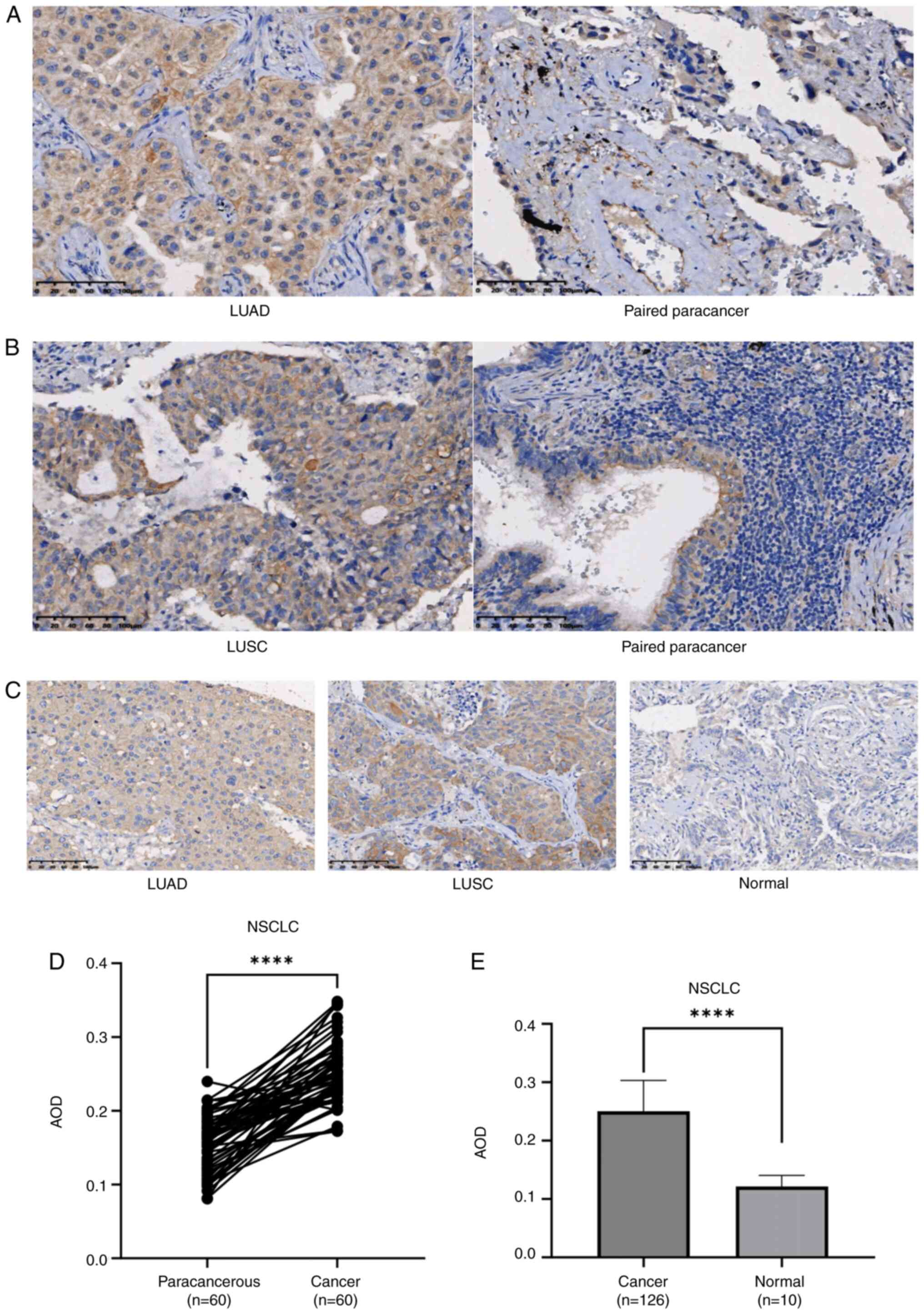
magnification). (C) LUAD tissue (×200 magnification), LUSC tissue
(×200 magnification) and healthy tissue (×200 magnification). Scale
bar, 100 µm. (D) Comparison of LGR4 expression in TMA1 (paired
Student's t-test). (E) LGR4 expression in TMA2 (unpaired Student's
t-test). ****P<0.0001. LGR4, leucine-rich repeat-containing
G-protein coupled receptor 4; LUSC, lung squamous cell carcinoma;
LUAD, lung adenocarcinoma; TMA1, tissue microarray 1; TMA2, tissue
microarray 2; NSCLC, non-small cell lung cancer; HR, hazard ratio;
AOD, average optical density.

Figure 3

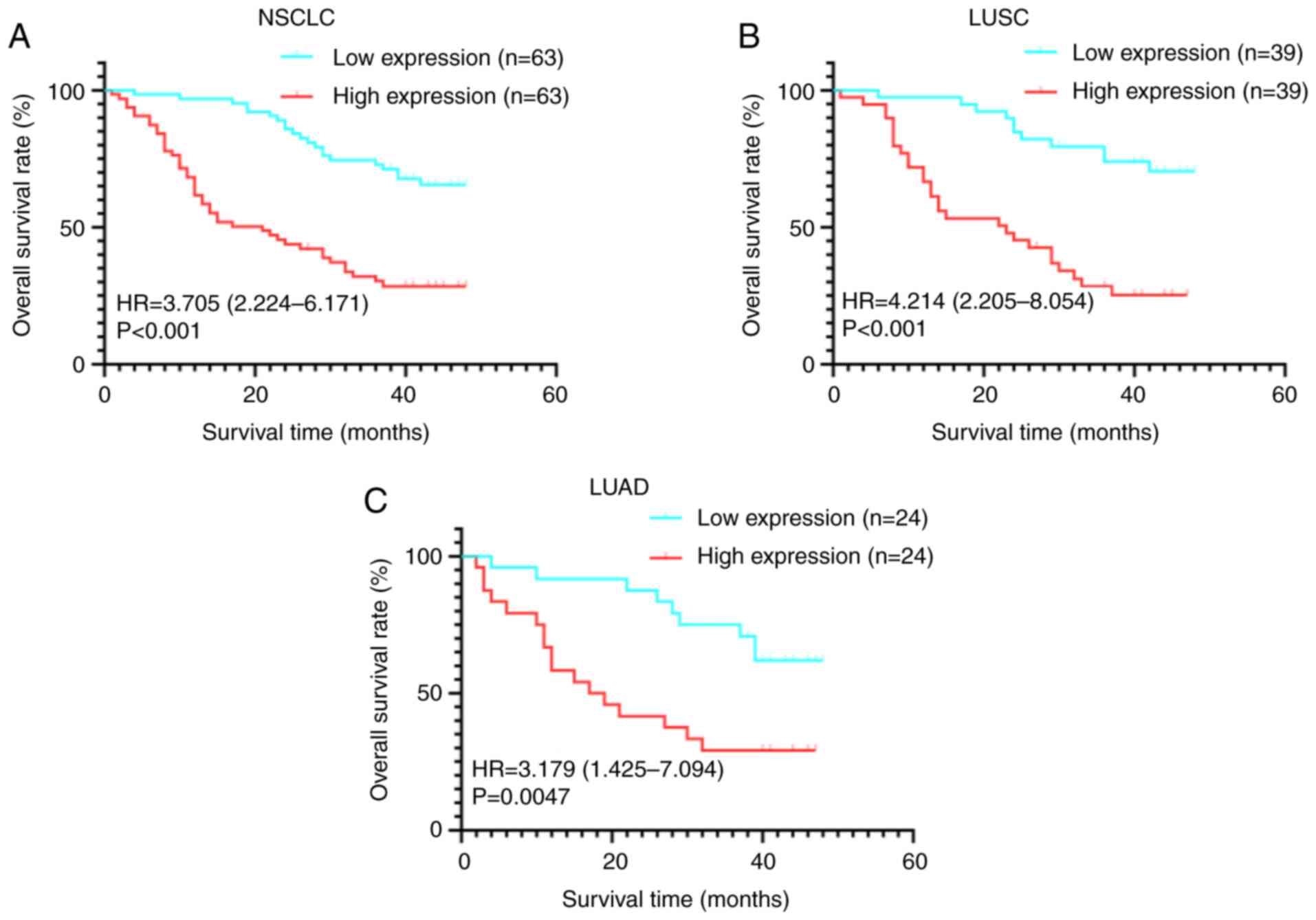
Kaplan-Meier survival curves. High
LGR4 expression is associated with poor prognosis in (A) NSCLC
(P<0.001), (B) LUAD (P<0.001) and (C) LUSC (P=0.0047). LGR4,
leucine-rich repeat-containing G-protein coupled receptor 4; NSCLC,
non-small cell lung cancer; LUAD, lung adenocarcinoma; LUSC, lung
squamous cell carcinoma.

Figure 4

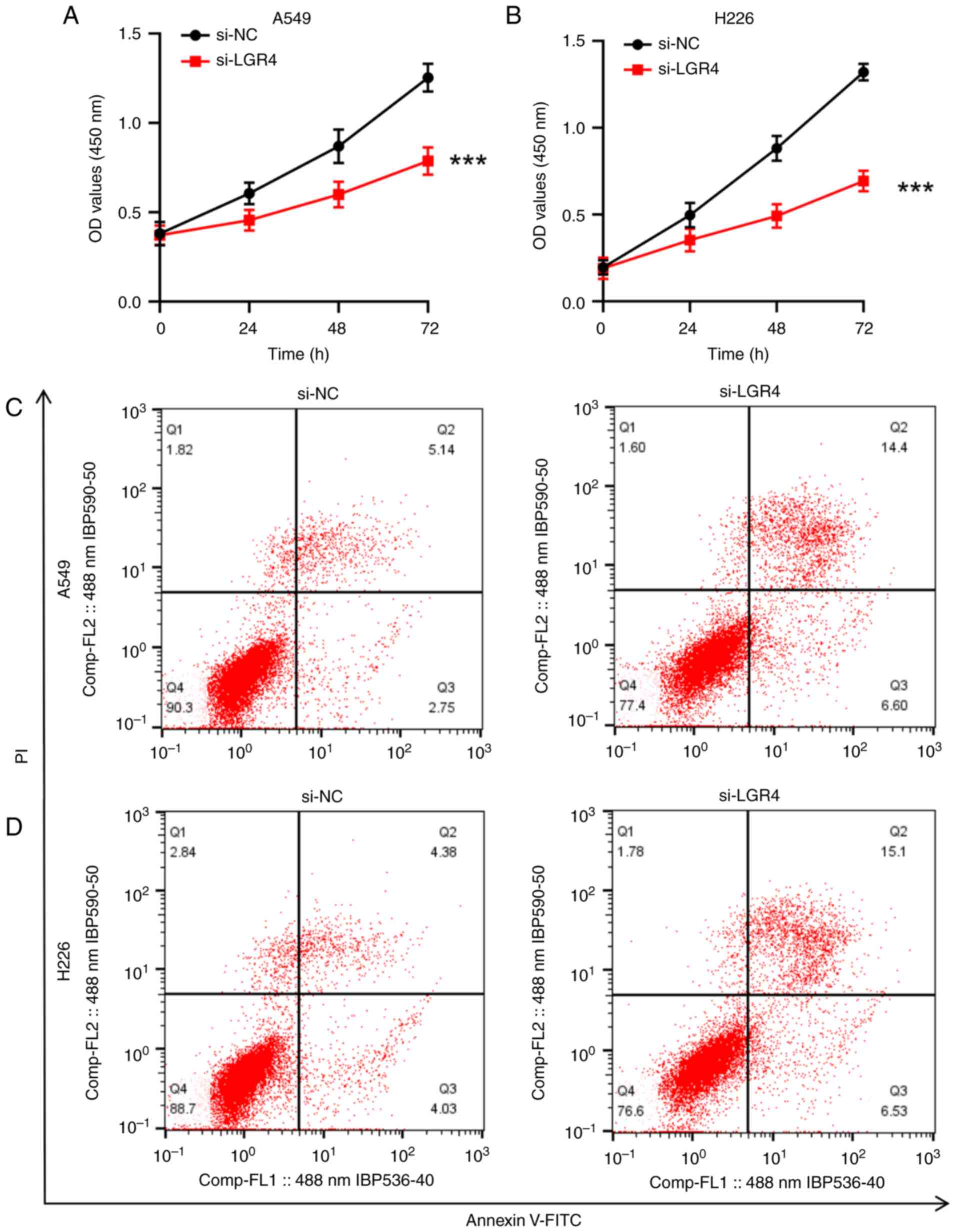
LGR4 promotes the proliferation and
inhibits the apoptosis of non-small cell lung cancer cell lines
in vitro. CCK-8 assay showed that LGR4 knockdown inhibited
the proliferation of (A) A549 cells and (B) H226 cells (two-way
ANOVA with Šídák's multiple comparisons test). ***P<0.001 vs.
si-NC. Flow cytometry showed that LGR4 knockdown promoted apoptosis
in (C) A549 cells and (D) H226 cells. LGR4, leucine-rich
repeat-containing G-protein coupled receptor 4; CCK-8, Cell
Counting Kit-8; OD, optical density; si-NC, small interfering RNA
negative control; PI, propidium iodide.

Figure 5

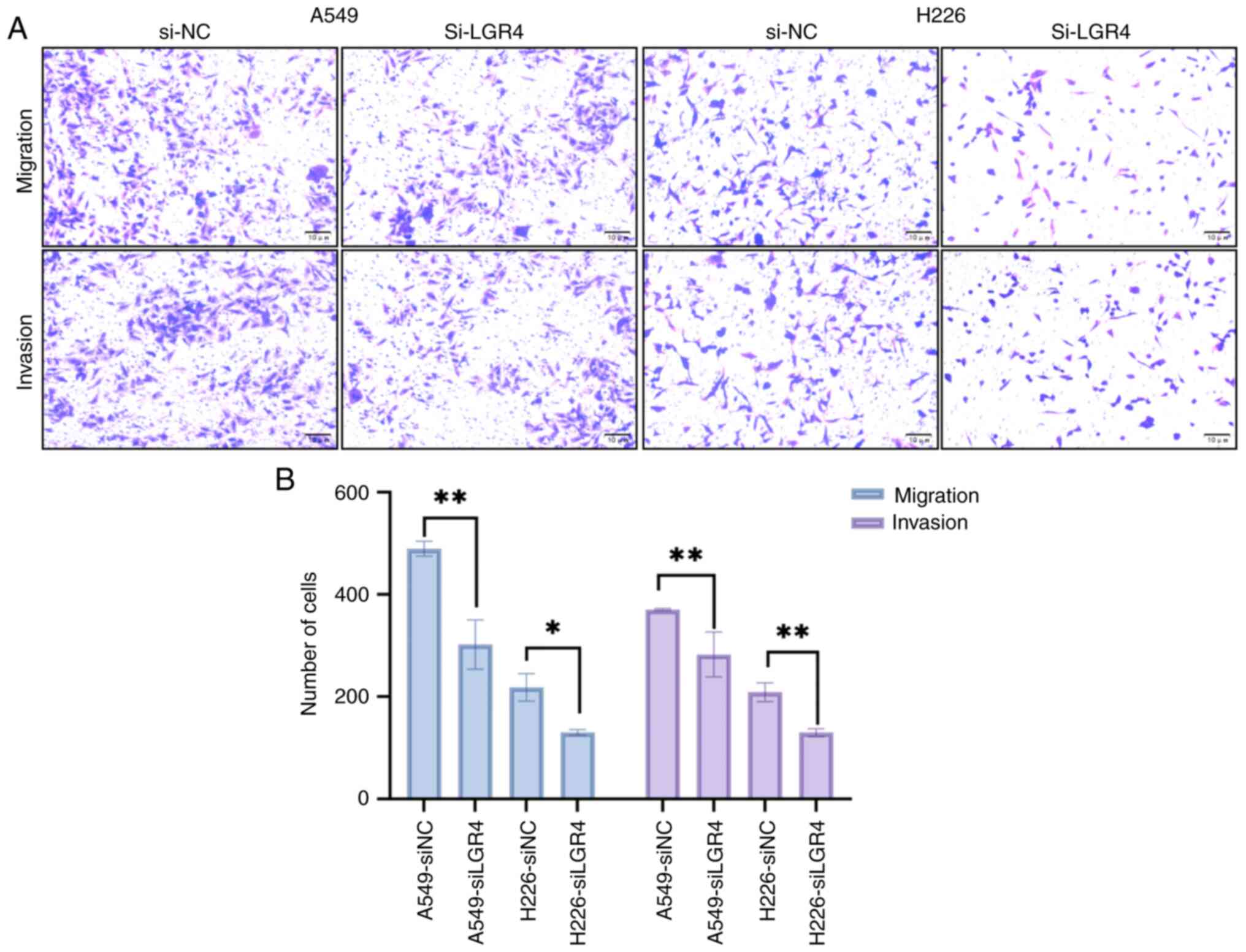
Transwell assay results. (A) Images of
Transwell assays performed in A549 and H226 cells transfected with
si-NC or si-LGR4. (B) LGR4 knockdown inhibited the invasion and
migration of A549 and H226 cells compared with the si-NC group
(scale bar, 10 µm) (unpaired Student's t-test; *P<0.05 and
**P<0.01). LGR4 promotes the invasion and migration of non-small
cell lung cancer cell lines in vitro. LGR4, leucine-rich
repeat-containing G-protein coupled receptor 4; si-NC, small
interfering RNA negative control.

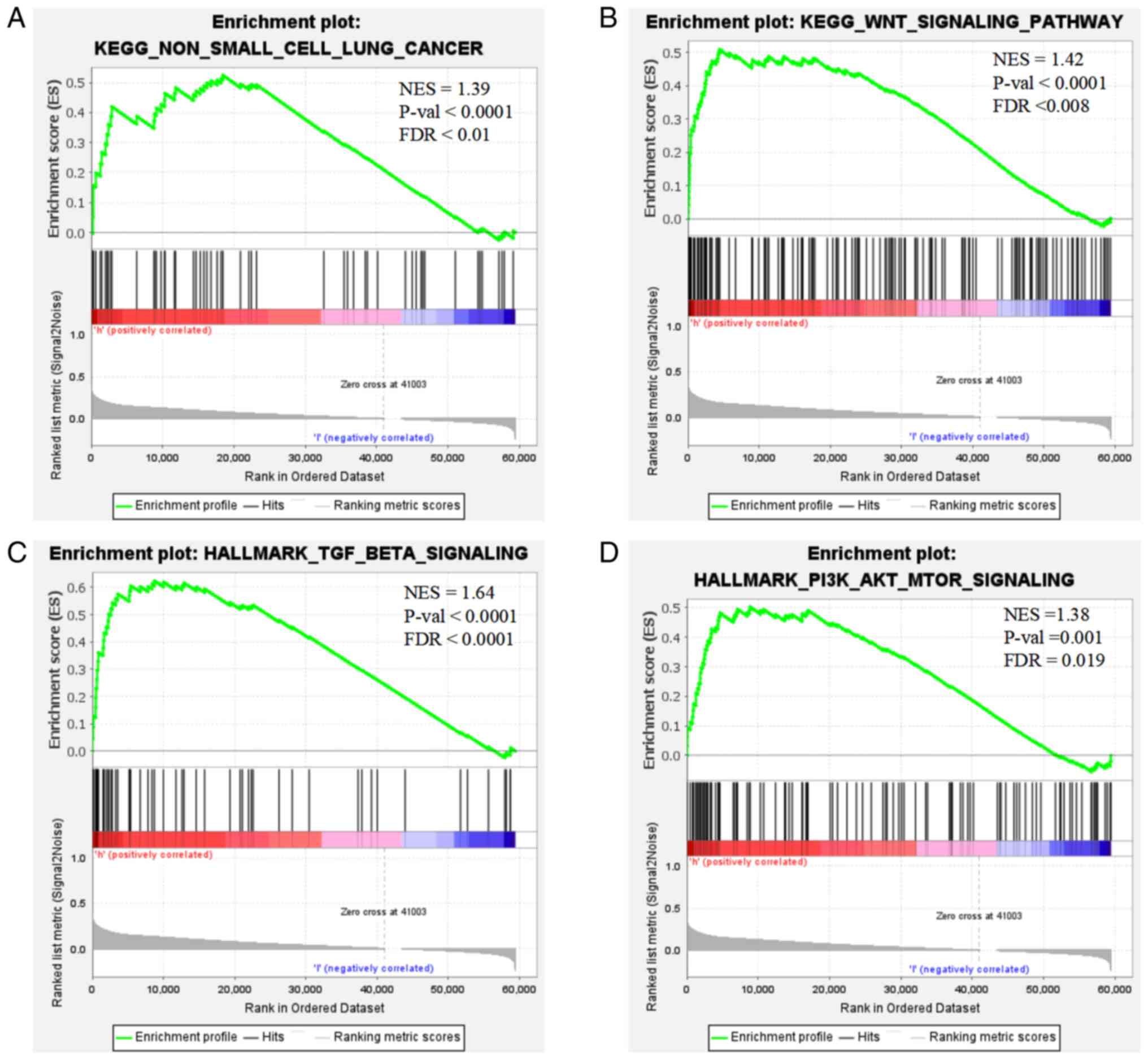
Figure 6

GSEA of high LGR4 expression in
non-small cell lung cancer datasets. (A) KEGG non-small cell lung
cancer pathway was significantly enriched in the high LGR4
expression group, indicating high LGR4 expression was associated
with overall upregulation of genes in the KEGG non-small cell lung
cancer pathway compared with low LGR4 expression. (B) The Wnt
signaling pathway was significantly enriched in the LGR4
high-expression group. (C) The PI3K/AKT/mTOR signaling pathway
showed significant positive enrichment in the LGR4 high-expression
group. (D) The TGF-β signaling pathway was enriched in high
LGR4-expressing NSCLC samples. LGR4, Leucine-rich repeat-containing
G-protein coupled receptor 4; GSEA, Gene Set Enrichment Analysis;
KEGG, Kyoto Encylopedia of Genes and Genomes; NES, Normalized
Enrichment Score; FDR, False Discovery Rate.
View References

1 

Bray F, Laversanne M, Sung H, Ferlay J, Siegel RL, Soerjomataram I and Jemal A: Global cancer statistics 2022: GLOBOCAN estimates of incidence and mortality worldwide for 36 cancers in 185 countries. CA Cancer J Clin. 74:229–263. 2024.PubMed/NCBI

2 

Siegel RL, Miller KD, Wagle NS and Jemal A: Cancer statistics, 2023. CA Cancer J Clin. 73:17–48. 2023.PubMed/NCBI

3 

National Lung Screening Trial Research Team, . Aberle DR, Adams AM, Berg CD, Black WC, Clapp JD, Fagerstrom RM, Gareen IF, Gatsonis C, Marcus PM and Sicks JD: Reduced lung-cancer mortality with low-dose computed tomographic screening. N Engl J Med. 365:395–409. 2011. View Article : Google Scholar : PubMed/NCBI

4 

Timmerman R, Paulus R, Galvin J, Michalski J, Straube W, Bradley J, Fakiris A, Bezjak A, Videtic G, Johnstone D, et al: Stereotactic body radiation therapy for inoperable early stage lung cancer. JAMA. 303:1070–1076. 2010. View Article : Google Scholar : PubMed/NCBI

5 

Sun B, Brooks ED, Komaki R, Liao Z, Jeter M, McAleer M, Balter PA, Welsh JD, O'Reilly M, Gomez D, et al: Long-term outcomes of salvage stereotactic ablative radiotherapy for isolated lung recurrence of non-small cell lung cancer: A phase II clinical trial. J Thorac Oncol. 12:983–992. 2017. View Article : Google Scholar

6 

Reck M, Rodríguez-Abreu D, Robinson AG, Hui R, Csőszi T, Fülöp A, Gottfried M, Peled N, Tafreshi A, Cuffe S, et al: Pembrolizumab versus chemotherapy for PD-L1-positive non-small-cell lung cancer. N Engl J Med. 375:1823–1833. 2016. View Article : Google Scholar : PubMed/NCBI

7 

Shaw AT, Kim DW, Nakagawa K, Seto T, Crinó L, Ahn MJ, De Pas T, Besse B, Solomon BJ, Blackhall F, et al: Crizotinib versus chemotherapy in advanced ALK-positive lung cancer. N Engl J Med. 368:2385–2394. 2013. View Article : Google Scholar : PubMed/NCBI

8 

Riely GJ, Wood DE, Ettinger DS, Aisner DL, Akerley W, Bauman JR, Bharat A, Bruno DS, Chang JY, Chirieac LR, et al: Non-Small cell lung cancer, version 4.2024, NCCN clinical practice guidelines in oncology. J Natl Compr Canc Netw. 22:249–274. 2024. View Article : Google Scholar : PubMed/NCBI

9 

Filipowska J, Kondegowda NG, Leon-Rivera N, Dhawan S and Vasavada RC: LGR4, a G protein-coupled receptor with a systemic role: From development to metabolic regulation. Front Endocrinol (Lausanne). 13:8670012022. View Article : Google Scholar : PubMed/NCBI

10 

Ordaz-Ramos A, Rosales-Gallegos VH, Melendez-Zajgla J, Maldonado V and Vazquez-Santillan K: The role of LGR4 (GPR48) in normal and cancer processes. Int J Mol Sci. 22:46902021. View Article : Google Scholar

11 

Zheng H, Liu J, Cheng Q, Zhang Q, Zhang Y, Jiang L, Huang Y, Li W, Zhao Y, Chen G, et al: Targeted activation of ferroptosis in colorectal cancer via LGR4 targeting overcomes acquired drug resistance. Nat Cancer. 5:572–589. 2024. View Article : Google Scholar : PubMed/NCBI

12 

Yue Z, Yuan Z, Zeng L, Wang Y, Lai L, Li J, Sun P, Xue X, Qi J, Yang Z, et al: LGR4 modulates breast cancer initiation, metastasis, and cancer stem cells. FASEB J. 32:2422–2437. 2018. View Article : Google Scholar : PubMed/NCBI

13 

Liang F, Zhang H, Cheng D, Gao H, Wang J, Yue J, Zhang N, Wang J, Wang Z and Zhao B: Ablation of LGR4 signaling enhances radiation sensitivity of prostate cancer cells. Life Sci. 265:1187372021. View Article : Google Scholar

14 

Annunziato S, Sun T and Tchorz JS: The RSPO-LGR4/5-ZNRF3/RNF43 module in liver homeostasis, regeneration, and disease. Hepatology. 76:888–899. 2022. View Article : Google Scholar : PubMed/NCBI

15 

Planas-Paz L, Orsini V, Boulter L, Calabrese D, Pikiolek M, Nigsch F, Xie Y, Roma G, Donovan A, Marti P, et al: The RSPO-LGR4/5-ZNRF3/RNF43 module controls liver zonation and size. Nat Cell Biol. 18:467–479. 2016. View Article : Google Scholar

16 

Yue F, Jiang W, Ku AT, Young AIJ, Zhang W, Souto EP, Gao Y, Yu Z, Wang Y, Creighton CJ, et al: A Wnt-independent LGR4-egfr signaling axis in cancer metastasis. Cancer Res. 81:4441–4454. 2021. View Article : Google Scholar : PubMed/NCBI

17 

Amin MB, Greene FL, Edge SB, Compton CC, Gershenwald JE, Brookland RK, Meyer L, Gress DM, Byrd DR and Winchester DP: The eighth edition AJCC cancer staging manual: Continuing to build a bridge from a population-based to a more ‘personalized’ approach to cancer staging. CA Cancer J Clin. 67:93–99. 2017.PubMed/NCBI

18 

Livak KJ and Schmittgen TD: Analysis of relative gene expression data using real-time quantitative PCR and the 2(−Delta Delta C(T)) method. Methods. 25:402–408. 2001. View Article : Google Scholar : PubMed/NCBI

19 

Dorsam RT and Gutkind JS: G-protein-coupled receptors and cancer. Nat Rev Cancer. 7:79–94. 2007. View Article : Google Scholar : PubMed/NCBI

20 

Fang Q, Ye L, Han L, Yao S, Cheng Q, Wei X, Zhang Y, Huang J, Ning G, Wang J, et al: LGR4 is a key regulator of hepatic gluconeogenesis. Free Radic Biol Med. 229:183–194. 2025. View Article : Google Scholar : PubMed/NCBI

21 

Yang YY, Zhou YM, Xu JZ, Sun LH, Tao B, Wang WQ, Wang JQ, Zhao HY and Liu JM: Lgr4 promotes aerobic glycolysis and differentiation in osteoblasts via the canonical Wnt/β-catenin pathway. J Bone Miner Res. 36:1605–1620. 2021. View Article : Google Scholar : PubMed/NCBI

22 

Yang L, Wang J, Gong X, Fan Q, Yang X, Cui Y, Gao X, Li L, Sun X, Li Y and Wang Y: Emerging roles for LGR4 in organ development, energy metabolism and carcinogenesis. Front Genet. 12:7288272022. View Article : Google Scholar

23 

Steffen JS, Simon E, Warneke V, Balschun K, Ebert M and Röcken C: LGR4 and LGR6 are differentially expressed and of putative tumor biological significance in gastric carcinoma. Virchows Arch. 461:355–365. 2012. View Article : Google Scholar : PubMed/NCBI

24 

Cui J, Toh Y, Park S, Yu W, Tu J, Wu L, Li L, Jacob J, Pan S, Carmon KS and Liu QJ: Drug conjugates of antagonistic R-spondin 4 mutant for simultaneous targeting of leucine-rich repeat-containing g protein-coupled receptors 4/5/6 for cancer treatment. J Med Chem. 64:12572–12581. 2021. View Article : Google Scholar : PubMed/NCBI

25 

Yue Z, Niu X, Yuan Z, Qin Q, Jiang W, He L, Gao J, Ding Y, Liu Y, Xu Z, et al: RSPO2 and RANKL signal through LGR4 to regulate osteoclastic premetastatic niche formation and bone metastasis. J Clin Invest. 132:e1445792022. View Article : Google Scholar

26 

Yang D, Li JS, Xu QY, Xia T and Xia JH: Inhibitory effect of MiR-449b on cancer cell growth and invasion through LGR4 in non-small-cell lung carcinoma. Curr Med Sci. 38:582–589. 2018. View Article : Google Scholar

27 

de Lau W, Barker N, Low TY, Koo BK, Li VS, Teunissen H, Kujala P, Haegebarth A, Peters PJ, van de Wetering M, et al: Lgr5 homologues associate with Wnt receptors and mediate R-spondin signalling. Nature. 476:293–297. 2011. View Article : Google Scholar : PubMed/NCBI

28 

Luo J, Yang Z, Ma Y, Yue Z, Lin H, Qu G, Huang J, Dai W, Li C, Zheng C, et al: LGR4 is a receptor for RANKL and negatively regulates osteoclast differentiation and bone resorption. Nat Med. 22:539–546. 2016. View Article : Google Scholar : PubMed/NCBI

29 

de Lau W, Peng WC, Gros P and Clevers H: The R-spondin/Lgr5/Rnf43 module: Regulator of Wnt signal strength. Genes Dev. 28:305–316. 2014. View Article : Google Scholar : PubMed/NCBI

30 

Han XH, Jin YR, Tan L, Kosciuk T, Lee JS and Yoon JK: Regulation of the follistatin gene by RSPO-LGR4 signaling via activation of the WNT/β-catenin pathway in skeletal myogenesis. Mol Cell Biol. 34:752–764. 2014. View Article : Google Scholar

31 

Yi Z, Ma T, Liu J, Tie W, Li Y, Bai J, Li L and Zhang L: LGR4 promotes tumorigenesis by activating TGF-β1/Smad signaling pathway in multiple myeloma. Cell Signal. 110:1108142023. View Article : Google Scholar

32 

Liang F, Yue J, Wang J, Zhang L, Fan R, Zhang H and Zhang Q: GPCR48/LGR4 promotes tumorigenesis of prostate cancer via PI3K/Akt signaling pathway. Med Oncol. 32:492015. View Article : Google Scholar

Related Articles

  • Abstract
  • View
  • Download
  • Twitter
Copy and paste a formatted citation
Spandidos Publications style
Duan X, Liu X, Shan Y, Zhou S, Lou M, Gao Z and Yuan K: Leucine‑rich repeat‑containing G protein‑coupled receptor 4 promotes proliferation, invasion and migration, and inhibits apoptosis in non‑small cell lung cancer cells. Oncol Lett 30: 558, 2025.
APA
Duan, X., Liu, X., Shan, Y., Zhou, S., Lou, M., Gao, Z., & Yuan, K. (2025). Leucine‑rich repeat‑containing G protein‑coupled receptor 4 promotes proliferation, invasion and migration, and inhibits apoptosis in non‑small cell lung cancer cells. Oncology Letters, 30, 558. https://doi.org/10.3892/ol.2025.15304
MLA
Duan, X., Liu, X., Shan, Y., Zhou, S., Lou, M., Gao, Z., Yuan, K."Leucine‑rich repeat‑containing G protein‑coupled receptor 4 promotes proliferation, invasion and migration, and inhibits apoptosis in non‑small cell lung cancer cells". Oncology Letters 30.6 (2025): 558.
Chicago
Duan, X., Liu, X., Shan, Y., Zhou, S., Lou, M., Gao, Z., Yuan, K."Leucine‑rich repeat‑containing G protein‑coupled receptor 4 promotes proliferation, invasion and migration, and inhibits apoptosis in non‑small cell lung cancer cells". Oncology Letters 30, no. 6 (2025): 558. https://doi.org/10.3892/ol.2025.15304
Copy and paste a formatted citation
x
Spandidos Publications style
Duan X, Liu X, Shan Y, Zhou S, Lou M, Gao Z and Yuan K: Leucine‑rich repeat‑containing G protein‑coupled receptor 4 promotes proliferation, invasion and migration, and inhibits apoptosis in non‑small cell lung cancer cells. Oncol Lett 30: 558, 2025.
APA
Duan, X., Liu, X., Shan, Y., Zhou, S., Lou, M., Gao, Z., & Yuan, K. (2025). Leucine‑rich repeat‑containing G protein‑coupled receptor 4 promotes proliferation, invasion and migration, and inhibits apoptosis in non‑small cell lung cancer cells. Oncology Letters, 30, 558. https://doi.org/10.3892/ol.2025.15304
MLA
Duan, X., Liu, X., Shan, Y., Zhou, S., Lou, M., Gao, Z., Yuan, K."Leucine‑rich repeat‑containing G protein‑coupled receptor 4 promotes proliferation, invasion and migration, and inhibits apoptosis in non‑small cell lung cancer cells". Oncology Letters 30.6 (2025): 558.
Chicago
Duan, X., Liu, X., Shan, Y., Zhou, S., Lou, M., Gao, Z., Yuan, K."Leucine‑rich repeat‑containing G protein‑coupled receptor 4 promotes proliferation, invasion and migration, and inhibits apoptosis in non‑small cell lung cancer cells". Oncology Letters 30, no. 6 (2025): 558. https://doi.org/10.3892/ol.2025.15304
Follow us
  • Twitter
  • LinkedIn
  • Facebook
About
  • Spandidos Publications
  • Careers
  • Cookie Policy
  • Privacy Policy
How can we help?
  • Help
  • Live Chat
  • Contact
  • Email to our Support Team