Spandidos Publications Logo
  • About
    • About Spandidos
    • Aims and Scopes
    • Abstracting and Indexing
    • Editorial Policies
    • Reprints and Permissions
    • Job Opportunities
    • Terms and Conditions
    • Contact
  • Journals
    • All Journals
    • Oncology Letters
      • Oncology Letters
      • Information for Authors
      • Editorial Policies
      • Editorial Board
      • Aims and Scope
      • Abstracting and Indexing
      • Bibliographic Information
      • Archive
    • International Journal of Oncology
      • International Journal of Oncology
      • Information for Authors
      • Editorial Policies
      • Editorial Board
      • Aims and Scope
      • Abstracting and Indexing
      • Bibliographic Information
      • Archive
    • Molecular and Clinical Oncology
      • Molecular and Clinical Oncology
      • Information for Authors
      • Editorial Policies
      • Editorial Board
      • Aims and Scope
      • Abstracting and Indexing
      • Bibliographic Information
      • Archive
    • Experimental and Therapeutic Medicine
      • Experimental and Therapeutic Medicine
      • Information for Authors
      • Editorial Policies
      • Editorial Board
      • Aims and Scope
      • Abstracting and Indexing
      • Bibliographic Information
      • Archive
    • International Journal of Molecular Medicine
      • International Journal of Molecular Medicine
      • Information for Authors
      • Editorial Policies
      • Editorial Board
      • Aims and Scope
      • Abstracting and Indexing
      • Bibliographic Information
      • Archive
    • Biomedical Reports
      • Biomedical Reports
      • Information for Authors
      • Editorial Policies
      • Editorial Board
      • Aims and Scope
      • Abstracting and Indexing
      • Bibliographic Information
      • Archive
    • Oncology Reports
      • Oncology Reports
      • Information for Authors
      • Editorial Policies
      • Editorial Board
      • Aims and Scope
      • Abstracting and Indexing
      • Bibliographic Information
      • Archive
    • Molecular Medicine Reports
      • Molecular Medicine Reports
      • Information for Authors
      • Editorial Policies
      • Editorial Board
      • Aims and Scope
      • Abstracting and Indexing
      • Bibliographic Information
      • Archive
    • World Academy of Sciences Journal
      • World Academy of Sciences Journal
      • Information for Authors
      • Editorial Policies
      • Editorial Board
      • Aims and Scope
      • Abstracting and Indexing
      • Bibliographic Information
      • Archive
    • International Journal of Functional Nutrition
      • International Journal of Functional Nutrition
      • Information for Authors
      • Editorial Policies
      • Editorial Board
      • Aims and Scope
      • Abstracting and Indexing
      • Bibliographic Information
      • Archive
    • International Journal of Epigenetics
      • International Journal of Epigenetics
      • Information for Authors
      • Editorial Policies
      • Editorial Board
      • Aims and Scope
      • Abstracting and Indexing
      • Bibliographic Information
      • Archive
    • Medicine International
      • Medicine International
      • Information for Authors
      • Editorial Policies
      • Editorial Board
      • Aims and Scope
      • Abstracting and Indexing
      • Bibliographic Information
      • Archive
  • Articles
  • Information
    • Information for Authors
    • Information for Reviewers
    • Information for Librarians
    • Information for Advertisers
    • Conferences
  • Language Editing
Spandidos Publications Logo
  • About
    • About Spandidos
    • Aims and Scopes
    • Abstracting and Indexing
    • Editorial Policies
    • Reprints and Permissions
    • Job Opportunities
    • Terms and Conditions
    • Contact
  • Journals
    • All Journals
    • Biomedical Reports
      • Information for Authors
      • Editorial Policies
      • Editorial Board
      • Aims and Scope
      • Abstracting and Indexing
      • Bibliographic Information
      • Archive
    • Experimental and Therapeutic Medicine
      • Information for Authors
      • Editorial Policies
      • Editorial Board
      • Aims and Scope
      • Abstracting and Indexing
      • Bibliographic Information
      • Archive
    • International Journal of Epigenetics
      • Information for Authors
      • Editorial Policies
      • Editorial Board
      • Aims and Scope
      • Abstracting and Indexing
      • Bibliographic Information
      • Archive
    • International Journal of Functional Nutrition
      • Information for Authors
      • Editorial Policies
      • Editorial Board
      • Aims and Scope
      • Abstracting and Indexing
      • Bibliographic Information
      • Archive
    • International Journal of Molecular Medicine
      • Information for Authors
      • Editorial Policies
      • Editorial Board
      • Aims and Scope
      • Abstracting and Indexing
      • Bibliographic Information
      • Archive
    • International Journal of Oncology
      • Information for Authors
      • Editorial Policies
      • Editorial Board
      • Aims and Scope
      • Abstracting and Indexing
      • Bibliographic Information
      • Archive
    • Medicine International
      • Information for Authors
      • Editorial Policies
      • Editorial Board
      • Aims and Scope
      • Abstracting and Indexing
      • Bibliographic Information
      • Archive
    • Molecular and Clinical Oncology
      • Information for Authors
      • Editorial Policies
      • Editorial Board
      • Aims and Scope
      • Abstracting and Indexing
      • Bibliographic Information
      • Archive
    • Molecular Medicine Reports
      • Information for Authors
      • Editorial Policies
      • Editorial Board
      • Aims and Scope
      • Abstracting and Indexing
      • Bibliographic Information
      • Archive
    • Oncology Letters
      • Information for Authors
      • Editorial Policies
      • Editorial Board
      • Aims and Scope
      • Abstracting and Indexing
      • Bibliographic Information
      • Archive
    • Oncology Reports
      • Information for Authors
      • Editorial Policies
      • Editorial Board
      • Aims and Scope
      • Abstracting and Indexing
      • Bibliographic Information
      • Archive
    • World Academy of Sciences Journal
      • Information for Authors
      • Editorial Policies
      • Editorial Board
      • Aims and Scope
      • Abstracting and Indexing
      • Bibliographic Information
      • Archive
  • Articles
  • Information
    • For Authors
    • For Reviewers
    • For Librarians
    • For Advertisers
    • Conferences
  • Language Editing
Login Register Submit
  • This site uses cookies
  • You can change your cookie settings at any time by following the instructions in our Cookie Policy. To find out more, you may read our Privacy Policy.

    I agree
Search articles by DOI, keyword, author or affiliation
Search
Advanced Search
presentation
Oncology Letters
Join Editorial Board Propose a Special Issue
Print ISSN: 1792-1074 Online ISSN: 1792-1082
Journal Cover
December-2025 Volume 30 Issue 6

Full Size Image

Sign up for eToc alerts
Recommend to Library

Journals

International Journal of Molecular Medicine

International Journal of Molecular Medicine

International Journal of Molecular Medicine is an international journal devoted to molecular mechanisms of human disease.

International Journal of Oncology

International Journal of Oncology

International Journal of Oncology is an international journal devoted to oncology research and cancer treatment.

Molecular Medicine Reports

Molecular Medicine Reports

Covers molecular medicine topics such as pharmacology, pathology, genetics, neuroscience, infectious diseases, molecular cardiology, and molecular surgery.

Oncology Reports

Oncology Reports

Oncology Reports is an international journal devoted to fundamental and applied research in Oncology.

Experimental and Therapeutic Medicine

Experimental and Therapeutic Medicine

Experimental and Therapeutic Medicine is an international journal devoted to laboratory and clinical medicine.

Oncology Letters

Oncology Letters

Oncology Letters is an international journal devoted to Experimental and Clinical Oncology.

Biomedical Reports

Biomedical Reports

Explores a wide range of biological and medical fields, including pharmacology, genetics, microbiology, neuroscience, and molecular cardiology.

Molecular and Clinical Oncology

Molecular and Clinical Oncology

International journal addressing all aspects of oncology research, from tumorigenesis and oncogenes to chemotherapy and metastasis.

World Academy of Sciences Journal

World Academy of Sciences Journal

Multidisciplinary open-access journal spanning biochemistry, genetics, neuroscience, environmental health, and synthetic biology.

International Journal of Functional Nutrition

International Journal of Functional Nutrition

Open-access journal combining biochemistry, pharmacology, immunology, and genetics to advance health through functional nutrition.

International Journal of Epigenetics

International Journal of Epigenetics

Publishes open-access research on using epigenetics to advance understanding and treatment of human disease.

Medicine International

Medicine International

An International Open Access Journal Devoted to General Medicine.

Journal Cover
December-2025 Volume 30 Issue 6

Full Size Image

Sign up for eToc alerts
Recommend to Library

  • Article
  • Citations
    • Cite This Article
    • Download Citation
    • Create Citation Alert
    • Remove Citation Alert
    • Cited By
  • Similar Articles
    • Related Articles (in Spandidos Publications)
    • Similar Articles (Google Scholar)
    • Similar Articles (PubMed)
  • Download PDF
  • Download XML
  • View XML

  • Supplementary Files
    • Supplementary_Data.xlsx
Article Open Access

Multi‑omics and experimental validation unveil BDNF as a diagnostic biomarker and therapeutic target in endoplasmic reticulum stress‑driven lung adenocarcinoma: Therapeutic potential of Esketamine

  • Authors:
    • Xiujuan Deng
    • Yujun Tan
    • Guangbo Tan
    • Heli Ning
  • View Affiliations / Copyright

    Affiliations: Department of Pulmonology, Hunan Provincial Hospital of Integrated Traditional Chinese and Western Medicine, Changsha, Hunan 410006, P.R. China, Department of Cardiology, Hunan Provincial Hospital of Integrated Traditional Chinese and Western Medicine, Changsha, Hunan 410006, P.R. China, Department of Oncology, Hunan Provincial Hospital of Integrated Traditional Chinese and Western Medicine, Changsha, Hunan 410006, P.R. China
    Copyright: © Deng et al. This is an open access article distributed under the terms of Creative Commons Attribution License.
  • Article Number: 590
    |
    Published online on: October 14, 2025
       https://doi.org/10.3892/ol.2025.15336
  • Expand metrics +
Metrics: Total Views: 0 (Spandidos Publications: | PMC Statistics: )
Metrics: Total PDF Downloads: 0 (Spandidos Publications: | PMC Statistics: )
Cited By (CrossRef): 0 citations Loading Articles...

This article is mentioned in:


Abstract

Endoplasmic reticulum stress (ERS) has shown notable antitumor potential by regulating malignant tumor progression, metastasis and immune response activation. The aim of the present study was to further explore the potential function of brain‑derived neurotrophic factor (BDNF), a representative of ERS‑related gene (ERSG), in lung adenocarcinoma (LUAD) and to verify the application potential of BDNF‑related Esketamine for LUAD. A multi‑omics integrated analysis was used to analyze the relevant ERS and LUAD data obtained from public databases, systematically screening and identifying expressed ERSGs in LUAD. The role of ERSGs within the tumor microenvironment was assessed through single‑cell transcriptome data analysis, and distinct immune landscapes in LUAD were delineated based on bulk RNA‑seq data. Machine learning was used to construct a robust ERS‑related predictive model for accurately forecasting the prognosis of patients with LUAD. The causal relationship between the representative ERSG BDNF and LUAD was evaluated using summary‑data‑based Mendelian randomization (SMR) and colocalization analyses. The elevated expression of BDNF in A549 and BEAS‑2B cells was validated using reverse transcription‑quantitative (RT‑q) PCR. Loss‑of‑function experiments using small interfering RNA (siRNA) were used to knock down BDNF expression in A549 cells (A549BDNF‑siRNA) and the proliferation capacity of A549BDNF‑siRNA was verified using Cell Counting Kit‑8 (CCK‑8) and colony formation assays. Approved drugs targeting BDNF were screened, followed by molecular docking to evaluate the binding affinity of BDNF to these drugs. The inhibitory effect of Esketamine on A549 cell proliferation was examined using CCK‑8 and colony formation assays. The efficacy of Esketamine at inhibiting A549 cell invasion and migration was assessed using Transwell and wound healing assays. TUNEL assay and western blotting were used to analyze the apoptosis of A549 cells induced by Esketamine. A total of 67 ERSGs were screened and identified. Integrating prognostic analysis, single‑cell transcriptomic data and RNA‑seq, BDNF emerged as a gene of significant research potential. SMR and colocalization analyses indicated a potential causal relationship between BDNF and LUAD. RT‑qPCR revealed that BDNF was expressed at high levels in A549 cells, and BDNF knockdown markedly inhibited their proliferation. Esketamine, which can inhibit BDNF, was found to effectively suppress the proliferation, invasion and migration of A549 cells, while inducing apoptosis. BDNF is expressed at high levels in A549 cells, and the inhibition of its expression by Esketamine may have good potential in inhibiting LUAD.
View Figures

Figure 1

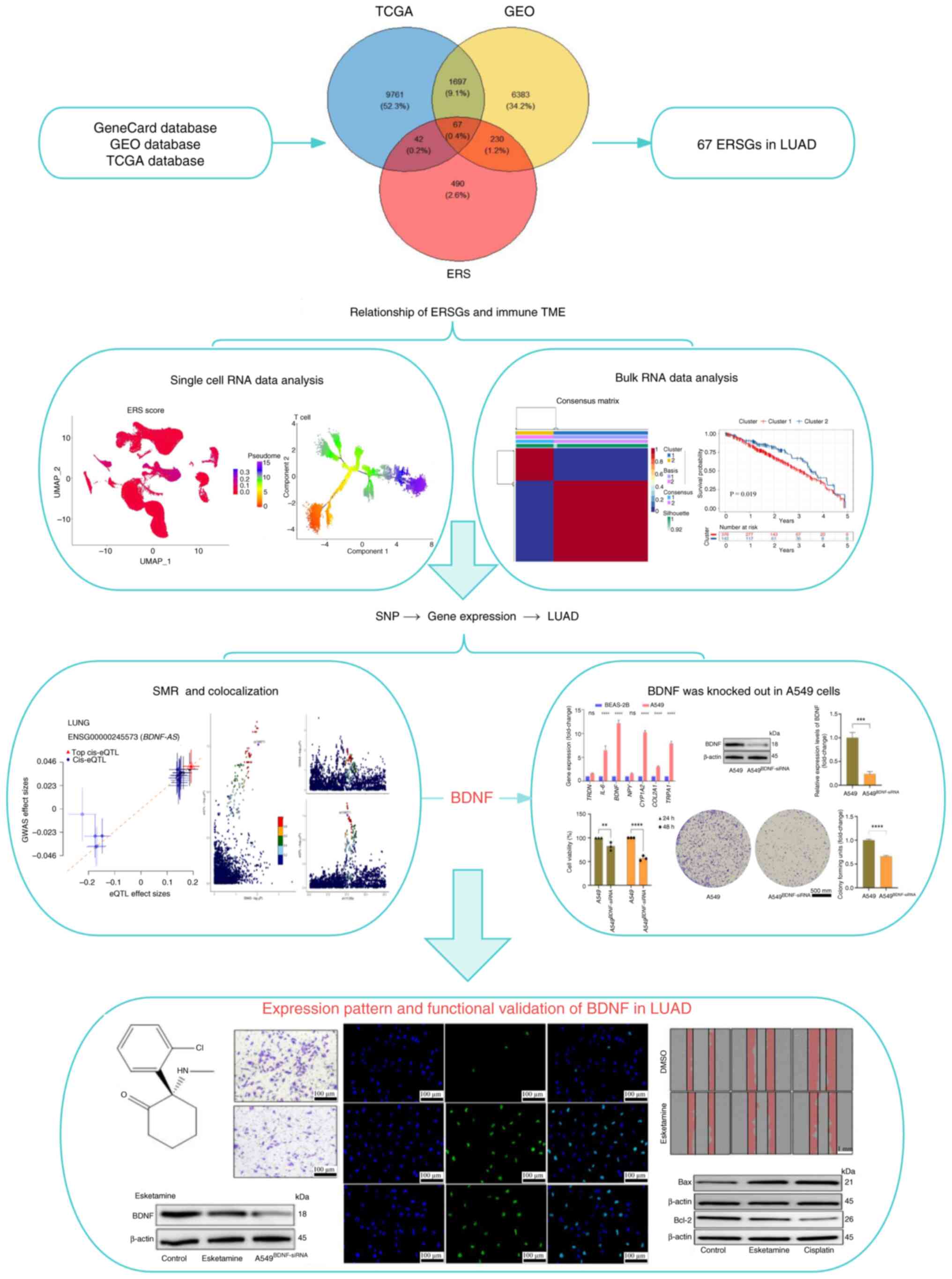
The main workflow of this study. A
total of 67 ERSGs were identified by combining three databases and
the ERSGs were analyzed and determined using single-cell and bulk
RNA data. The causal relationship between BDNF and LUAD was
analyzed by SMR and colocalization. The difference of BNDF
expression and its effect on A549 cells were verified. Molecular
docking and in vitro experiments verified the effectiveness
of Esketamine in inhibiting A549 cells via downregulated BDNF
level. **P<0.01, ***P<0.005, ****P<0.001. ERSGs,
endoplasmic reticulum stress related genes; BDNF, brain-derived
neurotrophic factor; LUAD, lung adenocarcinoma; SMR,
summary-data-based Mendelian randomization; ERS, endoplasmic
reticulum stress; TCGA, The Cancer Genome Atlas; GEO, Gene
Expression Omnibus; SNP, single nucleotide polymorphism.

Figure 2

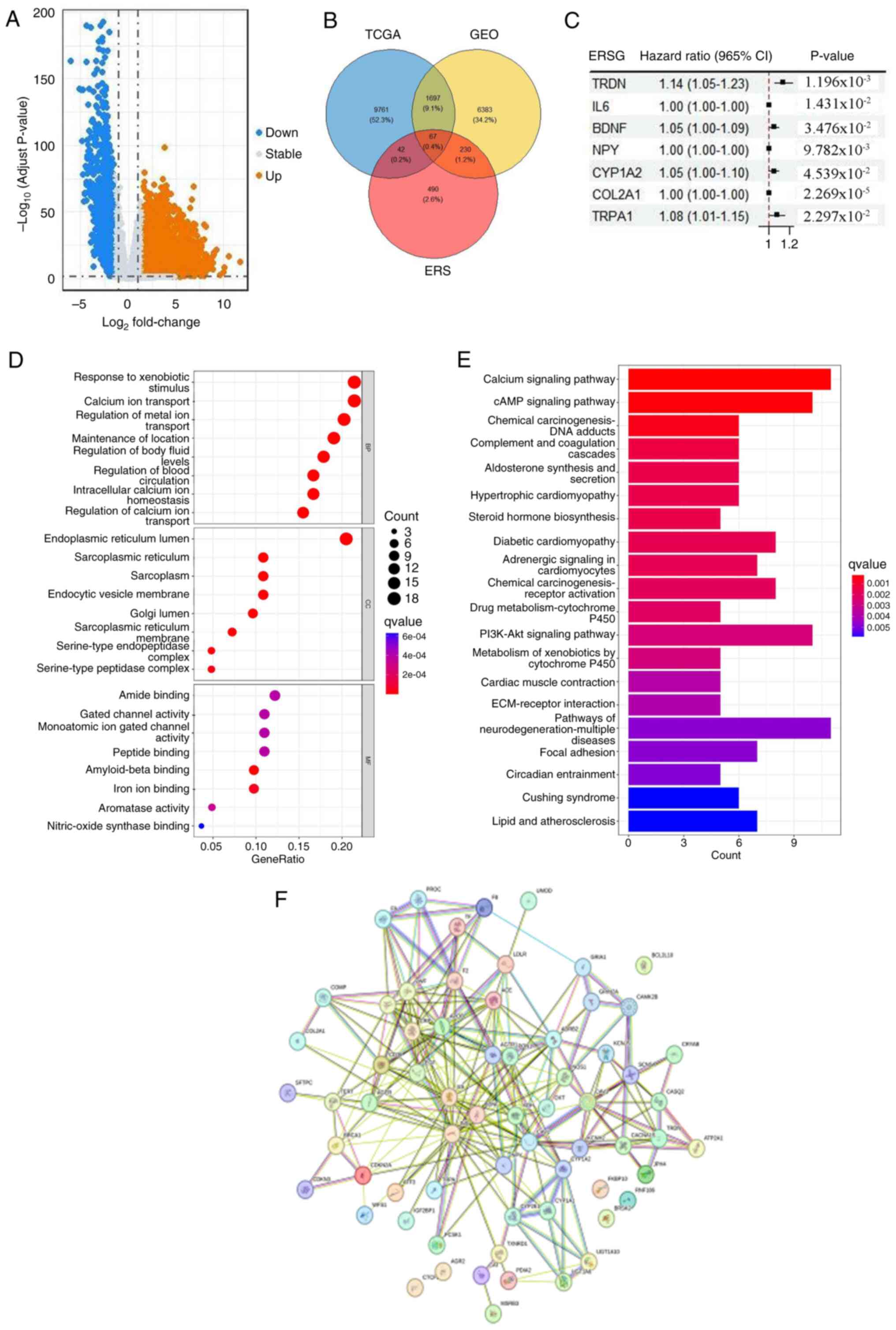
Pan-cancer identification of ERSGs in
LUAD. (A) Differential expression landscape of TCGA-derived
transcriptomes (|log2FC|>1, FDR<0.05). (B) Intersection
analysis of ERS-associated genes across TCGA and GEO repositories
(Gene Cards threshold score >5). (C) Prognostically relevant
ERSGs identified through multivariate Cox regression
(Benjamini-P<0.05). (D) Gene Ontology annotation and (E) Kyoto
Encyclopedia of Genes and Genomes pathway enrichment of 67 ERSGs
(hypergeometric test; FDR<0.01). (F) Protein-protein interaction
network reconstructed via STRING database (confidence score
>0.4). ERSGs, endoplasmic reticulum stress related genes; LUAD,
lung adenocarcinoma; TCGA, The Cancer Genome Atlas; ERS,
endoplasmic reticulum stress; GEO, Gene Expression Omnibus.

Figure 3

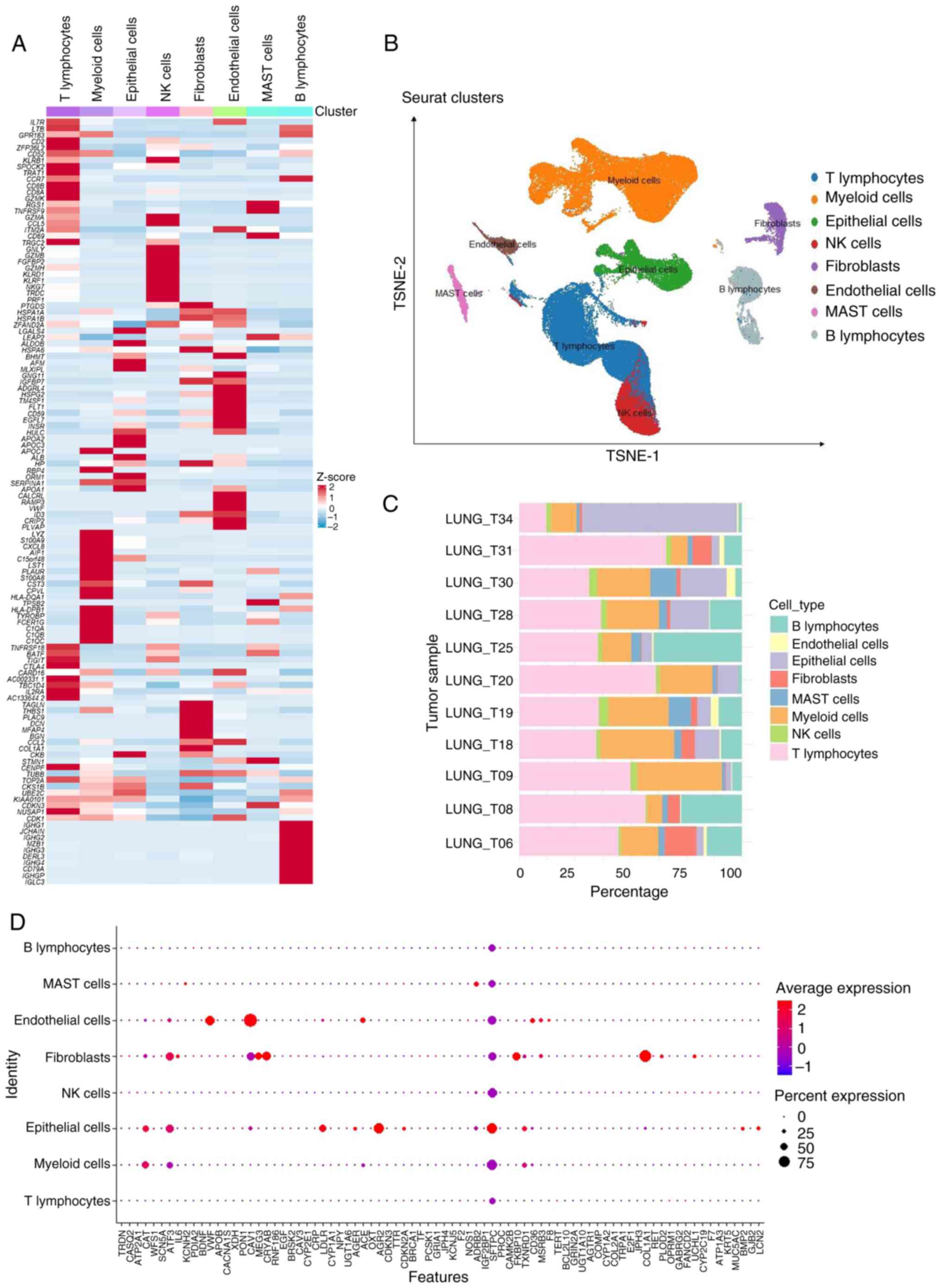
Single-cell resolution of ERSGs
activity. (A) Cell-type-specific expression patterns visualized
through z-score normalized heatmaps. (B) TSNE projection of eight
distinct cellular populations. (C) Cellular composition
heterogeneity across 11 LUAD specimens. (D) Violin plots
quantifying ERSG expression variance among cellular subsets
(Kruskal-Wallis; P<1.000×10⁻⁴). ERSGs, endoplasmic
reticulum stress related genes; TSNE, t-distributed stochastic
neighbor embedding; LUAD, lung adenocarcinoma.

Figure 4

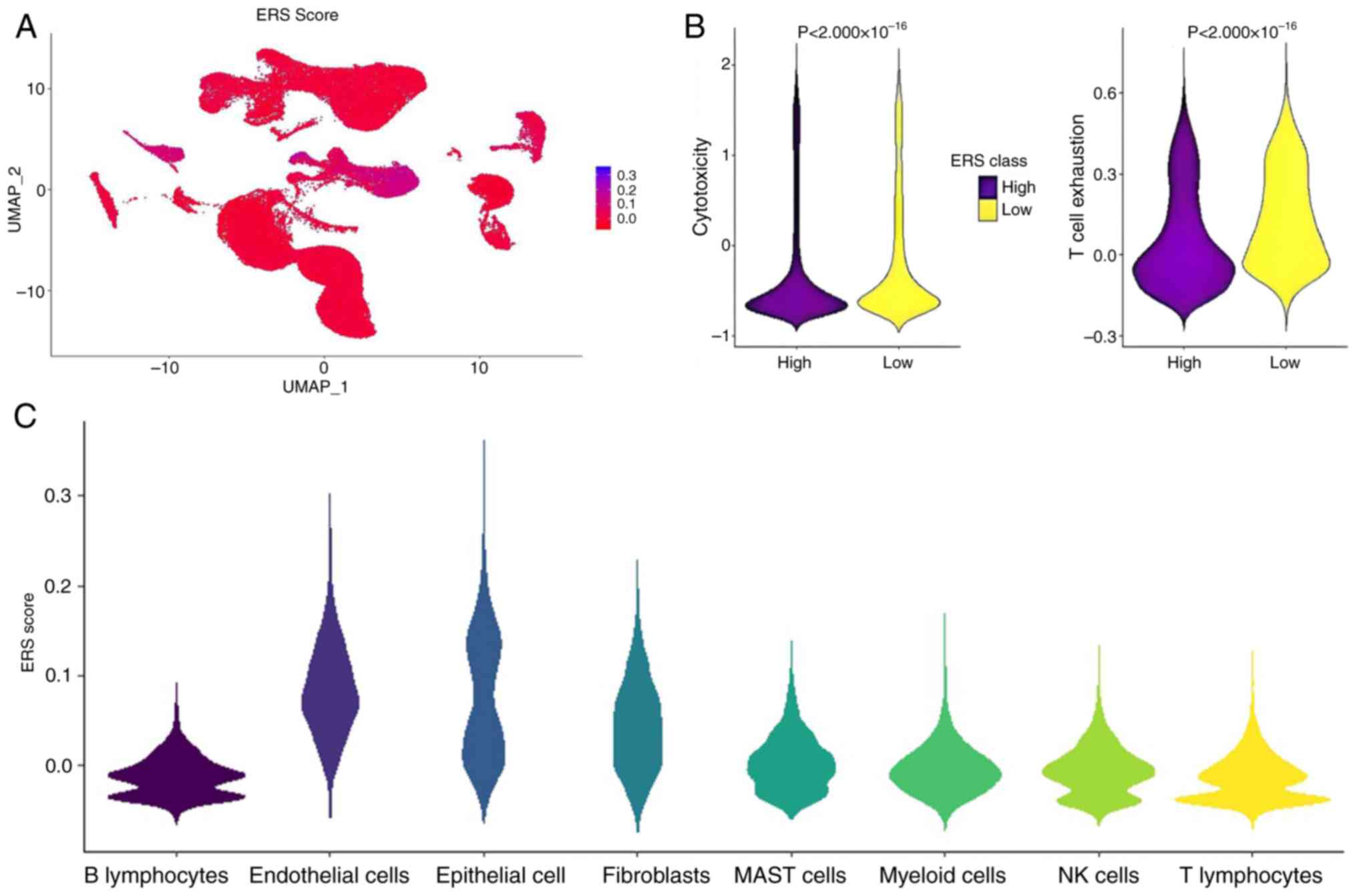
Single-cell ERS activity
quantification. (A) t-distributed stochastic neighbor embedding
mapping of computed ERS-scores (Add Module Score algorithm). (B)
Comparative analysis of cytotoxic potential and T-cell exhaustion
markers between ERS-score subgroups (Mann-Whitney; P<0.001). (C)
Boxplot visualization of ERS-score distribution across cellular
compartments. ERS, endoplasmic reticulum stress.

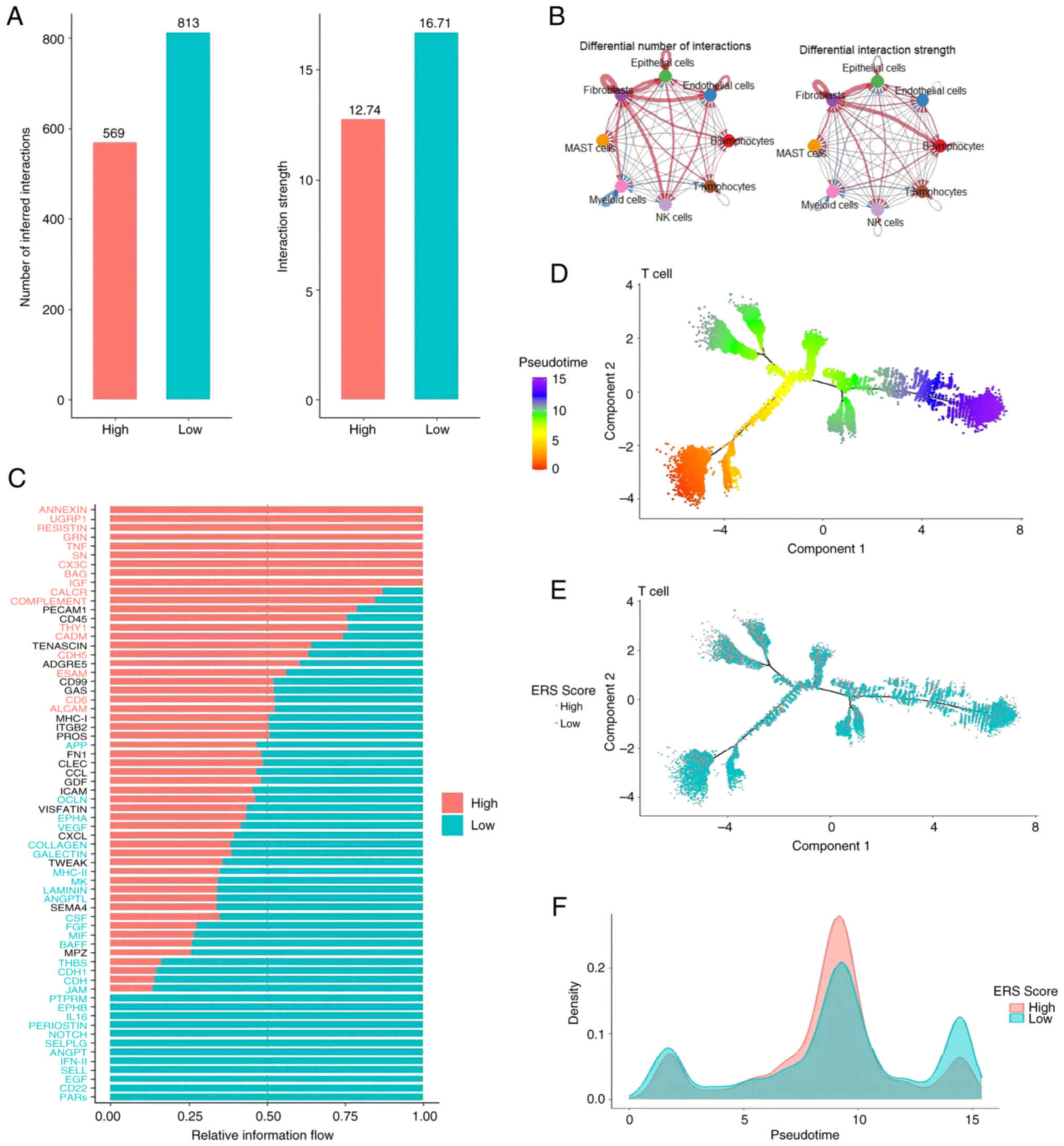
Figure 5

Intercellular communication dynamics.
(A) Differential interaction networks between ERS-score subgroups
(permutation test FDR<0.05). (B) Cell-type-specific
ligand-receptor interaction patterns. Edge color denotes
interaction directionality (red: upregulated; blue: downregulated),
thickness reflects interaction strength. (C) Pathway activity
divergence between subgroups (Wilcoxon; P<0.05). (D)
Pseudotemporal trajectory of T-cell differentiation (Monocle3;
Q<0.01). (E and F) ICD score progression along developmental
pseudotime. ERS, endoplasmic reticulum stress; ICD, immunogenic
cell death.

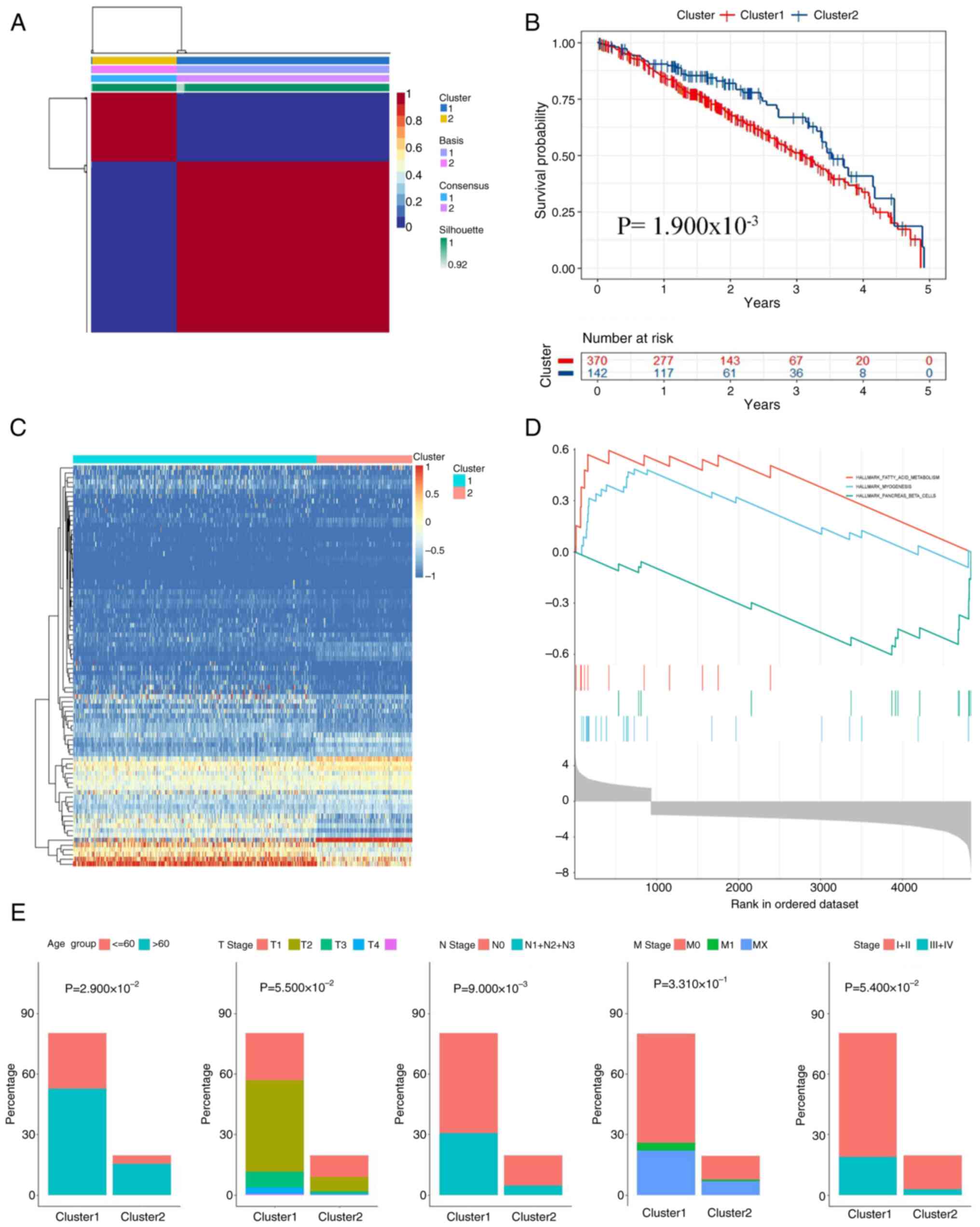
Figure 6

Molecular subtyping based on ERS
signatures. (A) Consensus clustering matrix (k=2, 1000 iterations).
(B) Survival probability stratification (log-rank, P=0.008). (C)
Differential ERSGs expression heatmap (DESeq2; FDR<0.05). (D)
Gene Set Enrichment Analysis revealing immune-oncogenic pathway
activation. (E) Clinical parameter distribution between molecular
subtypes (Fisher's exact, P<0.05). ERS, endoplasmic reticulum
stress; ERSGs, endoplasmic reticulum stress related genes.

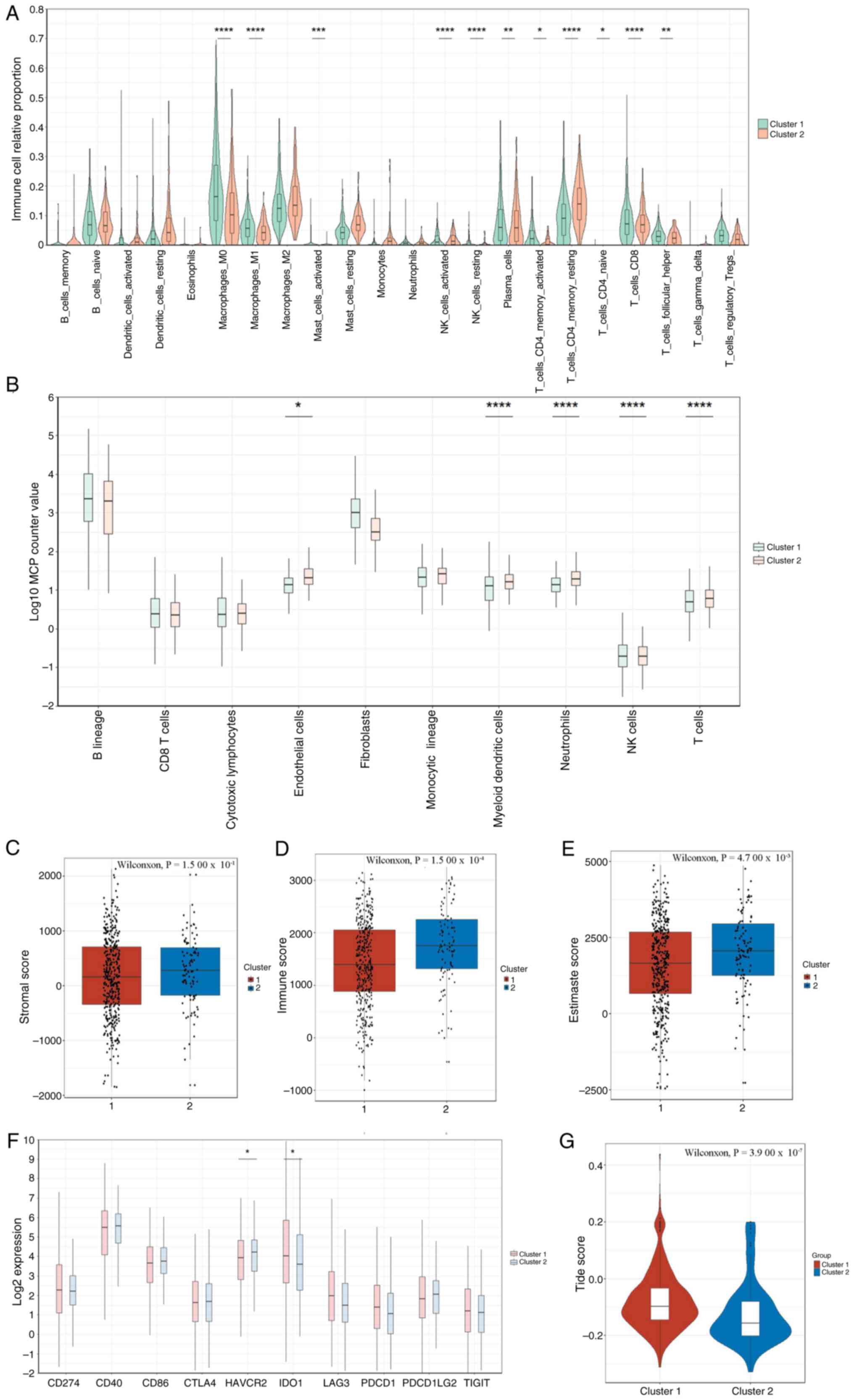
Figure 7

Immune microenvironment
characterization. Leukocyte infiltration quantification using (A)
CIBERSORTx (v1.06) and (B) MCP-counter (v2.0). (C-E) Stromal-immune
component estimation via ESTIMATE algorithm (Benjamini-P<0.01).
(F) Differential immune checkpoint expression (Welch's t-test;
*P<0.05, ****P<0.001). (G) TIDE prediction score comparison
(Wilcoxon; P=3.900×10⁻⁷). TIDE, tumor immune dysfunction
and exclusion.

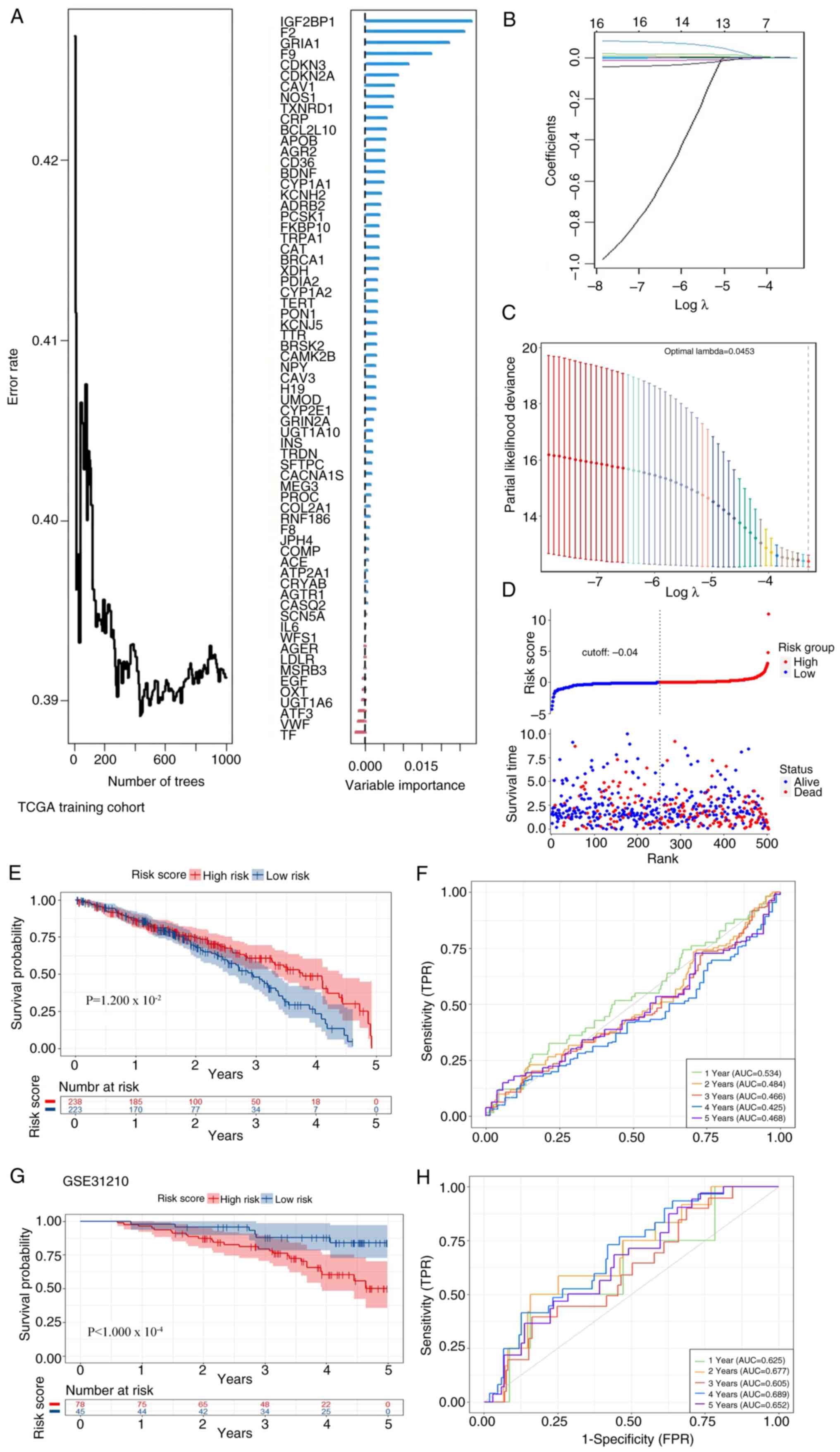
Figure 8

Prognostic model development. (A)
Feature selection via random forest regression (ntree=500,
mtry=15). Inset: Variable importance metrics. (B) Risk
stratification and survival status distribution in TCGA cohort. (C)
Least absolute shrinkage and selection operator regression
coefficient trajectories (λ=0.021). (D) Survival probability
divergence between risk subgroups (log-rank, P=0.032). (E and F)
Time-dependent receiver operating characteristic analysis (1–5 year
area under the curve) in discovery cohort. (G and H) External
validation using GSE31210 dataset (log-rank,
P=1.4×10⁻⁴). TCGA, The Cancer Genome Atlas; FPR, false
positive rate.

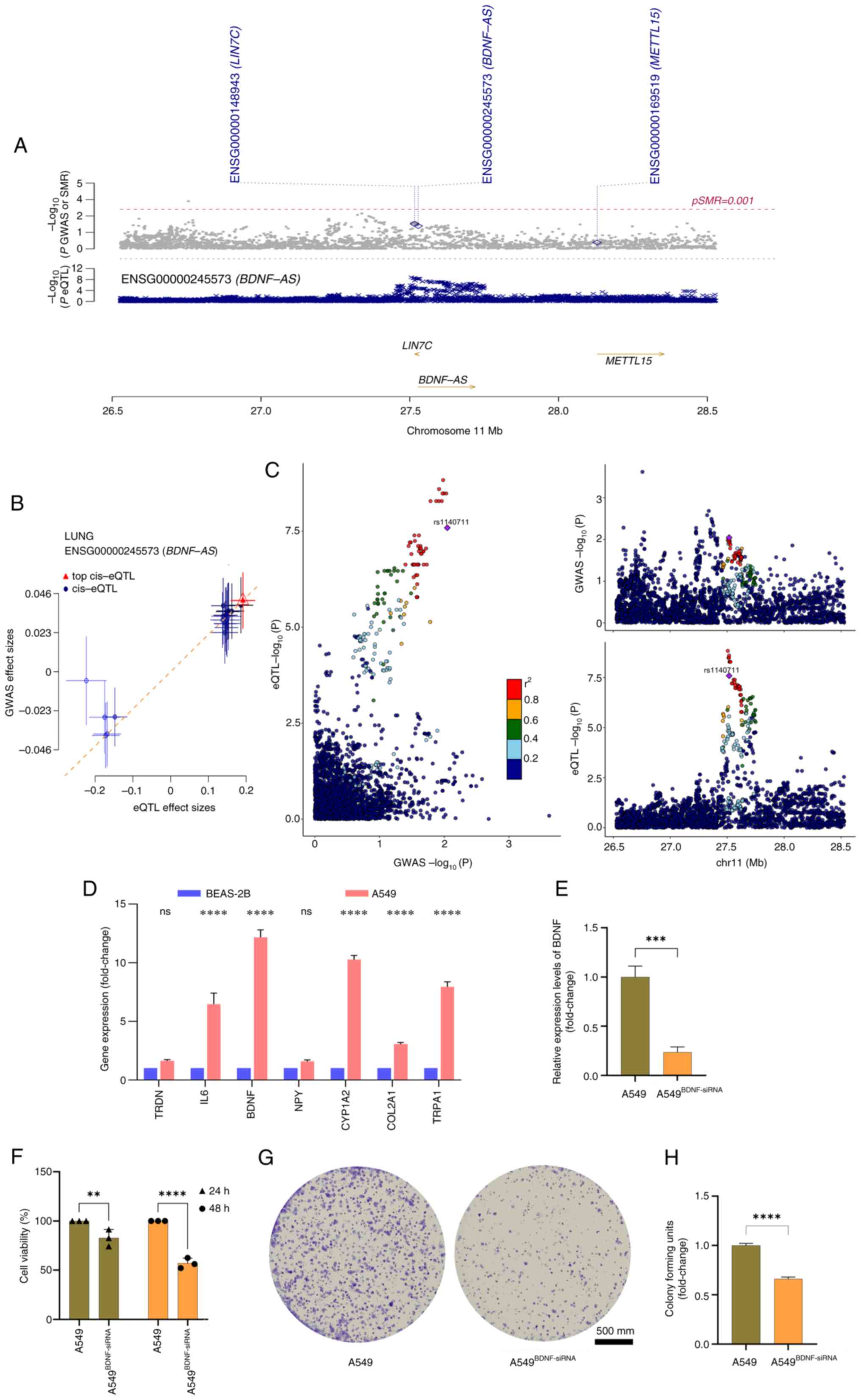
Figure 9

Integrative genomics prioritization
of causal ERSGs. (A) SMR visualization at BDNF locus
(hg38:11p14.1). Top: Probe passing SMR-HEIDI joint test (HEIDI;
P>0.01). Bottom: GWAS variants (gray circles) vs. lung eQTLs
(red crosses, GTEx v8). (B) Causal effect estimates (Bayes
factor>10) between gene expression and LUAD risk. (C)
Colocalization probability analysis (PP.H4>0.8) showing shared
causal variants (LD, r2 color gradient; lead
variant=purple square). (D) Quantitative PCR validation of ERSGs in
A549 (malignant) vs. BEAS-2B (normal) cells (GAPDH-normalized,
triplicates), ****P<0.001. (E) BDNF silencing efficiency (siRNA
vs. scramble, ΔΔCq method), ***P<0.005. (F) Proliferation
kinetics (CCK-8 assay) at 24/48 h post-transfection, **P<0.01,
****P<0.001. (G and H) Clonogenic capacity assessment (crystal
violet staining) with quantitative histograms (triplicate
experiments, Mann-Whitney ****P<0.001). ERSGs, endoplasmic
reticulum stress related genes; SMR, summary-Mendelian
randomization; BDNF, brain-derived neurotrophic factor; GWAS,
genome-wide association studies; eQTLs, cis-expression quantitative
trait loci; LUAD, lung adenocarcinoma; siRNA, small interfering
RNA.

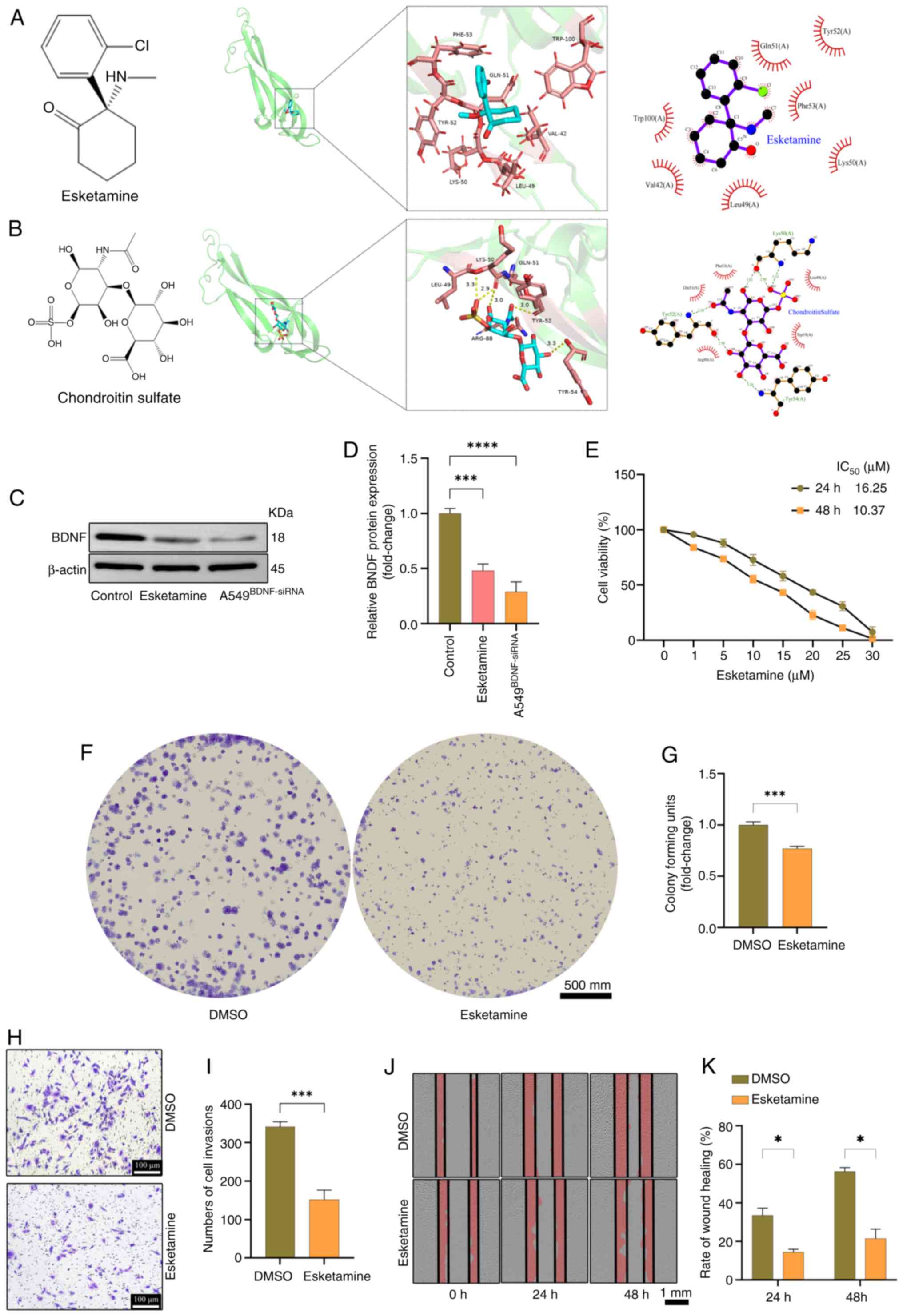
Figure 10

Functional characterization of BDNF
in LUAD pathogenesis. Computational docking simulations of BDNF
(PDB 1BND) with (A) Esketamine (Glide Score=−8.2 kcal/mol) and (B)
Chondroitin (Auto Dock Vina score=−7.6). Left: 2D ligand
structures; Center: 3D binding poses; Right: Interaction
fingerprint maps. Esketamine-BDNF: −5.3 kcal/mol. Chondroitin
sulfate-BDNF: −4.9 kcal/mol. Negative controls: BSA-BDNF: −2.3
kcal/mol. Acetaminophen-BDNF: −4.1 kcal/mol. (C and D) Immunoblot
analysis (anti-BDNF 1:1,000, Abcam ab205067) under Esketamine
treatment (16.25 µM, 24 h) or siRNA knockdown (β-actin loading
control). (E) Dose-response viability curves (0–50 µM Esketamine,
72 h). (F and G) Colony formation inhibitory effects (16.25 µM, 14
days) with quantification (two-way ANOVA ***P<0.0001). (H)
Transwell assays and (I) quantified bars of A549 cells treated with
Esketamine at a concentration of 16.25 µM for 24 h, ***P<0.005.
(J and K) Bars for detection and quantification of scratch assay in
A549 cells treated with Esketamine at a concentration of 16.25 µM
for 24 h. For comparison, some experiments were also performed with
cisplatin at a concentration of 5 µM. *P<0.05. BDNF,
brain-derived neurotrophic factor; LUAD, lung adenocarcinoma.

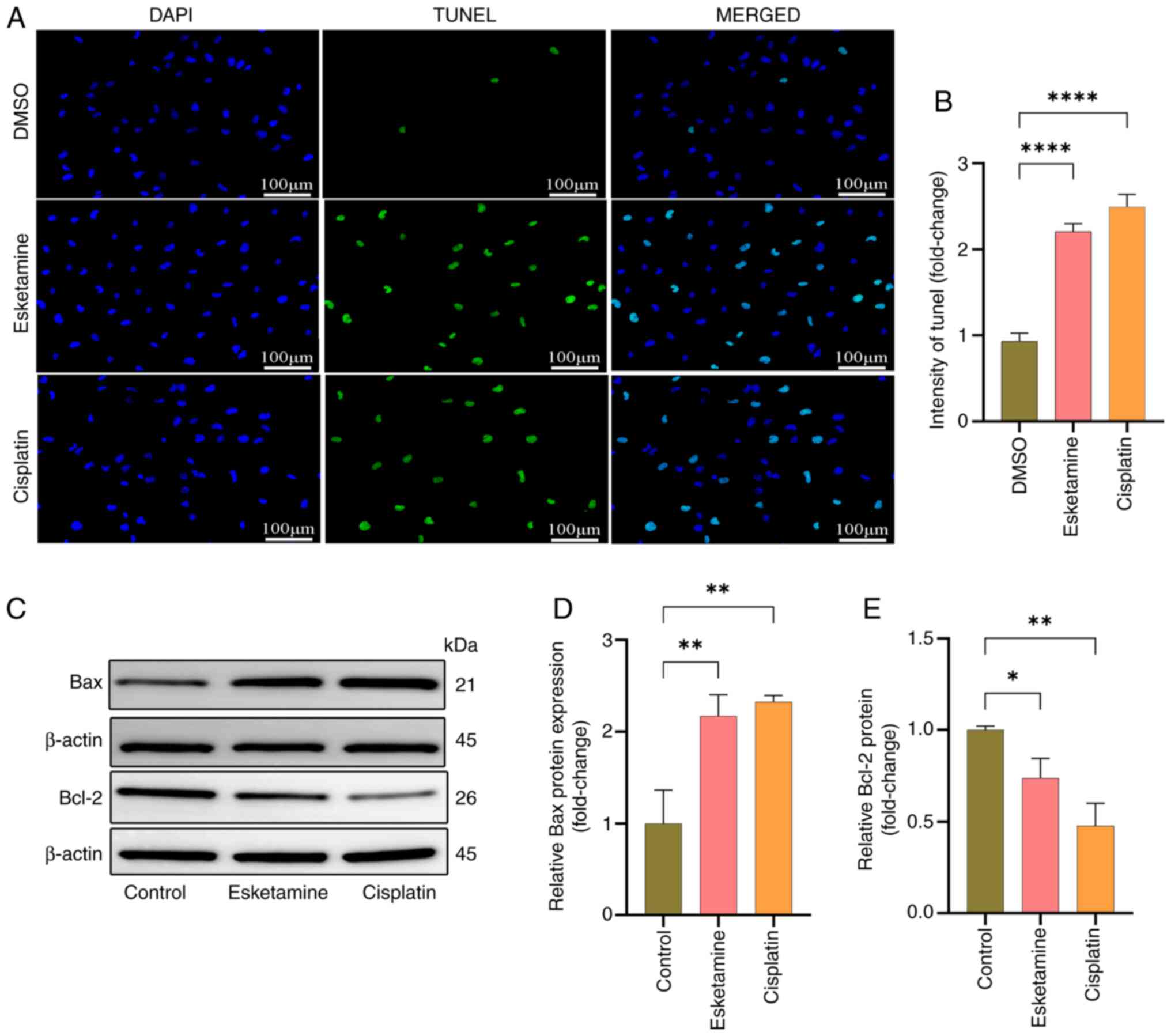
Figure 11

Expression pattern and functional
validation of BDNF in lung adenocarcinoma. (A) Tunnel staining and
(B) fluorescence plots and quantified bars of A549 cells after
treatment with Esketamine at a concentration of 16.25 µM for 24 h
and cisplatin at a concentration of 5 µM. (C-E) Western blotting
results of Bax and Bcl-2 expression in A549 cells treated with
Esketamine at a concentration of 16.25 µM for 24 h and cisplatin at
a concentration of 5 µM. BDNF, brain-derived neurotrophic factor.
*P<0.05, **P<0.01, ****P<0.001.
View References

1 

Thai AA, Solomon BJ, Sequist LV, Gainor JF and Heist RS: Lung cancer. Lancet. 398:535–554. 2021. View Article : Google Scholar : PubMed/NCBI

2 

Zhang Y, Vaccarella S, Morgan E, Li M, Etxeberria J, Chokunonga E, Manraj SS, Kamate B, Omonisi A and Bray F: Global variations in lung cancer incidence by histological subtype in 2020: A population-based study. Lancet Oncol. 24:1206–1218. 2023. View Article : Google Scholar : PubMed/NCBI

3 

Bi KW, Wei XG, Qin XX and Li B: BTK Has potential to be a prognostic factor for lung adenocarcinoma and an indicator for tumor microenvironment remodeling: A study based on TCGA data mining. Front Oncol. 10:4242020. View Article : Google Scholar : PubMed/NCBI

4 

Succony L, Rassl DM, Barker AP, McCaughan FM and Rintoul RC: Adenocarcinoma spectrum lesions of the lung: Detection, pathology and treatment strategies. Cancer Treat Rev. 99:1022372021. View Article : Google Scholar : PubMed/NCBI

5 

Xu J, Zhang Y, Li M, Shao Z, Dong Y, Li Q, Bai H, Duan J, Zhong J, Wan R, et al: A single-cell characterised signature integrating heterogeneity and microenvironment of lung adenocarcinoma for prognostic stratification. EBioMedicine. 102:1050922024. View Article : Google Scholar : PubMed/NCBI

6 

Sun R, Hou Z, Zhang Y and Jiang B: Drug resistance mechanisms and progress in the treatment of EGFR-mutated lung adenocarcinoma. Oncol Lett. 24:4082022. View Article : Google Scholar : PubMed/NCBI

7 

Wang Y, Liu B, Min Q, Yang X, Yan S, Ma Y, Li S, Fan J, Wang Y, Dong B, et al: Spatial transcriptomics delineates molecular features and cellular plasticity in lung adenocarcinoma progression. Cell Discov. 9:962023. View Article : Google Scholar : PubMed/NCBI

8 

McLaughlin M and Vandenbroeck K: The endoplasmic reticulum protein folding factory and its chaperones: New targets for drug discovery? Br J Pharmacol. 162:328–345. 2011. View Article : Google Scholar : PubMed/NCBI

9 

Saaoud F, Lu Y, Xu K, Shao Y, Praticò D, Vazquez-Padron RI, Wang H and Yang X: Protein-rich foods, sea foods, and gut microbiota amplify immune responses in chronic diseases and cancers-targeting PERK as a novel therapeutic strategy for chronic inflammatory diseases, neurodegenerative disorders, and cancer. Pharmacol Ther. 255:1086042024. View Article : Google Scholar : PubMed/NCBI

10 

Oakes SA: Endoplasmic reticulum stress signaling in cancer cells. Am J Pathol. 190:934–946. 2020. View Article : Google Scholar : PubMed/NCBI

11 

Lin L, Lin G, Lin H, Chen L, Chen X, Lin Q, Xu Y and Zeng Y: Integrated profiling of endoplasmic reticulum stress-related DERL3 in the prognostic and immune features of lung adenocarcinoma. Front Immunol. 13:9064202022. View Article : Google Scholar : PubMed/NCBI

12 

Chen X and Cubillos-Ruiz JR: Endoplasmic reticulum stress signals in the tumour and its microenvironment. Nat Rev Cancer. 21:71–88. 2021. View Article : Google Scholar : PubMed/NCBI

13 

Cubillos-Ruiz JR, Bettigole SE and Glimcher LH: Tumorigenic and immunosuppressive effects of endoplasmic reticulum stress in cancer. Cell. 168:692–706. 2017. View Article : Google Scholar : PubMed/NCBI

14 

Cao T, Zhang W, Wang Q, Wang C, Ma W, Zhang C, Ge M, Tian M, Yu J, Jiao A, et al: Cancer SLC6A6-mediated taurine uptake transactivates immune checkpoint genes and induces exhaustion in CD8+ T cells. Cell. 187:2288–2304.e27. 2024. View Article : Google Scholar : PubMed/NCBI

15 

Fan C, Yang Y, Liu Y, Jiang S, Di S, Hu W, Ma Z, Li T, Zhu Y, Xin Z, et al: Icariin displays anticancer activity against human esophageal cancer cells via regulating endoplasmic reticulum stress-mediated apoptotic signaling. Sci Rep. 6:211452016. View Article : Google Scholar : PubMed/NCBI

16 

Zhang L, Xiong Y, Zhang J, Feng Y and Xu A: Systematic proteome-wide Mendelian randomization using the human plasma proteome to identify therapeutic targets for lung adenocarcinoma. J Transl Med. 22:3302024. View Article : Google Scholar : PubMed/NCBI

17 

Deng B, Liao F, Liu Y, He P, Wei S, Liu C and Dong W: Comprehensive analysis of endoplasmic reticulum stress-associated genes signature of ulcerative colitis. Front Immunol. 14:11586482023. View Article : Google Scholar : PubMed/NCBI

18 

Qiu WR, Qi BB, Lin WZ, Zhang SH, Yu WK and Huang SF: Predicting the lung adenocarcinoma and its biomarkers by integrating gene expression and DNA methylation data. Front Genet. 13:9269272022. View Article : Google Scholar : PubMed/NCBI

19 

Wang S, Xiong Y, Zhao L, Gu K, Li Y, Zhao F, Li J, Wang M, Wang H, Tao Z, et al: UCSCXenaShiny: an R/CRAN package for interactive analysis of UCSC Xena data. Bioinformatics. 38:527–529. 2022. View Article : Google Scholar : PubMed/NCBI

20 

Wang Z, Wang Y, Chang M, Wang Y, Liu P, Wu J, Wang G, Tang X, Hui X, Liu P, et al: Single-cell transcriptomic analyses provide insights into the cellular origins and drivers of brain metastasis from lung adenocarcinoma. Neuro Oncol. 25:1262–1274. 2023. View Article : Google Scholar : PubMed/NCBI

21 

Huang J, Zhang J, Zhang F, Lu S, Guo S, Shi R, Zhai Y, Gao Y, Tao X, Jin Z, et al: Identification of a disulfidptosis-related genes signature for prognostic implication in lung adenocarcinoma. Comput Biol Med. 165:1074022023. View Article : Google Scholar : PubMed/NCBI

22 

Wu F, Cai J, Wen C and Tan H: Co-sparse non-negative matrix factorization. Front Neurosci. 15:8045542022. View Article : Google Scholar : PubMed/NCBI

23 

Zhu S, Zheng Z, Hu W and Lei C: Conditional cancer-specific survival for inflammatory breast cancer: Analysis of SEER, 2010 to 2016. Clin Breast Cancer. 23:628–639.e2. 2023. View Article : Google Scholar : PubMed/NCBI

24 

Qin Y, Liu Y, Xiang X, Long X, Chen Z, Huang X, Yang J and Li W: Cuproptosis correlates with immunosuppressive tumor microenvironment based on pan-cancer multiomics and single-cell sequencing analysis. Mol Cancer. 22:592023. View Article : Google Scholar : PubMed/NCBI

25 

Wang Q, Qiao W, Zhang H, Liu B, Li J, Zang C, Mei T, Zheng J and Zhang Y: Nomogram established on account of Lasso-Cox regression for predicting recurrence in patients with early-stage hepatocellular carcinoma. Front Immunol. 13:10196382022. View Article : Google Scholar : PubMed/NCBI

26 

Song M, Zhang Q, Song C, Liu T, Zhang X, Ruan G, Tang M, Xie H, Zhang H, Ge Y, et al: The advanced lung cancer inflammation index is the optimal inflammatory biomarker of overall survival in patients with lung cancer. J Cachexia Sarcopenia Muscle. 13:2504–2514. 2022. View Article : Google Scholar : PubMed/NCBI

27 

Zhai T: Druggable genome-wide Mendelian randomization for identifying the role of integrated stress response in therapeutic targets of bipolar disorder. J Affect Disord. 362:843–852. 2024. View Article : Google Scholar : PubMed/NCBI

28 

Shao Y, Wang Z, Wu J, Lu Y, Chen Y, Zhang H, Huang C, Shen H, Xu L and Fu Z: Unveiling immunogenic cell death-related genes in colorectal cancer: an integrated study incorporating transcriptome and Mendelian randomization analyses. Funct Integr Genomics. 23:3162023. View Article : Google Scholar : PubMed/NCBI

29 

Bisht A, Tewari D, Kumar S and Chandra S: Network pharmacology, molecular docking, and molecular dynamics simulation to elucidate the mechanism of anti-aging action of Tinospora cordifolia. Mol Divers. 28:1743–1763. 2024. View Article : Google Scholar : PubMed/NCBI

30 

Jaganathan R and Kumaradhas P: Binding mechanism of anacardic acid, carnosol and garcinol with PCAF: A comprehensive study using molecular docking and molecular dynamics simulations and binding free energy analysis. J Cell Biochem. 124:731–742. 2023. View Article : Google Scholar : PubMed/NCBI

31 

Livak KJ and Schmittgen TD: Analysis of relative gene expression data using real-time quantitative PCR and the 2(−Delta Delta C(T)) method. Methods. 25:402–408. 2001. View Article : Google Scholar : PubMed/NCBI

32 

Zhu Y, Zhang C and Zhao D, Li W, Zhao Z, Yao S and Zhao D: BDNF Acts as a prognostic factor associated with tumor-infiltrating Th2 cells in pancreatic adenocarcinoma. Dis Markers. 2021:78420352021. View Article : Google Scholar : PubMed/NCBI

33 

Yu L, Zhou S, Hong W, Lin N, Wang Q and Liang P: Characterization of an endoplasmic reticulum stress-associated lncRNA prognostic signature and the tumor-suppressive role of RP11-295G20.2 knockdown in lung adenocarcinoma. Sci Rep. 14:122832024. View Article : Google Scholar : PubMed/NCBI

34 

Wang T, Weng H, Zhou H, Yang Z, Tian Z, Xi B and Li Y: Esketamine alleviates postoperative depression-like behavior through anti-inflammatory actions in mouse prefrontal cortex. J Affect Disord. 307:97–107. 2022. View Article : Google Scholar : PubMed/NCBI

35 

Siebert JR and Osterhout DJ: Select neurotrophins promote oligodendrocyte progenitor cell process outgrowth in the presence of chondroitin sulfate proteoglycans. J Neurosci Res. 99:1009–1023. 2021. View Article : Google Scholar : PubMed/NCBI

36 

Nakagawa K, Garon EB, Seto T, Nishio M, Ponce Aix S, Paz-Ares L, Chiu CH, Park K, Novello S, Nadal E, et al: Ramucirumab plus erlotinib in patients with untreated, EGFR-mutated, advanced non-small-cell lung cancer (RELAY): A randomised, double-blind, placebo-controlled, phase 3 trial. Lancet Oncol. 20:1655–1669. 2019. View Article : Google Scholar : PubMed/NCBI

37 

Salvagno C, Mandula JK, Rodriguez PC and Cubillos-Ruiz JR: Decoding endoplasmic reticulum stress signals in cancer cells and antitumor immunity. Trends Cancer. 8:930–943. 2022. View Article : Google Scholar : PubMed/NCBI

38 

Qiao L, Shao X, Gao S, Ming Z, Fu X and Wei Q: Research on endoplasmic reticulum-targeting fluorescent probes and endoplasmic reticulum stress-mediated nanoanticancer strategies: A review. Colloids Surf B Biointerfaces. 208:1120462021. View Article : Google Scholar : PubMed/NCBI

39 

Cao LL and Kagan JC: Targeting innate immune pathways for cancer immunotherapy. Immunity. 56:2206–2217. 2023. View Article : Google Scholar : PubMed/NCBI

40 

Wang H, Li Z, Tao Y, Ou S, Ye J, Ran S, Luo K, Guan Z, Xiang J, Yan G, et al: Characterization of endoplasmic reticulum stress unveils ZNF703 as a promising target for colorectal cancer immunotherapy. J Transl Med. 21:7132023. View Article : Google Scholar : PubMed/NCBI

41 

Wang YH, Huo BL, Li C, Ma G and Cao W: Knockdown of long noncoding RNA SNHG7 inhibits the proliferation and promotes apoptosis of thyroid cancer cells by downregulating BDNF. Eur Rev Med Pharmacol Sci. 23:4815–4821. 2019.PubMed/NCBI

42 

Xu Y, Jiang WG, Wang HC, Martin T, Zeng YX, Zhang J and Qi YS: BDNF activates TrkB/PLCγ1 signaling pathway to promote proliferation and invasion of ovarian cancer cells through inhibition of apoptosis. Eur Rev Med Pharmacol Sci. 23:5093–5100. 2019.PubMed/NCBI

Related Articles

  • Abstract
  • View
  • Download
  • Twitter
Copy and paste a formatted citation
Spandidos Publications style
Deng X, Tan Y, Tan G and Ning H: Multi‑omics and experimental validation unveil BDNF as a diagnostic biomarker and therapeutic target in endoplasmic reticulum stress‑driven lung adenocarcinoma: Therapeutic potential of Esketamine. Oncol Lett 30: 590, 2025.
APA
Deng, X., Tan, Y., Tan, G., & Ning, H. (2025). Multi‑omics and experimental validation unveil BDNF as a diagnostic biomarker and therapeutic target in endoplasmic reticulum stress‑driven lung adenocarcinoma: Therapeutic potential of Esketamine. Oncology Letters, 30, 590. https://doi.org/10.3892/ol.2025.15336
MLA
Deng, X., Tan, Y., Tan, G., Ning, H."Multi‑omics and experimental validation unveil BDNF as a diagnostic biomarker and therapeutic target in endoplasmic reticulum stress‑driven lung adenocarcinoma: Therapeutic potential of Esketamine". Oncology Letters 30.6 (2025): 590.
Chicago
Deng, X., Tan, Y., Tan, G., Ning, H."Multi‑omics and experimental validation unveil BDNF as a diagnostic biomarker and therapeutic target in endoplasmic reticulum stress‑driven lung adenocarcinoma: Therapeutic potential of Esketamine". Oncology Letters 30, no. 6 (2025): 590. https://doi.org/10.3892/ol.2025.15336
Copy and paste a formatted citation
x
Spandidos Publications style
Deng X, Tan Y, Tan G and Ning H: Multi‑omics and experimental validation unveil BDNF as a diagnostic biomarker and therapeutic target in endoplasmic reticulum stress‑driven lung adenocarcinoma: Therapeutic potential of Esketamine. Oncol Lett 30: 590, 2025.
APA
Deng, X., Tan, Y., Tan, G., & Ning, H. (2025). Multi‑omics and experimental validation unveil BDNF as a diagnostic biomarker and therapeutic target in endoplasmic reticulum stress‑driven lung adenocarcinoma: Therapeutic potential of Esketamine. Oncology Letters, 30, 590. https://doi.org/10.3892/ol.2025.15336
MLA
Deng, X., Tan, Y., Tan, G., Ning, H."Multi‑omics and experimental validation unveil BDNF as a diagnostic biomarker and therapeutic target in endoplasmic reticulum stress‑driven lung adenocarcinoma: Therapeutic potential of Esketamine". Oncology Letters 30.6 (2025): 590.
Chicago
Deng, X., Tan, Y., Tan, G., Ning, H."Multi‑omics and experimental validation unveil BDNF as a diagnostic biomarker and therapeutic target in endoplasmic reticulum stress‑driven lung adenocarcinoma: Therapeutic potential of Esketamine". Oncology Letters 30, no. 6 (2025): 590. https://doi.org/10.3892/ol.2025.15336
Follow us
  • Twitter
  • LinkedIn
  • Facebook
About
  • Spandidos Publications
  • Careers
  • Cookie Policy
  • Privacy Policy
How can we help?
  • Help
  • Live Chat
  • Contact
  • Email to our Support Team