Spandidos Publications Logo
  • About
    • About Spandidos
    • Aims and Scopes
    • Abstracting and Indexing
    • Editorial Policies
    • Reprints and Permissions
    • Job Opportunities
    • Terms and Conditions
    • Contact
  • Journals
    • All Journals
    • Oncology Letters
      • Oncology Letters
      • Information for Authors
      • Editorial Policies
      • Editorial Board
      • Aims and Scope
      • Abstracting and Indexing
      • Bibliographic Information
      • Archive
    • International Journal of Oncology
      • International Journal of Oncology
      • Information for Authors
      • Editorial Policies
      • Editorial Board
      • Aims and Scope
      • Abstracting and Indexing
      • Bibliographic Information
      • Archive
    • Molecular and Clinical Oncology
      • Molecular and Clinical Oncology
      • Information for Authors
      • Editorial Policies
      • Editorial Board
      • Aims and Scope
      • Abstracting and Indexing
      • Bibliographic Information
      • Archive
    • Experimental and Therapeutic Medicine
      • Experimental and Therapeutic Medicine
      • Information for Authors
      • Editorial Policies
      • Editorial Board
      • Aims and Scope
      • Abstracting and Indexing
      • Bibliographic Information
      • Archive
    • International Journal of Molecular Medicine
      • International Journal of Molecular Medicine
      • Information for Authors
      • Editorial Policies
      • Editorial Board
      • Aims and Scope
      • Abstracting and Indexing
      • Bibliographic Information
      • Archive
    • Biomedical Reports
      • Biomedical Reports
      • Information for Authors
      • Editorial Policies
      • Editorial Board
      • Aims and Scope
      • Abstracting and Indexing
      • Bibliographic Information
      • Archive
    • Oncology Reports
      • Oncology Reports
      • Information for Authors
      • Editorial Policies
      • Editorial Board
      • Aims and Scope
      • Abstracting and Indexing
      • Bibliographic Information
      • Archive
    • Molecular Medicine Reports
      • Molecular Medicine Reports
      • Information for Authors
      • Editorial Policies
      • Editorial Board
      • Aims and Scope
      • Abstracting and Indexing
      • Bibliographic Information
      • Archive
    • World Academy of Sciences Journal
      • World Academy of Sciences Journal
      • Information for Authors
      • Editorial Policies
      • Editorial Board
      • Aims and Scope
      • Abstracting and Indexing
      • Bibliographic Information
      • Archive
    • International Journal of Functional Nutrition
      • International Journal of Functional Nutrition
      • Information for Authors
      • Editorial Policies
      • Editorial Board
      • Aims and Scope
      • Abstracting and Indexing
      • Bibliographic Information
      • Archive
    • International Journal of Epigenetics
      • International Journal of Epigenetics
      • Information for Authors
      • Editorial Policies
      • Editorial Board
      • Aims and Scope
      • Abstracting and Indexing
      • Bibliographic Information
      • Archive
    • Medicine International
      • Medicine International
      • Information for Authors
      • Editorial Policies
      • Editorial Board
      • Aims and Scope
      • Abstracting and Indexing
      • Bibliographic Information
      • Archive
  • Articles
  • Information
    • Information for Authors
    • Information for Reviewers
    • Information for Librarians
    • Information for Advertisers
    • Conferences
  • Language Editing
Spandidos Publications Logo
  • About
    • About Spandidos
    • Aims and Scopes
    • Abstracting and Indexing
    • Editorial Policies
    • Reprints and Permissions
    • Job Opportunities
    • Terms and Conditions
    • Contact
  • Journals
    • All Journals
    • Biomedical Reports
      • Information for Authors
      • Editorial Policies
      • Editorial Board
      • Aims and Scope
      • Abstracting and Indexing
      • Bibliographic Information
      • Archive
    • Experimental and Therapeutic Medicine
      • Information for Authors
      • Editorial Policies
      • Editorial Board
      • Aims and Scope
      • Abstracting and Indexing
      • Bibliographic Information
      • Archive
    • International Journal of Epigenetics
      • Information for Authors
      • Editorial Policies
      • Editorial Board
      • Aims and Scope
      • Abstracting and Indexing
      • Bibliographic Information
      • Archive
    • International Journal of Functional Nutrition
      • Information for Authors
      • Editorial Policies
      • Editorial Board
      • Aims and Scope
      • Abstracting and Indexing
      • Bibliographic Information
      • Archive
    • International Journal of Molecular Medicine
      • Information for Authors
      • Editorial Policies
      • Editorial Board
      • Aims and Scope
      • Abstracting and Indexing
      • Bibliographic Information
      • Archive
    • International Journal of Oncology
      • Information for Authors
      • Editorial Policies
      • Editorial Board
      • Aims and Scope
      • Abstracting and Indexing
      • Bibliographic Information
      • Archive
    • Medicine International
      • Information for Authors
      • Editorial Policies
      • Editorial Board
      • Aims and Scope
      • Abstracting and Indexing
      • Bibliographic Information
      • Archive
    • Molecular and Clinical Oncology
      • Information for Authors
      • Editorial Policies
      • Editorial Board
      • Aims and Scope
      • Abstracting and Indexing
      • Bibliographic Information
      • Archive
    • Molecular Medicine Reports
      • Information for Authors
      • Editorial Policies
      • Editorial Board
      • Aims and Scope
      • Abstracting and Indexing
      • Bibliographic Information
      • Archive
    • Oncology Letters
      • Information for Authors
      • Editorial Policies
      • Editorial Board
      • Aims and Scope
      • Abstracting and Indexing
      • Bibliographic Information
      • Archive
    • Oncology Reports
      • Information for Authors
      • Editorial Policies
      • Editorial Board
      • Aims and Scope
      • Abstracting and Indexing
      • Bibliographic Information
      • Archive
    • World Academy of Sciences Journal
      • Information for Authors
      • Editorial Policies
      • Editorial Board
      • Aims and Scope
      • Abstracting and Indexing
      • Bibliographic Information
      • Archive
  • Articles
  • Information
    • For Authors
    • For Reviewers
    • For Librarians
    • For Advertisers
    • Conferences
  • Language Editing
Login Register Submit
  • This site uses cookies
  • You can change your cookie settings at any time by following the instructions in our Cookie Policy. To find out more, you may read our Privacy Policy.

    I agree
Search articles by DOI, keyword, author or affiliation
Search
Advanced Search
presentation
Oncology Letters
Join Editorial Board Propose a Special Issue
Print ISSN: 1792-1074 Online ISSN: 1792-1082
Journal Cover
December-2025 Volume 30 Issue 6

Full Size Image

Sign up for eToc alerts
Recommend to Library

Journals

International Journal of Molecular Medicine

International Journal of Molecular Medicine

International Journal of Molecular Medicine is an international journal devoted to molecular mechanisms of human disease.

International Journal of Oncology

International Journal of Oncology

International Journal of Oncology is an international journal devoted to oncology research and cancer treatment.

Molecular Medicine Reports

Molecular Medicine Reports

Covers molecular medicine topics such as pharmacology, pathology, genetics, neuroscience, infectious diseases, molecular cardiology, and molecular surgery.

Oncology Reports

Oncology Reports

Oncology Reports is an international journal devoted to fundamental and applied research in Oncology.

Experimental and Therapeutic Medicine

Experimental and Therapeutic Medicine

Experimental and Therapeutic Medicine is an international journal devoted to laboratory and clinical medicine.

Oncology Letters

Oncology Letters

Oncology Letters is an international journal devoted to Experimental and Clinical Oncology.

Biomedical Reports

Biomedical Reports

Explores a wide range of biological and medical fields, including pharmacology, genetics, microbiology, neuroscience, and molecular cardiology.

Molecular and Clinical Oncology

Molecular and Clinical Oncology

International journal addressing all aspects of oncology research, from tumorigenesis and oncogenes to chemotherapy and metastasis.

World Academy of Sciences Journal

World Academy of Sciences Journal

Multidisciplinary open-access journal spanning biochemistry, genetics, neuroscience, environmental health, and synthetic biology.

International Journal of Functional Nutrition

International Journal of Functional Nutrition

Open-access journal combining biochemistry, pharmacology, immunology, and genetics to advance health through functional nutrition.

International Journal of Epigenetics

International Journal of Epigenetics

Publishes open-access research on using epigenetics to advance understanding and treatment of human disease.

Medicine International

Medicine International

An International Open Access Journal Devoted to General Medicine.

Journal Cover
December-2025 Volume 30 Issue 6

Full Size Image

Sign up for eToc alerts
Recommend to Library

  • Article
  • Citations
    • Cite This Article
    • Download Citation
    • Create Citation Alert
    • Remove Citation Alert
    • Cited By
  • Similar Articles
    • Related Articles (in Spandidos Publications)
    • Similar Articles (Google Scholar)
    • Similar Articles (PubMed)
  • Download PDF
  • Download XML
  • View XML

  • Supplementary Files
    • Supplementary_Data1.pdf
    • Supplementary_Data2.xlsx
Article Open Access

A novel defined cuproptosis‑related signature score to predict prognosis and immunotherapy efficacy in pancreatic cancer

  • Authors:
    • Weiyu Ge
    • Yongchao Wang
    • Daiyuan Shentu
    • Ming Yue
    • Yanling Wang
  • View Affiliations / Copyright

    Affiliations: Department of Medical Oncology, Fudan University Shanghai Cancer Center, Shanghai Medical College, Fudan University, Shanghai 200032, P.R. China, State Key Laboratory of Oncogenes and Related Genes, Shanghai Cancer Institute, Department of Oncology, Renji Hospital, School of Medicine, Shanghai Jiao Tong University, Shanghai 200127, P.R. China
    Copyright: © Ge et al. This is an open access article distributed under the terms of Creative Commons Attribution License.
  • Article Number: 591
    |
    Published online on: October 14, 2025
       https://doi.org/10.3892/ol.2025.15337
  • Expand metrics +
Metrics: Total Views: 0 (Spandidos Publications: | PMC Statistics: )
Metrics: Total PDF Downloads: 0 (Spandidos Publications: | PMC Statistics: )
Cited By (CrossRef): 0 citations Loading Articles...

This article is mentioned in:


Abstract

Cuproptosis, a novel mode of copper‑dependent programmed cell death, represents a distinct mechanism separate from other established forms of cell death. The present study aimed to explore the intertumoral heterogeneity of cell death and its relationship with the tumor microenvironment (TME) in pancreatic cancer (PC). Multiple bioinformatics approaches, using multi‑omics data from The Cancer Genome Atlas, Genome Tissue Expression, International Cancer Genome Consortium, Gene Expression Omnibus and Clinical Proteomic Tumor Analysis Consortium datasets, and in vitro validation were employed to comprehensively analyze the expression profile, prognostic value and immune cell infiltration of cuproptosis‑related genes (CGs) in PC. The enrichment scores of five reported cell death modes were assessed by single‑sample gene set enrichment analysis. The results revealed that cuproptosis exhibited the only protective effect on survival compared with other cell death modes and CDK inhibitor 2A was the core gene involved in PC cuproptosis status. The present study also evaluated the alterations in genomic backgrounds and the expression of CGs, and detected dysregulated mRNA levels, cell‑free DNA levels and protein levels of CGs in PC. Subsequently, two distinct cuproptosis subtypes (CG cluster A and CG cluster B) were identified, and the potential roles of CGs in the TME, clinical features and immunotherapy response were delineated. Notably, it was observed that CG cluster B was associated with poor survival, stromal activation, immunosuppression and immunotherapy resistance in patients with PC. Furthermore, a highly accurate nomogram was developed to enhance the clinical applicability of the cuproptosis‑associated risk score. A high‑risk score, characterized by an increased mutation burden and stromal activation, was associated with worse survival. Furthermore, compared with the low‑risk score group, a higher anti‑programmed cell death protein‑1 resistant‑related signature was observed in the high‑risk score group. These findings define a novel prognostic cuproptosis‑related signature for the prediction of clinical outcomes and immunotherapy response in PC.
View Figures

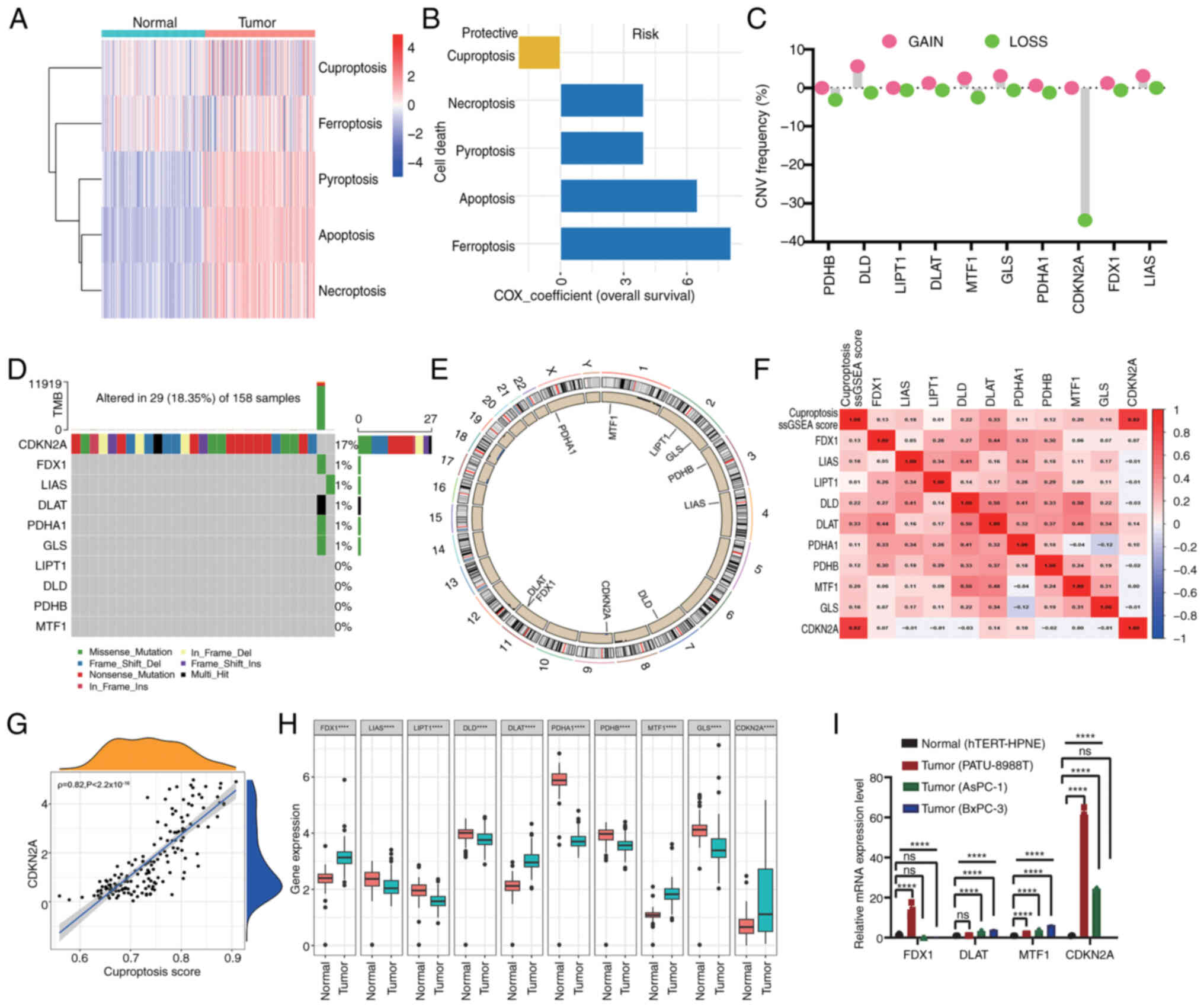
Figure 1

Genetic mutation landscape of CGs and
cuproptosis subtypes in PC tumorigenesis. (A) Heatmap indicating
the enrichment scores of five reported cell death pathways in
pancreatic tumors and normal pancreatic samples. (B) Distribution
of Cox coefficients of cell death pathways determined by univariate
Cox regression analysis. (C) Frequencies of CNV gain and loss among
CGs. (D) Mutation frequencies of CGs in 158 patients with PC from
TCGA cohort. (E) Circular plots of chromosome distributions of CGs.
(F) Heatmap displaying the correlation between cuproptosis score
and mRNA expression of CGs. Red represents a positive correlation,
whereas blue represents a negative correlation. (G) Correlations
between the cuproptosis score and the expression of CDKN2A. (H)
Expression of CGs in pancreatic tumor and healthy pancreatic
samples (****P<0.0001, determined by Mann-Whitney U test). (I)
Reverse transcription-quantitative PCR analyses of the mRNA
expression levels of FDX1, DLAT, MTF1 and CDKN2A in PC cell lines
(PATU-8988T, AsPC-1 and BxPC-3) and normal pancreatic cells
(hTERT-HPNE). The results were presented as means ± SD from three
times of independent experiments. A one-way ANOVA with Tukey's post
hoc test was performed to analyze data. ****P<0.001. CG,
cuproptosis-related gene; CNV, copy number variant; PC, pancreatic
cancer; FDX1, ferredoxin 1; DLAT, dihydrolipoamide
S-acetyltransferase; MTF1, metal regulatory transcription factor 1;
CDKN2A, CDK inhibitor 2A; TCGA, The Cancer Genome Atlas.

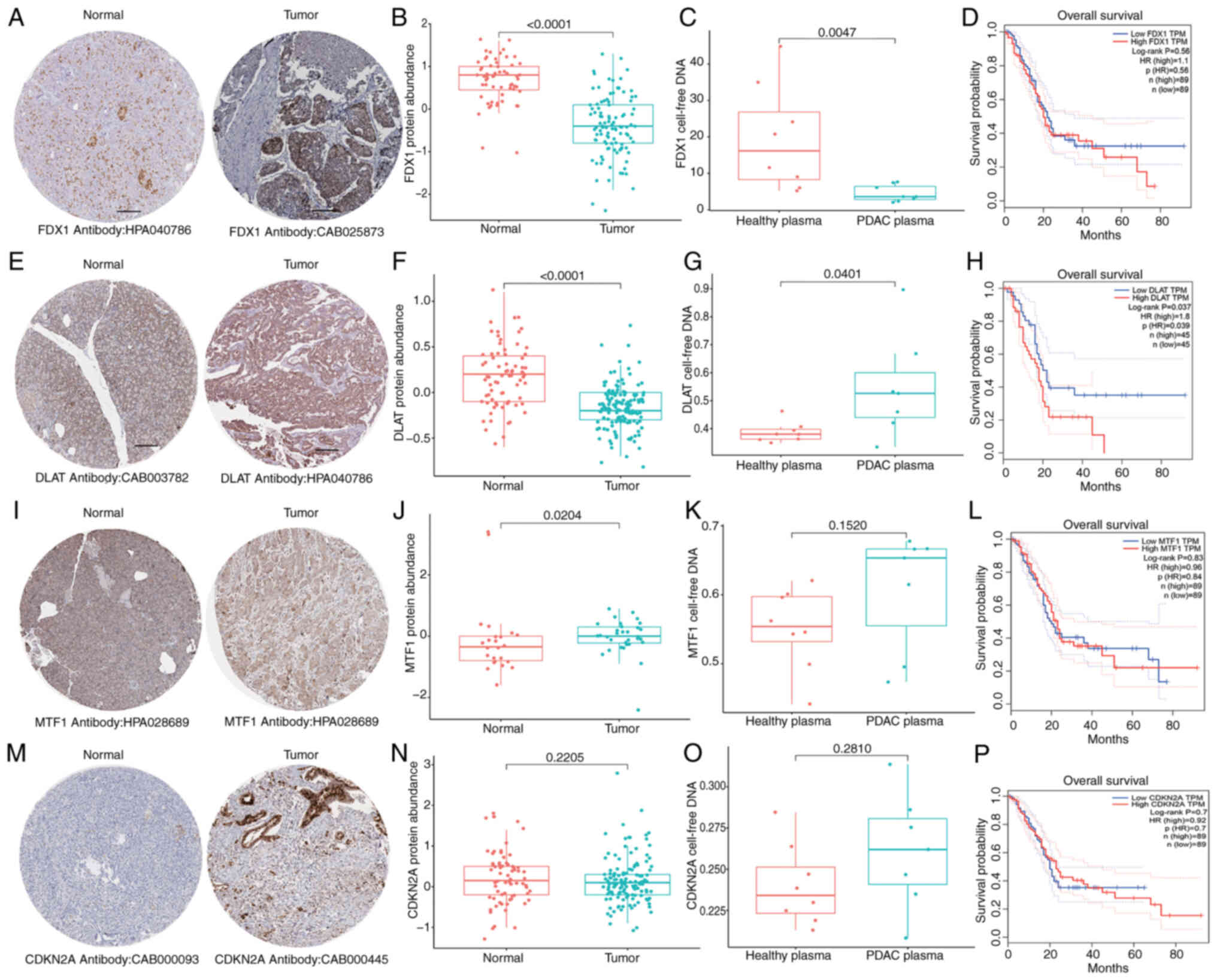
Figure 2

Expression and prognosis of
cuproptosis-related genes in PC. Histological expression levels of
(A) FDX1, (E) DLAT, (I) MTF1 and (M) CDKN2A from the Human Protein
Atlas database; the antibody type used in immunohistochemistry and
the patient ID of tissue specimens are shown at the bottom of each
image. Different protein levels of (B) FDX1, (F) DLAT, (J) MTF1 and
(N) CDKN2A in pancreatic tumor and healthy pancreas samples from
the Clinical Proteomic Tumor Analysis Consortium database (the
Mann-Whitney U test was performed to analyze data). Different
cell-free DNA levels of (C) FDX1, (G) DLAT, (K) MTF1 and (O) CDKN2A
in blood plasma samples of normal healthy donors and pancreatic
cancer from the GEO database (the Mann-Whitney U test was performed
to analyze data). (D, H, L and P) Survival analysis of (D) FDX1,
(H) DLA, (L) MTF1 and (P) CDKN2A in The Cancer Genome
Atlas-pancreatic adenocarcinoma cohort. FDX1, ferredoxin 1; DLAT,
dihydrolipoamide S-acetyltransferase; MTF1, metal regulatory
transcription factor 1; CDKN2A, CDK inhibitor 2A; PC, pancreatic
cancer.

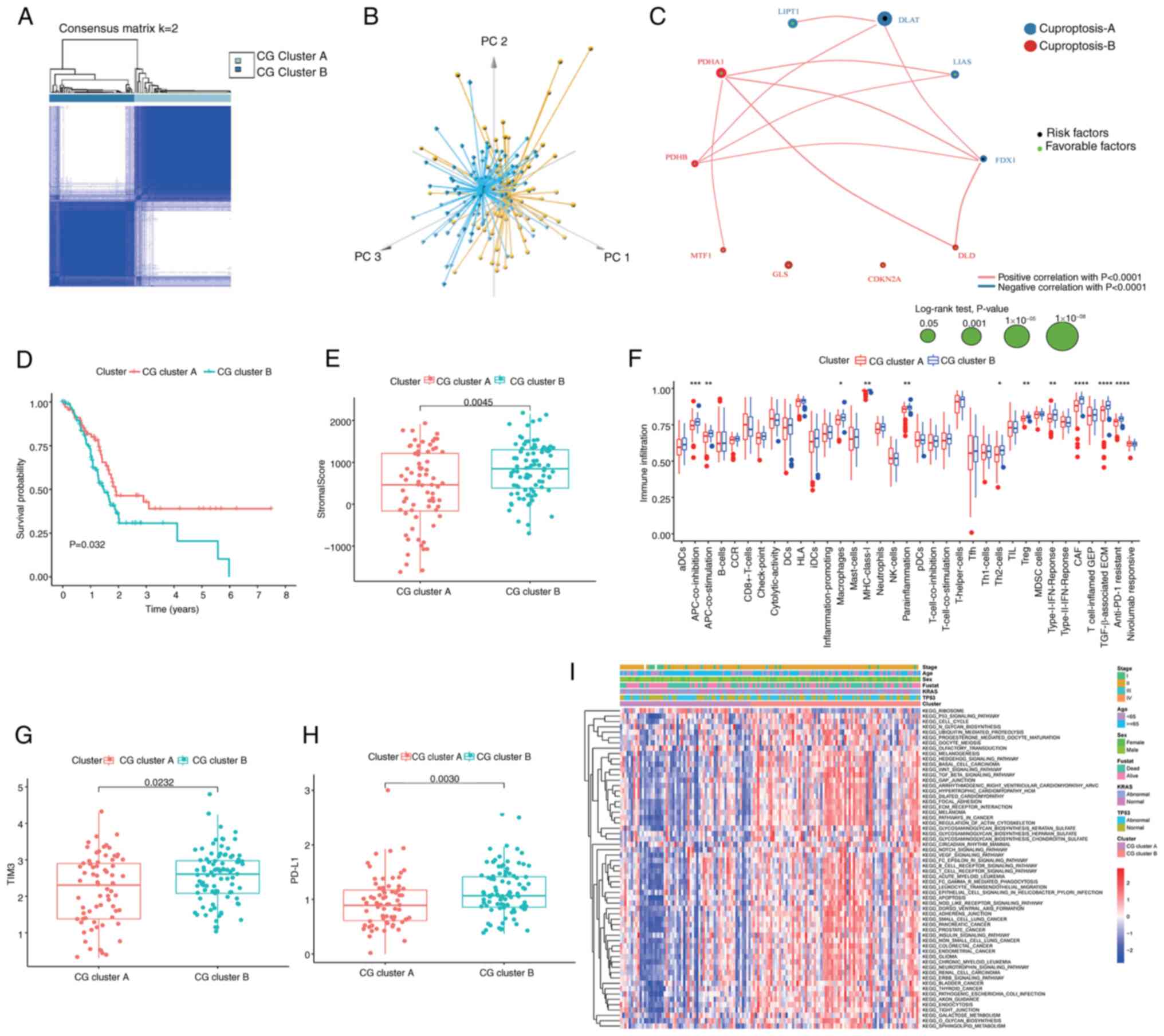
Figure 3

Immunological characteristics and
pathway scores of cuproptosis subtypes. (A) Consensus matrix
heatmap defining two clusters (k=2) and their correlation area. (B)
Principal component analysis demonstrating two distinct subtypes of
cuproptosis in TCGA cohort. (C) A network of correlations including
CGs in TCGA-pancreatic adenocarcinoma cohort. (D) Kaplan-Meier plot
of overall survival of patients with PC split according to CG
clusters, analyzed by log-rank test. (E) Association between the
two cuproptosis subtypes and stromal score in PC. (F) Abundance of
the infiltration of 35 tumor microenvironment cells of patients
with PC split according to two cuproptosis subtypes. Expression
levels of (G) TIM3 and (H) PD-L1 in the patients with PC split
according to two cuproptosis subtypes. (I) Gene Set Variation
Analysis of the biological pathways of two cuproptosis subtypes in
PC samples from TCGA and International Cancer Genome Consortium
cohorts. ****P<0.0001, ***P<0.001, **P<0.01, *P<0.05,
not significant (P>0.05), analyzed using the Mann-Whitney U
test. CG, cuproptosis-related gene; PC, pancreatic cancer; TCGA,
The Cancer Genome Atlas; TIM3, T-cell immunoglobulin and mucin
domain-containing protein 3; PD-L1, programmed cell death
ligand-1.

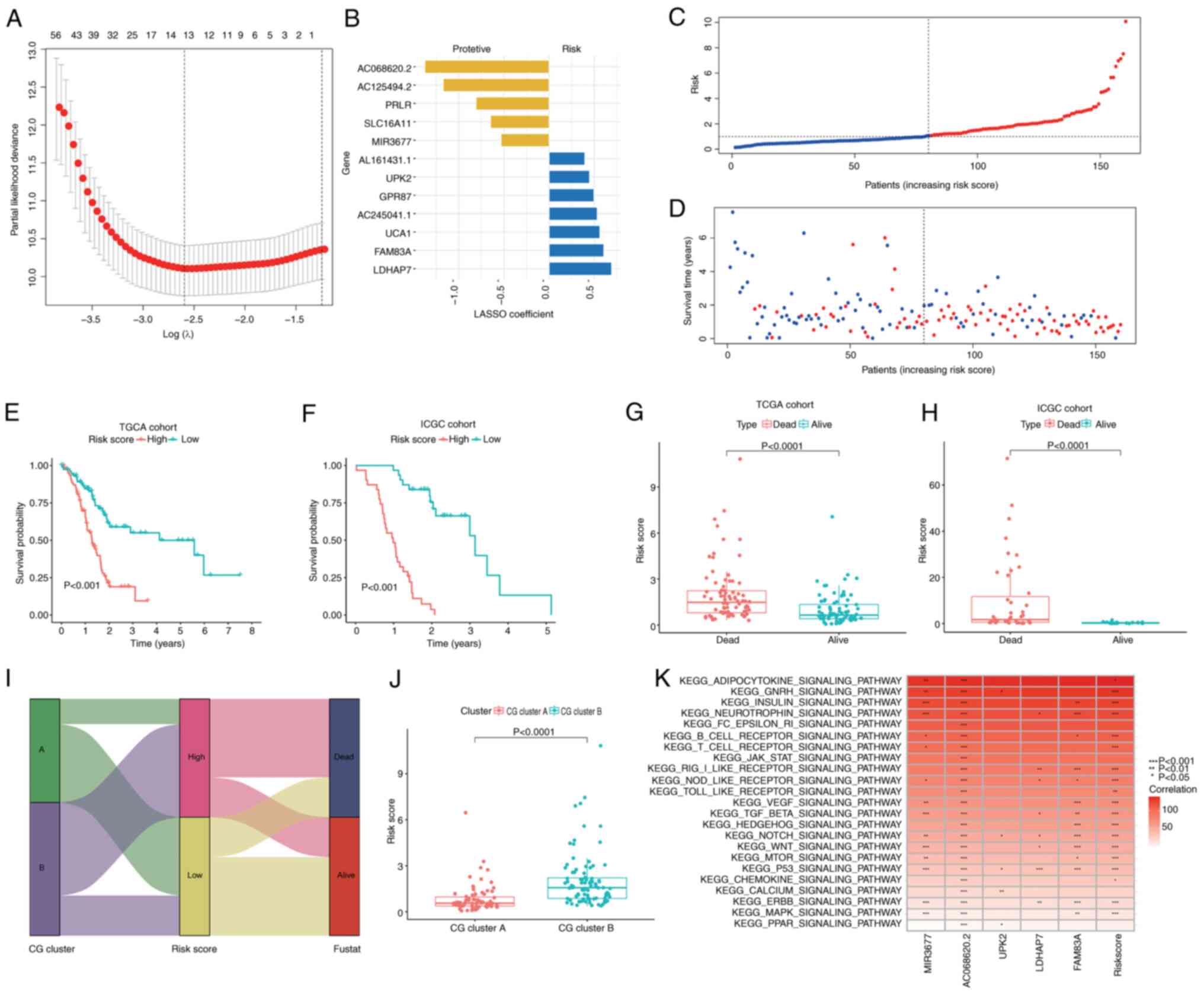
Figure 4

Construction and validation of the
cuproptosis-related signature in different cohorts. (A) LASSO Cox
regression model was applied to identify the most robust
biomarkers. (B) Distribution of LASSO coefficients of the CG
signature. (C) Ranked dot plot demonstrating the risk score
distribution and patient survival status. (D) Scatter plot
demonstrating the patient survival status. (E and F) Kaplan-Meier
curves were used to analyze the survival of patients with PC with
high- and low-risk scores in TCGA and ICGC cohorts. (G and H)
Differences in risk score between dead and alive patients with PC.
(I) Alluvial diagram of cuproptosis subtype distributions in groups
with different risk scores, molecular subtypes and survival
outcomes. (J) Differences in risk score between CG clusters and
gene subtypes (data were analyzed using the Mann-Whitney U test).
(K) Association analysis between tumorigenesis-associated pathways
and the selected genes. LASSO, least absolute shrinkage and
selection operator; CG, cuproptosis-related gene; PC, pancreatic
cancer; TCGA, The Cancer Genome Atlas; ICGC, International Cancer
Genome Consortium; PC, pancreatic cancer; MIR3677, microRNA-3677;
UPK2, uroplakin-2; LDHAP7, lactate dehydrogenase A pseudogene 7;
FAM83A, family member with sequence similarity 83.

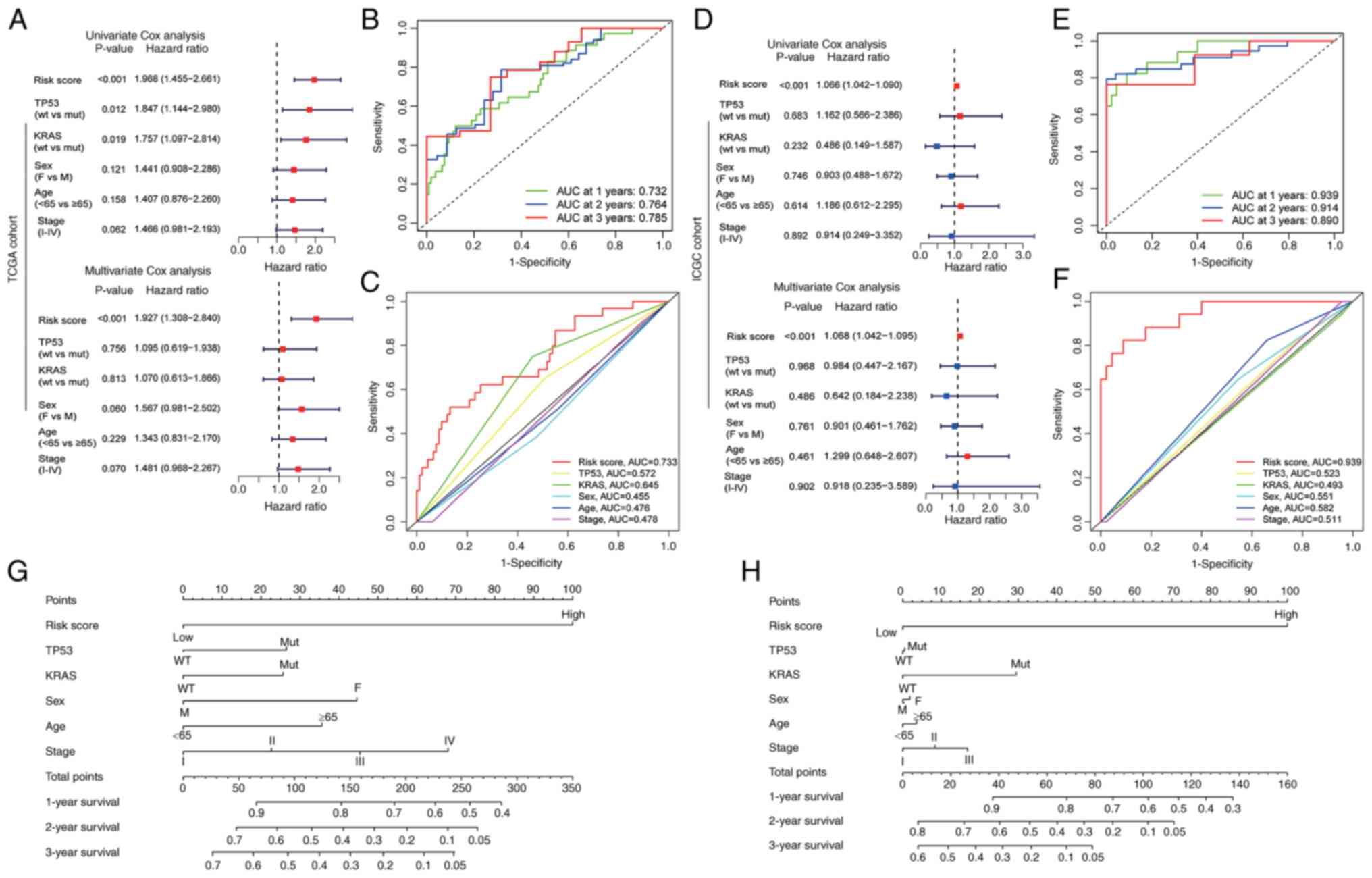
Figure 5

Prognostic potential of the
cuproptosis-related signature in different cohorts. (A and D)
Univariate and multivariate Cox regression analyses demonstrated
that risk score was an independent risk factor for OS in the (A)
training cohort and (D) validation cohort. (B) ROC curve to predict
the sensitivity and specificity of 1-, 2- and 3-year survival
according to the risk score in TCGA cohort. (E) ROC curve to
predict the sensitivity and specificity of 1-, 2- and 3-year
survival according to the risk score in ICGC cohort. (C)
Time-dependent ROC curve depicting the predictive precision of risk
score and clinical features in TCGA cohort. (F) Time-dependent ROC
curve depicting the predictive precision of risk score and clinical
features in ICGC cohort. (G) Nomogram to predict the 1-, 2- and
3-year OS of patients with pancreatic cancer in TCGA cohort. (H)
Nomogram to predict the 1-, 2- and 3-year OS of patients with
pancreatic cancer in ICGC cohort. ICGC, International Cancer Genome
Consortium; OS, overall survival; ROC, receiver operating
characteristic; TCGA, The Cancer Genome Atlas; AUC, area under the
curve; wt, wild-type; mut, mutant; M, male; F, female.

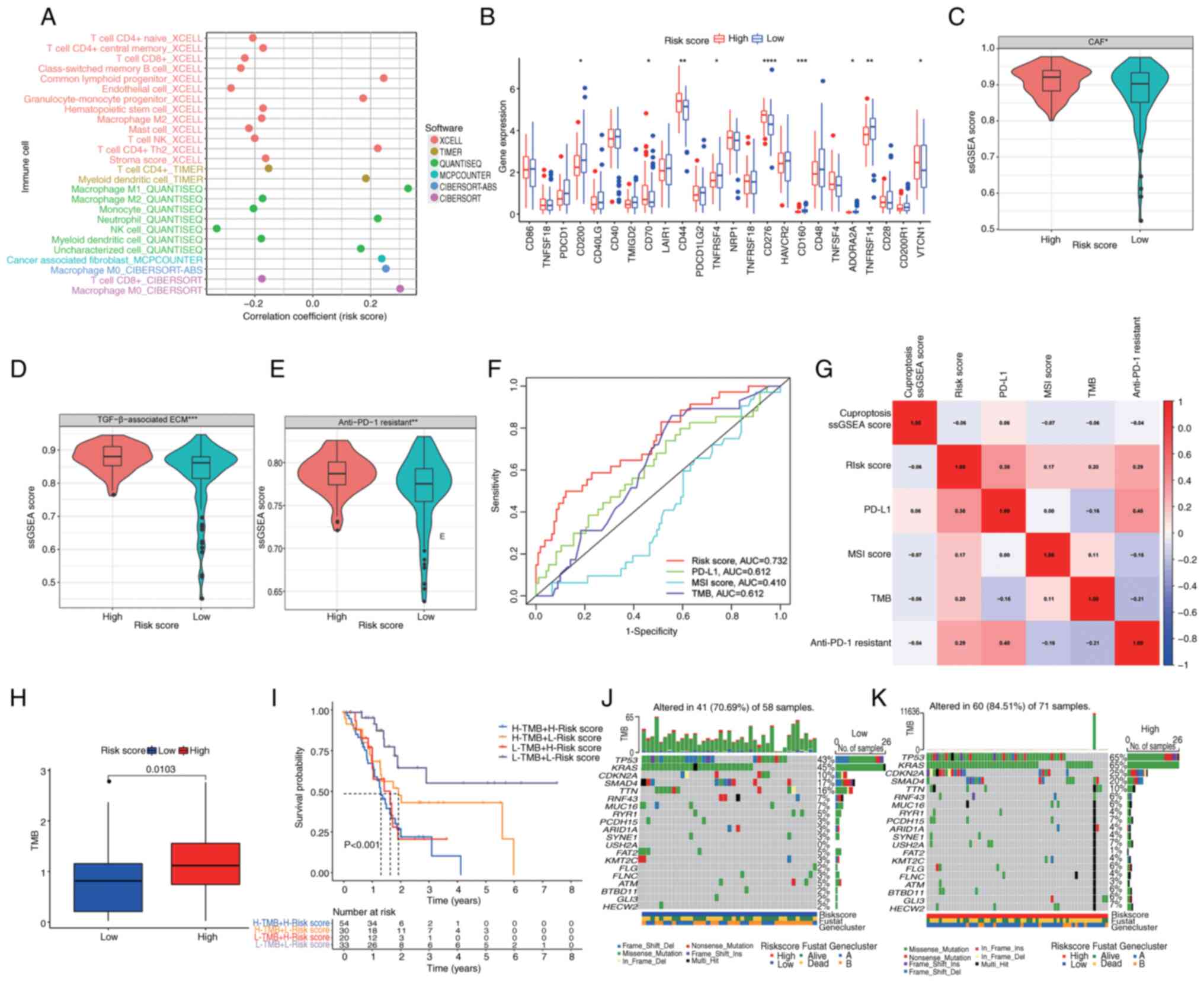
Figure 6

Association of immune status and
immunotherapy with the cuproptosis-related signature in pancreatic
cancer. (A) Correlation of immune infiltration with risk score. (B)
Boxplots of immune checkpoint gene expression in distinct risk
score groups. Boxplots indicating ssGSEA score of (C) CAFs, (D)
TGF-β-associated ECM and (E) anti-PD-1 immunotherapy response in
different risk score groups. (F) Time-dependent receiver operating
characteristic curves depicting the predictive precision of risk
score and existing biomarkers (PD-L1, MSI score and TMB) for
evaluating the efficacy of immunotherapy. (G) Correlation analysis
between risk score, cuproptosis ssGSEA score, PD-L1, MSI score, TMB
and anti-PD-1 immunotherapy response. (H) TMB in different risk
score groups. (I) Survival analysis among four patient groups
stratified by both TMB and risk score. (J and K) Waterfall plot of
somatic mutation features established with low and high-risk
scores. Each column represents an individual patient. The upper bar
plot indicates TMB, the number on the right indicates the mutation
frequency in each gene. The right bar plot demonstrates the
proportion of each variant type. ****P<0.0001, ***P<0.001,
**P<0.01, *P<0.05, analyzed using the Mann-Whitney U test.
MSI, microsatellite instability; TMB, tumor mutational burden;
ssGSEA, single-sample gene set enrichment analysis; CAFs,
cancer-associated fibroblasts; ECM, extracellular matrix; PD-1,
programmed cell death protein-1; PD-L1, programmed cell death
ligand-1; AUC, area under the curve.

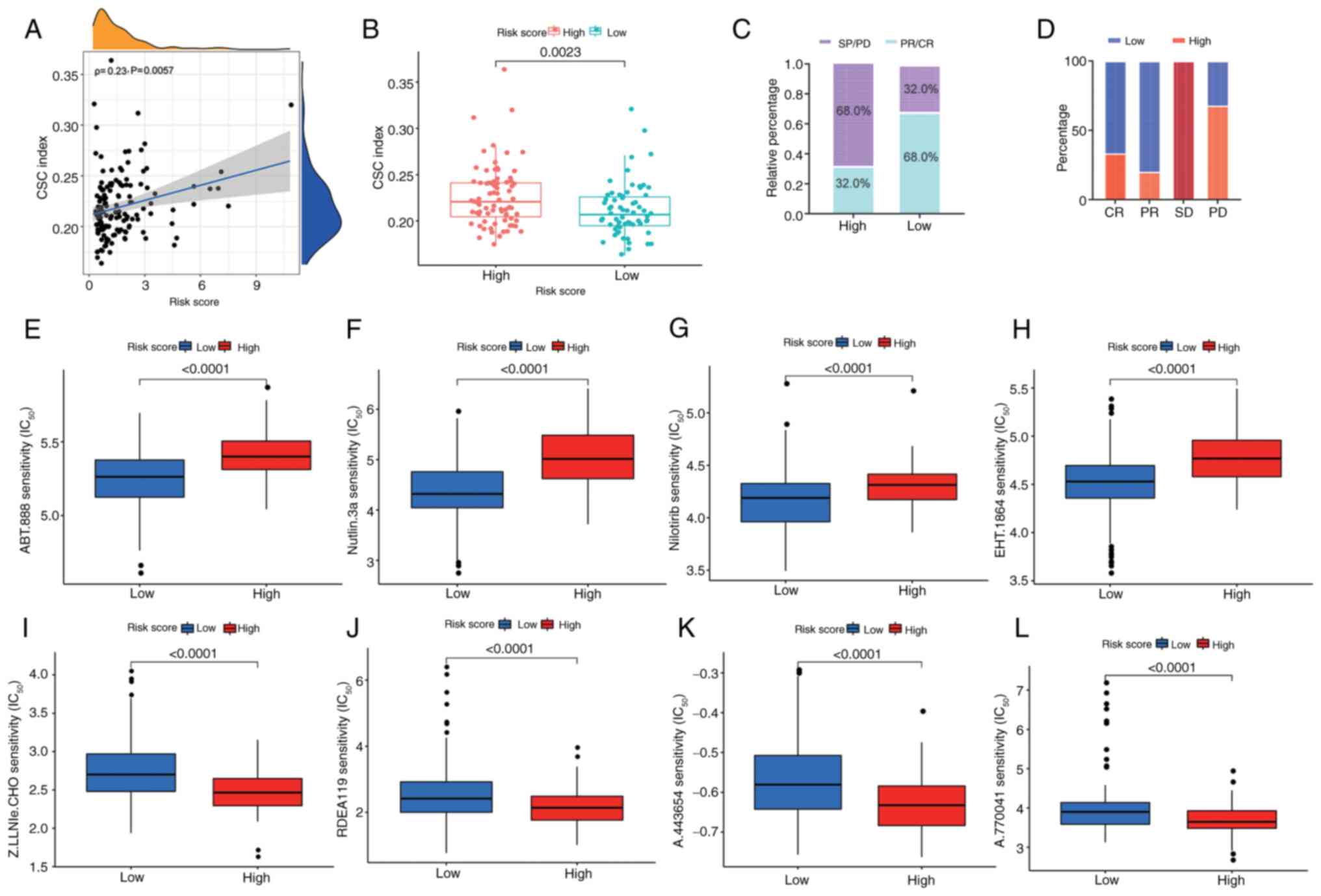
Figure 7

Associations between
cuproptosis-related signature and CSC score, clinical outcomes and
drug susceptibility in PC. (A) Spearman's rank correlation analysis
of risk score and CSC index. (B) CSC score in distinct risk score
groups. (C) Ratio of worse outcomes after surgery was notably
elevated in the higher risk score group. (D) Proportion of clinical
outcomes in patients with PC with high- and low-risk scores after
surgery. Top four chemotherapeutic drugs, (E) ABT-888, (F)
nutlin-3a, (G) nilotinib and (H) EHT 1864 exhibiting sensitivity
for patients with PC with a low-risk score. Top four
chemotherapeutic drugs (I) Z-LLNle-CHO, (J) RDEA119, (K) A-443654
and (L) A-770041 exhibiting sensitivity for patients with PC with a
high-risk score. Data were analyzed using the Mann-Whitney U test.
CSC, cancer stem cell; PC, pancreatic cancer; SD, stable disease;
PD, progressive disease; CR, complete response; PR, partial
response; IC50, half maximal inhibitory
concentration.
View References

1 

Siegel RL, Giaquinto AN and Jemal A: Cancer statistics, 2024. CA Cancer J Clin. 74:12–49. 2024.PubMed/NCBI

2 

Stoop TF, Javed AA, Oba A, Koerkamp BG, Seufferlein T, Wilmink JW and Besselink MG: Pancreatic cancer. Lancet. 405:1182–1202. 2025. View Article : Google Scholar : PubMed/NCBI

3 

Cai J, Chen H, Lu M, Zhang Y, Lu B, You L, Zhang T, Dai M and Zhao Y: Advances in the epidemiology of pancreatic cancer: Trends, risk factors, screening, and prognosis. Cancer Lett. 520:1–11. 2021. View Article : Google Scholar : PubMed/NCBI

4 

Bergman PJ: Cancer immunotherapy. Vet Clin North Am Small Anim Pract. 54:441–468. 2024. View Article : Google Scholar : PubMed/NCBI

5 

Yang K, Halima A and Chan TA: Antigen presentation in cancer-mechanisms and clinical implications for immunotherapy. Nat Rev Clin Oncol. 20:604–623. 2023. View Article : Google Scholar : PubMed/NCBI

6 

Bednar F and Pasca di Magliano M: Context-dependent immune responses explain pancreatic cancer immunoresistance. Cancer Cell. 37:261–263. 2020. View Article : Google Scholar : PubMed/NCBI

7 

Farhangnia P, Khorramdelazad H, Nickho H and Delbandi AA: Current and future immunotherapeutic approaches in pancreatic cancer treatment. J Hematol Oncol. 17:402024. View Article : Google Scholar : PubMed/NCBI

8 

Fan JQ, Wang MF, Chen HL, Shang D, Das JK and Song J: Current advances and outlooks in immunotherapy for pancreatic ductal adenocarcinoma. Mol Cancer. 19:322020. View Article : Google Scholar : PubMed/NCBI

9 

Gibellini L and Moro L: Programmed cell death in health and disease. Cells. 10:17652021. View Article : Google Scholar : PubMed/NCBI

10 

Tong X, Tang R, Xiao M, Xu J, Wang W, Zhang B, Liu J, Yu X and Shi S: Targeting cell death pathways for cancer therapy: Recent developments in necroptosis, pyroptosis, ferroptosis, and cuproptosis research. J Hematol Oncol. 15:1742022. View Article : Google Scholar : PubMed/NCBI

11 

Liu Y, Fleishman JS, Wang H and Huo L: Pharmacologically targeting ferroptosis and cuproptosis in neuroblastoma. Mol Neurobiol. 62:3863–3876. 2025. View Article : Google Scholar : PubMed/NCBI

12 

Tsang T, Davis CI and Brady DC: Copper biology. Curr Biol. 31:R421–R427. 2021. View Article : Google Scholar : PubMed/NCBI

13 

Chen L, Min J and Wang F: Copper homeostasis and cuproptosis in health and disease. Signal Transduct Target Ther. 7:3782022. View Article : Google Scholar : PubMed/NCBI

14 

Kahlson MA and Dixon SJ: Copper-induced cell death. Science. 375:1231–1232. 2022. View Article : Google Scholar : PubMed/NCBI

15 

Tsvetkov P, Coy S, Petrova B, Dreishpoon M, Verma A, Abdusamad M, Rossen J, Joesch-Cohen L, Humeidi R, Spangler RD, et al: Copper induces cell death by targeting lipoylated TCA cycle proteins. Science. 375:1254–1261. 2022. View Article : Google Scholar : PubMed/NCBI

16 

Tang D, Chen X and Kroemer G: Cuproptosis: A copper-triggered modality of mitochondrial cell death. Cell Res. 32:417–418. 2022. View Article : Google Scholar : PubMed/NCBI

17 

Sun L, Zhang Y, Yang B, Sun S, Zhang P, Luo Z, Feng T, Cui Z, Zhu T, Li Y, et al: Lactylation of METTL16 promotes cuproptosis via m6A-modification on FDX1 mRNA in gastric cancer. Nat Commun. 14:65232023. View Article : Google Scholar : PubMed/NCBI

18 

Jiang Y, Huo Z, Qi X, Zuo T and Wu Z: Copper-induced tumor cell death mechanisms and antitumor theragnostic applications of copper complexes. Nanomedicine (Lond). 17:303–324. 2022. View Article : Google Scholar : PubMed/NCBI

19 

Tang D, Kroemer G and Kang R: Targeting cuproplasia and cuproptosis in cancer. Nat Rev Clin Oncol. 21:370–388. 2024. View Article : Google Scholar : PubMed/NCBI

20 

Liu WQ, Lin WR, Yan L, Xu WH and Yang J: Copper homeostasis and cuproptosis in cancer immunity and therapy. Immunol Rev. 321:211–227. 2024. View Article : Google Scholar : PubMed/NCBI

21 

Xie J, Yang Y, Gao Y and He J: Cuproptosis: Mechanisms and links with cancers. Mol Cancer. 22:462023. View Article : Google Scholar : PubMed/NCBI

22 

Tarin M, Babaie M, Eshghi H, Matin MM and Saljooghi AS: Elesclomol, a copper-transporting therapeutic agent targeting mitochondria: From discovery to its novel applications. J Transl Med. 21:7452023. View Article : Google Scholar : PubMed/NCBI

23 

O'Day S, Gonzalez R, Lawson D, Weber R, Hutchins L, Anderson C, Haddad J, Kong S, Williams A and Jacobson E: Phase II, randomized, controlled, double-blinded trial of weekly elesclomol plus paclitaxel versus paclitaxel alone for stage IV metastatic melanoma. J Clin Oncol. 27:5452–5458. 2009. View Article : Google Scholar : PubMed/NCBI

24 

Qin Y, Liu Y, Xiang X, Long X, Chen Z, Huang X, Yang J and Li W: Cuproptosis correlates with immunosuppressive tumor microenvironment based on pan-cancer multiomics and single-cell sequencing analysis. Mol Cancer. 22:592023. View Article : Google Scholar : PubMed/NCBI

25 

Gadiyar V, Lahey KC, Calianese D, Devoe C, Mehta D, Bono K, Desind S, Davra V and Birge RB: Cell death in the tumor microenvironment: Implications for cancer immunotherapy. Cells. 9:22072020. View Article : Google Scholar : PubMed/NCBI

26 

Gao L, Shay C and Teng Y: Cell death shapes cancer immunity: Spotlighting PANoptosis. J Exp Clin Cancer Res. 43:1682024. View Article : Google Scholar : PubMed/NCBI

27 

Hänggi K and Ruffell B: Cell death, therapeutics, and the immune response in cancer. Trends Cancer. 9:381–396. 2023. View Article : Google Scholar : PubMed/NCBI

28 

Zhou Q, Meng Y, Li D, Yao L, Le J, Liu Y, Sun Y, Zeng F, Chen X and Deng G: Ferroptosis in cancer: From molecular mechanisms to therapeutic strategies. Signal Transduct Target Ther. 9:552024. View Article : Google Scholar : PubMed/NCBI

29 

Du T, Gao J, Li P, Wang Y, Qi Q, Liu X, Li J, Wang C and Du L: Pyroptosis, metabolism, and tumor immune microenvironment. Clin Transl Med. 11:e4922021. View Article : Google Scholar : PubMed/NCBI

30 

Han X, Zhang WH, Wang WQ, Yu XJ and Liu L: Cancer-associated fibroblasts in therapeutic resistance of pancreatic cancer: Present situation, predicaments, and perspectives. Biochim Biophys Acta Rev Cancer. 1874:1884442020. View Article : Google Scholar : PubMed/NCBI

31 

Storrs EP, Chati P, Usmani A, Sloan I, Krasnick BA, Babbra R, Harris PK, Sachs CM, Qaium F, Chatterjee D, et al: High-dimensional deconstruction of pancreatic cancer identifies tumor microenvironmental and developmental stemness features that predict survival. NPJ Precis Oncol. 7:1052023. View Article : Google Scholar : PubMed/NCBI

32 

Wang W, Lu K, Jiang X, Wei Q, Zhu L, Wang X, Jin H and Feng L: Ferroptosis inducers enhanced cuproptosis induced by copper ionophores in primary liver cancer. J Exp Clin Cancer Res. 42:1422023. View Article : Google Scholar : PubMed/NCBI

33 

Reggiardo RE, Maroli SV, Peddu V, Davidson AE, Hill A, LaMontagne E, Aaraj YA, Jain M, Chan SY and Kim DH: Profiling of repetitive RNA sequences in the blood plasma of patients with cancer. Nat Biomed Eng. 7:1627–1635. 2023. View Article : Google Scholar : PubMed/NCBI

34 

Song CX, Yin S, Ma L, Wheeler A, Chen Y, Zhang Y, Liu B, Xiong J, Zhang W, Hu J, et al: 5-Hydroxymethylcytosine signatures in cell-free DNA provide information about tumor types and stages. Cell Res. 27:1231–1242. 2017. View Article : Google Scholar : PubMed/NCBI

35 

Digre A and Lindskog C: The human protein atlas-spatial localization of the human proteome in health and disease. Protein Sci. 30:218–233. 2021. View Article : Google Scholar : PubMed/NCBI

36 

Sabah A, Tiun S, Sani NS, Ayob M and Taha AY: Enhancing web search result clustering model based on multiview multirepresentation consensus cluster ensemble (mmcc) approach. PLoS One. 16:e02452642021. View Article : Google Scholar : PubMed/NCBI

37 

Seiler M, Huang CC, Szalma S and Bhanot G: ConsensusCluster: A software tool for unsupervised cluster discovery in numerical data. OMICS. 14:109–113. 2010. View Article : Google Scholar : PubMed/NCBI

38 

Hänzelmann S, Castelo R and Guinney J: GSVA: Gene set variation analysis for microarray and RNA-seq data. BMC. 14:72013.

39 

Wu D, Liu Y, Liu J, Ma L and Tong X: Myeloid cell differentiation-related gene signature for predicting clinical outcome, immune microenvironment, and treatment response in lung adenocarcinoma. Sci Rep. 14:174602024. View Article : Google Scholar : PubMed/NCBI

40 

Huang L, Wu C, Xu D, Cui Y and Tang J: Screening of important factors in the early sepsis stage based on the evaluation of ssGSEA algorithm and ceRNA regulatory network. Evol Bioinform Online. 17:117693432110584632021. View Article : Google Scholar : PubMed/NCBI

41 

Ritchie ME, Phipson B, Wu D, Hu Y, Law CW, Shi W and Smyth GK: limma powers differential expression analyses for RNA-sequencing and microarray studies. Nucleic Acids Res. 43:e472015. View Article : Google Scholar : PubMed/NCBI

42 

Livak KJ and Schmittgen TD: Analysis of relative gene expression data using real-time quantitative PCR and the 2(−Delta Delta C(T)) method. Methods. 25:402–408. 2001. View Article : Google Scholar : PubMed/NCBI

43 

Mayakonda A, Lin DC, Assenov Y, Plass C and Koeffler HP: Maftools: Efficient and comprehensive analysis of somatic variants in cancer. Genome Res. 28:1747–1756. 2018. View Article : Google Scholar : PubMed/NCBI

44 

Geeleher P, Cox N and Huang RS: pRRophetic: An R package for prediction of clinical chemotherapeutic response from tumor gene expression levels. PLoS One. 9:e1074682014. View Article : Google Scholar : PubMed/NCBI

45 

Ringnér M: What is principal component analysis? Nat Biotechnol. 26:303–304. 2008. View Article : Google Scholar : PubMed/NCBI

46 

Sherman MH and Beatty GL: Tumor microenvironment in pancreatic cancer pathogenesis and therapeutic resistance. Annu Rev Pathol. 18:123–148. 2023. View Article : Google Scholar : PubMed/NCBI

47 

Moffitt RA, Marayati R, Flate EL, Volmar KE, Loeza SG, Hoadley KA, Rashid NU, Williams LA, Eaton SC, Chung AH, et al: Virtual microdissection identifies distinct tumor- and stroma-specific subtypes of pancreatic ductal adenocarcinoma. Nat Genet. 47:1168–1178. 2015. View Article : Google Scholar : PubMed/NCBI

48 

Chakravarthy A, Khan L, Bensler NP, Bose P and De Carvalho DD: TGF-β-associated extracellular matrix genes link cancer-associated fibroblasts to immune evasion and immunotherapy failure. Nat Commun. 9:46922018. View Article : Google Scholar : PubMed/NCBI

49 

Collisson EA, Sadanandam A, Olson P, Gibb WJ, Truitt M, Gu S, Cooc J, Weinkle J, Kim GE, Jakkula L, et al: Subtypes of pancreatic ductal adenocarcinoma and their differing responses to therapy. Nat Med. 17:500–503. 2011. View Article : Google Scholar : PubMed/NCBI

50 

Samstein RM, Lee CH, Shoushtari AN, Hellmann MD, Shen R, Janjigian YY, Barron DA, Zehir A, Jordan EJ, Omuro A, et al: Tumor mutational load predicts survival after immunotherapy across multiple cancer types. Nat Genet. 51:202–206. 2019. View Article : Google Scholar : PubMed/NCBI

51 

Kang K, Xie F, Mao J, Bai Y and Wang X: Significance of tumor mutation burden in immune infiltration and prognosis in cutaneous melanoma. Front Oncol. 10:5731412020. View Article : Google Scholar : PubMed/NCBI

52 

McNamara MG, Jacobs T, Lamarca A, Hubner RA, Valle JW and Amir E: Impact of high tumor mutational burden in solid tumors and challenges for biomarker application. Cancer Treat Rev. 89:1020842020. View Article : Google Scholar : PubMed/NCBI

53 

Hayashi A, Hong J and Iacobuzio-Donahue CA: The pancreatic cancer genome revisited. Nat Rev Gastroenterol Hepatol. 18:469–481. 2021. View Article : Google Scholar : PubMed/NCBI

54 

Leng S, Huang W, Chen Y, Yang Y, Feng D, Liu W, Gao T, Ren Y, Huo M, Zhang J, et al: SIRT1 coordinates with the CRL4B complex to regulate pancreatic cancer stem cells to promote tumorigenesis. Cell Death Differ. 28:3329–3343. 2021. View Article : Google Scholar : PubMed/NCBI

55 

Li C, Heidt DG, Dalerba P, Burant CF, Zhang L, Adsay V, Wicha M, Clarke MF and Simeone DM: Identification of pancreatic cancer stem cells. Cancer Res. 67:1030–1037. 2007. View Article : Google Scholar : PubMed/NCBI

56 

Marengo A, Forciniti S, Dando I, Dalla Pozza E, Stella B, Tsapis N, Yagoubi N, Fanelli G, Fattal E, Heeschen C, et al: Pancreatic cancer stem cell proliferation is strongly inhibited by diethyldithiocarbamate-copper complex loaded into hyaluronic acid decorated liposomes. Biochim Biophys Acta Gen Subj. 1863:61–72. 2019. View Article : Google Scholar : PubMed/NCBI

57 

Babak MV and Ahn D: Modulation of intracellular copper levels as the mechanism of action of anticancer copper complexes: Clinical relevance. Biomedicines. 9:8522021. View Article : Google Scholar : PubMed/NCBI

58 

Helgadottir H, Ghiorzo P, van Doorn R, Puig S, Levin M, Kefford R, Lauss M, Queirolo P, Pastorino L, Kapiteijn E, et al: Efficacy of novel immunotherapy regimens in patients with metastatic melanoma with germline CDKN2A mutations. J Med Genet. 57:316–321. 2020. View Article : Google Scholar : PubMed/NCBI

59 

Wang P, Guo W, Liu S, Li S, Li J, Ding B, Yin F, Yang Y, Li X, Cao P, et al: Novel simplePt@PCN-Cu-induced cuproptosis amplifies αPD-L1 immunotherapy in pancreatic ductal adenocarcinoma through mitochondrial HK2-mediated PD-L1 upregulation. J Exp Clin Cancer Res. 44:1492025. View Article : Google Scholar : PubMed/NCBI

60 

Gao S, Ge H, Gao L, Gao Y, Tang S, Li Y, Yuan Z and Chen W: Silk Fibroin nanoparticles for enhanced cuproptosis and immunotherapy in pancreatic cancer treatment. Adv Sci (Weinh). 12:e24176762025. View Article : Google Scholar : PubMed/NCBI

61 

Zhang C, Zeng Y, Guo X, Shen H, Zhang J, Wang K, Ji M and Huang S: Pan-cancer analyses confirmed the cuproptosis-related gene FDX1 as an immunotherapy predictor and prognostic biomarker. Front Genet. 13:9237372022. View Article : Google Scholar : PubMed/NCBI

62 

Costa A, Kieffer Y, Scholer-Dahirel A, Pelon F, Bourachot B, Cardon M, Sirven P, Magagna I, Fuhrmann L, Bernard C, et al: Fibroblast heterogeneity and immunosuppressive environment in human breast cancer. Cancer Cell. 33:463–479.e10. 2018. View Article : Google Scholar : PubMed/NCBI

63 

Huang H, Wang Z, Zhang Y, Pradhan RN, Ganguly D, Chandra R, Murimwa G, Wright S, Gu X, Maddipati R, et al: Mesothelial cell-derived antigen-presenting cancer-associated fibroblasts induce expansion of regulatory T cells in pancreatic cancer. Cancer Cell. 40:656–673.e7. 2022. View Article : Google Scholar : PubMed/NCBI

64 

Derynck R, Turley SJ and Akhurst RJ: TGFβ biology in cancer progression and immunotherapy. Nat Rev Clin Oncol. 18:9–34. 2021. View Article : Google Scholar : PubMed/NCBI

Related Articles

  • Abstract
  • View
  • Download
  • Twitter
Copy and paste a formatted citation
Spandidos Publications style
Ge W, Wang Y, Shentu D, Yue M and Wang Y: A novel defined cuproptosis‑related signature score to predict prognosis and immunotherapy efficacy in pancreatic cancer. Oncol Lett 30: 591, 2025.
APA
Ge, W., Wang, Y., Shentu, D., Yue, M., & Wang, Y. (2025). A novel defined cuproptosis‑related signature score to predict prognosis and immunotherapy efficacy in pancreatic cancer. Oncology Letters, 30, 591. https://doi.org/10.3892/ol.2025.15337
MLA
Ge, W., Wang, Y., Shentu, D., Yue, M., Wang, Y."A novel defined cuproptosis‑related signature score to predict prognosis and immunotherapy efficacy in pancreatic cancer". Oncology Letters 30.6 (2025): 591.
Chicago
Ge, W., Wang, Y., Shentu, D., Yue, M., Wang, Y."A novel defined cuproptosis‑related signature score to predict prognosis and immunotherapy efficacy in pancreatic cancer". Oncology Letters 30, no. 6 (2025): 591. https://doi.org/10.3892/ol.2025.15337
Copy and paste a formatted citation
x
Spandidos Publications style
Ge W, Wang Y, Shentu D, Yue M and Wang Y: A novel defined cuproptosis‑related signature score to predict prognosis and immunotherapy efficacy in pancreatic cancer. Oncol Lett 30: 591, 2025.
APA
Ge, W., Wang, Y., Shentu, D., Yue, M., & Wang, Y. (2025). A novel defined cuproptosis‑related signature score to predict prognosis and immunotherapy efficacy in pancreatic cancer. Oncology Letters, 30, 591. https://doi.org/10.3892/ol.2025.15337
MLA
Ge, W., Wang, Y., Shentu, D., Yue, M., Wang, Y."A novel defined cuproptosis‑related signature score to predict prognosis and immunotherapy efficacy in pancreatic cancer". Oncology Letters 30.6 (2025): 591.
Chicago
Ge, W., Wang, Y., Shentu, D., Yue, M., Wang, Y."A novel defined cuproptosis‑related signature score to predict prognosis and immunotherapy efficacy in pancreatic cancer". Oncology Letters 30, no. 6 (2025): 591. https://doi.org/10.3892/ol.2025.15337
Follow us
  • Twitter
  • LinkedIn
  • Facebook
About
  • Spandidos Publications
  • Careers
  • Cookie Policy
  • Privacy Policy
How can we help?
  • Help
  • Live Chat
  • Contact
  • Email to our Support Team