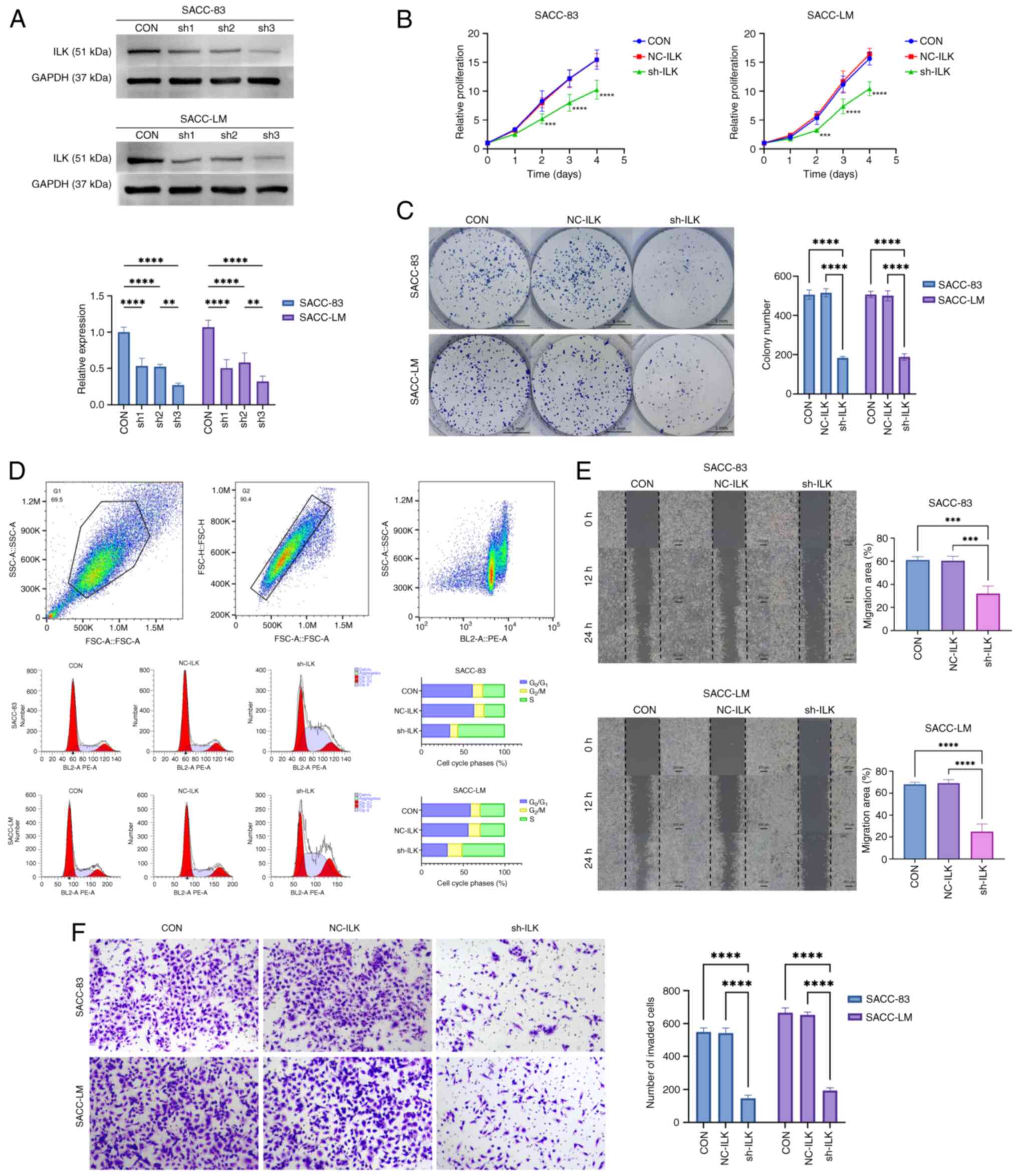
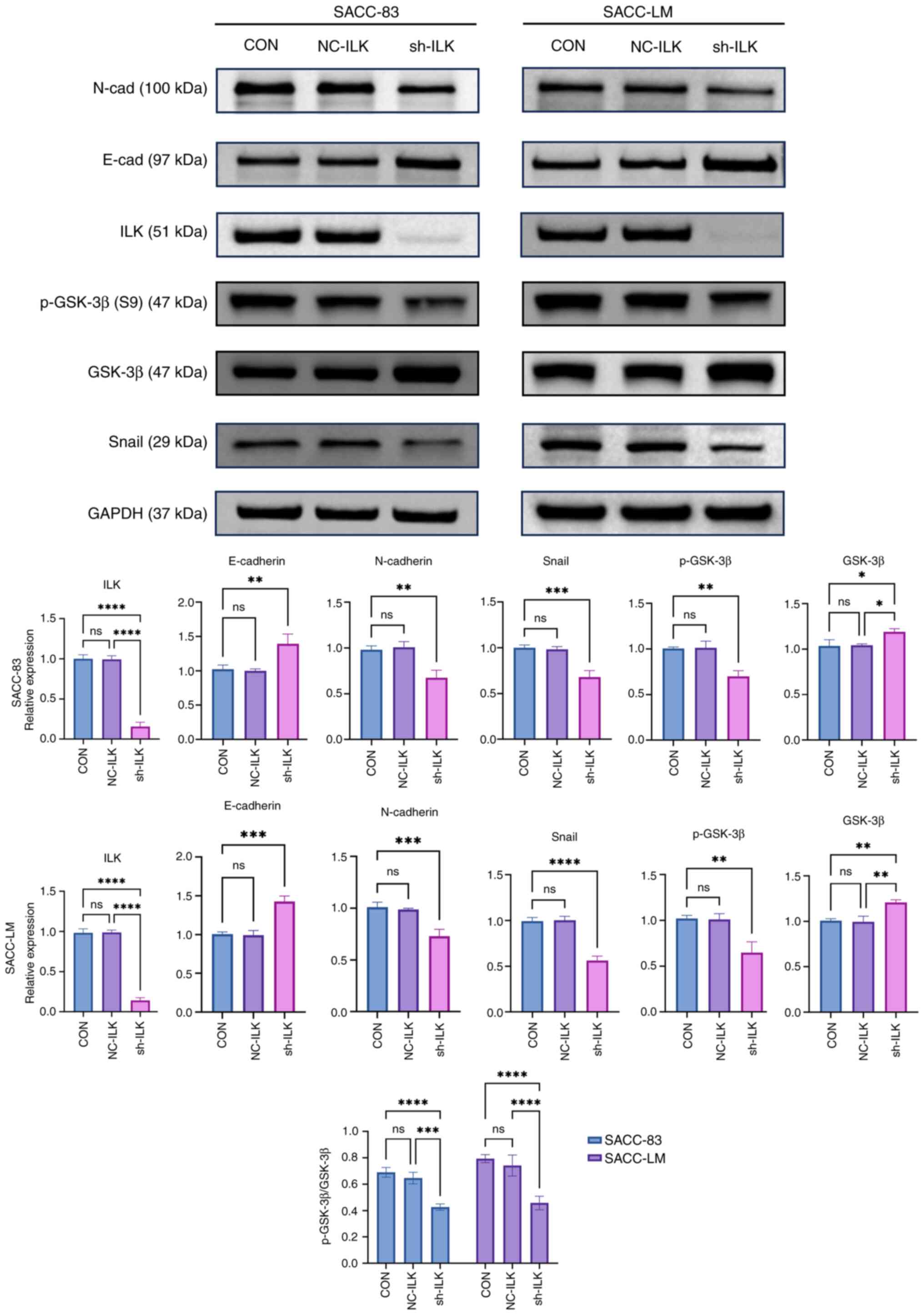
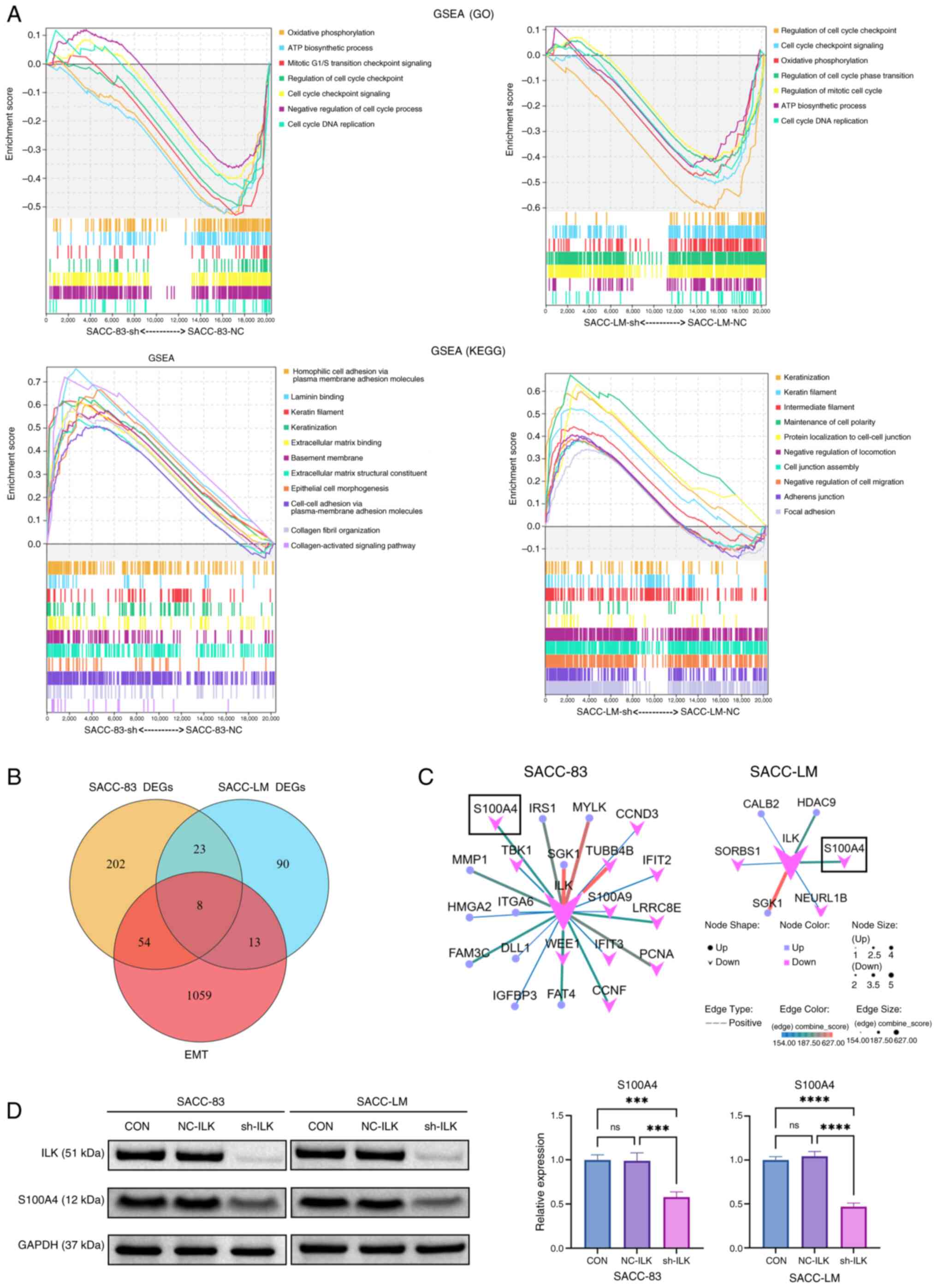
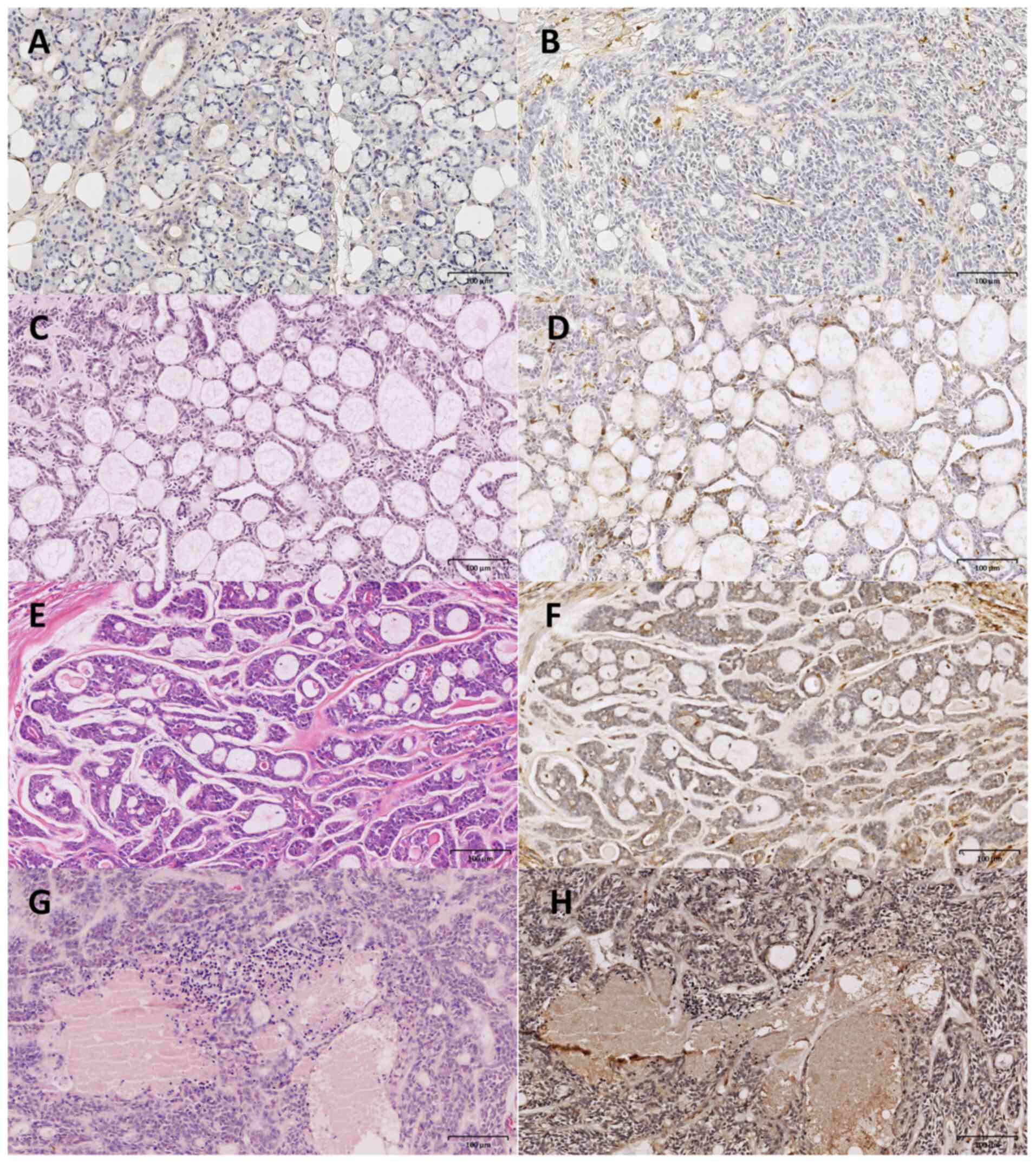
|
1
|
van der Wal JE, Becking AG, Snow GB and
van der Waal I: Distant metastases of adenoid cystic carcinoma of
the salivary glands and the value of diagnostic examinations during
follow-up. Head Neck. 24:779–783. 2002. View Article : Google Scholar : PubMed/NCBI
|
|
2
|
da Cruz Perez DE, de Abreu Alves F, Nobuko
Nishimoto I, de Almeida OP and Kowalski LP: Prognostic factors in
head and neck adenoid cystic carcinoma. Oral Oncol. 42:139–146.
2006. View Article : Google Scholar
|
|
3
|
Gao M, Hao Y, Huang MX, Ma DQ, Luo HY, Gao
Y, Peng X and Yu GY: Clinicopathological study of distant
metastases of salivary adenoid cystic carcinoma. Int J Oral
Maxillofac Surg. 42:923–928. 2013. View Article : Google Scholar : PubMed/NCBI
|
|
4
|
Kokemueller H, Eckardt A, Brachvogel P and
Hausamen JE: Adenoid cystic carcinoma of the head and neck-a 20
year experience. Int J Oral Maxillofac Surg. 33:25–31. 2004.
View Article : Google Scholar : PubMed/NCBI
|
|
5
|
Avery CM, Moody AB, McKinna FE, Taylor J,
Henk JM and Langdon JD: Combined treatment of adenoid cystic
carcinoma of the salivary glands. Int J Oral Maxillofac Surg.
29:277–279. 2000. View Article : Google Scholar : PubMed/NCBI
|
|
6
|
Brabletz T, Kalluri R, Nieto MA and
Weinberg RA: EMT in cancer. Nat Rev Cancer. 18:128–134. 2018.
View Article : Google Scholar : PubMed/NCBI
|
|
7
|
Liu Y, Chen L, Jiang D, Luan L, Huang J,
Hou Y and Xu C: HER2 promotes epithelial-mesenchymal transition
through regulating osteopontin in gastric cancer. Pathol Res Pract.
227:1536432021. View Article : Google Scholar
|
|
8
|
Dongre A and Weinberg RA: New insights
into the mechanisms of epithelial-mesenchymal transition and
implications for cancer. Nat Rev Mol Cell Biol. 20:69–84. 2019.
View Article : Google Scholar
|
|
9
|
Naves MA, Requião-Moura LR, Soares MF,
Silva-Júnior JA, Mastroianni-Kirsztajn G and Teixeira VPC: Podocyte
Wnt/ß-catenin pathway is activated by integrin-linked kinase in
clinical and experimental focal segmental glomerulosclerosis. J
Nephrol. 25:401–409. 2012. View Article : Google Scholar
|
|
10
|
Legate KR, Montañez E, Kudlacek O and
Fässler R: ILK, PINCH and parvin: The tIPP of integrin signalling.
Nat Rev Mol Cell Biol. 7:20–31. 2006. View
Article : Google Scholar
|
|
11
|
Jia YY, Yu Y and Li HJ: POSTN promotes
proliferation and epithelial-mesenchymal transition in renal cell
carcinoma through ILK/AKT/mTOR pathway. J Cancer. 12:4183–4195.
2021. View Article : Google Scholar : PubMed/NCBI
|
|
12
|
Tsirtsaki K and Gkretsi V: The focal
adhesion protein integrin-linked kinase (ILK) as an important
player in breast cancer pathogenesis. Cell Adh Migr. 14:204–213.
2020. View Article : Google Scholar : PubMed/NCBI
|
|
13
|
Liu S, Jin Z, Cao M, Hao D, Li C, Li D and
Zhou W: Periostin regulates osteogenesis of mesenchymal stem cells
from ovariectomized rats through actions on the ILK/Akt/GSK-3β
axis. Genet Mol Biol. 44:e202004612021. View Article : Google Scholar
|
|
14
|
Akrida I, Nikou S, Gyftopoulos K, Argentou
M, Kounelis S, Zolota V, Bravou V and Papadaki H: Expression of EMT
inducers integrin-linked kinase (ILK) and ZEB1 in phyllodes breast
tumors is associated with aggressive phenotype. Histol Histopathol.
33:937–949. 2018.
|
|
15
|
Yuan Y, Xiao Y, Li Q, Liu Z, Zhang X, Qin
C, Xie J, Wang X and Xu T: In vitro and in vivo effects of short
hairpin RNA targeting integrin-linked kinase in prostate cancer
cells. Mol Med Rep. 8:419–424. 2013. View Article : Google Scholar : PubMed/NCBI
|
|
16
|
Tsoumas D, Nikou S, Giannopoulou E,
Champeris Tsaniras S, Sirinian C, Maroulis I, Taraviras S, Zolota
V, Kalofonos HP and Bravou V: ILK expression in colorectal cancer
is associated with EMT, cancer stem cell markers and
chemoresistance. Cancer Genomics Proteomics. 15:127–141.
2018.PubMed/NCBI
|
|
17
|
Zhao D, Yang K, Tang XF, Lin NN and Liu
JY: Expression of integrin-linked kinase in adenoid cystic
carcinoma of salivary glands correlates with epithelial-mesenchymal
transition markers and tumor progression. Med Oncol. 30:6192013.
View Article : Google Scholar
|
|
18
|
Dahlmann M, Kobelt D, Walther W, Mudduluru
G and Stein U: S100A4 in cancer metastasis: Wnt signaling-driven
interventions for metastasis restriction. Cancers (Basel).
8:592016. View Article : Google Scholar : PubMed/NCBI
|
|
19
|
Chow KH, Park HJ, George J, Yamamoto K,
Gallup AD, Graber JH, Chen Y, Jiang W, Steindler DA, Neilson EG, et
al: S100A4 is a biomarker and regulator of glioma stem cells that
is critical for mesenchymal transition in glioblastoma. Cancer Res.
77:5360–5373. 2017. View Article : Google Scholar : PubMed/NCBI
|
|
20
|
Bresnick AR, Weber DJ and Zimmer DB: S100
proteins in cancer. Nat Rev Cancer. 15:96–109. 2015. View Article : Google Scholar : PubMed/NCBI
|
|
21
|
Grigorian M, Andresen S, Tulchinsky E,
Kriajevska M, Carlberg C, Kruse C, Cohn M, Ambartsumian N,
Christensen A, Selivanova G and Lukanidin E: Tumor suppressor p53
protein is a new target for the metastasis-associated Mts1/S100A4
protein: Functional consequences of their interaction. J Biol Chem.
276:22699–22708. 2001. View Article : Google Scholar : PubMed/NCBI
|
|
22
|
Semov A, Moreno MJ, Onichtchenko A,
Abulrob A, Ball M, Ekiel I, Pietrzynski G, Stanimirovic D and
Alakhov V: Metastasis-associated protein S100A4 induces
angiogenesis through interaction with Annexin II and accelerated
plasmin formation. J Biol Chem. 280:20833–20841. 2005. View Article : Google Scholar : PubMed/NCBI
|
|
23
|
Pedersen KB, Nesland JM, Fodstad Ø and
Maelandsmo GM: Expression of S100A4, E-cadherin, alpha- and
beta-catenin in breast cancer biopsies. Br J Cancer. 87:1281–1286.
2002. View Article : Google Scholar : PubMed/NCBI
|
|
24
|
Zhang J, Gu Y, Liu X, Rao X, Huang G and
Ouyang Y: Clinicopathological and prognostic value of S100A4
expression in non-small cell lung cancer: A meta-analysis. Biosci
Rep. 40:BSR202017102020. View Article : Google Scholar : PubMed/NCBI
|
|
25
|
Fei F, Qu J, Zhang M, Li Y and Zhang S:
S100A4 in cancer progression and metastasis: A systematic review.
Oncotarget. 8:73219–73239. 2017. View Article : Google Scholar
|
|
26
|
Zhou W, Peng Z, Zhang C, Liu S and Zhang
Y: ILK-induced epithelial-mesenchymal transition promotes the
invasive phenotype in adenomyosis. Biochem Biophys Res Commun.
497:950–956. 2018. View Article : Google Scholar : PubMed/NCBI
|
|
27
|
Hua T, Liu S, Xin X, Cai L, Shi R, Chi S,
Feng D and Wang H: S100A4 promotes endometrial cancer progress
through epithelial-mesenchymal transition regulation. Oncol Rep.
35:3419–3426. 2016. View Article : Google Scholar : PubMed/NCBI
|
|
28
|
Szanto PA, Luna MA, Tortoledo ME and White
RA: Histologic grading of adenoid cystic carcinoma of the salivary
glands. Cancer. 54:1062–1069. 1984. View Article : Google Scholar : PubMed/NCBI
|
|
29
|
Huang SH and O'Sullivan B: Overview of the
8th edition TNM classification for head and neck cancer. Curr Treat
Options Oncol. 18:402017. View Article : Google Scholar
|
|
30
|
Wang L, Wang Y, Bian H, Pu Y and Guo C:
Molecular characteristics of homologous salivary adenoid cystic
carcinoma cell lines with different lung metastasis ability. Oncol
Rep. 30:207–212. 2013. View Article : Google Scholar : PubMed/NCBI
|
|
31
|
Chen S, Zhou Y, Chen Y and Gu J: fastp: An
ultra-fast all-in-one FASTQ preprocessor. Bioinformatics.
34:i884–i890. 2018. View Article : Google Scholar : PubMed/NCBI
|
|
32
|
Hirsch FR, Varella-Garcia M, Bunn PA Jr,
Di Maria MV, Veve R, Bremmes RM, Barón AE, Zeng C and Franklin WA:
Epidermal growth factor receptor in non-small-cell lung carcinomas:
Correlation between gene copy number and protein expression and
impact on prognosis. J Clin Oncol. 21:3798–3807. 2003. View Article : Google Scholar
|
|
33
|
Zhou BP, Deng J, Xia W, Xu J, Li YM,
Gunduz M and Hung MC: Dual regulation of Snail by
GSK-3beta-mediated phosphorylation in control of
epithelial-mesenchymal transition. Nat Cell Biol. 6:931–940. 2004.
View Article : Google Scholar
|
|
34
|
Vasaikar SV, Deshmukh AP, den Hollander P,
Addanki S, Kuburich NA, Kudaravalli S, Joseph R, Chang JT,
Soundararajan R and Mani SA: EMTome: A resource for pan-cancer
analysis of epithelial-mesenchymal transition genes and signatures.
Br J Cancer. 124:259–269. 2021. View Article : Google Scholar : PubMed/NCBI
|
|
35
|
de Sousa LG, Jovanovic K and Ferrarotto R:
Metastatic adenoid cystic carcinoma: Genomic landscape and emerging
treatments. Curr Treat Options Oncol. 23:1135–1150. 2022.
View Article : Google Scholar
|
|
36
|
Ayoub N, Nozhy A, Shawki A, Hassouna A,
Ibraheem D, Elmahdy M and Amin A: Management of adenoid cystic
carcinoma of the head and neck: Experience of the national cancer
institute, Egypt. Gulf J Oncolog. 1:63–69. 2022.PubMed/NCBI
|
|
37
|
Laurie SA, Ho AL, Fury MG, Sherman E and
Pfister DG: Systemic therapy in the management of metastatic or
locally recurrent adenoid cystic carcinoma of the salivary glands:
A systematic review. Lancet Oncol. 12:815–824. 2011. View Article : Google Scholar
|
|
38
|
Sangala BN, Raghunath V, Kavle P, Gupta A,
Gotmare SS and Andey VS: Evaluation of immunohistochemical
expression of E-cadherin in pleomorphic adenoma and adenoid cystic
carcinoma. J Oral Maxillofac Pathol. 26:65–71. 2022. View Article : Google Scholar
|
|
39
|
Hoch CC, Stögbauer F and Wollenberg B:
Unraveling the role of epithelial-mesenchymal transition in adenoid
cystic carcinoma of the salivary glands: A comprehensive review.
Cancers (Basel). 15:28862023. View Article : Google Scholar : PubMed/NCBI
|
|
40
|
Ambartsumian N, Klingelhöfer J and
Grigorian M: The multifaceted S100A4 protein in cancer and
inflammation. Methods Mol Biol. 1929:339–365. 2019. View Article : Google Scholar
|
|
41
|
Mishra SK, Siddique HR and Saleem M:
S100A4 calcium-binding protein is key player in tumor progression
and metastasis: Preclinical and clinical evidence. Cancer
Metastasis Rev. 31:163–172. 2012. View Article : Google Scholar : PubMed/NCBI
|
|
42
|
Shan C, Wei J, Hou R, Wu B, Yang Z, Wang
L, Lei D and Yang X: Schwann cells promote EMT and the Schwann-like
differentiation of salivary adenoid cystic carcinoma cells via the
BDNF/TrkB axis. Oncol Rep. 35:427–435. 2016. View Article : Google Scholar : PubMed/NCBI
|
|
43
|
Luo L, Liu H, Dong Z, Sun L, Peng Y and
Liu F: Small interfering RNA targeting ILK inhibits EMT in human
peritoneal mesothelial cells through phosphorylation of GSK-3β. Mol
Med Rep. 10:137–144. 2014. View Article : Google Scholar : PubMed/NCBI
|
|
44
|
Tan C, Costello P, Sanghera J, Dominguez
D, Baulida J, de Herreros AG and Dedhar S: Inhibition of integrin
linked kinase (ILK) suppresses beta-catenin-Lef/Tcf-dependent
transcription and expression of the E-cadherin repressor, snail, in
APC-/-human colon carcinoma cells. Oncogene. 20:133–140. 2001.
View Article : Google Scholar : PubMed/NCBI
|
|
45
|
Gong N, Shi L, Bing X, Li H, Hu H, Zhang
P, Yang H, Guo N, Du H, Xia M and Liu C: S100A4/TCF complex
transcription regulation drives epithelial-mesenchymal transition
in chronic sinusitis through Wnt/GSK-3β/β-catenin signaling. Front
Immunol. 13:8358882022. View Article : Google Scholar
|
|
46
|
Jian L, Zhihong W, Liuxing W and Qingxia
F: Role of S100A4 in the epithelial-mesenchymal transition of
esophageal squamous cell carcinoma and its molecular mechanism.
Zhonghua Zhong Liu Za Zhi. 37:258–265. 2015.(In Chinese).
|
|
47
|
Liang DP, Huang TQ, Li SJ and Chen ZJ:
Knockdown of S100A4 chemosensitizes human laryngeal carcinoma cells
in vitro through inhibition of Slug. Eur Rev Med Pharmacol Sci.
18:3484–3490. 2014.
|
|
48
|
Persson M, Andrén Y, Moskaluk CA, Frierson
HF Jr, Cooke SL, Futreal PA, Kling T, Nelander S, Nordkvist A,
Persson F and Stenman G: Clinically significant copy number
alterations and complex rearrangements of MYB and NFIB in head and
neck adenoid cystic carcinoma. Genes Chromosomes Cancer.
51:805–817. 2012. View Article : Google Scholar : PubMed/NCBI
|
|
49
|
Xu LH, Zhao F, Yang WW, Chen CW, Du ZH, Fu
M, Ge XY and Li SL: MYB promotes the growth and metastasis of
salivary adenoid cystic carcinoma. Int J Oncol. 54:1579–1590.
2019.
|
|
50
|
Fu M, Gao Q, Xiao M, Li RF, Sun XY, Li SL,
Peng X and Ge XY: Extracellular vesicles containing circMYBL1
induce CD44 in adenoid cystic carcinoma cells and pulmonary
endothelial cells to promote lung metastasis. Cancer Res.
84:2484–2500. 2024. View Article : Google Scholar : PubMed/NCBI
|
|
51
|
Wang W, Matsukura M, Fujii I, Ito K, Zhao
JE, Shinohara M, Wang YQ and Zhang XM: Inhibition of high
glucose-induced VEGF and ICAM-1 expression in human retinal pigment
epithelium cells by targeting ILK with small interference RNA. Mol
Biol Rep. 39:613–620. 2012. View Article : Google Scholar : PubMed/NCBI
|
|
52
|
Qian WJ, Yan JS, Gang XY, Xu L, Shi S, Li
X, Na FJ, Cai LT, Li HM and Zhao MF: Intercellular adhesion
molecule-1 (ICAM-1): From molecular functions to clinical
applications in cancer investigation. Biochim Biophys Acta Rev
Cancer. 1879:1891872024. View Article : Google Scholar : PubMed/NCBI
|