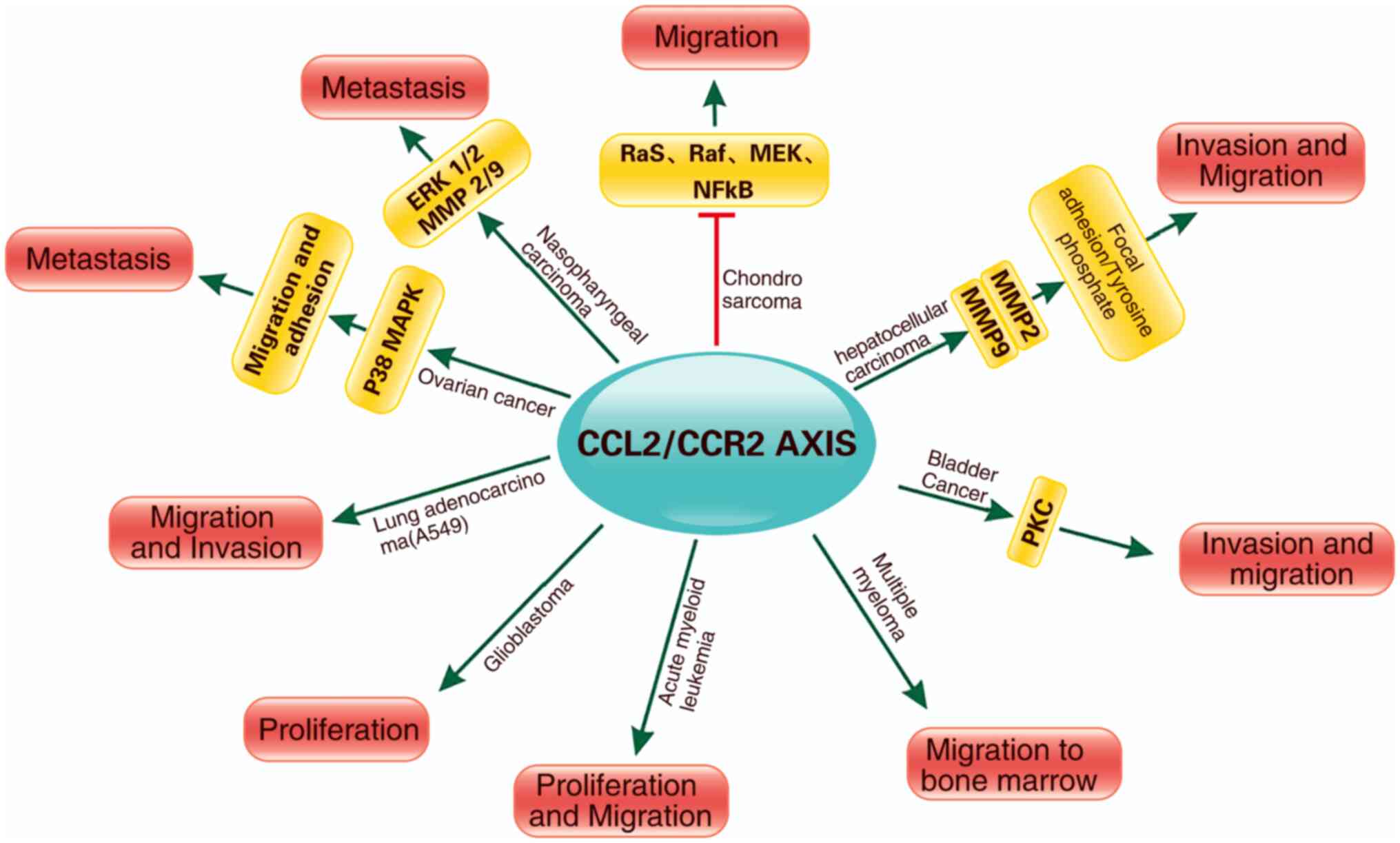
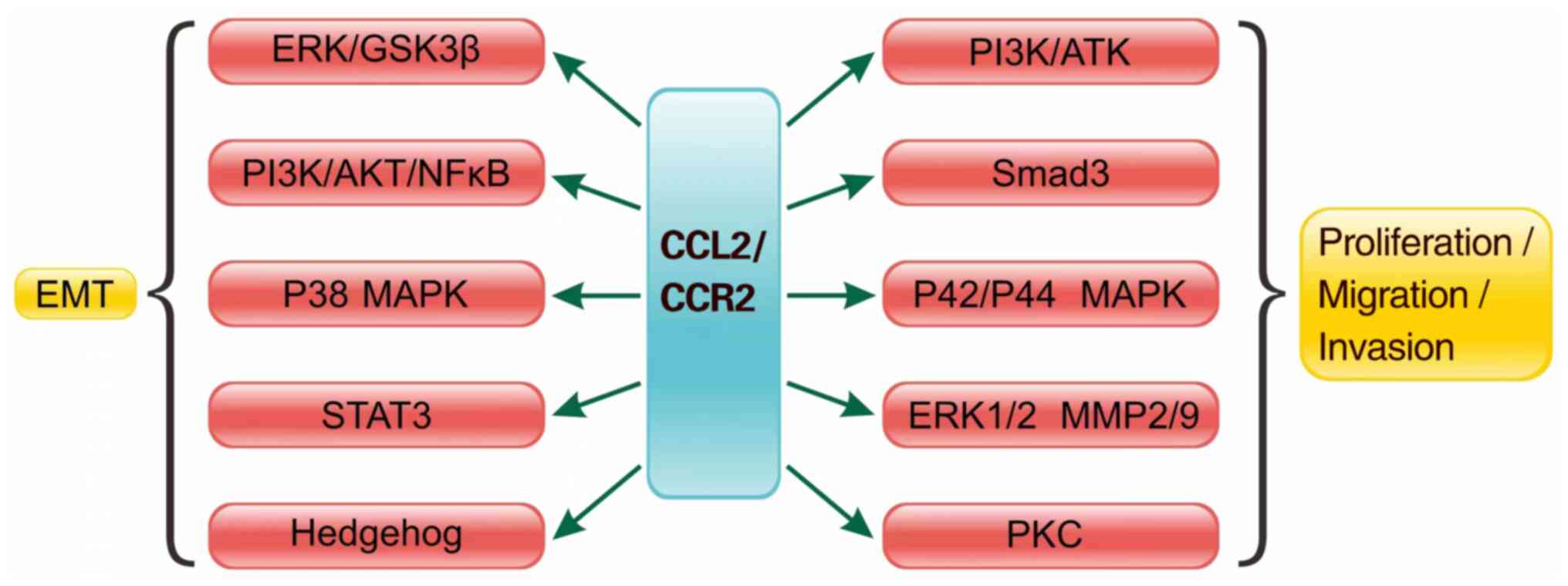
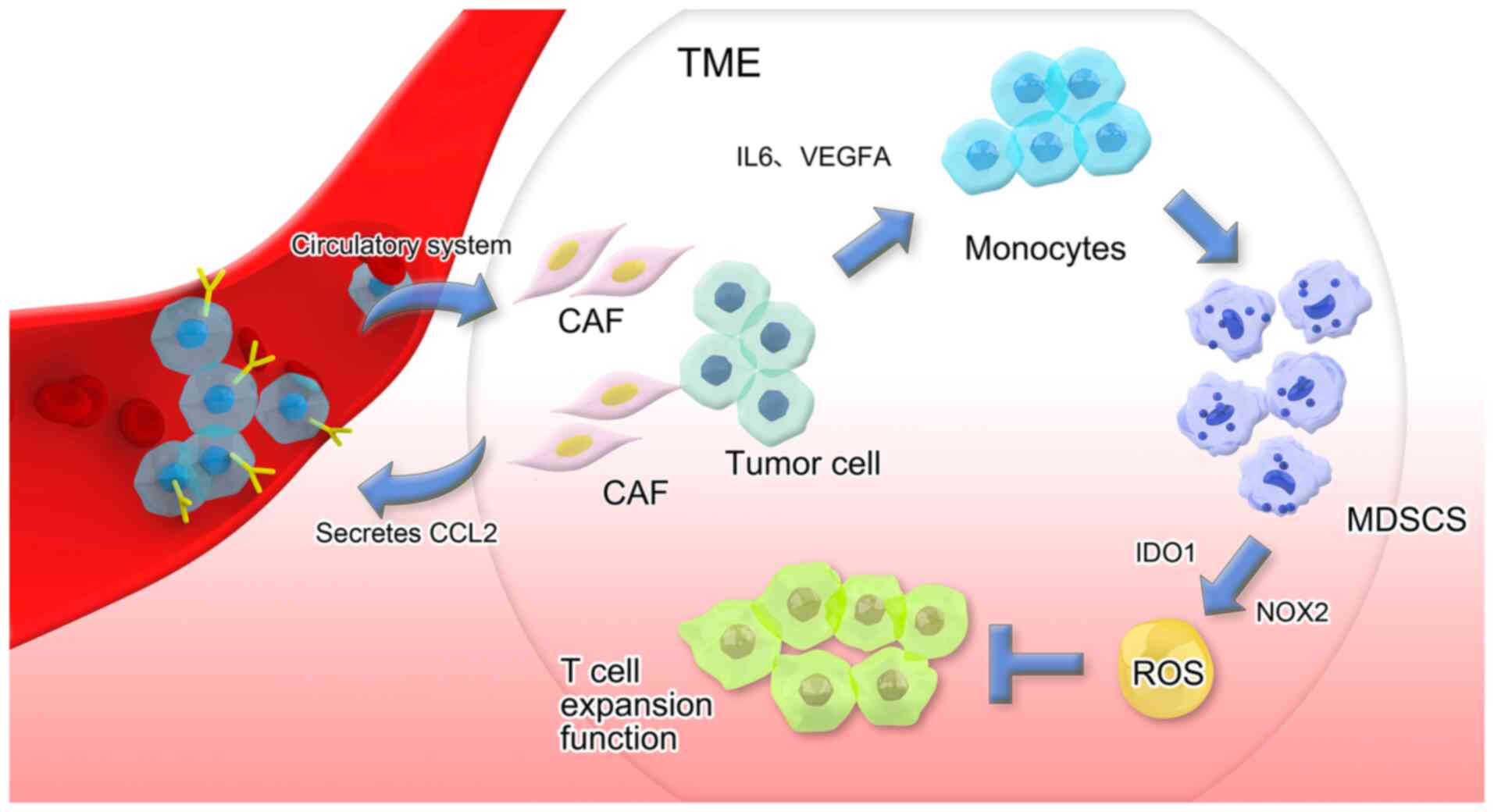
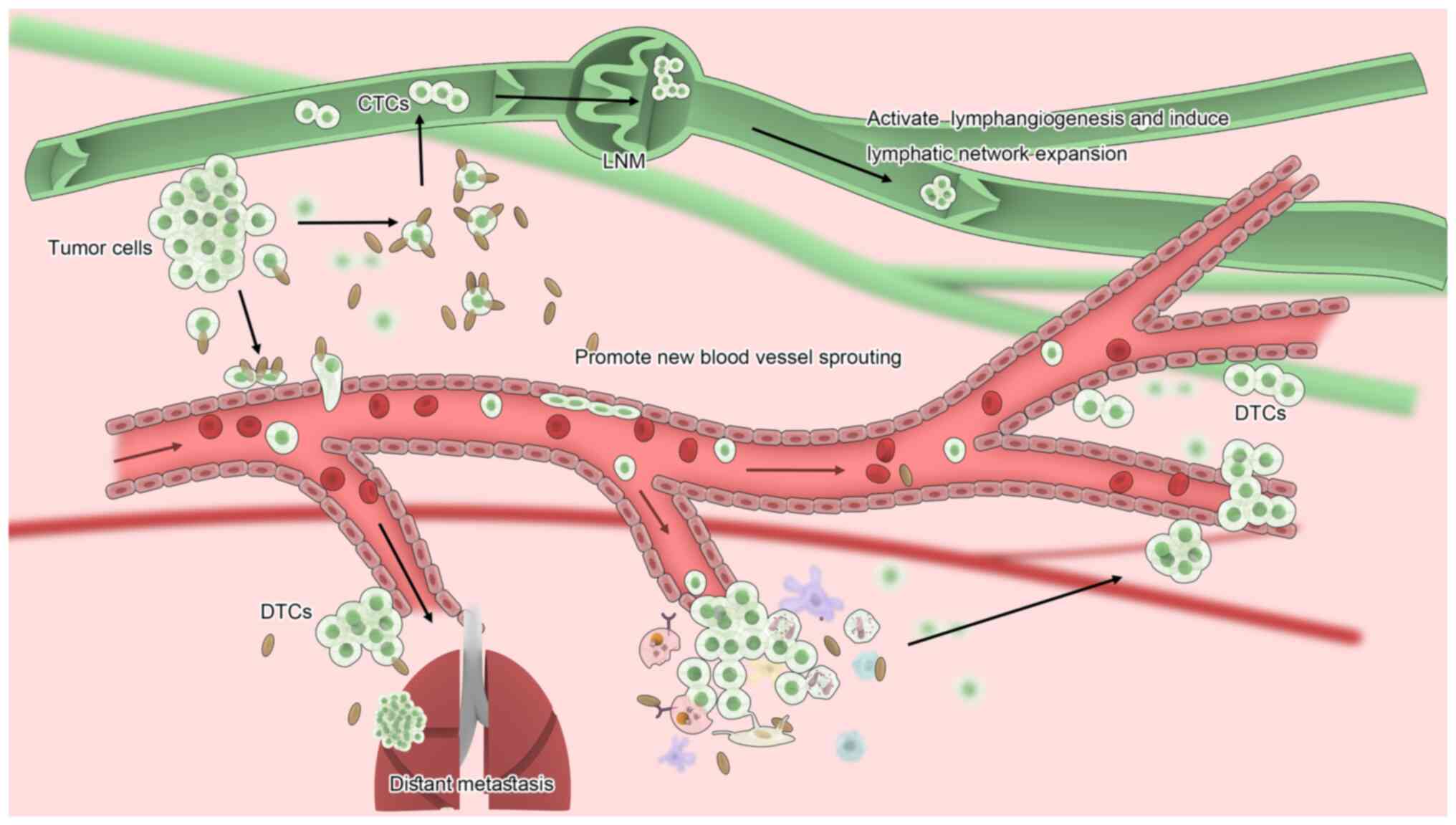
|
1
|
Yoshimura T, Robinson EA, Tanaka S,
Appella E, Kuratsu J and Leonard EJ: Purification and amino acid
analysis of two human glioma-derived monocyte chemoattractants. J
Exp Med. 169:1449–1459. 1989. View Article : Google Scholar : PubMed/NCBI
|
|
2
|
Yoshimura T: The production of monocyte
chemoattractant protein-1 (MCP-1)/CCL2 in tumor microenvironments.
Cytokine. 98:71–78. 2017. View Article : Google Scholar : PubMed/NCBI
|
|
3
|
Kurihara T, Warr G, Loy J and Bravo R:
Defects in macrophage recruitment and host defense in mice lacking
the CCR2 chemokine receptor. J Exp Med. 186:1757–1762. 1997.
View Article : Google Scholar : PubMed/NCBI
|
|
4
|
Mackay CR: Chemokines: Immunology's high
impact factors. Nat Immunol. 2:95–101. 2001. View Article : Google Scholar
|
|
5
|
Strieter RM: Chemokines: Not just
leukocyte chemoattractants in the promotion of cancer. Nat Immunol.
2:285–286. 2001. View
Article : Google Scholar
|
|
6
|
Lim SY, Yuzhalin AE, Gordon-Weeks AN and
Muschel RJ: Targeting the CCL2-CCR2 signaling axis in cancer
metastasis. Oncotarget. 7:28697–28710. 2016. View Article : Google Scholar
|
|
7
|
Loberg RD, Day LL, Harwood J, Ying C, St
John LN, Giles R, Neeley CK and Pienta KJ: CCL2 is a potent
regulator of prostate cancer cell migration and proliferation.
Neoplasia. 8:578–586. 2006. View Article : Google Scholar
|
|
8
|
Craig MJ and Loberg RD: CCL2 (Monocyte
Chemoattractant Protein-1) in cancer bone metastases. Cancer
Metastasis Rev. 25:611–619. 2006. View Article : Google Scholar : PubMed/NCBI
|
|
9
|
Koga M, Kai H, Egami K, Murohara T, Ikeda
A, Yasuoka S, Egashira K, Matsuishi T, Kai M, Kataoka Y, et al:
Mutant MCP-1 therapy inhibits tumor angiogenesis and growth of
malignant melanoma in mice. Biochem Biophys Res Commun.
365:279–284. 2008. View Article : Google Scholar : PubMed/NCBI
|
|
10
|
Liu Q, Zhang H, Jiang X, Qian C, Liu Z and
Luo D: Factors involved in cancer metastasis: A better
understanding to ‘seed and soil’ hypothesis. Mol Cancer.
16:1762017. View Article : Google Scholar : PubMed/NCBI
|
|
11
|
Deshmane SL, Kremlev S, Amini S and Sawaya
BE: Monocyte chemoattractant protein-1 (MCP-1): An overview. J
Interferon Cytokine Res. 29:313–326. 2009. View Article : Google Scholar : PubMed/NCBI
|
|
12
|
Charo IF and Ransohoff RM: The many roles
of chemokines and chemokine receptors in inflammation. N Engl J
Med. 354:610–621. 2006. View Article : Google Scholar : PubMed/NCBI
|
|
13
|
Raman D, Baugher PJ, Thu YM and Richmond
A: Role of chemokines in tumor growth. Cancer Lett. 256:137–165.
2007. View Article : Google Scholar
|
|
14
|
Balkwill FR: The chemokine system and
cancer. J Pathol. 226:148–157. 2012. View Article : Google Scholar
|
|
15
|
Frederick MJ and Clayman GL: Chemokines in
cancer. Expert Rev Mol Med. 3:1–18. 2001. View Article : Google Scholar : PubMed/NCBI
|
|
16
|
Paget S: The distribution of secondary
growths in cancer of the breast. 1889. Cancer Metastasis Rev.
8:98–101. 1989.PubMed/NCBI
|
|
17
|
Hanahan D and Weinberg RA: The hallmarks
of cancer. Cell. 100:57–70. 2000. View Article : Google Scholar
|
|
18
|
de Visser KE and Joyce JA: The evolving
tumor microenvironment: From cancer initiation to metastatic
outgrowth. Cancer Cell. 41:374–403. 2023. View Article : Google Scholar
|
|
19
|
Brown CE, Vishwanath RP, Aguilar B, Starr
R, Najbauer J, Aboody KS and Jensen MC: Tumor-derived chemokine
MCP-1/CCL2 is sufficient for mediating tumor tropism of adoptively
transferred T cells. J Immunol. 179:3332–3341. 2007. View Article : Google Scholar
|
|
20
|
Rollins BJ and Sunday ME: Suppression of
tumor formation in vivo by expression of the JE gene in malignant
cells. Mol Cell Biol. 11:3125–3131. 1991. View Article : Google Scholar
|
|
21
|
Monti P, Leone BE, Marchesi F, Balzano G,
Zerbi A, Scaltrini F, Pasquali C, Calori G, Pessi F, Sperti C, et
al: The CC chemokine MCP-1/CCL2 in pancreatic cancer progression:
regulation of expression and potential mechanisms of antimalignant
activity. Cancer Res. 63:7451–7461. 2003.PubMed/NCBI
|
|
22
|
Gunderson AJ, Yamazaki T, McCarty K, Fox
N, Phillips M, Alice A, Blair T, Whiteford M, O'Brien D, Ahmad R,
et al: TGFβ suppresses CD8(+) T cell expression of CXCR3 and tumor
trafficking. Nat Commun. 11:17492020. View Article : Google Scholar : PubMed/NCBI
|
|
23
|
Qin J, Gong Q, Zhou C, Xu J, Cheng Y, Xu
W, Zhu D, Liu Y, Zhang Y, Wang Y, et al: Differential expression
pattern of CC chemokine receptor 7 guides precision treatment of
hepatocellular carcinoma. Signal Transduct Target Ther. 10:2292025.
View Article : Google Scholar : PubMed/NCBI
|
|
24
|
Wei XL, Zhang Y, Zhao HY, Fang WF, Luo HY,
Qiu MZ, He MM, Zou BY, Xie J, Jin CL, et al: Safety and clinical
activity of SHR7390 monotherapy or combined with camrelizumab for
advanced solid tumor: Results from two phase I trials. Oncologist.
28:e36–e44. 2023. View Article : Google Scholar
|
|
25
|
Mestdagt M, Polette M, Buttice G, Noël A,
Ueda A, Foidart JM and Gilles C: Transactivation of MCP-1/CCL2 by
beta-catenin/TCF-4 in human breast cancer cells. Int J Cancer.
118:35–42. 2006. View Article : Google Scholar : PubMed/NCBI
|
|
26
|
Qian BZ, Li J, Zhang H, Kitamura T, Zhang
J, Campion LR, Kaiser EA, Snyder LA and Pollard JW: CCL2 recruits
inflammatory monocytes to facilitate breast-tumour metastasis.
Nature. 475:222–225. 2011. View Article : Google Scholar : PubMed/NCBI
|
|
27
|
Kitamura T, Qian BZ, Soong D, Cassetta L,
Noy R, Sugano G, Kato Y, Li J and Pollard JW: CCL2-induced
chemokine cascade promotes breast cancer metastasis by enhancing
retention of metastasis-associated macrophages. J Exp Med.
212:1043–1059. 2015. View Article : Google Scholar : PubMed/NCBI
|
|
28
|
Granot Z, Henke E, Comen EA, King TA,
Norton L and Benezra R: Tumor entrained neutrophils inhibit seeding
in the premetastatic lung. Cancer Cell. 20:300–314. 2011.
View Article : Google Scholar
|
|
29
|
Pekarek LA, Starr BA, Toledano AY and
Schreiber H: Inhibition of tumor growth by elimination of
granulocytes. J Exp Med. 181:435–440. 1995. View Article : Google Scholar : PubMed/NCBI
|
|
30
|
Shojaei F, Singh M, Thompson JD and
Ferrara N: Role of Bv8 in neutrophil-dependent angiogenesis in a
transgenic model of cancer progression. Proc Natl Acad Sci USA.
105:2640–2645. 2008. View Article : Google Scholar : PubMed/NCBI
|
|
31
|
Youn JI, Nagaraj S, Collazo M and
Gabrilovich DI: Subsets of myeloid-derived suppressor cells in
tumor-bearing mice. J Immunol. 181:5791–5802. 2008. View Article : Google Scholar
|
|
32
|
Nozawa H, Chiu C and Hanahan D:
Infiltrating neutrophils mediate the initial angiogenic switch in a
mouse model of multistage carcinogenesis. Proc Natl Acad Sci USA.
103:12493–12498. 2006. View Article : Google Scholar : PubMed/NCBI
|
|
33
|
De Larco JE, Wuertz BR and Furcht LT: The
potential role of neutrophils in promoting the metastatic phenotype
of tumors releasing interleukin-8. Clin Cancer Res. 10:4895–4900.
2004. View Article : Google Scholar : PubMed/NCBI
|
|
34
|
Cheng Y, Mo F, Li Q, Han X, Shi H, Chen S,
Wei Y and Wei X: Targeting CXCR2 inhibits the progression of lung
cancer and promotes therapeutic effect of cisplatin. Mol Cancer.
20:622021. View Article : Google Scholar : PubMed/NCBI
|
|
35
|
Song M, He J, Pan QZ, Yang J, Zhao J,
Zhang YJ, Huang Y, Tang Y, Wang Q, He J, et al: Cancer-associated
fibroblast-mediated cellular crosstalk supports hepatocellular
carcinoma progression. Hepatology. 73:1717–1735. 2021. View Article : Google Scholar : PubMed/NCBI
|
|
36
|
Dutta P, Sarkissyan M, Paico K, Wu Y and
Vadgama JV: MCP-1 is overexpressed in triple-negative breast
cancers and drives cancer invasiveness and metastasis. Breast
Cancer Res Treat. 170:477–486. 2018. View Article : Google Scholar
|
|
37
|
Parween F, Singh SP, Kathuria N, Zhang HH,
Ashida S, Otaizo-Carrasquero FA, Shamsaddini A, Gardina PJ, Ganesan
S, Kabat J, et al: Migration arrest and transendothelial
trafficking of human pathogenic-like Th17 cells are mediated by
differentially positioned chemokines. Nat Commun. 16:19782025.
View Article : Google Scholar : PubMed/NCBI
|
|
38
|
Dey D, Pal S, Chakraborty BC, Baidya A,
Bhadra S, Ghosh R, Banerjee S, Ahammed SKM, Chowdhury A and Datta
S: Multifaceted defects in monocytes in different phases of chronic
hepatitis B virus infection: Lack of restoration after antiviral
therapy. Microbiol Spectr. 10:e01939222022. View Article : Google Scholar : PubMed/NCBI
|
|
39
|
Li X, Yao W, Yuan Y, Chen P, Li B, Li J,
Chu R, Song H, Xie D, Jiang X and Wang H: Targeting of
tumour-infiltrating macrophages via CCL2/CCR2 signalling as a
therapeutic strategy against hepatocellular carcinoma. Gut.
66:157–167. 2017. View Article : Google Scholar
|
|
40
|
Guerra N, Tan YX, Joncker NT, Choy A,
Gallardo F, Xiong N, Knoblaugh S, Cado D, Greenberg NM and Raulet
DH: NKG2D-deficient mice are defective in tumor surveillance in
models of spontaneous malignancy. Immunity. 28:571–580. 2008.
View Article : Google Scholar : PubMed/NCBI
|
|
41
|
Lujambio A, Akkari L, Simon J, Grace D,
Tschaharganeh DF, Bolden JE, Zhao Z, Thapar V, Joyce JA,
Krizhanovsky V and Lowe SW: Non-cell-autonomous tumor suppression
by p53. Cell. 153:449–460. 2013. View Article : Google Scholar
|
|
42
|
Iannello A, Thompson TW, Ardolino M, Lowe
SW and Raulet DH: p53-dependent chemokine production by senescent
tumor cells supports NKG2D-dependent tumor elimination by natural
killer cells. J Exp Med. 210:2057–2069. 2013. View Article : Google Scholar : PubMed/NCBI
|
|
43
|
Nagai M and Masuzawa T: Vaccination with
MCP-1 cDNA transfectant on human malignant glioma in nude mice
induces migration of monocytes and NK cells to the tumor. Int
Immunopharmacol. 1:657–664. 2001. View Article : Google Scholar
|
|
44
|
Berencsi K, Rani P, Zhang T, Gross L,
Mastrangelo M, Meropol NJ, Herlyn D and Somasundaram R: In vitro
migration of cytotoxic T lymphocyte derived from a colon carcinoma
patient is dependent on CCL2 and CCR2. J Transl Med. 9:332011.
View Article : Google Scholar : PubMed/NCBI
|
|
45
|
Nakasone Y, Fujimoto M, Matsushita T,
Hamaguchi Y, Huu DL, Yanaba M, Sato S, Takehara K and Hasegawa M:
Host-derived MCP-1 and MIP-1α regulate protective anti-tumor
immunity to localized and metastatic B16 melanoma. Am J Pathol.
180:365–374. 2012. View Article : Google Scholar
|
|
46
|
Joyce JA and Pollard JW:
Microenvironmental regulation of metastasis. Nat Rev Cancer.
9:239–252. 2009. View Article : Google Scholar : PubMed/NCBI
|
|
47
|
Zhang J, Sarkar S, Cua R, Zhou Y, Hader W
and Yong VW: A dialog between glioma and microglia that promotes
tumor invasiveness through the CCL2/CCR2/interleukin-6 axis.
Carcinogenesis. 33:312–319. 2012. View Article : Google Scholar : PubMed/NCBI
|
|
48
|
Bogenrieder T and Herlyn M: Axis of evil:
molecular mechanisms of cancer metastasis. Oncogene. 22:6524–6536.
2003. View Article : Google Scholar : PubMed/NCBI
|
|
49
|
Rafei M, Deng J, Boivin MN, Williams P,
Matulis SM, Yuan S, Birman E, Forner K, Yuan L, Castellino C, et
al: A MCP1 fusokine with CCR2-specific tumoricidal activity. Mol
Cancer. 10:1212011. View Article : Google Scholar : PubMed/NCBI
|
|
50
|
Johnson Z, Power CA, Weiss C, Rintelen F,
Ji H, Ruckle T, Camps M, Wells TN, Schwarz MK, Proudfoot AE and
Rommel C: Chemokine inhibition-why, when, where, which and how?
Biochem Soc Trans. 32:366–377. 2004. View Article : Google Scholar : PubMed/NCBI
|
|
51
|
Mellado M, Rodríguez-Frade JM, Aragay A,
del Real G, Martín AM, Vila-Coro AJ, Serrano A, Mayor F Jr and
Martínez-A C: The chemokine monocyte chemotactic protein 1 triggers
Janus kinase 2 activation and tyrosine phosphorylation of the CCR2B
receptor. J Immunol. 161:805–813. 1998. View Article : Google Scholar
|
|
52
|
Jiménez-Sainz MC, Fast B, Mayor F Jr and
Aragay AM: Signaling pathways for monocyte chemoattractant protein
1-mediated extracellular signal-regulated kinase activation. Mol
Pharmacol. 64:773–782. 2003. View Article : Google Scholar
|
|
53
|
Tang CH and Tsai CC: CCL2 increases MMP-9
expression and cell motility in human chondrosarcoma cells via the
Ras/Raf/MEK/ERK/NF-κB signaling pathway. Biochem Pharmacol.
83:335–344. 2012. View Article : Google Scholar
|
|
54
|
Dagouassat M, Suffee N, Hlawaty H, Haddad
O, Charni F, Laguillier C, Vassy R, Martin L, Schischmanoff PO,
Gattegno L, et al: Monocyte chemoattractant protein-1 (MCP-1)/CCL2
secreted by hepatic myofibroblasts promotes migration and invasion
of human hepatoma cells. Int J Cancer. 126:1095–1108. 2010.
View Article : Google Scholar : PubMed/NCBI
|
|
55
|
Schröer N, Pahne J, Walch B, Wickenhauser
C and Smola S: Molecular pathobiology of human cervical high-grade
lesions: Paracrine STAT3 activation in tumor-instructed myeloid
cells drives local MMP-9 expression. Cancer Res. 71:87–97. 2011.
View Article : Google Scholar
|
|
56
|
Balkwill F and Mantovani A: Inflammation
and cancer: Back to Virchow? Lancet. 357:539–545. 2001. View Article : Google Scholar
|
|
57
|
Pollard JW: Tumour-educated macrophages
promote tumour progression and metastasis. Nat Rev Cancer. 4:71–78.
2004. View Article : Google Scholar : PubMed/NCBI
|
|
58
|
van Kempen LC, de Visser KE and Coussens
LM: Inflammation, proteases and cancer. Eur J Cancer. 42:728–734.
2006. View Article : Google Scholar : PubMed/NCBI
|
|
59
|
Yumimoto K, Sugiyama S, Mimori K and
Nakayama KI: Potentials of C-C motif chemokine 2-C-C chemokine
receptor type 2 blockers including propagermanium as anticancer
agents. Cancer Sci. 110:2090–2099. 2019. View Article : Google Scholar
|
|
60
|
Fang WB, Jokar I, Zou A, Lambert D,
Dendukuri P and Cheng N: CCL2/CCR2 chemokine signaling coordinates
survival and motility of breast cancer cells through Smad3 protein-
and p42/44 mitogen-activated protein kinase (MAPK)-dependent
mechanisms. J Biol Chem. 287:36593–36608. 2012. View Article : Google Scholar : PubMed/NCBI
|
|
61
|
Yao M, Fang W, Smart C, Hu Q, Huang S,
Alvarez N, Fields P and Cheng N: CCR2 chemokine receptors enhance
growth and cell-cycle progression of breast cancer cells through
SRC and PKC Activation. Mol Cancer Res. 17:604–617. 2019.
View Article : Google Scholar : PubMed/NCBI
|
|
62
|
Gao J, Wang A, Zhang M, Li H, Wang K, Han
Y, Wang Z, Shi C and Wang W: RNAi targeting of CCR2 gene expression
induces apoptosis and inhibits the proliferation, migration, and
invasion of PC-3M cells. Oncol Res. 21:73–82. 2013. View Article : Google Scholar : PubMed/NCBI
|
|
63
|
Chiu HY, Sun KH, Chen SY, Wang HH, Lee MY,
Tsou YC, Jwo SC, Sun GH and Tang SJ: Autocrine CCL2 promotes cell
migration and invasion via PKC activation and tyrosine
phosphorylation of paxillin in bladder cancer cells. Cytokine.
59:423–432. 2012. View Article : Google Scholar : PubMed/NCBI
|
|
64
|
Vande Broek I, Asosingh K, Vanderkerken K,
Straetmans N, Van Camp B and Van Riet I: Chemokine receptor CCR2 is
expressed by human multiple myeloma cells and mediates migration to
bone marrow stromal cell-produced monocyte chemotactic proteins
MCP-1, −2 and −3. Br J Cancer. 88:855–862. 2003. View Article : Google Scholar : PubMed/NCBI
|
|
65
|
Yang J, Lv X, Chen J, Xie C, Xia W, Jiang
C, Zeng T, Ye Y, Ke L, Yu Y, et al: CCL2-CCR2 axis promotes
metastasis of nasopharyngeal carcinoma by activating ERK1/2-MMP2/9
pathway. Oncotarget. 7:15632–15647. 2016. View Article : Google Scholar
|
|
66
|
Xu M, Wang S, Qi Y, Chen L, Frank JA, Yang
XH, Zhang Z, Shi X and Luo J: Role of MCP-1 in alcohol-induced
aggressiveness of colorectal cancer cells. Mol Carcinog.
55:1002–1011. 2016. View Article : Google Scholar : PubMed/NCBI
|
|
67
|
Yasui H, Kajiyama H, Tamauchi S, Suzuki S,
Peng Y, Yoshikawa N, Sugiyama M, Nakamura K and Kikkawa F: CCL2
secreted from cancer-associated mesothelial cells promotes
peritoneal metastasis of ovarian cancer cells through the P38-MAPK
pathway. Clin Exp Metastasis. 37:145–158. 2020. View Article : Google Scholar : PubMed/NCBI
|
|
68
|
Furukawa S, Soeda S, Kiko Y, Suzuki O,
Hashimoto Y, Watanabe T, Nishiyama H, Tasaki K, Hojo H, Abe M and
Fujimori K: MCP-1 promotes invasion and adhesion of human ovarian
cancer cells. Anticancer Res. 33:4785–4790. 2013.PubMed/NCBI
|
|
69
|
Macanas-Pirard P, Quezada T, Navarrete L,
Broekhuizen R, Leisewitz A, Nervi B and Ramírez PA: The CCL2/CCR2
axis affects transmigration and proliferation but not resistance to
chemotherapy of acute myeloid leukemia cells. PLoS One.
12:e01688882017. View Article : Google Scholar : PubMed/NCBI
|
|
70
|
Salacz ME, Kast RE, Saki N, Brüning A,
Karpel-Massler G and Halatsch ME: Toward a noncytotoxic
glioblastoma therapy: Blocking MCP-1 with the MTZ Regimen. Onco
Targets Ther. 9:2535–2545. 2016. View Article : Google Scholar : PubMed/NCBI
|
|
71
|
An J, Xue Y, Long M, Zhang G, Zhang J and
Su H: Targeting CCR2 with its antagonist suppresses viability,
motility and invasion by downregulating MMP-9 expression in
non-small cell lung cancer cells. Oncotarget. 8:39230–39240. 2017.
View Article : Google Scholar
|
|
72
|
Giannelli G, Koudelkova P, Dituri F and
Mikulits W: Role of epithelial to mesenchymal transition in
hepatocellular carcinoma. J Hepatol. 65:798–808. 2016. View Article : Google Scholar
|
|
73
|
van Zijl F, Zulehner G, Petz M, Schneller
D, Kornauth C, Hau M, Machat G, Grubinger M, Huber H and Mikulits
W: Epithelial-mesenchymal transition in hepatocellular carcinoma.
Future Oncol. 5:1169–1179. 2009. View Article : Google Scholar
|
|
74
|
Li H, Li H, Li XP, Zou H, Liu L, Liu W and
Duan T: C-C chemokine receptor type 2 promotes
epithelial-to-mesenchymal transition by upregulating matrix
metalloproteinase-2 in human liver cancer. Oncol Rep. 40:2734–2741.
2018.PubMed/NCBI
|
|
75
|
Izumi K, Fang LY, Mizokami A, Namiki M, Li
L, Lin WJ and Chang C: Targeting the androgen receptor with siRNA
promotes prostate cancer metastasis through enhanced macrophage
recruitment via CCL2/CCR2-induced STAT3 activation. EMBO Mol Med.
5:1383–1401. 2013. View Article : Google Scholar : PubMed/NCBI
|
|
76
|
Rao Q, Chen Y, Yeh CR, Ding J, Li L, Chang
C and Yeh S: Recruited mast cells in the tumor microenvironment
enhance bladder cancer metastasis via modulation of ERβ/CCL2/CCR2
EMT/MMP9 signals. Oncotarget. 7:7842–7855. 2016. View Article : Google Scholar
|
|
77
|
Zhuang H, Cao G, Kou C and Liu T:
CCL2/CCR2 axis induces hepatocellular carcinoma invasion and
epithelial-mesenchymal transition in vitro through activation of
the Hedgehog pathway. Oncol Rep. 39:21–30. 2018.PubMed/NCBI
|
|
78
|
Koide N, Nishio A, Sato T, Sugiyama A and
Miyagawa S: Significance of macrophage chemoattractant protein-1
expression and macrophage infiltration in squamous cell carcinoma
of the esophagus. Am J Gastroenterol. 99:1667–1674. 2004.
View Article : Google Scholar
|
|
79
|
Salcedo R, Ponce ML, Young HA, Wasserman
K, Ward JM, Kleinman HK, Oppenheim JJ and Murphy WJ: Human
endothelial cells express CCR2 and respond to MCP-1: direct role of
MCP-1 in angiogenesis and tumor progression. Blood. 96:34–40. 2000.
View Article : Google Scholar : PubMed/NCBI
|
|
80
|
Hong KH, Ryu J and Han KH: Monocyte
chemoattractant protein-1-induced angiogenesis is mediated by
vascular endothelial growth factor-A. Blood. 105:1405–1407. 2025.
View Article : Google Scholar
|
|
81
|
Wyler L, Napoli CU, Ingold B, Sulser T,
Heikenwälder M, Schraml P and Moch H: Brain metastasis in renal
cancer patients: Metastatic pattern, tumour-associated macrophages
and chemokine/chemoreceptor expression. Br J Cancer. 110:686–694.
2014. View Article : Google Scholar : PubMed/NCBI
|
|
82
|
Valković T, Babarović E, Lučin K, Štifter
S, Aralica M, Seili-Bekafigo I, Duletić-Načinović A and Jonjić N:
Plasma levels of monocyte chemotactic protein-1 are associated with
clinical features and angiogenesis in patients with multiple
myeloma. Biomed Res Int. 2016:78705902016.
|
|
83
|
Li F, Kitajima S, Kohno S, Yoshida A,
Tange S, Sasaki S, Okada N, Nishimoto Y, Muranaka H, Nagatani N, et
al: Retinoblastoma inactivation induces a protumoral
microenvironment via enhanced CCL2 secretion. Cancer Res.
79:3903–3915. 2019. View Article : Google Scholar : PubMed/NCBI
|
|
84
|
Li X, Loberg R, Liao J, Ying C, Snyder LA,
Pienta KJ and McCauley LK: A destructive cascade mediated by CCL2
facilitates prostate cancer growth in bone. Cancer Res.
69:1685–1692. 2009. View Article : Google Scholar : PubMed/NCBI
|
|
85
|
Balkwill F: Cancer and the chemokine
network. Nat Rev Cancer. 4:540–550. 2004. View Article : Google Scholar : PubMed/NCBI
|
|
86
|
Niu J, Azfer A, Zhelyabovska O, Fatma S
and Kolattukudy PE: Monocyte chemotactic protein (MCP)-1 promotes
angiogenesis via a novel transcription factor, MCP-1-induced
protein (MCPIP). J Biol Chem. 283:14542–14551. 2008. View Article : Google Scholar : PubMed/NCBI
|
|
87
|
Ohta M, Kitadai Y, Tanaka S, Yoshihara M,
Yasui W, Mukaida N, Haruma K and Chayama K: Monocyte
chemoattractant protein-1 expression correlates with macrophage
infiltration and tumor vascularity in human esophageal squamous
cell carcinomas. Int J Cancer. 102:220–224. 2002. View Article : Google Scholar : PubMed/NCBI
|
|
88
|
Kuroda T, Kitadai Y, Tanaka S, Yang X,
Mukaida N, Yoshihara M and Chayama K: Monocyte chemoattractant
protein-1 transfection induces angiogenesis and tumorigenesis of
gastric carcinoma in nude mice via macrophage recruitment. Clin
Cancer Res. 11:7629–7636. 2005. View Article : Google Scholar : PubMed/NCBI
|
|
89
|
Goede V, Brogelli L, Ziche M and Augustin
HG: Induction of inflammatory angiogenesis by monocyte
chemoattractant protein-1. Int J Cancer. 82:765–770. 1999.
View Article : Google Scholar : PubMed/NCBI
|
|
90
|
Low-Marchelli JM, Ardi VC, Vizcarra EA,
van Rooijen N, Quigley JP and Yang J: Twist1 induces CCL2 and
recruits macrophages to promote angiogenesis. Cancer Res.
73:662–671. 2013. View Article : Google Scholar : PubMed/NCBI
|
|
91
|
Varney ML, Olsen KJ, Mosley RL and Singh
RK: Paracrine regulation of vascular endothelial growth factor-a
expression during macrophage-melanoma cell interaction: Role of
monocyte chemotactic protein-1 and macrophage colony-stimulating
factor. J Interferon Cytokine Res. 25:674–683. 2005. View Article : Google Scholar : PubMed/NCBI
|
|
92
|
Jetten N, Verbruggen S, Gijbels MJ, Post
MJ, De Winther MP and Donners MM: Anti-inflammatory M2, but not
pro-inflammatory M1 macrophages promote angiogenesis in vivo.
Angiogenesis. 17:109–118. 2014. View Article : Google Scholar : PubMed/NCBI
|
|
93
|
Bonapace L, Coissieux MM, Wyckoff J, Mertz
KD, Varga Z, Junt T and Bentires-Alj M: Cessation of CCL2
inhibition accelerates breast cancer metastasis by promoting
angiogenesis. Nature. 515:130–133. 2014. View Article : Google Scholar : PubMed/NCBI
|
|
94
|
Liu L, Li Y and Li B: Interactions between
cancer cells and tumor-associated macrophages in tumor
microenvironment. Biochim Biophys Acta Rev Cancer. 1880:1893442025.
View Article : Google Scholar : PubMed/NCBI
|
|
95
|
Biswas SK and Mantovani A: Macrophage
plasticity and interaction with lymphocyte subsets: Cancer as a
paradigm. Nat Immunol. 11:889–896. 2010. View Article : Google Scholar
|
|
96
|
Allavena P, Germano G, Marchesi F and
Mantovani A: Chemokines in cancer related inflammation. Exp Cell
Res. 317:664–673. 2011. View Article : Google Scholar : PubMed/NCBI
|
|
97
|
Fridlender ZG, Buchlis G, Kapoor V, Cheng
G, Sun J, Singhal S, Crisanti MC, Wang LC, Heitjan D, Snyder LA and
Albelda SM: CCL2 blockade augments cancer immunotherapy. Cancer
Res. 70:109–118. 2010. View Article : Google Scholar : PubMed/NCBI
|
|
98
|
Huang B, Lei Z, Zhao J, Gong W, Liu J,
Chen Z, Liu Y, Li D, Yuan Y, Zhang GM and Feng ZH: CCL2/CCR2
pathway mediates recruitment of myeloid suppressor cells to
cancers. Cancer Lett. 252:86–92. 2007. View Article : Google Scholar
|
|
99
|
Samaniego R, Estecha A, Relloso M, Longo
N, Escat JL, Longo-Imedio I, Avilés JA, del Pozo MA, Puig-Kröger A
and Sánchez-Mateos P: Mesenchymal contribution to recruitment,
infiltration, and positioning of leukocytes in human melanoma
tissues. J Invest Dermatol. 133:2255–2264. 2013. View Article : Google Scholar
|
|
100
|
Roblek M, Strutzmann E, Zankl C, Adage T,
Heikenwalder M, Atlic A, Weis R, Kungl A and Borsig L: Targeting of
CCL2-CCR2-glycosaminoglycan axis using a CCL2 decoy protein
attenuates metastasis through inhibition of tumor cell seeding.
Neoplasia. 18:49–59. 2016. View Article : Google Scholar
|
|
101
|
Zhu Y, Yan P, Wang R, Lai J, Tang H, Xiao
X, Yu R, Bao X, Zhu F, Wang K, et al: Opioid-induced fragile-like
regulatory T cells contribute to withdrawal. Cell. 186:591–606.e23.
2023. View Article : Google Scholar
|
|
102
|
Kong X, Wu S, Dai X, Yu W, Wang J, Sun Y,
Ji Z, Ma L, Dai X, Chen H, et al: A comprehensive profile of
chemokines in the peripheral blood and vascular tissue of patients
with Takayasu arteritis. Arthritis Res Ther. 24:492022. View Article : Google Scholar : PubMed/NCBI
|
|
103
|
Tang KF, Tan SY, Chan SH, Chong SM, Loh
KS, Tan LK and Hu H: A distinct expression of CC chemokines by
macrophages in nasopharyngeal carcinoma: implication for the
intense tumor infiltration by T lymphocytes and macrophages. Hum
Pathol. 32:42–49. 2001. View Article : Google Scholar
|
|
104
|
Kalluri R: The biology and function of
fibroblasts in cancer. Nat Rev Cancer. 16:582–598. 2016. View Article : Google Scholar : PubMed/NCBI
|
|
105
|
Gok Yavuz B, Gunaydin G, Gedik ME,
Kosemehmetoglu K, Karakoc D, Ozgur F and Guc D: Cancer associated
fibroblasts sculpt tumour microenvironment by recruiting monocytes
and inducing immunosuppressive PD-1(+) TAMs. Sci Rep. 9:31722019.
View Article : Google Scholar : PubMed/NCBI
|
|
106
|
LeBleu VS and Kalluri R: A peek into
cancer-associated fibroblasts: origins, functions and translational
impact. Dis Model Mech. 11:dmm0294472018. View Article : Google Scholar : PubMed/NCBI
|
|
107
|
Loeffler M, Krüger JA, Niethammer AG and
Reisfeld RA: Targeting tumor-associated fibroblasts improves cancer
chemotherapy by increasing intratumoral drug uptake. J Clin Invest.
116:1955–1962. 2006. View Article : Google Scholar
|
|
108
|
Valkenburg KC, de Groot AE and Pienta KJ:
Targeting the tumour stroma to improve cancer therapy. Nat Rev Clin
Oncol. 15:366–381. 2018. View Article : Google Scholar
|
|
109
|
Costa A, Kieffer Y, Scholer-Dahirel A,
Pelon F, Bourachot B, Cardon M, Sirven P, Magagna I, Fuhrmann L,
Bernard C, et al: Fibroblast heterogeneity and immunosuppressive
environment in human breast cancer. Cancer Cell. 33:463–479.e10.
2018. View Article : Google Scholar
|
|
110
|
Cho H, Seo Y, Loke KM, Kim SW, Oh SM, Kim
JH, Soh J, Kim HS, Lee H, Kim J, et al: Cancer-stimulated CAFs
enhance monocyte differentiation and protumoral TAM activation via
IL6 and GM-CSF secretion. Clin Cancer Res. 24:5407–5421. 2018.
View Article : Google Scholar : PubMed/NCBI
|
|
111
|
Mace TA, Ameen Z, Collins A, Wojcik S,
Mair M, Young GS, Fuchs JR, Eubank TD, Frankel WL, Bekaii-Saab T,
et al: Pancreatic cancer-associated stellate cells promote
differentiation of myeloid-derived suppressor cells in a
STAT3-dependent manner. Cancer Res. 73:3007–3018. 2013. View Article : Google Scholar : PubMed/NCBI
|
|
112
|
Xiang H, Ramil CP, Hai J, Zhang C, Wang H,
Watkins AA, Afshar R, Georgiev P, Sze MA, Song XS, et al:
Cancer-associated fibroblasts promote immunosuppression by inducing
ROS-generating monocytic MDSCs in lung squamous cell carcinoma.
Cancer Immunol Res. 8:436–450. 2020. View Article : Google Scholar : PubMed/NCBI
|
|
113
|
Jung DW, Che ZM and Kim J, Kim K, Kim KY,
Williams D and Kim J: Tumor-stromal crosstalk in invasion of oral
squamous cell carcinoma: A pivotal role of CCL7. Int J Cancer.
127:332–344. 2010. View Article : Google Scholar : PubMed/NCBI
|
|
114
|
Barbai T, Fejős Z, Puskas LG, Tímár J and
Rásó E: The importance of microenvironment: the role of CCL8 in
metastasis formation of melanoma. Oncotarget. 6:29111–29128. 2015.
View Article : Google Scholar
|
|
115
|
Tsuyada A, Chow A, Wu J, Somlo G, Chu P,
Loera S, Luu T, Li AX, Wu X, Ye W, et al: CCL2 mediates cross-talk
between cancer cells and stromal fibroblasts that regulates breast
cancer stem cells. Cancer Res. 72:2768–2779. 2012. View Article : Google Scholar : PubMed/NCBI
|
|
116
|
Higashino N, Koma YI, Hosono M, Takase N,
Okamoto M, Kodaira H, Nishio M, Shigeoka M, Kakeji Y and Yokozaki
H: Fibroblast activation protein-positive fibroblasts promote tumor
progression through secretion of CCL2 and interleukin-6 in
esophageal squamous cell carcinoma. Lab Invest. 99:777–792. 2019.
View Article : Google Scholar
|
|
117
|
Pausch TM, Aue E, Wirsik NM, Freire Valls
A, Shen Y, Radhakrishnan P, Hackert T, Schneider M and Schmidt T:
Metastasis-associated fibroblasts promote angiogenesis in
metastasized pancreatic cancer via the CXCL8 and the CCL2 axes. Sci
Rep. 10:54202020. View Article : Google Scholar : PubMed/NCBI
|
|
118
|
Vickman RE, Broman MM, Lanman NA, Franco
OE, Sudyanti PAG, Ni Y, Ji Y, Helfand BT, Petkewicz J, Paterakos
MC, et al: Heterogeneity of human prostate carcinoma-associated
fibroblasts implicates a role for subpopulations in myeloid cell
recruitment. Prostate. 80:173–185. 2020. View Article : Google Scholar : PubMed/NCBI
|
|
119
|
Yang X, Lin Y, Shi Y, Li B, Liu W, Yin W,
Dang Y, Chu Y, Fan J and He R: FAP promotes immunosuppression by
cancer-associated fibroblasts in the tumor microenvironment via
STAT3-CCL2 signaling. Cancer Res. 76:4124–4135. 2016. View Article : Google Scholar : PubMed/NCBI
|
|
120
|
Brummer G, Acevedo DS, Hu Q, Portsche M,
Fang WB, Yao M, Zinda B, Myers M, Alvarez N, Fields P, et al:
Chemokine signaling facilitates early-stage breast cancer survival
and invasion through fibroblast-dependent mechanisms. Mol Cancer
Res. 16:296–308. 2018. View Article : Google Scholar : PubMed/NCBI
|
|
121
|
Majo S and Auguste P: The Yin and Yang of
discoidin domain receptors (DDRs): Implications in tumor growth and
metastasis development. Cancers (Basel). 13:17252021. View Article : Google Scholar : PubMed/NCBI
|
|
122
|
Scordamaglia D, Talia M, Cirillo F,
Zicarelli A, Mondino AA, De Rosis S, Di Dio M, Silvestri F, Meliti
C, Miglietta AM, et al: Interleukin-1β mediates a tumor-supporting
environment prompted by IGF1 in triple-negative breast cancer
(TNBC). J Transl Med. 23:6602025. View Article : Google Scholar : PubMed/NCBI
|
|
123
|
Vakilian A, Khorramdelazad H, Heidari P,
Sheikh Rezaei Z and Hassanshahi G: CCL2/CCR2 signaling pathway in
glioblastoma multiforme. Neurochem Int. 103:1–7. 2017. View Article : Google Scholar
|
|
124
|
Zijlmans HJ, Fleuren GJ, Baelde HJ, Eilers
PH, Kenter GG and Gorter A: The absence of CCL2 expression in
cervical carcinoma is associated with increased survival and loss
of heterozygosity at 17q11.2. J Pathol. 208:507–517. 2006.
View Article : Google Scholar
|
|
125
|
Yoshidome H, Kohno H, Shida T, Kimura F,
Shimizu H, Ohtsuka M, Nakatani Y and Miyazaki M: Significance of
monocyte chemoattractant protein-1 in angiogenesis and survival in
colorectal liver metastases. Int J Oncol. 34:923–930. 2009.
|
|
126
|
Zhang J, Patel L and Pienta KJ: CC
chemokine ligand 2 (CCL2) promotes prostate cancer tumorigenesis
and metastasis. Cytokine Growth Factor Rev. 21:41–48. 2010.
View Article : Google Scholar : PubMed/NCBI
|
|
127
|
Soria G, Ofri-Shahak M, Haas I,
Yaal-Hahoshen N, Leider-Trejo L, Leibovich-Rivkin T, Weitzenfeld P,
Meshel T, Shabtai E, Gutman M and Ben-Baruch A: Inflammatory
mediators in breast cancer: coordinated expression of TNFα &
IL-1β with CCL2 & CCL5 and effects on epithelial-to-mesenchymal
transition. BMC Cancer. 11:1302011. View Article : Google Scholar : PubMed/NCBI
|
|
128
|
Jin G, Kawsar HI, Hirsch SA, Zeng C, Jia
X, Feng Z, Ghosh SK, Zheng QY, Zhou A, McIntyre TM and Weinberg A:
An antimicrobial peptide regulates tumor-associated macrophage
trafficking via the chemokine receptor CCR2, a model for
tumorigenesis. PLoS One. 5:e109932010. View Article : Google Scholar : PubMed/NCBI
|
|
129
|
Vasco C, Canazza A, Rizzo A, Mossa A,
Corsini E, Silvani A, Fariselli L, Salmaggi A and Ciusani E:
Circulating T regulatory cells migration and phenotype in
glioblastoma patients: An in vitro study. J Neurooncol.
115:353–363. 2013. View Article : Google Scholar
|
|
130
|
del Pozo MA, Cabañas C, Montoya MC, Ager
A, Sánchez-Mateos P and Sánchez-Madrid F: ICAMs redistributed by
chemokines to cellular uropods as a mechanism for recruitment of T
lymphocytes. J Cell Biol. 137:493–508. 1997. View Article : Google Scholar
|
|
131
|
Schmall A, Al-Tamari HM, Herold S,
Kampschulte M, Weigert A, Wietelmann A, Vipotnik N, Grimminger F,
Seeger W, Pullamsetti SS and Savai R: Macrophage and cancer cell
cross-talk via CCR2 and CX3CR1 is a fundamental mechanism driving
lung cancer. Am J Respir Crit Care Med. 191:437–447. 2015.
View Article : Google Scholar : PubMed/NCBI
|
|
132
|
Maolake A, Izumi K, Shigehara K,
Natsagdorj A, Iwamoto H, Kadomoto S, Takezawa Y, Machioka K,
Narimoto K, Namiki M, et al: Tumor-associated macrophages promote
prostate cancer migration through activation of the CCL22-CCR4
axis. Oncotarget. 8:9739–9751. 2017. View Article : Google Scholar
|
|
133
|
Qian BZ and Pollard JW: Macrophage
diversity enhances tumor progression and metastasis. Cell.
141:39–51. 2010. View Article : Google Scholar
|
|
134
|
DeNardo DG, Barreto JB, Andreu P, Vasquez
L, Tawfik D, Kolhatkar N and Coussens LM: CD4(+) T cells regulate
pulmonary metastasis of mammary carcinomas by enhancing protumor
properties of macrophages. Cancer Cell. 16:91–102. 2009. View Article : Google Scholar
|
|
135
|
Reinartz S, Schumann T, Finkernagel F,
Wortmann A, Jansen JM, Meissner W, Krause M, Schwörer AM, Wagner U,
Müller-Brüsselbach S and Müller R: Mixed-polarization phenotype of
ascites-associated macrophages in human ovarian carcinoma:
Correlation of CD163 expression, cytokine levels and early relapse.
Int J Cancer. 134:32–42. 2014. View Article : Google Scholar : PubMed/NCBI
|
|
136
|
van Attekum MHA, van Bruggen JAC, Slinger
E, Lebre MC, Reinen E, Kersting S, Eldering E and Kater AP: CD40
signaling instructs chronic lymphocytic leukemia cells to attract
monocytes via the CCR2 axis. Haematologica. 102:2069–2076. 2017.
View Article : Google Scholar
|
|
137
|
Zhu P, Baek SH, Bourk EM, Ohgi KA,
Garcia-Bassets I, Sanjo H, Akira S, Kotol PF, Glass CK, Rosenfeld
MG and Rose DW: Macrophage/cancer cell interactions mediate hormone
resistance by a nuclear receptor derepression pathway. Cell.
124:615–629. 2006. View Article : Google Scholar
|
|
138
|
Loberg RD, Ying C, Craig M, Yan L, Snyder
LA and Pienta KJ: CCL2 as an important mediator of prostate cancer
growth in vivo through the regulation of macrophage infiltration.
Neoplasia. 9:556–562. 2007. View Article : Google Scholar
|
|
139
|
Ye J, Yang Y, Jin J, Ji M, Gao Y, Feng Y,
Wang H, Chen X and Liu Y: Targeted delivery of chlorogenic acid by
mannosylated liposomes to effectively promote the polarization of
TAMs for the treatment of glioblastoma. Bioact Mater. 5:694–708.
2020. View Article : Google Scholar : PubMed/NCBI
|
|
140
|
Liu F, Li X, Zhang Y, Ge S, Shi Z, Liu Q
and Jiang S: Targeting tumor-associated macrophages to overcome
immune checkpoint inhibitor resistance in hepatocellular carcinoma.
J Exp Clin Cancer Res. 44:2272025. View Article : Google Scholar : PubMed/NCBI
|
|
141
|
Nywening TM, Wang-Gillam A, Sanford DE,
Belt BA, Panni RZ, Cusworth BM, Toriola AT, Nieman RK, Worley LA,
Yano M, et al: Targeting tumour-associated macrophages with CCR2
inhibition in combination with FOLFIRINOX in patients with
borderline resectable and locally advanced pancreatic cancer: A
single-centre, open-label, dose-finding, non-randomised, phase 1b
trial. Lancet Oncol. 17:651–662. 2016. View Article : Google Scholar
|
|
142
|
Fujimoto H, Sangai T, Ishii G, Ikehara A,
Nagashima T, Miyazaki M and Ochiai A: Stromal MCP-1 in mammary
tumors induces tumor-associated macrophage infiltration and
contributes to tumor progression. Int J Cancer. 125:1276–1284.
2009. View Article : Google Scholar : PubMed/NCBI
|
|
143
|
Bianconi V, Sahebkar A, Atkin SL and Pirro
M: The regulation and importance of monocyte chemoattractant
protein-1. Curr Opin Hematol. 25:44–51. 2018. View Article : Google Scholar
|
|
144
|
Ding M, He SJ and Yang J: MCP-1/CCL2
mediated by autocrine loop of PDGF-BB promotes invasion of lung
cancer cell by recruitment of macrophages via CCL2-CCR2 Axis. J
Interferon Cytokine Res. 39:224–232. 2019. View Article : Google Scholar : PubMed/NCBI
|
|
145
|
Avila MA and Berasain C: Targeting
CCL2/CCR2 in tumor-infiltrating macrophages: A tool emerging out of
the box against hepatocellular carcinoma. Cell Mol Gastroenterol
Hepatol. 7:293–294. 2019. View Article : Google Scholar
|
|
146
|
Nywening TM, Belt BA, Cullinan DR, Panni
RZ, Han BJ, Sanford DE, Jacobs RC, Ye J, Patel AA, Gillanders WE,
et al: Targeting both tumour-associated CXCR2(+) neutrophils and
CCR2(+) macrophages disrupts myeloid recruitment and improves
chemotherapeutic responses in pancreatic ductal adenocarcinoma.
Gut. 67:1112–1123. 2018. View Article : Google Scholar
|
|
147
|
Sanford DE, Belt BA, Panni RZ, Mayer A,
Deshpande AD, Carpenter D, Mitchem JB, Plambeck-Suess SM, Worley
LA, Goetz BD, et al: Inflammatory monocyte mobilization decreases
patient survival in pancreatic cancer: A role for targeting the
CCL2/CCR2 axis. Clin Cancer Res. 19:3404–3415. 2013. View Article : Google Scholar : PubMed/NCBI
|
|
148
|
Yin S, Wang N, Riabov V, Mossel DM,
Larionova I, Schledzewski K, Trofimova O, Sevastyanova T, Zajakina
A, Schmuttermaier C, et al: SI-CLP inhibits the growth of mouse
mammary adenocarcinoma by preventing recruitment of
tumor-associated macrophages. Int J Cancer. 146:1396–1408. 2020.
View Article : Google Scholar : PubMed/NCBI
|
|
149
|
Li W, Zhang X, Wu F, Zhou Y, Bao Z, Li H,
Zheng P and Zhao S: Gastric cancer-derived mesenchymal stromal
cells trigger M2 macrophage polarization that promotes metastasis
and EMT in gastric cancer. Cell Death Dis. 10:9182019. View Article : Google Scholar : PubMed/NCBI
|
|
150
|
Crane CA, Ahn BJ, Han SJ and Parsa AT:
Soluble factors secreted by glioblastoma cell lines facilitate
recruitment, survival, and expansion of regulatory T cells:
Implications for immunotherapy. Neuro Oncol. 14:584–595. 2012.
View Article : Google Scholar
|
|
151
|
Marangoni F, Zhakyp A, Corsini M, Geels
SN, Carrizosa E, Thelen M, Mani V, Prüßmann JN, Warner RD, Ozga AJ,
et al: Expansion of tumor-associated Treg cells upon disruption of
a CTLA-4-dependent feedback loop. Cell. 184:3998–4015.e19. 2021.
View Article : Google Scholar
|
|
152
|
Rodrigues PF, Wu S, Trsan T, Panda SK,
Fachi JL, Liu Y, Du S, de Oliveira S, Antonova AU, Khantakova D, et
al: Rorγt-positive dendritic cells are required for the induction
of peripheral regulatory T cells in response to oral antigens.
Cell. 188:2720–2737.e22. 2025. View Article : Google Scholar
|
|
153
|
Filaci G, Fenoglio D, Fravega M, Ansaldo
G, Borgonovo G, Traverso P, Villaggio B, Ferrera A, Kunkl A, Rizzi
M, et al: CD8+ CD28- T regulatory lymphocytes inhibiting T cell
proliferative and cytotoxic functions infiltrate human cancers. J
Immunol,. 179:4323–4334. 2007. View Article : Google Scholar : PubMed/NCBI
|
|
154
|
Serafini P, Borrello I and Bronte V:
Myeloid suppressor cells in cancer: Recruitment, phenotype,
properties, and mechanisms of immune suppression. Semin Cancer
Biol. 16:53–65. 2006. View Article : Google Scholar
|
|
155
|
Serafini P, De Santo C, Marigo I,
Cingarlini S, Dolcetti L, Gallina G, Zanovello P and Bronte V:
Derangement of immune responses by myeloid suppressor cells. Cancer
Immunol Immunother. 53:64–72. 2004. View Article : Google Scholar : PubMed/NCBI
|
|
156
|
Zea AH, Rodriguez PC, Atkins MB, Hernandez
C, Signoretti S, Zabaleta J, McDermott D, Quiceno D, Youmans A,
O'Neill A, et al: Arginase-producing myeloid suppressor cells in
renal cell carcinoma patients: A mechanism of tumor evasion. Cancer
Res. 65:3044–3048. 2005. View Article : Google Scholar : PubMed/NCBI
|
|
157
|
Ugel S, De Sanctis F, Mandruzzato S and
Bronte V: Tumor-induced myeloid deviation: when myeloid-derived
suppressor cells meet tumor-associated macrophages. J Clin Invest.
125:3365–3376. 2015. View Article : Google Scholar
|
|
158
|
Kumar V, Cheng P, Condamine T, Mony S,
Languino LR, McCaffrey JC, Hockstein N, Guarino M, Masters G,
Penman E, et al: CD45 phosphatase inhibits STAT3 transcription
factor activity in myeloid cells and promotes tumor-associated
macrophage differentiation. Immunity. 44:303–315. 2016. View Article : Google Scholar : PubMed/NCBI
|
|
159
|
Flavell RA, Sanjabi S, Wrzesinski SH and
Licona-Limón P: The polarization of immune cells in the tumour
environment by TGFbeta. Nat Rev Immunol. 10:554–567. 2010.
View Article : Google Scholar
|
|
160
|
Panni RZ, Sanford DE, Belt BA, Mitchem JB,
Worley LA, Goetz BD, Mukherjee P, Wang-Gillam A, Link DC, Denardo
DG, et al: Tumor-induced STAT3 activation in monocytic
myeloid-derived suppressor cells enhances stemness and mesenchymal
properties in human pancreatic cancer. Cancer Immunol Immunother.
63:513–528. 2014. View Article : Google Scholar : PubMed/NCBI
|
|
161
|
Feigin A, vans EE, Fisher TL, Leonard JE,
Smith ES, Reader A, Mishra V, Manber R, Walters KA, Kowarski L, et
al: Pepinemab antibody blockade of SEMA4D in early Huntington's
disease: A randomized, placebo-controlled, phase 2 trial. Nat Med.
28:2183–2193. 2022. View Article : Google Scholar : PubMed/NCBI
|
|
162
|
Lin BB, Lei HQ, Xiong HY, Fu X, Shi F,
Yang XW, Yang YF, Liao GL, Feng YP, Jiang DG and Pang J:
MicroRNA-regulated transcriptome analysis identifies four major
subtypes with prognostic and therapeutic implications in prostate
cancer. Comput Struct Biotechnol J. 19:4941–4953. 2021. View Article : Google Scholar : PubMed/NCBI
|
|
163
|
Korbecki J, Kojder K, Simińska D,
Bohatyrewicz R, Gutowska I, Chlubek D and Baranowska-Bosiacka I: CC
chemokines in a tumor: A review of pro-cancer and anti-cancer
properties of the ligands of receptors CCR1, CCR2, CCR3, and CCR4.
Int J Mol Sci. 21:84122020. View Article : Google Scholar
|
|
164
|
Steinberg SM, Zhang P, Malik BT, Boni A,
Shabaneh TB, Byrne KT, Mullins DW, Brinckerhoff CE, Ernstoff MS,
Bosenberg MW and Turk MJ: BRAF inhibition alleviates immune
suppression in murine autochthonous melanoma. Cancer Immunol Res.
2:1044–1050. 2014. View Article : Google Scholar : PubMed/NCBI
|
|
165
|
Ho PC, Meeth KM, Tsui YC, Srivastava B,
Bosenberg MW and Kaech SM: Immune-based antitumor effects of BRAF
inhibitors rely on signaling by CD40L and IFNγ. Cancer Res.
74:3205–3217. 2014. View Article : Google Scholar : PubMed/NCBI
|
|
166
|
Cooper ZA, Reuben A, Spencer CN, Prieto
PA, Austin-Breneman JL, Jiang H, Haymaker C, Gopalakrishnan V,
Tetzlaff MT, Frederick DT, et al: Distinct clinical patterns and
immune infiltrates are observed at time of progression on targeted
therapy versus immune checkpoint blockade for melanoma.
Oncoimmunology. 5:e11360442016. View Article : Google Scholar : PubMed/NCBI
|
|
167
|
Hugo W, Shi H, Sun L, Piva M, Song C, Kong
X, Moriceau G, Hong A, Dahlman KB, Johnson DB, et al: Non-genomic
and immune evolution of melanoma acquiring MAPKi resistance. Cell.
162:1271–1285. 2015. View Article : Google Scholar
|
|
168
|
Steinberg SM, Shabaneh TB, Zhang P,
Martyanov V, Li Z, Malik BT, Wood TA, Boni A, Molodtsov A, Angeles
CV, et al: Myeloid cells that impair immunotherapy are restored in
melanomas with acquired resistance to BRAF inhibitors. Cancer Res.
77:1599–1610. 2017. View Article : Google Scholar : PubMed/NCBI
|
|
169
|
Pavon LF, Sibov TT, de Souza AV, da Cruz
EF, Malheiros SMF, Cabral FR, de Souza JG, Boufleur P, de Oliveira
DM, de Toledo SRC, et al: Tropism of mesenchymal stem cell toward
CD133(+) stem cell of glioblastoma in vitro and promote tumor
proliferation in vivo. Stem Cell Res Ther. 9:3102018. View Article : Google Scholar : PubMed/NCBI
|
|
170
|
Tu MM, Abdel-Hafiz HA, Jones RT, Jean A,
Hoff KJ, Duex JE, Chauca-Diaz A, Costello JC, Dancik GM, Tamburini
BAJ, et al: Inhibition of the CCL2 receptor, CCR2, enhances tumor
response to immune checkpoint therapy. Commun Biol. 3:7202020.
View Article : Google Scholar
|
|
171
|
Vesely MD and Chen L: Normalization cancer
immunotherapy for melanoma. J Invest Dermatol. 140:1134–1142. 2020.
View Article : Google Scholar
|
|
172
|
Sanmamed MF and Chen L: A paradigm shift
in cancer immunotherapy: From enhancement to normalization. Cell.
175:313–326. 2018. View Article : Google Scholar
|
|
173
|
Ashkenazi A, Pai RC, Fong S, Leung S,
Lawrence DA, Marsters SA, Blackie C, Chang L, McMurtrey AE, Hebert
A, et al: Safety and antitumor activity of recombinant soluble Apo2
ligand. J Clin Invest. 104:155–162. 1999. View Article : Google Scholar
|
|
174
|
Gong Y, Fan Z, Luo G, Yang C, Huang Q, Fan
K, Cheng H, Jin K, Ni Q, Yu X and Liu C: The role of necroptosis in
cancer biology and therapy. Mol Cancer. 18:1002019. View Article : Google Scholar : PubMed/NCBI
|
|
175
|
Lemke J, von Karstedt S, Zinngrebe J and
Walczak H: Getting TRAIL back on track for cancer therapy. Cell
Death Differ. 21:1350–1364. 2014. View Article : Google Scholar : PubMed/NCBI
|
|
176
|
Knight DA, Ngiow SF, Li M, Parmenter T,
Mok S, Cass A, Haynes NM, Kinross K, Yagita H, Koya RC, et al: Host
immunity contributes to the anti-melanoma activity of BRAF
inhibitors. J Clin Invest. 123:1371–1381. 2013. View Article : Google Scholar
|
|
177
|
Grierson PM, Wolf C, Suresh R, Wang-Gillam
A, Tan BR, Ratner L, Oppelt P, Aranha O, Frith A, Pedersen KS, et
al: Neoadjuvant BMS-813160, nivolumab, gemcitabine, and
nab-paclitaxel for patients with pancreatic cancer. Clin Cancer
Res. 31:3644–3651. 2025. View Article : Google Scholar : PubMed/NCBI
|
|
178
|
La Cruz TE, González-Bobes F, Eastgate MD,
Sfouggatakis C, Zheng B, Kopp N, Xiao Y, Fan Y, Galindo KA,
Pathirana C, et al: Scalable asymmetric synthesis of the all cis
triamino cyclohexane core of BMS-813160. J Org Chem. 87:1996–2011.
2022. View Article : Google Scholar : PubMed/NCBI
|
|
179
|
Keklikoglou I, Cianciaruso C, Güç E,
Squadrito ML, Spring LM, Tazzyman S, Lambein L, Poissonnier A,
Ferraro GB, Baer C, et al: Chemotherapy elicits pro-metastatic
extracellular vesicles in breast cancer models. Nat Cell Biol.
21:190–202. 2019. View Article : Google Scholar
|
|
180
|
Lima LG, Ham S, Shin H, Chai EPZ, Lek ESH,
Lobb RJ, Müller AF, Mathivanan S, Yeo B, Choi Y, et al: Tumor
microenvironmental cytokines bound to cancer exosomes determine
uptake by cytokine receptor-expressing cells and biodistribution.
Nat Commun. 12:35432021. View Article : Google Scholar : PubMed/NCBI
|
|
181
|
Tarale P, Chaudhary S, Mukherjee S and
Sarkar DK: Ethanol-activated microglial exosomes induce MCP1
signaling mediated death of stress-regulatory proopiomelanocortin
neurons in the developing hypothalamus. J Neuroinflammation.
21:2792024. View Article : Google Scholar : PubMed/NCBI
|
|
182
|
Luan S, Zhao Y, Yu Y, Xu J, Xu J, Ren T,
Tang X and Xie L: The relevance of B7-H3 and tumor-associated
macrophages in the tumor immune microenvironment of solid tumors:
Recent advances. Am J Transl Res. 17:2835–2849. 2025. View Article : Google Scholar : PubMed/NCBI
|
|
183
|
Zheng Y, Zacarías NV, de Vries H, Han GW,
Gustavsson M, Dabros M, Zhao C, Cherney RJ, Carter P, Stamos D, et
al: Structure of CC chemokine receptor 2 with orthosteric and
allosteric antagonists. Nature. 540:458–461. 2016. View Article : Google Scholar : PubMed/NCBI
|
|
184
|
José R, Williams A, Sulikowski M, Brealey
D, Brown J and Chambers R: Regulation of neutrophilic inflammation
in lung injury induced by community-acquired pneumonia. Lancet. 385
(Suppl 1):S522015.
|