Spandidos Publications Logo
  • About
    • About Spandidos
    • Aims and Scopes
    • Abstracting and Indexing
    • Editorial Policies
    • Reprints and Permissions
    • Job Opportunities
    • Terms and Conditions
    • Contact
  • Journals
    • All Journals
    • Oncology Letters
      • Oncology Letters
      • Information for Authors
      • Editorial Policies
      • Editorial Board
      • Aims and Scope
      • Abstracting and Indexing
      • Bibliographic Information
      • Archive
    • International Journal of Oncology
      • International Journal of Oncology
      • Information for Authors
      • Editorial Policies
      • Editorial Board
      • Aims and Scope
      • Abstracting and Indexing
      • Bibliographic Information
      • Archive
    • Molecular and Clinical Oncology
      • Molecular and Clinical Oncology
      • Information for Authors
      • Editorial Policies
      • Editorial Board
      • Aims and Scope
      • Abstracting and Indexing
      • Bibliographic Information
      • Archive
    • Experimental and Therapeutic Medicine
      • Experimental and Therapeutic Medicine
      • Information for Authors
      • Editorial Policies
      • Editorial Board
      • Aims and Scope
      • Abstracting and Indexing
      • Bibliographic Information
      • Archive
    • International Journal of Molecular Medicine
      • International Journal of Molecular Medicine
      • Information for Authors
      • Editorial Policies
      • Editorial Board
      • Aims and Scope
      • Abstracting and Indexing
      • Bibliographic Information
      • Archive
    • Biomedical Reports
      • Biomedical Reports
      • Information for Authors
      • Editorial Policies
      • Editorial Board
      • Aims and Scope
      • Abstracting and Indexing
      • Bibliographic Information
      • Archive
    • Oncology Reports
      • Oncology Reports
      • Information for Authors
      • Editorial Policies
      • Editorial Board
      • Aims and Scope
      • Abstracting and Indexing
      • Bibliographic Information
      • Archive
    • Molecular Medicine Reports
      • Molecular Medicine Reports
      • Information for Authors
      • Editorial Policies
      • Editorial Board
      • Aims and Scope
      • Abstracting and Indexing
      • Bibliographic Information
      • Archive
    • World Academy of Sciences Journal
      • World Academy of Sciences Journal
      • Information for Authors
      • Editorial Policies
      • Editorial Board
      • Aims and Scope
      • Abstracting and Indexing
      • Bibliographic Information
      • Archive
    • International Journal of Functional Nutrition
      • International Journal of Functional Nutrition
      • Information for Authors
      • Editorial Policies
      • Editorial Board
      • Aims and Scope
      • Abstracting and Indexing
      • Bibliographic Information
      • Archive
    • International Journal of Epigenetics
      • International Journal of Epigenetics
      • Information for Authors
      • Editorial Policies
      • Editorial Board
      • Aims and Scope
      • Abstracting and Indexing
      • Bibliographic Information
      • Archive
    • Medicine International
      • Medicine International
      • Information for Authors
      • Editorial Policies
      • Editorial Board
      • Aims and Scope
      • Abstracting and Indexing
      • Bibliographic Information
      • Archive
  • Articles
  • Information
    • Information for Authors
    • Information for Reviewers
    • Information for Librarians
    • Information for Advertisers
    • Conferences
  • Language Editing
Spandidos Publications Logo
  • About
    • About Spandidos
    • Aims and Scopes
    • Abstracting and Indexing
    • Editorial Policies
    • Reprints and Permissions
    • Job Opportunities
    • Terms and Conditions
    • Contact
  • Journals
    • All Journals
    • Biomedical Reports
      • Information for Authors
      • Editorial Policies
      • Editorial Board
      • Aims and Scope
      • Abstracting and Indexing
      • Bibliographic Information
      • Archive
    • Experimental and Therapeutic Medicine
      • Information for Authors
      • Editorial Policies
      • Editorial Board
      • Aims and Scope
      • Abstracting and Indexing
      • Bibliographic Information
      • Archive
    • International Journal of Epigenetics
      • Information for Authors
      • Editorial Policies
      • Editorial Board
      • Aims and Scope
      • Abstracting and Indexing
      • Bibliographic Information
      • Archive
    • International Journal of Functional Nutrition
      • Information for Authors
      • Editorial Policies
      • Editorial Board
      • Aims and Scope
      • Abstracting and Indexing
      • Bibliographic Information
      • Archive
    • International Journal of Molecular Medicine
      • Information for Authors
      • Editorial Policies
      • Editorial Board
      • Aims and Scope
      • Abstracting and Indexing
      • Bibliographic Information
      • Archive
    • International Journal of Oncology
      • Information for Authors
      • Editorial Policies
      • Editorial Board
      • Aims and Scope
      • Abstracting and Indexing
      • Bibliographic Information
      • Archive
    • Medicine International
      • Information for Authors
      • Editorial Policies
      • Editorial Board
      • Aims and Scope
      • Abstracting and Indexing
      • Bibliographic Information
      • Archive
    • Molecular and Clinical Oncology
      • Information for Authors
      • Editorial Policies
      • Editorial Board
      • Aims and Scope
      • Abstracting and Indexing
      • Bibliographic Information
      • Archive
    • Molecular Medicine Reports
      • Information for Authors
      • Editorial Policies
      • Editorial Board
      • Aims and Scope
      • Abstracting and Indexing
      • Bibliographic Information
      • Archive
    • Oncology Letters
      • Information for Authors
      • Editorial Policies
      • Editorial Board
      • Aims and Scope
      • Abstracting and Indexing
      • Bibliographic Information
      • Archive
    • Oncology Reports
      • Information for Authors
      • Editorial Policies
      • Editorial Board
      • Aims and Scope
      • Abstracting and Indexing
      • Bibliographic Information
      • Archive
    • World Academy of Sciences Journal
      • Information for Authors
      • Editorial Policies
      • Editorial Board
      • Aims and Scope
      • Abstracting and Indexing
      • Bibliographic Information
      • Archive
  • Articles
  • Information
    • For Authors
    • For Reviewers
    • For Librarians
    • For Advertisers
    • Conferences
  • Language Editing
Login Register Submit
  • This site uses cookies
  • You can change your cookie settings at any time by following the instructions in our Cookie Policy. To find out more, you may read our Privacy Policy.

    I agree
Search articles by DOI, keyword, author or affiliation
Search
Advanced Search
presentation
Oncology Letters
Join Editorial Board Propose a Special Issue
Print ISSN: 1792-1074 Online ISSN: 1792-1082
Journal Cover
December-2025 Volume 30 Issue 6

Full Size Image

Sign up for eToc alerts
Recommend to Library

Journals

International Journal of Molecular Medicine

International Journal of Molecular Medicine

International Journal of Molecular Medicine is an international journal devoted to molecular mechanisms of human disease.

International Journal of Oncology

International Journal of Oncology

International Journal of Oncology is an international journal devoted to oncology research and cancer treatment.

Molecular Medicine Reports

Molecular Medicine Reports

Covers molecular medicine topics such as pharmacology, pathology, genetics, neuroscience, infectious diseases, molecular cardiology, and molecular surgery.

Oncology Reports

Oncology Reports

Oncology Reports is an international journal devoted to fundamental and applied research in Oncology.

Experimental and Therapeutic Medicine

Experimental and Therapeutic Medicine

Experimental and Therapeutic Medicine is an international journal devoted to laboratory and clinical medicine.

Oncology Letters

Oncology Letters

Oncology Letters is an international journal devoted to Experimental and Clinical Oncology.

Biomedical Reports

Biomedical Reports

Explores a wide range of biological and medical fields, including pharmacology, genetics, microbiology, neuroscience, and molecular cardiology.

Molecular and Clinical Oncology

Molecular and Clinical Oncology

International journal addressing all aspects of oncology research, from tumorigenesis and oncogenes to chemotherapy and metastasis.

World Academy of Sciences Journal

World Academy of Sciences Journal

Multidisciplinary open-access journal spanning biochemistry, genetics, neuroscience, environmental health, and synthetic biology.

International Journal of Functional Nutrition

International Journal of Functional Nutrition

Open-access journal combining biochemistry, pharmacology, immunology, and genetics to advance health through functional nutrition.

International Journal of Epigenetics

International Journal of Epigenetics

Publishes open-access research on using epigenetics to advance understanding and treatment of human disease.

Medicine International

Medicine International

An International Open Access Journal Devoted to General Medicine.

Journal Cover
December-2025 Volume 30 Issue 6

Full Size Image

Sign up for eToc alerts
Recommend to Library

  • Article
  • Citations
    • Cite This Article
    • Download Citation
    • Create Citation Alert
    • Remove Citation Alert
    • Cited By
  • Similar Articles
    • Related Articles (in Spandidos Publications)
    • Similar Articles (Google Scholar)
    • Similar Articles (PubMed)
  • Download PDF
  • Download XML
  • View XML

  • Supplementary Files
    • Supplementary_Data1.pdf
    • Supplementary_Data2.xlsx
    • Supplementary_Data3.xlsx
Article Open Access

m6A RNA methylation regulator‑associated genes drive metastasis and immune cell infiltration in skin cutaneous melanoma

  • Authors:
    • Yi Geng
    • Sijia Zhao
    • Tianxiang Geng
    • Xiu-Lian Xu
    • Xiaodie Zhang
  • View Affiliations / Copyright

    Affiliations: Department of Dermatological Surgery, Shanghai Skin Disease Hospital, School of Medicine, Tongji University, Shanghai 200443, P.R. China, Department of Orthopedics, Yantai Yuhuangding Hospital Affiliated to Medical College of Qingdao University, Yantai, Shandong 264000, P.R. China, Institute of Dermatology, Peking Union Medical College and Chinese Academy of Medical Sciences, Nanjing, Jiangsu 210042, P.R. China
    Copyright: © Geng et al. This is an open access article distributed under the terms of Creative Commons Attribution License.
  • Article Number: 604
    |
    Published online on: October 21, 2025
       https://doi.org/10.3892/ol.2025.15350
  • Expand metrics +
Metrics: Total Views: 0 (Spandidos Publications: | PMC Statistics: )
Metrics: Total PDF Downloads: 0 (Spandidos Publications: | PMC Statistics: )
Cited By (CrossRef): 0 citations Loading Articles...

This article is mentioned in:


Abstract

Skin cutaneous melanoma (SKCM) is a highly aggressive malignancy, and understanding the mechanisms underlying its metastasis is essential for improving patient prognosis. N6‑methyladenosine (m6A) RNA modification is involved in tumor progression; however, its specific role in SKCM metastasis remains poorly defined. The present study aimed to identify m6A‑related regulatory genes associated with SKCM metastasis and to assess their impact on the tumor immune microenvironment. Expression data from primary and metastatic SKCM samples were obtained from the Gene Expression Omnibus (GSE8401, GSE15605, GSE46517 and GSE65904) and The Cancer Genome Atlas‑SKCM databases. A metastasis‑risk prediction model was constructed using least absolute shrinkage and selection operator‑Cox regression analysis. Differential expression analysis, functional enrichment, Pearson correlation, single‑sample gene set enrichment analysis and competing endogenous (ce)RNA network analysis were performed. Key gene expression levels were evaluated using reverse transcription‑quantitative PCR and immunohistochemistry. A total of 94 metastasis‑related mRNAs were identified as differentially expressed, of which 45 demonstrated significant associations with m6A regulators. Among them, 12 genes were associated with patient prognosis, with cadherin 3 (CDH3), keratin 17 (KRT17), plakophilin 1 (PKP1) and cellular retinoic acid binding protein 2 (CRABP2) identified as key candidates. A ceRNA network comprising these four mRNAs, 13 long noncoding RNAs, and 20 microRNAs was constructed. These core genes demonstrated significantly higher expression levels in tumor tissues compared with in adjacent normal tissues, were associated with a worse overall survival, and revealed strong correlations with immune cell infiltration, particularly mast cells and Th17 cells. In conclusion, m6A RNA modification may contribute to SKCM metastasis by regulating the expression of CDH3, KRT17, PKP1 and CRABP2, as well as modulating the tumor immune microenvironment. These findings offer novel insights into the metastatic mechanisms of SKCM and identify potential biomarkers for its diagnosis, prognosis and targeted immunotherapy.
View Figures

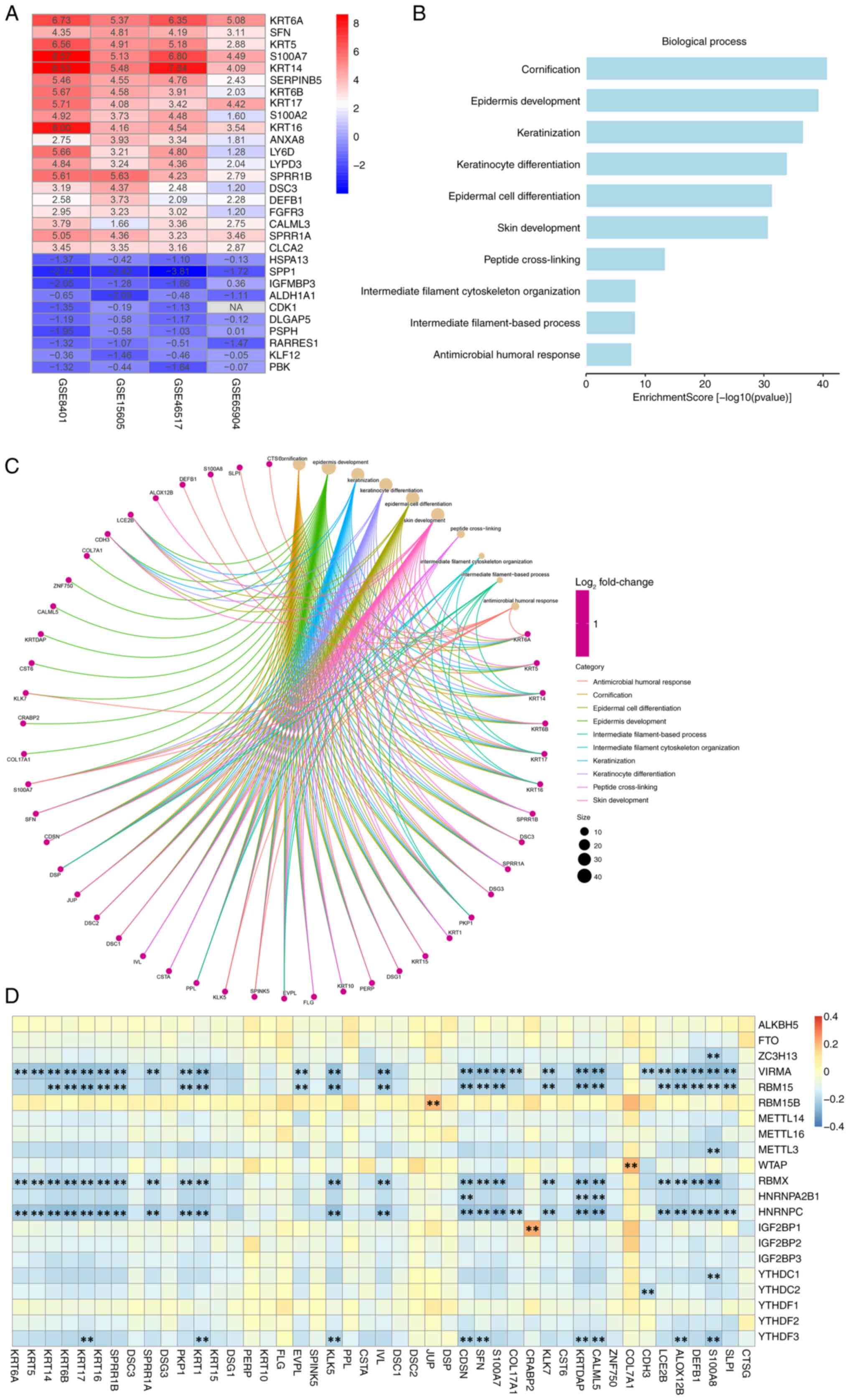
Figure 1

Critical SKCM metastasis-related
genes and signaling pathways in the GEO SKCM cohort. (A)
Identification of DEGs in 4 GEO datasets using the RobustRankAggreg
package. A heatmap of the top 20 upregulated and 10 downregulated
DEGs in the integrated GEO datasets analysis is presented: The rows
represent the genes, and the columns represent the GEO dataset.
Each cell contains the log2FoldChange value. Red
represents upregulated genes and blue represents downregulated
genes. GO analysis based on DEGs between metastatic and primary
SKCM. (B) GO enrichment analysis was performed using the
clusterProfiler package to evaluate the related biological
processes. (C) The line color of the ring graph represents the GO
terms, the points represent the genes and the size of the points
represents the count number. (D) Heatmap illustrating Pearson
correlation coefficients between metastasis-associated genes and
N6-methyladenosine regulators in SKCM, with color intensity
indicating the correlation coefficient (blue, negative; yellow,
neutral; and orange/red, positive). **P<0.01. SKCM, skin
cutaneous melanoma; GEO, Gene Expression Omnibus; DEGs,
differentially expressed genes; GO, Gene Ontology.

Figure 2

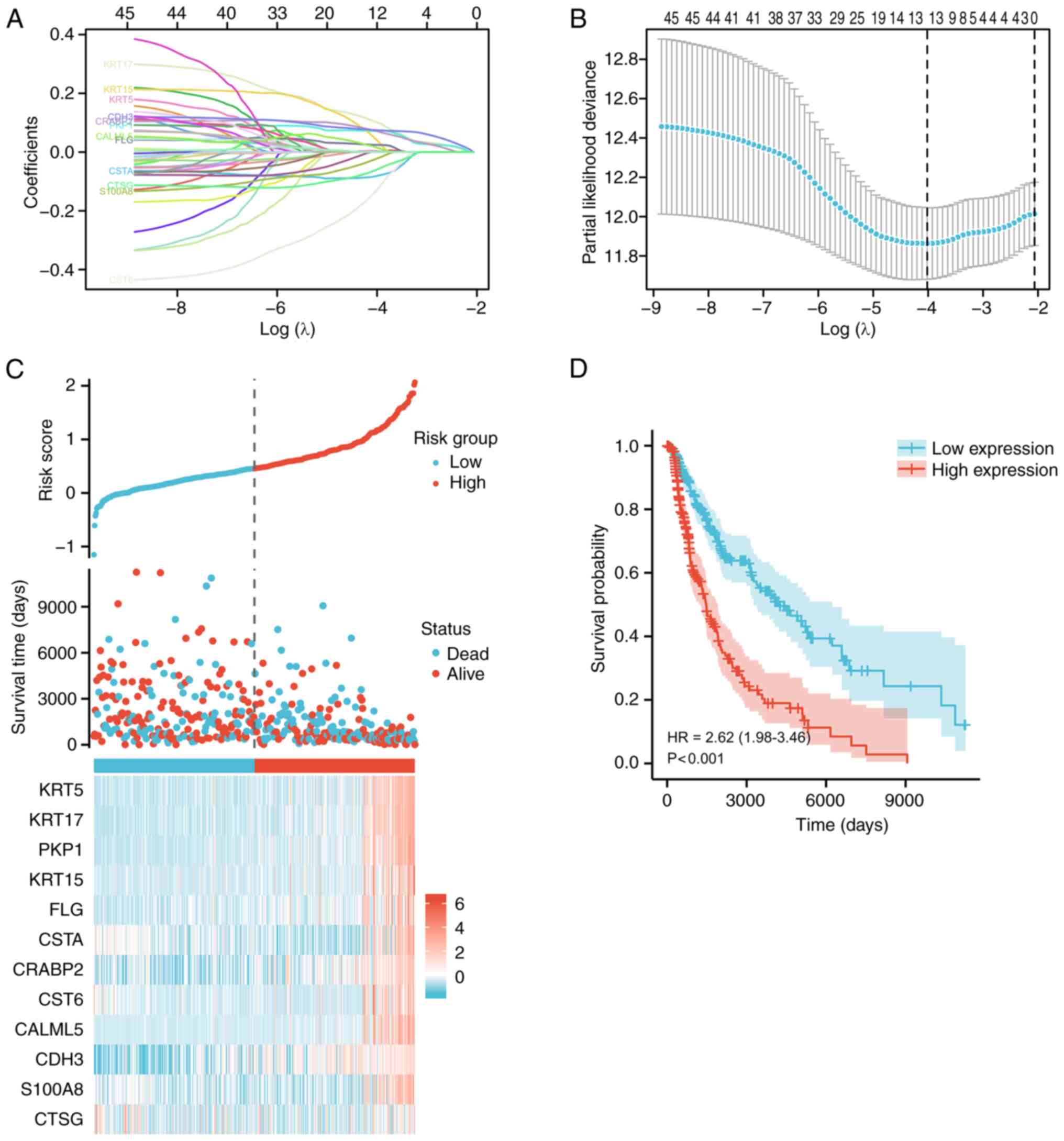
Prognostic gene signature
construction using the LASSO Cox regression analyses. (A)
Distribution of LASSO coefficients of the upregulated potential
prognostic genes in SKCM metastasis-related genes. (B) Generated
coefficient distribution plots for the logarithmic λ sequence for
the selection of the best parameter λ. (C) Overall performance of
the 12-gene signature in the TCGA-SKCM cohorts. The lower panel
presents a heatmap of the expression profiles of the 12 genes. (D)
Kaplan-Meier curves of the 12-gene signature in the TCGA-SKCM
cohort. The differences between the high- and low-risk groups were
measured using the log-rank test, using |Pearson R|>0.5 and
P<0.05 as thresholds. LASSO, least absolute shrinkage and
selection operator; TCGA, The Cancer Genome Atlas; SKCM, skin
cutaneous melanoma; HR; hazard ratio.

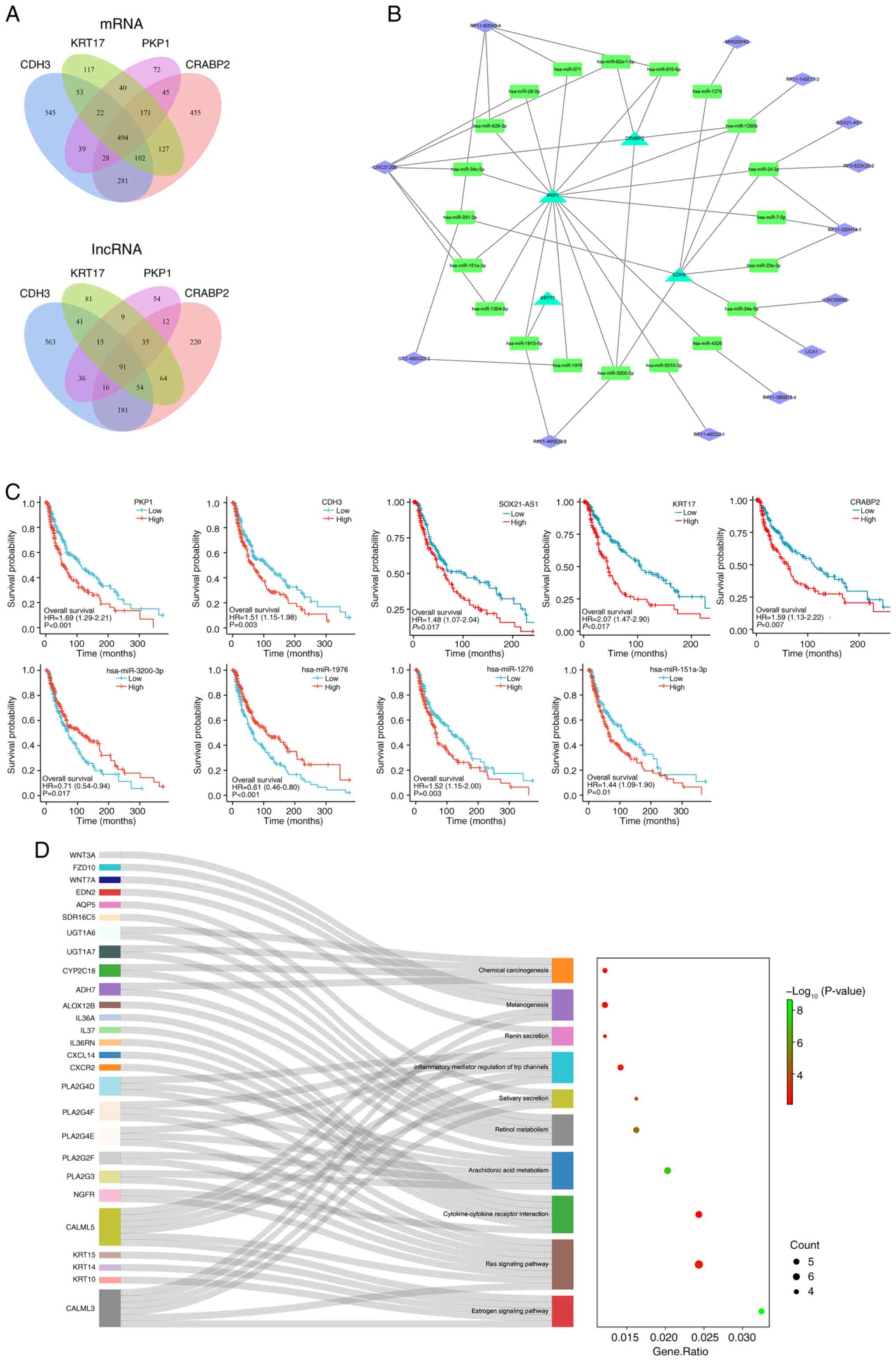
Figure 3

Construction, prognosis analysis and
enrichment analysis of the ceRNA network. (A) Venn diagram of the
co-expressed differential mRNAs and lncRNAs of CDH3, KRT17, PKP1
and CRABP2 in SKCM. (B) Global view of the ceRNA network, which
consists of 13 lncRNAs, 20 miRNAs and 4 mRNAs. Triangles,
rectangles and diamonds represent mRNAs, miRNAs and lncRNAs,
respectively. (C) Prognostic analysis of the ceRNA network
expression level in SKCM assessed using the Kaplan-Meier plotter.
KRT17, PKP1, CDH3, CRABP2, SOX21-AS1, hsa-miR-1276 and
hsa-miR-151a-3p were demonstrated to be risk factors for SKCM,
whilst hsa-miR-3200-3p, hsa-miR-1976 were protective factors for
SKCM. (D) Functional enrichment analyses of co-expressed
differential mRNAs of CDH3, KRT17, PKP1 and CRABP2 in SKCM. The
Sankey diagram shows the pathways in which the co-expressed
differential mRNAs were mainly enriched. The bubble pattern
demonstrates the top 10 enrichment pathways with Entities ratio and
Entities count. The y-axis represents the pathway and the x-axis
represents the rich factor. The size and color of each bubble
represent the number of differentially expressed genes enriched in
the pathway and the -log10(P-value), respectively.
ceRNA, competing endogenous RNA; lncRNA, long noncoding RNA; KRT17,
keratin 17; PKP1, plakophilin 1; CDH3, cadherin 3; CRABP2, cellular
retinoic acid binding protein 2; SKCM, skin cutaneous melanoma;
miRNA/miR, microRNA.

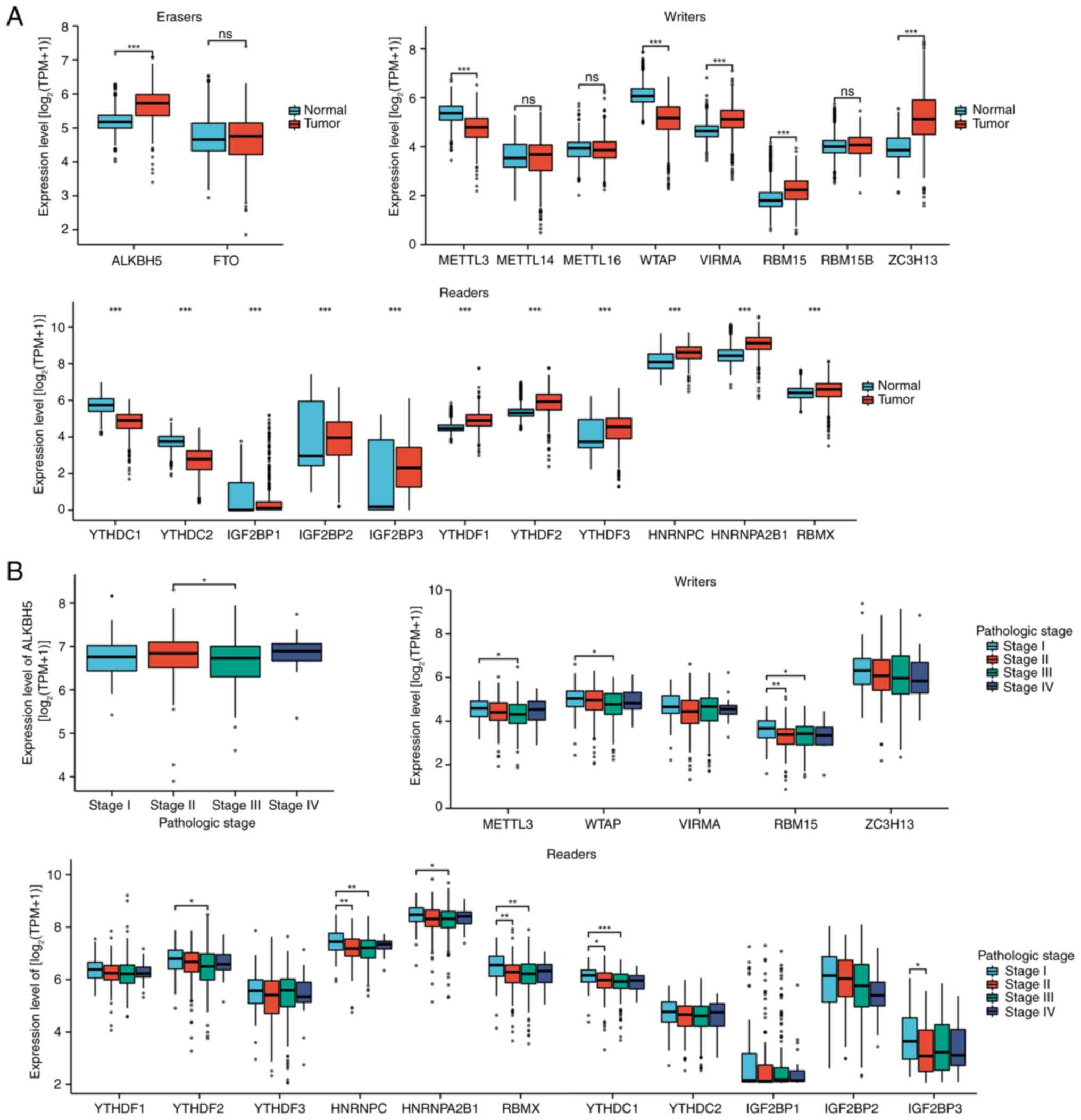
Figure 4

Association of m6A regulators with
the development and progression of SKCM. (A) Compared with normal
samples, four downregulated (METTL3, WTAP, YTHDC1 and YTHDC2) and
13 upregulated regulators (ALKBH5, VIRMA, RBM15, ZC3H13, IGF2BP1,
IGF2BP2, IGF2BP3, YTHDF1, YTHDF2, YTHDF3, HNRNPC, HNRNPA2B1 and
RBMX) were identified in tumor samples. (B) ALKBH5, METTL3, WTAP,
RBM15, YTHDF2, HNRNPC, HNRNPA2B1, RBMX, YTHDC1 and IGF2BP3
exhibited consistently higher or lower mRNA levels as SKCM clinical
staging progressed. *P<0.05; **P<0.01; ***P<0.001. m6A,
N6-methyladenosine; SKCM, skin cutaneous melanoma; METTL,
methyltransferase, m6A complex catalytic subunit; WTAP, Wilms'
tumor associated protein; YTHD, YTH m6A RNA binding protein;
ALKBH5, AlkB homolog 5, RNA demethylase; VIRMA, Vir Like m6A
methyltransferase associated; RBM, RNA binding motif protein;
ZC3H13, zinc finger CCCH-type containing 13; IGF2BP, insulin like
growth factor 2 mRNA binding protein; HNRNP heterogeneous nuclear
ribonucleoprotein; ns, not significant; TPM, transcripts per
million.

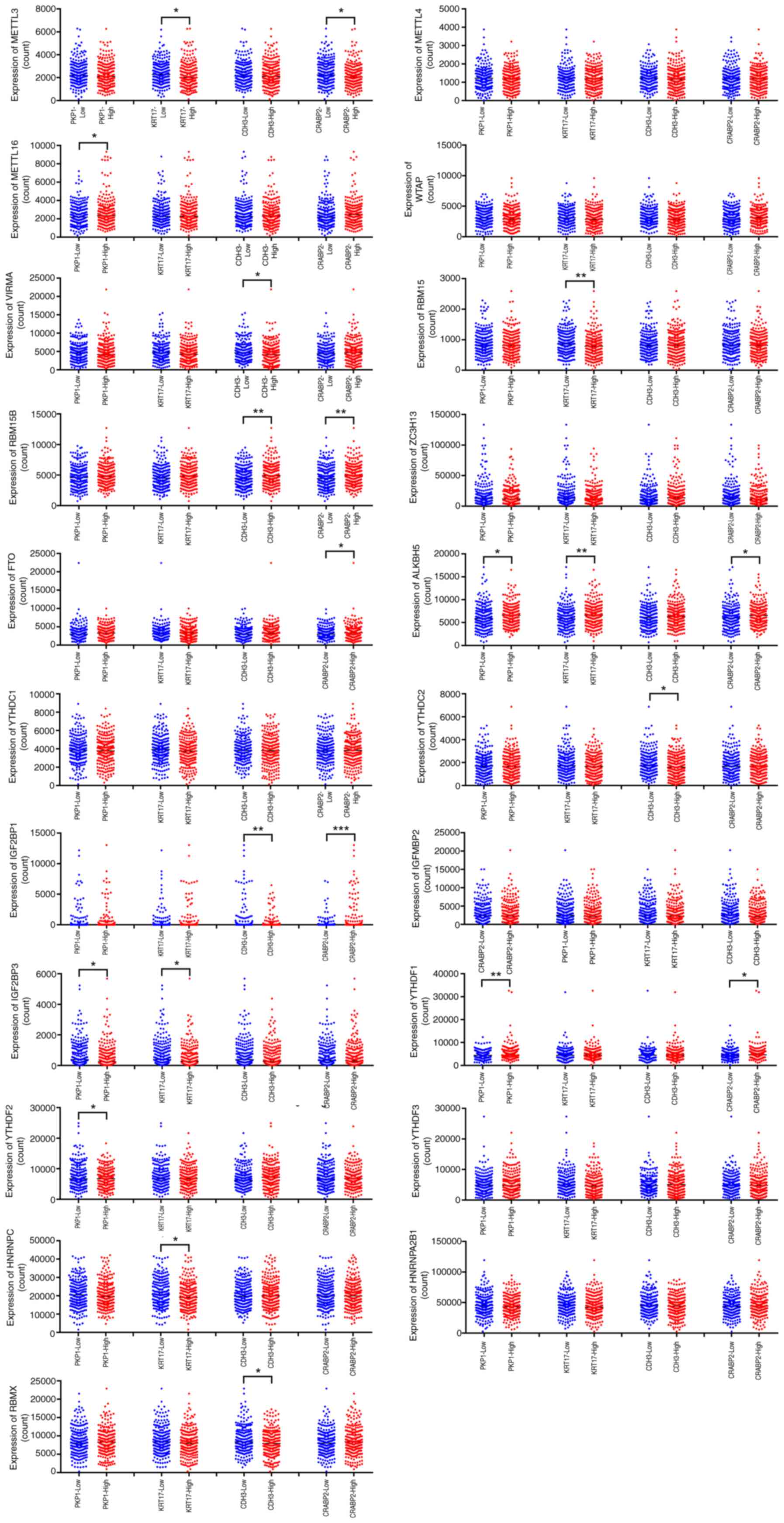
Figure 5

Association between m6A regulators
with the expression levels of KRT17, PKP1, CDH3 and CRABP2 in SKCM.
The expression level of KRT17 was associated with METTL3, RBM15,
ALKBH5, IGF2BP3 and HNRNPC; the expression level of PKP1 was
associated with METTL16, ALKBH5, IGF2BP3, YTHDF1 and YTHDF2; the
expression level of CDH3 was associated with VIRMA, RBM15B, YTHDC2,
IGF2BP1 and RBMX; the expression level of CRABP2 was associated
with METTL3, RBM15B, FTO, ALKBH5, IGF2BP1 and YTHDF1. *P<0.05;
**P<0.01; ***P<0.001. m6A, N6-methyladenosine; KRT17, keratin
17; PKP1, plakophilin 1; CDH3, cadherin 3; CRABP2, cellular
retinoic acid binding protein 2; SKCM, skin cutaneous melanoma;
METTL, methyltransferase, m6A complex catalytic subunit; WTAP,
Wilms' tumor associated protein; VIRMA, Vir Like m6A
methyltransferase associated; RBM, RNA binding motif protein;
ZC3H13, zinc finger CCCH-type containing 13; FTO, fat mass and
obesity-associated protein; ALKBH5, AlkB homolog 5, RNA
demethylase; YTHD, YTH m6A RNA binding protein; IGF2BP, insulin
like growth factor 2 mRNA binding protein; HNRNP heterogeneous
nuclear ribonucleoprotein.

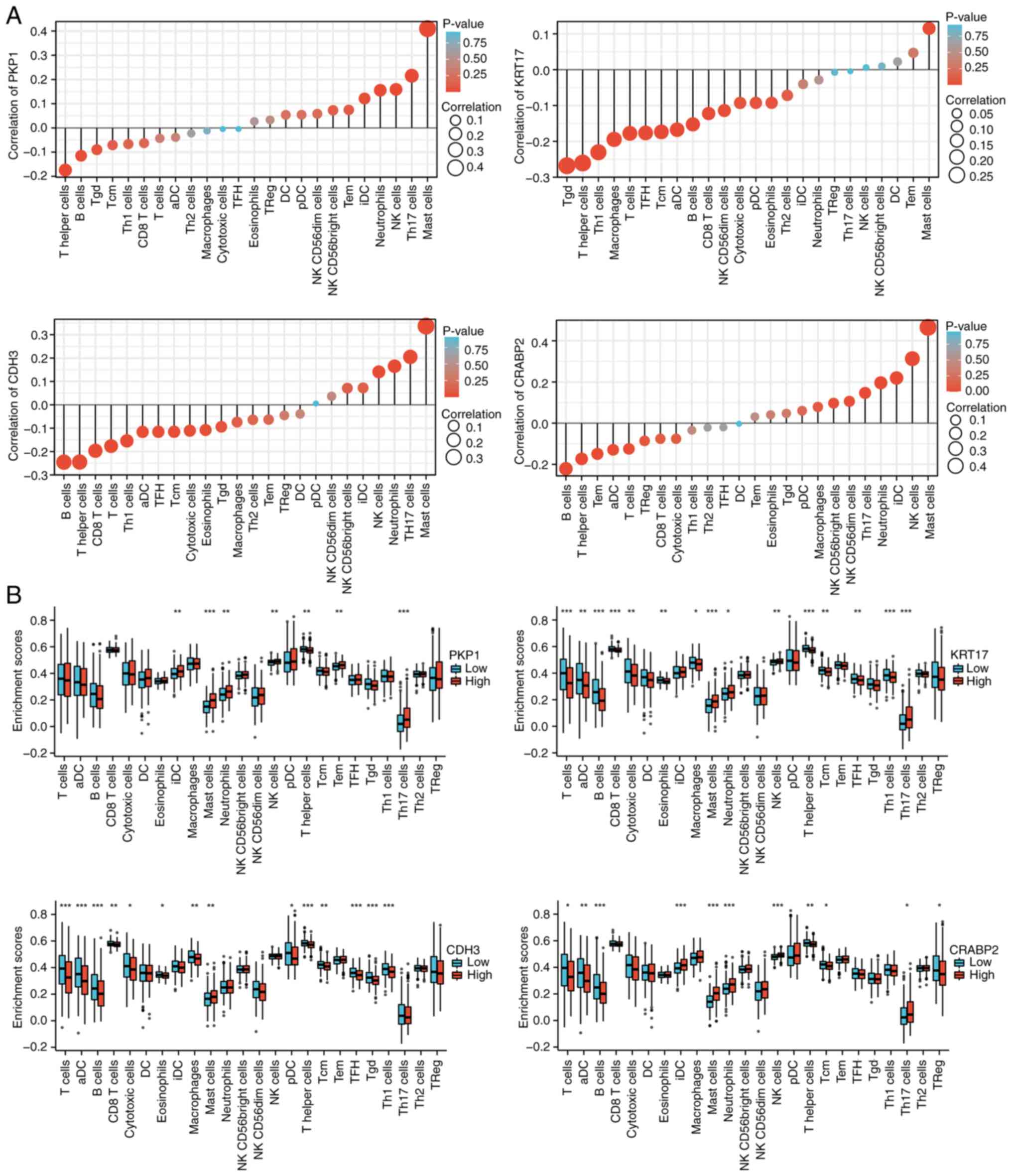
Figure 6

Immune landscape of KRT17, PKP1, CDH3
and CRABP2 expression levels in SKCM. (A) Correlations of 24 immune
cells with KRT17, PKP1, CDH3 and CRABP2 expression levels,
respectively. The size of the dots represents the absolute
Pearson's correlation coefficient values. (B). Enrichment
differences of 24 immune cell types between high- and
low-expression groups of KRT17, PKP1, CDH3 and CRABP2. *P<0.05;
**P<0.01; ***P<0.001. KRT17, keratin 17; PKP1, plakophilin 1;
CDH3, cadherin 3; CRABP2, cellular retinoic acid binding protein 2;
SKCM, skin cutaneous melanoma; NK, natural killer; DC, dendritic
cell; aDC, activated DC; TFH, follicular helper T cells; Tcm,
central memory T cells; Tgd, γδ T cells; Tem, effector memory T
cells; pDC, plasmacytoid DC; iDC, immature DC.

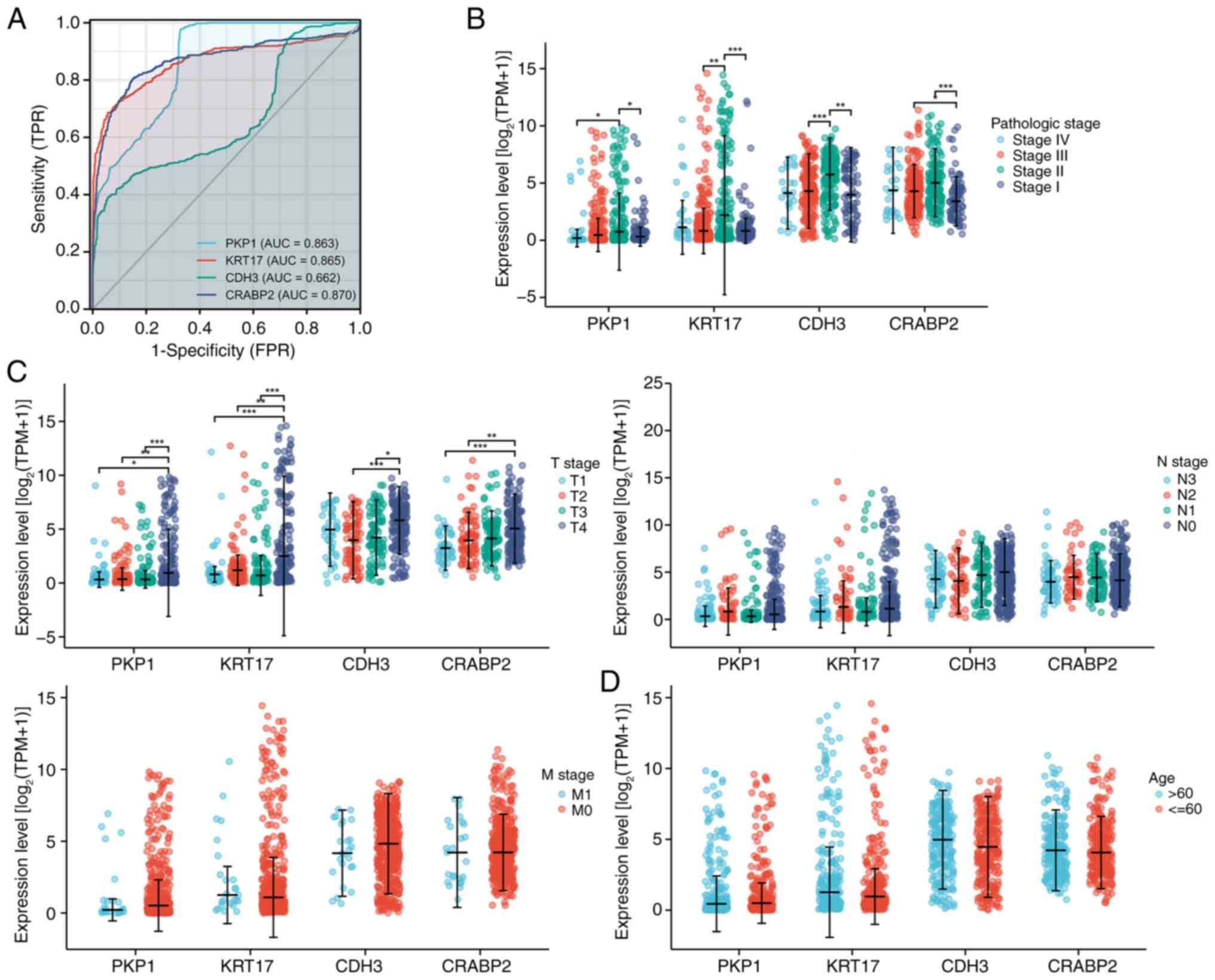
Figure 7

Clinical significance of KRT17, PKP1,
CDH3 and CRABP2 expression in patients with SKCM. (A) Receiver
operating characteristic curves of KRT17, PKP1, CDH3 and CRABP2
expression of patients with SKCM in The Cancer Genome Atlas cohort.
(B) Expression levels of KRT17, PKP1, CDH3 and CRABP2 were
positively associated with the pathological stage. (C) In TNM
staging, the expression of KRT17, PKP1, CDH3 and CRABP2 were only
significantly associated with T stage, but not with N and M stage.
(D) No association was demonstrated between KRT17, PKP1, CDH3 and
CRABP2 expression and age. *P<0.05; **P<0.01; ***P<0.001.
KRT17, keratin 17; PKP1, plakophilin 1; CDH3, cadherin 3; CRABP2,
cellular retinoic acid binding protein 2; SKCM, skin cutaneous
melanoma; TPR, true positive rate; FPR, false positive rate; AUC,
area under the curve; TPM, transcripts per million; T, tumor; N,
node; M, metastasis.

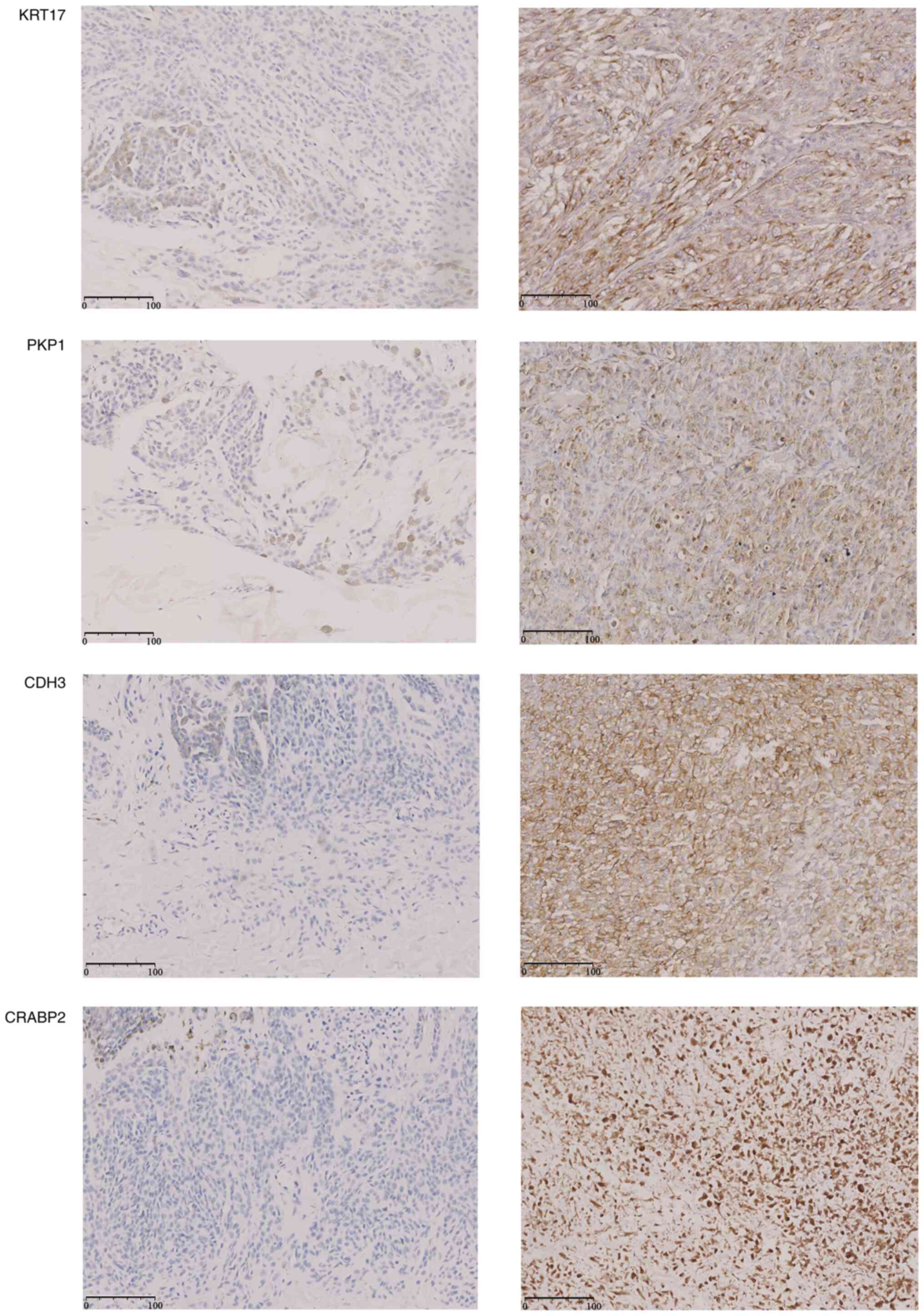
Figure 8

Expression of KRT17, PKP1, CDH3 and
CRABP2 in SKCM tissues. The expression levels of KRT17, PKP1, CDH3
and CRABP2 were markedly increased in SKCM tumor tissues (right
panels) compared with in adjacent normal tissues (left panels).
KRT17, keratin 17; PKP1, plakophilin 1; CDH3, cadherin 3; CRABP2,
cellular retinoic acid binding protein 2; SKCM, skin cutaneous
melanoma.
View References

1 

Schadendorf D, van Akkooi ACJ, Berking C, Griewank KG, Gutzmer R, Hauschild A, Stang A, Roesch A and Ugurel S: Melanoma. Lancet. 392:971–984. 2018. View Article : Google Scholar

2 

Siegel RL, Miller KD and Jemal A: Cancer statistics, 2017. CA Cancer J Clin. 67:7–30. 2017. View Article : Google Scholar : PubMed/NCBI

3 

Gershenwald JE, Scolyer RA, Hess KR, Sondak VK, Long GV, Ross MI, Lazar AJ, Faries MB, Kirkwood JM, McArthur GA, et al: Melanoma staging: Evidence-Based changes in the American joint committee on cancer eighth edition cancer staging manual. CA Cancer J Clin. 67:472–492. 2017. View Article : Google Scholar : PubMed/NCBI

4 

Slominski RM, Kim TK, Janjetovic Z, Brożyna AA, Podgorska E, Dixon KM, Mason RS, Tuckey RC, Sharma R, Crossman DK, et al: Malignant melanoma: An overview, new perspectives, and vitamin D signaling. Cancers (Basel). 16:22622024. View Article : Google Scholar : PubMed/NCBI

5 

Slominski RM, Raman C, Jetten AM and Slominski AT: Neuro-immuno-endocrinology of the skin: How environment regulates body homeostasis. Nat Rev Endocrinol. 21:495–509. 2025. View Article : Google Scholar

6 

Slominski RM, Chen JY, Raman C and Slominski AT: Photo-neuro-immuno-endocrinology: How the ultraviolet radiation regulates the body, brain, and immune system. Proc Natl Acad Sci USA. 121:e23083741212024. View Article : Google Scholar : PubMed/NCBI

7 

Tan B, Liu H, Zhang S, da Silva SR, Zhang L, Meng J, Cui X, Yuan H, Sorel O, Zhang SW, et al: Viral and cellular N6-Methyladenosine and N6,2′-O-Dimethyladenosine epitranscriptomes in the KSHV life cycle. Nat Microbiol. 3:108–120. 2018. View Article : Google Scholar

8 

Pfeifer GP: Defining driver DNA methylation changes in human cancer. Int J Mol Sci. 19:11662018. View Article : Google Scholar

9 

Wang Y, Li Y, Toth JI, Petroski MD, Zhang Z and Zhao JC: N6-Methyladenosine modification destabilizes developmental regulators in embryonic stem cells. Nat Cell Biol. 16:191–198. 2014. View Article : Google Scholar

10 

Alarcón CR, Lee H, Goodarzi H, Halberg N and Tavazoie SF: N6-Methyladenosine marks primary microRNAs for processing. Nature. 519:482–485. 2015. View Article : Google Scholar

11 

Huang H, Weng H and Chen J: m6A modification in coding and non-coding RNAs: Roles and therapeutic implications in cancer. Cancer Cell. 37:270–288. 2020. View Article : Google Scholar

12 

Huang H, Weng H and Chen J: The biogenesis and precise control of RNA m6A methylation. Trends Genet. 36:44–52. 2020. View Article : Google Scholar

13 

Huang H, Weng H, Deng X and Chen J: RNA modifications in cancer: Functions, mechanisms, and therapeutic implications. Annu Rev Cancer Biol. 4:221–240. 2020. View Article : Google Scholar

14 

Weng H, Huang H, Wu H, Qin X, Zhao BS, Dong L, Shi H, Skibbe J, Shen C, Hu C, et al: METTL14 inhibits hematopoietic stem/progenitor differentiation and promotes leukemogenesis via mRNA m6A modification. Cell Stem Cell. 22:191–205. 2018. View Article : Google Scholar

15 

Zhang C, Chen Y, Sun B, Wang L, Yang Y, Ma D, Lv J, Heng J, Ding Y, Xue Y, et al: m6A modulates haematopoietic stem and progenitor cell specification. Nature. 549:273–276. 2017. View Article : Google Scholar : PubMed/NCBI

16 

Li Z, Weng H, Su R, Weng X, Zuo Z, Li C, Huang H, Nachtergaele S, Dong L, Hu C, et al: FTO plays an oncogenic role in acute myeloid leukemia as a N6-methyladenosine RNA demethylase. Cancer Cell. 31:127–141. 2017. View Article : Google Scholar

17 

Zhang S, Zhao BS, Zhou A, Lin K, Zheng S, Lu Z, Chen Y, Sulman EP, Xie K, Bögler O, et al: m6A demethylase ALKBH5 maintains tumorigenicity of glioblastoma stem-like cells by Sustaining FOXM1 expression and cell proliferation program. Cancer Cell. 31:591–606.e6. 2017. View Article : Google Scholar

18 

Zhang C, Samanta D, Lu H, Bullen JW, Zhang H, Chen I, He X and Semenza GL: Hypoxia induces the breast cancer stem cell phenotype by HIF-dependent and ALKBH5-mediated m6A-demethylation of NANOG mRNA. Proc Natl Acad Sci USA. 113:E2047–E2056. 2016. View Article : Google Scholar : PubMed/NCBI

19 

He F, Yu J, Yang J, Wang S, Zhuang A, Shi H, Gu X, Xu X, Chai P and Jia R: m6A RNA hypermethylation-induced BACE2 boosts intracellular calcium release and accelerates tumorigenesis of ocular melanoma. Mol Ther. 29:2121–2133. 2021. View Article : Google Scholar : PubMed/NCBI

20 

Dahal U, Le K and Gupta M: RNA m6A methyltransferase METTL3 regulates invasiveness of melanoma cells by matrix metallopeptidase 2. Melanoma Res. 29:382–389. 2019. View Article : Google Scholar : PubMed/NCBI

21 

Xu L, Shen SS, Hoshida Y, Subramanian A, Ross K, Brunet JP, Wagner SN, Ramaswamy S, Mesirov JP and Hynes RO: Gene expression changes in an animal melanoma model correlate with aggressiveness of human melanoma metastases. Mol Cancer Res. 6:760–769. 2008. View Article : Google Scholar : PubMed/NCBI

22 

Cabrita R, Lauss M, Sanna A, Donia M, Larsen MS, Mitra S, Johansson I, Phung B, Harbst K, Vallon-Christersson J, et al: Tertiary lymphoid structures improve immunotherapy and survival in melanoma. Nature. 577:561–565. 2020. View Article : Google Scholar : PubMed/NCBI

23 

Singh MP, Sethuraman SN, Ritchey J, Fiering S, Guha C, Malayer J and Ranjan A: In-situ vaccination using focused ultrasound heating and anti-CD-40 agonistic antibody enhances T-cell mediated local and abscopal effects in murine melanoma. Int J Hyperthermia. 36:64–73. 2019. View Article : Google Scholar

24 

Raskin L, Fullen DR, Giordano TJ, Thomas DG, Frohm ML, Cha KB, Ahn J, Mukherjee B, Johnson TM and Gruber SB: Transcriptome profiling identifies HMGA2 as a biomarker of melanoma progression and prognosis. J Invest Dermatol. 133:2585–2592. 2013. View Article : Google Scholar

25 

Xu F, Lin H, He P, He L, Chen J, Lin L and Chen Y: A TP53-associated gene signature for prediction of prognosis and therapeutic responses in lung squamous cell carcinoma. Oncoimmunology. 9:17319432020. View Article : Google Scholar : PubMed/NCBI

26 

Li H, Han D, Hou Y, Chen H and Chen Z: Statistical inference methods for two crossing survival curves: A comparison of methods. PLoS One. 10:e01167742015. View Article : Google Scholar : PubMed/NCBI

27 

Love MI, Huber W and Anders S: Moderated estimation of fold change and dispersion for RNA-Seq data with DESeq2. Genome Biol. 15:5502014. View Article : Google Scholar

28 

Kolde R, Laur S, Adler P and Vilo J: Robust rank aggregation for gene list integration and meta-analysis. Bioinformatics. 28:573–580. 2012. View Article : Google Scholar : PubMed/NCBI

29 

Zhou Y, Zhou B, Pache L, Chang M, Khodabakhshi A.H, Tanaseichuk O, Benner C and Chanda SK: Metascape provides a biologist-oriented resource for the analysis of systems-level datasets. Nat Commun. 10:15232019. View Article : Google Scholar : PubMed/NCBI

30 

Shannon P, Markiel A, Ozier O, Baliga NS, Wang JT, Ramage D, Amin N, Schwikowski B and Ideker T: Cytoscape: A software environment for integrated models of biomolecular interaction networks. Genome Res. 13:2498–2504. 2003. View Article : Google Scholar : PubMed/NCBI

31 

Subramanian A, Tamayo P, Mootha VK, Mukherjee S, Ebert BL, Gillette MA, Paulovich A, Pomeroy SL, Golub TR, Lander ES and Mesirov JP: Gene set enrichment analysis: A knowledge-based approach for interpreting genome-wide expression profiles. Proc Natl Acad Sci USA. 102:15545–15550. 2005. View Article : Google Scholar : PubMed/NCBI

32 

Zaccara S, Ries RJ and Jaffrey SR: Reading, writing and erasing mRNA methylation. Nat Rev Mol Cell Biol. 20:608–624. 2019. View Article : Google Scholar

33 

Enright AJ, John B, Gaul U, Tuschl T, Sander C and Marks DS: MicroRNA targets in drosophila. Genome Biol. 5:R12003. View Article : Google Scholar

34 

Hänzelmann S, Castelo R and Guinney J.GSVA: Gene set variation analysis for microarray and RNA-Seq data. BMC Bioinformatics. 14:72013.

35 

Bindea G, Mlecnik B, Tosolini M, Kirilovsky A, Waldner M, Obenauf AC, Angell H, Fredriksen T, Lafontaine L, Berger A, et al: Spatiotemporal dynamics of intratumoral immune cells reveal the immune landscape in human cancer. Immunity. 39:782–795. 2013. View Article : Google Scholar : PubMed/NCBI

36 

Livak KJ and Schmittgen TD: Analysis of relative gene expression data using real-time quantitative PCR and the 2(−Delta Delta C(T)) method. Methods. 25:402–408. 2001. View Article : Google Scholar : PubMed/NCBI

37 

Salmena L, Poliseno L, Tay Y, Kats L and Pandolfi PP: A ceRNA hypothesis: The rosetta stone of a hidden RNA language? Cell. 146:353–358. 2011. View Article : Google Scholar

38 

Markovic SN, Erickson LA, Rao RD, Weenig RH, Pockaj BA, Bardia A, Vachon CM, Schild SE, McWilliams RR, Hand JL, et al: Malignant melanoma in the 21st century, part 1: Epidemiology, risk factors, screening, prevention, and diagnosis. Mayo Clin Proc. 82:364–380. 2007. View Article : Google Scholar

39 

Osipov M and Sokolnikov M: Previous malignancy as a risk factor for the second solid cancer in a cohort of nuclear workers. SciMedicine J. 3:8–15. 2021. View Article : Google Scholar

40 

Jiang X, Liu B, Nie Z, Duan L, Xiong Q, Jin Z, Yang C and Chen Y: The role of m6A modification in the biological functions and diseases. Signal Transduct Target Ther. 6:742021. View Article : Google Scholar : PubMed/NCBI

41 

Wang X, Li Z, Kong B, Song C, Cong J, Hou J and Wang S: Reduced m6A mRNA methylation is correlated with the progression of human cervical cancer. Oncotarget. 8:98918–98930. 2017. View Article : Google Scholar

42 

Kwok CT, Marshall AD, Rasko JEJ and Wong JJL: Genetic alterations of m6A regulators predict poorer survival in acute myeloid leukemia. J Hematol Oncol. 10:392017. View Article : Google Scholar

43 

Cho SH, Ha M, Cho YH, Ryu JH, Yang K, Lee KH, Han ME, Oh SO and Kim YH: ALKBH5 gene is a novel biomarker that predicts the prognosis of pancreatic cancer: A retrospective multicohort study. Ann Hepatobiliary Pancreat Surg. 22:305–309. 2018. View Article : Google Scholar : PubMed/NCBI

44 

Zhao X, Chen Y, Mao Q, Jiang X, Jiang W, Chen J, Xu W, Zhong L and Sun X: Overexpression of YTHDF1 is associated with poor prognosis in patients with hepatocellular carcinoma. Cancer Biomarkers. 21:859–868. 2018. View Article : Google Scholar : PubMed/NCBI

45 

Slebos RJC, Jehmlich N, Brown B, Yin Z, Chung CH, Yarbrough WG and Liebler DC: Proteomic analysis of oropharyngeal carcinomas reveals novel HPV-associated biological pathways. Int J Cancer. 132:568–579. 2012. View Article : Google Scholar : PubMed/NCBI

46 

Deng X, Su R, Feng X, Wei M and Chen J: Role of N6-methyladenosine modification in cancer. Curr Opin Genet Dev. 48:1–7. 2018. View Article : Google Scholar : PubMed/NCBI

47 

Slominski RM, Sarna T, Płonka PM, Raman C, Brożyna AA and Slominski AT: Melanoma, melanin, and melanogenesis: The yin and yang relationship. Front Oncol. 12:8424962022. View Article : Google Scholar

48 

Han W, Hu C, Fan ZJ and Shen GL: Transcript levels of keratin 1/5/6/14/15/16/17 as potential prognostic indicators in melanoma patients. Sci Rep. 11:10232021. View Article : Google Scholar : PubMed/NCBI

49 

Han Y, Li X, Yan J, Ma C, Wang X, Pan H, Zheng X, Zhang Z, Gao B and Ji XY: Bioinformatic analysis identifies potential key genes in the pathogenesis of melanoma. Front Oncol. 10:5819852020. View Article : Google Scholar

50 

Kodet O, Lacina L, Krejčí E, Dvořánková B, Grim M, Štork J, Kodetová D, Vlček Č, Šáchová J, Kolář M, et al: Melanoma cells influence the differentiation pattern of human epidermal keratinocytes. Mol Cancer. 14:12015. View Article : Google Scholar : PubMed/NCBI

51 

van de Rijn M, Perou CM, Tibshirani R, Haas P, Kallioniemi O, Kononen J, Torhorst J, Sauter G, Zuber M, Köchli OR, et al: Expression of cytokeratins 17 and 5 identifies a group of breast carcinomas with poor clinical outcome. Am J Pathol. 161:1991–1996. 2002. View Article : Google Scholar

52 

Wang YF, Lang HY, Yuan J, Wang J, Wang R, Zhang XH, Zhang J, Zhao T, Li YR, Liu JY, et al: Overexpression of keratin 17 is associated with poor prognosis in epithelial ovarian cancer. Tumour Biol. 34:1685–1689. 2013. View Article : Google Scholar

53 

Escobar-Hoyos LF, Yang J, Zhu J, Cavallo JA, Zhai H, Burke S, Koller A, Chen EI and Shroyer KR: Keratin 17 in premalignant and malignant squamous lesions of the cervix: Proteomic discovery and immunohistochemical validation as a diagnostic and prognostic biomarker. Mod Pathol. 27:621–630. 2014. View Article : Google Scholar

54 

Chivu-Economescu M, Dragu DL, Necula LG, Matei L, Enciu AM, Bleotu C and Diaconu CC: Knockdown of KRT17 by siRNA induces antitumoral effects on gastric cancer cells. Gastric Cancer. 20:948–959. 2017. View Article : Google Scholar : PubMed/NCBI

55 

Harris TM, Du P, Kawachi N, Belbin TJ, Wang Y, Schlecht NF, Ow TJ, Keller CE, Childs GJ, Smith RV, et al: Proteomic analysis of oral cavity squamous cell carcinoma specimens identifies patient outcome-associated proteins. Arch Pathol Lab Med. 139:494–507. 2015. View Article : Google Scholar : PubMed/NCBI

56 

Kaz AM, Luo Y, Dzieciatkowski S, Chak A, Willis JE, Upton MP, Leidner RS and Grady WM: Aberrantly methylated PKP1 in the progression of Barrett's esophagus to esophageal adenocarcinoma. Genes Chromosomes Cancer. 51:384–393. 2011. View Article : Google Scholar : PubMed/NCBI

57 

Haase D, Cui T, Yang L, Ma Y, Liu H, Theis B, Petersen I and Chen Y: Plakophilin 1 is methylated and has a tumor suppressive activity in human lung cancer. Exp Mol Pathol. 108:73–79. 2019. View Article : Google Scholar

58 

Xu Y, Zhao J, Dai X, Xie Y and Dong M: High expression of CDH3 predicts a good prognosis for colon adenocarcinoma patients. Exp Ther Med. 18:841–847. 2019.PubMed/NCBI

59 

Zhai J, Li S, Sen S, Opoku-Anane J, Du Y, Chen ZJ and Giudice LC: m6A RNA methylation regulators contribute to eutopic endometrium and myometrium dysfunction in adenomyosis. Front Genet. 11:71620202020. View Article : Google Scholar

60 

Yan J, Wu X, Yu J, Zhu Y and Cang S: Prognostic role of tumor mutation burden combined with immune infiltrates in skin cutaneous melanoma based on multi-omics analysis. Front Oncol. 10:5706542020. View Article : Google Scholar

61 

Zhang C, Zhi WI, Lu H, Samanta D, Chen I, Gabrielson E and Semenza GL: Hypoxia-Inducible factors regulate pluripotency factor expression by ZNF217- and ALKBH5-mediated modulation of RNA methylation in breast cancer cells. Oncotarget. 7:64527–64542. 2016. View Article : Google Scholar

62 

Chao Y, Shang J and Ji W: ALKBH5-m6A-FOXM1 signaling axis promotes proliferation and invasion of lung adenocarcinoma cells under intermittent hypoxia. Biochem Biophys Res Commun. 521:499–506. 2020. View Article : Google Scholar : PubMed/NCBI

63 

Schöller E, Weichmann F, Treiber T, Ringle S, Treiber N, Flatley A, Feederle R, Bruckmann A and Meister G: Interactions, localization, and phosphorylation of the m6A generating METTL3-METTL14-WTAP complex. RNA. 24:499–512. 2018. View Article : Google Scholar

64 

Chen Y, Peng C, Chen J, Chen D, Yang B, He B, Hu W, Zhang Y, Liu H, Dai L, et al: WTAP facilitates progression of hepatocellular carcinoma via m6A-HuR-dependent epigenetic silencing of ETS1. Mol Cancer. 18:1272019. View Article : Google Scholar : PubMed/NCBI

65 

Ma JZ, Yang F, Zhou CC, Liu F, Yuan JH, Wang F, Wang TT, Xu QG, Zhou WP and Sun SH: METTL14 suppresses the metastatic potential of hepatocellular carcinoma by modulating N6-methyladenosine-dependent primary MicroRNA processing. Hepatology. 65:529–543. 2016. View Article : Google Scholar : PubMed/NCBI

66 

Chen M, Wei L, Law CT, Tsang FHC, Shen J, Cheng CLH, Tsang LH, Ho DWH, Chiu DKC, Lee JMF, et al: RNA N6-methyladenosine methyltransferase-like 3 promotes liver cancer progression through YTHDF2-dependent posttranscriptional silencing of SOCS2. Hepatology. 67:2254–2270. 2018. View Article : Google Scholar : PubMed/NCBI

67 

Georganaki M, Ramachandran M, Tuit S, Núñez NG, Karampatzakis A, Fotaki G, van Hooren L, Huang H, Lugano R, Ulas T, et al: Tumor endothelial cell up-regulation of IDO1 is an immunosuppressive feed-back mechanism that reduces the response to CD40-stimulating immunotherapy. Oncoimmunology. 9:17305382020. View Article : Google Scholar : PubMed/NCBI

68 

Slominski RM, Raman C, Chen JY and Slominski AT: How cancer hijacks the body's homeostasis through the neuroendocrine system. Trends Neurosci. 46:263–275. 2023. View Article : Google Scholar

Related Articles

  • Abstract
  • View
  • Download
  • Twitter
Copy and paste a formatted citation
Spandidos Publications style
Geng Y, Zhao S, Geng T, Xu X and Zhang X: m6A RNA methylation regulator‑associated genes drive metastasis and immune cell infiltration in skin cutaneous melanoma. Oncol Lett 30: 604, 2025.
APA
Geng, Y., Zhao, S., Geng, T., Xu, X., & Zhang, X. (2025). m6A RNA methylation regulator‑associated genes drive metastasis and immune cell infiltration in skin cutaneous melanoma. Oncology Letters, 30, 604. https://doi.org/10.3892/ol.2025.15350
MLA
Geng, Y., Zhao, S., Geng, T., Xu, X., Zhang, X."m6A RNA methylation regulator‑associated genes drive metastasis and immune cell infiltration in skin cutaneous melanoma". Oncology Letters 30.6 (2025): 604.
Chicago
Geng, Y., Zhao, S., Geng, T., Xu, X., Zhang, X."m6A RNA methylation regulator‑associated genes drive metastasis and immune cell infiltration in skin cutaneous melanoma". Oncology Letters 30, no. 6 (2025): 604. https://doi.org/10.3892/ol.2025.15350
Copy and paste a formatted citation
x
Spandidos Publications style
Geng Y, Zhao S, Geng T, Xu X and Zhang X: m6A RNA methylation regulator‑associated genes drive metastasis and immune cell infiltration in skin cutaneous melanoma. Oncol Lett 30: 604, 2025.
APA
Geng, Y., Zhao, S., Geng, T., Xu, X., & Zhang, X. (2025). m6A RNA methylation regulator‑associated genes drive metastasis and immune cell infiltration in skin cutaneous melanoma. Oncology Letters, 30, 604. https://doi.org/10.3892/ol.2025.15350
MLA
Geng, Y., Zhao, S., Geng, T., Xu, X., Zhang, X."m6A RNA methylation regulator‑associated genes drive metastasis and immune cell infiltration in skin cutaneous melanoma". Oncology Letters 30.6 (2025): 604.
Chicago
Geng, Y., Zhao, S., Geng, T., Xu, X., Zhang, X."m6A RNA methylation regulator‑associated genes drive metastasis and immune cell infiltration in skin cutaneous melanoma". Oncology Letters 30, no. 6 (2025): 604. https://doi.org/10.3892/ol.2025.15350
Follow us
  • Twitter
  • LinkedIn
  • Facebook
About
  • Spandidos Publications
  • Careers
  • Cookie Policy
  • Privacy Policy
How can we help?
  • Help
  • Live Chat
  • Contact
  • Email to our Support Team