Spandidos Publications Logo
  • About
    • About Spandidos
    • Aims and Scopes
    • Abstracting and Indexing
    • Editorial Policies
    • Reprints and Permissions
    • Job Opportunities
    • Terms and Conditions
    • Contact
  • Journals
    • All Journals
    • Oncology Letters
      • Oncology Letters
      • Information for Authors
      • Editorial Policies
      • Editorial Board
      • Aims and Scope
      • Abstracting and Indexing
      • Bibliographic Information
      • Archive
    • International Journal of Oncology
      • International Journal of Oncology
      • Information for Authors
      • Editorial Policies
      • Editorial Board
      • Aims and Scope
      • Abstracting and Indexing
      • Bibliographic Information
      • Archive
    • Molecular and Clinical Oncology
      • Molecular and Clinical Oncology
      • Information for Authors
      • Editorial Policies
      • Editorial Board
      • Aims and Scope
      • Abstracting and Indexing
      • Bibliographic Information
      • Archive
    • Experimental and Therapeutic Medicine
      • Experimental and Therapeutic Medicine
      • Information for Authors
      • Editorial Policies
      • Editorial Board
      • Aims and Scope
      • Abstracting and Indexing
      • Bibliographic Information
      • Archive
    • International Journal of Molecular Medicine
      • International Journal of Molecular Medicine
      • Information for Authors
      • Editorial Policies
      • Editorial Board
      • Aims and Scope
      • Abstracting and Indexing
      • Bibliographic Information
      • Archive
    • Biomedical Reports
      • Biomedical Reports
      • Information for Authors
      • Editorial Policies
      • Editorial Board
      • Aims and Scope
      • Abstracting and Indexing
      • Bibliographic Information
      • Archive
    • Oncology Reports
      • Oncology Reports
      • Information for Authors
      • Editorial Policies
      • Editorial Board
      • Aims and Scope
      • Abstracting and Indexing
      • Bibliographic Information
      • Archive
    • Molecular Medicine Reports
      • Molecular Medicine Reports
      • Information for Authors
      • Editorial Policies
      • Editorial Board
      • Aims and Scope
      • Abstracting and Indexing
      • Bibliographic Information
      • Archive
    • World Academy of Sciences Journal
      • World Academy of Sciences Journal
      • Information for Authors
      • Editorial Policies
      • Editorial Board
      • Aims and Scope
      • Abstracting and Indexing
      • Bibliographic Information
      • Archive
    • International Journal of Functional Nutrition
      • International Journal of Functional Nutrition
      • Information for Authors
      • Editorial Policies
      • Editorial Board
      • Aims and Scope
      • Abstracting and Indexing
      • Bibliographic Information
      • Archive
    • International Journal of Epigenetics
      • International Journal of Epigenetics
      • Information for Authors
      • Editorial Policies
      • Editorial Board
      • Aims and Scope
      • Abstracting and Indexing
      • Bibliographic Information
      • Archive
    • Medicine International
      • Medicine International
      • Information for Authors
      • Editorial Policies
      • Editorial Board
      • Aims and Scope
      • Abstracting and Indexing
      • Bibliographic Information
      • Archive
  • Articles
  • Information
    • Information for Authors
    • Information for Reviewers
    • Information for Librarians
    • Information for Advertisers
    • Conferences
  • Language Editing
Spandidos Publications Logo
  • About
    • About Spandidos
    • Aims and Scopes
    • Abstracting and Indexing
    • Editorial Policies
    • Reprints and Permissions
    • Job Opportunities
    • Terms and Conditions
    • Contact
  • Journals
    • All Journals
    • Biomedical Reports
      • Information for Authors
      • Editorial Policies
      • Editorial Board
      • Aims and Scope
      • Abstracting and Indexing
      • Bibliographic Information
      • Archive
    • Experimental and Therapeutic Medicine
      • Information for Authors
      • Editorial Policies
      • Editorial Board
      • Aims and Scope
      • Abstracting and Indexing
      • Bibliographic Information
      • Archive
    • International Journal of Epigenetics
      • Information for Authors
      • Editorial Policies
      • Editorial Board
      • Aims and Scope
      • Abstracting and Indexing
      • Bibliographic Information
      • Archive
    • International Journal of Functional Nutrition
      • Information for Authors
      • Editorial Policies
      • Editorial Board
      • Aims and Scope
      • Abstracting and Indexing
      • Bibliographic Information
      • Archive
    • International Journal of Molecular Medicine
      • Information for Authors
      • Editorial Policies
      • Editorial Board
      • Aims and Scope
      • Abstracting and Indexing
      • Bibliographic Information
      • Archive
    • International Journal of Oncology
      • Information for Authors
      • Editorial Policies
      • Editorial Board
      • Aims and Scope
      • Abstracting and Indexing
      • Bibliographic Information
      • Archive
    • Medicine International
      • Information for Authors
      • Editorial Policies
      • Editorial Board
      • Aims and Scope
      • Abstracting and Indexing
      • Bibliographic Information
      • Archive
    • Molecular and Clinical Oncology
      • Information for Authors
      • Editorial Policies
      • Editorial Board
      • Aims and Scope
      • Abstracting and Indexing
      • Bibliographic Information
      • Archive
    • Molecular Medicine Reports
      • Information for Authors
      • Editorial Policies
      • Editorial Board
      • Aims and Scope
      • Abstracting and Indexing
      • Bibliographic Information
      • Archive
    • Oncology Letters
      • Information for Authors
      • Editorial Policies
      • Editorial Board
      • Aims and Scope
      • Abstracting and Indexing
      • Bibliographic Information
      • Archive
    • Oncology Reports
      • Information for Authors
      • Editorial Policies
      • Editorial Board
      • Aims and Scope
      • Abstracting and Indexing
      • Bibliographic Information
      • Archive
    • World Academy of Sciences Journal
      • Information for Authors
      • Editorial Policies
      • Editorial Board
      • Aims and Scope
      • Abstracting and Indexing
      • Bibliographic Information
      • Archive
  • Articles
  • Information
    • For Authors
    • For Reviewers
    • For Librarians
    • For Advertisers
    • Conferences
  • Language Editing
Login Register Submit
  • This site uses cookies
  • You can change your cookie settings at any time by following the instructions in our Cookie Policy. To find out more, you may read our Privacy Policy.

    I agree
Search articles by DOI, keyword, author or affiliation
Search
Advanced Search
presentation
Oncology Letters
Join Editorial Board Propose a Special Issue
Print ISSN: 1792-1074 Online ISSN: 1792-1082
Journal Cover
December-2025 Volume 30 Issue 6

Full Size Image

Sign up for eToc alerts
Recommend to Library

Journals

International Journal of Molecular Medicine

International Journal of Molecular Medicine

International Journal of Molecular Medicine is an international journal devoted to molecular mechanisms of human disease.

International Journal of Oncology

International Journal of Oncology

International Journal of Oncology is an international journal devoted to oncology research and cancer treatment.

Molecular Medicine Reports

Molecular Medicine Reports

Covers molecular medicine topics such as pharmacology, pathology, genetics, neuroscience, infectious diseases, molecular cardiology, and molecular surgery.

Oncology Reports

Oncology Reports

Oncology Reports is an international journal devoted to fundamental and applied research in Oncology.

Experimental and Therapeutic Medicine

Experimental and Therapeutic Medicine

Experimental and Therapeutic Medicine is an international journal devoted to laboratory and clinical medicine.

Oncology Letters

Oncology Letters

Oncology Letters is an international journal devoted to Experimental and Clinical Oncology.

Biomedical Reports

Biomedical Reports

Explores a wide range of biological and medical fields, including pharmacology, genetics, microbiology, neuroscience, and molecular cardiology.

Molecular and Clinical Oncology

Molecular and Clinical Oncology

International journal addressing all aspects of oncology research, from tumorigenesis and oncogenes to chemotherapy and metastasis.

World Academy of Sciences Journal

World Academy of Sciences Journal

Multidisciplinary open-access journal spanning biochemistry, genetics, neuroscience, environmental health, and synthetic biology.

International Journal of Functional Nutrition

International Journal of Functional Nutrition

Open-access journal combining biochemistry, pharmacology, immunology, and genetics to advance health through functional nutrition.

International Journal of Epigenetics

International Journal of Epigenetics

Publishes open-access research on using epigenetics to advance understanding and treatment of human disease.

Medicine International

Medicine International

An International Open Access Journal Devoted to General Medicine.

Journal Cover
December-2025 Volume 30 Issue 6

Full Size Image

Sign up for eToc alerts
Recommend to Library

  • Article
  • Citations
    • Cite This Article
    • Download Citation
    • Create Citation Alert
    • Remove Citation Alert
    • Cited By
  • Similar Articles
    • Related Articles (in Spandidos Publications)
    • Similar Articles (Google Scholar)
    • Similar Articles (PubMed)
  • Download PDF
  • Download XML
  • View XML
Article Open Access

Role and molecular mechanisms of hypoxia‑derived exosomal miR‑301a on gemcitabine resistance in pancreatic cancer

  • Authors:
    • Weiwei Qu
    • Wanyi Tan
    • Mengjie Ye
    • Weixiang Tang
    • Lijun Zhang
    • Guangtao Luo
  • View Affiliations / Copyright

    Affiliations: Department of General Surgery, The First Affiliated Hospital of Anhui Medical University, Hefei, Anhui 230022, P.R. China, Department of General Surgery, Haining People's Hospital, Haining, Zhejiang 314400, P.R. China, Department of Anaesthesiology, The First Affiliated Hospital of Anhui Medical University, Hefei, Anhui 230022, P.R. China, Department of Histology and Embryology, School of Basic Medical Sciences, Anhui Medical University, Hefei, Anhui 230032, P.R. China
    Copyright: © Qu et al. This is an open access article distributed under the terms of Creative Commons Attribution License.
  • Article Number: 606
    |
    Published online on: October 21, 2025
       https://doi.org/10.3892/ol.2025.15352
  • Expand metrics +
Metrics: Total Views: 0 (Spandidos Publications: | PMC Statistics: )
Metrics: Total PDF Downloads: 0 (Spandidos Publications: | PMC Statistics: )
Cited By (CrossRef): 0 citations Loading Articles...

This article is mentioned in:


Abstract

Pancreatic cancer is a highly aggressive digestive malignancy and gemcitabine (GEM)‑based chemotherapy remains a cornerstone of its treatment despite widespread resistance. The present study employed human pancreatic cancer cell lines to construct a hypoxia model, exosomes were isolated and characterized via ultracentrifugation, microRNA (miR)‑301a expression was detected using reverse transcription‑quantitative PCR, GEM resistance was evaluated via the Cell Counting Kit‑8 assay and the molecular mechanisms were validated by western blotting. The present study results demonstrated that under hypoxic stress, pancreatic cancer cells displayed morphological adaptations typical of cellular stress responses, upregulated miR‑301a expression and markedly enhanced GEM resistance. Hypoxia increases the number of exosomes, which can transfer miR‑301a to normoxic pancreatic cancer cells. Under normoxic conditions, inhibiting miR‑301a expression markedly increased the sensitivity of pancreatic cancer cells to GEM. Furthermore, miR‑301a promoted the development of drug resistance by regulating acyl‑CoA synthetase long‑chain family member 4 (ACSL4) expression. In conclusion, the present study revealed a novel mechanism by which hypoxia‑derived exosomal miR‑301a promotes GEM resistance in pancreatic cancer by regulating ACSL4. These findings provide a novel potential target to reverse GEM resistance, with theoretical and practical implications for future studies.
View Figures

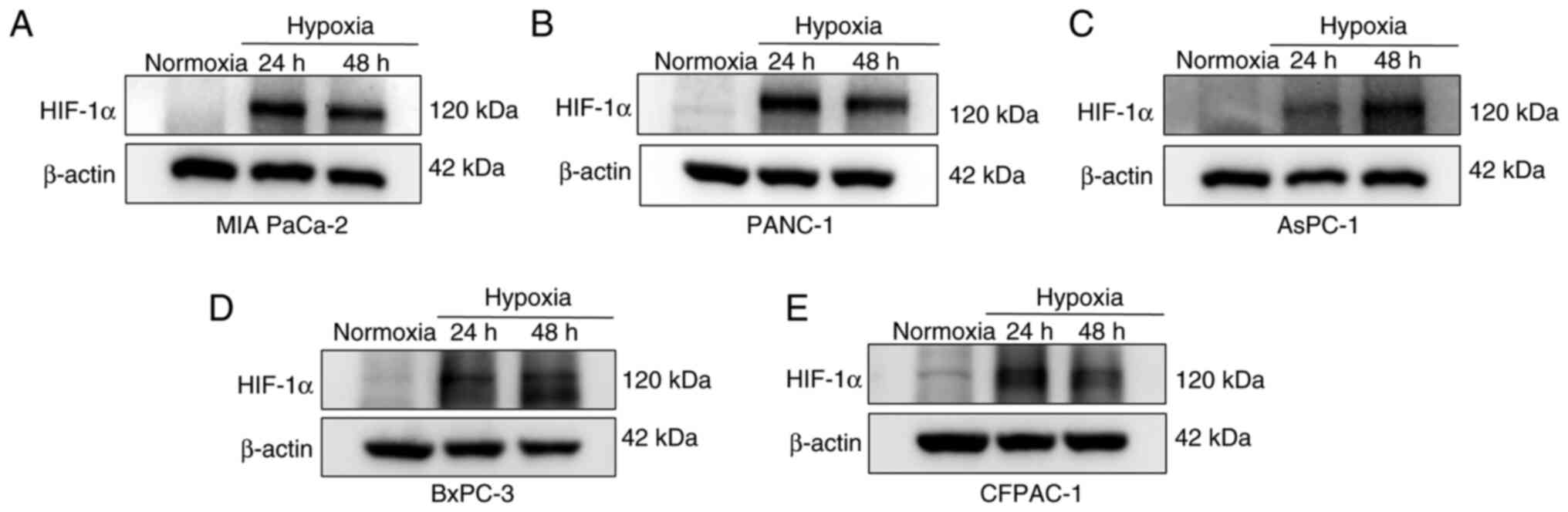
Figure 1

Hypoxia induces a substantial
accumulation of HIF-1α in PC cells. Western blotting was used to
detect the expression levels of HIF-1α protein in PC cell lines:
(A) MIA PaCa-2, (B) PANC-1, (C) AsPC-1, (D) BxPC-3 and (E) CFPAC-1
after culture under normoxia conditions and hypoxia conditions for
24 and 48 h. HIF-1α, hypoxia inducible factor-1α; PC, pancreatic
cancer; CFPAC-1, cystic fibrosis pancreatic adenocarcinoma; AsPC-1,
ascites pancreatic cancer 1; MIA PaCa-2, malignant inflammatory
adenocarcinoma pancreatic carcinoma-2.

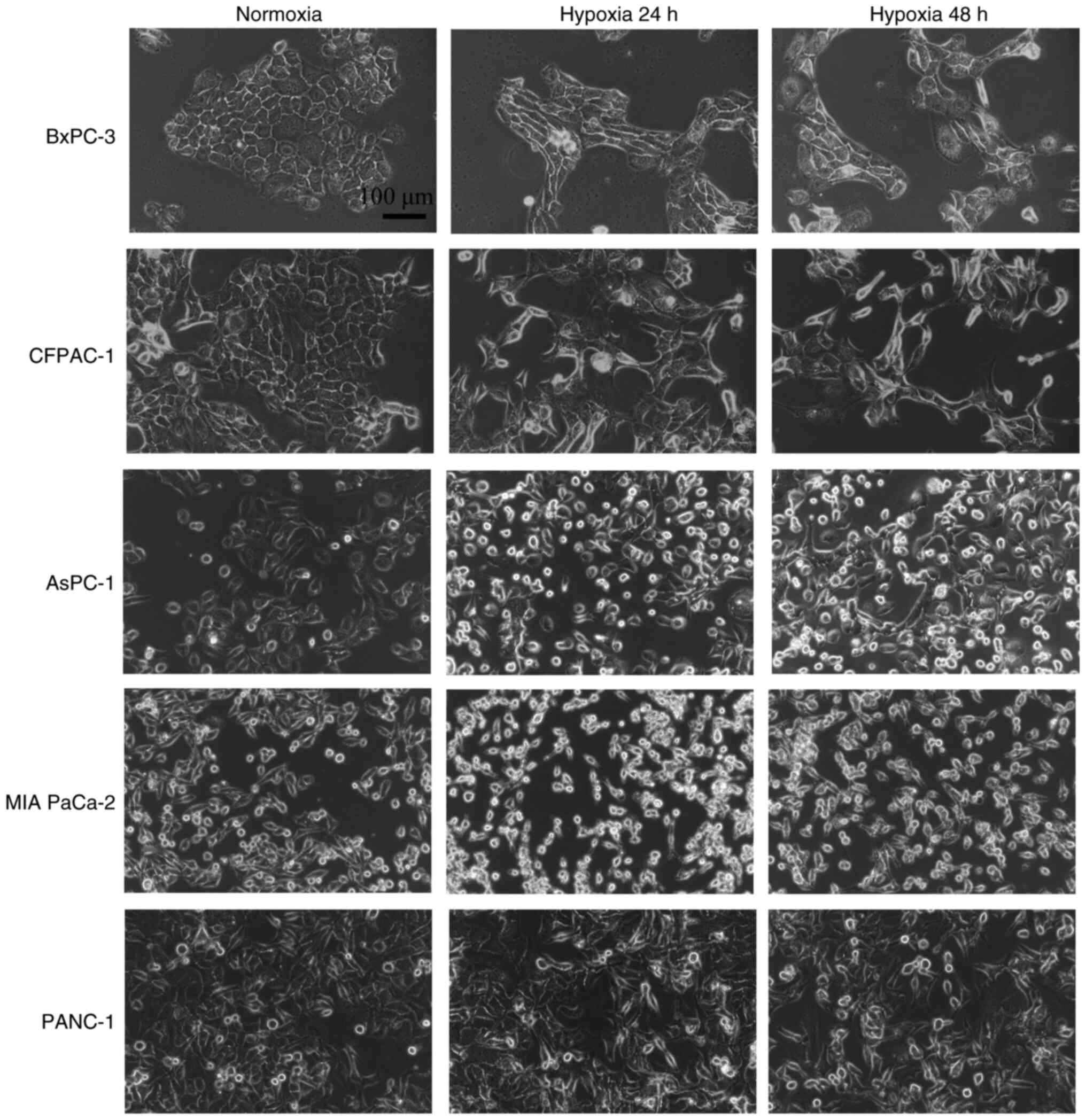
Figure 2

Morphological changes of PC cells
under hypoxic conditions. The morphologies of BxPC-3, CFPAC-1,
AsPC-1, MIA PaCa-2 and PANC-1 cells were observed under an inverted
microscope (magnification, ×20; scale bar, 100 µm) following
culture under normoxic and hypoxic conditions for 24 and 48 h. PC,
pancreatic cancer; CFPAC-1, cystic fibrosis pancreatic
adenocarcinoma; AsPC-1, ascites pancreatic cancer 1; MIA PaCa-2,
malignant inflammatory adenocarcinoma pancreatic carcinoma-2.

Figure 3

Hypoxia upregulates the expression
levels of miR-301a and enhances GEM resistance in PC cells. (A-E)
Relative expression levels of miR-301a in PC cell lines [(A) MIA
PaCa-2, (B) PANC-1, (C) AsPC-1, (D) BxPC-3 and (E) CFPAC-1] were
detected using RT-qPCR following culture under normoxia conditions
and hypoxic conditions for 24 and 48 h. (F-J) Cell viability of PC
cells [(F) MIA PaCa-2, (G) PANC-1, (H) BxPC-3, (I) AsPC-1 and (J)
CFPAC-1] in both hypoxic and normoxic treatment groups was measured
using CCK-8 cytotoxicity assays upon exposure to various
concentrations of GEM. *P<0.05, **P<0.01, ***P<0.001 and
****P<0.0001. NO, normoxic; HO, hypoxic; PC, pancreatic cancer;
miR, microRNA; RT-qPCR, reverse transcription-quantitative PCR;
CCK-8, Cell Counting Kit-8; GEM, gemcitabine; CFPAC-1, cystic
fibrosis pancreatic adenocarcinoma; AsPC-1, ascites pancreatic
cancer 1; MIA PaCa-2, malignant inflammatory adenocarcinoma
pancreatic carcinoma-2.

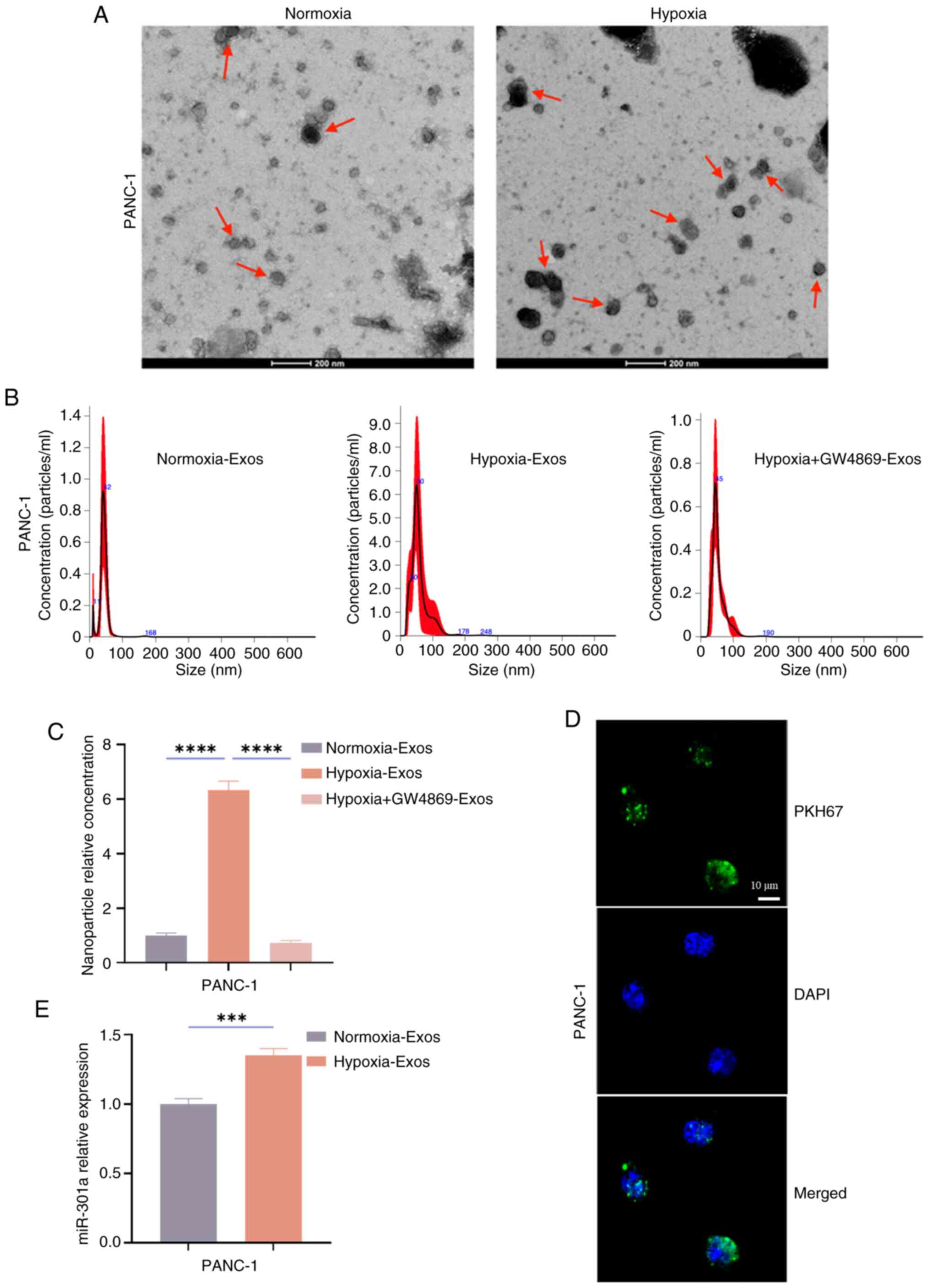
Figure 4

Hypoxia induces an increase in
exosomes and facilitates their transfer to normoxic cells. (A) The
exosomes from PANC-1 cells cultured under normoxic and hypoxia
condition for 48 h were collected and their morphology was observed
by TEM; red arrows indicate the exosomes (scale bar, 200 nm). (B
and C) PANC-1 cells were cultured under normoxic and hypoxia
condition for 48 h and exosome inhibitor GW4869 was added to
hypoxia culture, exosomes were collected and NTA was used to
analyse the relative particle concentration in the Normoxia-Exos,
Hypoxia-Exos and Hypoxia + GW4869-Exos group. (D) Hypoxic
PANC-1-derived exosomes were collected and labelled with the
membrane phospholipid dye PKH67. After co-culture with normoxic
PANC-1 cells for 12 h, laser confocal microscopy was employed to
observe the endocytosis of labelled exosomes by normoxic PANC-1
cells (scale bar, 10 µm). (E) Following co-culturing the collected
normoxic and hypoxic-derived exosomes with normoxic PANC-1 cells
for 24 h, RT-qPCR was performed to detect the relative expression
level of the miR-301a. ***P<0.001 and ****P<0.0001. TEM,
transmission electron microscopy; NTA, nanoparticle tracking
analysis; RT-qPCR, reverse transcription-quantitative PCR; miR,
microRNA.

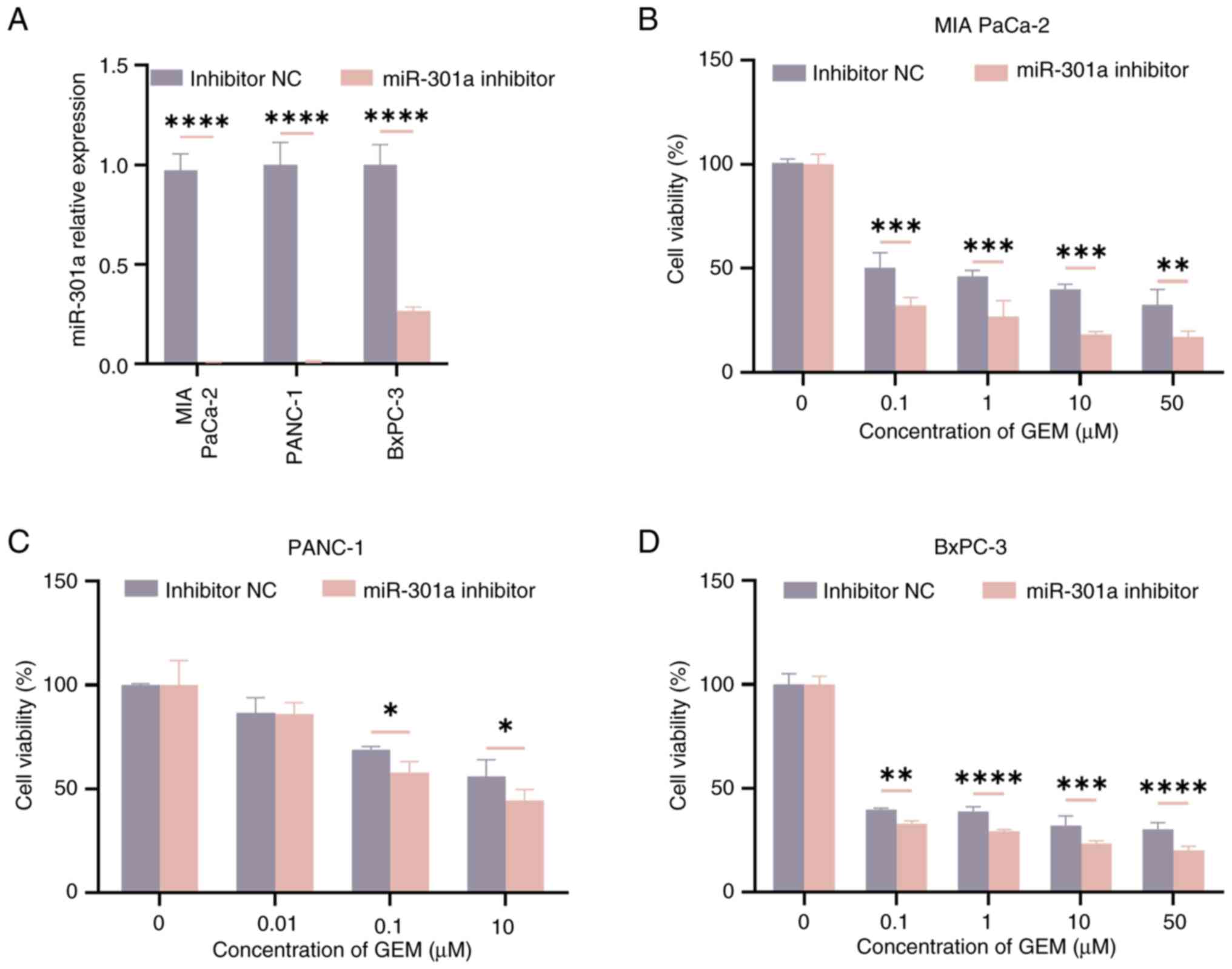
Figure 5

Regulatory mechanism of
hypoxia-derived exosome miR-301a on GEM resistance in normoxic PC
cells. (A) PC cells were transfected with inhibitor NC and miR-301a
inhibitor for 24 h and then the relative expression level of
miR-301a was detected by RT-qPCR. (B) MIA PaCa-2, (C) PANC-1, and
(D) BxPC-3 cells were treated with a gradient concentration of GEM
for 48 h. CCK-8 cytotoxicity assays were conducted to detect cell
viability in both the inhibitor NC group and the miR-301a inhibitor
group. *P<0.05, **P<0.01, ***P<0.001 and ****P<0.0001.
GEM, gemcitabine; miR, microRNA; PC, pancreatic cancer; RT-qPCR,
reverse transcription-quantitative PCR; NC, negative control;
CCK-8, Cell Counting Kit-8.

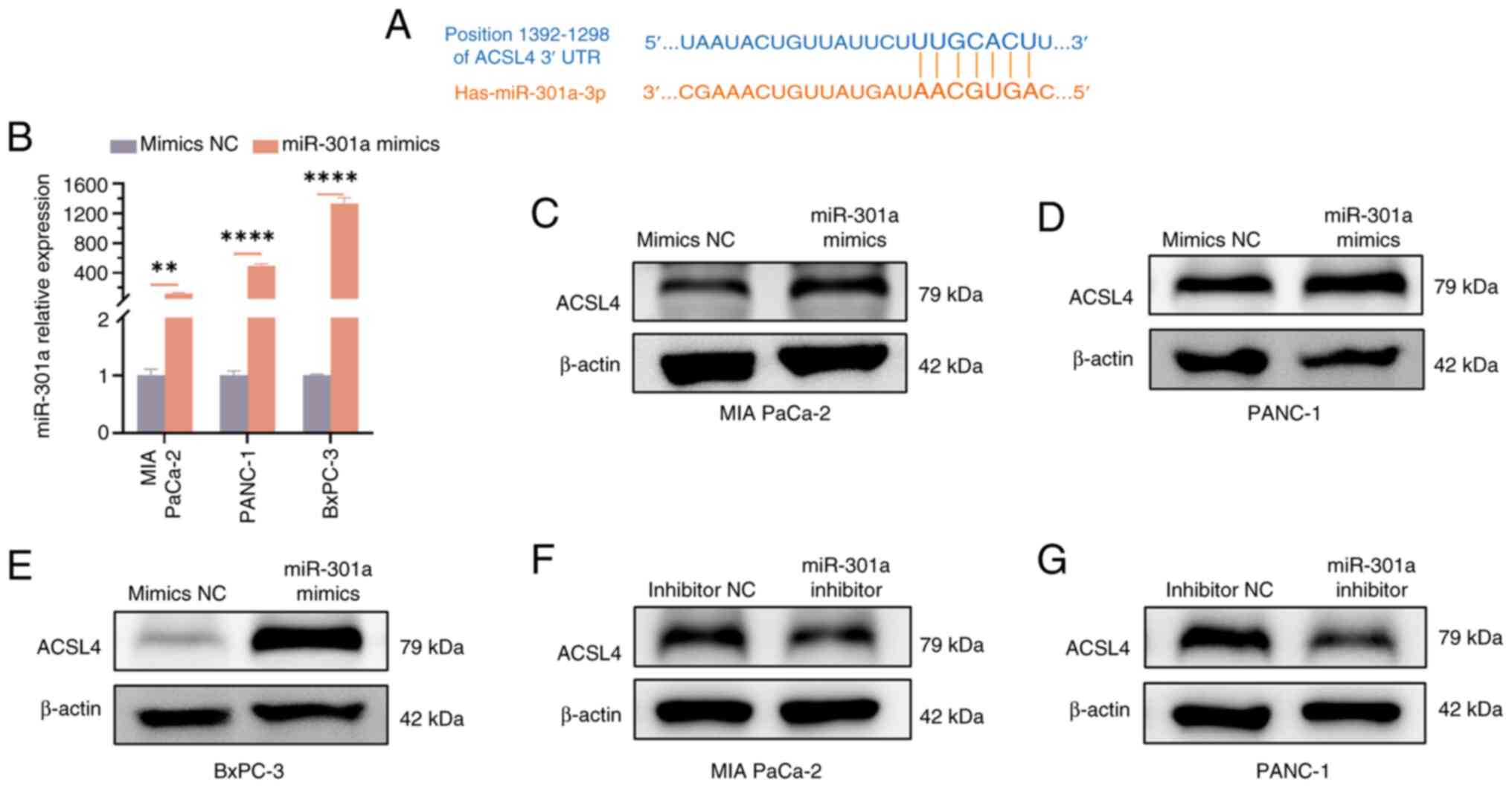
Figure 6

Regulatory mechanism of
hypoxia-derived exosome miR-301a on GEM resistance in normoxic PC
cells. (A) Target binding sites between miR-301a and ACSL4 were
predicted using bioinformatics databases (TargetScan, and
starBase). (B) PC cells were transfected with mimics NC and
miR-301a mimics for 24 h and then the relative expression level of
miR-301a was detected by RT-qPCR. ACSL4 protein expression was
detected by western blotting after miR-301a overexpression in (C)
MIA PaCa-2 cells, (D) PANC-1 cells and (E) BxPC-3 cells. Following
miR-301a knockdown in (F) MIA PaCa-2 and (G) PANC-1 cells, the
expression level of the ACSL4 protein was detected by western
blotting. **P<0.01 and ****P<0.0001. GEM, gemcitabine; miR,
microRNA; PC, pancreatic cancer; NC, negative control; ACSL4,
acyl-CoA synthetase long-chain family member 4.
View References

1 

Siegel RL, Kratzer TB, Giaquinto AN, Sung H and Jemal A: Cancer statistics, 2025. CA Cancer J Clin. 75:10–45. 2025. View Article : Google Scholar : PubMed/NCBI

2 

Sung H, Ferlay J, Siegel RL, Laversanne M, Soerjomataram I, Jemal A and Bray F: Global cancer statistics 2020: GLOBOCAN estimates of incidence and mortality worldwide for 36 cancers in 185 countries. CA Cancer J Clin. 71:209–249. 2021. View Article : Google Scholar : PubMed/NCBI

3 

Xiong Q, Zhang Y, Xu Y, Yang Y, Zhang Z, Zhou Y, Zhang S, Zhou L, Wan X, Yang X, et al: tiRNA-Val-CAC-2 interacts with FUBP1 to promote pancreatic cancer metastasis by activating c-MYC transcription. Oncogene. 43:1274–1287. 2024. View Article : Google Scholar : PubMed/NCBI

4 

Munigala S, Almaskeen S, Subramaniam DS, Bandi S, Bowe B, Xian H, Sheth SG, Burroughs TE and Agarwal B: Acute pancreatitis recurrences augment long-term pancreatic cancer risk. Am J Gastroenterol. 118:727–737. 2023. View Article : Google Scholar

5 

Topal H, Aerts R, Laenen A, Collignon A, Jaekers J, Geers J and Topal B: Survival after minimally invasive vs open surgery for pancreatic adenocarcinoma. JAMA Netw Open. 5:e22481472022. View Article : Google Scholar : PubMed/NCBI

6 

Padrón LJ, Maurer DM, O'Hara MH, O'Reilly EM, Wolff RA, Wainberg ZA, Ko AH, Fisher G, Rahma O, Lyman JP, et al: Sotigalimab and/or nivolumab with chemotherapy in first-line metastatic pancreatic cancer: Clinical and immunologic analyses from the randomized phase 2 PRINCE trial. Nat Med. 28:1167–1177. 2022. View Article : Google Scholar

7 

Li K, Tandurella JA, Gai J, Zhu Q, Lim SJ, Thomas DL II, Xia T, Mo G, Mitchell JT, Montagne J, et al: Multi-omic analyses of changes in the tumor microenvironment of pancreatic adenocarcinoma following neoadjuvant treatment with anti-PD-1 therapy. Cancer Cell. 40:1374–1391. 2022. View Article : Google Scholar

8 

Liu Y, Guo X, Xu P, Song Y, Huang J, Chen X, Zhu W, Hao J and Gao S: Clinical outcomes of second-line chemotherapy in patients with advanced pancreatic adenocarcinoma: A real-world study. Cancer Biol Med. 21:799–812. 2024.PubMed/NCBI

9 

Beutel AK and Halbrook CJ: Barriers and opportunities for gemcitabine in pancreatic cancer therapy. Am J Physiol Cell Physiol. 324:C540–C552. 2023. View Article : Google Scholar

10 

Patzak MS, Kari V, Patil S, Hamdan FH, Goetze RG, Brunner M, Gaedcke J, Kitz J, Jodrell DI, Richards FM, et al: Cytosolic 5′-nucleotidase 1A is overexpressed in pancreatic cancer and mediates gemcitabine resistance by reducing intracellular gemcitabine metabolites. EBioMedicine. 40:394–405. 2019. View Article : Google Scholar : PubMed/NCBI

11 

Neoptolemos JP, Palmer DH, Ghaneh P, Psarelli EE, Valle JW, Halloran CM, Faluyi O, O'Reilly DA, Cunningham D, Wadsley J, et al: Comparison of adjuvant gemcitabine and capecitabine with gemcitabine monotherapy in patients with resected pancreatic cancer (ESPAC-4): A multicentre, open-label, randomised, phase 3 trial. Lancet. 389:1011–1024. 2017. View Article : Google Scholar

12 

Hosein AN, Brekken RA and Maitra A: Pancreatic cancer stroma: An update on therapeutic targeting strategies. Nat Rev Gastroenterol Hepatol. 17:487–505. 2020. View Article : Google Scholar

13 

Wicks EE and Semenza GL: Hypoxia-inducible factors: Cancer progression and clinical translation. J Clin Invest. 132:e1598392022. View Article : Google Scholar

14 

Mao Y, Wang J, Wang Y, Fu Z, Dong L and Liu J: Hypoxia induced exosomal Circ-ZNF609 promotes pre-metastatic niche formation and cancer progression via miR-150-5p/VEGFA and HuR/ZO-1 axes in esophageal squamous cell carcinoma. Cell Death Discov. 10:1332024. View Article : Google Scholar : PubMed/NCBI

15 

Song H, Qiu Z, Wang Y, Xi C, Zhang G, Sun Z, Luo Q and Shen C: HIF-1α/YAP signaling rewrites glucose/iodine metabolism program to promote papillary thyroid cancer progression. Int J Biol Sci. 19:225–241. 2023. View Article : Google Scholar

16 

Zhang Q, Xiong L, Wei T, Liu Q, Yan L, Chen J, Dai L, Shi L, Zhang W, Yang J, et al: Hypoxia-responsive PPARGC1A/BAMBI/ACSL5 axis promotes progression and resistance to lenvatinib in hepatocellular carcinoma. Oncogene. 42:1509–1523. 2023. View Article : Google Scholar : PubMed/NCBI

17 

Ye M, Lu F, Gu D, Xue B, Xu L, Hu C, Chen J, Yu P, Zheng H, Gao Y, et al: Hypoxia exosome derived CEACAM5 promotes tumor-associated macrophages M2 polarization to accelerate pancreatic neuroendocrine tumors metastasis via MMP9. FASEB J. 38:e237622024. View Article : Google Scholar : PubMed/NCBI

18 

Hou SM, Lin CY, Fong YC and Tang CH: Hypoxia-regulated exosomes mediate M2 macrophage polarization and promote metastasis in chondrosarcoma. Aging (Albany NY). 15:13163–13175. 2023. View Article : Google Scholar : PubMed/NCBI

19 

Liu W, Li L, Rong Y, Qian D, Chen J, Zhou Z, Luo Y, Jiang D, Cheng L, Zhao S, et al: Hypoxic mesenchymal stem cell-derived exosomes promote bone fracture healing by the transfer of miR-126. Acta Biomater. 103:196–212. 2020. View Article : Google Scholar : PubMed/NCBI

20 

Wang M, Zheng Y, Hao Q, Mao G, Dai Z, Zhai Z, Lin S, Liang B, Kang H and Ma X: Hypoxic BMSC-derived exosomal miR-210-3p promotes progression of triple-negative breast cancer cells via NFIX-Wnt/β-catenin signaling axis. J Transl Med. 23:392025. View Article : Google Scholar : PubMed/NCBI

21 

Jia Y, Zhao J, Yang J, Shao J and Cai Z: miR-301 regulates the SIRT1/SOX2 pathway via CPEB1 in the breast cancer progression. Mol Ther Oncolytics. 22:13–26. 2021. View Article : Google Scholar : PubMed/NCBI

22 

Xia X, Wang S, Ni B, Xing S, Cao H, Zhang Z, Yu F, Zhao E and Zhao G: Hypoxic gastric cancer-derived exosomes promote progression and metastasis via MiR-301a-3p/PHD3/HIF-1α positive feedback loop. Oncogene. 39:6231–6244. 2020. View Article : Google Scholar : PubMed/NCBI

23 

Alves Â, Ferreira M, Eiras M, Lima L, Medeiros R, Teixeira AL and Dias F: Exosome-derived hsa-miR-200c-3p, hsa-miR-25-3p and hsa-miR-301a-3p as potential biomarkers and therapeutic targets for restoration of PTEN expression in clear cell renal cell carcinoma. Int J Biol Macromol. 302:1406072025. View Article : Google Scholar

24 

Zhong M, Huang Z, Wang L, Lin Z, Cao Z, Li X, Zhang F, Wang H, Li Y and Ma X: Malignant transformation of human bronchial epithelial cells induced by arsenic through STAT3/miR-301a/SMAD4 loop. Sci Rep. 8:132912018. View Article : Google Scholar : PubMed/NCBI

25 

Wang X, Luo G, Zhang K, Cao J, Huang C, Jiang T, Liu B, Su L and Qiu Z: Hypoxic tumor-derived exosomal miR-301a mediates M2 macrophage polarization via PTEN/PI3K gamma to promote pancreatic cancer metastasis. Cancer Res. 78:4586–4598. 2018. View Article : Google Scholar : PubMed/NCBI

26 

Luo G, Xia X, Wang X, Zhang K, Cao J, Jiang T, Zhao Q and Qiu Z: miR-301a plays a pivotal role in hypoxia-induced gemcitabine resistance in pancreatic cancer. Exp Cell Res. 369:120–128. 2018. View Article : Google Scholar : PubMed/NCBI

27 

Ding K, Liu C, Li L, Yang M, Jiang N, Luo S and Sun L: Acyl-CoA synthase ACSL4: An essential target in ferroptosis and fatty acid metabolism. Chin Med J (Engl). 136:2521–2537. 2023. View Article : Google Scholar : PubMed/NCBI

28 

Qiu Y, Wang X, Sun Y, Jin T, Tang R, Zhou X, Xu M, Gan Y, Wang R, Luo H, et al: ACSL4-mediated membrane phospholipid remodeling induces integrin β1 activation to facilitate triple-negative breast cancer metastasis. Cancer Res. 84:1856–1871. 2024. View Article : Google Scholar : PubMed/NCBI

29 

Chen J, Ding C, Chen Y, Hu W, Yu C, Peng C, Feng X, Cheng Q, Wu W, Lu Y, et al: ACSL4 reprograms fatty acid metabolism in hepatocellular carcinoma via c-Myc/SREBP1 pathway. Cancer Lett. 502:154–165. 2021. View Article : Google Scholar

30 

Grube J, Woitok MM, Mohs A, Erschfeld S, Lynen C, Trautwein C and Otto T: ACSL4-dependent ferroptosis does not represent a tumor-suppressive mechanism but ACSL4 rather promotes liver cancer progression. Cell Death Dis. 13:7042022. View Article : Google Scholar : PubMed/NCBI

31 

Lu Y, Chan YT, Tan HY, Zhang C, Guo W, Xu Y, Sharma R, Chen ZS, Zheng YC, Wang N and Feng Y: Epigenetic regulation of ferroptosis via ETS1/miR-23a-3p/ACSL4 axis mediates sorafenib resistance in human hepatocellular carcinoma. J Exp Clin Cancer Res. 41:32022. View Article : Google Scholar : PubMed/NCBI

32 

Shi L, Song Z, Li Y, Huang J, Zhao F, Luo Y, Wang J, Deng F, Shadekejiang H, Zhang M, et al: MiR-20a-5p alleviates kidney ischemia/reperfusion injury by targeting ACSL4-dependent ferroptosis. Am J Transplant. 23:11–25. 2023. View Article : Google Scholar

33 

Qi R, Bai Y, Li K, Liu N, Xu Y, Dal E, Wang Y, Lin R, Wang H, Liu Z, et al: Cancer-associated fibroblasts suppress ferroptosis and induce gemcitabine resistance in pancreatic cancer cells by secreting exosome-derived ACSL4-targeting miRNAs. Drug Resist Updat. 68:1009602023. View Article : Google Scholar

34 

Deer EL, González-Hernández J, Coursen JD, Shea JE, Ngatia J, Scaife CL, Firpo MA and Mulvihill SJ: Phenotype and genotype of pancreatic cancer cell lines. Pancreas. 39:425–435. 2010. View Article : Google Scholar : PubMed/NCBI

35 

Livak KJ and Schmittgen TD: Analysis of relative gene expression data using real-time quantitative PCR and the 2(−Delta Delta C(T)) method. Methods. 25:402–408. 2001. View Article : Google Scholar : PubMed/NCBI

36 

Li W, Zhou C, Yu L, Hou Z, Liu H, Kong L, Xu Y, He J, Lan J, Ou Q, et al: Tumor-derived lactate promotes resistance to bevacizumab treatment by facilitating autophagy enhancer protein RUBCNL expression through histone H3 lysine 18 lactylation (H3K18la) in colorectal cancer. Autophagy. 20:114–130. 2024. View Article : Google Scholar : PubMed/NCBI

37 

Siegel RL, Giaquinto AN and Jemal A: Cancer statistics, 2024. CA Cancer J Clin. 74:12–49. 2024. View Article : Google Scholar : PubMed/NCBI

38 

Yang L, Zhao S, Liu X, Zhang Y, Zhao S, Fang X and Zhang J: Hypoxic cancer-associated fibroblast exosomal circSTAT3 drives triple negative breast cancer stemness via miR-671-5p/NOTCH1 signaling. J Transl Med. 23:8142025. View Article : Google Scholar : PubMed/NCBI

39 

Shukla SK, Purohit V, Mehla K, Gunda V, Chaika NV, Vernucci E, King RJ, Abrego J, Goode GD, Dasgupta A, et al: MUC1 and HIF-1alpha signaling crosstalk induces anabolic glucose metabolism to impart gemcitabine resistance to pancreatic cancer. Cancer Cell. 32:71–87. 2017. View Article : Google Scholar

40 

Yoo HC, Park SJ, Nam M, Kang J, Kim K, Yeo JH, Kim JK, Heo Y, Lee HS, Lee MY, et al: A variant of SLC1A5 is a mitochondrial glutamine transporter for metabolic reprogramming in cancer cells. Cell Metab. 31:267–283. 2020. View Article : Google Scholar : PubMed/NCBI

41 

Ding J, Xie Y, Liu Z, Zhang Z, Ni B, Yan J, Zhou T and Hao J: Hypoxic and acidic tumor microenvironment-driven AVL9 promotes chemoresistance of pancreatic ductal adenocarcinoma via the AVL9-IκBα-SKP1 complex. Gastroenterology. 168:539–555. 2025. View Article : Google Scholar : PubMed/NCBI

42 

Cheng C, Zhang Z, Cheng F and Shao Z: Exosomal lncRNA RAMP2-AS1 derived from chondrosarcoma cells promotes angiogenesis through miR-2355-5p/VEGFR2 axis. Onco Targets Ther. 13:3291–3301. 2020. View Article : Google Scholar : PubMed/NCBI

43 

Organization NP, . Nobel Prize in Physiology or Medicine. 2024.https://www.nobelprize.org/prizes/medicine/2024/press–release/January 5–2025

44 

Zhao S, Mi Y, Guan B, Zheng B, Wei P, Gu Y, Zhang Z, Cai S, Xu Y, Li X, et al: Tumor-derived exosomal miR-934 induces macrophage M2 polarization to promote liver metastasis of colorectal cancer. J Hematol Oncol. 13:1562020. View Article : Google Scholar

45 

Zhang H, Deng T, Liu R, Ning T, Yang H, Liu D, Zhang Q, Lin D, Ge S, Bai M, et al: CAF secreted miR-522 suppresses ferroptosis and promotes acquired chemo-resistance in gastric cancer. Mol Cancer. 19:432020. View Article : Google Scholar : PubMed/NCBI

46 

Li X, Li J, Cai Y, Peng S, Wang J, Xiao Z, Wang Y, Tao Y, Li J, Leng Q, et al: Hyperglycaemia-induced miR-301a promotes cell proliferation by repressing p21 and Smad4 in prostate cancer. Cancer Lett. 418:211–220. 2018. View Article : Google Scholar

47 

Qi B, Wang Y, Zhu X, Gong Y, Jin J, Wu H, Man X, Liu F, Yao W and Gao J: miR-301a-mediated crosstalk between the Hedgehog and HIPPO/YAP signaling pathways promotes pancreatic cancer. Cancer Biol Ther. 26:24577612025. View Article : Google Scholar : PubMed/NCBI

48 

Zhang KD, Hu B, Cen G, Yang YH, Chen WW, Guo ZY, Wang XF, Zhao Q and Qiu ZJ: MiR-301a transcriptionally activated by HIF-2α promotes hypoxia-induced epithelial-mesenchymal transition by targeting TP63 in pancreatic cancer. World J Gastroenterol. 26:2349–2373. 2020. View Article : Google Scholar

49 

Li J, Ma C, Cao P, Guo W, Wang P, Yang Y, Ding B, Yin F, Li Z, Wang Y, et al: A CD147-targeted small-molecule inhibitor potentiates gemcitabine efficacy by triggering ferroptosis in pancreatic ductal adenocarcinoma. Cell Rep Med. 6:1022922025. View Article : Google Scholar : PubMed/NCBI

Related Articles

  • Abstract
  • View
  • Download
  • Twitter
Copy and paste a formatted citation
Spandidos Publications style
Qu W, Tan W, Ye M, Tang W, Zhang L and Luo G: Role and molecular mechanisms of hypoxia‑derived exosomal miR‑301a on gemcitabine resistance in pancreatic cancer. Oncol Lett 30: 606, 2025.
APA
Qu, W., Tan, W., Ye, M., Tang, W., Zhang, L., & Luo, G. (2025). Role and molecular mechanisms of hypoxia‑derived exosomal miR‑301a on gemcitabine resistance in pancreatic cancer. Oncology Letters, 30, 606. https://doi.org/10.3892/ol.2025.15352
MLA
Qu, W., Tan, W., Ye, M., Tang, W., Zhang, L., Luo, G."Role and molecular mechanisms of hypoxia‑derived exosomal miR‑301a on gemcitabine resistance in pancreatic cancer". Oncology Letters 30.6 (2025): 606.
Chicago
Qu, W., Tan, W., Ye, M., Tang, W., Zhang, L., Luo, G."Role and molecular mechanisms of hypoxia‑derived exosomal miR‑301a on gemcitabine resistance in pancreatic cancer". Oncology Letters 30, no. 6 (2025): 606. https://doi.org/10.3892/ol.2025.15352
Copy and paste a formatted citation
x
Spandidos Publications style
Qu W, Tan W, Ye M, Tang W, Zhang L and Luo G: Role and molecular mechanisms of hypoxia‑derived exosomal miR‑301a on gemcitabine resistance in pancreatic cancer. Oncol Lett 30: 606, 2025.
APA
Qu, W., Tan, W., Ye, M., Tang, W., Zhang, L., & Luo, G. (2025). Role and molecular mechanisms of hypoxia‑derived exosomal miR‑301a on gemcitabine resistance in pancreatic cancer. Oncology Letters, 30, 606. https://doi.org/10.3892/ol.2025.15352
MLA
Qu, W., Tan, W., Ye, M., Tang, W., Zhang, L., Luo, G."Role and molecular mechanisms of hypoxia‑derived exosomal miR‑301a on gemcitabine resistance in pancreatic cancer". Oncology Letters 30.6 (2025): 606.
Chicago
Qu, W., Tan, W., Ye, M., Tang, W., Zhang, L., Luo, G."Role and molecular mechanisms of hypoxia‑derived exosomal miR‑301a on gemcitabine resistance in pancreatic cancer". Oncology Letters 30, no. 6 (2025): 606. https://doi.org/10.3892/ol.2025.15352
Follow us
  • Twitter
  • LinkedIn
  • Facebook
About
  • Spandidos Publications
  • Careers
  • Cookie Policy
  • Privacy Policy
How can we help?
  • Help
  • Live Chat
  • Contact
  • Email to our Support Team