Spandidos Publications Logo
  • About
    • About Spandidos
    • Aims and Scopes
    • Abstracting and Indexing
    • Editorial Policies
    • Reprints and Permissions
    • Job Opportunities
    • Terms and Conditions
    • Contact
  • Journals
    • All Journals
    • Oncology Letters
      • Oncology Letters
      • Information for Authors
      • Editorial Policies
      • Editorial Board
      • Aims and Scope
      • Abstracting and Indexing
      • Bibliographic Information
      • Archive
    • International Journal of Oncology
      • International Journal of Oncology
      • Information for Authors
      • Editorial Policies
      • Editorial Board
      • Aims and Scope
      • Abstracting and Indexing
      • Bibliographic Information
      • Archive
    • Molecular and Clinical Oncology
      • Molecular and Clinical Oncology
      • Information for Authors
      • Editorial Policies
      • Editorial Board
      • Aims and Scope
      • Abstracting and Indexing
      • Bibliographic Information
      • Archive
    • Experimental and Therapeutic Medicine
      • Experimental and Therapeutic Medicine
      • Information for Authors
      • Editorial Policies
      • Editorial Board
      • Aims and Scope
      • Abstracting and Indexing
      • Bibliographic Information
      • Archive
    • International Journal of Molecular Medicine
      • International Journal of Molecular Medicine
      • Information for Authors
      • Editorial Policies
      • Editorial Board
      • Aims and Scope
      • Abstracting and Indexing
      • Bibliographic Information
      • Archive
    • Biomedical Reports
      • Biomedical Reports
      • Information for Authors
      • Editorial Policies
      • Editorial Board
      • Aims and Scope
      • Abstracting and Indexing
      • Bibliographic Information
      • Archive
    • Oncology Reports
      • Oncology Reports
      • Information for Authors
      • Editorial Policies
      • Editorial Board
      • Aims and Scope
      • Abstracting and Indexing
      • Bibliographic Information
      • Archive
    • Molecular Medicine Reports
      • Molecular Medicine Reports
      • Information for Authors
      • Editorial Policies
      • Editorial Board
      • Aims and Scope
      • Abstracting and Indexing
      • Bibliographic Information
      • Archive
    • World Academy of Sciences Journal
      • World Academy of Sciences Journal
      • Information for Authors
      • Editorial Policies
      • Editorial Board
      • Aims and Scope
      • Abstracting and Indexing
      • Bibliographic Information
      • Archive
    • International Journal of Functional Nutrition
      • International Journal of Functional Nutrition
      • Information for Authors
      • Editorial Policies
      • Editorial Board
      • Aims and Scope
      • Abstracting and Indexing
      • Bibliographic Information
      • Archive
    • International Journal of Epigenetics
      • International Journal of Epigenetics
      • Information for Authors
      • Editorial Policies
      • Editorial Board
      • Aims and Scope
      • Abstracting and Indexing
      • Bibliographic Information
      • Archive
    • Medicine International
      • Medicine International
      • Information for Authors
      • Editorial Policies
      • Editorial Board
      • Aims and Scope
      • Abstracting and Indexing
      • Bibliographic Information
      • Archive
  • Articles
  • Information
    • Information for Authors
    • Information for Reviewers
    • Information for Librarians
    • Information for Advertisers
    • Conferences
  • Language Editing
Spandidos Publications Logo
  • About
    • About Spandidos
    • Aims and Scopes
    • Abstracting and Indexing
    • Editorial Policies
    • Reprints and Permissions
    • Job Opportunities
    • Terms and Conditions
    • Contact
  • Journals
    • All Journals
    • Biomedical Reports
      • Information for Authors
      • Editorial Policies
      • Editorial Board
      • Aims and Scope
      • Abstracting and Indexing
      • Bibliographic Information
      • Archive
    • Experimental and Therapeutic Medicine
      • Information for Authors
      • Editorial Policies
      • Editorial Board
      • Aims and Scope
      • Abstracting and Indexing
      • Bibliographic Information
      • Archive
    • International Journal of Epigenetics
      • Information for Authors
      • Editorial Policies
      • Editorial Board
      • Aims and Scope
      • Abstracting and Indexing
      • Bibliographic Information
      • Archive
    • International Journal of Functional Nutrition
      • Information for Authors
      • Editorial Policies
      • Editorial Board
      • Aims and Scope
      • Abstracting and Indexing
      • Bibliographic Information
      • Archive
    • International Journal of Molecular Medicine
      • Information for Authors
      • Editorial Policies
      • Editorial Board
      • Aims and Scope
      • Abstracting and Indexing
      • Bibliographic Information
      • Archive
    • International Journal of Oncology
      • Information for Authors
      • Editorial Policies
      • Editorial Board
      • Aims and Scope
      • Abstracting and Indexing
      • Bibliographic Information
      • Archive
    • Medicine International
      • Information for Authors
      • Editorial Policies
      • Editorial Board
      • Aims and Scope
      • Abstracting and Indexing
      • Bibliographic Information
      • Archive
    • Molecular and Clinical Oncology
      • Information for Authors
      • Editorial Policies
      • Editorial Board
      • Aims and Scope
      • Abstracting and Indexing
      • Bibliographic Information
      • Archive
    • Molecular Medicine Reports
      • Information for Authors
      • Editorial Policies
      • Editorial Board
      • Aims and Scope
      • Abstracting and Indexing
      • Bibliographic Information
      • Archive
    • Oncology Letters
      • Information for Authors
      • Editorial Policies
      • Editorial Board
      • Aims and Scope
      • Abstracting and Indexing
      • Bibliographic Information
      • Archive
    • Oncology Reports
      • Information for Authors
      • Editorial Policies
      • Editorial Board
      • Aims and Scope
      • Abstracting and Indexing
      • Bibliographic Information
      • Archive
    • World Academy of Sciences Journal
      • Information for Authors
      • Editorial Policies
      • Editorial Board
      • Aims and Scope
      • Abstracting and Indexing
      • Bibliographic Information
      • Archive
  • Articles
  • Information
    • For Authors
    • For Reviewers
    • For Librarians
    • For Advertisers
    • Conferences
  • Language Editing
Login Register Submit
  • This site uses cookies
  • You can change your cookie settings at any time by following the instructions in our Cookie Policy. To find out more, you may read our Privacy Policy.

    I agree
Search articles by DOI, keyword, author or affiliation
Search
Advanced Search
presentation
Oncology Letters
Join Editorial Board Propose a Special Issue
Print ISSN: 1792-1074 Online ISSN: 1792-1082
Journal Cover
June-2026 Volume 31 Issue 6

Full Size Image

Sign up for eToc alerts
Recommend to Library

Journals

International Journal of Molecular Medicine

International Journal of Molecular Medicine

International Journal of Molecular Medicine is an international journal devoted to molecular mechanisms of human disease.

International Journal of Oncology

International Journal of Oncology

International Journal of Oncology is an international journal devoted to oncology research and cancer treatment.

Molecular Medicine Reports

Molecular Medicine Reports

Covers molecular medicine topics such as pharmacology, pathology, genetics, neuroscience, infectious diseases, molecular cardiology, and molecular surgery.

Oncology Reports

Oncology Reports

Oncology Reports is an international journal devoted to fundamental and applied research in Oncology.

Experimental and Therapeutic Medicine

Experimental and Therapeutic Medicine

Experimental and Therapeutic Medicine is an international journal devoted to laboratory and clinical medicine.

Oncology Letters

Oncology Letters

Oncology Letters is an international journal devoted to Experimental and Clinical Oncology.

Biomedical Reports

Biomedical Reports

Explores a wide range of biological and medical fields, including pharmacology, genetics, microbiology, neuroscience, and molecular cardiology.

Molecular and Clinical Oncology

Molecular and Clinical Oncology

International journal addressing all aspects of oncology research, from tumorigenesis and oncogenes to chemotherapy and metastasis.

World Academy of Sciences Journal

World Academy of Sciences Journal

Multidisciplinary open-access journal spanning biochemistry, genetics, neuroscience, environmental health, and synthetic biology.

International Journal of Functional Nutrition

International Journal of Functional Nutrition

Open-access journal combining biochemistry, pharmacology, immunology, and genetics to advance health through functional nutrition.

International Journal of Epigenetics

International Journal of Epigenetics

Publishes open-access research on using epigenetics to advance understanding and treatment of human disease.

Medicine International

Medicine International

An International Open Access Journal Devoted to General Medicine.

Journal Cover
June-2026 Volume 31 Issue 6

Full Size Image

Sign up for eToc alerts
Recommend to Library

  • Article
  • Citations
    • Cite This Article
    • Download Citation
    • Create Citation Alert
    • Remove Citation Alert
    • Cited By
  • Similar Articles
    • Related Articles (in Spandidos Publications)
    • Similar Articles (Google Scholar)
    • Similar Articles (PubMed)
  • Download PDF
  • Download XML
  • View XML

  • Supplementary Files
    • Supplementary_Data.pdf
Article Open Access

Exosomal‑miR‑32‑5p directly targets FOXN2 to regulate the proliferation, migration and apoptosis of uterine corpus endometrial carcinoma via the PI3K/AKT/BCL‑2 pathway

  • Authors:
    • Xin Chen
    • Huihui Li
    • Xiang Cheng
    • Yirong Cai
    • Guangyi Guo
  • View Affiliations / Copyright

    Affiliations: Department of Oncology, Renmin Hospital of Wuhan University, Wuhan, Hubei 430060, P.R. China, Department of Healthcare Center, Union Hospital, Tongji Medical College, Huazhong University of Science and Technology, Wuhan, Hubei 430022, P.R. China, Department of Oncology, Traditional Chinese Medicine Hospital of Xishui County, Huanggang, Hubei 438000, P.R. China
    Copyright: © Chen et al. This is an open access article distributed under the terms of Creative Commons Attribution License.
  • Article Number: 219
    |
    Published online on: April 8, 2026
       https://doi.org/10.3892/ol.2026.15574
  • Expand metrics +
Metrics: Total Views: 0 (Spandidos Publications: | PMC Statistics: )
Metrics: Total PDF Downloads: 0 (Spandidos Publications: | PMC Statistics: )
Cited By (CrossRef): 0 citations Loading Articles...

This article is mentioned in:


Abstract

The transfer of microRNAs (miRNAs) between cells through exosomes is crucial in controlling the expression of various target genes in the recipient cells, giving exosomal miRNAs the capability to control the advancement of tumors. The present study aimed to explore the function of exosomal miR‑32‑5p in the in vitro progression of uterine corpus endometrial carcinoma (UCEC). Bioinformatics analyses were applied to identify potential miRNAs in UCEC. Forkhead Box N2 (FOXN2) was subsequently predicted as a putative target gene of miR‑32‑5p, followed by examination through a luciferase reporter assay. Exosomes derived from UCEC cells or plasma samples of patients with UCEC were examined. The biological functions of miR‑32‑5p or exosomal miR‑32‑5p were determined by cell phenotype experiments. Protein and mRNA expression in UCEC cells were assessed through western blotting and quantitative reverse transcription‑PCR, respectively. miR‑32‑5p demonstrated the most significant effects on survival probability, therefore it was selected for further investigation in in the present study. miR‑32‑5p was observed to be enriched in plasma exosomes and significantly upregulated in cancer tissues, as well as in cancer plasma exosomes. The present findings demonstrated that exosomal‑miR‑32‑5p could induce the proliferation, migration and suppress apoptosis of UCEC cells through regulation of the FOXN2/PI3K/AKT/Bcl‑2 pathway, thus exhibiting potential as therapeutic target against UCEC.
View Figures

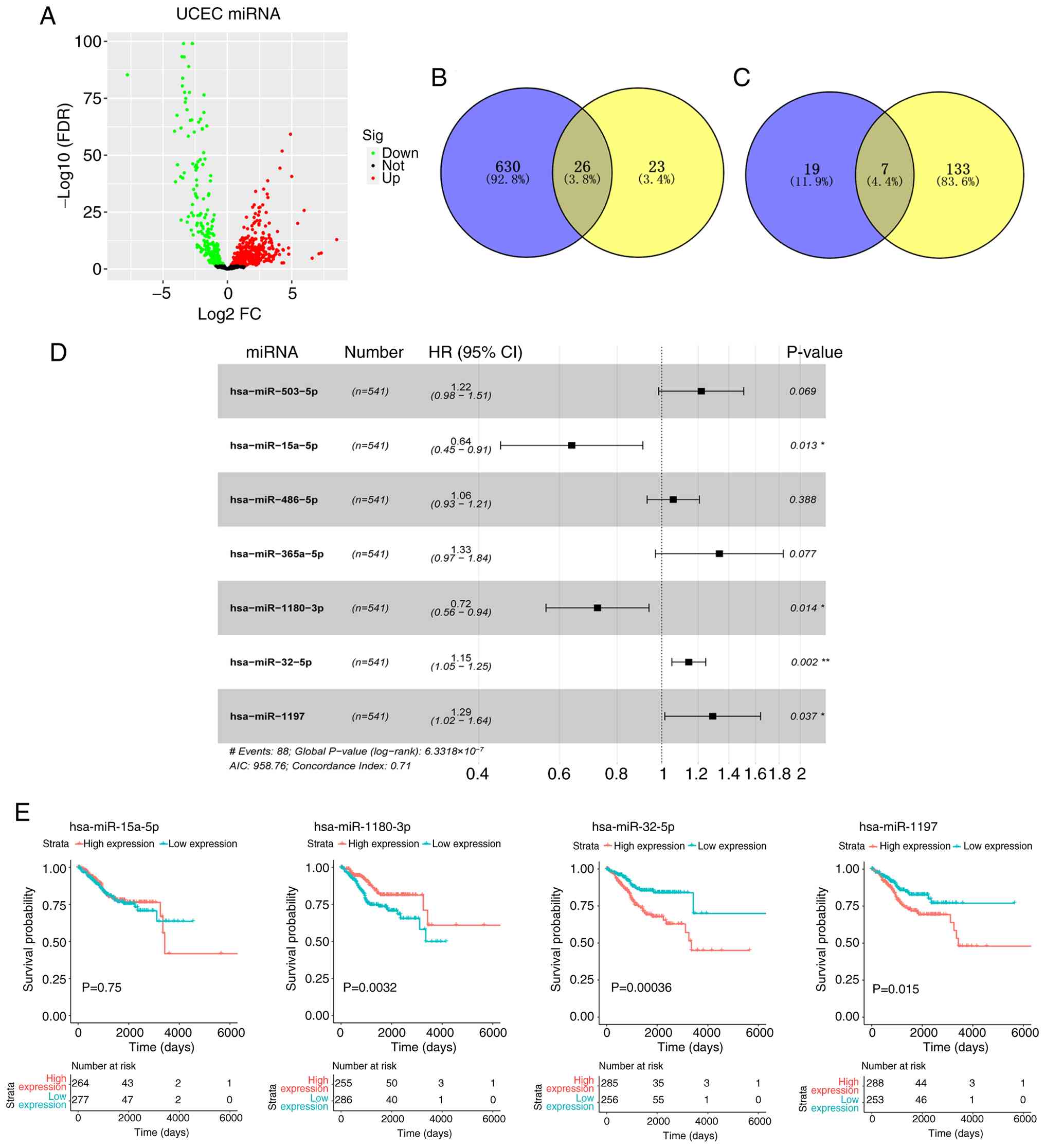
Figure 1

miRNA screening. (A) The volcano plot
of DE-miRNAs (n=656) comparing normal and UCEC samples from TCGA
database. Green represents 402 miRNAs that were differentially
upregulated in UCEC samples; red represents 254 miRNAs that were
differentially downregulated. (B) The intersection of the 656
DE-miRNAs with the 49 DE-miRNAs analyzed by Zhou et al
(21), 26 DE-miRNAs were
identified. (C) From the univariate Cox risk regression analysis,
140 miRNAs were screened as prognostic miRNAs in patients with
UCEC. The selected 140 miRNAs were intersected with 26 DE-miRNAs,
from which 7 DE-miRNAs were obtained. (D) Multivariate Cox
regression analysis was used to determine the independent
prognostic factors of UCEC. (E) Survival probability analysis for
miR-15a-5p, miR-1180-3p, miR-32-5p and miR-1197. DE, differentially
expressed; UCEC, uterine corpus endometrial carcinoma; miRNA,
microRNA. AIC, Akaike Information Criterion.

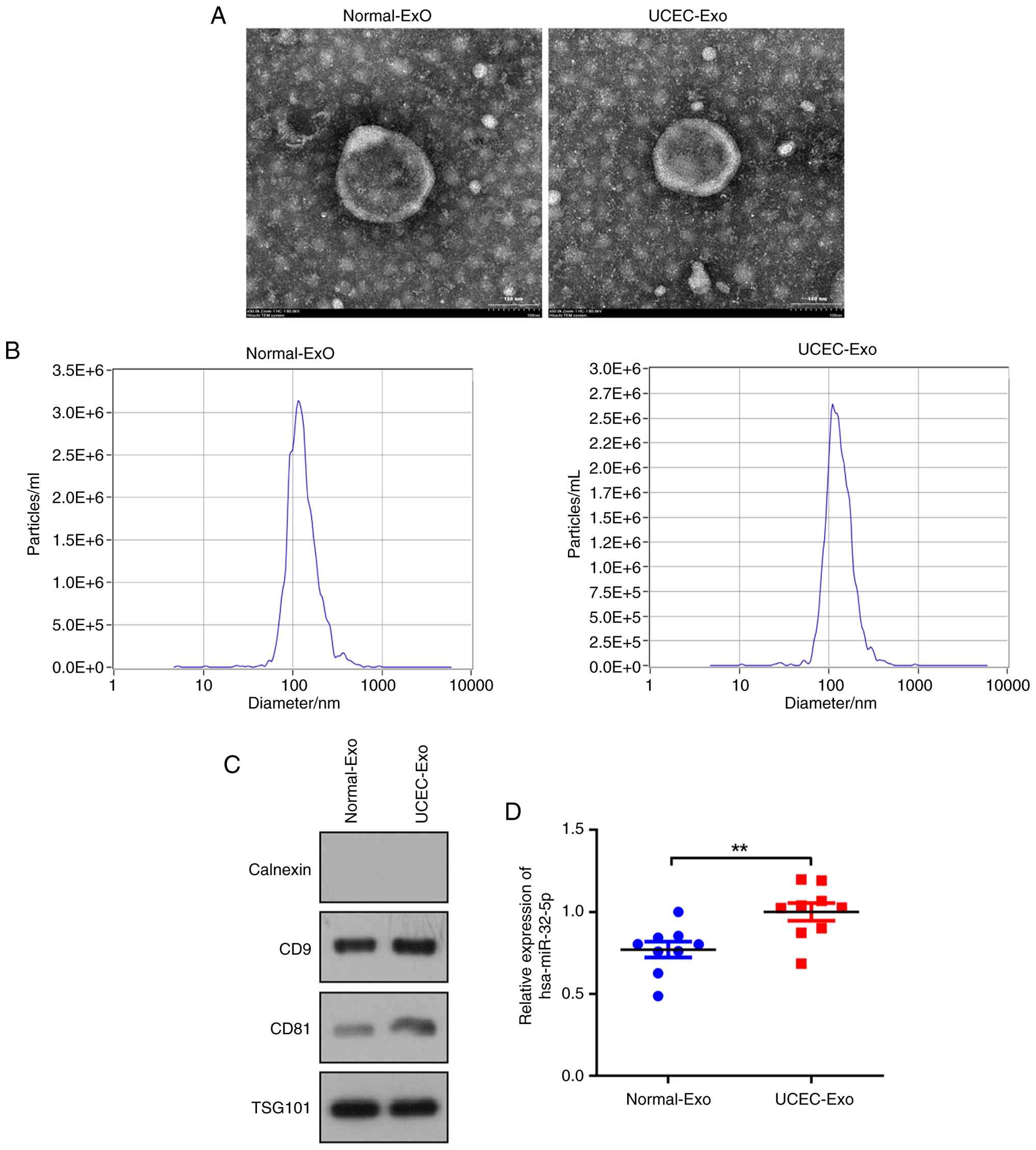
Figure 2

miR-32-5p is overexpressed in
UCEC-Exo. (A) The morphology of plasma exosomes was visualized
using transmission electron microscopy. Scale bar, 100 µm. (B) The
size distribution and concentration of plasma exosomes were
assessed by nanoparticle tracking analysis. The X-axis represents
the diameter (nm) of exosomes, while the Y-axis represents the
concentration of exosomes. (C) The protein levels of
exosome-positive markers (CD9, CD81 and TSG101) and
exosome-negative marker (Calnexin) in plasma exosomes were
determined using western blotting. (D) The expression of miR-32-5p
in normal-Exo and UCEC-Exo was assessed using quantitative reverse
transcription-PCR. **P<0.01 vs. normal-Exo. UCEC, uterine corpus
endometrial carcinoma; miRNA, microRNA; Exo, exosome; TSG101, tumor
susceptibility gene 101.

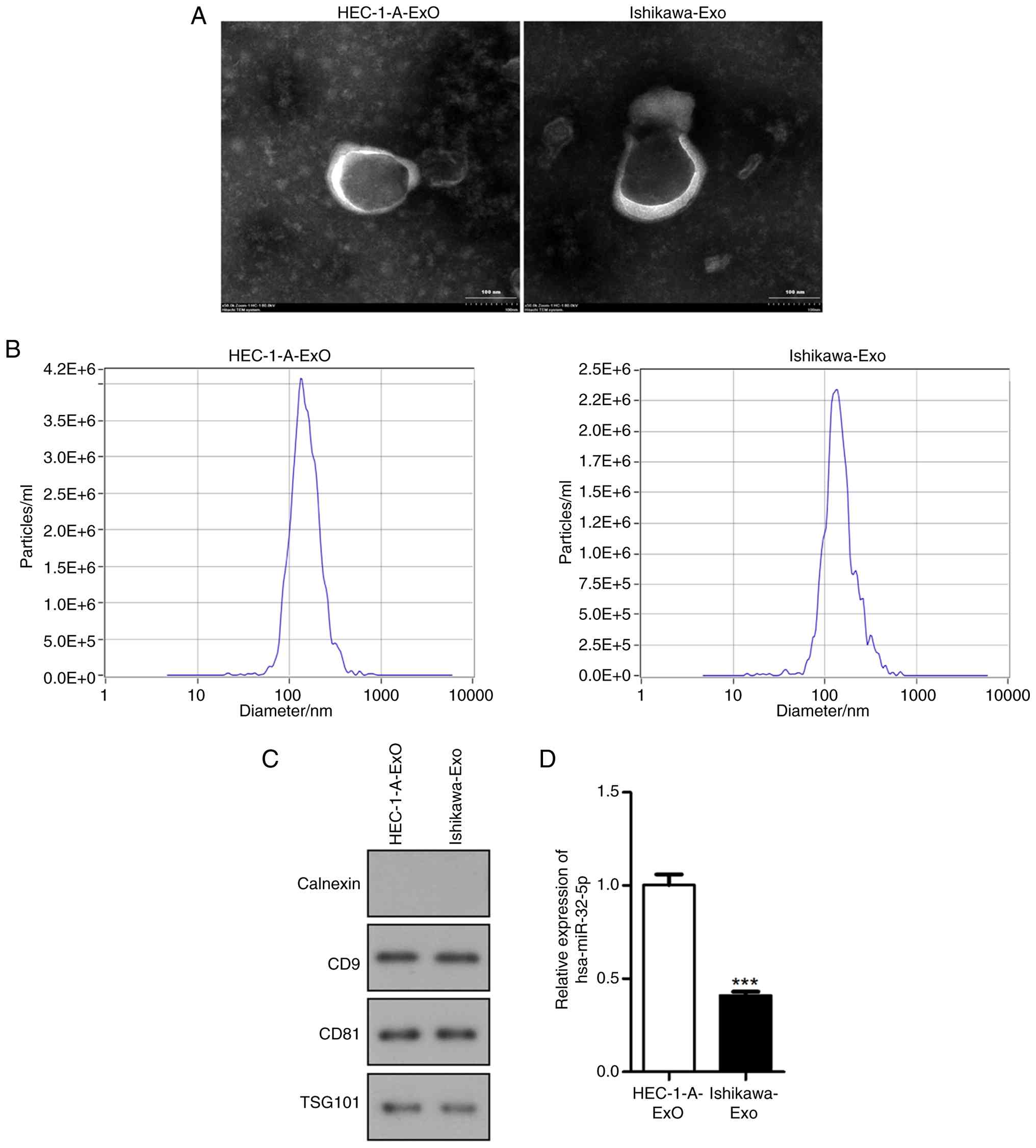
Figure 3

Expression of miR-32-5p in exosomes
isolated from UCEC cell lines. (A) The morphology of UCEC cell
line-derived exosomes was visualized using transmission electron
microscopy. Scale bar, 100 µm. (B) The size distribution and
concentration of UCEC cell line-derived exosomes were assessed by
nanoparticle tracking analysis. The X-axis represents the diameter
(nm) of exosomes, while Y-axis represents the concentration of
exosomes. (C) The protein levels of exosome-positive markers (CD9,
CD81 and TSG101) and exosome-negative marker (Calnexin) in UCEC
cell line-derived exosomes were determined using western blotting.
(D) The expression of miR-32-5p in HEC-1-A-Exo and Ishikawa-Exo was
detected using quantitative reverse transcription-PCR.
***P<0.001 vs. HEC-1-A-Exo. UCEC, uterine corpus endometrial
carcinoma; miRNA, microRNA; Exo, exosome; TSG101, tumor
susceptibility gene 101.

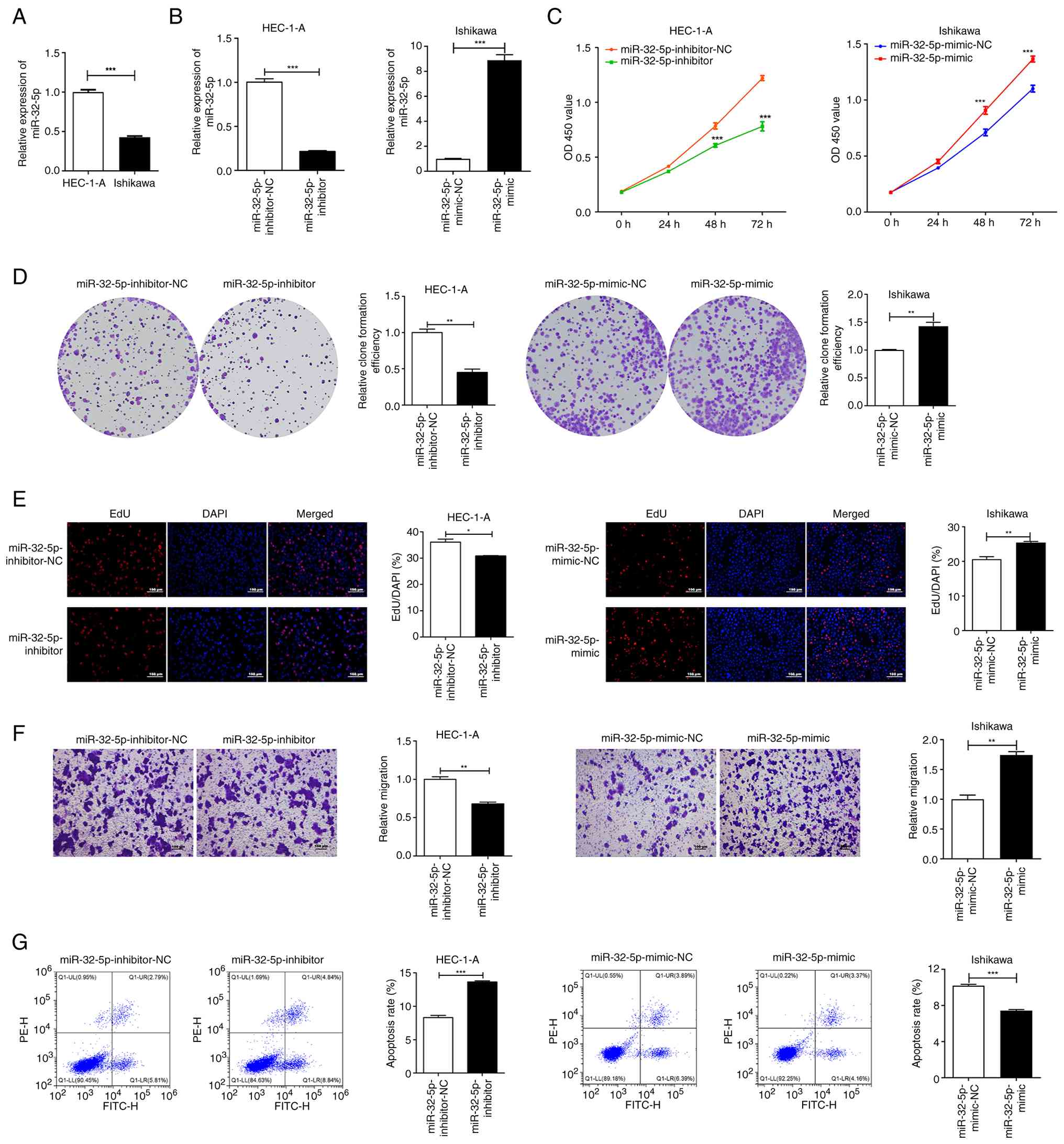
Figure 4

Effects of miR-32-5p on the
proliferative capacities, migratory abilities and apoptotic rate of
UCEC cells. (A) The expression of miR-32-5p in HEC-1-A and Ishikawa
cells were then determined using quantitative reverse
transcription-PCR. ***P<0.001 vs. HEC-1-A cells. (B) The
expression of miR-32-5p in HEC-1-A cells after transfection of
miR-32-5p inhibitor or in Ishikawa cells after transfection of
miR-32-5p mimic. (C) The viability of UCEC cell lines were measured
using the CCK-8 assay. (D) Relative colony formation efficiency of
UCEC cell lines was evaluated using the colony formation assay. (E)
EdU-positive cells were measured through EdU proliferation assay.
(Scale bar, 100 µm). (F) The migratory potential of UCEC cell lines
were determined via Transwell migration assay. (Scale bar, 100 µm).
(G) Flow cytometry was used to detect apoptosis.
*P<0.05, **P<0.01, ***P<0.001 vs. miR-32-5p
inhibitor-NC or miR-32-5p mimic-NC. UCEC, uterine corpus
endometrial carcinoma; miRNA, microRNA; NC, negative control; EdU,
5-ethynyl-2′-deoxyuridine.

Figure 5

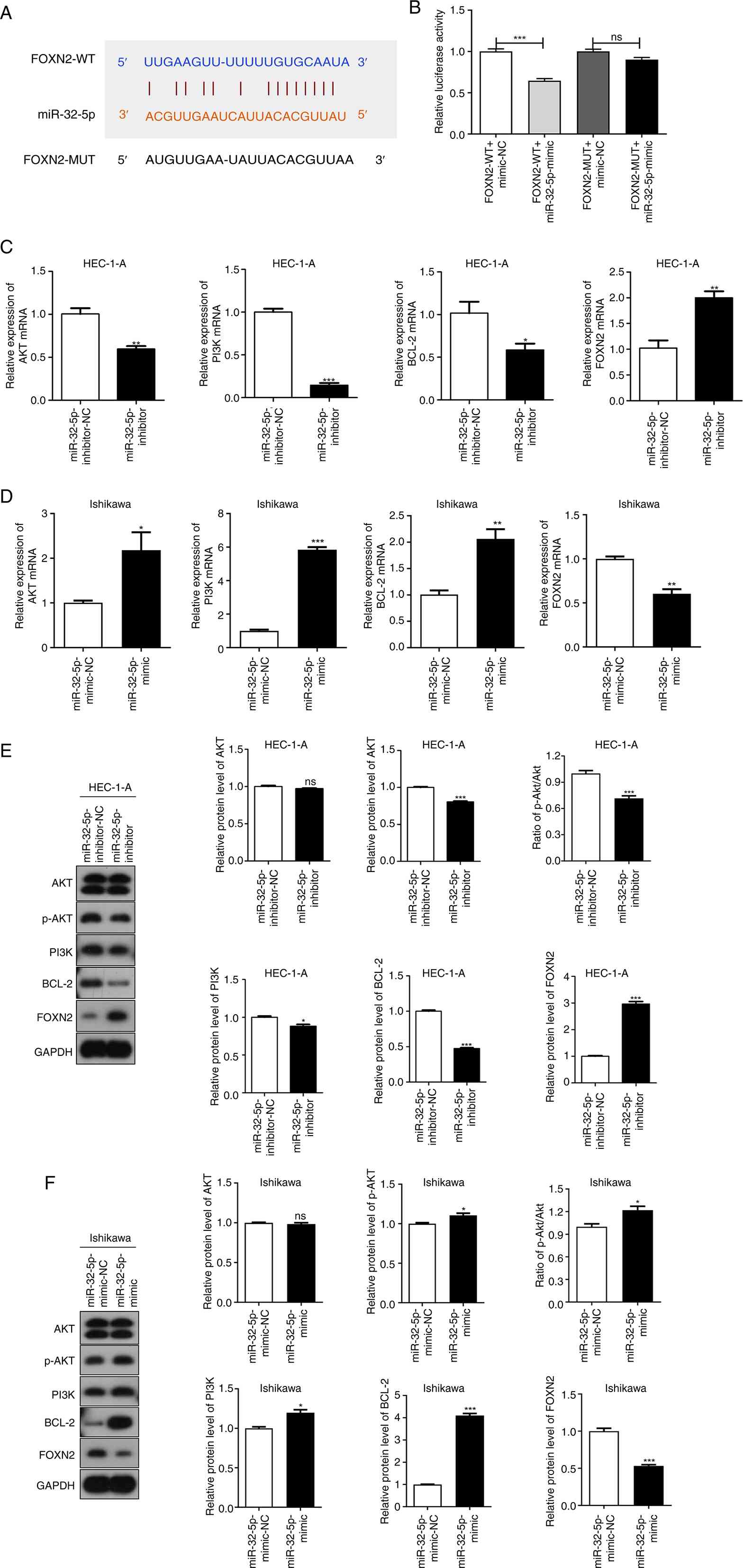
miR-32-5p negatively regulates FOXN2
and activates PI3K/AKT pathway. (A) The Starbase software shows the
potential binding site for miR-32-5p and FOXN2. (B) A dual
luciferase reporter assay was conducted to assess the relationship
between miR-32-5p and FOXN2. ***P<0.001 vs. FOXN2-WT
+ mimic-NC. (C) The mRNA expression of AKT, PI3K, Bcl-2 and FOXN2
in HEC-1-A cells transfected with miR-32-5p inhibitor or
inhibitor-NC was detected using qRT-PCR. *P<0.05, **P<0.01,
***P<0.001 vs. miR-32-5p inhibitor-NC. (D) The mRNA expression
of AKT, PI3K, Bcl-2 and FOXN2 in Ishikawa cells transfected with
miR-32-5p mimic or mimic-NC was detected by qRT-PCR. *P<0.05,
**P<0.01 and ***P<0.001 vs. miR-32-5p mimic-NC. (E) The
protein levels of AKT, PI3K, p-PI3K, Bcl-2, FOXN2 and the ratio of
p-AKT/AKT in HEC-1-A cells transfected with miR-32-5p inhibitor or
inhibitor-NC were measured using western blotting. *P<0.05 and
***P<0.001 vs. miR-32-5p inhibitor-NC. (F) The protein levels of
AKT, PI3K, p-PI3K, Bcl-2, FOXN2 and the ratio of p-AKT/AKT in
Ishikawa cells transfected with miR-32-5p mimic or mimic-NC were
measured using western blotting. *P<0.05 and ***P<0.001 vs.
miR-32-5p inhibitor-NC. UCEC, uterine corpus endometrial carcinoma;
miRNA, microRNA; NC, negative control; NS, not significant; WT,
wild-type; MUT, mutant; qRT-PCR, quantitative reverse
transcription-PCR; p-, phosphorylated; FOXN2, Forkhead Box N2.

Figure 6

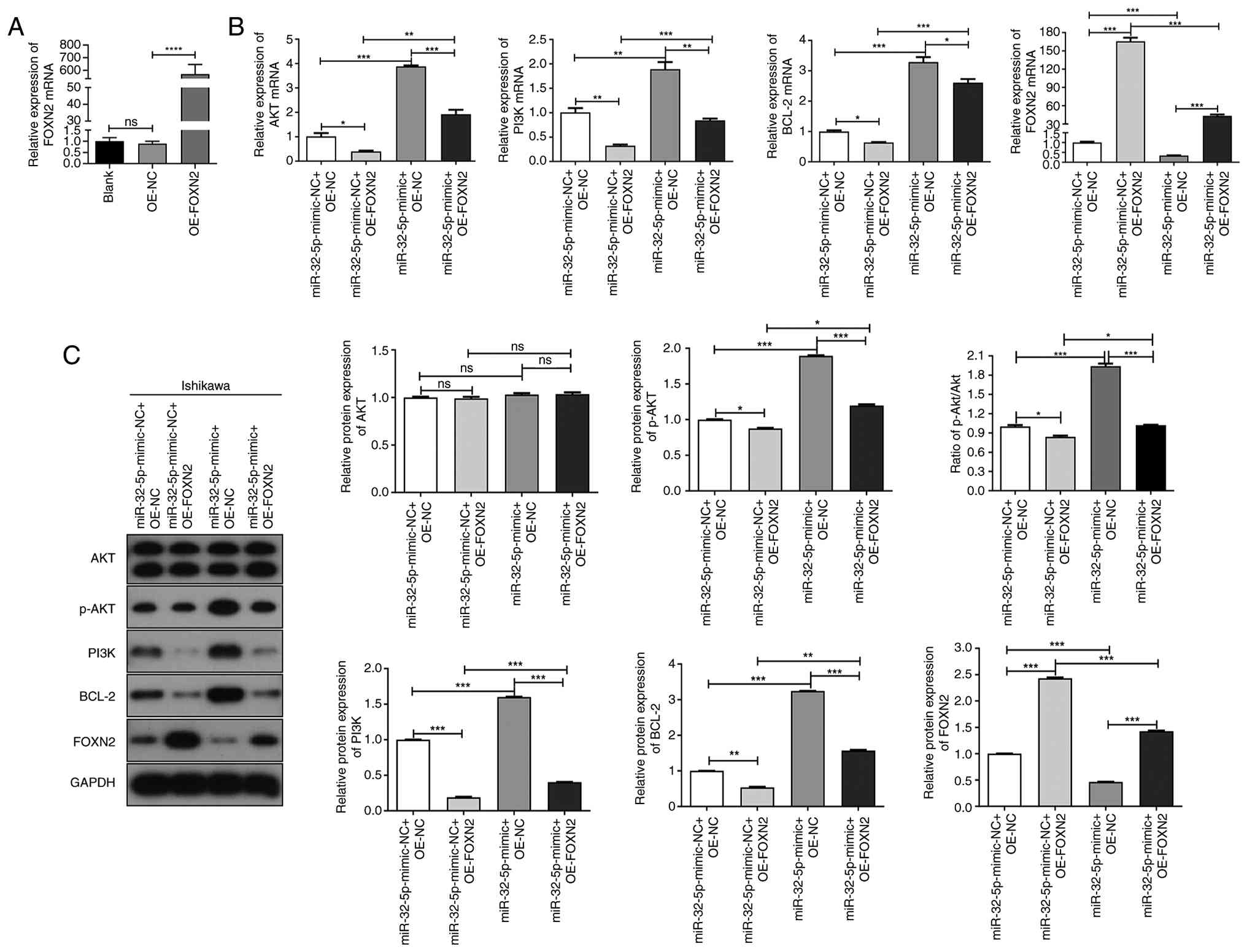
Effects of miR-32-5p-mediated FOXN2
on PI3K/AKT/Bcl-2 pathway. (A) Following transfection of
OE-FOXN2/OE-NC in Ishikawa cells, the mRNA expression of FOXN2 was
determined via qRT-PCR. Following transfection of miR-32-5p-mimic
or OE-FOXN2 in Ishikawa cells, (B) the mRNA expression and (C)
protein levels of FOXN2/PI3K/AKT/Bcl-2 and the ratio of p-AKT/AKT
were determined through qRT-PCR and western blotting, respectively.
*P<0.05, **P<0.01, ***P<0.001, ****P<0.0001. UCEC,
uterine corpus endometrial carcinoma; miRNA, microRNA; NC, negative
control; NS, not significant; WT, wild-type; MUT, mutant; qRT-PCR,
quantitative reverse transcription-PCR; p-, phosphorylated; FOXN2,
Forkhead Box N2; OE, overexpression.

Figure 7

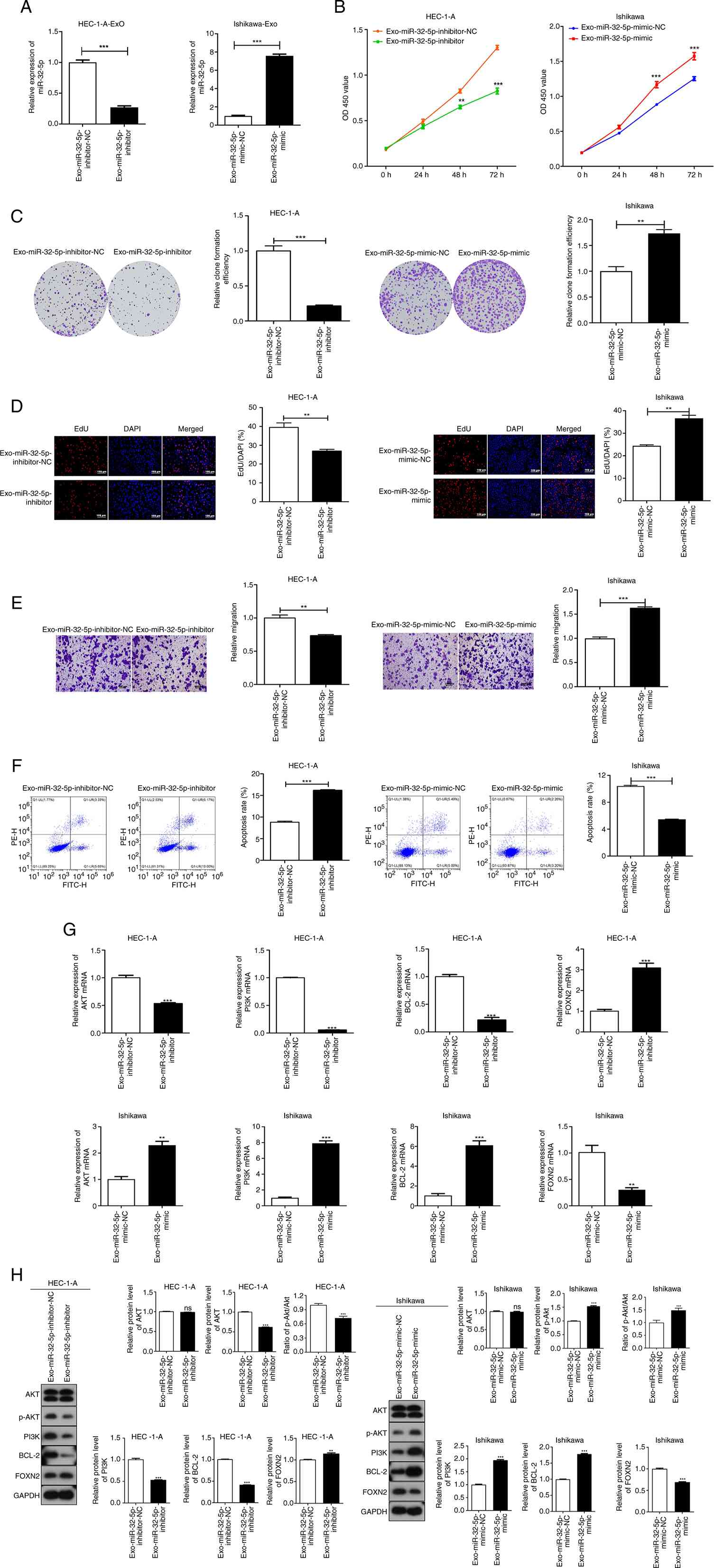
Exo-miR-32-5p regulates the
proliferation, migration and apoptosis of UCEC cells through
regulating FOXN2 expression and PI3K/AKT/Bcl-2 pathway. The impact
of Exo-miR-32-5p on the proliferation, migration and apoptosis of
UCEC cells were examined utilizing a co-culture model. (A)
Exo-miR-32-5p expression in HEC-1-A cells transfected with
miR-32-5p-inhibitor or in Ishikawa cells transfected with
miR-32-5p-mimic was determined through qRT-PCR. (B) The viability
of UCEC cell lines were measured using the CCK-8 assay. (C)
Relative colony formation efficiency of UCEC cell lines was
evaluated using the colony formation assay. (D) EdU-positive cells
were measured through EdU proliferation assay. (Scale bar, 100 µm).
(E) The migratory potential of UCEC cell lines were determined via
the Transwell migration assay. (F) Flow cytometry was used to
detect apoptosis. (G) The mRNA expression of AKT, PI3K, Bcl-2 and
FOXN2 was detected by qRT-PCR. (H) The protein levels of AKT, PI3K,
p-PI3K, Bcl-2, FOXN2 and the ratio of p-AKT/AKT were measured by
western blotting. **P<0.01, ***P<0.001 vs. Exo-miR-32-5p
inhibitor-NC or Exo-miR-32-5p mimic-NC. UCEC, uterine corpus
endometrial carcinoma; miRNA, microRNA; NC, negative control; NS,
not significant; WT, wild-type; MUT, mutant; qRT-PCR, quantitative
reverse transcription-PCR; p-, phosphorylated; FOXN2, Forkhead Box
N2; EdU, 5-ethynyl-2′-deoxyuridine.
View References

1 

Crosbie EJ, Kitson SJ, McAlpine JN, Mukhopadhyay A, Powell ME and Singh N: Endometrial cancer. Lancet. 399:1412–1428. 2022. View Article : Google Scholar : PubMed/NCBI

2 

Hafizz AMHA, Zin RRM, Aziz NHA, Kampan NC and Shafiee MN: Beyond lipid-lowering: Role of statins in endometrial cancer. Mol Biol Rep. 47:8199–8207. 2020. View Article : Google Scholar : PubMed/NCBI

3 

Li Y, Huang C, Kavlashvili T, Fronk A, Zhang Y, Wei Y, Dai D, Devor EJ, Meng X, Thiel KW, et al: Loss of progesterone receptor through epigenetic regulation is associated with poor prognosis in solid tumors. Am J Cancer Res. 10:1827–1843. 2020.PubMed/NCBI

4 

Francis SR, Ager BJ, Do OA, Huang YJ, Soisson AP, Dodson MK, Werner TL, Sause WT, Grant JD and Gaffney DK: Recurrent early stage endometrial cancer: Patterns of recurrence and results of salvage therapy. Gynecol Oncol. 154:38–44. 2019. View Article : Google Scholar : PubMed/NCBI

5 

Bregar AJ, Melamed A, Diver E, Clemmer JT, Uppal S, Schorge JO, Rice LW, Del Carmen MG and Rauh-Hain JA: Minimally invasive staging surgery in women with early-stage endometrial cancer: Analysis of the national cancer data base. Ann Surg Oncol. 24:1677–1687. 2017. View Article : Google Scholar : PubMed/NCBI

6 

Connor EV and Rose PG: Management strategies for recurrent endometrial cancer. Expert Rev Anticancer Ther. 18:873–885. 2018. View Article : Google Scholar : PubMed/NCBI

7 

Pölcher M, Rottmann M, Brugger S, Mahner S, Dannecker C, Kiechle M, Brambs C, Grab D, Anthuber C, von Koch F, et al: Lymph node dissection in endometrial cancer and clinical outcome: A population-based study in 5546 patients. Gynecol Oncol. 154:65–71. 2019. View Article : Google Scholar : PubMed/NCBI

8 

Wessler S, Aberger F and Hartmann TN: The sound of tumor cell-microenvironment communication-composed by the cancer cluster salzburg research network. Cell Commun Signal. 15:202017. View Article : Google Scholar : PubMed/NCBI

9 

Lauko A, Mu Z, Gutmann DH, Naik UP and Lathia JD: Junctional adhesion molecules in cancer: A paradigm for the diverse functions of cell-cell interactions in tumor progression. Cancer Res. 80:4878–4885. 2020. View Article : Google Scholar : PubMed/NCBI

10 

Paskeh MDA, Entezari M, Mirzaei S, Zabolian A, Saleki H, Naghdi MJ, Sabet S, Khoshbakht MA, Hashemi M, Hushmandi K, et al: Emerging role of exosomes in cancer progression and tumor microenvironment remodeling. J Hematol Oncol. 15:832022. View Article : Google Scholar : PubMed/NCBI

11 

Wei H, Chen Q, Lin L, Sha C, Li T, Liu Y, Yin X, Xu Y, Chen L, Gao W, et al: Regulation of exosome production and cargo sorting. Int J Biol Sci. 17:163–177. 2021. View Article : Google Scholar : PubMed/NCBI

12 

Cully M: Exosome-based candidates move into the clinic. Nat Rev Drug Discov. 20:6–7. 2021. View Article : Google Scholar : PubMed/NCBI

13 

Au Yeung CL, Co NN, Tsuruga T, Yeung TL, Kwan SY, Leung CS, Li Y, Lu ES, Kwan K, Wong KK, et al: Exosomal transfer of stroma-derived miR21 confers paclitaxel resistance in ovarian cancer cells through targeting APAF1. Nat Commun. 7:111502016. View Article : Google Scholar : PubMed/NCBI

14 

Baroni S, Romero-Cordoba S, Plantamura I, Dugo M, D'Ippolito E, Cataldo A, Cosentino G, Angeloni V, Rossini A, Daidone MG and Iorio MV: Exosome-mediated delivery of miR-9 induces cancer-associated fibroblast-like properties in human breast fibroblasts. Cell Death Dis. 7:e23122016. View Article : Google Scholar : PubMed/NCBI

15 

Che X, Jian F, Chen C, Liu C, Liu G and Feng W: PCOS serum-derived exosomal miR-27a-5p stimulates endometrial cancer cells migration and invasion. J Mol Endocrinol. 64:1–12. 2020. View Article : Google Scholar : PubMed/NCBI

16 

Jing L, Hua X, Yuanna D, Rukun Z and Junjun M: Exosomal miR-499a-5p inhibits endometrial cancer growth and metastasis via targeting VAV3. Cancer Manag Res. 12:13541–13552. 2020. View Article : Google Scholar : PubMed/NCBI

17 

Gao ZQ, Wang JF, Chen DH, Ma XS, Wu Y, Tang Z and Dang XW: Long non-coding RNA GAS5 suppresses pancreatic cancer metastasis through modulating miR-32-5p/PTEN axis. Cell Biosci. 7:662017. View Article : Google Scholar : PubMed/NCBI

18 

Liang H, Tang Y, Zhang H and Zhang C: MiR-32-5p regulates radiosensitization, migration and invasion of colorectal cancer cells by targeting TOB1 gene. Onco Targets Ther. 12:9651–9661. 2019. View Article : Google Scholar : PubMed/NCBI

19 

Jin Y and Wang H: Circ_0078607 inhibits the progression of ovarian cancer via regulating the miR-32-5p/SIK1 network. J Ovarian Res. 15:32022. View Article : Google Scholar : PubMed/NCBI

20 

Zhang P, Liang T, Chen Y, Wang X, Wu T, Xie Z, Luo J, Yu Y and Yu H: Circulating exosomal miRNAs as Novel biomarkers for stable coronary artery disease. Biomed Res Int. 2020:35939622020. View Article : Google Scholar : PubMed/NCBI

21 

Zhou L, Wang W, Wang F, Yang S, Hu J, Lu B, Pan Z, Ma Y, Zheng M, Zhou L, et al: Plasma-derived exosomal miR-15a-5p as a promising diagnostic biomarker for early detection of endometrial carcinoma. Mol Cancer. 20:572021. View Article : Google Scholar : PubMed/NCBI

22 

Berek JS, Matias-Guiu X, Creutzberg C, Fotopoulou C, Gaffney D, Kehoe S, Lindemann K, Mutch D and Concin N; Endometrial Cancer Staging Subcommittee, FIGO Women's Cancer Committee, : FIGO staging of endometrial cancer: 2023. Int J Gynaecol Obstet. 162:383–394. 2023. View Article : Google Scholar : PubMed/NCBI

23 

Pan Y, Wang X, Li Y, Yan PY and Zhang H: Human umbilical cord blood mesenchymal stem cells-derived exosomal microRNA-503-3p inhibits progression of human endometrial cancer cells through downregulating MEST. Cancer Gene Ther. 29:1130–1139. 2022. View Article : Google Scholar : PubMed/NCBI

24 

Livak KJ and Schmittgen TD: Analysis of relative gene expression data using real-time quantitative PCR and the 2(−Delta Delta C(T)) method. Methods. 25:402–408. 2001. View Article : Google Scholar : PubMed/NCBI

25 

Zhu Z, Chen Z, Wang M, Zhang M, Chen Y, Yang X, Zhou C, Liu Y, Hong L and Zhang L: Detection of plasma exosomal miRNA-205 as a biomarker for early diagnosis and an adjuvant indicator of ovarian cancer staging. J Ovarian Res. 15:272022. View Article : Google Scholar : PubMed/NCBI

26 

Liu W, Yang D, Chen L, Liu Q, Wang W, Yang Z, Shang A, Quan W and Li D: Plasma exosomal miRNA-139-3p is a novel biomarker of colorectal cancer. J Cancer. 11:4899–4906. 2020. View Article : Google Scholar : PubMed/NCBI

27 

Taghehchian N, Lotfi M, Zangouei AS, Akhlaghipour I and Moghbeli M: MicroRNAs as the critical regulators of Forkhead box protein family during gynecological and breast tumor progression and metastasis. Eur J Med Res. 28:3302023. View Article : Google Scholar : PubMed/NCBI

28 

Xie SM, Zhang Q and Jiang L: Current knowledge on exosome biogenesis, cargo-sorting mechanism and therapeutic implications. Membranes (Basel). 12:4982022. View Article : Google Scholar : PubMed/NCBI

29 

Jiang N, Dai Q, Su X, Fu J, Feng X and Peng J: Role of PI3K/AKT pathway in cancer: The framework of malignant behavior. Mol Biol Rep. 47:4587–4629. 2020. View Article : Google Scholar : PubMed/NCBI

30 

He Y, Sun MM, Zhang GG, Yang J, Chen KS, Xu WW and Li B: Targeting PI3K/Akt signal transduction for cancer therapy. Signal Transduct Target Ther. 6:4252021. View Article : Google Scholar : PubMed/NCBI

31 

Pavlidou A and Vlahos NF: Molecular alterations of PI3K/Akt/mTOR pathway: A therapeutic target in endometrial cancer. ScientificWorldJournal. 2014:7097362014. View Article : Google Scholar : PubMed/NCBI

32 

Buhtoiarova TN, Brenner CA and Singh M: Endometrial carcinoma: Role of current and emerging biomarkers in resolving persistent clinical dilemmas. Am J Clin Pathol. 145:8–21. 2016. View Article : Google Scholar : PubMed/NCBI

33 

Hu ZY, Tang LD, Zhou Q, Xiao L and Cao Y: Aberrant promoter hypermethylation of p16 gene in endometrial carcinoma. Tumour Biol. 36:1487–1491. 2015. View Article : Google Scholar : PubMed/NCBI

34 

Muinelo-Romay L, Casas-Arozamena C and Abal M: Liquid biopsy in endometrial cancer: New opportunities for personalized oncology. Int J Mol Sci. 19:23112018. View Article : Google Scholar : PubMed/NCBI

35 

Falcone G, Felsani A and D'Agnano I: Signaling by exosomal microRNAs in cancer. J Exp Clin Cancer Res. 34:322015. View Article : Google Scholar : PubMed/NCBI

36 

Bjørnetrø T, Redalen KR, Meltzer S, Thusyanthan NS, Samiappan R, Jegerschöld C, Handeland KR and Ree AH: An experimental strategy unveiling exosomal microRNAs 486-5p, 181a-5p and 30d-5p from hypoxic tumour cells as circulating indicators of high-risk rectal cancer. J Extracell Vesicles. 8:15672192019. View Article : Google Scholar : PubMed/NCBI

37 

Zheng M, Hou L, Ma Y, Zhou L, Wang F, Cheng B, Wang W, Lu B, Liu P, Lu W and Lu Y: Exosomal let-7d-3p and miR-30d-5p as diagnostic biomarkers for non-invasive screening of cervical cancer and its precursors. Mol Cancer. 18:762019. View Article : Google Scholar : PubMed/NCBI

38 

Panda AC: Circular RNAs Act as miRNA sponges. Adv Exp Med Biol. 1087:67–79. 2018. View Article : Google Scholar : PubMed/NCBI

39 

Zeng ZL, Zhu Q, Zhao Z, Zu X and Liu J: Magic and mystery of microRNA-32. J Cell Mol Med. 25:8588–8601. 2021. View Article : Google Scholar : PubMed/NCBI

40 

Liu YJ, Zhou HG, Chen LH, Qu DC, Wang CJ, Xia ZY and Zheng JH: MiR-32-5p regulates the proliferation and metastasis of cervical cancer cells by targeting HOXB8. Eur Rev Med Pharmacol Sci. 23:87–95. 2019.PubMed/NCBI

41 

Wang R, Huang Z, Qian C, Wang M, Zheng Y, Jiang R and Yu C: LncRNA WEE2-AS1 promotes proliferation and inhibits apoptosis in triple negative breast cancer cells via regulating miR-32-5p/TOB1 axis. Biochem Biophys Res Commun. 526:1005–1012. 2020. View Article : Google Scholar : PubMed/NCBI

42 

Lawrence MS, Stojanov P, Mermel CH, Robinson JT, Garraway LA, Golub TR, Meyerson M, Gabriel SB, Lander ES and Getz G: Discovery and saturation analysis of cancer genes across 21 tumour types. Nature. 505:495–501. 2014. View Article : Google Scholar : PubMed/NCBI

43 

Wei ST, Zhang J, Zhao R, Shi R, An L, Yu Z, Zhang Q, Zhang J, Yao Y, Li H and Wang H: Histone lactylation promotes malignant progression by facilitating USP39 expression to target PI3K/AKT/HIF-1α signal pathway in endometrial carcinoma. Cell Death Discov. 10:1212024. View Article : Google Scholar : PubMed/NCBI

44 

Ma LJ, Huang WN, Liang XL, Bai G, Wang X, Jiang H, Xin Y, Hu L, Chen X and Liu C: Inhibition of squalene epoxidase linking with PI3K/AKT signaling pathway suppresses endometrial cancer. Cancer Sci. 114:3595–3607. 2023. View Article : Google Scholar : PubMed/NCBI

45 

Li C, Zhou T, Chen J, Li R, Chen H, Luo S, Chen D, Cai C and Li W: The role of exosomal miRNAs in cancer. J Transl Med. 20:62022. View Article : Google Scholar : PubMed/NCBI

46 

Nail HM, Chiu CC, Leung CH, Ahmed MMM and Wang HMD: Exosomal miRNA-mediated intercellular communications and immunomodulatory effects in tumor microenvironments. J Biomed Sci. 30:692023. View Article : Google Scholar : PubMed/NCBI

47 

Fasken MB, Morton DJ, Kuiper EG, Jones SK, Leung SW and Corbett AH: The RNA exosome and human disease. Methods Mol Biol. 2062:3–33. 2020. View Article : Google Scholar : PubMed/NCBI

48 

Yao Y, Shi L and Zhu X: Four differentially expressed exosomal miRNAs as prognostic biomarkers and therapy targets in endometrial cancer: Bioinformatic analysis. Medicine (Baltimore). 102:e349982023. View Article : Google Scholar : PubMed/NCBI

49 

Li BL, Lu W, Qu JJ, Ye L, Du GQ and Wan XP: Loss of exosomal miR-148b from cancer-associated fibroblasts promotes endometrial cancer cell invasion and cancer metastasis. J Cell Physiol. 234:2943–2953. 2019. View Article : Google Scholar : PubMed/NCBI

50 

Wang Y, Guo MM, Lin DM, Liang D, Zhao L, Zhao R and Wang Y: Docetaxel-loaded exosomes for targeting non-small cell lung cancer: preparation and evaluation in vitro and in vivo. Drug Deliv. 28:1510–1523. 2021. View Article : Google Scholar : PubMed/NCBI

Related Articles

  • Abstract
  • View
  • Download
  • Twitter
Copy and paste a formatted citation
Spandidos Publications style
Chen X, Li H, Cheng X, Cai Y and Guo G: Exosomal‑miR‑32‑5p directly targets FOXN2 to regulate the proliferation, migration and apoptosis of uterine corpus endometrial carcinoma via the PI3K/AKT/BCL‑2 pathway. Oncol Lett 31: 219, 2026.
APA
Chen, X., Li, H., Cheng, X., Cai, Y., & Guo, G. (2026). Exosomal‑miR‑32‑5p directly targets FOXN2 to regulate the proliferation, migration and apoptosis of uterine corpus endometrial carcinoma via the PI3K/AKT/BCL‑2 pathway. Oncology Letters, 31, 219. https://doi.org/10.3892/ol.2026.15574
MLA
Chen, X., Li, H., Cheng, X., Cai, Y., Guo, G."Exosomal‑miR‑32‑5p directly targets FOXN2 to regulate the proliferation, migration and apoptosis of uterine corpus endometrial carcinoma via the PI3K/AKT/BCL‑2 pathway". Oncology Letters 31.6 (2026): 219.
Chicago
Chen, X., Li, H., Cheng, X., Cai, Y., Guo, G."Exosomal‑miR‑32‑5p directly targets FOXN2 to regulate the proliferation, migration and apoptosis of uterine corpus endometrial carcinoma via the PI3K/AKT/BCL‑2 pathway". Oncology Letters 31, no. 6 (2026): 219. https://doi.org/10.3892/ol.2026.15574
Copy and paste a formatted citation
x
Spandidos Publications style
Chen X, Li H, Cheng X, Cai Y and Guo G: Exosomal‑miR‑32‑5p directly targets FOXN2 to regulate the proliferation, migration and apoptosis of uterine corpus endometrial carcinoma via the PI3K/AKT/BCL‑2 pathway. Oncol Lett 31: 219, 2026.
APA
Chen, X., Li, H., Cheng, X., Cai, Y., & Guo, G. (2026). Exosomal‑miR‑32‑5p directly targets FOXN2 to regulate the proliferation, migration and apoptosis of uterine corpus endometrial carcinoma via the PI3K/AKT/BCL‑2 pathway. Oncology Letters, 31, 219. https://doi.org/10.3892/ol.2026.15574
MLA
Chen, X., Li, H., Cheng, X., Cai, Y., Guo, G."Exosomal‑miR‑32‑5p directly targets FOXN2 to regulate the proliferation, migration and apoptosis of uterine corpus endometrial carcinoma via the PI3K/AKT/BCL‑2 pathway". Oncology Letters 31.6 (2026): 219.
Chicago
Chen, X., Li, H., Cheng, X., Cai, Y., Guo, G."Exosomal‑miR‑32‑5p directly targets FOXN2 to regulate the proliferation, migration and apoptosis of uterine corpus endometrial carcinoma via the PI3K/AKT/BCL‑2 pathway". Oncology Letters 31, no. 6 (2026): 219. https://doi.org/10.3892/ol.2026.15574
Follow us
  • Twitter
  • LinkedIn
  • Facebook
About
  • Spandidos Publications
  • Careers
  • Cookie Policy
  • Privacy Policy
How can we help?
  • Help
  • Live Chat
  • Contact
  • Email to our Support Team