Spandidos Publications Logo
  • About
    • About Spandidos
    • Aims and Scopes
    • Abstracting and Indexing
    • Editorial Policies
    • Reprints and Permissions
    • Job Opportunities
    • Terms and Conditions
    • Contact
  • Journals
    • All Journals
    • Oncology Letters
      • Oncology Letters
      • Information for Authors
      • Editorial Policies
      • Editorial Board
      • Aims and Scope
      • Abstracting and Indexing
      • Bibliographic Information
      • Archive
    • International Journal of Oncology
      • International Journal of Oncology
      • Information for Authors
      • Editorial Policies
      • Editorial Board
      • Aims and Scope
      • Abstracting and Indexing
      • Bibliographic Information
      • Archive
    • Molecular and Clinical Oncology
      • Molecular and Clinical Oncology
      • Information for Authors
      • Editorial Policies
      • Editorial Board
      • Aims and Scope
      • Abstracting and Indexing
      • Bibliographic Information
      • Archive
    • Experimental and Therapeutic Medicine
      • Experimental and Therapeutic Medicine
      • Information for Authors
      • Editorial Policies
      • Editorial Board
      • Aims and Scope
      • Abstracting and Indexing
      • Bibliographic Information
      • Archive
    • International Journal of Molecular Medicine
      • International Journal of Molecular Medicine
      • Information for Authors
      • Editorial Policies
      • Editorial Board
      • Aims and Scope
      • Abstracting and Indexing
      • Bibliographic Information
      • Archive
    • Biomedical Reports
      • Biomedical Reports
      • Information for Authors
      • Editorial Policies
      • Editorial Board
      • Aims and Scope
      • Abstracting and Indexing
      • Bibliographic Information
      • Archive
    • Oncology Reports
      • Oncology Reports
      • Information for Authors
      • Editorial Policies
      • Editorial Board
      • Aims and Scope
      • Abstracting and Indexing
      • Bibliographic Information
      • Archive
    • Molecular Medicine Reports
      • Molecular Medicine Reports
      • Information for Authors
      • Editorial Policies
      • Editorial Board
      • Aims and Scope
      • Abstracting and Indexing
      • Bibliographic Information
      • Archive
    • World Academy of Sciences Journal
      • World Academy of Sciences Journal
      • Information for Authors
      • Editorial Policies
      • Editorial Board
      • Aims and Scope
      • Abstracting and Indexing
      • Bibliographic Information
      • Archive
    • International Journal of Functional Nutrition
      • International Journal of Functional Nutrition
      • Information for Authors
      • Editorial Policies
      • Editorial Board
      • Aims and Scope
      • Abstracting and Indexing
      • Bibliographic Information
      • Archive
    • International Journal of Epigenetics
      • International Journal of Epigenetics
      • Information for Authors
      • Editorial Policies
      • Editorial Board
      • Aims and Scope
      • Abstracting and Indexing
      • Bibliographic Information
      • Archive
    • Medicine International
      • Medicine International
      • Information for Authors
      • Editorial Policies
      • Editorial Board
      • Aims and Scope
      • Abstracting and Indexing
      • Bibliographic Information
      • Archive
  • Articles
  • Information
    • Information for Authors
    • Information for Reviewers
    • Information for Librarians
    • Information for Advertisers
    • Conferences
  • Language Editing
Spandidos Publications Logo
  • About
    • About Spandidos
    • Aims and Scopes
    • Abstracting and Indexing
    • Editorial Policies
    • Reprints and Permissions
    • Job Opportunities
    • Terms and Conditions
    • Contact
  • Journals
    • All Journals
    • Biomedical Reports
      • Information for Authors
      • Editorial Policies
      • Editorial Board
      • Aims and Scope
      • Abstracting and Indexing
      • Bibliographic Information
      • Archive
    • Experimental and Therapeutic Medicine
      • Information for Authors
      • Editorial Policies
      • Editorial Board
      • Aims and Scope
      • Abstracting and Indexing
      • Bibliographic Information
      • Archive
    • International Journal of Epigenetics
      • Information for Authors
      • Editorial Policies
      • Editorial Board
      • Aims and Scope
      • Abstracting and Indexing
      • Bibliographic Information
      • Archive
    • International Journal of Functional Nutrition
      • Information for Authors
      • Editorial Policies
      • Editorial Board
      • Aims and Scope
      • Abstracting and Indexing
      • Bibliographic Information
      • Archive
    • International Journal of Molecular Medicine
      • Information for Authors
      • Editorial Policies
      • Editorial Board
      • Aims and Scope
      • Abstracting and Indexing
      • Bibliographic Information
      • Archive
    • International Journal of Oncology
      • Information for Authors
      • Editorial Policies
      • Editorial Board
      • Aims and Scope
      • Abstracting and Indexing
      • Bibliographic Information
      • Archive
    • Medicine International
      • Information for Authors
      • Editorial Policies
      • Editorial Board
      • Aims and Scope
      • Abstracting and Indexing
      • Bibliographic Information
      • Archive
    • Molecular and Clinical Oncology
      • Information for Authors
      • Editorial Policies
      • Editorial Board
      • Aims and Scope
      • Abstracting and Indexing
      • Bibliographic Information
      • Archive
    • Molecular Medicine Reports
      • Information for Authors
      • Editorial Policies
      • Editorial Board
      • Aims and Scope
      • Abstracting and Indexing
      • Bibliographic Information
      • Archive
    • Oncology Letters
      • Information for Authors
      • Editorial Policies
      • Editorial Board
      • Aims and Scope
      • Abstracting and Indexing
      • Bibliographic Information
      • Archive
    • Oncology Reports
      • Information for Authors
      • Editorial Policies
      • Editorial Board
      • Aims and Scope
      • Abstracting and Indexing
      • Bibliographic Information
      • Archive
    • World Academy of Sciences Journal
      • Information for Authors
      • Editorial Policies
      • Editorial Board
      • Aims and Scope
      • Abstracting and Indexing
      • Bibliographic Information
      • Archive
  • Articles
  • Information
    • For Authors
    • For Reviewers
    • For Librarians
    • For Advertisers
    • Conferences
  • Language Editing
Login Register Submit
  • This site uses cookies
  • You can change your cookie settings at any time by following the instructions in our Cookie Policy. To find out more, you may read our Privacy Policy.

    I agree
Search articles by DOI, keyword, author or affiliation
Search
Advanced Search
presentation
Oncology Letters
Join Editorial Board Propose a Special Issue
Print ISSN: 1792-1074 Online ISSN: 1792-1082
Journal Cover
June-2026 Volume 31 Issue 6

Full Size Image

Sign up for eToc alerts
Recommend to Library

Journals

International Journal of Molecular Medicine

International Journal of Molecular Medicine

International Journal of Molecular Medicine is an international journal devoted to molecular mechanisms of human disease.

International Journal of Oncology

International Journal of Oncology

International Journal of Oncology is an international journal devoted to oncology research and cancer treatment.

Molecular Medicine Reports

Molecular Medicine Reports

Covers molecular medicine topics such as pharmacology, pathology, genetics, neuroscience, infectious diseases, molecular cardiology, and molecular surgery.

Oncology Reports

Oncology Reports

Oncology Reports is an international journal devoted to fundamental and applied research in Oncology.

Experimental and Therapeutic Medicine

Experimental and Therapeutic Medicine

Experimental and Therapeutic Medicine is an international journal devoted to laboratory and clinical medicine.

Oncology Letters

Oncology Letters

Oncology Letters is an international journal devoted to Experimental and Clinical Oncology.

Biomedical Reports

Biomedical Reports

Explores a wide range of biological and medical fields, including pharmacology, genetics, microbiology, neuroscience, and molecular cardiology.

Molecular and Clinical Oncology

Molecular and Clinical Oncology

International journal addressing all aspects of oncology research, from tumorigenesis and oncogenes to chemotherapy and metastasis.

World Academy of Sciences Journal

World Academy of Sciences Journal

Multidisciplinary open-access journal spanning biochemistry, genetics, neuroscience, environmental health, and synthetic biology.

International Journal of Functional Nutrition

International Journal of Functional Nutrition

Open-access journal combining biochemistry, pharmacology, immunology, and genetics to advance health through functional nutrition.

International Journal of Epigenetics

International Journal of Epigenetics

Publishes open-access research on using epigenetics to advance understanding and treatment of human disease.

Medicine International

Medicine International

An International Open Access Journal Devoted to General Medicine.

Journal Cover
June-2026 Volume 31 Issue 6

Full Size Image

Sign up for eToc alerts
Recommend to Library

  • Article
  • Citations
    • Cite This Article
    • Download Citation
    • Create Citation Alert
    • Remove Citation Alert
    • Cited By
  • Similar Articles
    • Related Articles (in Spandidos Publications)
    • Similar Articles (Google Scholar)
    • Similar Articles (PubMed)
  • Download PDF
  • Download XML
  • View XML

  • Supplementary Files
    • Supplementary_Data.pdf
Article Open Access

Identification of a prognostic model using immune related genes combined with tumour mutational burden and T cell infiltration in triple‑negative breast cancer

  • Authors:
    • You Meng
    • Ze-Xin Han
    • Jie Zhu
    • Ying Wang
    • Yue-Qing Huang
    • Zhong-Hua Zou
    • Yu-Yuan Ma
    • Yi-Fan Li
    • Han Wang
    • Ying Li
    • Lian Lian
    • Wen-Jie Wang
  • View Affiliations / Copyright

    Affiliations: Department of Thyroid and Breast Surgery, Suzhou Municipal Hospital, The Affiliated Suzhou Hospital of Nanjing Medical University, Suzhou, Jiangsu 215001, P.R. China, Department of Radio‑oncology, Suzhou Municipal Hospital, The Affiliated Suzhou Hospital of Nanjing Medical University, Suzhou, Jiangsu 215001, P.R. China, Department of Oncology, Changzhou Traditional Chinese Medicine Hospital, Changzhou, Jiangsu 213003, P.R. China, Department of Oncology, Suzhou Municipal Hospital, The Affiliated Suzhou Hospital of Nanjing Medical University, Suzhou, Jiangsu 215001, P.R. China, Department of Gastrointestinal Surgery II, Renmin Hospital of Wuhan University, Wuhan, Hubei 430060, P.R. China, Department of Oncology, Binzhou People's Hospital, Binzhou, Shandong 256601, P.R. China, Department of Oncology, Jining Cancer Hospital, Jining, Shandong 272004, P.R. China, Department of Oncology, Suzhou Xiangcheng People's Hospital, Suzhou, Jiangsu 215131, P.R. China
    Copyright: © Meng et al. This is an open access article distributed under the terms of Creative Commons Attribution License.
  • Article Number: 242
    |
    Published online on: April 15, 2026
       https://doi.org/10.3892/ol.2026.15597
  • Expand metrics +
Metrics: Total Views: 0 (Spandidos Publications: | PMC Statistics: )
Metrics: Total PDF Downloads: 0 (Spandidos Publications: | PMC Statistics: )
Cited By (CrossRef): 0 citations Loading Articles...

This article is mentioned in:


Abstract

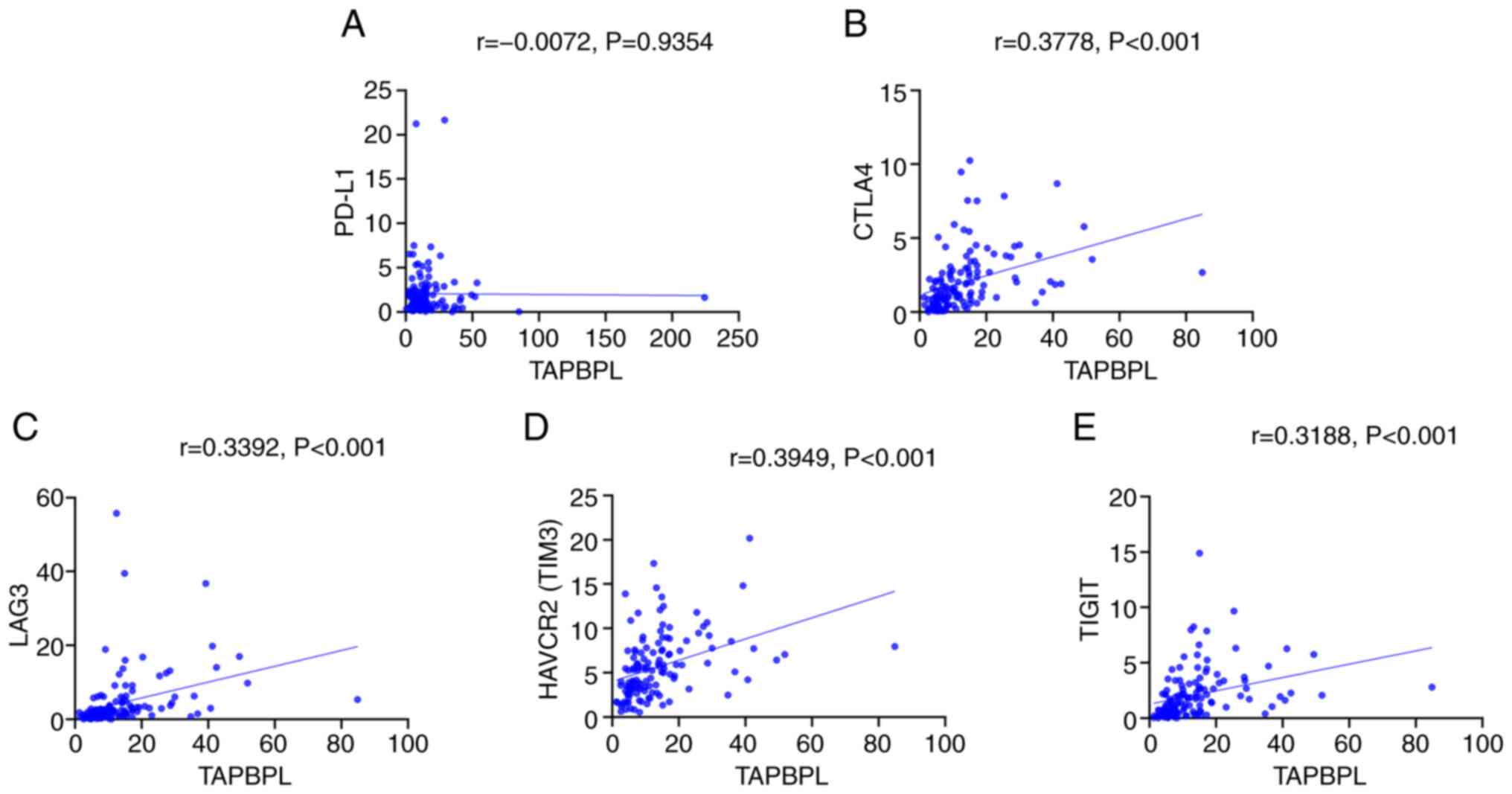
Triple‑negative breast cancer (TNBC) is one of the most aggressive molecular subtypes of breast cancer and immune‑checkpoint blockade therapy has markedly changed the treatment landscape for this malignancy. Tumour‑infiltrating lymphocytes (TILs) and tumour mutational burden (TMB) predict patient response to treatment with immune checkpoint inhibitors and reflect patient outcomes. The present study aimed to develop a TIL‑based prognostic model, create a list of immune‑related genes (IRGs) to inform clinicians of possible outcome predictions and generate a clinically relevant estimate of potential benefit from immunotherapy in TNBC. The present study included a cohort of 130 patients that were classified into two groups, namely TMBhigh/CD8+ T‑cell‑rich and TMBlow/CD8+ T‑cell‑poor. Differential expression analysis using the ‘edgeR’ package identified IRGs associated with survival. The identified IRGs were included in a univariate Cox analysis to derive a prognostic signature. In addition, the present study examined how the signature genes were associated with immune cell infiltration using the Tumour IMmune Estimation Resource database. The final four‑gene signature, C‑X‑C motif chemokine ligand 13 (CXCL13), latent TGF‑β binding protein 2, placental growth factor and transporter associated with antigen processing binding protein‑like (TAPBPL), stratified risk robustly: Patients in the high‑risk group had significantly worse overall survival compared with low‑risk patients in both prognostic and validation models. Compared with high‑risk patients, low‑risk patients had greater infiltration of CD8+ T cells, M1 macrophages, resting dendritic cells and activated CD4+ T cells and less infiltration of both M0 and M2 macrophages. Higher CXCL13 and TAPBPL expression levels were significantly associated with higher CD8+ T‑cell counts and inversely associated with M0 and M2 macrophage counts. The overall risk score and CXCL13 expressions were all positively correlated with multiple immune checkpoint genes, while TAPBPL expression correlated positively with CTLA4, TIM3 and TIGIT. In summary, the present study provided a TMB‑ and T‑cell infiltration‑based IRG signature that is prognostic and may potentially support the prediction of immunotherapy responsiveness in TNBC in the future.
View Figures

Figure 1

Figure 2

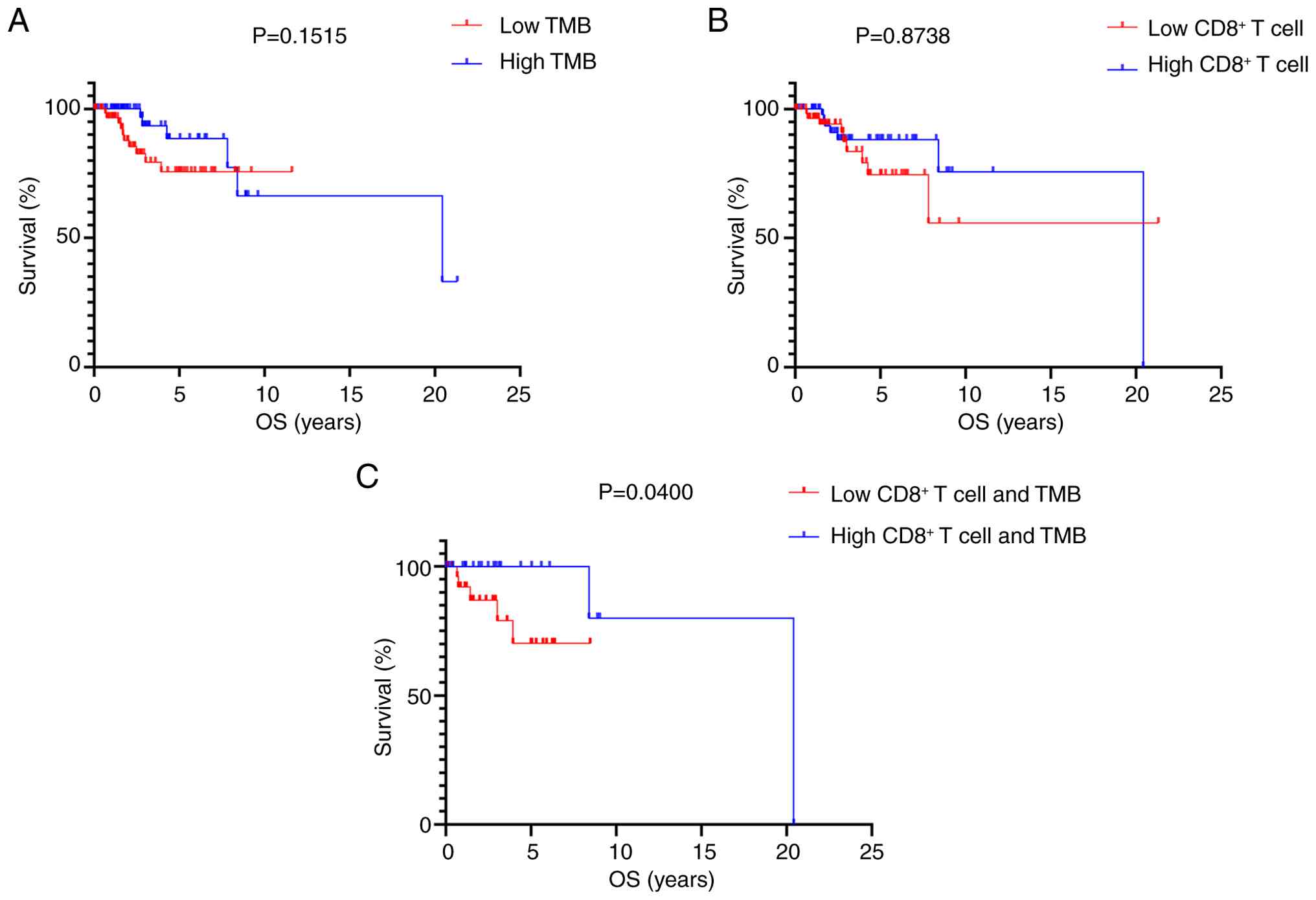
Prognostic relevance of
CD8+ T cells and TMB in patients with TNBC. (A)
TMBhigh and TMBlow groups; (B)
CD8+ T cellhigh and CD8+ T
celllow groups; (C) TMBhigh/CD8+ T
cellhigh and TMBlow/CD8+ T
celllow groups. TMB, tumour mutation burden; TNBC,
triple-negative breast cancer; OS, overall survival.

Figure 3

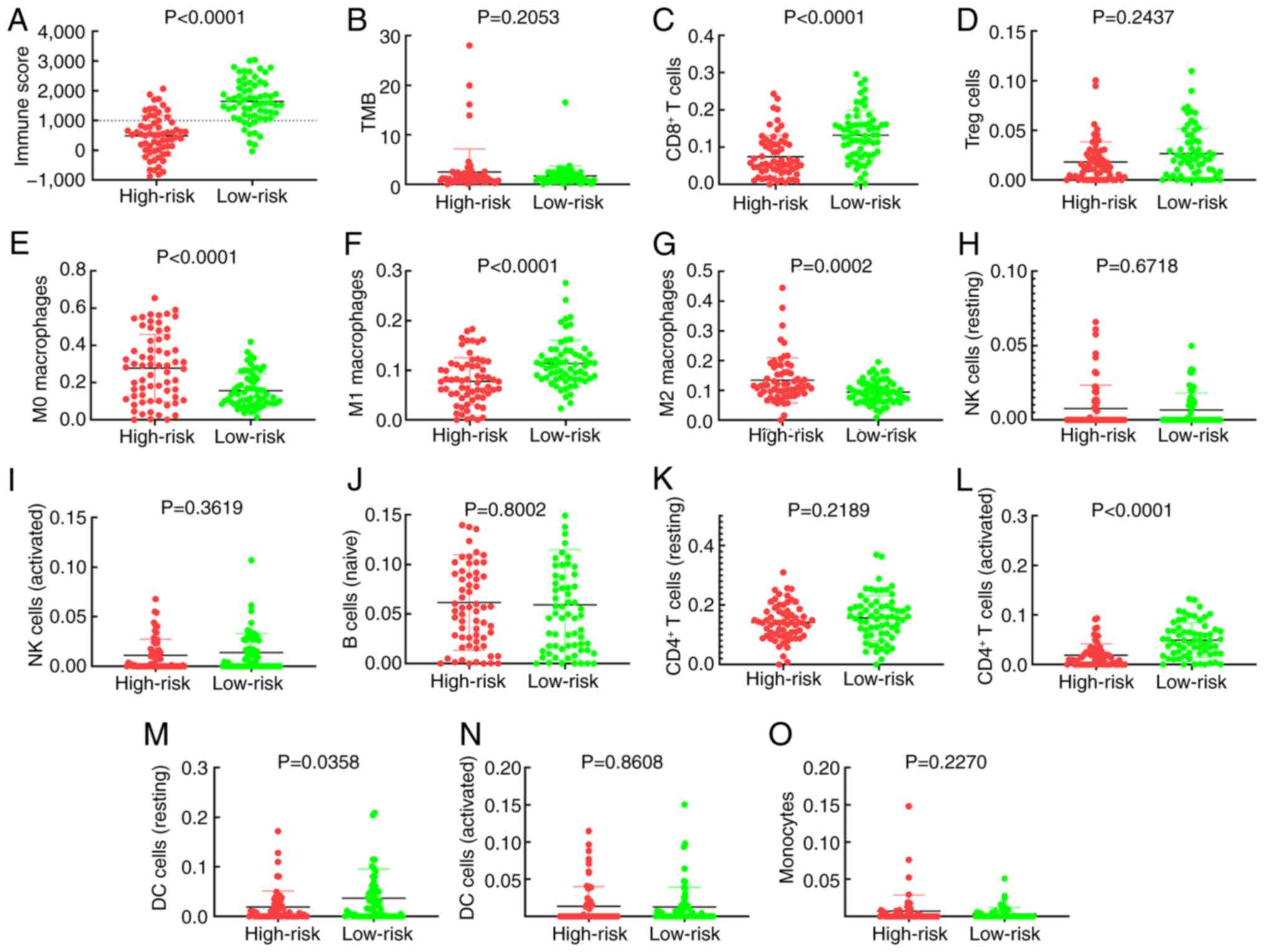
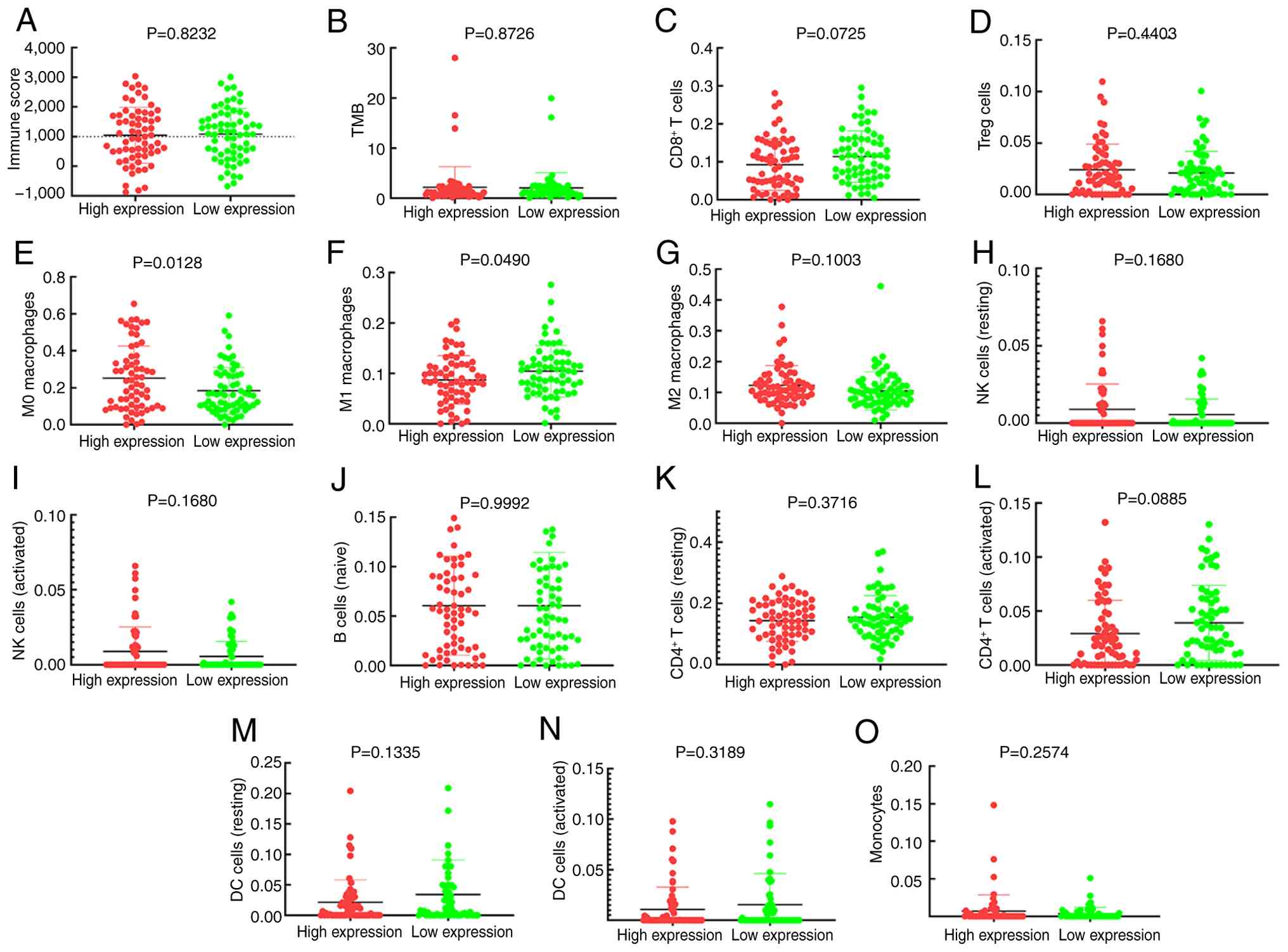
Risk score and immune cell
infiltration association analysis using Mann-Whitney U test.
Association of high- and low-risk groups with (A) immune score, (B)
TMB, (C) CD8+ T cells, (D) Treg cells, (E) M0
macrophages, (F) M1 macrophages, (G) M2 macrophages, (H) NK cells
(resting), (I) NK cells (activated), (J) B cells, (K)
CD4+ T cells (resting), (L) CD4+ T cells
(activated), (M) DC cells (resting), (N) DCs (activated) and (O)
monocytes. TMB, tumour mutation burden; Treg, regulatory T cell;
NK, natural killer; DC, dendritic cell.

Figure 4

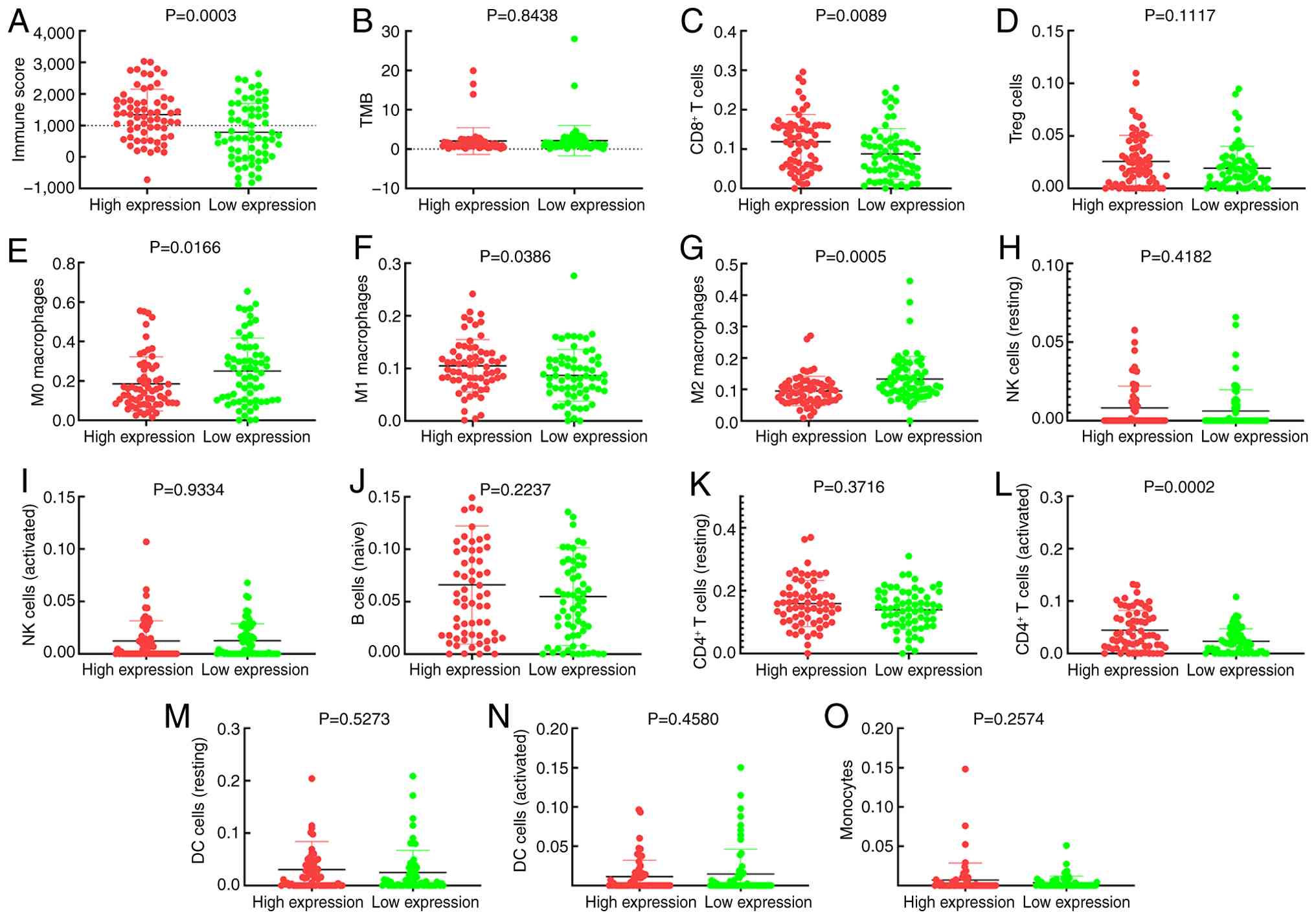
CXCL13 and immune cell infiltration
association analysis using Mann-Whitney U test. Association of
CXCL13 expression with (A) immune score, (B) TMB, (C)
CD8+ T cells, (D) Treg cells, (E) M0 macrophages, (F) M1
macrophages, (G) M2 macrophages, (H) NK cells (resting), (I) NK
cells (activated), (J) B cells, (K) CD4+ T cells
(resting), (L) CD4+ T cells (activated), (M) DC cells
(resting), (N) DCs (activated) and (O) monocytes. CXCL13, C-X-C
motif chemokine ligand 13; TMB, tumour mutation burden; Treg,
regulatory T cells; NK, natural killer; DC, dendritic cell.

Figure 5

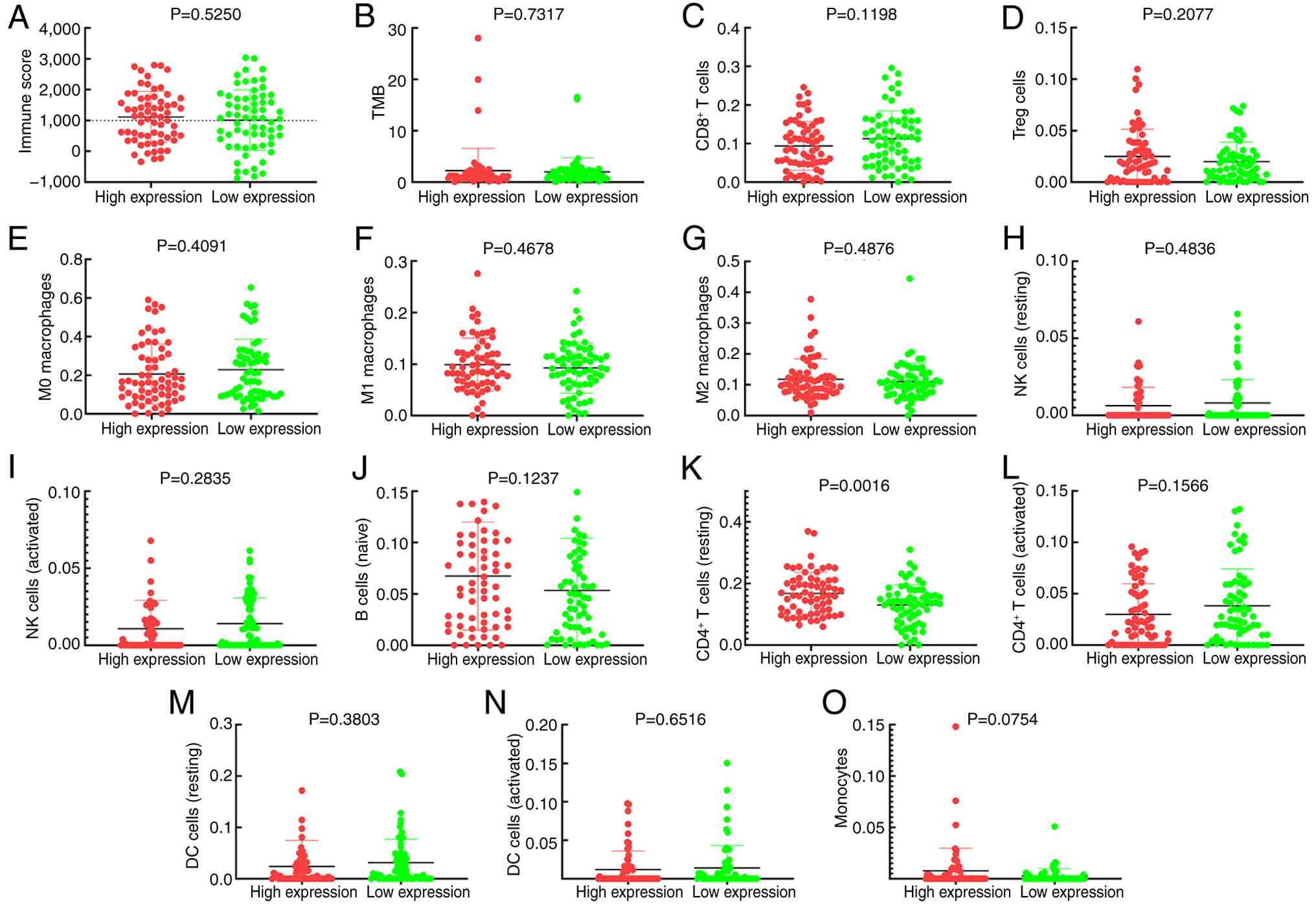
TAPBPL and immune cell infiltration
association analysis by Mann-Whitney U test. Association of TAPBPL
expression with (A) immune score, (B) TMB, (C) CD8+ T
cells, (D) Treg cells, (E) M0 macrophages, (F) M1 macrophages, (G)
M2 macrophages, (H) NK cells (resting), (I) NK cells (activated),
(J) B cells, (K) CD4+ T cells (resting), (L)
CD4+ T cells (activated), (M) DC cells (resting), (N)
DCs (activated) and (O) monocytes. TAPBPL, transporter associated
with antigen processing binding protein like; TMB, tumour mutation
burden; Treg, regulatory T cells; NK, natural killer; DC, dendritic
cell.

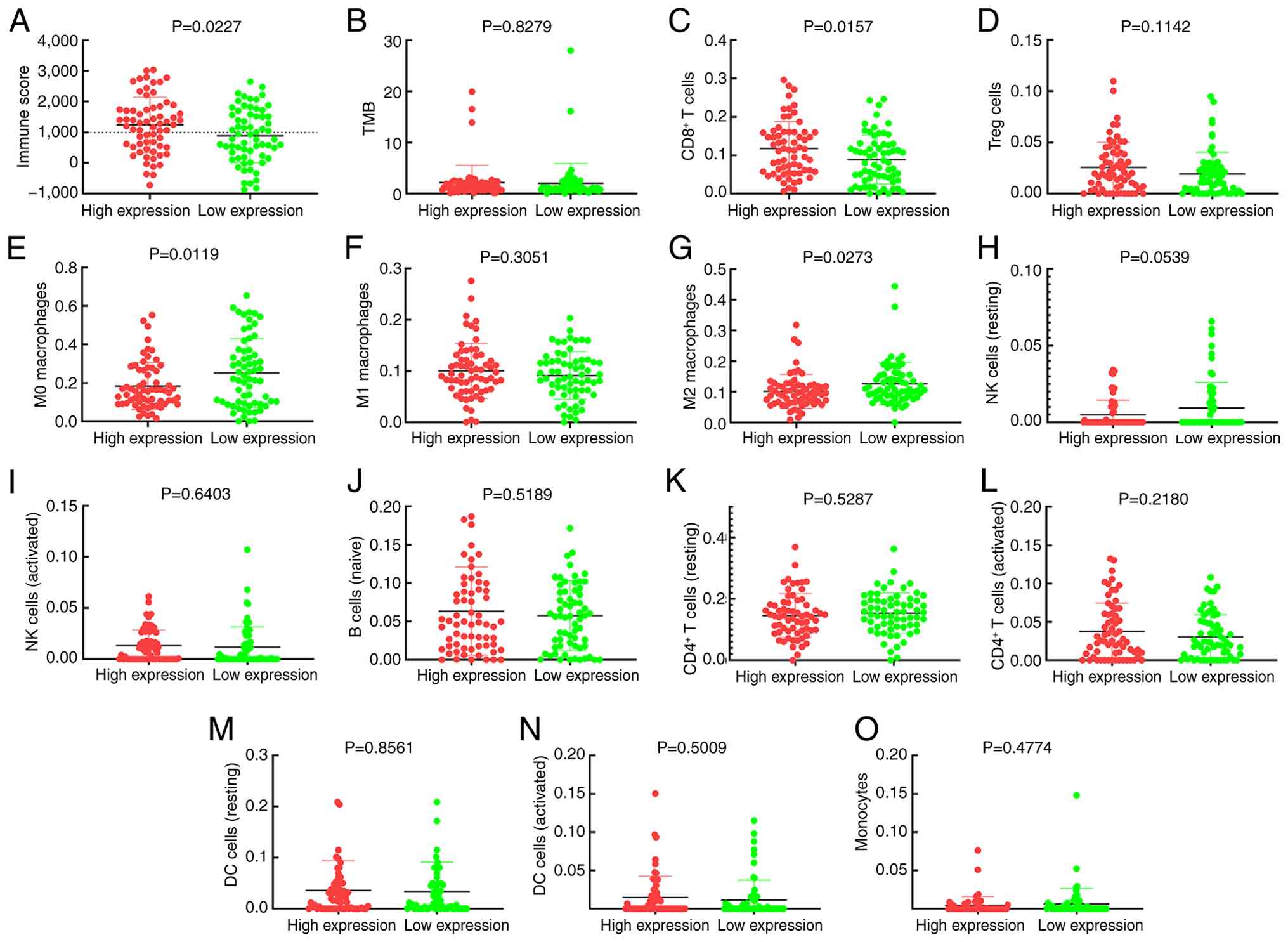
Figure 6

PGF and immune cell infiltration
association analysis by Mann-Whitney U test. Association of PGF
expression with (A) immune score, (B) TMB, (C) CD8+ T
cells, (D) Treg cells, (E) M0 macrophages, (F) M1 macrophages, (G)
M2 macrophages, (H) NK cells (resting), (I) NK cells (activated),
(J) B cells, (K) CD4+ T cells (resting), (L)
CD4+ T cells (activated), (M) DC cells (resting), (N)
DCs (activated) and (O) monocytes. PGF, placental growth factor;
TMB, tumour mutation burden; Treg, regulatory T cells; NK, natural
killer; DC, dendritic cell.

Figure 7

LTBP2 and immune cell infiltration
association analysis by Mann-Whitney U test. Association of LTBP2
expression with (A) immune score, (B) TMB, (C) CD8+ T
cells, (D) Treg cells, (E) M0 macrophages, (F) M1 macrophages, (G)
M2 macrophages, (H) NK cells (resting), (I) NK cells (activated),
(J) B cells, (K) CD4+ T cells (resting), (L)
CD4+ T cells (activated), (M) DC cells (resting), (N)
DCs (activated) and (O) monocytes. LTBP2, latent TGF-β binding
protein 2; TMB, tumour mutation burden; Treg, regulatory T cell;
NK, natural killer; DC, dendritic cell.

Figure 8

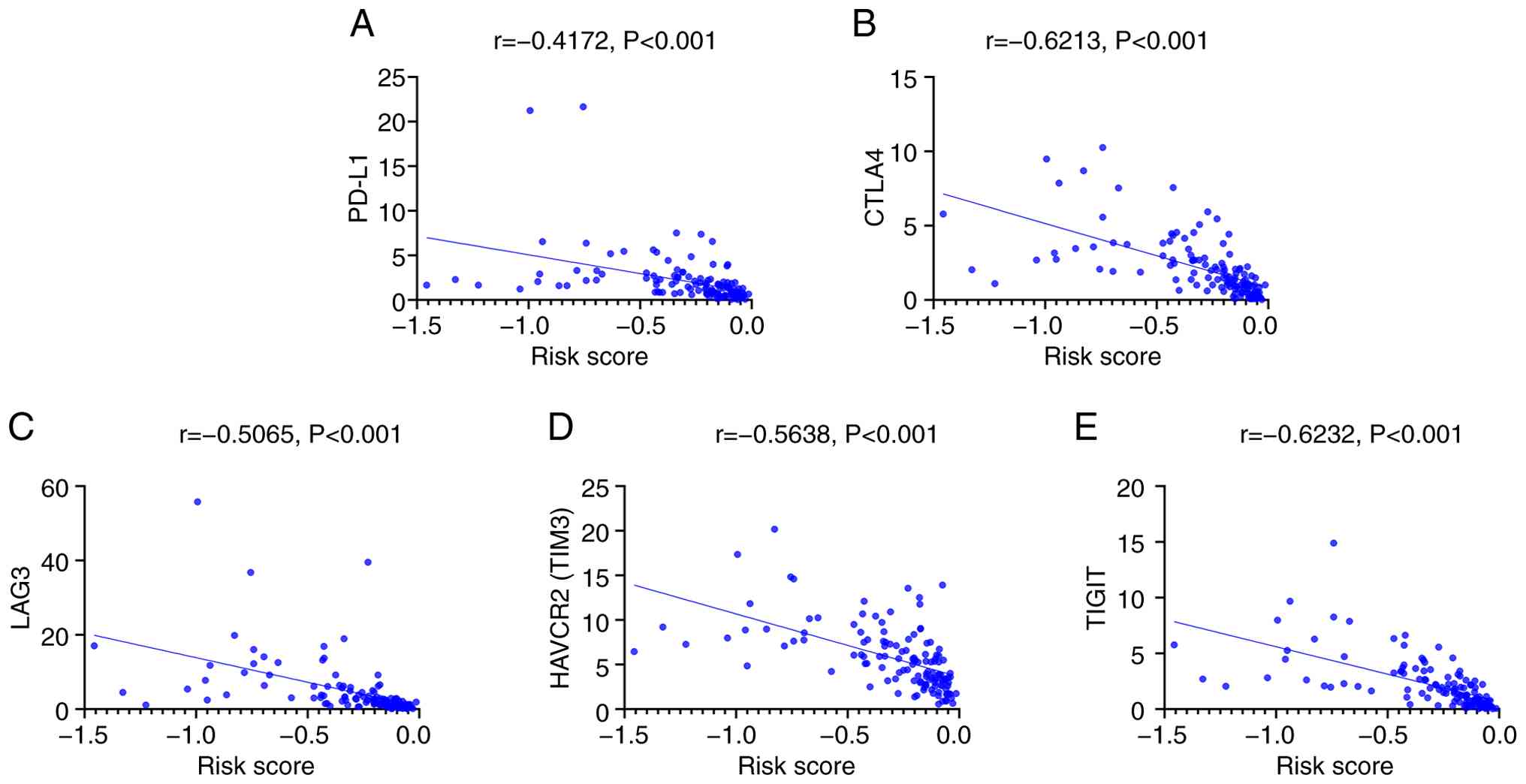
Risk score and immune
checkpoint-related genes correlation analysis. Correlation between
risk score and (A) PD-L1, (B) CTLA4, (C) LAG3, (D) TIM3 and (E)
TIGIT. PD-L1, programmed cell death-ligand 1; CTLA4, cytotoxic
T-lymphocyte antigen 4; TIM3, T-cell immunoglobulin and mucin
domain-containing protein 3; LAG3, lymphocyte activation gene 3;
TIGIT, T-cell immunoreceptor with Ig and immunoreceptor
tyrosine-based inhibitory motif domains.

Figure 9

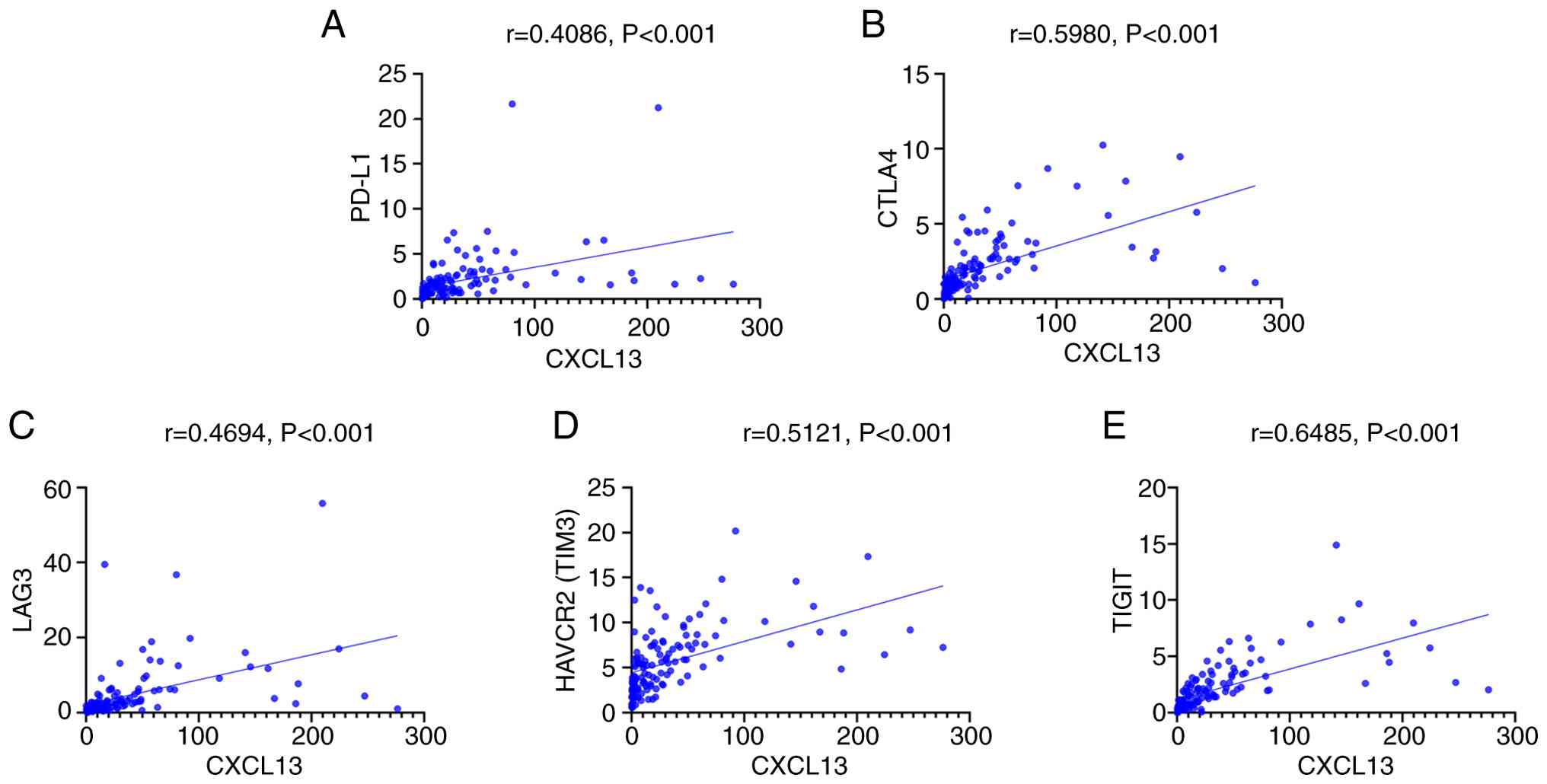
CXCL13 and immune checkpoint-related
genes correlation analysis. Correlation between CXCL13 expression
and (A) PD-L1, (B) CTLA4, (C) LAG3, (D) TIM3 and (E) TIGIT. CXCL13,
C-X-C motif chemokine ligand 13; PD-L1, programmed cell
death-ligand 1; CTLA4, cytotoxic T-lymphocyte antigen 4; TIM3,
T-cell immunoglobulin and mucin domain-containing protein 3; LAG3,
lymphocyte activation gene 3; TIGIT, T-cell immunoreceptor with Ig
and immunoreceptor tyrosine-based inhibitory motif domains.

Figure 10

TAPBPL and immune checkpoint-related
genes correlation analysis. Correlation between TAPBPL expression
and (A) PD-L1, (B) CTLA4, (C) LAG3, (D) TIM3 and (E) TIGIT. TAPBPL,
transporter associated with antigen processing binding protein
like; PD-L1, programmed cell death-ligand 1; CTLA4, cytotoxic
T-lymphocyte antigen 4; TIM3, T-cell immunoglobulin and mucin
domain-containing protein 3; LAG3, lymphocyte activation gene 3;
TIGIT, T-cell immunoreceptor with Ig and immunoreceptor
tyrosine-based inhibitory motif domains.

Figure 11

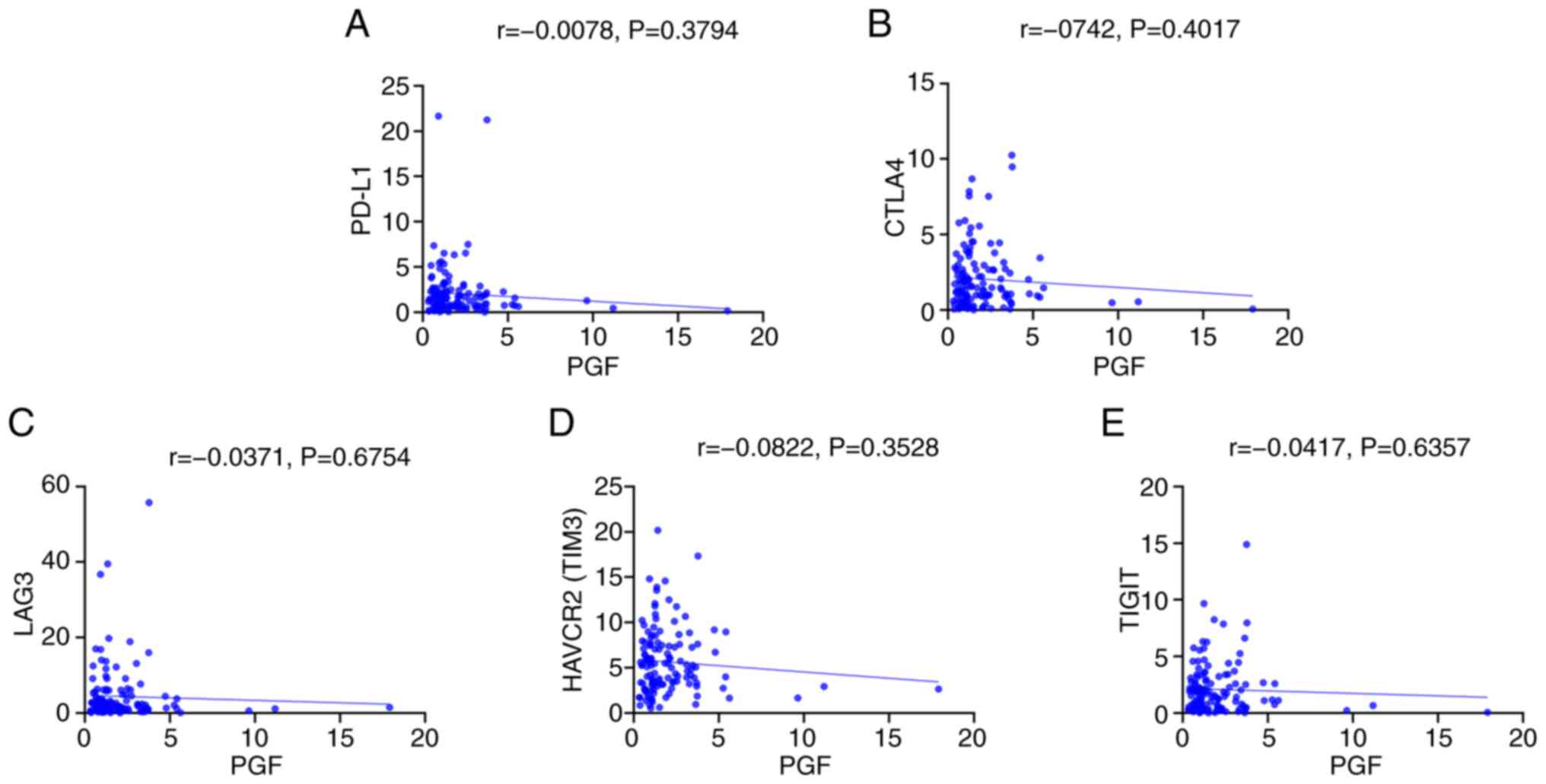
PGF and immune checkpoint-related
genes correlation analysis. Correlation between PGF expression and
(A) PD-L1, (B) CTLA4, (C) LAG3, (D) TIM3 and (E) TIGIT. PGF,
placental growth factor; PD-L1, programmed cell death-ligand 1;
CTLA4, cytotoxic T-lymphocyte antigen 4; TIM3, T-cell
immunoglobulin and mucin domain-containing protein 3; LAG3,
lymphocyte activation gene 3; TIGIT, T-cell immunoreceptor with Ig
and immunoreceptor tyrosine-based inhibitory motif domains.

Figure 12

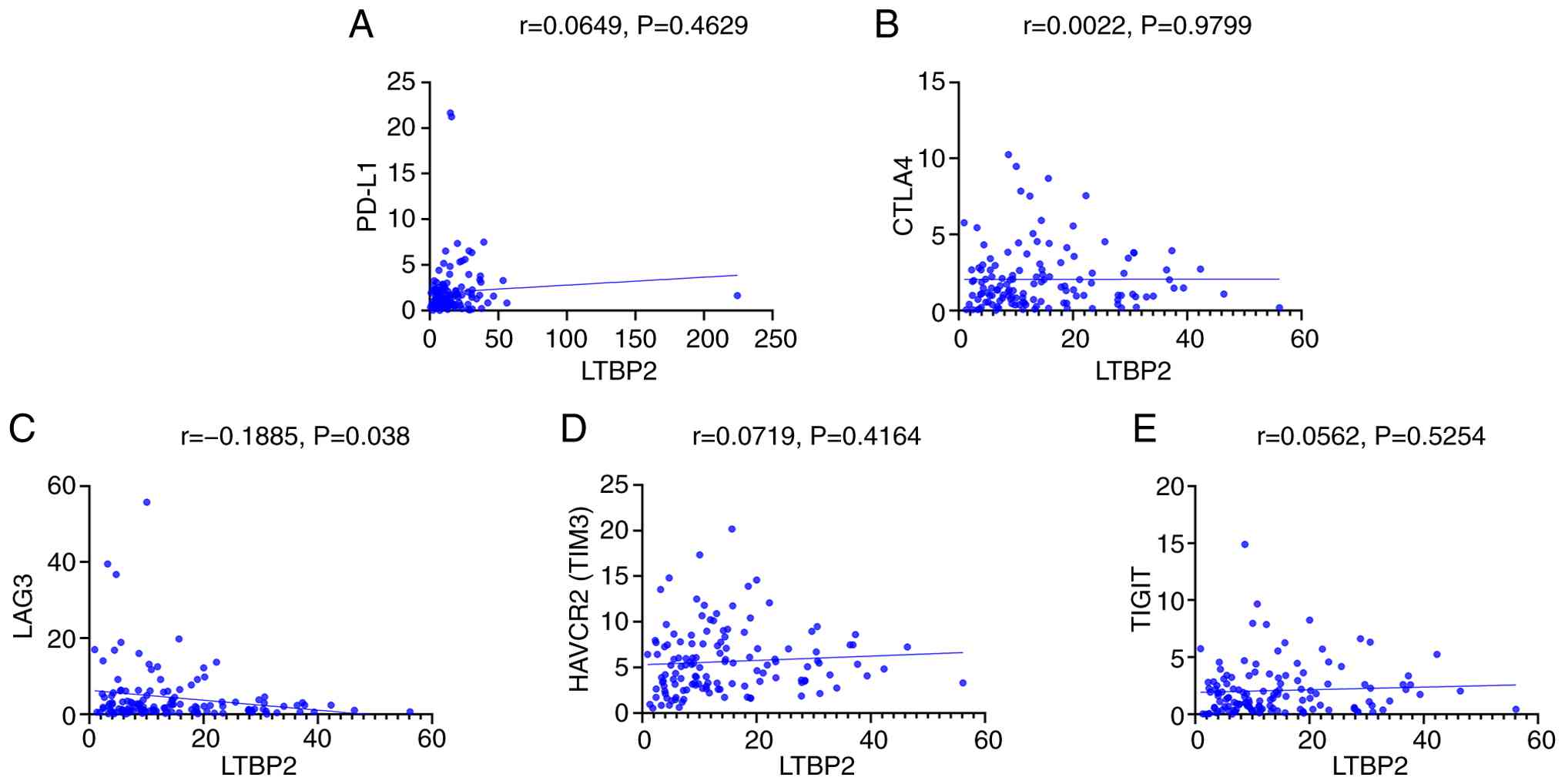
LTBP2 and immune checkpoint-related
genes correlation analysis. Correlation between LTBP2 expression
and (A) PD-L1, (B) CTLA4, (C) LAG3, (D) TIM3 and (E) TIGIT. LTBP2,
latent TGF-β binding protein 2; PD-L1, programmed cell death-ligand
1; CTLA4, cytotoxic T-lymphocyte antigen 4; TIM3, T-cell
immunoglobulin and mucin domain-containing protein 3; LAG3,
lymphocyte activation gene 3; TIGIT, T-cell immunoreceptor with Ig
and immunoreceptor tyrosine-based inhibitory motif domains.

Figure 13

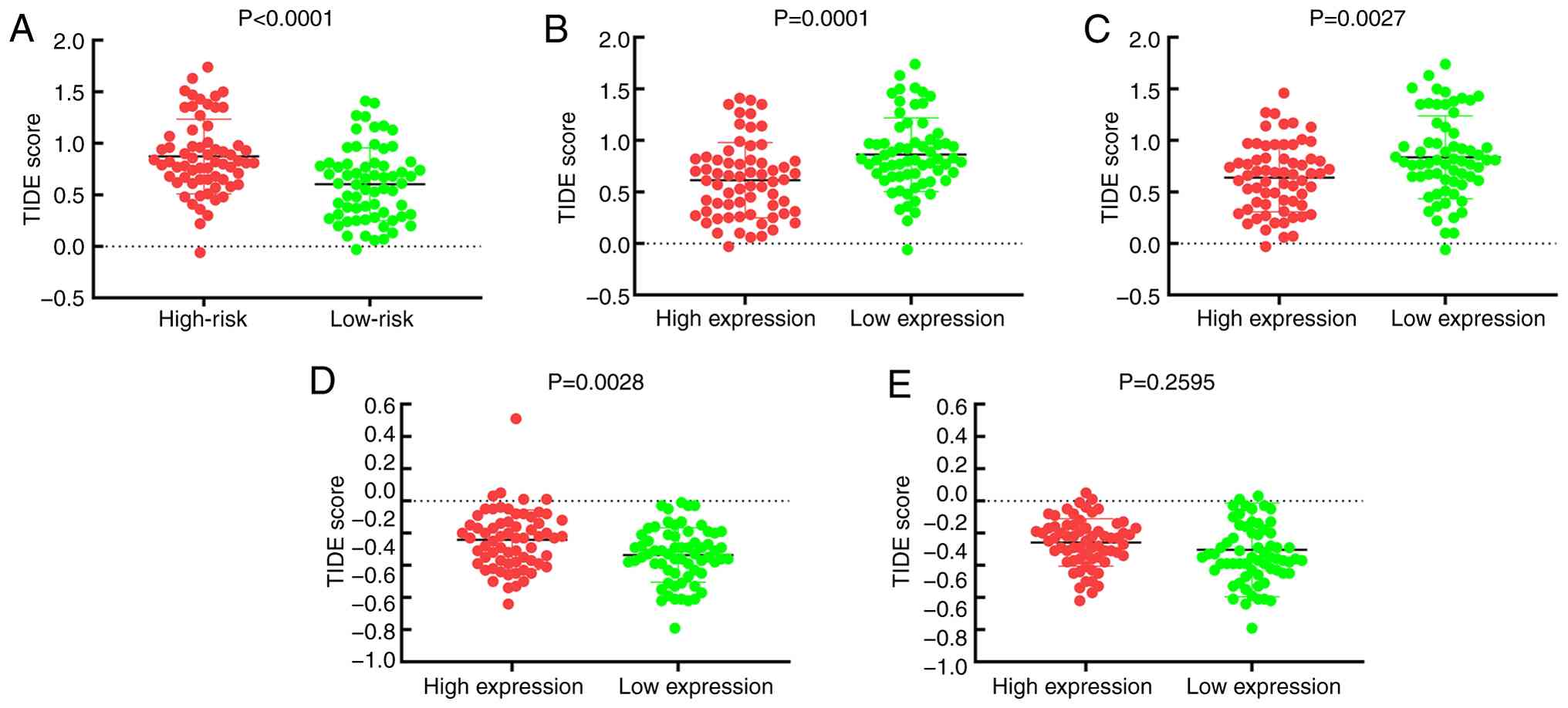
TIDE score analysis using a t-test.
Association of TIDE score with (A) risk score and (B) CXCL13, (C)
TAPBPL, (D) PGF and (E) LTBP2 expression. CXCL13, C-X-C motif
chemokine ligand 13; TAPBPL, transporter associated with antigen
processing binding protein like; PGF, placental growth factor;
LTBP2, latent TGF-β binding protein 2; TIDE, tumour dysfunction and
exclusion.
View References

1 

Lei H, Fu J, Gu W, Qiao H, Guo H, Chen Z, Wang SM and Chen T: Breast cancer: Molecular pathogenesis, targeted therapy, screening, and prevention. MedComm (2020). 7:e705602026. View Article : Google Scholar : PubMed/NCBI

2 

Cancer Genome Atlas Network, . Comprehensive molecular portraits of human breast tumours. Nature. 490:61–70. 2012. View Article : Google Scholar : PubMed/NCBI

3 

Dent R, Trudeau M, Pritchard KI, Hanna WM, Kahn HK, Sawka CA, Lickley LA, Rawlinson E, Sun P and Narod SA: Triple-negative breast cancer: Clinical features and patterns of recurrence. Clin Cancer Res. 13:4429–4434. 2007. View Article : Google Scholar : PubMed/NCBI

4 

Lehmann BD, Bauer JA, Chen X, Sanders ME, Chakravarthy AB, Shyr Y and Pietenpol JA: Identification of human triple-negative breast cancer subtypes and preclinical models for selection of targeted therapies. J Clin Invest. 121:2750–2767. 2011. View Article : Google Scholar : PubMed/NCBI

5 

Palma M: Advancing breast cancer treatment: The role of immunotherapy and cancer vaccines in overcoming therapeutic challenges. Vaccines (Basel). 13:3442025. View Article : Google Scholar : PubMed/NCBI

6 

Lyons TG, Dickler MN and Comen EE: Checkpoint inhibitors in the treatment of breast cancer. Curr Oncol Rep. 20:512018. View Article : Google Scholar : PubMed/NCBI

7 

Ye J, Wu S, Quan Q, Ye F, Zhang J, Song C, Fan Y, Cao H, Tang H and Zhao J: Fibroblast growth factor receptor 4 promotes triple-negative breast cancer progression via regulating fatty acid metabolism through the AKT/RYR2 signaling. Cancer Med. 13:e704392024. View Article : Google Scholar : PubMed/NCBI

8 

Xu A, Li X, Cai Q, Yang C, Yang M, Gao H, Cheng M, Chen X, Ji F, Tang H and Wang K: CircXPO6 promotes breast cancer progression through competitively inhibiting the ubiquitination degradation of c-Myc. Mol Cell Biochem. 480:1731–1745. 2025. View Article : Google Scholar : PubMed/NCBI

9 

Emens LA: Breast cancer immunotherapy: Facts and hopes. Clin Cancer Res. 24:511–520. 2018. View Article : Google Scholar : PubMed/NCBI

10 

Loi S: Tumor-infiltrating lymphocytes, breast cancer subtypes and therapeutic efficacy. Oncoimmunology. 2:e247202013. View Article : Google Scholar : PubMed/NCBI

11 

Adams S, Gray RJ, Demaria S, Goldstein L, Perez EA, Shulman LN, Martino S, Wang M, Jones VE, Saphner TJ, et al: Prognostic value of tumor-infiltrating lymphocytes in triple-negative breast cancers from two phase III randomized adjuvant breast cancer trials: ECOG 2197 and ECOG 1199. J Clin Oncol. 32:2959–2966. 2014. View Article : Google Scholar : PubMed/NCBI

12 

Dieci MV, Criscitiello C, Goubar A, Viale G, Conte P, Guarneri V, Ficarra G, Mathieu MC, Delaloge S, Curigliano G and Andre F: Prognostic value of tumor-infiltrating lymphocytes on residual disease after primary chemotherapy for triple-negative breast cancer: A retrospective multicenter study. Ann Oncol. 25:611–618. 2014. View Article : Google Scholar : PubMed/NCBI

13 

Adams S, Goldstein LJ, Sparano JA, Demaria S and Badve SS: Tumor infiltrating lymphocytes (TILs) improve prognosis in patients with triple negative breast cancer (TNBC). Oncoimmunology. 4:e9859302015. View Article : Google Scholar : PubMed/NCBI

14 

Mahmoud SMA, Paish EC, Powe DG, Macmillan RD, Grainge MJ, Lee AH, Ellis IO and Green AR: Tumor-infiltrating CD8+ lymphocytes predict clinical outcome in breast cancer. J Clin Oncol. 29:1949–1955. 2011. View Article : Google Scholar : PubMed/NCBI

15 

Taube JM, Klein A, Brahmer JR, Xu H, Pan X, Kim JH, Chen L, Pardoll DM, Topalian SL and Anders RA: Association of PD-1, PD-1 ligands, and other features of the tumor immune microenvironment with response to anti-PD-1 therapy. Clin Cancer Res. 20:5064–5074. 2014. View Article : Google Scholar : PubMed/NCBI

16 

Tumeh PC, Harview CL, Yearley JH, Shintaku IP, Taylor EJ, Robert L, Chmielowski B, Spasic M, Henry G, Ciobanu V, et al: PD-1 blockade induces responses by inhibiting adaptive immune resistance. Nature. 515:568–571. 2014. View Article : Google Scholar : PubMed/NCBI

17 

Liu L, Bai X, Wang J, Tang XR, Wu DH, Du SS, Du XJ, Zhang YW, Zhu HB, Fang Y, et al: Combination of TMB and CNA stratifies prognostic and predictive responses to immunotherapy across metastatic cancer. Clin Cancer Res. 25:7413–7423. 2019. View Article : Google Scholar : PubMed/NCBI

18 

Brown SD, Warren RL, Gibb EA, Martin SD, Spinelli JJ, Nelson BH and Holt RA: Neo-antigens predicted by tumor genome meta-analysis correlate with increased patient survival. Genome Res. 24:743–750. 2014. View Article : Google Scholar : PubMed/NCBI

19 

Kumari N, Dwarakanath BS, Das A and Bhatt AN: Role of interleukin-6 in cancer progression and therapeutic resistance. Tumour Biol. 37:11553–11572. 2016. View Article : Google Scholar : PubMed/NCBI

20 

Warburg O: On the origin of cancer cells. Science. 123:309–314. 1956. View Article : Google Scholar : PubMed/NCBI

21 

Chalmers ZR, Connelly CF, Fabrizio D, Gay L, Ali SM, Ennis R, Schrock A, Campbell B, Shlien A, Chmielecki J, et al: Analysis of 100,000 human cancer genomes reveals the landscape of tumor mutational burden. Genome Med. 9:342017. View Article : Google Scholar : PubMed/NCBI

22 

Samstein RM, Lee CH, Shoushtari AN, Hellmann MD, Shen R, Janjigian YY, Barron DA, Zehir A, Jordan EJ, Omuro A, et al: Tumor mutational load predicts survival after immunotherapy across multiple cancer types. Nat Genet. 51:202–206. 2019. View Article : Google Scholar : PubMed/NCBI

23 

Rody A, Holtrich U, Pusztai L, Liedtke C, Gaetje R, Ruckhaeberle E, Solbach C, Hanker L, Ahr A, Metzler D, et al: T-cell metagene predicts a favorable prognosis in estrogen receptor-negative and HER2-positive breast cancers. Breast Cancer Res. 11:R152009. View Article : Google Scholar : PubMed/NCBI

24 

Iglesia MD, Parker JS, Hoadley KA, Serody JS, Perou CM and Vincent BG: Genomic analysis of immune cell infiltrates across 11 tumor types. J Natl Cancer Inst. 108:djw1442016. View Article : Google Scholar : PubMed/NCBI

25 

Bedognetti D, Hendrickx W, Marincola FM and Miller LD: Prognostic and predictive immune gene signatures in breast cancer. Curr Opin Oncol. 27:433–444. 2015. View Article : Google Scholar : PubMed/NCBI

26 

Liu Y, Hu Y, Xue J, Li J, Yi J, Bu J, Zhang Z, Qiu P and Gu X: Advances in immunotherapy for triple-negative breast cancer. Mol Cancer. 22:1452023. View Article : Google Scholar : PubMed/NCBI

27 

Villacampa G, Navarro V, Matikas A, Ribeiro JM, Schettini F, Tolosa P, Martínez-Sáez O, Sánchez-Bayona R, Ferrero-Cafiero JM, Salvador F, et al: Neoadjuvant immune checkpoint inhibitors plus chemotherapy in early breast cancer: A systematic review and meta-analysis. JAMA Oncol. 10:1331–1341. 2024. View Article : Google Scholar : PubMed/NCBI

28 

Das R, Deb S and Suresh PK: TMB as a predictive biomarker for ICI response in TNBC: Current evidence and future directions for augmented anti-tumor responses. Clin Exp Med. 26:252025. View Article : Google Scholar : PubMed/NCBI

29 

Wang X and Chen H: Prognosis prediction through an integrated analysis of single-cell and bulk RNA-sequencing data in triple-negative breast cancer. Front Genet. 13:9281752022. View Article : Google Scholar : PubMed/NCBI

30 

Thomas A, Routh ED, Pullikuth A, Jin G, Su J, Chou JW, Hoadley KA, Print C, Knowlton N, Black MA, et al: Tumor mutational burden is a determinant of immune-mediated survival in breast cancer. Oncoimmunology. 7:e14908542018. View Article : Google Scholar : PubMed/NCBI

31 

Bhattacharya S, Andorf S, Gomes L, Dunn P, Schaefer H, Pontius J, Berger P, Desborough V, Smith T, Campbell J, et al: ImmPort: Disseminating data to the public for the future of immunology. Immunol Res. 58:234–239. 2014. View Article : Google Scholar : PubMed/NCBI

32 

Jézéquel P, Loussouarn D, Guérin-Charbonnel C, Campion L, Vanier A, Gouraud W, Lasla H, Guette C, Valo I, Verrièle V and Campone M: Gene-expression molecular subtyping of triple-negative breast cancer tumours: Importance of immune response. Breast Cancer Res. 17:432015. View Article : Google Scholar : PubMed/NCBI

33 

Robinson MD, McCarthy DJ and Smyth GK: edgeR: A bioconductor package for differential expression analysis of digital gene expression data. Bioinformatics. 26:139–140. 2010. View Article : Google Scholar : PubMed/NCBI

34 

Liu J, Lichtenberg T, Hoadley KA, Poisson LM, Lazar AJ, Cherniack AD, Kovatich AJ, Benz CC, Levine DA, Lee AV, et al: An integrated TCGA pan-cancer clinical data resource to drive high-quality survival outcome analytics. Cell. 173:400–416.e11. 2018. View Article : Google Scholar : PubMed/NCBI

35 

Li T, Fan J, Wang B, Traugh N, Chen Q, Liu JS, Li B and Liu XS: TIMER: A web server for comprehensive analysis of tumor-infiltrating immune cells. Cancer Res. 77:e108–e110. 2017. View Article : Google Scholar : PubMed/NCBI

36 

Giuliano AE, Connolly JL, Edge SB, Mittendorf EA, Rugo HS, Solin LJ, Weaver DL, Winchester DJ and Hortobagyi GN: Breast cancer-major changes in the American joint committee on cancer eighth edition cancer staging manual. CA Cancer J Clin. 67:290–303. 2017.PubMed/NCBI

37 

McCarty KS Jr, Szabo E, Flowers JL, Cox EB, Leight GS, Miller L, Konrath J, Soper JT, Budwit DA, Creasman WT, et al: Use of a monoclonal anti-estrogen receptor antibody in the immunohistochemical evaluation of human tumors. Cancer Res. 46 (8 Suppl):4244s–4248s. 1986.PubMed/NCBI

38 

Vikas P, Borcherding N and Zhang W: The clinical promise of immunotherapy in triple-negative breast cancer. Cancer Manag Res. 10:6823–6833. 2018. View Article : Google Scholar : PubMed/NCBI

39 

Halama A, Takada K, Takamori S, Haratake N, Akamine T, Kinoshita F, Ono Y, Wakasu S, Tanaka K, Oku Y, et al: Clinical significance of preoperative inflammatory markers in non-small cell lung cancer patients: A multicenter retrospective study. PLoS One. 15:e02415802020. View Article : Google Scholar : PubMed/NCBI

40 

Dent R, Cortés J, Pusztai L, McArthur H, Kümmel S, Bergh J, Denkert C, Park YH, Hui R, Harbeck N, et al: Neoadjuvant pembrolizumab plus chemotherapy/adjuvant pembrolizumab for early-stage triple-negative breast cancer: Quality-of-life results from the randomized KEYNOTE-522 study. J Natl Cancer Inst. 116:1654–1663. 2024. View Article : Google Scholar : PubMed/NCBI

41 

Schmid P, Rugo HS, Adams S, Schneeweiss A, Barrios CH, Iwata H, Diéras V, Henschel V, Molinero L, Chui SY, et al: Atezolizumab plus nab-paclitaxel as first-line treatment for unresectable, locally advanced or metastatic triple-negative breast cancer (IMpassion130): Updated efficacy results from a randomised, double-blind, placebo-controlled, phase 3 trial. Lancet Oncol. 21:44–59. 2020. View Article : Google Scholar : PubMed/NCBI

42 

Sukumar J, Gast K, Quiroga D, Lustberg M and Williams N: Triple-negative breast cancer: promising prognostic biomarkers currently in development. Expert Rev Anticancer Ther. 21:135–148. 2021. View Article : Google Scholar : PubMed/NCBI

43 

Dvir K, Giordano S and Leone JP: Immunotherapy in breast cancer. Int J Mol Sci. 25:75172024. View Article : Google Scholar : PubMed/NCBI

44 

Ravelli A, Roviello G, Cretella D, Cavazzoni A, Biondi A, Cappelletti MR, Zanotti L, Ferrero G, Ungari M, Zanconati F, et al: Tumor-infiltrating lymphocytes and breast cancer: Beyond the prognostic and predictive utility. Tumour Biol. 39:10104283176950232017. View Article : Google Scholar : PubMed/NCBI

45 

Dushyanthen S, Beavis PA, Savas P, Teo ZL, Zhou C, Mansour M, Darcy PK and Loi S: Relevance of tumor-infiltrating lymphocytes in breast cancer. BMC Med. 13:2022015. View Article : Google Scholar : PubMed/NCBI

46 

Rizvi NA, Hellmann MD, Snyder A, Kvistborg P, Makarov V, Havel JJ, Lee W, Yuan J, Wong P, Ho TS, et al: Cancer immunology. Mutational landscape determines sensitivity to PD-1 blockade in non-small cell lung cancer. Science. 348:124–128. 2015. View Article : Google Scholar : PubMed/NCBI

47 

Naing A, Infante JR, Papadopoulos KP, Chan IH, Shen C, Ratti NP, Rojo B, Autio KA, Wong DJ, Patel MR, et al: PEGylated IL-10 (Pegilodecakin) induces systemic immune activation, CD8+ T cell invigoration and polyclonal T cell expansion in cancer patients. Cancer Cell. 34:775–791.e3. 2018. View Article : Google Scholar : PubMed/NCBI

48 

Bense RD, Sotiriou C, Piccart-Gebhart MJ, Haanen JBAG, van Vugt MATM, de Vries EGE, Schröder CP and Fehrmann RSN: Relevance of tumor-infiltrating immune cell composition and functionality for disease outcome in breast cancer. J Natl Cancer Inst. 109:djw1922016. View Article : Google Scholar : PubMed/NCBI

49 

Zou Y, Zou X, Zheng S, Tang H, Zhang L, Liu P and Xie X: Efficacy and predictive factors of immune checkpoint inhibitors in metastatic breast cancer: A systematic review and meta-analysis. Ther Adv Med Oncol. 12:17588359209409282020. View Article : Google Scholar : PubMed/NCBI

50 

Egelston CA, Avalos C, Tu TY, Rosario A, Wang R, Solomon S, Srinivasan G, Nelson MS, Huang Y, Lim MH, et al: Resident memory CD8+ T cells within cancer islands mediate survival in breast cancer patients. JCI Insight. 4:e1300002019. View Article : Google Scholar : PubMed/NCBI

51 

Gatti-Mays ME, Balko JM, Gameiro SR, Bear HD, Prabhakaran S, Fukui J, Disis ML, Nanda R, Gulley JL, Kalinsky K, et al: If we build it they will come: Targeting the immune response to breast cancer. NPJ Breast Cancer. 5:372019. View Article : Google Scholar : PubMed/NCBI

52 

Doedens AL, Stockmann C, Rubinstein MP, Liao D, Zhang N, DeNardo DG, Coussens LM, Karin M, Goldrath AW and Johnson RS: Macrophage expression of hypoxia-inducible factor-1 alpha suppresses T-cell function and promotes tumor progression. Cancer Res. 70:7465–7475. 2010. View Article : Google Scholar : PubMed/NCBI

53 

Ruffell B, Chang-Strachan D, Chan V, Rosenbusch A, Ho CM, Pryer N, Daniel D, Hwang ES, Rugo HS and Coussens LM: Macrophage IL-10 blocks CD8+ T cell-dependent responses to chemotherapy by suppressing IL-12 expression in intratumoral dendritic cells. Cancer Cell. 26:623–637. 2014. View Article : Google Scholar : PubMed/NCBI

54 

Montes VN, Turner MS, Subramanian S, Ding Y, Hayden-Ledbetter M, Slater S, Goodspeed L, Wang S, Omer M, Den Hartigh LJ, et al: T cell activation inhibitors reduce CD8+ T cell and pro-inflammatory macrophage accumulation in adipose tissue of obese mice. PLoS One. 8:e677092013. View Article : Google Scholar : PubMed/NCBI

55 

Xu Y, Romero R, Miller D, Kadam L, Mial TN, Plazyo O, Garcia-Flores V, Hassan SS, Xu Z, Tarca AL, et al: An M1-like macrophage polarization in decidual tissue during spontaneous preterm labor that is attenuated by rosiglitazone treatment. J Immunol. 196:2476–2491. 2016. View Article : Google Scholar : PubMed/NCBI

56 

Mao Y, Keller ET, Garfield DH, Shen K and Wang J: Stromal cells in tumor microenvironment and breast cancer. Cancer Metastasis Rev. 32:303–315. 2013. View Article : Google Scholar : PubMed/NCBI

57 

Qian BZ and Pollard JW: Macrophage diversity enhances tumor progression and metastasis. Cell. 141:39–51. 2010. View Article : Google Scholar : PubMed/NCBI

58 

Daou HN: Exercise as an anti-inflammatory therapy for cancer cachexia: A focus on interleukin-6 regulation. Am J Physiol Regul Integr Comp Physiol. 318:R296–R310. 2020. View Article : Google Scholar : PubMed/NCBI

59 

Denkert C, Loibl S, Noske A, Roller M, Müller BM, Komor M, Budczies J, Darb-Esfahani S, Kronenwett R, Hanusch C, et al: Tumor-associated lymphocytes as an independent predictor of response to neoadjuvant chemotherapy in breast cancer. J Clin Oncol. 28:105–113. 2010. View Article : Google Scholar : PubMed/NCBI

60 

Lee HJ, Lee JJ, Song IH, Park IA, Kang J, Yu JH, Ahn JH and Gong G: Prognostic and predictive value of NanoString-based immune-related gene signatures in a neoadjuvant setting of triple-negative breast cancer: Relationship to tumor-infiltrating lymphocytes. Breast Cancer Res Treat. 151:619–627. 2015. View Article : Google Scholar : PubMed/NCBI

61 

Lv Y, Lv D, Lv X, Xing P, Zhang J and Zhang Y: Immune cell infiltration-based characterization of triple-negative breast cancer predicts prognosis and chemotherapy response markers. Front Genet. 12:6164692021. View Article : Google Scholar : PubMed/NCBI

62 

Lin Y, Cui C, Su M, Silbart LK, Liu H, Zhao J, He L, Huang Y, Xu D, Wei X, et al: Identification of TAPBPL as a novel negative regulator of T-cell function. EMBO Mol Med. 13:e134042021. View Article : Google Scholar : PubMed/NCBI

63 

Yu Y, Li J, Zhu X, Tang X, Bao Y, Sun X, Huang Y, Tian F, Liu X and Yang L: Humanized CD7 nanobody-based immunotoxins exhibit promising anti-T-cell acute lymphoblastic leukemia potential. Int J Nanomedicine. 12:1969–1983. 2017. View Article : Google Scholar : PubMed/NCBI

64 

Tokunaga R, Zhang W, Naseem M, Puccini A, Berger MD, Soni S, McSkane M, Baba H and Lenz HJ: CXCL9, CXCL10, CXCL11/CXCR3 axis for immune activation-a target for novel cancer therapy. Cancer Treat Rev. 63:40–47. 2018. View Article : Google Scholar : PubMed/NCBI

65 

Yi J, Shuang Z, Zhong W, Wu H, Feng J, Zouxu X, Huang X, Li S and Wang X: Identification of immune-related risk characteristics and prognostic value of immunophenotyping in TNBC. Front Genet. 12:7304422021. View Article : Google Scholar : PubMed/NCBI

66 

Katsuta E, Yan L, Opyrchal M, Kalinski P and Takabe K: Cytotoxic T-lymphocyte infiltration and chemokine predict long-term patient survival independently of tumor mutational burden in triple-negative breast cancer. Ther Adv Med Oncol. 13:175883592110066802021. View Article : Google Scholar : PubMed/NCBI

67 

Li F, Zhang R, Li S and Liu J: IDO1: An important immunotherapy target in cancer treatment. Int Immunopharmacol. 47:70–77. 2017. View Article : Google Scholar : PubMed/NCBI

68 

Cheong JE and Sun L: Targeting the IDO1/TDO2-KYN-AhR pathway for cancer immunotherapy-challenges and opportunities. Trends Pharmacol Sci. 39:307–325. 2018. View Article : Google Scholar : PubMed/NCBI

69 

Pérez-Pena J, Tibor Fekete J, Páez R, Baliu-Piqué M, García-Saenz JÁ, García-Barberán V, Manzano A, Pérez-Segura P, Esparis-Ogando A, Pandiella A, et al: A Transcriptomic immunologic signature predicts favorable outcome in neoadjuvant chemotherapy treated triple negative breast tumors. Front Immunol. 10:28022019. View Article : Google Scholar : PubMed/NCBI

70 

Castro F, Cardoso AP, Gonçalves RM, Serre K and Oliveira MJ: Interferon-gamma at the crossroads of tumor immune surveillance or evasion. Front Immunol. 9:8472018. View Article : Google Scholar : PubMed/NCBI

71 

Burke JD and Young HA: IFN-γ: A cytokine at the right time, is in the right place. Semin Immunol. 43:1012802019. View Article : Google Scholar : PubMed/NCBI

72 

Yeong J, Lim JCT, Lee B, Li H, Ong CCH, Thike AA, Yeap WH, Yang Y, Lim AYH, Tay TKY, et al: Prognostic value of CD8 + PD-1+ immune infiltrates and PDCD1 gene expression in triple negative breast cancer. J Immunother Cancer. 7:342019. View Article : Google Scholar : PubMed/NCBI

73 

Chen J, Gao G, Wang H, Ye X, Zhou J and Lin J: Expression and clinical significance of latent-transforming growth factor beta-binding protein 2 in primary hepatocellular carcinoma. Medicine (Baltimore). 98:e172162019. View Article : Google Scholar : PubMed/NCBI

Related Articles

  • Abstract
  • View
  • Download
  • Twitter
Copy and paste a formatted citation
Spandidos Publications style
Meng Y, Han Z, Zhu J, Wang Y, Huang Y, Zou Z, Ma Y, Li Y, Wang H, Li Y, Li Y, et al: Identification of a prognostic model using immune related genes combined with tumour mutational burden and T cell infiltration in triple‑negative breast cancer. Oncol Lett 31: 242, 2026.
APA
Meng, Y., Han, Z., Zhu, J., Wang, Y., Huang, Y., Zou, Z. ... Wang, W. (2026). Identification of a prognostic model using immune related genes combined with tumour mutational burden and T cell infiltration in triple‑negative breast cancer. Oncology Letters, 31, 242. https://doi.org/10.3892/ol.2026.15597
MLA
Meng, Y., Han, Z., Zhu, J., Wang, Y., Huang, Y., Zou, Z., Ma, Y., Li, Y., Wang, H., Li, Y., Lian, L., Wang, W."Identification of a prognostic model using immune related genes combined with tumour mutational burden and T cell infiltration in triple‑negative breast cancer". Oncology Letters 31.6 (2026): 242.
Chicago
Meng, Y., Han, Z., Zhu, J., Wang, Y., Huang, Y., Zou, Z., Ma, Y., Li, Y., Wang, H., Li, Y., Lian, L., Wang, W."Identification of a prognostic model using immune related genes combined with tumour mutational burden and T cell infiltration in triple‑negative breast cancer". Oncology Letters 31, no. 6 (2026): 242. https://doi.org/10.3892/ol.2026.15597
Copy and paste a formatted citation
x
Spandidos Publications style
Meng Y, Han Z, Zhu J, Wang Y, Huang Y, Zou Z, Ma Y, Li Y, Wang H, Li Y, Li Y, et al: Identification of a prognostic model using immune related genes combined with tumour mutational burden and T cell infiltration in triple‑negative breast cancer. Oncol Lett 31: 242, 2026.
APA
Meng, Y., Han, Z., Zhu, J., Wang, Y., Huang, Y., Zou, Z. ... Wang, W. (2026). Identification of a prognostic model using immune related genes combined with tumour mutational burden and T cell infiltration in triple‑negative breast cancer. Oncology Letters, 31, 242. https://doi.org/10.3892/ol.2026.15597
MLA
Meng, Y., Han, Z., Zhu, J., Wang, Y., Huang, Y., Zou, Z., Ma, Y., Li, Y., Wang, H., Li, Y., Lian, L., Wang, W."Identification of a prognostic model using immune related genes combined with tumour mutational burden and T cell infiltration in triple‑negative breast cancer". Oncology Letters 31.6 (2026): 242.
Chicago
Meng, Y., Han, Z., Zhu, J., Wang, Y., Huang, Y., Zou, Z., Ma, Y., Li, Y., Wang, H., Li, Y., Lian, L., Wang, W."Identification of a prognostic model using immune related genes combined with tumour mutational burden and T cell infiltration in triple‑negative breast cancer". Oncology Letters 31, no. 6 (2026): 242. https://doi.org/10.3892/ol.2026.15597
Follow us
  • Twitter
  • LinkedIn
  • Facebook
About
  • Spandidos Publications
  • Careers
  • Cookie Policy
  • Privacy Policy
How can we help?
  • Help
  • Live Chat
  • Contact
  • Email to our Support Team