Spandidos Publications Logo
  • About
    • About Spandidos
    • Aims and Scopes
    • Abstracting and Indexing
    • Editorial Policies
    • Reprints and Permissions
    • Job Opportunities
    • Terms and Conditions
    • Contact
  • Journals
    • All Journals
    • Oncology Letters
      • Oncology Letters
      • Information for Authors
      • Editorial Policies
      • Editorial Board
      • Aims and Scope
      • Abstracting and Indexing
      • Bibliographic Information
      • Archive
    • International Journal of Oncology
      • International Journal of Oncology
      • Information for Authors
      • Editorial Policies
      • Editorial Board
      • Aims and Scope
      • Abstracting and Indexing
      • Bibliographic Information
      • Archive
    • Molecular and Clinical Oncology
      • Molecular and Clinical Oncology
      • Information for Authors
      • Editorial Policies
      • Editorial Board
      • Aims and Scope
      • Abstracting and Indexing
      • Bibliographic Information
      • Archive
    • Experimental and Therapeutic Medicine
      • Experimental and Therapeutic Medicine
      • Information for Authors
      • Editorial Policies
      • Editorial Board
      • Aims and Scope
      • Abstracting and Indexing
      • Bibliographic Information
      • Archive
    • International Journal of Molecular Medicine
      • International Journal of Molecular Medicine
      • Information for Authors
      • Editorial Policies
      • Editorial Board
      • Aims and Scope
      • Abstracting and Indexing
      • Bibliographic Information
      • Archive
    • Biomedical Reports
      • Biomedical Reports
      • Information for Authors
      • Editorial Policies
      • Editorial Board
      • Aims and Scope
      • Abstracting and Indexing
      • Bibliographic Information
      • Archive
    • Oncology Reports
      • Oncology Reports
      • Information for Authors
      • Editorial Policies
      • Editorial Board
      • Aims and Scope
      • Abstracting and Indexing
      • Bibliographic Information
      • Archive
    • Molecular Medicine Reports
      • Molecular Medicine Reports
      • Information for Authors
      • Editorial Policies
      • Editorial Board
      • Aims and Scope
      • Abstracting and Indexing
      • Bibliographic Information
      • Archive
    • World Academy of Sciences Journal
      • World Academy of Sciences Journal
      • Information for Authors
      • Editorial Policies
      • Editorial Board
      • Aims and Scope
      • Abstracting and Indexing
      • Bibliographic Information
      • Archive
    • International Journal of Functional Nutrition
      • International Journal of Functional Nutrition
      • Information for Authors
      • Editorial Policies
      • Editorial Board
      • Aims and Scope
      • Abstracting and Indexing
      • Bibliographic Information
      • Archive
    • International Journal of Epigenetics
      • International Journal of Epigenetics
      • Information for Authors
      • Editorial Policies
      • Editorial Board
      • Aims and Scope
      • Abstracting and Indexing
      • Bibliographic Information
      • Archive
    • Medicine International
      • Medicine International
      • Information for Authors
      • Editorial Policies
      • Editorial Board
      • Aims and Scope
      • Abstracting and Indexing
      • Bibliographic Information
      • Archive
  • Articles
  • Information
    • Information for Authors
    • Information for Reviewers
    • Information for Librarians
    • Information for Advertisers
    • Conferences
  • Language Editing
Spandidos Publications Logo
  • About
    • About Spandidos
    • Aims and Scopes
    • Abstracting and Indexing
    • Editorial Policies
    • Reprints and Permissions
    • Job Opportunities
    • Terms and Conditions
    • Contact
  • Journals
    • All Journals
    • Biomedical Reports
      • Information for Authors
      • Editorial Policies
      • Editorial Board
      • Aims and Scope
      • Abstracting and Indexing
      • Bibliographic Information
      • Archive
    • Experimental and Therapeutic Medicine
      • Information for Authors
      • Editorial Policies
      • Editorial Board
      • Aims and Scope
      • Abstracting and Indexing
      • Bibliographic Information
      • Archive
    • International Journal of Epigenetics
      • Information for Authors
      • Editorial Policies
      • Editorial Board
      • Aims and Scope
      • Abstracting and Indexing
      • Bibliographic Information
      • Archive
    • International Journal of Functional Nutrition
      • Information for Authors
      • Editorial Policies
      • Editorial Board
      • Aims and Scope
      • Abstracting and Indexing
      • Bibliographic Information
      • Archive
    • International Journal of Molecular Medicine
      • Information for Authors
      • Editorial Policies
      • Editorial Board
      • Aims and Scope
      • Abstracting and Indexing
      • Bibliographic Information
      • Archive
    • International Journal of Oncology
      • Information for Authors
      • Editorial Policies
      • Editorial Board
      • Aims and Scope
      • Abstracting and Indexing
      • Bibliographic Information
      • Archive
    • Medicine International
      • Information for Authors
      • Editorial Policies
      • Editorial Board
      • Aims and Scope
      • Abstracting and Indexing
      • Bibliographic Information
      • Archive
    • Molecular and Clinical Oncology
      • Information for Authors
      • Editorial Policies
      • Editorial Board
      • Aims and Scope
      • Abstracting and Indexing
      • Bibliographic Information
      • Archive
    • Molecular Medicine Reports
      • Information for Authors
      • Editorial Policies
      • Editorial Board
      • Aims and Scope
      • Abstracting and Indexing
      • Bibliographic Information
      • Archive
    • Oncology Letters
      • Information for Authors
      • Editorial Policies
      • Editorial Board
      • Aims and Scope
      • Abstracting and Indexing
      • Bibliographic Information
      • Archive
    • Oncology Reports
      • Information for Authors
      • Editorial Policies
      • Editorial Board
      • Aims and Scope
      • Abstracting and Indexing
      • Bibliographic Information
      • Archive
    • World Academy of Sciences Journal
      • Information for Authors
      • Editorial Policies
      • Editorial Board
      • Aims and Scope
      • Abstracting and Indexing
      • Bibliographic Information
      • Archive
  • Articles
  • Information
    • For Authors
    • For Reviewers
    • For Librarians
    • For Advertisers
    • Conferences
  • Language Editing
Login Register Submit
  • This site uses cookies
  • You can change your cookie settings at any time by following the instructions in our Cookie Policy. To find out more, you may read our Privacy Policy.

    I agree
Search articles by DOI, keyword, author or affiliation
Search
Advanced Search
presentation
Oncology Letters
Join Editorial Board Propose a Special Issue
Print ISSN: 1792-1074 Online ISSN: 1792-1082
Journal Cover
June-2026 Volume 31 Issue 6

Full Size Image

Sign up for eToc alerts
Recommend to Library

Journals

International Journal of Molecular Medicine

International Journal of Molecular Medicine

International Journal of Molecular Medicine is an international journal devoted to molecular mechanisms of human disease.

International Journal of Oncology

International Journal of Oncology

International Journal of Oncology is an international journal devoted to oncology research and cancer treatment.

Molecular Medicine Reports

Molecular Medicine Reports

Covers molecular medicine topics such as pharmacology, pathology, genetics, neuroscience, infectious diseases, molecular cardiology, and molecular surgery.

Oncology Reports

Oncology Reports

Oncology Reports is an international journal devoted to fundamental and applied research in Oncology.

Experimental and Therapeutic Medicine

Experimental and Therapeutic Medicine

Experimental and Therapeutic Medicine is an international journal devoted to laboratory and clinical medicine.

Oncology Letters

Oncology Letters

Oncology Letters is an international journal devoted to Experimental and Clinical Oncology.

Biomedical Reports

Biomedical Reports

Explores a wide range of biological and medical fields, including pharmacology, genetics, microbiology, neuroscience, and molecular cardiology.

Molecular and Clinical Oncology

Molecular and Clinical Oncology

International journal addressing all aspects of oncology research, from tumorigenesis and oncogenes to chemotherapy and metastasis.

World Academy of Sciences Journal

World Academy of Sciences Journal

Multidisciplinary open-access journal spanning biochemistry, genetics, neuroscience, environmental health, and synthetic biology.

International Journal of Functional Nutrition

International Journal of Functional Nutrition

Open-access journal combining biochemistry, pharmacology, immunology, and genetics to advance health through functional nutrition.

International Journal of Epigenetics

International Journal of Epigenetics

Publishes open-access research on using epigenetics to advance understanding and treatment of human disease.

Medicine International

Medicine International

An International Open Access Journal Devoted to General Medicine.

Journal Cover
June-2026 Volume 31 Issue 6

Full Size Image

Sign up for eToc alerts
Recommend to Library

  • Article
  • Citations
    • Cite This Article
    • Download Citation
    • Create Citation Alert
    • Remove Citation Alert
    • Cited By
  • Similar Articles
    • Related Articles (in Spandidos Publications)
    • Similar Articles (Google Scholar)
    • Similar Articles (PubMed)
  • Download PDF
  • Download XML
  • View XML

  • Supplementary Files
    • Supplementary_Data.pdf
Article Open Access

BUD23 is associated with malignancy and correlates with immune infiltration in NSCLC

  • Authors:
    • Yonghuang Tan
    • Jun Ma
    • Jiangli Zhou
    • Jianjun Lu
  • View Affiliations / Copyright

    Affiliations: Department of Thoracic Surgery, The First Affiliated Hospital, Sun Yat‑sen University, Guangzhou, Guangdong 510080, P.R. China, Guangdong Key Laboratory of Chiral Molecule and Drug Discovery, and Guangdong Provincial Key Laboratory of New Drug Design and Evaluation, School of Pharmaceutical Sciences, Sun Yat‑sen University, Guangzhou, Guangdong 510006, P.R. China
    Copyright: © Tan et al. This is an open access article distributed under the terms of Creative Commons Attribution License.
  • Article Number: 252
    |
    Published online on: April 20, 2026
       https://doi.org/10.3892/ol.2026.15608
  • Expand metrics +
Metrics: Total Views: 0 (Spandidos Publications: | PMC Statistics: )
Metrics: Total PDF Downloads: 0 (Spandidos Publications: | PMC Statistics: )
Cited By (CrossRef): 0 citations Loading Articles...

This article is mentioned in:


Abstract

Lung cancer remains the primary cause of cancer‑related mortality worldwide. BUD23, also known as Williams‑Beuren syndrome critical region 22, is an rRNA methyltransferase involved in ribosome maturation and RNA methylation. It has been reported to promote tumor progression in several malignancies. Although BUD23 has been implicated in drug resistance in lung cancer cells, its role in non‑small cell lung cancer (NSCLC) remains incompletely understood. In the present study, transcriptomic and proteomic datasets were analyzed to evaluate the expression of BUD23 in NSCLC and normal tissues, and Kaplan‑Meier survival analysis was performed to assess its prognostic significance. Immune infiltration algorithms were used to examine the correlation between BUD23 expression and tumor immune cell infiltration in NSCLC. Gene set enrichment analysis (GSEA), Kyoto Encyclopedia of Genes and Genomes (KEGG) pathway analysis and single‑cell enrichment analysis were conducted to explore the biological pathways associated with BUD23 expression. In vitro, the effect of BUD23 knockdown on the viability, motility and apoptosis of NSCLC cell lines was evaluated by Cell Counting Kit‑8, wound healing and Annexin V/PI flow cytometry assays, respectively, and the mRNA expression levels of potential downstream genes were quantified by reverse transcription‑quantitative PCR. BUD23 was found to be significantly upregulated in NSCLC and associated with poor patient survival. Immunogenomic analyses indicated that high BUD23 levels are correlated with reduced immune cell infiltration. GSEA, KEGG and single‑cell pathway enrichment analyses consistently implicated BUD23 in ‘DNA repair’ and ‘cell cycle’ pathways. In vitro, BUD23 knockdown suppressed the proliferation and migration of NSCLC cells, and reduced RNA polymerase II subunit J expression. Collectively, these findings suggest that BUD23 may contribute to the development and progression of NSCLC, and provide a strong basis for future mechanistic and clinical investigations.
View Figures

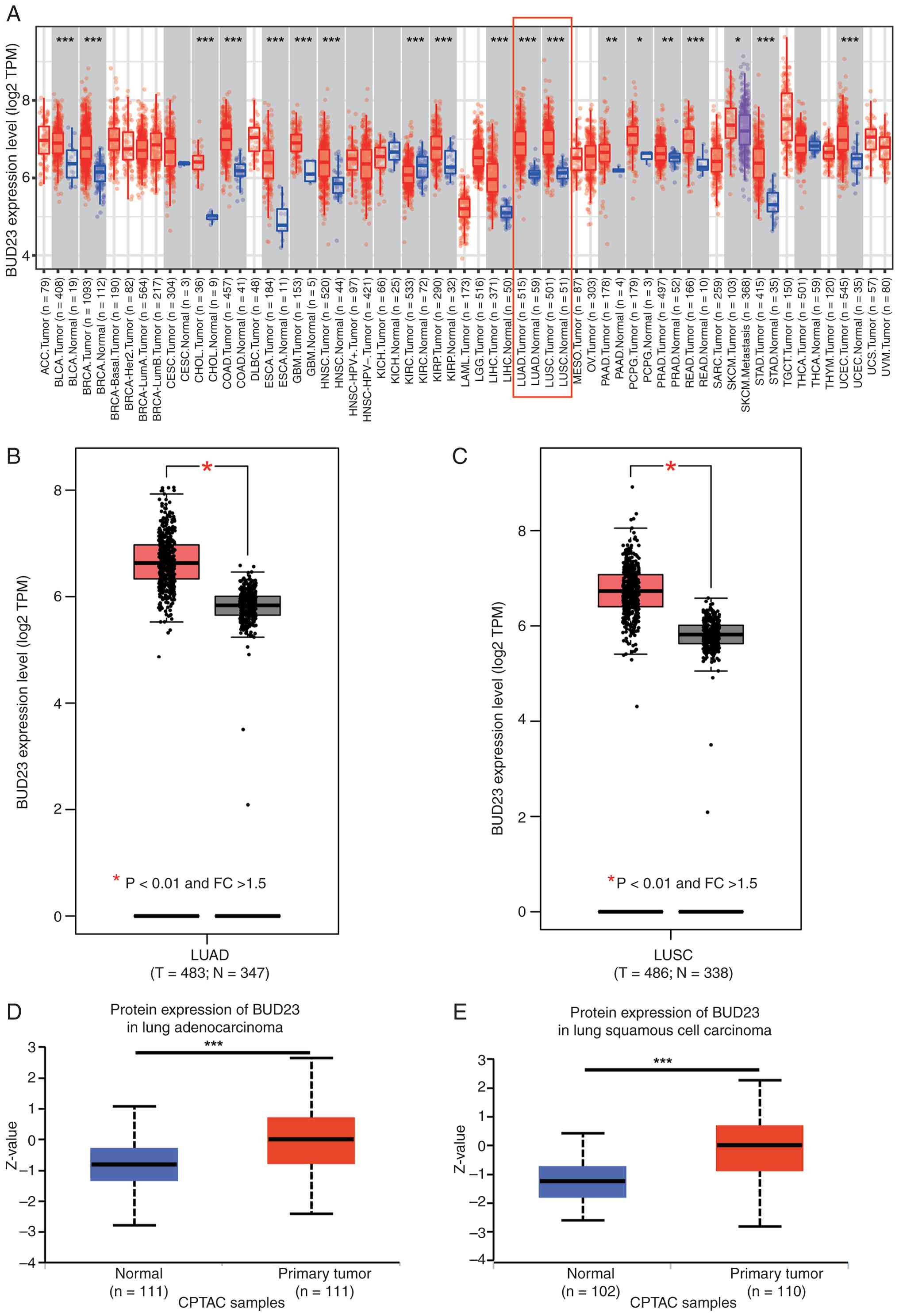
Figure 1

BUD23 expression is upregulated in
NSCLC based on TCGA, GTEx and CPTAC data. (A) Pan-cancer analysis
of BUD23 expression in tumor and normal tissues based on TCGA data.
Expression analysis of BUD23 in (B) LUAD and (C) LUSC between
cancer and normal tissues based on integrated TCGA and GTEx
datasets. Protein expression analysis of BUD23 in (D) lung
adenocarcinoma or (E) lung squamous cell carcinoma compared with
that in normal tissues based on CPTAC data. *P<0.05, **P<0.01
and ***P<0.001 as indicated. NSCLC, non-small cell lung cancer;
TCGA, The Cancer Genome Atlas; GTEx, Genotype-Tissue Expression;
CPTAC, Clinical Proteomic Tumor Analysis Consortium; LUAD, lung
adenocarcinoma; LUSC, lung squamous cell carcinoma; TPM,
transcripts per million; FC, fold change; T, tumor; N, normal.

Figure 2

BUD23 expression is upregulated in
NSCLC based on GEO dataset analyses. mRNA expression levels of
BUD23 in normal lung and primary NSCLC tissue based on GEO datasets
(A) GSE19188, (B) GSE30219 and (C) GSE40791. Expression levels of
BUD23 in lung cancer and matched adjacent normal tissues from GEO
datasets (D), GSE32665, (E) GSE40419, (F) GSE75037, (G) GSE7670,
(H) GSE27262, (I) GSE63459 and (J) GSE87340. ***P<0.001 as
indicated. NSCLC, non-small cell lung cancer; GEO, Gene Expression
Omnibus.

Figure 3

Elevated BUD23 levels are associated
with poor clinical outcomes in patients with NSCLC. Kaplan-Meier
survival curves comparing high and low BUD23 expression groups for
(A) OS (n=2,166), (B) FPS (n=1252) and (C) PPS (n=447), generated
using Kaplan-Meier Plotter. (D-F) Kaplan-Meier OS curves comparing
high and low BUD23 expression groups in NSCLC stratified by N
stage: (D) N0, (E) N1 and (F) N2. Association of BUD23 expression
with different clinical stages of NSCLC based on analysis of the
(G) GSE340419, (H) GSE31547 and (I) GSE31210 datasets. *P<0.05
and **P<0.01 as indicated. NSCLC, non-small cell lung cancer;
OS, overall survival; FPS, first progression survival; PPS,
post-progression survival; HR, hazard ratio (95% CI values).

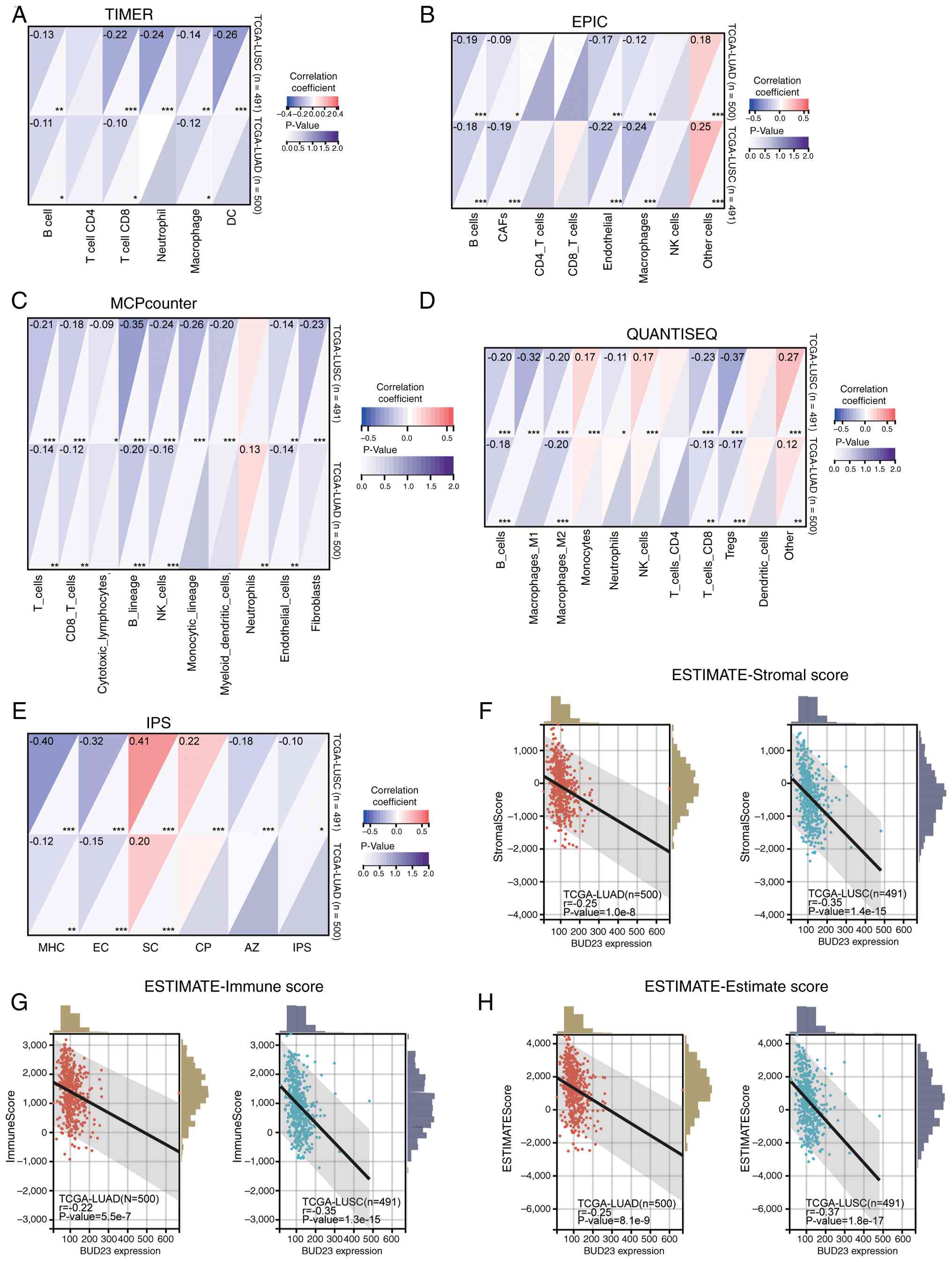
Figure 4

Correlation between BUD23 and immune
characteristics in NSCLC analyzed using various algorithms based on
TCGA-LUAD and -LUSC data. Correlations of BUD23 expression with the
infiltration levels of (A) 6 immune cell types analyzed using
TIMER, (B) 8 immune cell types analyzed using EPIC, (C) 10 immune
cell types analyzed using MCPcounter and (D) 11 immune cell types
of analyzed using QUANTISEQ. Correlations of BUD23 expression with
(E) IPS score determined using the IPS algorithm and (F) stromal,
(G) immune and (H) ESTIMATE scores analyzed using ESTIMATE.
*P<0.05, **P<0.01 and ***P<0.001. NSCLC, non-small cell
lung cancer; TCGA, The Cancer Genome Atlas; LUAD, lung
adenocarcinoma; LUSC, lung squamous cell carcinoma; IPS,
immunophenoscore; DC, dendritic cell; CAFs, cancer-associated
fibroblasts; NK, natural killer; Tregs, regulatory T cells; MHC,
major histocompatibility complex; EC, effector cell; SC, suppressor
cell; CP, checkpoint molecule; AZ, antigen processing and
presentation machinery.

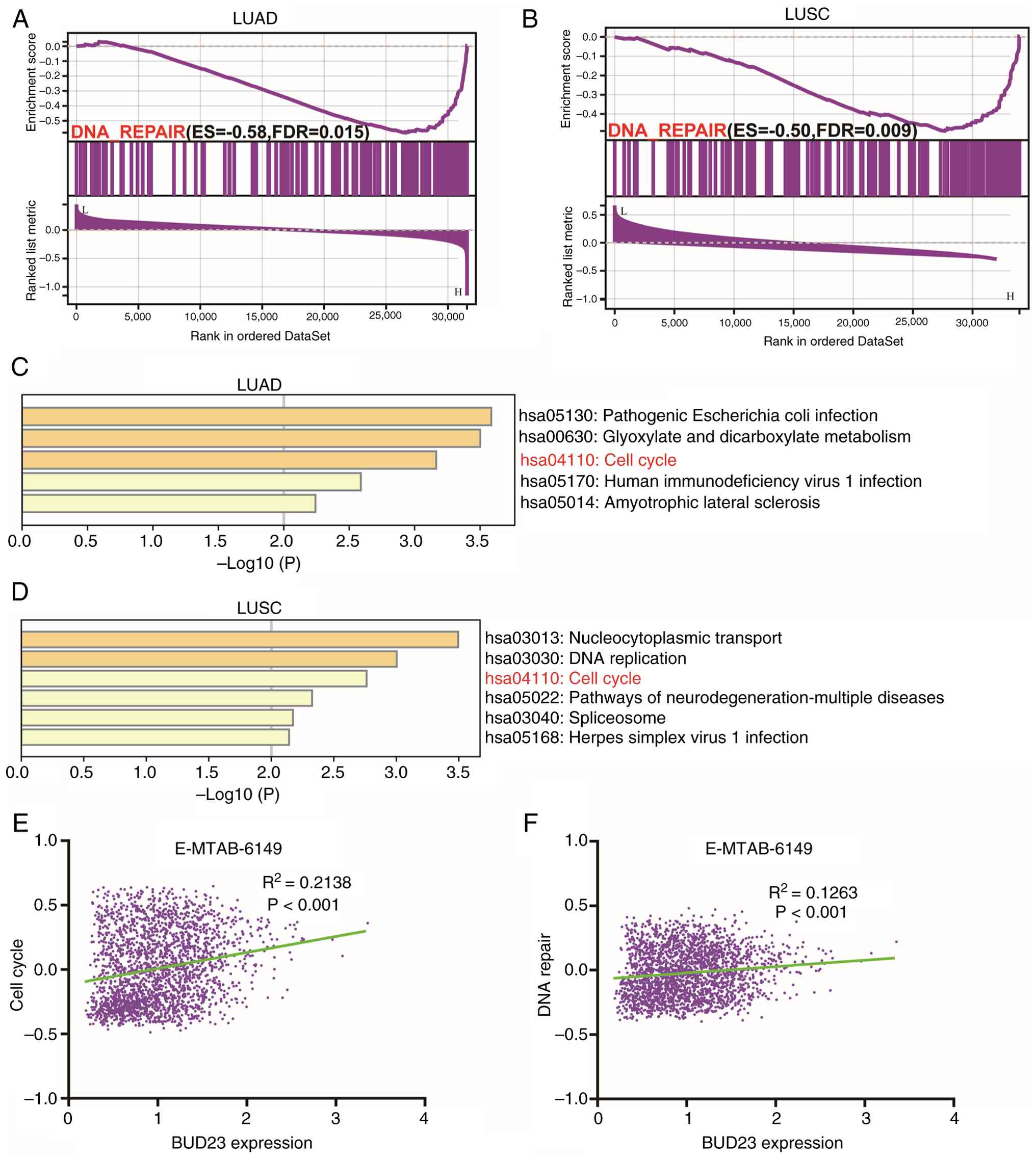
Figure 5

BUD23 is associated with DNA repair
and cell cycle pathways in NSCLC. Gene set enrichment analysis
analysis revealed that the Hallmark DNA repair gene set was
significantly enriched in patients with high BUD23 expression in
(A) TCGA-LUAD and (B) TCGA-LUSC cohorts. Kyoto Encyclopedia of
Genes and Genomes pathway analysis revealed that BUD23-correlated
genes (R2>0.3, P<0.05) were significantly enriched
in ‘cell cycle’ pathway in (C) TCGA-LUAD and (D) TCGA-LUSC.
Single-cell correlation analysis based on the E-MTAB-6149 dataset
in the CancerSEA database shows significant correlations between
BUD23 expression and the (E) ‘cell cycle’ and (F) ‘DNA repair’
functional states in NSCLC. NSCLC, non-small cell lung cancer;
TCGA, The Cancer Genome Atlas; LUAD, lung adenocarcinoma; LUSC,
lung squamous cell carcinoma; ES, enrichment score; FDR, false
discovery rate; -log10(P), -log10(P-value).

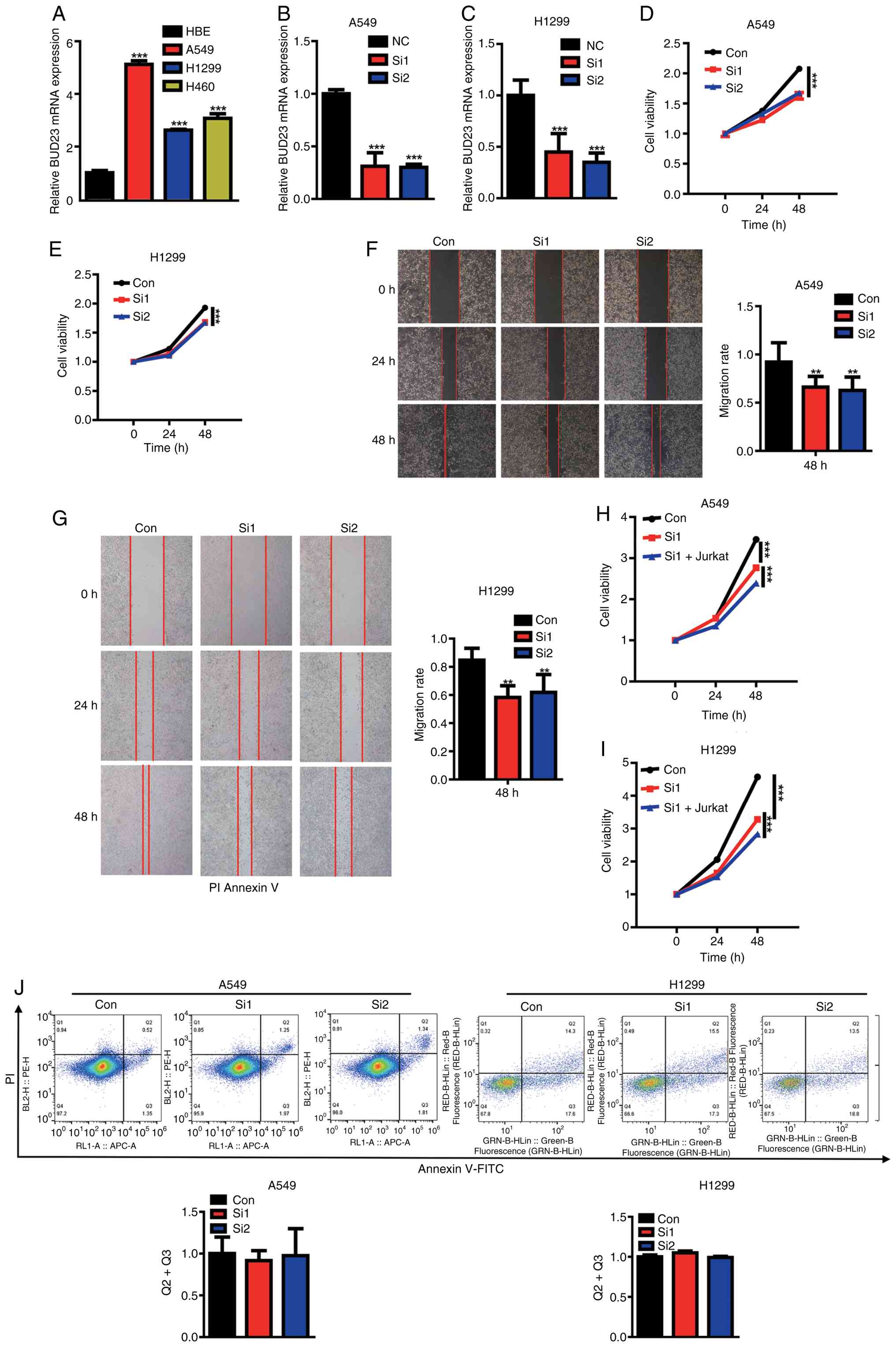
Figure 6

BUD23 knockdown suppresses the
proliferative and migration of NSCLC cells. (A) RT-qPCR was used to
quantify BUD23 mRNA levels in HBE cells and a panel of NSCLC cell
lines. Validation of BUD23 knockdown efficiency in (B) A549 and (C)
H1299 cells by RT-qPCR. Assessment of cell viability in (D) A549
and (E) H1299 cells via CCK-8 assay and cell migration in (F) A549
and (G) H1299 cells by wound healing assay (magnification, ×10).
CCK-8 assays of (H) A549 and (I) H1299 cells 24 h after BUD23
knockdown with or without subsequent co-culture with Jurkat T cells
for 48 h in Transwell chambers. (J) Quantification of apoptosis in
A549 and H1299 cells via Annexin V/PI flow cytometry. **P<0.01
and ***P<0.001 vs. HBE, NC, Con or as indicated. NSCLC,
non-small cell lung cancer; RT-qPCR, reverse
transcription-quantitative PCR; HBE, human bronchial epithelial;
CCK-8, Cell Counting Kit-8; NC, negative control; Con, control;
Si1/2, small interfering RNA targeting BUD23.

Figure 7

BUD23 knockdown significantly
downregulates POLR2J expression in non-small cell lung cancer. (A)
Venn diagram showing the intersection between LUAD GSEA core
enrichment genes (key genes driving Hallmark DNA repair pathway
enrichment) and LUSC GSEA core enrichment genes within the Hallmark
DNA repair gene set, identifying 49 common genes. (B) Venn diagram
showing the intersection between BUD23-correlated genes
(correlation index >0.3) derived from the TCGA-LUAD cohort and
BUD23-correlated genes (correlation index >0.3) derived from the
TCGA-LUSC cohort via multi-gene correlation analysis, yielding 79
overlapping genes. (C) Venn diagram showing the secondary
intersection between the 49 overlapping GSEA core enrichment genes
(from panel A) and the 79 overlapping BUD23-correlated genes (from
panel B), identifying 4 shared common genes: TAF6, POLR2J, RFC2 and
VPS37D. (D) Validation of TAF6, POLR2J, RFC2 and VPS37D mRNA
expression following BUD23 knockdown in A549 cells via reverse
transcription-quantitative PCR. Cell-cycle analysis in (E) A549 and
(F) H1299 cells following BUD23 knockdown. ***P<0.001 vs. Con.
POLR2J, RNA polymerase II subunit J; LUAD, lung adenocarcinoma;
GSEA, gene set enrichment analysis; LUSC, lung squamous cell
carcinoma; TCGA, The Cancer Genome Atlas; TAF6, TATA-box binding
protein associated factor 6; RFC2, replication factor C subunit 2;
VPS37D, vacuolar protein sorting-associated protein 37D; Con,
control; Si1, small interfering RNA targeting BUD23.
View References

1 

Bray F, Laversanne M, Sung H, Ferlay J, Siegel RL, Soerjomataram I and Jemal A: Global cancer statistics 2022: GLOBOCAN estimates of incidence and mortality worldwide for 36 cancers in 185 countries. CA Cancer J Clin. 74:229–263. 2024.PubMed/NCBI

2 

Marx A, Chan JK, Coindre JM, Detterbeck F, Girard N, Harris NL, Jaffe ES, Kurrer MO, Marom EM, Moreira AL, et al: The 2015 World Health Organization classification of tumors of the thymus: Continuity and changes. J Thorac Oncol. 10:1383–1395. 2015. View Article : Google Scholar : PubMed/NCBI

3 

Adams SJ, Stone E, Baldwin DR, Vliegenthart R, Lee P and Fintelmann FJ: Lung cancer screening. Lancet. 401:390–408. 2023. View Article : Google Scholar : PubMed/NCBI

4 

Asamura H, Nishimura KK, Giroux DJ, Chansky K, Hoering A, Rusch V and Rami-Porta R; Members of the IASLC Staging, Prognostic Factors Committee of the Advisory Boards, Participating Institutions, : IASLC lung cancer staging project: The new database to inform revisions in the ninth edition of the TNM classification of lung cancer. J Thorac Oncol. 18:564–575. 2023. View Article : Google Scholar : PubMed/NCBI

5 

Thai AA, Solomon BJ, Sequist LV, Gainor JF and Heist RS: Lung cancer. Lancet. 398:535–554. 2021. View Article : Google Scholar : PubMed/NCBI

6 

Ferrari M and Stagi S: Oxidative stress in down and williams-beuren syndromes: An overview. Molecules. 26:31392021. View Article : Google Scholar : PubMed/NCBI

7 

Zorbas C, Nicolas E, Wacheul L, Huvelle E, Heurgué-Hamard V and Lafontaine DL: The human 18S rRNA base methyltransferases DIMT1L and WBSCR22-TRMT112 but not rRNA modification are required for ribosome biogenesis. Mol Biol Cell. 26:2080–2095. 2015. View Article : Google Scholar : PubMed/NCBI

8 

Petrossian TC and Clarke SG: Uncovering the human methyltransferasome. Mol Cell Proteomics. 10:M110.000976. 2011. View Article : Google Scholar : PubMed/NCBI

9 

Õunap K, Käsper L, Kurg A and Kurg R: The human WBSCR22 protein is involved in the biogenesis of the 40S ribosomal subunits in mammalian cells. PLoS One. 8:e756862013. View Article : Google Scholar : PubMed/NCBI

10 

Chi Y, Liang Z, Guo Y, Chen D, Lu L, Lin J, Qiu S, Wang X, Qiu E, Lin F, et al: WBSCR22 confers cell survival and predicts poor prognosis in glioma. Brain Res Bull. 161:1–12. 2020. View Article : Google Scholar : PubMed/NCBI

11 

Tiedemann RE, Zhu YX, Schmidt J, Shi CX, Sereduk C, Yin H, Mousses S and Stewart AK: Identification of molecular vulnerabilities in human multiple myeloma cells by RNA interference lethality screening of the druggable genome. Cancer Res. 72:757–768. 2012. View Article : Google Scholar : PubMed/NCBI

12 

Nakazawa Y, Arai H and Fujita N: The novel metastasis promoter Merm1/Wbscr22 enhances tumor cell survival in the vasculature by suppressing Zac1/p53-dependent apoptosis. Cancer Res. 71:1146–1155. 2011. View Article : Google Scholar : PubMed/NCBI

13 

Khan AA, Huang H, Zhao Y, Li H, Pan R, Wang S and Liu X: WBSCR22 and TRMT112 synergistically suppress cell proliferation, invasion and tumorigenesis in pancreatic cancer via transcriptional regulation of ISG15. Int J Oncol. 60:242022. View Article : Google Scholar : PubMed/NCBI

14 

Yan D, Zheng X, Tu L, Jia J, Li Q, Cheng L and Wang X: Knockdown of Merm1/Wbscr22 attenuates sensitivity of H460 non-small cell lung cancer cells to SN-38 and 5-FU without alteration to p53 expression levels. Mol Med Rep. 11:295–302. 2015. View Article : Google Scholar : PubMed/NCBI

15 

Gillette MA, Satpathy S, Cao S, Dhanasekaran S, Vasaikar S, Krug K, Petralia F, Li Y, Liang WW, Reva B, et al: A02 Proteogenomic characterization reveals therapeutic vulnerabilities in lung adenocarcinoma. J Thorac Oncol. 15 (Suppl):S122020. View Article : Google Scholar

16 

Satpathy S, Krug K, Jean Beltran PM, Savage SR, Petralia F, Kumar-Sinha C, Dou Y, Reva B, Kane MH, Avanessian SC, et al: A proteogenomic portrait of lung squamous cell carcinoma. Cell. 184:4348–4371.e40. 2021. View Article : Google Scholar : PubMed/NCBI

17 

Rousseaux S, Debernardi A, Jacquiau B, Vitte AL, Vesin A, Nagy-Mignotte H, Moro-Sibilot D, Brichon PY, Lantuejoul S, Hainaut P, et al: Ectopic activation of germline and placental genes identifies aggressive metastasis-prone lung cancers. Sci Transl Med. 5:186ra662013. View Article : Google Scholar : PubMed/NCBI

18 

Hou J, Aerts J, den Hamer B, van Ijcken W, den Bakker M, Riegman P, van der Leest C, van der Spek P, Foekens JA, Hoogsteden HC, et al: Gene expression-based classification of non-small cell lung carcinomas and survival prediction. PLoS One. 5:e103122010. View Article : Google Scholar : PubMed/NCBI

19 

Zhang Y, Foreman O, Wigle DA, Kosari F, Vasmatzis G, Salisbury JL, van Deursen J and Galardy PJ: USP44 regulates centrosome positioning to prevent aneuploidy and suppress tumorigenesis. J Clin Invest. 122:4362–4374. 2012. View Article : Google Scholar : PubMed/NCBI

20 

Kim IJ, Quigley D, To MD, Pham P, Lin K, Jo B, Jen KY, Raz D, Kim J, Mao JH, et al: Rewiring of human lung cell lineage and mitotic networks in lung adenocarcinomas. Nat Commun. 4:17012013. View Article : Google Scholar : PubMed/NCBI

21 

Seo JS, Ju YS, Lee WC, Shin JY, Lee JK, Bleazard T, Lee J, Jung YJ, Kim JO, Shin JY, et al: The transcriptional landscape and mutational profile of lung adenocarcinoma. Genome Res. 22:2109–2119. 2012. View Article : Google Scholar : PubMed/NCBI

22 

Girard L, Rodriguez-Canales J, Behrens C, Thompson DM, Botros IW, Tang H, Xie Y, Rekhtman N, Travis WD, Wistuba II, et al: An expression signature as an aid to the histologic classification of non-small cell lung cancer. Clin Cancer Res. 22:4880–4889. 2016. View Article : Google Scholar : PubMed/NCBI

23 

Chen CH, Lai JM, Chou TY, Chen CY, Su LJ, Lee YC, Cheng TS, Hong YR, Chou CK, Whang-Peng J, et al: VEGFA upregulates FLJ10540 and modulates migration and invasion of lung cancer via PI3K/AKT pathway. PLoS One. 4:e50522009. View Article : Google Scholar : PubMed/NCBI

24 

Wei TY, Juan CC, Hisa JY, Su LJ, Lee YC, Chou HY, Chen JM, Wu YC, Chiu SC, Hsu CP, et al: Protein arginine methyltransferase 5 is a potential oncoprotein that upregulates G1 cyclins/cyclin-dependent kinases and the phosphoinositide 3-kinase/AKT signaling cascade. Cancer Sci. 103:1640–1650. 2012. View Article : Google Scholar : PubMed/NCBI

25 

Robles AI, Arai E, Mathé EA, Okayama H, Schetter AJ, Brown D, Petersen D, Bowman ED, Noro R, Welsh JA, et al: An integrated prognostic classifier for stage I lung adenocarcinoma based on mRNA, microRNA, and DNA methylation biomarkers. J Thorac Oncol. 10:1037–1048. 2015. View Article : Google Scholar : PubMed/NCBI

26 

Sun Z, Wang L, Eckloff BW, Deng B, Wang Y, Wampfler JA, Jang J, Wieben ED, Jen J, You M and Yang P: Conserved recurrent gene mutations correlate with pathway deregulation and clinical outcomes of lung adenocarcinoma in never-smokers. BMC Med Genomics. 7:322014. View Article : Google Scholar : PubMed/NCBI

27 

Li J, Wang B, Li X and Zhu Y: Estimation of hub genes and infiltrating immune cells in non-smoking females with lung adenocarcinoma by integrated bioinformatic analysis. Med Sci Monitor. 26:e9226802020. View Article : Google Scholar : PubMed/NCBI

28 

Okayama H, Kohno T, Ishii Y, Shimada Y, Shiraishi K, Iwakawa R, Furuta K, Tsuta K, Shibata T, Yamamoto S, et al: Identification of genes upregulated in ALK-positive and EGFR/KRAS/ALK-negative lung adenocarcinomas. Cancer Res. 72:100–111. 2012. View Article : Google Scholar : PubMed/NCBI

29 

Győrffy B, Surowiak P, Budczies J and Lánczky A: Online survival analysis software to assess the prognostic value of biomarkers using transcriptomic data in non-small-cell lung cancer. PLoS One. 8:e822412013. View Article : Google Scholar : PubMed/NCBI

30 

Li T, Fan J, Wang B, Traugh N, Chen Q, Liu JS, Li B and Liu XS: TIMER: A web server for comprehensive analysis of tumor-infiltrating immune cells. Cancer Res. 77:e108–e110. 2017. View Article : Google Scholar : PubMed/NCBI

31 

Racle J, de Jonge K, Baumgaertner P, Speiser DE and Gfeller D: Simultaneous enumeration of cancer and immune cell types from bulk tumor gene expression data. Elife. 6:e264762017. View Article : Google Scholar : PubMed/NCBI

32 

Becht E, Giraldo NA, Lacroix L, Buttard B, Elarouci N, Petitprez F, Selves J, Laurent-Puig P, Sautès-Fridman C, Fridman WH and de Reyniès A: Estimating the population abundance of tissue-infiltrating immune and stromal cell populations using gene expression. Genome Biol. 17:2182016. View Article : Google Scholar : PubMed/NCBI

33 

Finotello F, Mayer C, Plattner C, Laschober G, Rieder D, Hackl H, Krogsdam A, Loncova Z, Posch W, Wilflingseder D, et al: Molecular and pharmacological modulators of the tumor immune contexture revealed by deconvolution of RNA-seq data. Genome Med. 11:342019. View Article : Google Scholar : PubMed/NCBI

34 

Yoshihara K, Shahmoradgoli M, Martínez E, Vegesna R, Kim H, Torres-Garcia W, Treviño V, Shen H, Laird PW, Levine DA, et al: Inferring tumour purity and stromal and immune cell admixture from expression data. Nat Commun. 4:26122013. View Article : Google Scholar : PubMed/NCBI

35 

Charoentong P, Finotello F, Angelova M, Mayer C, Efremova M, Rieder D, Hackl H and Trajanoski Z: Pan-cancer immunogenomic analyses reveal genotype-immunophenotype relationships and predictors of response to checkpoint blockade. Cell Rep. 18:248–262. 2017. View Article : Google Scholar : PubMed/NCBI

36 

Chandrashekar DS, Karthikeyan SK, Korla PK, Patel H, Shovon AR, Athar M, Netto GJ, Qin ZS, Kumar S, Manne U, et al: UALCAN: An update to the integrated cancer data analysis platform. Neoplasia. 25:18–27. 2022. View Article : Google Scholar : PubMed/NCBI

37 

Yuan H, Yan M, Zhang G, Liu W, Deng C, Liao G, Xu L, Luo T, Yan H, Long Z, et al: CancerSEA: A cancer single-cell state atlas. Nucl Acids Res. 47(D1): D900–D908. 2019. View Article : Google Scholar : PubMed/NCBI

38 

Livak KJ and Schmittgen TD: Analysis of relative gene expression data using real-time quantitative PCR and the 2(−Delta Delta C(T)) method. Methods. 25:402–408. 2001. View Article : Google Scholar : PubMed/NCBI

39 

Aliazis K, Christofides A, Shah R, Yeo YY, Jiang S, Charest A and Boussiotis VA: The tumor microenvironment's role in the response to immune checkpoint blockade. Nat Cancer. 6:924–937. 2025. View Article : Google Scholar : PubMed/NCBI

40 

Yan D, Tu L, Yuan H, Fang J, Cheng L, Zheng X and Wang X: WBSCR22 confers oxaliplatin resistance in human colorectal cancer. Sci Rep. 7:154432017. View Article : Google Scholar : PubMed/NCBI

41 

Stefanska B, Cheishvili D, Suderman M, Arakelian A, Huang J, Hallett M, Han ZG, Al-Mahtab M, Akbar SM, Khan WA, et al: Genome-wide study of hypomethylated and induced genes in patients with liver cancer unravels novel anticancer targets. Clin Cancer Res. 20:3118–3132. 2014. View Article : Google Scholar : PubMed/NCBI

42 

Petitprez F, de Reyniès A, Keung EZ, Chen TW, Sun CM, Calderaro J, Jeng YM, Hsiao LP, Lacroix L, Bougoüin A, et al: B cells are associated with survival and immunotherapy response in sarcoma. Nature. 577:556–560. 2020. View Article : Google Scholar : PubMed/NCBI

43 

Helmink BA, Reddy SM, Gao J, Zhang S, Basar R, Thakur R, Yizhak K, Sade-Feldman M, Blando J, Han G, et al: B cells and tertiary lymphoid structures promote immunotherapy response. Nature. 577:549–555. 2020. View Article : Google Scholar : PubMed/NCBI

44 

Philip M, Fairchild L, Sun L, Viale A, Merghoub T, Wolchok JD, Leslie CS and Schietinger A: Chromatin state dynamics underlying CD8 T cell differentiation and dysfunction in cancer. Blood. 128:8612016. View Article : Google Scholar

45 

Stixová L, Tichý V and Bártová E: RNA-related DNA damage and repair: The role of N7-methylguanosine in the cell nucleus exposed to UV light. Heliyon. 10:e255992024. View Article : Google Scholar : PubMed/NCBI

46 

Zheng XL, Li ZD, Luo KZ, Li YL, Liu YH, Shen SY, Shen FY, Li WY, Chen GQ, Zhang C and Zeng LH: POLR2J expression promotes glioblastoma malignancy by regulating oxidative stress and the STAT3 signaling pathway. Am J Cancer Res. 14:2037–2054. 2024. View Article : Google Scholar : PubMed/NCBI

47 

Campbell JM, Lockwood WW, Buys TP, Chari R, Coe BP, Lam S and Lam WL: Integrative genomic and gene expression analysis of chromosome 7 identified novel oncogene loci in non-small cell lung cancer. Genome. 51:1032–1039. 2008. View Article : Google Scholar : PubMed/NCBI

48 

Nourbakhsh M, Saksager A, Tom N, Chen XS, Colaprico A, Olsen C, Tiberti M and Papaleo E: A workflow to study mechanistic indicators for driver gene prediction with moonlight. Brief Bioinform. 24:bbad2742023. View Article : Google Scholar : PubMed/NCBI

49 

Yao L, Cong R, Ji C, Zhou X, Luan J, Meng X and Song N: RNA-binding proteins play an important role in the prognosis of patients with testicular germ cell tumor. Front Genet. 12:6102912021. View Article : Google Scholar : PubMed/NCBI

50 

Costales-Carrera A, Fernández-Barral A, Bustamante-Madrid P, Domínguez O, Guerra-Pastrián L, Cantero R, Del Peso L, Burgos A, Barbáchano A and Muñoz A: Comparative study of organoids from patient-derived normal and tumor colon and rectal tissue. Cancers (Basel). 12:23022020. View Article : Google Scholar : PubMed/NCBI

Related Articles

  • Abstract
  • View
  • Download
  • Twitter
Copy and paste a formatted citation
Spandidos Publications style
Tan Y, Ma J, Zhou J and Lu J: BUD23 is associated with malignancy and correlates with immune infiltration in NSCLC. Oncol Lett 31: 252, 2026.
APA
Tan, Y., Ma, J., Zhou, J., & Lu, J. (2026). BUD23 is associated with malignancy and correlates with immune infiltration in NSCLC. Oncology Letters, 31, 252. https://doi.org/10.3892/ol.2026.15608
MLA
Tan, Y., Ma, J., Zhou, J., Lu, J."BUD23 is associated with malignancy and correlates with immune infiltration in NSCLC". Oncology Letters 31.6 (2026): 252.
Chicago
Tan, Y., Ma, J., Zhou, J., Lu, J."BUD23 is associated with malignancy and correlates with immune infiltration in NSCLC". Oncology Letters 31, no. 6 (2026): 252. https://doi.org/10.3892/ol.2026.15608
Copy and paste a formatted citation
x
Spandidos Publications style
Tan Y, Ma J, Zhou J and Lu J: BUD23 is associated with malignancy and correlates with immune infiltration in NSCLC. Oncol Lett 31: 252, 2026.
APA
Tan, Y., Ma, J., Zhou, J., & Lu, J. (2026). BUD23 is associated with malignancy and correlates with immune infiltration in NSCLC. Oncology Letters, 31, 252. https://doi.org/10.3892/ol.2026.15608
MLA
Tan, Y., Ma, J., Zhou, J., Lu, J."BUD23 is associated with malignancy and correlates with immune infiltration in NSCLC". Oncology Letters 31.6 (2026): 252.
Chicago
Tan, Y., Ma, J., Zhou, J., Lu, J."BUD23 is associated with malignancy and correlates with immune infiltration in NSCLC". Oncology Letters 31, no. 6 (2026): 252. https://doi.org/10.3892/ol.2026.15608
Follow us
  • Twitter
  • LinkedIn
  • Facebook
About
  • Spandidos Publications
  • Careers
  • Cookie Policy
  • Privacy Policy
How can we help?
  • Help
  • Live Chat
  • Contact
  • Email to our Support Team