Spandidos Publications Logo
  • About
    • About Spandidos
    • Aims and Scopes
    • Abstracting and Indexing
    • Editorial Policies
    • Reprints and Permissions
    • Job Opportunities
    • Terms and Conditions
    • Contact
  • Journals
    • All Journals
    • Oncology Letters
      • Oncology Letters
      • Information for Authors
      • Editorial Policies
      • Editorial Board
      • Aims and Scope
      • Abstracting and Indexing
      • Bibliographic Information
      • Archive
    • International Journal of Oncology
      • International Journal of Oncology
      • Information for Authors
      • Editorial Policies
      • Editorial Board
      • Aims and Scope
      • Abstracting and Indexing
      • Bibliographic Information
      • Archive
    • Molecular and Clinical Oncology
      • Molecular and Clinical Oncology
      • Information for Authors
      • Editorial Policies
      • Editorial Board
      • Aims and Scope
      • Abstracting and Indexing
      • Bibliographic Information
      • Archive
    • Experimental and Therapeutic Medicine
      • Experimental and Therapeutic Medicine
      • Information for Authors
      • Editorial Policies
      • Editorial Board
      • Aims and Scope
      • Abstracting and Indexing
      • Bibliographic Information
      • Archive
    • International Journal of Molecular Medicine
      • International Journal of Molecular Medicine
      • Information for Authors
      • Editorial Policies
      • Editorial Board
      • Aims and Scope
      • Abstracting and Indexing
      • Bibliographic Information
      • Archive
    • Biomedical Reports
      • Biomedical Reports
      • Information for Authors
      • Editorial Policies
      • Editorial Board
      • Aims and Scope
      • Abstracting and Indexing
      • Bibliographic Information
      • Archive
    • Oncology Reports
      • Oncology Reports
      • Information for Authors
      • Editorial Policies
      • Editorial Board
      • Aims and Scope
      • Abstracting and Indexing
      • Bibliographic Information
      • Archive
    • Molecular Medicine Reports
      • Molecular Medicine Reports
      • Information for Authors
      • Editorial Policies
      • Editorial Board
      • Aims and Scope
      • Abstracting and Indexing
      • Bibliographic Information
      • Archive
    • World Academy of Sciences Journal
      • World Academy of Sciences Journal
      • Information for Authors
      • Editorial Policies
      • Editorial Board
      • Aims and Scope
      • Abstracting and Indexing
      • Bibliographic Information
      • Archive
    • International Journal of Functional Nutrition
      • International Journal of Functional Nutrition
      • Information for Authors
      • Editorial Policies
      • Editorial Board
      • Aims and Scope
      • Abstracting and Indexing
      • Bibliographic Information
      • Archive
    • International Journal of Epigenetics
      • International Journal of Epigenetics
      • Information for Authors
      • Editorial Policies
      • Editorial Board
      • Aims and Scope
      • Abstracting and Indexing
      • Bibliographic Information
      • Archive
    • Medicine International
      • Medicine International
      • Information for Authors
      • Editorial Policies
      • Editorial Board
      • Aims and Scope
      • Abstracting and Indexing
      • Bibliographic Information
      • Archive
  • Articles
  • Information
    • Information for Authors
    • Information for Reviewers
    • Information for Librarians
    • Information for Advertisers
    • Conferences
  • Language Editing
Spandidos Publications Logo
  • About
    • About Spandidos
    • Aims and Scopes
    • Abstracting and Indexing
    • Editorial Policies
    • Reprints and Permissions
    • Job Opportunities
    • Terms and Conditions
    • Contact
  • Journals
    • All Journals
    • Biomedical Reports
      • Information for Authors
      • Editorial Policies
      • Editorial Board
      • Aims and Scope
      • Abstracting and Indexing
      • Bibliographic Information
      • Archive
    • Experimental and Therapeutic Medicine
      • Information for Authors
      • Editorial Policies
      • Editorial Board
      • Aims and Scope
      • Abstracting and Indexing
      • Bibliographic Information
      • Archive
    • International Journal of Epigenetics
      • Information for Authors
      • Editorial Policies
      • Editorial Board
      • Aims and Scope
      • Abstracting and Indexing
      • Bibliographic Information
      • Archive
    • International Journal of Functional Nutrition
      • Information for Authors
      • Editorial Policies
      • Editorial Board
      • Aims and Scope
      • Abstracting and Indexing
      • Bibliographic Information
      • Archive
    • International Journal of Molecular Medicine
      • Information for Authors
      • Editorial Policies
      • Editorial Board
      • Aims and Scope
      • Abstracting and Indexing
      • Bibliographic Information
      • Archive
    • International Journal of Oncology
      • Information for Authors
      • Editorial Policies
      • Editorial Board
      • Aims and Scope
      • Abstracting and Indexing
      • Bibliographic Information
      • Archive
    • Medicine International
      • Information for Authors
      • Editorial Policies
      • Editorial Board
      • Aims and Scope
      • Abstracting and Indexing
      • Bibliographic Information
      • Archive
    • Molecular and Clinical Oncology
      • Information for Authors
      • Editorial Policies
      • Editorial Board
      • Aims and Scope
      • Abstracting and Indexing
      • Bibliographic Information
      • Archive
    • Molecular Medicine Reports
      • Information for Authors
      • Editorial Policies
      • Editorial Board
      • Aims and Scope
      • Abstracting and Indexing
      • Bibliographic Information
      • Archive
    • Oncology Letters
      • Information for Authors
      • Editorial Policies
      • Editorial Board
      • Aims and Scope
      • Abstracting and Indexing
      • Bibliographic Information
      • Archive
    • Oncology Reports
      • Information for Authors
      • Editorial Policies
      • Editorial Board
      • Aims and Scope
      • Abstracting and Indexing
      • Bibliographic Information
      • Archive
    • World Academy of Sciences Journal
      • Information for Authors
      • Editorial Policies
      • Editorial Board
      • Aims and Scope
      • Abstracting and Indexing
      • Bibliographic Information
      • Archive
  • Articles
  • Information
    • For Authors
    • For Reviewers
    • For Librarians
    • For Advertisers
    • Conferences
  • Language Editing
Login Register Submit
  • This site uses cookies
  • You can change your cookie settings at any time by following the instructions in our Cookie Policy. To find out more, you may read our Privacy Policy.

    I agree
Search articles by DOI, keyword, author or affiliation
Search
Advanced Search
presentation
Oncology Reports
Join Editorial Board Propose a Special Issue
Print ISSN: 1021-335X Online ISSN: 1791-2431
Journal Cover
November 2013 Volume 30 Issue 5

Full Size Image

Sign up for eToc alerts
Recommend to Library

Journals

International Journal of Molecular Medicine

International Journal of Molecular Medicine

International Journal of Molecular Medicine is an international journal devoted to molecular mechanisms of human disease.

International Journal of Oncology

International Journal of Oncology

International Journal of Oncology is an international journal devoted to oncology research and cancer treatment.

Molecular Medicine Reports

Molecular Medicine Reports

Covers molecular medicine topics such as pharmacology, pathology, genetics, neuroscience, infectious diseases, molecular cardiology, and molecular surgery.

Oncology Reports

Oncology Reports

Oncology Reports is an international journal devoted to fundamental and applied research in Oncology.

Experimental and Therapeutic Medicine

Experimental and Therapeutic Medicine

Experimental and Therapeutic Medicine is an international journal devoted to laboratory and clinical medicine.

Oncology Letters

Oncology Letters

Oncology Letters is an international journal devoted to Experimental and Clinical Oncology.

Biomedical Reports

Biomedical Reports

Explores a wide range of biological and medical fields, including pharmacology, genetics, microbiology, neuroscience, and molecular cardiology.

Molecular and Clinical Oncology

Molecular and Clinical Oncology

International journal addressing all aspects of oncology research, from tumorigenesis and oncogenes to chemotherapy and metastasis.

World Academy of Sciences Journal

World Academy of Sciences Journal

Multidisciplinary open-access journal spanning biochemistry, genetics, neuroscience, environmental health, and synthetic biology.

International Journal of Functional Nutrition

International Journal of Functional Nutrition

Open-access journal combining biochemistry, pharmacology, immunology, and genetics to advance health through functional nutrition.

International Journal of Epigenetics

International Journal of Epigenetics

Publishes open-access research on using epigenetics to advance understanding and treatment of human disease.

Medicine International

Medicine International

An International Open Access Journal Devoted to General Medicine.

Journal Cover
November 2013 Volume 30 Issue 5

Full Size Image

Sign up for eToc alerts
Recommend to Library

  • Article
  • Citations
    • Cite This Article
    • Download Citation
    • Create Citation Alert
    • Remove Citation Alert
    • Cited By
  • Similar Articles
    • Related Articles (in Spandidos Publications)
    • Similar Articles (Google Scholar)
    • Similar Articles (PubMed)
  • Download PDF
  • Download XML
  • View XML
Article

Senescence-associated protein p400 is a prognostic marker in renal cell carcinoma

  • Authors:
    • Stephan Macher-Goeppinger
    • Justo Lorenzo Bermejo
    • Peter Schirmacher
    • Sascha Pahernik
    • Markus Hohenfellner
    • Wilfried Roth
  • View Affiliations / Copyright

    Affiliations: Institute of Pathology, University Hospital of Heidelberg, D-69120 Heidelberg, Germany, Institute of Medical Biometry and Informatics, University of Heidelberg, D-69120 Heidelberg, Germany, Department of Urology, University Hospital of Heidelberg, D-69120 Heidelberg, Germany
  • Pages: 2245-2253
    |
    Published online on: August 26, 2013
       https://doi.org/10.3892/or.2013.2698
  • Expand metrics +
Metrics: Total Views: 0 (Spandidos Publications: | PMC Statistics: )
Metrics: Total PDF Downloads: 0 (Spandidos Publications: | PMC Statistics: )
Cited By (CrossRef): 0 citations Loading Articles...

This article is mentioned in:


Abstract

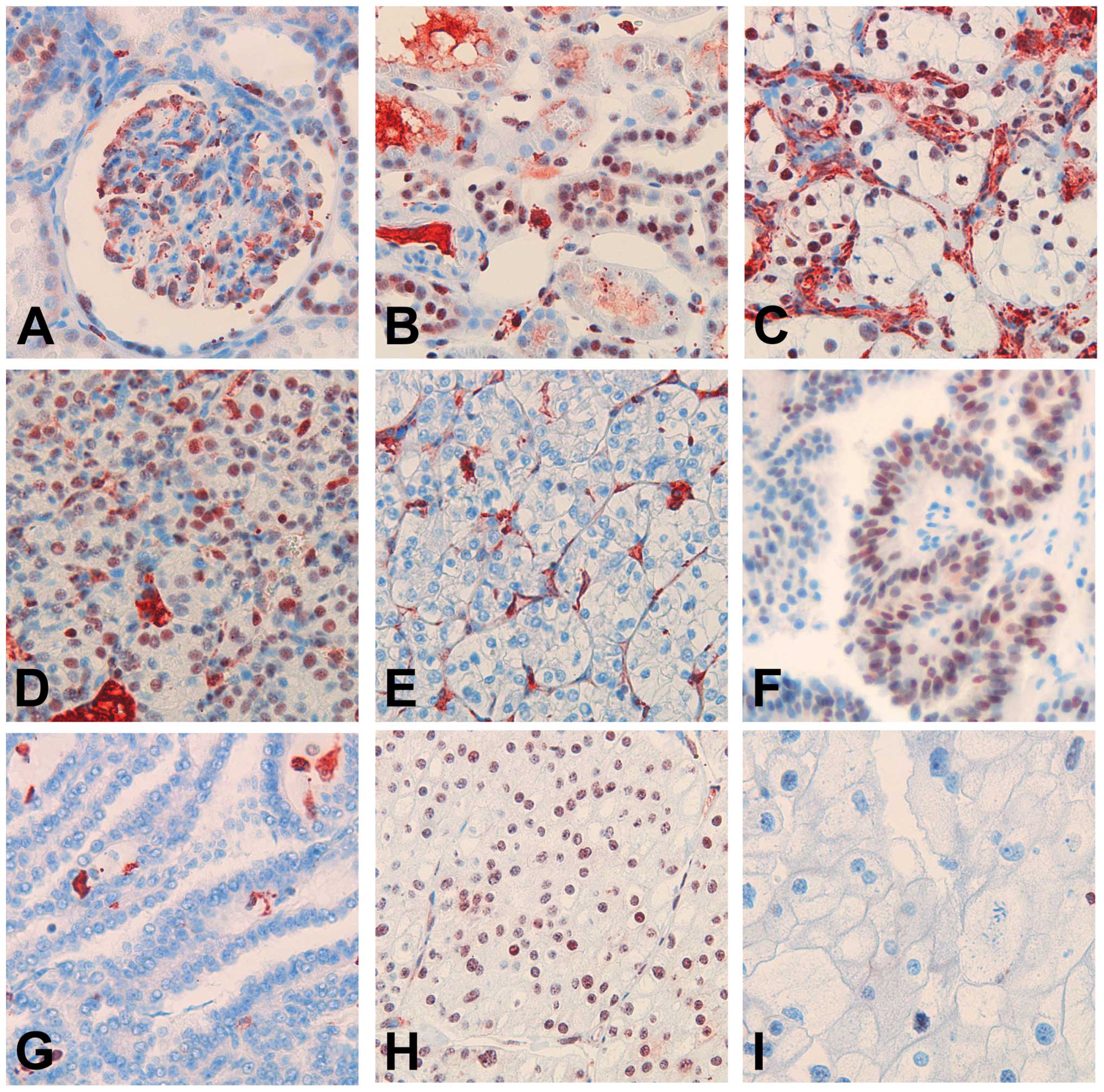
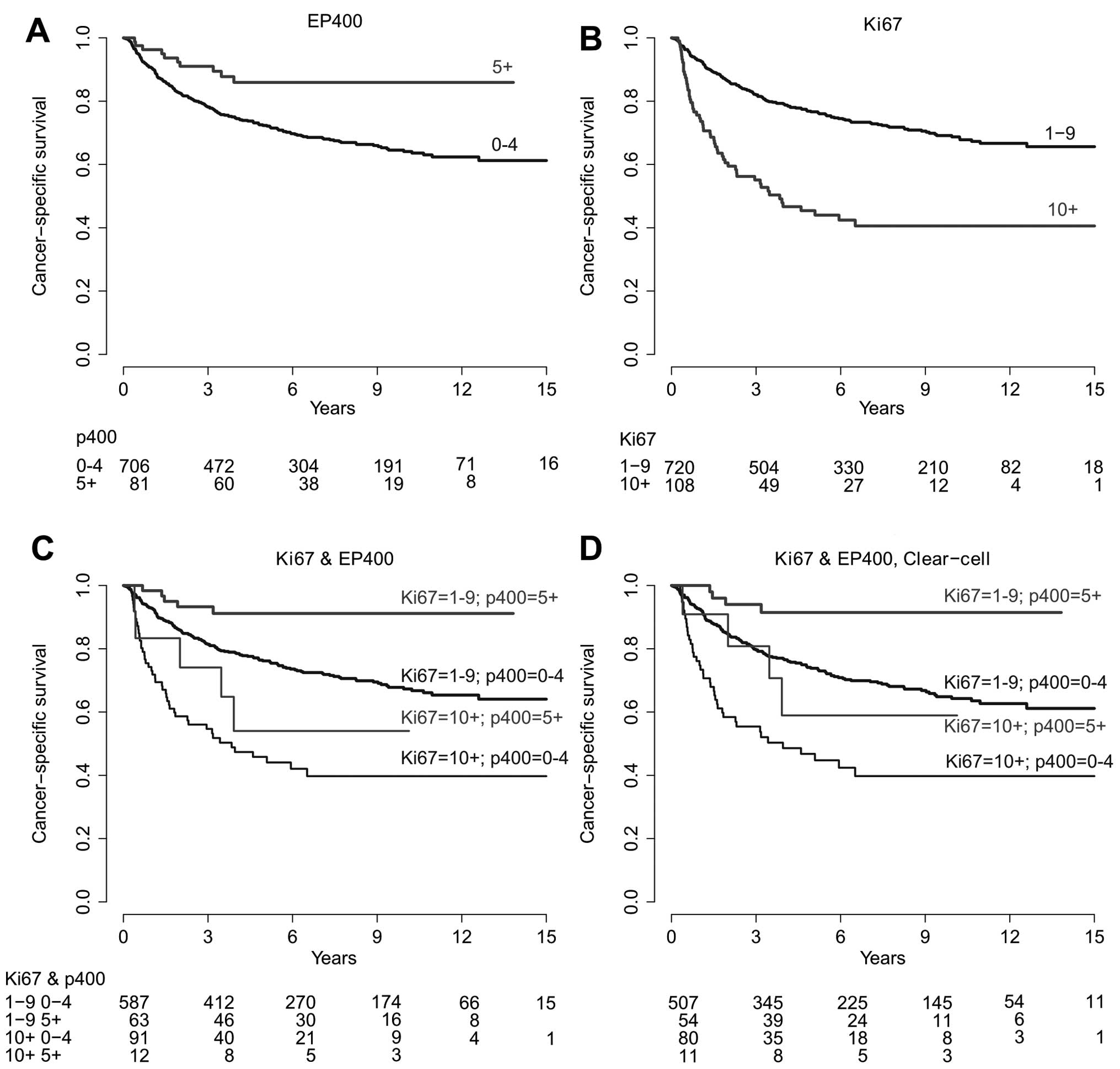
Mutations of the von Hippel-Lindau (VHL) tumor suppressor gene cause hereditary and sporadic renal cell carcinomas (RCCs). The best characterized function of VHL protein is suppression of the α subunit of hypoxia inducible factor (HIF). Additional VHL functions have been reported, including induction of senescence upon loss of VHL mediated by downregulation of the chromatin remodeling factor p400. Induction of senescence either by oncogene activation or inactivation of tumor suppressors is considered a critical feature of mammalian cells by which to suppress tumorigenesis. In the present study, we investigated the relationship between the expression of p400 and patient survival following RCC diagnosis taking advantage of a large and well-documented series of RCC patients with long-term follow-up information. The expression of p400 was measured by immunohistochemistry using a tissue microarray containing tumor tissue samples from 868 RCC patients. Chi-squared tests, Kaplan-Meier curves, Cox regression models and Spearman's rank correlation estimates were used to investigate the possible relationship between p400 expression and Ki-67 proliferative index, clinical and pathological characteristics and patient survival. Complete loss of p400 expression was detected in 64% of all tumor specimens, and decreased p400 expression was associated with advanced tumor stage, higher grade of malignancy and regional lymph node metastasis. Among well-differentiated RCCs, high proliferation (Ki-67 index >10) was found in 12% of carcinomas with an increased p400 expression, compared to 5% of RCCs with decreased p400 expression. Multiple Cox regression indicated that patients with low proliferative tumors and increased p400 expression had a 60% lower cancer-specific mortality risk compared to those affected by low proliferative RCCs with decreased p400 expression. In summary, patients affected by highly proliferative tumors with decreased p400 expression exhibit a poor prognosis by multiple Cox regression. Our data suggest that the highly proliferative, decreased-p400 subgroup of RCCs represents tumors that are characterized by a loss of the tumor-suppressive mechanism of senescence.
View Figures

Figure 1

Figure 2

View References

1 

Cohen HT and McGovern FJ: Renal-cell carcinoma. N Engl J Med. 353:2477–2490. 2005. View Article : Google Scholar : PubMed/NCBI

2 

Merino MJ, Eccles DM, Linehan WM, et al: Familial renal cell carcinoma. Pathology and Genetics of Tumors of the Urinary System and Male Genital Organs. Eble JN, Sauter G, Epstein J and Sesterhenn IA: IARC Press; Lyon: pp. 15–22. 2004

3 

Maxwell PH, Wiesener MS, Chang GW, et al: The tumour suppressor protein VHL targets hypoxia-inducible factors for oxygen-dependent proteolysis. Nature. 399:271–275. 1999. View Article : Google Scholar : PubMed/NCBI

4 

Kaelin WG Jr and Ratcliffe PJ: Oxygen sensing by metazoans: the central role of the HIF hydroxylase pathway. Mol Cell. 30:393–402. 2008. View Article : Google Scholar : PubMed/NCBI

5 

Raval RR, Lau KW, Tran MGB, et al: Contrasting properties of hypoxia-inducible factor 1 (HIF-1) and HIF-2 in von Hippel-Lindau-associated renal cell carcinoma. Mol Cell Biol. 25:5675–5686. 2005. View Article : Google Scholar : PubMed/NCBI

6 

Shen C, Beroukhim R, Schumacher SE, et al: Genetic and functional studies implicate HIF1α as a 14q kidney cancer suppressor gene. Cancer Discov. 1:222–235. 2011.PubMed/NCBI

7 

Roe JS and Youn HD: The positive regulation of p53 by the tumor suppressor VHL. Cell Cycle. 5:2054–2056. 2006. View Article : Google Scholar : PubMed/NCBI

8 

Thoma CR, Frew IJ, Hoerner CR, Montani M, Moch H and Krek W: pVHL and GSK3β are components of a primary cilium-maintenance signalling network. Nat Cell Biol. 9:588–595. 2007.

9 

Lolkema MP, Mans DA, Snijckers CM, et al: The von Hippel-Lindau tumour suppressor interacts with microtubules through kinesin-2. FEBS Lett. 581:4571–4576. 2007. View Article : Google Scholar : PubMed/NCBI

10 

Roe JS, Kim HR, Hwang IY, Cho EJ and Youn HD: von Hippel-Lindau protein promotes Skp2 destabilization on DNA damage. Oncogene. 30:3127–3138. 2011. View Article : Google Scholar : PubMed/NCBI

11 

Young AP and Kaelin WG Jr: Senescence triggered by the loss of the VHL tumor suppressor. Cell Cycle. 7:1709–1712. 2008. View Article : Google Scholar : PubMed/NCBI

12 

Xu Y, Sun Y, Jiang X, et al: The p400 ATPase regulates nucleosome stability and chromatin ubiquitination during DNA repair. J Cell Biol. 191:31–43. 2010. View Article : Google Scholar : PubMed/NCBI

13 

Chan HM, Narita M, Lowe SW and Livingston DM: The p400 E1A-associated protein is a novel component of the p53 --> p21 senescence pathway. Genes Dev. 19:196–201. 2005. View Article : Google Scholar : PubMed/NCBI

14 

Samuelson AV, Narita M, Chan HM, et al: p400 is required for E1A to promote apoptosis. J Biol Chem. 280:21915–21923. 2005. View Article : Google Scholar : PubMed/NCBI

15 

Flinterman MB, Mymryk JS, Klanrit P, et al: p400 function is required for the adenovirus E1A-mediated suppression of EGFR and tumour cell killing. Oncogene. 26:6863–6874. 2007. View Article : Google Scholar : PubMed/NCBI

16 

van Diest PJ, van der Wall E and Baak JPA: Prognostic value of proliferation in invasive breast cancer: a review. J Clin Pathol. 57:675–681. 2004.PubMed/NCBI

17 

Spyratos F, Ferrero-Poüs M, Trassard M, et al: Correlation between MIB-1 and other proliferation markers: clinical implications of the MIB-1 cutoff value. Cancer. 94:2151–2159. 2002. View Article : Google Scholar : PubMed/NCBI

18 

de Riese WT, Crabtree WN, Allhoff EP, et al: Prognostic significance of Ki-67 immunostaining in nonmetastatic renal cell carcinoma. J Clin Oncol. 11:1804–1808. 1993.PubMed/NCBI

19 

Aleskandarany MA, Rakha EA, Macmillan RD, Powe DG, Ellis IO and Green AR: MIB1/Ki-67 labelling index can classify grade 2 breast cancer into two clinically distinct subgroups. Breast Cancer Res Treat. 127:591–599. 2011. View Article : Google Scholar : PubMed/NCBI

20 

Rioux-Leclercq N, Turlin B, Bansard J, et al: Value of immunohistochemical Ki-67 and p53 determinations as predictive factors of outcome in renal cell carcinoma. Urology. 55:501–505. 2000. View Article : Google Scholar : PubMed/NCBI

21 

Scarpa A, Mantovani W, Capelli P, et al: Pancreatic endocrine tumors: improved TNM staging and histopathological grading permit a clinically efficient prognostic stratification of patients. Mod Pathol. 23:824–833. 2010. View Article : Google Scholar

22 

Michaloglou C, Vredeveld LCW, Soengas MS, et al: BRAFE600-associated senescence-like cell cycle arrest of human naevi. Nature. 436:720–724. 2005. View Article : Google Scholar : PubMed/NCBI

23 

Macher-Goeppinger S, Aulmann S, Tagscherer KE, et al: Prognostic value of tumor necrosis factor-related apoptosis-inducing ligand (TRAIL) and TRAIL receptors in renal cell cancer. Clin Cancer Res. 15:650–659. 2009. View Article : Google Scholar : PubMed/NCBI

24 

Dupont Jensen J, Laenkholm AV, Knoop A, et al: PIK3CA mutations may be discordant between primary and corresponding metastatic disease in breast cancer. Clin Cancer Res. 17:667–677. 2011.

25 

Linehan WM, Srinivasan R and Schmidt LS: The genetic basis of kidney cancer: a metabolic disease. Nat Rev Urol. 7:277–285. 2010. View Article : Google Scholar : PubMed/NCBI

26 

Baldewijns MM, van Vlodrop IJH, Vermeulen PB, Soetekouw PM, van Engeland M and de Bruïne AP: VHL and HIF signalling in renal cell carcinogenesis. J Pathol. 221:125–138. 2010. View Article : Google Scholar : PubMed/NCBI

27 

Young AP, Schlisio S, Minamishima YA, et al: VHL loss actuates a HIF-independent senescence programme mediated by Rb and p400. Nat Cell Biol. 10:361–369. 2008. View Article : Google Scholar : PubMed/NCBI

28 

Welford SM, Dorie MJ, Li X, Haase VH and Giaccia AJ: Renal oxygenation suppresses VHL loss-induced senescence that is caused by increased sensitivity to oxidative stress. Mol Cell Biol. 30:4595–4603. 2010. View Article : Google Scholar : PubMed/NCBI

29 

Mack FA, Patel JH, Biju MP, Haase VH and Simon MC: Decreased growth of Vhl−/− fibrosarcomas is associated with elevated levels of cyclin kinase inhibitors p21 and p27. Mol Cell Biol. 25:4565–4578. 2005.PubMed/NCBI

30 

Courtois-Cox S, Genther Williams SM, Reczek EE, et al: A negative feedback signaling network underlies oncogene-induced senescence. Cancer Cell. 10:459–472. 2006. View Article : Google Scholar : PubMed/NCBI

31 

Chen Z, Trotman LC, Shaffer D, et al: Crucial role of p53-dependent cellular senescence in suppression of Pten-deficient tumorigenesis. Nature. 436:725–730. 2005. View Article : Google Scholar : PubMed/NCBI

32 

Serrano M, Lin AW, McCurrach ME, Beach D and Lowe SW: Oncogenic ras provokes premature cell senescence associated with accumulation of p53 and p16INK4a. Cell. 88:593–602. 1997. View Article : Google Scholar : PubMed/NCBI

33 

Kuilman T, Michaloglou C, Mooi WJ and Peeper DS: The essence of senescence. Genes Dev. 24:2463–2479. 2010. View Article : Google Scholar : PubMed/NCBI

34 

Gurova KV, Hill JE, Razorenova OV, Chumakov PM and Gudkov AV: p53 pathway in renal cell carcinoma is repressed by a dominant mechanism. Cancer Res. 64:1951–1958. 2004. View Article : Google Scholar : PubMed/NCBI

35 

Burrows AE, Smogorzewska A and Elledge SJ: Polybromo-associated BRG1-associated factor components BRD7 and BAF180 are critical regulators of p53 required for induction of replicative senescence. Proc Natl Acad Sci USA. 107:14280–14285. 2010. View Article : Google Scholar : PubMed/NCBI

36 

Varela I, Tarpey P, Raine K, et al: Exome sequencing identifies frequent mutation of the SWI/SNF complex gene PBRM1 in renal carcinoma. Nature. 469:539–542. 2011. View Article : Google Scholar : PubMed/NCBI

37 

Dalgliesh GL, Furge K, Greenman C, et al: Systematic sequencing of renal carcinoma reveals inactivation of histone modifying genes. Nature. 463:360–363. 2010. View Article : Google Scholar

38 

Lin HK, Chen Z, Wang G, et al: Skp2 targeting suppresses tumorigenesis by Arf-p53-independent cellular senescence. Nature. 464:374–379. 2010. View Article : Google Scholar

39 

Nardella C, Clohessy JG, Alimonti A and Pandolfi PP: Pro-senescence therapy for cancer treatment. Nat Rev Cancer. 11:503–511. 2011. View Article : Google Scholar : PubMed/NCBI

Related Articles

  • Abstract
  • View
  • Download
  • Twitter
Copy and paste a formatted citation
Spandidos Publications style
Macher-Goeppinger S, Bermejo JL, Schirmacher P, Pahernik S, Hohenfellner M and Roth W: Senescence-associated protein p400 is a prognostic marker in renal cell carcinoma. Oncol Rep 30: 2245-2253, 2013.
APA
Macher-Goeppinger, S., Bermejo, J.L., Schirmacher, P., Pahernik, S., Hohenfellner, M., & Roth, W. (2013). Senescence-associated protein p400 is a prognostic marker in renal cell carcinoma. Oncology Reports, 30, 2245-2253. https://doi.org/10.3892/or.2013.2698
MLA
Macher-Goeppinger, S., Bermejo, J. L., Schirmacher, P., Pahernik, S., Hohenfellner, M., Roth, W."Senescence-associated protein p400 is a prognostic marker in renal cell carcinoma". Oncology Reports 30.5 (2013): 2245-2253.
Chicago
Macher-Goeppinger, S., Bermejo, J. L., Schirmacher, P., Pahernik, S., Hohenfellner, M., Roth, W."Senescence-associated protein p400 is a prognostic marker in renal cell carcinoma". Oncology Reports 30, no. 5 (2013): 2245-2253. https://doi.org/10.3892/or.2013.2698
Copy and paste a formatted citation
x
Spandidos Publications style
Macher-Goeppinger S, Bermejo JL, Schirmacher P, Pahernik S, Hohenfellner M and Roth W: Senescence-associated protein p400 is a prognostic marker in renal cell carcinoma. Oncol Rep 30: 2245-2253, 2013.
APA
Macher-Goeppinger, S., Bermejo, J.L., Schirmacher, P., Pahernik, S., Hohenfellner, M., & Roth, W. (2013). Senescence-associated protein p400 is a prognostic marker in renal cell carcinoma. Oncology Reports, 30, 2245-2253. https://doi.org/10.3892/or.2013.2698
MLA
Macher-Goeppinger, S., Bermejo, J. L., Schirmacher, P., Pahernik, S., Hohenfellner, M., Roth, W."Senescence-associated protein p400 is a prognostic marker in renal cell carcinoma". Oncology Reports 30.5 (2013): 2245-2253.
Chicago
Macher-Goeppinger, S., Bermejo, J. L., Schirmacher, P., Pahernik, S., Hohenfellner, M., Roth, W."Senescence-associated protein p400 is a prognostic marker in renal cell carcinoma". Oncology Reports 30, no. 5 (2013): 2245-2253. https://doi.org/10.3892/or.2013.2698
Follow us
  • Twitter
  • LinkedIn
  • Facebook
About
  • Spandidos Publications
  • Careers
  • Cookie Policy
  • Privacy Policy
How can we help?
  • Help
  • Live Chat
  • Contact
  • Email to our Support Team