Spandidos Publications Logo
  • About
    • About Spandidos
    • Aims and Scopes
    • Abstracting and Indexing
    • Editorial Policies
    • Reprints and Permissions
    • Job Opportunities
    • Terms and Conditions
    • Contact
  • Journals
    • All Journals
    • Oncology Letters
      • Oncology Letters
      • Information for Authors
      • Editorial Policies
      • Editorial Board
      • Aims and Scope
      • Abstracting and Indexing
      • Bibliographic Information
      • Archive
    • International Journal of Oncology
      • International Journal of Oncology
      • Information for Authors
      • Editorial Policies
      • Editorial Board
      • Aims and Scope
      • Abstracting and Indexing
      • Bibliographic Information
      • Archive
    • Molecular and Clinical Oncology
      • Molecular and Clinical Oncology
      • Information for Authors
      • Editorial Policies
      • Editorial Board
      • Aims and Scope
      • Abstracting and Indexing
      • Bibliographic Information
      • Archive
    • Experimental and Therapeutic Medicine
      • Experimental and Therapeutic Medicine
      • Information for Authors
      • Editorial Policies
      • Editorial Board
      • Aims and Scope
      • Abstracting and Indexing
      • Bibliographic Information
      • Archive
    • International Journal of Molecular Medicine
      • International Journal of Molecular Medicine
      • Information for Authors
      • Editorial Policies
      • Editorial Board
      • Aims and Scope
      • Abstracting and Indexing
      • Bibliographic Information
      • Archive
    • Biomedical Reports
      • Biomedical Reports
      • Information for Authors
      • Editorial Policies
      • Editorial Board
      • Aims and Scope
      • Abstracting and Indexing
      • Bibliographic Information
      • Archive
    • Oncology Reports
      • Oncology Reports
      • Information for Authors
      • Editorial Policies
      • Editorial Board
      • Aims and Scope
      • Abstracting and Indexing
      • Bibliographic Information
      • Archive
    • Molecular Medicine Reports
      • Molecular Medicine Reports
      • Information for Authors
      • Editorial Policies
      • Editorial Board
      • Aims and Scope
      • Abstracting and Indexing
      • Bibliographic Information
      • Archive
    • World Academy of Sciences Journal
      • World Academy of Sciences Journal
      • Information for Authors
      • Editorial Policies
      • Editorial Board
      • Aims and Scope
      • Abstracting and Indexing
      • Bibliographic Information
      • Archive
    • International Journal of Functional Nutrition
      • International Journal of Functional Nutrition
      • Information for Authors
      • Editorial Policies
      • Editorial Board
      • Aims and Scope
      • Abstracting and Indexing
      • Bibliographic Information
      • Archive
    • International Journal of Epigenetics
      • International Journal of Epigenetics
      • Information for Authors
      • Editorial Policies
      • Editorial Board
      • Aims and Scope
      • Abstracting and Indexing
      • Bibliographic Information
      • Archive
    • Medicine International
      • Medicine International
      • Information for Authors
      • Editorial Policies
      • Editorial Board
      • Aims and Scope
      • Abstracting and Indexing
      • Bibliographic Information
      • Archive
  • Articles
  • Information
    • Information for Authors
    • Information for Reviewers
    • Information for Librarians
    • Information for Advertisers
    • Conferences
  • Language Editing
Spandidos Publications Logo
  • About
    • About Spandidos
    • Aims and Scopes
    • Abstracting and Indexing
    • Editorial Policies
    • Reprints and Permissions
    • Job Opportunities
    • Terms and Conditions
    • Contact
  • Journals
    • All Journals
    • Biomedical Reports
      • Information for Authors
      • Editorial Policies
      • Editorial Board
      • Aims and Scope
      • Abstracting and Indexing
      • Bibliographic Information
      • Archive
    • Experimental and Therapeutic Medicine
      • Information for Authors
      • Editorial Policies
      • Editorial Board
      • Aims and Scope
      • Abstracting and Indexing
      • Bibliographic Information
      • Archive
    • International Journal of Epigenetics
      • Information for Authors
      • Editorial Policies
      • Editorial Board
      • Aims and Scope
      • Abstracting and Indexing
      • Bibliographic Information
      • Archive
    • International Journal of Functional Nutrition
      • Information for Authors
      • Editorial Policies
      • Editorial Board
      • Aims and Scope
      • Abstracting and Indexing
      • Bibliographic Information
      • Archive
    • International Journal of Molecular Medicine
      • Information for Authors
      • Editorial Policies
      • Editorial Board
      • Aims and Scope
      • Abstracting and Indexing
      • Bibliographic Information
      • Archive
    • International Journal of Oncology
      • Information for Authors
      • Editorial Policies
      • Editorial Board
      • Aims and Scope
      • Abstracting and Indexing
      • Bibliographic Information
      • Archive
    • Medicine International
      • Information for Authors
      • Editorial Policies
      • Editorial Board
      • Aims and Scope
      • Abstracting and Indexing
      • Bibliographic Information
      • Archive
    • Molecular and Clinical Oncology
      • Information for Authors
      • Editorial Policies
      • Editorial Board
      • Aims and Scope
      • Abstracting and Indexing
      • Bibliographic Information
      • Archive
    • Molecular Medicine Reports
      • Information for Authors
      • Editorial Policies
      • Editorial Board
      • Aims and Scope
      • Abstracting and Indexing
      • Bibliographic Information
      • Archive
    • Oncology Letters
      • Information for Authors
      • Editorial Policies
      • Editorial Board
      • Aims and Scope
      • Abstracting and Indexing
      • Bibliographic Information
      • Archive
    • Oncology Reports
      • Information for Authors
      • Editorial Policies
      • Editorial Board
      • Aims and Scope
      • Abstracting and Indexing
      • Bibliographic Information
      • Archive
    • World Academy of Sciences Journal
      • Information for Authors
      • Editorial Policies
      • Editorial Board
      • Aims and Scope
      • Abstracting and Indexing
      • Bibliographic Information
      • Archive
  • Articles
  • Information
    • For Authors
    • For Reviewers
    • For Librarians
    • For Advertisers
    • Conferences
  • Language Editing
Login Register Submit
  • This site uses cookies
  • You can change your cookie settings at any time by following the instructions in our Cookie Policy. To find out more, you may read our Privacy Policy.

    I agree
Search articles by DOI, keyword, author or affiliation
Search
Advanced Search
presentation
Oncology Reports
Join Editorial Board Propose a Special Issue
Print ISSN: 1021-335X Online ISSN: 1791-2431
Journal Cover
August-2014 Volume 32 Issue 2

Full Size Image

Sign up for eToc alerts
Recommend to Library

Journals

International Journal of Molecular Medicine

International Journal of Molecular Medicine

International Journal of Molecular Medicine is an international journal devoted to molecular mechanisms of human disease.

International Journal of Oncology

International Journal of Oncology

International Journal of Oncology is an international journal devoted to oncology research and cancer treatment.

Molecular Medicine Reports

Molecular Medicine Reports

Covers molecular medicine topics such as pharmacology, pathology, genetics, neuroscience, infectious diseases, molecular cardiology, and molecular surgery.

Oncology Reports

Oncology Reports

Oncology Reports is an international journal devoted to fundamental and applied research in Oncology.

Experimental and Therapeutic Medicine

Experimental and Therapeutic Medicine

Experimental and Therapeutic Medicine is an international journal devoted to laboratory and clinical medicine.

Oncology Letters

Oncology Letters

Oncology Letters is an international journal devoted to Experimental and Clinical Oncology.

Biomedical Reports

Biomedical Reports

Explores a wide range of biological and medical fields, including pharmacology, genetics, microbiology, neuroscience, and molecular cardiology.

Molecular and Clinical Oncology

Molecular and Clinical Oncology

International journal addressing all aspects of oncology research, from tumorigenesis and oncogenes to chemotherapy and metastasis.

World Academy of Sciences Journal

World Academy of Sciences Journal

Multidisciplinary open-access journal spanning biochemistry, genetics, neuroscience, environmental health, and synthetic biology.

International Journal of Functional Nutrition

International Journal of Functional Nutrition

Open-access journal combining biochemistry, pharmacology, immunology, and genetics to advance health through functional nutrition.

International Journal of Epigenetics

International Journal of Epigenetics

Publishes open-access research on using epigenetics to advance understanding and treatment of human disease.

Medicine International

Medicine International

An International Open Access Journal Devoted to General Medicine.

Journal Cover
August-2014 Volume 32 Issue 2

Full Size Image

Sign up for eToc alerts
Recommend to Library

  • Article
  • Citations
    • Cite This Article
    • Download Citation
    • Create Citation Alert
    • Remove Citation Alert
    • Cited By
  • Similar Articles
    • Related Articles (in Spandidos Publications)
    • Similar Articles (Google Scholar)
    • Similar Articles (PubMed)
  • Download PDF
  • Download XML
  • View XML
Article

Anchorage-independent growth of Ewing sarcoma cells under serum-free conditions is not associated with stem-cell like phenotype and function

  • Authors:
    • Katharina Leuchte
    • Bianca Altvater
    • Simeon  Hoffschlag
    • Jenny  Potratz
    • Jutta  Meltzer
    • Dagmar Clemens
    • Andrea  Luecke
    • Jendrik  Hardes
    • Uta  Dirksen
    • Heribert  Juergens
    • Sareetha Kailayangiri
    • Claudia  Rossig
  • View Affiliations / Copyright

    Affiliations: Department of Pediatric Hematology and Oncology, University Children's Hospital Muenster, D-48149 Muenster, Germany, Department of Orthopedic Surgery, University Hospital Muenster, D-48149 Muenster, Germany
  • Pages: 845-852
    |
    Published online on: June 13, 2014
       https://doi.org/10.3892/or.2014.3269
  • Expand metrics +
Metrics: Total Views: 0 (Spandidos Publications: | PMC Statistics: )
Metrics: Total PDF Downloads: 0 (Spandidos Publications: | PMC Statistics: )
Cited By (CrossRef): 0 citations Loading Articles...

This article is mentioned in:


Abstract

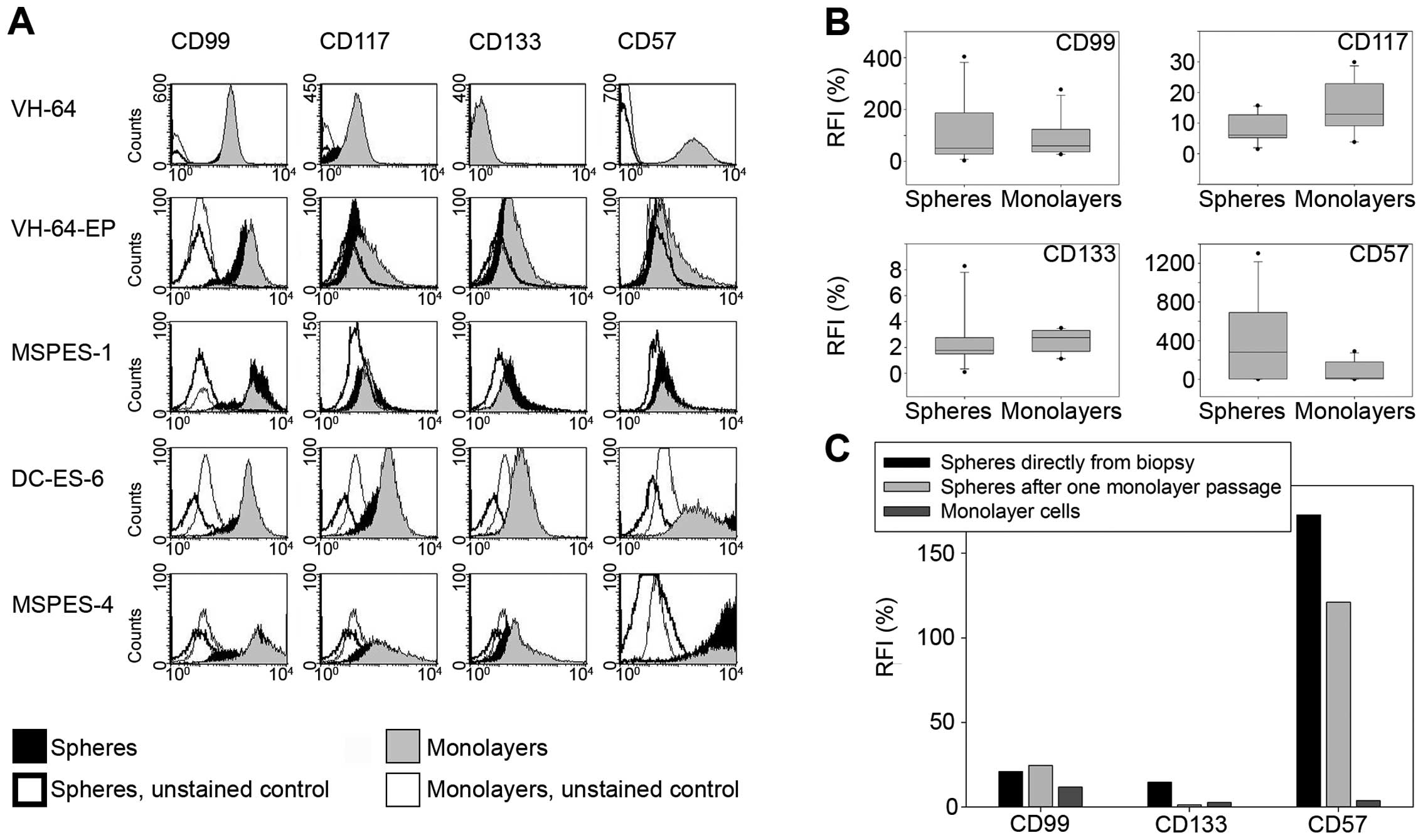
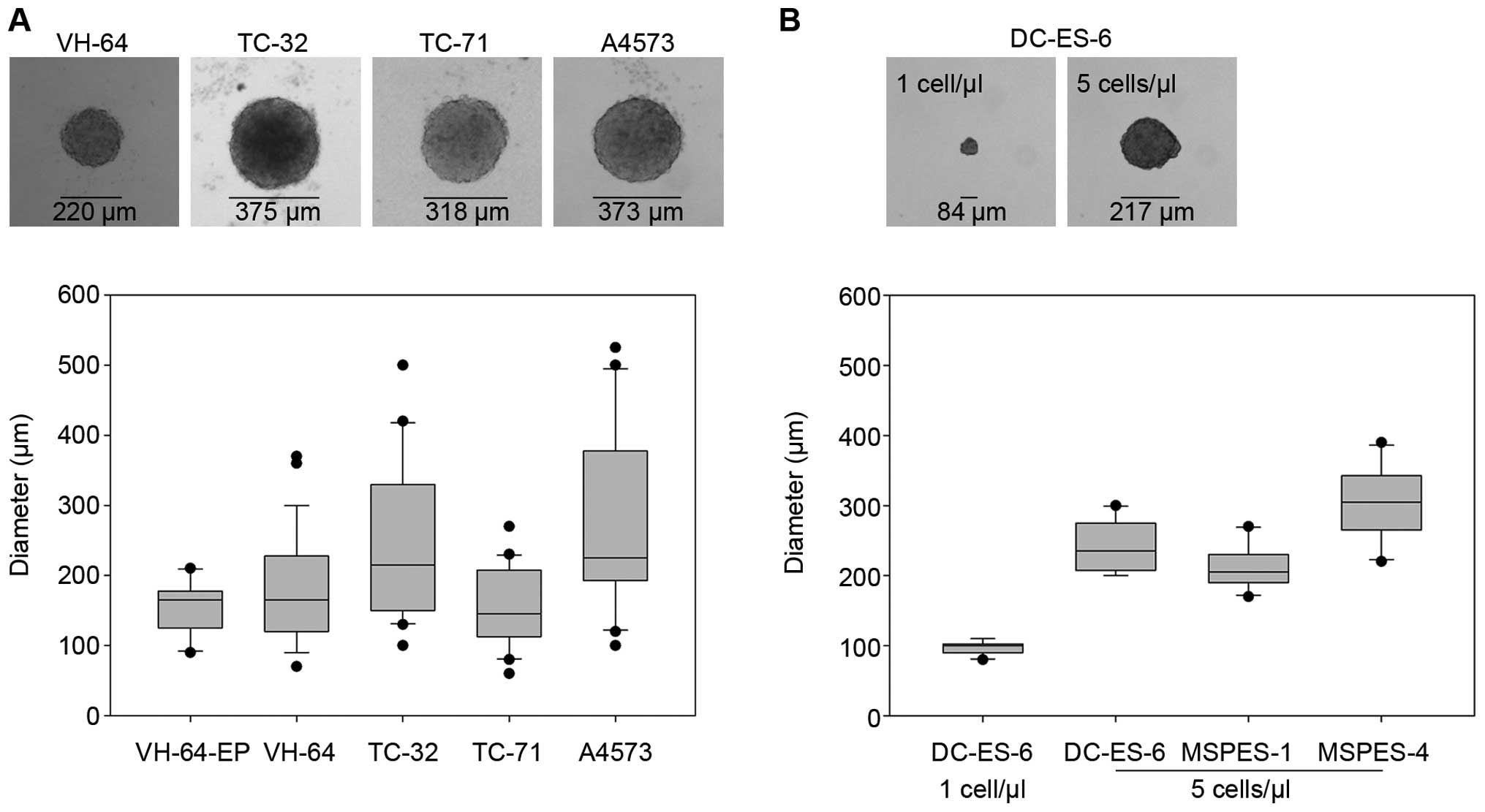
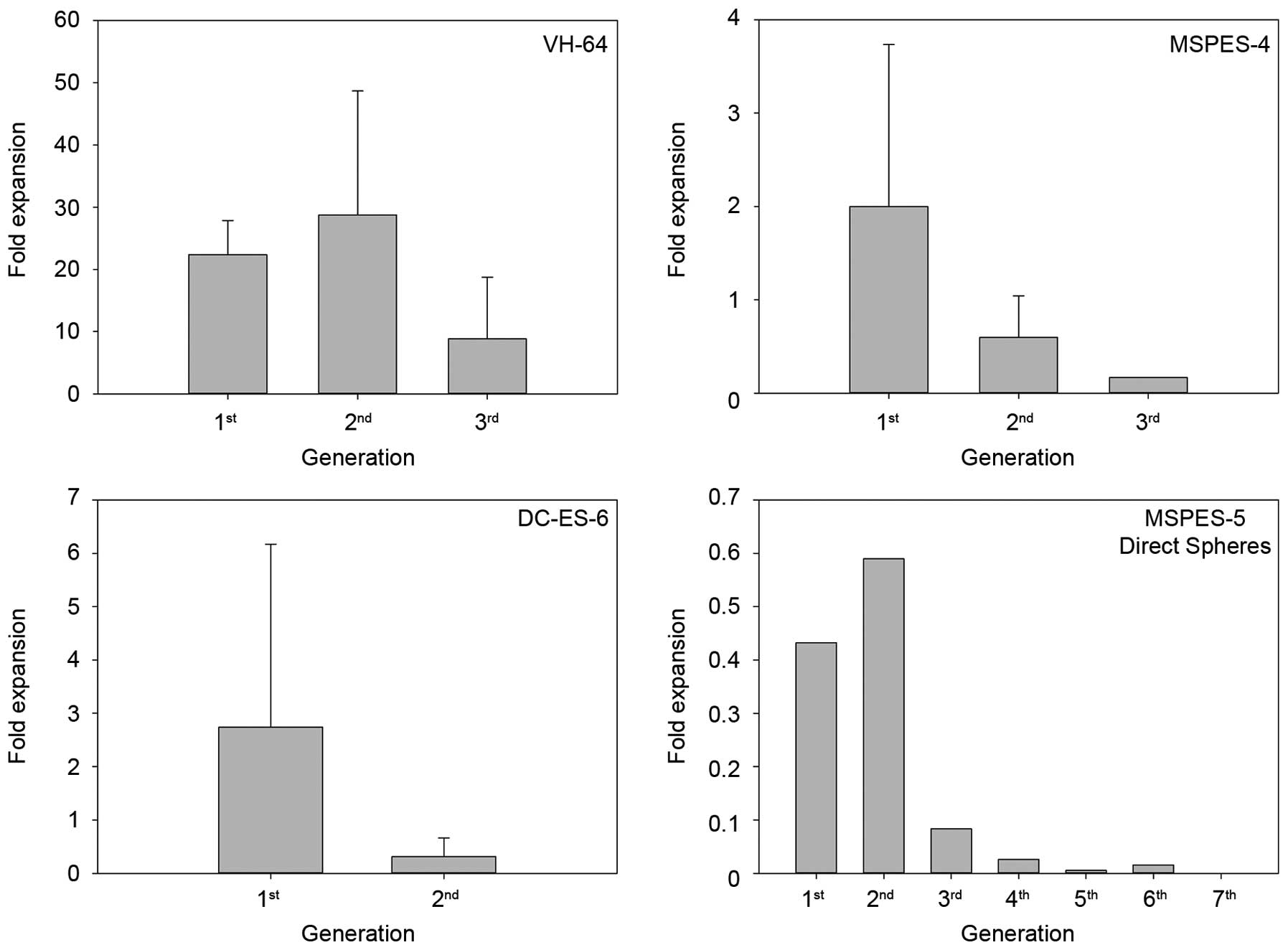
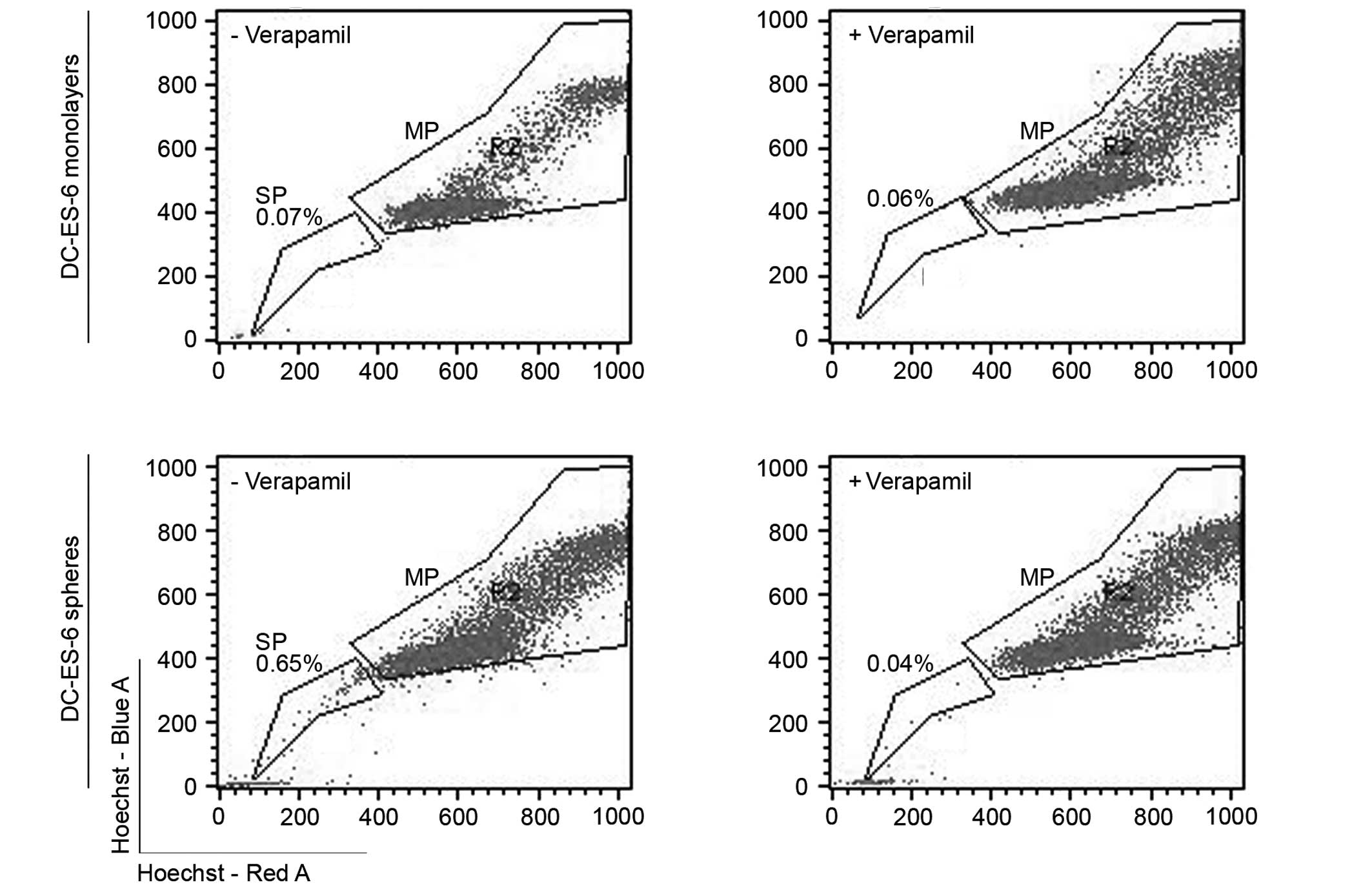
Novel treatment strategies for Ewing sarcoma aim to eliminate residual tumor cells that have maintained the capacity to reinitiate tumor growth after intensive conventional therapy. Preclinical models that more closely mimic in vivo tumor growth than standard monolayer cultures are needed. Sphere formation under anchorage-independent, serum-free conditions has been proposed to enrich for cells with tumor-initiating, stem cell-like properties in various solid cancers. In the present study, we assessed the phenotype and functional stem cell characteristics of Ewing sarcoma spheres. Spheres were generated under serum-free culture conditions from four Ewing sarcoma cell lines and four relapse tumor biopsies. Standard monolayer cultures were established as controls. Median levels of surface expression of the Ewing sarcoma marker CD99 as well as the supposed stem cell marker CD133 and the neural crest marker CD57 were comparable between spheres and monolayers. Ewing sarcoma spheres from individual tumors failed to continuously self-renew by secondary sphere formation. They contained variable proportions of side populations (SPs). Sphere culture did not enhance the in vivo tumorigenicity of Ewing sarcoma cells in a murine xenograft model. We conclude that sphere formation under serum-free conditions is not a reliable tool to enrich for cells with stem cell characteristics in Ewing sarcoma. By mimicking the anchorage-independent, multicellular growth of Ewing sarcoma micrometastases, in vitro sphere growth may still add value as a preclinical tool to evaluate the efficacy of novel therapeutics.
View Figures

Figure 1

Figure 2

Figure 3

Figure 4

View References

1 

Paulussen M, Craft AW, Lewis I, et al: Results of the EICESS-92 study: two randomized trials of Ewing’s sarcoma treatment - cyclophosphamide compared with ifosfamide in standard-risk patients and assessment of benefit of etoposide added to standard treatment in high-risk patients. J Clin Oncol. 26:4385–4393. 2008.PubMed/NCBI

2 

Paulussen M, Ahrens S, Burdach S, et al: Primary metastatic (stage IV) Ewing tumor: survival analysis of 171 patients from the EICESS studies. European Intergroup Cooperative Ewing Sarcoma Studies. Ann Oncol. 9:275–281. 1998. View Article : Google Scholar

3 

Stahl M, Ranft A, Paulussen M, et al: Risk of recurrence and survival after relapse in patients with Ewing sarcoma. Pediatr Blood Cancer. 57:549–553. 2011. View Article : Google Scholar : PubMed/NCBI

4 

Cho D, Shook DR, Shimasaki N, Chang YH, Fujisaki H and Campana D: Cytotoxicity of activated natural killer cells against pediatric solid tumors. Clin Cancer Res. 16:3901–3909. 2010. View Article : Google Scholar : PubMed/NCBI

5 

Mackall CL, Rhee EH, Read EJ, et al: A pilot study of consolidative immunotherapy in patients with high-risk pediatric sarcomas. Clin Cancer Res. 14:4850–4858. 2008. View Article : Google Scholar : PubMed/NCBI

6 

Thiel U, Pirson S, Müller-Spahn C, et al: Specific recognition and inhibition of Ewing tumour growth by antigen-specific allo-restricted cytotoxic T cells. Br J Cancer. 104:948–956. 2011. View Article : Google Scholar : PubMed/NCBI

7 

Erkizan HV, Kong Y, Merchant M, et al: A small molecule blocking oncogenic protein EWS-FLI1 interaction with RNA helicase A inhibits growth of Ewing’s sarcoma. Nat Med. 15:750–756. 2009.PubMed/NCBI

8 

Braun S, Pantel K, Müller P, et al: Cytokeratin-positive cells in the bone marrow and survival of patients with stage I, II, or III breast cancer. N Engl J Med. 342:525–533. 2000. View Article : Google Scholar : PubMed/NCBI

9 

Woelfle U, Breit E, Zafrakas K, et al: Bi-specific immunomagnetic enrichment of micrometastatic tumour cell clusters from bone marrow of cancer patients. J Immunol Methods. 300:136–145. 2005. View Article : Google Scholar : PubMed/NCBI

10 

Freedman VH and Shin SI: Cellular tumorigenicity in nude mice: correlation with cell growth in semi-solid medium. Cell. 3:355–359. 1974. View Article : Google Scholar : PubMed/NCBI

11 

Shin SI, Freedman VH, Risser R and Pollack R: Tumorigenicity of virus-transformed cells in nude mice is correlated specifically with anchorage independent growth in vitro. Proc Natl Acad Sci USA. 72:4435–4439. 1975. View Article : Google Scholar : PubMed/NCBI

12 

Lee J, Kotliarova S, Kotliarov Y, et al: Tumor stem cells derived from glioblastomas cultured in bFGF and EGF more closely mirror the phenotype and genotype of primary tumors than do serum-cultured cell lines. Cancer Cell. 9:391–403. 2006. View Article : Google Scholar : PubMed/NCBI

13 

Lawlor ER, Scheel C, Irving J and Sorensen PH: Anchorage-independent multi-cellular spheroids as an in vitro model of growth signaling in Ewing tumors. Oncogene. 21:307–318. 2002. View Article : Google Scholar : PubMed/NCBI

14 

Wahl J, Bogatyreva L, Boukamp P, et al: Ewing’s sarcoma cells with CD57-associated increase of tumorigenicity and with neural crest-like differentiation capacity. Int J Cancer. 127:1295–1307. 2010.

15 

Ottaviano L, Schaefer KL, Gajewski M, et al: Molecular characterization of commonly used cell lines for bone tumor research: a trans-European EuroBoNet effort. Genes Chromosomes Cancer. 49:40–51. 2010. View Article : Google Scholar : PubMed/NCBI

16 

Landuzzi L, De Giovanni C, Nicoletti G, et al: The metastatic ability of Ewing’s sarcoma cells is modulated by stem cell factor and by its receptor c-kit. Am J Pathol. 157:2123–2131. 2000.

17 

Suvà ML, Riggi N, Stehle JC, et al: Identification of cancer stem cells in Ewing’s sarcoma. Cancer Res. 69:1776–1781. 2009.

18 

Al Hajj M, Wicha MS, Benito-Hernandez A, Morrison SJ and Clarke MF: Prospective identification of tumorigenic breast cancer cells. Proc Natl Acad Sci USA. 100:3983–3988. 2003.

19 

Singh SK, Hawkins C, Clarke ID, et al: Identification of human brain tumour initiating cells. Nature. 432:396–401. 2004. View Article : Google Scholar : PubMed/NCBI

20 

Goodell MA, Rosenzweig M, Kim H, et al: Dye efflux studies suggest that hematopoietic stem cells expressing low or undetectable levels of CD34 antigen exist in multiple species. Nat Med. 3:1337–1345. 1997. View Article : Google Scholar

21 

Coulon A, Flahaut M, Mühlethaler-Mottet A, et al: Functional sphere profiling reveals the complexity of neuroblastoma tumor-initiating cell model. Neoplasia. 13:991–1004. 2011.PubMed/NCBI

22 

Hansford L, Smith K, Datti A, et al: Tumor initiating cells from neuroblastoma, a neural crest-derived tumor. Int J Dev Neurosci. 24:4892006. View Article : Google Scholar

23 

Mahller YY, Williams JP, Baird WH, et al: Neuroblastoma cell lines contain pluripotent tumor initiating cells that are susceptible to a targeted oncolytic virus. PLoS One. 4:e42352009. View Article : Google Scholar : PubMed/NCBI

24 

Rainusso N, Brawley VS, Ghazi A, et al: Immunotherapy targeting HER2 with genetically modified T cells eliminates tumor-initiating cells in osteosarcoma. Cancer Gene Ther. 19:212–217. 2012. View Article : Google Scholar : PubMed/NCBI

25 

Walter D, Satheesha S, Albrecht P, et al: CD133 positive embryonal rhabdomyosarcoma stem-like cell population is enriched in rhabdospheres. PLoS One. 6:e195062011. View Article : Google Scholar : PubMed/NCBI

26 

Zhang S, Balch C, Chan MW, et al: Identification and characterization of ovarian cancer-initiating cells from primary human tumors. Cancer Res. 68:4311–4320. 2008. View Article : Google Scholar : PubMed/NCBI

27 

Brown CE, Starr R, Martinez C, et al: Recognition and killing of brain tumor stem-like initiating cells by CD8+ cytolytic T cells. Cancer Res. 69:8886–8893. 2009. View Article : Google Scholar : PubMed/NCBI

28 

Gibbs CP, Kukekov VG, Reith JD, et al: Stem-like cells in bone sarcomas: implications for tumorigenesis. Neoplasia. 7:967–976. 2005. View Article : Google Scholar : PubMed/NCBI

29 

Zhong Y, Guan K, Guo S, et al: Spheres derived from the human SK-RC-42 renal cell carcinoma cell line are enriched in cancer stem cells. Cancer Lett. 299:150–160. 2010. View Article : Google Scholar : PubMed/NCBI

30 

Charafe-Jauffret E, Ginestier C, Iovino F, et al: Breast cancer cell lines contain functional cancer stem cells with metastatic capacity and a distinct molecular signature. Cancer Res. 69:1302–1313. 2009. View Article : Google Scholar : PubMed/NCBI

31 

O’Brien CA, Pollett A, Gallinger S and Dick JE: A human colon cancer cell capable of initiating tumour growth in immunodeficient mice. Nature. 445:106–110. 2007.PubMed/NCBI

32 

Yin S, Li J, Hu C, et al: CD133 positive hepatocellular carcinoma cells possess high capacity for tumorigenicity. Int J Cancer. 120:1444–1450. 2007. View Article : Google Scholar : PubMed/NCBI

33 

Jiang X, Gwye Y, Russell D, et al: CD133 expression in chemo-resistant Ewing sarcoma cells. BMC Cancer. 10:1162010. View Article : Google Scholar : PubMed/NCBI

34 

Hirschmann-Jax C, Foster AE, Wulf GG, et al: A distinct ‘side population’ of cells with high drug efflux capacity in human tumor cells. Proc Natl Acad Sci USA. 101:14228–14233. 2004.

35 

Murase M, Kano M, Tsukahara T, et al: Side population cells have the characteristics of cancer stem-like cells/cancer-initiating cells in bone sarcomas. Br J Cancer. 101:1425–1432. 2009. View Article : Google Scholar : PubMed/NCBI

36 

Broadley KW, Hunn MK, Farrand KJ, et al: Side population is not necessary or sufficient for a cancer stem cell phenotype in glioblastoma multiforme. Stem Cells. 29:452–461. 2011. View Article : Google Scholar : PubMed/NCBI

37 

Barrett LE, Granot Z, Coker C, et al: Self-renewal does not predict tumor growth potential in mouse models of high-grade glioma. Cancer Cell. 21:11–24. 2012. View Article : Google Scholar : PubMed/NCBI

38 

Feder-Mengus C, Ghosh S, Weber WP, et al: Multiple mechanisms underlie defective recognition of melanoma cells cultured in three-dimensional architectures by antigen-specific cytotoxic T lymphocytes. Br J Cancer. 96:1072–1082. 2007. View Article : Google Scholar

39 

Fischer K, Hoffmann P, Voelkl S, et al: Inhibitory effect of tumor cell-derived lactic acid on human T cells. Blood. 109:3812–3819. 2007. View Article : Google Scholar : PubMed/NCBI

40 

Hirschhaeuser F, Leidig T, Rodday B, Lindemann C and Mueller-Klieser W: Test system for trifunctional antibodies in 3D MCTS culture. J Biomol Screen. 14:980–990. 2009. View Article : Google Scholar : PubMed/NCBI

41 

Jääskeläinen J, Kalliomäki P, Paetau A and Timonen T: Effect of LAK cells against three-dimensional tumor tissue. In vitro study using multi-cellular human glioma spheroids as targets. J Immunol. 142:1036–1045. 1989.PubMed/NCBI

42 

Lakshmikanth T, Burke S, Ali TH, et al: NCRs and DNAM-1 mediate NK cell recognition and lysis of human and mouse melanoma cell lines in vitro and in vivo. J Clin Invest. 119:1251–1263. 2009. View Article : Google Scholar : PubMed/NCBI

43 

Parkhurst MR, Riley JP, Dudley ME and Rosenberg SA: Adoptive transfer of autologous natural killer cells leads to high levels of circulating natural killer cells but does not mediate tumor regression. Clin Cancer Res. 17:6287–6297. 2011. View Article : Google Scholar : PubMed/NCBI

44 

Geller MA, Cooley S, Judson PL, et al: A phase II study of allogeneic natural killer cell therapy to treat patients with recurrent ovarian and breast cancer. Cytotherapy. 13:98–107. 2011. View Article : Google Scholar : PubMed/NCBI

Related Articles

  • Abstract
  • View
  • Download
  • Twitter
Copy and paste a formatted citation
Spandidos Publications style
Leuchte K, Altvater B, Hoffschlag S, Potratz J, Meltzer J, Clemens D, Luecke A, Hardes J, Dirksen U, Juergens H, Juergens H, et al: Anchorage-independent growth of Ewing sarcoma cells under serum-free conditions is not associated with stem-cell like phenotype and function. Oncol Rep 32: 845-852, 2014.
APA
Leuchte, K., Altvater, B., Hoffschlag, S., Potratz, J., Meltzer, J., Clemens, D. ... Rossig, C. (2014). Anchorage-independent growth of Ewing sarcoma cells under serum-free conditions is not associated with stem-cell like phenotype and function. Oncology Reports, 32, 845-852. https://doi.org/10.3892/or.2014.3269
MLA
Leuchte, K., Altvater, B., Hoffschlag, S., Potratz, J., Meltzer, J., Clemens, D., Luecke, A., Hardes, J., Dirksen, U., Juergens, H., Kailayangiri, S., Rossig, C."Anchorage-independent growth of Ewing sarcoma cells under serum-free conditions is not associated with stem-cell like phenotype and function". Oncology Reports 32.2 (2014): 845-852.
Chicago
Leuchte, K., Altvater, B., Hoffschlag, S., Potratz, J., Meltzer, J., Clemens, D., Luecke, A., Hardes, J., Dirksen, U., Juergens, H., Kailayangiri, S., Rossig, C."Anchorage-independent growth of Ewing sarcoma cells under serum-free conditions is not associated with stem-cell like phenotype and function". Oncology Reports 32, no. 2 (2014): 845-852. https://doi.org/10.3892/or.2014.3269
Copy and paste a formatted citation
x
Spandidos Publications style
Leuchte K, Altvater B, Hoffschlag S, Potratz J, Meltzer J, Clemens D, Luecke A, Hardes J, Dirksen U, Juergens H, Juergens H, et al: Anchorage-independent growth of Ewing sarcoma cells under serum-free conditions is not associated with stem-cell like phenotype and function. Oncol Rep 32: 845-852, 2014.
APA
Leuchte, K., Altvater, B., Hoffschlag, S., Potratz, J., Meltzer, J., Clemens, D. ... Rossig, C. (2014). Anchorage-independent growth of Ewing sarcoma cells under serum-free conditions is not associated with stem-cell like phenotype and function. Oncology Reports, 32, 845-852. https://doi.org/10.3892/or.2014.3269
MLA
Leuchte, K., Altvater, B., Hoffschlag, S., Potratz, J., Meltzer, J., Clemens, D., Luecke, A., Hardes, J., Dirksen, U., Juergens, H., Kailayangiri, S., Rossig, C."Anchorage-independent growth of Ewing sarcoma cells under serum-free conditions is not associated with stem-cell like phenotype and function". Oncology Reports 32.2 (2014): 845-852.
Chicago
Leuchte, K., Altvater, B., Hoffschlag, S., Potratz, J., Meltzer, J., Clemens, D., Luecke, A., Hardes, J., Dirksen, U., Juergens, H., Kailayangiri, S., Rossig, C."Anchorage-independent growth of Ewing sarcoma cells under serum-free conditions is not associated with stem-cell like phenotype and function". Oncology Reports 32, no. 2 (2014): 845-852. https://doi.org/10.3892/or.2014.3269
Follow us
  • Twitter
  • LinkedIn
  • Facebook
About
  • Spandidos Publications
  • Careers
  • Cookie Policy
  • Privacy Policy
How can we help?
  • Help
  • Live Chat
  • Contact
  • Email to our Support Team