Spandidos Publications Logo
  • About
    • About Spandidos
    • Aims and Scopes
    • Abstracting and Indexing
    • Editorial Policies
    • Reprints and Permissions
    • Job Opportunities
    • Terms and Conditions
    • Contact
  • Journals
    • All Journals
    • Oncology Letters
      • Oncology Letters
      • Information for Authors
      • Editorial Policies
      • Editorial Board
      • Aims and Scope
      • Abstracting and Indexing
      • Bibliographic Information
      • Archive
    • International Journal of Oncology
      • International Journal of Oncology
      • Information for Authors
      • Editorial Policies
      • Editorial Board
      • Aims and Scope
      • Abstracting and Indexing
      • Bibliographic Information
      • Archive
    • Molecular and Clinical Oncology
      • Molecular and Clinical Oncology
      • Information for Authors
      • Editorial Policies
      • Editorial Board
      • Aims and Scope
      • Abstracting and Indexing
      • Bibliographic Information
      • Archive
    • Experimental and Therapeutic Medicine
      • Experimental and Therapeutic Medicine
      • Information for Authors
      • Editorial Policies
      • Editorial Board
      • Aims and Scope
      • Abstracting and Indexing
      • Bibliographic Information
      • Archive
    • International Journal of Molecular Medicine
      • International Journal of Molecular Medicine
      • Information for Authors
      • Editorial Policies
      • Editorial Board
      • Aims and Scope
      • Abstracting and Indexing
      • Bibliographic Information
      • Archive
    • Biomedical Reports
      • Biomedical Reports
      • Information for Authors
      • Editorial Policies
      • Editorial Board
      • Aims and Scope
      • Abstracting and Indexing
      • Bibliographic Information
      • Archive
    • Oncology Reports
      • Oncology Reports
      • Information for Authors
      • Editorial Policies
      • Editorial Board
      • Aims and Scope
      • Abstracting and Indexing
      • Bibliographic Information
      • Archive
    • Molecular Medicine Reports
      • Molecular Medicine Reports
      • Information for Authors
      • Editorial Policies
      • Editorial Board
      • Aims and Scope
      • Abstracting and Indexing
      • Bibliographic Information
      • Archive
    • World Academy of Sciences Journal
      • World Academy of Sciences Journal
      • Information for Authors
      • Editorial Policies
      • Editorial Board
      • Aims and Scope
      • Abstracting and Indexing
      • Bibliographic Information
      • Archive
    • International Journal of Functional Nutrition
      • International Journal of Functional Nutrition
      • Information for Authors
      • Editorial Policies
      • Editorial Board
      • Aims and Scope
      • Abstracting and Indexing
      • Bibliographic Information
      • Archive
    • International Journal of Epigenetics
      • International Journal of Epigenetics
      • Information for Authors
      • Editorial Policies
      • Editorial Board
      • Aims and Scope
      • Abstracting and Indexing
      • Bibliographic Information
      • Archive
    • Medicine International
      • Medicine International
      • Information for Authors
      • Editorial Policies
      • Editorial Board
      • Aims and Scope
      • Abstracting and Indexing
      • Bibliographic Information
      • Archive
  • Articles
  • Information
    • Information for Authors
    • Information for Reviewers
    • Information for Librarians
    • Information for Advertisers
    • Conferences
  • Language Editing
Spandidos Publications Logo
  • About
    • About Spandidos
    • Aims and Scopes
    • Abstracting and Indexing
    • Editorial Policies
    • Reprints and Permissions
    • Job Opportunities
    • Terms and Conditions
    • Contact
  • Journals
    • All Journals
    • Biomedical Reports
      • Information for Authors
      • Editorial Policies
      • Editorial Board
      • Aims and Scope
      • Abstracting and Indexing
      • Bibliographic Information
      • Archive
    • Experimental and Therapeutic Medicine
      • Information for Authors
      • Editorial Policies
      • Editorial Board
      • Aims and Scope
      • Abstracting and Indexing
      • Bibliographic Information
      • Archive
    • International Journal of Epigenetics
      • Information for Authors
      • Editorial Policies
      • Editorial Board
      • Aims and Scope
      • Abstracting and Indexing
      • Bibliographic Information
      • Archive
    • International Journal of Functional Nutrition
      • Information for Authors
      • Editorial Policies
      • Editorial Board
      • Aims and Scope
      • Abstracting and Indexing
      • Bibliographic Information
      • Archive
    • International Journal of Molecular Medicine
      • Information for Authors
      • Editorial Policies
      • Editorial Board
      • Aims and Scope
      • Abstracting and Indexing
      • Bibliographic Information
      • Archive
    • International Journal of Oncology
      • Information for Authors
      • Editorial Policies
      • Editorial Board
      • Aims and Scope
      • Abstracting and Indexing
      • Bibliographic Information
      • Archive
    • Medicine International
      • Information for Authors
      • Editorial Policies
      • Editorial Board
      • Aims and Scope
      • Abstracting and Indexing
      • Bibliographic Information
      • Archive
    • Molecular and Clinical Oncology
      • Information for Authors
      • Editorial Policies
      • Editorial Board
      • Aims and Scope
      • Abstracting and Indexing
      • Bibliographic Information
      • Archive
    • Molecular Medicine Reports
      • Information for Authors
      • Editorial Policies
      • Editorial Board
      • Aims and Scope
      • Abstracting and Indexing
      • Bibliographic Information
      • Archive
    • Oncology Letters
      • Information for Authors
      • Editorial Policies
      • Editorial Board
      • Aims and Scope
      • Abstracting and Indexing
      • Bibliographic Information
      • Archive
    • Oncology Reports
      • Information for Authors
      • Editorial Policies
      • Editorial Board
      • Aims and Scope
      • Abstracting and Indexing
      • Bibliographic Information
      • Archive
    • World Academy of Sciences Journal
      • Information for Authors
      • Editorial Policies
      • Editorial Board
      • Aims and Scope
      • Abstracting and Indexing
      • Bibliographic Information
      • Archive
  • Articles
  • Information
    • For Authors
    • For Reviewers
    • For Librarians
    • For Advertisers
    • Conferences
  • Language Editing
Login Register Submit
  • This site uses cookies
  • You can change your cookie settings at any time by following the instructions in our Cookie Policy. To find out more, you may read our Privacy Policy.

    I agree
Search articles by DOI, keyword, author or affiliation
Search
Advanced Search
presentation
Oncology Reports
Join Editorial Board Propose a Special Issue
Print ISSN: 1021-335X Online ISSN: 1791-2431
Journal Cover
September-2014 Volume 32 Issue 3

Full Size Image

Sign up for eToc alerts
Recommend to Library

Journals

International Journal of Molecular Medicine

International Journal of Molecular Medicine

International Journal of Molecular Medicine is an international journal devoted to molecular mechanisms of human disease.

International Journal of Oncology

International Journal of Oncology

International Journal of Oncology is an international journal devoted to oncology research and cancer treatment.

Molecular Medicine Reports

Molecular Medicine Reports

Covers molecular medicine topics such as pharmacology, pathology, genetics, neuroscience, infectious diseases, molecular cardiology, and molecular surgery.

Oncology Reports

Oncology Reports

Oncology Reports is an international journal devoted to fundamental and applied research in Oncology.

Experimental and Therapeutic Medicine

Experimental and Therapeutic Medicine

Experimental and Therapeutic Medicine is an international journal devoted to laboratory and clinical medicine.

Oncology Letters

Oncology Letters

Oncology Letters is an international journal devoted to Experimental and Clinical Oncology.

Biomedical Reports

Biomedical Reports

Explores a wide range of biological and medical fields, including pharmacology, genetics, microbiology, neuroscience, and molecular cardiology.

Molecular and Clinical Oncology

Molecular and Clinical Oncology

International journal addressing all aspects of oncology research, from tumorigenesis and oncogenes to chemotherapy and metastasis.

World Academy of Sciences Journal

World Academy of Sciences Journal

Multidisciplinary open-access journal spanning biochemistry, genetics, neuroscience, environmental health, and synthetic biology.

International Journal of Functional Nutrition

International Journal of Functional Nutrition

Open-access journal combining biochemistry, pharmacology, immunology, and genetics to advance health through functional nutrition.

International Journal of Epigenetics

International Journal of Epigenetics

Publishes open-access research on using epigenetics to advance understanding and treatment of human disease.

Medicine International

Medicine International

An International Open Access Journal Devoted to General Medicine.

Journal Cover
September-2014 Volume 32 Issue 3

Full Size Image

Sign up for eToc alerts
Recommend to Library

  • Article
  • Citations
    • Cite This Article
    • Download Citation
    • Create Citation Alert
    • Remove Citation Alert
    • Cited By
  • Similar Articles
    • Related Articles (in Spandidos Publications)
    • Similar Articles (Google Scholar)
    • Similar Articles (PubMed)
  • Download PDF
  • Download XML
  • View XML
Article

MicroRNA-1290 promotes asiatic acid‑induced apoptosis by decreasing BCL2 protein level in A549 non‑small cell lung carcinoma cells

  • Authors:
    • Ki Bbeum Kim
    • Karam Kim
    • Seunghee Bae
    • Yeonghmin Choi
    • Hwa Jun Cha
    • Soo Yeon Kim
    • Jae Ho Lee
    • So Hyeon Jeon
    • Ho Jung Jung
    • Kyu Joong Ahn
    • In-Sook An
    • Sungkwan An
  • View Affiliations / Copyright

    Affiliations: Molecular-Targeted Drug Research Center and Korea Institute for Skin and Clinical Sciences, Konkuk University, Seoul 143‑701, Republic of Korea, Laboratory of Molecular Oncology, Cheil General Hospital and Women's Healthcare Center, Kwandong University, College of Medicine, Seoul 100‑380, Republic of Korea, Department of Beauty Design, Dongwon University, Gwangju, Gyeonggi‑do, 464-711, Republic of Korea, Department of Dermatology, Konkuk University School of Medicine, Seoul 143-701, Republic of Korea
  • Pages: 1029-1036
    |
    Published online on: July 10, 2014
       https://doi.org/10.3892/or.2014.3319
  • Expand metrics +
Metrics: Total Views: 0 (Spandidos Publications: | PMC Statistics: )
Metrics: Total PDF Downloads: 0 (Spandidos Publications: | PMC Statistics: )
Cited By (CrossRef): 0 citations Loading Articles...

This article is mentioned in:


Abstract

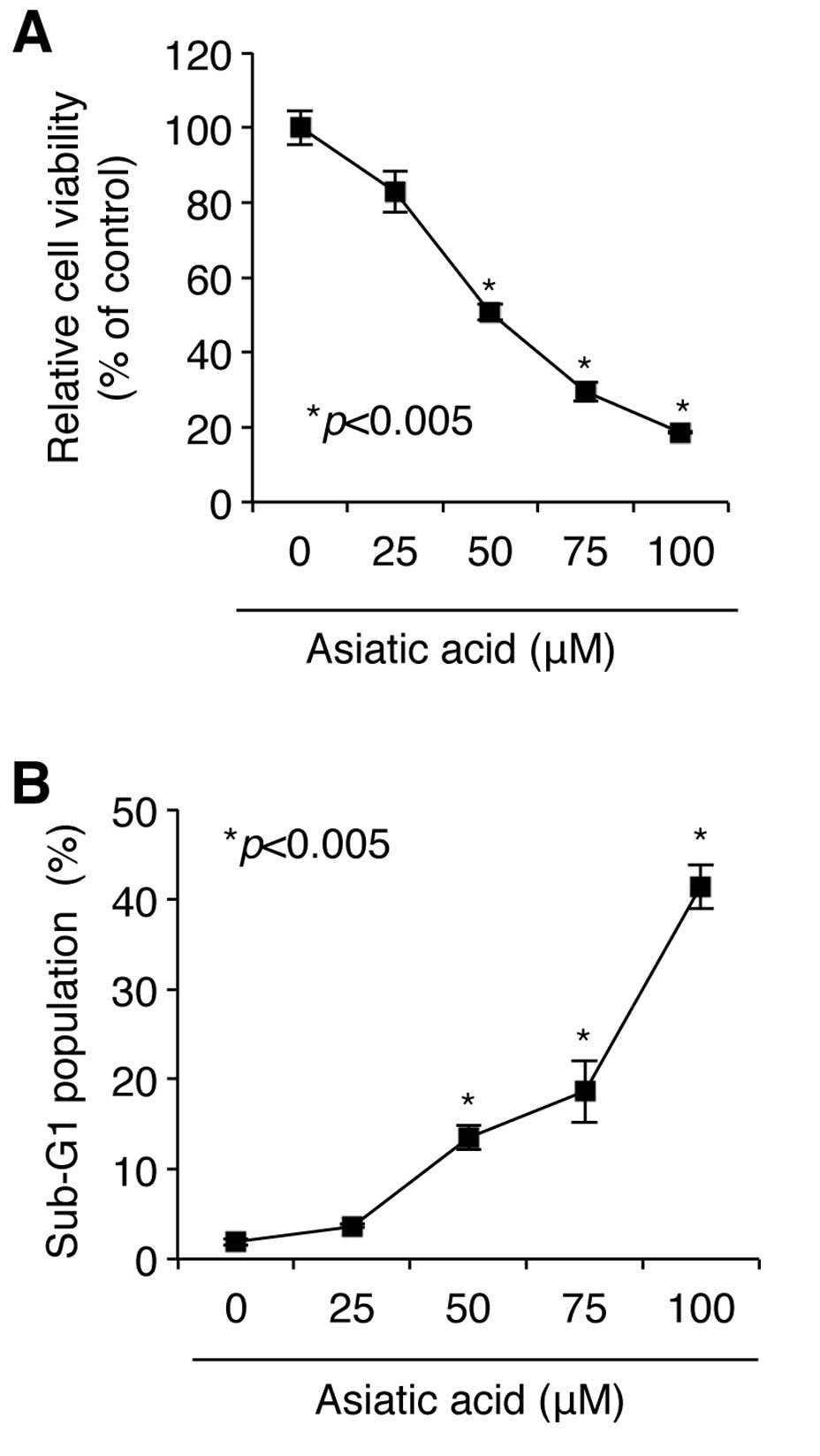
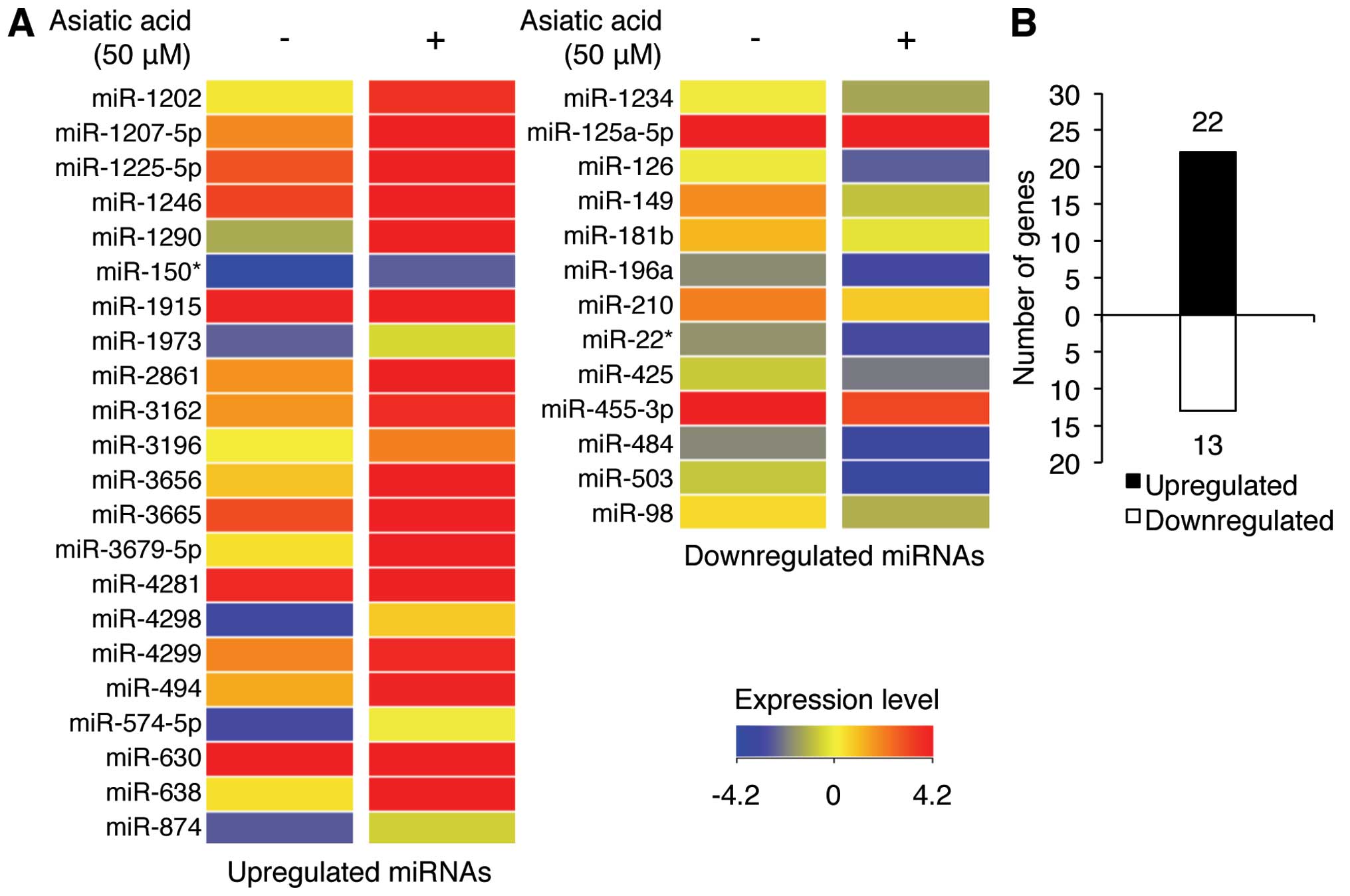
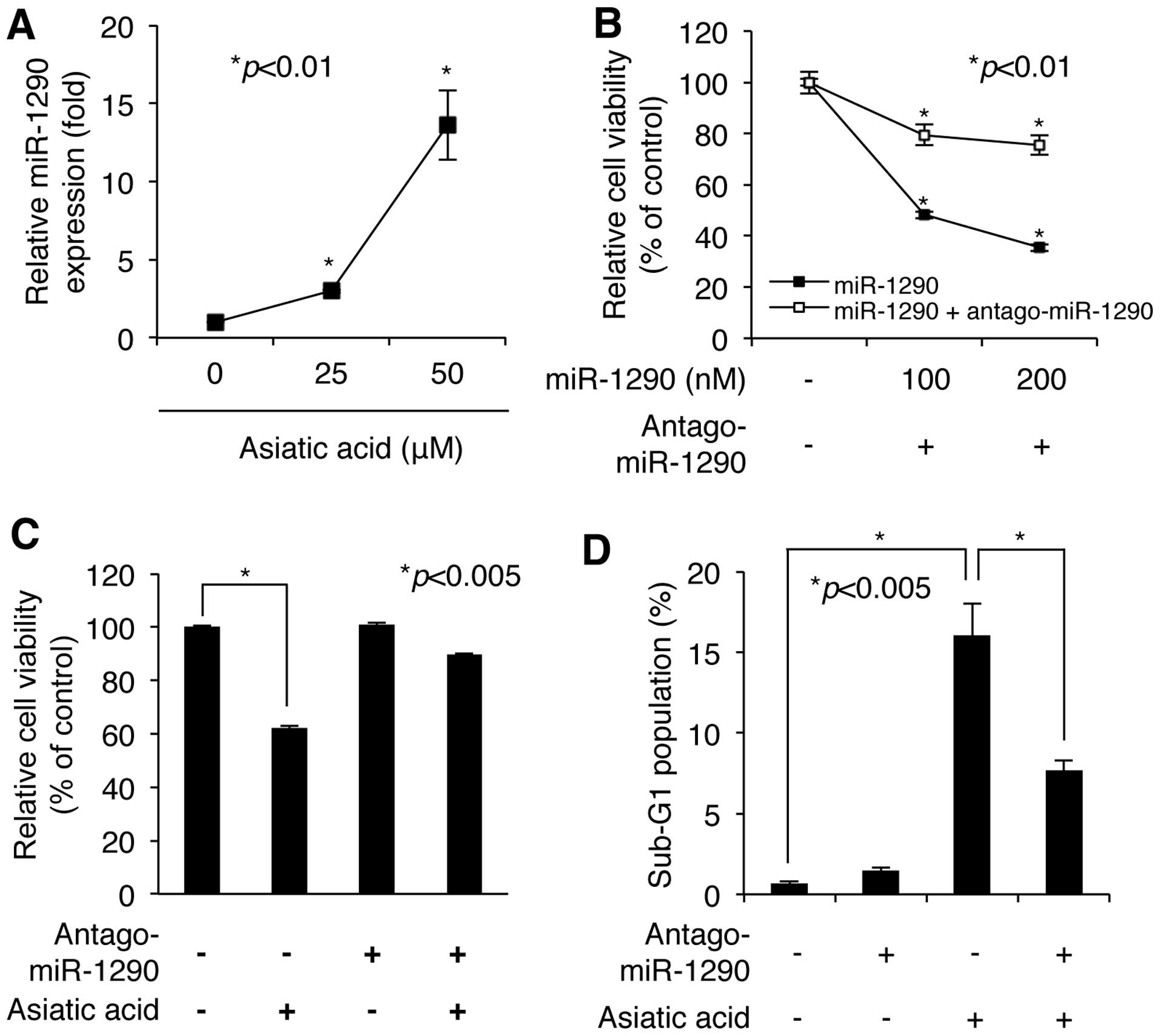
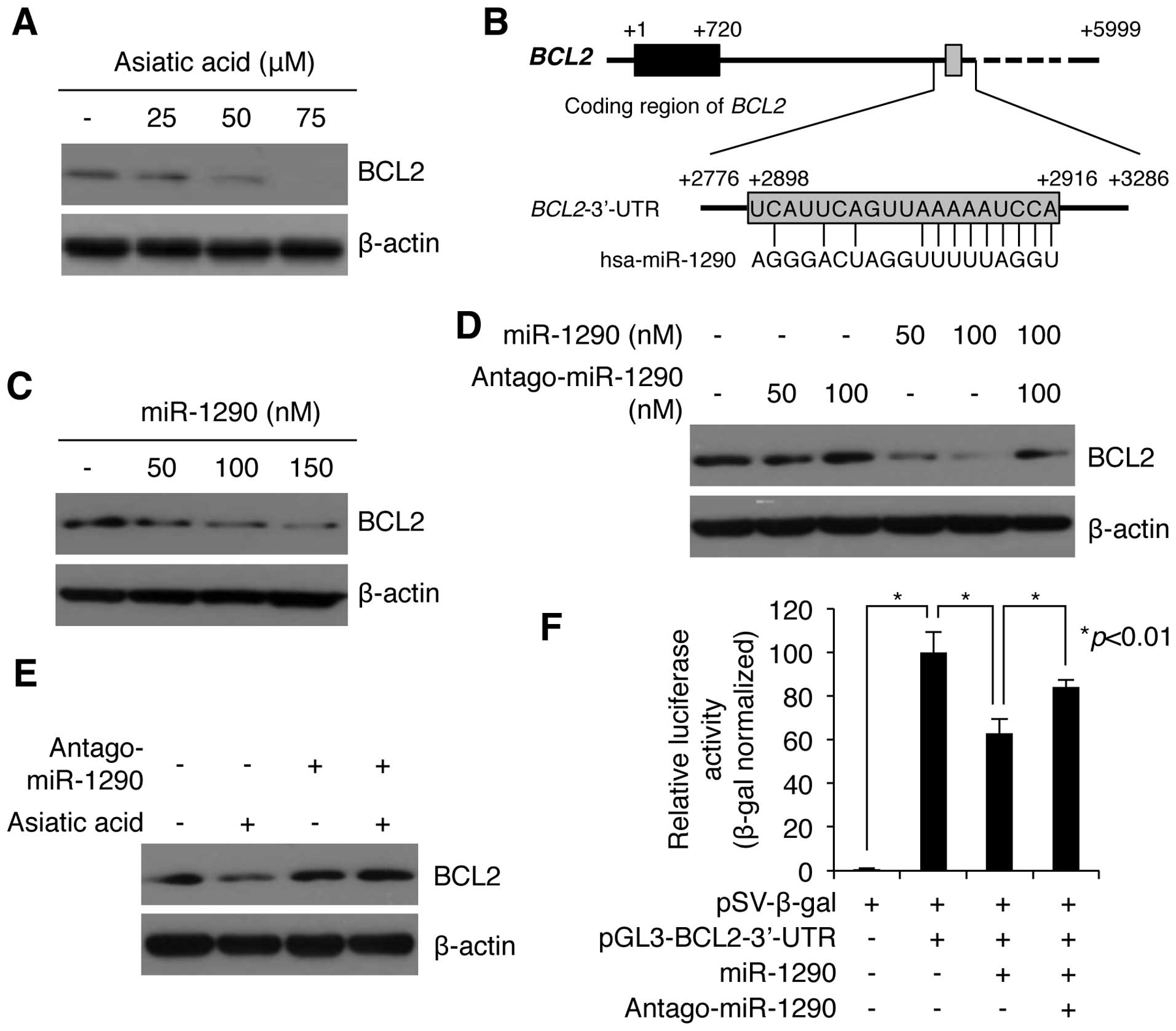
Asiatic acid, a triterpenoid derived from Centella asiatica, is a putative anticancer agent in several types of cancer cells. Investigations of its biological role in negative regulation of cell growth have focused on the extent of induction of apoptosis in a cell-type-specific manner. In this study, we identified an important regulator of asiatic acid-induced cell death, microRNA (miR)-1290, which sensitizes cells to asiatic acid-induced cytotoxicity and negatively regulates BCL2 expression. Asiatic acid significantly upregulated miR-1290, and asiatic acid-induced cell death was shown to be dependent on miR-1290 activity. Molecular assays demonstrated that BCL2 mRNA is a direct target of miR-1290-mediated RNA interference. The results of functional studies suggest that miR-1290 suppresses cell viability and cell cycle progression. These data provide insight into miR-1290-mediated cellular mechanisms in asiatic acid-treated A549 non-small cell lung carcinoma cells.
View Figures

Figure 1

Figure 2

Figure 3

Figure 4

View References

1 

Howes MJ and Houghton PJ: Plants used in Chinese and Indian traditional medicine for improvement of memory and cognitive function. Pharmacol Biochem Behav. 75:513–527. 2003. View Article : Google Scholar : PubMed/NCBI

2 

Hausen BM: Centella asiatica (Indian pennywort), an effective therapeutic but a weak sensitizer. Contact Dermatitis. 29:175–179. 1993. View Article : Google Scholar

3 

Rush WR, Murray GR and Graham DJ: The comparative steadystate bioavailability of the active ingredients of Madecassol. Eur J Drug Metab Pharmacokinet. 18:323–326. 1993. View Article : Google Scholar : PubMed/NCBI

4 

Xiong Y, Ding H, Xu M and Gao J: Protective effects of asiatic acid on rotenone- or H2O2-induced injury in SH-SY5Y cells. Neurochem Res. 34:746–754. 2009. View Article : Google Scholar : PubMed/NCBI

5 

Ma K, Zhang Y, Zhu D and Lou Y: Protective effects of asiatic acid against D-galactosamine/lipopolysaccharide-induced hepatotoxicity in hepatocytes and kupffer cells co-cultured system via redox-regulated leukotriene C4 synthase expression pathway. Eur J Pharmacol. 603:98–107. 2009. View Article : Google Scholar

6 

Lee YS, Jin DQ, Kwon EJ, et al: Asiatic acid, a triterpene, induces apoptosis through intracellular Ca2+ release and enhanced expression of p53 in HepG2 human hepatoma cells. Cancer Lett. 186:83–91. 2002. View Article : Google Scholar : PubMed/NCBI

7 

Bunpo P, Kataoka K, Arimochi H, et al: Inhibitory effects of asiatic acid and CPT-11 on growth of HT-29 cells. J Med Invest. 52:65–73. 2005. View Article : Google Scholar : PubMed/NCBI

8 

Hsu YL, Kuo PL, Lin LT and Lin CC: Asiatic acid, a triterpene, induces apoptosis and cell cycle arrest through activation of extracellular signal-regulated kinase and p38 mitogen-activated protein kinase pathways in human breast cancer cells. J Pharmacol Exp Ther. 313:333–344. 2005. View Article : Google Scholar

9 

Sastry PS and Rao KS: Apoptosis and the nervous system. J Neurochem. 74:1–20. 2000. View Article : Google Scholar

10 

Nakano R: Apoptosis: gene-directed cell death. An overview Horm Res. 48:2–4. 1997. View Article : Google Scholar

11 

Moldoveanu T, Follis AV, Kriwacki RW and Green DR: Many players in BCL-2 family affairs. Trends Biochem Sci. 39:101–111. 2014. View Article : Google Scholar : PubMed/NCBI

12 

Cheng AM, Byrom MW, Shelton J and Ford LP: Antisense inhibition of human miRNAs and indications for an involvement of miRNA in cell growth and apoptosis. Nucleic Acids Res. 33:1290–1297. 2005. View Article : Google Scholar : PubMed/NCBI

13 

He L, He X, Lim LP, et al: A microRNA component of the p53 tumour suppressor network. Nature. 447:1130–1134. 2007. View Article : Google Scholar : PubMed/NCBI

14 

Bommer GT, Gerin I, Feng Y, et al: p53-mediated activation of miRNA34 candidate tumor-suppressor genes. Curr Biol. 17:1298–1307. 2007. View Article : Google Scholar : PubMed/NCBI

15 

Christoffersen NR, Shalgi R, Frankel LB, et al: p53-independent upregulation of miR-34a during oncogene-induced senescence represses MYC. Cell Death Differ. 17:236–245. 2010. View Article : Google Scholar : PubMed/NCBI

16 

Liu C, Yu J, Yu S, et al: MicroRNA-21 acts as an oncomir through multiple targets in human hepatocellular carcinoma. J Hepatol. 53:98–107. 2010. View Article : Google Scholar : PubMed/NCBI

17 

Ma X, Kumar M, Choudhury SN, et al: Loss of the miR-21 allele elevates the expression of its target genes and reduces tumorigenesis. Proc Natl Acad Sci USA. 108:10144–10149. 2011. View Article : Google Scholar : PubMed/NCBI

18 

Papagiannakopoulos T, Shapiro A and Kosik KS: MicroRNA-21 targets a network of key tumor-suppressive pathways in glioblastoma cells. Cancer Res. 68:8164–8172. 2008. View Article : Google Scholar : PubMed/NCBI

19 

Yao Q, Cao S, Li C, Mengesha A, Kong B and Wei M: Micro-RNA-21 regulates TGF-β-induced myofibroblast differentiation by targeting PDCD4 in tumor-stroma interaction. Int J Cancer. 128:1783–1792. 2011.PubMed/NCBI

20 

Medina PP, Nolde M and Slack FJ: OncomiR addiction in an in vivo model of microRNA-21-induced pre-B-cell lymphoma. Nature. 467:86–90. 2010. View Article : Google Scholar : PubMed/NCBI

21 

An IS, An S, Kang SM, et al: Titrated extract of Centella asiatica provides a UVB protective effect by altering microRNA expression profiles in human dermal fibroblasts. Int J Mol Med. 30:1194–1202. 2012.

22 

An IS, An S, Choe TB, et al: Centella asiatica protects against UVB-induced HaCaT keratinocyte damage through microRNA expression changes. Int J Mol Med. 30:1349–1356. 2012.

23 

Bail S, Swerdel M, Liu H, et al: Differential regulation of microRNA stability. RNA. 16:1032–1039. 2010. View Article : Google Scholar : PubMed/NCBI

24 

Wu J, Ji X, Zhu L, et al: Up-regulation of microRNA-1290 impairs cytokinesis and affects the reprogramming of colon cancer cells. Cancer Lett. 329:155–163. 2013. View Article : Google Scholar : PubMed/NCBI

25 

Li A, Yu J, Kim H, et al: MicroRNA array analysis finds elevated serum miR-1290 accurately distinguishes patients with low-stage pancreatic cancer from healthy and disease controls. Clin Cancer Res. 19:3600–3610. 2013. View Article : Google Scholar

26 

White NM, Bao TT, Grigull J, et al: miRNA profiling for clear cell renal cell carcinoma: biomarker discovery and identification of potential controls and consequences of miRNA dysregulation. J Urol. 186:1077–1083. 2011. View Article : Google Scholar : PubMed/NCBI

27 

Yao T, Rao Q, Liu L, et al: Exploration of tumor-suppressive microRNAs silenced by DNA hypermethylation in cervical cancer. Virol J. 10:1752013. View Article : Google Scholar : PubMed/NCBI

28 

An IS, An S, Kwon KJ, Kim YJ and Bae S: Ginsenoside Rh2 mediates changes in the microRNA expression profile of human non-small cell lung cancer A549 cells. Oncol Rep. 29:523–528. 2013.PubMed/NCBI

29 

Endo Y, Toyama T, Takahashi S, et al: miR-1290 and its potential targets are associated with characteristics of estrogen receptor α-positive breast cancer. Endocr Relat Cancer. 20:91–102. 2013.

30 

Yelamanchili SV, Morsey B, Harrison EB, et al: The evolutionary young miR-1290 favors mitotic exit and differentiation of human neural progenitors through altering the cell cycle proteins. Cell Death Dis. 5:e9822014. View Article : Google Scholar : PubMed/NCBI

31 

Kluck RM, Bossy-Wetzel E, Green DR and Newmeyer DD: The release of cytochrome c from mitochondria: a primary site for Bcl-2 regulation of apoptosis. Science. 275:1132–1136. 1997.PubMed/NCBI

32 

Yang J, Liu X, Bhalla K, et al: Prevention of apoptosis by Bcl-2: release of cytochrome c from mitochondria blocked. Science. 275:1129–1132. 1997. View Article : Google Scholar : PubMed/NCBI

33 

Gazitt Y, Rothenberg ML, Hilsenbeck SG, Fey V, Thomas C and Montegomrey W: Bcl-2 overexpression is associated with resistance to paclitaxel, but not gemcitabine, in multiple myeloma cells. Int J Oncol. 13:839–848. 1998.PubMed/NCBI

34 

Cho HJ, Kim JK, Kim KD, et al: Upregulation of Bcl-2 is associated with cisplatin-resistance via inhibition of Bax translocation in human bladder cancer cells. Cancer Lett. 237:56–66. 2006. View Article : Google Scholar : PubMed/NCBI

35 

Cory S and Adams JM: The Bcl2 family: regulators of the cellular life-or-death switch. Nat Rev Cancer. 2:647–656. 2002. View Article : Google Scholar : PubMed/NCBI

36 

Choi YM, An S, Lee EM, et al: CYP1A1 is a target of miR-892a-mediated post-transcriptional repression. Int J Oncol. 41:331–336. 2012.PubMed/NCBI

Related Articles

  • Abstract
  • View
  • Download
  • Twitter
Copy and paste a formatted citation
Spandidos Publications style
Kim KB, Kim K, Bae S, Choi Y, Cha HJ, Kim SY, Lee JH, Jeon SH, Jung HJ, Ahn KJ, Ahn KJ, et al: MicroRNA-1290 promotes asiatic acid‑induced apoptosis by decreasing BCL2 protein level in A549 non‑small cell lung carcinoma cells. Oncol Rep 32: 1029-1036, 2014.
APA
Kim, K.B., Kim, K., Bae, S., Choi, Y., Cha, H.J., Kim, S.Y. ... An, S. (2014). MicroRNA-1290 promotes asiatic acid‑induced apoptosis by decreasing BCL2 protein level in A549 non‑small cell lung carcinoma cells. Oncology Reports, 32, 1029-1036. https://doi.org/10.3892/or.2014.3319
MLA
Kim, K. B., Kim, K., Bae, S., Choi, Y., Cha, H. J., Kim, S. Y., Lee, J. H., Jeon, S. H., Jung, H. J., Ahn, K. J., An, I., An, S."MicroRNA-1290 promotes asiatic acid‑induced apoptosis by decreasing BCL2 protein level in A549 non‑small cell lung carcinoma cells". Oncology Reports 32.3 (2014): 1029-1036.
Chicago
Kim, K. B., Kim, K., Bae, S., Choi, Y., Cha, H. J., Kim, S. Y., Lee, J. H., Jeon, S. H., Jung, H. J., Ahn, K. J., An, I., An, S."MicroRNA-1290 promotes asiatic acid‑induced apoptosis by decreasing BCL2 protein level in A549 non‑small cell lung carcinoma cells". Oncology Reports 32, no. 3 (2014): 1029-1036. https://doi.org/10.3892/or.2014.3319
Copy and paste a formatted citation
x
Spandidos Publications style
Kim KB, Kim K, Bae S, Choi Y, Cha HJ, Kim SY, Lee JH, Jeon SH, Jung HJ, Ahn KJ, Ahn KJ, et al: MicroRNA-1290 promotes asiatic acid‑induced apoptosis by decreasing BCL2 protein level in A549 non‑small cell lung carcinoma cells. Oncol Rep 32: 1029-1036, 2014.
APA
Kim, K.B., Kim, K., Bae, S., Choi, Y., Cha, H.J., Kim, S.Y. ... An, S. (2014). MicroRNA-1290 promotes asiatic acid‑induced apoptosis by decreasing BCL2 protein level in A549 non‑small cell lung carcinoma cells. Oncology Reports, 32, 1029-1036. https://doi.org/10.3892/or.2014.3319
MLA
Kim, K. B., Kim, K., Bae, S., Choi, Y., Cha, H. J., Kim, S. Y., Lee, J. H., Jeon, S. H., Jung, H. J., Ahn, K. J., An, I., An, S."MicroRNA-1290 promotes asiatic acid‑induced apoptosis by decreasing BCL2 protein level in A549 non‑small cell lung carcinoma cells". Oncology Reports 32.3 (2014): 1029-1036.
Chicago
Kim, K. B., Kim, K., Bae, S., Choi, Y., Cha, H. J., Kim, S. Y., Lee, J. H., Jeon, S. H., Jung, H. J., Ahn, K. J., An, I., An, S."MicroRNA-1290 promotes asiatic acid‑induced apoptosis by decreasing BCL2 protein level in A549 non‑small cell lung carcinoma cells". Oncology Reports 32, no. 3 (2014): 1029-1036. https://doi.org/10.3892/or.2014.3319
Follow us
  • Twitter
  • LinkedIn
  • Facebook
About
  • Spandidos Publications
  • Careers
  • Cookie Policy
  • Privacy Policy
How can we help?
  • Help
  • Live Chat
  • Contact
  • Email to our Support Team