Spandidos Publications Logo
  • About
    • About Spandidos
    • Aims and Scopes
    • Abstracting and Indexing
    • Editorial Policies
    • Reprints and Permissions
    • Job Opportunities
    • Terms and Conditions
    • Contact
  • Journals
    • All Journals
    • Oncology Letters
      • Oncology Letters
      • Information for Authors
      • Editorial Policies
      • Editorial Board
      • Aims and Scope
      • Abstracting and Indexing
      • Bibliographic Information
      • Archive
    • International Journal of Oncology
      • International Journal of Oncology
      • Information for Authors
      • Editorial Policies
      • Editorial Board
      • Aims and Scope
      • Abstracting and Indexing
      • Bibliographic Information
      • Archive
    • Molecular and Clinical Oncology
      • Molecular and Clinical Oncology
      • Information for Authors
      • Editorial Policies
      • Editorial Board
      • Aims and Scope
      • Abstracting and Indexing
      • Bibliographic Information
      • Archive
    • Experimental and Therapeutic Medicine
      • Experimental and Therapeutic Medicine
      • Information for Authors
      • Editorial Policies
      • Editorial Board
      • Aims and Scope
      • Abstracting and Indexing
      • Bibliographic Information
      • Archive
    • International Journal of Molecular Medicine
      • International Journal of Molecular Medicine
      • Information for Authors
      • Editorial Policies
      • Editorial Board
      • Aims and Scope
      • Abstracting and Indexing
      • Bibliographic Information
      • Archive
    • Biomedical Reports
      • Biomedical Reports
      • Information for Authors
      • Editorial Policies
      • Editorial Board
      • Aims and Scope
      • Abstracting and Indexing
      • Bibliographic Information
      • Archive
    • Oncology Reports
      • Oncology Reports
      • Information for Authors
      • Editorial Policies
      • Editorial Board
      • Aims and Scope
      • Abstracting and Indexing
      • Bibliographic Information
      • Archive
    • Molecular Medicine Reports
      • Molecular Medicine Reports
      • Information for Authors
      • Editorial Policies
      • Editorial Board
      • Aims and Scope
      • Abstracting and Indexing
      • Bibliographic Information
      • Archive
    • World Academy of Sciences Journal
      • World Academy of Sciences Journal
      • Information for Authors
      • Editorial Policies
      • Editorial Board
      • Aims and Scope
      • Abstracting and Indexing
      • Bibliographic Information
      • Archive
    • International Journal of Functional Nutrition
      • International Journal of Functional Nutrition
      • Information for Authors
      • Editorial Policies
      • Editorial Board
      • Aims and Scope
      • Abstracting and Indexing
      • Bibliographic Information
      • Archive
    • International Journal of Epigenetics
      • International Journal of Epigenetics
      • Information for Authors
      • Editorial Policies
      • Editorial Board
      • Aims and Scope
      • Abstracting and Indexing
      • Bibliographic Information
      • Archive
    • Medicine International
      • Medicine International
      • Information for Authors
      • Editorial Policies
      • Editorial Board
      • Aims and Scope
      • Abstracting and Indexing
      • Bibliographic Information
      • Archive
  • Articles
  • Information
    • Information for Authors
    • Information for Reviewers
    • Information for Librarians
    • Information for Advertisers
    • Conferences
  • Language Editing
Spandidos Publications Logo
  • About
    • About Spandidos
    • Aims and Scopes
    • Abstracting and Indexing
    • Editorial Policies
    • Reprints and Permissions
    • Job Opportunities
    • Terms and Conditions
    • Contact
  • Journals
    • All Journals
    • Biomedical Reports
      • Information for Authors
      • Editorial Policies
      • Editorial Board
      • Aims and Scope
      • Abstracting and Indexing
      • Bibliographic Information
      • Archive
    • Experimental and Therapeutic Medicine
      • Information for Authors
      • Editorial Policies
      • Editorial Board
      • Aims and Scope
      • Abstracting and Indexing
      • Bibliographic Information
      • Archive
    • International Journal of Epigenetics
      • Information for Authors
      • Editorial Policies
      • Editorial Board
      • Aims and Scope
      • Abstracting and Indexing
      • Bibliographic Information
      • Archive
    • International Journal of Functional Nutrition
      • Information for Authors
      • Editorial Policies
      • Editorial Board
      • Aims and Scope
      • Abstracting and Indexing
      • Bibliographic Information
      • Archive
    • International Journal of Molecular Medicine
      • Information for Authors
      • Editorial Policies
      • Editorial Board
      • Aims and Scope
      • Abstracting and Indexing
      • Bibliographic Information
      • Archive
    • International Journal of Oncology
      • Information for Authors
      • Editorial Policies
      • Editorial Board
      • Aims and Scope
      • Abstracting and Indexing
      • Bibliographic Information
      • Archive
    • Medicine International
      • Information for Authors
      • Editorial Policies
      • Editorial Board
      • Aims and Scope
      • Abstracting and Indexing
      • Bibliographic Information
      • Archive
    • Molecular and Clinical Oncology
      • Information for Authors
      • Editorial Policies
      • Editorial Board
      • Aims and Scope
      • Abstracting and Indexing
      • Bibliographic Information
      • Archive
    • Molecular Medicine Reports
      • Information for Authors
      • Editorial Policies
      • Editorial Board
      • Aims and Scope
      • Abstracting and Indexing
      • Bibliographic Information
      • Archive
    • Oncology Letters
      • Information for Authors
      • Editorial Policies
      • Editorial Board
      • Aims and Scope
      • Abstracting and Indexing
      • Bibliographic Information
      • Archive
    • Oncology Reports
      • Information for Authors
      • Editorial Policies
      • Editorial Board
      • Aims and Scope
      • Abstracting and Indexing
      • Bibliographic Information
      • Archive
    • World Academy of Sciences Journal
      • Information for Authors
      • Editorial Policies
      • Editorial Board
      • Aims and Scope
      • Abstracting and Indexing
      • Bibliographic Information
      • Archive
  • Articles
  • Information
    • For Authors
    • For Reviewers
    • For Librarians
    • For Advertisers
    • Conferences
  • Language Editing
Login Register Submit
  • This site uses cookies
  • You can change your cookie settings at any time by following the instructions in our Cookie Policy. To find out more, you may read our Privacy Policy.

    I agree
Search articles by DOI, keyword, author or affiliation
Search
Advanced Search
presentation
Oncology Reports
Join Editorial Board Propose a Special Issue
Print ISSN: 1021-335X Online ISSN: 1791-2431
Journal Cover
October 2014 Volume 32 Issue 4

Full Size Image

Sign up for eToc alerts
Recommend to Library

Journals

International Journal of Molecular Medicine

International Journal of Molecular Medicine

International Journal of Molecular Medicine is an international journal devoted to molecular mechanisms of human disease.

International Journal of Oncology

International Journal of Oncology

International Journal of Oncology is an international journal devoted to oncology research and cancer treatment.

Molecular Medicine Reports

Molecular Medicine Reports

Covers molecular medicine topics such as pharmacology, pathology, genetics, neuroscience, infectious diseases, molecular cardiology, and molecular surgery.

Oncology Reports

Oncology Reports

Oncology Reports is an international journal devoted to fundamental and applied research in Oncology.

Experimental and Therapeutic Medicine

Experimental and Therapeutic Medicine

Experimental and Therapeutic Medicine is an international journal devoted to laboratory and clinical medicine.

Oncology Letters

Oncology Letters

Oncology Letters is an international journal devoted to Experimental and Clinical Oncology.

Biomedical Reports

Biomedical Reports

Explores a wide range of biological and medical fields, including pharmacology, genetics, microbiology, neuroscience, and molecular cardiology.

Molecular and Clinical Oncology

Molecular and Clinical Oncology

International journal addressing all aspects of oncology research, from tumorigenesis and oncogenes to chemotherapy and metastasis.

World Academy of Sciences Journal

World Academy of Sciences Journal

Multidisciplinary open-access journal spanning biochemistry, genetics, neuroscience, environmental health, and synthetic biology.

International Journal of Functional Nutrition

International Journal of Functional Nutrition

Open-access journal combining biochemistry, pharmacology, immunology, and genetics to advance health through functional nutrition.

International Journal of Epigenetics

International Journal of Epigenetics

Publishes open-access research on using epigenetics to advance understanding and treatment of human disease.

Medicine International

Medicine International

An International Open Access Journal Devoted to General Medicine.

Journal Cover
October 2014 Volume 32 Issue 4

Full Size Image

Sign up for eToc alerts
Recommend to Library

  • Article
  • Citations
    • Cite This Article
    • Download Citation
    • Create Citation Alert
    • Remove Citation Alert
    • Cited By
  • Similar Articles
    • Related Articles (in Spandidos Publications)
    • Similar Articles (Google Scholar)
    • Similar Articles (PubMed)
  • Download PDF
  • Download XML
  • View XML
Article

Genetic analysis of an orbital metastasis from a primary hepatic neuroendocrine carcinoma

  • Authors:
    • Jacob Ø. Rasmussen
    • Sarah L. von Holstein
    • Jan U. Prause
    • Ben Vainer
    • Alastair B. Hansen
    • André Fehr
    • Göran Stenman
    • Steffen Heegaard
  • View Affiliations / Copyright

    Affiliations: Eye Pathology Institute, Department of Neuroscience and Pharmacology, University of Copenhagen, Copenhagen, Denmark, Department of Pathology, Rigshospitalet, University of Copenhagen, Copenhagen, Denmark, Department of Pathology, Herlev Hospital, University of Copenhagen, Herlev, Denmark, Sahlgrenska Cancer Center, Department of Pathology, University of Gothenburg, Gothenburg, Sweden
  • Pages: 1447-1450
    |
    Published online on: July 21, 2014
       https://doi.org/10.3892/or.2014.3345
  • Expand metrics +
Metrics: Total Views: 0 (Spandidos Publications: | PMC Statistics: )
Metrics: Total PDF Downloads: 0 (Spandidos Publications: | PMC Statistics: )
Cited By (CrossRef): 0 citations Loading Articles...

This article is mentioned in:


Abstract

A 71-year-old female with a known history of primary hepatic neuroendocrine carcinoma, presented with a visual defect, proptosis and restricted eye movements of the right eye. Biopsies from the orbit and from the primary hepatic neuroendocrine carcinoma showed similar morphological and immunohistochemical features, and high-resolution, array-based comparative genomic hybridization demonstrated loss of one copy each of chromosomes 3 and 18, and gain of 1q both in the primary hepatic neuroendocrine carcinoma and in the orbital tumour. The orbital mass was diagnosed as a metastasis from the primary hepatic neuroendocrine carcinoma. Primary hepatic neuroendocrine tumours are extremely rare, and the orbit is an extremely rare location for a neuroendocrine carcinoma metastasis. This is the first reported case of an orbital metastasis with origin from a primary hepatic neuroendocrine carcinoma.

Introduction

Neuroendocrine tumours (NETs) are slowly growing tumours arising from neuroendocrine enterochromaffin (Kulchitsky) cells, accounting for only 0.66% of all malignancies. NETs have an increasing incidence and are most commonly found in the gastrointestinal tract (55%) followed by the bronchopulmonary system (30%) (1). NETs are traditionally divided into subgroups based primarily on the anatomical location from where they originate, i.e. the foregut (bronchus, lung, stomach, pancreas, liver and first part of the duodenum), the midgut (second part of the duodenum, jejenum, ileum, appendix and proximal colon) and the hindgut (distal colon, rectum and genitourinary tract) (2,3). However, since the tumours in each group do not always share similar clinical behaviour a new classification system is needed for the future.

NETs most commonly metastasise to lymph nodes, liver, lungs, peritoneum and pancreas (4). There is a tendency that orbital metastases originate from primary gastrointestinal tract NETs, whereas intraocular metastases arise from primary bronchial NETs (5). Primary hepatic NETs are extremely rare, and orbital metastases from NETs in general have been reported only in a very few cases (5–9). We present the first case of a primary hepatic NET with an orbital metastasis including the genomic profiles of the two tumours.

Patients and methods

Case report

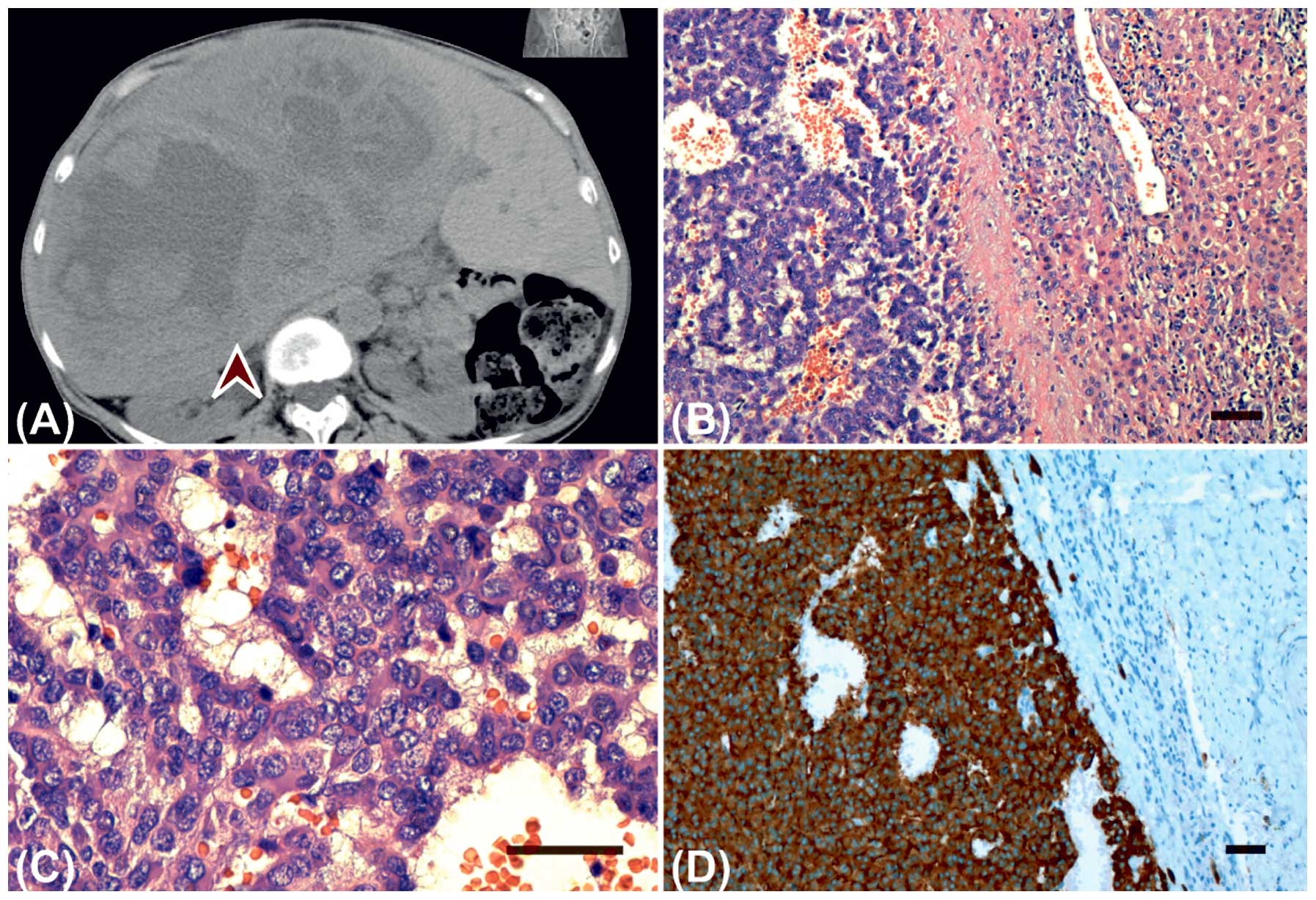
A 71-year-old female presented with impaired vision and a visual field defect of her right eye. Six years earlier she had been diagnosed with a large primary hepatic NET weighing 5.5 kg and having the greatest diameter of 35 cm. The tumour was resected surgically (Fig. 1A).

Figure 1

(A) Computed tomography scan revealing a large tumour in the right liver lobe (arrowhead) stretching into the 4th segment of the left liver lobe. (B) The hepatic tumour at the border of the tumour; the tumour cells are to the left of the micrograph. Inflammatory cells are observed outside the tumour. (H&E). Scale bar, 100 μm. (C) The hepatic tumour cells are arranged in a trabecular network and consist of relatively uniform tumour cells arranged in anastomosing cell strands (H&E). Scale bar, 50 μm. (D) Hepatic tumour cells showing positive immunoreactivity for synaptophysin. Scale bar, 100 μm.

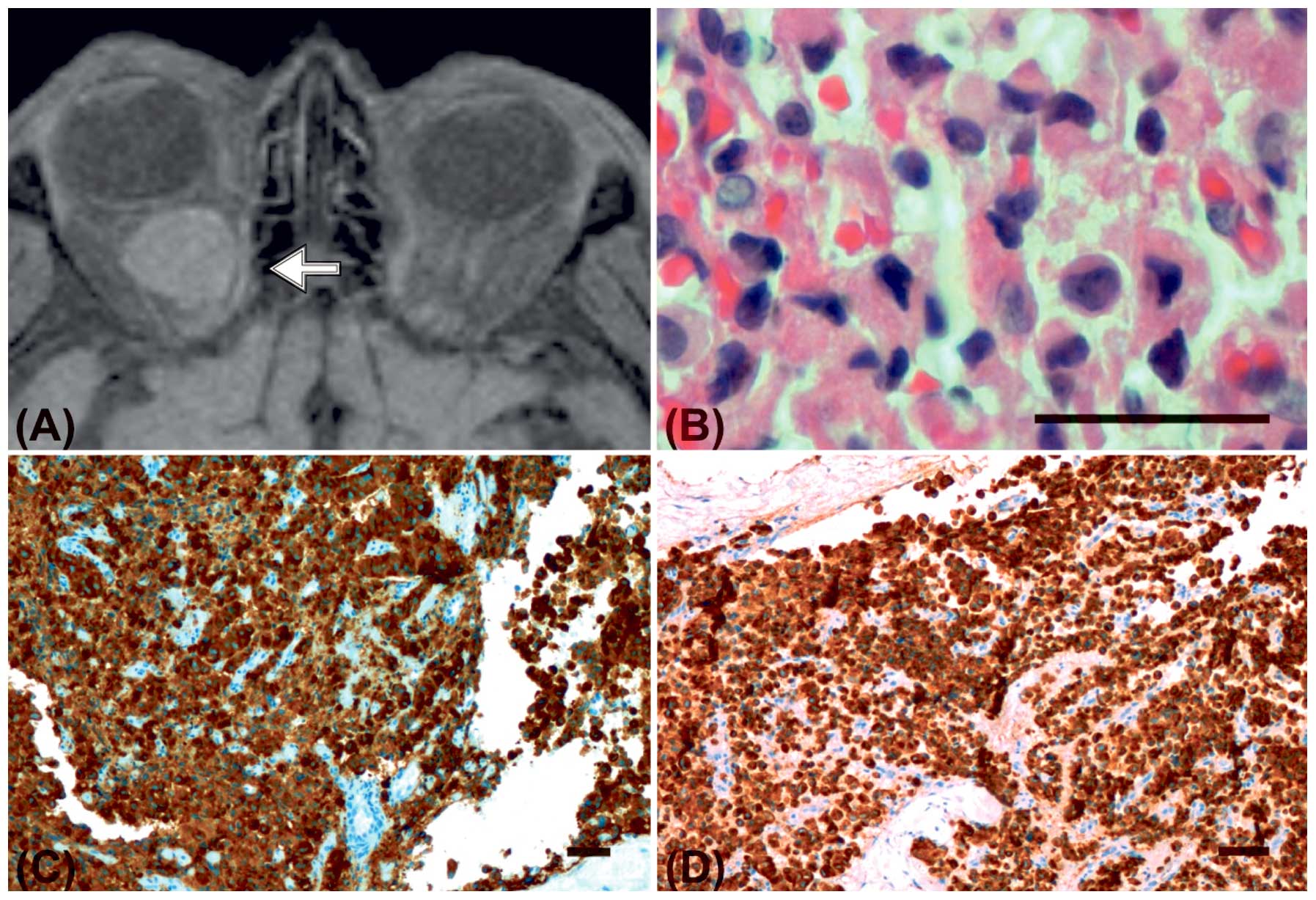
Visual acuity at referral was 0.3 of the right eye and 0.8 of the left eye. A 2-mm protrusion of the right eye as well as restricted ocular motility at superior and temporal gaze were observed. Furthermore, a visual field defect was present in the periphery of all 4 quadrants. Computed tomography scan (CT) and contrast enhanced magnetic resonance imaging (MRI) scan demonstrated a retrobulbar, intraconal mass measuring 2.2×1.8×1.5 cm with contrast uptake (Fig. 2A). Somatostatin receptor scintigraphy (octreoscan) showed increased uptake in the cranium, neck, mediastinum, right upper arm, abdomen and between the right kidney and the liver. A biopsy from the right orbit via the upper eyelid was performed. Ptosis of the right eye was permanently present after the procedure. The patient underwent 30 Gy radiation to the right orbit, but the tumour did not respond. Fifteen months later, the orbital tumour was surgically excised en bloc. It was adherent to the superior rectus muscle and the levator muscle of the eyelid. Vision declined to 0.17 at the right eye. Metastases to the cerebrum developed 20 months later and they were surgically removed. Metastasis to the sacral bone developed 8 years after initial diagnosis of the hepatic neuroendocrine carcinoma and was treated with 20 Gy radiation. When the neuroendocrine carcinoma had started to spread 8 years after the initial diagnosis, IntronA®, Sandostatin®, Nexavar® and Dotatoc® were instituted. Twelve years after diagnosis of the primary hepatic neuroendocrine carcinoma, the patient was treated with Temodal, but due to progression of the liver metastases, the treatment was changed to etoposide monotherapy. This was, however, also stopped due to the continuous progression of the liver metastases and increasing renal failure.

Figure 2

(A) Magnetic resonance imaging scan of the orbit demonstrating a retrobulbar intraconal mass (arrow) measuring 2.2×1.8×1.5 cm with contrast uptake. (B) The biopsy of the orbital tumour showing pleomorphic tumour cells with eosinophilic cytoplasm and irregular nuclei with granular chromatin (H&E). Scale bar, 50 μm. (C) Orbital tumour cells positive for anti-synaptophysin. Scale bar, 100 μm. (D) Orbital tumour cells showing positive immunoreactivity for anti-pancytokeratin AE1/AE3. Scale bar, 100 μm.

At the last follow-up time (15 years after the diagnosis of hepatic NET) an MRI scan revealed a recurrent mass measuring 2×1.5×1.5 cm in the right orbit. The patient is still alive and receives palliative treatment. She has no light perception in the right eye and only 0.4 in the left eye.

Histopathology

The orbital biopsy and the liver specimen were formalin-fixed and paraffin-embedded (FFPE), and 4-μm sections were mounted on glass slides. The sections were stained with haematoxylin and eosin (H&E) and periodic acid-Schiff (PAS). Immunohistochemical reactions were performed using the streptavidin-biotin method. Antibodies against CD31, CD34, CD56, pan-cytokeratin (clone AE1/AE3), CK7, chromogranin A, Ki-67 (clone MIB-1), neuron-specific enolase (NSE), S100, serotonin, somatostatin, synaptophysin, thyroid transcription factor (TTF-1) and vimentin (all from Dako Inc., Copenhagen, Denmark) were applied. HepPar-1 antibody, polyclonal antibodies against CEA (both from Dako) and monoclonal antibodies against arginase-1 (Abcam, Cambridge, UK) were applied to rule out that the tumour was a hepatocellular carcinoma with neuroendocrine dedifferentiation. Appropriate controls were performed.

ArrayCGH

Genomic DNA was isolated from the FFPE tumour tissues from the primary tumour and the metastatic lesion using the DNeasy® Blood and Tissue kit (Qiagen GmbH, Hilden, Germany). ArrayCGH analysis was subsequently performed using the human genome CGH microarray 244K oligonucleotide array (G4411B; Agilent Technologies Inc., Palo Alto, CA, USA). The arrayCGH experiments were performed essentially as previously described and as recommended by the manufacturer (10,11). Slides were scanned on an Agilent High-Resolution C Microarray Scanner, followed by data extraction and normalization using Feature Extraction v.10.7.1 (Agilent Technologies) with linear normalization (protocol CGH_107_Sep09). Data analysis was carried out using Nexus Copy Number Software® Discovery Edition v. 6.0 (BioDiscovery Inc., El Segundo, CA, USA) as previously described (11). Each aberration was checked manually to confirm the accuracy of the call. Regions partially or completely covered by a previously reported copy number variation (Database of Genomic Variants; http://dgvbeta.tcag.ca/dgv/app/home?ref=NCBI36/hg18) were excluded from the analysis.

Results

Histopathology

A biopsy from the orbital mass contained nests of pleomorphic tumour cells (Fig. 2B), that diffusely infiltrated the orbital connective tissue and fat. The tumour cells were intermediate-sized and polyhedral with eosinophilic cytoplasm with perinuclear eosinophilic inclusions and rounded to oval nuclei with finely granular chromatin. There were no areas of necrosis, and mitoses were infrequent. The orbital tumour cells demonstrated positive immunoreactivity for synaptophysin (Fig. 2C), CD56, cytokeratin (AE1/AE3) (Fig. 2D), vimentin, and NSE. Scattered cells were positive for somatostatin, whereas staining for chromogranin was negative. Stainings for hepatocytes (arginase-1, polyclonal CEA and HepPar1) were negative. The average proliferation index (Ki-67) was <10%.

The histopatological assessment of the resected liver tumour revealed a trabecularly arranged pattern consisting of relatively uniform cells predominantly placed in anastomosing, irregular cell strands. The stroma was highly vascular. The tumour cells contained round or oval nuclei, abundant pink-coloured and granular cytoplasm, and infrequent mitoses (Fig. 1B and 1C). Immunohistochemistry of the liver tumour was consistent with the immunoprofile of the orbital specimen (Fig. 1D). These findings were in agreement with the diagnosis of a primary low-grade hepatic NET with an orbital metastasis.

Genomic imbalances

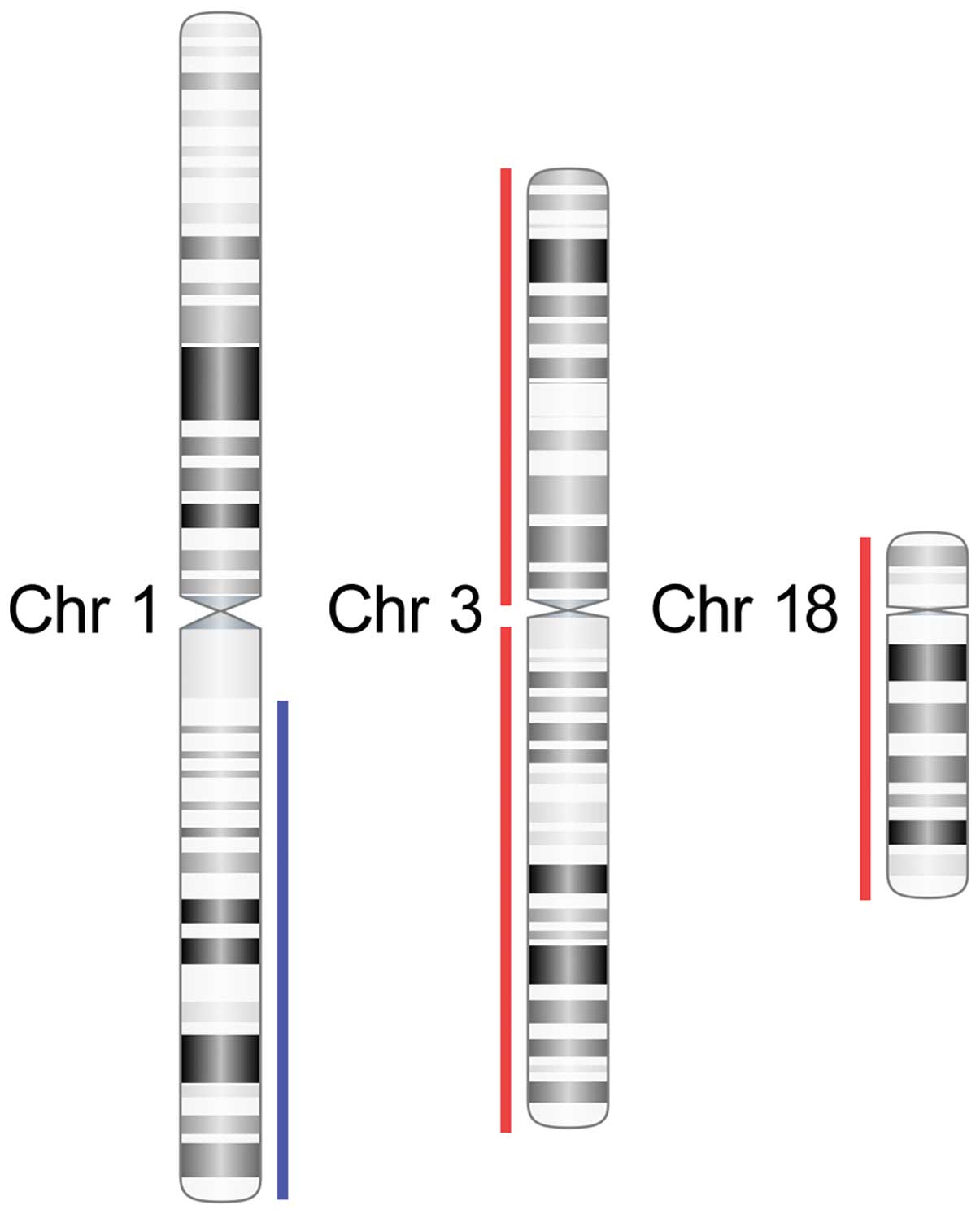
Genome-wide arrayCGH analysis of the primary tumour using 244K arrays revealed a quiet genome with few copy number alterations. Three major aberrations were detected including gain of one copy of the long arm of chromosome 1 (1q21.1-qter) and losses of one copy each of chromosomes 3 and 18 (Fig. 3). No segmental aberrations, high-copy gains/amplifications or homozygous deletions were detected.

Figure 3

ArrayCGH profiles of the hepatic neuroendocrine carcinoma with copy number alterations involving chromosomes 1, 3 and 18. Gains are indicated by vertical blue lines and losses by vertical red lines.

The DNA isolated from the orbital metastasis was degraded and yielded array data of poorer quality. However, analysis of this array using less stringent criteria for aberration calls confirmed the presence of the same aberrations as in the liver tumour as well as gain of 2q24.2-qter and loss of one copy of the long arm of chromosome 10 (data not shown).

Discussion

We here present the first reported case of an orbital metastasis with origin from a primary hepatic neuroendocrine carcinoma including genetic analysis of both tumours. Primary hepatic NETs are extremely rare with only 90–100 cases reported to date (6), and the orbit is an extremely rare anatomical site for metastasis from NETs with less than 70 reported cases in the literature (5,7–9). The 5-year survival rate for hepatic neuroendocrine carcinoma is reported to be only 18% (2). In the present case, the patient is still alive 15 years after being diagnosed with the liver tumour, but only after intense surgical and oncological treatment. The ‘golden standard’ of treating orbital carcinoid is biopsy followed by local radiotherapy and additional systemic chemotherapy (5). In the present case, the orbital tumour was removed surgically, since the tumour did not respond adequately to radiotherapy and systemic chemotherapy and is also at present showing evidence of local recurrence.

Using arrayCGH we demonstrated that both the primary hepatic NET and the orbital metastasis had gain of one copy of 1q and losses of one copy each of chromosomes 3 and 18 (Fig. 3). Loss of chromosome 18 is a common feature in gastrointestinal NETs and has been reported in 43–88% of tumours (12,13). Deletion of 18q21, the location of the tumour suppressor genes DCC (deleted in colorectal carcinoma) and DPC4/SMAD4 (involved in transcriptional regulation), may play a role in the pathogenesis of gastrointestinal and pancreatic endocrine tumours (13). Loss of chromosome 3 is only found in approximately 25% of gastrointestinal NETs (12). In contrast, loss of chromosome 3p has been reported as the most common alteration in NETs of the lung (14). A high frequency of loss of heterozygosity (LOH) at a locus proximal to the von Hippel-Lindau (VHL) gene on 3p has been shown to be necessary for malignant conversion of pancreatic islet cell tumours, and LOH at 3q (15) is reported in 50% of sporadic pancreatic endocrine tumours associated with hepatic metastases (12).

Hepatocellular carcinomas (HCC) metastasising to the orbit are extremely rare and only 17 cases have been reported in the English language literature (16). In Europe, the incidence of HCC is in the range 3–12 of 100,000 individuals, whereas it exceeds 30 of 100,000 in East Asia (17). Common genetic alterations in HCC are mutations in TP53 and CTNNB1 (the gene for β-catenin) and amplification of genes in 1q21-q22 (18). In contrast, the observed alterations involving chromosomes 3 and 18 in the present case are uncommon in HCC (18).

Taken together, the present hepatic NET and its orbital metastasis have genetic features consistent with gastrointestinal NETs. The mechanism for development of primary hepatic NETs is unclear to date, while theories include origin from the biliary system or from ectopic adrenal or pancreatic tissues in the liver (19). The results of the present study indicate that hepatic NETs exhibit genetic similarities mainly to gastrointestinal NETs; however, further studies are needed to clarify these issues. Genetic studies may also provide new biomarkers that can form the basis for a new classification system and serve as prognostic biomarkers.

References

1 

Pinchot SN, Holen K, Sippel RS and Chen H: Carcinoid Tumors. Oncologist. 13:1255–1269. 2008. View Article : Google Scholar : PubMed/NCBI

2 

Williams ED and Sandler M: The classification of carcinoid tumours. Lancet. 1:238–239. 1963. View Article : Google Scholar : PubMed/NCBI

3 

Friedman JR and Kaestner KH: On the origin of the liver. J Clin Invest. 121:4630–4633. 2011. View Article : Google Scholar : PubMed/NCBI

4 

Modlin IM, Lye KD and Kidd M: A 5-decade analysis of 13,715 carcinoid tumors. Cancer. 97:934–959. 2003. View Article : Google Scholar : PubMed/NCBI

5 

Mehta JS, Abou-Rayyah Y and Rose GE: Orbital carcinoid metastases. Ophthalmology. 113:466–472. 2006. View Article : Google Scholar : PubMed/NCBI

6 

Fenoglio LM, Severini S, Ferrigno D and Gollè G: Primary hepatic carcinoid: A case report and literature review. World J Gastroenterol. 15:2418–2422. 2009. View Article : Google Scholar : PubMed/NCBI

7 

Turaka K, Mashayekhi A and Shields Cl: A case series of neuroendocrine (carcinoid) tumor metastasis to the orbit. Oman J Ophthalmol. 4:125–128. 2011. View Article : Google Scholar : PubMed/NCBI

8 

Gupta A, Chazen JL and Phillips CD: Carcinoid tumor metastases to the extraocular muscles: MR imaging and CT findings and review of the literature. AJNR Am J Neuroradiol. 32:1208–1211. 2011. View Article : Google Scholar : PubMed/NCBI

9 

Matsuo T, Ichimura K, Tanaka T and Takenaka T: Neuroendocrine tumor (carcinoid) metastatic to orbital extraocular muscle: case report and literature review. Strabismus. 18:123–128. 2010. View Article : Google Scholar : PubMed/NCBI

10 

Barrett MT, Scheffer A, Ben-Dor A, Sampas N, Lipson D, Kincaid R, Tsang P, Curry B, Baird K, Meltzer PS, Yakhini Z, Bruhn L and Laderman S: Comparative genomic hybridization using oligonucleotide microarrays and total genomic DNA. Proc Natl Acad Sci USA. 101:17765–17770. 2004. View Article : Google Scholar : PubMed/NCBI

11 

Persson F, Winnes M, Andrén Y, et al: High-resolution array CGH analysis of salivary gland tumors reveals fusion and amplification of the FGFR1 and PLAG1 genes in ring chromosomes. Oncogene. 27:3072–3080. 2008. View Article : Google Scholar : PubMed/NCBI

12 

Zikusoka MN, Kidd M, Eick G, Latich I and Modlin IM: The molecular genetics of gastroenteropancreatic neuroendocrine tumors. Cancer. 104:2292–2309. 2005. View Article : Google Scholar : PubMed/NCBI

13 

Andersson E, Swärd C, Stenman G, Ahlman H and Nilsson O: High-resolution genomic profiling reveals gain of chromosome 14 as a predictor of poor outcome in ileal carcinoids. Endocr Relat Cancer. 16:953–966. 2009. View Article : Google Scholar : PubMed/NCBI

14 

Leotlela PD, Jauch A, Holtgreve-Grez H and Thakker RV: Genetics of neuroendocrine and carcinoid tumours. Endocr Relat Cancer. 10:437–450. 2003. View Article : Google Scholar : PubMed/NCBI

15 

Tönnies H, Toliat MR, Ramel C and Pape UF: Analysis of sporadic neuroendocrine tumours of the enteropancreatic system by comparative genomic hybridisation. Gut. 48:536–541. 2001.PubMed/NCBI

16 

Guerriero S, Infante G and Giancipoli E: Hepatocellular carcinoma metastasis to the orbit in a coinfected HIV+ HBV+ patient previously treated with orthotopic liver transplantation: a case report. Case Rep Ophthalmol Med. 2011:5492702011.PubMed/NCBI

17 

Hirunwiwatkul P, Tirakunwichcha S, Meesuaypong P and Shuangshoti S: Orbital metastasis of hepatocellular carcinoma. J Neuroophthalmol. 28:47–50. 2008. View Article : Google Scholar

18 

van Malenstein H, van Pelt J and Verslype C: Molecular classification of hepatocellular carcinoma anno 2011. Eur J Cancer. 47:1789–1797. 2011.PubMed/NCBI

19 

Gao J, Hu Z, Wu J, Bai L and Chai X: Primary hepatic carcinoid tumor. World J Surg Oncol. 9:1512011. View Article : Google Scholar

Related Articles

  • Abstract
  • View
  • Download
  • Twitter
Copy and paste a formatted citation
Spandidos Publications style
Rasmussen JØ, von Holstein SL, Prause JU, Vainer B, Hansen AB, Fehr A, Stenman G and Heegaard S: Genetic analysis of an orbital metastasis from a primary hepatic neuroendocrine carcinoma. Oncol Rep 32: 1447-1450, 2014.
APA
Rasmussen, J.Ø., von Holstein, S.L., Prause, J.U., Vainer, B., Hansen, A.B., Fehr, A. ... Heegaard, S. (2014). Genetic analysis of an orbital metastasis from a primary hepatic neuroendocrine carcinoma. Oncology Reports, 32, 1447-1450. https://doi.org/10.3892/or.2014.3345
MLA
Rasmussen, J. Ø., von Holstein, S. L., Prause, J. U., Vainer, B., Hansen, A. B., Fehr, A., Stenman, G., Heegaard, S."Genetic analysis of an orbital metastasis from a primary hepatic neuroendocrine carcinoma". Oncology Reports 32.4 (2014): 1447-1450.
Chicago
Rasmussen, J. Ø., von Holstein, S. L., Prause, J. U., Vainer, B., Hansen, A. B., Fehr, A., Stenman, G., Heegaard, S."Genetic analysis of an orbital metastasis from a primary hepatic neuroendocrine carcinoma". Oncology Reports 32, no. 4 (2014): 1447-1450. https://doi.org/10.3892/or.2014.3345
Copy and paste a formatted citation
x
Spandidos Publications style
Rasmussen JØ, von Holstein SL, Prause JU, Vainer B, Hansen AB, Fehr A, Stenman G and Heegaard S: Genetic analysis of an orbital metastasis from a primary hepatic neuroendocrine carcinoma. Oncol Rep 32: 1447-1450, 2014.
APA
Rasmussen, J.Ø., von Holstein, S.L., Prause, J.U., Vainer, B., Hansen, A.B., Fehr, A. ... Heegaard, S. (2014). Genetic analysis of an orbital metastasis from a primary hepatic neuroendocrine carcinoma. Oncology Reports, 32, 1447-1450. https://doi.org/10.3892/or.2014.3345
MLA
Rasmussen, J. Ø., von Holstein, S. L., Prause, J. U., Vainer, B., Hansen, A. B., Fehr, A., Stenman, G., Heegaard, S."Genetic analysis of an orbital metastasis from a primary hepatic neuroendocrine carcinoma". Oncology Reports 32.4 (2014): 1447-1450.
Chicago
Rasmussen, J. Ø., von Holstein, S. L., Prause, J. U., Vainer, B., Hansen, A. B., Fehr, A., Stenman, G., Heegaard, S."Genetic analysis of an orbital metastasis from a primary hepatic neuroendocrine carcinoma". Oncology Reports 32, no. 4 (2014): 1447-1450. https://doi.org/10.3892/or.2014.3345
Follow us
  • Twitter
  • LinkedIn
  • Facebook
About
  • Spandidos Publications
  • Careers
  • Cookie Policy
  • Privacy Policy
How can we help?
  • Help
  • Live Chat
  • Contact
  • Email to our Support Team