Spandidos Publications Logo
  • About
    • About Spandidos
    • Aims and Scopes
    • Abstracting and Indexing
    • Editorial Policies
    • Reprints and Permissions
    • Job Opportunities
    • Terms and Conditions
    • Contact
  • Journals
    • All Journals
    • Oncology Letters
      • Oncology Letters
      • Information for Authors
      • Editorial Policies
      • Editorial Board
      • Aims and Scope
      • Abstracting and Indexing
      • Bibliographic Information
      • Archive
    • International Journal of Oncology
      • International Journal of Oncology
      • Information for Authors
      • Editorial Policies
      • Editorial Board
      • Aims and Scope
      • Abstracting and Indexing
      • Bibliographic Information
      • Archive
    • Molecular and Clinical Oncology
      • Molecular and Clinical Oncology
      • Information for Authors
      • Editorial Policies
      • Editorial Board
      • Aims and Scope
      • Abstracting and Indexing
      • Bibliographic Information
      • Archive
    • Experimental and Therapeutic Medicine
      • Experimental and Therapeutic Medicine
      • Information for Authors
      • Editorial Policies
      • Editorial Board
      • Aims and Scope
      • Abstracting and Indexing
      • Bibliographic Information
      • Archive
    • International Journal of Molecular Medicine
      • International Journal of Molecular Medicine
      • Information for Authors
      • Editorial Policies
      • Editorial Board
      • Aims and Scope
      • Abstracting and Indexing
      • Bibliographic Information
      • Archive
    • Biomedical Reports
      • Biomedical Reports
      • Information for Authors
      • Editorial Policies
      • Editorial Board
      • Aims and Scope
      • Abstracting and Indexing
      • Bibliographic Information
      • Archive
    • Oncology Reports
      • Oncology Reports
      • Information for Authors
      • Editorial Policies
      • Editorial Board
      • Aims and Scope
      • Abstracting and Indexing
      • Bibliographic Information
      • Archive
    • Molecular Medicine Reports
      • Molecular Medicine Reports
      • Information for Authors
      • Editorial Policies
      • Editorial Board
      • Aims and Scope
      • Abstracting and Indexing
      • Bibliographic Information
      • Archive
    • World Academy of Sciences Journal
      • World Academy of Sciences Journal
      • Information for Authors
      • Editorial Policies
      • Editorial Board
      • Aims and Scope
      • Abstracting and Indexing
      • Bibliographic Information
      • Archive
    • International Journal of Functional Nutrition
      • International Journal of Functional Nutrition
      • Information for Authors
      • Editorial Policies
      • Editorial Board
      • Aims and Scope
      • Abstracting and Indexing
      • Bibliographic Information
      • Archive
    • International Journal of Epigenetics
      • International Journal of Epigenetics
      • Information for Authors
      • Editorial Policies
      • Editorial Board
      • Aims and Scope
      • Abstracting and Indexing
      • Bibliographic Information
      • Archive
    • Medicine International
      • Medicine International
      • Information for Authors
      • Editorial Policies
      • Editorial Board
      • Aims and Scope
      • Abstracting and Indexing
      • Bibliographic Information
      • Archive
  • Articles
  • Information
    • Information for Authors
    • Information for Reviewers
    • Information for Librarians
    • Information for Advertisers
    • Conferences
  • Language Editing
Spandidos Publications Logo
  • About
    • About Spandidos
    • Aims and Scopes
    • Abstracting and Indexing
    • Editorial Policies
    • Reprints and Permissions
    • Job Opportunities
    • Terms and Conditions
    • Contact
  • Journals
    • All Journals
    • Biomedical Reports
      • Information for Authors
      • Editorial Policies
      • Editorial Board
      • Aims and Scope
      • Abstracting and Indexing
      • Bibliographic Information
      • Archive
    • Experimental and Therapeutic Medicine
      • Information for Authors
      • Editorial Policies
      • Editorial Board
      • Aims and Scope
      • Abstracting and Indexing
      • Bibliographic Information
      • Archive
    • International Journal of Epigenetics
      • Information for Authors
      • Editorial Policies
      • Editorial Board
      • Aims and Scope
      • Abstracting and Indexing
      • Bibliographic Information
      • Archive
    • International Journal of Functional Nutrition
      • Information for Authors
      • Editorial Policies
      • Editorial Board
      • Aims and Scope
      • Abstracting and Indexing
      • Bibliographic Information
      • Archive
    • International Journal of Molecular Medicine
      • Information for Authors
      • Editorial Policies
      • Editorial Board
      • Aims and Scope
      • Abstracting and Indexing
      • Bibliographic Information
      • Archive
    • International Journal of Oncology
      • Information for Authors
      • Editorial Policies
      • Editorial Board
      • Aims and Scope
      • Abstracting and Indexing
      • Bibliographic Information
      • Archive
    • Medicine International
      • Information for Authors
      • Editorial Policies
      • Editorial Board
      • Aims and Scope
      • Abstracting and Indexing
      • Bibliographic Information
      • Archive
    • Molecular and Clinical Oncology
      • Information for Authors
      • Editorial Policies
      • Editorial Board
      • Aims and Scope
      • Abstracting and Indexing
      • Bibliographic Information
      • Archive
    • Molecular Medicine Reports
      • Information for Authors
      • Editorial Policies
      • Editorial Board
      • Aims and Scope
      • Abstracting and Indexing
      • Bibliographic Information
      • Archive
    • Oncology Letters
      • Information for Authors
      • Editorial Policies
      • Editorial Board
      • Aims and Scope
      • Abstracting and Indexing
      • Bibliographic Information
      • Archive
    • Oncology Reports
      • Information for Authors
      • Editorial Policies
      • Editorial Board
      • Aims and Scope
      • Abstracting and Indexing
      • Bibliographic Information
      • Archive
    • World Academy of Sciences Journal
      • Information for Authors
      • Editorial Policies
      • Editorial Board
      • Aims and Scope
      • Abstracting and Indexing
      • Bibliographic Information
      • Archive
  • Articles
  • Information
    • For Authors
    • For Reviewers
    • For Librarians
    • For Advertisers
    • Conferences
  • Language Editing
Login Register Submit
  • This site uses cookies
  • You can change your cookie settings at any time by following the instructions in our Cookie Policy. To find out more, you may read our Privacy Policy.

    I agree
Search articles by DOI, keyword, author or affiliation
Search
Advanced Search
presentation
Oncology Reports
Join Editorial Board Propose a Special Issue
Print ISSN: 1021-335X Online ISSN: 1791-2431
Journal Cover
October 2014 Volume 32 Issue 4

Full Size Image

Sign up for eToc alerts
Recommend to Library

Journals

International Journal of Molecular Medicine

International Journal of Molecular Medicine

International Journal of Molecular Medicine is an international journal devoted to molecular mechanisms of human disease.

International Journal of Oncology

International Journal of Oncology

International Journal of Oncology is an international journal devoted to oncology research and cancer treatment.

Molecular Medicine Reports

Molecular Medicine Reports

Covers molecular medicine topics such as pharmacology, pathology, genetics, neuroscience, infectious diseases, molecular cardiology, and molecular surgery.

Oncology Reports

Oncology Reports

Oncology Reports is an international journal devoted to fundamental and applied research in Oncology.

Experimental and Therapeutic Medicine

Experimental and Therapeutic Medicine

Experimental and Therapeutic Medicine is an international journal devoted to laboratory and clinical medicine.

Oncology Letters

Oncology Letters

Oncology Letters is an international journal devoted to Experimental and Clinical Oncology.

Biomedical Reports

Biomedical Reports

Explores a wide range of biological and medical fields, including pharmacology, genetics, microbiology, neuroscience, and molecular cardiology.

Molecular and Clinical Oncology

Molecular and Clinical Oncology

International journal addressing all aspects of oncology research, from tumorigenesis and oncogenes to chemotherapy and metastasis.

World Academy of Sciences Journal

World Academy of Sciences Journal

Multidisciplinary open-access journal spanning biochemistry, genetics, neuroscience, environmental health, and synthetic biology.

International Journal of Functional Nutrition

International Journal of Functional Nutrition

Open-access journal combining biochemistry, pharmacology, immunology, and genetics to advance health through functional nutrition.

International Journal of Epigenetics

International Journal of Epigenetics

Publishes open-access research on using epigenetics to advance understanding and treatment of human disease.

Medicine International

Medicine International

An International Open Access Journal Devoted to General Medicine.

Journal Cover
October 2014 Volume 32 Issue 4

Full Size Image

Sign up for eToc alerts
Recommend to Library

  • Article
  • Citations
    • Cite This Article
    • Download Citation
    • Create Citation Alert
    • Remove Citation Alert
    • Cited By
  • Similar Articles
    • Related Articles (in Spandidos Publications)
    • Similar Articles (Google Scholar)
    • Similar Articles (PubMed)
  • Download PDF
  • Download XML
  • View XML
Article

YAP is overexpressed in clear cell renal cell carcinoma and its knockdown reduces cell proliferation and induces cell cycle arrest and apoptosis

  • Authors:
    • Jian-Jia Cao
    • Xiu-Min Zhao
    • De-Lin  Wang
    • Ke-Hong  Chen
    • Xia  Sheng
    • Wen-Bin  Li
    • Mei-Cai  Li
    • Wu-Jiang  Liu
    • Jiang He
  • View Affiliations / Copyright

    Affiliations: Department of Urology, The First Affiliated Hospital of Chongqing Medical University, Chongqing, P.R. China, Institute of Urology, First Hospital of Peking University, Beijing, P.R. China, Gastroenterology and Neurology Center, University-Town Hospital of Chongqing Medical University, Chongqing, P.R. China
  • Pages: 1594-1600
    |
    Published online on: July 22, 2014
       https://doi.org/10.3892/or.2014.3349
  • Expand metrics +
Metrics: Total Views: 0 (Spandidos Publications: | PMC Statistics: )
Metrics: Total PDF Downloads: 0 (Spandidos Publications: | PMC Statistics: )
Cited By (CrossRef): 0 citations Loading Articles...

This article is mentioned in:


Abstract

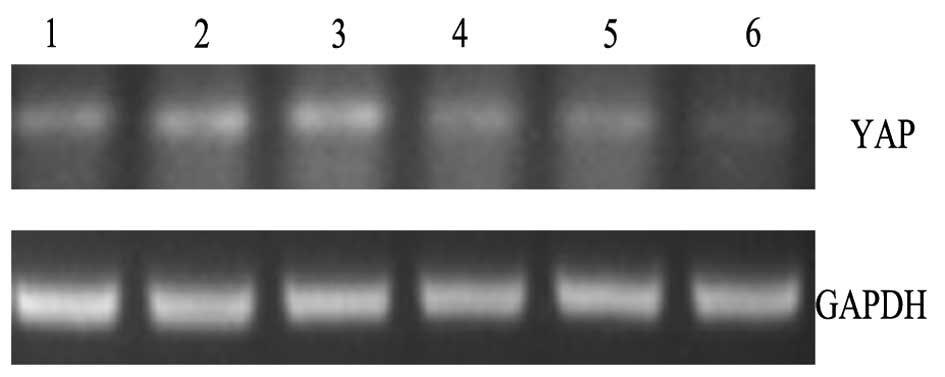
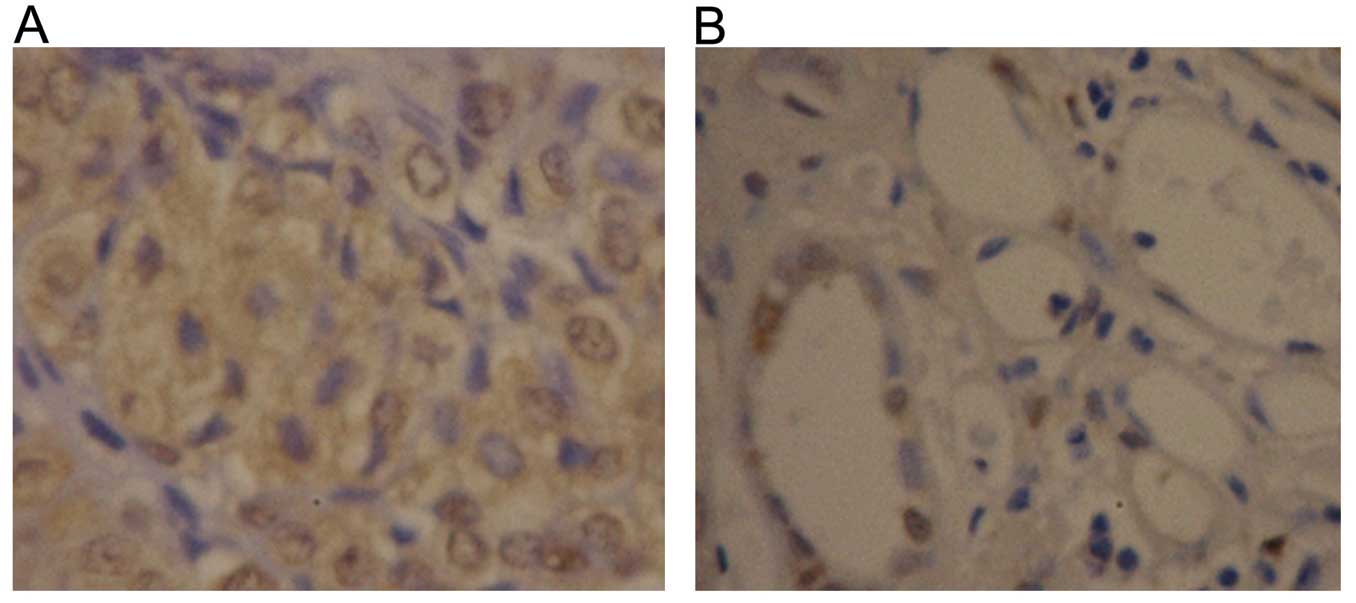
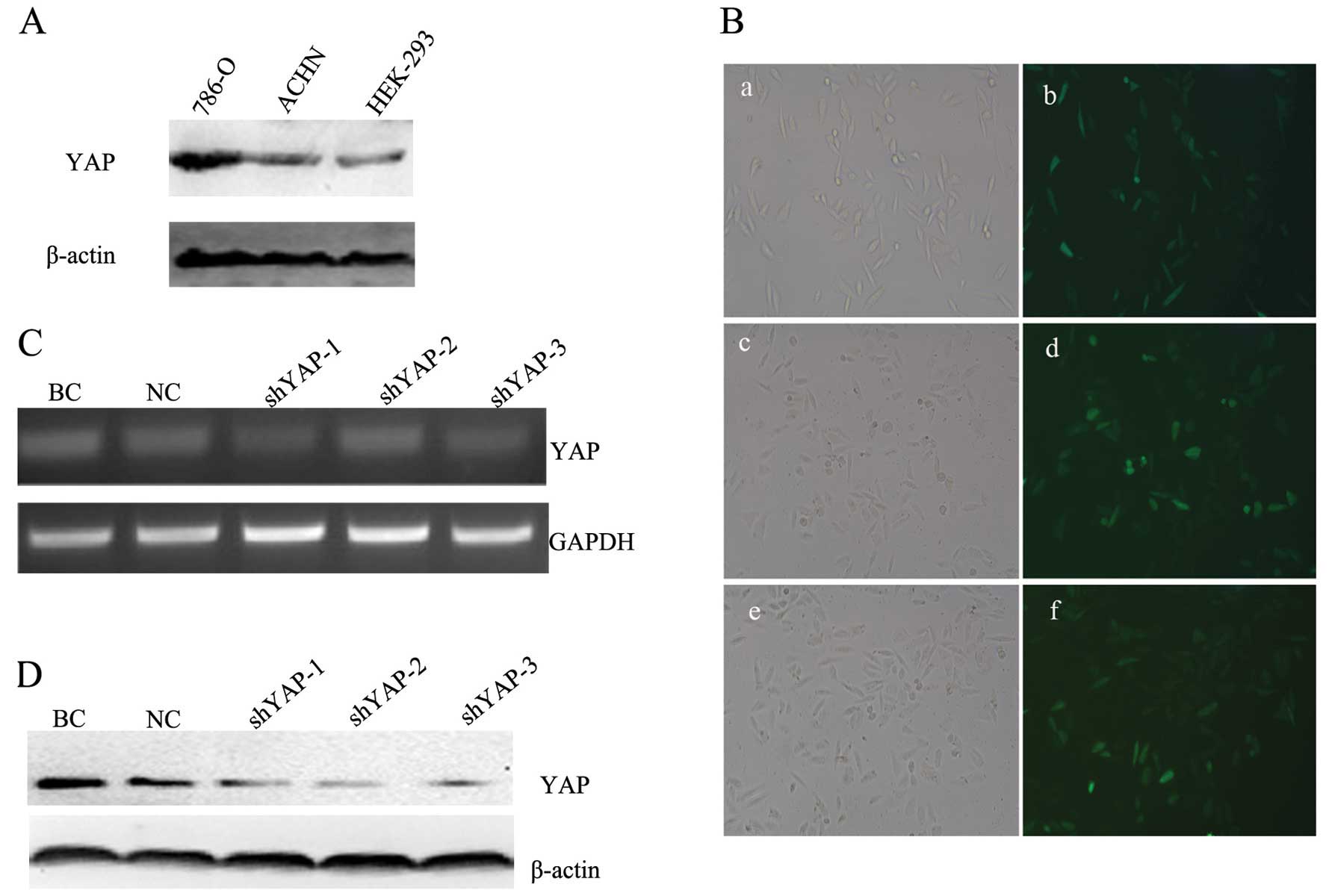
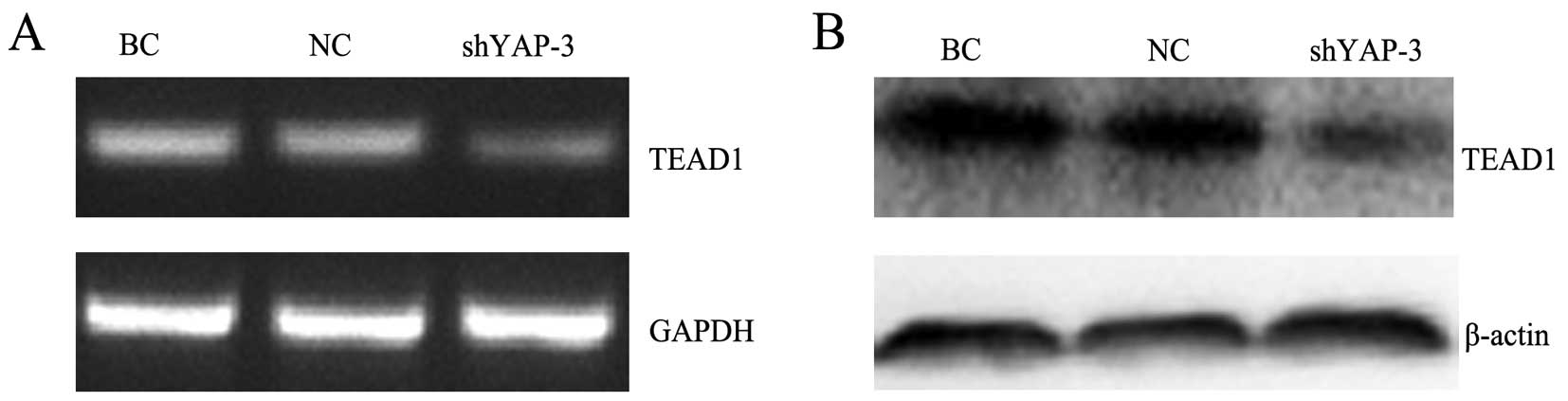
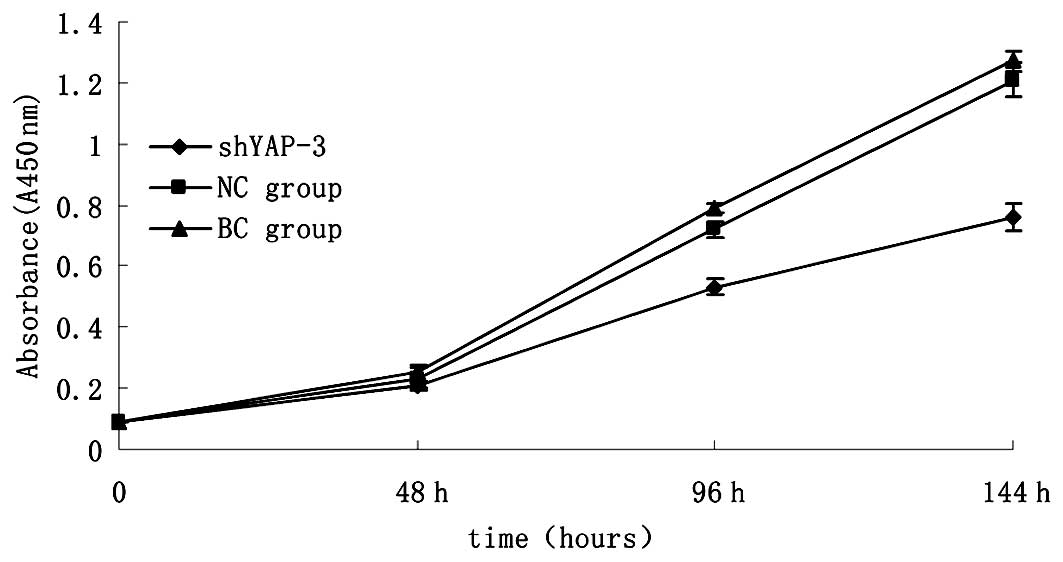
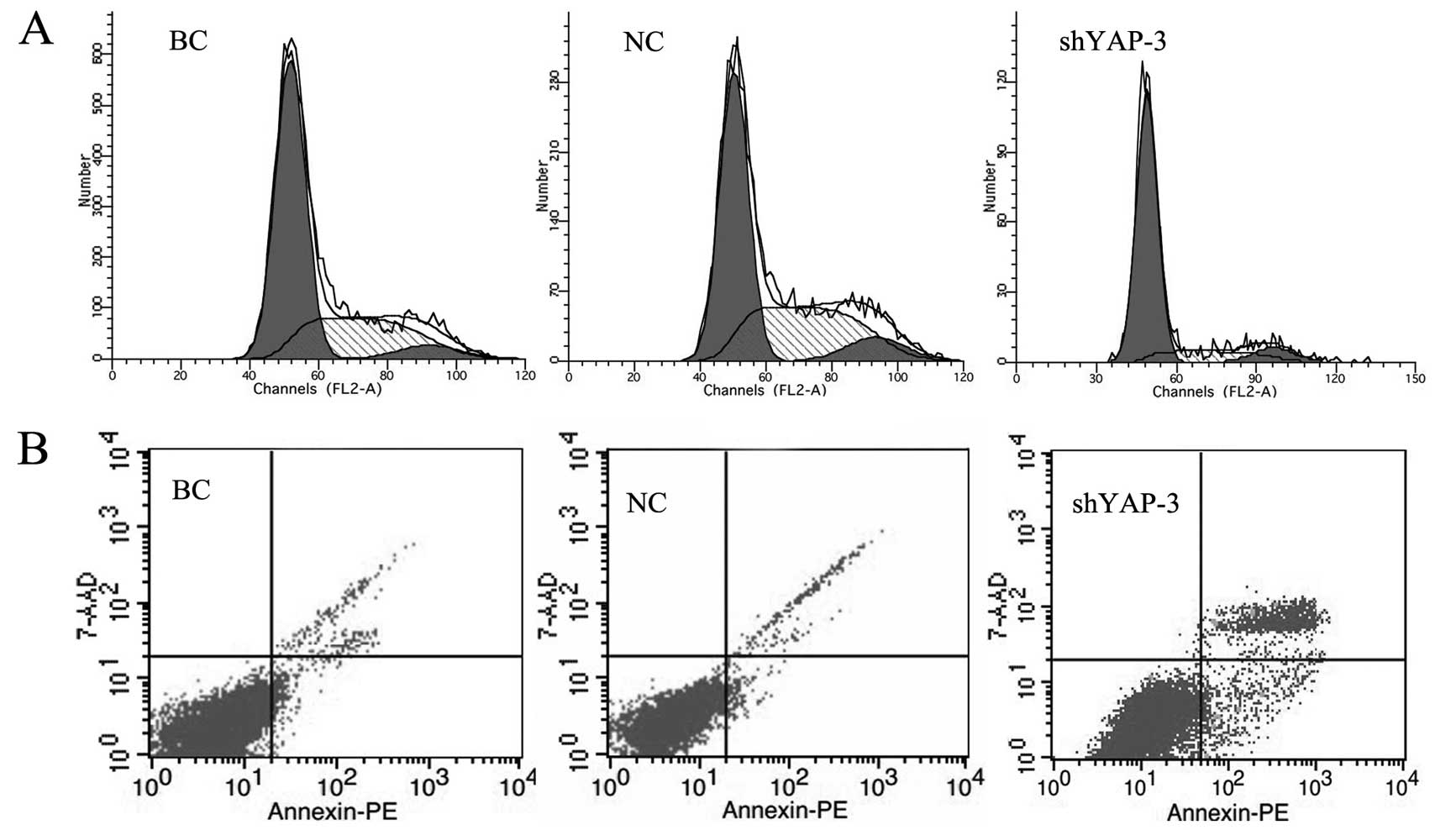
Yes-associated protein (YAP) has been reported to be an oncogene in a number of malignancies. It constitutes an important regulatory mechanism for the Hippo pathway, a key regulator of cell growth and apoptosis. The present study aimed to investigate the clinical significance and the role of YAP in the development of clear cell renal cell carcinoma (ccRCC). YAP expression levels were compared between ccRCC and adjacent normal renal tissues by RT-PCR and immunohistochemistry, respectively. YAP expression levels were then detected in ccRCC cell lines 786-0 and ACHN, as well as in human embryonic kidney 293 cells (HEK-293) using western blotting. Three specific YAP-shRNA lentiviral vectors were constructed and transfected into 786-0 cells, and then the mRNA and protein levels of YAP and downstream transcription factor TEAD1 were detected. Finally, the effects of YAP silencing on proliferation and the cell cycle distribution of 786-0 cells were detected by Cell Counting Kit-8 (CCK-8) and flow cytometry (FCM), respectively. The apoptosis rate was also analyzed by FCM. It was observed that the expression levels of YAP mRNA and protein in ccRCC tissues were higher than these levels in the adjacent normal renal tissues. The expression of YAP protein in ccRCC tissues was significantly correlated with clinical stage and differentiation. The YAP protein levels in the two ccRCC cell lines 786-0 and ACHN were significantly higher than that in the HEK-293 cells. Additionally, treatment of 786-0 cells with YAP-shRNA lentiviral vectors significantly reduced the expression levels of YAP and TEAD1 mRNA and protein. Further analyses in 786-0 cells in which YAP was decreased, revealed that cell proliferation was inhibited, cell cycle was arrested at the G1 phase and apoptosis was increased. These results indicate that YAP is an underlying oncogene in ccRCC and it may be a promising biomarker and therapeutic target of ccRCC.
View Figures

Figure 1

Figure 2

Figure 3

Figure 4

Figure 5

Figure 6

View References

1 

Ferlay J, Shin HR, Bray F, Forman D, Mathers C and Parkin DM: Estimates of worldwide burden of cancer in 2008: GLOBOCAN 2008. Int J Cancer. 127:2893–2917. 2010. View Article : Google Scholar : PubMed/NCBI

2 

Quivy A, Daste A, Harbaoui A, Duc S, Bernhard JC, Gross-Goupil M and Ravaud A: Optimal management of renal cell carcinoma in the elderly: a review. Clin Interv Aging. 8:433–442. 2013.PubMed/NCBI

3 

Rathmell WK and Godley PA: Recent updates in renal cell carcinoma. Curr Opin Oncol. 22:250–256. 2010. View Article : Google Scholar : PubMed/NCBI

4 

Vasudev NS, Selby PJ and Banks RE: Renal cancer biomarkers: the promise of personalized care. BMC Med. 10:1122012. View Article : Google Scholar : PubMed/NCBI

5 

Edgar BA: From cell structure to transcription: Hippo forges a new path. Cell. 124:267–273. 2006. View Article : Google Scholar : PubMed/NCBI

6 

Zhao B, Li L, Lei Q and Guan KL: The Hippo-YAP pathway in organ size control and tumorigenesis: an updated version. Genes Dev. 24:862–874. 2010. View Article : Google Scholar : PubMed/NCBI

7 

Pan D: The hippo signaling pathway in development and cancer. Dev Cell. 19:491–505. 2010. View Article : Google Scholar : PubMed/NCBI

8 

Zhao B, Wei X, Li W, et al: Inactivation of YAP oncoprotein by the Hippo pathway is involved in cell contact inhibition and tissue growth control. Genes Dev. 21:2747–2761. 2007. View Article : Google Scholar : PubMed/NCBI

9 

Stanger BZ: Quit your YAPing: a new target for cancer therapy. Genes Dev. 26:1263–1267. 2012. View Article : Google Scholar : PubMed/NCBI

10 

Zhang J, Ji JY, Yu M, et al: YAP-dependent induction of amphiregulin identifies a non-cell-autonomous component of the Hippo pathway. Nat Cell Biol. 11:1444–1450. 2009. View Article : Google Scholar : PubMed/NCBI

11 

Bao Y, Hata Y, Ikeda M and Withanage K: Mammalian Hippo pathway: from development to cancer and beyond. J Biochem. 149:361–379. 2011. View Article : Google Scholar : PubMed/NCBI

12 

Dong J, Feldmann G, Huang J, et al: Elucidation of a universal size-control mechanism in Drosophila and mammals. Cell. 130:1120–1133. 2007. View Article : Google Scholar : PubMed/NCBI

13 

Zhao B, Tumaneng K and Guan KL: The Hippo pathway in organ size control, tissue regeneration and stem cell self-renewal. Nat Cell Biol. 13:877–883. 2011. View Article : Google Scholar : PubMed/NCBI

14 

Harvey K and Tapon N: The Salvador-Warts-Hippo pathway - an emerging tumour-suppressor network. Nat Rev Cancer. 7:182–191. 2007. View Article : Google Scholar : PubMed/NCBI

15 

Sawada A, Kiyonari H, Ukita K, Nishioka N, Imuta Y and Sasaki H: Redundant roles of Tead1 and Tead2 in notochord development and the regulation of cell proliferation and survival. Mol Cell Biol. 28:3177–3189. 2008.

16 

Chan SW, Lim CJ, Chen L, Chong YF, Huang C, Song H and Hong W: The Hippo pathway in biological control and cancer development. J Cell Physiol. 226:928–939. 2011. View Article : Google Scholar : PubMed/NCBI

17 

Lamar JM, Stern P, Liu H, Schindler JW, Jiang ZG and Hynes RO: The Hippo pathway target, YAP, promotes metastasis through its TEAD-interaction domain. Proc Natl Acad Sci USA. 109:E2441–E2450. 2012. View Article : Google Scholar : PubMed/NCBI

18 

Zender L, Spector MS, Xue W, et al: Identification and validation of oncogenes in liver cancer using an integrative oncogenomic approach. Cell. 125:1253–1267. 2006. View Article : Google Scholar : PubMed/NCBI

19 

Li H, Wolfe A, Septer S, et al: Deregulation of Hippo kinase signalling in human hepatic malignancies. Liver Int. 32:38–47. 2012. View Article : Google Scholar : PubMed/NCBI

20 

Steinhardt AA, Gayyed MF, Klein AP, et al: Expression of Yes-associated protein in common solid tumors. Hum Pathol. 39:1582–1589. 2008. View Article : Google Scholar : PubMed/NCBI

21 

Zhang J, Smolen GA and Haber DA: Negative regulation of YAP by LATS1 underscores evolutionary conservation of the Drosophila Hippo pathway. Cancer Res. 68:2789–2794. 2008. View Article : Google Scholar : PubMed/NCBI

22 

Zhao B, Li L, Wang L, Wang CY, Yu J and Guan KL: Cell detachment activates the Hippo pathway via cytoskeleton reorganization to induce anoikis. Genes Dev. 26:54–68. 2012. View Article : Google Scholar : PubMed/NCBI

23 

Wang Y, Dong Q, Zhang Q, Li Z, Wang E and Qiu X: Overexpression of yes-associated protein contributes to progression and poor prognosis of non-small-cell lung cancer. Cancer Sci. 101:1279–1285. 2010. View Article : Google Scholar : PubMed/NCBI

24 

Xu MZ, Yao TJ, Lee NP, et al: Yes-associated protein is an independent prognostic marker in hepatocellular carcinoma. Cancer. 115:4576–4585. 2009. View Article : Google Scholar : PubMed/NCBI

25 

Muramatsu T, Imoto I, Matsui T, et al: YAP is a candidate oncogene for esophageal squamous cell carcinoma. Carcinogenesis. 32:389–398. 2011. View Article : Google Scholar : PubMed/NCBI

26 

Diep CH, Zucker KM, Hostetter G, et al: Down-regulation of Yes associated protein 1 expression reduces cell proliferation and clonogenicity of pancreatic cancer cells. PLoS One. 7:e327832012. View Article : Google Scholar : PubMed/NCBI

27 

Tufail R, Jorda M, Zhao W, Reis I and Nawaz Z: Loss of Yes-associated protein (YAP) expression is associated with estrogen and progesterone receptors negativity in invasive breast carcinomas. Breast Cancer Res Treat. 131:743–750. 2012. View Article : Google Scholar : PubMed/NCBI

28 

Sakuma T, Barry MA and Ikeda Y: Lentiviral vectors: basic to translational. Biochem J. 443:603–618. 2012. View Article : Google Scholar : PubMed/NCBI

29 

Abbas-Terki T, Blanco-Bose W, Déglon N, Pralong W and Aebischer P: Lentiviral-mediated RNA interference. Hum Gene Ther. 13:2197–2201. 2002. View Article : Google Scholar : PubMed/NCBI

30 

Santamaria J, Khalfallah O, Sauty C, et al: Silencing of choline acetyltransferase expression by lentivirus-mediated RNA interference in cultured cells and in the adult rodent brain. J Neurosci Res. 87:532–544. 2009. View Article : Google Scholar : PubMed/NCBI

31 

Strano S, Monti O, Pediconi N, et al: The transcriptional coactivator Yes-associated protein drives p73 gene-target specificity in response to DNA damage. Mol Cell. 18:447–459. 2005. View Article : Google Scholar : PubMed/NCBI

32 

Li Z, Zhao B, Wang P, et al: Structural insights into the YAP and TEAD complex. Genes Dev. 24:235–240. 2010. View Article : Google Scholar : PubMed/NCBI

33 

Zhao B, Ye X, Yu J, et al: TEAD mediates YAP-dependent gene induction and growth control. Genes Dev. 22:1962–1971. 2008. View Article : Google Scholar : PubMed/NCBI

34 

Cao X, Pfaff SL and Gage FH: YAP regulates neural progenitor cell number via the TEA domain transcription factor. Genes Dev. 22:3320–3334. 2008. View Article : Google Scholar : PubMed/NCBI

35 

Liu-Chittenden Y, Huang B, Shim JS, et al: Genetic and pharmacological disruption of the TEAD-YAP complex suppresses the oncogenic activity of YAP. Genes Dev. 26:1300–1305. 2012. View Article : Google Scholar : PubMed/NCBI

36 

Ota M and Sasaki H: Mammalian Tead proteins regulate cell proliferation and contact inhibition as transcriptional mediators of Hippo signaling. Development. 135:4059–4069. 2008. View Article : Google Scholar : PubMed/NCBI

Related Articles

  • Abstract
  • View
  • Download
  • Twitter
Copy and paste a formatted citation
Spandidos Publications style
Cao J, Zhao X, Wang D, Chen K, Sheng X, Li W, Li M, Liu W and He J: YAP is overexpressed in clear cell renal cell carcinoma and its knockdown reduces cell proliferation and induces cell cycle arrest and apoptosis. Oncol Rep 32: 1594-1600, 2014.
APA
Cao, J., Zhao, X., Wang, D., Chen, K., Sheng, X., Li, W. ... He, J. (2014). YAP is overexpressed in clear cell renal cell carcinoma and its knockdown reduces cell proliferation and induces cell cycle arrest and apoptosis. Oncology Reports, 32, 1594-1600. https://doi.org/10.3892/or.2014.3349
MLA
Cao, J., Zhao, X., Wang, D., Chen, K., Sheng, X., Li, W., Li, M., Liu, W., He, J."YAP is overexpressed in clear cell renal cell carcinoma and its knockdown reduces cell proliferation and induces cell cycle arrest and apoptosis". Oncology Reports 32.4 (2014): 1594-1600.
Chicago
Cao, J., Zhao, X., Wang, D., Chen, K., Sheng, X., Li, W., Li, M., Liu, W., He, J."YAP is overexpressed in clear cell renal cell carcinoma and its knockdown reduces cell proliferation and induces cell cycle arrest and apoptosis". Oncology Reports 32, no. 4 (2014): 1594-1600. https://doi.org/10.3892/or.2014.3349
Copy and paste a formatted citation
x
Spandidos Publications style
Cao J, Zhao X, Wang D, Chen K, Sheng X, Li W, Li M, Liu W and He J: YAP is overexpressed in clear cell renal cell carcinoma and its knockdown reduces cell proliferation and induces cell cycle arrest and apoptosis. Oncol Rep 32: 1594-1600, 2014.
APA
Cao, J., Zhao, X., Wang, D., Chen, K., Sheng, X., Li, W. ... He, J. (2014). YAP is overexpressed in clear cell renal cell carcinoma and its knockdown reduces cell proliferation and induces cell cycle arrest and apoptosis. Oncology Reports, 32, 1594-1600. https://doi.org/10.3892/or.2014.3349
MLA
Cao, J., Zhao, X., Wang, D., Chen, K., Sheng, X., Li, W., Li, M., Liu, W., He, J."YAP is overexpressed in clear cell renal cell carcinoma and its knockdown reduces cell proliferation and induces cell cycle arrest and apoptosis". Oncology Reports 32.4 (2014): 1594-1600.
Chicago
Cao, J., Zhao, X., Wang, D., Chen, K., Sheng, X., Li, W., Li, M., Liu, W., He, J."YAP is overexpressed in clear cell renal cell carcinoma and its knockdown reduces cell proliferation and induces cell cycle arrest and apoptosis". Oncology Reports 32, no. 4 (2014): 1594-1600. https://doi.org/10.3892/or.2014.3349
Follow us
  • Twitter
  • LinkedIn
  • Facebook
About
  • Spandidos Publications
  • Careers
  • Cookie Policy
  • Privacy Policy
How can we help?
  • Help
  • Live Chat
  • Contact
  • Email to our Support Team