Spandidos Publications Logo
  • About
    • About Spandidos
    • Aims and Scopes
    • Abstracting and Indexing
    • Editorial Policies
    • Reprints and Permissions
    • Job Opportunities
    • Terms and Conditions
    • Contact
  • Journals
    • All Journals
    • Oncology Letters
      • Oncology Letters
      • Information for Authors
      • Editorial Policies
      • Editorial Board
      • Aims and Scope
      • Abstracting and Indexing
      • Bibliographic Information
      • Archive
    • International Journal of Oncology
      • International Journal of Oncology
      • Information for Authors
      • Editorial Policies
      • Editorial Board
      • Aims and Scope
      • Abstracting and Indexing
      • Bibliographic Information
      • Archive
    • Molecular and Clinical Oncology
      • Molecular and Clinical Oncology
      • Information for Authors
      • Editorial Policies
      • Editorial Board
      • Aims and Scope
      • Abstracting and Indexing
      • Bibliographic Information
      • Archive
    • Experimental and Therapeutic Medicine
      • Experimental and Therapeutic Medicine
      • Information for Authors
      • Editorial Policies
      • Editorial Board
      • Aims and Scope
      • Abstracting and Indexing
      • Bibliographic Information
      • Archive
    • International Journal of Molecular Medicine
      • International Journal of Molecular Medicine
      • Information for Authors
      • Editorial Policies
      • Editorial Board
      • Aims and Scope
      • Abstracting and Indexing
      • Bibliographic Information
      • Archive
    • Biomedical Reports
      • Biomedical Reports
      • Information for Authors
      • Editorial Policies
      • Editorial Board
      • Aims and Scope
      • Abstracting and Indexing
      • Bibliographic Information
      • Archive
    • Oncology Reports
      • Oncology Reports
      • Information for Authors
      • Editorial Policies
      • Editorial Board
      • Aims and Scope
      • Abstracting and Indexing
      • Bibliographic Information
      • Archive
    • Molecular Medicine Reports
      • Molecular Medicine Reports
      • Information for Authors
      • Editorial Policies
      • Editorial Board
      • Aims and Scope
      • Abstracting and Indexing
      • Bibliographic Information
      • Archive
    • World Academy of Sciences Journal
      • World Academy of Sciences Journal
      • Information for Authors
      • Editorial Policies
      • Editorial Board
      • Aims and Scope
      • Abstracting and Indexing
      • Bibliographic Information
      • Archive
    • International Journal of Functional Nutrition
      • International Journal of Functional Nutrition
      • Information for Authors
      • Editorial Policies
      • Editorial Board
      • Aims and Scope
      • Abstracting and Indexing
      • Bibliographic Information
      • Archive
    • International Journal of Epigenetics
      • International Journal of Epigenetics
      • Information for Authors
      • Editorial Policies
      • Editorial Board
      • Aims and Scope
      • Abstracting and Indexing
      • Bibliographic Information
      • Archive
    • Medicine International
      • Medicine International
      • Information for Authors
      • Editorial Policies
      • Editorial Board
      • Aims and Scope
      • Abstracting and Indexing
      • Bibliographic Information
      • Archive
  • Articles
  • Information
    • Information for Authors
    • Information for Reviewers
    • Information for Librarians
    • Information for Advertisers
    • Conferences
  • Language Editing
Spandidos Publications Logo
  • About
    • About Spandidos
    • Aims and Scopes
    • Abstracting and Indexing
    • Editorial Policies
    • Reprints and Permissions
    • Job Opportunities
    • Terms and Conditions
    • Contact
  • Journals
    • All Journals
    • Biomedical Reports
      • Information for Authors
      • Editorial Policies
      • Editorial Board
      • Aims and Scope
      • Abstracting and Indexing
      • Bibliographic Information
      • Archive
    • Experimental and Therapeutic Medicine
      • Information for Authors
      • Editorial Policies
      • Editorial Board
      • Aims and Scope
      • Abstracting and Indexing
      • Bibliographic Information
      • Archive
    • International Journal of Epigenetics
      • Information for Authors
      • Editorial Policies
      • Editorial Board
      • Aims and Scope
      • Abstracting and Indexing
      • Bibliographic Information
      • Archive
    • International Journal of Functional Nutrition
      • Information for Authors
      • Editorial Policies
      • Editorial Board
      • Aims and Scope
      • Abstracting and Indexing
      • Bibliographic Information
      • Archive
    • International Journal of Molecular Medicine
      • Information for Authors
      • Editorial Policies
      • Editorial Board
      • Aims and Scope
      • Abstracting and Indexing
      • Bibliographic Information
      • Archive
    • International Journal of Oncology
      • Information for Authors
      • Editorial Policies
      • Editorial Board
      • Aims and Scope
      • Abstracting and Indexing
      • Bibliographic Information
      • Archive
    • Medicine International
      • Information for Authors
      • Editorial Policies
      • Editorial Board
      • Aims and Scope
      • Abstracting and Indexing
      • Bibliographic Information
      • Archive
    • Molecular and Clinical Oncology
      • Information for Authors
      • Editorial Policies
      • Editorial Board
      • Aims and Scope
      • Abstracting and Indexing
      • Bibliographic Information
      • Archive
    • Molecular Medicine Reports
      • Information for Authors
      • Editorial Policies
      • Editorial Board
      • Aims and Scope
      • Abstracting and Indexing
      • Bibliographic Information
      • Archive
    • Oncology Letters
      • Information for Authors
      • Editorial Policies
      • Editorial Board
      • Aims and Scope
      • Abstracting and Indexing
      • Bibliographic Information
      • Archive
    • Oncology Reports
      • Information for Authors
      • Editorial Policies
      • Editorial Board
      • Aims and Scope
      • Abstracting and Indexing
      • Bibliographic Information
      • Archive
    • World Academy of Sciences Journal
      • Information for Authors
      • Editorial Policies
      • Editorial Board
      • Aims and Scope
      • Abstracting and Indexing
      • Bibliographic Information
      • Archive
  • Articles
  • Information
    • For Authors
    • For Reviewers
    • For Librarians
    • For Advertisers
    • Conferences
  • Language Editing
Login Register Submit
  • This site uses cookies
  • You can change your cookie settings at any time by following the instructions in our Cookie Policy. To find out more, you may read our Privacy Policy.

    I agree
Search articles by DOI, keyword, author or affiliation
Search
Advanced Search
presentation
Oncology Reports
Join Editorial Board Propose a Special Issue
Print ISSN: 1021-335X Online ISSN: 1791-2431
Journal Cover
January-2015 Volume 33 Issue 1

Full Size Image

Sign up for eToc alerts
Recommend to Library

Journals

International Journal of Molecular Medicine

International Journal of Molecular Medicine

International Journal of Molecular Medicine is an international journal devoted to molecular mechanisms of human disease.

International Journal of Oncology

International Journal of Oncology

International Journal of Oncology is an international journal devoted to oncology research and cancer treatment.

Molecular Medicine Reports

Molecular Medicine Reports

Covers molecular medicine topics such as pharmacology, pathology, genetics, neuroscience, infectious diseases, molecular cardiology, and molecular surgery.

Oncology Reports

Oncology Reports

Oncology Reports is an international journal devoted to fundamental and applied research in Oncology.

Experimental and Therapeutic Medicine

Experimental and Therapeutic Medicine

Experimental and Therapeutic Medicine is an international journal devoted to laboratory and clinical medicine.

Oncology Letters

Oncology Letters

Oncology Letters is an international journal devoted to Experimental and Clinical Oncology.

Biomedical Reports

Biomedical Reports

Explores a wide range of biological and medical fields, including pharmacology, genetics, microbiology, neuroscience, and molecular cardiology.

Molecular and Clinical Oncology

Molecular and Clinical Oncology

International journal addressing all aspects of oncology research, from tumorigenesis and oncogenes to chemotherapy and metastasis.

World Academy of Sciences Journal

World Academy of Sciences Journal

Multidisciplinary open-access journal spanning biochemistry, genetics, neuroscience, environmental health, and synthetic biology.

International Journal of Functional Nutrition

International Journal of Functional Nutrition

Open-access journal combining biochemistry, pharmacology, immunology, and genetics to advance health through functional nutrition.

International Journal of Epigenetics

International Journal of Epigenetics

Publishes open-access research on using epigenetics to advance understanding and treatment of human disease.

Medicine International

Medicine International

An International Open Access Journal Devoted to General Medicine.

Journal Cover
January-2015 Volume 33 Issue 1

Full Size Image

Sign up for eToc alerts
Recommend to Library

  • Article
  • Citations
    • Cite This Article
    • Download Citation
    • Create Citation Alert
    • Remove Citation Alert
    • Cited By
  • Similar Articles
    • Related Articles (in Spandidos Publications)
    • Similar Articles (Google Scholar)
    • Similar Articles (PubMed)
  • Download PDF
  • Download XML
  • View XML
Article

Molecular mechanism of epigallocatechin-3-gallate in human esophageal squamous cell carcinoma in vitro and in vivo

  • Authors:
    • Lifeng Liu
    • Lei Hou
    • Shanzhi Gu
    • Xiaoxiao Zuo
    • Du Meng
    • Minna  Luo
    • Xiaojin Zhang
    • Shangke Huang
    • Xinhan Zhao
  • View Affiliations / Copyright

    Affiliations: Department of Otolaryngology-Head and Neck Surgery, The First Affiliated Hospital of Medical School of Xi'an Jiaotong University, Xi'an, Shaanxi 710061, P.R. China, Department of Medical Oncology, Shaanxi Provincial People's Hospital, Xi'an, Shaanxi 710068, P.R. China, Department of Forensic Medicine, Medical School of Xi'an Jiaotong University, Xi’an, Shaanxi 710061, P.R. China, Department of Medical Oncology, The First Affiliated Hospital of Medical School of Xi'an Jiaotong University, Xi'an, Shaanxi 710061, P.R. China
  • Pages: 297-303
    |
    Published online on: October 20, 2014
       https://doi.org/10.3892/or.2014.3555
  • Expand metrics +
Metrics: Total Views: 0 (Spandidos Publications: | PMC Statistics: )
Metrics: Total PDF Downloads: 0 (Spandidos Publications: | PMC Statistics: )
Cited By (CrossRef): 0 citations Loading Articles...

This article is mentioned in:


Abstract

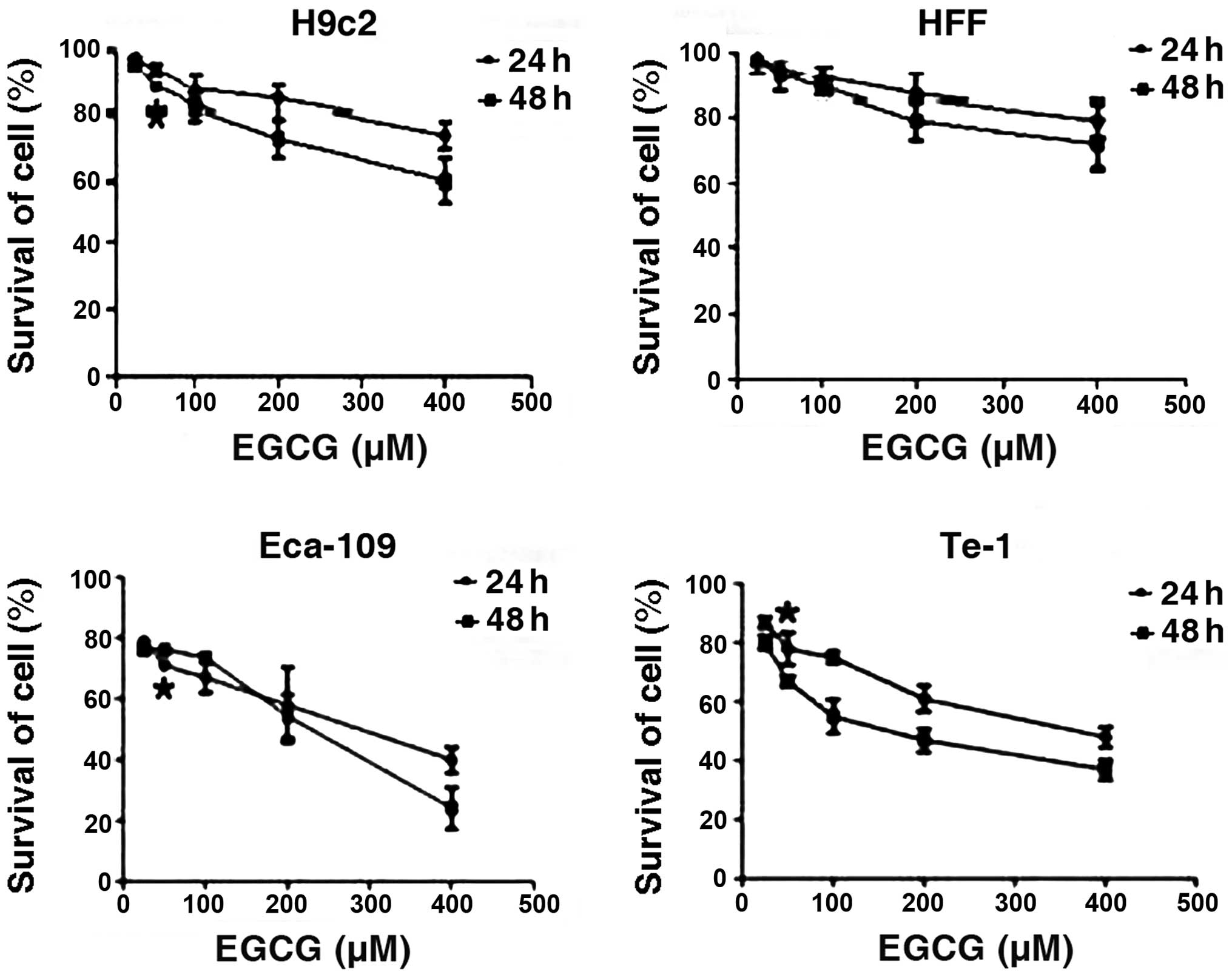
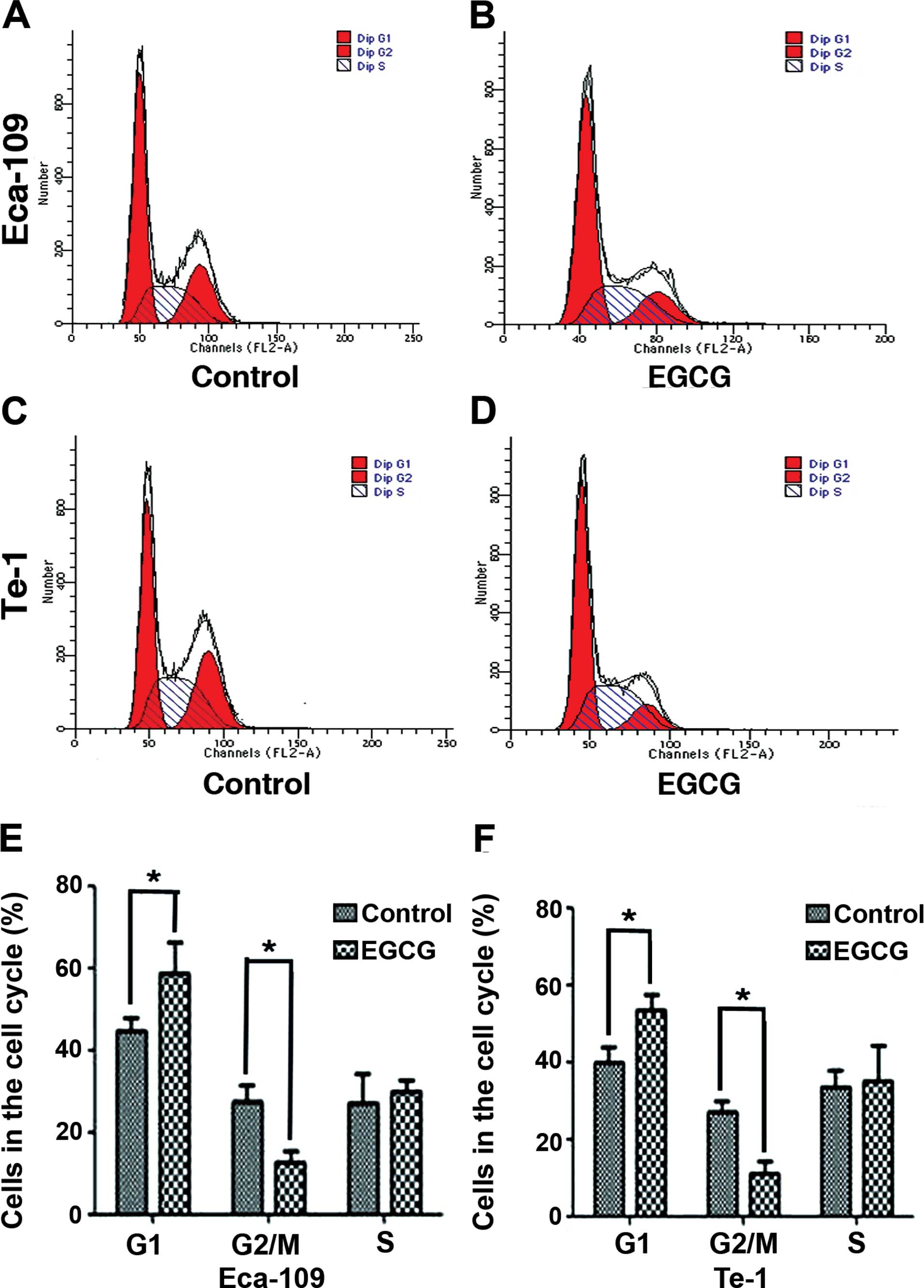
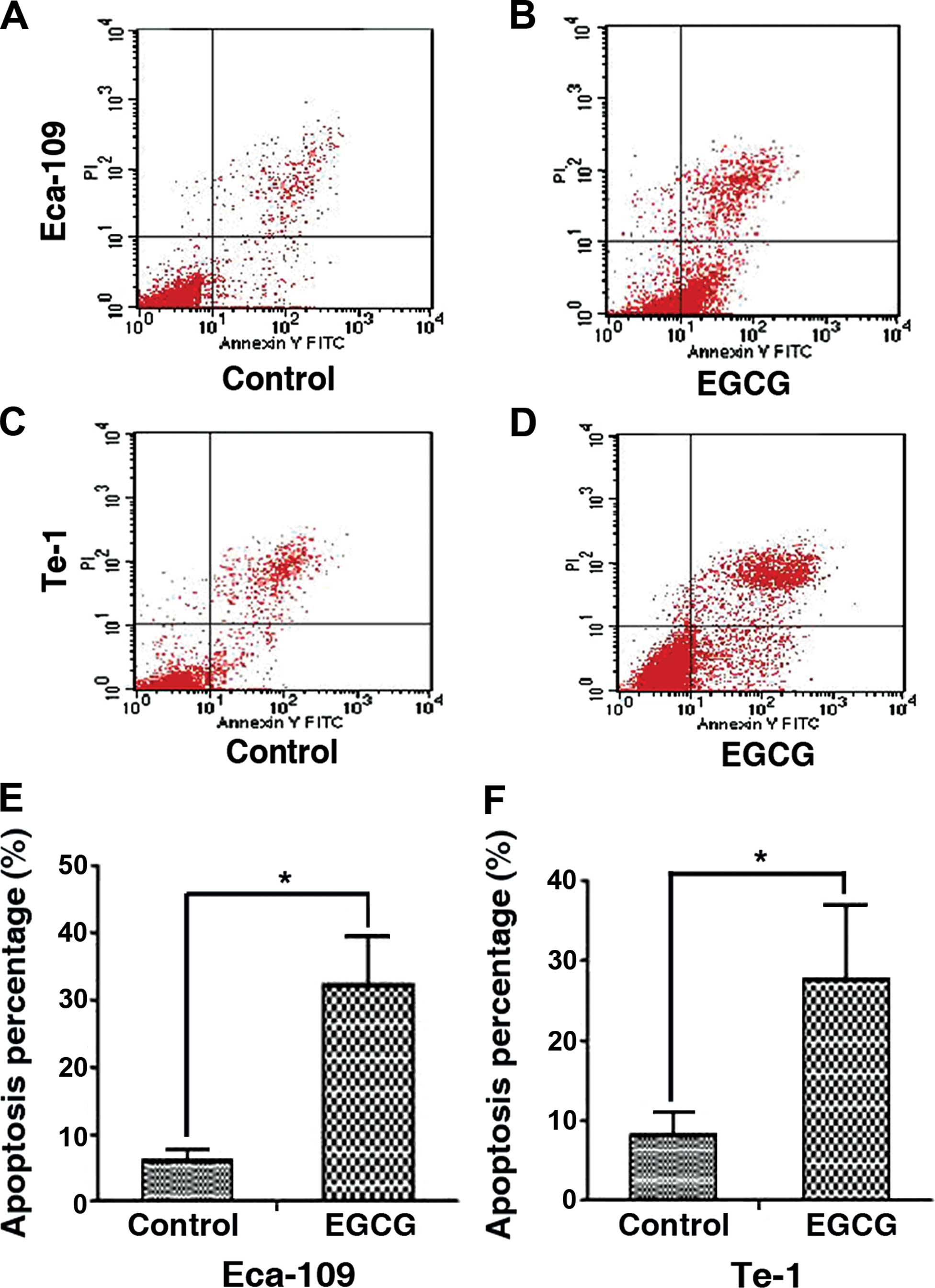
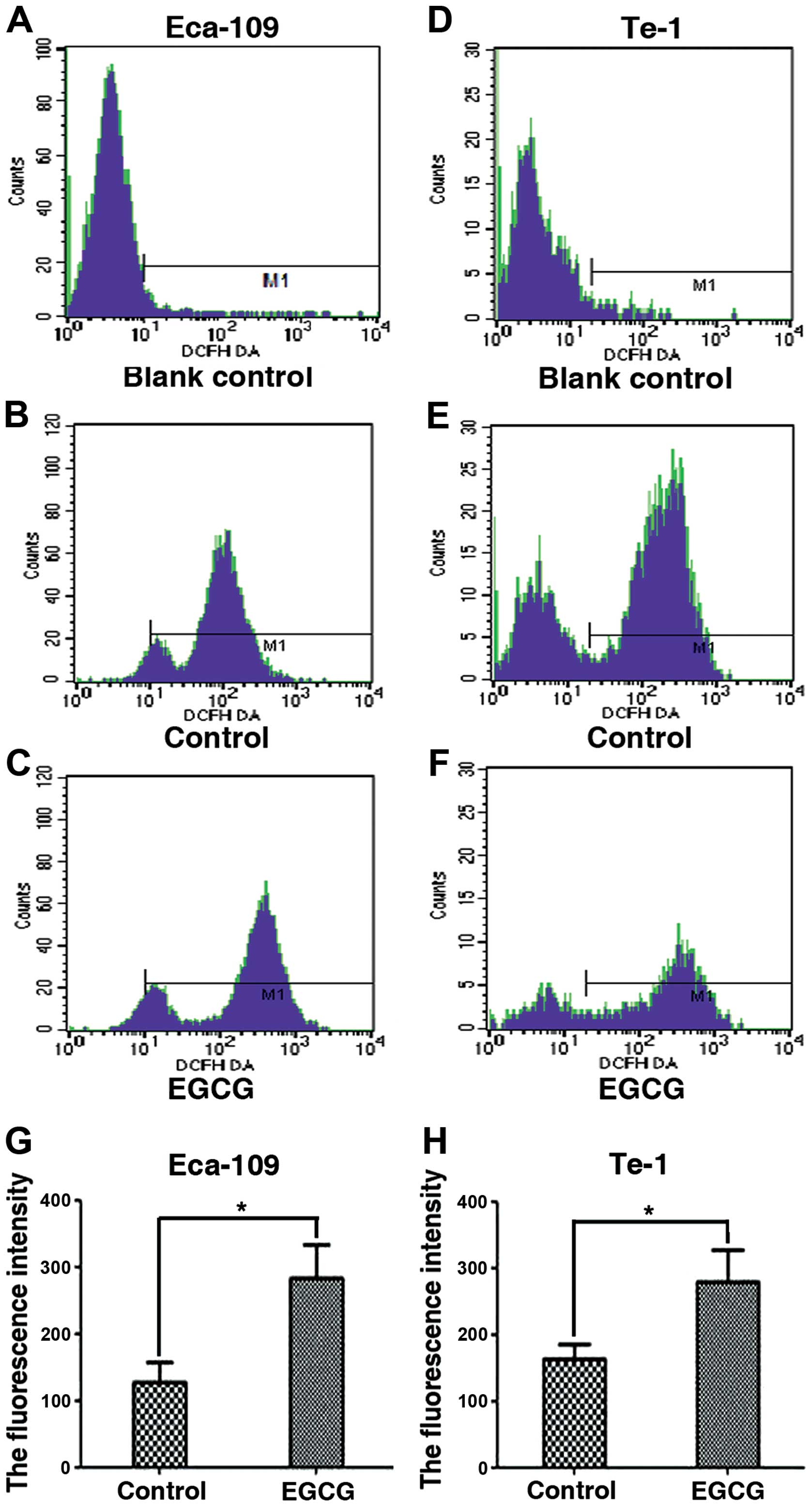
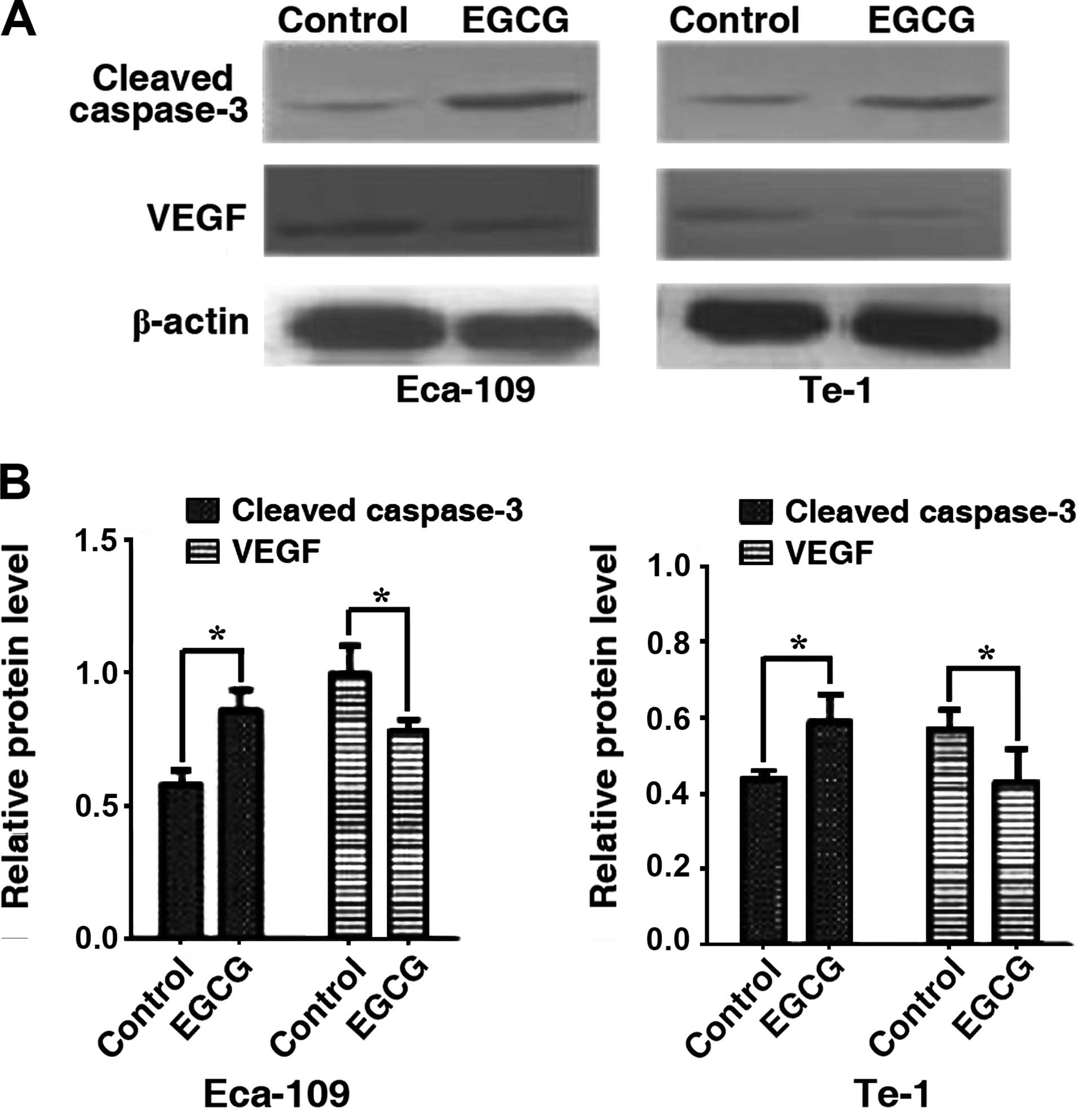
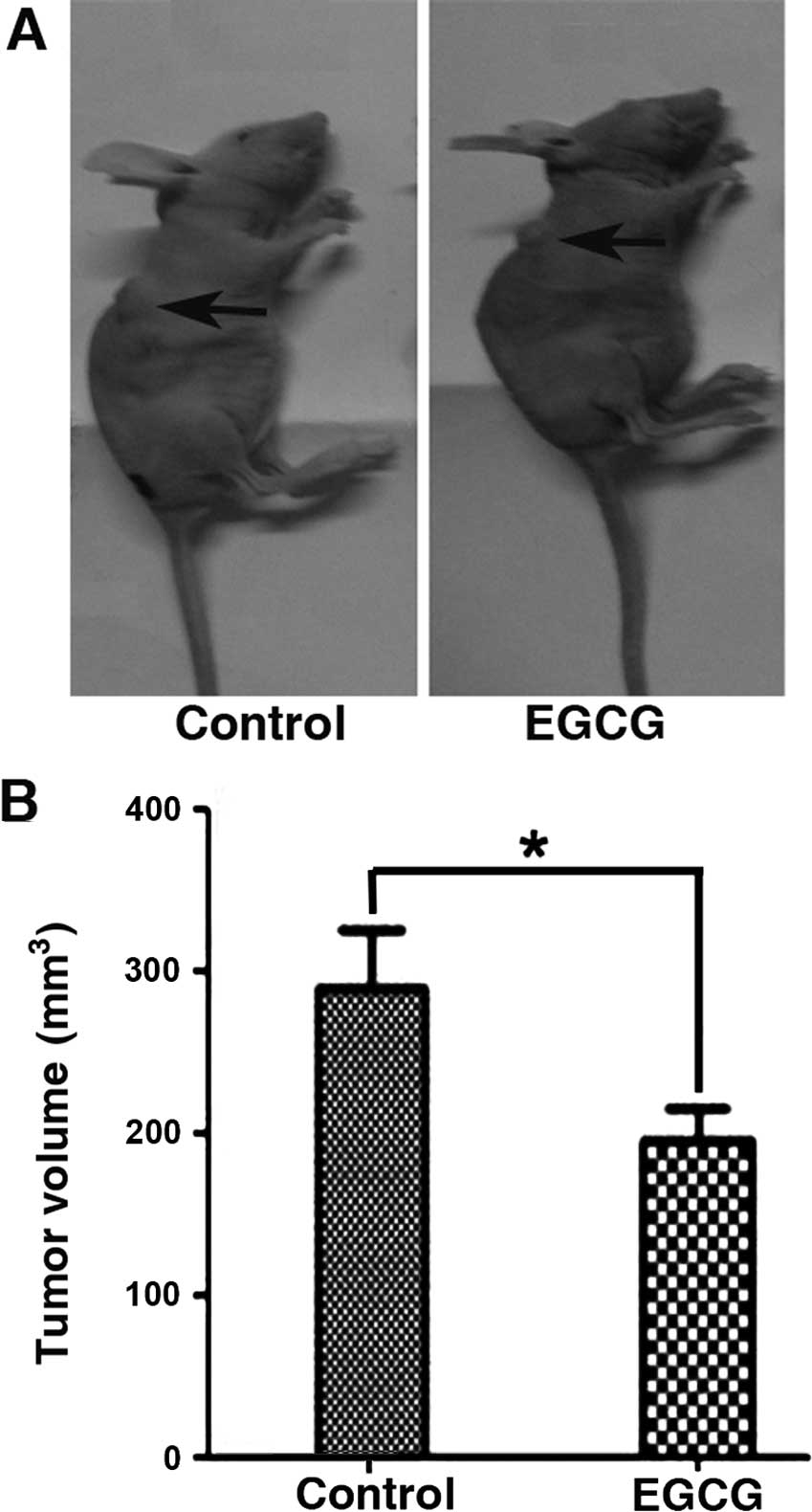
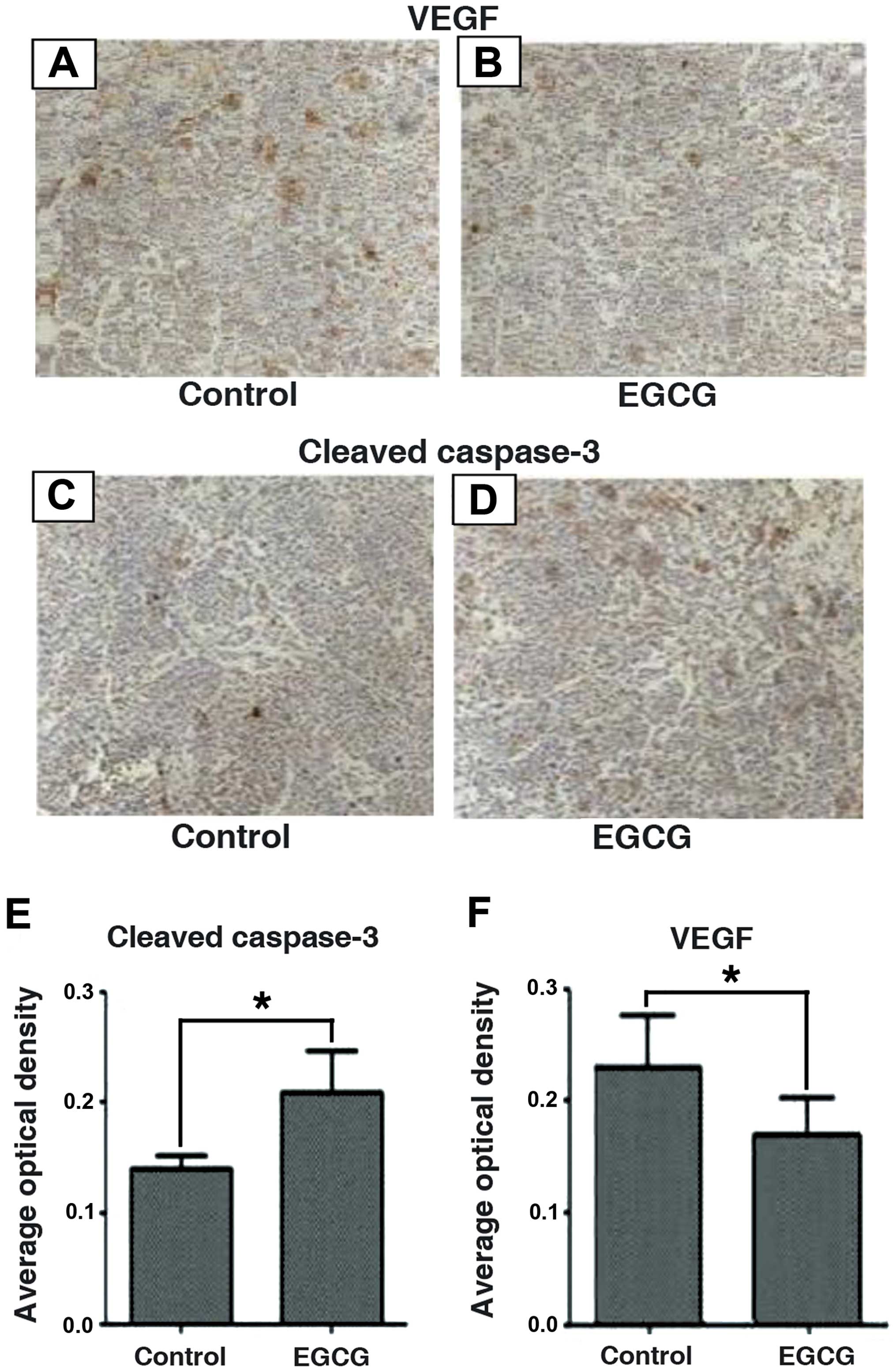
Epigallocatechin-3-gallate (EGCG), the major polyphenol of green tea, has been shown to inhibit proliferation in various types of tumors. However, few studies concerning the role and mechanism of EGCG in esophageal squamous cell carcinoma are available. Therefore, the antitumor mechanism of EGCG needs to be investigated. The present study aimed to examine the antitumor effect of EGCG on the human esophageal squamous cell carcinoma cell lines, Eca-109 and Te-1, in vitro and in vivo. Cell viability was assessed using the MTT assay and tumor formation and growth in murine xenograft models with or without EGCG treatment. Cell cycle analysis and levels of reactive oxygen species (ROS) were detected using flow cytometry. Apoptosis was measured by Annexin/propidium iodide staining. Caspase-3 cleavage and vascular endothelial growth factor (VEGF) expression were detected using western blot analysis and immunohistochemistry in tumor cell lines and tumor xenografts, respectively. The results showed that EGCG inhibited proliferation in the Eca-109 and Te-1 cells in a time- and dose-dependent manner. Tumor cells were arrested in the G1 phase and apoptosis was accompanied by ROS production and caspase-3 cleavage. In a mouse model, EGCG significantly inhibited the growth of Eca-109 tumors by increasing the expression of cleaved-caspase-3 and decreasing VEGF protein levels. Taken together, the results suggest that EGCG inhibits proliferation and induces apoptosis through ROS production, caspase-3 activation, and a decrease in VEGF expression in vitro and in vivo. Furthermore, EGCG may have future clinical applications for novel approaches to treat esophageal squamous cell carcinoma.
View Figures

Figure 1

Figure 2

Figure 3

Figure 4

Figure 5

Figure 6

Figure 7

Figure 8

View References

1 

Demeester SR: Epidemiology and biology of esophageal cancer. Gastrointest Cancer Res. 3(Suppl 1): S2–S5. 2009.PubMed/NCBI

2 

Jemal A, Bray F, Center MM, Ferlay J, Ward E and Forman D: Global cancer statistics. CA Cancer J Clin. 61:69–90. 2011. View Article : Google Scholar : PubMed/NCBI

3 

Chowdhury FU, Bradley KM and Gleeson FV: The role of 18F-FDG PET/CT in the evaluation of oesophageal carcinoma. Clin Radiol. 63:1297–1309. 2008. View Article : Google Scholar : PubMed/NCBI

4 

Choi J, Kim SG, Kim JS, Jung HC and Song IS: Comparison of endoscopic ultrasonography (EUS), positron emission tomography (PET), and computed tomography (CT) in the preoperative locoregional staging of resectable esophageal cancer. Surg Endosc. 24:1380–1386. 2010. View Article : Google Scholar

5 

Salahudeen HM, Balan A, Naik K, Mirsadraee S and Scarsbrook AF: Impact of the introduction of integrated PET-CT into the preoperative staging pathway of patients with potentially operable oesophageal carcinoma. Clin Radiol. 63:765–773. 2008. View Article : Google Scholar : PubMed/NCBI

6 

Noble F and Bailey D; SWCIS Upper Gastrointestinal Tumour Panel. Tung K and Byrne JP: Impact of integrated PET/CT in the staging of oesophageal cancer: a UK population-based cohort study. Clin Radiol. 64:699–705. 2009. View Article : Google Scholar : PubMed/NCBI

7 

Abou El Naga RN, Azab SS, El-Demerdash E, Shaarawy S, El-Merzabani M and Ammar el-SM: Sensitization of TRAIL-induced apoptosis in human hepatocellular carcinoma HepG2 cells by phytochemicals. Life Sci. 92:555–561. 2013. View Article : Google Scholar : PubMed/NCBI

8 

Farabegoli F, Papi A, Bartolini G, Ostan R and Orlandi M: (−)-Epigallocatechin-3- gallate downregulates Pg-P and BCRP in a tamoxifen resistant MCF-7 cell line. Phytomedicine. 17:356–362. 2010. View Article : Google Scholar : PubMed/NCBI

9 

Lee SH, Nam HJ, Kang HJ, Kwon HW and Lim YC: Epigallocatechin-3-gallate attenuates head and neck cancer stem cell traits through suppression of Notch pathway. Eur J Cancer. 49:3210–3218. 2013. View Article : Google Scholar : PubMed/NCBI

10 

Lecumberri E, Dupertuis YM, Miralbell R and Pichard C: Green tea polyphenol epigallocatechin-3-gallate (EGCG) as adjuvant in cancer therapy. Clin Nutr. 32:894–903. 2013. View Article : Google Scholar : PubMed/NCBI

11 

Qian Y, Guan T, Huang M, et al: Neuroprotection by the soy isoflavone, genistein, via inhibition of mitochondria-dependent apoptosis pathways and reactive oxygen induced-NF-κB activation in a cerebral ischemia mouse model. Neurochem Int. 60:759–767. 2012. View Article : Google Scholar : PubMed/NCBI

12 

Forbes-Hernández TY, Giampieri F, Gasparrini M, Mazzoni L, Quiles JL, Alvarez-Suarez JM and Battino M: The effects of bioactive compounds from plant foods on mitochondrial function: a focus on apoptotic mechanisms. Food Chem Toxicol. 68:154–182. 2014. View Article : Google Scholar : PubMed/NCBI

13 

Kwak TW, Kim do H, Chung CW, Lee HM, Kim CH, Jeong YI and Kang DH: Synergistic anticancer effects of vorinostat and epigallocatechin-3-gallate against HuCC-T1 human cholangiocarcinoma cells. Evid Based Complement Alternat Med. 2013:1851582013. View Article : Google Scholar : PubMed/NCBI

14 

Lee JH, Jeong YJ, Lee SW, et al: EGCG induces apoptosis in human laryngeal epidermoid carcinoma Hep2 cells via mitochondria with the release of apoptosis-inducing factor and endonuclease G. Cancer Lett. 290:68–75. 2010. View Article : Google Scholar

15 

Sakamoto Y, Terashita N, Muraguchi T, Fukusato T and Kubota S: Effects of epigallocatechin-3-gallate (EGCG) on A549 lung cancer tumor growth and angiogenesis. Biosci Biotechnol Biochem. 77:1799–1803. 2013. View Article : Google Scholar : PubMed/NCBI

16 

Spagnuolo P, Rasini E, Luini A, et al: Isoflavone content and estrogenic activity of different batches of red clover (Trifolium pratense L.) extracts: an in vitro study in MCF-7 cells. Fitoterapia. 94:62–69. 2014. View Article : Google Scholar : PubMed/NCBI

17 

Eskandani M, Hamishehkar H and Ezzati Nazhad Dolatabadi J: Cytotoxicity and DNA damage properties of tert-butylhydroquinone (TBHQ) food additive. Food Chem. 153:315–320. 2014. View Article : Google Scholar : PubMed/NCBI

18 

Valenti D, de Bari L, Manente GA, Rossi L, Mutti L, Moro L and Vacca RA: Negative modulation of mitochondrial oxidative phosphorylation by epigallocatechin-3 gallate leads to growth arrest and apoptosis in human malignant pleural mesothelioma cells. Biochim Biophys Acta. 1832:2085–2096. 2013. View Article : Google Scholar : PubMed/NCBI

19 

Tran PL, Kim SA, Choi HS, Yoon JH and Ahn SG: Epigallo-catechin-3-gallate suppresses the expression of HSP70 and HSP90 and exhibits anti-tumor activity in vitro and in vivo. BMC Cancer. 10:2762010. View Article : Google Scholar

20 

Hwang YS, Park KK and Chung WY: Epigallocatechin-3 gallate inhibits cancer invasion by repressing functional invadopodia formation in oral squamous cell carcinoma. Eur J Pharmacol. 715:286–295. 2013. View Article : Google Scholar : PubMed/NCBI

21 

Singh M, Singh R, Bhui K, Tyagi S, Mahmood Z and Shukla Y: Tea polyphenols induce apoptosis through mitochondrial pathway and by inhibiting nuclear factor-κB and Akt activation in human cervical cancer cells. Oncol Res. 19:245–257. 2011. View Article : Google Scholar

22 

Shan X, Li Y, Meng X, Wang P, Jiang P and Feng Q: Curcumin and (−)-epigallocatechin-3-gallate attenuate acrylamide-induced proliferation in HepG2 cells. Food Chem Toxicol. 66:194–202. 2014. View Article : Google Scholar : PubMed/NCBI

23 

Ma J, Shi M, Li G, et al: Regulation of Id1 expression by epigallocatechin-3-gallate and its effect on the proliferation and apoptosis of poorly differentiated AGS gastric cancer cells. Int J Oncol. 43:1052–1058. 2013.PubMed/NCBI

24 

Thakur VS, Ruhul Amin AR, Paul RK, et al: p53-Dependent p21-mediated growth arrest pre-empts and protects HCT116 cells from PUMA-mediated apoptosis induced by EGCG. Cancer Lett. 296:225–232. 2010. View Article : Google Scholar : PubMed/NCBI

25 

Tsai CF, Hsu YW, Ting HC, Huang CF and Yen CC: The in vivo antioxidant and antifibrotic properties of green tea (Camellia sinensis, Theaceae). Food Chem. 136:1337–1344. 2013. View Article : Google Scholar

26 

Kim HS, Quon MJ and Kim JA: New insights into the mechanisms of polyphenols beyond antioxidant properties; lessons from the green tea polyphenol, epigallocatechin 3-gallate. Redox Biol. 2:187–195. 2014. View Article : Google Scholar : PubMed/NCBI

27 

Satoh M, Takemura Y, Hamada H, Sekido Y and Kubota S: EGCG induces human mesothelioma cell death by inducing reactive oxygen species and autophagy. Cancer Cell Int. 13:192013. View Article : Google Scholar : PubMed/NCBI

28 

Manohar M, Fatima I, Saxena R, Chandra V, Sankhwar PL and Dwivedi A: (−)-Epigallocatechin-3-gallate induces apoptosis in human endometrial adenocarcinoma cells via ROS generation and p38 MAP kinase activation. J Nutr Biochem. 24:940–947. 2013. View Article : Google Scholar

29 

Kalaiselvi P, Rajashree K, Bharathi Priya L and Padma VV: Cytoprotective effect of epigallocatechin-3-gallate against deoxynivalenol-induced toxicity through anti-oxidative and anti-inflammatory mechanisms in HT-29 cells. Food Chem Toxicol. 56:110–118. 2013. View Article : Google Scholar : PubMed/NCBI

30 

Susin SA, Lorenzo HK, Zamzami N, et al: Molecular characterization of mitochondrial apoptosis-inducing factor. Nature. 397:441–446. 1999. View Article : Google Scholar : PubMed/NCBI

31 

Gao Y, Li W, Jia L, Li B, Chen YC and Tu Y: Enhancement of (−)-epigallocatechin-3-gallate and theaflavin-3-3′-digallate induced apoptosis by ascorbic acid in human lung adenocarcinoma SPC-A-1 cells and esophageal carcinoma Eca-109 cells via MAPK pathways. Biochem Biophys Res Commun. 438:370–374. 2013. View Article : Google Scholar : PubMed/NCBI

32 

Deindl E: Mechanistic insights into the functional role of vascular endothelial growth factor and its signalling partner brain-derived neurotrophic factor in angiogenic tube formation. Acta Physiol. 211:268–270. 2014. View Article : Google Scholar

33 

Gorman JL, Liu ST, Slopack D, et al: Angiotensin II evokes angiogenic signals within skeletal muscle through co-ordinated effects on skeletal myocytes and endothelial cells. PLoS One. 9:e855372014. View Article : Google Scholar : PubMed/NCBI

34 

Takala H, Saarnio J, Wiik H, Ohtonen P and Soini Y: HIF-1α and VEGF are associated with disease progression in esophageal carcinoma. J Surg Res. 167:41–48. 2011. View Article : Google Scholar

35 

Hsieh DS, Wang H, Tan SW, Huang YH, Tsai CY, Yeh MK and Wu CJ: The treatment of bladder cancer in a mouse model by epigallocatechin-3-gallate-gold nanoparticles. Biomaterials. 32:7633–7640. 2011. View Article : Google Scholar : PubMed/NCBI

36 

Shimizu M, Shirakami Y, Sakai H, et al: (−)-Epigallocatechin gallate inhibits growth and activation of the VEGF/VEGFR axis in human colorectal cancer cells. Chem Biol Interact. 185:247–252. 2010. View Article : Google Scholar : PubMed/NCBI

37 

Valenti D, De Rasmo D, Signorile A, et al: Epigallocatechin-3-gallate prevents oxidative phosphorylation deficit and promotes mitochondrial biogenesis in human cells from subject with Down’s syndrome. Biochim Biophys Acta. 1832:542–552. 2013. View Article : Google Scholar : PubMed/NCBI

38 

Galati G, Lin A, Sultan AM and O’Brien PJ: Cellular and in vivo hepatotoxicity caused by green tea phenolic acids and catechins. Free Radic Biol Med. 40:570–580. 2006. View Article : Google Scholar : PubMed/NCBI

39 

Min NY, Kim JH, Choi JH, et al: Selective death of cancer cells by preferential induction of reactive oxygen species in response to (−)-epigallocatechin-3-gallate. Biochem Biophys Res Commun. 421:91–97. 2012. View Article : Google Scholar : PubMed/NCBI

Related Articles

  • Abstract
  • View
  • Download
  • Twitter
Copy and paste a formatted citation
Spandidos Publications style
Liu L, Hou L, Gu S, Zuo X, Meng D, Luo M, Zhang X, Huang S and Zhao X: Molecular mechanism of epigallocatechin-3-gallate in human esophageal squamous cell carcinoma in vitro and in vivo. Oncol Rep 33: 297-303, 2015.
APA
Liu, L., Hou, L., Gu, S., Zuo, X., Meng, D., Luo, M. ... Zhao, X. (2015). Molecular mechanism of epigallocatechin-3-gallate in human esophageal squamous cell carcinoma in vitro and in vivo. Oncology Reports, 33, 297-303. https://doi.org/10.3892/or.2014.3555
MLA
Liu, L., Hou, L., Gu, S., Zuo, X., Meng, D., Luo, M., Zhang, X., Huang, S., Zhao, X."Molecular mechanism of epigallocatechin-3-gallate in human esophageal squamous cell carcinoma in vitro and in vivo". Oncology Reports 33.1 (2015): 297-303.
Chicago
Liu, L., Hou, L., Gu, S., Zuo, X., Meng, D., Luo, M., Zhang, X., Huang, S., Zhao, X."Molecular mechanism of epigallocatechin-3-gallate in human esophageal squamous cell carcinoma in vitro and in vivo". Oncology Reports 33, no. 1 (2015): 297-303. https://doi.org/10.3892/or.2014.3555
Copy and paste a formatted citation
x
Spandidos Publications style
Liu L, Hou L, Gu S, Zuo X, Meng D, Luo M, Zhang X, Huang S and Zhao X: Molecular mechanism of epigallocatechin-3-gallate in human esophageal squamous cell carcinoma in vitro and in vivo. Oncol Rep 33: 297-303, 2015.
APA
Liu, L., Hou, L., Gu, S., Zuo, X., Meng, D., Luo, M. ... Zhao, X. (2015). Molecular mechanism of epigallocatechin-3-gallate in human esophageal squamous cell carcinoma in vitro and in vivo. Oncology Reports, 33, 297-303. https://doi.org/10.3892/or.2014.3555
MLA
Liu, L., Hou, L., Gu, S., Zuo, X., Meng, D., Luo, M., Zhang, X., Huang, S., Zhao, X."Molecular mechanism of epigallocatechin-3-gallate in human esophageal squamous cell carcinoma in vitro and in vivo". Oncology Reports 33.1 (2015): 297-303.
Chicago
Liu, L., Hou, L., Gu, S., Zuo, X., Meng, D., Luo, M., Zhang, X., Huang, S., Zhao, X."Molecular mechanism of epigallocatechin-3-gallate in human esophageal squamous cell carcinoma in vitro and in vivo". Oncology Reports 33, no. 1 (2015): 297-303. https://doi.org/10.3892/or.2014.3555
Follow us
  • Twitter
  • LinkedIn
  • Facebook
About
  • Spandidos Publications
  • Careers
  • Cookie Policy
  • Privacy Policy
How can we help?
  • Help
  • Live Chat
  • Contact
  • Email to our Support Team