Spandidos Publications Logo
  • About
    • About Spandidos
    • Aims and Scopes
    • Abstracting and Indexing
    • Editorial Policies
    • Reprints and Permissions
    • Job Opportunities
    • Terms and Conditions
    • Contact
  • Journals
    • All Journals
    • Oncology Letters
      • Oncology Letters
      • Information for Authors
      • Editorial Policies
      • Editorial Board
      • Aims and Scope
      • Abstracting and Indexing
      • Bibliographic Information
      • Archive
    • International Journal of Oncology
      • International Journal of Oncology
      • Information for Authors
      • Editorial Policies
      • Editorial Board
      • Aims and Scope
      • Abstracting and Indexing
      • Bibliographic Information
      • Archive
    • Molecular and Clinical Oncology
      • Molecular and Clinical Oncology
      • Information for Authors
      • Editorial Policies
      • Editorial Board
      • Aims and Scope
      • Abstracting and Indexing
      • Bibliographic Information
      • Archive
    • Experimental and Therapeutic Medicine
      • Experimental and Therapeutic Medicine
      • Information for Authors
      • Editorial Policies
      • Editorial Board
      • Aims and Scope
      • Abstracting and Indexing
      • Bibliographic Information
      • Archive
    • International Journal of Molecular Medicine
      • International Journal of Molecular Medicine
      • Information for Authors
      • Editorial Policies
      • Editorial Board
      • Aims and Scope
      • Abstracting and Indexing
      • Bibliographic Information
      • Archive
    • Biomedical Reports
      • Biomedical Reports
      • Information for Authors
      • Editorial Policies
      • Editorial Board
      • Aims and Scope
      • Abstracting and Indexing
      • Bibliographic Information
      • Archive
    • Oncology Reports
      • Oncology Reports
      • Information for Authors
      • Editorial Policies
      • Editorial Board
      • Aims and Scope
      • Abstracting and Indexing
      • Bibliographic Information
      • Archive
    • Molecular Medicine Reports
      • Molecular Medicine Reports
      • Information for Authors
      • Editorial Policies
      • Editorial Board
      • Aims and Scope
      • Abstracting and Indexing
      • Bibliographic Information
      • Archive
    • World Academy of Sciences Journal
      • World Academy of Sciences Journal
      • Information for Authors
      • Editorial Policies
      • Editorial Board
      • Aims and Scope
      • Abstracting and Indexing
      • Bibliographic Information
      • Archive
    • International Journal of Functional Nutrition
      • International Journal of Functional Nutrition
      • Information for Authors
      • Editorial Policies
      • Editorial Board
      • Aims and Scope
      • Abstracting and Indexing
      • Bibliographic Information
      • Archive
    • International Journal of Epigenetics
      • International Journal of Epigenetics
      • Information for Authors
      • Editorial Policies
      • Editorial Board
      • Aims and Scope
      • Abstracting and Indexing
      • Bibliographic Information
      • Archive
    • Medicine International
      • Medicine International
      • Information for Authors
      • Editorial Policies
      • Editorial Board
      • Aims and Scope
      • Abstracting and Indexing
      • Bibliographic Information
      • Archive
  • Articles
  • Information
    • Information for Authors
    • Information for Reviewers
    • Information for Librarians
    • Information for Advertisers
    • Conferences
  • Language Editing
Spandidos Publications Logo
  • About
    • About Spandidos
    • Aims and Scopes
    • Abstracting and Indexing
    • Editorial Policies
    • Reprints and Permissions
    • Job Opportunities
    • Terms and Conditions
    • Contact
  • Journals
    • All Journals
    • Biomedical Reports
      • Information for Authors
      • Editorial Policies
      • Editorial Board
      • Aims and Scope
      • Abstracting and Indexing
      • Bibliographic Information
      • Archive
    • Experimental and Therapeutic Medicine
      • Information for Authors
      • Editorial Policies
      • Editorial Board
      • Aims and Scope
      • Abstracting and Indexing
      • Bibliographic Information
      • Archive
    • International Journal of Epigenetics
      • Information for Authors
      • Editorial Policies
      • Editorial Board
      • Aims and Scope
      • Abstracting and Indexing
      • Bibliographic Information
      • Archive
    • International Journal of Functional Nutrition
      • Information for Authors
      • Editorial Policies
      • Editorial Board
      • Aims and Scope
      • Abstracting and Indexing
      • Bibliographic Information
      • Archive
    • International Journal of Molecular Medicine
      • Information for Authors
      • Editorial Policies
      • Editorial Board
      • Aims and Scope
      • Abstracting and Indexing
      • Bibliographic Information
      • Archive
    • International Journal of Oncology
      • Information for Authors
      • Editorial Policies
      • Editorial Board
      • Aims and Scope
      • Abstracting and Indexing
      • Bibliographic Information
      • Archive
    • Medicine International
      • Information for Authors
      • Editorial Policies
      • Editorial Board
      • Aims and Scope
      • Abstracting and Indexing
      • Bibliographic Information
      • Archive
    • Molecular and Clinical Oncology
      • Information for Authors
      • Editorial Policies
      • Editorial Board
      • Aims and Scope
      • Abstracting and Indexing
      • Bibliographic Information
      • Archive
    • Molecular Medicine Reports
      • Information for Authors
      • Editorial Policies
      • Editorial Board
      • Aims and Scope
      • Abstracting and Indexing
      • Bibliographic Information
      • Archive
    • Oncology Letters
      • Information for Authors
      • Editorial Policies
      • Editorial Board
      • Aims and Scope
      • Abstracting and Indexing
      • Bibliographic Information
      • Archive
    • Oncology Reports
      • Information for Authors
      • Editorial Policies
      • Editorial Board
      • Aims and Scope
      • Abstracting and Indexing
      • Bibliographic Information
      • Archive
    • World Academy of Sciences Journal
      • Information for Authors
      • Editorial Policies
      • Editorial Board
      • Aims and Scope
      • Abstracting and Indexing
      • Bibliographic Information
      • Archive
  • Articles
  • Information
    • For Authors
    • For Reviewers
    • For Librarians
    • For Advertisers
    • Conferences
  • Language Editing
Login Register Submit
  • This site uses cookies
  • You can change your cookie settings at any time by following the instructions in our Cookie Policy. To find out more, you may read our Privacy Policy.

    I agree
Search articles by DOI, keyword, author or affiliation
Search
Advanced Search
presentation
Oncology Reports
Join Editorial Board Propose a Special Issue
Print ISSN: 1021-335X Online ISSN: 1791-2431
Journal Cover
April-2015 Volume 33 Issue 4

Full Size Image

Sign up for eToc alerts
Recommend to Library

Journals

International Journal of Molecular Medicine

International Journal of Molecular Medicine

International Journal of Molecular Medicine is an international journal devoted to molecular mechanisms of human disease.

International Journal of Oncology

International Journal of Oncology

International Journal of Oncology is an international journal devoted to oncology research and cancer treatment.

Molecular Medicine Reports

Molecular Medicine Reports

Covers molecular medicine topics such as pharmacology, pathology, genetics, neuroscience, infectious diseases, molecular cardiology, and molecular surgery.

Oncology Reports

Oncology Reports

Oncology Reports is an international journal devoted to fundamental and applied research in Oncology.

Experimental and Therapeutic Medicine

Experimental and Therapeutic Medicine

Experimental and Therapeutic Medicine is an international journal devoted to laboratory and clinical medicine.

Oncology Letters

Oncology Letters

Oncology Letters is an international journal devoted to Experimental and Clinical Oncology.

Biomedical Reports

Biomedical Reports

Explores a wide range of biological and medical fields, including pharmacology, genetics, microbiology, neuroscience, and molecular cardiology.

Molecular and Clinical Oncology

Molecular and Clinical Oncology

International journal addressing all aspects of oncology research, from tumorigenesis and oncogenes to chemotherapy and metastasis.

World Academy of Sciences Journal

World Academy of Sciences Journal

Multidisciplinary open-access journal spanning biochemistry, genetics, neuroscience, environmental health, and synthetic biology.

International Journal of Functional Nutrition

International Journal of Functional Nutrition

Open-access journal combining biochemistry, pharmacology, immunology, and genetics to advance health through functional nutrition.

International Journal of Epigenetics

International Journal of Epigenetics

Publishes open-access research on using epigenetics to advance understanding and treatment of human disease.

Medicine International

Medicine International

An International Open Access Journal Devoted to General Medicine.

Journal Cover
April-2015 Volume 33 Issue 4

Full Size Image

Sign up for eToc alerts
Recommend to Library

  • Article
  • Citations
    • Cite This Article
    • Download Citation
    • Create Citation Alert
    • Remove Citation Alert
    • Cited By
  • Similar Articles
    • Related Articles (in Spandidos Publications)
    • Similar Articles (Google Scholar)
    • Similar Articles (PubMed)
  • Download PDF
  • Download XML
  • View XML
Article

3,3'-Diindolylmethane potentiates paclitaxel-induced antitumor effects on gastric cancer cells through the Akt/FOXM1 signaling cascade

  • Authors:
    • Hua Jin
    • Man Hee Park
    • Soo Mi Kim
  • View Affiliations / Copyright

    Affiliations: Department of Physiology, Institute for Medical Sciences, Chonbuk National University Medical School, Jeonju, Republic of Korea, Catholic University of Pusan, Busan, Republic of Korea
  • Pages: 2031-2036
    |
    Published online on: January 28, 2015
       https://doi.org/10.3892/or.2015.3758
  • Expand metrics +
Metrics: Total Views: 0 (Spandidos Publications: | PMC Statistics: )
Metrics: Total PDF Downloads: 0 (Spandidos Publications: | PMC Statistics: )
Cited By (CrossRef): 0 citations Loading Articles...

This article is mentioned in:


Abstract

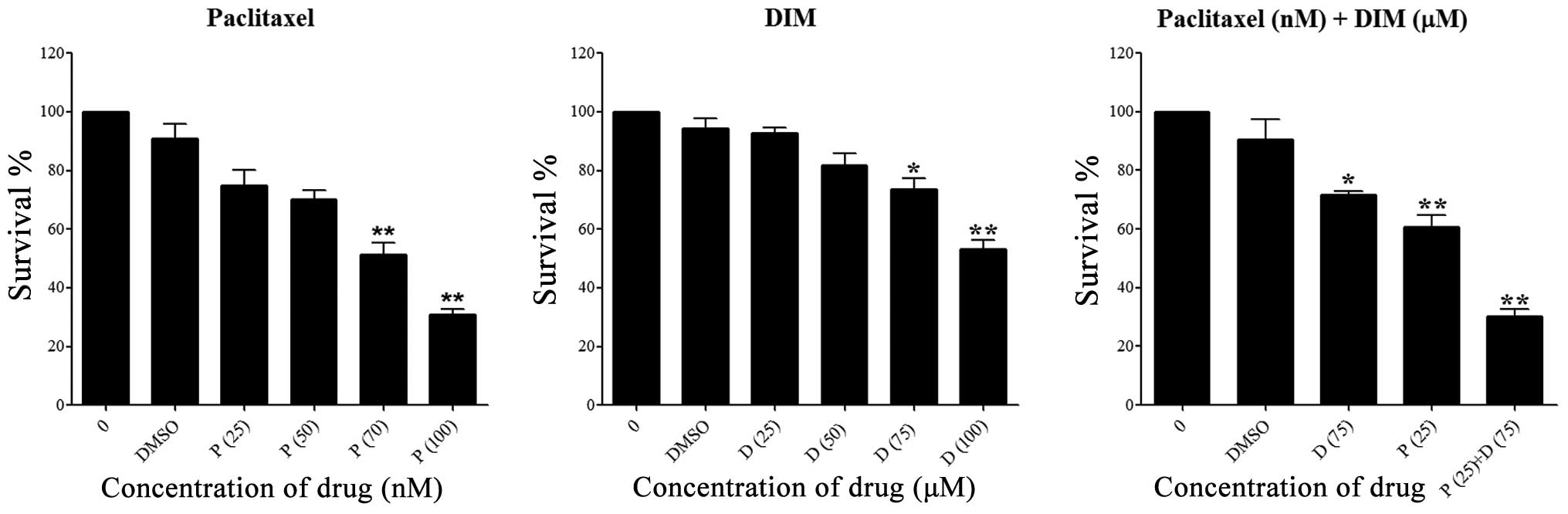
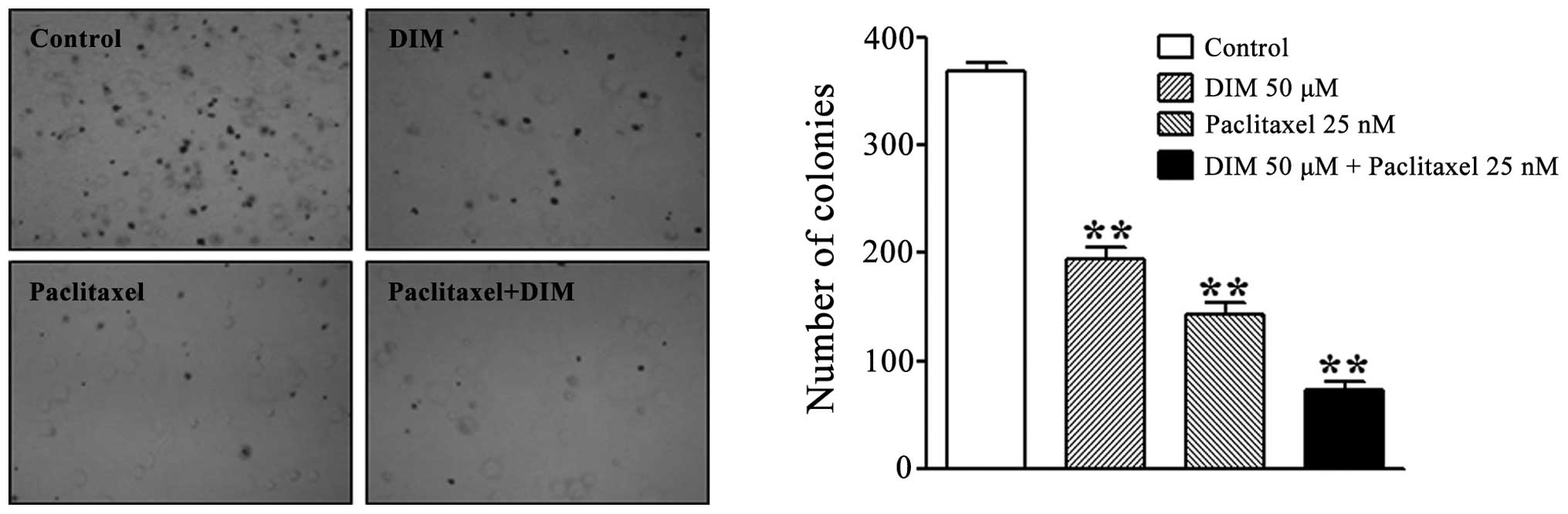
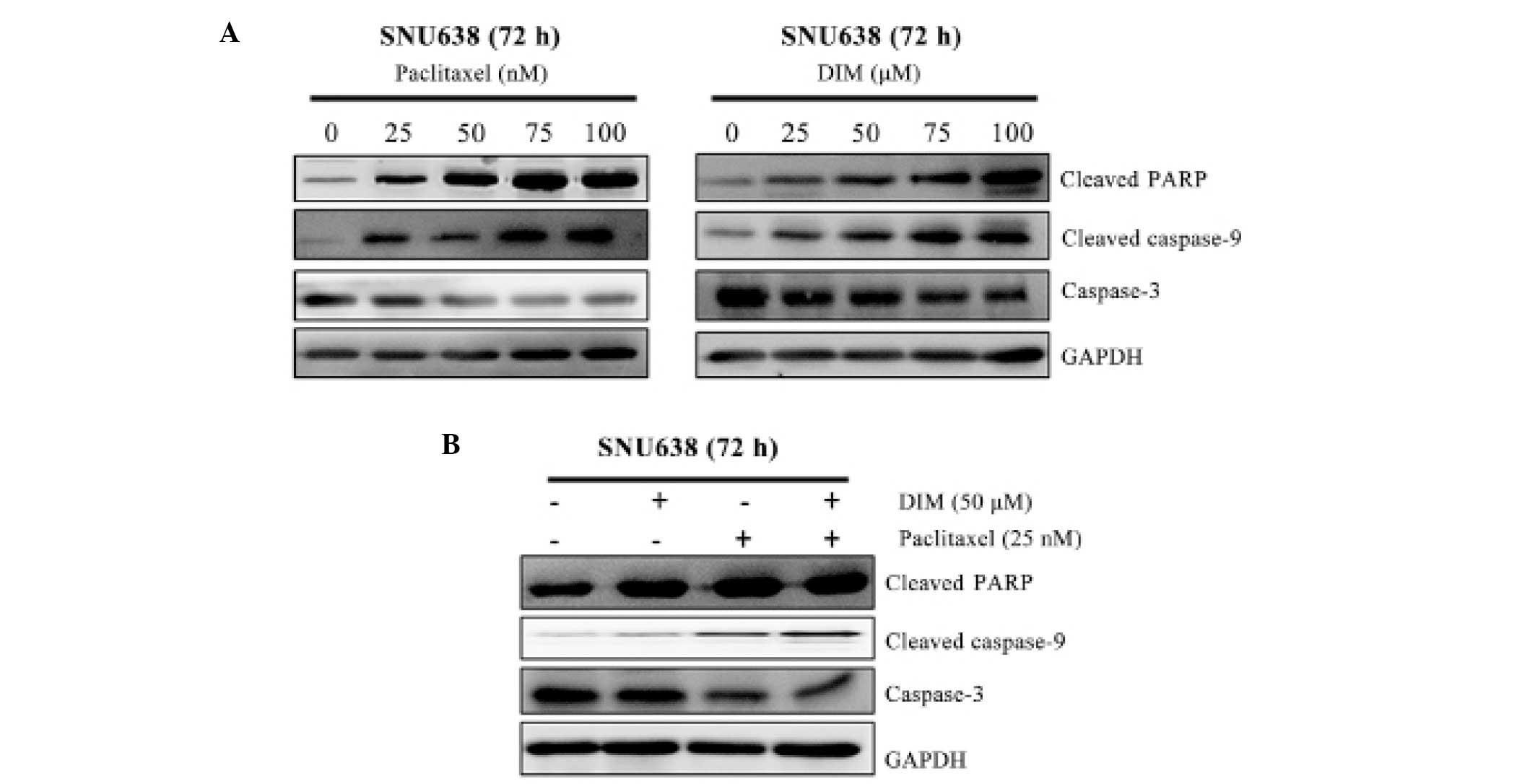
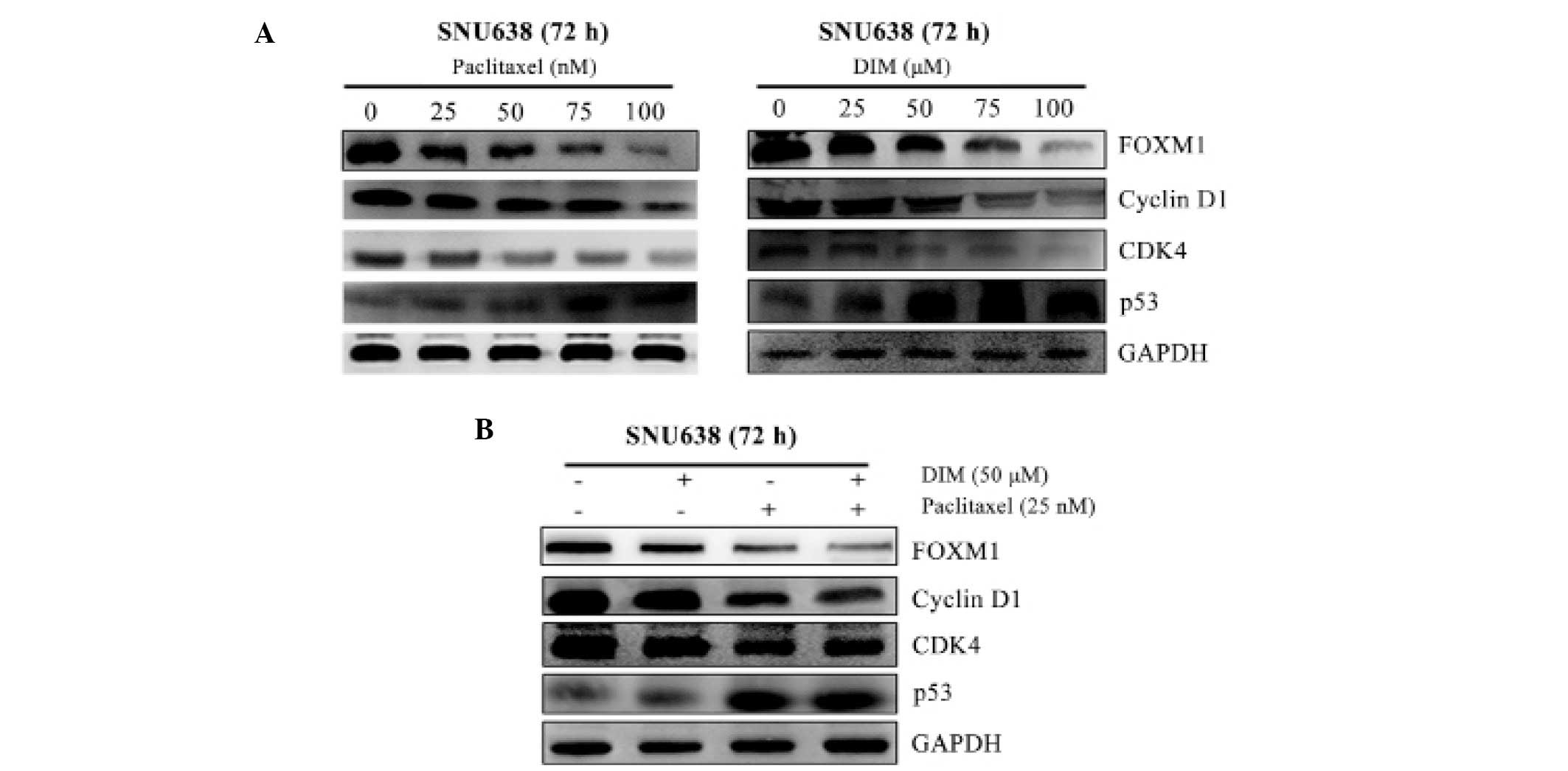
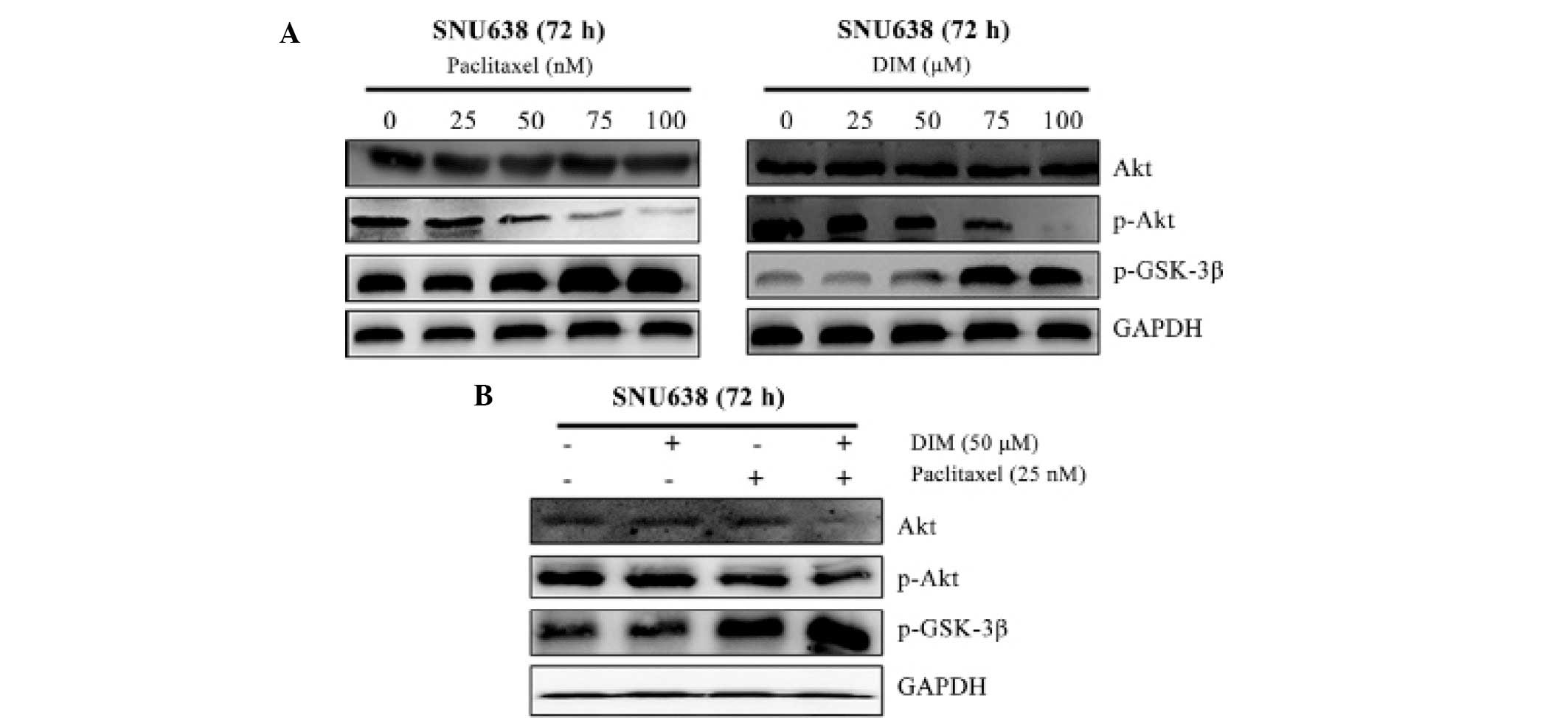
Gastric cancer is the fourth most common cancer and is one of the leading causes of cancer-related mortality worldwide. Forkhead box M1 (FOXM1) is overexpressed in gastric cancer, suggesting that it is important in gastric cancer oncogenesis. However, no studies have investigated the role of 3,3'-diindolylmethane (DIM), a component of cruciferous vegetables, in the regulation of FOXM1 and its signaling pathway in gastric cancer. Here, we report for the first time that DIM effectively downregulated Akt/FOXM1 in gastric cancer cells. Combination treatment with DIM and paclitaxel significantly and dose-dependently inhibited the proliferation of SNU638 cells when compared to treatment with DIM or paclitaxel alone. Colony formation of SNU638 cells was significantly attenuated by treatment with DIM and paclitaxel, and DIM potentiated the inhibition of colony formation in SNU638 cells by paclitaxel when compared to treatment with a single agent. Treatment with DIM plus paclitaxel substantially increased apoptosis as indicated by increased levels of cleaved polyADP-ribose polymerase (PARP) and cleaved caspase-9 protein. DIM dose-dependently sensitized gastric cancer cells through downregulation of FOXM1 and potentiated the effects of paclitaxel. FOXM1 effector genes such as CDK4, p53 and cyclin D1 were downregulated in gastric cancer cells by combination treatment with DIM and paclitaxel. In addition, DIM significantly and dose-dependently inhibited phosphorylation of Akt and potentiated paclitaxel-induced inhibition of Akt function in gastric cancer cells. Therefore, our results indicate that DIM effectively potentiates the efficacy of chemotherapeutic agents such as paclitaxel by downregulation of the Akt/FOXM1 signaling cascade in gastric cancer cells. Our findings suggest that DIM enhances the therapeutic efficacy of paclitaxel in gastric cancer and is a potential clinical anticancer agent for the prevention and/or treatment of gastric cancer.
View Figures

Figure 1

Figure 2

Figure 3

Figure 4

Figure 5

View References

1 

do Pinheiro DR, Ferreira WA, Barros MB, Araújo MD, Rodrigues-Antunes S and do Borges BN: Perspectives on new biomarkers in gastric cancer: diagnostic and prognostic applications. World J Gastroenterol. 20:11574–11585. 2014. View Article : Google Scholar

2 

Parkin DM, Bray F, Ferlay J and Pisani P: Global cancer statistics, 2002. CA Cancer J Clin. 55:74–108. 2005. View Article : Google Scholar : PubMed/NCBI

3 

Cho JY, Lim JY, Cheong JH, et al: Gene expression signature-based prognostic risk score in gastric cancer. Clin Cancer Res. 17:1850–1857. 2011. View Article : Google Scholar : PubMed/NCBI

4 

Ahn HS, Jeong SH, Son YG, et al: Effect of neoadjuvant chemotherapy on postoperative morbidity and mortality in patients with locally advanced gastric cancer. Br J Surg. 101:1560–1565. 2014. View Article : Google Scholar : PubMed/NCBI

5 

Ahn HS, Lee HJ, Hahn S, et al: Evaluation of the seventh American Joint Committee on Cancer/International Union Against Cancer Classification of gastric adenocarcinoma in comparison with the sixth classification. Cancer. 116:5592–5598. 2010. View Article : Google Scholar : PubMed/NCBI

6 

Wittekind C, Compton CC, Greene FL and Sobin LH: TNM residual tumor classification revisited. Cancer. 94:2511–2516. 2002. View Article : Google Scholar : PubMed/NCBI

7 

Edge SB and Compton CC: The American Joint Committee on Cancer: the 7th edition of the AJCC Cancer Staging Manual and the future of TNM. Ann Surg Oncol. 17:1471–1474. 2010. View Article : Google Scholar : PubMed/NCBI

8 

Louis P, Hold GL and Flint HJ: The gut microbiota, bacterial metabolites and colorectal cancer. Nat Rev Microbiol. 12:661–672. 2014. View Article : Google Scholar : PubMed/NCBI

9 

Kong D, Li Y, Wang Z, Banerjee S and Sarkar FH: Inhibition of angiogenesis and invasion by 3,3′-diindolylmethane is mediated by the nuclear factor-κB downstream target genes MMP-9 and uPA that regulated bioavailability of vascular endothelial growth factor in prostate cancer. Cancer Res. 67:3310–3319. 2007. View Article : Google Scholar : PubMed/NCBI

10 

Kristal AR and Lampe JW: Brassica vegetables and prostate cancer risk: a review of the epidemiological evidence. Nutr Cancer. 42:1–9. 2002. View Article : Google Scholar : PubMed/NCBI

11 

Kim J, Cho YA, Choi WJ and Jeong SH: Gene-diet interactions in gastric cancer risk: a systematic review. World J Gastroenterol. 20:9600–9610. 2014.PubMed/NCBI

12 

Turati F, Pelucchi C, Guercio V, La Vecchia C and Galeone C: Allium vegetable intake and gastric cancer: a case-control study and meta-analysis. Mol Nutr Food Res. Sep 12–2014.(Epub ahead of print). View Article : Google Scholar : PubMed/NCBI

13 

Wu QJ, Xie L, Zheng W, et al: Cruciferous vegetables consumption and the risk of female lung cancer: a prospective study and a meta-analysis. Ann Oncol. 24:1918–1924. 2013. View Article : Google Scholar : PubMed/NCBI

14 

Wu QJ, Yang Y, Vogtmann E, et al: Cruciferous vegetables intake and the risk of colorectal cancer: a meta-analysis of observational studies. Ann Oncol. 24:1079–1087. 2013. View Article : Google Scholar :

15 

Wu QJ, Yang Y, Wang J, Han LH and Xiang YB: Cruciferous vegetable consumption and gastric cancer risk: a meta-analysis of epidemiological studies. Cancer Sci. 104:1067–1073. 2013. View Article : Google Scholar : PubMed/NCBI

16 

Guercio V, Galeone C, Turati F and La Vecchia C: Gastric cancer and allium vegetable intake: a critical review of the experimental and epidemiologic evidence. Nutr Cancer. 66:757–773. 2014. View Article : Google Scholar : PubMed/NCBI

17 

Li XJ, Park ES, Park MH and Kim SM: 3,3′-Diindolylmethane suppresses the growth of gastric cancer cells via activation of the Hippo signaling pathway. Oncol Rep. 30:2419–2426. 2013.PubMed/NCBI

18 

Saati GE and Archer MC: Inhibition of fatty acid synthase and Sp1 expression by 3,3′-diindolylmethane in human breast cancer cells. Nutr Cancer. 63:790–794. 2011. View Article : Google Scholar

19 

Li XJ, Leem SH, Park MH and Kim SM: Regulation of YAP through an Akt-dependent process by 3, 3′-diindolylmethane in human colon cancer cells. Int J Oncol. 43:1992–1998. 2013.PubMed/NCBI

20 

Kim SJ, Lee JS and Kim SM: 3,3′-Diindolylmethane suppresses growth of human esophageal squamous cancer cells by G1 cell cycle arrest. Oncol Rep. 27:1669–1673. 2012.PubMed/NCBI

21 

Yin XF, Chen J, Mao W, Wang YH and Chen MH: A selective aryl hydrocarbon receptor modulator 3,3′-diindolylmethane inhibits gastric cancer cell growth. J Exp Clin Cancer Res. 31:462012. View Article : Google Scholar

22 

Wilson MS, Brosens JJ, Schwenen HD and Lam EW: FOXO and FOXM1 in cancer: the FOXO-FOXM1 axis shapes the outcome of cancer chemotherapy. Curr Drug Targets. 12:1256–1266. 2011. View Article : Google Scholar : PubMed/NCBI

23 

Yung MM, Chan DW, Liu VW, Yao KM and Ngan HY: Activation of AMPK inhibits cervical cancer cell growth through AKT/FOXO3a/FOXM1 signaling cascade. BMC Cancer. 13:3272013. View Article : Google Scholar : PubMed/NCBI

24 

Ahmad A, Ali S, Wang Z, et al: 3,3′-Diindolylmethane enhances taxotere-induced growth inhibition of breast cancer cells through downregulation of FoxM1. Int J Cancer. 129:1781–1791. 2011. View Article : Google Scholar

25 

Adami GR and Ye H: Future roles for FoxM1 inhibitors in cancer treatments. Future Oncol. 3:1–3. 2007. View Article : Google Scholar : PubMed/NCBI

26 

Li X, Qiu W, Liu B, et al: Forkhead box transcription factor 1 expression in gastric cancer: FOXM1 is a poor prognostic factor and mediates resistance to docetaxel. J Transl Med. 11:2042013. View Article : Google Scholar : PubMed/NCBI

27 

Li X, Qi W, Yao R, Tang D and Liang J: Overexpressed transcription factor FOXM1 is a potential diagnostic and adverse prognostic factor in postoperational gastric cancer patients. Clin Transl Oncol. 16:307–314. 2014. View Article : Google Scholar

28 

Okada K, Fujiwara Y, Takahashi T, et al: Overexpression of forkhead box M1 transcription factor (FOXM1) is a potential prognostic marker and enhances chemoresistance for docetaxel in gastric cancer. Ann Surg Oncol. 20:1035–1043. 2013. View Article : Google Scholar

29 

Zeng J, Wang L, Li Q, et al: FoxM1 is up-regulated in gastric cancer and its inhibition leads to cellular senescence, partially dependent on p27kip1. J Pathol. 218:419–427. 2009. View Article : Google Scholar : PubMed/NCBI

30 

Ye S, Lee KB, Park MH, Lee JS and Kim SM: p63 regulates growth of esophageal squamous carcinoma cells via the Akt signaling pathway. Int J Oncol. 44:2153–2159. 2014.PubMed/NCBI

31 

Lee HH, Ye S, Li XJ, Lee KB, Park MH and Kim SM: Combination treatment with paclitaxel and doxorubicin inhibits growth of human esophageal squamous cancer cells by inactivation of Akt. Oncol Rep. 31:183–188. 2014.

32 

Banerjee S, Kong D, Wang Z, Bao B, Hillman GG and Sarkar FH: Attenuation of multi-targeted proliferation-linked signaling by 3,3′-diindolylmethane (DIM): from bench to clinic. Mutat Res. 728:47–66. 2011. View Article : Google Scholar : PubMed/NCBI

33 

Yu J, Deshmukh H, Payton JE, et al: Array-based comparative genomic hybridization identifies CDK4 and FOXM1 alterations as independent predictors of survival in malignant peripheral nerve sheath tumor. Clin Cancer Res. 17:1924–1934. 2011. View Article : Google Scholar : PubMed/NCBI

34 

Raychaudhuri P and Park HJ: FoxM1: a master regulator of tumor metastasis. Cancer Res. 71:4329–4333. 2011. View Article : Google Scholar : PubMed/NCBI

35 

Dai B, Kang SH, Gong W, et al: Aberrant FoxM1B expression increases matrix metalloproteinase-2 transcription and enhances the invasion of glioma cells. Oncogene. 26:6212–6219. 2007. View Article : Google Scholar : PubMed/NCBI

36 

Wang Z, Park HJ, Carr JR, et al: FoxM1 in tumorigenicity of the neuroblastoma cells and renewal of the neural progenitors. Cancer Res. 71:4292–4302. 2011. View Article : Google Scholar : PubMed/NCBI

37 

Sun H, Teng M, Liu J, et al: FOXM1 expression predicts the prognosis in hepatocellular carcinoma patients after orthotopic liver transplantation combined with the Milan criteria. Cancer Lett. 306:214–222. 2011. View Article : Google Scholar : PubMed/NCBI

38 

Xu N, Jia D, Chen W, et al: FoxM1 is associated with poor prognosis of non-small cell lung cancer patients through promoting tumor metastasis. PLoS One. 8:e594122013. View Article : Google Scholar : PubMed/NCBI

39 

Qu K, Xu X, Liu C, et al: Negative regulation of transcription factor FoxM1 by p53 enhances oxaliplatin-induced senescence in hepatocellular carcinoma. Cancer Lett. 331:105–114. 2013. View Article : Google Scholar

40 

Kalin TV, Wang IC, Ackerson TJ, et al: Increased levels of the FoxM1 transcription factor accelerate development and progression of prostate carcinomas in both TRAMP and LADY transgenic mice. Cancer Res. 66:1712–1720. 2006. View Article : Google Scholar : PubMed/NCBI

41 

Chan DW, Yu SY, Chiu PM, et al: Over-expression of FOXM1 transcription factor is associated with cervical cancer progression and pathogenesis. J Pathol. 215:245–252. 2008. View Article : Google Scholar : PubMed/NCBI

42 

Lok GT, Chan DW, Liu VW, et al: Aberrant activation of ERK/FOXM1 signaling cascade triggers the cell migration/invasion in ovarian cancer cells. PLoS One. 6:e237902011. View Article : Google Scholar : PubMed/NCBI

43 

Chan DW, Hui WW, Cai PC, et al: Targeting GRB7/ERK/FOXM1 signaling pathway impairs aggressiveness of ovarian cancer cells. PLoS One. 7:e525782012. View Article : Google Scholar

44 

Ahmad A, Wang Z, Kong D, et al: FoxM1 down-regulation leads to inhibition of proliferation, migration and invasion of breast cancer cells through the modulation of extra-cellular matrix degrading factors. Breast Cancer Res Treat. 122:337–346. 2010. View Article : Google Scholar

45 

Qian J, Luo Y, Gu X, Zhan W and Wang X: Twist1 promotes gastric cancer cell proliferation through up-regulation of FoxM1. PLoS One. 8:e776252013. View Article : Google Scholar : PubMed/NCBI

46 

Gao N, Cheng S, Budhraja A, et al: 3,3′-Diindolylmethane exhibits antileukemic activity in vitro and in vivo through a Akt-dependent process. PLoS One. 7:e317832012. View Article : Google Scholar

47 

Weng JR, Bai LY, Chiu CF, Wang YC and Tsai MH: The dietary phytochemical 3,3′-diindolylmethane induces G2/M arrest and apoptosis in oral squamous cell carcinoma by modulating Akt-NF-κB, MAPK, and p53 signaling. Chem Biol Interact. 195:224–230. 2012. View Article : Google Scholar : PubMed/NCBI

48 

Ahmad A, Biersack B, Li Y, et al: Targeted regulation of PI3K/Akt/mTOR/NF-κB signaling by indole compounds and their derivatives: mechanistic details and biological implications for cancer therapy. Anticancer Agents Med Chem. 13:1002–1013. 2013. View Article : Google Scholar : PubMed/NCBI

49 

Zhao F and Lam EW: Role of the forkhead transcription factor FOXO-FOXM1 axis in cancer and drug resistance. Front Med. 6:376–380. 2012. View Article : Google Scholar : PubMed/NCBI

Related Articles

  • Abstract
  • View
  • Download
  • Twitter
Copy and paste a formatted citation
Spandidos Publications style
Jin H, Park MH and Kim SM: 3,3'-Diindolylmethane potentiates paclitaxel-induced antitumor effects on gastric cancer cells through the Akt/FOXM1 signaling cascade. Oncol Rep 33: 2031-2036, 2015.
APA
Jin, H., Park, M.H., & Kim, S.M. (2015). 3,3'-Diindolylmethane potentiates paclitaxel-induced antitumor effects on gastric cancer cells through the Akt/FOXM1 signaling cascade. Oncology Reports, 33, 2031-2036. https://doi.org/10.3892/or.2015.3758
MLA
Jin, H., Park, M. H., Kim, S. M."3,3'-Diindolylmethane potentiates paclitaxel-induced antitumor effects on gastric cancer cells through the Akt/FOXM1 signaling cascade". Oncology Reports 33.4 (2015): 2031-2036.
Chicago
Jin, H., Park, M. H., Kim, S. M."3,3'-Diindolylmethane potentiates paclitaxel-induced antitumor effects on gastric cancer cells through the Akt/FOXM1 signaling cascade". Oncology Reports 33, no. 4 (2015): 2031-2036. https://doi.org/10.3892/or.2015.3758
Copy and paste a formatted citation
x
Spandidos Publications style
Jin H, Park MH and Kim SM: 3,3'-Diindolylmethane potentiates paclitaxel-induced antitumor effects on gastric cancer cells through the Akt/FOXM1 signaling cascade. Oncol Rep 33: 2031-2036, 2015.
APA
Jin, H., Park, M.H., & Kim, S.M. (2015). 3,3'-Diindolylmethane potentiates paclitaxel-induced antitumor effects on gastric cancer cells through the Akt/FOXM1 signaling cascade. Oncology Reports, 33, 2031-2036. https://doi.org/10.3892/or.2015.3758
MLA
Jin, H., Park, M. H., Kim, S. M."3,3'-Diindolylmethane potentiates paclitaxel-induced antitumor effects on gastric cancer cells through the Akt/FOXM1 signaling cascade". Oncology Reports 33.4 (2015): 2031-2036.
Chicago
Jin, H., Park, M. H., Kim, S. M."3,3'-Diindolylmethane potentiates paclitaxel-induced antitumor effects on gastric cancer cells through the Akt/FOXM1 signaling cascade". Oncology Reports 33, no. 4 (2015): 2031-2036. https://doi.org/10.3892/or.2015.3758
Follow us
  • Twitter
  • LinkedIn
  • Facebook
About
  • Spandidos Publications
  • Careers
  • Cookie Policy
  • Privacy Policy
How can we help?
  • Help
  • Live Chat
  • Contact
  • Email to our Support Team