Spandidos Publications Logo
  • About
    • About Spandidos
    • Aims and Scopes
    • Abstracting and Indexing
    • Editorial Policies
    • Reprints and Permissions
    • Job Opportunities
    • Terms and Conditions
    • Contact
  • Journals
    • All Journals
    • Oncology Letters
      • Oncology Letters
      • Information for Authors
      • Editorial Policies
      • Editorial Board
      • Aims and Scope
      • Abstracting and Indexing
      • Bibliographic Information
      • Archive
    • International Journal of Oncology
      • International Journal of Oncology
      • Information for Authors
      • Editorial Policies
      • Editorial Board
      • Aims and Scope
      • Abstracting and Indexing
      • Bibliographic Information
      • Archive
    • Molecular and Clinical Oncology
      • Molecular and Clinical Oncology
      • Information for Authors
      • Editorial Policies
      • Editorial Board
      • Aims and Scope
      • Abstracting and Indexing
      • Bibliographic Information
      • Archive
    • Experimental and Therapeutic Medicine
      • Experimental and Therapeutic Medicine
      • Information for Authors
      • Editorial Policies
      • Editorial Board
      • Aims and Scope
      • Abstracting and Indexing
      • Bibliographic Information
      • Archive
    • International Journal of Molecular Medicine
      • International Journal of Molecular Medicine
      • Information for Authors
      • Editorial Policies
      • Editorial Board
      • Aims and Scope
      • Abstracting and Indexing
      • Bibliographic Information
      • Archive
    • Biomedical Reports
      • Biomedical Reports
      • Information for Authors
      • Editorial Policies
      • Editorial Board
      • Aims and Scope
      • Abstracting and Indexing
      • Bibliographic Information
      • Archive
    • Oncology Reports
      • Oncology Reports
      • Information for Authors
      • Editorial Policies
      • Editorial Board
      • Aims and Scope
      • Abstracting and Indexing
      • Bibliographic Information
      • Archive
    • Molecular Medicine Reports
      • Molecular Medicine Reports
      • Information for Authors
      • Editorial Policies
      • Editorial Board
      • Aims and Scope
      • Abstracting and Indexing
      • Bibliographic Information
      • Archive
    • World Academy of Sciences Journal
      • World Academy of Sciences Journal
      • Information for Authors
      • Editorial Policies
      • Editorial Board
      • Aims and Scope
      • Abstracting and Indexing
      • Bibliographic Information
      • Archive
    • International Journal of Functional Nutrition
      • International Journal of Functional Nutrition
      • Information for Authors
      • Editorial Policies
      • Editorial Board
      • Aims and Scope
      • Abstracting and Indexing
      • Bibliographic Information
      • Archive
    • International Journal of Epigenetics
      • International Journal of Epigenetics
      • Information for Authors
      • Editorial Policies
      • Editorial Board
      • Aims and Scope
      • Abstracting and Indexing
      • Bibliographic Information
      • Archive
    • Medicine International
      • Medicine International
      • Information for Authors
      • Editorial Policies
      • Editorial Board
      • Aims and Scope
      • Abstracting and Indexing
      • Bibliographic Information
      • Archive
  • Articles
  • Information
    • Information for Authors
    • Information for Reviewers
    • Information for Librarians
    • Information for Advertisers
    • Conferences
  • Language Editing
Spandidos Publications Logo
  • About
    • About Spandidos
    • Aims and Scopes
    • Abstracting and Indexing
    • Editorial Policies
    • Reprints and Permissions
    • Job Opportunities
    • Terms and Conditions
    • Contact
  • Journals
    • All Journals
    • Biomedical Reports
      • Information for Authors
      • Editorial Policies
      • Editorial Board
      • Aims and Scope
      • Abstracting and Indexing
      • Bibliographic Information
      • Archive
    • Experimental and Therapeutic Medicine
      • Information for Authors
      • Editorial Policies
      • Editorial Board
      • Aims and Scope
      • Abstracting and Indexing
      • Bibliographic Information
      • Archive
    • International Journal of Epigenetics
      • Information for Authors
      • Editorial Policies
      • Editorial Board
      • Aims and Scope
      • Abstracting and Indexing
      • Bibliographic Information
      • Archive
    • International Journal of Functional Nutrition
      • Information for Authors
      • Editorial Policies
      • Editorial Board
      • Aims and Scope
      • Abstracting and Indexing
      • Bibliographic Information
      • Archive
    • International Journal of Molecular Medicine
      • Information for Authors
      • Editorial Policies
      • Editorial Board
      • Aims and Scope
      • Abstracting and Indexing
      • Bibliographic Information
      • Archive
    • International Journal of Oncology
      • Information for Authors
      • Editorial Policies
      • Editorial Board
      • Aims and Scope
      • Abstracting and Indexing
      • Bibliographic Information
      • Archive
    • Medicine International
      • Information for Authors
      • Editorial Policies
      • Editorial Board
      • Aims and Scope
      • Abstracting and Indexing
      • Bibliographic Information
      • Archive
    • Molecular and Clinical Oncology
      • Information for Authors
      • Editorial Policies
      • Editorial Board
      • Aims and Scope
      • Abstracting and Indexing
      • Bibliographic Information
      • Archive
    • Molecular Medicine Reports
      • Information for Authors
      • Editorial Policies
      • Editorial Board
      • Aims and Scope
      • Abstracting and Indexing
      • Bibliographic Information
      • Archive
    • Oncology Letters
      • Information for Authors
      • Editorial Policies
      • Editorial Board
      • Aims and Scope
      • Abstracting and Indexing
      • Bibliographic Information
      • Archive
    • Oncology Reports
      • Information for Authors
      • Editorial Policies
      • Editorial Board
      • Aims and Scope
      • Abstracting and Indexing
      • Bibliographic Information
      • Archive
    • World Academy of Sciences Journal
      • Information for Authors
      • Editorial Policies
      • Editorial Board
      • Aims and Scope
      • Abstracting and Indexing
      • Bibliographic Information
      • Archive
  • Articles
  • Information
    • For Authors
    • For Reviewers
    • For Librarians
    • For Advertisers
    • Conferences
  • Language Editing
Login Register Submit
  • This site uses cookies
  • You can change your cookie settings at any time by following the instructions in our Cookie Policy. To find out more, you may read our Privacy Policy.

    I agree
Search articles by DOI, keyword, author or affiliation
Search
Advanced Search
presentation
Oncology Reports
Join Editorial Board Propose a Special Issue
Print ISSN: 1021-335X Online ISSN: 1791-2431
Journal Cover
June-2015 Volume 33 Issue 6

Full Size Image

Sign up for eToc alerts
Recommend to Library

Journals

International Journal of Molecular Medicine

International Journal of Molecular Medicine

International Journal of Molecular Medicine is an international journal devoted to molecular mechanisms of human disease.

International Journal of Oncology

International Journal of Oncology

International Journal of Oncology is an international journal devoted to oncology research and cancer treatment.

Molecular Medicine Reports

Molecular Medicine Reports

Covers molecular medicine topics such as pharmacology, pathology, genetics, neuroscience, infectious diseases, molecular cardiology, and molecular surgery.

Oncology Reports

Oncology Reports

Oncology Reports is an international journal devoted to fundamental and applied research in Oncology.

Experimental and Therapeutic Medicine

Experimental and Therapeutic Medicine

Experimental and Therapeutic Medicine is an international journal devoted to laboratory and clinical medicine.

Oncology Letters

Oncology Letters

Oncology Letters is an international journal devoted to Experimental and Clinical Oncology.

Biomedical Reports

Biomedical Reports

Explores a wide range of biological and medical fields, including pharmacology, genetics, microbiology, neuroscience, and molecular cardiology.

Molecular and Clinical Oncology

Molecular and Clinical Oncology

International journal addressing all aspects of oncology research, from tumorigenesis and oncogenes to chemotherapy and metastasis.

World Academy of Sciences Journal

World Academy of Sciences Journal

Multidisciplinary open-access journal spanning biochemistry, genetics, neuroscience, environmental health, and synthetic biology.

International Journal of Functional Nutrition

International Journal of Functional Nutrition

Open-access journal combining biochemistry, pharmacology, immunology, and genetics to advance health through functional nutrition.

International Journal of Epigenetics

International Journal of Epigenetics

Publishes open-access research on using epigenetics to advance understanding and treatment of human disease.

Medicine International

Medicine International

An International Open Access Journal Devoted to General Medicine.

Journal Cover
June-2015 Volume 33 Issue 6

Full Size Image

Sign up for eToc alerts
Recommend to Library

  • Article
  • Citations
    • Cite This Article
    • Download Citation
    • Create Citation Alert
    • Remove Citation Alert
    • Cited By
  • Similar Articles
    • Related Articles (in Spandidos Publications)
    • Similar Articles (Google Scholar)
    • Similar Articles (PubMed)
  • Download PDF
  • Download XML
  • View XML
Article

Purvalanol induces endoplasmic reticulum stress-mediated apoptosis and autophagy in a time-dependent manner in HCT116 colon cancer cells

  • Authors:
    • Ajda Coker-Gürkan
    • Elif Damla Arisan
    • Pınar Obakan
    • Kübra Akalın
    • Utku Özbey
    • Narcin Palavan-Unsal
  • View Affiliations / Copyright

    Affiliations: Department of Molecular Biology and Genetics, Science and Letters Faculty, Istanbul Kultur University, Atakoy Campus, Bakirkoy-Istanbul 34156, Turkey
  • Pages: 2761-2770
    |
    Published online on: April 21, 2015
       https://doi.org/10.3892/or.2015.3918
  • Expand metrics +
Metrics: Total Views: 0 (Spandidos Publications: | PMC Statistics: )
Metrics: Total PDF Downloads: 0 (Spandidos Publications: | PMC Statistics: )
Cited By (CrossRef): 0 citations Loading Articles...

This article is mentioned in:


Abstract

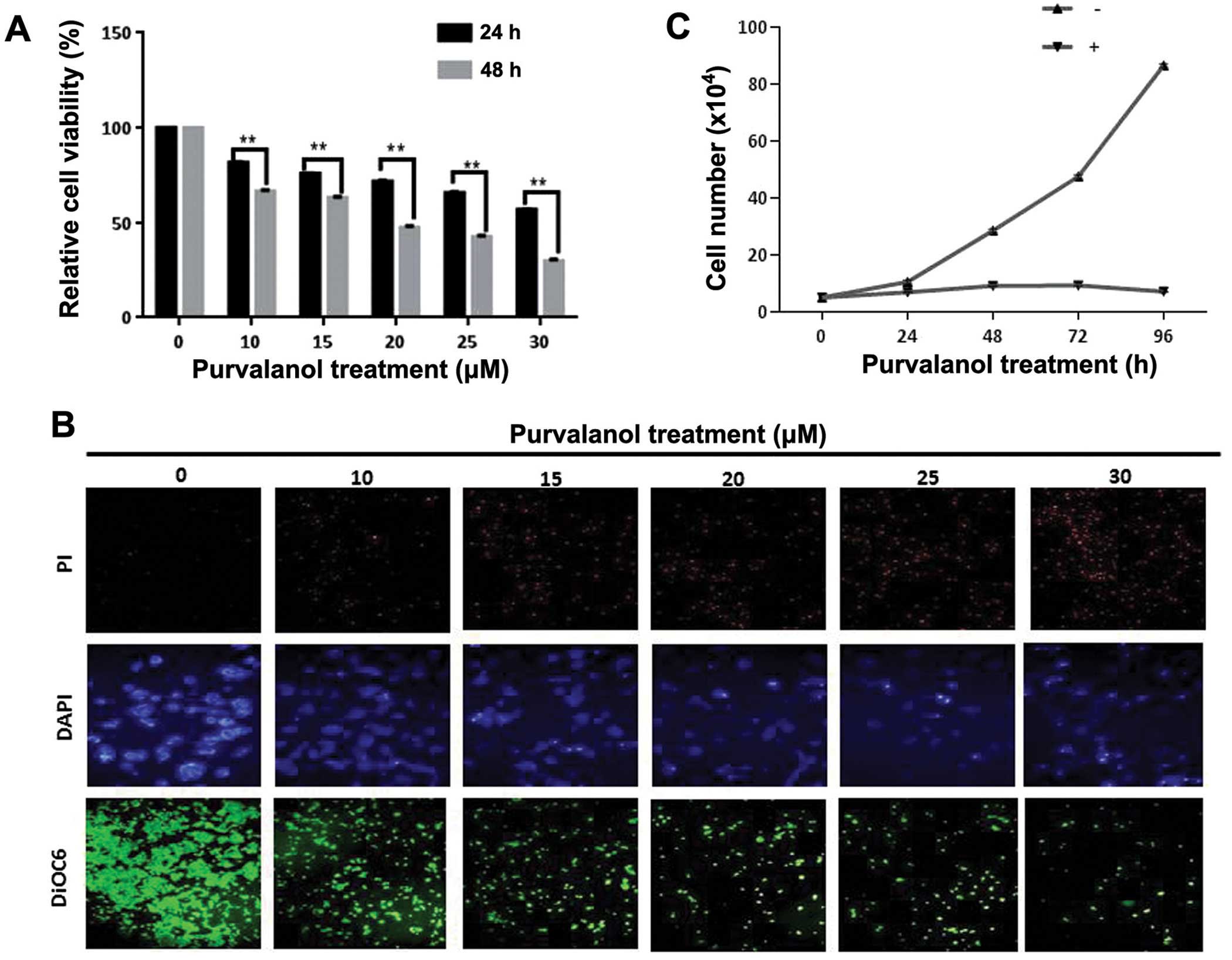
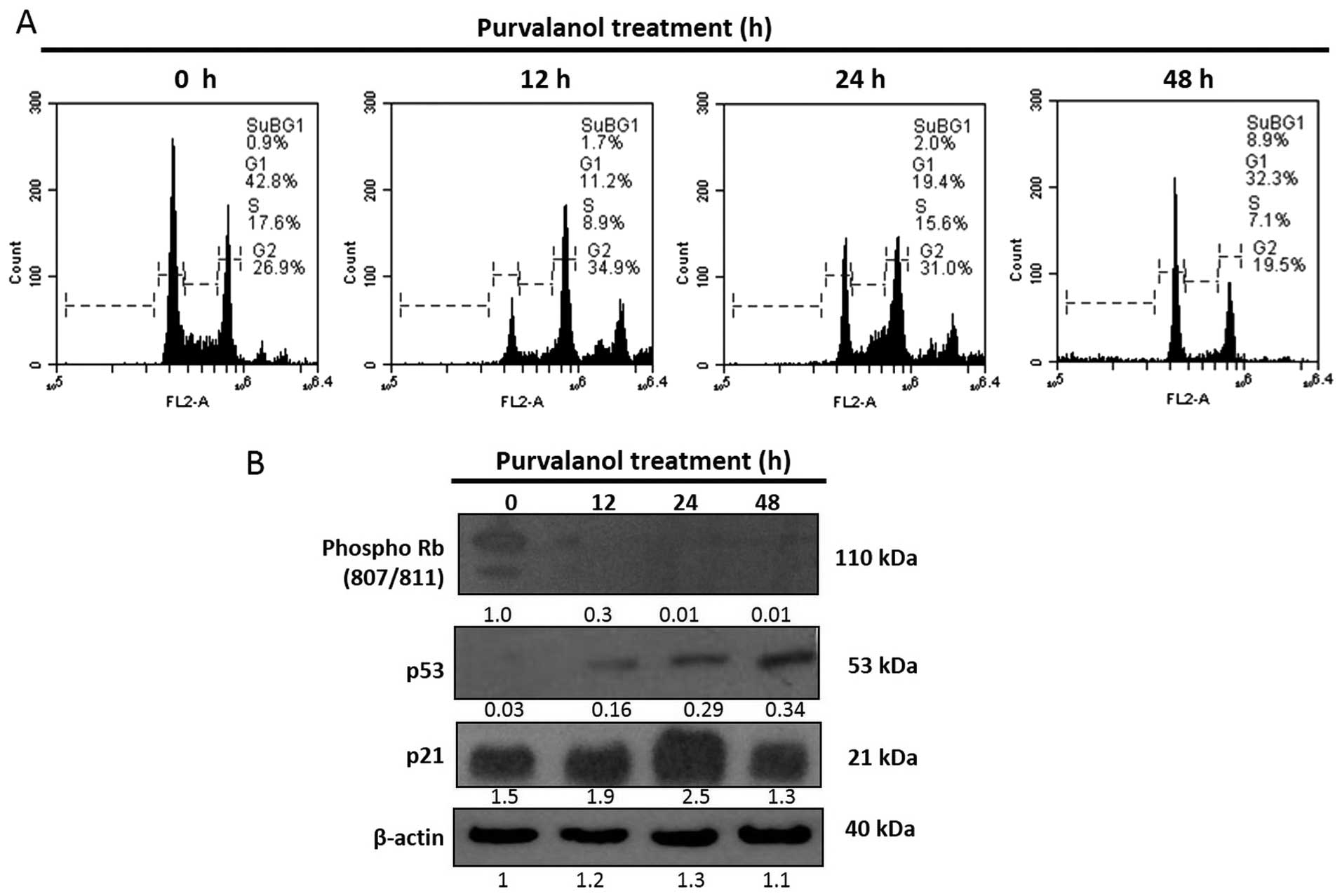
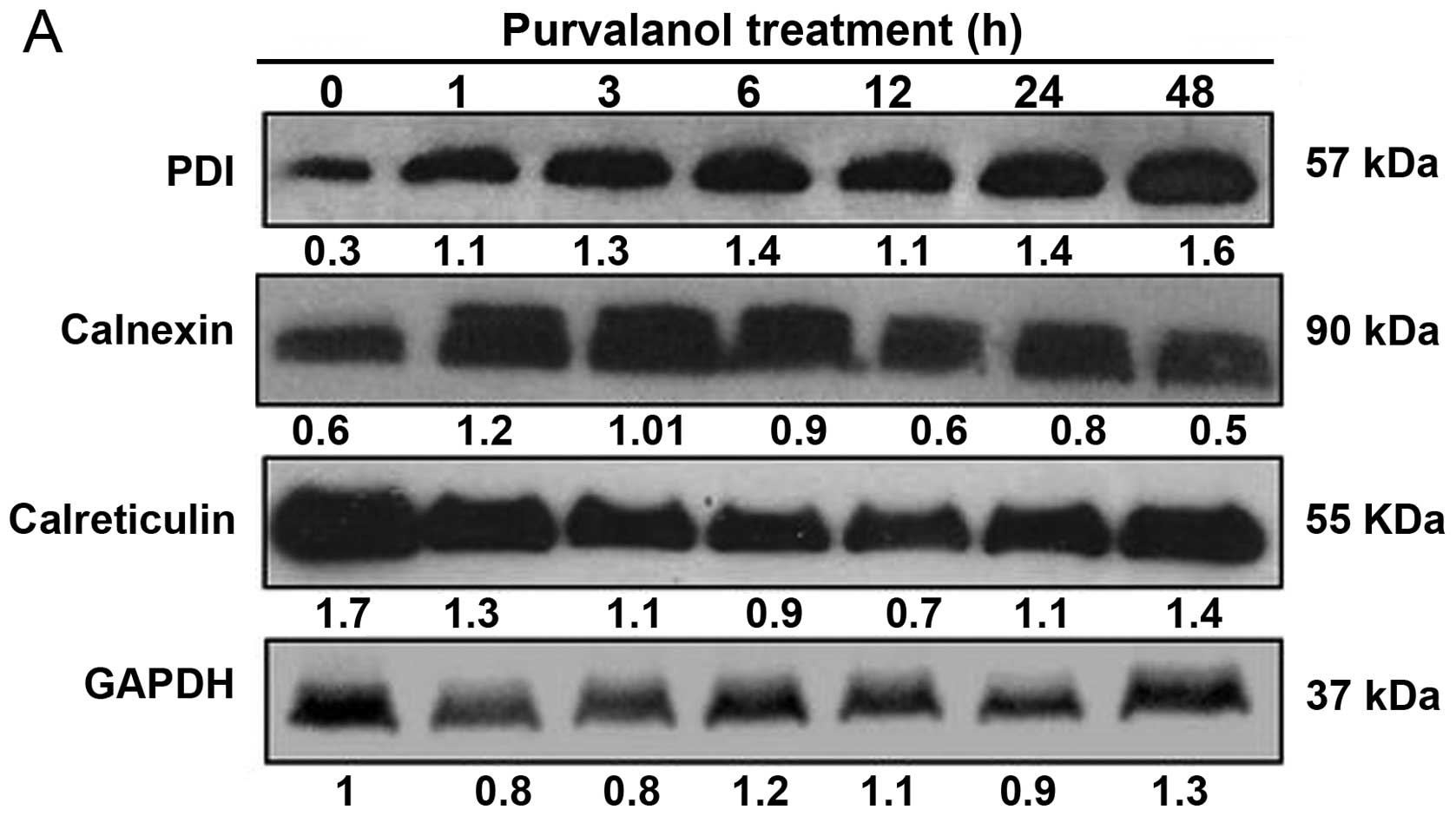
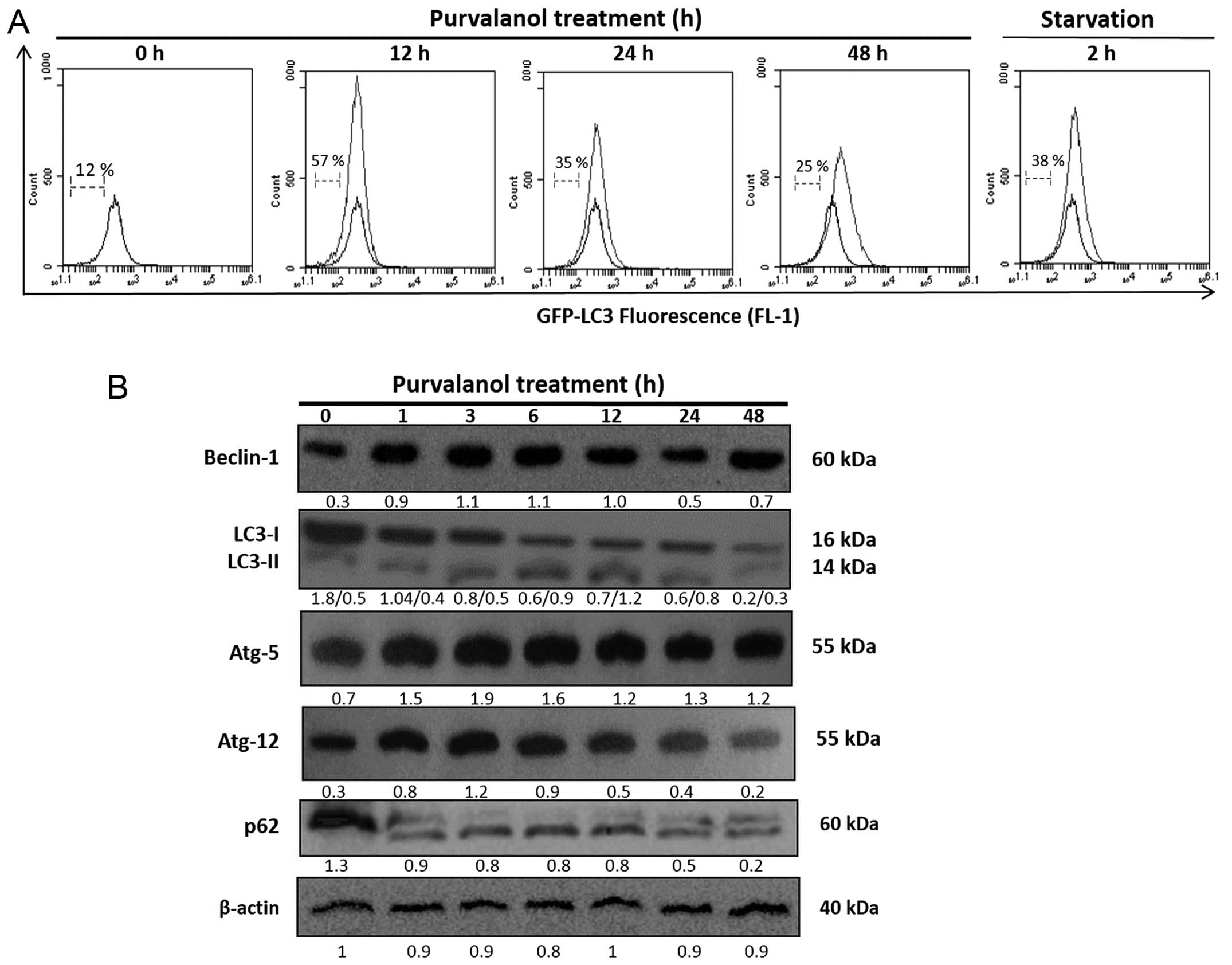
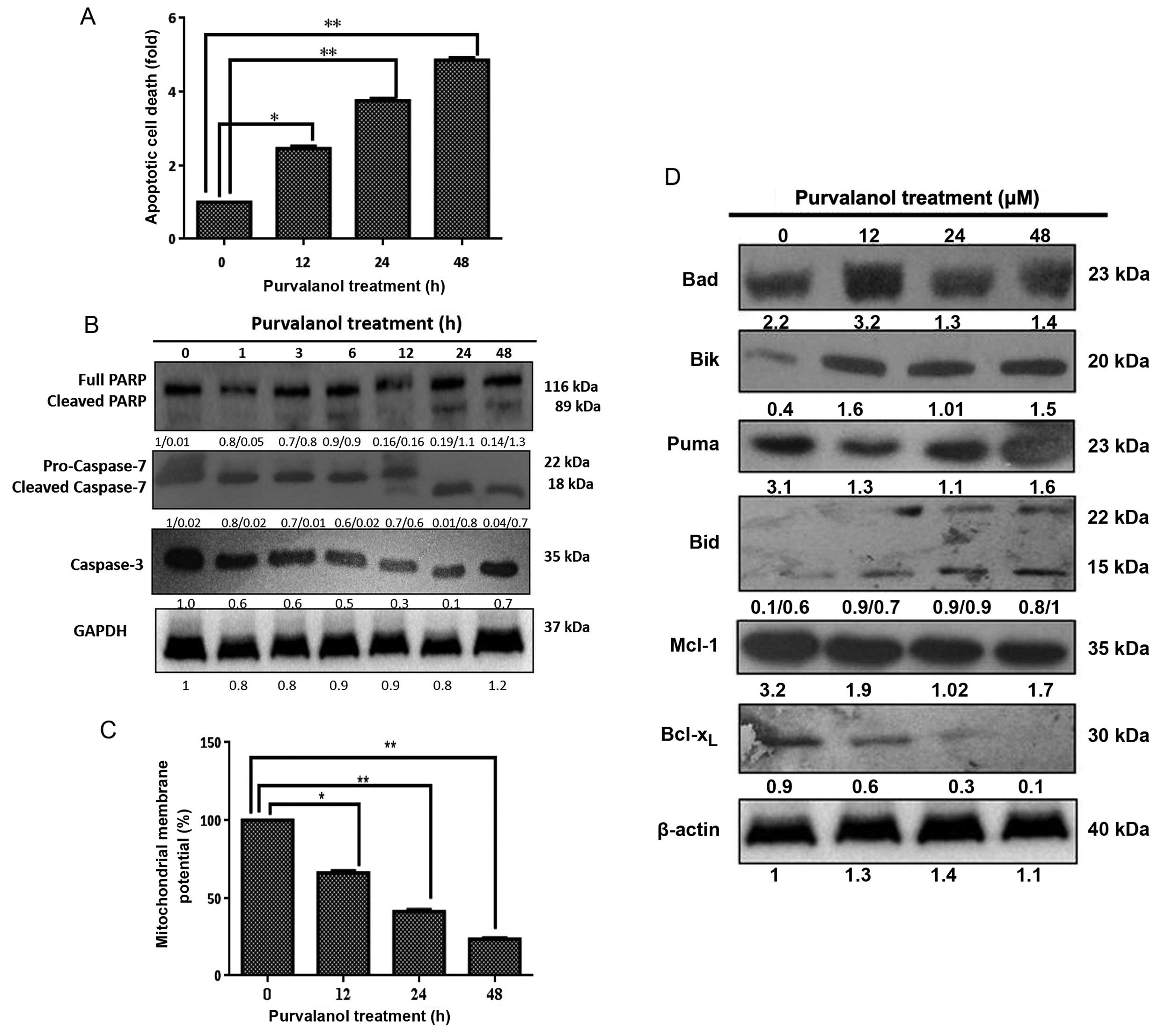
Purvalanol, a novel cyclin-dependent kinase inhibitor, is referred to as a strong apoptotic inducer which causes cell cycle arrest in various cancer cells such as prostate, breast and colon cancer cell lines. Various physiological and pathological conditions such as glucose starvation, inhibition of protein glycosylation and oxidative stress may cause an accumulation of unfolded proteins in the endoplasmic reticulum (ER), leading to the unfolded protein response (UPR) and autophagy. Lacking proteosomal function on aggregates of unfolded proteins, ER stress may induce autophagic machinery. Autophagy, an evolutionarily conserved process, is characterized by massive degradation of cytosolic contents. In the present study, our aim was to determine the time-dependent, ER-mediated apoptotic and autophagy induction of purvalanol in HCT 116 colon cancer cells. Fifteen micromoles of purvalanol induced a reduction in cell viability by 20 and 35% within 24 and 48 h, respectively. HCT 116 colon cancer cells were exposed to purvalanol, which activated ER stress via upregulation of PERK, IRE1α gene expression, eIF-2α phosphorylation and ATF-6 cleavage at early time-points in the HCT 116 colon cancer cells. Moreover, we determined that during purvalanol-mediated ER stress, autophagic machinery was also activated prior to apoptotic cell death finalization. Beclin-1 and Atg-5 expression levels were upregulated and LC3 was cleaved after a 6 h purvalanol treatment. Purvalanol induced mitochondrial membrane potential loss, caspase-7 and caspase-3 activation and PARP cleavage following a 48 h treatment. Thus, we conclude that the anticancer effect of purvalanol in HCT 116 cells was due to ER stress-mediated apoptosis; however, purvalanol triggered autophagy, which functions as a cell survival mechanism at early time-points.
View Figures

Figure 1

Figure 2

Figure 3

Figure 4

Figure 5

View References

1 

Harper JW and Adams PD: Cyclin-dependent kinases. Chem Rev. 101:2511–2526. 2001. View Article : Google Scholar : PubMed/NCBI

2 

Knockaert M, Greengard P and Meijer L: Pharmacological inhibitors of cyclin-dependent kinases. Trends Pharmacol Sci. 23:417–425. 2002. View Article : Google Scholar : PubMed/NCBI

3 

Gray N, Détivaud L, Doerig C and Meijer L: ATP-site directed inhibitors of cyclin-dependent kinases. Curr Med Chem. 6:859–875. 1999.PubMed/NCBI

4 

Gray NS, Wodicka L, Thunnissen AM, Norman TC, Kwon S, Espinoza FH, Morgan DO, Barnes G, Le Clerc S, Meijer L, et al: Exploiting chemical libraries, structure, and genomics in the search for kinase inhibitors. Science. 281:533–538. 1998. View Article : Google Scholar : PubMed/NCBI

5 

Arisan ED, Obakan P, Coker-Gurkan A, Calcabrini A, Agostinelli E and Unsal NP: CDK inhibitors induce mitochondria-mediated apoptosis through the activation of polyamine catabolic pathway in LNCaP, DU145 and PC3 prostate cancer cells. Curr Pharm Des. 20:180–188. 2014. View Article : Google Scholar

6 

Obakan P, Arisan ED, Özfiliz P, Çoker-Gürkan A and Palavan-Ünsal N: Purvalanol A is a strong apoptotic inducer via activating polyamine catabolic pathway in MCF-7 estrogen receptor positive breast cancer cells. Mol Biol Rep. 41:145–154. 2014. View Article : Google Scholar

7 

Gürkan AC, Arisan ED, Obakan P and Palavan-Ünsal N: Inhibition of polyamine oxidase prevented cyclin-dependent kinase inhibitor-induced apoptosis in HCT 116 colon carcinoma cells. Apoptosis. 18:1536–1547. 2013. View Article : Google Scholar : PubMed/NCBI

8 

Kaufman RJ: Stress signaling from the lumen of the endoplasmic reticulum: coordination of gene transcriptional and translational controls. Genes Dev. 13:1211–1233. 1999. View Article : Google Scholar : PubMed/NCBI

9 

Schroder M and Kaufman RJ: ER stress and the unfolded protein response. Mutat Res. 569:29–63. 2005. View Article : Google Scholar

10 

Yoshida H: Molecular biology of the ER stress response. Seikagaku. 76:617–630. 2004.In Japanese. PubMed/NCBI

11 

Harding HP, Zhang Y, Bertolotti A, Zeng H and Ron D: Perk is essential for translational regulation and cell survival during the unfolded protein response. Mol Cell. 5:897–904. 2000. View Article : Google Scholar : PubMed/NCBI

12 

Ogata M, Hino S, Saito A, Morikawa K, Kondo S, Kanemoto S, Murakami T, Taniguchi M, Tanii I, Yoshinaga K, et al: Autophagy is activated for cell survival after endoplasmic reticulum stress. Mol Cell Biol. 26:9220–9231. 2006. View Article : Google Scholar : PubMed/NCBI

13 

Morishima N, Nakanishi K, Takenouchi H, Shibata T and Yasuhiko Y: An endoplasmic reticulum stress-specific caspase cascade in apoptosis. Cytochrome c-independent activation of caspase-9 by caspase-12. J Biol Chem. 277:34287–34294. 2002. View Article : Google Scholar : PubMed/NCBI

14 

Iizuka D, Inanami O, Kashiwakura I and Kuwabara M: Purvalanol A enhances cell killing by inhibiting up-regulation of CDC2 kinase activity in tumor cells irradiated with high doses of X rays. Radiat Res. 167:563–571. 2007. View Article : Google Scholar : PubMed/NCBI

15 

Villerbu N, Gaben AM, Redeuilh G and Mester J: Cellular effects of purvalanol A: a specific inhibitor of cyclin-dependent kinase activities. Int J Cancer. 97:761–769. 2002. View Article : Google Scholar : PubMed/NCBI

16 

Molinari M, Eriksson KK, Calanca V, Galli C, Cresswell P, Michalak M and Helenius A: Contrasting functions of calreticulin and calnexin in glycoprotein folding and ER quality control. Mol Cell. 13:125–135. 2004. View Article : Google Scholar : PubMed/NCBI

17 

Zuppini A, Groenendyk J, Cormack LA, Shore G, Opas M, Bleackley RC and Michalak M: Calnexin deficiency and endoplasmic reticulum stress-induced apoptosis. Biochemistry. 41:2850–2858. 2002. View Article : Google Scholar : PubMed/NCBI

18 

Pinton P, Ferrari D, Rapizzi E, Di Virgilio F, Pozzan T and Rizzuto R: The Ca2+ concentration of the endoplasmic reticulum is a key determinant of ceramide-induced apoptosis: significance for the molecular mechanism of Bcl-2 action. EMBO J. 20:2690–2701. 2001. View Article : Google Scholar : PubMed/NCBI

19 

Nakamura K, Bossy-Wetzel E, Burns K, Fadel MP, Lozyk M, Goping IS, Opas M, Bleackley RC, Green DR and Michalak M: Changes in endoplasmic reticulum luminal environment affect cell sensitivity to apoptosis. J Cell Biol. 150:731–740. 2000. View Article : Google Scholar : PubMed/NCBI

20 

Lu YC, Chen CN, Wang B, Hsu WM, Chen ST, Chang KJ, Chang CC and Lee H: Changes in tumor growth and metastatic capacities of J82 human bladder cancer cells suppressed by down-regulation of calreticulin expression. Am J Pathol. 179:1425–1433. 2011. View Article : Google Scholar : PubMed/NCBI

21 

Yoshida H, Haze K, Yanagi H, Yura T and Mori K: Identification of the cis-acting endoplasmic reticulum stress response element responsible for transcriptional induction of mammalian glucose-regulated proteins. Involvement of basic leucine zipper transcription factors. J Biol Chem. 273:33741–33749. 1998. View Article : Google Scholar : PubMed/NCBI

22 

Haze K, Yoshida H, Yanagi H, Yura T and Mori K: Mammalian transcription factor ATF6 is synthesized as a transmembrane protein and activated by proteolysis in response to endoplasmic reticulum stress. Mol Biol Cell. 10:3787–3799. 1999. View Article : Google Scholar : PubMed/NCBI

23 

Chiu SC, Chen SP, Huang SY, Wang MJ, Lin SZ, Harn HJ and Pang CY: Induction of apoptosis coupled to endoplasmic reticulum stress in human prostate cancer cells by n-butylidenephthalide. PLoS One. 7:e337422012. View Article : Google Scholar : PubMed/NCBI

24 

Yoshida H, Okada T, Haze K, Yanagi H, Yura T, Negishi M and Mori K: Endoplasmic reticulum stress-induced formation of transcription factor complex ERSF including NF-Y (CBF) and activating transcription factors 6alpha and 6beta that activates the mammalian unfolded protein response. Mol Cell Biol. 21:1239–1248. 2001. View Article : Google Scholar : PubMed/NCBI

25 

Urano F, Bertolotti A and Ron D: IRE1 and efferent signaling from the endoplasmic reticulum. J Cell Sci. 113:3697–3702. 2000.PubMed/NCBI

26 

Hu R, Zhou P, Peng YB, Xu X, Ma J, Liu Q, Zhang L, Wen XD, Qi LW, Gao N, et al: 6-Shogaol induces apoptosis in human hepatocellular carcinoma cells and exhibits anti-tumor activity in vivo through endoplasmic reticulum stress. PLoS One. 7:e396642012. View Article : Google Scholar : PubMed/NCBI

27 

Zhang R, Chung Y, Kim HS, Kim DH, Kim HS, Chang WY and Hyun JW: 20-O-(beta-D-glucopyranosyl)-20(S)-protopanaxadiol induces apoptosis via induction of endoplasmic reticulum stress in human colon cancer cells. Oncol Rep. 29:1365–1370. 2013.PubMed/NCBI

28 

Park SH, Park HS, Lee JH, Chi GY, Kim GY, Moon SK, Chang YC, Hyun JW, Kim WJ and Choi YH: Induction of endoplasmic reticulum stress-mediated apoptosis and non-canonical autophagy by luteolin in NCI-H460 lung carcinoma cells. Food Chem Toxicol. 56:100–109. 2013. View Article : Google Scholar : PubMed/NCBI

29 

Ma Y, Brewer JW, Diehl JA and Hendershot LM: Two distinct stress signaling pathways converge upon the CHOP promoter during the mammalian unfolded protein response. J Mol Biol. 318:1351–1365. 2002. View Article : Google Scholar : PubMed/NCBI

30 

Zinszner H, Kuroda M, Wang X, Batchvarova N, Lightfoot RT, Remotti H, Stevens JL and Ron D: CHOP is implicated in programmed cell death in response to impaired function of the endoplasmic reticulum. Genes Dev. 12:982–995. 1998. View Article : Google Scholar : PubMed/NCBI

31 

Barone MV, Crozat A, Tabaee A, Philipson L and Ron D: CHOP (GADD153) and its oncogenic variant, TLS-CHOP, have opposing effects on the induction of G1/S arrest. Genes Dev. 8:453–464. 1994. View Article : Google Scholar : PubMed/NCBI

32 

McCullough KD, Martindale JL, Klotz LO, Aw TY and Holbrook NJ: Gadd153 sensitizes cells to endoplasmic reticulum stress by down-regulating Bcl2 and perturbing the cellular redox state. Mol Cell Biol. 21:1249–1259. 2001. View Article : Google Scholar : PubMed/NCBI

33 

Puthalakath H, O’Reilly LA, Gunn P, Lee L, Kelly PN, Huntington ND, Hughes PD, Michalak EM, Mckimm-Breschkin J, Motoyama N, et al: ER stress triggers apoptosis by activating BH3-only protein Bim. Cell. 129:1337–1349. 2007. View Article : Google Scholar : PubMed/NCBI

34 

Vidal RL and Hetz C: Crosstalk between the UPR and autophagy pathway contributes to handling cellular stress in neurodegenerative disease. Autophagy. 8:970–972. 2012. View Article : Google Scholar : PubMed/NCBI

35 

Carra S, Brunsting JF, Lambert H, Landry J and Kampinga HH: HspB8 participates in protein quality control by a non-chaperone-like mechanism that requires eIF2{alpha} phosphorylation. J Biol Chem. 284:5523–5532. 2009. View Article : Google Scholar

36 

Martinet W, Agostinis P, Vanhoecke B, Dewaele M and De Meyer GR: Autophagy in disease: a double-edged sword with therapeutic potential. Clin Sci (Lond). 116:697–712. 2009. View Article : Google Scholar

37 

Ku B, Woo JS, Liang C, Lee KH, Hong HS, E X, Kim KS, Jung JU and Oh BH: Structural and biochemical bases for the inhibition of autophagy and apoptosis by viral BCL-2 of murine gamma-herpesvirus 68. PLoS Pathog. 4:e252008. View Article : Google Scholar : PubMed/NCBI

38 

Pankiv S, Clausen TH, Lamark T, Brech A, Bruun JA, Outzen H, Øvervatn A, Bjørkøy G and Johansen T: p62/SQSTM1 binds directly to Atg8/LC3 to facilitate degradation of ubiquitinated protein aggregates by autophagy. J Biol Chem. 282:24131–24145. 2007. View Article : Google Scholar : PubMed/NCBI

39 

Kumar D, Shankar S and Srivastava RK: Rottlerin induces autophagy and apoptosis in prostate cancer stem cells via PI3K/Akt/mTOR signaling pathway. Cancer Lett. 343:179–189. 2014. View Article : Google Scholar

40 

Cui Q, Tashiro S, Onodera S, Minami M and Ikejima T: Autophagy preceded apoptosis in oridonin-treated human breast cancer MCF-7 cells. Biol Pharm Bull. 30:859–864. 2007. View Article : Google Scholar : PubMed/NCBI

41 

Li J, Hou N, Faried A, Tsutsumi S, Takeuchi T and Kuwano H: Inhibition of autophagy by 3-MA enhances the effect of 5-FU- induced apoptosis in colon cancer cells. Ann Surg Oncol. 16:761–771. 2009. View Article : Google Scholar : PubMed/NCBI

42 

Schönthal AH: Endoplasmic reticulum stress and autophagy as targets for cancer therapy. Cancer Lett. 275:163–169. 2009. View Article : Google Scholar

Related Articles

  • Abstract
  • View
  • Download
  • Twitter
Copy and paste a formatted citation
Spandidos Publications style
Coker-Gürkan A, Arisan ED, Obakan P, Akalın K, Özbey U and Palavan-Unsal N: Purvalanol induces endoplasmic reticulum stress-mediated apoptosis and autophagy in a time-dependent manner in HCT116 colon cancer cells. Oncol Rep 33: 2761-2770, 2015.
APA
Coker-Gürkan, A., Arisan, E.D., Obakan, P., Akalın, K., Özbey, U., & Palavan-Unsal, N. (2015). Purvalanol induces endoplasmic reticulum stress-mediated apoptosis and autophagy in a time-dependent manner in HCT116 colon cancer cells. Oncology Reports, 33, 2761-2770. https://doi.org/10.3892/or.2015.3918
MLA
Coker-Gürkan, A., Arisan, E. D., Obakan, P., Akalın, K., Özbey, U., Palavan-Unsal, N."Purvalanol induces endoplasmic reticulum stress-mediated apoptosis and autophagy in a time-dependent manner in HCT116 colon cancer cells". Oncology Reports 33.6 (2015): 2761-2770.
Chicago
Coker-Gürkan, A., Arisan, E. D., Obakan, P., Akalın, K., Özbey, U., Palavan-Unsal, N."Purvalanol induces endoplasmic reticulum stress-mediated apoptosis and autophagy in a time-dependent manner in HCT116 colon cancer cells". Oncology Reports 33, no. 6 (2015): 2761-2770. https://doi.org/10.3892/or.2015.3918
Copy and paste a formatted citation
x
Spandidos Publications style
Coker-Gürkan A, Arisan ED, Obakan P, Akalın K, Özbey U and Palavan-Unsal N: Purvalanol induces endoplasmic reticulum stress-mediated apoptosis and autophagy in a time-dependent manner in HCT116 colon cancer cells. Oncol Rep 33: 2761-2770, 2015.
APA
Coker-Gürkan, A., Arisan, E.D., Obakan, P., Akalın, K., Özbey, U., & Palavan-Unsal, N. (2015). Purvalanol induces endoplasmic reticulum stress-mediated apoptosis and autophagy in a time-dependent manner in HCT116 colon cancer cells. Oncology Reports, 33, 2761-2770. https://doi.org/10.3892/or.2015.3918
MLA
Coker-Gürkan, A., Arisan, E. D., Obakan, P., Akalın, K., Özbey, U., Palavan-Unsal, N."Purvalanol induces endoplasmic reticulum stress-mediated apoptosis and autophagy in a time-dependent manner in HCT116 colon cancer cells". Oncology Reports 33.6 (2015): 2761-2770.
Chicago
Coker-Gürkan, A., Arisan, E. D., Obakan, P., Akalın, K., Özbey, U., Palavan-Unsal, N."Purvalanol induces endoplasmic reticulum stress-mediated apoptosis and autophagy in a time-dependent manner in HCT116 colon cancer cells". Oncology Reports 33, no. 6 (2015): 2761-2770. https://doi.org/10.3892/or.2015.3918
Follow us
  • Twitter
  • LinkedIn
  • Facebook
About
  • Spandidos Publications
  • Careers
  • Cookie Policy
  • Privacy Policy
How can we help?
  • Help
  • Live Chat
  • Contact
  • Email to our Support Team